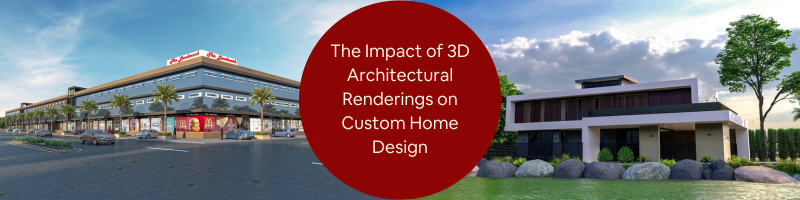
The Impact of 3D Architectural Renderings on Custom Home Design with 3D Design Services Firms


Designing a custom home shouldn’t feel like solving a puzzle with missing pieces. Traditional methods leave homeowners flipping through magazines and squinting at complex blueprints, struggling to visualize how different design elements will work together in their future space. The gap between imagination and reality creates uncertainty, costly changes, and disappointment when the final result doesn’t match expectations.

3D architectural rendering services bridge this visualization gap by transforming abstract ideas into photorealistic images you can actually experience. Instead of guessing how that farmhouse kitchen will flow into your Scandinavian living room, you can virtually walk through every space before construction begins. By partnering with Cad Crowd, you can achieve anything through its wide pool of 3D rendering professionals.

Cad Crowd can help you connect with 94,000 and have the freedom to choose and build your team depending on your budget and standards. With the right experts using this technology, homeowners, architects, and builders are empowered to make confident design decisions, catch potential issues early, and ensure the final home matches the original vision perfectly.


🚀 Table of contents


From confusion to crystal clear vision

Custom home design demands precision that traditional tools simply cannot deliver. Flat floor plans and technical blueprints leave homeowners struggling to visualize how spaces will actually feel and function in real life. 3D architectural rendering eliminates this guesswork by providing photorealistic previews of your home before construction begins.

You can experience morning sunlight streaming through east-facing windows, experiment with roofline curves and ceiling heights, and fine-tune finishes like countertop materials and textures. This visual clarity transforms abstract concepts into tangible decisions, ensuring your custom home fits your lifestyle perfectly without costly construction surprises.

RELATED: 6 types of residential design & CAD services for companies

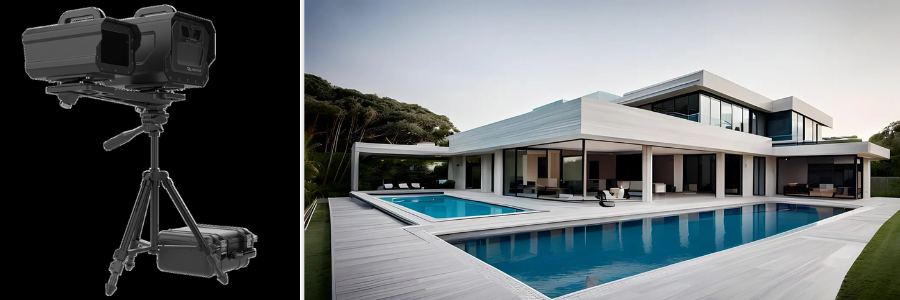
3d rendering of a hospital and high rise office room

The communication superpower: Visual language

Ever try to explain “I want the feel to be cozy but not too cozy, with a touch of modern but also keep the tradition” out loud? Yeah. Contractors and architects hear requests like that all day. Translating emotive beauty into building terms isn’t easy. With a 3D architectural design firm, you can skip the words entirely.

All stakeholders involved in a project, including homeowners, architects, interior designers, builders, and contractors, are able to communicate effectively through these digital representations. No room for confusion exists when all parties involved have access to the same images. There is effective communication. Making a decision is a breeze. Farewell, misunderstandings, and costly project revisions in the middle of development.

Customization goes from wild wish to realistic reality

You may have a Pinterest board or mood folder filled with your top design picks—glass staircases, skylight bathrooms, hidden bookcase doors. The beauty of a custom home is the ability to make these dreams a reality. The caveat? Making sure they actually work in your house, your budget, and your contractor’s capabilities.

That’s where 3D design services enter the picture.

A good rendering company doesn’t just make pretty pictures—they blend design intent with structural possibility. Want a floor-to-ceiling aquarium wall in your dining room? They’ll render it. Want a swooping curved mezzanine with floating steps? Done. You can try out how your wildest ideas will look and behave, all without lifting a solitary hammer.

Design iterations without the drama

Everyone who’s ever done a custom build can verify the law of the universe that there will be changes. There will be some, and then there will be a whole bunch of some. 3D rendering services allow for smooth, hassle-free revisions. Don’t like that exterior material? Fix it. Want to view what a flat roof will look like as a gable? Tap. Want to view how your living room flows with dark hardwood instead of light oak? Boop—up to date, just moments ago.

This fluidity is where you get to experiment with all the details, test all the iterations, and adore your finished design before you ever sign anything on the dotted line. It’s liberating, empowering, and somehow habit-forming.

Spending smart and saving money

Yeah, it’s no secret that custom home construction can be quite pricey. What about errors? Those might be quite pricey. Spending less money is a very practical argument to use a 3D rendering company. By finishing everything in advance, you lessen the chances of having to make adjustments while the project is in progress; adjustments made during construction are notoriously costly.

After the framing is finished, would you like to move a wall six feet to the left? That will be really expensive. After you pour the concrete, would you like to alter the window design? However, finding these problems throughout the design process? Almost costless. A short search. A brief assessment. An updated rendering. The kind of savings that really add up are those.

RELATED: 10 tips to improve photorealistic 3D renderings for design companies & freelance 3D artists

Bringing in the power of virtual staging

Some 3D rendering firms go one step further, offering virtual staging for your new home. This isn’t just about aesthetics, it’s about spatial intelligence. With virtual staging, you can experiment with furniture layouts, lighting schemes, artwork, and accessories months before your moving truck comes up the driveway. That way, your interior design experts will be more productive. You’ll get to test that giant sectional to see if it will actually fit in your media room. You’ll see how a pendant light will look in your dining area.

It’s like doing a dress rehearsal for the entire look and feel of your house.

Environmental awareness: Let the light in

Sustainability and smart energy use aren’t buzzwords. It’s what today’s homeowners demand. Daylight simulations, solar studies, and energy modeling are now integrated into 3D architectural renderings to help you design smarter from day one.

Want to reduce your energy bills? Position your home so bedrooms stay cooler in summer. Want that otherworldly morning light in your breakfast nook? Shift a window or adjust the roof overhang. A skilled 3D firm doesn’t just make your home look good—they make it live better as well.

Emotional buy-in: Fall in love before it’s built

There’s something so satisfying about seeing your potential house come to life in realistic detail. The shadows are just right. The path curves just the way you pictured. The front porch is inviting. You can almost hear birds singing. That emotional investment is a game-changer.

For building couples, it helps align visions. For families, it creates excitement and togetherness. And for architects selling custom concepts, it is a tool for telling their story, building trust, and excitement from the beginning. House building, after all, is a rational process buried in emotional decision-making. 3D architectural rendering services add soul and heart to blueprints.

A competitive advantage for builders and architects

For the pros, designers, builders, and boutique builders, 3D renderings present a serious advantage. Picture approaching your client to present your proposal with a dramatic, high-res flythrough of their new home. How is that compared to some floor plans and a narrative description? Which one does that sound more like?

Rendering services help businesses land more bids, close deals faster, and become known as creative and customer-focused. Some even offer live rendering walkthroughs through VR headsets—immersion level: expert. The benefit? Happier clients. Smarter portfolios. More word-of-mouth marketing.

Remote collaboration for the win

No matter whether you’re working with an architectural planning and design firm in another city or with a global team of consultants, 3D renderings make remote collaboration easier. Drawings can be swapped, criticized, marked up, and redone in real time, across time zones, geography, and even language. Do you need an Oregon landscaping expert to offer feedback on your Arizona home’s xeriscaping plan? Send the 3D file. Done. Such flexibility is essential in a time when design teams are more decentralized than ever.

Marketing your custom home before it’s built

Suppose you’re not just building for yourself. Maybe you’re a builder who builds high-end custom houses to resell. Maybe you’re reselling a house. Or maybe you’re planning a second home that could eventually be turned into an Airbnb. 3D renderings enable you to start marketing before the time construction ever begins.

From real estate site teaser shots to full 3D walk-throughs on listings, these photographs build interest, anticipation, and yes, serious purchasing leads. And because renderings can so quickly be remixed with a few different furnishings, finishes, or landscape choices, you can tailor the photographs for multiple sets of buyer demographics. Making the first impression unforgettable. These renderings help it happen.

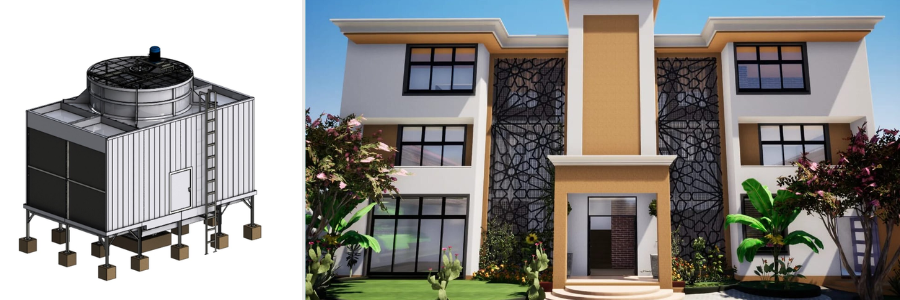
3d rendering of an office lounge and houston zoo site plan

RELATED: How to determine the quality of architectural 3D renderings with design services companies firms

The human touch: Artists meet architects

Let’s not forget that 3D architectural rendering is more than software and settings. It’s an art form.

The best rendering firms combine technical accuracy with visual storytelling. They know how to balance textures, contrast, perspective, and composition to bring your home to life. They don’t render rooms. They build ambiance.

Collaborating with a talented 3D CAD designer is akin to commissioning a cinematographer for your home. They stage your vision, illuminate it beautifully, and provide a scene that’s like the first page of a wonderful book.

Is it worth it?

Yes. Partnering with a 3D architectural rendering firm isn’t a luxury anymore—it’s an investment in smarter decision-making, smoother workflows, and a better final outcome. For homeowners building custom, it reduces stress, boosts creativity, and ensures you’re not walking blind into one of the biggest financial decisions of your life. For architects and builders, it sharpens your pitch, strengthens your brand, and transforms your client experience. Custom home design no longer exists on flat paper. It’s alive, interactive, and crazy exciting—and 3D renderings are leading the way.

Final thought: If you can see it, you can build it

3D architectural rendering has revolutionized custom home design by transforming abstract concepts into vivid, experiential realities. This technology eliminates costly construction surprises, enhances communication between all project stakeholders, and enables unlimited design experimentation without physical constraints.

From virtual staging services and environmental analysis to emotional engagement and marketing advantages, 3D rendering services provide comprehensive solutions that benefit homeowners, architects, and builders alike. The ability to visualize, modify, and perfect every detail before breaking ground ensures that your dream home becomes exactly what you envisioned. In today’s competitive construction landscape, 3D architectural rendering isn’t just a luxury tool but an essential investment in smarter decision making, reduced costs, and guaranteed satisfaction.

Bring your dream home vision to life

Stop struggling with flat blueprints and uncertain guesswork about your custom home design. Experience the power of photorealistic 3D rendering that lets you walk through your future home before construction begins. Partner with skilled professionals at Cad Crowd, who combine technical precision with artistic vision to create stunning, accurate visualizations. Contact Cad Crowd today for your free quote and transform your home-building journey from stressful to spectacular.

author avatar

MacKenzie Brown is the founder and CEO of Cad Crowd. With over 18 years of experience in launching and scaling platforms specializing in CAD services, product design, manufacturing, hardware, and software development, MacKenzie is a recognized authority in the engineering industry. Under his leadership, Cad Crowd serves esteemed clients like NASA, JPL, the U.S. Navy, and Fortune 500 companies, empowering innovators with access to high-quality design and engineering talent.

Connect with me: LinkedInXCad Crowd

Turning Concepts Into Stunning 3D Renderings with Architectural Visualization at Your Services Firm


3D architectural visualization services have become an essential tool for services firms looking to bridge the gap between concept and execution. It doesn’t just help designers communicate their ideas more effectively—it creates immersive experiences that engage clients, attract investors, and streamline project development. Whether you’re an architectural firm, an interior designer, or a real estate developer, integrating 3D rendering into your workflow is no longer optional; it is a game-changer.

Imagine a client comes to your architecture office with a loose idea of what they need—a contemporary yet classic office building with open areas, plenty of natural light, and a combination of sleek glass and warm wood features. They wave their hands around in the air, fighting to put the vision in their heads into words. Prior to architectural visualization, designers were stuck using sketches and technical drawings and hoping clients could visualize. But now? Now, we create concepts into life with stunning 3D renderings.

If you ever require stunning 3D renderings, Cad Crowd is the industry’s top agency for architectural visualization, with over 94,000 experts you can choose from to help you turn your idea into a tangible one. But what is it all about to begin with?


🚀 Table of contents


The craft of storytelling in 3D visuals

A good 3D rendering service is more than a visually representative illustration of a space—it’s a story made real. All good renderings have a story to tell, reaching out to emotions and influencing the way people see the design. It’s not merely a matter of showing a building’s size or visual details; it’s about crafting an experience that enables people to visualize themselves being inside the space, evoking an experience of place, mood, and use.

To do this, architectural visualization has to exceed simple modeling and texturing. Lighting, composition, material realism, and context are all vital factors in constructing the story of a rendering. Good lighting can establish mood, be it the golden light of sunset casting back off a glass facade or the bright clarity of midday filling an open-plan office. Composition leads the viewer’s eye, quietly steering them through the space in a manner that is both intuitive and natural. Realistic textures—like the gentle grain of old wood or the glossy sheen of polished marble—add to the believability of the scene, drawing the viewer in.

Think about the difference between a typical rendering of an empty office lobby and one filled with elements of storytelling. In the first, the room will feel sterile and unwelcoming, a mere staging of walls, floors, and furniture. In the second, the story unfolds: soft morning light creeps through the large glass façade and streams onto the polished concrete floor, casting long shadows.

A few simply designed lounge chairs are strewn about in a way that invites lounging, and a blurred figure clad in professional attire walks purposefully towards the elevator. The rendering is then translated from a straightforward representation of space to one that is descriptive and evocative, an image that will elicit from the viewer’s mind the life and activity it will contain.

In including the elements of narrative within 3D renderings, expert CAD designers cross over from theory to practice. They design stories to inspire, persuade, and communicate on an inner level, making architectural visualizations not pictures, but experiences.

RELATED: How 3D commercial rendering services help present commercial architectural projects

architectural rendering examples

How 3D renderings transform client interactions

A major challenge in any architectural services firm is ensuring that clients truly understand the design before construction begins. Too often, misinterpretations of blueprints lead to costly revisions and delays. Traditional 2D architectural drawings, while essential for technical detailing, are not always intuitive for clients who lack design experience.

This communication gap often results in extended discussions, modifications, and budgetary concerns. But with 3D renderings, clients don’t have to envision—they can see. This flips the entire design process from one of explanation to one of collaboration, dramatically improving the overall client experience.

Bridging the gap between imagination and reality

One of the largest challenges when it comes to architectural design services is making sure clients are able to properly envision their projects before work is started. Although seasoned architects and designers may view blueprints easily, clients tend to struggle to imagine 2D drawings translating into real spaces. This will create misunderstandings and disappointment once the building is complete.

Using 3D renderings, customers have a realistic view of the intended project. Visual clarity does away with confusion and builds trust in decision-making. Customers have the ability to examine their projects visually, noting features they adore and alterations they desire prior to any physical construction commencing. For example, when a customer desires to envision how a lobby would appear if marble is used instead of wood for flooring, a quick material swap within rendering software can yield an answer within minutes.

In addition, advanced rendering methods make it possible to simulate the environment, for example, to analyze how a building facade responds to sunlight at various times of day. Such visualizations enable clients to make decisions based on knowledge, both about their aesthetic aspirations and functional requirements. By closing the gap between imagination and reality, 3D renderings enable clients to become active participants in the design process, and the final product will be exactly as they envision it.

Accelerating the approvals process

Obtaining approvals from customers, city regulators, or investors can be time-consuming and aggravating. Older 2D drawings need a lot of explanation, causing rounds of discussion that drag on. But with excellent 3D rendering, it speeds up this process by giving a clear, visually engaging argument.

A good rendering doesn’t merely depict a building; it sells the concept behind it. Investors will more easily understand the market appeal of a luxury residential development when they view a realistic rendering of its rooftop pool at sunset. Architectural site planners examining a proposed mixed-use development can more readily gauge its effect on the surrounding area when shown a realistic 3D visualization with existing streetscapes and landscaping.

Furthermore, developers engaged in working on a large-scale project usually encounter zoning and regulatory issues that necessitate them to demonstrate the compatibility of their designs with the surrounding neighborhood. A photorealistic image that displays how a new high-rise relates to the existing skyline can serve as strong visual proof that wins planning applications and approvals.

By minimizing the necessity for multiple revisions and extensive explanations, 3D renderings speed up the approval process, enabling projects to proceed more effectively and with more confidence from stakeholders.

Improving coordination and minimizing expensive errors

Coordination among architects, designers, contractors, and clients is critical to a successful project. Yet, miscommunication frequently results in costly changes and delays in construction. Conventional design practices, which are based on extensive use of 2D drawings and technical details, can complicate the ability of clients to comprehend the subtleties of a design.

3D visualization rendering services make this collaboration easier by providing an accurate and interactive view of the design. Clients are able to visualize how different elements fit together, enabling them to give instant feedback. If a client believes that a window placement is not what they had in mind for their view, it can be changed prior to construction. This clarity at the early stage avoids expensive changes during construction, which saves time and money.

Additionally, contractors benefit from using 3D rendering as they are able to appreciate complex projects by easily comprehending difficult structures, materials, and spatial relationships, lowering their rate of errors in implementation. Such clarity reduces unforeseen construction expenses and makes the overall project more efficient.

The competitive edge: Differentiation in an overcrowded market

In a market where clients have infinite options, architectural services firms must stand out. The capability to create high-quality 3D renderings can be the differentiator that makes a firm stand out. Jaw-dropping visuals not only wow clients but are also the ultimate marketing tools for portfolios, websites, and social media presence.

Consider a potential client searching for architectural firms on the web. One company has static CAD drawings, and another has photorealistic images and interactive 3D walkthroughs. Which company is more likely to capture attention? The answer is obvious.

Also, with the development of technology, companies that utilize virtual reality (VR) and augmented reality (AR) experiences bring client interaction to the next level. Rather than simply seeing pictures, clients can “walk” through a space being considered prior to construction, relishing scale, illumination, and atmosphere in real-time. Such immersion inspires trust in the design as well as greater credibility for the CAD design firm.

Outside of client meetings, 3D renderings prove to be extremely useful in marketing presentations, pitch work, and real estate campaigns. Developers who wish to pre-sell building units prior to construction can employ these images to present the completed property to prospective buyers, allowing them to make decisions with more confidence.

RELATED: Signs you need to outsource 3D rendering services to companies & 3D modeling experts

Emotional connection: Turning ideas into aspirations

An incredible 3D rendering does more than show a design—it triggers a feeling. Customers will be drawn into a project if they see themselves within the environment. A visualization of an intimate, up-to-date kitchen lit with gentle illumination and hip finishes causes an owner to dream about their own holiday gatherings there. A glamorous illustration of the sunset infinity pool at a posh hotel fills investors with visions of its potential to attract business.

This emotional bond is an important element in effective design presentations. By designing renderings that align with the client’s dreams, architects and designers can establish strong relationships and enhance project approval rates. When clients emotionally connect to a space even before it is constructed, they will be more likely to proceed with confidence and passion.

Future-proofing the architectural services team

The construction and architectural sectors keep evolving, and architectural planning and design companies that embrace new technologies set themselves up for long-term success. 3D rendering is no longer in the realm of the luxury—now it is an industry norm. Companies that adopt this technology lead the way, gain more clients, and make their designs easier to produce.

As real-time rendering and artificial intelligence technology advance, architectural visualization’s future will be even more immersive. AI-driven tools are capable of creating realistic materials, lighting, and environmental effects within seconds, so renderings become even more realistic and time-efficient to create.

Additionally, cloud-based rendering services’ integration allows collaboration among teams in remote locations, sharing of updates in real time, and adjustments based on feedback from the clients in real time. All these developments will also make client interaction more intuitive, interactive, and efficient.

3D visualizations have transformed client engagement in architecture by taking intangible concepts and making them real. They close the technical drawing and client comprehension gap, speed up approvals, facilitate collaboration, and eliminate expensive construction errors. They also give a competitive advantage, build emotional connections, and future-proof architecture companies in an ever-changing market.

As technology evolves, 3D renderings will become increasingly significant in the construction and design environment. Architectural design experts who adapt to this change will not only achieve client satisfaction but surpass it, building trust, enthusiasm, and long-term achievement in a saturated market.

The workflow: Concept to high-end renderings

Implementing architectural visualization in a firm’s process is not merely a matter of spending money on top-of-the-line software; it involves a systematic and polished process that guarantees efficiency, precision, and exceptional output. Every step is crucial in converting a rough idea into a breathtaking, photorealistic image that clearly conveys design intent. What follows is an efficient process that experts can use to produce high-quality architectural visualizations.

architectural 3d rendering example and cad design

Concept development & sketching

Prior to the use of any 3D modeling software, concept development is the initial and most important action. This step involves comprehending the client’s idea, project brief, and important objectives. Proper communication between the architect/designer and client helps align expectations at an early stage.

Key actions:

  • Host client meetings to clarify their requirements, likes, and dislikes.
  • Collect inspirations via mood boards, reference images, and precedent studies.
  • Develop initial loose hand sketches or digital drawings to work through different design options.
  • Establish initial rough-out spatial composition, massing ideas, and style directions.

These initial phases establish a good base before transferring to digital modeling so that the designer can fine-tune his or her idea and be assured they are headed in the right direction.

3D modeling

Once the concept is clearly defined, it’s time to build the model through 3D modeling design services. This step requires the use of software like SketchUp, Revit, 3ds Max, Rhino, or Blender to translate 2D sketches into a three-dimensional environment.

Key actions:

  • Start with the basic structural framework, including walls, floors, and roofs.
  • Develop intricate details such as windows, doors, and architectural features.
  • Incorporate furniture, landscaping, and contextual elements to enhance realism.
  • Have a streamlined workflow through organizing components, layering, and efficient file management.

A properly structured 3D model is the foundation of the visualization process that allows for seamless movement into material application and rendering.

RELATED: Optimizing 3D rendering process time to help companies and service firms meet deadline

Material & texture application

Realism in architectural visualization relies significantly on realistic material and texture depiction. Rich materials add depth and realism to the model, making it more visually appealing and lifelike.

Key actions:

  • Choose suitable materials like wood, metal, glass, and fabrics, ensuring that they are suitable for the design intent.
  • Apply realistic textures and manipulate parameters such as reflection, bump mapping, and glossiness.
  • Use high-res PBR (Physically Based Rendering) textures for increased realism.
  • Use seamless UV mapping to prevent stretched or distorted textures.

Here, details like grain patterns in wood, grout lines between tiles, and blemishes in concrete can make a huge difference in making the final rendering more believable.

Lighting & composition

Lighting design services are one of the most important aspects of architectural visualization that determine the mood, emphasize design elements, and create realism. Using correct lighting arrangements can turn an ordinary render into a masterpiece.

Key actions:

  • Utilize both natural and artificial lighting to attain a realistic and balanced scene.
  • Apply HDRI (High Dynamic Range Imaging) environments for simulating natural lighting.
  • The sunlight angles should be manipulated to emphasize architectural structures effectively.
  • Add artificial light sources such as ambient, task, and accent lighting to interior scenes.
  • Try various camera angles and compositions to achieve interesting shots.

Lighting and composition play a crucial role in the perception of a design. An appropriately lit rendering can convey feelings and intentions effectively and invite people into the space.

Rendering & post-processing

After the 3D scene is fully created with materials, textures, and lights, it’s time to create high-quality renderings. This is done using powerful rendering tools like V-Ray, Corona Renderer, Lumion, Unreal Engine, or Enscape.

Key actions:

  • Establish rendering settings like resolution, sample rates, and ray tracing settings for maximum quality.
  • Apply depth of field, ambient occlusion, and global illumination for added realism.
  • Provide adequate rendering time to yield noise-free, high-resolution images.
  • Bring the rendered image into post-processing software such as Photoshop or Lightroom for fine-tuning.
  • Boost colors, contrast, shadows, and highlights to inject more depth and vibrancy into the rendering.

Post-processing is a critical phase that fine-tunes the end product, bestowing visual elegance and professional finesse on the HDR rendering design services.

Client presentation & iteration

The last process in the workflow is to show clients the completed visuals and implement their feedback in revision. An efficient architectural visualization process is also iterative, as clients can make requests for modifications prior to final delivery.

Key actions:

  • Develop several views and outlooks to get across a complete picture of the design.
  • Develop presentations with material callouts, annotations, and conceptual descriptions.
  • Obtain client feedback and adjust lighting, materials, or layout accordingly.
  • Provide the final high-resolution images, 360-degree renders, or animations according to the needs of the project.

Attaining high-quality architectural renderings is a systematic process that integrates creativity, technical skills, and iterative improvement. Through this workflow—from concept creation to final presentation—firms can attain efficiency, precision, and engaging visuals that clearly convey architectural designs. Excelling at each step in the process not only enhances workflow effectiveness but also raises the overall quality of the end renderings, ultimately resulting in greater client satisfaction and successful project delivery.

The future of architectural visualization

Architectural visualization is a field that is changing at lightning speed. AI-driven rendering engines are reducing processing time, and photorealistic images can be generated almost instantaneously. Real-time rendering software enables architects to make changes live during client presentations, providing unparalleled flexibility. With the increasing use of VR and AR, the architectural design and drafting industry is moving from static images to interactive and immersive experiences.

Companies that embrace these technologies will remain at the forefront. By always refining their techniques and adopting new software, they can deliver high-quality service, wow clients, and raise their brand in an industry where there is a lot of competition.

RELATED: Commercial 3D rendering rates for buildings, services costs, and pricing for architectural firms

3d architectural rendering of concept homes

Conclusion

Architectural visualization is not about making things pretty—it’s about communication, productivity, and experience. It turns abstract concepts into concrete visions, assists clients in making intelligent decisions, and speeds up approvals for projects. For architecture and design companies, being proficient in 3D rendering is not only a skill—it’s a competitive edge.

So, the next time a client comes to your office, unable to put into words their vision, you won’t simply listen and nod. You’ll demonstrate precisely what’s achievable—realizing their dream project before a single foundation stone has ever been set.

Cad Crowd is here to help

3D visualizations with architectural visualization aren’t something to be left with just anyone who happens to pop up online. Cad Crowd will help you reach the right individual so your services company can take advantage of its potential. Please submit your inquiry today to learn more about what we have in store. Request a free quote today.

author avatar

MacKenzie Brown is the founder and CEO of Cad Crowd. With over 18 years of experience in launching and scaling platforms specializing in CAD services, product design, manufacturing, hardware, and software development, MacKenzie is a recognized authority in the engineering industry. Under his leadership, Cad Crowd serves esteemed clients like NASA, JPL, the U.S. Navy, and Fortune 500 companies, empowering innovators with access to high-quality design and engineering talent.

Connect with me: LinkedInXCad Crowd

Best 40 Sites to Hire Freelance 3D Modelers for Architectural & Product Rendering Services


There has been an upsurge recently when it comes to the demand for high-quality 3D rendering services within the ever-advancing and dynamic worlds of architecture, product design, and visualization. Whether it is an architect requiring detailed exterior renders, a designer visualizing a new product, or a company looking to have photorealistic marketing visuals, the best option is a freelance 3D modeler. Flexibility, affordability, and wide-ranging expertise make freelancers a compelling alternative to traditional design firms.

To assist you in making your way through these stages, we have put together a list of the 40 best platforms where freelance 3D modelers specializing in architectural and product rendering will be available for hire. We would also outline the top services at CadCrowd, one of the leading platforms specializing specifically in rendering and 3D modeling.

Why hire freelance 3D modelers?

Let’s now dive into the platforms before jumping into why freelancers can change the game for your rendering projects:

  • Cost-effectiveness: Freelancers bring no overheads of employees or large firms.
  • Diverse expertise: Freelancers are specialized in varied styles and industries ranging from architectural visualization to product design.
  • Flexibility: A freelancer can be hired by the project, which ensures you can scale your work force as and when is required.
  • Speed: Freelancers generally have a much tighter schedule than large companies, which tend to have hundreds of projects on their boards.

Let’s continue and see the top 40 resources for professional freelance 3D modelers.

Cad Crowd

cadcrowd-logo

Cad Crowd is one of the leading platforms for freelance CAD designers, 3D modelers, and rendering professionals. Its specialty is to connect the client with top-rated talent for architectural, product, and industrial design projects. This is among the reasons CadCrowd stands out: because of the strict vetting that assures you’re getting access to highly skilled professionals. It is a network of freelance CAD designers and 3D modelers for architectural and product rendering. There is NDA protection and pre-vetted talent.

From a point of view of an architect who wants to visualize the building, a product developer to show the prototype, or perhaps an estate agent looking to market houses, high-quality rendering will be the key. There is Cad Crowd. Cad Crowd is one of the leading platforms providing specialty rendering services that connects businesses, entrepreneurs, and individuals with the world’s leading freelance CAD designers and rendering professionals.

Let’s dive into some of the multiple types of rendering services offered by Cad Crowd and how these can raise your project a level above others.

Cadcrowd.com

Architectural rendering services

Some of the architectural renderings from CadCrowd are ideal for architects, interior designers, real estate developers, or construction firms needing high-realism photographs to visualize design plans that need building in the real world. Architectural rendering could be:

  • Exterior rendering: Highly detailed 3D images that provide stakeholders with building facade images, landscaping, and the environment in which to visualize a project.
  • Interior rendering: A picture of an interior space that involves furniture, materials, lighting, and textures for a very realistic presentation.
  • 3D floor plans: Complete 3D floor plans provide spatial understanding and comprehension of layouts by possible buyers and investors.

Cad Crowd freelancers use the latest software, such as 3ds Max, V-Ray, Revit, SketchUp, and Lumion to create beautiful, photorealistic renders, bringing concepts to life.

Product rendering services

Cad Crowd will be beneficial for all product developers, manufacturers, and marketers with its broad range of product rendering services. It breathes prototypes and products into life even before hitting the market. From consumer electronics to furniture and industrial components, Cad Crowd freelance experts can produce everything on this list:

  • 3D product visualizations: Bring the realism of your product and still change its design even before any prototyping.
  • Exploded views: Detailed breakdown of the product components. This usually serves instructional material purposes, as well as for marketing and even manufacturing purposes.
  • Animation and motion renders: Dynamic renders that show how something works or how parts in a design move and come together.

These services can drastically reduce development time and costs while enhancing presentations for investors, clients, and marketing campaigns.

Real estate visualization services

3D real estate visualizations have been one of the important aspects of attracting prospects as well as investors in this highly competitive real estate market. CadCrowd has gifted the industry with some amazingly talented freelancers, who can offer services like:

  • Virtual staging: It shows digitized staged interiors to show prospects what empty properties look like.
  • Virtual tours: They can create interactive 3D tours and walkthroughs of the properties for an immersive experience.

Bird’s eye view and detailed site plans for new constructions or under-construction properties

These services enable real estate agents and developers to market properties more effectively by giving a clearer compelling vision of their future investments to the potential buyers.

Industrial design rendering

CadCrowd offers high-quality rendering services to engineers, manufacturers, and industrial designers to graphically illustrate complex machinery and equipment and industrial products. The following are the company’s industrial rendering services:

  • Technical visualizations: High-level technical diagrams and renders for pitches and manuals.
  • Prototype visualization: High-fidelity renders of prototypes for pitches or validation before production.
  • Simulation renders: Computer generated imaging of machinery operations and manufacturing assembly processes.

Such offers are very valuable for the ones who rely on such and such precise, working view visualizations to optimize production lines and minimize errors in its production.

Animations and motion graphics

Moving beyond static renders, the CadCrowd freelance network also excels at 3D animation and motion graphics. Such services would really be useful for projects demanding:

  • Product demonstrations: Animated sequences that explain how products work or are assembled.
  • Architectural flythroughs: Dynamic tours of buildings and spaces.
  • Explainer videos: Clear, engaging animations explaining complex processes or products for an audience.

Animations and motion graphics can make the messages more effectively delivered and involve the viewers by offering dynamic and interactive content.

Why Cad Crowd for rendering services?

Cad Crowd is unique in many ways:

  • Global talent pool: The highly skilled freelancers who come from all over the world and work specifically in different aspects of rendering
  • Customized solutions: Services that are tailored according to the specific needs of your project and deadlines.
  • Quality assurance: Strictly vetted processes ensure top-tier talent on your projects.
  • Cost-effective: Competitive pricing without losing the quality and available to small, medium and large business houses.
  • Collaborative platform: Allowing effortless communication and coordination between the clients and freelancers that will ensure transparency and align the project in all its stages.

Now that you know more about Cad Crowd, here are other websites where you can hire freelance 3D modelers.

Reedsy

reedsy logo 2

Reedsy is a multifunctional platform that combines creative professionals with clients searching for special services. Skilled 3D modelers are here, offering high-quality rendering on different projects. The users get the chance to interact with vetted experts directly for guaranteed, reliable, and efficient results. Reedsy streamlines the process and makes it easy to find trusted professionals to meet creative needs.

Reedsy.com

The Dots

the dots logo

The Dots is a creative platform to hire freelance 3D modelers. View detailed profiles and portfolios for rendering projects.

The Dots is a professional networking platform where you can hone your skills by joining virtual events, finding the right job or client, or getting advice and finding collaborators.

The-dots.com

Contra

contracom logo

Commission freelance 3D modelers at no commission fees. Suitable for architectural and product rendering services. Contra is a platform for individuals, companies, or partner networks where you can let your creativity flow and work with the best independent freelancers or creatives worldwide.

Contra boasts over 50 000k companies and more than 1 million independent individuals.

Contra.com

Creativepool

Creativepoolcom logo

Find creative 3D modelers for the rendering service. View portfolios, get connected, and hire freelancers. Creativepool connects you with the best creatives around the world, from companies to individuals and employees.

No matter your niche or industry, at Creativepool you’ll find the best talents looking for the next opportunity.

Creativepool.com

Outsourcely

Outsourcely logo

Hire remote 3D modelers for architectural as well as product rendering work. Provides direct communication and secure payments. Outsercely makes it straightforward to dip into a pool of talented remote freelancers from all over the world.

You can hire individuals to work for you remotely at a fraction of the price you would pay for hiring permanent office staff.

Outsourcely.com

Remote OK

RemoteOK logo

Find remote 3D modelers to work on rendering projects. Ideal to hire freelance workers worldwide with flexibility in work options.

If you’re looking to hire remotely, Remote OK allows you to post your job online and find the perfect candidates amongst over 2 million remote talents.

Remoteok.com

Archinect

Archinect

Network of architecture professionals. Source to hire 3D modelers for rendering projects and check portfolios.

Archinect has been connecting clients with architects since 1997. Over the years this company has established itself as one of the top companies for progressive design and has become a platform for students, fans, and architects alike.

Archinect.com

Craigslist

Craigslist

Publish job offers to hire freelance 3D modelers in architectural and product rendering. Connect with local or remote talent.

Craigslist has become renowned worldwide, connecting clients with talents across multiple platforms.

Craigslist.org

Catalant

Catalant logo

Connect with seasoned 3D modelers via Catalant’s network. Great for strategic, high-end rendering projects.

Catalant provides flexible consulting solutions, connecting firms with vetted independent consultants as needed.

Catalant.com

Thumbtack

thumbtack logo

Rendering services among local freelance 3D modelers; the comparison is made and customer reviews together with an overall judgment are looked at when searching for this service

Whatever your needs for home improvement, from interior design services to handyman and landscaping services, the platform has it all.

Thumbtack.com

ArtStation

Artstation

ArtStation is an online-based platform which represents various portfolios on digital art, 3D modeling, etc.

Among its user-friendly features there is the exploration of a considerable amount of art, introduction to fresh names, or connection with leaders in terms of specific industries, namely 3D rendering, concepts, etc.

Artstation.com

Kolabtree

kolabtree logo

Kolabtree is a business-to-expert networking site that connects businesses with freelance experts in any field to locate 3D modelers to work on product rendering. It’s the place for getting access to professional specialists for niche projects for industry use, like product design, engineering, and visualization, with customized solutions. It’s perfect for sourcing specialty talent.

Kolabtree.com

Bark

bark logo

Bark is one website where clients can connect directly with a freelance 3D modeler from either of the networks, local, or global. From Architectural rendering to product visualizations, Bark connects clients with a team that can make their imaginations turn into reality; it is the easiest way by which an individual can draw from world-class 3D modeling services.

Bark.com

Flexiple

flexiple logo

Flexiple is a high-end freelancing service to connect with expert 3D modelers for hire. Known for quality check and transparent pricing, it allows connecting top professionals with customers for delivering the rendering service. This allows higher output quality and cost predictability, making this a favored service for requirements of 3D modeling.

Flexiple.com

Lemon.io

lemonio logo 2

Lemon.io connects the startups with a highly curated list of the best 3D modelers, strictly selected for their expertise and skills. Whether it is high-end architectural rendering or detailed product visualizations, Lemon.io will be your seamless platform to hire talented professionals who can make your creative vision come to life with precision and efficiency.

Lemon.io

Malt

Malt logo

Malt is a European platform connecting businesses with freelance 3D modelers. It provides the full cycle of hiring, including the detailed profile of freelancers, in order to define the level of experience and expertise. Malt assures safe contracts and clear terms for a reliable space in businesses seeking professional services of 3D rendering.

Malt.com

We Work Remotely

We Work Remotely logo

We Work Remotely is the channel to reach premium remote 3D modelers interested in architectural and product rendering.

Hiring at this website enables recruiters to reach a global pool of talent in order to locate the top professionals worldwide to fulfill the 3D modeling and visualization requirements.

Weworkremotely.com

YunoJuno

yunojuno logo

Hire vetted 3D modelers in the UK for architectural and product rendering. The site offers project management and transparent pricing.

If you’re looking for an end-to-end management platform for boosting your workforce, YunoJuno offers the perfect solution.

Yunojuno.com

Arcbazar

Arcbazar

ArcBazar: This is the crowdsourcing platform to share architectural projects. This enables uploading design ideas along with 3D rendering for getting multiple submissions from freelancers in the global network. This gives an efficient method for collaborating with creative designs and delivers multiple solutions based on specific needs of the project.

Arcbazar.com

Crowdspring

crowdspring logo

Crowdspring is a crowd-sourcing website connecting clients with proficient freelance 3D modelers. Thus, businesses will get competitive submissions for architectural and product rendering projects, as well as alternative creative solutions. This gives the client an opportunity to collaborate with the skilled professionals so that they can obtain high-quality customized visual designs at very affordable rates.

Crowdspring.com

Twine

twine logo

Twine links you with skilled 3D modelers who can deliver quality rendering services, including product design and architectural projects.

It has an array of talented freelancers, offering transparent pricing, which allows clients to easily find the right professional for their needs, be it a small or large-scale project.

Twine.net

Workana

Workana logo

Workana connects a client with freelancer 3D modelers from mainly Latin America in an extremely easy-to-access interface: find the portfolio, browse reviews by past clients and process a safe payment.

Working on the platform means simplicity and an easier hiring and trusting your future freelancing associates.

Workana.com

SimplyHired

SimplyHired logo

SimplyHired is a job site where users can search for freelance 3D modelers with expertise in architectural and product rendering. Whether you are looking for people to work on exterior visualization, interior designs, or detailed product prototypes, SimplyHired offers the easiest and most effective means of finding qualified professionals to do different 3D modeling projects.

Simplyhired.com

ArchiCGI

Archicgi

Being one of the well-known architectural rendering providers, ArchiCGI provides the client with a network of skilled 3D artists.

Specialized in photorealistic visualization and very accurate modeling, ArchiCGI can ensure the successful realization of all its projects, from conception to completion.

Archicgi.com

RenderHub

RenderHub logo

RenderHub is an all-in-one download for 3D model files and customized 3D rendering services, making it suitable for quick turnaround projects. Some of the major advantages of using RenderHub include: access to assets from the marketplace in an integrated way, specialty rendering services suited to your needs, and cheap pricing makes RenderHub a solution that designers and developers find efficient.

Renderhub.com

Dribbble

dribbble.com-logo

Dribbble is a designers’ community, and they also have 3D artists. You can post jobs or connect directly with freelancers. Ideal for finding creative 3D modelers who specialize in product visualization.

Browse portfolios and connect for freelance rendering services.

Dribble.com

Behance

Behance logo

Behance is a platform owned by Adobe on which 3D artists and renderers show off their portfolios. It is quite effective for finding extremely creative talent. Find portfolios of good 3D modelers that specialize in architectural and product rendering.

Contact freelancers directly from their work.

Behance.net

LinkedIn

LinkedIn logo

LinkedIn professional network allows you to find and connect with 3D modelers and rendering experts.

Most freelancers share their portfolios on their profiles—source 3D modelers from LinkedIn’s professional network. Look through profiles, recommendations, and samples for architectural and product rendering services.

Linkedin.com

99designs

99Designs

Although 99designs is mostly graphics design, they also host 3D design and visualization projects and competitions.

A design-orientated freelancing site to hire those who will model in 3D to work on your rendering project. Host a contest or hire from the freelancers pre-screened.

99Designs.com

CGTrader

CGtrader

CGTrader is an all-purpose marketplace for 3D models and custom services. This means that clients will be able to reach out to specific 3D talent in modeling and rendering. Users will directly communicate with designers for smooth collaboration.

The integration of the platform into its marketplace allows users to buy, sell, or commission 3D assets for their projects efficiently.

Cgtrader.com

3D Hubs

3d Hubs logo

3D Hubs deals in manufacturing services, connects the client to the skills of 3D designers for rendering and visualization requirements, and caters to specific industry-related solutions to guarantee customized solution support.

With fast turnaround and comprehensive design-to-production, it becomes a reliable and valuable resource for complex projects.

Hubs.com

DesignCrowd

DesignCrowd logo

DesignCrowd is a design contest and freelance project site, ideal for architectural renders, concept visuals, and product designs. Host design contests to find experienced 3D modelers for rendering projects.

Choose from multiple submissions and hire your preferred freelancer.

Designcrowd.com

PeoplePerHour

peopleperhour logo

PeoplePerHour is a platform that directly links businesses with freelance 3D designers. They offer to their clients hourly and fixed price plans. It is well suitable for clients based on the UK and European geographies.

Experienced 3D modelers are provided for architectural and product rendering. Clients can hire freelance experts on an hour-by-hour basis, project basis, and also allow a system of ratings and reviews to their freelancers.

Peopleperhour.com

Guru

Guru logo

Guru is one of the most simple freelance websites for finding freelancers that have expertise in 3D modeling and rendering. Its feature called “WorkRooms” has made management easy.

Hire professional modelers for architectural and product rendering. Safe payments, detailed freelancer profiles, and all project management tools.

Guru.com

Toptal

Toptal-logo

It’s really having the best and elite freelancing network. It promises that the verified professionals you’ll be working with would definitely be the best ones from among the pool available at a given time. For Top-class 3D modeling talent, one must seek it through a rigorous vetting process at Toptal. Best suited for premium architectural and product rendering projects.

Toptal.com

Freelancer

Freelancer

Freelancer is a global marketplace for freelancers for 3D modeling and rendering services. Post project and get bids from a freelancer from all around the world. Connect with freelance 3D modelers around the world.

Post projects, get competitive bids and choose from verified freelancers who specialize in rendering services.

Freelancer.com

Fiverr

Fiverr

Fiverr provides gig-based services wherein 3D rendering and modeling are some of the many services you can avail on the platform. It best fits for small to medium-sized projects with defined output. Order architectural and product rendering from 3D modeling freelancers who do it very fast. Clear pricing with client ratings mark Fiverr’s gig-based system.

Fiverr.com

Upwork

LOGOS 1

Upwork is one of the largest freelance marketplaces, which provides access to hundreds of thousands of 3D modelers and rendering specialists. Here you can filter candidates according to skills, ratings, and experience.

Upwork is a global marketplace, which offers thousands of freelancers specializing in architectural and product rendering. In addition to the above features, you have advanced search tools and the option of reviews from clients and working history of selected professionals for easy hiring.

Upwork.com

Wrap up

Finding the best freelance 3D modeler for your rendering work might be the best move for your project to take a dramatic shift towards success. Architectural and product rendering services by top freelance 3D modelers in high demand can be accessed through CadCrowd. With such sources at hand, your designs shall come alive in terms of accuracy and beauty. Therefore, through the exploitation of these sites, you would open yourself to the pool of talents all around the globe and get to smoothen your workflow for timely wrapping up of projects.

Explore these platforms and discover the freelance talent that can elevate your rendering projects to the next level.

How Cad Crowd can help

For someone requiring very good quality visualizations, architecture product development, real estate and industrial designs, there are specialized services offered at CadCrowd. Request a quote today.

author avatar

MacKenzie Brown is the founder and CEO of Cad Crowd. With over 18 years of experience in launching and scaling platforms specializing in CAD services, product design, manufacturing, hardware, and software development, MacKenzie is a recognized authority in the engineering industry. Under his leadership, Cad Crowd serves esteemed clients like NASA, JPL, the U.S. Navy, and Fortune 500 companies, empowering innovators with access to high-quality design and engineering talent.

Connect with me: LinkedInXCad Crowd

Enhancing House Renovations with 3D Rendering Services & Visualization Design Firms


Imagine this: You’ve finally determined that it’s time to bestow your house with a long-overdue glow-up. Perhaps it’s the small kitchen, the old bathroom tile, or that living room that’s been yelling for a fireplace feature wall since 2002. You sit down with a renovation contractor, discuss finishes and colors, perhaps gesture with your hands to describe “modern but cozy,” and then pray. You dream—no, hope—that what’s in your brain is what they will end up building.

What if you could look at your future space before a single swing of a hammer?

That’s the sorcery of 3D rendering services from industry powerhouse Cad Crowd—and it’s no longer reserved for million-dollar mansions or high-end skyscrapers anymore. With an explosion of affordable, super-detailed visualization from design companies, average homeowners are now accessing a whole new universe of confidence and creativity with their remakes. Here’s the rundown on how 3D rendering can really take your renovation to the next level.

RELATED: How to Determine the Quality of Architectural 3D Renderings with Design Services Companies Firms

What is 3D rendering in renovation anyway?

Envision your renovation design—your mood boards, Pinterest pins, architectural drawings—all integrated into a practical digital model. That’s 3D rendering. These are not the clumsy computer graphics of the early 2000s. We’re discussing ultra-high-definition photorealistic images or videos that simulate the precise materials, lighting, and textures of your new kitchen, bathroom, or whole home.

You can observe the interaction between warm walnut cabinetry and matte black hardware, or the way natural light streams into your open-plan living room with those new skylights. This isn’t design—it’s living your new place before you even have it.

Why 3D rendering companies are the best-kept renovation secret MVPs

Design 3D architectural visualization companies don’t just make pretty images. They work as the interpreters between your vision and the contractor’s tool belt. Here’s why they’re a game-changer:

RELATED: 3D Modeling vs. 3D Rendering Services

They make you make better decisions, quicker

Do you actually need subway tiles in the kitchen? Or will that Moroccan zellige tile add more personality? Rather than browsing through pictures and making an educated guess, you can see both possibilities brought to life in your very own kitchen design—side by side. The decision is clear. Visualization slices through dithering like a hot knife through butter.

They avoid expensive errors

Want to see what that bright green accent wall is going to look like before you shell out six coats of paint? With 3D rendering, you can adjust materials, furniture arrangement, window size—you name it—without laying out a single penny on the actual changes. That’s saving. On paint. On labor. On your sanity.

3d rendering expert designers

They bridge the gap between you and your contractor

Adjectives such as “airy,” “modern,” or “Scandinavian-inspired” have wildly varying meanings to different individuals. 3D renderings provide everyone—homeowner, designer, contractor, even your doubting cousin Gary—a common visual vocabulary. Fewer misunderstandings. More results that meet the expectations of architectural design firms.

RELATED: What are the Different Types of 3D Rendering Services?

Large renovation or small makeover? 3D rendering either way produces results

A popular myth is that the services of a renovation are only worth it if you’re gutting the entire house. Nope. Even a mini bathroom renovation or a new bookcase built in will see some benefits. Actually, smaller projects sometimes leave less space for mistakes. If you’ve only got a 5×8-foot bathroom, you need to really know if a floating vanity will open the room up or seem like it’s just floating there inelegantly.

And a cramped kitchen requires layout perfection. Home design companies that provide residential rendering services are experts at creating even small spaces look and feel like big transformations.

Interior or exterior? Why not both?

Yes, 3D rendering excels for interiors—but don’t discount your home’s curb appeal. Exterior rendering services can replicate:

  • How does that new front porch design play with the current facade
  • How those black-framed windows will really look with red brick
  • How landscaping, lighting, and driveway pavers mesh for a wow-factor entrance

Thinking of adding a second story? Render it first. You’ll be spared surprises such as “I didn’t know the new roofline would obstruct our view of the sunset.”

RELATED: How 3D Rendering Has Revolutionized Interior Design

How 3D rendering complements interior design

If you’re hiring an interior designer (or even designing yourself), 3D visuals are your best friend.

Here’s why:

You get a virtual sandbox

Try out various materials, configurations, wall colors, and lighting colors—without lifting a paintbrush or even purchasing one swatch.

It’s simpler to source the correct furniture

Some rendering services are able to include actual products from catalogs in the design. That’s to say, you have exact knowledge of which West Elm dining table or IKEA cabinets to order when the occasion arises.

Lighting takes center stage

It’s difficult to conceptualize the way natural light behaves over new layouts or colors you choose, unless you elicit the help of lighting design services. Renderings can mimic daylight as well as artificial lighting, so you don’t have a gloomy blue-gray living room on your hands when you wanted warm and welcoming.

RELATED: Lighting Techniques In 3D Renders: Essential Tips for Companies

The renovation process with a visualization firm: A step-by-step look

Renovating your home? One of the best things you can do is hire a visualization company to turn your dreams into reality before the first hammer falls. Here’s how the process generally works—and why it makes renovations easier and more fun.

Step 1: Share your vision

It all starts with your ideas. Don’t worry if they’re scribbled on a napkin or sketched out in your head—visualization firms are used to working with everything from detailed architectural blueprints to casual reference photos. Maybe you’ve got Pinterest boards, a list of must-haves, or even floor plans from a previous project. Send it all in. The goal here is to get your vision on the table.

Step 2: Work together on design ideas

This is where things get exciting. The firm will typically submit rough draft renderings—initial visualizations of your space. You review them and provide feedback. Want to drop those pendant lights? Like oak floors better than birch? Perhaps that accent wall could use a stronger color. This step is all about tweaking the design until it feels perfect. Consider architectural planning and design services to help extend your vision.

3D architectural rendering designers

Step 3: Receive your final renders

Once it’s all approved, you’ll get the final images. Depending on the company, this might be ultra-sharp photos, interactive 360-degree walks, or even a complete VR experience. Yes, you can actually “walk through” your future kitchen or bathroom while wearing a headset. It’s the best way short of actually seeing your completed area before it’s even constructed.

RELATED: How Photorealistic 3D Rendering Design Saves Companies Money

Step 4: Move forward with confidence

Now you’re not making an educated guess—you’re budgeting. Armed with these graphics, it’s simpler to deal with your builder, secure planning permissions, or even wow a lender. You have a well-defined blueprint, and that is a strength. See your future come to life before it’s built? Here’s how you do it.

What about cost?

Oh, the million-dollar question.

3D rendering costs wildly depending upon scope, detail, and format (still image vs. animation vs. VR). But smaller and mid-range projects can budget between $300 and $1,500 per room, depending upon complexity. That’s compared to the cost of having to redo tile work because you despised the arrangement after it had been installed. Now, those 3D interior rendering services have become a steal.

In addition, a lot of visualization design companies provide packages, particularly for entire home renovations or several rooms. And do not forget the resale value in the future when your renovation is more unified and stunningly done.

RELATED: Architectural 3D Rendering Styles and Visualization Techniques

Real homeowners are already on board

One homeowner utilized 3D interior rendering to investigate two quite distinct appearances for their open-plan kitchen-dining space. One trended minimalist and Scandinavian; the other, dark and mid-century. After viewing both in their precise setting, they opted for a combination style—one they never would have even thought about without witnessing it.

Another pair constructing a small vacation house employed renderings to see how much natural light their envisioned skylights would provide on winter days. The sunlight in the renderings convinced them to install two additional skylights. Costly? A bit. Worth it? Every bright morning since.

Tips for getting the most from your rendering partner

If you’re sold on the concept (and let’s face it, who isn’t?), here’s how to get best results from interior design experts:

  • Select a company with experience in residential projects. Rendering a condo kitchen is not the same as a luxury hotel lobby.
  • Request various lighting scenarios. Morning vs. evening vs. artificial light.
  • Provide actual materials and product links wherever possible.
  • Don’t omit exterior renderings if you’re modifying the roofline, windows, or landscaping.
  • Be receptive to criticism. Visualization companies tend to come with great design intuition on board—use it!

RELATED: The Best Architectural Rendering Companies and 3D Rendering Services

Bonus: Use renderings for future projects, too

Suppose you’re only redoing the ground floor at this time but want to do the upstairs next year. Why not present the entire house’s eventual form up front? This presents you with an integrated design plan and can also save time (and redoing) down the road. Even if you switch in a year, you’ll be constructing upon a deliberate basis—not making things up as you go along.

The final verdict: It’s time to render before you renovate

Whether you’re refreshing a tiny powder room or transforming your entire home, 3D rendering services are like having X-ray vision for your renovation. You’ll eliminate guesswork, reduce costly do-overs, and enjoy the thrill of seeing your dream home before it becomes reality. And let’s be honest—who doesn’t want to feel like a design pro, seeing their vision leap from imagination to vivid, walk-through perfection?

How Cad Crowd can help

Before you lift a sledgehammer or sign off on those bespoke cabinets, give 3D rendering a try. Your future self (and your bank balance) will thank you. Get in touch with Cad Crowd today and ask for a quote for free.

author avatar

MacKenzie Brown is the founder and CEO of Cad Crowd. With over 18 years of experience in launching and scaling platforms specializing in CAD services, product design, manufacturing, hardware, and software development, MacKenzie is a recognized authority in the engineering industry. Under his leadership, Cad Crowd serves esteemed clients like NASA, JPL, the U.S. Navy, and Fortune 500 companies, empowering innovators with access to high-quality design and engineering talent.

Connect with me: LinkedInXCad Crowd

12 Important Hiring Tips for 3D Rendering Freelancers & 3D Modeling Service Companies


Employing freelancers to undertake 3D rendering or working with 3D modeling service companies is usually achieved, but the process seems daunting at first. Finding the best choice in Cad Crowd, a business leader in the industry, can be an endeavor to new heights, providing designs visible to the eye, but expressed so precisely that it satisfies even the most discerning expert.

Conversely, the incorrect person may result in delays, additional expenses, and even disappointing outcomes. The secret to effective partnership is familiarization with the sector, knowing what to seek, and questioning properly.

Here’s an exhaustive guide with 12 significant tips to hire that will enable you to make effective decisions when you are considering hiring a 3D rendering freelancer or dealing with a 3D modeling service organization.


🚀 Table of contents


Set project scope and objectives

You need to determine first what exactly you want to achieve with your 3D renderings, even before you start looking for a 3D rendering freelancer or business. Are you creating architectural visualizations, product models, or environmental designs? Setting your project objectives initially keeps everyone in sync and avoids confusion later on.

When you recruit 3D rendering specialists, detailed project scopes should include the number of renderings or views needed, level of detail (e.g., conceptual vs. photorealistic), as well as special requirements (e.g., animations, 360-degree views). The clearer your project scope is, the easier it will be to assess potential applicants.

RELATED: How 3D product design, rendering, and animation services can benefit companies and increase sales

ITX mini case and train ram 3d rendering examples

Look for relevant experience

The best 3D rendering professionals are individuals with prior experience in the specific domain of your project. For example, if you need architectural renderings, you should be seeking individuals or businesses that specialize in architectural visualization. If you are creating product prototypes, you’ll be seeking an individual with expertise in product modeling and 3D rendering.

Freelance workers and corporations usually display their portfolios on websites, which is a good idea to use when evaluating their prior work. Insist on evaluating these portfolios accurately to confirm their style, level of quality, and methodology to fit your requirements.

Review technical skills

When choosing between a 3D rendering services firm, it is necessary to evaluate them thoroughly in regard to technical ability, since this immediately affects the degree of quality and efficiency of your project. 3D modeling and rendering are advanced, specialized technologies that are built upon one’s expertise in using high-level software tools.

Potential recruits should demonstrate firsthand experience in using high-end industry-standard rendering tools like V-Ray, Corona Renderer, or Octane Render, which produce high-quality output with high flexibility. Likewise, they should also be familiar with employing software packages to model, such as AutoCAD, SketchUp, Blender, or 3ds Max, depending on the particular needs of your project.

Interview them extensively during consultations or interviews regarding the software they operate on a day-to-day basis, the types of projects they have undertaken, and their pipelines for rendering. That way, they are not only armed with the tools but also know how to use them effectively.

Verifying software knowledge saves you from run-of-the-mill issues such as poor quality render, issues arising from file-compatibility issues, or prolonged renders due to poorly managed files. Additionally, a veteran operator is likely going to have optimizable processes in place that eliminate redundant rendering times while improving workflows. Finally, evaluating technical skills is vital to making your visualizations of professional quality, and being completed on time and on budget.

Evaluate communication skills

Effective communication is key to any project, but especially so for 3D modeling experts and rendering, where communicating the design intent is of the highest importance. Ensure that your potential employee listens attentively, asks questions where appropriate, and can clarify what they are saying.

A freelance professional or business should be able to listen to and act on your feedback and change their work accordingly. Miscommunication leads to revisions that stretch timelines and increase costs, so prioritize professionals who are communicative, timely, and collaborative.

RELATED: How 3D commercial rendering services help present commercial architectural projects

Verify client testimonials and references

A good method of verifying the credentials of a freelancer or 3D rendering company is to review client feedback or ask for references. Testimonials provide insight into the quality of the work, the professionalism of staff, and the capability to meet deadlines and manage projects.

Don’t hesitate to reach out to previous clients if you want to know precisely how the freelancer or company works. This can give a clearer idea of what you’ll get and allow you to better gauge the potential fit for your project.

Consider their portfolio diversity

A varied portfolio demonstrates that a business or CAD design freelancer is able to work on a wide variety of projects. Even though you might have a clear idea of what you require, the candidate’s ability to work in multiple industries and utilize a variety of techniques and styles is invaluable. Look for variation in their portfolio, particularly with projects like yours.

Portfolios that show the evolution of a project from conceptualization to final execution can also be a good indication of their workflow and collaboration skills. This can be useful in understanding their creative problem-solving process and client communication.

Know their workflow and schedules

Ask them about their process and timelines early on during the conversation. Different freelancers and agencies will have different processes, and it is smart to know how they work towards meeting deadlines, revisions, and comments. How many days do they take to turn in first drafts? How many rounds of revision are included in the service?

Being on the same page as far as timelines are concerned will assist you in getting aligned on expectations. Professionals are given very brief deadlines for others, and they require longer times to deliver quality in their sketches. Knowing this in advance allows you to make preparations and avoid disappointments in the future.

3d rendering of a high level office and a sports motorcycle

RELATED: How 3D rendering helps collaboration between clients and design services companies

Negotiate fees and budget appropriately

Pricing will vary broadly depending on the amount of experience, work complexity, and local market rates in your region. Photorealistic rendering services may be billed by the hour or per project, but service firms offer fixed prices or custom quotes on a project-by-project basis.

It’s a good idea to determine your budget in advance and negotiate with the company or freelancer based on that. Keep in mind, the cheapest might not always be the best, but at the same time, you shouldn’t pay more for something that doesn’t meet your needs.

Some of these experts may offer you a division of their fees (e.g., based on the complexity of rendering or modeling), which may provide you with an idea of the cost split. Make sure you also negotiate any fees for revisions or rush orders as well.

Search for technical support and post-project services

Although the primary issue may be the specific project, it’s also a good idea to consider what happens after the work is completed. Will the freelancer or company provide assistance if you experience issues with the files later on? Will they assist with debugging or file format translation?

Some 3D modeling and rendering professionals offer after-project assistance at a cost or as a service package. You should ask before hiring to ensure you will not be left hanging once the job is done.

Ensure they can handle feedback and revisions

Even the most seasoned 3D rendering professionals might need to alter their work several times based on your feedback. Therefore, it’s important to hire someone who is open to feedback and willing to make alterations.

Ask about the freelancer’s or company’s revision policy. How do they cope with feedback? Are revisions included in the original price, or are they added on top? Make sure to obtain definitive guidelines in place for the revision procedure to steer clear of misunderstanding or delay in the future.

Verify their revision turnaround time

Every now and then, revisions and feedback will come more slowly than expected. You should ask them how long they take to complete revisions after they have received feedback. If you need the job completed within a specified time limit, make sure you ask if they can complete it within that timeframe without any decrease in quality, and this is important whether you are an architectural design or product design firm.

If the company or freelancer is able to do rapid turnarounds on revisions, then it is a sign of how responsive and efficient they are. If they are too slow, then it may be a sign that they have a bottleneck in their process that will delay the project as a whole.

Establish clear contracts and agreements

Having a solid contract in place is essential when hiring 3D rendering freelancers or service companies. The contract should outline the scope of the project, deliverables, timelines, payment schedules, and revision policies.

A solid contract serves to shield both parties and establish expectations upfront. It’s also a good idea to cover any intellectual property (IP) issues, so you retain ownership of the rights to the finished renderings and models when the work is finished.

RELATED: Pros and cons of outsourcing 3D rendering services and visualization for your company

Wrapping it up

Having the right 3D rendering freelancer or modeling service firm in your corner can make all the difference in the success of your project. By carefully reviewing your experience, your technical skill set, your people skills, and pricing models, you can ensure that you join forces with someone professional enough to satisfy your needs and deliver results. Don’t hesitate to invest your time in portfolios, considering project details and clear expectations.

Cad Crowd to the Rescue

With 3D modeling and rendering, the more you prepare and communicate, the smoother it will be and the higher the quality of the final product will be. Make it part of your plan to venture into Cad Crowd and find the most trusted 3D freelancers and 3D modeling service providers today. Call us now for your free quote!

author avatar

MacKenzie Brown is the founder and CEO of Cad Crowd. With over 18 years of experience in launching and scaling platforms specializing in CAD services, product design, manufacturing, hardware, and software development, MacKenzie is a recognized authority in the engineering industry. Under his leadership, Cad Crowd serves esteemed clients like NASA, JPL, the U.S. Navy, and Fortune 500 companies, empowering innovators with access to high-quality design and engineering talent.

Connect with me: LinkedInXCad Crowd

Artificial Intelligence & AI’s Impact on 3D Rendering Design at 3D Modeling Companies


The platform for 3D modeling and rendering has changed radically and amazingly in recent years because of the advancement and distribution of artificial intelligence (AI) software and their integration step by step within the working process. For the best 3D modeling design firms on the market, giants like Cad Crowd, AI is no longer a word; it is changing their work into unprecedented levels in terms of stages of productivity and creativity.

Whereas traditional 3D rendering once depended so much on human intervention, AI-aided developments now are synchronizing everything from conceptualization to visualization with accuracy, saving time, and even opening new paths of innovation.

Hereafter, we will observe how AI is revolutionizing 3D rendering design, the technology utilized, and the impact on designers and clients both in the constantly changing arenas of architecture, interior design, product modeling, and beyond.

The emergence of AI in 3D rendering

AI’s introduction to 3D rendering started with the increasing necessity for quicker and more streamlined workflows for those industries that were highly reliant on high-fidelity visual output. Conventional 3D rendering was very time-consuming with extensive human intervention at almost every phase—concept and modeling to lighting and texture. Rendering would take hours or days based on the complexity of the model, with each detail being manually adjusted by designers.

Enter artificial intelligence: a game changer for reducing both time and labor-intensive processes while improving results. AI’s core strength in 3D rendering services lies in its ability to automate repetitive tasks, simulate realistic environments, and predict the best visual outcomes based on existing data. With machine learning and neural networks, AI can now help 3D modeling companies create lifelike renders in a fraction of the time.

RELATED: How to hire freelance CAD design talent for your project: Tips for design companies and firms

AI generative design of a bedroom and product packaging for a drink

Speeding up the rendering process

Rendering, in short, is the operation of generating a two-dimensional image from a 3D model by mimicking light, shadow, and texture in a virtual world. Previously, it was a task that demanded copious amounts of computing power and long processing times. A perfect case in point would be rendering photorealistic images of architectural models, which could take a few hours or days to produce, especially when dealing with complicated models or high-definition textures.

AI-driven software like NVIDIA’s DLSS (Deep Learning Super Sampling) or AI-driven real-time rendering software such as Unreal Engine’s MetaHuman can now cut down rendering time by orders of magnitude. They can render lighting, shadows, and textures in real time, and designers receive instant or near-instant feedback. This has enabled 3D modeling firms to deliver high-quality visuals at a quicker speed, while pleasing the clients as well as the designers with quicker project timelines.

For designers and product designers, quicker rendering translates to more iterations, tighter feedback cycles, and overall better design. What used to take days now takes hours, with more time for creative development and refinement.

Increased realism and accuracy

One of the biggest benefits AI contributes to 3D rendering experts is the ability to render scenes more realistically. Machine learning algorithms can be trained with millions of pictures, videos, and patterns of real-world environments and can scan large amounts of information about them to make incredibly realistic models of natural worlds. This translates into product design and architecture as meaning 3D rendering can now reproduce real-world lighting effects, materials, and textures with breathtaking accuracy.

Software such as Chaos V-Ray and Autodesk’s Arnold is a case in point. These render algorithms utilize AI to simulate more accurately how light works, thus creating more textured outputs that are representative of the way light behaves around objects in reality. For instance, light transmitted through glass windows or shading cast on an irregular surface is simulated better now, incorporating yet another level of realism to the resulting render.

In addition, AI can be used to automate material and texture generation. Software such as Adobe’s Substance utilizes AI to automatically recommend the optimum textures for a model’s geometry and environment, saving a significant percentage of time spent on manually creating and applying textures. Apart from accelerating processes, it also gives the optimum quality of textures for a range of materials, adding visual interest to a design.

Enhancing user experience with AI-based solutions

In addition to altering the manner in which designers produce images and render them, AI is also enhancing the manner in which expert CAD designers engage with the creation process. Before, creating and working with 3D models involved learning complicated software and having vast knowledge of 3D geometry. However, AI-based solutions now ease the process through easy interfaces and intelligent assistants that can help designers navigate the process.

Take the case of AI-based design assistants like Autodesk’s AutoCAD and Revit. These aid design elements include auto-completion, auto-error checking, and even auto-tuning of models. These applications use machine learning to detect patterns and suggest design elements most likely to get the desired result. For interior designers and architects, this can substantially reduce the learning curve on 3D modeling software, allowing them to focus on creativity and innovation rather than technical challenges.

The potential of AI to predict user behavior also enhances productivity in the workflow. It can then recommend lighting schemes, camera positions, or even object positions that maximize the overall structure, something that would have required designers to spend many hours experimenting manually. This proactive, predictive method not only streamlines the process but also leads to more evolved and more harmonized visual arrangements.

RELATED: How 3D product design, rendering, and animation services can benefit companies and increase sales

AI and the future of virtual reality and augmented reality integration

The convergence of AI with other technologies, such as virtual reality (VR) and augmented reality (AR), is another space where a gigantic future lies for 3D modeling experts. VR and AR are already revolutionizing industries such as real estate, interior design, and entertainment by virtue of the fact that interactive experiences can be provided to end-users and consumers. If the VR and AR systems are combined with AI, even designers can provide more realistic, personalized, and interactive experiences.

AI-driven VR environments, for example, can adjust lighting or texture in real time automatically based on the user’s interaction, so it becomes an adaptive experience. It is simpler to work through architectural designs or product designs with this integration, providing a more enhanced user experience as well as a better understanding of how a space or product will perform in the real world.

For 3D modeling businesses, having AI available for the creation of quick VR or AR-ready models equips them with smoother presentation and interactive checking capabilities in design. Customers can walk through fully immersed 3D spaces or critique mock-ups of products as if they were really touching actual products, and improved communication and decision-making result from it.

Predictive AI in design innovation

Not only is AI a method of augmenting existing workflows; it’s also opening up new possibilities for innovation in design. With predictive analytics and pattern matching, AI will enable designers to predict future trends and propose substitute design solutions. Through analysis of large sets of data on past designs, customer behavior patterns, and industry trends, AI can propose suggestions for design elements that would otherwise remain hidden, which is especially useful for product design firms.

Artificial intelligence can also be used in 3D modeling to generate generative designs, wherein software goes through an enormous range of design options based on specific parameters. These algorithms generate out-of-the-box and new solutions that may be challenging or time-consuming for humans to accomplish on their own. This generation-based philosophy of design is increasingly popular among product designers and architecture firms when attempting to exceed the bounds of designing, creating new ideas, and operational solutions that integrate form, appearance, and functionality.

The impact of AI on client relations and expectations

AI also benefits 3D modeling firms by enhancing the quality and speed of the design, but also by enhancing client relations. Customers prefer to receive not only static renders but also a sense of how a space or an object will evolve over time, how it will interact with other objects, and how it will behave under different conditions. AI-based tools can make it feasible to facilitate such dynamic vision, with real-time, interactive, and fully immersive experiences for the clients of consumer product design firms.

Additionally, the capability of AI to produce highly accurate and photorealistic renders allows clients to better visualize what the final product would look like without having to be built or created yet. This minimizes the risk of miscommunication and misunderstanding between the clients and designers, resulting in more successful projects and greater client satisfaction.

Generative designs of a hybrid powered plane and mountainside dwelling

RELATED: How AI innovations transform modern consumer product design at agencies & companies

The ethical implications of AI in 3D design

As AI is increasingly incorporated in 3D rendering design, the ethical consequences of deploying it have to be considered. One of the biggest issues is employment loss. As more and more automated work is done by AI in the design process, designers’ and technical experts’ positions may be perilous. But almost all of the experts are sure that AI shall never replace human beings, but assist them so that the designers may use their energy in more strategic and inventive activities, and enable AI to do dull work.

The second issue is the utilisation of AI to enable diversity and inclusion in design. The AI systems are as good as the data with which they have been trained, and if the AI systems are created with biased or restrictive data, then chances are that they might actually end up reinforcing prevalent stereotypes or overlooking underrepresented design viewpoints. There is a need for HDR rendering design services to make sure AI software is used responsibly with blended input and control, not to inject biases into final products.

Conclusion

Artificial intelligence is turning 3D modeling and rendering into a more realistic, quicker, and more innovative process for solving design problems. For 3D modeling businesses, AI can produce higher-quality output in less time, enhance the user experience, and provide clients with more interactive and engaging design experiences. Though there are challenges ahead in the form of ethical issues and job displacement, the future of AI for 3D rendering is bright.

Cad Crowd is here for you

With each step into technology in AI, the applications of AI for design will multiply, offering novel ways of creative design, productivity, and customer satisfaction in 3D modeling. Don’t miss this opportunity to learn Cad Crowd and find your perfect 3D partner for your upcoming projects. Contact us now and request a free quote!

author avatar

MacKenzie Brown is the founder and CEO of Cad Crowd. With over 18 years of experience in launching and scaling platforms specializing in CAD services, product design, manufacturing, hardware, and software development, MacKenzie is a recognized authority in the engineering industry. Under his leadership, Cad Crowd serves esteemed clients like NASA, JPL, the U.S. Navy, and Fortune 500 companies, empowering innovators with access to high-quality design and engineering talent.

Connect with me: LinkedInXCad Crowd

How 3D Visualization is Transforming Property Sales for Developers & Real Estate Services Companies


Technological development in the real estate marketplace, which is very rapidly developing today, affects properties at every stage of design, marketing, and sales. Among these technological developments, 3D visualization is one area that will take a game-changer to a new level of sophistication in real estate to enhance customer experience and improve the efficiency of real estate transactions.

From virtual tours to interactive models, 3D visual tools are transforming property sales and helping developers, as well as real estate companies, showcase properties better, enhance engagement, and speed up the decision-making process.

Cad Crowd has years of experience as a leading platform that connects the best freelance 3D designers with companies and firms. The article will aim to talk about how 3D visualization services are revolutionizing the face of property sales. It will look at key applications, advantages, and prospects of the technology in the real estate business.


🚀 Table of contents


Emergence of 3D visualization in real estate

The term refers to the creation of digital models and representations of properties using advanced CAD and rendering software. This means that maybe the same models that were previously represented as static images may now represent immersive virtual environments. While 2D blueprints and architectural drawings services have been the standard for decades, an opportunity has been opened up by 3D technology to more dynamically and visually invitingly represent properties.

Whereas earlier, it was the architects and designers who used the said technology for this very purpose, nowadays, the same applies to real estate marketing and sales. Today, with 3D visualization technology, a developer’s concept of a property is now directly translated to real property, where this technology helps the buyer and investor experience the property in ways that were hardly imaginable earlier.

RELATED: How the construction industry benefits from architectural visualization services

3D architectural visualization of a home and a variety of structures

Key applications of 3D visualization in property sales

Virtual tours to a property

Among the most famous uses of 3D visualization in real estate lies in the possibility of providing online virtual property tours. This will enable potential buyers from the comfort of their homes to explore the house. Compared to traditional photography or video tours, 3D virtual tours allow a higher level of interactivity for design and drafting companies. The viewers can “walk” through rooms, zoom in on details, change perspective, and it becomes an even more immersive experience.

Virtual tours are especially beneficial for properties in construction or at the development stage. That way, developers can show their clients what the final product would look like even though the property is not yet complete. This program not only boosts confidence among the intending buyers but also expedites sales since the clients can make informed decisions much earlier in the process of development.

Interactive 3D models

Users can delve deeper into a property by engaging with interactive 3D models. It may also include features such as 360 views, changeable options including color change of walls and furniture, and viewing floor plans from various angles. This kind of tool is invaluable for real estate service companies because it can give potential buyers more control over their browsing experience of the property.

It is also possible to avail architectural 3D modeling services that demonstrate entire building complexes or residential communities with interactive 3D models. By adding surrounding landscapes, roads, and amenities, these models provide a far-reaching perspective of the property in context, which would be much more comprehensive as far as the value proposition of the development is concerned.

Photorealistic 3D renderings

Photorealistic 3D renderings are taken from images that provide potential buyers with lifelike images of a property and are quite useful in pre-sale properties that haven’t been constructed yet. Highly sophisticated software is required to create these renderings, and high-end rendering used at conveyance conveys the detailed features of a property, such as the texture on walls or lighting effects during the day.

In high-end real estate markets, aesthetics play a big part, and photorealistic renderings carry a good amount of sway when it comes to a buyer’s decision-making process. They help buyers see exactly what the finished property will look like, as well as help them see how specific design elements will come together in life. It builds trust and sets realistic expectations, eliminating the guesswork that often accompanies off-plan purchases.

Augmented reality (AR) and virtual reality (VR)

AR and VR have taken 3D visualization in real estate to a whole new level. While rich visualization is delivered through detailed 3D renderings and interactive models, AR and VR services even immerse the potential buyer fully. Prospective buyers can use their smartphones or tablets to superimpose 3D property models over their real environment, and they can see what the property would look like on that particular plot of land or in that particular neighborhood.

On the other hand, VR allows buyers to experience a property as if they were really inside it. Buyers can walk through properties wearing a VR headset, touch doors or furniture, and get an actual feel of space and scale. This can, in fact, prove helpful for international buyers or clients who cannot come and see the properties in person, thus being able to make confident purchases from all around the world.

Real-time customization of interior design

3D visualization tools also offer the facility for real-time customization. For example, a person with a house purchase consideration would be able to make changes in the interior design of his future house. It is possible to do this while choosing finishes and furniture layout modifications or investigating color scheme changes. It gives the client a chance to modify and see the changes in an instant in a 3D model, which also works great for the interior designer.

This feature means to developers that there is an unreplaceable sales argument where buyers would have the feeling that owning the design process would strengthen their emotional connection to the property. Moreover, because of personalization, the selling price is higher than the premium paid for personal features.

RELATED: Mistakes to avoid when deciding on an architectural visualization firm

Advantages of 3D visualization for developers and real estate companies

Upgrade of marketing and sales tools

Real estate marketing today has traditionally revolved around static images, floor plans, and written descriptions to preview a property. Though these are productive in themselves, they don’t evoke the dynamic involvement needed to capture the attention of consumers. That all changes with 3D visualization, an interactive and immersive technology that changes how properties are presented to the market.

With interactive 3D models, virtual tours, and photorealistic renderings today, developers and real estate companies now have the possibility of a much more engaging way to experience properties when showing prospective buyers homes. Clients now can almost “walk” through homes, move through rooms, and go around layouts from the comfort of their own devices. It not only catches attention but also helps the prospective buyer form a kind of emotional bond with the property.

Visual storytelling plays a very important role in the buying process. Buyers can envision all elements of the property, from the architectural style aesthetics to interior design services, down to photorealistic quality. Developers can convey the full potential of the space and, through this ability, provide buyers with the possibility to make informed decisions with complete confidence. In a competitive market, this difference could make more impact, thereby qualifying more leads and ensuring increased sales.

Faster decision

The old process of buying a property is quite slow, from doing site visits, meeting with architects, and reviewing paper documents. The patience that it requires sometimes drags the decision-making process out, and the loss in business occurs when the buyer hesitates or takes too much time to decide.

All that the buyer needs to know for 3D visualizer services is realized at the outset. In today’s world, instead of visiting ten properties in person, a client can surf through virtual tours and explore interactive models, which give an overall view of the property. Buyers can quickly and efficiently evaluate properties across town or on the other side of the world.

Accelerated decision-making works in favor of developers with reduced sales cycles realized. Projects can be sold and finished faster because buyers are now able to make faster decisions in the market. This not only ensures greater profitability but also completes the development process in a much more efficient manner. The need to wait around for the actual building, or even for that matter, the somewhat blueprints, is eradicated as buyers know the exact way the final product would look. There will be more confident and swift buying decisions so that the product will gain even more value.

Better communication with customers

The two biggest battles in the minds of developers and real estate agents are always how best to communicate complicated design concepts to customers. “Technical drawing and architectural plans are undoubtedly important, but the truth is that sometimes a lack of expertise makes them hard to explain,” notes Antonio Elis, especially when expectations are sure to be destroyed, or future revisions will be on the horizon if something hasn’t been fully understood in the presentation.

This is a barrier that 3D presentation design tools overcome by allowing an intuitive way of presenting design ideas, which is extremely visually appealing. The developers do not have to use all the industrial terminologies or 2D plans when using all-inclusive 3D models to present the layout, features, and design elements of an entire property. Clients may be able to view the property entirely, thus enabling instant feedback, and ensuring that their expectations are consistent with the final product.

To a certain extent, this is because better communication decreases the possibility of misinterpretations and creates a more collaborative process. This increases the feelings of involvement and being informed by the buyers, which increases satisfaction and confidence in the developer. The developer can ensure that the preference of clients is met by creating a more transparent and visually appealing dialogue, thereby minimizing the need to make costly adjustments later.

RELATED: Architectural visualization services: A complete comprehensive guide to mood and atmosphere

3D visualization of two homes

Time and cost saving

Cost control is highly crucial, especially when it comes to large projects. So, for developers and architectural design companies, this is a high cost overrun in case of delays or design changes in the later stages of the project. To an extent, 3D visualization renders the scenario cost-effective with fewer preliminary models and less numbers of trial designs. Developers can develop virtual models that are eminently changeable instead of a time-consuming, expensive prototype. Changes to design can easily be performed by a person quickly and efficiently in a 3D environment; this also ensures no manual revision corrections are required, which helps save time.

Thirdly, 3D visualization minimizes site visits to a physical site, especially for international clients or off-plan sales. The clients can view and explore the house anywhere in the world without having to travel. The method saves time as well as logistical costs that accrue from the logistics of making a visit, that is, traveling costs for both parties: the buyer and the real estate agent.

These savings can be very lucrative to developers because fewer site visits and fewer rounds of manual cycles mean fewer overhead costs. The ability to use 3D visualization to identify and address design issues during the planning stages minimizes the chances of construction delays. Faster completion of projects and better workflow results.

Greater buyer confidence

To the best of anyone’s knowledge, buying a property is one of the biggest investments you can ever have in your lifetime. It is, hence, very overwhelming to most. The uncertainty that always characterizes the product at hand, especially with off-plan purchases, creates thus hesitations or second thoughts in doing so. 3D visualization procedure helps discount such concerns because it depicts the property clearly and to the T.

With 3D real estate rendering services, clients will be able to go into every aspect of a house-from the biggest plan all the way to the smallest design feature, be it finishes, fixtures, or landscaping. This type of openness allows buyers to have a proper expectation of what they buy because it creates trust and confidence in the developer.

Due to this, the buyers are more confident, and this gives the developers fewer cancellations or renegotiations. This is because when they see what they are getting, they tend to pull out very few from deals that were already made because of some unprojected design aspects or features. It is this aspect of 3D visualization that builds the developer-buyer relationship and makes sales go as smoothly as possible with high client satisfaction rates.

More tips to boost the sales of a property using 3D visualization

The real estate market is continuously changing, and its trend of using 3D visualization proves to be a great tool to sell properties. It not only gives the buyer an experience against a two-dimensional photograph or floor plan but also enables him to live in a space much more easily. This is how real estate developers and agents can successfully use the scope of 3D visualization to sell more properties.

Show pre-construction properties

One of the most valuable uses for 3D visualization is the provision of properties that are still in construction or even planning stages. Buyers do not invest in a project unless they see something in front of them; therefore, providing a detailed model of the 3D structure gives an excellent impression of the exterior and interior spaces, making the property look more realistic – usually with the help of 3D structural design services.

These graphics may highlight attractive architectural details, landscaping, or selections in interior design that can make a project attractive to buyers. Developers can now offer virtual tours through the property with the help of users who can go for a “walk-through” and see rooms from different angles, thereby selling properties much earlier than when the construction is finished.

Interior personalization for buyers

Personalization is needed today in a competitive real estate market, and 3D visualization makes it easier to offer potential buyers options tailored to their choice. For example, with interactive 3D models, buyers can opt for whatever design options they may like, including different colors of paint, flooring, cabinetry, and even furniture layouts. Real estate agents and developers can bridge individual preferences by enabling the client to see how different choices affect the look and feel of a space, thus making the property more appealing to a larger public.

This personalization also allows developers to advertise the property at different price points, effectively meaning that buyers can preview what real-time difference premium finishes or upgrades will look like. It creates buy engagement and builds an even deeper level of emotional connection between the buyer and the property, which may equate to a more speedy decision and higher sale prices.

Virtual tours for international buyers

For buyers who cannot be there physically, 3D virtual staging tours are the beauty that marked the world. One can experience a property interactively from any part of the world at his or her own pace. It’s very valuable for international investors or out-of-town buyers to make confident decisions without the need to be physically present onsite.

These virtual tours can be accessed via websites or specialized apps and are mostly compatible with headsets, thus offering the buyer an immersive experience. Therefore, by increasing their reach with 3D visualization, real estate professionals can tap into a wider audience. Thus, the chances of sale increase by percentages.

RELATED: What is architectural visualization and why architectural rendering services use it

Create emotional appeal

Emotion is largely attached to the buying decision, and 3D visualization sets that emotional appeal ablaze in the hearts of buyers by bringing the house to life for them. It not only lets them see the space but also lets them feel how they would live there. The lighting, texture, and general ambiance of space are much better carried by the 3D rendering than even static photos or 2D drawing plan services. Buyers can imagine having dinner in the dining room or just relaxing in the living room.

Such emotional connection will likely make them make decisions faster since they feel sure that the property fits their needs and lifestyle. Sharp visuals also evoke a feeling of luxury and exclusivity that can justify a higher price.

3d visualization of a residential building and luxury home

Integration with marketing and social media

3D rendering services and virtual tours can be great marketing aids, especially on social media. Rich graphic images are likely to be shared and viewed online, thereby increasing the potential for generating interest in a property. This is something developers and agents can do for advertisements and websites as well as virtual open houses. This attracts tech-savvy buyers while also offering a professional edge that inspires trust.

Providing more detailed visual representations, customization options, and virtual tours not only assists in a better buyer experience but also enables developers to cover a much wider audience for their property. Properties that make use of these tools are sure to attract more attention than usual and help build stronger emotional connections, resulting in faster and higher-priced deals.

The future of 3D visualization in real estate

As 3D visualization technology continues to evolve, its impact on the real estate industry will only grow. Advancements in AR, VR, and AI will enable even more immersive and interactive experiences, allowing buyers to not only explore properties but also simulate daily life within them. For example, future applications could allow buyers to “experience” a home’s lighting throughout the day or visualize how their furniture would fit within a space.

Moreover, as these technologies become more accessible and cost-effective, they will likely become the norm rather than a luxury, with even smaller real estate companies and developers adopting 3D presentation services and tools as part of their standard sales process.

Sustainability will also play a key role in the future of 3D visualization. As more developers focus on eco-friendly building practices, 3D models can help visualize the environmental impact of a property and demonstrate how sustainable design features, such as solar panels or green roofs, will be integrated.

3D visualization is transforming the way properties are sold, offering a host of benefits for both developers and real estate services companies. By providing immersive, interactive, and photorealistic representations of properties, these tools help enhance marketing efforts, accelerate decision-making, and build stronger connections between buyers and sellers.

RELATED: 5 types of 3D visualization used by architectural design firms for CGI projects

How Cad Crowd can help

Developers and real estate services companies need to keep up with the technological trends now more than ever. Gone are the days when they can just settle for what’s available. Cad Crowd can help you find 3D visualization experts who will showcase your real estate projects in the best possible light. We’re an industry-leading platform that can help you find the best design professionals for your real estate projects. Request a quote today.

author avatar

MacKenzie Brown is the founder and CEO of Cad Crowd. With over 18 years of experience in launching and scaling platforms specializing in CAD services, product design, manufacturing, hardware, and software development, MacKenzie is a recognized authority in the engineering industry. Under his leadership, Cad Crowd serves esteemed clients like NASA, JPL, the U.S. Navy, and Fortune 500 companies, empowering innovators with access to high-quality design and engineering talent.

Connect with me: LinkedInXCad Crowd

Freelancing vs. In-House 3D Visualization Services: The Best Choice for Companies


Architecture, real estate, product design, and entertainment have become more reliant on 3D visualization as time passes. There has never been a higher need for high-quality visuals to show concepts, prototypes, or final products.

A business that relies on 3D visualization services often finds itself at the crossroads of whether to hire freelance 3D artists or build an in-house team. Each has its own set of pros and cons, and what best fits will depend on your budget, the scope of your project, and the nature of your business.

As an industry leader in connecting design firms with the best freelance 3D artists, Cad Crowd has learned the ins and outs of 3D visualization services. This article discusses the merits and demerits of outsourcing freelance 3D artists instead of keeping them in-house and provides in-depth insights to guide firms toward better decisions.


🚀 Table of contents


Understand freelance 3D visualization services

Freelance 3D artists are independent contractors who offer services on a project-by-project basis. Digital work platforms and global connectivity can access companies’ best freelancers from all parts of the world. Most of them have specialized portfolios, and usually, they can be flexible in terms of time and pricing.

RELATED: 5 benefits of using 3D rendering and 3D visualization services for interior design

Advantages of freelance 3D artists

Global talent access: Companies are no longer limited to the local talent pool. There are platforms like Cad Crowd and other specialized 3D visualization sites that connect businesses with 3D visualization experts from around the world. This widens the chances of finding exactly the right skill set for a particular project.

Cost-effectiveness: Hiring freelancers may be more cost-effective in terms of the full-time, in-house team as a business, which may pay only when necessary, without any liability to incur long-term salaries, benefits, and even space. This is the ideal way freelancing would help smaller businesses or businesses whose needs for 3D visualization come in and out of the cycle.

Flexibility and scalability: Freelancers may be hired on short notice to perform specific tasks. If requirements change in a project, or if the workload suddenly becomes higher than anticipated, more freelancers may be called in to increase the team size. On the flip side, if work begins to slow down, companies are free to not hire people without repercussions.

Specialization: Many freelancers specialize in specific niches, such as architectural renders, product modeling, or animation. Hiring specialists for each project can lead to higher-quality results than what a generalist can bring. For example, some visualization artists may specialize in creating and providing 3D modeling services.

3D visualization of a solar control panel and an underwater ROV drone

Drawbacks of freelance 3D artists

Vulnerability to confidentiality: Proprietary information shared with freelancers can be a risk factor. NDAs can ease this, but companies would still have to be so careful when dealing with sensitive material.

Quality inconsistency: The work of freelance 3D artists may show different qualities from each other. Companies, in their endeavor to get results quickly, can end up with less than what they desire. Time and energy are required to build trusted relationships.

Lack of control: Freelancers work on their own. They have other clients. Companies have limited control over deadlines, workflow, and communication. It might lead to delays or miscommunication.

Long-term availability: Freelancers are not always available for ongoing or future projects. If they have switched to other clients or have become unavailable, ensuring continuity and consistency in terms of style can be difficult.

RELATED: How to outsource 3D rendering services for your company to visualization studios for 2025

In-house 3D visualization teams

An in-house team is a full-time employee who solely works on the 3D visualization needs of a company. This model is commonly used in large firms that have consistent visualization demands, like architectural design firms, real estate developers, and game development companies.

Benefits of in-house teams

Better communication and collaboration: With the in-house staff, communication flows smoothly. Teams can collaborate quickly, give real-time feedback, and adjust themselves to the changing requirements of the projects.

Consistency and brand alignment: In-house teams will have a deep understanding of the company’s brand, style, and standards. Therefore, there are more cohesive and consistent visuals across projects, which can be very important for sustaining a strong brand identity.

Better control over the workflows: the managers can have more control over the timelines, priorities, and quality assurance processes. The risk of delays decreases and ensures that projects are completed according to the specifications.

Ready availability: In-house teams are always ready to work on quick turn-around tasks or urgent changes. There is no time spent searching for talent and negotiating contracts that will take away valuable time. This way, architectural companies, for example, won’t have to find architectural planning and design services that may add a layer of complexity to a project, depending on the circumstances.

Long-term development: The in-house teams can develop with the company and hone their skills with the changing business requirements of the company. Constant investment in professional development produces high-quality output over time.

Disadvantages of in-house teams

Capacity limitations: Companies may face delays or staff burnout when workload surges beyond the capacity of the team. Expanding an in-house team takes time and resources, which may not be available for short-term needs.

More expensive: An in-house team is costly to maintain. Other than salaries, the company has to cater for benefits, training, software licenses, hardware, and office space. This can be a huge cost burden to companies whose needs vary. Freelance CAD design services allow companies the option to only contract work for the specific needs they have for each project.

Less flexibility: The in-house team will not have the same range of expertise as freelancers. Specialized projects may require skills that the team does not have, hence requiring further training or hiring.

Talent draining: Usually, the first three 3D artists are difficult to retain in the company. When they leave the company, all the information and experience are also left with them, which hampers the consistency of the project.

3D visualization of an excavator wheel and bucket

RELATED: Learn about 3D product rendering costs, rates, and pricing for 3D visualization services?

Key considerations when choosing between freelance and in-house

While deciding between freelancers and in-house teams for the 3D visualization, whether you’re talking about architectural visualization services or visualization for products by a company, there are several considerations, such as:

Project quantity and frequency

Organizations with perpetual, high-output 3D work are probably better serviced by an internal group. The volume of work is too frequent to justify an expense on this scale. For intermittent and seasonal projects, it pays one freedom without a long-term commitment to dollars.

Cost-sensitive

Startups and small businesses are most likely interested in the minimal cost or expense of having a freelancer. Large companies with fixed budgets will pay for the reliability and control of an in-house team.

Quality and complexity

Niche skills or highly complex projects can be delivered by freelancers. Standardized tasks that require homogeneity may be executed by the in-house team to have quality output and align with the brand.

Timeline and urgency

In-house teams are directly available for fast-paced projects. Freelancers are flexible, though not always put on a tight deadline due to other commitments.

Teamwork and interdependence

Projects requiring very tight collaborations between the visualization artists and other departments would require an in-house team. Projects requiring lesser interdependence with other departments might be done using freelancers.

Privacy and security

Projects requiring sensitive information should be best left to in-house teams. If freelancers must be hired, confidentiality agreements and data security must be in place.

RELATED: Utilizing 3D rendering services for companies in architectural property development

Questions to ask to make the right choice

Choosing between freelancer and in-house 3D visualization services can affect the overall outcome of a project in terms of quality, budget, or timelines. To make that right decision, ask them these key questions:

What is the level of complexity or extent of the project?

Large continuing operations require in-house teams, whereas smaller or heterogeneous work packages can be completed by hiring freelancers who bring into action specialized skills.

How much are your budgets?

Freelancers usually provide lower rates as they shun overheads. Though in-house teams give a reliable response, salaried costs, software, workspace, etc., incur a load. In-house teams are in-house, whereas freelancers can work on multiple projects. Ensure that the availability of freelancers matches your timeline.

Do you need some niche expertise?

Most freelancers specialize in architectural, product, or animation rendering services. The in-house teams have general skills but lack niche expertise.

How critical is collaboration and confidentiality?

Internal teams are excellent when it comes to smooth communication and confidentiality. Freelancers require NDAs and more collaboration tools.

Is consistency for a long time necessary?

If the branding and style are to be consistent, an in-house team would be more suitable. Freelancers are perfect for one-off, varied jobs. By answering these questions, one can balance the cost, quality, and flexibility of choosing the correct 3D visualization service model.

3D visualization of a diamond ring and an event hall

Hybrid models: the best of both worlds

A hybrid model, on the other hand, can be the best blend for most companies between flexibility and consistency. In such an arrangement, in-house teams handle core workloads while freelancers are engaged during periods of specialized projects or at peak times.

Benefits of a hybrid model

Access to specialized talent: While the in-house team maintains consistent output, freelancers provide expertise for unique or complex tasks.

Cost control: The fixed and variable cost combination helps in the effective management of budgets.

Risk minimization: The diversity in talent sources minimizes dependency on one workforce.

Scaling: Companies can expand capacity when needed without permanently committing to hires.

RELATED: 3D commercial rendering: Effective retail design layouts for your company

Wrapping it up

The choice between a freelance and in-house 3D visualization service would depend on the specific needs, resources, and goals of the company. Freelancers are very cost-effective for flexibility and specialized skills; they are ideal for design and drafting companies with fluctuating workloads or niche projects. In-house teams provide consistency, control, and immediate availability and are suitable for companies that have regular, high-volume visualization needs.

A hybrid really offers the best of both worlds-what many organizations need is freelancers’ strengths combined with the stability of in-house teams. Evaluating the project demands, budget, and long-term goals will allow the company to make the most out of the 3D visualization work.

How Cad Crowd can help

Freelancing offers flexibility, among other things, giving one access to top-notch talent from around the world to enable speedy project turnaround at competitive prices. Cad Crowd is an industry leader that links businesses with vetted, skilled 3D visualization freelancers to ensure quality work aligned with specific needs. The collaborative model is simplified and, thereby, appropriate for niche projects. Request a quote today.

author avatar

MacKenzie Brown is the founder and CEO of Cad Crowd. With over 18 years of experience in launching and scaling platforms specializing in CAD services, product design, manufacturing, hardware, and software development, MacKenzie is a recognized authority in the engineering industry. Under his leadership, Cad Crowd serves esteemed clients like NASA, JPL, the U.S. Navy, and Fortune 500 companies, empowering innovators with access to high-quality design and engineering talent.

Connect with me: LinkedInXCad Crowd

How 3D Rendering Streamlines the Approval Process for Developers & Architects


Today, in competitive architectural and development industries, efficiency, clarity, and effective communication have the highest priority. One of the biggest contributors to achieving these objectives is technological advancement in 3D rendering. The new technology has radically changed the way architects, developers, and clients relate to and approve design concepts.

The power of 3D rendering services is not only in the visualization of complex structures but also in the simplification of the approval process, enhancement of collaboration, minimization of errors, and acceleration of project timelines in the long run.

Cad Crowd has years of experience as the industry leader in providing outsourced 3D rendering services to the best architectural and design firms. This article examines how 3D rendering transforms the approval process of developers and architects through better communication, easier decision-making, and preventing costly delays.


🚀 Table of contents


3d rendering of a large residential home and apartment buildinfg

RELATED: 3D real estate rendering services: What is the primary purpose of 3D real estate virtual tours?

What is 3D Rendering?

3D rendering is a process of creating a two-dimensional image or animation from a three-dimensional model. The process is widely used in architecture, interior design, and product design, among many others, to visualize designs before they are physically constructed. Representations can be photorealistic, giving almost the real visual experience that will accurately depict textures, lighting, shadows, and perspectives.

This allows 3D rendering to give a detailed look at the proposed design so that a developer or architect can get to the final outcome and try to present their idea to stakeholders like clients, contractors, and regulatory bodies. You can expect faster, cheaper, and more accessible processes through advancements in rendering technologies.

Importance of the approval process

This is an important step for developers and architectural design firms since approval guarantees that the designs and the projects meet the required standards of the local zoning law. This process will help in the early detection of some potential issues, such as safety concerns, environmental impact, or budget constraints, allowing some alteration before construction.

Approvals will allow collaboration from the architects, developers, and authorities; this aspect allows for openness, therefore reducing legal risks. It is not a factor that leads to delays in the timeline and cost of a project. It also ensures the sustainability and safety of the end product. In the end, approval ensures that a project will not go against the community’s standards and best practices.

Better visualization: bring your designs to life

Traditional blueprints and 2D drawings usually do not give a description of the scope of the project. They are necessary for the project, but sometimes they bring ambiguity or misinterpretation of the whole project. The 3D rendering, on the other hand, gives an almost real and immersive view of the final product.

To the developer and architect, this will be able to provide an honest picture of the building or structure, the materials used, the lighting, and the environmental context. With the ability to see it in 3D, stakeholders can better decide where adjustments or improvements should be made before work is undertaken. This type of clarity greatly reduces the risk of misunderstandings and costly changes further down the process. This gives 3D floor plan design services the edge over traditional 2D.

It also enables the clients to realize what they will have in three-dimensional terms. Rather than being at the mercy of their imagination or trying to make sense of abstract lines and symbols, they can look upon it as if it existed in the real world. That enhances their confidence in the design so that they would be more confident about giving approval for the project.

Better communication between all involved parties

Communication is at the heart of any successful project. However, with architectural and development projects, the technical nature of designs typically challenges the process. Sometimes, it can be really tough for architects and developers to communicate their ideas effectively to clients, contractors, or approval authorities without using technical jargon or overly complex explanations.

The void is filled by 3D rendering. With clarity and interpretability, all stakeholders clearly understand the design with this three-dimensional rendering. For instance, architects can provide their clients with different design variants to select which best captures their preferences. Similarly, in the case of contractors, this enables them to have a better comprehension of the design when making any modifications or even noting problematic areas that might face difficulties when implemented during the construction.

The added advantage of 3D models is that they allow designers to consider alternative designs using simple material substitutions, texture substitutions, or even layout changes. This freedom accelerates decision-making and ensures that everyone is on board, thereby shortening the cycle of reapprovals and revisions. 3D modeling design services take this a step further by allowing greater flexibility while at the same time having an expert who knows and understands the specifics of a modeling project and can communicate it as well as anyone.

RELATED: How emotional design in architecture enhances mood for 3D modeling & architectural services firms

3d rendering of residential homes

Rationalization of the regulatory approval process

Architectural projects normally require clearance by the local authorities or regulatory agencies before their construction can begin. Many of them consider intricate blueprints and designs that make sure the structure does not contravene zoning laws, safety measures, and environmental standards.

3D renderings streamline this process by providing clear, accurate visual representations that make it easier for regulatory bodies to assess the design. Rather than scrutinizing abstract 2D drawings, officials can view a model that demonstrates how the project will fit within the existing environment. This can be particularly important for projects in urban areas, where the design must be in harmony with the surrounding architecture. Architectural design and drafting firms focus particularly on regulation as it can affect the success of any given project.

The project also has regulatory agencies that can be visualized through 3D rendering, which affects sunlight exposure, view corridor, and traffic flow. In that case, such projects have been analyzed to avoid any confusion during construction and might not have caused delays since they occurred.

Reduction of changes during approval process

Change, which typically goes on after the submission, is definitely one of the contributing major contributors that cause delays in approval, of course. Such changes require even more cost and time, especially if they happen at the very end. With 3D rendering professionals, all of these possibilities are wiped off early because the client really sees the design to their depth and accuracy.

3D renderings of a proposed project allow clients and other stakeholders to identify potential problems before they are significant. Whether it is a stylistic issue, a functionality-related issue, or merely one of practicality related to accessibility, such issues may be identified early in the process and addressed quickly.

This proactive approach in the design approval reduces the chances for change during approval and saves from expensive changes later in construction. In addition, by paying for detailed 3D renderings early on, developers save themselves time and money in the long term.

Simplifying client presentations

This is often one of the most complex and subjective tasks when it comes to convincing clients to okay a design. The problem with utilizing a 2D-floor plan service or blueprint and its relation to the final output is where 3D renderings stand out as the shining solution.

It allows clients to see a 3D rendition of the design so they can use it as a guide before finalizing anything. They can walk around the different angles, zoom in on the specific features, and even walk through the space. This interactive experience will make clients feel more confident about the design and provide them with the power to make changes early on, thus making the approval process smoother and faster.

3D renderings allow clients to see the project in-depth, which helps them make choices with clarity and understanding since they are able to discern the design. This entails fewer revisions and quicker approval.

Virtual walkthroughs

The most innovative aspect of 3D rendering is the virtual walkthrough. This experience lets clients, stakeholders, and regulatory authorities interact with the proposed design by walking through a simulated environment in 3D space. With the help of virtual reality designers, viewers can walk through the building or space as if the building were already constructed.

Virtual walkthroughs are very often required in large, complex projects in which the visualizing of the flow and functionality may become cumbersome with a static image or even a conventional blueprint. Using this particular technique, virtual walk-through, clients and stakeholders get an idea of how a particular space might happen to feel in real life, making it much quicker to cut through approval processes.

RELATED: The role and benefits of CGI rendering in architecture: Why service providers and freelancers rely on it

3d rendering of a patio and backyard a luxury hotel

Saving in cost and time

Although 3D rendering, from 3D interior rendering services up to aerial rendering, does represent an up-front investment, in fact, it pays out along the line in reduced hours and dollars through the elimination of inefficiency in approvals. The reason is that 3D provides developers and architects with clear, realistic images on the front end, so one tends to avoid misunderstandings that create costly errors in final renderings. The direct outcome benefits include quicker approvals and rework hours, for that matter, an entire process time frame.

Moreover, 3D renderings may also prevent costly delays due to the faster decision-making power that clients and other stakeholders may have. This is important in fast-moving industries, where time equals money, and projects have to be kept on track for on-time completion and budgeted execution.

A game-changer for development and architecture

An approval process is the most time-consuming and challenging part of a project in architecture and development, but now, with 3D rendering, this phase has been made faster, more efficient, and collaborative as well. It enhances communication through clear and real visualizations of designs by reducing errors and helping the developers and architects make the right decisions.

How Cad Crowd can help

From simplifying client presentations to streamlining regulatory approvals and minimizing revisions, 3D rendering is undoubtedly a game-changer. As technology continues to evolve, it’s clear that the role of 3D rendering in architectural and development projects will only continue to grow, making the approval process smoother, faster, and more effective than ever before. Here at Cad Crowd, we are an industry leader with more than 10 years of experience helping design companies. We’re more than happy to help as an industry leader in providing freelance 3D rendering services. Request a quote today.

author avatar

MacKenzie Brown is the founder and CEO of Cad Crowd. With over 18 years of experience in launching and scaling platforms specializing in CAD services, product design, manufacturing, hardware, and software development, MacKenzie is a recognized authority in the engineering industry. Under his leadership, Cad Crowd serves esteemed clients like NASA, JPL, the U.S. Navy, and Fortune 500 companies, empowering innovators with access to high-quality design and engineering talent.

Connect with me: LinkedInXCad Crowd

5 Reasons Freelancing Studios Are the Future of 3D Visualization Services


The 3D visualization industry is rapidly evolving with freelance studios, which are increasing sharply in numbers. Long ago, big firms captured markets in the architectural, product design, and gaming sectors while offering in-house 3D visualizations. However, this is no longer the case. Freelance studios are showing themselves as viable alternatives as well as future solutions in terms of high-quality requirements for 3D visualizations.

As demands for complex 3D content grow, businesses require flexibility, innovation, and cost-effectiveness. Freelance studios fill this gap. From better access to talent to cost-effective operation, freelancing studios are revolutionizing the face of 3D visualization.

Cad Crowd is an industry-leading platform working with design firms to help them find the best designers and 3D architectural visualization outsourcing services. Here are five key reasons freelancing studios are the future of this industry.


🚀 Table of contents


3D visualizer of a stadium and a dome

Access to a global pool of specialized talent

One of the strongest advantages of freelancing studios is that they are able to tap into a global talent pool. Traditional firms are usually confined by geographical location and hiring constraints. Freelance studios can source the best 3D artists, modelers, and animators from all around the globe. This creates a possibility for both the client and the creative to work across borders.

Breaking the barriers to specialization

Cad Crowd and other freelance marketplaces and platforms have made it possible to reach highly specialized 3D freelancers ready to help with any type of project. Freelance studios allow for the putting together of the most complex projects, for example, from hyper-realistic architectural renderings to the highest level of product visualizations or even immersive VR environments. These platforms offer full-profiled, portfolio-based, review-based platforms that make vetting talent quite easy.

Diversity of skills

Freelance studios are always pliable to the requirements of the projects, as they possess the talent network that they may use for different projects. Thus, the limitations related to in-house staff do not restrain them, and consequently, they are free to take assistance from specialists for the niche requirements of a project. Flexibility makes freelancing studios competitively strong in order to deliver new, latest, and more professional 3D visualization services beyond the competency of traditional architectural design firms that possess rigid structures.

RELATED: Architectural illustrations vs. architectural visualization services

Cost-effective solutions with no compromise on quality

Another significant reason why freelance studios are gaining popularity is that they are cost-effective. For companies in search of high-quality 3D visualization services, a traditional firm can be pretty expensive because of overhead costs such as office space, full-time salaries, and administrative costs. Freelance studios work on leaner structures, so cost-effective solutions are delivered without compromising on quality.

Overhead costs reduced

They also do their work from home, reducing the cost of maintaining office space. They also have no permanent staff since they engage on a project basis. This way, clients end up paying only for the needs they have. Hence, it is a more expensive process.

Flexible pricing models

Freelance studios can work according to any scope of a project and a budget while presenting their model of pricing. For huge enterprises, this benefits a small startup as well since that requires a business to choose fast turnaround marketing campaign delivery or a long-term agreement over a new product release with freelancing studios whose services can be customized through respective pricing.

Quality control

Freelancing studios are often reputation-based. Freelancers depend on reviews and portfolios to get future work; therefore, they are always motivated to deliver excellent work. For example, in architectural 3D modeling services, 3D modelers need to have both speed and the required portfolio to be effective for certain projects. The performance-driven approach ensures that quality is never compromised, often leading to final outputs that surpass clients’ expectations.

RELATED: Top 6 architectural visualization and 3D rendering trends for your company to follow

More flexibility and scalability of projects

In the world of fast-paced 3D visualization, project requirements may change in the blink of an eye. Freelance studios are inherently more agile and adaptable than traditional firms, which makes them the perfect partner for businesses demanding flexibility.

Fast adaptation to project needs

Scalable or up or down, whatever is required for the scale of the project. There could be a client need that requires a small group to start off with developing a concept but will rapidly expand when it requires more intense production. Freelance services can do this far more easily than a traditional company, which is fixed on staff and resources.

Quick turnarounds

Because freelance studios aren’t bogged down by bureaucratic processes, they can often deliver their projects much faster. Specifically, for each project, the teams are assembled, so communication is generally more efficient. For industries such as real estate marketing, gaming, and product design, this agility is often what will make or break a project.

24/7 productivity

With freelancers in every corner of the globe, studios can work round the clock. This 24/7 productivity model keeps projects going continuously, so there is little downtime, and delivery schedules are speeded up. Thus, clients can complete projects more quickly without compromising quality.

3D visualization of a lake-side resort and luxury home

RELATED: How to outsource 3D rendering services for your company to visualization studios for 2025

Innovation and new creative perspectives

The key concepts of freelance studios have always been innovation and creativity. Since backgrounds and exposure are different, the perspective will be a bit different among freelance 3D artists and CAD designers. So, it provides new perspectives that would never have appeared in those houses.

Diverse perceptions boost creativity

Since freelancing studios collect talent from every corner of the globe, they are likely to have a healthy, good cross-section of cultural and creative influences. Such diversity usually brings innovation and leads to creative, interesting 3D visualizations. From architectural visualization to virtual reality environments, input from creatives with diverse backgrounds is likely to yield richer and more engaging outputs.

Awareness of trends

Freelancers are well in advance of the trends and innovations in 3D visualization. CAD designers update their skills and keep abreast of software improvements constantly. This makes freelancing studios offer projects with the latest available tools and techniques, including real-time rendering, AI-driven design, and virtual reality.

Risk-taking and experimentation

Freelance studios tend to take creative risks and test new concepts. They have the liberty to be creative in ways that are less restricted by corporate structures, allowing them to explore alternative approaches and innovative workflows. This attitude towards experimentation is usually associated with outstanding 3D visualizations in terms of creativity and effectiveness.

Tailored and client-focused services

In a customer experience-based world, freelancing studios deliver custom-made services for the job at hand with attention paid to each project and, thereby, a greater percentage of client satisfaction along with extended durations of relationship building.

Freelance studios work less hierarchically. This brings the client closer to contacting the 3D visualizer service and leads, for instance, to have a better understanding or to get quicker feedback loops about getting things done in a more efficient and effective manner.

Customized solutions

With a freelance studio not bound by standard procedures, more leeway is there for customizing a solution close to the specific vision and goal of the client. A very personal approach toward achieving highly customized and effective 3D visualization solutions for either real estate marketing, product design, or entertainment is what it does.

Many freelance studios aim to establish long-term relations with their clients. The reason behind this is the fact that client satisfaction and repeat business determine the success of a business. Relationship building in itself leads to better collaboration, trust, and quality.

RELATED: How expert 3D landscape visualization and rendering services revolutionize outdoor spaces

Tips to choose freelancing studios providing 3D visualization services

The freelancing studio that you choose for 3D visualization expert can be the difference between making it or breaking it. What they provide directly impacts the quality, efficiency, and creativity of your final product. Here are some necessary tips to guide you toward the right choice.

1. Check their portfolio

A good portfolio speaks for itself about the experience and capabilities of a studio. There should be variety in the work they do: various styles, industries, and complexities. Whether architectural renderings, product visualizations, or virtual tours, a diverse portfolio shows adaptability and skill.

2. Technical proficiency

Ideally, they have enough knowledge of sophisticated software such as 3ds Max, Blender, Cinema 4D, or Unreal Engine. Please pass this along with their usage of tools and experience working with complicated projects, photorealistic high-quality renderings, and animations.

3. Testimonials from clients

Client feedback is a superb reliability indicator. Good testimonials will reveal that the studio meets deadlines, is informed of its clients on what is going on with regards to their projects, and the quality of the output is good. References or direct contacts with prior clients will also give firsthand information. Client feedback is essential for everything from interior design services to landscape design.

4. Know their workflow

A professional 3D visualization studio should have a clear workflow, from conceptualization to final delivery. Ask about their process, milestones, and how they handle revisions. A transparent workflow ensures you’re on the same page throughout the project.

5. Compare costs and flexibility

Freelance studios may be more aggressive with pricing than full-scale agencies, but prices vary. Get detailed quotes and know what is included. Flexibility with pricing, revisions, and timelines may indicate a client-focused service.

6. Communication is key

Effective communication is important, especially when working remotely. Ensure the studio provides frequent updates, is responsive, and makes use of project management tools to keep everyone on the same page. Proper evaluation of these factors will guarantee that you settle for the best freelance studio in terms of CAD expert designers.

RELATED: Unlocking visual potential: The strategic edge of 3D architectural rendering for businesses, restaurants, and bars

3D visualization of a building along a highway and an interior of a home

The future is freelance

Freelance studios redefine how the delivery of 3D visualization services would be; in reality, being able to find global talents, deliver cheap solutions to clients, work according to the requirements, drive innovations, and individualize your services would serve quite well towards meeting changing requirements of an industry.

With more companies still running after flexibility, efficiency, and creativity in their business, freelancing studios will not be unattractive. World-class services in 3D visualization may be accessed to better-fit agility and future requirements if companies embrace the model.

How Cad Crowd can help

The future of 3D visualization is here. Cad Crowd is a leading provider of freelancer services. You can rest assured of getting top-class 3D visualization services that are nothing less than perfect. Use our platform with over 125,000 members to bring you the best possible results. Get a quote today.

author avatar

MacKenzie Brown is the founder and CEO of Cad Crowd. With over 18 years of experience in launching and scaling platforms specializing in CAD services, product design, manufacturing, hardware, and software development, MacKenzie is a recognized authority in the engineering industry. Under his leadership, Cad Crowd serves esteemed clients like NASA, JPL, the U.S. Navy, and Fortune 500 companies, empowering innovators with access to high-quality design and engineering talent.


Connect with me: LinkedInXCad Crowd