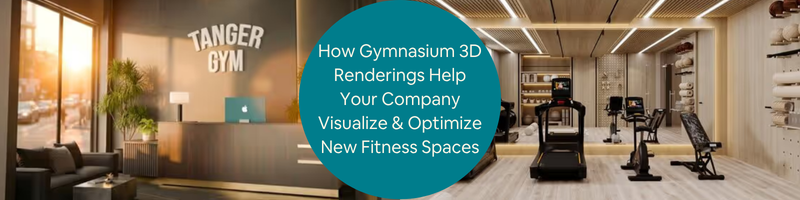
How Gymnasium 3D Renderings Help Your Organization Visualize & Optimize New Fitness Spaces


How can gymnasium 3D renderings help your firm visualize and optimize new fitness spaces? Constructing any building or establishment needs concrete plans that are backed by strong planning and decisions in order for it to become successful. And it is not different in building a gymnasium. In designing a fitness facility, it can really be quite challenging, especially with the layout planning, when the layout planning designer must choose the right equipment and where to properly place it. And it is important to consider the functionality and efficiency of the space, aside from its visual appearance. 

However, during the construction process, it would be a lot more difficult if the only basis were the traditional drawings. Since it no longer serves as an effective preference, especially in today’s modernized world. They could no longer have a precise look at how everything would operate. That is why gymnasium 3D renderings serve as an important part of the process. With the help of these visualizations, organizations are able to present realistic outputs for their planned fitness spaces before they go through the construction process. 

RELATED: The Best 5 Angles for Architectural Exterior Rendering to Showcase Building Projects

Understanding gymnasium 3D renderings

Gymnasium 3D renderings are technical documentation in the form of digital images that provide a clear visualization of a specific fitness facility once it’s built. It showcases its final look, effectively illustrating how ideas became a reality when the construction process was successfully completed. These visualizations are created using 3D modeling design specialists and software, in which everything in the gym environment can be clearly presented in great detail. What’s really amazing about this rendering is that it doesn’t just present basic still images. Rather, it represents it in a more realistic way.

Very detailed information is incorporated as input, such as how lighting would affect proper equipment placement, and emphasis is placed on textures and the layout of the entire room, so it is easier for clients to visualize how the final design would actually look. Through these 3D renderings, designers can also have easier planning on how every piece of equipment inside the gym would be properly placed for everything to function smoothly, without the need to understand everything in a more frustrating way. Through these realistic visuals, both parties can communicate effectively, suggesting ideas and changes long before construction begins.

Easier visualization for teams involved

One beneficial thing about these gymnasium 3D rendering services is that it presents a full layout of the entire fitness facility. Everyone can clearly see every area inside the gym. Even before it’s built, the realistic arrangements of the equipment inside the facility are completely presented for everyone to visualize its overview. In these visuals, the training spaces, equipment areas, and especially the workout zones are shown, and organizations can clearly see how all these areas fit together and complement one another within a given facility. 

RELATED: How the Future of 3D Rendering in Architecture is Shaped by Mobile Technology

With the help of this very smart approach, planners can have a very understanding viewpoint since everything is just so clear, so it’s now easier for them to imagine how everything would function, especially when people get to start working out already. So they can check how this layout would serve them, ensuring how comfortable it is and how effectively designed it could support them in their daily workout sessions. With 3D renderings, everyone involved in the team could save more time and energy from the start. They could spot what needs to be adjusted or improved since the entirety of the design would be shown in detail before they take the step in constructing it.

Better decision for proper space planning

In designing a fitness facility, it is really important to consider the services of space planning expert designers, because space planning is an important part of the functionality of the facility. There are a lot of things to keep in mind when building a gym, since workout equipment needs to be placed in locations where people can use it more comfortably. A gym is a place where people go to exercise and do their workout rituals. It’s a facility that needs to be strongly built. Since the things that are going to be put inside are hardcore materials, everything must be put together successfully before the construction process starts. 

So, with the help of these 3D renderings, 3D designers can freely explore multiple layout options and analyze how specific equipment will be able to fit in a specific space within the area. They won’t just be limited to one layout, so it really can be so beneficial since they can still make adjustments and new positioning ways before they start the construction. It is really helpful to see how everything in the space would actually look like in advance, since planners can refine any layout in order to improve its overall functionality so that they can avoid potential problems when they start the construction process. 

In proper space planning, it is best to ensure that every piece of equipment is positioned correctly and to leave enough room between all types of workout machines to limit or avoid potential accidents. And through this proper planning, they could also visualize the spaces efficiently and practically, especially for gyms that are not that big. 

RELATED: 3D Lighting Rendering Guide: Techniques, Tools & Pro Tips for Architectural Companies

Better decision for proper equipment placing

In any fitness facility, everything that’s inside of it, the machines, the gym equipment, is thoroughly planned and decided way before it is purchased because part of the designing is the functionality of the overall success of the facility. This is where virtual staging for architecture services can be invaluable. It is best to select the proper equipment in order for them to be positioned and arranged in specific areas where everything would smoothly operate for the comfort of the future users. If the equipment is not arranged properly, then it would be difficult for people to move along, and it wouldn’t be proper since it could lead to movement limitation, and the space would be more crowded. 
3d rendering services

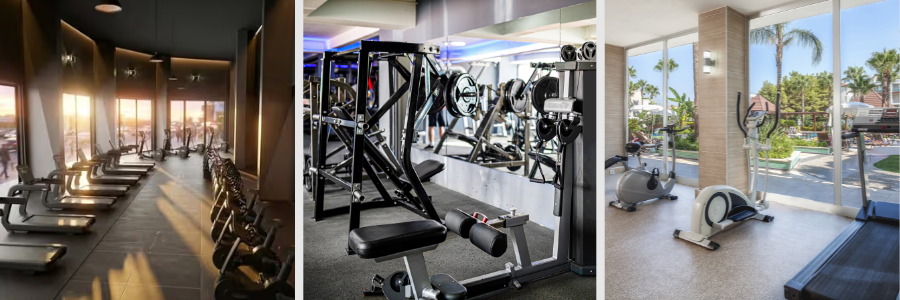
In 3D renderings, organizations can see early on how these machines and equipment would fit inside the gym. They generate this layout that consists of all the equipment that would be used and placed once everything is settled. So, it really makes the process easy since they can spot issues during the early stages in order to adjust what needs to be adjusted and redesign what needs to be redesigned before building the facility.

Also, it ensures that every pathway between pieces of equipment is accessible and usable, since a gymnasium is expected to have a lot of people, so their comfort must be the top priority, ensuring they can move freely while they work out. When everything is well decided, then the outcome will turn out well, not just for the potential customers but also for everyone involved in the organization.

RELATED: Understanding Architect Fees and Hiring Options for Your Firm with Cad Crowd

Enhance team collaboration

Behind a successful design of every project, such as a gymnasium, are a lot of creative and technical people, such as the 3D architectural visualization designers, the architects, gym owners, and, of course, the investors. And in order for everything to be successfully built, these people must have a clear relationship with each other, ensuring a collaborative vision. So, the process of achieving the goal would be smoothly operated. When these people work as one team, it would surely lead to a successful project execution and would actually benefit them all. 

Clear communication is really important in order for things to be set and for everyone to work to the best of their ability. In projects, they all aim for one thing, and it is to finish it with satisfaction in their hearts. And for a specific project to be finished, everyone must put into their mind a clear understanding of their design plan, since it serves as their reference throughout the entire process of creating it. And this representation is backed by 3D architectural rendering experts, which collaboratively support the entire process right from the very beginning up until the end of the execution.

Instead of just relying on the technical plans, they can now have a realistic illustration of the proposed plan, so the discussions could be more open and effective in deciding what else they needed to change or edit right before they conclude the final verdict.

Identifies issues early on

One of the best benefits of 3D renderings is that it helps in identifying design issues way before the early stages of planning. It notices issues such as space limitations, inefficient layouts, narrow paths, and poor equipment arrangement. These potential problems could really cost a lot when not figured out early on. If these are seen only after construction is finished, the organizations would clearly be so stressed and, worse, incur another costly expense for reconstruction, leading to delays and many more problems.

RELATED: The Power of 3D Visualizations in Improving Construction Safety and Project Efficiency

When the 3D rendering expert identifies these issues early on, he could create early adjustments and effective solutions during the design phase and before proceeding to the construction proper. By seeing the facility design in 3D, stakeholders would be more confident before starting construction, since they can confirm that everything is settled and ready for the final step. Therefore, everything would be smoother and would be efficiently done since issues are fixed early and have been replaced with solutions that can really contribute to the entire functionality of the gym.

Improve project presentation performance

In every project, whenever they developed a new design, it would really be presented to the investors, decision makers, and administrators. It is very important to bring a presentation that you can confidently show, since you are not just bringing it with no hopes of it being approved. And now, where we are very high-tech already, and technology is really advancing, it is very impressive to incorporate it. In your project designs, it would add so many points if it were more convincing and encouraging to the eyes of the stakeholders. 

Although traditional drawings are somewhat helpful, especially in the years before this technology advanced, it’s still not very encouraging to present a plan that lacks detailed viewpoints and could leave viewers frustrated in many ways. So, by utilizing 3D architectural rendering designers, it guarantees a more lively presentation of the design, allowing stakeholders to clearly visualize how the actual structure will look once it’s all settled and built. By looking into presentations that are in 3D, they would actually have a realistic view of the proposed space. 

Through this approach, stakeholders could have a better understanding of what the design is trying to communicate, making them more interested, and this leads to project approval more quickly. Aside from that, investors can be really hooked by how the project plan is being created, making them more engaged with the proposed facility and leaving them with Satisfaction, since it impressively captures their attention.

RELATED: Corporate Branding & Interior Design: Aligning Spaces with Company Identity for Firms

Effective marketing tool 

Marketing a business can really be challenging, especially when your business is only designed for a certain scope of people, like a fitness facility. We know that a fitness facility isn’t something everyone is interested in going to, aside from people who are conscious of their health and physicality. And in marketing it effectively, 3D design firms creating 3D renderings can be a great help since they can use them as a marketing tool in promoting the facility. Owners can use it on their websites or integrate it into the brochure that they are trying to distribute, and in the presentations showcasing its visual vision space.

With the help of these visuals, stakeholders can promote it in a way that people could be excited and really be interested, even if it hasn’t been constructed yet. With its encouraging visual views, potential customers, investors, or partners can clearly see what the facility will look like once construction is finished. And since this 3D design is very realistic, they could have a sense of clarity when looking at the actual layout in the overall atmosphere and its design.

3D architectural rendering

Using 3D architectural modeling professionals, can be a reason for the project to stand out, especially when you market it to the investor, since they are looking for something that is new and impressive to the eyes of the public. So, by applying this smart approach, you can also attract many people who will support you in this venture and help ensure successful execution throughout the construction process and the subsequent steps. 

RELATED: 3D Rendering Artists: What Sets Apart CGI Specialists & Talented Freelance Experts

Advanced enhancement for fitness enthusiasts’ safety

Another very important thing about gymnasium 3D renderings is that it gives architectural drafting designers a clear understanding of how the potential members or customers of the gym would move through different workout areas and spaces during real-time sessions in the fitness facility. By having a clear visualization in the overall viewpoint of the facility in advance, they could be able to optimize the areas that need to be properly operated since the equipment in the gym really needs enough space for everyone to move swiftly. And through this, designers can also handle multiple tasks regarding lighting, textures, and materials to ensure that comfort and accessibility are top of the line for everyone’s safety. 

When everything is visualized early on, then they could be able to also see early what can be the potential concerns of the members are right before they start the construction. In advanced planning, by using 3D visualization services, a smoother and more accessible place is being considered for everyone who will be using and working inside the gym. So in this initiative, anyone who will be working out inside the facility in the future wouldn’t face serious risks or problems while doing their work. So everyone is safe and sound inside the facility.

Importance of professional help in gymnasium 3D rendering service

In the process of creating a successful establishment like a gymnasium, it really needs technical expertise, especially when you want very realistic 3D renderings that could serve as a guide for the process before construction begins. And in order to do so, you need to have experts in the specific field wherein guaranteed to contribute to a clear and detailed design output. Professional rendering services help transform your concept designs into precise, accurate visual illustrations that showcase what the actual facility will look like, even before construction begins. 

RELATED: Best 50 Sites to Hire Freelance CAD Design Experts and Remote Designers for Your Company

In fact, many organizations collaborate with experts to successfully complete their projects. They take pride in hiring experts who make transactions smoother and bring their ideas to life, so they can be easily understood when presented to investors. With so many platforms to choose from right now, it promises to provide experts who will meet your requirements. Nothing compares to Cad Crowd since they make it easy to match you with photorealistic rendering professionals who are highly skilled in 3D renderings, especially for fitness facilities and gyms.

Conclusion

Everything really requires careful thought, especially when it is designing a project plan like a fitness facility or a gym. Aside from planning what it would look like, what’s challenging more is how the inside of the facility would be arranged in a way that could both present an aesthetic and a comfortable experience. In a fitness facility, its aesthetic facility isn’t just something you need to put most of your attention to, since the equipment. You need to put inside needs a thorough selection as well. 

And what’s most challenging about it, as well, is the effort and planning required to ensure your space is functional for both members and staff once everything is already settled and constructed. With the help of 3D renderings and photorealistic rendering designers, everything is easier to visualize, from its layout to its placement, down to how things will be operated. A lot of potential problems are mitigated if this rendering is applied, since during the early stages of planning, it can already be seen and can be resolved early on. With the help of professionals in this kind of service, the design is created more accurately and realistically. In order for the decision makers to be impressed and give their approval to it, signaling that it’s ready for construction. 

RELATED: How Does 3D Architectural Modeling Create Immersive Design Experiences for AEC Companies?

There are a lot of platforms already everywhere that provide experts in creating this kind of rendering. However, Cad Crowd stands best among them all, since aside from finding you the best expert, it also assures that these experts are really trained and skilled before you hire them. Everything is checked and reviewed in order to guarantee that the organizations that will work with them really have a clean background and training that really contributed to the skills they have today. 

How Cad Crowd can assist

For organizations that aim to achieve functional fitness spaces and, of course, a well-designed plan, they could benefit most from partnering with the experts and interior rendering services. And worry no more because CAD Crowd is the best choice for delivering high-quality and realistic 3D renderings that would surely provide you with output that would really help you get that approval that you have long aimed for. And remember that in aiming for the best, you really need to also choose the best. And that would be best executed when Cad Crowd is the one that you’ll choose since they guarantee you to produce top-quality designs that are really done with the right amount of expertise without compromising the entire concept ideas. Contact us for a free quote.

author avatar

MacKenzie Brown is the founder and CEO of Cad Crowd. With over 18 years of experience in launching and scaling platforms specializing in CAD services, product design, manufacturing, hardware, and software development, MacKenzie is a recognized authority in the engineering industry. Under his leadership, Cad Crowd serves esteemed clients like NASA, JPL, the U.S. Navy, and Fortune 500 companies, empowering innovators with access to high-quality design and engineering talent.

Connect with me: LinkedInXCad Crowd

Full Guide: Commercial Architectural 3D Rendering Services for Companies & Firms


You’ve read the shiny brochure: a glittering office high-rise bathed in golden-hour light, or a storefront so realistic you can almost hear the mall music. But the thing is, that building doesn’t yet exist. It’s a 3D model, and it’s performing a magnificent bit of trickery, making you believe it already does.

Welcome to commercial architectural 3D rendering services—where imagination and geometry meet, and where dreams of design are realized in photorealistic perfection. If you’re in the business of building, selling, marketing, leasing, or visualizing commercial properties, learning how this service works can be a big competitive advantage.

Cad Crowd is one of the best platforms to find CAD design and 3D rendering experts for architectural and construction firms. Let’s break down the whole story, without the fluff and buzzwords. This is your all-access, tell-it-like-it-is guide to how rendering services make commercial architecture projects a success.


🚀 Table of contents


So, what is commercial architectural 3D rendering?

Commercial architectural 3D rendering is much more than glitzy pictures; it’s an advanced technical technique that takes substantive architectural information and converts it into ultra-realistic images. It begins with floor plans, elevations, and accurate CAD information, but rather than settling for those as fixed blueprints, rendering turns them into realistic images or engaging animations. These graphic outputs capture a building’s finished shape with spatial integrity, lighting, texture, scale, and even environmental elements.

Unlike schematic designs or conceptual sketches, commercial architectural renderings in 3D are made for environments of high stakes, such as city skyscrapers, logistics parks, retail centers, or airport terminals. They require clarity and accuracy before the ground is even broken. The rendering act is a bridge of communication between business vision and design intent. It enables architects to express form and function. Developers are entrusted to present investment opportunities confidently. Marketing staff can sell a space prior to its physical existence.

What isn’t it? It’s not guesswork. It’s not flair. It’s a technical narrative—driven by the logic of architecture, the science of materials, the physics of light, and occasionally even BIM design services. Done correctly, a commercial rendering does not merely depict a space—it sells it, describes it, and rationalizes it.

For businesses that undertake commercial projects, this visualization software has become a necessity, not just about making things look pretty. It’s about taking complexity and making it clear, converting numbers and line weights into spatial stories that engage clients, stakeholders, and city officials alike. Architectural 3D rendering is where vision makes sense.

RELATED: Redefining existing buildings with interior fit-outs & architectural design companies

3D architectural rendering of a villa and multi-home site by Cad Crowd rendering experts

Why 2D drawings just don’t cut it anymore

There was once a time when a good set of 2D drawings could wow a room. But now? They’re merely the beginning. While they’re still necessary for technical precision, permits, and construction teams, they’re lacking as a means to sell an idea. Attempt to sell a client on their new luxury hotel lobby using a flat elevation— odds are, their eyes will glaze over quicker than you can say “cross section.”

Come in, architectural 3D rendering services. It brings a project to life with context, emotion, and reality. You’re not presenting a building; you’re sharing a glimpse of what’s to come. You can sense the heat of sunlight pouring in through an office atrium, feel the texture of marble on a reception counter, or envision the way trees move outside a glass curtain wall. It’s engaging, moving, and, above all, relatable.

In a visually driven, first-impression world, 2D just can’t carry the load anymore. Rendering translates conceptualized ideas into real experiences. It’s not about taking the place of blueprints, it’s about taking them to the next level. Because when you’re asking someone to believe in a design, you want to show them the dream rather than point at a blueprint every time.

Who uses these services?

Architectural design experts could be the first that come to mind—but they’re only one piece of a much larger picture. Commercial architectural 3D rendering services have become indispensable for a broad variety of professionals, each utilizing them in surprisingly specialized ways.

Consider property developers, for example. Long before a spade ever touches the earth, they must find the financing, and 3D renderings seal the deal. Such images provide investors with an exact picture of what they’re investing in, providing a concrete glimpse into future profits.

Building firms rely on these images as well. With renderings, onsite teams can more closely agree on finishes, materials, and even spatial layout before any errors are committed on the ground.

Interior design firms employ renderings to stage tenant improvements or simulate how adaptable workspaces will operate. It is time-, cost-, and miscommunication-saving. Retail companies, on the other hand, utilize them to test store interiors in various cities, standardizing look and feel before roll-out.

Even government officials and zoning authorities rely on them. Considering a large-scale development? A rendering gives decision-makers a sense of how development affects sightlines, traffic patterns, or the neighborhood. Whether it’s signing deals, sidestepping construction errors, or securing permits, 3D renderings bring everyone from investors to regulators on the same page while working.

What these renderings can show you

Not all 3D renderings are equal—nor should they be. Commercial architecture is a vast universe, and each type of building has its own vision, needs, and requirements for storytelling. That’s why architectural renderings can manifest in various forms, each tailored for a specific stage or stakeholder.

You may be gazing at the work of an exterior rendering service of a street-level shot with drama or a bird’s-eye aerial view with grandeur. Perhaps it is an interior visualization with designer furnishings, ambient illumination, and soft shadows—ideal for a hotel lobby or upscale retail floor.

For initial stage planning, conceptual drawings help bring out the visual form from rough notions, initiating dialogue before construction is even a rumor. Walkthroughs and animations take it a step further, infusing space with smooth movement, day-to-night transitions in lighting, and user flow simulations.

And then there’s the future stuff: virtual reality previews. These allow clients to” step inside”their next space via a headset or online visit. And when it’s time to persuade city planners or a reluctant neighborhood board, contextual views place your design in a fully built-out street or rural context, so everyone can see how it fits.

The spectrum is wide, from stylized visuals that resemble digital art to photorealistic scenes that could fool even the most trained eye. Whether you’re pitching investors, applying for permits, or refining design concepts, the right rendering can make your vision not just seen, but felt.

Why companies rely on 3D renderings

In today’s business world of design and engineering design services, 3D rendering has evolved from a nicety to a hard-and-fast necessity. It’s no longer merely a hip aesthetic; it’s an integral part of how companies think through, sell, and obtain approvals for their projects.

To start with, it’s a powerful advertising powerhouse. Those crisp, high-definition images you spot in teaser commercials, real estate publications, or breathtaking billboards? More often than not, they originate from rendering studios. When selling a building or property that doesn’t even exist yet, you can’t use ambiguous blueprints. What you need are images that ignite emotions, fuel imagination, and—most crucially—sell the vision.

However, the magic doesn’t end with beauty. These illustrations are also genuine money-savers. By seeing a project early, teams can identify design problems, awkward layouts, or ill-conceived lighting options well in advance of having a single brick set in place. It’s a virtual safety net that can save headaches in the real world.

Approvals? They’re quicker, too. Whether selling to a dubious city council or persuading a wary investor, an excellent rendering can convey a vision better than any floor plan. People intuitively respond to images; they’re faster to understand and simpler to defend.

And perhaps most significantly, 3D renderings are trust-builders. Being able to see a photorealistic representation of an upcoming space instills confidence in stakeholders, especially for architectural design firms. It makes a far-off idea concrete, and that concreteness results in belief, support, and frequently, funding.

RELATED: Main differences between architectural construction drawings, shop drawings & as-builts services companies

How the rendering process works

Architectural renderings may appear magical, but a precise process combining technology, artistry, and many hours of painstaking work lies behind each photorealistic image. These aren’t pictures that pop out of one click—their creation takes a multi-step process to transform raw design information into emotionally engaging imagery. This is what actually transpires in the background.

Phase 1: Input collection — Gathering the DNA of the design

It all begins with a stack of references—blueprints, CAD, BIM models, even napkin doodles, if that’s what the client has. These documents give the rendering artists the building blocks of the project, the architectural skeleton. But aside from the technical documents, this is where the personality of the space starts to take form. Clients discuss finishes, color schemes, lighting designs, landscape design likes and dislikes, and furniture choices. This is not fluff information; it’s what enables the rendering team to pick up the mood, personality, and worldly context of the project. A rendering is more than a model —it’s a narrative relayed through light and texture, and this is where storyboarding kicks in.

Phase 2: 3D modeling — Carving out the space in the digital realm

With all the input absorbed, the team creates a digital skeleton. Using sophisticated 3D modeling design services, artists reconstruct the building form element by element—walls, columns, stairways, ceilings, and all the structural elements in between. It’s similar to building a virtual version of the project in miniature, brick by brick. Here, the visuals are still extremely rough—imagine gray surfaces and hard edges. It’s technical, geometric, and unstyled. But it sets the necessary foundation for what’s to come.

Phase 3: Materials and lighting — Bringing the bones to life

Now that the geometry is set, the model takes a dramatic leap forward. Artists start adding material textures: wood grain on floors, marble on countertops, metal panels on façades. Artists painstakingly replicate how each surface will play with light—because, yes, light acts radically differently on glossy tile compared to a matte concrete wall. This is when lighting design comes into play. The crew fine-tunes everything from the angle of light shining into a window at midday to the background luminescence of recessed LEDs in the evening. Now, that gray scaffold begins to feel like an actual space with warmth, texture, and atmosphere.

Phase 4: Rendering engine time — Crunching the visuals

With all the components in place, it’s time to hit “render”. But don’t imagine this as a quick command—this is where computational horsepower does its thing. The rendering engine calculates shadows, reflections, transparency, and indirect lighting interactions—every photon, every bounce. Depending on the complexity of the scene and the desired resolution, the process can take hours or even days. It’s essentially a digital bake, where the raw ingredients fuse into a photorealistic image.

Phase 5: Post-production polish — The final touches

After the engine renders the picture, it enters a visual editing studio. It is here that it receives the sheen, contrast tweaks, saturation maximizations, sharpness adjustments, and the addition of atmosphere. Perhaps some fog, some wind-blown trees, or pedestrians walking across the area. These are not merely ornaments—they contextualize the scene and add emotional relevance to the rendering.

Phase 6: Revisions and delivery — The collaboration continues

No rendering is truly final until the client speaks up. Feedback comes in after the initial draft. Sometimes, it’s a small tweak: a too-tropical-looking plant or a chair that doesn’t fit the brand. Other times, it’s a complete shift, such as moving an entire building or rearranging outdoor lighting through custom lighting design services. The team makes adjustments in response, balancing the client’s vision with technical possibility, until the final image finds its mark.

Rendering is a combination of science and art, data and emotion. It’s a collaborative effort that takes architecture and turns it into pictures—and that process is just as complicated as the buildings it depicts.

RELATED: Commercial 3D rendering rates for buildings, services costs, and pricing for architectural firms

Arena and aerial view of an office by Cad Crowd 3D rendering design experts

The costs: What you should pay

Architectural rendering is not cut with a single-size-fits-all price tag, and that’s because no two projects are quite identical. Costs vary based on a few significant factors: the complexity of the design, the resolution you’re looking to achieve, and the amount of time you need to get that breathtaking image in hand.

A simple interior rendering service of, say, an upscale office waiting area may cost you a few hundred dollars. The cost, however, can soar exponentially for bigger, high-end commercial exterior shots—particularly those full of complex details, lighting nuances, and cutting-edge textures. You may be paying tens of thousands of dollars for one shot that catches your building at its best light.

Next comes the big gun: animation. If you need a walkthrough or flyover of a new complex, be prepared for five-figure prices. The longer and more movie-like it is, the longer and computationally intensive it takes to create.

Need it revised? Most studios are more than willing to adjust your project, but those revisions aren’t included in the price. Need the sunset to strike exactly across the glass atrium? That is a perfection that costs additional hours and dollars.

The secret to keeping costs under control? Clarity. The more detailed and organized your input from the get-go, the fewer revisions you’ll need. Good documentation and clear decision-making aren’t just helpful, they’re money-savers. When everyone is on the same page, your budget breathes a little easier, and your render turns out exactly as envisioned.

In-house vs. outsourcing: What works best?

When it is a matter of 3D rendering for commercial architectural design services, there is one question that tends to revive a heated discussion among design and development companies: whether you should create an in-house rendering department or commission the service from outsiders. There’s no universal answer, but the pros and cons are pretty consistent across the board. Firms that opt for an in-house team usually do so for the control it offers. Having designers on-site means quicker revisions, better alignment with evolving project goals, and faster communication. But it’s not a cheap route. You’ll need to invest in salaries, high-end computers, rendering software, and ongoing training—costs that can pile up quickly.

Conversely, outsourcing provides companies with a larger talent pool, typically with very specialized knowledge and state-of-the-art tools. The external studios are ideal for big projects, complicated visual scenes, or when your in-house crew is maximized. Still, it can take more time to finish the project, and working with time zones may involve additional coordination.

Intriguingly, most firms today mix both alternatives in a hybrid model. Internal design experts will do the fast drafts, concept images, or tight-timeframe projects. The high-shine, movie-grade renders for marketing materials or investor decks, however, are outsourced to experienced external shops.

Ultimately, it’s not a question of either/or. It’s a matter of being flexible and knowing when to draw upon the right resource for the specific task.

Selling with story: Why rendering is more than just a pretty picture

Architectural rendering for planning and design firms is not all about shiny finishes and perfect pixel-perfect shadows; it’s about telling a story. Each image created by a skilled rendering artist is an introduction to an experience in the future, a moment yet to occur, but already real. And that’s what makes it so powerful.

Imagine a shopping plaza. Okay, you might indicate the site plan, the immaculate paving, the glassy storefronts—but where is the life in that? A good rendering will reveal people enjoying their morning coffee at a sunlit café table, children playing beside a fountain, couples ambling with bags in hand. Not selling a building; a way of belonging. A place. A lifestyle.

The same holds true for commercial projects. Suppose a firm is constructing a new headquarters. A photo of the exterior may depict handsome architecture, but a drawing that exposes open collaborative areas filled with natural light says more. It conveys values—transparency, innovation, connection—without saying a word.

These visual stories succeed because they appeal to emotion. They cause individuals to see not only what something is, but also what it represents. That’s something blueprints and descriptions are unable to accomplish.

In a competitive design market, quality rendering sells space. Excellent rendering sells the story that space will convey.

RELATED: How 3D real estate rendering services boosts traffic and visibility for realtors

Technology on the move: The future of 3D rendering

The world of 3D rendering design services never ceases to shift gears. What used to take days to render is now accomplished in real-time, courtesy of powerful engines that allow architects and clients to wander through virtual spaces as if on foot. It’s not only impressive, but it’s totally revolutionizing the way people experience design before a single brick is ever laid.

Virtual reality is no longer a gee-whiz addition. It’s becoming an everyday staple, immersing its users in fully realized worlds that don’t yet exist. Want to sell a new office complex or a villa? Just put on a VR headset, and you’re right in the middle of it.

Artificial intelligence is also making an impact, altering the way environments are designed and how textures appear under different lighting conditions. It’s revolutionizing the creative process under the radar, providing smarter, more intuitive design ideas and streamlining tasks that used to gobble up work hours.

For architecture, real estate, or design firms, the message is simple: change or be left behind. The leading rendering strategies for today prioritize speed, interactivity, and integration, particularly with BIM environments and real-time collaboration software. The ones who move with a rapid pace can produce more engaging imagery, quicker revisions, and memories that last a lifetime.

How to maximize your rendering project

A successful rendering doesn’t occur through the wave of a magic wand with a button click; it’s a team effort that starts many iterations before pixels are even pushed. To wow clients, stakeholders, or the boardroom (without breaking the bank), the solution lies in careful preparation by architectural design firms.

Begin by understanding what you’re working towards. Are you designing images for a marketing campaign, an investor presentation, or a design critique? Each application requires a varying degree of detail, mood, and narrative. Without purpose, even the most technically competent rendering can fail.

Once your intention is set, collect whatever your rendering team may require: architectural drawings, sections, finishes, elevations, mood boards—even Pinterest references are available. These aren’t merely files; they’re the genetic code of the final image.

Be prepared for some rounds of feedback. Revisions are not setbacks—revisions are chances. This is your time to tweak the imagery until it connects exactly with your vision.

And never forget, no amount of post-production can cover up a poorly conceived design. Rendering adds to it; it doesn’t remove. The best, most stunning visuals are based on sound architectural design. So, get the design right first, then let the rendering take it to new heights.

Final thoughts: The rendered reality

In a landscape in which commercial property development is more costly, more competitive, and more emotionally charged than ever, 3D rendering stands as the industry’s ultimate visualization tool.

It gets everyone from investors and engineering design experts to clients and neighbors on the same page. It uncovers opportunity. It prevents miscommunication. It speaks stories. And when done right, it does it all before one single brick is set in place.

Whether you’re pitching a mixed-use development or seeking approval for a smart logistics hub, don’t just talk about what you’re building. Show it. Render it. Sell it. In commercial real estate, the best way to build trust is to let people see the future before it’s built.

RELATED: How your interior design company can benefit from 3D photorealistic renderings

How Cad Crowd can help?

Don’t let your next commercial project get lost in translation between blueprints and boardrooms. Cad Crowd delivers world-class 3D rendering talent that transforms architectural concepts into visual masterpieces that sell themselves. Our network of expert artists specializes in creating photorealistic renders that wow investors, streamline approvals, and close deals faster than traditional presentations ever could. Ready to see your vision come to life? Contact us now for a free quote!

author avatar

MacKenzie Brown is the founder and CEO of Cad Crowd. With over 18 years of experience in launching and scaling platforms specializing in CAD services, product design, manufacturing, hardware, and software development, MacKenzie is a recognized authority in the engineering industry. Under his leadership, Cad Crowd serves esteemed clients like NASA, JPL, the U.S. Navy, and Fortune 500 companies, empowering innovators with access to high-quality design and engineering talent.

Connect with me: LinkedInXCad Crowd