When Do Companies Use Freelance 3D Virtual Staging Services vs. Traditional Staging?


First impressions are crucial in the world of real estate sales. Homeowners looking to sell their properties understand this, so they often invest in staging to enhance their chances of a successful sale. The challenge for companies is different. They must navigate the decision of how to stage their properties in the most effective way. This is where the dilemma of choosing between traditional and 3D virtual staging comes into play.

The million-dollar question is when do companies use freelance 3D virtual staging services vs. traditional staging?

Real estate staging at a glance

Staging is a term used to describe the process of enhancing the appearance of a property to increase its market value. The goal is to make the property as appealing and inviting as possible, allowing potential buyers to envision themselves living there. While there are many ways to do this, it typically involves arranging, decluttering, and depersonalizing the area to make it look and feel more appealing to buyers.

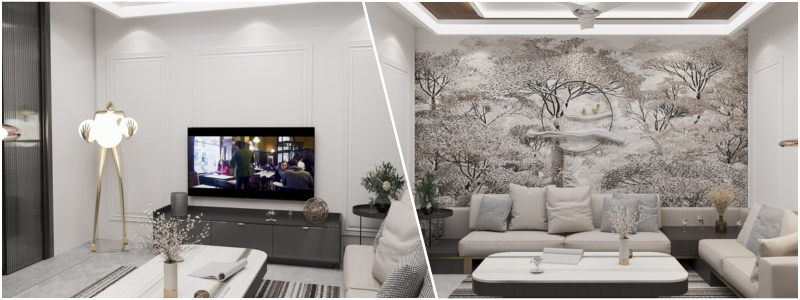
Traditional staging and 3D virtual staging are the two primary types of staging that real estate companies and property owners use today. Traditional staging involves using existing furniture, fixtures, and other items to stage the physical property. Virtual staging, on the other hand, uses photos or images of a partially furnished or empty property. These are then edited to include furniture, artwork, and other decorative elements.

Traditional staging

With traditional staging, professionals are hired to rearrange the décor and furniture to make the property look and feel more enticing for buyers. It can be a bit pricey, but it is also worth investment if it helps sell the property faster. This traditional route usually pays close attention to making the property look as inviting and spacious as possible. This may involve changing the furniture arrangement for more open spaces, adding accents with strategic placements that can add appeal and pop, and decluttering surfaces.

3D virtual staging

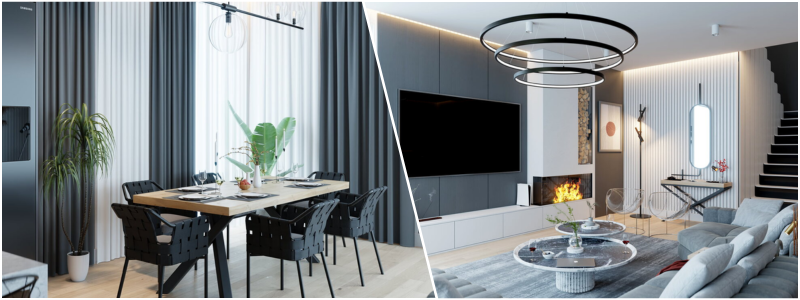
3D virtual staging refers to the process involving computer-generated images or CGI for staging a property and selling it digitally. With the help of 3D rendering services and other state-of-the-art imaging techniques, a virtual stager can create realistic images of what a property would look like with different décor, finishes, and furniture while still using authentic photos of the property captured by professional photographers.

Real estate developers can use 3D virtual staging to raise interest and generate buzz about a project before its completion. This allows curious parties to get a better feel of the property even if they haven’t seen it yet. In addition, newly built houses and similar projects that are still in their planning stages can also be staged virtually.

With the industry’s continuous growth, more real estate agents and companies will likely start offering these 3D virtual staging services to cater to their clients’ changing demands.

RELATED: Virtual Staging Costs, Service Fees & Architectural Pricing for Real Estate Companies

A quick comparison of traditional staging and 3D virtual staging services
1

You need to consider several vital factors when deciding when to use traditional staging and 3D virtual staging services. These include the following:

With freelance 3D virtual staging, your company can save more money since you no longer have to rent or buy furniture and other necessities. This cost-effectiveness provides financial security, especially compared to the potentially higher expenses of traditional property staging. However, a few real estate professionals claim that the ROI, or return on investment, is worth this extra expense because staged properties usually sell quickly and cost more than non-staged properties.

Freelance 3D virtual staging services offer improved adaptability. They allow you to quickly swap out the pictured décor and furniture if your client decides they no longer want it or it doesn’t fit well in the space. This flexibility empowers you to cater to your client’s changing preferences and needs. On the other hand, traditional staging has reduced adaptability because it is more difficult to rearrange the interior after installing or placing all furnishings.

3D virtual staging is less time-consuming since it eliminates the need to shop for furniture or place décor. As for traditional staging, it requires more time because of the need to buy and arrange furniture.

RELATED: The Ultimate Guide to Virtual Staging for Real Estate and Architecture Companies

Strengths and weaknesses of traditional staging
2

The in-person experience is the biggest strength of traditional staging. Sellers love the thought of potential buyers getting to walk through the property and experience it as a carefully arranged space meant to appeal to them. Traditional staging is also a more familiar concept to most consumers. After all, you can see staged properties no matter where you look. They’re on Facebook, Instagram, YouTube, TV, and magazines. After the staging process, You can see the procedure and the resulting emotions. However, the figures show that traditional staging is so valuable for real estate listings, so why do some real estate agents nottage all properties for sale?

For starters, it’s easy to overestimate the effectiveness of the in-person experience. Traditional staging has four main obstacles: cost, inconvenience and difficulty, design limitations, and turnaround time. Numerous factors determine the price of conventional staging, but you must be ready to spend at least $300 for a consultation alone. On average, traditional staging can cost approximately $6,000. If the property you’re trying to sell is worth $10 million, spending four to five figures on traditional staging might be worthwhile to maximize the sale.

This amount is far too high for most real estate agents in the country to spend on every listing.

One more significant concern with traditional staging is logistics. First, the owners have to declutter the property, including all their décor and furniture. The staging company will then schedule several days to bring in and set up all the furniture and décor. The staging process itself can also be complex and lengthy. It might take weeks for the seller or agent to look for a staging company, schedule a consultation with them, wait for the new design, wait once more for the seller to free the property of all their belongings, and bring in and set up all furniture. For most sellers, the inconvenience of traditional staging can be a real deal breaker.

Lastly, most agents aren’t aware of the limitations of traditional staging designs. Design quality depends on the staging company’s inventory and expertise. It’s also ideal to look for a stager with a massive selection of inventory and years of experience in the field. However, the truth is that most professional stagers have a minimal number of furniture items to select from. If the house is a penthouse or apartment in a metropolitan city, traditional stagers won’t carry heavy, oversized furniture that will not even fit through the door. They are forced to choose pieces that are logistically easier and more straightforward to move.

Traditional staging offers limited options compared to freelance 3D virtual staging services but at a higher price.

RELATED: Benefits of Virtual Staging Services for Architecture and Real Estate Companies

Top reasons to use 3D freelance virtual staging services
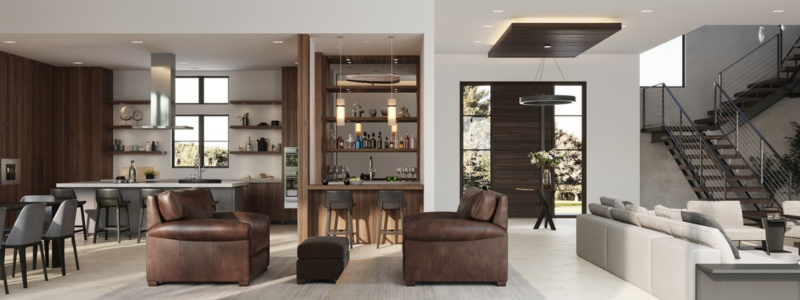
1-1

Here are more convincing reasons why your company should consider using freelance 3D virtual staging services over traditional staging:

Continuing from the abovementioned point, 3D virtual staging is more flexible because it can be used for any property type. It doesn’t matter if your company is working on a single-family home, a townhouse, or a condo; you can easily stage it in the virtual space and make it appealing to the eyes of prospective buyers. This level of flexibility is impossible with traditional staging because this is often limited and exclusively applicable to specific types of properties.

  • Increase interest among buyers

Freelance 3D virtual staging services generate increased interest from buyers in properties. It has been discovered that staged properties generated twice as many online views as those that weren’t staged. The heightened interest can result in a higher selling price and a faster sale simultaneously.

  • Eliminate physical limitations

Physical limitations can hamper the effectiveness of traditional stagings, such as the availability of furniture and the size of the property in question. However, these restrictions are non-existent in 3D virtual staging because it is suitable for all property sizes and using any piece of furniture. This makes this an ideal choice for homeowners and real estate companies who want to stage a property but are limited by physical constraints.

Another notable reason companies are now shifting to freelance 3D virtual staging services is that they are easy and quick. Unlike traditional staging, which is often completed within several days or sometimes even weeks, virtual staging is typically completed in just a few hours. This makes it an excellent choice for those who want to sell properties faster.

How Cad Crowd can help

If your company is looking for the best freelance 3D virtual staging services, Cad Crowd can connect you with the right people who can guarantee excellent results!
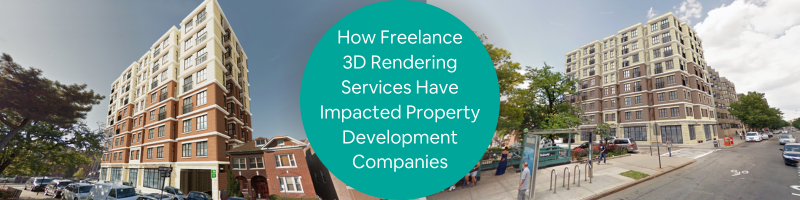
How Freelance 3D Rendering Services Have Impacted Property Development Companies


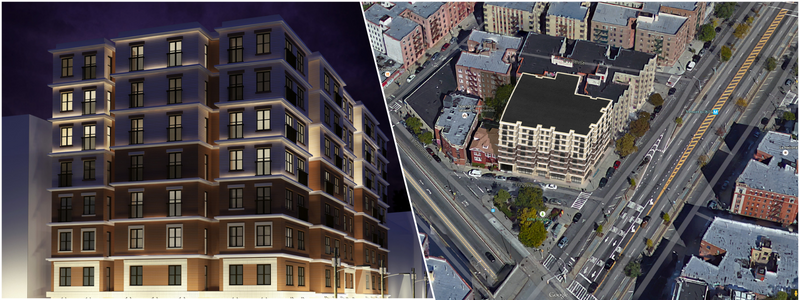
Technological innovations and advancements are the catalysts behind the rapid evolution of the property development industry. 3D rendering services are the perfect example of these advancements, changing how planners, developers, and architects approach rezoning and development applications. 3D rendering offers an interactive and vivid visualization of projects to give all the stakeholders involved an excellent and thorough view and understanding of the nuances of the suggested development. This article delves into how freelance rendering services have impacted property development companies.

Limitations and challenges of traditional property development methods

Historically, Property development involved developers, architects, and investors collaborating on physical models, blueprints, and paper-based plants. Developers also relied on text descriptions, 2D drawings, and even rudimentary models whenever they presented their plans to the community, local authorities, and planning commissions. Unfortunately, these conventional methods and static representations left much to the imagination and more room for interpretation, which may result in delays, misunderstandings, and complete project rejections. They also made it more difficult for all stakeholders to grasp the project’s potential.

Below are other common limitations of traditional property development methods:

Creating physical models that require several revisions can be time-consuming and expensive.

Physical models and 2D drawings need help conveying the depth and realism of a property.

The stakeholders are left with no choice but to rely on their skill and ability to interpret, which usually leads to gaps in communication and misunderstandings.

Marketers needed help to showcase their properties to prospective buyers using static visuals alone.

  • Slower decision-making process

The required time for approvals and revisions delayed the timelines of projects.

RELATED: 3D Rendering Costs & 3D Visualization Prices for Firms

The introduction of 3D rendering

property1

The rise of 3D rendering technology made a significant turning point in the property development industry. The tool introduced highly realistic, interactive, and dynamic visualizations that remarkably improved properties’ conceptualization, design, marketing, and selling. 3D renderings offer a higher level of detail and a more interactive experience. These are outstandingly realistic and provide a virtual walkthrough that allows people to experience the space even before its actual construction.

The following are the main areas where freelance 3D rendering services can make a big difference:

Designing and visualizing concepts

During the initial stages of designing and conceptualizing the design, you can feel the primary impacts of freelance 3D rendering services for property development companies. Designers and architects can create complex three-dimensional representations of ideas. 3D renderings can offer unmatched realism and detail, allowing stakeholders to explore the entire project before it is constructed. Furthermore, 3D rendering can bring clarity to concepts of design that were once challenging to communicate. These renderings offer a more complete view that allows better decision-making, from the spatial flow in the building to the texture of materials and the play of the natural light through the windows.

property2

More immersive experiences and advanced visuals

Freelance 3D rendering services and their transformative power are integral to property development as they provide enhanced visualization and a sneak peek of the project’s future. Unlike traditional drawings that often leave room for ambiguity now and then, 3D rendering offers endless options in three dimensions. 3D rendering also allows companies to provide visual walkthroughs and breathe life into their architectural plans before they are built. This provides a holistic representation that architects, developers, and potential investors can view and check.

The blend of small details, the sense of scale, and the way shadow and light play create a unique visual experience. The materials’ lifelike representation can also offer an initial estimate of the property’s maintenance expenses. This enhanced visualization is even better because it doesn’t just stop at the aesthetics alone; it also permeates other aspects of the project. It helps streamline the decision-making process, from layout optimization to meticulous tweaks in the design. Freelance 3D rendering services are like guiding stars that smooth down the development process and increase confidence every step of the way.

RELATED: What are Architectural 3D Visualization Costs, Service Fees & Rates for Companies?

Rapid prototyping and iterations

3D rendering and its digital nature also allow for more rapid iterations. Tweaks to the design elements, such as façade details, color schemes, and room layouts, can be implemented immediately to reduce the cost and time associated with design revisions.

Strategies for marketing and sales

3D rendering services have always significantly affected property marketing and sales. Today’s real estate professionals take advantage of 3D renderings to come up with enticing marketing materials and offer immersive experiences to potential buyers.

  • Photorealistic materials for marketing

Top-of-the-line photorealistic rendering services can help generate photorealistic materials that can be used for marketing, including promotional videos, websites, and brochures. These materials give prospective buyers a clearer understanding of the property’s appearance upon completion, making it easier for them to visualize themselves in the space.

  • Interactive experiences and virtual tours

Augmented reality and virtual reality technologies with 3D rendering often power them, allowing potential buyers to tour the properties virtually. The immersive experiences enable users to walk through the property and inspect each detail, from finishing to layouts, as if they were physically correct.

RELATED: Photorealistic Rendering Prices: 5 Factors that Affect 3D Modeling Costs at Firms

property3

Improved collaboration and communication

Effective collaboration and communication among stakeholders are essential for property development companies. Freelance 3D rendering services facilitate these aspects by offering a common visual language that can be easily understood by everyone involved. Marketing teams, investors, developers, and architects can use 3D renderings to convey ideas more effectively, reducing misinterpretations and misunderstandings.

Conventional public hearings usually involve complex plans that the public may need help understanding. 3D renderings make conveying the developer’s vision easier, helping the community better grasp the project’s impact, design, and scale. This enhanced level of transparency can result in higher support for the project.

  • Facilitate decision-making for the authorities

3D renderings are invaluable tools that help planning authorities make informed decisions. With the help of the renders, they can quickly evaluate how a new development will fit into an existing urban landscape. They can also check shadow studies and understand traffic flow, which are critical to ensure the plan’s success.

  • Approvals made more streamlined

3D renderings speed up the approval process through clear and realistic presentation of designs. These tools simplify how stakeholders and authorities review the projects and approve them accordingly after they grasp the result.

RELATED: Utilizing 3D Rendering Services for Companies in Architectural Property Development

Real-world applications of freelance 3D rendering services

Here are two real-world applications of freelance 3D rendering services:

  • Adaptive reuse and historical preservation

New property development projects are just some of the ones that benefit from freelance 3D rendering services. These services also play a critical role in adaptive reuse and historic preservation projects. Think of a historic landmark that requires repurposing and renovation. Freelance 3D rendering projects can recreate the original glory of the structure and, at the same time, show how this will be turned into a functional modern space. The renderings can help preservationists secure support and funding by clearly defining the project’s potential. They guide builders and architects to retain historical accuracy while incorporating modern amenities.

  • Pre-construction visualization

For example, a developer plans to build a posh condominium complex in a prime urban location. Traditional methods require architects to create models and blueprints that convey limited information. Freelance 3D rendering services, on the other hand, allow the creation of photorealistic animations and images that represent the whole development. Potential buyers can take virtual tours of the units, visit the penthouse for scenic views, and meticulously explore the carefully designed common spaces. This sheer level of realism and attention to detail allows buyers to make informed decisions that often result in faster sales.

RELATED: 3D Rendering Costs & 3D Visualization Prices for Firms

property4

Freelance 3D rendering services and their future possibilities and trends in property development

With the continuous evolution of technology, the impact of freelance 3D rendering services on property development is expected to grow and expand further. The following are some of the future possibilities and critical trends that lie ahead in the future of the industry:

AI or artificial intelligence will be more prominent in 3D freelance rendering services. The efficiency and speed of rendering will improve thanks to AI algorithms while also improving realism through automated features such as more realistic textures and lighting.

  • Integration of augmented reality

Integrating 3: services into property development projects will allow stakeholders to view 3D renderings overload on physical spaces. A construction site, for example, can be overlaid with the completed building’s digital rendering to aid in quality control and construction.

Real-time rendering technology allows developers and architects to make changes to the design while on the go during client meetings. The instant feedback streamlines the decision-making and design processes.

  • Sustainable visualization

Sustainability is expected to become a critical aspect of 3D rendering. To help promote sustainable building practices, the renderings will highlight eco-friendly features, including energy-efficient designs, solar panels, and green roofs.

RELATED: The Ultimate Guide to Virtual Staging for Real Estate and Architecture Companies

How Cad Crowd can help

Cad Crowd is the leading platform for freelancers specializing in 3D rendering services. Contact us today, and let us connect you with the right professional for your next property development project!

How to Calculate 3D Rendering Project Expenses, Pricing, and Fees for Your Company


Do you want to know how to calculate your company’s 3D rendering project expenses, pricing, and fees?

You’d probably have to deal with this at one point or another, whether you have your in-house team or outsource your 3D rendering projects. When you know precisely what you’ll pay for, you can save more money on your following projects. In this article, you’ll learn the main factors that affect the costs of 3D rendering projects so you can completely control them soon.

Key factors that affect the pricing of 3D rendering projects

Labor required and rendering time are the two main factors that directly impact the pricing of a 3D rendering project.

1. Labor required

The labor is the primary cost affecting 3D rendering. Three professionals are often involved in 3D rendering projects: the post-processing or Photoshop artist, the 3D artist, and the project manager. Of these three, the 3D artist plays the most crucial role and is also the main focus of cost estimation.

A 3D render should do the following to come up with a render:

  • Understand the vision and plans of the client
  • Use 3D software to create the model
  • Texture the model
  • Set up lighting
  • Set up camera

The labor involved in 3D renderings is more complex than most people think. Experienced 3D artists can develop extremely detailed scenes quickly using the tools available. Scenes that seem simple, on the other hand, might require longer development time. For instance, an accurate and large aerial view of the forest can be accomplished quickly with the help of automated processes and topographical data. Modeling one equipment piece, like an electronic device with complicated wiring and circuit boards based on exacting standards, could take days and even days.

More often than not, using items from existing libraries such as finishes, furniture, cars, and people can expedite the process. The primary factors that affect the cost of labor are the number of distinct elements needed and the level of detail involved in the project. After completing a 3D render, most companies hire a graphic designer or Photoshop artist to perform touch-ups on the image. This post-processing can be either a major or minor part of the process. Other studios can render essential scenes and do most details in Photoshop. However, the best service providers take a more minimal post-processing approach. Although studios can settle without post-processing, color touch-ups or tweaking are often necessary.

RELATED: 3D Rendering Costs & 3D Visualization Prices for Firms

2. Rendering time

project1

Regarding rendering time, this pertains to the time required for computers to generate images. This rendering time is directly linked to the level of detail and realism the image calls for. However, different methods exist to add details without significantly increasing the rendering time. Consumers, however, don’t have to worry a lot about rendering time as this is the rendering company’s job in the first place. Depending on the specific rendering software used, there are times when the number of light sources substantially affects rendering times. The result is a faster rendering of exterior scenes.

Another factor is the scene’s level of detail, often called poly-count, which indicates the number of polygons used to model the scene. Foreground vegetation is a common element that substantially increases detail and rendering time. However, spites or billboards can be used to optimize background vegetation. Curved surfaces also need more detail, which can lengthen rendering times further.
Providing specific feedback and comprehensive plans is the most effective way to reduce the rendering time. Every revision requires re-rendering of all or some parts of the image so that fewer revisions will lead to reduced overall rendering time. This reduced number of revisions helps save money down the road.

The resolution used is also an essential factor in the total rendering time. It becomes more critical during the development of animations, although it may still impact the rendering time for the still images. With the changes in modern rendering software and continuous computer hardware improvements, the rendering time of still photos is no longer a substantial factor in the pricing involved. However, rendering time still plays an essential role in animation production costs.

RELATED: Understanding 11 Factors that Impact 3D Rendering Costs and Services for Companies

Per scene/project and image pricing

project2

There are two common pricing strategies that your company can consider: per image and scene/project pricing.

  • Per scene/project pricing

This particular type of pricing generally requires clients to provide project details to your company. In return, you will send them a customized quote according to their needs. The pricing model is a common choice for large-scale 3D rendering projects that involve various elements like multiple rendered images, 3D floor plans, animation, and web design.

In the per-image pricing strategy, clients are charged either a fixed price for every rendered image or a scalable price according to the number of renders required. This kind of pricing model is ideal for smaller projects. For instance, if the client needs a basic exterior rendering of a residential house, there are no significant differences among projects. This allows your company to charge a flat rate for different types of renders. Most of the time, the cost of rendering a single image is higher per image than buying several photos. This is because the preliminary setup for a single rendering could be intensive. After completing this setup, the process of rendering is more manageable.

RELATED: Exterior 3D Rendering Costs: 13 Areas Impacting Rates & Budget

Price points for 3D rendering projects

As 3D rendering technology becomes available and accessible in different parts of the world, 3D rendering services are expected to differ drastically. Most architectural rendering companies in less developed nations can provide cheap choices for the development of 3D images by exploiting cheap labor and more relaxed regulations. Unfortunately, working with overseas 3D companies may lead to stylistic differences, time zone concerns, and language barriers. The final quality is generally lower.

Now, it doesn’t mean you can’t find skilled 3D artists in every part of the world. However, most companies that can only provide bottom-of-the-barrel pricing are more focused on quantity than quality. The only time you can get architectural images made by companies that offer services from as low as $99 to $200 per image must be reserved for cases where the project’s purpose is to conceptualize designs and ideas for personal projects.

Many people have tried their luck by opting for low-end pricing options only to realize that they just got what they paid for, making them end up coming to more established companies. The cheapest pricing will only be your best choice if the main concern is the budget for the project and there are no issues regarding the personal time and the final quality spent to micromanage the project.

project3

Introductory pricing for 3D rendering services: $300 to $400

This price range is a step up from the pricing bracket at the bottom of the barrel because it often provides a more professional experience. Many projects within the set price range are outsourced. However, these should still be managed by a local professional or someone with outstanding language skills.

Mid-level pricing for 3D rendering services: $400 to $3,000

Mid-level pricing is the most common and popular choice for designers, real estate agents, architects, and developers working on medium to larger-scale rendering projects and high-end homes. Average customers may need help differentiating between a great render and an alright render without direct comparison. The most straightforward way to judge the quality of a render is to visit a reliable website and compare the renderings of your direct competitors with your company. You should note that the images from your company are better or even on par with those of your competitors.

RELATED: Learn about 3D Product Rendering Costs, Rates, and Pricing for 3D Visualization Services?

High-end pricing for 3D rendering services: $3,000 to over $14,000

Bigger and more established corporations that focus on value more than anything else but still require top-notch quality opt for high-end 3D rendering pricing. These renders are not meant for everyday clients since most budgets don’t make room for such an extravagant cost. However, perception and branding are huge in marketing super malls or high-rise developments. Tens of thousands of dollars on a project that costs $100 million are nothing but a mere drop in the bucket, even more so when the images help ensure hundreds of pre-sales or make a big difference between rejection and approval.

How Cad Crowd can help

Now that you know how to calculate the fees, pricing, and expenses for 3D rendering projects, browse Cad Crowd to find the right professionals to help you meet your budget and timelines.

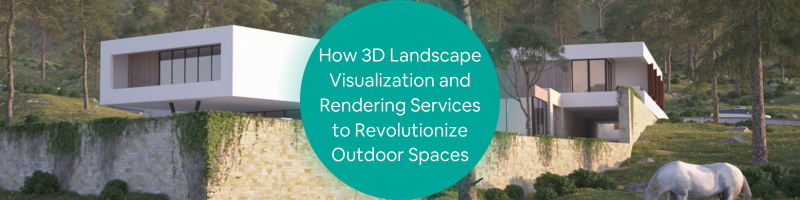
How 3D Landscape Visualization and Rendering Services to Revolutionize Outdoor Spaces


3D landscape visualization and rendering services can revolutionize outdoor spaces in more ways than you can imagine. Unlike the flat, dull, and uninspiring 2D plans and drawings, there are endless and limitless possibilities when visualizing outdoor areas with the help of photorealistic 3D images. These unique services can tweak the different aspects of the project until they perfect the landscape designs for the outdoor oasis or backyard paradise entrusted to them.

What are 3D landscape visualization and rendering services?

3D landscape visualization and rendering services are cutting-edge approaches to creating gorgeous outdoor areas. Real estate marketers and professionals, landscape architects, and homeowners alike take advantage of these services for many reasons. These include the following:

  • 3D landscape visualization and rendering services easily allow more creative collaboration between clients and landscape designers or architects since everyone can see and view what the outdoor space, shrubs, furniture, and elements will look like in natural life way before they are installed or added to the area.
  • The ability to visualize landscape projects in 3D makes it easier to plan for the project and guarantees that every single base is covered.
  • Marketing space that isn’t even built yet is almost impossible. 3D renderings can help fill this gap and allow salespeople and marketers to showcase the precise real-life appearance of outdoor spaces upon completion.

RELATED: Why Landscape Rendering and Visualization is Important for Company Landscaping Projects

Landscape design and its importance

Landscape designs depict what and how landscapes will look upon completion, making checking how the elements blend easier. They include details like plants, water features, hardscaping, lighting, and other factors and elements arranged functionally and harmoniously. In addition, landscape designs are a comprehensive plan to create an outdoor area that caters to specific goals and needs.

It’s not a secret that landscaping is a form of art that turns outdoor areas into sustainable, functional, and beautiful spaces. However, everything begins with 3D landscape visualization and rendering before the actual elements of the landscaping project are laid out. It doesn’t matter if the client wants to improve the curb appeal of their property, create a brand new outdoor living space, or enhance the property’s value; a carefully planned and designed landscape can make a big difference.

Here are the top reasons why landscape designs are needed:

  • To communicate better with contractors

Freelance landscape design services are an effective tool for communicating with contractors and other experts involved in landscape construction. It offers an accurate, concise, and precise depiction of what should be done to reduce the risk of errors and misinterpretations.

  • To allocate and plan resources accordingly

Landscape design offers a plan for creating the landscape, including the plants, materials, and other aspects required in the project. This guarantees that the project will stick to the budget and that all essential resources will be available when and as needed.

  • To envision the completed project

Landscape design provides an accurate, detailed, and precise representation of the appearance of the finished landscape. This simplifies envisioning how the different elements blend to ensure the completed project meets expectations.

RELATED: What does it Cost to Hire a Landscape Design Architect Expert for your Company?

outdoor3

Professional 3D landscape design vs. DIY landscape design

It’s no surprise that many people consider the DIY approach in their landscape design. Although many 3D landscape visualization and rendering services come with very reasonable prices, some people decide to do everything on their own at first. Sadly, after a few weeks, many face the harsh reality once they realize how challenging it is to learn and master the art of using landscape design services. While it may seem more flexible and more affordable for you to opt for DIY landscape design, the truth is that a steep learning curve is involved, and trying to figure out the software may end up costing you not just more time but even more stress so that you can polish the skills required to come up with top of the line 3D renderings.

Professional 3D landscape visualization and rendering services have many years of experience that non-professionals need help replicating quickly. For a reasonable price, they can put their expertise to work on your behalf to create something stunning, saving you from the temptation to pull your hair out of frustration to learn how to create a landscape design from the ground up.

The 3D landscape visualization and rendering process

outdoor1

Landscapes are never made overnight. The process involves several strategic steps to achieve the right look and feel the client aims for. These include the following:

1. Measurement and analysis of the site or space

A site analysis entails studying the existing conditions of the site or space, including its existing vegetation, soil type, topography, shape, and size. These details are critical to determining the placement of different elements, such as the structures, plants, and trees, together with the overall flow and layout of the area. The designer will also measure the site and record the dimensions to confirm that the space can accommodate the proposed design.

2. Conceptual design

After completing the site analysis, the designer will develop a conceptual design that will outline the overall feel and look of the landscape. It includes the placement of the different elements like structures, plants, and trees, together with the overall flow and layout of the space. This conceptual design also includes details regarding the size and type of elements and their orientation and placement.

3. 3D modeling

Following the approval of the conceptual design, the designer will now develop a 3D landscape model. It involves using specialized software to create the landscape’s virtual model. This is a critical phase as it ensures the accuracy of the design and the proper fitting and blending of all the elements involved.

4. Animations and renderings

Once the landscape’s 3D model is finished, the designer will create animations and renderings to offer a more accurate and detailed depiction. It includes animated walkthroughs and still images that provide a clear view and understanding of the landscape design from various angles and perspectives.

RELATED: 3D flythrough & 3D Architectural Animations, Costs, Rates, and Pricing for Companies

How landscape architects use 3D landscape visualization and rendering services

outdoor4

3D landscape visualization and rendering services open many doors of opportunities for landscape architects and designers as well as horticulturalists. With the help of these services, they no longer need to leave their office charges to try out various landscape features, look at the elevation of the terrain from multiple angles, or see what the designs look like under numerous lighting conditions. Just imagine how much easier and faster client buy-in will be if you give them a chance to directly envision the designs’ appearance after completion.

The following are some of the ways that landscape architects use and take advantage of 3D landscape visualization and rendering services:

  • It is promotional and marketing material on their social media channels and websites.
  • They experiment with various materials and layouts in their designs easily, quickly, and affordably.
  • Getting a better virtual sense of the designs allows them to focus on finer details that would have easily wasted time.

Accessing extensive 3D plant libraries from the available visualization tools can save money compared to maintaining vast stocks of physical plants.

RELATED: How Landscape Design Services Can Help Companies with 3D Landscape Design Projects

Benefits of 3D landscape visualization and rendering services

The following are the top benefits of 3D landscape visualization and rendering services:

  • Incorporate eye-catching 3D visuals in marketing campaigns to attract more new clients

If you’re a client, which company would you choose? A company with a dull social media and website with poorly taken and washed out images, or a company whose social media and website use 3D landscape materials for marketing that linger in their memory and pop out of the page?

The right 3D and 2D visualizations of your work can entice potential clients, leaving them with a lasting good impression that will set you apart from your competition. If samples of your past projects were limited, you can also use 3D landscape visualization and rendering services to show your skills and what you can do to ensure everything looks life-like.

  • Establish and grow a reputation

Your company and team can easily stand out as several professionals in your industry using cutting-edge renderings in the workflow. This state-of-the-art technology shows your commitment and dedication to excellence, making you stand out from competitors who rely on traditional methods such as 2D or flat designs.

  • Supercharge collaborative workflow

3D landscape visualization and rendering services allow clearer and more seamless communication with clients, suppliers, and the team since they help everyone quickly glimpse the final project’s shared vision. The perspective helps create a more efficient and free-flowing environment where ideas create a final product that exceeds the customer’s expectations.

outdoor2

RELATED: What are Architectural 3D Visualization Costs, Service Fees & Rates for Companies?

How Cad Crowd can help

Cad Crowd can connect you with the best 3D landscape visualization and rendering services if you are ready to revolutionize outdoor spaces. Contact us now!

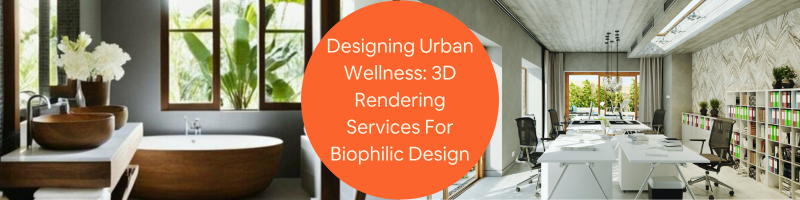
Designing Urban Wellness: 3D Rendering Services for Your Company’s Biophilic Oasis


Urban wellness is today’s newest up-and-coming trend. As far as the modern era of urban development is concerned, the seamless blend of nature and technology is starting to become the fundamental strategy for creating aesthetically pleasing, healthy, and sustainable urban spaces. The progressive urban planning approach known as biophilic urbanism promotes incorporating natural elements into built settings. Taking advantage of 3D rendering services and 3D designers in this particular approach is changing how companies visualize and construct urban landscapes. Thanks to these services, the fusion of nature and technology is not only possible but also becomes visually compelling and tangible at the same time. 

The birth of biophilic urbanism

The principle of biophilia is the basis of biophilic urbanism. Biologist Edward O. Wilson popularized the term biophilia, which pertains to humans’ natural tendency to look for connections with nature. The urban design approach integrates natural elements such as natural light, water bodies, plants, and other living systems into urban spaces. The main objective is to create functionally efficient environments while promoting the residents’ health and well-being through nurturing deeper connections with nature. 

RELATED: 3 Advantages of using 3D rendering services for city planning and development

Biophilic design at a glance 

As a contemporary design philosophy, the main concept behind biophilic design is that humankind has an intimate connection to nature. 3D architectural rendering firms often integrates natural elements into interior design and architecture that positively affect people’s mental and physical well-being. Natural light, water features, plants, and natural materials like stone and wood are among the elements that are often used in biophilic design.

The ultimate aim of biophilic design is to create functional spaces that evoke a sense of tranquillity and peace by using natural elements. The most commonly used materials in biophilic design are plants, light, water, wood, concrete, and stone. But there is more to biophilic design than just using these natural materials or adding a few plants here and there. Instead, it is more of a holistic design approach that considers how the built environment can promote sustainability and support the well-being of humans.

Biophilic design has been gaining fame for the past several years, with more and more people recognizing the perks of forming a connection with nature not only for personal health but also for the health of a planet as a whole. The following are some of the fundamental principles of modern biophilic design:

RELATED: Urban planning and freelance CAD design services cost, rates, and pricing for companies?

Biomimicry 

Biomimicry involves taking inspiration from the processes and systems of nature to inform architectural design, including emulating ecosystem efficiency and using natural ventilation methods. 

Natural patterns and forms 

This involves the 3D rendering artist integrating organic textures, patterns, and shapes found in nature into décor, furnishings, and architectural elements. 

Natural views and light

It maximizes daylight access and provides views of natural elements like water bodies, landscapes, and trees. 

3d-visualization-services-2

Nature in the space

This is about the introduction of indoor gardens, green walls, or living plants in the hopes of bringing nature indoors. 

Sensory experience

This engages different senses using natural materials, sounds of nature, scents, and feelings of gentle breeze. 

RELATED: How 3D modeling, rendering, and CAD design helps architects create sustainable construction

Benefits of biophilic design

The integration of elements of biophilic design into spaces offers a lot of exciting benefits. For instance, research has revealed that exposure to natural light helps regulate circadian rhythms and improves people’s sleep quality. It has also been shown that being surrounded by plants can help lower anxiety and stress levels, improve mood, and boost productivity. Using natural materials in design and 3D construction rendering services is also more eco-friendly and sustainable as it helps lower the buildings’ environmental impact. 

Aside from these environmental and health benefits, biophilic design creates a more engaging and enjoyable experience for everyone within the space. Biophilic design creates a more relaxing and calming ambiance by incorporating natural elements into built environments. It also fosters a sense of engagement and connection with the nearby environment. 

RELATED: How 3D rendering technology helps freelance architects follow sustainability trends and design green buildings

Breathe life to biophilic design visions with 3D rendering services

As one of today’s most powerful tools 3D architectural visualization firms utilize, 3D rendering services have become invaluable in modern urban planning. Thanks to this, planners and architects alike can develop realistic and detailed animations and images of proposed urban projects.  

Regarding biophilic urbanism, today’s 3D rendering services are an integral partner as they help breathe life into the designs and concepts of urban spaces infused with the beauty and serenity of nature. These services also offer a glimpse of cities in the future, showcasing their transformation when natural elements are added. 

An innovative modern catalyst 

Taking advantage of 3D rendering services for designing biophilic urban spaces catalyzes innovative urban design. This opens new possibilities for unconventional and creative solutions in incorporating nature into urban spaces. 3D rendering services help push the boundaries of conventional urban design, from nature-infused public plazas to green bridges and verdant rooftop gardens.

RELATED: 6 Sustainable design solutions your architectural design services should use

Address social and environmental challenges

When visualized with the help of 3D architectural modeling professionals, biophilic urbanism can help address numerous social and environmental concerns that many modern cities often deal with. When urban designs are infused with natural elements, these contemporary projects can significantly reduce the effects of urban heat islands while enhancing air quality and promoting biodiversity. Aside from these, they also provide social benefits by creating healthy and serene areas for residents that can help their health and well-being in general. 

Design and planning made better

3D rendering services can also help your company as they improve urban planning and design phases. These unique services enable a more detailed and comprehensive exploration and discovery of the best way to incorporate natural elements into different urban settings. These 3D visualization services also give way to experimenting with various layouts, evaluating the effect of natural light, and investigating how to integrate green spaces into dense urban areas. Such an impressive level of detail guarantees that adding natural elements will not only be pleasing to the eyes it is viable in terms of function at the same time. 

biophilic-architectural-design

RELATED: 3D Landscape design services: cost, rates, and pricing for companies and firms

Facilitate better engagement among stakeholders 

Effective communication is and will always be the key when it comes to any size and shape of urban development project. Biophilic designs developed by 3D rendering services allow better engagement and more transparent communication with all the stakeholders involved, including investors, city officials, and the community. The 3D renderings can help solidify support and consensus for modern biophilic initiatives by offering a more realistic glimpse of the proposed project. 

Rise above difficulties in urban design 

Urban design is often embroiled with navigating different challenges and difficulties. These may include limitations in budget, regulatory requirements, and spatial constraints. 3D rendering services can help rise above these challenges. These services allow 3D architectural designers to explore numerous elements of biophilic design and their specific configurations in complicated concept of urban spaces. They also help pinpoint potential problems early on in the design process, which thereby helps save resources and time down the road. 

RELATED: 5 Reasons why your business should use 3D rendering for construction projects

Promote sustainable development of urban spaces

Working with 3D rendering service providers specializing in biophilic urbanism is an integral step to achieving sustainable development of urban spaces. This can aid in the design of urban areas that are beneficial to the environment and have the level of resilience required to withstand the threats of climate change. With the ability to visualize the effective and efficient use of green spaces, energy-efficient designs, and water management systems, 3D rendering services can help create more sustainable models for urban developments in the near future. 

Visualize the future of green urban spaces 

Through the help of 3D architectural animation companies, architects and urban planners can better envision the best ways to incorporate green spaces in the urban fabric in a more comprehensive and detailed manner. It includes the design of green corridors, urban parks, vertical gardens, and green roofs. This kind of 3D visualization inspires and helps convince both the public and the stakeholders better regarding the perks and feasibility of infusing nature into modern urban settings. 

RELATED: Utilizing 3D rendering services for companies in architectural property development

Gearing up for the future

With the continuous and seemingly unstoppable growth of populations in urban areas, the need for liable, healthy, and sustainable cities becomes increasingly pressing. 3D rendering services for designing urban wellness and biophilic urbanism are promising approaches to developing functional urban environments that advocate for people to form a deeper connection with nature. Through the use of 3D rendering services to visualize biophilic designs, it is now possible to create and develop a better future not only for humankind but also for the beloved planet. 

How Cad Crowd can help

Cad Crowd is your leading resource for the best and most trusted 3D rendering professionals who can turn your envisioned biophilic oasis into reality. Contact us today and let us know how we can help you with your next project! 

Can 3D Modeling Services for Lifestyle Product Images Boost Company Marketing?


Lifestyle product images capture accurate representations of their actual use. Thanks to these images, customers can envision themselves using the product, making them more connected to it and to the brand that manufactured it. The key purpose of lifestyle product images is to evoke emotions among customers, convey the story of your brand, and establish a brand identity. Continue reading to learn how to utilize 3D modeling services for lifestyle product images to ultimately boost your company’s marketing efforts.

Why do you need lifestyle product images?

Your company’s advertising team has a long list of goals to achieve for your products and set them apart from the rest. Lifestyle product images give advertisers the ability to highlight the unique features of their products to make them more authentic and relatable for consumers. Here are the top reasons why your company needs lifestyle product images:

RELATED: How 3D product renderings help promote products on Amazon & Shopify

Position your brand better 

Your company can use lifestyle product images to allow customers to see your products more contextually. It comes in handy in positioning your brand and setting it apart from the rest.

Improve the recall value of your brand 

One of the most important goals of product advertising is brand awareness. Lifestyle product images designed by professional product concept designers serve as an effective tool to emphasize the distinct features of your product that make it more memorable. It then helps advertisers achieve three goals: introduce the brand to potential customers, convince them to buy from your brand, and remind them about your brand. 

Boost your sales 

Lifestyle product images can also increase your sales as they help you form an emotional connection and showcase the benefits of your products. In addition, you can also increase the perceived value of your product if you display how to use it in a real-life scenario. Lifestyle product images enhance the willingness of customers to pay because they now see your item as something they need to have. 

RELATED: How 3D product rendering and CGI help social media marketing for your company

Validate the cost of high-end items 

It’s only natural for high-end items to have premium price tags. After all, they are considered to have better features, higher quality, and more expert craftsmanship. Once executed correctly, lifestyle product images from 3D design services for high-end pieces can make it easier for you to convey the qualities and features of the product. It helps customers better understand your product, which justifies the price as a result. 

Top-of-the-line items appeal to people who want to project a particular lifestyle and immerse themselves in the sense of individuality. Lifestyle product images create this feeling of exclusivity that makes the product more enticing to the eyes of consumers who wish to lead a particular lifestyle. 

Promote loyalty among customers 

Emotions are the key driving factor in the purchasing behavior of today’s customers. Most purchasing decisions depend on emotional aspects. Your company can take advantage of lifestyle product images to form an emotional bond with your potential customers. With the help of these lifestyle product images, your product can look more authentic. It will help you generate leads and engage your target audience to gain their trust and turn them into loyal customers of your business. 

RELATED: Mastering 3D product modeling: company techniques and tips for stunning visuals 

3d-product-modeling-firm-2

Lower risk of returns 

Lifestyle product images and 3D product demo firms can offer a more complete view of your products and demonstrate their usage. It helps your customers to gain a better understanding of the functionality and features of your items. These lifestyle product images are pivotal for reaching a well-educated decision and lowering the risk of returns. 

How 3D modeling services change lifestyle product images

3D modeling is the three-dimensional representation of products made with the help of CGI or computer-generated imagery software. Since 3D technology was first used in lifestyle product images, it has successfully improved how the images are made and used across different industries. Lifestyle product images can showcase products in a more interactive, immersive, and realistic way. It allows your customers to gain a better understanding of your products and their features as they get to see and view them in detail from different angles. 

3D product rendering services for lifestyle product images allow efficient and quick production of more realistic images, as well as product animation that once required lots of money and time. These services changed how the products are made and showcased to customers, resulting in increased engagement and a boost to the company’s marketing.

RELATED: How Companies Utilize 3D Product Modeling Services for Compelling Product Imagery

Benefits of 3D modeling services for lifestyle product images

Here are some reasons why more and more companies are now using 3D modeling services for lifestyle product images for their firm’s marketing campaigns and efforts. 

Customize all you want

CGI allows 3D artists and designers to experiment with numerous variations and iterations of sizes and colors without spending a lot of time and money on several photoshoot sessions. Aside from this, the improved level of personalization and customization that lifestyle product images allow also helps form a more emotional connection with potential customers.

Ensuring consistency in all your product images, especially when several items are in question, can be a bit challenging. With 3D modeling, however, all images for your lifestyle products are made in digitally controlled settings that can help you achieve cohesiveness and a more consistent look across the entire product line. 

Improved cost-efficiency 

CGI also eliminates the money and time that would have been otherwise spent on physical prototypes. It’s because CGI technology allows you to produce 3D models that you can then use to create more images from various angles in different environments. 

RELATED: How to use 3D product modeling and 3D product photography for company advertising 

Speed up time to market 

With CGI technology allowing designers to quickly process and iterate product designs, it speeds up the time of bringing the product to the market. This is all thanks to the ability and flexibility to complete several revisions, resulting in quicker market time with the help of lifestyle product images. If revisions are necessary, for instance, it saves you from re-shooting everything from scratch because every modification is made with the help of 3D product modeling designers using 3D modeling software. So, once you’ve incorporated all the needed changes, you’re already good to go. 

3d design company

Better flexibility 

Depending on the needs of the customer, 3D modeling can give more freedom for iterations and rapid prototyping to allow retailers to improve and refine the design of their products. If you have always wanted to showcase your product in different settings but don’t want to bother with the hassle of preparing and shooting scenes or hiring models, you would be better off hiring 3D modeling services for your lifestyle product images. It’s the best means of showcasing your products for various uses and applications. 

Enhance efficiency and overall quality 

3D modeling gives businesses total control over texture, lighting, as well as other details that enhance the overall quality of the product. 3D models can also offer more valuable insight into the behavior of the product while it is in use. 3D modeling services such as lifestyle product images improve the efficiency of businesses because they can make more informed decisions regarding advertising, marketing, and other relevant strategies. 

RELATED: 3D CAD: 3D product modeling services cost, rates, and pricing for companies and firms

Allow interactive encounters

Like product configurators and virtual try-ons, CGI technology lets customers customize and visualize the products in real-time. It then enriches the overall experience for customers because they gain a better understanding of how the product looks in the existing environment, whether it is an office or home setting. 

Helpful marketing materials 

Your products convey the story of your brand, and marketing is the fastest way of communicating just that to your customers. There is no better way to present your abilities than by providing hyper-realistic lifestyle product images. With the help of trusted 3D modeling services, your company can expect to receive top-notch lifestyle product images for marketing purposes. 

It’s easy and quick 

Thanks to 3D modeling services, businesses can save themselves from the need to spend long hours in Photoshop. This modern technology speeds up the procedure of developing lifestyle product images. 

RELATED: How to design a 3D product visualization that converts company leads into clients 

Evoke realism

CGI also helps create premium quality and hyper-realistic lifestyle product images that you can use as long as you want for different purposes, whether for your online accounts or your physical catalogs. Using 3D modeling designers for lifestyle product images, you can create accurate product representations, especially those focusing on texture and minor details. These meticulously generated lifestyle product images help your customers gain more insights regarding your product as far as functionality and looks are concerned. 

More sustainable

With the help of 3D modeling services for lifestyle product images, your company also gets the chance to protect and preserve the planet. It’s all thanks to the elimination of the need for physical sets, props, and prototypes during the entire manufacturing process. 

RELATED: 5 Ways how rapid product development & prototyping benefits your company

How Cad Crowd can help

Your marketing efforts may simply go down the drain if you don’t use the right tools at your disposal. With the help of 3D modeling services for lifestyle product images, you can look forward to a more effective marketing campaign that you wouldn’t be able to achieve otherwise. Cad Crowd has an extensive database of top-notch 3D modeling services for your lifestyle product images that can ultimately help you reach your marketing goals in no time!

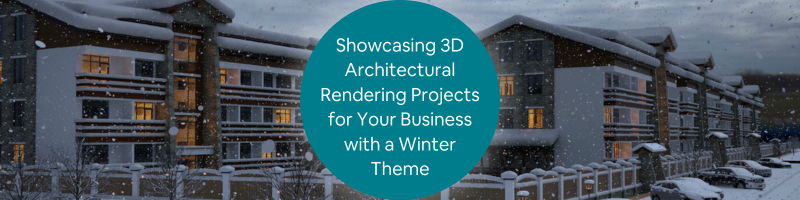
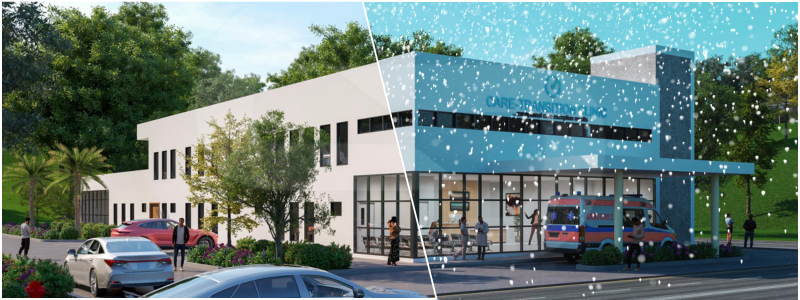
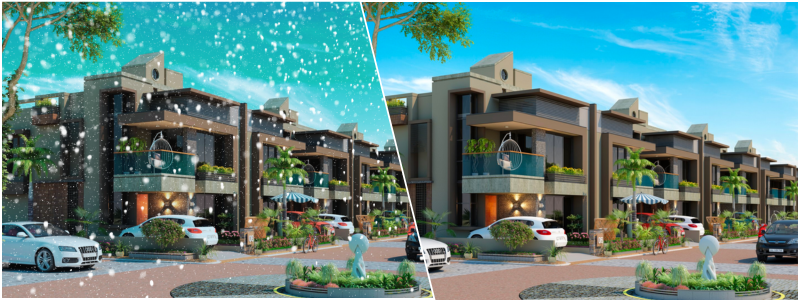
Showcasing 3D Architectural Rendering Projects for Your Business with a Winter Theme


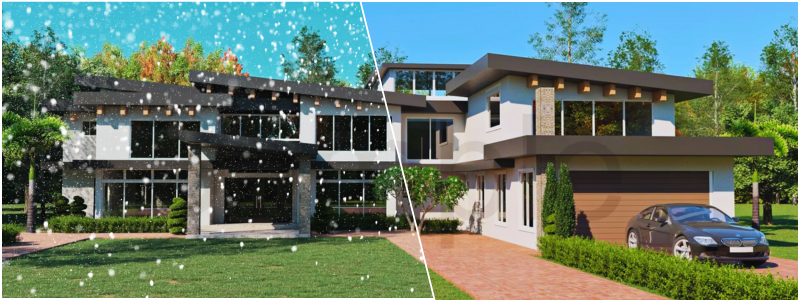
The frosty weather conditions during winter months exude a unique mood paired with a sense of magical wonder. The sparkling snow, the chilly breeze, and the glistening scenery create an enticing and gorgeous atmosphere. Showcasing 3D architectural rendering projects for your business with a winter theme lets you capture the mysticism of winter to elevate your design and offer your audience an immersive and visually stunning experience.

Art of texturing for snowy landscapes

One of the most critical aspects of coming up with an inspiring and authentic winter rendering is none other than the art of texturing snowy landscapes. The layered approach is the most popular choice, featuring footprints in the snow, tire tracks, and plants covered with snow growing from the clay-rendered ground plane. The method allows the 3D visualization firm to create other environments aside from winter landscapes, including fall, summer, and spring.

Blending mode techniques are used when texturing snowy landscapes to produce the preferred aesthetic for textures. This allows better control in creating 3D renders that depict various weather, environments, and seasons, such as winter. For example, you can include realistic details such as tire tracks or footprints in the snowy landscape to create a more engaging and immersive scene that draws your audience into the heart of your winter rendering.

RELATED: What are Architectural Rendering Costs, Rates, and Pricing for Companies?

Play of light in 3D winter scenery

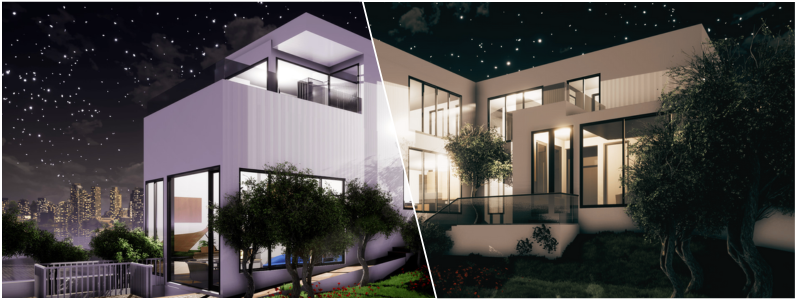
Light has a critical role to play when it comes to defining the mood and atmosphere of winter scenes. Attractive angles, cooler color temperatures, and soft shadows characterize winter light that all contribute to achieving a pristine albeit cold atmosphere. The sun’s lower position in the sky during winter further enhances the effects, casting dramatic patterns of light and long shadows. All of these can make 3D architectural rendering projects more engaging and visually appealing to show the intent of your design during project presentations and for posts on your social media accounts.

Light in winter renderings can also be manipulated to replicate the atmospheric effects of winter by adjusting its elements during various times of the day. 3D rendering designers can showcase the exciting interplay of artificial and natural light. This creates a sense of reflection and stillness, emphasizing introspection and solitude. Techniques like flexible and variable lighting systems help achieve the desired winter mood in 3D architectural renderings that can bring contrast and depth to the project.

winter1

Spruce up 3D rendering with winter vegetation

Winter vegetation builds 3D renderings, adding a particular visual interest and mood to the landscape. Add broadleaf plants, shrubs, evergreen trees, and deciduous trees into your 3D renderings to achieve the desired mood in various environments. You should focus on capturing the elaborate details of frosts on plants to accurately depict frosty or frozen plants in winter rendering, such as the leaves covered with frost or the tantalizing ice crystals. You can also experiment with manipulating shadows and lighting to create a refreshing winter weather and atmosphere. Careful selection and adding freezing season vegetation into the background of your rendering’s initial planning can create an immersive and visually stunning winter landscape guaranteed to capture the audience.

Choice of textures and colors

The choice of textures and colors in winter renderings also significantly impacts your design’s overall atmosphere and mood. A winter palette is essential to achieve a visually realistic and appealing scene. With 3D virtual reality rendering services, it helps convey the rigidity of ice, the fragile condition of barren branches, and the delicate nature of snowflakes as they fall from the sky. Choosing suitable materials and color schemes for the winter palette can create engaging and captivating winter scenery depicting the magical season.

RELATED: 3D Rendering Costs & 3D Visualization Prices for Firms

Choices of materials for warmth

Choosing materials that emphasize comfort and warmth in winter settings is vital for the 3D architectural visualization designer to give your design an inviting and cozy atmosphere. Materials like soft textiles, stone, and wood can provide a relaxing comfort in winter scenes, making the space more tranquil and inviting. The addition of wood can give winter scenes a cozy and warm atmosphere. Meanwhile, adding stone elements offers a sense of stability and solidity. Soft textiles like curtains, cushions, and plush blankets can exude a feeling of peaceful comfort to create a sense of intimacy and coziness that entices the audience to envision themselves in the space. Choosing suitable materials for the frosty season can produce a rendering that evokes a sense of tranquility and comfort to make your design stand out.

winter2

Clever use of exciting colors

Variations of subtle colors in winter scenes are important to produce interest and depth while ensuring your design is balanced. Shades of warm white, grey, lavender, and blue can add more depth to your winter renderings. Composition with objects at various distances can also enhance depth perception further. Achieving the perfect balance between delicate and vibrant hues can help amplify the winter theme while ensuring that it doesn’t detract from the tranquil ambiance often linked with the cold season.

Seasonal props to set the right mood

Seasonal props are crucial in enhancing winter renders’ overall atmosphere and mood. These create a more engaging and immersive experience through different environments and seasons. 3D architectural rendering services can assist you in incorporating holiday decorations, animals, vehicles, and people into your projects. With these props, you can breathe life into your winter scenes, adding a sense of movement and activity to captivate your viewers.

RELATED: What are Architectural 3D Visualization Costs, Service Fees & Rates for Companies?

Add festive features

Adding holiday elements and decorations in winter renders can exude a cozy and festive atmosphere that creates a pleasant and cheerful holiday vibe, making designs more inviting and appealing. You can build a unique, warm mood with the help of different context elements such as festive outdoor decors, flocked foliage, tree figures, and twinkling glass lights. For instance, a house in the heart of the countryside, nature, or a city landscape can be depicted on architectural renders to achieve a visually enticing winter scene that captures the season’s spirit.

The 3D architectural modeling professional can showcase them during weather conditions, such as a pleasant and bright sunny day or a dark and rainy environment. Furthermore, depending on the specific features of the project, elements and weather conditions in specific surrounding environments and geographical locations can all be selected and adapted in 3D models accordingly. The artful selection and integration of thematic décor, like Christmas décor, into architectural renders can also establish the desired mood and give your architectural project that unique winter charm. This will enhance your design’s visual appeal and let your audience form a sense of connection with your project.

winter3

Life in winter wonderland

Adding a sense of life to your winter renders can be easily achieved by carefully placing vehicles, animals, and people. Incorporating such elements into your 3D renders helps you achieve a sense of motion and activity that makes the winter scene more engaging and relatable for the audience. You can also use props to convey different moods or tell a unique story, such as a deserted, snow-covered building or a cozy cabin with a warm fireplace.

Carefully choosing and placing props in winter scenes can help you produce a visually immersive and enticing environment that will draw in more audiences and capture their imaginations. It doesn’t matter if you’re trying to depict serene residences in the countryside or the bustling streets of the metro; the correct props can breathe life into your winter renders to create a sense of movement and activity that will mesmerize viewers.

Achieve emotional impact with weather effects

Weather effects are essential in stirring up certain moods and improving winter 3D renders and their overall atmosphere. The weather emotionally affects house, office, or city designs in renders. For example, the gentle snowfall can create a sense of tranquility, while the rain and howling wind can evoke feelings of desolation and isolation. Meanwhile, cheery sunny days with contrasting solid colors emphasize bright feelings, while dark background scenery can create overwhelming feelings. The mood in rainy environments can change to contemplation and introspection, demonstrating the weather’s power to shape emotions.

RELATED: The Benefits of 3D Architectural Rendering for Companies in the Real Estate Industry

Varied moods of snow

Snow creates a variety of moods in winter renders, from the melancholy and isolation of heavy snowfall to the pleasant tranquility of light flurries. Your choice of colors and lighting can influence the winter atmosphere and the specific depicted snow and weather conditions. For example, an untouched and fresh frosty scene during a bright sunny day exudes a magical sense that can transport the audience to a winter wonderland.

How Cad Crowd can help

Are you ready to use the winter theme to showcase your business’s 3D architectural rendering projects? Cad Crowd can connect you with experts adept at using different themes that will make your projects stand out from the competition.

Why Freelance 3D Real Estate Rendering Services are Becoming More Popular for Companies


Real estate professionals are constantly searching for the best strategies to help them close deals faster. If you’ve already exhausted all the standard and traditional marketing methods to no avail, now might be the perfect time to tap into a new world: 3D real estate rendering services.

It’s no secret how highly competitive the real estate industry can get. With the long list of properties available on the market, real estate companies should think of and develop creative means to ensure their listings stand out. This is where freelance 3D real estate rendering services enter the picture. These services specialize in 3D rendering that can help create realistic and lifelike visual representations of properties and homes. The visually captivating 3D renders can come in handy to effectively market listings better compared to regular images or photos.

How 3D real estate rendering works

There are three primary stages in developing 3D-rendered visuals for real estate purposes.

Modeling

Developing an accurate 3D model of a property is the initial step during 3D rendering. Freelance 3D architectural rendering experts use photographs, measurements, and floor plans to come up with 3D models that closely resemble their real-life counterparts. Every feature of the architectural structure is also recreated to the minor details, including the exterior finishes, windows, and doors.

Texturing

The second step involves giving realistic colors and surface textures to the 3D model. All materials, such as stone, metal, and wood, are textured to look authentic. Digital maps are then used to apply the textures that will make the 3D models more lifelike and detailed.

Rendering

Last, a computer will render the textured 3D model into a photorealistic image. The advanced rendering software can simulate light physics to produce realistic angles, reflections, shadows, and lighting. The final result is an eye-catching visual that resembles an actual photograph.

RELATED: 3D Rendering for Marketing Real Estate: What it is and How it Can Improve Your Real Estate Business

Now that you have a good idea about the process involved in 3D real estate rendering, it’s time to learn some of the top reasons why more and more freelance 3D architectural visualization firms are becoming in demand among companies to market their listings.

They boost the exposure of market listings

freelance1

Engaging with 3D content can help boost the exposure and visibility of a market listing. Visually enticing 3D real estate renders have higher chances of getting more engagement, shares, and clicks on different real estate platforms. Freelance 3D real estate services can help make your listings more unforgettable. Furthermore, with the help of 3D visualization services, homebuyers are more likely to remember the properties presented. It can result in more showings, offers, and sales.

They allow more cost-effective marketing campaigns

Today’s freelance 3D real estate services are no longer as expensive as they used to be. Real estate companies can access enticing, powerful, and effective 3D visual content for a fraction of the cost of traditional advertising. It offers exceptional value as far as marketing investment is concerned.

They facilitate virtual tours of properties

Freelance 3D real estate services can also allow prospective buyers to go on virtual tours of properties without needing them to visit each one personally. These service providers can produce virtual staging for architecture services and 3D walkthroughs that put the entire home in the spotlight. Homebuyers can also go on a more immersive experience that can breathe life into listings. In addition, 3D real estate rendering can allow homebuyers to enjoy a convenient remote viewing of potential properties. For real estate companies, it offers an efficient marketing asset for promoting listings to more buyers.

RELATED: Virtual Staging Costs, Service Fees & Architectural Pricing for Real Estate Companies

They help guarantee future-proof marketing

3D real estate content is expected to be the way of the future regarding real estate marketing. With staged photos and virtual tours gaining traction by the day, real estate companies can use 3D to future-proof their marketing efforts.

They highlight the main features of properties

Freelance 3D real estate services give real estate companies a chance to emphasize and showcase features and architectural elements of the property. More detailed 3D real estate models can highlight everything, from the posh finishes to the custom tilework. This level of attention to detail is something that regular photos can never capture, no matter how hard they try. Strategic 3D real estate rendering can draw the attention and interest of the buyers to the most standout features of a property. This can convey details such as floor plans, room dimensions, lighting schemes, etc. These can unite to form an emotional connection with prospective buyers.

They produce interactive experiences in 3D

3D real estate rendering allows realtors to develop and offer more interactive 3D experiences for potential buyers. The interactive floor plans, 360 virtual reality house tours, 3D walkthroughs, and more can all offer a more immersive preview than their static counterparts. Again, potential buyers can form stronger connections when these elements are all present.

They make listing representations more memorable

Property listings that feature 3D-rendered images are more likely to linger in the minds of potential buyers. It can increase the return on investment by allowing more shows, engagement, and sales.

RELATED: How 3D Virtual Reality is Changing the Real Estate Industry

They can showcase both interior and exterior spaces

Freelance 3D real estate offerings provide a smooth display of interior and exterior aspects. Exterior photorealistic rendering experts highlight the property’s curb appeal and surrounding environments. Meanwhile, 3D interior rendering professionals focus on the dwelling’s spaces, furniture, arrangement, and design features. 3D real estate rendering can stitch together all of these spaces into a unified and single visualization. It gives buyers a complete view of the property that static photos can never replicate.

freelance2

They can stage property listings virtually

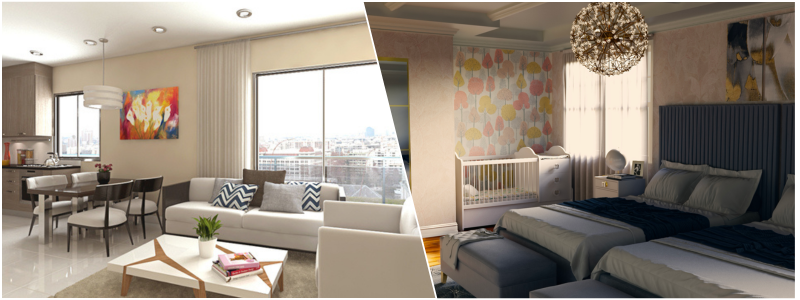
Whether you like it or not, home staging is time-consuming and expensive. Freelance 3D visualization designers offer a virtual staging solution to help real estate companies save money and time. Any property could be staged even without physical décor or furniture. Real estate agents use virtual staging to create realistic décor and furnishings to fill empty spaces and areas. It showcases the fullest potential of a property and helps buyers get a good visualization of the entire space.

Tips to find the best freelance 3D real estate services

Real estate companies and realtors must find the best freelance 3D real estate services they can partner with to harness 3D rendering and its power to the fullest. Below are some helpful tips to point you toward the exemplary freelance service that can simplify the 3D real estate rendering process for you.

  • Check and verify their experience in real estate projects.

Before anything else, it’s essential to look for a freelance provider of 3D real estate services that has extensive rendering experience for real estate in particular. This will assure you they have a good grasp of the visualization needs to market properties and homes.

  • Browse their portfolio for 3D real estate rendering.

Check the samples of past real estate projects in the service provider’s portfolio. It will give you a good idea and glimpse of their visual capabilities and overall quality.

  • Confirm if there are 3D walkthroughs offered.

As much as possible, you must look for freelance 3D real estate services offering interactive 3D walkthroughs and the usual still renders. These walkthroughs make room for better visibility and more engagement.

  • Look for a quick turnaround time.

Every time you market active listings, sticking to the timelines is critical. Choose freelance 3D real estate services that can immediately provide top-of-the-line renders without jeopardizing the quality.

  • Read reviews and testimonials.

Positive reviews and testimonials from previous clients are always a good indication of the service standards and reliability of the freelance 3D real estate service provider. Try to look for one with a long list of satisfied and happy clients.

freelance3

RELATED: Increased Demand for 3D Real Estate Rendering Services and Their Impact on the Market

The bottom line

Companies that understand the popularity of 3D real estate services and leverage their potential for their listings can expect to gain a significant age over their competition. With the ability to attractively showcase properties, 3D real estate renders are undoubtedly an indispensable marketing asset. These renders can connect better with the buyers by offering completely immersive previews. With modern technology’s continuous development and advancement, it’s no surprise that it has become the favorite and in-demand option for progressive real estate companies.

How Cad Crowd can help

Cad Crowd is the platform you can trust to connect you with the top freelance 3D real estate services that can help showcase your listings and guarantee more closed deals as soon as possible. Contact us today and allow us to help you with your following projects.

The Role of Freelance 3D Architectural Rendering Services for Roofing Design Projects


Every detail is significant in the captivating architectural realm, from the biggest elements to the smallest features. Often, designers focus on the importance of the structure’s crown, none other than the roof. The roof is an integral component that shelters people and properties from harsh environmental conditions. It also gives character to the building and significantly affects energy efficiency.

But the question is, what is the accurate way of visualizing roofing design projects that best complement the overall function and aesthetic of a building? This is where freelance 3D architectural rendering services enter the picture, transforming the roofing industry with their immersive and practical solutions.

In layman’s terms, 3D architectural rendering is the digital tool designers and architects use to develop realistic three-dimensional design representations. The technological marvel has made significant breakthroughs in changing how roofing design projects are approached to foster a seamless transition from mere abstract concepts to tangible reality. With all its exciting benefits, 3D rendering companies have also been proven to bring forth positive transformation in roof designs.

Roof designs were initially sidelined as something other than a functional requirement. But with the growing recognition of their potential for energy efficiency and aesthetic pleasingness, roofs are starting to garner their much-deserved attention. 3D architectural rendering is vital in this dynamic shift, allowing effective planning, better communication, and comprehensive visualization in roofing design projects.

RELATED: What are Architectural Rendering Costs, Rates, and Pricing for Companies?

Aids a more educated decision-making

Freelance 3D architectural rendering services play a pivotal role in the decision-making process. Every time homeowners invest in a new roof, they want to ensure that their selections, from the design to material, finish, and color, align with their needs and expectations. With 3D architectural rendering, no more gambles are involved in these decisions. For instance, roofing contractors could present clients with different roofing options with the help of 3D architectural modeling experts. The ability to explore different color schemes, materials, or designs in virtually constructed spaces can help homeowners make wiser choices that meet their preferences and the requirements of the building.

role2

Creates a visual language

Studying basic sketches or complex blueprints was a must to visualize roofing projects before the rise of 3D architectural rendering. It takes a lot of work for average individuals to understand these plans. 3D Architectural visualization firms can bridge this gap by creating a visual language everyone can easily comprehend. Hiring a skilled roofing contractor to bring your envisioned design to life is crucial to successful roofing projects. 3D architectural rendering makes it easier to effectively share design ideas with the roofing contractor to simplify discussions of concerns, additions, and modifications. The roofing contractor can then offer educated decisions according to the visualization to improve the project’s outcome.

Enhances energy efficiency and sustainability

In this modern world, where it is already mandatory to promote sustainability, it’s expected for roofs to contribute to the overall energy efficiency of a building. 3D architectural rendering supports this aspect by enabling simulations under different environmental conditions.

A roofing contractor, for example, can also use the technology to evaluate how a suggested roof design would work regarding solar heat absorption, water runoff, ventilation, and insulation. These insights can guide choosing materials and design, leading to an energy-efficient and aesthetically pleasing roof. It can also result in long-term cost savings and reduced environmental negative impact.

RELATED: 3D Rendering Costs & 3D Visualization Prices for Firms

Safety compliance and standards guaranteed

During the planning of roofing projects, it’s paramount to comply with safety standards and local building codes. Freelance 3D architectural rendering designers can help ensure that all these regulations will be met starting from the design phase. With the accurate visualization of the suggested structure, it’s easier to check the different design aspects for compliance, from the material and pitch of the roof to the placement of vents, gutters, and other elements. The proactive approach can help avoid regulatory roadblocks that may result in expensive rework and delays.

Architectural rendering also allows a thorough evaluation of safety conditions. For example, it’s easier to accurately evaluate the safety of skylights or solar panel installation, the stability of the structure under different weather conditions, and the location of fire escapes. It doesn’t matter if you’re working with a roofing contractor; ensuring that the design of the roof aligns with safety compliance and standards becomes more manageable thanks to 3D architectural rendering.

Unleashes creativity

Aside from being a practical tool, 3D architectural animation services also serve as a blank canvas for more creative exploration. By offering the ability to experiment with various features, colors, designs, and materials, homeowners and architects alike can let their creative juices flow without any financial or physical limitations. This level of freedom can result in more personalized and innovative roof designs that push the boundaries of roofing architecture’s possibilities.

RELATED: What are Architectural 3D Visualization Costs, Service Fees & Rates for Companies?

Explore color schemes and material options

3d rendering company

Aside from design alone, 3D architectural rendering offers a chance to explore different color schemes and material options for roofing projects. Whether choosing between tile roofing, metal roofing, or asphalt shingles, 3D architectural rendering offers a more realistic display of how every material will look after completion. On the same note, you can also experiment with a plethora of color schemes to identify the one that will best complement the overall aesthetic of your building. With this ability to try on different colors and materials virtually, you will have more confidence, knowing that your decisions will continue to be satisfactory.

Boosts property value

Considering the significant contribution of the roof to the curb appeal or the first impression a property makes, you can never think of this design as a mere afterthought. Freelance 3D rendering experts can come up with roof designs that are functional and aesthetically pleasing and can substantially enhance the overall value of your property. If you plan to lease or sell your property down the road, a carefully designed roof materialized through 3D architectural rendering is an excellent selling point. Potential tenants or buyers will be more inclined to appreciate a roof that looks good and performs well against environmental conditions simultaneously. This ability to impress potential buyers can help speed up the selling process.

Enhances collaboration

3D architectural rendering supports better collaboration among contractors, architects, and other specialists involved in the roofing project. All professionals will see, check, and understand the 3D model that simplifies the discussion of technical details, identify possible problems, and agree on possible solutions. This leads to a more efficient and harmonious working relationship that can positively impact the project’s outcome.

RELATED: The Benefits of 3D Architectural Rendering for Companies in the Real Estate Industry

Improves visualization and communication

Effective communication is critical during the planning of roofing projects. Although sketches and blueprints can offer a basic outline, these tools usually need to catch up when conveying the picture, especially to people new to technical drawings. This is where freelance 3D architectural designers transform complicated designs into interactive and understandable visual models. Thanks to these models, architects, contractors, and homeowners can be on the same page to make it simpler and easier to discuss the design’s additions, alterations, or elements.

For example, roofing contractors can use the rendered models to present clients with the appearance of their new roof from different angles, how it complements other parts of the structure, and the effect of the different times of the day or night on its appearance. Such interactive discussions can result in improved client satisfaction and better design results.

3d architectural rendering firm

Plans for future modifications

3D architectural rendering is not only applicable to new roof constructions. This is also instrumental to additions to existing roofs or planning renovations. With the ability to visualize the way new elements would integrate with an existing structure, it’s easier for homeowners to plan for future changes with greater accuracy and confidence.

Prevents material wastage

3D architectural modeling professionals help estimate materials by accurately representing the roof’s final specifications and appearance. This level of accuracy can prevent overestimation, which usually results in wasted excess materials. The 3D technology, as a result, can help contribute to both cost efficiency and environmental sustainability.

RELATED: Unlocking Visual Potential: The Strategic Edge of 3D Architectural Rendering for Businesses, Restaurants, and Bars

Promotes time and cost efficiency

Aside from aiding decision-making and visualization, 3D architectural rendering can significantly contribute to time and cost efficiency. The technology can help save on expensive adjustments throughout the construction stage by pinpointing possible problems with the design during the planning phase. Working with roofing contractors who use 3D architectural rendering paves the way for real-time changes to the design that minimize the possibilities of unexpected changes or issues during the construction stage. The project stays within the timeline and budget, reducing the stress for all involved parties.

Cad Crowd can connect you with freelance 3D architectural rendering services that can help with your roofing design projects.

What is the Difference Between Motion Graphics Design and 3D Animation Services Design?


Motion graphics and 3D animation may sound the same for the novice or unfamiliar. But the truth is that these two concepts may be connected yet different. There is even some debate on whether motion graphics can be considered animation. But for clarification, motion graphics is among many animation styles. While motion graphics may sound somewhat new and modern, they have already been around as far back as the late 1800s, undergoing numerous changes and evolutions.

Fast-forward to the modern day and motion graphics has become a typical media segment you probably didn’t even notice because of how regularly it is used in all its different forms. This article discusses the difference between motion graphics design and 3D animation services design to help you determine which one suits you best.

Breathe life into static elements with motion graphics

Let’s start with motion graphics. Motion graphics use text, animation, and graphic design to create visually enticing content that tells a story or conveys information using movement. It mainly focuses on improving static visuals using dynamic elements.

Motion graphics design defined

Motion graphics design is a captivating and dynamic visual communication combining animation techniques with graphic design elements. This revolves around creating animated visuals that usually involve images, shapes, and text to promote a compelling engagement with the audience, tell stories, and convey messages.

At the heart of motion graphics design is the idea of using movement to breathe life into static visuals. 3D Designers use different software programs to animate and manipulate different elements to give them a sense of interactivity and motion. It paves the way for transforming complex concepts, ideas, or data into visually engaging and digestible content.

Motion graphics design has numerous applications in various media, including web design, marketing, advertising, television, film, and user interface elements. This works well in adding a sophisticated layer to multimedia projects, improving user experience, creating captivating advertisements, and conveying information.

With the ability to blend functionality and creativity effortlessly, motion graphics design has become an integral tool for contemporary visual communication. It allows 3D character modeling professionals to create visually memorable and stunning content that can resonate with audiences in today’s fast-paced digital realm.

RELATED: How Much Does 3D Animation Cost & Rates for Product Marketing Video Services?

Popular types of motion graphics

animation1

There are numerous forms and styles of motion graphics being used today. Some of the most common types include the following:

Explainer videos are where motion graphics truly shine, wherein they simplify complex processes and concepts using visual storytelling.

The incorporation of motion in infographics can add more dynamic elements to information. This allows easier digestion and understanding of complex data. These are usually used in educational videos and presentations.

This type of motion graphics boasts a combination of animated text with music or voiceovers to improve the impact of the message. This is often seen in promotional content and music videos.

Many businesses hire 3D design firms to create logo animations that provide more unforgettable brand experiences. The unique animations bring static logos to life, making them even more engaging.

It is a motion graphics style involving a creative text animation to emphasize critical points or convey a message. This is famous and commonly used in title sequences and commercials.

RELATED: 3D Character Animation and Modeling Services for Companies, Cost Rates, and Pricing

Motion graphics examples

animation2

To better show their power and potential, the following are some of the best and most notable examples of motion graphics:

You might have noticed how Google often uses cute motion graphics to celebrate special holidays or events that change its logo into more interactive animations.

Many companies use motion graphics to present the benefits and features of their products in a way that appeals best to the audience’s visuals.

Motion graphics ads can be seen on almost all social media platforms, which makes them a well-loved choice for digital marketing strategies and campaigns.

TED-Ed uses motion graphics to come up with more engaging educational content. Complicated topics can become more accessible with the use of animations.

TV shows and films typically feature enticing title sequences that incorporate motion graphics that help set the story’s tone.

RELATED: What are 3D Product Animation Costs, Design Service Rates & Pricing for Companies?

Tell stories through movement with 3D animation

animation3

3D animation is a broader term encompassing the development of moving scenes, characters, and images using several individual frames. This involves numerous techniques, including animation’s traditional hand-drawn, stop-motion, and 3D computer animation styles.

Animation defined

At its very essence, different animation styles are the art of bringing to life inanimate illustrations or objects, instilling them with movement, emotion, and personality. In the different animation styles, every frame is a carefully crafted snapshot. Once played in quick succession, the frames produce the illusion of a continuous motion. The technique allows 3D character animators to convey ideas, tell stories, and explore and discover magical worlds in ways where the bounds of imagination are the only limits.

It involves an extensive variety of styles and techniques of animation, ranging from the conventional hand-drawn animation to the more cutting-edge 3D CGI or computer-generated imagery, stop-motion animation, and others. It has found its comfortable spot in different media, such as video games, educational content, advertisements, television series, and feature films. One of the most notable characteristics of 3D animation is its capability to transcend and go beyond language barriers and connect with audiences of different backgrounds and ages from all walks of life.

This can evoke wonder, laughter, and tears, which makes animation a powerful tool for storytelling, entertainment, and education. Animation is the mystical art of bringing stills to life that allows creativity to soar to greater heights and exciting stories to flourish and thrive on screen.

RELATED: A Guide to 3D Virtual Reality Animation Rendering Services for Companies and Firms

Different styles of animation

3D animation is vast with numerous styles, and the most notable ones are the following:

2D animation is a traditional hand-drawn animation characterized by its charm and simplicity. This is usually seen in conventional cartoons.

animation4

3D animation is a style that offers realism and depth. This is suitable for 3D architectural visualization services, video games, and movies.

Claymotion uses figures made from molded clay for animation. The best example of claymotion is Chicken Run.

Cutout animation is a style that involves moving cutout objects or characters against a two-dimensional background. This cost-effective style is used in some shows, such as South Park.

This style involves taking photos of physical items one frame after another to produce the illusion of movement. This is used in movies such as Wallace and Gromit.

RELATED: What 3D Animation Software Is Used by the Best Product Design Companies?

Motion graphics design vs. 3D animation design

Now that you have a good idea of what motion graphics and animation are all about, here is a quick overview of the differences between these two:

3D animation allows for more diverse visual styles and more artistic freedom. Motion graphics, on the other hand, usually adhere to a corporate and clean aesthetic.

Animations, specifically 3D animations, can involve more lifelike details and intricate movements of characters. Meanwhile, motion graphics generally feature simple character animation and minimalistic design.

animation5

Animations can range from feature-length films to short movies, while motion graphics are often more concise.

The main goal of motion graphics is to enhance static visuals or convey information, which makes them perfect for marketing and presentations. On the other hand, animation focuses on character development, emotion, and storytelling, which makes it ideal for narrative-driven content and entertainment.

Even though both motion graphics and animation use animation software, motion graphics mostly rely on software such as After Effects. Meanwhile, animation involves different software and techniques, including stop-motion equipment, 3D and 2D animation software, and more.

RELATED: How a 3D Product Animation Service Can Boost Your Marketing Efforts

When to use motion graphics and animation

Simply put, motion graphics is the better option to outline or emphasize some facts about your brand and illustrate specific points you’re trying to convey. Motion graphics are typically used if there is no need to delve into the details or go deeper with storytelling or narrative. Motion graphics videos can break down even the most complicated services or products and represent them most memorably.

On the other hand, 3D product animation services may be used for applications intended to guide users regarding products, projects, or websites and convince people to take the necessary actions. This allows the incorporation of different interactive elements and captures users’ attention by using animated effects that can help business websites increase their ROI and boost conversions. A website based on storytelling might especially take advantage of including animation design.

How Cad Crowd can help

Cad Crowd is the favorite platform of all companies and firms looking for motion graphics and 3D animation design services.