3D Floor Plan Costs: Everything You Need To Know for Companies and Services


3D floor plans are essential for architectural design to enable the stakeholders (which includes you!) to view, dissect, and update floor plans with depth and vivid imagery.  Sure, two-dimensional floor plans can help you visualize the layout of your dream home or physical store – but 3D is the name of the game and takes the cake when it comes to precision and experience. 

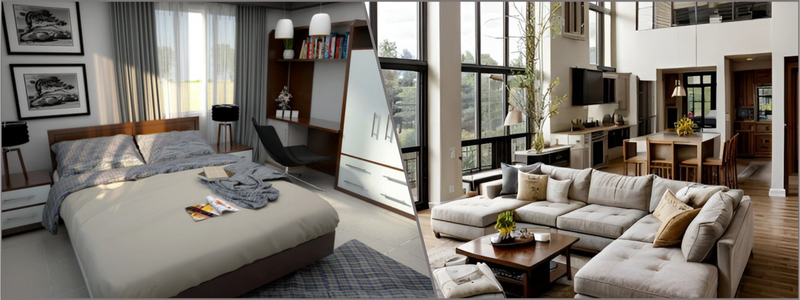
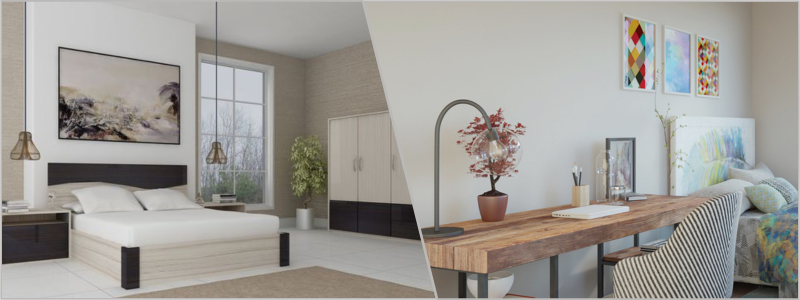
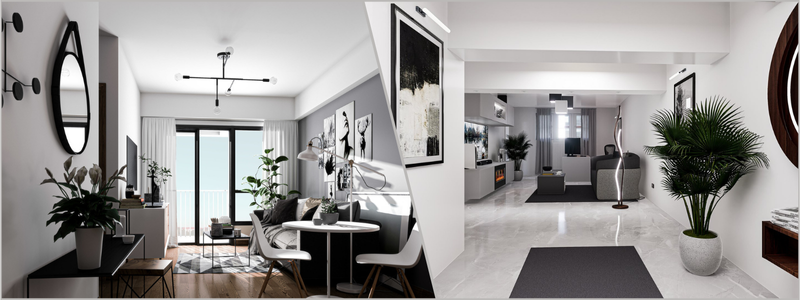
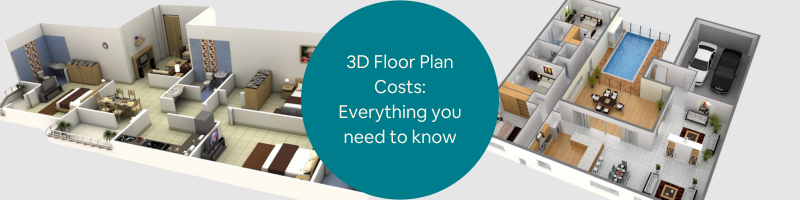
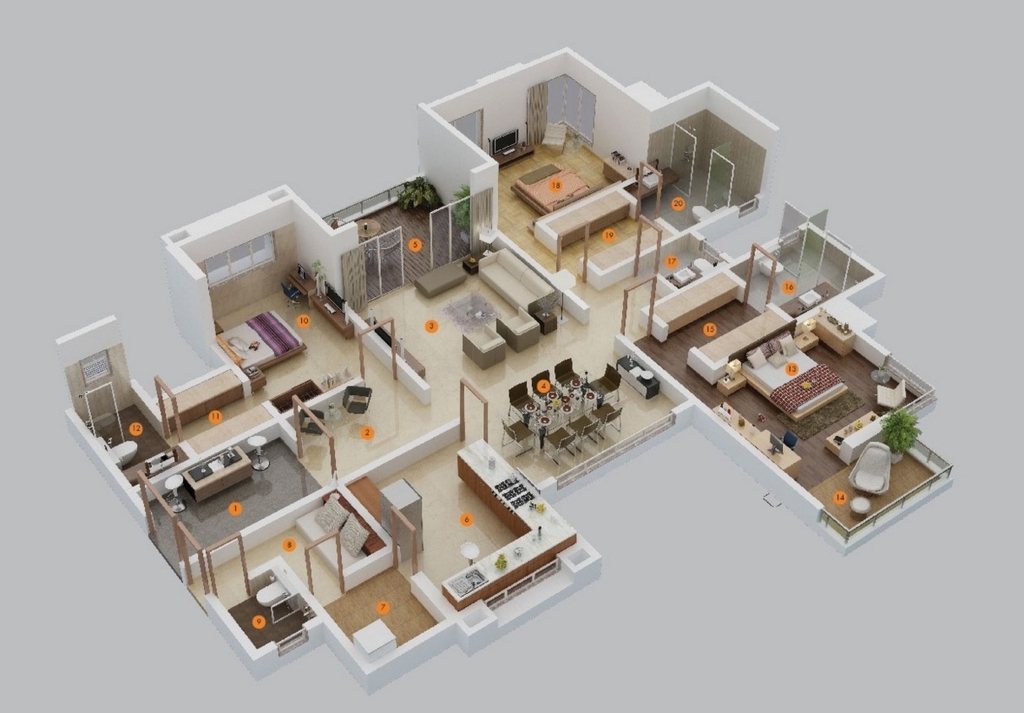
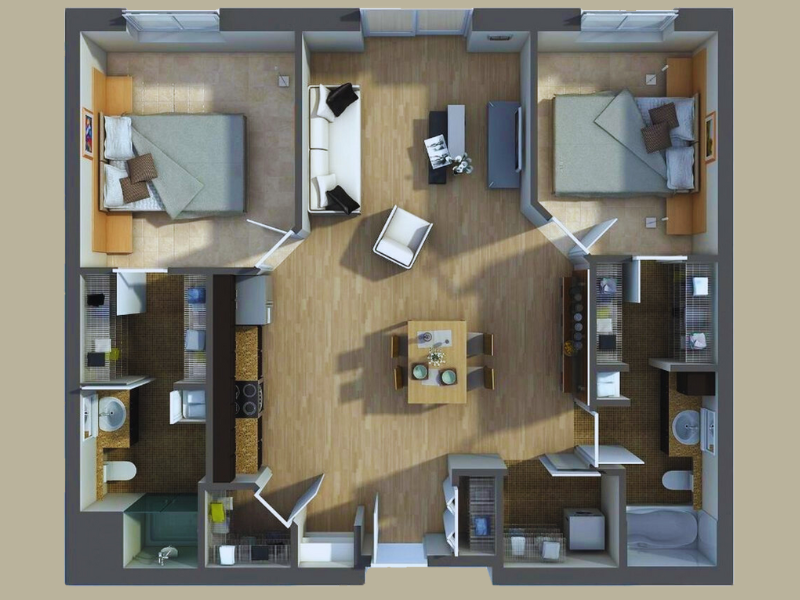
3D floor plans are photorealistic, bird’s-eye view of a particular floor’s layout. It includes realistic details regarding furnishings, flooring, walls, doors, appliances and, even carpetry. Similar to dollhouses (or the perspective in the popular game Sims), 3D floor plans aim to completely decorate and fill the spaces of each room according to your specifications and aesthetic sensibilities.

These three-dimensional floor plans will give you and any stakeholders the complete picture of the layout and interior design choices without the need to interpret architectural symbols, making them vastly superior to two-dimensional floor plans. 

It’s an immersive and exciting way to plan out any architectural design.


:rocket: Table of Contents 


3d floor plan example for a large home

Costs of 3D floor plan rendering

As a prerequisite, 3D rendering services are based on having a 2D blueprint or sketch. It doesn’t necessarily have to be a floor plan, but as these come hand-in-hand, it is prudent that you also have a 2D floor plan to serve as the foundation for your design.

Another thing to note is that like most creative services, costs for 3D floor plan renderings are dependent on the complexity of the design. Additionally, 2D and 3D floor plans are best handled by professionals such as architects, adding on to the cost. 

RELATED: How architectural companies design 3D floor plans for residential home design

Cost of 3D floor plan rendering services
Service Provider Cost Range Additional Notes
Architectural Firms $200 – $700 per floor Cost varies based on project complexity and size
Freelancers $100 – $450 (average cost per project) An affordable option with reasonable quality
Premade 3D Floor Plan Affordable (instant buy-and-use) Limited customization and potential reuse by the seller
Custom 3D Floor Plan Higher cost (offers total freedom and personalization) Consultation with an architect recommended

Still, while there is no standard pricing, you can expect to shell out $100 up to $1,000, depending on which of the two options you choose to work with below:

Costs of freelancers

For most architectural projects, such as for homes or small stores, freelancers are the go-to choice. In fact, it shouldn’t surprise you to learn that small-to-medium architectural firms commonly hire freelancers themselves, as these types of designers are typically specialized or have great expertise and experience.

Due to the nature of their specialty, freelancers commonly have their own collection or repository of 3D models that they can immediately use for your project. 

Freelance 3D floor plan designers represent the sweet spot, as these architectural rendering professionals are willing to complete conversion tasks for reasonable rates. 

As such, you get a balance of quality and affordability.

Again, there is no standard pricing, but most freelancers would charge by the project – with costs averaging between $100 and $600.

Cad Crowd is a marketplace that vets 3D architects and designers that specialize in this field. We make sure to get the most bang for your buck and help guide you towards finding the best freelancer that can translate your sensibilities in the most accurate way possible.

Costs of architecture firms

Obviously, when you hire an architectural firm, they are able to offer you the support of a team of 3D designers, including modelers and render artists. These professionals work together and collaborate on your project, allowing the process to run quickly. Also, firms with in-house designers are able to handle bigger, multifaceted projects.

You should expect to shell out anything from between $300 – $900 per floor, maybe more, depending on the firm. This can quickly escalate to thousands of dollars for a multi-story large home, as each and every floor should be represented by its own bespoke floor plans.

Should you lean towards customization?

For the most part, especially for less ambitious designs, 3D floor plans are only meant to help visualize the space and isn’t focused on truly capturing the final product. Of course, the closer you can get to your vision, the better, but if you want to stay within reasonable budget constraints, premade floor plans or – at the the very least – using stock 3D models in place of the objects can help you visualize without breaking the bank.

As a starting point, nothing beats a premade 3D floor plan. You can get them almost instantly, and to be honest, who’s checking if you actually use identical decorations in the first place? 

At the same time, maximizing your 3D floor plans is essential for more bespoke design approaches. Imagine you’re in a restaurant: tables and chairs are placed haphazardly. There’s no space for the staff to maneuver freely. The drapery and lighting is dull. It doesn’t sound like an enjoyable place.

It’s a bit of a stretch as an analogy, but you can see how you can create a more optimized, efficient and inviting space wherein food actually looks and feels delicious (apart from taste).

3d floor plan example for a medium-sized home

Other cost factors

Size

The overall dimensions of your floor plan will affect the final cost. As a guide, our research shows that a 1,600 square foot home is the median for a single family home. You should expect to pay at least a bit lower than average when hiring a freelancer, and significantly higher when you hire an architectural firm.

Details

You need to be clear about how much and how detailed the assets and objects you would like to utilize for your designs, as these may factor into the cost just as much as sizing. Some objects that you are adamant about will need a custom 3D render artist to work on the model, which can cost anywhere from $40 to $200 per design.

Timeframe

When it comes to freelancers, you have the flexibility to hire a person who either charges per hour or per project. Depending on what you want to achieve with your floor plan, you may want to opt for them to work on it per hour if you expect this to be cheaper for you.

If you need dedication and a bit more room for negotiation, you may choose to hire someone on a per project basis. Whatever you choose, Cad Crowd is the ultimate marketplace for vetted professionals. We’ll hold your hand through the whole process, and make sure you get the best out of your budget.

Why use a 3D floor plan instead of a 2D floor plan?

The best thing that 3D floor plans provide is plain and simple clarity. It provides a birds-eye perspective with visible spatial dimensions of the interior design, making it easier for anyone to comprehend small details like floor coverings, wall colors, and furniture placement. Moreover, it showcases the correlation or traffic flow between the rooms. Architects, engineers, and homeowners can benefit from realistic design visualization and architectural visualization.

Apart from understanding design ideas, 3D floor plans allow architects, designers and the construction team to communicate ideas and tasks effectively, allowing them to view the floor plan as a guidepost and to bridge the gap between technical understanding. Real estate developers may use 3D floor plans as marketing to showcase their designs as well.

Advantages of 3D Floor Plans:

  • Enhanced understandability and visualization compared to 2D floor plans
  • Explicit representation of room layouts, interior designs, and spatial flow
  • Practical communication tools between homeowners and professionals
  • The marketing potential for architects and real estate agents

In conclusion

In terms of specialization, value over price, and accessibility, freelancers have a significant advantage over architectural firms for most small-to-medium projects. If you have a more elaborate vision, then maybe shelling out more by hiring architectural firms to work on your project top-down would be the more cost-effective option.

For the most of us looking to build our own homes or stores however, freelancers are no doubt the best bang for your buck.

How Cad Crowd can assist

From detailed interior layouts to realistic textures and lighting, our expert team delivers exceptional quality; our professional 3D floor plan rendering services are poised to bring your architectural designs to life. Let us transform your vision into an immersive 3D experience that captivates your audience and sets your company apart. Visualize your dream spaces with a free quote today.


About the author

Strong Benefits of 3D Home Design Services for Crafting a Perfect Living Space


Real estate and home design are two worlds that are constantly changing and upgrading. Today, the demand for more precise, transparent, and vivid representations of architectural concepts paved the way to 3D home design services. At their core, 3D home design services use digital techniques and methods to create three-dimensional architectural design models. It results in the development of a lifelike representation of a property way before the first brick is laid. 

This article delves further into the key benefits of using 3D home design firms for crafting your perfect living space.

Key benefits of 3D home design services for crafting your perfect living space

Improve communication among stakeholders 

It’s paramount for stakeholders in construction or architectural projects to have seamless and clear communication right from the get-go. These endeavors are complex, so designers, architects, clients, and contractors should always be in sync, and everyone should understand the intricacies and vision with the same level of clarity. 3D home designs can be a great tool to improve stakeholder communication. 

RELATED: Working with a 3D home design service – things to consider

Verbal explanations, sketches, and 2D drawings and floor plan design services traditionally served as the backbone of discussions and presentations of home designs. However, these usually leave a lot of room for interpretation, which can result in different perceptions among various stakeholders. For example, the client may perceive a certain element in the design differently than the contractor. The architect’s envisioned spatial arrangement might resonate vaguely with the designer.

These disparities may result in time-consuming and expensive misalignments throughout the execution stage. This is where 3D home design services can come in handy. They can convert 2D sketches and abstract ideas into realistic and tangible representations that can bridge any communication gap. All stakeholders can also view the design in its entirety in three-dimensional glory. They can understand the intricacies of the design, placements of materials, and spatial relationships with unmatched clarity. 

Thanks to this visual uniformity, everyone, including the client, the architectural designer, and other stakeholders, is assured they will always be on the same page. This can then prevent potential misinterpretations or misunderstandings. 3D home design services can also help acquire more constructive feedback. Clients will be able to articulate their concerns or preferences more effectively if they can refer to a clear visual. Contractors can also highlight possible challenges in the construction, while designers can recommend enhancements while referring to the same visual framework. 

RELATED: Leading home design & modeling 3D technology for builders, companies, and firms

3d-home-rendering-professionals

Competitive edge

In a vast market crowded with professionals aiming to capture the attention of potential clients, it’s only paramount to set yourself apart from the rest. This competition is also very prominent in the architectural and real estate industries. From designers and architects showcasing their one-of-a-kind visuals to realtors presenting their properties, everyone may find it daunting to stand out in such an extremely saturated market. One of the most noteworthy benefits of 3D home design services is that they offer a significant competitive edge. 

The shift from traditional blueprints in 2D to more complex, detailed 3D renders is more than a simple transition in the presentation format. This also marks a commitment to client focus, innovation, and modernity. By using 3D home rendering experts to present their properties or designs, professionals can instantly show their clients their forward-thinking approach and commitment to delivering the finest visual experience. 

Homeowners, developers, investors, and other clients are becoming more and more discerning by the day. Their exposure to modern technologies and global trends increased their expectations. Giving them immersive and lifelike visualizations through 3D home designs can cater to and even exceed these heightened expectations. This can create a long-lasting impression, so it’s no surprise that professionals leverage this appealing and memorable technology. 

RELATED: Luxury home design upgrades by CAD drafting freelancers

In a cutthroat environment where two experts offer the same properties or designs, the one who uses 3D home design for presentations will undoubtedly gain an advantage. This reflects not only their quality of work but also their commitment to making the most out of the finest tools for communicating their vision. 

Seamless AR and VR integration 

Today’s technological landscape is constantly evolving, where 3D augmented reality and virtual reality architectural services are becoming the forerunners expected to shape the future of different industries, including architecture and real estate. Considering the inherent digital nature of 3D home design services, they can beautifully dovetail with these latest advancements to offer more immersive and interactive experiences. As a client, imagine not only seeing a 3D model on the screen but also being able to walk through a future property and experience all its nooks and crannies through a VR lens. 

This level of immersion can be achieved when VR is integrated with 3D rendering. This can elevate the whole design presentation process to a new level, allowing stakeholders and clients to truly feel the space. It lets them get a sense of the ambiance, the lighting, the scale, and even the possible furnishings and fixtures, resulting in more intuitive assessments and decisions about designs. Meanwhile, AR can superimpose the digital model into the actual world to offer a combination of digital precision and reality.

RELATED: How AEC companies can leverage VR and AR simulations in architectural design

It can be an excellent help for extensions or renovations, as clients will be able to view the integration of the existing structure and the newly added design. Interactive walkthroughs, with the integration of AR and VR with the help of 3D rendering firms & 3D designers, can impress and empower clients as well. They can ask for adjustments, decide right there and then, and give real-time feedback to ensure a smoother and more efficient design and approval process.

3d-house-rendering-firm

Effective presentation and marketing

With visual storytelling and digital media being the main driving forces of the modern world, the success of a product or service depends a lot on how it is presented. It rings even truer in the architectural and real estate fields, where the potential of a design or property must captivate viewers in a snap of a finger. Then came 3D home design services, which changed the world of presentation and marketing. A portfolio for designers and architects is more than a mere collection of previous projects as it is a solid proof of their vision, creativity, and skill.

Adding 3D home design rendering to their portfolios can help professionals show off their designs. The play of shadow and light, the intricate details, and the depth can all come to life to give prospective clients the chance to experience the project instead of just viewing and imagining it. This improved display can enrich their portfolio and set them apart from the rest. 3D home designs are also integral sales tools for real estate developers and agents. Try to consider a prospective homebuyer checking a soon-to-rise property. Traditional 2D layouts or blueprints usually leave so much to the imagination. 

RELATED: Innovative floating home design: architectural design ideas for companies & firms

However, buyers will be able to envision the finished product with a 3D-rendered model. The 3D architectural visualization designer can showcase how the light of the morning sun flows into the living room, how the interior decorations look, and what the backyard will be like once nighttime comes. This realistic visualization can induce an emotional connection that can make it easier for potential buyers or clients to decide. 3D home design lets them see a potential home instead of a mere house. 

Cost efficiency 

Although 3D home designs have clear experiential and aesthetic benefits, one of the more profound but subtle advantages they offer is their potential to save costs. Investing in these services may seem like an added expense at first. However, its cost-effective nature will become more obvious once you look into things more deeply. During the process of traditional design, any significant revision or change usually resulted in the need to create sample rooms or physical mockups.

These required not just materials but even additional time and labor. Even the most minor changes can result in significant costs. With the help of 3D architectural modeling services, the physical iterations will be eliminated. Small or big changes can also be made digitally to allow unlimited revisions, but this time, they can be done without the associated costs of materials. 

RELATED: 5 Tips for achieving photorealism with 3D rendering and 3D visualization for home design companies

3D home design’s visual clarity can substantially streamline the processes of decision-making. Once the stakeholders get a clear and definite visual representation, the usual back and forth during the process of approvals can be reduced. Every stakeholder, from the client to the investors and the regulatory authorities, will always be on the same page. This helps speed up project timelines and ensure their faster completion, resulting in monetary savings. 

Expensive rectifications throughout the construction stage are also decreased through the preemptive identification of design inconsistencies or flaws. The proactive approach guarantees a smoother construction process, which means direct cost savings. 

How Cad Crowd can help 

Now that you know the key benefits of 3D home design services in crafting living spaces, Cad Crowd is here to connect you with the right professionals who can transform your visions into life. Get in touch with us today and allow us to help you turn your projects into tangible realities!

How AI Trends Influence New Product Design and Development Companies


Seeing that AI changed the name of the game is an understatement. This new technology has found its way into different fields, transforming them in more ways than one. Even fields such as UX and product design are feeling the AI difference, revolutionizing the process of manufacturing and delivery of products across the globe. From medical device design and development services to autonomous cars to eCommerce and home technology, AI brought about a significant shift in how products are made, developed, and distributed.

How AI trends are influencing new product design and development companies and firms

AI’s integration into design paved the way for the personalization of products, predictions based on user behavior, and automated tasks involving design. These lead to more user-centered, innovative, and efficient products. But of course, challenges and limitations including biases and data privacy must still be addressed if AI will be integrated into design processes. This article delves into how different AI trends are influencing new product design and development companies and firms.

RELATED: How the metaverse will redefine retail and shopping experiences for companies 

How is artificial intelligence used in new product design and development?

Numerous industries have been using AI to streamline processes and boost overall performance. But there is still one lingering question: Can AI be used for new product design and development? The simple and obvious answer is yes. AI in all its forms can assist design systems to learn from different variables. This ability makes it a critical tool for new product design and development firms.

Product designers and developers can use these AI systems to consider not just the product’s experiences in a particular environment but also the dynamic adjustments the product will undergo in response to varying user preferences or conditions throughout its development process.

The newest trends in product design and development highlight the combination of creative exploration and technological innovation. These trends are bound to reshape the way design is approached across numerous fields. Take a look at some of the emerging AI trends and their influence on designing and developing new products:

RELATED: Smart manufacturing using CAD design is the future for OEM’s

new-concept-design-and-product-development-services

AI’s influence on design collaboration 

AI is now causing ripples of change in design collaboration. Design tools powered by AI allow seamless and convenient collaboration among design professionals, no matter where they are in the world. These tools use the power of machine learning to understand the style of every product designer and recommend complementary ideas to foster a more creative and cohesive collaborative process. Most platforms also come with features like AI-driven design recommendations, automated management of various versions of design, and simultaneous design collaboration.

These capabilities help foster creative thinking, streamline project processes, and simplify teamwork. This is similar to having a portable virtual design studio that enables creativity and collaboration despite location. AI is also used to simplify project management during design collaborations, where it can offer solutions and anticipate potential problems. Ai’s integration as one of the tools for design collaboration can make teams more efficient, resulting in more innovative outcomes of designs. 

AI’s influence on design education platforms 

Teaching and learning design has also been transformed with the rise of AI. More and more design education platforms are now using AI to offer more personalized learning experiences. These platforms tailor the learning process to suit each individual’s learning style and speed. They also provide instant feedback, interactive lessons, and AI mentors available 24/7/365 to answer any design-related questions.

RELATED: 8 Product design trends to watch out for in the new year

Design education platforms also provide instantaneous feedback on design projects wherein they leverage AI to critique and analyze designs in the same way that human instructors would. You can think of it as something similar to having a round-the-clock personal design instructor that makes learning design more economical and accessible.

AI’s influence on UX/UI design

Solutions run by AI are also changing the approach to user experience (UX) design, with the technology becoming more ingrained in different aspects of UX design. AI solutions are transforming the design of products, app developers and programmers, and software programs, tailoring every experience to each user’s distinct preferences and needs. It’s expected that the future of UX design will be innovative, dynamic, and customized, thanks to the unique capabilities of AI. There is a growing clamor for experiences catering to individual needs and preferences. This is why interfaces, shopping experiences, and shopping are now tailored to every individual user.

RELATED: The future of wearable technology: trends impacting business & product development

AI technology also empowers designers to assess users’ inclinations and behaviors in a snap of a finger. This paves the way for more intuitive and personalized interfaces. It also improves user experience by streamlining mundane tasks and predicting user requirements to make it more enjoyable and seamless. This is as if the interface can understand your preferences and make the necessary adjustments, which only shows breakthrough changes in design methodology. Personalization is becoming increasingly critical for both brand effectiveness and customer retention. 

design-engineering-services

AI and automated web design

AI-powered automated web design is one of the emerging AI trends these days. AI algorithms have become more sophisticated to construct completely functional websites using nominal input. Users simply need to input some basic preferences. From there, AI can create a full website design, complete with user interface elements, color schemes, and layout. Tools for automated web design are also constantly gaining knowledge from user interactions, which leads to more user-friendly and intuitive website designs in the long run. It is a trend that democratizes web design to make it more efficient and accessible. 

RELATED: Generative design: what it is and why it’s cool

AI and ethical design

Ethical design is expected to become a vital consideration this year, and its implementation will most likely depend heavily on AI. The technology is currently used to ensure the accessibility and inclusivity of designs for all users, even people with disabilities. It encompasses AI’s use in testing designs for compatibility with color blindness, readability for dyslexic patients, and navigability for motor-impaired people.

AI also aids in analyzing the effects of AI on the mental health and well-being of users. This ensures aesthetically pleasing designs and even ethically responsible ones with positive contributions to user experience. The trend denotes a shift towards more human-centric and socially responsible design practices

AI and immersive 3D design

The 3D design field is expected to make some major strides this year. Software and technological advancements allow designers to create gorgeous 3D visuals that enhance their designs’ realism and depth. The shift not only improves but also changes the landscape of graphic design, with designers now able to create interactive and immersive experiences.

RELATED: 5 Tips for successful product design

Virtual reality (VR) and augmented reality (AR) design experts enrich these experiences to add a new dimension to graphic design and make it more memorable and engaging for audiences. The trend also influences graphic design, wherein immersive opportunities open new possibilities for developing visually impactful AR and VR environments. It transforms traditional 2D works into fully immersive 3D experiences, making designs more accessible and interactive. 

AI, simplicity, and minimalism

Simplicity and minimalism remain two of the most prominent design trends, and AI plays a major role in refining the aesthetic further. AI tools help designers create uncluttered and clean designs that focus on essential elements. The tools assist in optimizing layouts, selecting harmonious color palettes, and choosing typography that complements the ethos of minimalism. This trend is the reflection of a bigger cultural shift to clear communication and ease of use. AI helps achieve elegance and balance in design while keeping it user-friendly and functional. 

RELATED: Key benefits of industrial product design – using industrial product design services 

AI and motion design

Motion design by 3D animation & modeling firms, 3D architectural design, graphic design, and various other service companies. is expected to experience heavy AI influences that will lead to more interactive and dynamic visual experiences. The AI rules and algorithms can be used to develop complex and fluid animations that can offer real-time responses to user interactions. Machine learning and AI are at the forefront of the shift towards more lifelike motion designs. The two technologies not only create visually appealing designs but also embed them with intuitive responsiveness.

The trend proves how technology has become critical in the development of user-centric and sophisticated designs. The ability of AI to animate and process massive data sets also enables designers to develop more engaging and personalized motion graphics adaptable to various user behaviors. All of these help enhance users’ experiences on today’s digital platforms. 

Generative AI’s next generation 

AI’s potential in crafting intricate stories, composing sophisticated musical compositions, and aiding in crafting best-selling novels will also see a significant increase. Multimodal generative AI, with the ability to synchronize various inputs, including visual, text, and voice elements, can potentially alter design workflows. The technology holds the promise of providing multidimensional and inclusive creative solutions by effectively combining different types of input. With the continuous evolution of these tools, the ability to differentiate between AI-generated and authentic content will become a more valuable and in-demand skill. 

RELATED: 12 Unique product design ideas

How Cad Crowd can help 

Cad Crowd offers new product design and development services that harness the full power and potential of Ai and all its newest and hottest trends.

Architectural Communication: The Advantage of 3D Renders for Firms and Clients


Ask any architect, and they will surely agree with the adage that a thousand words can describe a single picture. When it comes to vivid descriptions and clear architectural communication, nothing can beat the advantage of 3D renders for firms and clients alike in the said field. A 3D render representing an architectural project can be an effective tool that benefits designers and clients. Top-of-the-line 3D architectural renderings allow architects to communicate their design concepts to investors and clients in the most striking and captivating visual format.

They also help them save money and time while exploring other possibilities of potential projects. The unique setting and environment of 3D renders are the closest experience clients can get for residential and commercial spaces. Photorealistic renders make interpreting aspects including colour, texture, scale, massing, and site relation easier.

RELATED: What is architectural visualization and why architectural rendering services use it

With their ability to evoke favorable emotions from clients, 3D architectural rendering services can confidently pitch the vision of a designer with higher chances of approval compared to scale models. To make things better, 3D renders ensure minimal use of resources. Here are some of the most notable benefits of 3D renders for architectural companies and clients alike:

The Advantage of 3D Renders for Firms and Clients 

Breathe life into architectural designs

One of the most significant advantages of 3D renders is their ability to breathe life into architectural designs. Clients can have this vivid sense of materials, textures, lighting, and spaces. 3D architectural rendering makes it easier for them to imagine what the result will look and feel like. 

Save on costs with architectural 3D modeling

With 3D renders and architectural 3D modeling design experts, the need for rework and miscommunication is reduced, and projects can be executed with lower cost overruns. Clients can also have a good idea of the related costs early on in the project. 

RELATED: The benefits of 3D architectural rendering for companies in the real estate industry

Make your firm stand out from the rest

High-quality 3D renders are an excellent way to show clients you’re using cutting-edge design technology. You can make 3D architectural visualization one of the key strengths that will set your projects apart from your old-school and traditional competitors. 

Receive feedback early on

3D renders clearly show what and how the architectural designs will look upon completion so clients can give feedback earlier in the design process. It makes it possible to perform the necessary changes, tweaks, and adjustments before committing to major resources. 

Simplified collaboration 

3D renders also help 3D architectural visualization professionals, constructors, stockholders, and clients collaborate and work together even if they are not physically present during project meetings. Three-dimensional drawings also provide more comprehensive data while giving a glimpse of the proposed project. 

3d-architectural-visualization-firm

3D renders for architecture make everything clearer 

Subtle concepts and details of designs can be communicated more easily with the help of architectural 3D renders than their traditional counterparts. Thanks to this improved level of clarity, clients can make informed decisions faster and easier. 

RELATED: How to enhance your company’s 3D architectural rendering with advanced techniques

3D renders enhanced architectural visualization 

3D renders are more immersive and engaging for clients. Panoramic drawings, 3D flythroughs, and walkthrough architectural presentation services that show various views and angles of the project tend to create more impact than 2D drawings. It helps clients understand the technical aspects of buildings because they can get an instant impression or feeling of the architectural design against the surrounding natural environment. 

Grow clientele 

A portfolio consisting of stunning 3D renders can attract more new clients by presenting your company’s capabilities and visualizing their vision. It allows them to tap into new markets and grow their client base. 

Speedy processing and correction of designs 

Since errors can be identified during the earliest phase of the design process, it’s possible to make the necessary corrections without needing to go through all the drawings from scratch again. Presets from the CAD software can also reduce the time that would have been otherwise spent on improving 3D renders with the help of 3D architectural communication. 

RELATED: Learn about the types of architectural rendering services available for your company

Cultivate interest and foster trust among clients 

When the client understands the design language and impactful imagery of the project, they will feel more comfortable investing their resources into the proposal. A commercial or residential project rendered to create artistic or photorealistic imagery often has a more appealing quality while showcasing how the structure will look once it is built. 

It’s more than the façade 

3D rendering companies make it easier to analyze the base architectural 3D model to assess the influences and constraints in the design, including energy efficiency, structural analysis, material usage, and environmental impact. 3D architectural renders can also simulate environments that can help  3D architectural rendering designers maximize and explore faster and cheaper strategies. 

Better communication with clients

3D renders allow clients to comprehend proportions, scale, and spatial relationships easily. This improved 3D architectural visualization guarantees that clients and architects will always be on the same page. It also eliminates the need to conduct several revisions. These 3D renders also offer a visual representation of the project that clients can understand right away while still being comprehensive enough that architects and other professionals can use to study the project. 

RELATED: 3D architectural rendering options: in-house, self-learning, or outsourcing services? 

3D architectural modeling designers can also simulate the actual appearance of a building’s interior and exterior. For example, the layered textures are strikingly accurate with a photorealistic look. It makes it easier to scrutinize and make the necessary changes when and as needed. 

Effective tool for architectural presentations and marketing campaigns

3D renders for marketing can also offer firms and clients a significant competitive edge with the help of 3D rendered scenes. With the help of architectural presentation services, cinematic visuals can shed the best possible light on designs and evoke a sense of excitement. 3D renders reproduced on social media, websites, and brochures can also attract more prospective buyers.

The 3D models can also serve as an effective portfolio for construction or design companies that potential clients can easily and quickly access online. 3D architectural visualization and virtual staging for architecture services also allow real estate and architectural design companies to provide interactive and virtual tours to their clients. 

3d-exterior-rendering-services-2

Guaranteed project approvals 

Realistic 3D renders can help firms secure buy-in and approvals for projects faster. These visuals make stakeholders feel more confident, knowing that the final results will meet or even exceed expectations. 

RELATED: The ultimate guide to virtual staging for real estate and architecture companies

Save more money and time with professional outputs 

Architectural firms can outsource 3D renders for their projects to 3D architectural visualization companies that can develop professional renderings. The 3D architectural rendering designers can also look for background images and 3D models to incorporate into their 3D modeling projects. 

Faster sharing and distribution of drawings 

3D architectural renders allow 3D visualization designers to distribute and share drawings faster and more economically because the electronic file can be used to reprint renderings or share them online. 

Significant reduction and elimination of errors 

Errors in construction and design can be seen even during the earliest planning stages. 3D renders can help reduce construction costs, and the money saved can be set aside for contingency funds. 

Input real-time and accurate information 

Compatible or built-in third-party software like Solar Charts or Google Earth can help designers come up with feasible designs that can work on the actual site of the project. 

RELATED: Why are companies and firms moving from 2D to 3D CAD architectural renderings and models?

More winning bids

Architects who make the most of 3D renders can create more persuasive project bid proposals. Photorealistic 3D rendering services can set them apart from their competition and secure more project wins. 

Competitive edge over competition

The ability to adapt to today’s digital era gives construction companies and designers an edge over their competition. Using available technology can prepare architects and other professionals for the up-and-coming use of artificial intelligence technologies. 

Leverage the power of 3D renders for firms and clients 

The advantages above show the immense value that 3D renders can deliver for commercial, industrial, and residential projects. To begin reaping these benefits, look for 3D architectural rendering providers based on their expertise, quality, timeliness, and pricing. Ensure you also reach out with initial details of the projects to assess capabilities and obtain quotes. The initial upfront investment in top-of-the-line 3D renders can quickly offer huge dividends.

RELATED: How do 3D architectural modeling services perfect the art of atmospheric renderings?

Firms can breathe life into their architectural designs and watch their client marketing, engagement, and approvals go to the next level by making the most of these indispensable services. While traditional 2D drawing and floor plan design firms have long been used in the industry, they are no longer as effective as they once were. Because of the latest technological advancements, things have started to change and improve. 3D renders have taken 3D architectural visualization to the next level with their proven and tested effectiveness and efficiency. 

How Cad Crowd can help 

3D renders are undoubtedly an invaluable architectural communication tool that firms and clients should use. Cad Crowd is the best place to search for experienced architectural rendering designers who understand your unique needs and can deliver photorealistic visuals that meet and exceed expectations. Contact us now!

Comparing Freelance 3D Rendering Options and Photography for Architectural Projects


Your visual approach can easily make or break any architectural project. If you want your project to get off the ground, other people should be able to understand your vision.

Your ideas will become more effective if you showcase them clearly and interactively. This is where photography and 3D rendering options come in handy.

But is photography or 3D rendering a better option? Which should you use for your upcoming architectural projects?

Differences between freelance 3D rendering options and photography 

Many brands are investing in eye-catching and stunning project images, project videos, collateral, and brand visuals. Once again, however, the main question remains: what makes freelance 3D rendering service options different from photography? Here are a few fundamental differences you should know:

RELATED: What is architectural visualization and why architectural rendering services use it

Eliminate limitations on creativity 

Marketers now have freedom in terms of creativity when promoting their projects. They can utilize their aesthetics to develop photorealistic and detailed image renders using advanced 3D rendering software.

Efficiently do adjustments and edits

3D rendering options are easy and quick to adjust without significant construction costs. You can tweak the views or angles as often as you need at any given point without the need to do everything from the ground up.

3D rendering technology allows for easy adjustments to a designer’s rendered images. The 3D architectural rendering designer can even add various backgrounds or completely redecorate the ambiance after completing the renders.

With traditional photography, customizing is more time-consuming and challenging. Even though you can find several tools for photo editing online, retouching and editing require expertise and precision. If there is a need to make any changes during the development stage, it requires doing the photo shoot all over again with extra costs incurred with the final version.

RELATED: The benefits of 3D architectural rendering for companies in the real estate industry

Develop better marketing graphics 

When project photos are rendered in 3D, marketers can promote and showcase their projects when they are still in development, even before manufacturing. It is an excellent choice for architectural projects and brand owners, such as apparel designers, luxury car makers, fashion designers, etc. These 3D renders can be used to communicate ideas, create hype, and gain the project interest of the target audience.

Showcase project details and features 

Highly detailed rendered images developed by 3D experts can give 360-degree and multi-angle views of the project. They can also generate virtual walkthroughs or tours for architectural projects to help potential buyers make more educated buying decisions. For this reason, 3D rendering options can boost listings significantly thanks to the accurate details of the displayed images. Traditional 2D photographs can’t capture a project’s accurate details, such as measurements, proportions, alignments, etc.

Enables faster production

One of the most significant advantages of freelance 3D rendering over traditional photography is the shorter time needed to complete 3D renders. Marketers often feel a sense of urgency when launching their projects, which can tighten production deadlines. Hiring freelance 3D rendering artists is the best idea because they can quickly produce digital models and render them quickly to save time.

Traditional photography is time-consuming and can get quite pricey in comparison. 

3d-architectural-visualization-firm

RELATED: How to enhance your company’s 3D architectural rendering with advanced techniques

Showcase projects with conceptual and lifestyle backgrounds

Another practical part where 3D rendering options win the game is the conceptual presentations and unlimited lifestyle shots. Professional 3D designers are also experts in producing 3D lifestyle renders that can showcase projects complete with lifestyle scenes. These professionals are also skilled in creating white background renderings that most platforms favor.

CGI images can effectively display every angle of the project, depict what they would look like compared to the real-life surroundings of the potential buyers, and increase the chances of project approvals. Trying to achieve the same thing with conventional photography may incur more expenses and require more resources and workforce but with a limited scope of additional customizations.

RELATED: Learn about the types of architectural rendering services available for your company

Benefits of freelance 3D rendering options and photography

Now that you know the differences of these two, take a look at the specific benefits they can offer:

Freelance 3D rendering options:

1. Improve marketing efforts

Since you can start showcasing images earlier in the process, 3D renders allow you to communicate your concepts and ideas and spark interest in your architectural project. The project can also be marketed even while it is still in the development phase. 

RELATED: The best architectural rendering companies and 3D rendering services

2. Allows easier revisions

The 3D rendering technology allows the 3D architectural visualization professional to adjust lighting, make quick changes, meet deadlines, or completely revamp your decoration options. You have complete control over the rendering and easily pivot when necessary. 

3. There are no limits to the designs

Lighting, geography, and construction shouldn’t hinder you from creating gorgeous professional images to impress team members and clients. With the right software and vision, you can make 3D renders immediately.  

Photography:

1. Authentic 

Even though 3D rendering images often have the same quality as professional photos, some viewers might feel more inclined to choose photographs instead of digitally rendered images. 

2. Excellent finishing touches 

After the project is completed, professional photography is an outstanding final step for capturing the architecture and all its best angles. 

RELATED: Real estate marketing: advantages of 3D architectural rendering services & animation

3. Provide different looks 

Your new project might look different during sunset and in the middle of the day. The view from one part of the room may also evoke a different mood than other angles. Photography offers flexibility as you can play around with different times of the day and various angles to showcase the entire space in its glory. 

How to choose between freelance 3D rendering options and photography for your architectural projects 

If you’re still unsure of what to choose between photography and freelance 3D photorealistic rendering options, there are several factors you should know and remember.

Authenticity

If your topmost priority is real-life appearance, photographs can capture reality in ways that many 3D rendering options cannot. However, even though 3D rendering options can’t take a snapshot of real-world environments, they can still present impeccably realistic images. Even the most trained eyes won’t be able to distinguish between 3D renderings and real photos. 

3d-exterior-rendering-experts

RELATED: How to render architecture: tips from an architectural rendering company, Los Angeles 

Flexibility

Freelance 2D rendering options let you make adjustments, change angles, or retouch your building at any given point during the process. On the other hand, photography offers a very limited scope for playing around with. If you expect to make changes during the entire process, 3D rendering options can provide more options for customization. 

Time

Do you still have a lot of time before your project presentation? If not, you can always turn to 3D rendering. Architects and architectural design experts can use advanced technology to produce renderings quickly and allow faster production time compared to photography shoots and edits. Freelance 3D rendering options also let you present stunning images early in the process. Different from photography, where you need to complete the interior design and building processes, 3D renders allow you to showcase your vision before you’ve completed your finishing touches. 

RELATED: Why are companies and firms moving from 2D to 3D CAD architectural renderings and models?

When to use freelance 3D rendering options, photography, or both

Below are several best practices on how to incorporate freelance 3D rendering options and photography in your next architectural projects in the future:

Pre-construction:

  • Create several renderings that emphasize different details
  • Confirm a set of approved renderings that will serve as a guide during construction
  • Refine the designs according to feedback from stakeholders
  • Use quality 3D rendering software exclusively throughout the initial design stages

During and after construction:

  • Capture more wide images that showcase the entire architecture  
  • Capture photos of completed project interiors and exteriors 
  • Take photos of the render angles once again to present the design implementation
  • Capture more detailed close-up photos of unique components, finishes, and fixtures

For promotion and marketing:

  • Take advantage of professional photography to draw attention to the success of the project
  • Use renderings to convey the story behind the design 
  • Feature side-by-side comparisons of photos and matching 3D renderings 

The strategic combination of quality freelance 3D rendering options and photography can give you the best of both worlds when it comes to 3D architectural visualization services.

How Cad Crowd can help

Cad Crowd can link you up with the best freelance 3D architectural rendering designers who can help you showcase the full potential of your next architectural projects. Contact us today!

Elevating the Online Visibility of Your 3D Rendering Business for 3D Architects


The severe growth of the 3D rendering market has been observed to be rather incredible. This is why it is no longer a surprise that more and more businesses of all shapes and sizes find it appealing. As a result, the market has become more competitive by the day, and those not well-versed in marketing strategies may have difficulty landing clients despite their skills and talents. If you’re running a 3D rendering business, it’s easy to settle into the idea that it might take years to establish the credibility of your brand before you can start attracting all the right clients.

However, not all companies have the luxury of resources and time to perform trials and errors for several years in this high-stakes niche. But what if someone tells you that there is a way to elevate the online visibility of your 3D rendering business, save more money, and increase income simultaneously? This article explores tried and tested techniques that can work for your company so you can immediately put them to work. 

RELATED: 5 Reasons your architectural firm should use 3D rendering outsourcing

How 3D architects advertise their 3D rendering business

Most 3D architectural design services today continue to try numerous promotional strategies for their 3D rendering business, including 3D visualization marketing, paid advertising, networking, search engine optimization, campaigns, and so much more with combined results. Many of these strategies might work only for a limited time, and the results might also taper off when you halt promotions. However, this is not the case for search engine optimization. With the help of SEO, you might notice better gains after some time. This compounding effect is why SEO is among the more economically sustainable advertising choices available for 3D architects. 

For instance, getting several high-quality links with the help of skilled webmasters can cost a bit more than paid online ads initially. The main difference between these links and the usual ads is that you can expect a continuous and even higher boost in your online traffic after several years. It summarizes why SEO is among the best organic choices for promoting a 3D rendering business. But of course, implementing SEO methods of this kind can be tricky, especially if this is your first time trying to implement it. 

RELATED: Best practices for architecture firms: residential and commercial architectural site planning

Common 3D visualization marketing challenges

Marketing through 3D architectural visualization services is among the more in-demand and common advertising tactics most designers and architects love to use. This is an ideal way to increase potential leads, boost brand recall, and promote better engagement for your 3D rendering business. However, 3D visualization still has challenges that might be difficult to scale without serious effort. 

3D visualization marketing challenges include the following:

  • Even with the growing and continuous interest in the 3D rendering industry,  finding the right people who can be part of your dream team may be challenging. 
  • In global development, not everyone can access suitable tools that won’t impact performance. 
  • Managing an entire team of 3D visualization professionals is time and resource-intensive. 
  • Scaling up is a different difficulty, primarily when there are limited budgets. This can make it almost impossible to look for a more spacious working space, find the right tools and equipment, and more. 
  • Technology constantly changes, requiring users to continue evolving and learning simultaneously. 
  • The high prices can often reach 5-digit figures or sometimes even higher depending on how complex the designs or projects are. 

RELATED: What is architectural visualization and why architectural rendering services use it

3d-exterior-rendering-services

SEO tips to boost your 3D rendering business’s online visibility 

At the core of all SEO methods is the essence of the ability to understand, know, and see the client beyond a superficial level. It can be challenging for businesses because you are trying to market to varied demographics of people with distinct needs. This may result in your 3D rendering business getting drowned out in all the online chaos. Check out the following tips for increasing the online visibility of your 3D rendering business: 

Increase the number of your landing pages

You can expect more conversions and engagement if you also have more landing pages for your 3D rendering business. The general guideline is to have a dedicated page for every service you provide and to ensure you optimize the content to appear higher in the page rankings, ideally on the first page of search engine results. To achieve this, apply the rest of the tips listed below. 

RELATED: How to render architecture: tips from an architectural rendering company, Los Angeles 

Diversity your landing pages

To continue on the point above, it is also highly recommended for 3D rendering businesses to create different and unique landing pages for every time of service they offer. For instance, you can dedicate a landing page for 3D commercial rendering services, 3D architectural modeling, etc. This is critical because it would be challenging to engage adequate traffic if you have a single main page where users would have to scroll through a complete list of all your offered services. 

For SEO optimization, having different pages that target various audiences would be worth your time. However, you still have to ensure that every page for your 3D rendering business offers authentic additional value and answers the users’ search intent. Remember to optimize every landing page for a particular keyword, such as URLs, meta tags, etc. 

Create keyword-aligned, high-quality 3D rendering business content 

Ensure your 3D architectural rendering business content aligns with potential clients’ search intent and contains keywords related to 3D rendering. This way, it will be easier for them to find your 3D rendering services during their online search. High-quality content is among the best means to entice more website visitors. Once you create keyword-aligned, high-quality content, you can expect increased engagement, more backlinks to your web pages, and higher exposure to your brand and 3D rendering business.

RELATED: 3D Visualization: the future of architectural design

This is also a great way to show and prove to the algorithm of search engines that you have informative, helpful, and valuable posts. Focus on content optimization, which involves using alt tags, meta descriptions, header tags, quality images, and more. You also have an appealing, logical content layout to increase retention and engagement. 

Seek help from the experts

This particular aspect of SEO emphasizes the importance of working with authors who will be exclusively suitable for your 3D architectural rendering blog and have publications in other places. They may include professional content creators with a solid social media presence. They can also be experts in their respective fields, such as talented 3D rendering designers, engineers, architects, coaches, etc. By featuring the works of these contributors, your 3D rendering business website can gain credibility as a platform hosting content from reliable specialists to become a reliable and trustworthy source. 

3d-interior-rendering-firm-1

RELATED: Is 3D modeling and rendering the future for architectural design firms?

Develop an adaptable 3D rendering business website

Users increasingly use smartphones and mobile devices to access the internet. You must ensure your 3D rendering business website can seamlessly adapt to different formats to boost your online visibility. Clients won’t be inclined to stay on a website that is not user-friendly, even if it offers valuable content. Thus, it is essential to make sure that you have a mobile-friendly and fully responsive website to engage and retain more visitors. This can substantially improve the page performance of your 3D rendering business for 3D architects

Boost website speed 

Google pays close attention to the loading speed of websites. The search engine giant constantly updates all its metrics to measure this. Thus, it is recommended that you highlight this aspect to your entire web development team. For instance, since many visuals are included on 3D rendering business websites, these should all be optimized in specific formats with a smaller file size without compromising quality. It is also important to prevent long redirect sequences and to use HTTP caching. You should also avoid overloading your website with different plugins. Instead, tasks should be performed manually whenever possible. 

RELATED: 5 Types of 3D visualization used by architectural design firms for CGI projects

Use quality visuals to showcase your skills

Potential clients will assess your expertise and quality of service according to the visuals they see on your content and 3D architectural modeling business website. Since these will influence their decisions, you should go all out to make the best first impression. Use designs, images, and other types of visual elements with the highest quality possible and ensure that they can capture your brand’s values while still conveying the right positive emotions. Ensure tags, descriptions, and alt texts are optimized with your keywords because images affect online visibility and search rankings. 

How Cad Crowd can help 

Cad Crowd can connect you with experts to provide 3D rendering services that will increase the online visibility of your 3D rendering business. Quality 3D renderings will attract prospective clients and make your website the top choice for clients. Contact us today!

Value of Gymnasium or 3D Fitness Center 3D Renderings for Design Firms and Companies


These days, there is simply no excuse for being unhealthy. With all the diet programs available and the increasing number of gymnasiums and fitness centers, people have all the resources they need to stay healthy and fit. This demand favors designers who specialize in this particular industry.

This article explores the value of gymnasium or 3D fitness center 3d renderings for design firms and companies.

What are gymnasium or fitness center 3D renderings?

3D fitness center or gymnasium renderings are more than just creating images for gym scenes that clients often look for. They’re a unique process involving computer rendering tools combined with traditional hand-drawn methods. The setting of the gym or fitness center will depend on the client’s original design concepts. These renderings are carried out by professional 3D artists who provide exceptional renderings of gyms and fitness centers, offering a unique perspective and helping clients visualize their projects better.

Benefits of gymnasium or fitness center 3D renderings for clients

In this case, the clients refer to the owners of gyms and fitness centers. For one, it will be easier for owners to envision their project upon its completion as realistically as possible with the help of these renders. There are other reasons why fitness center and gym owners should consider using 3D rendering services. 3D renderings of fitness centers and gymnasiums empower owners to present their concepts clearly and precisely. Renderings provide a solution if they have ideas but need help to express them. Instead of relying on memory or rough sketches, renders enable them to develop and apply their ideas confidently and quickly.

Owners can also use renders to assess the practicality of their project concept. By visualizing the completed project, they can identify potential issues and mitigate risks during development and installation. This sense of security is invaluable in ensuring a smooth project execution. The renders can also help design the project’s exterior and interior areas. They will also determine the project’s success, including its likelihood of generating profit.

1 (2)

Fitness center and gymnasium renders can also help pinpoint weaknesses and problems so they can be fixed or repaired immediately. Although these projects often seem like simple architectural projects, it’s still essential to guarantee precision and safety during construction to get the most out of them. Owners can also choose a suitable source of materials. Using 3D renders, they can design and arrange fixtures and furnishings for their project.

It’s also worth noting that rendering artists use state-of-the-art tools to develop the project’s most realistic exterior and interior furniture. As a result, gym owners can identify the objects and materials that complement their original design concepts. Sooner or later, gymnasiums and fitness centers will become a location that welcomes people. For this reason, owners should be meticulous in choosing the right equipment and furniture for themselves and future clients using the area daily.

3D renders are a must for owners because they help them complete their projects and ensure their clients enjoy a comfortable time in the space. All of these can result in higher revenue in the long run. This is no doubt a win-win situation for owners.

RELATED: 3D Rendering Costs & 3D Visualization Prices for Firms

Benefits of gymnasium or fitness center 3D renderings for design firms and companies

The value of 3D fitness centers or gymnasium renderings for design firms and companies must be balanced. Here are some of the top benefits that these services can offer:

3D renders can boost the brand value of design companies and firms. This value is rooted in the design aspect. Fitness centers and gymnasiums are relatively easy undertakings. However, choosing user-friendly equipment, interior and exterior layout, and design still requires meticulous attention to detail. When design firms and companies utilize 3D renders, they can significantly reduce the time required to complete projects. This efficiency not only boosts client trust in the quality of their work but also alleviates the stress of meeting project deadlines, enhancing the overall value of their brand.

  • Generate more profit and revenue

3D gymnasium and fitness center renderings can also help design companies and firms increase their profits and generate more revenue. These establishments have become popular sites to build, most often a part of the construction of resorts, hotel complexes, condominiums, and apartment complexes. 3D renders will help ensure your company’s design process goes as smoothly as possible. When your clients find the rendering of their project satisfactory and up to their standards, this will help your firm generate additional design royalties. 3D rendering services can offer firms higher chances of earning revenue.

1
  • Attract a bigger clientele

3D renders can help design companies and firms attract more clients, mainly if they use these renders to complete projects in the past in various genres and styles. When clients are satisfied with your company’s project after they see the demonstration images, this will help you gain the trust of your customers and establish your credibility in terms of skill and quality in 3D architectural visualization services. The design of gymnasiums and fitness centers is critical to attracting and retaining clients, especially in a competitive wellness and fitness world.

Revisions of designs are standard during the planning stage. Thankfully, 3D renders can guarantee more cost-effective design revisions. The digital model can help visualize any changes or tweaks made, thus eliminating the need for extensive rework or physical models during construction. This can lead to substantial savings in resources and time, making it a wise financial choice for design firms and companies.

  • Flexible and customizable designs

Gymnasium and fitness center renderings can provide unmatched flexibility when customizing designs. The designers can easily tweak design themes, equipment configurations, and layouts to tailor the area to the client’s specific operational requirements and preferences.

  • Facilitate easier decision-making

3D renderings of fitness centers and gymnasiums also facilitate a more straightforward decision-making process as they help provide detailed and clear visuals of the planned design. All parties involved can make faster and more informed decisions with their help.

  • Efficient layout optimization and space planning

Optimization of the available space is critical in designing fitness centers and gymnasiums to ensure effective use of every available space and a seamless flow of movement. 3D rendering technology also helps with more precise space planning to ensure that the layout can support various fitness activities and maximize the comfort and utility of the space.

  • Improved communication with investors and clients

3D renders of fitness centers and gyms also enhance investor, client, and designer communication. These renders offer tangible representations of proposed designs. It can lead to a better understanding of the entire project, more educated decision-making, and alignment of expectations from all sides.

  • Enhanced presentations and marketing

High-quality 3D renders are excellent marketing tools for gymnasiums and fitness centers. They can be used as effective promotional materials to showcase the facilities and design of these establishments, attracting more potential members and improving their presence in the market.

  • Ensure accurate implementation

3D rendering helps ensure accuracy throughout the implementation stage. Detailed 3D renders offer clear-cut guidelines for builders and contractors to help cut down the risk of discrepancies and errors during construction.

1 (3)
  • Correct selection and combination of materials

Choosing the correct textures and materials is essential to designing an inviting and durable environment for gymnasiums and fitness centers. 3D renderings accurately represent how specific materials will look in the area. This helps in the selection process and ensures that the chosen materials are aesthetically pleasing and practical.

  • More realistic layout visualization

Gym and fitness center renderings offer a highly detailed and realistic depiction of proposed layouts, which include interior design elements, lighting, workout zones, and equipment placement. These meticulous visualizations allow stakeholders to envision the space and its potential to help develop a more attractive and functional environment.

  • Simulate the effects of lighting and the environment

Lighting is critical in setting the ambiance and mood of gyms and fitness centers. 3D rendering allows designers to simulate different lighting conditions to provide insights into how the space will look and function under various scenarios. It is essential to create a motivating and inviting workout environment. 3D gymnasium and fitness center renderings are changing the process of designing and constructing fitness spaces. They offer many benefits ranging from increased brand value to attracting a more extensive clientele to simulating the effects of lighting and the environment.

RELATED: What are Architectural 3D Visualization Costs, Service Fees & Rates for Companies?

How Cad Crowd can help

Cad Crowd is the number one resource for design firms and companies that need help developing 3D renders for their gymnasium and fitness center projects. Contact us today, and we’ll be more than happy to help!

Visualize Your Dream Home With 3D Architectural Visualization Company Services


3D architectural visualization has now become a true game-changer in the world of homebuilding and architecture. A helpful tool that used to be exclusively available to professional designers and architects, the technology is critical for homeowners who want to turn their dream homes into reality. 3D architectural visualization services can significantly improve the homebuilding journey and make it an exciting discovery, exploration, and accomplishment process.

3D architectural visualization and rendering are all about bridging that once-large gap between reality and imagination. They focus on turning abstract ideas into concrete before laying a single brick. With the help of this tool, homeowners can envision their dream home, tinker with design concepts, and make well-informed decisions. All of these ensure that the final product will closely resemble what they have envisioned.

The 3D architectural visualization basics

At its very core, 3D architectural visualization is the process of generating non-photorealistic or realistic images from 3D models. The models made with the help of 3D modeling software include shading information, lighting, textures, viewpoints, and geometric data. The visualization process uses the data to produce 2D animation or images.

3D architectural visualization transforms design ideas and plans into virtual reality in home building. For example, if your plan includes a house with three bedrooms, a pool, and a patio, 3D architectural visualization can offer a vivid image of the possible appearance of your dream home, right down to your backyard landscaping, furniture style, and wall colors.

RELATED: What are Architectural 3D Visualization Costs, Service Fees & Rates for Companies?

Benefits of 3D architectural visualization company services for homeowners

1 (2)

3D architectural visualization company services help democratize the entire design process. Homeowners can now participate more actively in designing their dream house and reap all the benefits the tool offers.

  • Understand complicated architectural plans easily

Understanding complex architectural plans, especially those involving technical blueprints or drawings, can be challenging for most homeowners. This is where 3D architectural visualization shines, transforming these complex plans into relatable and understandable images. 3D architectural rendering services offer a meticulous view of the house’s interior and exterior in a way that is easier and simpler to understand. It also shows the connections among the spaces inside the house and how they flow. 3D renders also reveal how natural light filters in through the windows at various times of the day. Homeowners can also see how the house would look from different perspectives.

  • Better visualization of design concepts

The most important benefit of 3D architectural visualization is how it allows homeowners to envision the design concepts they have in mind. Being able to imagine how a roomy living room complete with a fireplace and high ceiling would look is an entirely different story from the ability to see it right on a screen complete with lighting, furniture layout, and exact dimensions. This kind of visualization evokes a sense of excitement, bringing homeowners a step closer to turning their dream homes into tangible realities. Seeing their design concepts come to life on a screen is thrilling.

  • Ability to explore different options for potential designs

3D architectural visualization offers virtually endless possibilities for exploring different design options. Just imagine what the living room will be like when designed with a contemporary minimalist style rather than a more traditional one. 3D architectural visualization allows homeowners to explore a wide range of design options. Whether visualizing the living room with different styles or experimenting with various kitchen finishes, this tool empowers homeowners to make well-informed decisions that align with their vision.

RELATED: What are Architectural Rendering Costs, Rates, and Pricing for Companies?

How to use 3D architectural visualization for building your dream house

1

Considering all its benefits, adding 3D architectural visualization into the homebuilding process is a wise decision. Below are several ways that homeowners can take advantage of 3D renders.

  • Collaborate with architects

One of the initial steps to homebuilding is working with an architect to create a design that aligns with your requirements, budget, and vision. Architects usually showcase their designs using 3D renders and excellent communication tools. Collaborating with architects using 3D architectural visualization provides a sense of security. You can view your future house from different angles, get a better feel for the space, and offer better feedback. Adjustments can be made in 3D models until you feel thoroughly contented, reducing the risk of time-consuming and expensive changes during construction.

  • Decide on interior design

3D architectural visualization is not only for architectural structures or exteriors but is also valuable in interior design. From choosing color schemes to deciding on the right furniture, planning the layout, or lighting fixtures, 3D architectural renders let you envision your options in full context. You will also see how unique elements design a harmonious, cohesive space to minimize design risks and mishaps.

RELATED: 3D Interior Design Costs, Modeling Pricing, and Rendering Rates for Buildings

  • Facilitate landscape design

There is more to a dream house than its four walls alone. The surrounding landscape is vital in shaping your property’s functionality and aesthetics. This is where 3D architectural visualization and landscape design services help envision various ideas for landscaping, whether it is a thriving patio area, an idyllic garden, a play area for kids, or a poolside deck. You can explore numerous lighting, outdoor furniture, plants, and more until you find the best fit.

  • Envision and choose colors and materials

The choices for finishes are virtually infinite, from roofing and exterior siding to countertops and flooring. It’s a bit tricky to use small samples to make these decisions. 3D architectural visualization can showcase all these materials in your dream home’s broader context, making imagining the final feel and look easier.

RELATED: 3D Landscape Design Services: Cost, Rates, and Pricing for Companies and Firms

DIY vs. hiring 3D architectural visualization experts

1 (3)

Now that you know the potential advantages that 3D architectural visualization can offer when building your dream house, you’re probably wondering if you should just take things with your own hands or pass them on to professionals. Both approaches have pros and cons; your comfort with technology, needs, and budget will ultimately determine your final choice.

DIY

Many user-friendly 3D architectural visualization software tools are available on the market now, especially made for homeowners. The tools range from sophisticated to simple, and most offer massive libraries of materials and premade objects to help you envision your home design. Going the DIY route might be more cost-effective as it gives you better control over the entire design process. This also allows instant visualization and real-time changes. However, it requires some learning curve, and the output quality needs to be at par with that of professionals. The most popular DIY 3D architectural visualization software programs are AutoCAD, SketchUp, Homestyler, and Lumi. Each has strengths and weaknesses, making it worth exploring and identifying the one that best suits your needs.

Professionals

Professional 3D architectural visualization company services can provide realistic, high-quality images that perfectly capture all the intricate design details. The professionals use state-of-the-art software, technical knowledge, and skill to create visually stunning and accurate renderings. They can help you save time and avoid common pitfalls if you try to do it yourself.

Just remember that professional services will come at a cost. Although prices may differ depending on the level of detail and complexity of the renderings and the project, it is a worthy investment, especially for more significant, more multifaceted projects.

RELATED: What Are AutoCAD Designer Rates, Drafting Costs & Services Company Pricing?

Wrapping it up

1 (4)

Building your dream house is one of the most exciting journeys, with discoveries and decisions. 3D architectural visualization company services are pivotal in this journey as they help you envision your ideas, make better decisions, and communicate more effectively with designers, architects, and builders.

Although the process might seem daunting, each step will bring you closer to the house you have always dreamed of. It means you need the best help to realize your vision. With 3D architectural visualization continuously getting better, it’s safe to say that the world can look forward to more interactive and immersive ways of visualizing dream homes. So, don’t hesitate to embrace the endless possibilities of this technology and allow it to serve as your guide as you build the house you can call your home.

How Cad Crowd can help

Cad Crowd is the best place to find and hire reliable 3D architectural visualization company services that will help you transform your dream home into reality.

Value of 3D Landscape Rendering and Design for Architectural Firms and Realtors


The modern real estate industry has realized the undeniable importance of 3D rendering and design. That’s why it’s unsurprising that the 3D rendering market is also growing as more industries discover that 3D rendering methods allow them to achieve all their advertising, marketing, and business goals. For instance, the Park Lane Residences project used 3D landscape rendering and design to visualize complex landscaping ideas and create immersive virtual tours, which significantly boosted their marketing efforts, increased pre-sales, and enhanced customer satisfaction by providing a realistic preview of the final product.

This article delves into the value of 3D landscape rendering and design for architectural firms and realtors.

Aesthetics made even better

Freelance 3D landscape design services let you develop photorealistic imagery and captivating 3D visual configurations with stunning aesthetics. This helps highlight the property in the best way possible, including its exterior and interior views. This tool also helps showcase the property in ways you probably didn’t imagine to attract the attention of your target clientele and increase your chances of closing a deal.

For an architectural project to succeed, it’s essential to detect any errors in structure and design before the actual construction. This will reduce the effort and time spent on the project while increasing customer satisfaction, making incorporating their ideas into ongoing projects easier. However, it’s important to note that the complexity and cost of high-quality 3D rendering software, as well as the need for skilled professionals to operate it, may pose potential challenges. These limitations can impact the overall efficiency and effectiveness of the process, especially for smaller firms or projects with limited budgets.

lakeside-estate-exterior-3d-render

3D landscape rendering and design also simplify shifting focus on the major highlights and features of the property. Unlike 2D images, advanced and modern 3D rendering imagery is so lifelike and realistic that it lets 3D artists highlight the most significant features of residential and commercial infrastructures. This is because 3D rendering captures intricate details, provides a sense of scale and spatial relationships, and allows for dynamic lighting and shadow effects, which give a more accurate representation of how the space will look and feel in reality. These capabilities justify its use by making presentations more compelling, facilitating better client communication, and enabling more precise planning and decision-making, ultimately leading to enhanced marketing effectiveness and increased sales potential.

This allows you to showcase the function and aesthetic features of the property’s exterior and interior spaces perfectly. Thanks to 3D landscape rendering and design, realtors can easily denote safe and comfortable living standards and emphasize layout, lighting, rooms, and others in the most appealing way possible.

RELATED: 3D Landscape Design Services: Cost, Rates, and Pricing for Companies and Firms

Better materials for marketing purposes

3D landscape rendering and design can also help you improve your existing and future marketing materials to offer your clients fantastic user and customer experience. Customer experience is the most effective tool in real estate marketing as it helps you approach clients more customer-centric and personalized and caters to their unique needs and requirements. This is an ideal way to help clients connect emotionally with the sold property. 3D landscape renders can present the property in a more user-friendly way that provides a complete user experience. This is almost similar to going on a real-life walkthrough.

Clients also connect with the property and establish connections with properties and realtors before visiting them in person. Aside from making your clients happy and satisfied, this can also increase your marketing ROI quickly. Realistic 3D landscape renders and designs can leave a strong positive first impression among clients. For example, animated walkthroughs of real estate properties are an ideal way to boost your marketing campaigns and materials and allow your clients to envision the appearance of their future homes. These renders are powerful marketing tools, and realtors can use them to promote their properties on various social media platforms, including Facebook, Instagram, YouTube, LinkedIn, and even TV.

modern-waterfront-house-3d-render

Enhanced property overview

3D landscape rendering and design help architects, engineers, constructors, and interior designers better understand the property. They offer a better and more detailed property overview. Then, everyone involved in the project can understand the property’s strengths and weaknesses and its best and worst features. They can also identify defects and errors and make the necessary changes on the fly without significantly increasing the property’s value.

After getting all parties on the same page, it becomes easier to save money and time while ensuring a safer and more accurate construction process. With this improved overview of the property, you won’t have to leave anything to chance, allowing you to add more value to it in the future. While creating 3D landscape renders and designs may initially require more time, the long-term benefits in terms of efficiency and accuracy can outweigh this initial investment.

3D landscape rendering services can help realtors close more deals by allowing people to envision the property before construction. They can use lifelike 3D landscape rendering and design to showcase every nook and corner of the property, significantly improving the chances of selling. This optimistic outlook can help realtors tap into a more significant number of customers, leading to increased revenues and sales down the road.

RELATED: What does it Cost to Hire a Landscape Design Architect Expert for your Company?

Customers love and appreciate new technologies

Businesses that want to appeal to and reach wider audiences should use new technologies. This will help them tap into more prospects by using their preferred communication channels when connecting with them. In addition to attracting more clients, these new technologies focus more on the customers. The same goes for 3D landscape rendering, which is immensely eye-catching and immersive.

Aside from helping attract more potential clients, these renders also allow realtors to make the most of new software tools and technologies. Despite the perception that they may require advanced technical skills, many 3D landscape rendering and design software are user-friendly and intuitive, making them accessible even for those without extensive design experience. Realtors can use them to craft more customer-centric marketing materials and advertising campaigns.

luxury-home-poolside-3d-render

3D landscape rendering and design also offer a pervasive array of 3D effects that are more engaging, immersive, and attention-grabbing compared to simple traditional 2D images. New rendering programs have advanced features that let realtors present the most realistic representations to clients that can breathe life into their concepts and ideas. With the help of software tools that offer AR, VR, and AI features, you can give your clients a chance to go on virtual tours around the properties to make an excellent first impression and persuade them. This is something you can’t achieve with just video presentations alone in this modern day.

RELATED: Architectural VR/AR 3D Rendering Costs, Rates & 3D Modeling Pricing for Design Firms

Demand for visual advertising

It’s been discovered that visual advertising makes customers more inclined to form a psychological connection with ads. Using visual advertising can even boost sales several notches. However, remember that you still need professional 3D landscape rendering and design to achieve this effect and leave a great impression on customers. Real estate professionals can use photorealistic renders to give stakeholders some freedom and let them experiment with the images when and as they want. 3D landscape rendering lets clients make changes even at the last minute if necessary.

The properties’ 3D visuals can also be resized to fit into the available space for your ads on different marketing channels. You can create gorgeous visual ads and scale them down or up to suit any advertising size. This lets you tap into specific markets and capture the interest of broader audiences by reaching out to them on a more personalized level.

With all the different advertising and marketing options you can use to your advantage, you can approach every market more precisely and ensure increased sales, revenues, and ROI. It can also work wonders for the visibility and presentation of your brand. Despite the initial investment, 3D landscape rendering and design can be a cost-effective solution in the long run. See that your visuals adhere to the proper scaling and sizing requirements, as these may vary from one channel to another.

Provide quotes easily

You must present more than just rough sketches, draughts, and 2D drawings and expect them to justify the cost of luxury properties. Comprehensive 3D landscape rendering makes it easier to give quotes and justify the high price tags. They also simplify the process of selling properties. 3D landscape rendering and design offer clients a complete overview of the property, helping them understand the factors and features that drive its high value.

3D landscape renders also offer invaluable education and knowledge about building materials, helping clients better understand the value of their investments. Meanwhile, realtors who want to sell a property must show the neighborhood’s beauty, location, and surrounding environment. This offers a holistic understanding of every unique feature, including fancy landscapes, nearby schools, underground parking, and distinct architecture. Once these elements are combined, it becomes easier for potential buyers to understand their future investments’ accurate price and value. Giving them the chance to see precisely what they will pay for makes it almost effortless to provide quotes. Rather than merely showing off the property and giving them a quote upfront, you can evoke genuine emotions in your clients that will help you get closer to closing the deal.

charming-garden-pergola-3d-render

Simplified storytelling

3D landscape rendering images can tell a story in ways most people can’t probably imagine. As far as real estate is concerned, these images help present your business’ mission. Modern homeowners and clients no longer enjoy listening to simple storytelling about your brand, goals, and others. They need and expect more than this.

Clients expect vivid visualizations that evoke real emotions and convey the message quickly. Each company has a story to tell that targets enticing a specific audience, with 3D landscape rendering making it easier for you to tell a story in a way that best resonates with your clients. This is a highly effective means of enticing them to your skills, potential, ads, and the like.

How Cad Crowd can help

Cad Crowd is the leading resource for the best 3D landscape rendering and design professionals who can help your architectural firm or real estate business get the much-needed boost in sales.

How 3D Rendering is Transforming the Property Development Industry for Companies?


The past few years have seen significant transformations and breakthroughs in the property development industry. Most of these developments were made possible thanks to the numerous technological advancements that popped up like mushrooms everywhere. One of these technological innovations is none other than 3D rendering. This emerging tool is a real game-changer as it revolutionized the process of conceptualization, design, marketing, and sales of today’s properties. This article discusses how 3D rendering firms is transforming the property development industry for companies. 

A quick history of property development 

Before you delve into the 3D wondering world, it is important to understand the traditional property development methods. Property development historically involved developers, architects, and investors working together on paper-based plans, physical models, and blueprints. These static representations usually left so much to the imagination. As a result, stakeholders had a hard time grasping and appreciating the true potential of a project.

RELATED: 3D modeling vs. 3D rendering services

Limitations and weaknesses of traditional property development methods

The conventional methods of property development had a few notable limitations, including the following:

High costs 

Creating a physical model used to be too time-consuming and often required various and significant revisions. 

Absence of realism

Physical models and 2D drawings cannot convey the depth and realism of a property that can be easily portrayed using 3D real estate rendering services in real estate and other property development industries.

Limited collaborations 

Stakeholders relied a lot on their capacity to interpret plans, which often resulted in gaps in communication and misunderstandings. 

Marketing concerns 

Marketers encountered challenges in presenting properties to prospective buyers using static visuals.

Slower decision-making 

The required time for approvals and revisions often resulted in the delay of project timelines. 

RELATED: Integrating 3D rendering with photography for architectural development companies

Benefits of 3D rendering for real estate and property development 

3D rendering technology made a pivotal change in the property development industry. It has introduced highly realistic, interactive, and dynamic visualizations that remarkably improved conceptualizing, designing, marketing, and selling properties. Here are some of the ways that 3D rendering benefits the property development industry:

Cost-effective solution for design errors 

Ask any 3D architectural rendering company, and they will surely tell you that mistakes and errors are bound to happen during the initial phases of the project. Addressing these initial errors can consume a lot of resources and take too much time. 

The good news is that 3D rendering has substantially sped up the entire process and allowed changes and adjustments without spending significant cash on testing physical prototypes or numerous mock-up designs to see and check flaws. Thanks to digital rendering tools, making adjustments and changes is now faster and easier. It means that there is a lesser need for major reworks during the building process. 

RELATED: Lighting adjustments in 3D renders: essential tips for companies and services 

3d-rendering-experts

With the help of this economical method, the developers can precisely and quickly adjust their ideas. It notably reduces the risk of expensive changes being carried out throughout the building phase.As a result, the overall success and efficiency of the project are further improved by saving significant financial resources and time. 

More immersive experiences and advanced visuals 

3D architectural visualization services, with its transformative power, has become a critical aspect of the property development industry by giving an enhanced visualization and a sneak peek of the future of the project. Unlike traditional 2D drawings, which often result in ambiguity, 3D rendering technology offers endless three-dimensional choices. Using 3D rendering in real estate and property development allows companies to provide a visual walkthrough and breathe life into architectural plans even before the actual construction.

It gives a more realistic representation that architects, developers, and potential investors can view easily. The mix of the small details, the sense of scale, and the way shadow and light play make for an amazing visual experience. The materials and their lifelike representation can also offer an initial estimate of the maintenance expenses of the property.

RELATED: How photorealistic 3D rendering design saves companies money

However, aesthetics is not the only beautiful thing about this enhanced visualization, as it also permeates the different facets and aspects of the project. 3d photorealistic rendering professionals can also help streamline decision-making, from layout optimizations to meticulous tweaks in design. It is like a guiding star that smoothes down the entire development process and increases confidence at each step of the way.

Next-level property marketing 

One essential aspect of property development is effective marketing, particularly as far as its success is concerned. Aside from offering 3D constructions, 3D rendering can also help property developers in terms of advertising and marketing. Realistic 3D designs function as indispensable marketing tools that developers can use to come up with visually enticing promotional materials. 

The designs can be used in websites, presentations, and brochures, allowing developers to present the true-to-life appearance of the project upon its completion. The skill can enhance marketing efforts by gaining more attention and speeding up the sales process. 

RELATED: How to create a virtual tour of homes with 3D rendering services

Offers realism 

Visualizing property designs from traditional 2D drawings alone can be challenging because they inherently lack realism. One of the most significant advantages of 3D rendering is that it includes light as among its primary components and combines different building materials and textures. The combination can produce a realistic image of the project’s appearance once completed, even before laying out a single brick. 

What sets these 3D renders apart from the rest is the outstanding quality they can offer. The level of precision and detail is extremely remarkable, and they are almost impossible to distinguish from high-resolution photographs. They help bridge the gap between reality and conceptual design with exemplary realism. 

More seamless communication 

Collaboration is critical in the property development industry. It is where 3D rendering becomes an essential tool for effective and clear communication. Effective communication serves as the cornerstone for a development company to succeed and 3D visualization services are a tool that plays a key role here. The well-made 3D visualizations act as the foundation for communication and encourage a shared understanding of allowing in-depth discussions. 

3d-architectural-design-services

RELATED: The different types of CG visuals a 3D rendering service can make

The 3D rendering technology leaves little room for uncertainties. It allows builders, architects, stakeholders, and developmental experts to communicate highly precisely and effectively. These visualizations also make communicating and showcasing meticulous design adjustments and complicated architectural details easier. Ultimately, this kind of alignment improves the success and efficiency of the project by lessening the chances of misinterpretations and misunderstandings. 

Permit acquisition made easy

Most property developers often get lost in a pile of documents once it’s time to acquire permits. It can result in a substantially slower financing acquisition. Getting the correct financing for a property is among the most challenging facets of the development cycle. Even financiers experience difficulty making sense of technical reports filled with jargon. It is where 3D rendering enters the picture. This technology can speed up the whole process by avoiding misunderstandings and presenting a clear intent of the design of the property. 

With the help of 3D rendering designers developers can effectively convey their ideas to property associations, authorities, and other stakeholders by coming up with visually appealing and well-thought-out project proposals. Well-constructed visual proposals and clear presentation usually result in faster permit and approval acquisition, speeding up the development process timeline. 

RELATED: How 3D rendering services are used by architects for each stage of a new project

Applications of 3D rendering in the real world 

Here are two real-world case studies to give you an idea of 3D rendering and its impact on property development:

Adaptive reuse and historical preservation 

3D rendering plays a critical role in adaptive reuse and historic preservation projects. Think of a historic landmark that requires repurposing and renovation. 3D renderings can help recreate the structure to its former glory and, at the same time, show how it will transform into a functional modern space. These 3D renderings can also help preservationists secure support and funding by clearly defining the project’s potential. They guide builders and architects in their efforts to retain historical accuracy while adding modern amenities. 

Pre-construction visualization 

Think of a developer who is planning a luxury condo complex right in the heart of a prime urban area. Conventional methods require architectural design experts to create models and blueprints that can only convey limited details. 3D rendering, on the other hand, can allow the creation of photorealistic animations and images that represent the entire development. 

RELATED: Architectural 3D rendering styles and visualization techniques

Potential buyers can go on virtual tours around the condo units, appreciate the picturesque views of the penthouse, and look at the meticulously designed common spaces. This sheer level of realism and detail makes it easier for prospective buyers to make educated decisions. Most importantly, it also usually results in faster sales. 

3D rendering and its future in property development

With the continuous evolution of technology, how 3D rendering transforms the property development industry will continue to become more widespread soon. Some possibilities and key trends that can be expected soon include AI-enhanced rendering, augmented reality integration, real-time rendering, and sustainable visualization. 

How Cad Crowd can help 

3D rendering has undoubtedly revolutionized the property development industry by offering immersive and realistic experiences during the whole development lifecycle. Cad Crowd is here to help you find the best 3D rendering artists who can help you in your property development process.