How Architectural Millwork Drawings Services are Essential for CAD Drafting Companies


Woodworking is often a crucial element for most architectural works, whether you’re building a new house or handling home improvement of any sort. It won’t be much of a problem if your client (or homeowner) is fine with purchasing mass-produced furniture or wooden decorative elements because then you can bill the client directly for every purchase. However, things can get quite a bit more complex when the client specifically asks for custom woodwork products, which always require millwork drawing services beforehand.

Cad Crowd helps designers, architects, and companies find the best freelance millwork drawing services in the market. We’ve got years of experience and an extensive network of talent that we’ve made easy to tap into as a leading provider of freelance design services. Along that comes a lot of insight that we’d love to share.

In this article, we’ll examine how and why millwork drawing services are an essential part of your CAD drafting company.


🚀 Table of contents


Millworkers produce millwork drawings

The problem is that – and let’s get something straight here – designers (or general contractors, depending on who’s actually in charge of the project) do not produce millwork drawings. You might think that if a CAD drafting company was hired to create 3D modelings of the project plan, it should also be responsible for producing millwork drawings; after all, the drawings are some schematics to be included in the construction documents, so the drafting company should handle it, too. But you’d be wrong. Millwork drawings should remain in the domain of the millworker assigned to build the custom woodwork.

At least in the United States, the typical workflow in such a project requires the designer to provide the millworker with a “design intent” or basic information about the product dimensions, materials, styles, colors, finishes, and other little details (such as the types of fasteners and decorative elements). It’s more or less a sketch or rough visualization of how the final product should look. The millworker then takes the design intent and interprets it into a set of technical millwork drawings.

This is also the main reason why two millwork drawings for the same product can be entirely different from one millworker to another. Millworkers and design and drafting firms probably have different practices, tools, and methods to get the job done. For example, the main components of a desk (legs and tabletops) can be either handcrafted or fabricated using benchtop CNC; each method needs a different drawing. While there are certain standards to follow, such as document formatting and units of measurement, the details are always drawn in accordance with the method.

RELATED: Casework vs. millwork design: A detailed breakdown for freelancers and architectural firms

Designers are not millworkers, meaning they may not always know the tooling specifications in the millwork shop or what processes are employed to build the product. More importantly, this is all about liability in the sense that the designers don’t want to be held responsible for assembly issues or if the final product has installation problems.
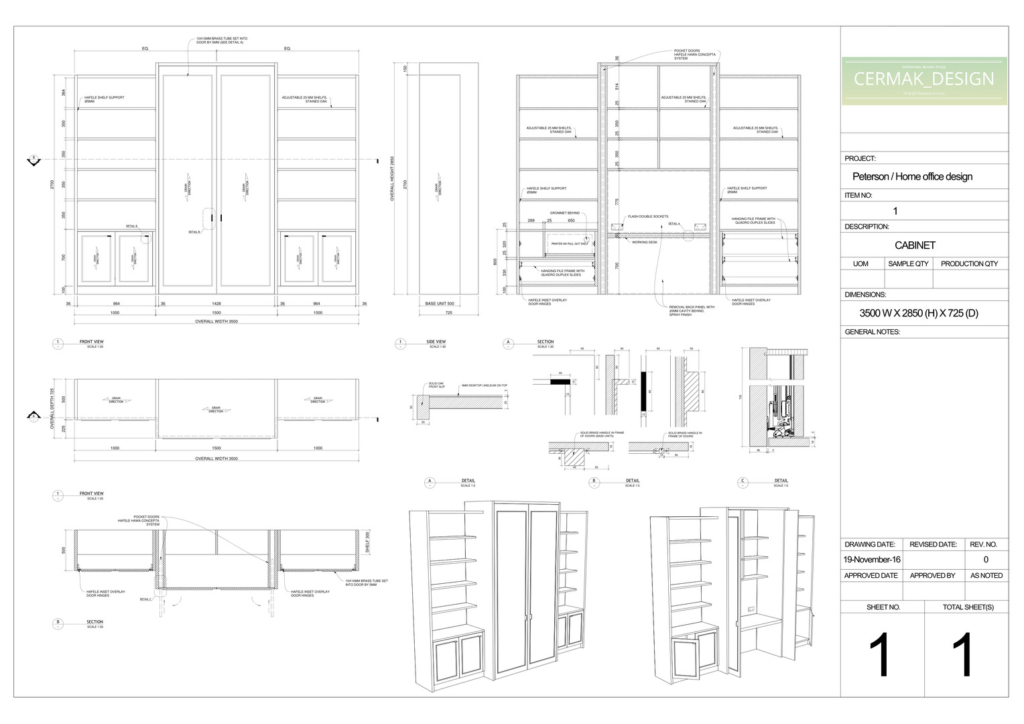
millwork drawing for a cabinet

Once the drawings are done, the millworker sends the documents to the designer for approval. The goal is to make sure that the design intent remains intact. In case something doesn’t conform to the original idea, the drawings are sent back for revision. For instance, if the frame of the nightstand is supposed to be made of stainless steel, as indicated on the approved drawing, and the millworker ends up fabricating the parts from aluminum, somebody has to be responsible for the unauthorized change. The client likely blames the designer for the mistake, and yet the designer knows that the millworker is the party in the wrong here.

To avoid unnecessary errors like that, it’s advisable to work only with a local (to the client), reputable millwork shop as a proactive measure. For a small project with no more than four or five custom woodwork products, a one-man operation millwork shop should be able to handle the workload just fine.

Another thing to put in mind here is the cost associated with millwork drawings and fabrications from architectural design firms. As far as the client is concerned, all the custom woodwork products fall within the designer’s responsibility. The client shouldn’t be bothered with how the products are made. This is to simplify the contract agreement and payment. The millworker is a subcontractor of the designer; the former works on the latter’s behalf. So, if you’re the designer, you’re expected to cover the cost associated with the millwork jobs out of your own pocket. But you can always list it as an additional service in the invoice and charge an extra fee to the client.

RELATED: Millwork drawings for drafting and design: Complete cost, rates, and fees for firms and companies

Design intent

To say that a design intent resembles a rough sketch might be a bit insulting to designers. Although it probably isn’t the most visually representative of the product, the “sketch” is pretty comprehensive from a technical standpoint. Let’s say the product in question is a pretty elaborate nightstand with multiple soft-close drawers, cabinet doors, hidden compartments, built-in LED lighting, and a unique locking mechanism. If the client wants to use specific brands for the locks and LED lights, the designer will point it out in the drawing. Details about joinery and door/drawer handles must be included as well. Sometimes, the client also wants different colors for the top, side, bottom, and front panels, so everything must be clearly annotated. So, it’s all those in addition to the general specifications like dimensions and materials.

There have been cases where the sketch comes with some pretty prescriptive notes; for example, edges need to be sanded off and smooth to the touch, metal elements should be chrome plated, the bottom of the legs need to have high-quality non-slip pads, specific types of joinery to use, and so on. With that in mind, design intent is more than just a rough sketch; it can be complicated depending on the product’s intricacy. And most custom woodwork products tend to be pretty intricate.

How millwork services are essential to CAD drafting companies

To reiterate, only the millworker understands the shop well enough to be able to produce the drawings based on the design intent. That said, it’s not uncommon for millworkers to outsource the drawings to professional drafters. If outsourcing is the case here (unless they can do the job themselves), most millworkers will likely hire an independent drafter – rather than an interior design firm – for budget reasons. Hiring a single-person operation is often much more affordable than an entire firm, allowing for a better profit margin.

RELATED: How do companies use millwork shop drawings for 3D furniture modeling and design?

What if you run a small CAD drafting and design company that doesn’t have an in-house draftsperson to produce millwork drawings?

Let’s say a designer hires the company to produce a 3D floor plan for an interior redesign project, which involves replacing old furniture pieces with new custom woodwork. Now, before you rush to the computer and fire up that CAD software of yours, the right thing to do first is to get in contact with the millwork shop assigned to build the new furniture. Without guidance from the millworker (concerning the tooling, techniques, methods, etc.), it’s nearly impossible to know if what you’re drawing is even close to being accurate.
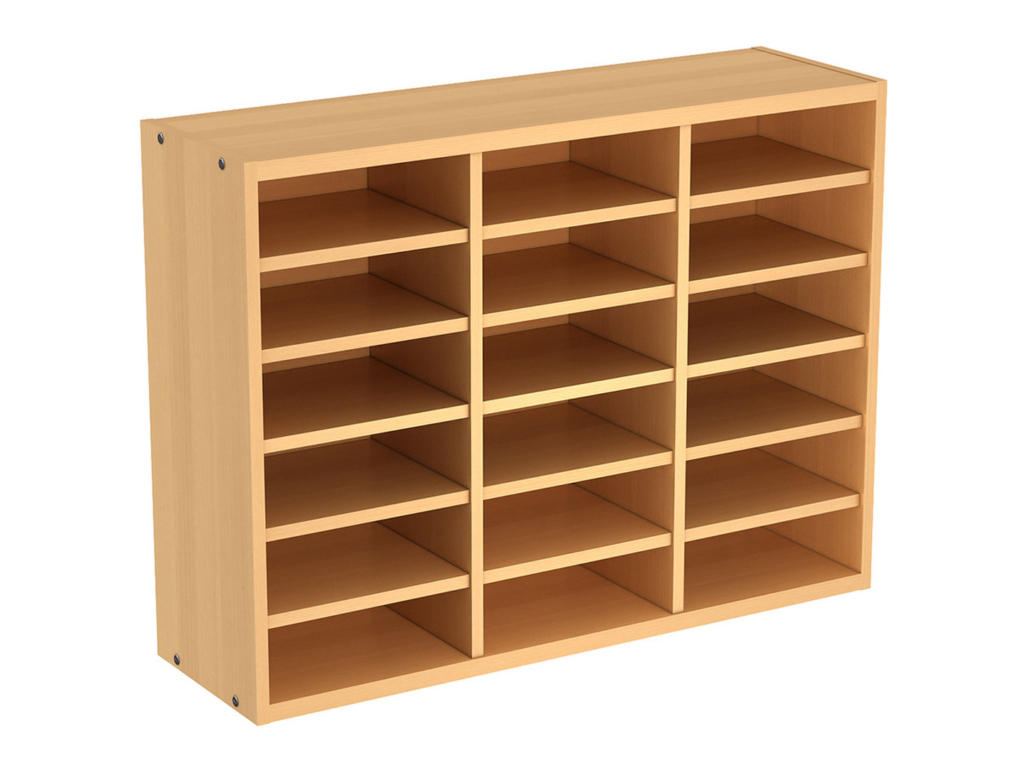
cabinet designed from millwork

And because you don’t have an in-house drafter, you then outsource the job to another millwork drawing service. A CAD drafting company outsourcing a millwork drawing to an independent drafter doesn’t sound ideal indeed, but there’s nothing wrong with it anyway. While it’s the only option, it doesn’t mean you can’t reap some benefits from the practice. Utilizing an external drafter might be not only helpful to the company but also essential to the project’s success.

  • Quick solution: a full-time employee can be expensive. The hiring alone is costly, and the drafter will be on your payroll. Outsourcing the task to an external millwork drawing service is a lot more affordable.
  • Familiarity: an experienced drafter, especially one who has worked with the same millworker in the past, is more familiar with how the shop is tooled and what methods are used to fabricate custom products. The drafter’s familiarity with the shop takes away a lot of guesswork and relieves you from the otherwise obligatory research into the millwork’s production processes.
  • Less likelihood of revisions: if the millwork drawing is done by a professional drafter, there’s less likelihood of the drawing getting rejected by the designer/general contractor. Based on the information provided by the millworker, a capable drafter can easily interpret the design intent and turn it into a detailed technical drawing that precisely represents product specifications and fabrication methods.
  • Efficient manufacturing: with comprehensive drawings, the millwork shop can optimize the production workflow, leading to a faster turnaround time. Also, accurate measurement of every component prevents the shop from over-ordering materials and supplies, hence minimum waste.
  • Cost efficiency: quick approval from the designer means minimum delay. While hiring millwork drawing services is not free; your CAD drafting company still ends up saving time and money from unnecessary reworks that may bottleneck the project.

It’s all about streamlining the project. As a CAD company, you want the millwork drawings done fast by a professional who actually knows their way around the millwork shop. If it can actually save time and money, then there’s little reason not to do it.

RELATED: Hiring freelance woodworking drafting and design services: All you need to know

Effective communication

We tend to think of millwork drawings only as just some kind of technical documents you have to make in every construction project. More than that, they’re a form of communication between the designer and the millwork shop. They’re like instructions to be used by the millwork shop to fabricate custom woodwork products in accordance with the designer’s idea. Clear drawings done by professionals help avoid miscommunication and minimize project delay.

Where Cad Crowd comes in

Not every CAD drafting company has a professional for every job. Many of them specialize in 3D modeling, animated rendering, and 2D-to-3D file conversions, while others are better suited to creating complete blueprints. It makes good sense that some companies turn to independent freelancers or external design firms to cover highly specific jobs, like millwork drawings. Cad Crowd is here to help you connect with some of the most skillful drafters in the United States, with years of experience working with countless different millwork shops for big and small architectural projects.

Get a free quote today.

author avatar

MacKenzie Brown is the founder and CEO of Cad Crowd. With over 18 years of experience in launching and scaling platforms specializing in CAD services, product design, manufacturing, hardware, and software development, MacKenzie is a recognized authority in the engineering industry. Under his leadership, Cad Crowd serves esteemed clients like NASA, JPL, the U.S. Navy, and Fortune 500 companies, empowering innovators with access to high-quality design and engineering talent.

Connect with me: LinkedInXCad Crowd

How Architects and Companies Leverage 3D CAD Technology to Develop Architectural Models


If someone told you 30 years ago that you can walk through your future house even before breaking ground, do you think you will believe them? Well, chances are you won’t. Back then, this would be considered as an out-of-your-mind, overreaching ambition. However, in this modern digital world where 3D modeling is everywhere, this is now at hands reach for you and your company. Constructors and architects can enjoy new opportunities that were mere dreams three decades ago and allow a whole new experience for your target customers.

Today, architectural visualization no longer requires physical models or blueprints to portray future projects. Architectural modeling services are made even more effective with the help of 3D because it relays and displays the concept in a better way. This leads to more engaging, more informative, and more realistic models for your consumers to interact with.


:rocket: Table of contents

RELATED: The power of architectural CAD services

3D architectural modeling at a first glance 

3D architectural modeling refers to the creation of a three-dimensional mathematical representation such as interior designs, exterior details, and building specifics such as visualization, construction, and its final rendering. Using 3D CAD technology for the development of architectural models allows designers to materialize projects regardless of material, scale, type, or complexity. It allows a lifelike output that you and your customers can explore before anything is spent on the materials and construction costs.

The biggest advantage of 3D architectural models is that they can accommodate both the exterior and interior of your projects. These models also make it easier to align or update some design elements or features before the start of the process. 

Benefits of 3D CAD technology for developing architectural models

Traditionally, creating designs and building plans can eat up too much of your resources, time-wise and money-wise. On top of that, the changes and updates required throughout the building process consume even more of your precious resources. This is where 3D CAD technology and CAD drafting experts swoops in and saves you a couple of thousands of bucks when developing architectural models with a considerable model with more potential and overall benefit for everyone involved.

RELATED: How the construction industry benefits from architectural visualization services

Accuracy 

3D CAD technology allows designers to achieve exact measurements of the smallest and most specific design details of the building with minimal to zero errors.

Animation

3D CAD technology gives you access to a more engaging and interesting marketing products to entice your customers with. It is used to create virtual buildings such as house tours and walkthroughs to give your clients a little glimpse into their future projects. 

Meticulous elaboration 

Using 3D technology gives you the leverage to greatly elaborate from the grand level design to the tiniest little curves and engravings that can make your project stand out.

RELATED: 5 Types of 3D visualization used by architectural design firms for CGI projects

Efficiency

3D CAD technology helps architects identify potential flaws, gain insights regarding surface patterns, and create customized interior renders. 

interior visualization services

Speed 

3D CAD technology significantly reduces the drafting and modeling time, making the 3D designers’ work more effective than ever. 

Reasons why 3D CAD technology is important for architectural model development

Here are the main reasons why 3D CAD technology is an essential tool to help architects develop architectural models. 

RELATED: How architectural design services are creating sustainable architecture

3D CAD ensures precise estimates

Measurements are inputted into the computer, and from there, the computer will perform the necessary creations and calculations for you. It helps identify any discrepancies in the measurement early on. More precision will ultimately lead to more precise initial estimates. This also cuts down the risks of making a mistake throughout the construction stage. 

The accurate estimation can also extend to quantity takeoffs. For example, when comparing two different materials, the structural integrity and price can have dramatic differences. The ability to render models with realistic representations of the strength, aesthetics, center of mass, and cost of materials helps clients reach informed decisions regarding the materials right from the start. This is where 3D architectural rendering firms proof to be invaluable.

3D CAD offers better visualization of projects

Money is always on the line in any architectural project. Executives should be won over, and investors require some impressing. 2D designs can only leave so much to the imagination that everyone might have a hard time visualizing the final result. As you try to win projects, start construction, or complete jobs, you will be in for some serious headaches in the near future if your clients can’t even visualize your design. Studies revealed that the spatial thinking skills of most untrained individuals cannot create precise 3D representations of traditional 2D sketches. 

RELATED: Why hire an architectural design service? The unmistakable benefits

3D models give everyone the chance to view the project’s full scope. 3D CAD technology can be used to create walkthroughs and pinpoint issues early on. The technology also offers excellent spatial awareness. Aside from this, CAD technology also helps you develop more than a building’s blueprints. You can also add desks, couches, chairs with 3D furniture rendering services, and other design elements that can show the future look of a finished project. 

3D CAD helps save time 

Making adjustments and changes to the design are also faster with 3D models compared to their physical counterparts. If you ever need to tweak any design element or you wish to stick to a budget, this can also be done easily. It won’t take much for you to create several versions of a single design or make adjustments accordingly. 

Types of 3D CAD technologies used to develop architectural models

There is no such thing as a single universal way of going with any kind of 3D visualization. There are several ways of covering different project times, budgets, and applications. The following are the most popular types of 3D CAD technologies used for architectural models that you should master and use for your future architectural modeling projects:

RELATED: What is architectural visualization and why architectural rendering services use it

3d interior rendering experts

3D CAD modeling 

3D designers, architects, and companies alike use 3D CAD modeling to develop 3D blueprints for just about anything, including simple houses and skyscrapers. CAD or computer-aided design uses an intricate algorithm that transforms 2D drawings into 3D designs. The mathematical precision of CAD models makes them ideal for exterior visualization. It allows designers to easily change colors, add other design elements, and implement materials. This is why CAD models are often used in different exterior rendering services. 

3D interior modeling 

Designers use 3D interior modeling to highlight the best selling points of a design and pitch their projects to investors. There are no technicalities involved as it is only about developing a gorgeous overall look of the design. This also includes creating furniture pieces, adjusting colors and lights, and placing contextual décor. With interior design being the main selling point that offers the most value, this is something worthy of being covered separately. It’s also the reason why interior rendering services are seeing a high demand right now. This also goes for exterior rendering services. 

BIM modeling 

BIM, or building information model, is the oldest form of 3D modeling. This is also among the most complex and intelligent types that let architects, constructors, and engineers work together on the same project. Using BIM modeling professionals are extremely popular in architectural modeling because it helps designers produce and edit the functional and physical features of a project. 

RELATED: Do you know the BIM best practices for architectural design firms?

Unlike other forms of architectural CGI, BIM also lets them work on the entire building as well as the interior, which includes lighting, infrastructure, spatial relations, and others. This makes BIM universal in terms of all the steps in construction and planning. 

CGI exterior modeling 

While exterior and interior designs in architectural modeling share the same principle, it is never enough that they only look gorgeous to attract more investors. The imagery shouldn’t only appear impeccable because it also needs to cover the infrastructure, optimization, and eco-friendliness aspects. 

With exterior design, convincing investors to buy the property is never enough. It is also important to make sure that the house or building is practical. Exterior 3D rendering designers should then optimize the intricate plumbing and electrical systems while visualizing the quality of materials used for them. The primary idea here is to make sure that the CGI visuals are convincing. 

RELATED: How to choose the best freelance architecture visualization services and designers

Wireframe 

If you need an effective and simple tool to make a simple design presentation, the wireframe is the best tool to use. Wireframe is generally the same as edge modeling. It involves outlining 3D objects and filling that space between the wires or lines with polygons. This is the fastest and simplest way to visualize projects in 3D. However, this can be challenging to use in high-scale and complex projects as it may become inaccurate and time-consuming. 

3D CAD technology is a certified must-have tool for architects and companies 

Now is the perfect time to jump on the 3D CAD technology bandwagon if you haven’t yet. Although 2D drawings and physical models have their merit, 3D computer-animated designs are no doubt the future. They are cheaper and more efficient. But more than this, nothing can match the capabilities of project visualization. 

RELATED: How parametric design in CAD is transforming architectural modeling design practices

You can give your clients the chance to go on virtual walkthroughs way before the start of construction. It saves you from the need to spend long hours to painstakingly measure drawings. If the client requires changes, the fix is also simple instead of several frustrating hours of reworking physical models or 2D plans. 3D CAD technology lets you meet design and cost preferences and effectively turn projects into reality.

How Cad Crowd can help

Cad Crowd is here to help you experience for yourself all the benefits of 3D CAD technology for developing architectural models so that you can get the best results as soon as possible without any time, money, and resources wasted for nothing.

Get a free quote today!

author avatar

MacKenzie Brown is the founder and CEO of Cad Crowd. With over 18 years of experience in launching and scaling platforms specializing in CAD services, product design, manufacturing, hardware, and software development, MacKenzie is a recognized authority in the engineering industry. Under his leadership, Cad Crowd serves esteemed clients like NASA, JPL, the U.S. Navy, and Fortune 500 companies, empowering innovators with access to high-quality design and engineering talent.

Connect with me: LinkedInXCad Crowd

The Role and Benefits of CGI Rendering in Architecture: Why Service Providers and Freelancers Rely on It


Architectural CGI rendering services involve converting 3D CAD models of buildings, bridges, monuments, or structures of any sort into photorealistic images or animations. The rendering might include the exterior, the interior, the landscape, or the aerial view of the structure. Unlike traditional photography that necessitates a physical object to be captured on camera in the first place, a render artist can create lifelike visualizations of an architectural object long before construction even begins. And if you need a rendering of an existing building, you can tap into the power of 3D scanners.

The technology enables architects and engineers to create an accurate representation of a future project, helping stakeholders and clients envision the final product. Some designs and ideas can be far too complex for the average person to understand just by looking at the blueprints. This is not to say that blueprints are a bad idea; it’s just that the two-dimensional drawings are pretty technical and created mainly for general contractors and builders alike. For the vast majority of clients, on the other hand, CGI rendering is easily the most accessible way to see inside the architect’s mind. In general, photorealistic rendering is like a bridge that connects the gap between concept and reality.


🚀 Table of contents

Old vs. new methods

Before CGI technology – and therefore photorealistic rendering – existed, architects relied on manual methods to visualize their projects. Among the most commonly used manual tools included hand-drawn sketches and oil painting. Certain projects required scale models made of easily sourced materials, such as paper, wood, cardboard, glass, and metal. They took a significant amount of time to produce and were very limited in terms of details. Since they must be done manually by hand, you had to deal with the likelihood of inaccuracies in various intricate spots. The old methods are still used now, but mainly for their artistic appeal.

RELATED: Creating exterior renderings using 3D exterior rendering services for architects

3D rendering is all about automation, but certain steps require manual work, especially during the early modeling process (remember that 3D rendering doesn’t happen without 3D modeling first). The good thing is that 3D modeling is also done on a computer using CAD software, so there are still some extensive automations involved. You need an experienced modeling service to create an accurate representation of an architectural object, as it’s much more of a technical work rather than an artistic one. In other words, you don’t have to be a talented artist to build a digital 3D model, but it’s not exactly a walk in the park either. While user input plays a major factor to determine quality, the computer/software helps a lot to avoid incorrect geometries.

The same thing applies to the rendering process, although this is admittedly a little bit more artistic than modeling. The rendering alone is all automatic, but you have to configure various settings, such as lighting intensity, camera position/viewing angle, textures, etc. Post-processing is also necessary to apply colors and repair minor imperfections, like brightness and contrast.

Architectural visualization accuracy and quality are greatly improved with modern CGI technology. Architects can experiment with various designs, materials, and textures during the modeling work. They have the freedom to explore different concepts without much to lose during the process. Because everything is done on screen, they can quickly change something and see the result almost in an instant. Mind you that all the modifications must be done during the modeling. Once the model is rendered, it doesn’t offer as much flexibility because it’s an already done image. In case something doesn’t look right and just be changed, such as when the windows are too large or the flooring material is wrong, you have to modify the model first and then re-render it.

Despite the seemingly complicated workflow, expert CGI rendering is still miles better than sketches and even scale models. Apart from the clearly better-quality result, the process is more practical and flexible.

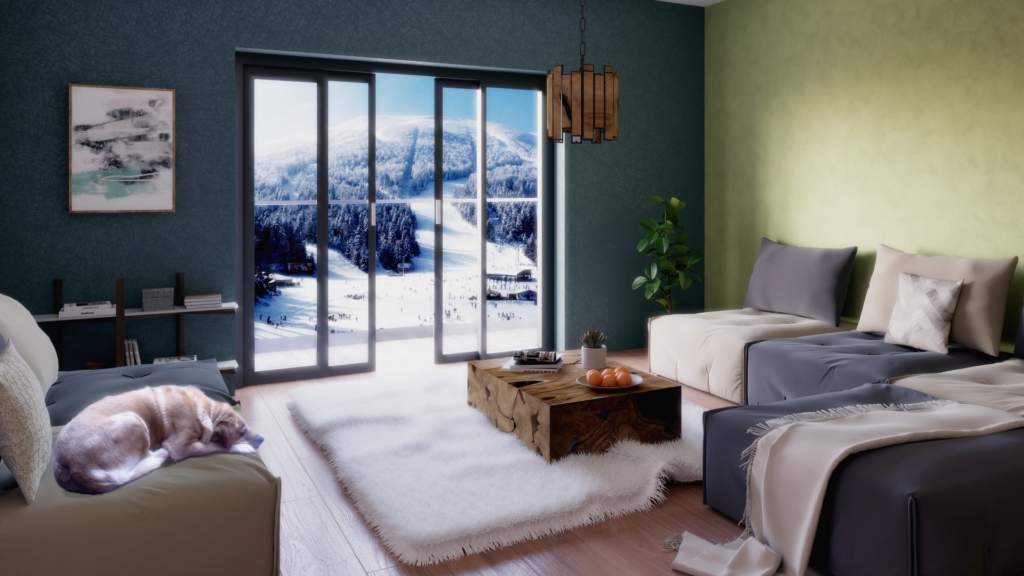
CGI winter home

RELATED: How 3D rendering enhances great architectural design presentations for companies

Why 3D rendering

Even if you took architectural CGI rendering at face value, at the very least you’d still get photorealistic imagery of a planned construction that accurately depicts the otherwise abstract concept and ideas. It’s an imagery to showcase an architect’s visions – how it should look in the real world when it’s done and what it represents. The project could be a statement of the client’s achievements, creative mind, minimalist lifestyle, taste for luxury, or everything else in between. Once the client and stakeholder see the architect’s take on the idea thanks to the realistic visualization, they’re expected to have a better collaboration in the decision-making processes.

Communication tool

With that in mind, you start to realize that architectural rendering services actually functions as an excellent communication tool. A clear, realistic, detailed visualization makes sure that the architect and the client are on the same page right from the beginning of the project. And since the rendering is supposed to be easy to understand, the client feels encouraged to provide feedback. While the architect is basically given free rein (with budget constraint, of course) over the project, the client remains the final decision maker. Any kind of constructive criticism is welcome; if some things have to be altered or modified in any form or shape, all the changes might as well happen now when the construction hasn’t even started yet. The visualization makes it easier to identify problems during the early design process.

Iterative design

As mentioned before, architectural rendering brings about design flexibility. An architectural project of any sort, even a small one, likely costs a sizable amount of money. So long as your project necessitates the involvement of an architect or general contractor, chances are the scope of work calls for a pretty big budget, like a major renovation, design overhaul, or brand-new construction rather than the likes of plumbing repair or installing a garage door. Because the project will result in permanent structural changes, you want to get the most for your money.

RELATED: Architectural illustrations vs. architectural visualization services

One way to achieve that is by implementing an iterative design approach. The process will involve some trials-and-errors, but everything happens on screen with 3D modeling and renderings. Such a flexibility opens the door to an iterative design process, where both the architect and the client combine their ideas and come up with solutions to solve both functionality and aesthetic problems. Think of it as a “measure twice and cut once” method implemented to a larger architectural scale. Taking more time in the design process to minimize risk of mistakes is better than rushing it and repairing problems later.

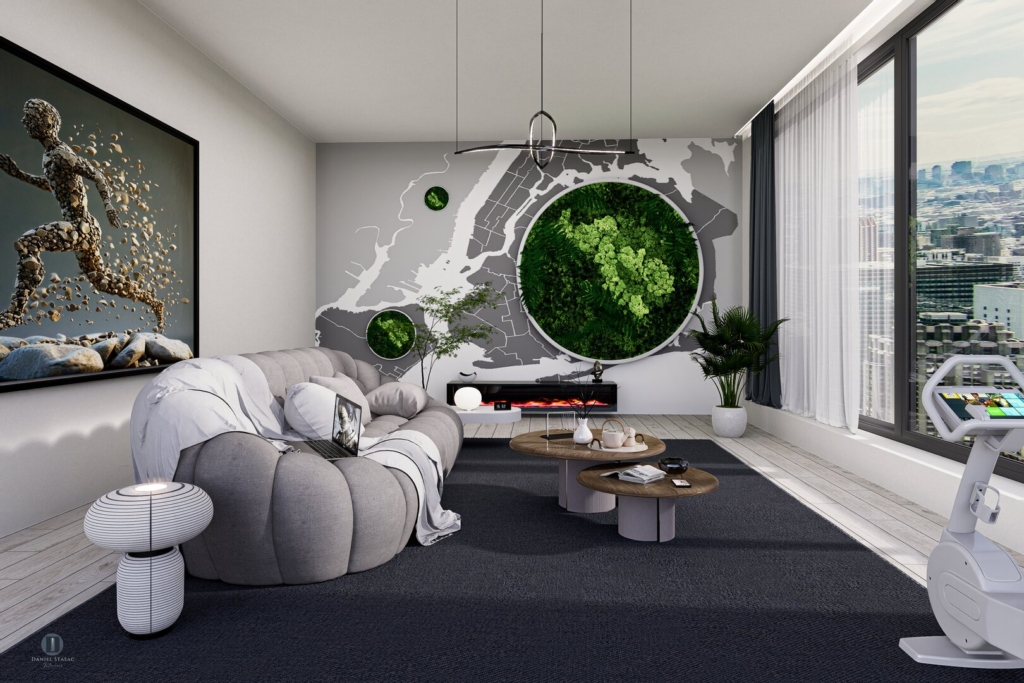
modern biophilic cgi

Roles in architectural project

Collaboration is a crucial element of any architectural project. Proper collaboration can only happen when all parties involved in the project, including architects, clients, and all stakeholders, have a clear understanding of the proposed design. Clarity in both design approach and architectural style is easily achievable with photorealistic rendering. You can’t expect everybody to actively collaborate with each other if they don’t have a good grasp of the design to begin with. And when all discussions and feedback revolve around the same straightforward visualization, you also reduce the risk of miscommunication.

Involvement in design process

A lot of people seem to think that a CGI rendering is always a visualization of the final product. While this is true in many cases, a rendering might actually serve as a starting point of a design process. You can treat it merely as a concept, and proceed to have a brainstorming session with clients, architects, and all stakeholders to materialize and improve the design. The clients feel at ease proposing ideas, requesting changes, and articulating their perspectives because they have the visualization to facilitate communication. If you manage to have the clients involved in the design process, you can run the project with much better confidence.

Streamlined workflow

With architectural visualization services as a communication tool, the project workflow becomes much more streamlined as well. You don’t have to spend too much time on asking for revisions and approval with every subsequent change in design. The visualization can cover every single aspect of the project, from the overall exterior to tiny little components in HVAC and solar panels. If the early discussion is executed properly, it’s not impossible to get an agreement on all design elements – along with the approvals – before the construction. This kind of efficiency keeps the project on schedule and within budget.

RELATED: Best practices for architecture firms: residential and commercial architectural site planning

What it does to freelancers and service providers

Freelancing is on the rise all across the United States. Over the last decade or so, the number of workers who freelance (either full-time or part-time) has grown from around 53 million in 2014 to 64 million in 2023, representing 38% of the entire American workforce, according to a Freelance Forward Research Report (published in December 2023) by Upwork. The COVID-19 pandemic did have something to do with that growth; in fact, there was a 22% increase in the United States in 2019 alone. Half of those freelancers consider the work style a long-term career path, not a temporary choice.

The numbers represent all freelancers of all industries, not only those who work in the architectural sector. But there’s no doubt that architects (or the architectural sector at large) have embraced freelancers to a degree. On some of the most popular freelancing sites, there are hundreds of professionals offering all kinds of architectural services, including but not limited to interior designs, floor plan drafting, 3D modeling, and of course, rendering.

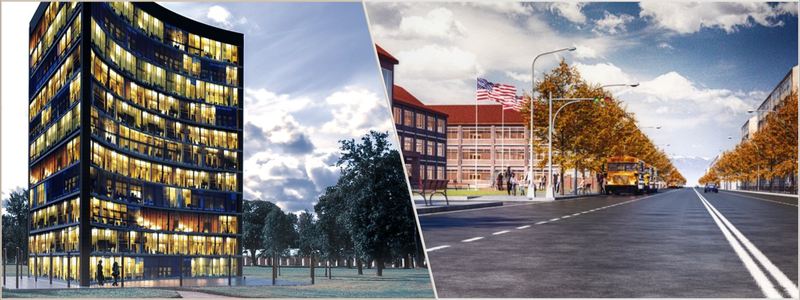
building and school road cgi

Based on a Firm Survey Report (2020) by AIA (American Institute of Architects), over 25% of approximately 19,000 member-owned architecture firms were sole practitioners, meaning they’re effectively running a freelance business model. Not every freelancer is an independent/individual professional, as many services are actually procured by architectural firms big and small. Among the most common types of services provided by those firms are architectural illustration, 3D modeling, and 3D rendering – this makes sense because modeling and rendering can be pretty resource-demanding in terms of computational power.

With all the benefits of 3D rendering, however, architectural service providers and freelancers will always use CGI visualization to assist with whatever projects they do. As a matter of fact, they rely on 3D rendering to propel efficiency, especially if they have to work off-site (remotely), during the early phase of the project. The good-old familiar adage “a picture is worth a thousand words” is played to its full potential here. Freelancers, whether architects or designers, are able to communicate their ideas, no matter how complex, in the most efficient manner possible using visualizations.

How Cad Crowd can help

The future of 3D rendering is bright. Here at Cad Crowd, we have thousands of talented freelance 3D modelers and render artists to help you create the most convincingly realistic architectural visualizations, either static or animated, using the latest CGI technologies, including Augmented Reality (AR) and Virtual Reality (VR).

Give Cad Crowd a call today to get your free quote.

author avatar

MacKenzie Brown is the founder and CEO of Cad Crowd. With over 18 years of experience in launching and scaling platforms specializing in CAD services, product design, manufacturing, hardware, and software development, MacKenzie is a recognized authority in the engineering industry. Under his leadership, Cad Crowd serves esteemed clients like NASA, JPL, the U.S. Navy, and Fortune 500 companies, empowering innovators with access to high-quality design and engineering talent.

Connect with me: LinkedInXCad Crowd

Important Benefits of Public Transportation Train Station 3D Renderings for Companies and Firms


With the cost of quality public transportation and train station 3D renderings services getting more affordable these days, the perks and use cases of this powerful form and tool of communication have also increased. The following are some benefits of public transportation train station 3D renderings for companies and firms in different stages of the project.


:rocket: Table of contents


Benefits of 3D renderings  for the planning stage

1.  Alternative analysis

From the earliest phases of a project, stakeholders must grasp and understand the available alternatives and concepts. 3D visualization services can help clearly and quickly explain various alternatives to those who have a vested interest in the project.

2.  Communication with all stakeholders

Although design and similar technical documents are often made for construction or engineering personnel, 3D renderings are created for everyone regardless of background. They can clearly illustrate complex designs to make them understandable for anyone, including the legal, political, and financial team members, as well as the general public.

RELATED: All you need to know about interior and exterior 3D commercial rendering services

3.  Long term planning

It is common to break down large projects into a few phases over several years. Various printouts of a quality 3D rendering or a phasing animation from 3D rendering firms can give a clear presentation of the process, even if the project lasts for decades.

4.  Presentation for requests for funds

Transportation and other projects are often worth millions and even billions of dollars at times. With such figures, it won’t be too much to say that the stakes are high. Presenting alternatives or early concepts for funding requests with precise 3D renderings can quickly convey the idea while reducing the possibility of misunderstandings.

5.  Public feedback

Different phases of the project usually involve public feedback. Opting for 3D renderings instead of simple ages can change the involvement of the public in the project, turning them from enemies into allies.

RELATED: 3D visualization for bars, businesses, and restaurants: 3D interior rendering services 

6.  Stakeholder input

Stakeholders from various disciplines can give their feedback during the planning stages. Using 3D photorealistic rendering designers to draft renderings for meetings can make everyone involved quickly explain and point out their project vision without leaving anything to mere imagination.

3d architectural visualization experts

Benefits of 3D renderings for the design stage

7.  Integration of aesthetics with current conditions

Artistic detailing and aesthetic considerations from years ago can clash against newer and more contemporary designs. 3D renderings can provide a quick comparison of the appearance of the latest design among the existing aesthetic details.

8.  Aesthetics

It’s not just desirable to ensure that a project looks good because it is often required, with a specific part of the budget allotted, particularly for aesthetics. It can affect most people who are part of the project’s design, from landscape architects to roadway designers. 3D rendering designers make it easier to envision and coordinate aesthetics.

RELATED: Better 3D rendering and retail store design services for commercial spaces

9.  Bridge aesthetics

Bridges are among the most critical categories of any public transportation project because they require a substantial chunk of the budget in both construction and design. Trying different designs, materials, and artistic details with 3D renderings can guarantee that the correct option will be selected for the budget and location of the project in question.

10.   Line of sight

Another important aspect of public transportation design is line of sight, and 3D renderings can help transform the process from cutting 2D cross sections to instantly showing exactly what drivers will see from any part of the project.

11.   Marquee location

Public transportation and train station projects usually include huge marquee signs to welcome visitors to places and key locations or destinations. Using 3D architectural visualization services to create accurate 3D renderings can ensure that the correct location will be chosen and stakeholders will give their approval before the start of the actual construction.

RELATED: 3 Advantages of using 3D rendering services for city planning and development

12.   Pedestrian experience

During public transportation projects, it is common to pay close attention to the driver experience. However, even the smallest redesign can affect pedestrians equally. Showing the projects with pedestrians around and on the location, as well as 3D renderings from the perspective of pedestrians, can boost the engagement and excitement of those who might not always be in a car while around the site. This also applies to bicycle riders, who are now starting to become a growing segment of the demographics of modern commuters.

13.   Scenic view study

Public transportation projects may include a particular area allotted as a scenic view now and then. 3D renderings from 3D architectural animators can help pick the best location for these scenic views and show how they will look upon completion. This comes in handy for places that might not yet be accessible, such as those located deep into a forest that will soon be cut for a part of the roadway or railway.

14.   Sign Placement

Numerous factors affect the placement of signs, such as vegetation, structure locations, and clear zone distances. 3D renderings can help the process by visually checking the best spots for sign placement, specifically for major signs.

RELATED:  How 3D virtual reality rendering is shaping the construction industry

urban planning and design services

15.   Solar or shade studies

Public transportation projects not only change views or commutes because they can also shine where it doesn’t. Conducting a solar study can help show where the changes take place and how these might or might not affect those near or within the project’s boundaries.

16.   Utility conflict

Conflicts between an existing utility, such as a water main or high-pressure gas line, and a public transportation project can make or break its budget. Coming to the meeting with a utility company prepared and armed with 3D renderings can help communicate the problem right away, paving the way for the discussion of alternatives without any misunderstanding or confusion.

Benefits for the construction stage

17.   Advertisements 

Sometimes, after the contractor has completed a job, it’s not easy to prove why they were suitable for the job. 3D renderings can showcase the unique methods they used. These tools can also be useful for ads on their website and trade publications.

RELATED: How the construction industry benefits from architectural visualization services

18.   Construction animation 

Showcasing all or just some parts of a public transportation project in 3D renderings can sometimes convey even the most confusing concepts. For instance, using 3D renders from expert 3D construction rendering professionals to show the correct installation of soil nail walls will ensure that new members of the construction team will be familiar with the concept before the start of the project.

19.   Construction phasing 

3D renderings of construction phasing can help contractors snag more projects and help in their management. A meeting with 3D renderings that showcase the sequencing of the project will quickly demonstrate the whole process instead of a tedious meeting that goes on for hours using sketches and images. 

20.   Project coordination 

Engineers, project managers, operators, workers, and hundreds of other members must be on the same page during a construction project. While meetings are the most popular approach to address this issue, 3D renderings can simplify the approach further.

RELATED: Urban planning and freelance CAD design services cost, rates, and pricing for companies?

21.   Public outreach 

One of the contractors’ obligations is to communicate the project’s progress to the general public. It is often done through websites, statements, or media personnel. Precise 3D renderings from 3D commercial rendering designers can make the whole process so much easier.

22.   Safety videos 

3D renderings can show why and how safety procedures are implemented, either for a specific project or in general. Depending on the specific use case, these can often be done faster and cheaper than simple videos.

23.   Traffic control phasing 

Many public transportation and train station projects require some kind of traffic control. It might be among the most frustrating aspects of a project, even more so from the public’s perspective. A traffic control 3D rendering can prepare commuters and address misconceptions regarding the project.

RELATED: How architectural design services are creating sustainable architecture

24.   Utility discovery 

Billions are lost every year because of construction accidents. However, 3D renderings can help mitigate these losses with the help of CAD files, as-built drawing services, and below-ground scans. Many construction equipment today even use built-in 3D renderings.

25.   Vendor-to-contractor communication 

A specialty vendor implements most of the elements of a public transportation project. These vendors can demonstrate the benefits or usefulness of their products by developing 3D visualization visuals and diagrams. These could range from new traffic signal designs to clever MSE wall panels.

26.   Winning work 

Any contractor knows that the main difference between not winning and winning a job often calls for creative approaches in proposals. Today, it seems that an increasing number of contractors are using 3D renderings made specifically to win more projects, and this trend will most likely continue well into the future.

RELATED: How various companies and industries embrace 3D rendering services and applications 

The bottom line

Public transportation and train station 3D renderings are revolutionizing the construction and design of public transportation hubs. These tools improve communication and visualization, save costs, and efficiently plan space. As urban areas continue to grow and with the increased demand for efficient public transportation and trains, rendering technologies and urban and design services will continue to play a more significant role in developing architecturally impressive stations that are also highly accessible, user-friendly, and functional.

How Cad Crowd can help

Cad Crowd is the best resource for reliable providers of public transportation and train station 3D renderings for companies and firms of all sizes.

Get a free quote today!

author avatar

MacKenzie Brown is the founder and CEO of Cad Crowd. With over 18 years of experience in launching and scaling platforms specializing in CAD services, product design, manufacturing, hardware, and software development, MacKenzie is a recognized authority in the engineering industry. Under his leadership, Cad Crowd serves esteemed clients like NASA, JPL, the U.S. Navy, and Fortune 500 companies, empowering innovators with access to high-quality design and engineering talent.

Connect with me: LinkedInXCad Crowd

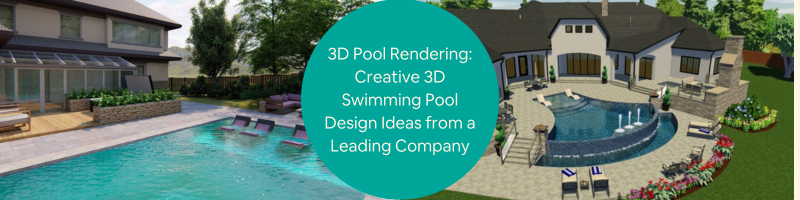
3D Pool Rendering: Creative 3D Swimming Pool Design Ideas from a Leading Company


The best thing about 3D rendering services is that you get to see how the swimming pool should look, even before construction begins. Modern CAD technology allows you to design everything in a virtual space where you can build, make changes, and basically fine tune the plan on a computer screen. Rendering does cost money, but it helps you avoid potential costly mistakes during the construction. You can consider it a three-dimensional photorealistic blueprint but without all the confusing technical construction annotations.


🚀 Table of contents

Swimming pool 3D rendering

Photorealistic rendering is a WYSIWYG (What You See Is What You Get) construction document digitally drawn to scale, so you get a clear idea of what the final outcome will be early on in the project. To make the rendering as accurate as possible, it has to go through several steps:

1. Concept: the process starts with some simple sketches on paper to determine basic specifications such as shape, dimensions, materials, and location relative to the house or main building. If there needs to be structures around the swimming pool, like glass enclosure, deck, furniture, and decorative elements, they should be included and detailed in the sketch as well. The sketch will have to go through one or two refinements before everything is ready for digital drawing.

2. Modeling: the render artist begins creating 3D models of all objects in the pool and the surrounding landscape. If the pool is close enough to the main building, a small part of it might be included in the modeling to put everything to scale.

3. Detailing: once the modeling is done, it’s time to put more details into each object. The process may involve adding colors, textures, lighting, and shadows.

4. Water simulation: one of the most challenging parts of 3D rendering is creating photorealistic water. Most render artists use specific drafting services to generate depth, transparency, reflection, and the illusion of motion on the surface.

5. Lights and shadows: the viewing angle along with light direction determines the shadow. Since the rendering also involves water, there should be some refractions as well. Shadows on the water surface should be different from those on hard surfaces, too.

6. Rendering: the actual rendering task is done by the computer, but the artist still needs to configure a few settings like the resolution and output format.

7. Post-processing: once the rendering is done, post-processing helps improve fine details such as brightness, saturation, contrast, and specific effects.

Swimming pool 3D rendering costs between $500 to $1500. Keep in mind that the rendering fee has nothing to do with how much the actual swimming pool will cost you.

RELATED: Creating exterior renderings using 3D exterior rendering services for architects

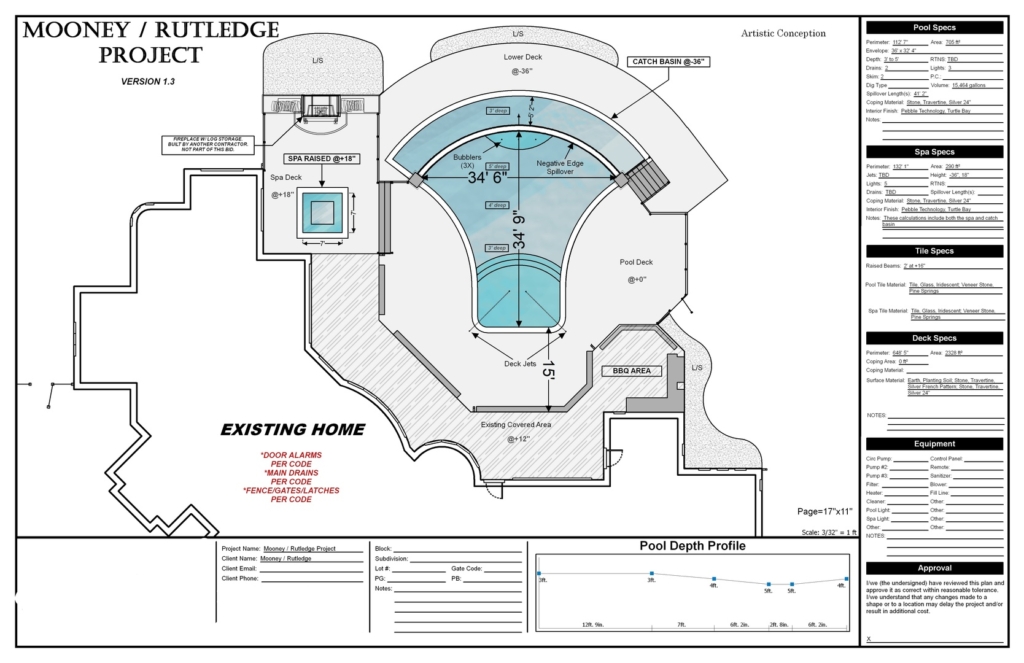
architectural plan for a pool design for an existing home

Types of swimming pool

A swimming pool is a striking home improvement element. It comes in plenty of different sizes, shapes, and styles, but sometimes more options make it even harder to make the right choice. You have many things to consider, from functions and maintenance to design and complexity. But one thing is certain: a swimming pool is not cheap. Pool design services don’t have to be expensive, however.

In-ground

A multi-use recreational swimming pool is often a standard feature in a luxury house. In some real estate markets, such as the Sun Belt region in the US (stretching from Virginia and Florida in the southeast through Nevada and southern California in the southwest), an in-ground pool – or any type of swimming pool, for that matter – is pretty commonplace in middle-class neighborhoods as well. Even if you’re not overly keen to swim, the feature will come out as an excellent investment that brings a significant addition to the property’s long-term value. And if you do find swimming enjoyable, an in-ground swimming pool requires regular maintenance, at least several hours a week for cleaning.

Above ground

Soft-sided and hard-sided options are available for above-ground swimming pools. And if you add a frame around the outside walls or elevated deck, the final outcome is barely distinguishable from the in-ground type. Pool designers use the soft-sided option allows you to disassemble the entire structure in case you need the extra space or during cold winter. Reassembly is relatively easy for DIYers, but then again, you may come across some difficulties when the structure is poorly built in the first place due to clumsy planning. Compared to the in-ground type, an above-ground swimming pool is a much more affordable investment and easier to maintain.

RELATED: Architectural illustrations vs. architectural visualization services

Lap pool

Most lap pools are built as an in-ground type, but there are also above-ground variants installed as either permanent or non-permanent structures. The ideal size for a lap pool is anywhere from 45 ft. to 75 ft. long; the standard Olympic-sized length is 164 ft. As for the depth, it usually has three levels: 3 ft. at the shallow end (for entrance), 4 ft. in the middle, and 5 ft. at the other end. While the entrance seems suitable for children, a lap pool is intended only for workout use without additional elements like water slides or diving boards. A lap pool is long, narrow, and shallow. It’s constructed in a rectangular shape, making it an ideal option for a small backyard area because it doesn’t take up too much space. The installation of an in-ground lap pool with the aforementioned size costs around $45,000. But if you’re looking for a store-bought above-ground type, expect to pay around $10,000, including labor.

Indoor pool

If budget is not a concern, an indoor pool is a no-brainer. As the name suggests, the swimming pool is located inside – therefore not exposed to the outside environment – and under a roof for better privacy and cleanliness. An indoor pool is usually in-ground and built for swimming exercises throughout the year rather than being part of a playground. Think of it as a fancier and larger version of a lap pool kept safe from the elements. When installed outside the main building (such as in a backyard), freelance pool designers will often cover it with a glass enclosure; if you have enough space, you can even have the pool and enclosure constructed as a detached structure. Whether the shape is rectangular, circular, oval, semi-circle, or any other geometry you find pleasing and complementing the architectural style, an indoor pool is a true statement of taste and style.

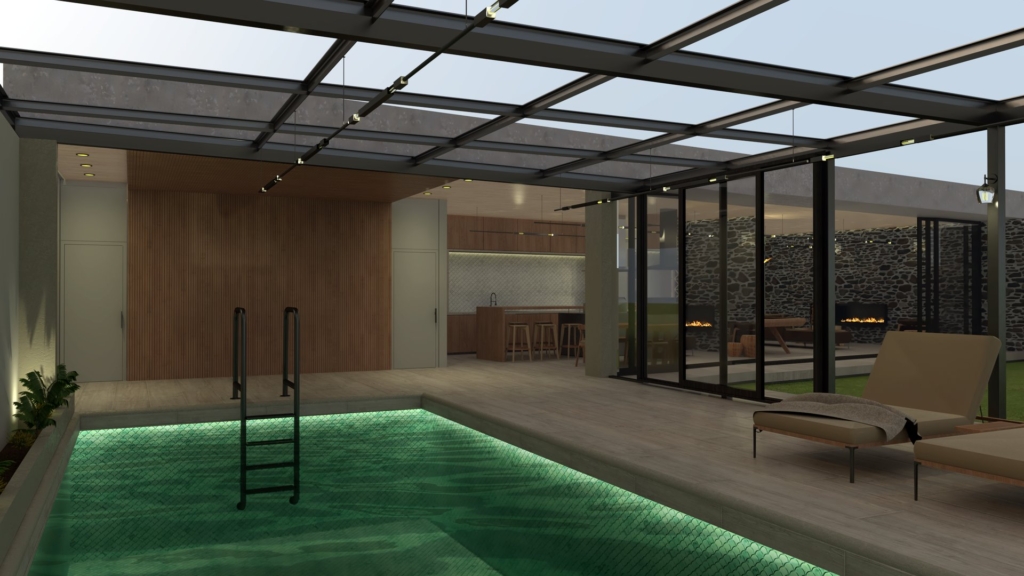
indoor pool example

RELATED: Best practices for architecture firms: Residential and commercial architectural site planning

Infinity edge pool

At least one side of an infinity pool is set below the water level with an out-of-sight skimmer tray. The edge is designed in such a way that it looks as if the pool blends seamlessly with the surrounding landscape. Done right, the water at the edge of the pool gives the illusion that it falls over the wall, just like a small waterfall, although you don’t exactly hear the sound of rumbling water. Infinity pool is a common feature in luxury homes located on hilltops or near the ocean. It’s always custom-built as part of the house blueprint and intended to highlight the view.

Spool

A blend of spa and pool, a spool is larger than a spa yet smaller compared to a typical pool. You can’t swim in it, although some spools have directional jets with adjustable power for the purpose. But most spools are built for relaxation – a place where you can soak comfortably with friends after a hectic day. Spools are usually an in-ground affair constructed from poured concrete, but there are also ready-made models installed with elevated decks. You can almost say that spools are oversized hot tubs. Some of the fancier models feature full temperature control, insulated cover, LED lighting, and a filtration system.

Note: if your spool turns out to be quite large, it may fall under the full-size swimming category according to the local building code. You may need to install protective fencing to meet the code requirements.

Plunge pool

Often an addition to an already existing in-ground swimming pool instead of a stand-alone feature, a plunge pool is not designed for swimming. It’s relatively small (about 10 x 15 ft.) and shallow at around 6 ft. Although it looks like an ordinary spa, the water inside the pool is intentionally kept cold to help you cool down and relax after an intense exercise. But just because plunge pools are small and shallow, it doesn’t mean they’re cheap. Installation may cost between $15,000 and upward of $20,000.

Natural pool

No, this is not a pool that naturally takes shape on your property, but an artificial pool designed to appear as if it has already been there for many years. It’s built as part of the landscaping and therefore equipped with a regeneration zone for an organic cleaning system. Since this is intended to serve as landscape appeal, the pool is not used for swimming. Even if you want to swim in it, you probably won’t have an enjoyable experience due to the shallow depth. Depending on the size, a plain natural pool is likely more affordable than an in-ground swimming pool, although you might spend more on styling elements such as small streams/waterfalls, boulders, and aquatic plant life.

RELATED: Architectural design services costs: All you need to know

Architectural pool

The name says it all: an architectural pool is built to complement the design of the main building. The structure, materials, colors, and shape must be carefully selected to create a cohesive look. It might be an addition to an existing structure, but most are built as part of the house plan and designed by an architect. While it’s always a stand-out feature, an architectural pool should create the impression that it blends seamlessly with the main building as if each is an inseparable part of the other. If you’re building an architectural pool as part of a renovation, the cost can be more expensive than the house itself. Maintenance is just about the same as a regular in-ground type.

How Cad Crowd can help

A swimming pool is not a small investment, but proper planning and detailed 3D rendering can help you make sure that it is worth every penny you spend. Cad Crowd is home to professional render artists offering flexible solutions and customizations to meet even your most diverse requirements. Get in touch with Cad Crowd to get your free quote, and you can expect nothing but the best working with the best in the industry.

author avatar

MacKenzie Brown is the founder and CEO of Cad Crowd. With over 18 years of experience in launching and scaling platforms specializing in CAD services, product design, manufacturing, hardware, and software development, MacKenzie is a recognized authority in the engineering industry. Under his leadership, Cad Crowd serves esteemed clients like NASA, JPL, the U.S. Navy, and Fortune 500 companies, empowering innovators with access to high-quality design and engineering talent.

Connect with me: LinkedInXCad Crowd

Marketing Real Estate: Top Real Estate 3D Rendering Trends for Companies and Firms


Do you feel like you’re doing everything to pre-sell more properties but that you can still do better? Don’t worry because you’re not alone.

A lot of realtors and developers today use the most state-of-the-art sales tactics only to be disappointed with the slow flow of deals. Is there something you can do to maintain a steady stream of prospects that also brings more sales fast? It is where real estate 3D rendering services can help convince more clients to sign the dotted line.

Thanks to real estate 3D rendering, real estate or development businesses can get and use photorealistic visuals that they can use for promoting properties, including those that are still under construction or aren’t even built yet.

Real estate CGI is made not only with still images but also with interactive 3D panoramas, digital videos, and virtual reality experiences. When used smartly and correctly, these types of content can be elevated to the next level by your promotional strategies: they have the potential to improve effectiveness.


:rocket: Table of contents


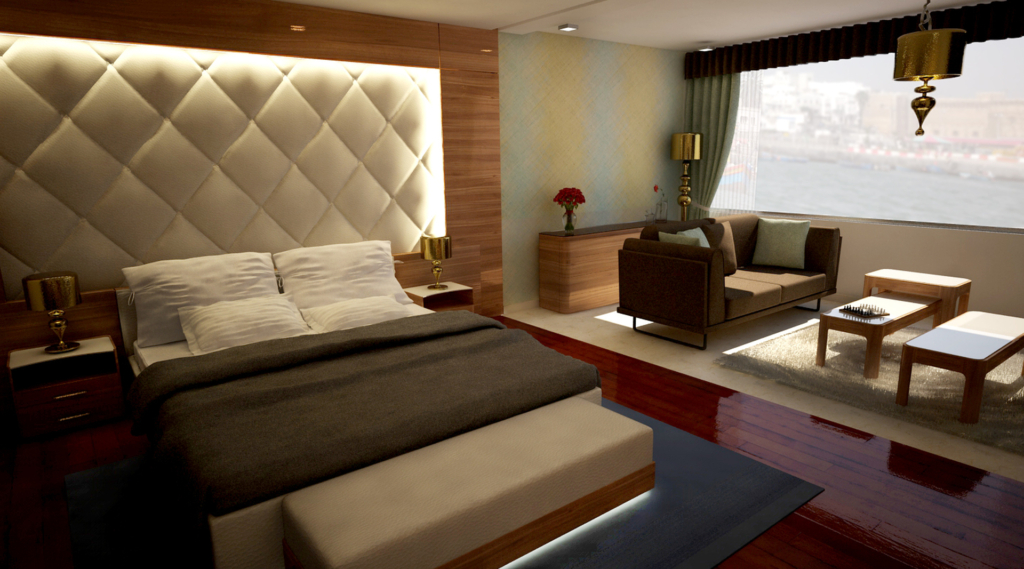
3d bedroom for real estate

Artistic and cinematic rendering

Real estate renderings are no longer limited to just technical representations because they have evolved into more enticing cinematic experiences and artistic experiences.

Expert 3D visualization artists and real estate professionals are using new original approaches that blend mood, atmosphere, and storytelling in their renders.

Presentations appeal to the public and clients because they are visually stunning and emotionally engaging.

Setting up the movement and camera position allows real-time exploration and navigation of the 3D model. Companies can manually control the camera and define its paths to show different angles and perspectives of the design.

Movements of the camera can be fluid and smooth to give stakeholders and clients a more immersive experience.

Cloud rendering

Cloud rendering is another trend in real estate 3D rendering. It is an excellent technological solution that helps 3D visualization service providers use the power or remote computer cluster for rendering CG imagery.

Since cloud rendering is a type of on-demand service, it gives access to an almost endless resource of many GPUs and CPUs to work on their files. This only happens while it renders visuals and takes time. It increases computer power allocation—speeding up the whole rendering process.

Most specialists in the CGI production industry have stated that the use of cloud rendering helps them get 3D renders in just a matter of minutes. Using in-house render farms, on the other hand, would have taken hours to do the same thing.

Through this reduced time, 3D artists can simultaneously work on multiple projects. It means a lot to real estate professionals as they can significantly improve their communication with project stakeholders through faster design updates and iterations.

Cloud rendering services are also anticipated to see a significant growth rate in the coming years. Thus, it is safe to say that the surge of ultra-fast visualization will happen and might even become the new norm sooner rather than later.

Emphasis on materials and detailing

The rise of 3D rendering technology resulted in the growing emphasis on accurate and detailed representations of finishes, textures, and materials. Real estate companies can now present intricate details with incredible realism and precision, including meticulous patterns, ornate facades, and interior elements. This trend allows stakeholders and clients to better envision the quality and aesthetics of the design.

It is vital to apply the correct textures and materials to the 3D model to achieve more realistic renderings. Modern real-time rendering supports different material properties, including transparency, roughness, bump maps, and reflections. The textures and materials must be chosen with great care and applied correctly to the model’s different elements for the accurate representation of their counterparts in the real world.

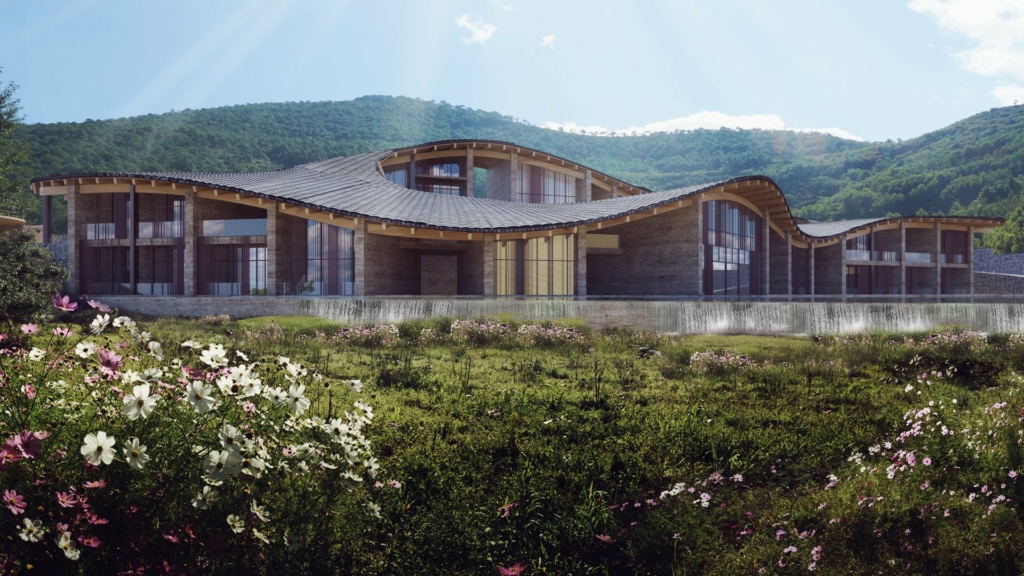
3d real estate exterior luxury hotel

Environmental sustainability

With sustainability becoming one of the primary considerations in real estate, it is only expected for it to be one of the trends in 3D rendering. Real estate companies and firms are using different rendering techniques more and more to analyze and simulate the environmental performance and structure of buildings. These include thermal performance, daylighting, and energy consumption. It lets them optimize designs for sustainability and energy efficiency to create more environmentally friendly buildings.

Vertical gardens are perfect examples of environmentally friendly architectural services. It involves the application of different shapes, textures, and levels of vegetation to create visually dynamic and stunning green walls. 3D vertical gardens use a combination of plants with varying growth patterns, foliage colors, and heights to add dimension and depth to the space. This can also transform flat surfaces into living and vibrant works of art.

This strategic three-dimensional plant arrangement creates an ever-changing and immersive experience wherein the interplay of shadow and light further highlights the complexity and beauty of vertical gardens.

Automation and AI integration

Automation and artificial intelligence, or AI, have now found their way into many industries, including real estate rendering. AI-powered tools and algorithms can help automate repetitive tasks, allow efficient generation of more realistic scenes, and streamline the entire rendering process. The integration of automation and AI can reduce costs, enhance productivity, and give designers more time to focus on design refinement and creativity.

AI techniques, including GANs or generative adversarial networks and procedural generation, can come in handy for generating realistic and complex environments. AI algorithms can also produce realistic 3D assets, including landscapes, buildings, and expert furniture design, according to design constraints and the given parameters.

This trend in real estate rendering makes way for the rapid production of scenes on a larger scale and improves the level of realism and detail in renderings.

Photorealistic rendering

There is an increasing demand and clamor for photorealistic rendering in real estate, and this is no surprise. Clients, after all, expect highly realistic and detailed renderings with close resemblance to the final product. The availability of high-quality materials and textures, enhanced hardware capabilities, and advancements in rendering software all made it possible for 3D renderings to achieve excellent levels of realism.

Photorealistic renderings offer potential investors and buyers a lifelike glimpse of the property before its construction or renovation with the help of elements like specialized landscaping, textures, materials, and lighting.

This trend in real estate marketing is an essential tool for marketing as it helps convey the unique features, aesthetic appeal, and ambiance of a property. It helps clients make better decisions and imagine themselves being in and using the space.

Real estate companies and firms can also use photorealistic rendering to present their designs in such a way that is more enticing while helping them with their pre-selling and marketing efforts.

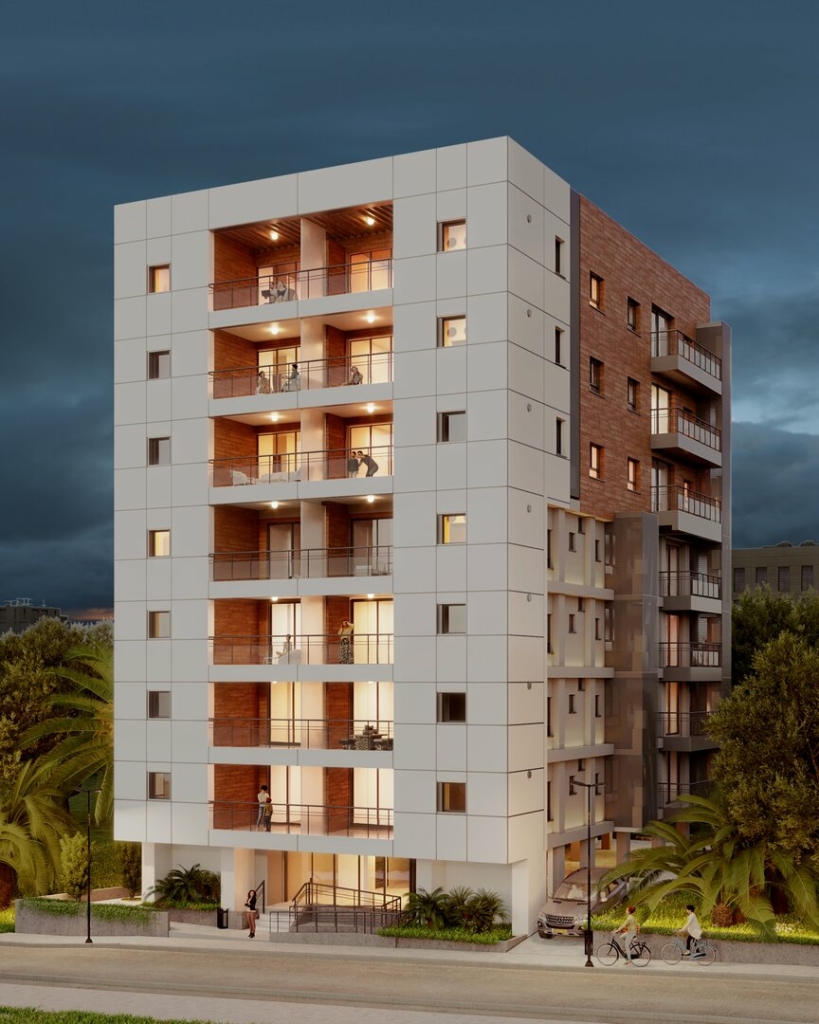
3d apartment for real estate

Real-time rendering

Another significant trend that has been enjoying a surge in popularity for the past few years is real-time rendering. With the rise of real-time visualization software and powerful GPUs, real estate companies can now engage in real-time creation and manipulation of 3D models to make the design process more efficient and interactive. Real-time rendering allows faster decision-making, instant feedback, and quick design iterations.

A specialized rendering software or engine is also used to make real-time rendering possible. These engines use state-of-the-art optimization algorithms and rendering techniques to produce interactive frame rates for high-quality renderings. It is how realistic walkthrough experiences, virtual reality tours, and 3D animation are made.

Storytelling

Storytelling is one of the key trends in real estate rendering. Technically, this is not a new trend, but it’s poised to continue in the years to come without any signs of going anywhere at all.

The use of storytelling puts more aesthetic and thought into images to the point that you will still find yourself mesmerized even after looking at them several times.

If you wish for your real estate ads or project presentations to appeal to the emotions of prospects and clients, tapping into storytelling’s undeniable power is something you shouldn’t miss out on.

AR and VR

Augmented and virtual reality technology firms have been making dramatically immense advancements, which are extensively utilized by real estate. With VR, users can have a more realistic and immersive experience through virtual walkthroughs of a space or a building.

On the other hand, AR overlays the virtual elements into the real world to allow real estate companies to envision their designs in the existing environment. AR and VR make it easier for clients to understand the design and bolster communication among all the involved parties.

A 3D real-time architectural walkthrough is an excellent example of a VR experience. Virtual real-time walkthroughs offer the ability to interact with objects, move freely in a virtual space, and make on-the-spot design modifications. It allows viewers to fully understand and experience the materials, spatial qualities, and design intent of the project in general before its physical construction.

This experience driven by technology improves communication, allows better decision-making, and facilitates visualization of designs in ways that weren’t imaginable in the past.

How Cad Crowd can help

Real estate marketing has never been easier with today’s innovative trends. Reach out to Cad Crowd, and we’ll connect you with top-notch professionals to deliver outstanding results tailored to your needs.

Get a free quote today!

author avatar

MacKenzie Brown is the founder and CEO of Cad Crowd. With over 18 years of experience in launching and scaling platforms specializing in CAD services, product design, manufacturing, hardware, and software development, MacKenzie is a recognized authority in the engineering industry. Under his leadership, Cad Crowd serves esteemed clients like NASA, JPL, the U.S. Navy, and Fortune 500 companies, empowering innovators with access to high-quality design and engineering talent.

Connect with me: LinkedInXCad Crowd

Camera Angles in the 3D Architectural Visualization Realm for Your Projects


One of the most critical aspects of creating a compelling project brief is to communicate the correct camera angles. After all, your chosen views have a direct and drastic effect on the impression that the audience will have. The angle presented to your client is the first image that will be imprinted to their brain as the first impression of your projects.

Using the right camera angles will help you redirect the focus of the attention of your audience to the specific features you wish to highlight. This article talks about presenting camera angles with 3D architectural visualization services for projects.


:rocket: Table of contents

Camera angles as essentials in 3D architectural visualization

Modern 3D visuals that use CGI have made it easier and possible for buyers to view and explore the corners and spaces of properties even before their actual construction. Camera angles play a critical role in the customer’s exploration.

The dramatic enhancement of the perspective of a building is mainly dictated by the specific camera angles chosen and used during rendering. Simply put, the best camera angles can breathe life into rendered projects and transform expert 3D visuals into vivid and realistic depictions just by seeing it in the right angles.

Camera angles for 3D architectural visualization have now become a vital tool for both architectural companies. They are the primary features that make 3D architectural visualizations more appealing and impactful. The right camera angle will not only improve the final results but also showcase the best features that your customers are meant to see to ultimately help them decide.

This is why it is essential to know the best camera angles that will strike the perfect visuals to show off a balance between the fine architectural details of a building and how it complements the surrounding area.

The following are some of the best camera angles in 3D architectural visualization services for your projects.

RELATED: Optimal angles for real estate rendering services: immediately enhancing your listings

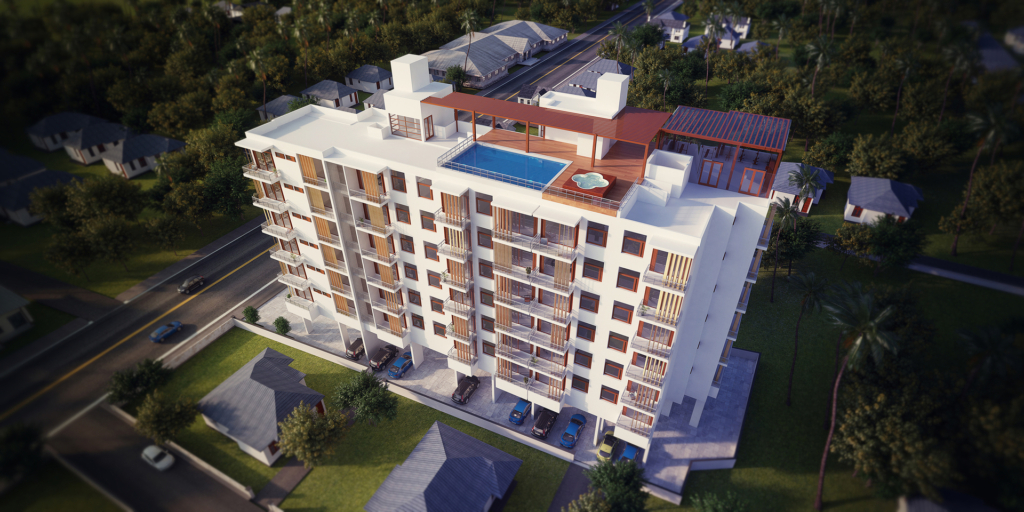
exterior skyline angle of an apartment

Bird’s eye-view or aerial shot

Also called a context shot and aerial view, a bird’s eye view presents either the interior or exterior visuals from a point where the overall picture can be seen, just like a bird flying over a property. Exterior or Interior rendering services made using this approach give the image its context. These angles are perfect for architectural structures with unique surroundings and landscapes.

These camera angles can be produced from the location’s drone shots or developed from scratch in 3D software. These top-down perspectives can put the property within the context of the surroundings. When done right, aerial shots can produce an ideal sense of scale.

Bystander’s eye-level angle

Also called the street view, the name bystander’s eye-level angle is self-explanatory. The angle shows the property from the perspective of a passerby. These angles are recommended for exterior 3D architectural renderings services because they give the visuals a sense of life.

Potential property buyers can get a clearer idea of how well a building will blend in with the urban context. The primary goal of this angle is to give the stakeholders a scaled view of the construction.

Close-up angle

Close-up angled 3D shots give realtors the perfect opportunity to entice more potential buyers while showing off the property and all its exquisite details. 3D architectural visualization made in this angle emphasizes all the details of the architectural structure.

These camera angles can portray elegant structures, interior or exterior dimensions, textures, ornate design elements, materials, and other aspects. These all demonstrate the architect’s craftsmanship and entice buyers to sign the dotted line.

Corner angle

Corner angle shots are recommended for interior architectural rendering projects. These camera angles show two different walls in the same room in just one image. Different architectural components including windows, doors, crown moldings, ceilings, rafters, and others are presented to the potential buyers using these CG images.

This specific angle creates a better sense of depth and dimension. It offers the buyers a more visually engaging and immersive viewing experience of the property. Corner views can also work well for exterior shots. These can show a distinct angle where a house’s two sides meet.

RELATED: Top photorealistic furniture rendering techniques for interior design companies 

3d camera angles

Down angle

3D artists recommend the down-angle view for interior architectural rendering services. Down angles give the audience a better view of all the elements of the interior design. It is most suitable for bigger rooms where it can be challenging to capture the whole space at eye level.

Buyers will be able to see the entire layout in just one go using these camera angles. They get a clearer view of the critical determiners, including how the placement of furniture or the décor elements complement the space.

Down camera angles in 3D architectural visualization work ideally for online property listings where there are hundreds and even thousands of potential buyers looking for their dream properties. Aside from online forums and listing websites, realtors also take advantage of these images for their printed marketing materials like brochures.

Elevated angle

Elevated angles are also called semi-aerial views. Based on their name, these angles present the structure from an elevated view or a slightly higher perspective. These angles for architectural exterior rendering are best proven to give a complete view not just of the property but also of the surrounding local area. These shots show the surroundings to let the viewers see the landmarks close to them if there are any.

Eye level angle

Eye-level shots are informally referred to as the hero shot as far as architectural jargon is concerned. These angles offer a human-eye perspective that puts the audience up close and personal with the property. It makes it easier for them to scale and appreciate the proportions of the scale.

The eye-level exterior or interior angle shows lots of details that mimic points of view in real life. CG images produced using this angle can almost instantly resonate with prospective buyers.

Panoramic angle

Panorama is another ideal camera angle used for 3D architectural visualization presentations. This is among the most perfect interior rendering solutions that can offer potential buyers an immersive viewing experience. Panoramic 3D-rendered images give real estate developers or dealers the most complete views of a property’s interiors.

It’s more preferred to render rooms with unique features or details in a panorama. Since panoramic angles offer a projection of the space in 360 degrees, viewers can fully experience and appreciate the complexity, dimension, and scale of a room. The angle is also recommended for 3D virtual house tours.

RELATED: 3D Rendering: 15 reasons to use 3D photorealistic rendering at your furniture company

Profile or side view

The profile view or side angle shows one specific side of the property. Side views are regarded as equally critical as the rest of the angles. It is primarily because such angles can add a better variation and perspective to the visuals. These angles also make it easier to understand how the property and its surrounding neighborhood interact with each other.

Wide angles

Wide angles are recommended for interior renderings presenting the whole space. These angles are more descriptive instead of focusing on just a single aspect or feature of a property. Wide-angle lenses at 16 to 28mm are used to take these shots in architectural photography. The photographer captures a snap from the rear of the room to cover the whole space in the frame.

With the use of 3D modeling software and technology, professional 3D modeling specialists produce wide-angled views of a property. These architectural renders give buyers a clearer view of the overall design, layout, and proportions of a room.

Wide-angle shots are recommended for images used on social media platforms and property listings. These are also ideal for traditional promotional materials such as flyers, brochures, magazines, banners, leaflets, and the like.

wide angle exterior with pool

RELATED: Creating exterior renderings using 3D exterior rendering services for architects

Tips for capturing the best camera angles for 3D architectural visualization

Here are helpful tips for capturing the best camera angles that can be used for 3D architectural visualization:

Provide elevation drawings to show exterior camera angles. These not only indicate the preferred angles but also offer insights into materials, height, and architectural features.

Adding indications on floor plans for interior rendering and on-site plans for exterior rendering is a great way to show your preferred camera angles.

Hand-drawn sketches are invaluable for 3D modeling or construction projects that are yet to be done.

Creating 3D models is no doubt the best way to get the exact results you’re looking for in both interior and exterior architectural visualization. Showing different views will ensure that the layout and architecture of the project are accurately captured. There is also no room for ambiguity when presenting camera angles. The artists can capture your vision right from the start to avoid revisions.

If you’re unsure about the camera angles to use for your project, work with professional artists who can simplify the job for you. All you have to do is tell them if you prefer top, frontal, or side views. You can even just leave things to the discretion of the artist. Professional 3D experts will choose the best angles that can highlight your project and its most vital features.

Wrapping it up

When trying to determine how to present camera angles in your next project, always remember that it is always better if you also show more detailed visuals.

How Cad Crowd can help

Cad Crowd will help you find the best 3D architectural visualization services that use only the most suitable camera angles that can bring your projects to life! Experienced artists can masterfully fulfill your visions even if your project is still in its earliest stages.

Contact us today for a free quote!

author avatar

MacKenzie Brown is the founder and CEO of Cad Crowd. With over 18 years of experience in launching and scaling platforms specializing in CAD services, product design, manufacturing, hardware, and software development, MacKenzie is a recognized authority in the engineering industry. Under his leadership, Cad Crowd serves esteemed clients like NASA, JPL, the U.S. Navy, and Fortune 500 companies, empowering innovators with access to high-quality design and engineering talent.

Connect with me: LinkedInXCad Crowd

Selling Vacant Land Using 3D Visualization Services for Realtors and Land Development


How do you sell a bare and vacant land without any enticing structure or architecture? Realtors and land developers know all too well how uniquely challenging it is to sell vacant land, something that calls for a customized strategic approach. It’s no longer enough for real estate agents and land development companies to just understand the complexities of legal documentation, zoning, and taxation.

They also need to master the art of visual storytelling and marketing to highlight the potential of vacant land to prospective buyers. This article discusses the benefits of selling vacant land using 3D visualization services for realtors and land development.


:rocket: Table of contents
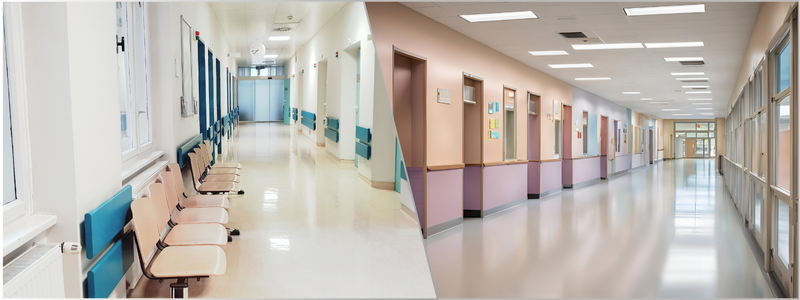

Benefits of selling vacant land using 3D visualization services for realtors and land development

1. Establish trust among prospects

It’s not a secret that real estate photos tend to be quite misleading because of their use of perspective as well as other marketing tactics to make a property look much better than it is in real life. With 3D visualization, you’ll get exactly what you see. These renderings can be used to showcase the layout and accurate dimensions of the property. 3D renders never suffer the same concerns people often find misleading in photos.

RELATED: Why companies need 3D visualization

Getting an accurate sense of the vacant land will encourage investors to put their money on your property. It will also help save time because people won’t be disappointed once they set foot at the property, assuming it to be something else. As a result, it will establish your reputation as a trustworthy and honest realtor or company that doesn’t conceal the truth from buyers and investors.

2. Request higher prices

With the help of 3D architectural visualization companies you can command a higher price because of the ability to demonstrate the potential of vacant land. For instance, maybe you’re trying to sell vacant land in a posh neighborhood. It can be tricky to show why the land is worth its high price tag. However, using 3D technology to stage it will help buyers instantly see and realize why the land is worth its asking price.

3. Tap into buyers’ emotions

3D visualization can have different elements of lighting, mood, and color integrated into them that are aesthetically appealing. These elements can retain a client’s attention for longer, embedding into their memory to the extent of enticing them to make a purchase even long after they see your marketing materials. 3D visualization services can also stage vacant land with future developments that will make it look high-end. Think of those images that people often share on social media and even go viral.

RELATED: 5 Types of 3D visualization used by architectural design firms for CGI projects

Physically staging a vacant land this way would cost several thousand dollars or maybe downright impossible, depending on what you wish to include. With 3D visualization, all of these elements can be added without breaking the bank.

3d architectural visualization services

3D visualization designers also make distinct visual storytelling possible that mere photographs can never provide. These visualizations allow realtors and land developers to include people and enable them to interact with the land. It’s now possible to create a sense of anticipation and excitement that can result in higher sales by offering buyers a sense of connection and an exciting, emotional journey.

4. Highlight the surroundings

The environment and location of a property are equally important for some buyers as the property itself. Although many real estate pictures focus on actual structures, 3D visualizations can be used to showcase the surroundings. Some people often think and view things on a broader scale, so offering various views of the property on the listing or website can appeal to more prospective customers. Your imagination is the only limit here because 3D visualization services can even develop entire cityscapes surrounding the property for sale if the need arises.

RELATED: 3D visualization: the future of architectural design

5. Offer a sense of what it feels like to have a structure on the property

One of the relatively rare types of 3D rendering known as 3D doll house rendering or building cross-section visualization can also come in handy to market vacant land. These renderings can create cross-section views of the property as there is a life-sized or over-sized doll’s house on the vacant land. This allows people to view the visualization to get a better sense of what the property will look like if it has a house or structure on it, together with how the spaces and rooms will connect and more. It is a type of rendering that can help spice up your marketing materials because most people are not used to seeing them, making them tune into it more easily.

6. Give a boost to pre-selling off the plan properties

3D architectural rendering services and virtual reality tours, in particular, are also excellent ways to allow potential buyers or investors to envision a property development before it exists in the real world. Buyers can get a good idea of what they will spend their money on and what it will feel like to construct a house or building, thereby showcasing the property even before the construction begins. Virtual reality enhances it further because you can give the audience the experience of owning the land, something that was once experienced only with lavish displays of apartments and detached houses.

If you give people the chance to envision the completed project, it will increase the likelihood of them investing in the property. For example, think of the importance of good photos in real estate listings. These can make or break a prospect’s interest in even visiting the property. It has also become more critical in this modern world, where most people decide to buy properties without seeing them personally and can only view the images on social media or real estate websites.

RELATED: Differences between 3D rendering and 3D visualization services

Just imagine the sheer number of vacant land that you can lease or sell if more potential buyers from different parts of the country or even from other parts of the world can avoid that dreaded fear of buyer’s remorse. It’s all thanks to the fact that they can get a better sense of what it will be like to own that property before they make a purchase. However, the most important thing is that these visualizations will help them fall deeply in love with the stunning marketing images.

7. Showcase your modern skills and knowledge

You can’t blame clients if they prefer to buy and work with the most knowledgeable realtor or land developer out there. Harnessing the power of the most state-of-the-art technology is a great way to show people that your knowledge is beyond that of your competition. This is where the services of 3D photorealistic rendering firms can proof to be invaluable. It can establish a better sense of trust to make the entire sale process faster and easier. Never let your clients see you as an ancient man who has been living under a rock all these years. Show them instead that you’re ahead of the latest trends in real estate by taking advantage of 3D visualization services and making them a part of your future project presentations.

3d rendering studio

8. Environmental sustainability

3D visualization services can also contribute a lot to ecological sustainability. With the ability to envision a project before it is even constructed, realtors and land development companies can make better decisions that will contribute to the development of more sustainable buildings. The use of energy-efficient materials, natural light, as well as other principles of green design, can be integrated early on in the project design process. It can result in lower carbon footprints and reduced consumption of energy that can contribute to a better and healthier planet.

RELATED: How to find the right architectural 3D visualization expert for your company or firm?

9. Close more sales

For most realtors and land development companies, one of the biggest and most severe challenges in the industry is to sell vacant lands that don’t have a house or any structure on them yet. Every time buyers see an unfinished property, it is common for them to think of the amount of work that needs to go into developing it. With 3D visualizers & visualization services, however, you will be able to show them the final results that they can expect to get in the long run.

For instance, you can come up with an awesome top-to-bottom 3D rendering of a finished house complete with a garden, pool, and more of your own personal little touches that will make them imagine the property as their own. Doing so will make buyers view the property in a different light. These services will make it look and feel more like a home and not only a mere piece of vacant land. The 3D visualization can also be your own design to showcase to people to transform a property into a more suitable choice, making it a formidable option compared to other properties in the market.

So, in short…

There are a lot of distinctions and factors that need your full attention in order to fulfill a sale of those vacant lands and properties. After all, the whole process is much different than selling an actual house, making the process even more challenging. However, as long as you do it right, it can bring new and exciting opportunities. Selling vacant land can give a bigger pool of interested buyers and usually means faster sales as well.

RELATED: 5 Tips for achieving photorealism with 3D rendering and 3D visualization for home design companies

How Cad Crowd can help

Browse Cad Crowd today and find the best 3D visualization services that can help you sell more vacant land quickly and easily! Contact us for a free quote.

author avatar

MacKenzie Brown is the founder and CEO of Cad Crowd. With over 18 years of experience in launching and scaling platforms specializing in CAD services, product design, manufacturing, hardware, and software development, MacKenzie is a recognized authority in the engineering industry. Under his leadership, Cad Crowd serves esteemed clients like NASA, JPL, the U.S. Navy, and Fortune 500 companies, empowering innovators with access to high-quality design and engineering talent.

Connect with me: LinkedInXCad Crowd

From Blueprint to Reality: 3D Printing’s Impact on Architectural Design and Visualization for Companies and Freelancers


3D printing has completely changed the landscape of architecture. This is not a fad; its influence has transformed architects, designers, and engineers’ thoughts and approach toward designing a project. It is very good for companies and freelancers operating in the architecture sector to give unprecedented creativity, efficiency, and involvement with the client.


:rocket: Table of contents
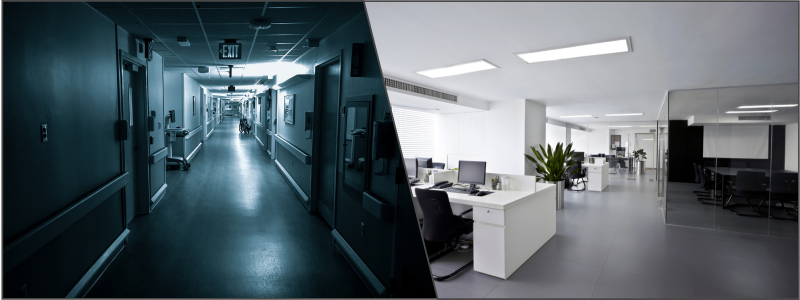

Know about 3D printing in architecture

It refers to printing a three-dimensional object on a layer by layer fashion from a digital file. Currently, this is the area of additive manufacturing in architectures that has helped produce and model complex structures and full-scale prototypes. Today, building models come out in detailed dimensions, whole structures, or simply anything based on the architect’s creativity. This normally begins with a CAD file, or a blueprint for the printed model. This advanced software enables architects to draw precisely and in details to the extent that each unit within the building is improved.

Upon design, there will be a 3D printing that uses plastics, metals, and even concretes to print models. This way, aside from the fact that this is going to make everything much easier, it helps eliminate waste and cut materials for any business size-an exciting reason.

RELATED: What is 3D printing? A beginner’s guide

3D printed furniture and objects

Benefits of 3D printing for architectural design

Visualization

One of the effects 3D printing will impact on architectural design is seeing designs more concretely into realisation. Sometimes a set of sketches and the respective two dimensional drawings may not tell very much about a design in an almost authentic sense. That notwithstanding, through 3D printing, architects can visually project what they intend or are coming up with via making of physical models offering an authentic way of projection of a design.

These models can be used in client presentations, which allows the stakeholders to experience the design in ways that drawings cannot. It is possible for the client to get a close-up view of scale, proportions, and details about a project, thus providing better decision-making and increased satisfaction with the final product.

Rapid prototyping

Another important advantage of 3D printing, however is the speed at which one can produce models. It allows architects and designers to quickly come up with prototypes so that they may easily iterate much faster. The speed of production is pretty beneficial in the preliminary stages of a project. Indeed, the number of possible designs can be quite vast at this stage.

With several designs being released pretty fast, architects will try several concepts and use the data to determine material and aesthetic choices versus functional ability. This encourages more creativity but speeds up the total project timeline, the critical motivator in current high-speed construction environment.

Cost efficiency

Cost always goes to the front when an architectural project is to be undertaken. And also 3D printing really cuts expenses. In comparison with conventional prototyping, expensive materials and processes that consume labor usually find an application for prototyping. On the other hand, 3D printing is low waste because only the required quantities of materials are needed thus lowering cost production from waste.

Further, with the 3D printing technology, the models can be printed at a highly accurate level and, thus, less potential for costly errors in the on-site construction. This saving can work as a critical difference for freelancers and small firms that can enable them to be in a better position when competing with the bigger firms.

Customization and personalization

The ability to generate items with 3D printing makes customization easy as well as inexpensive, thereby making impossible things a matter of reality. In evidence is the case with architects who can design any style of facade, intricate detailing even customized interiors that cannot have been achieved with any known method.

This is very useful to freelancing architects because they spend much time developing their own solutions to clients. This capacity will ensure that freelancers develop unique designs, which will be the best way for them to stand out from other freelancers in a competitive market, thereby having stronger ties with the clients and establishing excellent reputations.

RELATED: 6 ways 3D printing will change the world

Applications of 3D printing in architectural design

Scale models

Architects have used scale models in the presentation of architecture for a long period of time. With 3D printing now available, models are so easy to make and also quite fast. The detailed accurate representation of the architect makes it possible for the clients to know the proportion and scale involved in a project.

These models can be printed with different materials such as PLA, ABS, and resin. Each has a different aesthetic and tactile quality. High-quality scale models can now be produced quickly, enabling the presentation of designs to be made more effectively and a real-time response to client feedback.

Facade elements

It also enables architects to design and produce intricate façade elements that can add an aesthetic value to a building. Additive manufacturing techniques allow one to get custom patterns, textures, and forms quite easily. This is helpful in modern architecture, where one demands extraordinary façade designs for a statement or functional objectives, such as energy efficiency and climate responsiveness.

Building elements

Some companies are studying the possibility of printing entire building elements like walls, columns, and structural elements with 3D printing. It does not have the intricacies associated with construction but gives free rein to innovative designs, which will not be tamed by existing architecture conventions. An example would be projects that actually created complex geometries via 3D-printed concrete, impossible to manufacture if produced conventionally. Thus, such a method can even diminish the construction time and human costs in labor without compromising structure.

Urban models for planning

Besides creating standalone structures, 3D printing can actually play an important role in urban design. The designers can build large neighborhood and district models showing how those developments are going to work in the place.

These models can even facilitate discussions with the city planners, stakeholders, and the community generally. They offer a physical reference to proposed changes. 3D printing makes ways to make developments relevant in the eyes of community need while increasing public involvement with planning activities.

RELATED: Redline & as-built drawings explained for construction companies and architects

Obstacles and issues

Despite its potential positives, introduction of 3D printing for architectural design still contains disadvantages.

Lack of materials

In addition, despite so many advancement opportunities, 3D printable materials available in the field of construction are really low if compared with building material kinds. The architects need to ensure that there is enough property in the strength, durability, and sustainability of materials in the process of designing for 3D printing.

Regulatory compliance

Regulatory compliance remains a great challenge with any new building construction method. Building codes and standards may not be updated to cover structures printed with 3D printing; hence the architect has to navigate a complex legal framework. This would push the acceptance of the project, and therefore the construction back.

Technical expertise

With regards to technical know-how, for 3D printing to be successfully put into action, architects must have technical know-how. This is through being well conversant with CAD software and having knowledge of how 3D printing is performed, in addition to the material properties. This would present a challenge to entry for freelancers or small firms that do not have dedicated technical teams.

Initial investment

A fairly significant initial investment in technology, a 3D printer requires of the firms desirous of getting a high quality one, and all the material that goes with it. To a small firm, the money may not easily run its course without seeing returns pretty soon.

RELATED: 8 tips companies use to simplify design manufacturing or design for manufacturing

3d air blower prototyping

Future architecture of 3D printing

As technology advances, the future of 3D printing in architecture seems to be doing all right. Probably, next-generation materials will be biobased and recycled resources, which could further expand the potential for sustainable building practices and even more ambitious architectural projects through advancements in printing speeds and precision.

The integration of 3D printing with other technologies, like BIM and AR, would make design more effective, but the project workflow becomes more smooth. For example, through AR, architects can already see a 3D-printed model in place to be constructed so that some adjustments can be made even before the construction phase.

Wrapping it up

This means that it has fundamentally affected the way architectural designs and visualization are approached and will be concluded. It is a new step forward for companies and freelancers with rapid prototyping, designing down to a high degree of customization, and generation of detail models. In its further development, it will begin to shape innovative and efficient ways of leading the architecture to a sustainable future.

3D printing is not only giving life to plans for architects, but it is also making the architectural practice of the 21st century different and better. It will also bring architects to the game, helping them to be leaders in innovation and satisfying ever-evolving needs of the clients and communities around the world.

RELATED: Understanding the cost of prototyping for product design services and budgeting for your company

How Cad Crowd can help

Nobody would disagree with the huge impact of 3D printing on architectural design and visualization. For this reason, companies and freelancers must join the bandwagon of utilizing the new technology and harness it to gain an upper edge over their competitors. At Cad Crowd, we’ll ensure that you are working with experts in 3D printing who will turn your concepts into realities. Request for a quote today.

author avatar

MacKenzie Brown is the founder and CEO of Cad Crowd. With over 18 years of experience in launching and scaling platforms specializing in CAD services, product design, manufacturing, hardware, and software development, MacKenzie is a recognized authority in the engineering industry. Under his leadership, Cad Crowd serves esteemed clients like NASA, JPL, the U.S. Navy, and Fortune 500 companies, empowering innovators with access to high-quality design and engineering talent.

Connect with me: LinkedInXCad Crowd

How Firms Can Create Engaging Institutional Interior Design 3D Renderings


This post covers how design firms can create engaging institutional interior design 3D renderings. Just a few words here and there won’t be enough to describe 3D rendering services and its effects on the interior design industry. The real world and the virtual world have now come together to offer a clearer peek into the space before the construction even begins. 

As far as institutional settings, including offices, hospitals, schools, and the likes are concerned where aesthetics and function should always join forces, 3D renderings have an even more critical role to play in conjuring images of the final design. 


:rocket: Table of contents


3D renderings and their role in institutional interior design

Institutional settings are expected to have a great ambiance without losing their practical touch. Interior design should be able to address different needs, then, while meeting the standards for efficiency and safety. It’s simple: school areas must be conducive to learning while being cozy. Hospitals, in contrast, must offer a sense of comfort without jeopardizing the safety of patients and employees. Check out below to know the key aspects where 3D renderings become priceless tools:

RELATED: 5 Business tips for creating photorealistic interior renderings for your company

Client and stakeholder communication 

Let’s face it: not all clients can understand technical drawings, even more so by those who aren’t even familiar with them in the first place. 3D architectural rendering firms can offer clearer communication to ensure that all the people involved are always on the same page about the final look of the design. 

Personalized choices just for you

Institutional spaces must have interiors with a customized look and feel to cater to certain functional requirements. 3D renders should give designers the chance to play around with different furniture setups, color combos, and layouts to balance out function and form to perfection. 

Visualization opportunities

3D renderings can also photorealistically depict spaces. This isn’t something you can expect from flat traditional 2D drawings or blueprints. As a result, it wouldn’t take much for stakeholders to conjure images of the design with suitable spatial proportions, textures, and lighting fixtures. 

RELATED: The Impact of 3D interior rendering services for boosting hotel and resort bookings

Institutional interior design essentials 

As far as the world of interior design services is concerned, the guidance and expertise of the experts are necessary when developing the design of the interiors of institutional spaces. It requires various elements that need cautious deliberation. 

3d interior rendering services

The whole thing should meet the terms of the local regulations and rules to create a more positive learning environment. It also involves ensuring that all safety protocols are adhered to. These elements must be synchronized to give the institution its distinct character and personality. Here are some of the essentials that any institutional interior designer should never do without:

Creativity 

It’s always a creative experience to learn and teach things. It means institutions where learning and teaching take place should never be monotonous, dull, and boring.  You can throw in some significant visual elements to the interior design of the institutional space to create an enticing environment for all the people in it. 

RELATED: 7 Ways 3D interior designer services are used to maximize living and working spaces

You can make it happen by doing a couple of things or so. For educational institutions, the 3D interior rendering expert can add bright colors to the play areas. This works great for younger students. Interactive displays can also be added to reading nooks like libraries to keep students interested. The design of the campus’ on-site bookstore should be inviting and warm, too. The cafeteria must have enticing shelf displays and menus that will whet the appetite. 

Exceptionality 

Educational institutions follow some ideologies and principles of their own. Designers can help you give this distinct personality to your institution through the process of comprehensive collaboration and discussion. It’s where 3D logo design services and branding enter the picture. Make sure that these visual elements are used and incorporated wherever possible. While you’re busy creating a unique identity for the institution, see to it that you don’t put the functional aspects to the side. 

Ample lighting 

Natural lighting should always be sufficient in institutions to promote learning. Continuing from the example above, classrooms can be designed with large windows. Everyone is aware of the positive effect of natural light on people’s cognitive and mental abilities and in turn, this will boost their ability to grasp and learn things.

RELATED: The benefits of using 3D interior design, CAD drafting & rendering for your company 

Artificial light sources should also be enough for gloomy and dark days when the sun might not be in its full force. Ample lighting in classrooms is mandatory to make sure that teachers and students alike maintain healthy vision and eyesight. 

Functional layouts 

Planning layouts is huge as far as institutional interior design and floor plan renderers are concerned. Make functionality your priority and base your layout on it. For primary or elementary schools, your main focus should be the corridors and passages since these areas will be crowded with students and faculty members throughout the day. Another important factor here is observing the correct distance between the student benches and the whiteboards or blackboards, whichever is applicable. 

3d architectural rendering firm

Meanwhile, practical workshops and laboratories occupy the biggest part of the layout of vocational colleges. It means that you need to set up the rest of the elements around them. In this case, start by evaluating the functionality and then work with the designers to create a layout that caters to these requirements. 

Cosy furniture 

Comfort should always be your foremost consideration when looking for furniture pieces to put in educational institutions. The safety and well-being of teachers and students should always be the priority here. Comfy pieces of furniture will ensure that students won’t worry about anything else and just focus on learning alone. You can talk to your interior designers and ask if they can help you look for quality furniture that won’t cost you an arm and a leg. 

RELATED: Top photorealistic furniture rendering techniques for interior design companies

Adherence to local regulations

Institutional buildings must also adhere to local regulations and laws. Before you start on your project, never forget to verify whether or not the premises comply with security and safety rules for the benefit of all building occupants and visitors. 

All types of institutions, from schools to universities, hospitals, libraries, and other commercial setups, meet fire safety protocols. This also applies to drainage and plumbing systems, and electrical wiring, sockets, and switches. Failure to comply in these areas may lead to some serious consequences later on, whether it is on the reputation of the institution or its monetary expenses. 

3D rendering strategies for institutional interior design

To produce informative and compelling institutional interior design 3D renderings, you should always observe the combination of technical skills, attention to detail, and creative flair. The following strategies can help you achieve exactly just that:

RELATED: What is architectural visualization and why architectural rendering services use it

Safety and accessibility 

Safety and accessibility are the topmost priorities in any institutional setting. 3D architectural visualization designers should create 3D renders that reflect adherence to all the relevant standards and codes to make sure that they are always safe and accessible from top to bottom and vice versa. These two primary aspects are a must in any institutional design. Settings such as public buildings and hospitals should have room for and cater to different groups of people. 3D renderings of institutional interior designs must clearly show these.

They should also take into consideration the local regulations and requirements. The renders must also have elements like spacious corridors, non-slip surfaces, ramps, and elevators. These features are an assurance that the space adheres to all accessibility and legal safety requirements. 

In-depth precision

Every detail should also go through careful scrutiny. All aspects and facets of the render should be accurate and in line with the requirements of the project, from the lighting fixtures to the placement of furniture pieces. 

RELATED: The best architectural rendering companies and 3D rendering services

3d interior rendering services

Contextual elements

Contextual elements including branding elements such as mission statements or logos, signage, and landscaping, must be included to give your renders enough context and depth. 

Cultural sensitivity

It’s common for institutional spaces to turn into cultural hubs that represent and serve different communities. This means that the 3D renderings of institutional interior designs must be a reflection of this diversity. The design itself must be sensitive enough to different cultures. You can use historical references, showcase works of art, and reference other similar design elements to achieve just that. When your design feels and looks more inclusive, you can make it feel more welcoming and relatable to different groups. 

Human touch

You can give your 3D renderings a better sense of scale if you add some human figures here and there. This way, stakeholders and clients can easily imagine how the space and the people in it will interact with each other, letting them evaluate its functionality. 

RELATED: Learn about the types of architectural rendering services available for your company

Identity and branding

The presentations of institutional and commercial spaces have almost the same requirements. Both should align with the unique brand identity of the organization. 3D renderings from 3D architectural animation services must depict how the design will integrate with the color schemes, logs, and other similar branding elements of the institution. It will further strengthen the brand for the audience to have a stronger visual connection with it. It can also help convey the values of the institution and solidify its image in the eyes of the general public. 

Interactive elements 

Virtual reality or VR experiences and interactive 3D models can also be used to make the 3D renders look and feel more immersive. This will help the clients explore and navigate the space from various angles so they can make better decisions. 

Positive user experience 

3D renderings of institutional interior designs must also exude a welcoming environment. Furniture pieces should be arranged comfortably, color schemes must be pleasing to the eyes, and layouts should allow easy navigation. 

RELATED: Why are companies and firms moving from 2D to 3D CAD architectural renderings and models? 

How Cad Crowd can help

Institutional interior design 3D rendering always has more to it than just visual appeal alone. If you’re looking for the best 3D renderings that can come up with the suitable designs for your institution, Cad Crowd got your back. Our 3D rendering services undergo screening and are highly recommended across the industry. Get a free quote today

author avatar

MacKenzie Brown is the founder and CEO of Cad Crowd. With over 18 years of experience in launching and scaling platforms specializing in CAD services, product design, manufacturing, hardware, and software development, MacKenzie is a recognized authority in the engineering industry. Under his leadership, Cad Crowd serves esteemed clients like NASA, JPL, the U.S. Navy, and Fortune 500 companies, empowering innovators with access to high-quality design and engineering talent.

Connect with me: LinkedInXCad Crowd