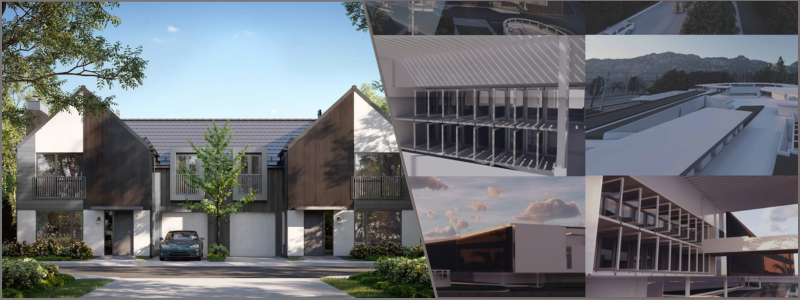
A Guide to 3D Environment Design & Concepts with Freelance 3D Modeling Companies


The ever-growing demand for super-accurate 3D environments in both gaming and cinema, architectural and virtual reality has assumed a rather imposing proportion. 3D environment design services is the expression of art imbued with high technicality with the purpose of creating a desirable virtual world. Let’s delve deeper into the art and science of designing 3D environments and their core constituent elements, procedures, and deployments.


🚀 Table of contents


The building blocks of 3D environments

Concepting: The blueprint of the virtual world

Every great 3D environment begins with a good idea. Concepting is close collaboration between designers and creative teams to sketch out the visual style, narrative context, and functionality requirements of the environment. This stage may include mood boards, conceptual sketches, and detailed storyboards so that all parties share a clear vision.

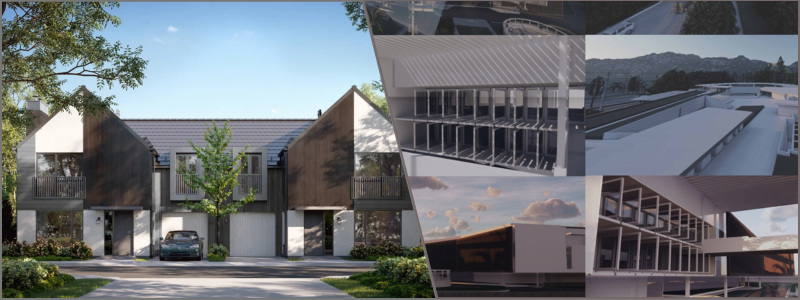
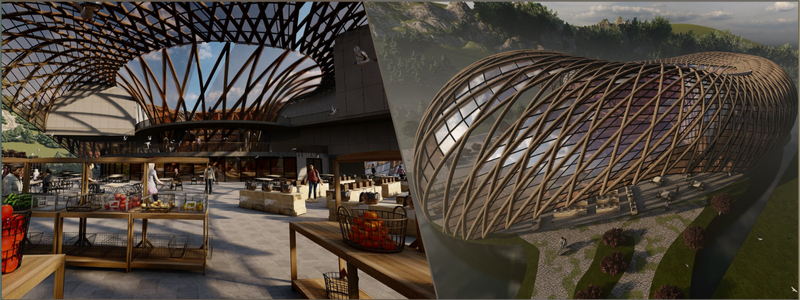
3d environment rendering examples

Modeling: shaping the landscape

3D modeling services use modeling software to create models that fill up the space. These models can be as big as skyscrapers and large landscapes or as small as props. Some of the key techniques used are:

  • Polygonal modeling: This is the most popular technique, which involves creating surfaces using interconnected polygons.
  • Sculpting: Ideal for organic shapes like terrain and foliage, sculpting provides great detail.
  • Procedural modeling: Algorithmically produces complex structures like cities or forests very efficiently.

Texturing and material creation

Textures are the feature of the model, giving color and pattern to the models. The artist uses UV mapping to wrap a 2D texture over a 3D object, and it has to look seamless. Advanced shaders and materials provide real-world properties like reflection, transparency, and surface roughness.

Textures are the feature of the model, giving color and pattern to the models. The artist uses UV mapping to wrap a 2D texture over a 3D object, and it has to look seamless. Advanced shaders and materials provide real-world properties like reflection, transparency, and surface roughness.

Lighting: setting the mood

Lighting design services can make and break the atmosphere of a 3D environment. It could be a warm sunset or simply a cold industrial glow from a collection of fluorescents, as lighting leads the eye and strengthens the narrative that takes place within that 3D space. More realism is added using global illumination, dynamic lighting, and volumetric effects.

Optimization: balance between quality and performance

The environments of interactive applications such as video games are optimized, which allows running smooth and smooth graphics on devices. Techniques applied in balancing the performance and visual fidelity of such designs include LOD, efficient asset management, and optimized shaders.

RELATED: 3D exterior rendering services for companies: 10 important factors that affect pricing

Tools and technologies shaping the industry

Much of the evolution of 3D environment design is because of new developments in software and hardware that occur all the time. Powerful tools have become part of the art process. Software like Blender, Autodesk Maya, and ZBrush can model and sculpt details with much complexity. Texturing tools, which are specialized to create convincing and photorealistic textures, will help designers catch the life-likeness of realistic 3D models such as Adobe Substance Painter and Quixel Mixer.

Top-of-the-line game engines, namely Unreal Engine and Unity, are able to close the gap between static design and immersive experiences with real-time rendering. Such technology can be applied in fields such as architecture, automotive design, and virtual reality.

Virtual production tools for the film are game changers. Techniques such as combining LED walls and real-time rendering engines allow dynamic environments to be created instantly without the need for traditional green screens and post-heavy workflows.

On the hardware side of things, there is much improvement in the quality and realism of renders with ray tracing-capable GPUs, which allows for simulations of light and shadow that really approach real physics. VR headsets provide designers as well as end-users with highly immersive ways to engage with 3D environments that also significantly enhance the creative process and user experience.

These tools and technologies collectively push the boundaries of what’s possible through 3D environment design professionals, shaping the future of industries ranging from entertainment to engineering.

RELATED: The role and benefits of CGI rendering in architecture: Why service providers and freelancers rely on it

Applications across industries

The use of 3D environments has dramatically revolutionized many industries to provide innovative solutions and enhance the user experience in unique ways.

Gaming: immersive worlds

In video games, 3D worlds are the basis for an immersive experience. Players adventure through imaginative places or hyper-realistic environments. A very good example of this is in open-world video games, where the player is given expansive, detailed landscapes, giving way to both exploration and interaction. These environments blend gameplay, storytelling, and visual art so that the final experience is deeply immersive and keeps a player’s attention.

Film and animation: storytelling in 3D

The film and animation industries use 3D environments to bring impossible or cost-prohibitive scenes to life. Filmmakers can build an entire world – a bustling, futuristic city or a serene fantasy landscape – using the help of CGI. Digital environments enhance storytelling and allow live-action footage to be seamlessly integrated with fantastical elements, giving cinematic experiences an eye-catching appearance through photorealistic rendering services.

Architecture and real estate: visualization of spaces

Architects and real estate individuals use 3D environment design to create highly photorealistic models of projects when they are only in the initial stages of completion. These 3D models can be explored interactively by those stakeholders to deeply understand spatial relationships and the aesthetics involved. It promotes higher collaboration and information-based decisions at the beginning stage of the process.

Virtual reality and simulation: experience the unreal

Virtual reality is highly dependent on 3D environments to immerse users in alternative realities. From realistic professional training simulations to virtual tourism experiences, 3D VR environments unlock limitless possibilities that integrate entertainment with practical applications for different sectors.

RELATED: 9 ways you can use 3D rendering for marketing your company’s products

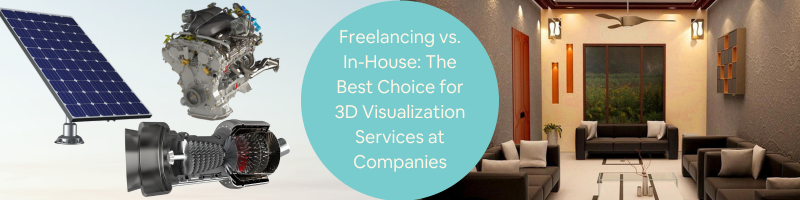
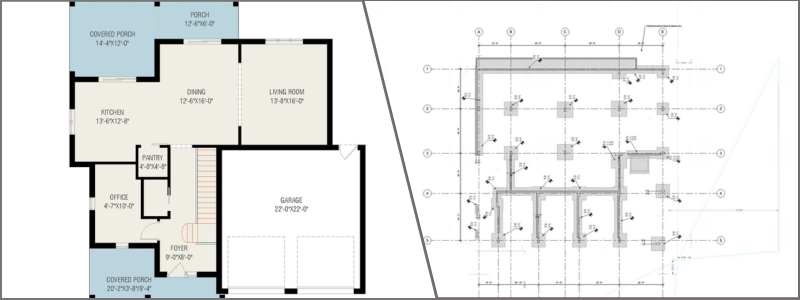
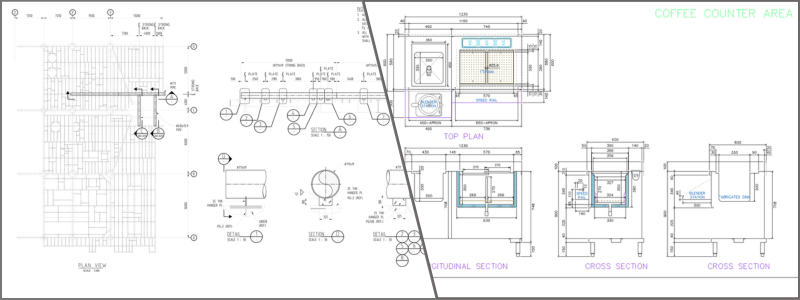
3d environment plan example

Trends that will shape the future of 3D environment design

The field of 3D environment design is highly dynamic because of emerging technologies and changing industry needs. Some of the key trends shaping its future are photogrammetry, AI-powered tools, metaverse development, and sustainability in virtual design.

Photogrammetry and scanning

3D model services feature photogrammetry as the creation of models from real-world photographs. It’s the revolution of design with a reality that’s never been possible before. It captures textures and geometry directly from reality, bridging the gap between the physical and digital worlds. It is highly useful in gaming, film production, and architectural visualization, where lifelike accuracy is needed.

AI-powered design tools

Artificial intelligence is changing workflows in 3D designing. AI eliminates repetitive tasks, generates procedural content, and suggests enhancements to creative projects. Thus, designers are freed to focus on innovative design. AI-powered tools also democratize 3D design services and open access to creators at various skill levels.

Metaverse development

With the increasing popularity of the metaverse, there is a massive demand for vast, networked 3D spaces. Virtual worlds that replicate or surpass the complexity and interactivity of real worlds can now offer the opportunity for immersion in games, social interaction, and commerce.

Virtual design sustainability

Sustainability is rapidly becoming the core focus of 3D design. The virtual production methods, such as digital twins, reduce the need for sets, props, and travel, thus lowering environmental impacts. These advancements also match global trends toward greener practices in creative and industrial sectors.

These trends altogether hint at a prospect of making virtual 3D environments much closer to realness, efficiency, and sustainability than ever before.

RELATED: How to create captivating 3D commercial rendering architecture designs for companies

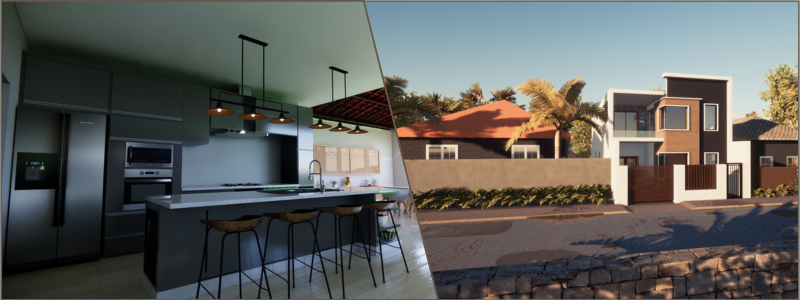
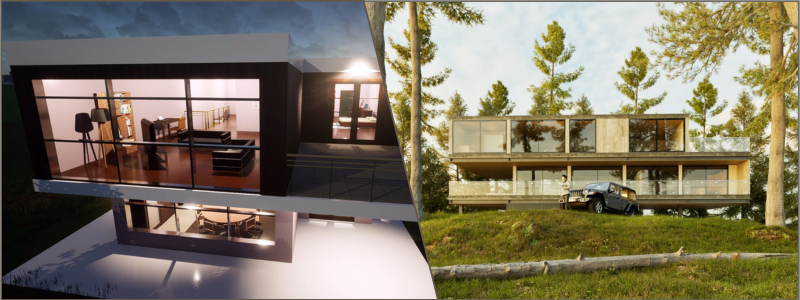
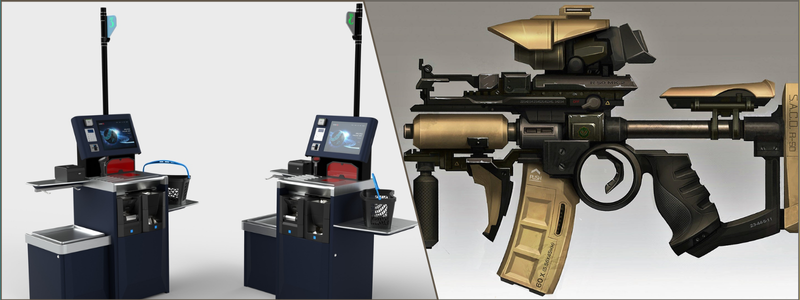
3d environment examples

Issues with designing 3D environments

3D environment design is a field full of potential, but certainly not without its share of hardships. One such major challenge that exists is the balance between realism and creativity. A designer has to create some really immersive, lifelike settings while at the same time fitting these environments within the story or gameplay. That can be very tricky since a highly realistic design can sometimes dominate imaginative or narrative elements.

Technical constraints are also a barrier. The demand for high-quality graphics often clashes with hardware limitations, long rendering times, and the need for compatibility across diverse devices and platforms. Such issues can limit the creative freedom of a 3D designer and require compromises to maintain performance and accessibility.

In addition, interdisciplinary collaboration is important but also difficult. Projects usually require artists, engineers, and narrative designers to work together, sometimes from different time zones and cultural backgrounds. It is not easy to coordinate such a diverse team.

Finally, the field’s rapid evolution means designers must constantly stay updated. Emerging tools, software, and techniques demand continuous learning to remain competitive. This necessity for ongoing skill development can be both time-consuming and demanding, making adaptability a crucial trait for success in 3D environment design.

The role of education and practice in 3D environment design

Mastering 3D environment design demands a combination of formal education and practical application. There are courses in game design, animation, and digital art offered in universities, thus enabling them to be better equipped with foundational knowledge. Even self-taught designers may not go wrong since they can acquire much knowledge using online tutorials, forums, and even mentorship.

A diversified portfolio of varied environments, ranging from busy urban spaces to serene natural landscapes, is important for career growth. Participating in collaborative projects like game jams or short films will boost skills as creativity and teamwork take center stage in these experiences. Technical ability is honed, yet this activity is sure to connect with important people in the field.

Conclusion

3D environment design is an art that will forever evolve with a touch of beauty and technology. From a busy game city to a serene meadow in a virtual reality experience to a future movie world, the vision of designers brings people into places they never thought possible.

How Cad Crowd can help

As the tools and techniques advance, the frontiers of what can be done in 3D environments are forever being expanded. Mastering basic principles and taking risks with innovations can help a designer create timeless virtual worlds that resonate within the audience’s psyche. Cad Crowd will connect you with the top freelance 3D modeling companies you can count on for your 3D environment design and concepts. Request a quote today.

author avatar

MacKenzie Brown is the founder and CEO of Cad Crowd. With over 18 years of experience in launching and scaling platforms specializing in CAD services, product design, manufacturing, hardware, and software development, MacKenzie is a recognized authority in the engineering industry. Under his leadership, Cad Crowd serves esteemed clients like NASA, JPL, the U.S. Navy, and Fortune 500 companies, empowering innovators with access to high-quality design and engineering talent.

Connect with me: LinkedInXCad Crowd

Improve Furniture Catalogs with CGI to Market Your Products with Design Service Companies


As the furniture business becomes increasingly competitive, making products memorable is essential to success. CGI (computer-generated imagery) offers a potent solution that makes it possible for design service organizations to create sophisticated, high-end images of your furniture.

In collaboration with highly advanced 3D rendering services, organizations have the ability to transform product catalogues into 3D realms that highlight insignificant details and become more engaging.

Platforms like CadCrowd offer an array of expert freelance designers waiting to help craft stunning CGI imagery that highlights your products to their full potential, meeting your own personal requirements with precision and subtlety.

With the fast-paced business landscape of furniture design and sales currently in play, it’s more or less equivalent to attempting to scale a peak to stand apart from the pack. From online e-commerce sites to physical retail display rooms, manufacturers and designers continuously seek new methods to capture consumers’ attention and push sales.

Among the strong weapons in attaining this is incorporating computer-generated imagery (CGI) into furniture catalogs. CGI has quickly changed from a specialty marketing tool to an industry standard, revolutionizing product marketing across digital and print channels.

In this section, we are going to elaborate on how CGI can be used to the maximum in revolutionizing furniture catalogs and how interior design service companies can play a major role in it. From increasing visual beauty to extending accessibility, CGI has added new dimensions to presenting furniture products that were out of the imagination in the past.


🚀 Table of contents


furniture cgi rendering of coffee tables

What is CGI and how does it work

Before delving into the advantages of CGI for furniture catalogs, let’s learn first what Computer-Generated Imagery (CGI) is and how it works. CGI refers to the application of dedicated computer software to generate images or animations. Whereas conventional photography is the act of recording real objects through a camera lens, CGI builds up digital models of objects from scratch. This is what allows an unprecedented level of accuracy, control, and imagination.

So, what does CGI do? Essentially, CGI involves 3D modeling, texturing, lighting, and rendering. It starts with designing a 3D version of the furniture item using tools such as Blender, 3ds Max, or Cinema 4D. The computer model is the virtual equivalent of the real object, sculpted with exact dimensions and internal structure.

Once the 3D model is ready, the second phase is texturing, where designers apply real-world surface materials such as wood grain, fabric weave, or metallic finish. Through this process, the model imparts depth and realism since it mimics real-world materials.

RELATED: A guide to 3D environment design & concepts with freelance 3D modeling companies

Lighting design services play a significant role in making CGI images look realistic. Just like in a commercial photo studio, virtual lighting setups are adjusted to achieve the best possible appearance of the product. Shadows, highlights, and reflections are finely adjusted to mimic real-world lighting conditions so that the furniture piece looks as realistic as it can be.

Finally, rendering ties it all together. The process of rendering all the computer-created elements turns them into a quality picture or animation. Rendering software, which may be V-Ray or Arnold, calculates the way light behaves when it hits surfaces, bringing forth an image that is seamless from a real-to-life photograph.

The appeal of CGI is in the fact that it provides never-before-possible flexibility. Furniture designers can ask and place their products in ways that are impossible with conventional photography. Need to have a chair in five colors? No problem—CGI allows you to switch color and material at the click of a button. Want to show a sofa in a stylish living room setting? No studio booking is required, and no clunky props are needed to set up. Just create a virtual environment with the perfect ambiance.

This ability to produce product variations without the expense of manufacturing design services or photography makes CGI a useful tool for furniture catalogs. Whether launching a new line or updating an existing one, CGI enables companies to represent their furniture successfully, appealingly, and economically.

The benefits of CGI for furniture catalogs

Quality images

One of the most glaring advantages of CGI is that it can create breathtaking, high-definition visuals that make furniture pieces come alive. Conventional product photography is constrained by the limitations of lighting, camera position, and location. Although these limitations tend to yield less-than-desirable depictions of a product, CGI makes it possible to have full control over all aspects of the scene. Lighting, shadows, and reflections can all be finely tuned to produce the ideal image.

Furniture design service firms that specialize in CGI can produce images that are as realistic as photographs, showing even the minute details of an item. From the grain of a wooden table to the feel of fabric upholstery, CGI makes it possible to show your products accurately and attractively, allowing prospective buyers to see them in their own homes.

Cost efficiency

Producing high-quality photography can be expensive, especially when dealing with a large catalog of products. You’ll need to rent professional studios, hire photographers, pay for props, and potentially bring in models to show the furniture in use. When changes need to be made, such as altering product colors or designs, the costs can add up quickly.

Conversely, CGI is much more economical through 3D modeling design services. Once the 3D models of the furniture are constructed, they can be produced differently without incurring the same ongoing expenses. Furniture catalogs can be updated with new styles, colors, and configurations at a small fraction of the expense of traditional photo shoots. CGI can also be used to create virtual models, keeping the costs of pricey studio space and repeated photography shots to a minimum.

RELATED: How user-centered design improves product design & new prototypes of your company

Flexibility in customization

The largest advantage of CGI is its flexibility. Furniture catalogs have often demanded exposure of a wide range of product choices, from different finishes to multiple sizes, configurations, and accessories. Traditional photography struggles to shoot every variant of a piece of furniture without significant cost and time.

With CGI, design service companies can simply adjust the models to fit any changes or new product lines. If you must show how a specific chair would appear in different materials, fabrics, or colors, CGI can create each version without extra cost. Not only does this allow for the presentation of numerous styles, but it also allows for the creation of interactive catalogs where customers can browse customization options in real time.

3D modeling of a wooden cabinet and work table

Realistic and engaging interactions

Modern furniture catalogs are not solely static images. Customers desire more interactive and richer experiences where they can actually see the furniture in their own houses. With the use of CGI in your catalog, CAD design service companies can create interactive 3D models that customers can rotate, zoom, and view from various angles. This makes the catalog more user-friendly and far more like an imitation shopping experience.

Those interactive features are particularly helpful in online catalogs, where potential buyers can put furniture items into their own homes via AR technology. Buyers can view how a couch, dining table, or chair will look in their living room with CGI-driven AR apps prior to making the purchase.

No geographic restrictions

In furniture design, the geographic reach of your marketing materials can sometimes be a limiting factor. Traditional photography requires visiting locations or studios, which is costly and time-consuming. Moreover, photographing in varying environments (e.g., indoors, outdoors) or simulating the furniture in varying environments can be challenging.

With CGI, design services businesses can create any type of visual without being geographically limited. Whether it’s demonstrating a high-end chair within a sparsely furnished Scandinavian living room or a distressed coffee table in a hip New York loft, CGI provides unlimited options. What’s so wonderful about CGI is that all of these various settings can be created virtually without having to move products or photography gear.

RELATED: 3D product visualization: elevating your online shopping experience and service for modern consumers

Environmental impact and sustainability

Sustainability is becoming a concern in most sectors, including furniture design services and manufacturing. Most conventional product photography entails the movement of furniture pieces to other locations, which can have a considerable carbon footprint. Furthermore, when the furniture catalog needs to be updated or new products need to be included, more physical samples are produced, thus generating waste.

CGI is an environmentally friendly choice. Because no tangible products need to be shipped or replicated, CGI minimizes waste and the environmental impact of catalog printing. A green alternative, it can be sold as a choice to those who are concerned about the environmental sustainability of their purchases.

How design service companies enhance CGI in furniture catalogs

While CGI has numerous benefits, its real potential can be achieved only when the job is carried out with skilled design service companies. These companies are involved in designing photorealistic 3D models and rendering them into shapes that draw out the very essence of the furniture while complementing the imagery of the brand. Let us find out how the role of photorealistic rendering services becomes imperative:

Professional 3D modeling

Creating CGI photos is far more than just running a 3D computer program. Furniture needs to be modeled accurately, and this requires a deep knowledge of design, proportion, material, and texture. Design firms engage their expertise into the battle by having each item of furniture accurately and nicely represented.

Through high-tech 3D scanning techniques, these companies can scan real furniture pieces and create models for them in the virtual world. This is used to model every piece accurately, making the final CGI output replicate the original product.

Personalized lighting and texturing

A significant part of making CGI images look realistic is lighting and texture detail. Design firms can make lighting conditions that simulate natural or artificial light and how the furniture will look in various environments. Ranging from filtered daylight through a window to cozy evening lighting, lighting can impart a mood or atmosphere to a piece of furniture.

Textures are also very significant. Starting from the grain of wood and the texture of fabric, every detail has to be executed so that observers would get a tactile sense of touch of the object. Architectural design service companies know how to add slight details, such as reflections, gloss, and surface imperfections, to allow the furniture to have a tactile sense of existence.

Branding and consistency

When creating a furniture catalog, consistency in all the images is important to portray the brand identity. Branding matters to service design firms, and they can incorporate your company’s style guide into the CGI process. In this manner, each image will harmonize perfectly in your catalog, with the same lighting, color palette, and product placement.

Additionally, design service businesses can curve to your design idea for your brand, whether minimalist, luxury, or eclectic images. Having the flexibility to fit the CGI to a specific brand style is at the core of creating a catalog that resonates with your target market.

Efficient workflow

Furniture manufacturers often need to produce several catalog images within a limited timeframe, sometimes under time pressure. Design service businesses can ease the process by offering existing templates for best-selling furniture models so that they can be manufactured quickly without affecting quality. They can also take care of the entire process flow, from architectural model-making services to rendering, so that the catalog creation process is seamless and streamlined.

By taking the technical responsibility of CGI production off your hands, design service companies free up your personnel to focus on other aspects of your business, such as sales and marketing.

RELATED: Furniture business sales: roles of 3D product rendering from CAD design services provider

3d modeling of luxury chairs

Conclusion: revolutionizing furniture catalogs with CGI

In a world where images are worth more than ever before, the addition of CGI in furniture catalogs is a godsend that regular photography cannot match. From taking high-quality images to offering customization features and promoting sustainability, CGI allows you to present your furniture products in the most favorable light for your consumer product company.

It is through collaboration with competent design service companies that you get to enjoy the maximum advantage of CGI and have your furniture catalog not only be visually appealing but also convey your brand message and goals clearly. With the use of CGI, furniture makers and designers can enhance their advertising campaigns in ways that make the user have fun and engage in an interactive experience, which increases sales and enhances brand loyalty.

Cad Crowd is here to help

Expanding your furniture catalogs with CGI is a powerful way of displaying your products visually attractive and in painstaking detail. Using state-of-the-art 3D rendering technology, design service companies can create beautiful, realistic images that highlight the elegance and characteristics of your furniture much more effectively than traditional photography.

By choosing to collaborate with talented freelancers from Cad Crowd, you will be able to tap into an international talent pool of experienced CAD designers who will be in a position to bring your vision to life with precision and imagination.

Whether it’s taking your catalogue pictures to a whole new level or including product specifications with dynamic 3D models, the work of the right professionals can benefit your business as a key differentiator in the global economy. Hire a freelance designer now and take your furniture catalogue to a whole new level with CGI. Request a free quote today.

author avatar

MacKenzie Brown is the founder and CEO of Cad Crowd. With over 18 years of experience in launching and scaling platforms specializing in CAD services, product design, manufacturing, hardware, and software development, MacKenzie is a recognized authority in the engineering industry. Under his leadership, Cad Crowd serves esteemed clients like NASA, JPL, the U.S. Navy, and Fortune 500 companies, empowering innovators with access to high-quality design and engineering talent.

Connect with me: LinkedInXCad Crowd

The Benefits of Outsourcing Custom CAD Drafting Services for Manufacturing Firms


Outsourcing custom CAD drafting is not about pinching pennies—it’s good business practice for manufacturing firms looking to remain competitive. Companies can streamline their design process, reduce errors, and bring good products to market faster by leveraging the skills of skilled professionals through Cad Crowd.

With the more competitive manufacturing design industry landscape today, being ahead of the curve is about precision, efficiency, and innovation. From making complex parts to optimizing production processes and cutting costs, every step affects the bottom line.

One of the business solutions that have continued to be business-savers to most manufacturing firms is outsourcing single CAD drafting services. Apart from the overall cost-saving advantage, outsourcing CAD drafting has industry-specific benefits that can revolutionize business, increase productivity, and increase long-term success.


🚀 Table of contents


CAD design of a carbon fiber wing and twin radial engines

RELATED: How user-centered design improves product design & new prototypes of your company

Historic access to specialist expertise

CAD drafting outsourcing gives manufacturing companies an unmatched edge—a direct access to even more advanced skills much superior than basic 2D and 3D modeling. The aerospace, automotive, and electronics sectors require engineering applications with accuracy, agility, and in-depth technical knowledge. Companies can avail themselves of best-class design software such as AutoCAD, SolidWorks, CATIA, and Siemens NX without in-house experts and with the assistance of level-up CAD professionals.

Industry-specific benefits of CAD outsourcing

  • Aerospace & defense: Accuracy is the order of the day with aerodynamics-driven design, light material utilization, and compliance with regulations. Third-party CAD experts guarantee that each component is safe and has the best performance.
  • Automotive manufacturing: With the power to design sophisticated drivetrain models, crash impact simulation, and ergonomic interior design enhancements, manufacturers are able to enhance safety and comfort to its maximum potential. CAD experts focus specifically on revolutionary vehicle design.
  • PCB & electronics manufacturing: There is a high need for accurate circuit board design, which needs careful CAD drafting. Seasoned PCB design layout experts develop component placement to achieve electrical efficiency, manufacturability, and compliance with regulations.

Through outsourced CAD software, manufacturers not only streamline manufacturing operations but also utilize the latest technology in their business, which accelerates innovation and product quality.

Cost-effectiveness without slumps in quality

It is a costly overhead to have in-house CAD staff. Besides salary, businesses must capitalize on money on ongoing training, costly software packages, and property. These are sunk costs for most businesses, particularly frugal businesses, to swallow. CAD outsourcing is a cost-effective way to eliminate such overhead expenses without the possibility of cutting back or growing. Such a process delivers quality designs without the capitalization of in-house staff.

How it affects varied manufacturing companies

  • Small and medium-sized enterprises (SMEs): Through the outsourcing of CAD work, SMEs can significantly escape capital outlays. This enables them to invest capital in product development and advertising and thus be able to compete with big industry companies without the cash burden of maintaining an in-house department.
  • Heavy machinery production: Producing and prototyping heavy machinery is expensive, and it is more expensive to employ internal CAD personnel. CAD outsourcing enables manufacturers to put more money into materials and physical prototyping than they can into administrative and labor expenses.
  • Medical device industry: Speed and accuracy are not options in the production of medical devices. Firms economize on design expense by contracting out CAD to invest in regulatory approval, accurate manufacture, and testing at the cost of, thus ensuring products they deliver meet high-stakes industry standards.

Contracting out CAD is a rational means of keeping budgeting easy without compromising peer-level design.

RELATED: 6 industries revolutionized by 3D rendering freelancers & design services companies

Fast turnaround and rapid product development

Fast, fast, fast is the name of the game these days with today’s fast-moving market climate. You get to the marketplace on a timely production schedule with the benefit of competitive pricing if you manufacture consumer electronic products, specialty furniture items, or module assemblies. That is what CAD outsourcing firms excel at. By streamlining workflow, using robust automation tools, and employing professional staff, they have high-speed projects completed without quality loss.

Industry-specific uses

  • Consumer electronics: Consumer electronics change quickly, and businesses must keep up. Consumer electronics design services offer quick prototyping and iterative design loops so businesses can readily iterate products quickly before mass production.
  • Production of furniture: Customization is the aim in contemporary furniture making. Parametric modeling in CAD outsourcing makes the process easy by allowing one simple touch of a button to alter dimensions, material, and fashion. This renders manufacturing easy and achieves customer demand within a compact time schedule.
  • Construction & prefabrication: Construction has timelines. CAD outsourcing provides accurate fabrication drawings for prefabricated and modular construction, allowing it to be easy to assemble and deliver projects on time.

By utilizing the services of outsourced CAD, businesses can reduce their development cycles, meet the demands of the market, and yet have high quality levels—a providing them with speed they require in a competitive market.

Collaborative work & cloud-based CAD processes

Seamless coordination is the hallmark of contemporary CAD outsourcing, and cloud workflows have revolutionized the way manufacturers, engineers, and designers work together. Cloud-based solutions enable teams to share designs in real time, provide immediate feedback, and edit en route—whether they are in the office or halfway across the world. This eliminates communication bottlenecks and accelerates production cycles so that companies can react faster.

Use cases across industries

Shipbuilding & marine manufacturing

Shipbuilders and marine part manufacturers can create sophisticated ship designs and assemblies remotely with cloud CAD. Marine engineering design services can insert structure, mechanics, and electricity without sacrificing strict compliance with regulatory requirements.

Jewelry & custom product design

Jewelers and custom product producers are enriched with an experiential design process where the designers, makers, and clients are able to revisit strict details by using iterative loops. This yields highly personalized, accurate products.

Oil & gas equipment manufacturing

In designing sophisticated offshore platforms, drilling rigs, and refinery equipment, cloud CAD operations allow for better communication between engineers and suppliers. Real-time correction of design errors, better efficiency, safety, and reduced revisions at a cost are just a few benefits.

With the use of cloud-based CAD, businesses can eradicate collaboration issues, enhance the precision of design, and lower project cycles like never before.

Improvement in error reduction and quality assurance

Accuracy is crucial in production. A single drafting mistake in a CAD document can lead to massive material loss, rework cost, and even product malfunction. It is for this reason that outsourcing CAD services to specialized companies is a revolutionary step. These firms employ sophisticated methods of error detection, such as finite element analysis (FEA) for approximating structural integrity and geometric dimensioning & tolerancing (GD&T) to validate correct manufacturing parameters. Pre-manufacturing detection of potential issues enables firms to guarantee quality and avoid unnecessary expenses.

RELATED: How much does NPD cost? Rates & pricing for services at top design companies

cad designs of a mechanical heart and swivel drive

Very high levels of compliance and performance are attained with these quality assurance methods based on a broad array of industries:

  • Aerospace & aviation industries: All components have to be certified based on ISO and AS9100 standards for safety and reliability during flight. CAD contracting firms use strict validation techniques to remove bugs that could compromise the airframe of an aircraft.
  • Automotive industry: CAD drafting precision removes defects in injection-molded and tooling parts, lessening manufacturing failure and enhancing automobile performance.
  • Pharmaceutical equipment industry: From tablet presses to bioreactors, all product designs must be FDA and cGMP compliant. Outsourcing CAD companies ensures all specifications are at least equal to or better than industry standards to ensure quality control issues are eliminated.

As more businesses turn to professional CAD services, they improve quality assurance and improve productivity efficiency—ultimately producing higher quality products at a lower cost.

New CAD technologies without additional capital

Adapting to the new CAD software is an expense that companies might not want to pay. Being forced to increase capability, buy add-ons, and sponsor license fees is costly and not possible to compete without making a huge investment. However, with outsourced CAD services, there is no such expense. Design partners invest continually in the most recent tools and training, and therefore, companies get more current capability at no extra cost.

How it empowers major industries

  • 3D printing & additive manufacturing: Businesses can improve fast production and prototyping with accurate, optimized CAD models, conserving material and enhancing efficiency. Outsourcing teams deliver designs compatible with new design for additive manufacturing services.
  • Industrial robotics: Manufacturing’s future lies in automation, and the updated CAD software features sophisticated kinematic modeling for robotic systems. Simulation provides the best motion, efficiency, and accuracy in automated production lines.
  • Renewable energy manufacturing: Wind turbine parts, solar panels, and energy-efficient appliances call for high-precision CAD models. Outsourcing to the experts guarantees manufacturers access to the best industry designs based on the newest industry advancements and standards.

Improving sustainability & material efficiency

Increasing material efficiency and sustainability are emerging as the major issues in contemporary manufacturing. As businesses seek to eliminate waste and minimize their footprint on the planet, CAD outsourcing companies are an absolute necessity in developing better, greener products. With their solid simulation capabilities, the companies allow customers to optimize material utilization, compress the manufacturing cycle, and integrate energy efficiency into products with a lower overall environment-friendly design-manufacture process.

Green CAD solutions for all industries

  • Green building materials: The construction industry relies more than ever before on CAD precision in designing prefabricated, green residential units. Computer simulation enables one to estimate materials accurately so that no waste is produced and every piece is used to maximum advantage.
  • Automotive lightweighting: CAD-based material optimization is greatly helpful to the automotive industry. Designers are able to create light but tough automobile structures that are fuel-efficient and emit fewer emissions through the use of CAD. Manufacturers are able to determine where material can be substituted or reduced without loss of safety and durability through the use of sophisticated simulations.
  • Green packaging: Green packaging is another field in which CAD design services have a stronghold. Parametric design techniques are employed by CAD professionals to design and produce packaging material that is less material-intensive but strong and recyclable. This translates into less waste and fewer carbon gas emissions in supply chains.

Through CAD-driven sustainability initiatives being integrated into them, companies can shift their focus towards greener, more sustainable production processes.

Flexibility and scalability to respond to surges in demand

Demand is always changing in today’s fast-moving world of production. A company may require a last-minute infusion of design capacity to service an off-season line of products, a large infrastructure development project, or a brief surge in consumer demand. Bringing in temporary personnel to train and use internally on spikes is a cost-ineffective and wasteful process. Outsourcing CAD drafting resolves the issue.

By tapping into outside CAD professionals, firms are able to add or remove capacity because it is adjacent to the demand. Rather than maintaining a whole lot going through slow cycles, these companies can tap into a pool of talent in an as-needed situation when spikes arise—being waste- and cost-free.

Industry-specific scalability benefits

  • Retail fixtures & point-of-sale displays: Regular promotion or seasonal activity typically necessitates redesign of in-store fixtures. Outsourcing CAD staff can develop new fixture designs within a tight deadline without a long-term commitment to hiring.
  • Construction equipment manufacturing: Periodic temporary design assistance for gargantuan infrastructural projects may be required at times. Manufacturers can achieve deadlines without over-allocation of internal resources by outsourcing.
  • Electronics manufacturing: Consumer electronics demand varies with season and the introduction of new products. Scalable CAD services enable electronics manufacturers to have control while avoiding over-hiring.

Companies become agile if they outsource CAD drafting and are willing to change at anytime—regardless of how the demand can vacillate.

RELATED: Understanding the cost of new product development services: rates and pricing for CAD companies

Conformity with industry standards & global standards

Industry and global standards need to be followed during production to avoid delays, penalties, or revisions to costs. Outsourcing CAD drafting and design services to companies that are capable and can specialize in compliance with industry regulations is the prudent step for companies that would like to simplify their design process without lowering the standards of which everything that gets produced or designed is of standard. Laws vary by industry, but the danger is always present for any business, irrespective of what its forte is.

For example, in medical devices, products need to conform to ISO 13485 wherein quality management systems are given in order to conform to regulations. FDA standards should also be conformed to as a means to ensure efficacy and safety. In the meantime, the automotive industry should meet IATF 16949, which specifically deals with continual improvement and quality management systems to ensure the acceptability of products based on high industry standards.

It is the case with aerospace also. AS9100D addresses quality management system requirements for the creation of high-performance designs as well as safety requirements, and FAA requirements need to be addressed by satisfying aviation standards. Having a CAD drafting firm with sensitivity towards such special requirements keeps your designs functional and standard compliant, which spares your organization potential future troubles along with redesign cost.

CAD design of an F1 race car and luxury yacht

Critical industry compliance requirements

  • Medical devices industry: ISO 13485 and FDA compliant.
  • Automotive: industry IATF 16949 quality management standard compliant.
  • Aerospace industry: AS9100D and FAA compliant.

Freedom to focus on core manufacturing operations

CAD drafting outsourcing gives manufacturers the freedom to spend time on their core manufacturing operations so that time can be spent on innovation, best production, and new market expansion. Outsourcing the technical CAD design process to professional or freelance designers gives manufacturers and product design companies the time to spend on what is most important—product innovation and best process of production.

For businesses, CAD outsourcing allows them to concentrate less on the technical aspect of design detail and more on process efficiency. What this means is instead of being overwhelmed with the technical aspect of producing drawings, they can make their processes leaner, increasing production and reducing costs—making them better competitors in the long run.

Start-ups in manufacturing also benefit, as they are freed to divert precious time and resources away from CAD drafting into R&D. Outsourcing design work enables them to focus on innovation, raise capital, and establish a firm foothold in the marketplace without the overheads of employing in-house designers.

For large firms, CAD outsourcing can be part of an overarching digital transformation process. For them, it is a means by which they can incorporate the latest design technology and streamline their workflow, business objectives in sight and maximum efficiency being a broader goal. For all these reasons, outsourcing CAD drafting is a strategic benefit that accrues long-term prosperity and growth.

RELATED: Electronics enclosures design: 8 powerful tips for companies and firms hiring freelancers

How it impacts manufacturing growth

  • Heavy industry: Facilitates prioritizing process improvement over CAD sophistication.
  • Startup manufacturing companies: Invests in R&D and fundraising.
  • Large companies: Uses CAD outsourcing as part of large-scale digital revolution initiatives.

Conclusion

Offshoring high-level CAD drafting functions is not an expense-reducing strategy—it’s a business venture that adds to manufacturing sectors’ productivity, quality, and innovation. From aerospace to auto, furniture to engineering firms, offshoring helps businesses avail themselves of high-level talent, leverage level technology, reduce turnaround, and address compliance issues—all without needing to deploy resources to its core business.

In an accuracy and speed economy, where one’s success is measured by standards, outsourcing to a credible CAD firm is no longer an option—it’s the ticket to any production business that must survive in today’s global economy.

Cad Crowd is here to help

Outsourcing becomes easier with Cad Crowd, which brings companies into touch with the best freelance CAD professionals who are well equipped with industry-related issues and who can devise personalized solutions. You can be a small or big company, and using professional experts on your behalf guarantees your designs are completed with precision, timeliness, and frugality. With a business environment that’s changing so quickly, you can provide yourself with an advantage through the right skills. Employ the best CAD professional, starting with a free quote.

author avatar

MacKenzie Brown is the founder and CEO of Cad Crowd. With over 18 years of experience in launching and scaling platforms specializing in CAD services, product design, manufacturing, hardware, and software development, MacKenzie is a recognized authority in the engineering industry. Under his leadership, Cad Crowd serves esteemed clients like NASA, JPL, the U.S. Navy, and Fortune 500 companies, empowering innovators with access to high-quality design and engineering talent.

Connect with me: LinkedInXCad Crowd

Design Services Rates for Developing a Prototype of Your Firm’s Product New Concept Design


The post for today discusses design services rates for developing a prototype of your firm’s new product concept design. But why do you even need a prototype in the first place? Some need prototypes in the hopes of proving their product’s new technical features. Others may want to develop a prototype for their Kickstarter or GoFundMe campaign. And then, there are those who wish to make a prototype for testing the product and whether it has a spot in the market or not. Alas, there are many aspects to prototype design services.

However, the moment you get all the answers, you’ll notice that all of them share one thing in common. That’s none other than risk. The main purpose of a prototype is to evaluate, qualify, and reduce design risk as much as possible. This risk can take on many forms, which include manufacturing, technical, business, and user risk. As expected, a one-off prototype will cost more if the risk involved is also bigger.

Cad Crowd is the leading agency that can help you connect with experts providing prototypes for your firm. Consisting of over 94,000 freelancers, we pride ourselves on our ability to give reasonable service rates while still exceeding your highest standards. Whether you’re looking for innovative solutions, new concept design, strategic insights, or top-tier execution, Cad Crowd has the expertise and the talent to bring your vision to life.


🚀 Table of contents


Prototype development at a glance

The prototype development stage in the process of creating a product starts with a unique design idea. This idea is a representation of a descriptive state in a verbal or written form. The idea then undergoes polishing into a product concept that will include the benefits and features of the product.

The same concept then gets developed into a prototype to represent the working model, including its size. The prototype becomes the final product after a number of repetitions. Prototypes come in different types, and the initial stage is used for verifying the content’s form.

Following the validation stage, the next step is the pre-production before the development of the final version for new product concept design services. This one is almost the same as the completed product, which includes the appearance, packaging, and instructions. However, the final prototype can be quite costly, ranging between $3,000 and $10,000.

RELATED: 6 industries revolutionized by 3D rendering freelancers & design services companies

examples of prototypes of a high quality golf putter and small yacht propeller

How much should you expect to spend for your prototype, then?

To determine how much it would cost you to develop a prototype for the new product concept design of your firm, it’s imperative that you know exactly where you are already in your journey on product development. You can do this by following the product development process.

Below are the four stages involved in prototyping. Take a moment to review the different types of prototypes and the risk identification at every stage.

1st stage: concept design starts at $1,000

This particular stage in prototype development services focuses on user and chooser prototypes for product research. These prototypes simulate user experience with adequate fidelity to give third parties a chance to comment on the new product and its value.

Some of the risks identified in this stage include the following:

  • Determine the device’s constraints in terms of physical size.
  • Methods of interaction and the handiest solution.
  • Risk of device rejection or user confusion.

The most common types of prototypes used for this stage include:

  • Foam models
  • User interface mock-ups
  • Virtual 3D renderings and wireframes
  • Wizard of Oz functionality or beauty models

The cost and design time of prototypes may also vary. The overall design time may be a week or less, and the design costs for the preliminary mock-ups and sketching can start at $1,000. Materials are mainly off-the-shelf, including 3D custom prototype parts, tape, canned software, glue, module electronics, and cardboard paper.

RELATED: How cutting-edge medical prototyping design services help your firm design new products

2nd stage: design engineering starts at $5,000

Prototype design engineering services focus on the bench model engineering prototypes that quantify the choices for making important decisions regarding the design.

Some of the identified risks at this point include:

  • Functionality of the mechanism
  • Test specific parts of the design
  • Risks of structural, stress, fluid, and thermal engineering
  • Management of wires and sub-components
  • Limitations of wireless protocol

This stage uses two main types of prototypes:

  • Proof of concept or hand-built models
  • Product’s scale models

The costs involved are medium and depend on the validation metrics for user testing and the required customized sub-systems. The starting estimate for the bench model prototyping testing and the costs of materials is $5,000.

3rd stage: prototype and test costing $10,000 and higher

The third stage outputs a fully functional production alpha prototype. However, it also involves several identified risks, such as:

  • Risk for the business and the cost of the components and parts in volume
  • Risk for the business in terms of high volume and yield outputs
  • Wireless connectivity and custom electronics

As mentioned earlier, alpha prototypes that are fully functional are used at this point. In terms of costs, the stage has a medium price range, which depends on the output volume and product complexity. The average time for development is at least four to six weeks. The costs of the alpha prototype material range from several hundred to thousands. It depends on the required fidelity, electronics, and custom parts.

4th stage: manufacturing set-up and ready for production at $30,000

The last stage is the production of parts in a prototype that is ready for manufacturing design services. It is basically a fully manufactured early-stage unit. There are two identified risks involved here. First is the business risk related to the lead time of the parts, assembly, and components. Second is the risk in the manufacturing process, which includes wall thickness of the parts, color matching, and surface finish, just to name a few.

Early small runs of pilot pre-production units are used in this stage. The costs involved are medium, which depend on the volume of output and the complexity of the product. The development time can run for at least three months.

The costs often start at $30,000 for the basic products, and it can go higher depending on the development time, volume, and manufacturing process involved.

Challenges involved in estimating the costs of prototype development

The latest research has revealed three significant hindrances involved in estimating the costs of developing a prototype for a new product. These challenges include the following:

  • Fluctuations in the costs of raw materials

Even though it may have no effect on some products, you might want to be more strategic here during the conceptualization and design stage. The main idea here is to opt for materials whose market prices are less volatile and then invest in the said items.

  • Lack of complete perspective

The shortage of a complete perspective has something to do with taking a look at the bigger picture during the project’s early stage and then rolling out all the costs without even understanding the entire process, including the costs for prototyping designers. It results in the evaluation of the costs throughout every stage of the prototype development and placing in the data to affect the earlier estimations.

  • Spending time to understand the cost

Most of the time, decisions are just held up rather than being taken at the soonest time possible. A designer, for example, might be interested in knowing if you will be using aluminum or magnesium to finalize the model. However, having loads of calculations for doing that might result in the project being held up. But things will be so much faster if you plan and try to understand the entire variable cost as early as you can.

Being familiar with these challenges and taking advantage of them in determining the estimated costs of prototype development can serve as your guide in choosing the appropriate material you should use that best suits your project.

What about the fixed costs, though? For industrial design jobs, this will come with a few fixed costs as compared to someone willing enough to pin their idea. A fixed cost is literally a payment that you pay that won’t change at all, no matter the external factors involved. It doesn’t really matter at which stage you are in the production process because the cost will still remain the same.

RELATED: How much does NPD cost? Rates & pricing for services at top design companies

3D renderings of product prototypes for a drone and car carburetor

Factors that affect prototyping costs

Several factors affect the cost of prototyping. Each factor has a different effect on the total price and must be taken into consideration.

The chosen materials determine the cost of the prototype development. The cost of raw materials is not dependent on the specific tools used. If the material is of higher quality, it will also cost more, as expected.

The complexity of the design also has a direct impact on the costs of the prototype. If the prototype has a more straightforward design, for example, its cost will be lower than that of one that is more complicated. If you need rapid prototype services, it will add to the costs, especially for more complex designs. The idea here is that a simple geometry will be easier to produce than its complex counterpart.

The cost of labor may also differ depending on the workers’ geographical location. The labor rates also differ depending on the country. There might also be hidden charges that you’re unaware of during the prototyping.

When complex parts are being produced, it’s a must to hire professional and highly skilled technicians who can add more value to the prototype and the product afterward. The level of skill and experience has a significant influence on the cost of the prototype development.

The prototype’s level of tolerance is another important factor. What kind of accuracy do you like the product or prototype to have?

RELATED: Using 3D visualization services to communicate design intent to clients and firms

Conclusion

Turning your concept design into a prototype might surprise your fixed expenses, especially if you’re new to the industry. However, it can still be avoided by doing thorough research about it. A simple awareness regarding the prototype process and stages your design needs to undergo is important to carefully plan your budget. Also, knowing what your final product is like in terms of choice of material and detailed functionality and design will speed up the process of prototyping and, therefore, will lessen the cost.

How Cad Crowd can help

Cad Crowd will help ensure that the whole process of prototyping will be smooth and seamless. We will connect you with an experienced prototyping team that can bring your product to life. Schedule a consultation with us to talk about your project and embark on your journey to successfully developing your prototype and launching your new product. Get a quote today!

author avatar

MacKenzie Brown is the founder and CEO of Cad Crowd. With over 18 years of experience in launching and scaling platforms specializing in CAD services, product design, manufacturing, hardware, and software development, MacKenzie is a recognized authority in the engineering industry. Under his leadership, Cad Crowd serves esteemed clients like NASA, JPL, the U.S. Navy, and Fortune 500 companies, empowering innovators with access to high-quality design and engineering talent.

Connect with me: LinkedInXCad Crowd

How User-Centered Design Improves Product Design & New Prototypes of Your Company


Due to the growing design market, the success of any company and product often relies on its design and the user experience of the consumers. A critical approach in product design emerged known as user-centered design (UCD). This approach for product design companies and prototyping emphasizes the needs, wants, and limitations of the consumers, or what we call here the users, at every stage of the design process.

Cad Crowd is the leading agency that can help you connect with experts providing product design and prototyping services for your company. Consisting of over 94,000 freelancers, we pride ourselves on our ability to give reasonable service rates while still exceeding your highest standards. Whether you’re looking for innovative solutions, new concept design, strategic insights, or top-tier execution, CAD Crowd has the expertise and the talent to bring your vision to life.

This article will enlighten you on the significance of user experience in product design and the necessary steps needed to embed user-centered design (UCD) principles into your product.


🚀 Table of contents


What is user-centered design (UCD)?

User-centered design (UCD) is a design process that focuses on the needs, wants, feedback, and behaviors of users throughout the product development process. Unlike traditional design processes that prioritize the technical aspects, user-centered design professionals aim to highlight the involvement of the user to produce a successful product that satisfies its standards in terms of functionality and accessibility.

user centric product designs of a VR headset and snow shoes

RELATED: 6 industries revolutionized by 3D rendering freelancers & design services companies

Why is user-centered design important in product development?

User-centered design indeed solves the problem of each user at every product development service stage, which then improves the integrity of the business. Here are some of the reasons why you should include user-centered design for your product design.

Enhances usability

A product that is designed to cater to the needs of the users can be classified as a well-designed product due to the minimal effort required to operate it. This then leads to higher user satisfaction and lower functional errors. As stated earlier, UCD prioritizes satisfying the user’s needs and wants, which reflects its usability. When products are intuitive and easy to use, end-users won’t experience confusion or frustration. As a result, they’ll turn to the help desk less because it will be simpler to use the product or service.

Increases user engagement

Since UCD focuses on the users’ wants, consumer product services make your products more likely to engage users effectively. If a positive experience were developed in the consumers, brand loyalty would then follow, which encourages users to explore additional features or new products within the same brand. Increased engagement also translates to the feeling of being valued by the users because a brand or company is taking their opinions seriously and wants to make their user experience better.

Fosters innovation

User feedback often leads to unexpected insights that can drive innovation. By understanding users’ pain points and desires, designers can create solutions that may not have been initially considered, resulting in unique and groundbreaking products. User research and feedback provide valuable data to inform design choices. Evidently, it ensures products are grounded in user reality, not assumptions.

Improves market fit

By incorporating user-centered design principles, companies can create products that align with customer expectations and satisfaction, which leads to a better fit in the market and a possibility to start a trend among products.

Improving your credibility

When you adopt a user-centered design, you gain credibility among your end consumers. You demonstrate that you care and understand their requirements. This allows them to feel that they’re working with a company that prioritizes them and will properly understand their user experience needs, resulting in a superior product or service in the end. By prioritizing user needs and incorporating their feedback throughout the development process, UCD enables developers to produce products that are not only successful but also highly desired by their target audience.

Reducing your resource burden

The design process is resource-intensive. 3D design experts devote their time and effort to making the best possible product for the client. Yet, it’s not unheard of for a designer to work around the clock on a project only to be told that he or she has missed the mark. User-centered design helps you avoid that problem.

It might seem as though user-centered design would require more resources, but that isn’t the case. Because designers request feedback repeatedly, they’ll get a better sense of what the client actually wants sooner. They won’t waste their time creating a finished product that’s ultimately rejected. As Vause pointed out, investing time and effort into highly-rendered designs can lead to squandered resources.

RELATED: Design services rates for developing a prototype of your firm’s product new concept design

campus multipurpose table and stair elevator and platform

Reducing project risks

In every process, there are always partnered risks. However, the user-centered design reduces the risks and errors because the features directly match the user’s satisfaction. Unlike with the traditional design process, where the users are not prioritized, they don’t have an opportunity to provide feedback that will satisfy them eventually, which could lead to dissatisfaction with the designer’s work.

Increasing conversion rates and sales

Another advantage of user-centered design is higher conversion rates and sales. This applies to both design organizations and end users.

Assume you redesign your company’s flagship application after considering end-user feedback. It’s now easier to use, so you’re more likely to see people progressing through their sales journey. In fact, you’ll probably experience an increase in sales because you’re making it easy for them to buy from you. One of the most convincing arguments for embracing user-centered design is that these initiatives have a greater ROI. This is true for both designers and end users, and prototype design services would usually put an ample focus on user-centric design.

Increasing efficiency

This is a benefit that is available to end consumers. If your company has applied user-centered design inside, you will realize efficiency improvements as well. End-users benefit from user-centered design since it makes jobs easier and faster to accomplish. They don’t waste time or energy figuring out how to do anything; it’s intuitive.

How can businesses implement user-centered design in their product development process?

Integrating user-centered design into your product development process can dramatically enhance product success. Listed below is the process to effectively implement user-centered design in your product development:

  1. Create a user-centric culture – Encourage cross-functional collaboration among product development experts, developers, and marketing teams, as well as a company-wide understanding of UCD principles and their value.
  2. Conduct user research – Surveys, interviews, and user observation can all help you better understand your target audience. Determine user needs, pain points, and expectations. Additionally, create user personas or fictional persons to help drive design decisions.
  3. Embrace iterative design – In pre-design planning, you can create a low-fidelity prototype and conduct usability testing to obtain user feedback. Furthermore, modifying and customizing the design based on their feedback is possible. This ensures that the product evolves in response to consumer needs.
  4. Establish feedback mechanisms – Integrate user feedback channels throughout the development process. Encourage user testing, surveys, and post-launch feedback to gather continuous insights.
  5. Measure and analyze – Monitor critical user experience data such as job completion and error rate. Carefully examine user input to discover areas for improvement and prioritize adjustments.
  6. Invest in training – Provide your team with the skills and resources needed to perform user research, analyze data, and effectively execute UCD concepts.

RELATED: How much does NPD cost? Rates & pricing for services at top design companies

Conclusion

User-centered design has transformed into an essential design process in modern product development. By allowing users to have a unique experience in the design and prototype design engineering service process, companies and brands create solutions that genuinely address market needs rather than guessing. The business implications are substantial, including heightened customer satisfaction, reduced development costs, and stronger competitive positioning.

As consumer options continue to multiply, a company’s legacy directly depends on how effectively its services align with the changing market demands. Even well-resourced businesses can fall victim to institutional biases that cover genuine customer requirements. By systematically incorporating user-centered design and iteratively refining designs, companies can overcome these challenges and develop products that resonate with their target audience.

How Cad Crowd can help?

Product design is a rewarding process that calls for technical expertise and strategic vision. With Cad Crowd’s comprehensive product design solutions, companies can take every step confidently with the use of user-centered design. Be it a cutting-edge consumer device or an industrial part, Cad Crowd is a trusted partner in bringing your vision to life.

Feel free to contact us today to order a quote for our product design services and beyond! Request a free quote today.

author avatar

MacKenzie Brown is the founder and CEO of Cad Crowd. With over 18 years of experience in launching and scaling platforms specializing in CAD services, product design, manufacturing, hardware, and software development, MacKenzie is a recognized authority in the engineering industry. Under his leadership, Cad Crowd serves esteemed clients like NASA, JPL, the U.S. Navy, and Fortune 500 companies, empowering innovators with access to high-quality design and engineering talent.

Connect with me: LinkedInXCad Crowd

How Assembly Drawing Services Can Help Your Company or Firm Thrive


Assembly drawings are visual tools that are used to present an entire system or machine in order to identify all of the parts and components precisely. Its primary purpose is to specify items, label these parts for a correct and seamless assembly, and indicate the standard requirements.

These drawings can also give a view of the overall Bill of Materials or BOM, weight, mass, sections, orthogonal plans, elevations, and more. Assembly drawing services serve as a medium or middle ground where conversations and streams of ideas between two technical people can take place. It is where exchanges of various ideas of different multitudes can take place.

Assembly drawings are designed for products, units, devices, and types of machinery. These services assist in assembling the intricate parts of a mechanism, just like furniture guides for building up those new pieces for your room. However, some requirements should be met, such as manufacturing, operational, and maintenance requirements.


🚀 Table of contents


Why companies and firms need assembly drawing services to succeed

Your company or firm can look forward to more success if you take advantage of professional assembly drawing services.

More apparent plans for complex items

Just imagine what it would be like to try to figure out how an excellent car or super complex machine should be put together without guides to help out. It would be like demanding a final product, expecting all the features and functionalities without knowing how each part works, even more so all the parts involved.

An assembly drawing can give you and your company this much-needed visual, both a bird’s eye view and a zoomed look into the smallest and most intricate parts of your mechanisms. It can break down the design into different simple parts to show how every piece fits together. You can think of it as a roadmap, with all the crucial checkpoints, that helps solve a puzzle and guides you with the correct steps to finish the journey with a perfectly assembled project. Assembly drawings let you know where every piece of the puzzle should go to form the whole picture.

Avoid mistakes and save money

An assembly drawing is also similar to a safety net that catches mistakes and errors even before they pop up. CAD design experts can avoid costly mistakes and mix-ups since the assembly drawing gives precise details about measurements, sizes, and how everything must be put together. Once again, this helps ensure that the pieces all fit right before the actual building begins to ensure that nothing will go wrong or amiss.

RELATED: Benefits of outsourcing steel detailing services for engineering firms and CAD design companies

Better communication with suppliers

Assembly drawings are like the universal language of designers who work with others who produce the parts. These drawings help explain the requirements and how something should be made. Suppliers can refer to the assembly drawings to ensure the perfect fit of their pieces, whether it is a custom part or a special one. It simplifies the process of getting parts, not to mention that it also helps forge excellent and robust relationships.

assembly drawing examples cad design

Effective blueprint for teamwork

Assembly drawing is just like that particular dedicated language understood by all members of the production and design teams. These drawings show a product’s whole picture to help all the parties involved in its creation work hand in hand. This is also similar to a team of musicians that follows a meticulously written musical sheet. An assembly drawing helps play their parts to come up with something unique.

How to create assembly drawings

A technical person prepares an assembly drawing that is clear without any room for misinterpretation. Accurate, correct, and precise drawings make it possible to produce automobiles and machines on a mass scale that require numerous assemblies and sub-assemblies.

The person who drafts assembly drawings must have extensive technical knowledge of the traditional drafting practice and principles alike. The absence of this may result in misinterpretation and even litigation.

Aside from this, the person who interprets assembly drawings should also have a proficient understanding of the graphical language they use. If not, it would be challenging to come up with the machine in the proposed manner for engineering firms.

If no assembly drawings were made, the technical ideas would then have to be conveyed either by writing or speech rather than graphical language. It makes it harder to understand the shop floor level, not to mention that it will also be labor-consuming and prone to errors.

The effective use and application of assembly drawings is the very reason why many objects like locomotives, automobiles, aircraft, and others have been crafted and produced.

RELATED: What are costs for floor plan design blueprints, CAD designer rates and company services pricing?

Different types of assembly drawings

Assembly drawings have one primary purpose. That is to identify the different components and parts and show their specific working relationship with each other. The drawings contain a detailed and comprehensive drawing of all the elements, the subassembly, and how the final assembly should be made.

The following are the main categories of assembly drawings, some of which have their sub-categories.

General assembly drawings

Assembly drawings for catalogs Assembly drawings for catalogs are particular types of assembly drawings, which, as their name implies, are prepared for company catalogs. This kind of drawing depicts only the relevant dimensions and details that a potential buyer will find interesting.
Assembly drawings for instruction manuals This type of general assembly drawing is used if a machine that is already assembled should be knocked down to check the different parts. It is shipped away to be assembled again and installed somewhere else. Every component in these drawings is numbered to help in the process of reassembly. Assembly modeling services can be helpful in the process.
Design assembly drawings Design drawings are drawings made during the design phase. These represent the different angles of the machine that will be assembled. The drawings or layouts help visualize a machine’s performance. The clearances and shapes of the other parts that make up the machine are visible.
Detailed assembly drawings Detailed assembly drawings show the assembly process of every machine component and offer specifics such as the dimensions, the materials used, the joining methods, and more. Ideally, these drawings are used to assemble smaller machines made up of smaller parts. Aside from regular assembly drawings, these drawings can also show enlarged views of certain parts, as well as how everything fits together which is especially useful for manufacturing design companiwes.

In assemblies like lathes and automobiles made up of both individual parts and pre-assembled components, the distinct groups of parts can be assembled and typically tested as a unit before being put into the final arrangement.

The pre-assembled units are called sub-assemblies. Sub-assembly drawings are assembly drawings of a group of related components that make up a part of a more complex machine.

Exploded assembly drawings Exploded assembly drawings are technical drawings of objects that show their different parts. 3D exploded diagrams produced by assembly drawing services depict the components slightly suspended or separated in the surrounding space in an assembly sequence.

These drawings give an idea of how the finished product is going to fit together. An exploded assembly drawing can be easily understood even by a layperson, which makes it handy to be used in catalogs for parts, instruction materials, or assembly manuals.

Installation drawings Installation drawings are drawings made for the assembly or erection of a product. These drawings offer details about the position of a component concerning the adjacent or supporting components.

They also provide information regarding general configuration, hardware description, and dimensional data. These drawings offer valuable data for assembling a machine because they show all the components of a machine in their proper working position.

Machine shop drawings A machine shop drawing is intended for the end-user or the person in charge of the machine’s operation. Since the machinist isn’t concerned with the information and dimensions relevant to the earlier stages, machine shop drawing services only provide information regarding the machine’s function.

Based on this similar principle, it’s also essential to create sheet metal drawings, pattern shop drawings, forge shop drawings, and the like.

Schematic assembly drawings Schematics are defined as pictures that simply depict something with the help of symbols. Schematic assembly drawings represent the parts of a device or process with the help of standardized lines and symbols.

The simplified illustration of a system or a machine replaces every element through their respective traditional representations. Schematic assembly drawings are helpful because it is not easy to understand the different operating principles of complex machinery just from the assembly drawings alone. The schematic representation of a unit allows easy understanding of the operating principle.

assembly drawing of brain electrode and roll up motor

RELATED: How 3D real estate rendering services boosts traffic and visibility for realtors

Wrapping it up

Assembly drawing services are essential for companies and firms as they show how different components and parts fit together visually. It will be easier and more effective for professionals to explain product assemblies and their complexities to assembly workers, manufacturers, and engineers with the use of an assembly file and drawing sheet. This provides a smooth and seamless transfer starting from the design stage up to the manufacturing stage.

The different parties involved in the assembly process will get a more precise grasp of the process with a carefully crafted assembly drawing that includes annotations and dimensions indicated in the design sheet. This inclusion of tolerances, sizes, and other essential details not only cuts down the risks of errors taking place during the process of assembly but also enhances the overall success and effectiveness of a project.

How Cad Crowd can help

It takes expertise and skills to create assembly drawings. Cad Crowd is an industry-leading platform that can assist you in finding the best assembly drawing services to eliminate errors and ensure a successful production. We

author avatar

MacKenzie Brown is the founder and CEO of Cad Crowd. With over 18 years of experience in launching and scaling platforms specializing in CAD services, product design, manufacturing, hardware, and software development, MacKenzie is a recognized authority in the engineering industry. Under his leadership, Cad Crowd serves esteemed clients like NASA, JPL, the U.S. Navy, and Fortune 500 companies, empowering innovators with access to high-quality design and engineering talent.

Connect with me: LinkedInXCad Crowd

Concept Design Strategies for Successful Product Development Companies & Firms


Concept design is an extremely complex and iterative process of product development requiring creativity as well as strategy. The best companies and firms in this business use successful strategies of concept design to take an idea and develop it into a realized product.

Concept design is the most critical component of the process of product development. This process converts the vision of a product into concrete concepts that can be tested, refined, and eventually marketed.

Cad Crowd is an industry leader in outsourced concept design services for product design companies and beyond. This article will discuss the strategies of concept design adopted by product development professionals for successful completion. Here, methodologies, key factors, and best practices define the journey from idea to finished product.


🚀 Table of contents


claw gripper concept design

RELATED: How to make your company’s new concept design more effective

Understanding concept design in product development

Concept design is a fundamental stage in product development. It serves as the foundation for innovation and is where ideas for new products are first generated, evaluated, and refined. This stage is concerned with turning abstract ideas into tangible concepts that may eventually result in a finished product.

The first process in concept design professional will commence is ideation. This involves thinking of as wide a range of possible solutions to the problem the product is set to solve as possible. Sometimes, brainstorming sessions are employed, and research and collaboration with several teams ensure that a broad range of ideas are considered. At this stage of ideation, creativity is necessary because one needs to think outside the box and brainstorm as many possibilities as possible.

Once ideas are generated, they should be developed into more defined concepts. These are conceptualized ideas based on preliminary thoughts but will be developed into prototypes. This is the most important phase because it involves fine-tuning the concept to ensure that it becomes workable, effective, and accomplishes what the problem set was supposed to solve.

A feasibility study is also required during the concept design stage. This basically checks if the product is feasible to be developed within the bounds of budget, time, technology, and market demand. This step ensures that the ideas proposed are more than just innovative but also practical and sustainable within the parameters given.

Although the details of concept design services might differ from industry to industry, the bottom line is the same: to create a solid foundation on which to base a successful product that is market-ready.

Cross-disciplinary collaboration

One of the fundamental principles of effective concept design is cross-disciplinary collaboration. Companies launching new products often pool together individuals with various specialties: designers, engineers, marketers, and product managers, to mention a few. The combination of various skills is essential because it will stimulate creative ideas and cover the numerous aspects of product development at the outset of the process. For example, designers are more concerned with the aesthetic appeal and user experience. Instead, engineers focus their efforts on design and functionality.

Using design thinking in concept design

Design thinking is an inspiring and human-oriented concept design way that is highly relevant to a strategy for conceiving concepts. The entire process is based on a user’s needs and innovative abilities to solve any problem. The step is divided into five basic ways:

  • Emphasize: This involves letting the users observe what they will experience.
  • Define: This clearly states the problem or challenge requiring solving.
  • Ideate: Generate a wide range of ideas and solutions to the problem.
  • Prototype: Create tangible representations of the ideas to explore how they work.
  • Test: Test the prototypes with real users to gather feedback and refine the ideas.

By using design thinking, product design firms will ensure that product concepts are indeed aligned with the real needs and desires of the users, thereby increasing the chance of the product’s success in the market.

RELATED: Key signs it’s time to reach out to outsourcing companies to improve your engineering business

linear track concept design with prototype

Prototyping and iteration: Testing the concept

Prototyping services are very crucial in concept design. Prototyping refers to the process where a tangible and often scaled-down version of the product is built to test various design concepts or to identify some potential issues earlier on. It can be of low fidelity-for example, through sketches or cardboard models, it can be a high-fidelity model, either 3D printed or actually functional.

That’s where the key part of the iterative approach comes into play. Promising a final design too soon can be avoided through successful development firms that conduct tests, modify, and have iterations of a prototype based on feedback from such internal stakeholders or likely users. Thus, under the iterative approach, risks will be mitigated, and the improvement of the design will eventually lead to the final good product.

Focus on market research

The proper execution of a concept design is only guaranteed with a well-thought market research strategy. A consumer product firm should gain a deep understanding of the market, the customer target base, and the competitive environment. Market research helps understand users’ needs, pain points, and desires as the basis for product concept development.

Some essential aspects of market research are the following:

  • Customer segmentation: Identification of distinct user groups that differ based on demographics, behavior, and preference.
  • Competitive analysis: Finding out the relative strengths and weaknesses of existing products in the marketplace.
  • Trend analysis: A watch on emergent trends and technologies that will impact the success of the product.

Market research at the conceptual design stage is integrated to make sure that the product concept satisfies market demand and can be built to meet customers’ expectations.

Balancing creativity with practicality

Concept design is where creativity is really shown, but it’s also where practicality has to be considered. A successful product development company knows that the most creative concepts have to be feasible as well. That is, this must consider:

  • Manufacturability: The product can be made using the available technologies and materials within the cost constraints. Consider design for manufacturing and assembly services, especially if this is your first product.
  • Scalability: Design it in a manner that allows its production in significant quantities once its viability is proved.
  • Sustainability: Keep in mind the environmental impact of the product and ensure that the product is developed to meet sustainability standards, be it material-based or process-based.

The only way to turn an idea into a workable product is by balancing creativity with practicality. A brilliant idea may be brilliant, but if it cannot be manufactured or is too expensive, then it will fail.

RELATED: Designing prototypes: 3D design services for inventors and companies

Feedback loops

In the use of feedback on the concept design, it should be ensured that the product meets the customers’ expectations as well as fulfills market needs. It should be generated from various sources:

  • Internal feedback: Source from cross-functional teams within the company
  • User feedback: Source from potential customers or end-users as gathered through user surveys, interviews, or testing.
  • Stakeholder feedback: Contributions of investors, partners, or key stakeholders involved in product development.

This approach of establishing structured loops of feedback will enable product design firms to collect different perspectives and make informative decisions at each phase of design and development. This enables reducing the opportunity of creating a product that is not channeled to accord with users’ or stakeholders’ expectations.

Definition of success metrics

wmake wheelchair concept design

The success metrics defined during the concept design phase enable the firms to measure objectively whether their product concepts are in the right direction. Success metrics may include:

The success metrics defined during the concept design phase enable the firms to measure objectively whether their product concepts are in the right direction. Success metrics may include:

  • User satisfaction: The extent to which the product addresses the user’s problems or satisfies his needs.
  • Cost efficiency: The ability to manufacture the product within the budget set while maintaining -quality.
  • Market viability: The success of the product in the market is based on demand and competitive factors.
  • Innovation: The novelty and differentiation level of the product as compared to existing solutions.

These metrics should guide decisions throughout the development process and be used as a benchmark for the success of the concept design phase.

RELATED: Important reasons to add 3D modeling to company product design, manufacturing, and development

Use of advanced technologies

In today’s fast-changing technological environment, successful product development companies use advanced tools and technologies to improve the concept design phase. Some examples include:

CAD software: Computer-aided design (CAD) tools help create precise, digital representations of product concepts, enabling efficient iteration and testing.

3D printing: Rapid prototyping through 3D printing makes fast and cost-effective physical prototypes possible.

Virtual reality (VR) and augmented reality (AR): These technologies enable teams to experience an immersive, interactive design process so that concepts can be visualized and tested in virtual environments before a physical prototype is built.

With these technologies, firms can rapidly accelerate the concept design process, reduce costs, and improve collaboration among team members.

Clear communication

It is a very important concept design phase with clear and transparent communication. Whether it is an idea-sharing session within the design team or communication with external stakeholders, effective communication ensures that everyone is on the same page and working toward the same goals.

Successful prototyping services use project management software, collaborative platforms, and regular check-ins to keep everyone informed about progress, challenges, and changes in direction.

RELATED: 3D CAD: 3D product modeling services cost, rates, and pricing for companies and firms complete breakdown

Conclusion

This is the design stage of concept creation in a product development cycle that lays down the foundation of the entire project. Concept design is all about creativity and research, teamwork, and practical considerations from which product development firms can bring to life efficient and effective designs of concepts for the products developed.

By applying different approaches such as design thinking, prototyping, and market research while employing advanced technologies, firms may get through product development complexities with great success.

How Cad Crowd can help

Concept design strategies, therefore, allow for the development of innovative and user-centered products that are planned and executed carefully, hence fitting market demands and outwitting the competition in the marketplace. We at Cad Crowd are fully committed to ensuring the success of your company’s next product development projects as the leader in the industry. Let us connect you with the best concept design teams from all over the world. Request a quote today.

author avatar

MacKenzie Brown is the founder and CEO of Cad Crowd. With over 18 years of experience in launching and scaling platforms specializing in CAD services, product design, manufacturing, hardware, and software development, MacKenzie is a recognized authority in the engineering industry. Under his leadership, Cad Crowd serves esteemed clients like NASA, JPL, the U.S. Navy, and Fortune 500 companies, empowering innovators with access to high-quality design and engineering talent.

Connect with me: LinkedInXCad Crowd

Commercial 3D Rendering Rates for Buildings, Services Costs, and Pricing for Architectural Firms


Let’s set one thing straight: there isn’t any difference in the process and production of commercial and residential architectural services in the sense that both aim to create a photorealistic visualization of a building, including its interior, exterior, and the surrounding environment. The only distinction between the two is the object to be rendered. Commercial rendering deals with non-residential buildings like office centers, shopping malls, universities, restaurants, hotels, airports, sports stadiums, industrial facilities, etc.

Cad Crowd is an industry leader in providing outsourced 3D rendering services for architectural and engineering companies. This article will explore 3D rendering for commercial spaces and its associated costs.


🚀 Table of contents


Rates for commercial 3D rendering

The following rates apply to 3D rendering services for commercial buildings in various project scenarios and pricing structures.

Pricing per image
Rendering scenario Provider
Freelancers Small to mid-sized businesses Large design firms
Exterior $550 – $2500 $1100 – $3500 $2500 – $5500
Interior $750 – $3000 $1500 – $5000 $3000 – $10000
Exterior and interior $1500 – $5000 $3000 – $10000 $8000 – $30000

Note: there isn’t a clear-cut price range for every service because it all depends on the project’s specific details and the experience level of the render artist or firm handling the task. An experienced freelancer with a reputable portfolio may charge higher than a mid-sized design firm for the same rendering work.

3D rendering service rates per hour
Experience levels (in Years) Provider
Freelancers Small to mid-sized businesses Large design firms
0 – 4 $30 – $60 $50 – $80 $70 – $110
5 – 10 $50 – $80 $60 – $120 $90 – $140
10 or more $110 – $140 $130 – $180 $160 – $225

Note: to ensure good quality, an entry-level render artist should be tasked only with simple work such as exterior silo rendering where the building is placed against a plain background. Senior render artists can handle and manage complex projects that require advanced techniques, extensive details, and artistic touches. 

3D Rendering Service Rates Per Square Foot
Rendering complexity Provider
Freelancers Small to mid-sized businesses Large design firms
Basic $1.50 – $3.50 $3.50 – $6.50 $7.00 – $10.00
Advanced $2.50 – $6.50 $5.00 – $8.50 $9.00 – $12.50
Complex $5.50 – $8.50 $7.50 – $13.00 $12.00 – $20.00

Note: the pricing structure is best when you only have to render a small area to save cost. Consider the number of details you expect as well because the final price might come as a surprise unless you know exactly the amount of work involved in getting the render done.

We’re talking only about static rendering here with Full HD (1920x1080p) resolution at a 16:9 ratio as the minimum viable option for online use. 2K is becoming the new standard, and anything higher than 4K can be an overkill for most purposes. Let’s not forget that a 4K visualization requires at least twice as much as Full HD rendering professionals.

For print purposes, 300 DPI should be more than acceptable for magazines, brochures, and newspaper pages. In the case of billboards, due to the sheer size of the canvas and long viewing distance, you can afford to go lower than 150 DPI without losing quality.

What affects the cost of commercial 3D rendering

While a universally agreed-upon formula to determine the cost of commercial 3D rendering services doesn’t exist, there are several factors that directly correlate with how companies calculate their prices.

food hall interior 3d visualization

Project scenarios

Architectural 3D rendering comes in three major types: exterior, interior, and both of them. The main differences among them mainly concern size, level of detail, and number of visible objects in the frame. As far as commercial buildings are concerned, exterior rendering is likely the most affordable and the most common of the three. An exterior rendering often features a variety of environmental elements in addition to the building’s exterior itself, but the process doesn’t actually take as much level of creativity as interior visualization does.

A render artist can only do so much to generate realistic colors for the clouds, unique shapes for the trees, imagery of the moon, hues of water, piles of snow, and so on. However, the artist can be playful with the composition. Some might say imagination is the limit, although this is actually counterproductive because architectural rendering aims to resemble reality as closely as possible.

On the other hand, expert interior rendering can be as complex as it can get thanks to the limitless options for furniture design, room layout, types of light sources (natural or artificial) and placement, wall colors, flooring, and tiny yet important details like crown molding, upholstery textures, and all sorts of decorative pieces. Most (if not all) of those objects, especially when built as custom products, require a lot more modeling work compared to natural objects.

Complexity

A 3D rendering page of a typical house living room is, of course, much less complex than that of a business center lobby. In fact, the former often only includes the interior part of the building, whereas the latter usually showcases the view of the outside area as well; this is to indicate that the building is open to public access, so it needs to show people walking on the sidewalks nearby, street signs, parked cars, and sometimes a glance at adjacent buildings too. The same thing applies to cooking stations at a restaurant, which are almost always more complex than a typical home kitchen.

Complexity refers not only to the number of objects visible in the frame but also to the camera positioning or viewing angle of the image. For aerial rendering services, an aerial shot (or a zoomed-out view) has more visible objects, albeit smaller, in the frame than an eye-level angle, so it’s more expensive. A close-up view doesn’t cover a lot of objects, but it might be used to highlight specific details to serve as focal points, such as a fountain, a statue, an entrance, or unique architectural styles. Sometimes, an eye-level exterior rendering omits the background objects entirely, so the image is presented on a blank page to avoid distraction. It’s not realistic, but it allows viewers to focus solely on the building.

Modern CGI technology also offers interactive 3D rendering, where you can rotate the image to see the building at eye level from various angles. Interactive rendering like this cannot be printed on paper and is only usable as a digital file or a webpage element.

commercial building interior and exterior rendering

Level of details

Let’s take the exterior renderings of a skyscraper and a football stadium as examples. A lot of skyscrapers use a combination of concrete and glass to build the external walls; there might be some variations in terms of geometric shape, main entrances on the floor level, several decorative touches (such as gargoyles), and unique structures at the top. Most skyscrapers are rectangular, although there are some notable oddly-shaped buildings as well. An exterior rendering from an architectural design firm of a skyscraper doesn’t usually offer detailed imagery due to the monumental size of the building – you need to position the viewing angle at quite a distance from the object to see it as a whole in one frame.

You can probably say the same thing about large stadiums, but they’re admittedly more playful when it comes to architectural style. Unlike the typical rendering of a skyscraper that barely shows anything about the interior, photorealistic imagery of a football stadium cannot afford to omit details like the pitch, the stands, the lighting, and the skyboxes. And if it’s an open-roof stadium, it’s just impossible to exclude those elements.

A skyscraper is most likely pictured as a vertically imposing structure with columns and rows of window glass in the walls, whereas a football stadium has a much larger variety of objects, each with its own tiny details to highlight. Due to the differences in the expected level of detail, you can expect to spend more on the latter.

Page count

Every page is for one rendering only. A commercial building is a massive undertaking, both in planning and the actual construction work. A single rendering page simply won’t be enough to capture all the details you want to showcase. Having only one exterior rendering might be enough, but you need page after page of rendering to visualize the interior. Even if the commercial building is a mostly empty warehouse, chances are you want to highlight the flooring, the roof structure, the massive industrial-grade door, etc.

Some render artists offer one revision free of charge as long as the revised portion doesn’t exceed a specific percentage of the original work. For instance, free revision is only available when the modification amounts to no more than 10% of the submitted document; anything more will count as a new page and an additional fee.

Timeframe

The actual rendering time of an architectural visualization service doesn’t take that long, thanks to modern cloud-based rendering farms. But the early steps of drafting, modeling, and lighting setups might take a few days for a commercial rendering – and that’s assuming the project is handled by a relatively large design firm with multiple artists working on the same visualization. A one-person operation will need more time to finish the same job. Let’s not forget that the image still needs a few post-processing touches after the rendering is complete. Like all services, companies usually offer standard pricing for non-expedited projects and premium rates for rush jobs.

Commercial 3D rendering with Cad Crowd

All sorts of rendering tasks fall under the CAD (computer-aided design) category. It doesn’t matter if you need exterior or interior renderings (or both of them) in a project, Cad Crowd is an industry-leading service that helps you get in touch with some of the world’s most qualified professionals for commercial 3D rendering jobs. Every single one of our render artists has been properly vetted to the highest standard to ensure quality and value for money.

Reach out to Cad Crowd any day of the week now for your free quote, and have your commercial 3D rendering projects done by the experts in the most efficient way possible.

author avatar

MacKenzie Brown is the founder and CEO of Cad Crowd. With over 18 years of experience in launching and scaling platforms specializing in CAD services, product design, manufacturing, hardware, and software development, MacKenzie is a recognized authority in the engineering industry. Under his leadership, Cad Crowd serves esteemed clients like NASA, JPL, the U.S. Navy, and Fortune 500 companies, empowering innovators with access to high-quality design and engineering talent.

Connect with me: LinkedInXCad Crowd

Create Gorgeous 3D Restaurant Renderings When You Hire a 3D Design Services Company


Today’s post discusses the ability to create gorgeous 3D restaurant renderings when you hire a 3D design services company. Cad Crowd is a leading provider in outsourcing 3D renderings and services for the best architectural, design, and engineering firms. We’re here to explore how you can maximize 3D restaurant renderings.

It’s already common knowledge that the world has been on an endless cycle of change. What do all these changes mean to a restaurant owner? It merely implies that they, too, need to cope with the changes if they hope to rise to the top.

Restaurants are all expected to have a smooth flow to give customers the most positive experience. A seamless design also guarantees that staff members will be more effective in carrying out their day-to-day tasks and responsibilities.

A surfeit of factors taking place all at the same time allows a restaurant to operate smoothly like well-oiled hinges. Try imagining this: the chefs are busy cooking in a corner, the waiters are passing through the aisles with their hands full of trays to serve dishes, while the diners are seated at their respective tables. For example, you might have to find 3D furniture rendering services to help you make strategic decisions about furnishings.

With all of the hullaballoo occurring, it only makes sense that a restaurant should be in organized and tiptop condition to give both customers and staff members their much-needed space and elbow room.

3D restaurant visualization has a single important purpose, and that is to organize the entire space to ensure that everyone in there is well-accommodated. These models help come up with a carefully planned and complete restaurant model that can be presented to clients.

Thanks to these images, you can pinpoint problems early on and address any possible issues for the restaurant concept to be polished out through and through. A 3D restaurant render will let you envision the whole space, anticipate any areas that may have room for improvement, and get some solutions in line for them.

RELATED: 3D commercial rendering: Effective retail design layouts for your company


🚀 Table of contents


3D restaurant renderings at a glance

3D restaurant visualization involves the use of state-of-the-art motion graphics to create digital depictions of interiors. The renders are detailed displays of every aspect and element of the design. These include the layout, the textures, the lighting, and even the furniture. The primary goal is to come up with a lifelike image to allow stakeholders to envision the result before the start of the actual physical work.

3D renders for restaurants have changed the presentation procedure for design concepts to offer perks that old-school sketches and blueprints can never offer. The ability to view a photorealistic image of a product prior to its completion makes way for an improved planning process, adjustments to the design as needed, and a more visually enticing and cohesive space.

In the dog-eat-dog world of restaurants, 3D modeling design services can change your plans and marketing efforts in the most dramatic ways thanks to the improved visual appeal and ambiance.

rooftop restaurant 3d interior rendering

Why use 3D restaurant renderings

You simply can never overstate the benefits that 3D restaurant renders can offer, which include but are not limited to the ones below:

  • Budget-friendly solutions

3D images for dining spaces can help significantly cut down the costs that often come with revising designs. Rather than having to make adjustments throughout the construction stage, both clients and designers will be able to view possible problems in the rendering and change them as needed. The proactive approach reduces expensive rework and errors. It can then make both the budget management and project timelines more efficient.

If, during the rendering phase, some design elements were shown to need some requirements, these can be addressed accordingly to smooth out the entire process of construction. Envisioning the design in advance minimizes the need to make changes right on-site, which saves money and time alike.

3D restaurant models are also a big help for real estate developers who need to blow away potential buyers with a restaurant design presentation. Thorough 3D commercial renderings give developers a tool for demonstrating the potential of the space and the possibility of transforming it into a bustling dining spot.

  • Unparalleled visualization

The accurate visualization of the final design of the restaurant is the most undeniable benefit of 3D renders. The images help you make wiser decisions regarding the décor, ambiance, and layout of the space.

Detailed 3D renders also allow designers to play around with various materials, colors, textures, and other design elements to view their appearance once added to the actual area. Such a level of intricate detail is something you can’t expect from conventional 2D drawing services.

Improved visualization can also help pin down possible issues with the design while the process is still in its early stages. If a specific material or color scheme doesn’t give off the same vibes it was expected to, you can make the tweaks easily right away before the start of any actual physical work. It can help you save a significant amount of money and long hours of time just to ensure that the final design will cater to the expectations of the customer.

3D restaurant renders also allow visualizing the ambiance and vibe of the area to make it a breeze to achieve the preferred look and feel for the space. Top-of-the-line restaurant renders can show the effect and relationship between different setups of lighting and their influence on the overall ambiance to create the most unforgettable dining experience.

RELATED: Why 3D rendering and retail store design services for commercial spaces are important

3d interior restaurant design
  • Efficient marketing endeavours

Topnotch 3D restaurant visuals can also serve as a powerful tool for marketing as they vividly present not just the design but also the ambiance of the space. You can use these visuals and add them to your social media posts, websites, and brochures. These are great enticements for prospective investors and clients because they showcase the look and feel of the restaurant.

You can even consider using the same visuals during project presentations to convey the vision of a space effectively. It is a far cry from just sticking with traditional photos or drawings of barren spaces.

With today’s hospitality market becoming even more cutthroat, you’ll be making a big difference if you use visually enticing materials for your marketing campaigns. Some companies regularly utilize 3D presentation services to make sure they get the bang for their buck when it comes to marketing.

Several hotels today are already using 3D renders to highlight the posh ambiance and vibes of their on-site restaurants not only to attract more guests but also to set themselves apart from their competitors.

Captivating and detailed visuals can help communicate the one-of-a-kind experience that the restaurant has to offer. This will then result in more positive reviews and reservations.

3D rendering services for dining places are great for marketing purposes because they give prospective diners a rare chance to experience the space first with the help of lifelike images.

The said method changes the way restaurants attract and engage with their target clients. Most importantly, it offers a more convincing and immersive glimpse of what their dining experience would be like.

How to create gorgeous 3D renders for restaurants

The following are the steps involved in the development of amazing 3D visualization images for restaurants:

1. Creating the layout in 3D

The very first step in the process of producing 3D restaurant renderings is the layout design. It encompasses adding fixtures, furniture, and other elements to guarantee that the flow and space are used optimally.

The process of making this layout involves the client and the designer working closely together to understand the former’s requirements and vision and translate these into detailed 3D models.

2. Designing the floor plan in 3D

A thorough expert 3D floor plan is designed to offer a complete glimpse of the space. It helps understand the dimensions of the various elements of the design and the spatial relationships among them. This floor plan also provides detailed configurations and measurements of the layout to give a clear blueprint for the design and construction process.

These floor plans in 3D are of great use to interior designers and real estate developers. They provide a detailed and clear representation of the area to help in the decision-making and planning process.

RELATED: Better 3D rendering and retail store design services for commercial spaces

restaurant 3d visualization example

3. Using lighting techniques in 3D

Lighting has a key role to play in the overall ambiance of restaurants. More sophisticated techniques for 3D lighting design services are used to replicate different lighting scenes. These ensure that the final design will achieve the preferred atmosphere and mood. These lighting methods can include artificial lighting setups, simulations of natural lighting, and special effects to achieve a particular ambiance.

With the use of state-of-the-art 3D lighting methods, designers can come up with lifelike images that are accurate representations of how the space will look under various lighting conditions. It then creates the desired atmosphere and vibe for the restaurant.

4. Adding textures, materials, and decoration

To create a realistic restaurant rendering, it’s critical to choose the right textures, materials, and decorations. Detailed decorations and high-quality textures can breathe like into the render and make it resemble reality as closely as possible.

The materials that the rendering uses must be a representation of the actual materials to be used during the construction to create the final design’s accurate depiction.

With the help of reliable 3D design services, it’s possible to create realistic and detailed textures that can boost the render’s quality in general. It includes the use of sophisticated rendering methods and high-resolution images to produce a naturalistic demonstration of the decorations and materials.

How Cad Crowd can help

Cad Crowd will be more than happy to connect you with the most dependable 3D design service company that can transform the design of your restaurant with gorgeous 3D renderings. We have more than 14 years of experience connecting top architectural, design, and engineering companies to pre-vetted professionals quickly and reliably. We will guide you in finding the right team that can create realistic and detailed renders that are guaranteed to attract more traffic to your restaurant. Get a quote today.

author avatar

MacKenzie Brown is the founder and CEO of Cad Crowd. With over 18 years of experience in launching and scaling platforms specializing in CAD services, product design, manufacturing, hardware, and software development, MacKenzie is a recognized authority in the engineering industry. Under his leadership, Cad Crowd serves esteemed clients like NASA, JPL, the U.S. Navy, and Fortune 500 companies, empowering innovators with access to high-quality design and engineering talent.

Connect with me: LinkedInXCad Crowd

How to Integrate CAD Seamlessly into Your Firm’s Workflow of Engineering, Design & Services


In the current era of engineering, design, and professional services, Computer-Aided Design (CAD) is a foundation technology. Its real value, however, only materializes when CAD is properly integrated into your business processes. CAD integration not merely brings productivity, but also inspires innovation and reduces operating constraints.

Cad Crowd is the leading agency that can connect you with over 94,000 accredited experts from industry companies and organizations who offer expert CAD services. The platform has a collection of enormous talents whose skills can make the inclusion of CAD in any workflow method without issues.

CAD workflow automation transforms design and engineering companies. With improved productivity, reduced errors, guaranteed seamless integration, and extremely customizable, flexible solutions, automation enables businesses to provide their project goals in an improved manner.

As technology continues to develop, CAD workflow automation will increasingly become vital to businesses that must remain competitive in the constantly changing landscape of design and engineering business.

Below is a step-by-step plan for achieving glitch-free CAD integration in your organizational workflow.


🚀 Table of contents


Benefits of CAD workflow automation

CAD workflow automation is the key as it provides productivity and accuracy, which is important in today’s fast-paced engineering and design world. CAD workflow automation saves time and simplifies workflows. It eliminates repetitive steps, combines significant tools, and removes human interference, changing how work is achieved.

Enhancing productivity and efficiency

One of the main benefits of CAD workflow automation is the revolutionary boost in productivity. Repetitive and time-consuming tasks such as drawing generation, parameter updates, and data input can consume precious resources and time. Automation takes engineers and designers out of such mundane tasks so that they can spend more time on innovative and challenging parts of their work. This realignment not only accelerates project timelines but also improves thought processes.

In addition, automation reduces the chances of human error. Manually performed processes are prone to error, especially while dealing with huge amounts of data or intricate designs. Automated processes guarantee consistency and accuracy, which translate into quality output and the elimination of the need for copious revisions for your engineering firm.

Seamless integration and data synchronization

Another advantage of CAD workflow automation is the seamless integration of multiple tools and applications. Modern design projects will necessarily involve a number of platforms, including CAD applications, project management software, and databases. ApiX-Drive type automation solutions enable the seamless integration of such platforms with one another, facilitating efficient data transfer and synchronization.

This unification calls for the avoidance of manual input of information and hence lowers opportunities for inconsistency in ensuring all team members are updated on information. Accordingly, teamwork is enhanced to a level whereby teams experience enhanced coordination by working together in order to implement project objectives to a point whereby delays caused by conflicting data are eradicated.

RELATED: How your company can use pre-production prototyping to save money on product development

Flexibility and customization

CAD workflow automation is not a solution for all. It’s a scalable and adaptable solution that allows organizations to tailor automation processes to meet specific project requirements. Automated workflows can be modified to manage special tasks, respond to changes in projects, and add new tools as needed.

This degree of personalization allows automation solutions to naturally integrate into the workflow of an organization, without compromising the individual needs of individual projects. Automated workflows then scale as projects get more complicated, allowing ongoing improvement and operational agility for engineering and manufacturing design firms.

CAD design examples

CAD workflow automation solution types

CAD workflow automation is made up of various types of solutions that automate multiple elements of the design process:

  • Script-based automation: This automated script has much fewer human interventions.
  • Macro-based automation: Macros capture and adhere to a set of instructions, bringing efficiency to repetitiveness operations in addition to consistency of process execution tasks.
  • API integrations: APIs are used to connect CAD software with other solutions and systems and enable easy sharing of information along with robust process automation. Integration speeds up collaboration as well as information accuracy.
  • Custom plugins: Certain plugins or add-ons bring some features to CAD software, meeting specific workflow requirements and productivity in general.
  • Cloud-based automation: Central hosting of CAD workflows in the cloud offers scalability, real-time collaboration, and enhanced data security. This is particularly beneficial for distributed teams and large projects.

RELATED: Top 32 sites for freelance PCB designer jobs & remote electronics engineer work projects

Comprehensive guide to effective CAD integration

Understanding your current workflow

Before embarking on CAD integration, one should understand his/her current process well. Mapping the current process aids in locating where CAD design services will be relevant. Getting this first step done guarantees that CAD tools are being applied in areas where they will be more efficient and effective.

  • Current processes audit: Start with an overview of the existing work. Document all the steps from the idea through the delivery of the final product. Identify bottlenecks, waits, and duplicative activities that can be reduced through automation or by cutting unnecessary process steps. The audit will show inefficiencies that CAD can rectify.
  • Stakeholder feedback: Engage key stakeholders such as designers, engineers, and project managers. Their opinions are invaluable in understanding some pain points and requirements. Conduct workshops, surveys, or one-on-one interviews to collect detailed feedback. This combined effort ensures that the CAD system addresses real issues your team faces.

Choosing the right CAD software

The right CAD software must be selected in order to integrate well. Not all CAD tools are created equal, and the best one will depend on your own business needs, industry needs, and plans for future growth. For example, you may want to focus on looking for Blender design professionals instead of other software.

  • Compatibility: Ensure the CAD software is compatible with your existing technology stack. This includes Product Lifecycle Management (PLM) software, Enterprise Resource Planning (ERP) software, and project management software. Compatibility reduces data silos and increases workflow continuity.
  • Scalability: Choose software that will grow with your business. With greater project complexity comes greater demands on your CAD system to perform well without diminished performance.
  • Customization: Choose software that is customizable. Having the ability to customize functions, create custom templates, and automate some operations can significantly enhance efficiency and user satisfaction.

Creating a centralized data management system

Successful CAD integration is heavily dependent on successful data management. A centralized data system ensures consistent, accessible, and secure design data in the organization.

  • Version control: Implement version control procedures to manage design changes efficiently. This prevents data loss, reduces errors, and maintains team members with the current versions at all times.
  • Cloud-based solutions: Employ cloud-based data management software. They enable remote collaboration, real-time sharing, and instant access to the design files anywhere in the world, enhancing team productivity.
  • Controlled access: Data security is of utmost importance. Offer controlled access with role-based authorization to protect sensitive design data from unauthorized access or exposure.

RELATED: How to create a marketable product design for your new invention idea with design agencies

Automating repetitive tasks

The greatest benefit of CAD integration is the automation of repetitive tasks, such as design for manufacturability services. Not only does this reduce human error, but it also enables precious time to be freed up for more strategic and creative endeavors.

  • Script-based automation: Use the scripting languages natively supported by your CAD tool to automate duplicate design work. This might be creating standard parts, duplicate annotations, or batch-processing files.
  • Workflow automation tools: Use CAD to interface with workflow automation tools that take action automatically depending on pre-programmed conditions. A good example would be automatically having files verified when a draft is finished.

CAD integration with other business systems

CAD integration with multiple business systems on a single integrated platform enhances data communication and organizational productivity among departments.

  • API connectivity: Leverage Application Programming Interfaces (APIs) to enable live data transfer between CAD and applications like ERP, CRM, and PLM. The integration enables design alteration in all the involved platforms in real time.
  • BIM integration: For architecture and construction firms, CAD integration with Building Information Modeling (BIM) services improves coordination on the project, visualizes better, and reduces design clashes.
CAD design of water tank and radial cylinder

Enhancing collaboration across teams

  • Cloud collaboration platforms: Autodesk BIM 360, SolidWorks PDM, or Onshape are software platforms that allow real-time collaboration where multiple team members can work on one design simultaneously, regardless of their location.
  • Integrated communication channels: Bridge CAD systems with communication tools like Slack, Microsoft Teams, or Asana. This allows the simplification of project conversation, inbox management, and making important updates easily accessible.

Training and change management

Changing the management and training are required to introduce new CAD procedures or systems to ensure smooth adoption.

  • Recurring training programs: Organize recurring training sessions to keep the teams updated with the latest features, best practices, and new features. This maximizes expertise and return on investment in CAD tools. For example, expert electrical engineers may have to use niche software to develop more sensitive projects.
  • Change champions: Determine which of the company’s key staff members are qualified and capable enough to be hired as change champions. They are champions of new processes, that will assist their co-workers through change over, and help deal with the resistance to it.

Maximizing CAD Customization

Customization of CAD software for specific individual needs of work has the potential to greatly increase effectiveness as well as employee satisfaction.

  • User-controlled features: Allow users to customize toolbars, templates, shortcuts, and interface layouts according to their needs. Customization saves time navigating menus and increases productivity.
  • Custom scripts and plugins: Develop custom scripts and plugins in order to perform complicated tasks automatically, interact with other third-party tools, or add new capabilities to the core CAD software. This level of customizability allows your software to adapt to your exact business needs.

RELATED: Validating new product design ideas: 5 questions every CAD and 3D modeling firm should ask

Continuing monitoring and enhancements

CAD integration is an iterative, not a one-off process. Constantly review your CAD systems’ and workflows’ performance to ensure that they adapt to evolving business needs.

  • Key performance indicators (KPIs): Set up KPIs to ensure the success of CAD integration. Cycle time of a design, rates of errors, frequency of revision, and end-user satisfaction are good system performance metrics.
  • Feedback loops: Have ongoing feedback systems from end-users, especially important for consumer product companies. This can be done by conducting surveys from time to time, using suggestion boxes, or conducting feedback sessions. Utilize the feedback to implement incremental process, tool, and training scheme improvements.

CAD for green practices

Sustainability has become very significant in all kinds of design and the way of the day in engineering and design. CAD software can be a powerful ally in environmentally friendly practices and reducing environmental footprint.

  • Material optimization: Optimize the use of materials using CAD simulation. Advanced modeling processes will dictate where the material is cut without losing structure, thereby saving funds and minimizing waste.
  • Energy efficiency: Plan the product for energy efficiency. With CAD, it is possible to perform an in-depth analysis of thermal, fluid, and structure, which leads to creating products that consume less energy when produced and used.
  • Lifecycle analysis: Incorporate lifecycle analysis in the design process by using CAD software. Lifecycle analysis weighs the environmental expense of a product, from raw material harvesting to end-of-life disposal, and is used to make more sustainable design decisions.

Bringing it all together

Seamless CAD integration transforms engineering, design, and services processes into smarter, more collaborative, and more innovative workflows. By making a sound selection of the right tools, eliminating unnecessary tasks, enabling more cross-departmental collaboration, and adopting the art of continuous improvement, your business can take CAD to its full potential.

Cad Crowd is here to help

Don’t hesitate to take this integration as a strategic step towards your business’s future success. Cad Crowd is an industry leader that you can trust to help you take those steps. Reach out to Cad Crowd today to find out more about our CAD services and more. Request a quote today.

author avatar

MacKenzie Brown is the founder and CEO of Cad Crowd. With over 18 years of experience in launching and scaling platforms specializing in CAD services, product design, manufacturing, hardware, and software development, MacKenzie is a recognized authority in the engineering industry. Under his leadership, Cad Crowd serves esteemed clients like NASA, JPL, the U.S. Navy, and Fortune 500 companies, empowering innovators with access to high-quality design and engineering talent.

Connect with me: LinkedInXCad Crowd