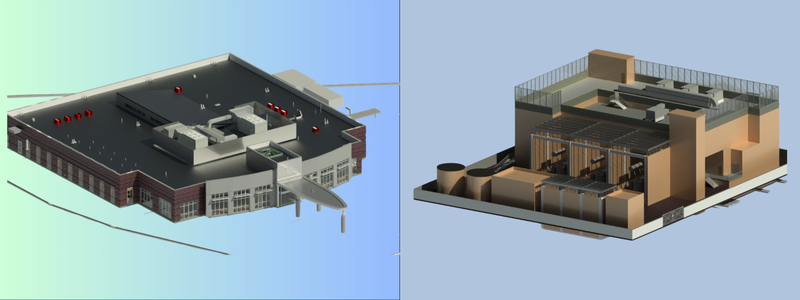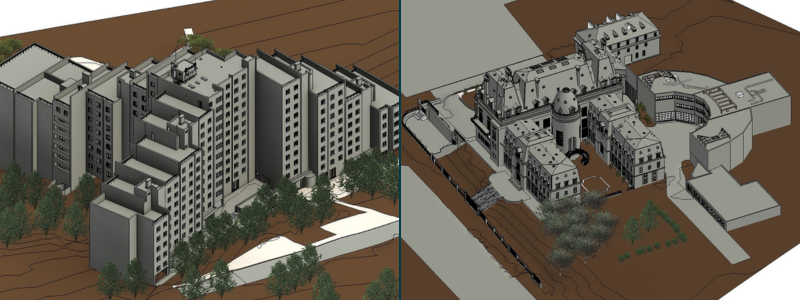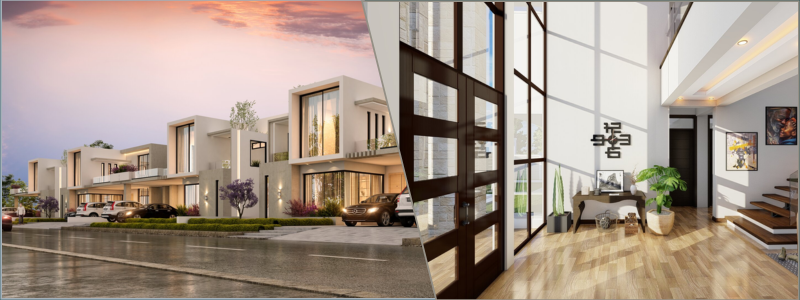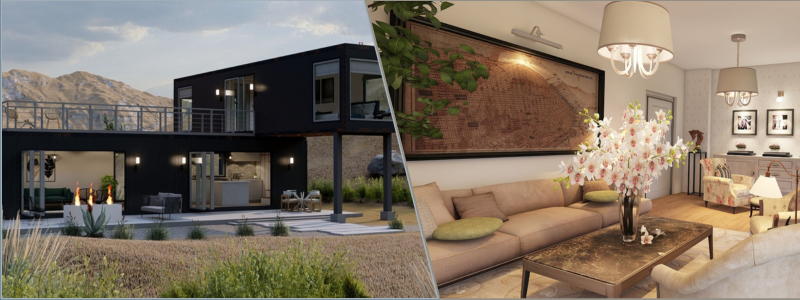
Top 50 SolidWorks Design Companies for 3D Modeling, CAD Services & Engineering in the US


3D modeling design services and CAD engineering have their giants, and when you’re talking about achieving mastery in SolidWorks design, the United States has no shortage of extraordinary companies delivering exquisite digital designs, precision-forged components, and revolutionary product solutions. But when there are hundreds of companies out there saying they’re specialists in SolidWorks, how do you distinguish the experts from the pretenders?

Well, you’re in the right place. We’ve set out on a cross-country search for the crème de la crème of the CAD world. Whether you’re a startup founder with a prototype to build yesterday or a Fortune 500 corporation shopping around for a reliable design partner, this list is your definitive guide to 3D modeling excellence. So strap in and don your digital calipers, let’s take a tour of the top 50 SolidWorks design firms in America!


🚀 Table of contents


Cad Crowd (Nationwide)

Cadcrowd

The undisputed community hub for freelance design wizards? That would be Cad Crowd. This is where companies, from nimble startups to global giants, team up with vetted SolidWorks designers and engineers. Need rapid prototyping design services? No problem. Tackling a complex industrial system? Covered.

Whether you’re designing a game-changer product or perfecting the ergonomics of your next wearable, Cad Crowd matches you with the expertise needed to turn your idea into reality. Their designers don’t simply model in 3D; they turn ideas into reality with precision and panache. If innovation is your forte, Cad Crowd is where the magic takes place, one great design at a time.

https://www.cadcrowd.com

TriMech (Nationwide)

trimech group logo

TriMech is the one teaching everyone else how to become a master. With a reputation that goes back decades, this CAD force to be reckoned with provides a whole lot more than software instruction. They provide top-level engineering, automation, and design solutions customized for a variety of industries.

From aerospace breakthroughs to common consumer items, TriMech’s staff has collaborated with clients from all sectors. Their capabilities span the country, supported by a deep bench of professionals who understand what it takes to make complex projects a reality. No surprise they are a go-to resource for business leaders driving the edges of design.

https://trimech.com

Fikst (Massachusetts)

fikst product evelopment logo

Boston’s innovation ecosystem would not be as robust as it is without top-shelf engineering companies like Fikst. Reputed for having a keen eye towards product development, they specialize in producing high-precision medical equipment and advanced lab automation systems. With SolidWorks as their mainstay tool, Fikst converts intricate concepts into working, testable prototypes meeting the highest standards.

For businesses battling FDA approval, their technical rigor and design skills are precious. Fikst produces solutions that meet strict regulatory requirements for compliance. If your next innovation must pass the toughest critics, Fikst has the expertise and ability to help you achieve your goals

https://fikst.com

StudioRed (California)

studiored logo

Out here in sunny Silicon Valley, StudioRed is creating waves by combining industrial design sophistication with hardcore mechanical engineering expertise. This isn’t your typical design company; these are the visionary creatives behind award-winning enclosures and streamlined, user-focused products that achieve a perfect harmony between function and form.

Their designs not only look great, but they feel right and function seamlessly. Marketing groups adore them because their modeling makes products come alive in a manner that sells the concept right away. Behind the scenes, SolidWorks is their top tool, driving concept to creation. With StudioRed, innovation is foundational.

https://www.studiored.com/

M3 Design (Texas)

m3 logo

Located in the eclectic city of Austin, M3 Design combines sophisticated engineering with purpose-designed products to design products that capture attention. Their skilled designers excel at taking early-stage, rough ideas and refining them into high-performance, sleek solutions. They don’t simply make products, they design experiences.

Armed with SolidWorks design services as their go-to solution, they combine precision and creativity with each design. This commitment to both function and form has led to Red Dot Awards and put their designs at the forefront in competitive markets. For customers wanting innovative results that are as great to look at as they are to perform, M3 Design delivers consistently in style, substance, and engineering mastery.

https://www.m3design.com/

Pivot International (Kansas)

pivot international logo

Global expertise blends with Midwestern hospitality at Pivot International, where innovation is complemented by ease of use. This one-stop powerhouse does it all, from product design and prototyping to large-scale manufacturing, simplifying the entire development process under one roof.

What makes them special? Their smooth marriage of SolidWorks modeling with real-world supply chain knowledge. That translates to your ideas not languishing on the drawing board, but advancing productively and cost-effectively. Whether it’s releasing a new consumer device or ramping up production on a medical device, Pivot’s seasoned team applies high-tech accuracy along with a human touch. It’s intelligent design, clever execution, and service you can actually speak with.

https://www.pivotint.com/

IPS (Integrated Product Solutions) (Illinois)

IPS logo

From CAD modeling to large-scale manufacturing design services, IPS is a trusted partner for businesses in need of reliable engineering solutions. Their staff provides accuracy and innovation at each stage, moving ideas smoothly from design through production. SolidWorks is a central part of their process, particularly in the industrial and automation markets where functionality and accuracy are crucial.

With the powerful tool, IPS develops intelligent, efficient designs that fulfill the special requirements of today’s engineering. Whether it’s enhancing a prototype or informing long-term manufacturing, IPS applies technical knowledge and pragmatism to enable companies to achieve exceptional outcomes.

https://ips.live

RELATED: A guide to electronic product design for manufacturing with PCB design firms & engineers

Intelligent Product Solutions (New York)

IPS logo 2

At IPS, the coming together of mechanical engineers, industrial designers, and software coders produces product innovation that’s as sophisticated as a Michelin-starred meal. This group doesn’t merely design, they build, intertwining technology and product engineering into smooth solutions that transform mundane experiences.

From cutting-edge medical equipment to intelligent consumer and IoT devices, IPS breaks limits with precision and imagination. Their go-to software? SolidWorks. It’s the virtual canvas where imaginations are born, evolve, and become tangible. Whether it’s enhancing lives with healthcare technology or injecting intelligence into home appliances, IPS provides engineering excellence with flair that’s almost gastronomic in its attention to detail and delicacy.

https://www.intelligentproduct.solutions/

Mindtribe (California)

Mindtribe logo

Based in San Francisco and now part of Accenture, this innovative firm has become a driving force behind many of today’s most exciting hardware startups. Their team brings bold ideas to life, working on everything from smart connected devices to complex electromechanical systems.

With a deep understanding of the product design and development services, they rely heavily on SolidWorks, one of the industry’s most trusted tools for 3D design and engineering. It’s this blend of technical acumen and innovative energy that makes them stay ahead of the times. Their work continues to build the future of hardware in both intelligent and practical ways.

Engenious Design (Kansas)

Engenious Design logo

Engenious Design is a medtech innovation specialist, but their process extends well beyond mere product development. They design solutions with a purpose: to enhance and secure human life. Each detail counts, and that’s why SolidWorks lies at the heart of their design.

From complex mechanical assemblies to tough, user-friendly enclosures, everything they do is based on precision. They even make verification-grade prototypes that are up to the strict standards of medical regulations, maintaining safety and performance from day one. Engenious Design isn’t only constructing devices, they’re defining the healthcare future with each design, prototype, and build they craft.

https://www.engeniousdesigns.com/

Hatch Duo (California)

hatchduo logo

Hatch Duo is a Bay Area design and engineering boutique with a reputation for fusing sleek industrial looks with genuine mechanical function in the real world. Their designs always turn heads at product launches, owing in great part to the firm’s expertise in SolidWorks modeling.

The software is more than just a utility to them; it’s their creative vocabulary. Though they work across a broad spectrum of industries, Hatch Duo is particularly excited about robotics and consumer electronics design services. Their creative, attention-grabbing designs show that good design is not only about aesthetics, it’s about innovation for the long haul.

https://www.hatchduo.com

Synectic Product Development (Connecticut)

synectic product development logo

Synectic is unique in the field of product design by focusing on one essential area: medical product development. With decades of practical experience, their staff has learned the accuracy and dependability the healthcare sector requires. What really distinguishes them is their flawless application of SolidWorks.

From initial concept drawings to finished injection-molded components, each aspect is meticulously crafted with this formidable CAD software. Their approach isn’t merely about design; it’s about providing life-saving functionality with assurance. For businesses in search of reliable partners in medical innovation, Synectic delivers both know-how and keen execution.

https://synectic.net/

Goddard Inc. (Massachusetts)

goddar product development logo

At Goddard, engineering doesn’t merely mean precision; it means designing products that actually function in the real world. From surgical robots to wearable health monitors, the engineers marry extensive technical knowledge with an emphasis on usability and human-factors design. Armed with powerful software such as SolidWorks, they attack challenging mechanical problems without compromising elegance or efficiency.

Each product is engineered with a purpose, so it will work perfectly in all-day conditions while also being sleek and stylish. The outcome? Products that not only pass rigorous engineering requirements but also make a difference in people’s lives. That’s the sweet spot where innovation, functionality, and design meet in perfect harmony.

https://www.goddardtech.com

Blue Dolphin Engineering (California)

blue dolphin logo

Blue Dolphin is a trusted design for manufacturability services for mid-sized businesses and fast-moving startups who want to get their product concepts off the ground. This company specializes in designing functional, manufacturable designs that function in the real world, not only on paper. Their strengths in mechanical design, stress analysis, and simulation enable customers to transition from concept to production with confidence.

Each detail is meticulously engineered with SolidWorks at the core of the process. Whether you’re perfecting a mature prototype or creating something from the ground up, Blue Dolphin brings the type of intelligent, solid engineering that keeps the momentum going. No surprise they’ve established such a solid reputation.

https://bluedolphinengineering.com/

Simplexity Product Development (Washington & California)

Simplexity Product Development logo

Simplexity has earned a loyal following among those who value electromechanical genius. Whether it’s crafting sophisticated automation systems, life-saving medical equipment, or stylish consumer electronics, this team lives for unscrambling tough engineering brain teasers. Their specialty? Anything that moves, blinks, or whirs. From concept to manufacturing, they infuse motion and intelligence into products that people touch every day.

What holds it all together is their go-to design software: SolidWorks. Similar to a Swiss Army knife in the hands of masters, SolidWorks allows its engineers to conceive, hone, and fine-tune each mechanism with accuracy. At Simplexity, innovation and motion come together, and the outcome is far from the norm.

https://www.simplexitypd.com/

Zewski Corporation (Michigan)

Zewski Corporation logo

Zewski Corp has been a well-respected name in the automotive and mobility markets for many years, with a reputation for designing high-performance components and sophisticated mechanical assemblies. Their effort is more than mere fabrication; it includes precision, durability, and defying limits on what cars can do.

From SolidWorks’ early days, Zewski Corp saw its potential and integrated it into the very fabric of their design process. They’ve utilized the software over the years to turn innovative concepts into reality, maximize performance, and maximize production. That commitment to quality and consistency, supported by the strength of SolidWorks, is what keeps their reputation as a design engineering firm strong.

https://www.zewskicorp.com/

SGW Designworks (Idaho)

sgw logo

SGW Designworks is the type of flexible team that feeds off a challenge, particularly when it is designing rugged, outdoors-ready products. For the military or the industrial world, they’ve proven themselves capable of offering rugged solutions, garnering them serious credibility in both arenas. Their secret sauce? SolidWorks.

This high-powered program is the key to how they rapidly prototype and iterate through designs, ensuring all is constructed to survive the real world. From conception to field testing, their system is streamlined, accurate, and reliable. When durability and speed are most critical, SGW Designworks knows how to make it happen—and make it happen right.

https://www.sgwdesignworks.com

Bresslergroup (Pennsylvania)

Bresslergroup logo

An East Coast design institution, Bresslergroup, where bold innovation and serious engineering come together. Their product design experts aren’t just doodling concepts; they’re developing product breakthroughs and then getting down to business to build them. From stylish smart home gadgets to cutting-edge biometric scanners, Bresslergroup’s portfolio is filled with contemporary solutions that feel ahead of the game by one step.

It begins with SolidWorks, the CAD software that gives their ideas life with accuracy. The team’s capacity to transition effortlessly from concept to prototype has established them as a go-to name for the industrial design community. Where design must do more, Bresslergroup is already doing it.

https://www.delve.com

D&K Engineering (California)

DK Engineering logo

This San Diego giant excels in the business of full-stack product development, turning groundbreaking ideas into reality in the areas of healthcare, printing, and consumer markets. With dozens of successful high-tech product launches to their credit, the team has established a reputation for resolving complicated issues with precision and creativity.

The firm’s mechanical engineering experts rely predominantly on SolidWorks, employing it for everything from initial feasibility studies to comprehensive DFM (design for manufacturing) processes. Clients engage their hands-on expertise and technical know-how to convert concepts into production-ready designs. Whether it’s developing prototypes or perfecting designs for high-volume manufacturing, this team delivers at each step.

https://www.dkengineering.com

RELATED: Best 50+ product design companies & new prototype development services firms in the US

Product Creation Studio (Washington)

product creation studio logo

Product Creation Studio is a Seattle-based design company renowned for turning creative ideas into concrete, high-performance products. Focused on medtech and wellness devices, this team doesn’t merely draw ideas out; they produce reality. With razor-sharp attention to functionality and user interface, they design every product to feel intuitive and work faultlessly.

Their go-to software? SolidWorks. It’s the virtual backbone supporting their precision-based process, allowing them to craft complex mechanisms and intuitive user interfaces. From rough sketches to fully formed manufacturing-ready models, Product Creation Studio takes the leap between creative vision and mechanical realization, setting the bar high for innovation in healthcare and wellness product design.

https://www.productcreationstudio.com

BlackHägen Design (Florida)

Blackhagen design logo

BlackHägen Design is unique within the medtech and medical device services due to its intense emphasis on human factors and usability engineering. Each product they develop is not only functional but also designed specifically for actual humans with actual needs. Their staff is expert at creating devices that are intuitive, comfortable, and safe to operate.

Behind the scenes, they depend on accurate SolidWorks workflows that couple technical performance with ergonomic design. Whether it’s ensuring a device fits naturally in the human hand or meeting rigorous FDA requirements, BlackHägen’s approach is as practical as it is innovative. It’s thoughtful engineering with the end-user always in mind.

https://www.blackhagendesign.com

Nectar Product Development (California)

Nectar Product Development logo

Nectar is where engineering precision meets that laid-back Southern California vibe, and the result is nothing short of exceptional. This high-energy design house has built a portfolio reputation for designing award-winning products that balance innovation and practicality flawlessly.

Whether collaborating with nimble startups or iconic global brands, Nectar produces solutions based on serious SolidWorks know-how. From complex surfacing to solid mechanical engineering and manufacturability-driven design (DFM), the staff knows how to make ideas a reality. It’s not only about making things look great, it’s about making them function gorgeously too, with that unmistakable SoCal creativity zing.

https://nectarpd.com/

Mako Design + Invent (Texas)

Mako Design + Invent logo

Ideal for small businesses and inventors, Mako is your one-stop destination for bringing big ideas into tangible, shelf-life products. Napkin sketch of an idea? Don’t worry. Mako’s skilled CAD design team understands just how to bring raw ideas into polished, production-ready models. They use expert software such as SolidWorks to bring your ideas to reality, with all the details ready to go into production.

From your initial brainstorming through final prototype design engineering services, Mako takes you through every step of product development. It’s an effortless process designed for innovators who wish to watch their ideas go from spark to store without the customary stress or confusion.

https://www.makodesign.com/

Concept Design Group (Colorado)

Concept Design Group logo

For ruggedized industrial equipment and streamlined, heavy-duty mechanical enclosures, Concept Design Group is a premier designer in the Rockies. This group understands how to design an idea and move it all the way through to production so that it is effortless for their customers. With the use of SolidWorks, they create both aesthetic and functional accuracy.

If it’s a rugged tool designed for durability in harsh conditions or a crisp enclosure crafted for technical functionality, their products deliver. Concept Design Group combines technical expertise with a practical approach, ensuring that all designs meet the practical needs of today’s industries.

https://cdgrco.com

Evolve Design Solutions (Ohio)

Evolve Design Solutions logo

Hidden away but talent-packed, this compact design house packs more than a punch in consumer and industrial product design. Its strength is in marrying creative thinking with technical expertise, particularly in plastics and ergonomic casing. Whatever it is, be it a compact handheld gadget or a sophisticated mechanical device, every aspect is carefully designed.

They live by ingenious mechanical solutions that not only are aesthetically pleasing but also work perfectly. They use the whole process on SolidWorks, enabling them to make accurate 3D designs and quick iterations. With years of industry experience, they provide intelligent, manufacturable designs that meet and then surpass expectations without the expense of a big company.

https://www.evolve-designsolutions.com/

Flomio Inc. (Florida)

flomio logo

Flomio exists to make technology smarter and more seamless. As IoT and RFID-based product experts, they provide end-to-end solutions that bridge the physical and digital worlds. From simplifying access control to asset tracking, their innovations make interactions more efficient every day. One important aspect of their workflow? SolidWorks.

This mighty design software enables Flomio to transform complex tech into slim, portable devices that can fit comfortably in your pocket. It’s not just one service—it’s style, functionality, and user experience. Fusing sophisticated design tools with intelligent technology, Flomio develops products that are as easy to use as they are stunning.

https://flomio.com

Realize Design (Utah)

realize structural engineering logo

This agile team specializes in creating sharp, cutting-edge products, particularly for wearables and electronics. Their product is a mesh of creativity and technicality, and it is evident in each detail they deliver. With the renewed enthusiasm of a startup, they approach every project with passion and flexibility, and this makes them popular among businesses that want innovative solutions.

SolidWorks is their trusty tool for taking ideas and making them workable designs, allowing them to glide smoothly from concept to confirmation. Their method is quick, focused, and driven by a passion for bleeding-edge technology. It is this combination of innovation and enthusiasm that differentiates them in the product development space.

https://www.realize.design

Arcus Technology (California)

Arcus Technology logo

Arcus Technology excels in the realm of motion control systems and automation due to its masterful application of SolidWorks to model precision linear actuators and robotic parts. Their engineers don’t merely design, they hand-craft every component with painstaking attention to detail. This level of attention to detail guarantees every system operates dependably even under the most challenging conditions.

Known for their reliable solutions, Arcus’ SolidWorks engineers always provide high-performance motion control components. Through concept to completion, their utilization of advanced CAD software such as SolidWorks ensures consistency, accuracy, and efficiency. It’s this commitment that makes Arcus a name of confidence in automation.

https://arcus-technology.com/

Boyce Design & Contracting (Georgia)

boyce design contracting logo

Even the most opulent environments need precision, and that’s where SolidWorks is needed. Boyce is not a design company; they marry architecture with product design to create bespoke installations that stretch the limits of creativity and practicality. From complex lighting systems to bespoke moving walls or concealed mechanisms, their installations require the level of detail only high-level modeling can provide.

With ultra-high-end residences, each piece has to fit perfectly both visually and mechanically. SolidWorks allows Boyce to visualize and simulate complex systems long before construction begins, ensuring nothing is left to chance. Because in luxury design, perfection isn’t optional, it’s expected.

https://www.boycedesign.com/

Crossfire Group Design Engineering (Michigan)

Crossfire Group Design Engineering logo

Crossfire is a trusted design engineering team rooted in the heart of the Midwest, where automotive and manufacturing innovation thrive. With an emphasis on mechanical assemblies, tooling, and part development, they bring serious expertise to each project. Their engineers work exclusively in SolidWorks, providing precision and quick turnaround that perfectly match the fast-paced needs of today’s industry.

From creating intricate mechanical systems to tweaking a single component, Crossfire provides practical, effective solutions supported by extensive experience. SolidWorks engineering firms throughout the region rely on them due to their dependability, technical knowledge, and capability to translate ideas into high-performance mechanical realities.

https://www.xfiregroup.com/

RELATED: 10 design principles for product development & industrial design services teams

Sprout Studios (Massachusetts)

sprout logo

Sprout is a branding and product design company that’s famous for its clean style and commitment to user experience. Their team has the ability to make drastic industrial ideas turn into real-world products, combining creativity with accuracy. A central component of that process is SolidWorks, the robust CAD software they trust to turn ideas into production-ready focus.

With SolidWorks, they refine each curve and angle, ensuring the end product isn’t only stunning but also functional and production-ready. Sprout’s methodology combines innovation with engineering, delivering a client product that’s sleek-looking, flows smoothly, and bests the competition in the marketplace both for form and function.

https://sprout.cc/

Forma Medical Device Design (California)

forma medical logo

Forma is a surgical instrument and medical device specialist, and they don’t merely design equipment; each product is beautifully, simply designed to perform perfectly for both patients and clinicians. From the ergonomic handle on an instrument to the satisfying snap of a well-designed latch, every detail counts.

Behind the scenes, they model every curve using SolidWorks with great precision to ensure that the final product does exactly what it is supposed to do in actual medical use. Forma’s strategy combines extensive industry expertise with intelligent design and technical expertise to deliver instruments that not only work perfectly but feel good in the hands of those who depend on them.

https://www.formamedical.com/

Left Field Labs (California)

left field labs logo

Left Field Labs is where wild ideas meet real-world engineering. They blur the lines between design, interaction, and hardware to create experiences that feel like they’re from the future. Working with some of the biggest names in tech, this inventive team doesn’t shy away from pushing limits for open innovation services. Their projects often look experimental, but they’re grounded in solid feasibility.

That’s where SolidWorks comes in. The company employs it to test drive intelligent mechanisms and make sure designs are sound before they reach the physical realm. Whether it’s an ambitious new interface or an interactive exhibit, Left Field Labs brings imagination into reality with accuracy and panache.

https://www.leftfieldlabs.com

Kickr Design (Georgia)

kickr design logo

This Atlanta-based company is all about transforming audacious ideas into products that exist in the physical world. Whether consumer electronics, stylish car accessories, or the newest wearables, they’re heavily invested right from the beginning. With their strong proficiency in SolidWorks, they translate early-stage ideas into reality with precision and ingenuity.

They love brainstorming time—when ideas are unpolished and options are limitless. Working with them means receiving a collaborator who’s got innovation ingrained in them and isn’t hesitant to venture into the unknown. For whoever wants to build the next big thing, this team combines vision and technical muscle.

https://www.kickrdesign.com/

Speck Design (California)

Speck Design logo

Where design and technology meet, Speck is reimagining innovation into shape. This innovative company easily converges product development, brand narrative, and digital experience into memorable, user-driven solutions. From stylish AR glasses to advanced IoT hubs, their portfolio is a testament—every product meticulously designed with intent and exactness. Speck’s go-to? SolidWorks design engineers.

The robust CAD program is the spark for their imagination and the key that makes intricate concepts come together with breathtaking precision. It’s this command over form and function that enables them to release award-winning products that not only work perfectly but make a lasting impact in the rapidly moving tech world today.

https://www.speckdesign.com

Motivo Engineering (California)

motivo logo

Motivo Engineering is not just any design firm; it’s where performance and raw engineering artistry collide. For motorsports, aerospace, and other high-performance markets, Motivo takes innovative ideas and converts them into functional reality. With SolidWorks, they turn radical mechanical concepts into precision-crafted machines.

Their designs aren’t merely quick, they’re intelligent, efficient, and fanatically engineered right down to the last detail. From sketchy ideas on paper to real-world prototypes, Motivo’s team takes the limits of what’s possible and shatters them. It’s innovation at full speed, fueled by a love of speed, technology, and translating the most outrageous ideas into high-performance reality. Buckle up, business is afoot.

https://www.motivo.com/

Priority Designs (Ohio)

Priority Designs

This best-in-class product development company has a stellar resume, having developed everything from revolutionary Nike equipment to precision surgical tools. Their experience cuts across industries, and it reflects in the richness of their capabilities. What truly differentiates them is their vast library of SolidWorks—a repository based on decades of design victories and engineering triumphs.

It’s not a set of files; it’s a honed toolkit forged over years of cracking tough design problems. Whether it’s innovation in sportswear or life-critical medical solutions, this group approaches each project with both imagination and technical expertise. That’s the magic of genuine, tried experience.

https://www.prioritydesigns.com/

Design Central (Ohio)

design central logo

Design Central offers a welcome combination of creative flair and precision. Their cross-disciplinary team effortlessly fuses industrial design services with high-quality engineering to create outcomes that are both aesthetically pleasing and functionally oriented. From stylish water filtration systems to top-notch bicycles and intricate industrial systems, they’ve done it all with panache and precision.

What truly distinguishes them, however, is their steady adherence to using SolidWorks, their favorite platform for modeling, prototyping, and perfecting every aspect. It’s not simply about sketching out nice drawings; it’s about bringing tangible solutions to life that function flawlessly. At Design Central, form and function are synonymous every time.

https://designcentral.com

LUNAR (California)

As part of the McKinsey Design family, LUNAR has established itself as an industrial design heavyweight with a solid reputation. The team is renowned for combining creativity and precision to address everything from cutting-edge tech wearables to stylish electric scooters. Their approach is fueled by continuous prototyping and iteration, utilizing SolidWorks to create each idea with precise attention to detail.

LUNAR’s dedication to innovation and user experience has established the firm as a go-to collaborator for organizations seeking to extend the limits of product design. From a high-tech gadget to an innovative mobility solution, LUNAR’s work continues to break new ground in product development.

Catalyst Product Development Group (Indiana)

catalyst product development group logo

Seeking a team that will bring your concept from sketch to shelf? This full-service company is a leader in engineering, prototyping engineering services, and testing, all of which are conducted in-house. They have expertise in a broad scope of industries, including consumer electronics, healthcare devices, and industrial rugged solutions. From sharpening a concept to mass production, they have the equipment and know-how to get the job done.

At the center of their workflow is SolidWorks, a reliable platform that delivers precision and efficiency in each step of development. It’s not designing awesome products, it’s delivering practical results clients can depend on. At the center of their workflow is SolidWorks, a reliable platform that delivers precision and efficiency in each step of development. It’s not designing awesome products, it’s delivering practical results clients can depend on.

https://catalystpdg.com/

Helix Design (New Hampshire)

helix design logo

An excellent option for inventors and startups, Helix Design offers agility and creativity. This team is known for being nimble and highly responsive, making them ideal partners for early-stage product development. Their expertise with SolidWorks allows for rapid iterations, helping ideas evolve from rough concepts into refined, manufacturable products in record time.

Whether you’re prototyping a new device or refining a whether you’re prototyping a new device or refining a breakthrough innovation, Helix Design keeps the process moving smoothly. Their teamwork approach and technical accuracy make an actual impact when every little thing matters. For startups willing to go at high speed, Helix Design provides the thrust to keep up innovation, Helix Design keeps the process moving smoothly. Their teamwork approach and technical accuracy make an actual impact when every little thing matters. For startups willing to go at high speed, Helix Design provides the thrust to keep up.

https://helixdesign.com/

Gossamer Design (California)

gossamer design logo

This small design house has perfected the art of balancing sustainability with sophistication. Each product they produce is not just aesthetically pleasing but also carefully designed to reduce the environment’s footprint. Beneath the smooth lines and elegant curves is a universe of shining technical precision.

With SolidWorks, their engineering design experts create the underlying complexity that gives birth to every idea. From the inside out, they are clever and chic, evidence that eco-friendly solutions can be extravagant as well. It’s not merely a matter of appearance; it’s a matter of doing good, while still upholding a level of craftsmanship that’s simply a rarity in contemporary design.

https://gossameradmindesign.com/

Datum3D (Minnesota)

datum3d design logo

When design teams are confronted with sophisticated mechanical challenges, Datum3D intervenes with heavy-duty engineering clout. Their capabilities don’t merely enhance value; they revolutionize the entire development process. They’re particularly proficient in SolidWorks simulation, predicting how designs will behave under actual conditions before anything is even made.

That kind of understanding saves time, money, and a great deal of frustration. Datum3D is also manufacturability-minded. They don’t simply design models that look great; rather, they make sure the designs can be built effectively. With Datum3D, it’s not about ideas; it’s about transforming innovative ideas into productive, production-qualified solutions that perform from the very first day.

https://www.datum3d.com/

PDG (Product Development Group) (Pennsylvania)

product development group beyond expectations logo

PDG has established itself as a go-to partner for reliable engineering support in the medical, electronics, and consumer product markets. Businesses come to them when they require trustworthy, effective solutions that marry creativity with technical skill. One of the highlights of PDG’s strengths is its SolidWorks group, particularly plastics and mechanism design.

Whether they are creating detailed assemblies or optimizing fine components, their engineers have a knack for delivering precision and performance. Customers enjoy how smoothly PDG works with internal teams, speeding up development cycles without sacrificing quality. Their consistent record has won them long-term trust in several industries.

https://www.performdev.com/

RELATED: Common structural design mistakes to avoid when hiring engineering design firms

SKG Engineering (Texas)

SKG provides you with the freedom to select just what you want, whether that’s complete turnkey product development or à la carte engineering services customized to your project. Not only is their team skilled, but they’re SolidWorks-certified engineers who breathe and live complex assemblies. From initial concept design services through ultimate production files, they’re dedicated to ensuring your designs aren’t only great-looking but also completely manufacturable.

Whether you’re beginning with a blank slate or simply require assistance with one piece of the puzzle, SKG’s engineers come to the rescue with the proper know-how. Their attention to detail and precision result in fewer rounds of revision, more streamlined processes, and a product that’s ready to launch.

Alchemy Product Development (Colorado)

Located in the lively town of Boulder, Alchemy is a design company that excels at taking intricate product concepts and turning them into concise, functional realities. They’ve developed an impressive reputation as SolidWorks professionals, leveraging the tool to infuse every project with accuracy and ingenuity.

But what makes them truly unique is their passion for sustainability and long-term value. Every product they create is designed with the future in mind, reducing waste and increasing durability. This considerate process doesn’t just help the environment; it also creates products that are timeless. For businesses looking for clarity, expertise, and sustainable design, Alchemy is an intelligent partner.

https://www.alchemy.cloud

Evolve Collaborative (Oregon)

evolve collaborative logo

They’re not only designers or storytellers, they’re also experience engineers. At Evolve Collaborative, creativity and precision meet in a manner that few design studios are capable of. Their experts create with SolidWorks, a robust 3D CAD design solution that enables them to craft engaging, haptic product experiences.

It’s not simply about how something appears; it’s about how it feels, works, and engages people. Whether designing the next consumer technology to drive market dominance or a streamlined medical device, Evolve Collaborative marries form and function with deep thoughtfulness. Each project is a process from idea to existence, and they design that process with intention.

https://www.evolve.agency/

Synapse Product Development (Washington)

synapse-e

Synapse, a cutting-edge company owned by Capgemini, is deeply immersed in the world of connected hardware innovation. Their work revolves around pushing technology to new frontiers, blending creativity with advanced engineering. SolidWorks plays a crucial role in this journey, serving as a powerful design tool that allows Synapse to explore bold ideas in both form and function.

Through its use of SolidWorks, the team is able to prototype, iterate, and optimize their hardware designs so that they’re not just good-looking but extremely functional. This partnership of innovative ideation and powerful software enables Synapse to produce products that really push the boundaries of what’s possible in the connected hardware world.

https://www.synapse.com/

Breadboard Product Development (California)

breadboard product development logo

Breadboard’s engineers and designers are experts at electronics-intensive products with limited space and where precision is paramount. With SolidWorks, they confront the most challenging tasks, such as combining many small parts to form tiny assemblies through SolidWorks assembly design services. The software allows them to visualize and perfect all the details, making mechanical tolerances precise and fitting just right.

Such delicate designs are handled not only by technical skills but also by creative problem-solving capabilities. By utilizing SolidWorks, Breadboard’s team effectively works within these limitations, delivering trustworthy and high-quality products that meet stringent requirements. Their methodology guarantees smooth integration of electronic and mechanical elements, finally providing creative solutions in small form factors.

https://www.linkedin.com/company/breadboard-software

Zulu Product Design (California)

Zulu is a strategic design powerhouse with a keen eye for strategy, famous for creating elegant and ingenious design solutions. Their designs transcend common engineering as they turn SolidWorks modeling into a work of art. This philosophy beams brightly in wearable technology, lifestyle products, and consumer electronics, where style blends with function.

Zulu’s creations are not merely a pretty face; they are also innovative and functional, expanding the limits of what can be done. By bringing technical expertise and an artist’s eye together, Zulu continues to create products that leap out of a very competitive marketplace, demonstrating that intelligent design can be as lovely as it is useful.

https://www.zulustack.co

RELATED: How to improve product development for your company with engineering firms & design consultants

In summary

And there you have it, the best 50 SolidWorks design firms in the US. Whether you require genius prototyping, genial mechanical engineering, or a suite-of-all-trades product launch partner, one of these design teams is probably your ideal fit.

If you’re really serious about design, it’s time to go pro with SolidWorks and a team that understands how to make it sing. Cad Crowd has worked with hundreds of certified SolidWorks professionals, companies, and clients across a multitude of products, serving as the leading platform to find exceptional engineers. Request a free quote today.

author avatar

MacKenzie Brown is the founder and CEO of Cad Crowd. With over 18 years of experience in launching and scaling platforms specializing in CAD services, product design, manufacturing, hardware, and software development, MacKenzie is a recognized authority in the engineering industry. Under his leadership, Cad Crowd serves esteemed clients like NASA, JPL, the U.S. Navy, and Fortune 500 companies, empowering innovators with access to high-quality design and engineering talent.

Connect with me: LinkedInXCad Crowd

Drafting vs. Design of Interior Projects: What’s the Difference for CAD Design Companies?


The distinction between drafting and design in interior projects, from the point of view of CAD design companies from industry powerhouse Cad Crowd, is an important one. It may sound technical, but it is really the foundation of many beautiful interiors you see in magazines, on Instagram, or even in your daily life. Anybody interested in home improvement, students with an eye for design who aspire to work in the field, or those who work in construction or real estate would benefit from knowing this distinction. It’s like having the magic formula for turning a concept into a real, livable space.


🚀 Table of contents


Picture this: The blueprint of a dream

Suppose you’re finally going to redecorate your living room. You want it to be warm but modern—tons of natural light streaming in, but still some space for your funky vintage sofa. You sit down with the experts, and lo and behold, you start to see the terms “drafting” and “design” start to surface. Are they interchangeable? Spoiler alert: nope!

Design is more about the aesthetic vision—the mood, colors, furniture appearance, and how they all tie together. It’s that overall image that makes your living room feel like you. Architectural drafting services, on the other hand, are the technical side. It’s creating the precise blueprints and measurements that contractors use to actually construct the design.

Imagine design as the dream and drafting as the map. They both bring your visions to reality, making sure your living room not only looks gorgeous but is also perfectly functional. Nice, huh?

RELATED: Enhancing house renovations with 3D rendering services & visualization design firms

The creative spark: What interior design really means

Interior design is an outlet for purposeful creativity. It creates spaces that are both aesthetically pleasing and emotionally engaging, going beyond just choosing trendy furniture and bright colors. Lighting, textures, and the way people move through spaces are all aspects of spatial psychology that designers investigate. While meeting functional requirements, each option reveals something about the resident’s personality. Drawings, mood boards, material choices, and placement decisions are all interwoven throughout the process. Important questions like “What kind of vibe do you think should prevail here?” arise in every project. Is there a way this area could inspire regular activities or serve as a haven? When done well, design can elevate even the most mundane spaces into something special.

In CAD design companies, the process of design is typically computerized—designers use computer programs for 3D modeling design services, and rendering software to visualize things in progress before anything is built. This allows clients to visualize the space, try things out, and understand how it will all function. Design is pliable, iterative, and requires enormous understanding of aesthetics and usability.

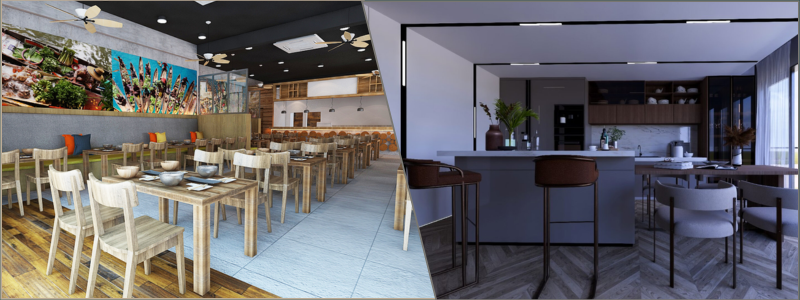
3d interior design examples

The backbone of precision: What drafting actually is

If design is the creative brainchild, drafting is the precise hand that converts those ideas into technical facts. Drafting is about getting down to specifics, the “how” of the “what.” It’s the meticulous art of creating technical drawings, floor plans, elevations, and sections that contractors, engineers, and builders use to construct the design.

Draftsmen translate the artistic ideas and turn them into standardized, detailed blueprints. These include accurate measurements, material requirements, electrical layout, plumbing, HVAC details, and structural features. Accurate drafting is required, without which excellent design ideas would be mere pretty pictures with no real-world application.

CAD design companies have drafting as a highly technical skill, most often done on specialized CAD software that instructs each line to be to scale and every detail to be easily inspectable and readily modifiable. It’s the language architects, interior design experts, and construction teams use to speak and build without costly errors or an educated guess.

The dance between design and drafting: Why both matter

Think of design and drafting as the yin and yang of interior work. One without the other? Trouble. Design without drafting is no way to create the space. Drafting without design? Yes, you can have a perfect technical drawing, but with no vision or life behind it.

In a CAD design company, these two disciplines often overlap, sometimes handled by different specialists and sometimes by hybrid experts who are familiar with both. The design stage starts the project, creating the overall concept and ambiance, and drafting follows, creating the blueprints to build it properly.

For instance, a designer might see a stunning curved wall or a floating staircase, but the drafter is the one who does the calculations for the exact radius, the support structure, and the materials needed to construct it to be safe and feasible.

Why this matters for CAD design companies

Things start to heat up for CAD design firms at that point. By bridging the gap between imaginative design and meticulous construction, these companies serve as the Swiss army knives of interior design firms. How these businesses handle teams, workflow, and software expenditure is determined by the line that separates drafting from design.

If you want your interior design project to be a success, you need drafters and designers who can communicate effectively. A top-tier CAD firm knows this. Drafters need designers’ clear design intent to avoid costly redesigns or confusion, and designers rely on drafters to accurately and meticulously bring their vision into the computer world.

This is the reason why integrated workflows are used by most CAD companies. Designers at the beginning of the project create initial 3D models and conceptual sketches. Drafters then enter to create detailed sketches with layers of technical data such as lighting circuits or HVAC ducts, typically in CAD programs like AutoCAD, Revit, or ArchiCAD. This collaboration shortens approval procedures for clients and contractors and reduces errors during construction.

RELATED: 6 types of residential design & CAD services for companies

Real-world example: The kitchen remodel

Let’s cut to the chase. You want to redo your kitchen, the space where form and function meet every day. Your interior designer designs the vision plan: a sleek, open-plan kitchen with an island, hidden appliances, and ambient lighting. They use 3D rendering services to show you how quartz countertops will sparkle under LED strips, where the dining nook will soak up morning sun, and how the color scheme is cohesive.

After you shout, “Yes, this is it!” the drafting team gets to work. They draw up accurate drawings with correct cabinet measurements, plumbing layouts for the sink and dishwasher, electrical outlets for your smart devices, and range hood ventilation ducts. They do all they can to leave the load-bearing walls in place and all materials to local building codes.

With the drafting requirements, the contractors know exactly what to build and how, with no surprises or costly mistakes. Your ideal kitchen becomes a reality, not just a pleasant drawing.

The skills behind the scenes: Designers vs. drafters

The drafter and designer skill sets intersect but vary. Interior designers will usually learn subjects like human factors, materials science, space planning, and color theory. Interior designers need creativity, good communication skills, and good insight into the psychology of clients.

Drafters are technically accurate, however. They become proficient in using CAD software, know about building codes, and have a keen eye for measurements and structure. They must work exceedingly carefully and typically have to work with engineers, architects, and contractors.

Interestingly, with the newest software applications, the divide between drafting and design is often blurring. Some architectural design experts accomplish both, especially on small projects or businesses, using CAD tools built into one package so that they can draft and design simultaneously. However, for larger, more complex projects, experts are still needed to maintain quality.

The tech evolution: CAD’s role in blending drafting and design

CAD technology is the behind-the-scenes hero that designers and drafters both sing hymns to. It has transformed interior projects by allowing real-time collaboration, error checking, and immersive visualization. Designers apply CAD to test forms, materials, and lighting in 3D space. They can change finishes or furniture instantly and immediately see the effect. Drafters utilize CAD to create precise, standardized documentation that is simple to share and update.

The leading CAD design companies invest in high-powered software and highly educated staff capable of easily switching between design creativity and drafting precision. These companies often include BIM tools that integrate design, drafting, and engineering data into a single coordinated digital model. This integration allows the identification of clashes, like a pipe through a structural beam, before construction.

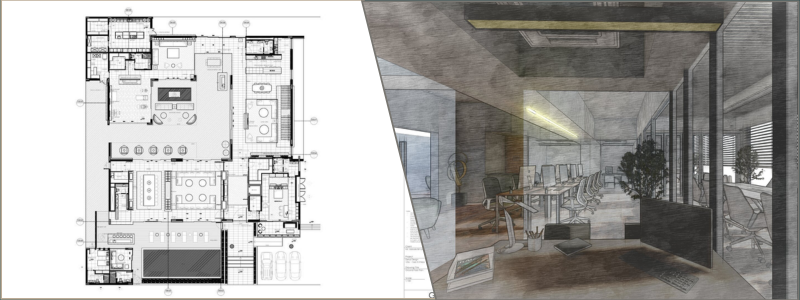
3d floor plan drafting and interior office rendering

RELATED: How to determine the quality of architectural 3D renderings with design services companies firms

Why clients should care about the difference

As a client, having the difference between drafting and design services provides you with the ability to pose more knowledgeable questions and choose the right team for your project. If you only focus on design, you might fall in love with something that’s unbuildable or out of your price range. If you’re only producing drafting, you might be left with a technically sound plan that doesn’t quite sit right or inspire you.

A successful CAD design company will take you through both. They’ll take your concepts, build on them with professional design expertise, and then back those concepts up with precise drafting that can be built on budget and on time.

Wrapping it up: The ideal tag team

Therefore, drafting versus design isn’t a showdown. It’s a tag team. Just as peanut butter and jelly, Batman and Robin, or coffee and cream are the indispensable ingredients to a successful interior project, design supplies the soul, the vision, the “wow” factor, while drafting brings the brain, the framework, the “how” factor. Combined, especially in the hands of skilled CAD design companies from Cad Crowd, they transform empty walls into spaces you love living, working, and playing.

Cad Crowd is here to help!

Ready to transform your space from dream to reality? Here at Cad Crowd, we understand that great interior projects need both creative vision and precise execution. Our experts combine stunning design concepts with technical drafting expertise. Whether you’re reimagining your living room or planning a complete kitchen remodel, I’ll guide you through every step from initial 3D visualization to construction-ready blueprints. Let’s work together to create a space that’s not only beautiful but also perfectly functional and built to last. Don’t wait for tomorrow! Call us now for your free quote!

author avatar

MacKenzie Brown is the founder and CEO of Cad Crowd. With over 18 years of experience in launching and scaling platforms specializing in CAD services, product design, manufacturing, hardware, and software development, MacKenzie is a recognized authority in the engineering industry. Under his leadership, Cad Crowd serves esteemed clients like NASA, JPL, the U.S. Navy, and Fortune 500 companies, empowering innovators with access to high-quality design and engineering talent.

Connect with me: LinkedInXCad Crowd

The Evolution of Architectural Design with CAD Software & Design Service Companies


It began with a pointed pencil, a T-square, and thousands of feet of tracing paper. Architectural design services were a painstaking, agonizingly slow waltz of accuracy and patience, where each line was precious, each erasure a small broken heart.

Cut to the present day, and it’s computer model renderings, 3D tours that transport, and collaboration sites such as Cad Crowd that unite teams on opposite sides of the globe. What did it lead to? Computer-Aided Design and the companies that established enterprises at the edge of expanding their boundaries.

Let us map the history of design in architecture, not of the software application itself, but of the end products and outputs it has made possible. From blueprints, which took weeks to come up with exactly, through to complete visualizations of skyscrapers, eco-villages, and contemporary houses, the process has been nothing short of revolutionary.


🚀 Table of contents


From sketches to schematics: The rise of computer-aided drafting

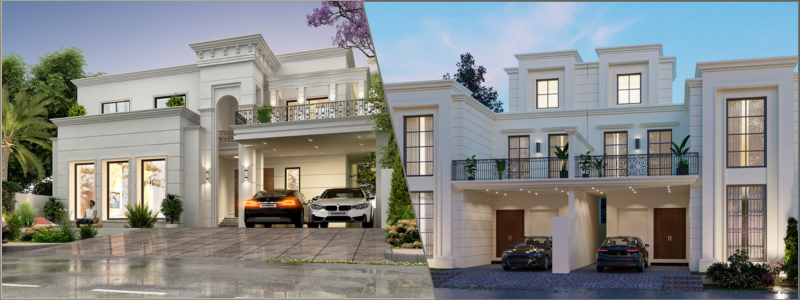
3d architectural cad design examples

RELATED: Drafting vs. design of interior projects: What’s the difference for CAD design companies?

When Frank Lloyd Wright dreamed of houses melting away into the landscape, he did so on paper by hand to paper, all within ranges of paper mountains and a set of drawing tools. It was a painstaking, very human labor-of-love process. Architectural drawing services in those days were nearly as much about patience as imagination. Reversals were a labor of love, and labor they were. Putting a reversal into effect meant re-drawing the whole thing by hand, often under the pressure of time.

And then came the revolution.

With the onset of the digital era, Computer-Aided Design (CAD) swept into the studio in the 1980s and ’90s unobtrusively. At first, it was simply faster drawing. But eventually, it did more. The architect found that they could experiment, distort, and retouch without trashing it all. A mistake no longer equated to discarding hours’ worth of work; it equated to a mountain of keystrokes.

The revolution not only made work faster; it changed the way businesses communicated. 2D drafting became a stand-alone service, and architects and freelancers sold computer drafting as an outsourced service. No longer would engineers and developers need to do it all in-house; they could outsource the technical heavy lifting and deal with the big picture, such as site planning, design, and client specifications.

After CAD design services, the age of accuracy arrived. Computer graphics were merely edited, resized, and passed back and forth among groups. Design left the drafting table and went to the cloud. What used to be a solitary pencil sketch is now group work, and architecture has never looked back.

Enter 3D modeling: CAD opens a new dimension

When CAD became three-dimensional, the world overnight, in a virtual way, became a different place. Architectural designs were no longer two-dimensional shapes all of a sudden anymore. They were models now, something that you could rotate, walk around, and cut in half.

3D pictures of anything from a Dubai city plaza to a spare kitchen in a Scandinavian mansion were made by design house companies. It was not rough digital sculpture; it was painted with precision. Every railing, every windowsill, every rooftop balcony was detailed.

Architects loved it. Clients, even more so. You didn’t have to wrestle with a floor plan and imagine the room. You could imagine. You could feel. And that process of perception, that ability to see a design before one single brick was laid, was a selling point for marketing in and of itself.

Products grew from simple 2D drawings to give you the following:

In a snap, a villa in Bali appeared already constructed, engulfed in palm trees and blessed with golden hour light.

Rendering services: When architecture became art

With 3D models in place, design firms took things a step further. They started rendering scenes with cinematic quality. What was once a plain gray model became an image you’d mistake for a photo.

This was boom time. Property developers began commissioning visualizations not just to shape their buildings, but to sell them. An architecture design company would render a luxurious apartment building in CAD, and a design services company would render it into a marketing gem: city view from windows, designer furniture artfully placed in precisely the right spot, and mood lighting that’d have you signing the lease form tomorrow.

The product had grown from guidelines to an end-to-start experience. Architectural CAD deliverables were now marketing tools.

And clients caught on. Developers were asking for renderings of every angle. Interior design firms caught the wave. CAD service firms weren’t serving architects anymore. Now they were serving a whole universe of design and marketing folks who wanted to see, display, and sell in style.

BIM: When the model outsmarted you

And while we were getting used to pretty-pretty renders, something else revolutionized the field: Building Information Modeling, or BIM.

CAD models were smart enough in and of themselves, but BIM turned them into geniuses. Every object in a model now came with information. A window was no longer just a rectangle; there were thermal values, manufacturer information, and installation specifications. A wall had thickness, composition, and fire rating.

Design companies began to make intelligent models a reality within their services. Need to raise the floor levels? The entire building is redesigned. Change the type of roof material to something different? Cost estimating is revised automatically.

Architectural BIM services have taken the product so far past a photograph. CAD-based architecture services could now provide:

  • Automated cost estimating
  • Automatic detection of mechanical clashes
  • Construction scheduling integrated (4D)
  • Environmental performance simulation

Architectural design was anticipating. You weren’t merely drawing out what something was going to look like; you were actually designing it as though it was going to operate in a particular manner, was going to cost a particular amount of money, and was going to evolve with time.

RELATED: 3D apartment rendering and how revolutionized real estate with 3D visualization firms

Modular design & prefab: Assembly-lined architecture

Perhaps the most compelling product design service CAD has made possible is prefabricated and modular design. Using CAD, you can hyper-precisely dimension components to be mass-produced off-site and snap together like Legos.

Architectural service firms designing prefab packages are now available. Fab. Imagine designing a community of tiny houses. A CAD company can create universal modules, kitchen modules, bathroom modules, and stair modules that are modeled separately, tested, and tuned for mass production. The client gets digital packages that factories can read and machines can build.

You’re not just purchasing a blueprint anymore, you’re purchasing a whole living system.

This shift toward productization has commodified architecture as a factory process. No fuss here. It’s efficient, sustainable, and frugal, three consumer buzzwords they can never have too much of.

Virtual reality & immersive design: Walk before you build

With all this 3D modeling design service on the table, it wasn’t long before somebody strapped on a headset and said, “Let’s go inside.” VR building walks, AR-enhanced presentations, and experience design experiences are all offered up by pioneering CAD service companies.

Architecture clients are now able to literally walk through their new structure before they ever lay a brick. Imagine walking through your new hotel lobby or rooftop bar prior to ground being broken on the land itself. You can come around a corner, experience lighting, and test out spatial relationships. Ceiling too low? You’ll know before you dig.

Some design firms now offer:

  • Custom VR-enabled models
  • Interactive AR overlays for the building site
  • Investor presentation, holographic report presentations

These kinds of interactive products are not new. They resolve genuine problems. They minimize miscommunication, lower design revisions, and synchronize stakeholders on the same page literally and also figuratively.

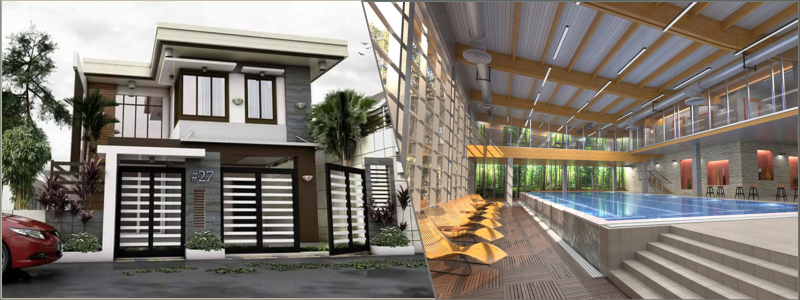
cad design service examples

The collaborative era: Distributed design with centralized vision

The final frontier of CAD open innovation services is the least exciting, but it’s the most rational. With cloud computing and design cultures that play nicely with CAD, companies don’t have to be in the same zip code or hemisphere.

Architecture is an international activity today.

Order a custom steel frame? A Texas CAD firm can provide it. Order a 3D representation of a beach house? A Greek design firm does that. It’s all contained in an updated centralized system. Products aren’t fixed anymore; they’re dynamic, constantly shifting assets.

This decentralized paradigm has spawned a slew of specialty design service providers. Some do facades exclusively. Some landscaping. Some interior millwork or structural analysis. What unites them? CAD.

Your architectural deliverables today may include:

  • Discrete packages for zoning approval, permitting, and construction
  • Photorealistic interior renderings from a remote artist
  • CNC mill-ready 3D files for fabrication
  • BIM-embedded safety plans for the field crew

The piece is no longer a “plan set.” It’s a dynamic body of intelligent pieces and cross inputs conceived, reviewed, viewed, and refined by individuals you may never get the chance to meet face-to-face.

From vision to virtual reality: The CAD revolution realized

The architectural design revolution through CAD technology has fundamentally transformed how we conceive, create, and communicate built environments. What began as digital drafting has evolved into immersive experiences encompassing 3D modeling, BIM intelligence, VR walkthroughs, and global collaboration networks.

Today’s architectural services deliver not just drawings, but complete experiential packages from photorealistic renderings and automated cost estimates to prefabricated components and virtual reality presentations. This technological evolution has democratized high-quality CAD design services while enabling unprecedented precision, efficiency, and creative possibilities. Modern architecture isn’t just about designing buildings; it’s about crafting intelligent, data-driven experiences that clients can see, feel, and interact with before construction begins.

RELATED: Cost breakdown for 3D rendering services: Pricing & rate highlights for 3D design services in 2025 & 2026

Transform your vision into reality today

Don’t settle for outdated design processes that limit your project’s potential. Partner with experienced CAD professionals who deliver comprehensive services from intelligent BIM models to immersive VR experiences.

Cad Crowd leads the industry in providing high-quality architectural design, engineering, and manufacturing design services. Streamline your workflow, reduce costly revisions, and create stunning visualizations that sell your concepts effectively. Contact Cad Crowd specialists today for a free quote and revolutionize your next project.

author avatar

MacKenzie Brown is the founder and CEO of Cad Crowd. With over 18 years of experience in launching and scaling platforms specializing in CAD services, product design, manufacturing, hardware, and software development, MacKenzie is a recognized authority in the engineering industry. Under his leadership, Cad Crowd serves esteemed clients like NASA, JPL, the U.S. Navy, and Fortune 500 companies, empowering innovators with access to high-quality design and engineering talent.

Connect with me: LinkedInXCad Crowd

Turning Concepts Into Stunning 3D Renderings with Architectural Visualization at Your Services Firm


3D architectural visualization services have become an essential tool for services firms looking to bridge the gap between concept and execution. It doesn’t just help designers communicate their ideas more effectively—it creates immersive experiences that engage clients, attract investors, and streamline project development. Whether you’re an architectural firm, an interior designer, or a real estate developer, integrating 3D rendering into your workflow is no longer optional; it is a game-changer.

Imagine a client comes to your architecture office with a loose idea of what they need—a contemporary yet classic office building with open areas, plenty of natural light, and a combination of sleek glass and warm wood features. They wave their hands around in the air, fighting to put the vision in their heads into words. Prior to architectural visualization, designers were stuck using sketches and technical drawings and hoping clients could visualize. But now? Now, we create concepts into life with stunning 3D renderings.

If you ever require stunning 3D renderings, Cad Crowd is the industry’s top agency for architectural visualization, with over 94,000 experts you can choose from to help you turn your idea into a tangible one. But what is it all about to begin with?


🚀 Table of contents


The craft of storytelling in 3D visuals

A good 3D rendering service is more than a visually representative illustration of a space—it’s a story made real. All good renderings have a story to tell, reaching out to emotions and influencing the way people see the design. It’s not merely a matter of showing a building’s size or visual details; it’s about crafting an experience that enables people to visualize themselves being inside the space, evoking an experience of place, mood, and use.

To do this, architectural visualization has to exceed simple modeling and texturing. Lighting, composition, material realism, and context are all vital factors in constructing the story of a rendering. Good lighting can establish mood, be it the golden light of sunset casting back off a glass facade or the bright clarity of midday filling an open-plan office. Composition leads the viewer’s eye, quietly steering them through the space in a manner that is both intuitive and natural. Realistic textures—like the gentle grain of old wood or the glossy sheen of polished marble—add to the believability of the scene, drawing the viewer in.

Think about the difference between a typical rendering of an empty office lobby and one filled with elements of storytelling. In the first, the room will feel sterile and unwelcoming, a mere staging of walls, floors, and furniture. In the second, the story unfolds: soft morning light creeps through the large glass façade and streams onto the polished concrete floor, casting long shadows.

A few simply designed lounge chairs are strewn about in a way that invites lounging, and a blurred figure clad in professional attire walks purposefully towards the elevator. The rendering is then translated from a straightforward representation of space to one that is descriptive and evocative, an image that will elicit from the viewer’s mind the life and activity it will contain.

In including the elements of narrative within 3D renderings, expert CAD designers cross over from theory to practice. They design stories to inspire, persuade, and communicate on an inner level, making architectural visualizations not pictures, but experiences.

RELATED: How 3D commercial rendering services help present commercial architectural projects

architectural rendering examples

How 3D renderings transform client interactions

A major challenge in any architectural services firm is ensuring that clients truly understand the design before construction begins. Too often, misinterpretations of blueprints lead to costly revisions and delays. Traditional 2D architectural drawings, while essential for technical detailing, are not always intuitive for clients who lack design experience.

This communication gap often results in extended discussions, modifications, and budgetary concerns. But with 3D renderings, clients don’t have to envision—they can see. This flips the entire design process from one of explanation to one of collaboration, dramatically improving the overall client experience.

Bridging the gap between imagination and reality

One of the largest challenges when it comes to architectural design services is making sure clients are able to properly envision their projects before work is started. Although seasoned architects and designers may view blueprints easily, clients tend to struggle to imagine 2D drawings translating into real spaces. This will create misunderstandings and disappointment once the building is complete.

Using 3D renderings, customers have a realistic view of the intended project. Visual clarity does away with confusion and builds trust in decision-making. Customers have the ability to examine their projects visually, noting features they adore and alterations they desire prior to any physical construction commencing. For example, when a customer desires to envision how a lobby would appear if marble is used instead of wood for flooring, a quick material swap within rendering software can yield an answer within minutes.

In addition, advanced rendering methods make it possible to simulate the environment, for example, to analyze how a building facade responds to sunlight at various times of day. Such visualizations enable clients to make decisions based on knowledge, both about their aesthetic aspirations and functional requirements. By closing the gap between imagination and reality, 3D renderings enable clients to become active participants in the design process, and the final product will be exactly as they envision it.

Accelerating the approvals process

Obtaining approvals from customers, city regulators, or investors can be time-consuming and aggravating. Older 2D drawings need a lot of explanation, causing rounds of discussion that drag on. But with excellent 3D rendering, it speeds up this process by giving a clear, visually engaging argument.

A good rendering doesn’t merely depict a building; it sells the concept behind it. Investors will more easily understand the market appeal of a luxury residential development when they view a realistic rendering of its rooftop pool at sunset. Architectural site planners examining a proposed mixed-use development can more readily gauge its effect on the surrounding area when shown a realistic 3D visualization with existing streetscapes and landscaping.

Furthermore, developers engaged in working on a large-scale project usually encounter zoning and regulatory issues that necessitate them to demonstrate the compatibility of their designs with the surrounding neighborhood. A photorealistic image that displays how a new high-rise relates to the existing skyline can serve as strong visual proof that wins planning applications and approvals.

By minimizing the necessity for multiple revisions and extensive explanations, 3D renderings speed up the approval process, enabling projects to proceed more effectively and with more confidence from stakeholders.

Improving coordination and minimizing expensive errors

Coordination among architects, designers, contractors, and clients is critical to a successful project. Yet, miscommunication frequently results in costly changes and delays in construction. Conventional design practices, which are based on extensive use of 2D drawings and technical details, can complicate the ability of clients to comprehend the subtleties of a design.

3D visualization rendering services make this collaboration easier by providing an accurate and interactive view of the design. Clients are able to visualize how different elements fit together, enabling them to give instant feedback. If a client believes that a window placement is not what they had in mind for their view, it can be changed prior to construction. This clarity at the early stage avoids expensive changes during construction, which saves time and money.

Additionally, contractors benefit from using 3D rendering as they are able to appreciate complex projects by easily comprehending difficult structures, materials, and spatial relationships, lowering their rate of errors in implementation. Such clarity reduces unforeseen construction expenses and makes the overall project more efficient.

The competitive edge: Differentiation in an overcrowded market

In a market where clients have infinite options, architectural services firms must stand out. The capability to create high-quality 3D renderings can be the differentiator that makes a firm stand out. Jaw-dropping visuals not only wow clients but are also the ultimate marketing tools for portfolios, websites, and social media presence.

Consider a potential client searching for architectural firms on the web. One company has static CAD drawings, and another has photorealistic images and interactive 3D walkthroughs. Which company is more likely to capture attention? The answer is obvious.

Also, with the development of technology, companies that utilize virtual reality (VR) and augmented reality (AR) experiences bring client interaction to the next level. Rather than simply seeing pictures, clients can “walk” through a space being considered prior to construction, relishing scale, illumination, and atmosphere in real-time. Such immersion inspires trust in the design as well as greater credibility for the CAD design firm.

Outside of client meetings, 3D renderings prove to be extremely useful in marketing presentations, pitch work, and real estate campaigns. Developers who wish to pre-sell building units prior to construction can employ these images to present the completed property to prospective buyers, allowing them to make decisions with more confidence.

RELATED: Signs you need to outsource 3D rendering services to companies & 3D modeling experts

Emotional connection: Turning ideas into aspirations

An incredible 3D rendering does more than show a design—it triggers a feeling. Customers will be drawn into a project if they see themselves within the environment. A visualization of an intimate, up-to-date kitchen lit with gentle illumination and hip finishes causes an owner to dream about their own holiday gatherings there. A glamorous illustration of the sunset infinity pool at a posh hotel fills investors with visions of its potential to attract business.

This emotional bond is an important element in effective design presentations. By designing renderings that align with the client’s dreams, architects and designers can establish strong relationships and enhance project approval rates. When clients emotionally connect to a space even before it is constructed, they will be more likely to proceed with confidence and passion.

Future-proofing the architectural services team

The construction and architectural sectors keep evolving, and architectural planning and design companies that embrace new technologies set themselves up for long-term success. 3D rendering is no longer in the realm of the luxury—now it is an industry norm. Companies that adopt this technology lead the way, gain more clients, and make their designs easier to produce.

As real-time rendering and artificial intelligence technology advance, architectural visualization’s future will be even more immersive. AI-driven tools are capable of creating realistic materials, lighting, and environmental effects within seconds, so renderings become even more realistic and time-efficient to create.

Additionally, cloud-based rendering services’ integration allows collaboration among teams in remote locations, sharing of updates in real time, and adjustments based on feedback from the clients in real time. All these developments will also make client interaction more intuitive, interactive, and efficient.

3D visualizations have transformed client engagement in architecture by taking intangible concepts and making them real. They close the technical drawing and client comprehension gap, speed up approvals, facilitate collaboration, and eliminate expensive construction errors. They also give a competitive advantage, build emotional connections, and future-proof architecture companies in an ever-changing market.

As technology evolves, 3D renderings will become increasingly significant in the construction and design environment. Architectural design experts who adapt to this change will not only achieve client satisfaction but surpass it, building trust, enthusiasm, and long-term achievement in a saturated market.

The workflow: Concept to high-end renderings

Implementing architectural visualization in a firm’s process is not merely a matter of spending money on top-of-the-line software; it involves a systematic and polished process that guarantees efficiency, precision, and exceptional output. Every step is crucial in converting a rough idea into a breathtaking, photorealistic image that clearly conveys design intent. What follows is an efficient process that experts can use to produce high-quality architectural visualizations.

architectural 3d rendering example and cad design

Concept development & sketching

Prior to the use of any 3D modeling software, concept development is the initial and most important action. This step involves comprehending the client’s idea, project brief, and important objectives. Proper communication between the architect/designer and client helps align expectations at an early stage.

Key actions:

  • Host client meetings to clarify their requirements, likes, and dislikes.
  • Collect inspirations via mood boards, reference images, and precedent studies.
  • Develop initial loose hand sketches or digital drawings to work through different design options.
  • Establish initial rough-out spatial composition, massing ideas, and style directions.

These initial phases establish a good base before transferring to digital modeling so that the designer can fine-tune his or her idea and be assured they are headed in the right direction.

3D modeling

Once the concept is clearly defined, it’s time to build the model through 3D modeling design services. This step requires the use of software like SketchUp, Revit, 3ds Max, Rhino, or Blender to translate 2D sketches into a three-dimensional environment.

Key actions:

  • Start with the basic structural framework, including walls, floors, and roofs.
  • Develop intricate details such as windows, doors, and architectural features.
  • Incorporate furniture, landscaping, and contextual elements to enhance realism.
  • Have a streamlined workflow through organizing components, layering, and efficient file management.

A properly structured 3D model is the foundation of the visualization process that allows for seamless movement into material application and rendering.

RELATED: Optimizing 3D rendering process time to help companies and service firms meet deadline

Material & texture application

Realism in architectural visualization relies significantly on realistic material and texture depiction. Rich materials add depth and realism to the model, making it more visually appealing and lifelike.

Key actions:

  • Choose suitable materials like wood, metal, glass, and fabrics, ensuring that they are suitable for the design intent.
  • Apply realistic textures and manipulate parameters such as reflection, bump mapping, and glossiness.
  • Use high-res PBR (Physically Based Rendering) textures for increased realism.
  • Use seamless UV mapping to prevent stretched or distorted textures.

Here, details like grain patterns in wood, grout lines between tiles, and blemishes in concrete can make a huge difference in making the final rendering more believable.

Lighting & composition

Lighting design services are one of the most important aspects of architectural visualization that determine the mood, emphasize design elements, and create realism. Using correct lighting arrangements can turn an ordinary render into a masterpiece.

Key actions:

  • Utilize both natural and artificial lighting to attain a realistic and balanced scene.
  • Apply HDRI (High Dynamic Range Imaging) environments for simulating natural lighting.
  • The sunlight angles should be manipulated to emphasize architectural structures effectively.
  • Add artificial light sources such as ambient, task, and accent lighting to interior scenes.
  • Try various camera angles and compositions to achieve interesting shots.

Lighting and composition play a crucial role in the perception of a design. An appropriately lit rendering can convey feelings and intentions effectively and invite people into the space.

Rendering & post-processing

After the 3D scene is fully created with materials, textures, and lights, it’s time to create high-quality renderings. This is done using powerful rendering tools like V-Ray, Corona Renderer, Lumion, Unreal Engine, or Enscape.

Key actions:

  • Establish rendering settings like resolution, sample rates, and ray tracing settings for maximum quality.
  • Apply depth of field, ambient occlusion, and global illumination for added realism.
  • Provide adequate rendering time to yield noise-free, high-resolution images.
  • Bring the rendered image into post-processing software such as Photoshop or Lightroom for fine-tuning.
  • Boost colors, contrast, shadows, and highlights to inject more depth and vibrancy into the rendering.

Post-processing is a critical phase that fine-tunes the end product, bestowing visual elegance and professional finesse on the HDR rendering design services.

Client presentation & iteration

The last process in the workflow is to show clients the completed visuals and implement their feedback in revision. An efficient architectural visualization process is also iterative, as clients can make requests for modifications prior to final delivery.

Key actions:

  • Develop several views and outlooks to get across a complete picture of the design.
  • Develop presentations with material callouts, annotations, and conceptual descriptions.
  • Obtain client feedback and adjust lighting, materials, or layout accordingly.
  • Provide the final high-resolution images, 360-degree renders, or animations according to the needs of the project.

Attaining high-quality architectural renderings is a systematic process that integrates creativity, technical skills, and iterative improvement. Through this workflow—from concept creation to final presentation—firms can attain efficiency, precision, and engaging visuals that clearly convey architectural designs. Excelling at each step in the process not only enhances workflow effectiveness but also raises the overall quality of the end renderings, ultimately resulting in greater client satisfaction and successful project delivery.

The future of architectural visualization

Architectural visualization is a field that is changing at lightning speed. AI-driven rendering engines are reducing processing time, and photorealistic images can be generated almost instantaneously. Real-time rendering software enables architects to make changes live during client presentations, providing unparalleled flexibility. With the increasing use of VR and AR, the architectural design and drafting industry is moving from static images to interactive and immersive experiences.

Companies that embrace these technologies will remain at the forefront. By always refining their techniques and adopting new software, they can deliver high-quality service, wow clients, and raise their brand in an industry where there is a lot of competition.

RELATED: Commercial 3D rendering rates for buildings, services costs, and pricing for architectural firms

3d architectural rendering of concept homes

Conclusion

Architectural visualization is not about making things pretty—it’s about communication, productivity, and experience. It turns abstract concepts into concrete visions, assists clients in making intelligent decisions, and speeds up approvals for projects. For architecture and design companies, being proficient in 3D rendering is not only a skill—it’s a competitive edge.

So, the next time a client comes to your office, unable to put into words their vision, you won’t simply listen and nod. You’ll demonstrate precisely what’s achievable—realizing their dream project before a single foundation stone has ever been set.

Cad Crowd is here to help

3D visualizations with architectural visualization aren’t something to be left with just anyone who happens to pop up online. Cad Crowd will help you reach the right individual so your services company can take advantage of its potential. Please submit your inquiry today to learn more about what we have in store. Request a free quote today.
author avatar

MacKenzie Brown is the founder and CEO of Cad Crowd. With over 18 years of experience in launching and scaling platforms specializing in CAD services, product design, manufacturing, hardware, and software development, MacKenzie is a recognized authority in the engineering industry. Under his leadership, Cad Crowd serves esteemed clients like NASA, JPL, the U.S. Navy, and Fortune 500 companies, empowering innovators with access to high-quality design and engineering talent.

Connect with me: LinkedInXCad Crowd

BIM vs. CAD: Which is Better for Modern Architectural Design Services Companies


A sleek, glass-wrapped skyscraper begins to take shape not in the real world, but on a screen. There are layers, dimensions, data, and details down to the last duct. Is that Computer-Aided Design (CAD)? Not quite. You’re in Building Information Modeling (BIM) territory now. For architecture design firms struggling to maintain their edge in an industry where accuracy, speed, and teamwork are paramount, it’s not just “What do we use?” BIM or CAD?

This argument isn’t a detached technical contrast anymore. It’s at the heart of the way firms sell on projects, collaborate with subcontractors, and produce for clients who demand photorealistic visualizations services and no design conflicts. If you’re a seasoned firm established in AutoCAD or a nimble startup diving headfirst into BIM day one, the choice comes back to your fundamental way of working.

So let’s get into this. Not with a checklist but with a full-throated investigation. No jargon for jargon’s sake. Just an honest discussion about what BIM and CAD are, how they define architectural services these days, and which one may be better for your team, not just short-term, but for projects you haven’t even imagined yet.


🚀 Table of contents


The origin stories: Drafting tables to data-driven models

Let’s take a step back to establish the context.

Picture a world where every building plan began with a pencil, ruler, and enormous piece of paper. That was the norm until Computer-Aided Design (CAD) came along like a digital knight. With AutoCAD, MicroStation, and early ArchiCAD, architects ceased to have to redraw whole schematics to make changes. They clicked, copied, and stacked their way to faster, more accurate technical drawings instead. It revolutionized.

But here’s the catch: CAD, as revolutionary as it was, remained about drawing. Even when 3D modeling design services became standard, the models were basically digital manifestations of real-world shapes. A column appeared as a column, yes, but the program didn’t have a clue it was a column. It was all form and visual accuracy, but not smarts.

Then BIM, Building Information Modeling, took over, and the game shifted once more.

BIM software such as Revit, the new ArchiCAD, and Bentley AECOsim not only models buildings, but they imbue them with intelligence. A wall was no longer a surface. Now it was a wall with attributes. Materials, thermal value, fire rating, and expense are all built in. Doors recognized themselves as doors. Beams knew their load-carrying functions.

The payoff? A design environment in which updates cascade throughout the entire model. Alter a door’s width, and schedules, elevations, and clash detections all update in real time. It’s not only smarter drafting, it’s a smarter building process.

From the drafting table to data models, architectural design services have come from hand-drawn lines to smart, responsive systems. And we’re just beginning.

RELATED: Tips to optimize new invention development and product development for companies

BIM modeling examples for architectural design

Drawing vs. modeling: The philosophical divide

This is where the sparks begin to fly.

When you’re using CAD (Computer-Aided Design), you’re essentially composing a symphony, note by note, line by line. Every wall, hatch, or text label is manually placed with precision. It’s detailed, controlled, and yes, a bit obsessive (but in the best way). CAD files are like digital sheets of paper. You’re telling the software exactly what to draw, and it does just that, no more, no less.

Then there is BIM (Building Information Modeling), and before you know it, you’re not sketching anymore, you’re modeling. Rather than simply sketching a door, you add a “door family” to your project. That door has built-in smarts: size, materials, fire rating, thermal properties, and even manufacturer data. Want to swap out all the wooden doors in a project for steel? One click. Boom. Done. It’s like playing an orchestra of clever instruments that harmonize of their own accord.

So it’s actually more than just tools. It’s a change in mindset.

CAD design services are for sketching. BIM is a computer-based tool for construction. CAD provides you with 2D plans and perhaps some rudimentary 3D. BIM provides you with a working digital model of your building. That model can be utilized not only for design but also for energy analysis, clash detection, scheduling, cost estimation, and even long-term facility management.

It’s not a question of who’s better, it’s a question of what your project requires and how you prefer to think. Are you a pencil craftsman or a smart baton conductor?

Either way, the future is being simulated, not merely sketched.

Collaboration wars: Who’s easier to work with?

This is where tensions begin to rise for architecture design companies. The software you use isn’t merely going to change how you sketch. It will dictate how you work together. And believe us, that can either make your workflow slick or send it flying off into a tailspin.

Consider a company that’s employing CAD. It’s the ideal arrangement: speedy, steady, and everybody on staff is familiar with it. You’re producing accurate 2D drawings and floor plans, and adding the occasional 3D rendering from Rhino or SketchUp for added spice. All is going swimmingly until the mechanical engineer adjusts the ductwork, and now it slices through your lighting plan.

Suddenly, its version controls mayhem. You’re sifting through endless email chains, comparing overlapping PDFs, and pointing fingers over whose file is the “real” one. It’s a high-stakes game of architectural telephone.

Now, imagine that same situation, but everyone’s using BIM modeling services . Instead of separate files, you’re all inside the same digital ecosystem. Updates to ductwork? Your lighting layout adjusts in real time. BIM flags the clash before it becomes a construction nightmare.

That’s the type of coordination project managers will fantasize about. Customers are kept in the know. Subcontractors are not surprised. And your staff? They’re addressing problems during the design phase rather than fighting them on the site.

So, who is more pleasant to deal with? The team that employs collaboration tools. And when deadlines and budgets are at stake, that is what matters.

RELATED: Top design & drafting tasks to outsource for architects and architectural services firms

CAD’s defense: It’s not dead, it’s just different

Yes, Building Information Modeling (BIM) is the new, shiny spotlight getter, but CAD? It remains very much at work behind the scenes, and doing so effectively.

Firstly, CAD is light. You don’t require a powerhouse computer or cloud-based environment to roughly sketch out an idea. If you’re doing a rough mockup of a concept, redoing a small remodel, or requiring fast iteration, CAD’s ease of use is a real asset. It’s nimble, in-your-face, and speedy. And when the going gets fine linework, and that means custom cabinetry, joinery details, or shop drawings, CAD excels. It provides the accuracy that BIM can’t always guarantee.

Most architectural design experts and engineers’ offices are actually combining both tools. They’ll design the big stuff in BIMwalls, roofs, systemsbut when they get to the nitty-gritty, such as how a drawer goes into a custom-built unit, they move to CAD. It’s an intelligent, hybrid approach, especially when contractors still hold dearly to old DWG files.

And let’s get real: not all projects require a complete BIM workflow. Some cities are still using paper plan sets or static PDFs for permitting. Those don’t require the BIM bloat if CAD will suffice.

So no, CAD isn’t dying out. It’s just playing a new role of the headliner, more of a specialist. But ask anyone buried deep in the trenches of drafting and design, and they’ll tell you: CAD is by no means obsolete.

BIM’s edge: Beyond architecture

BIM is like that one architecture student who didn’t stop at studio projects but also picked up structural engineering services, HVAC systems, sustainability metrics, and a business minor just for fun.

Architectural firms embracing BIM are essentially expanding their value proposition. You’re no longer just delivering pretty renderings and floor plans. You’re offering energy performance analysis, daylighting simulations, cost estimates, and lifecycle insights, all from the same model.

Think about that.

With BIM, you can:

  • Execute clash detection between architectural, structural, and MEP models.
  • Trace materials for embodied carbon.
  • Extract quantities directly for procurement.
  • Simulate timelines with 4D scheduling.

That’s not design. That’s architecture as a data-driven consultancy.

It’s no surprise that public infrastructure projects across Europe, Asia, and even the U.S. increasingly require BIM deliverables. It’s not a trend, it’s a transition.

BIM examples modeling

RELATED: Keys to successful structural design & construction projects with architectural services firms

The talent factor: Who’s driving the software?

Let’s discuss people for a moment.

The best software in the world is still only as good as the folks using it. And here’s where many firms stumble.

CAD has been around forever, and you’ll find seasoned professionals who can navigate it blindfolded. BIM, on the other hand, has a steeper learning curve. It requires teams to think differently, plan ahead, and understand not just how to model but why you’re modeling.

That involves investing in training, upskilling, and maybe even reorganizing your team structure. Now you’re recruiting BIM modeling experts, not drafters. You’re bringing IT more into project workflows. You may even have to tell clients why “LOD 350” is important.

But when does your team understand? Projects run smoother. Deadlines seem less daunting. Clients are more satisfied. And your firm? It begins to grow.

The cost question: Is BIM worth the price tag?

Let’s be real, prices count. And BIM is not cheap.

Revit or ArchiCAD licenses are much more expensive than AutoCAD. The equipment to host full 3D models is not cheap either. And to top it all off, the learning curve is time-consuming (and time equals money).

So why do companies continue to switch?

Because BIM’s ROI appears elsewhere in the company: fewer RFIs on the job site, quicker approvals, reduced rework, and greater integration with contractors. That is, while CAD may be less expensive in the short term, BIM tends to save more in the long run.

Some companies even see 20–30% increases in efficiency over time once BIM becomes standard. It’s a long-term game. But if you intend to expand, diversify architectural planning and design services, or take on large, complex jobs, it’s an investment, not a cost.

Client expectations are changing, are you?

You know who else is considering BIM? Your clients.

Developers, cities, and even homeowners who have a smart home obsession all want more than flat drawings. They want walk-throughs, material samples, daylight studies, and dashboards they can access on a tablet.

That is to say, they want interactive design.

With BIM, you can illustrate for them how the sun will strike their penthouse kitchen at 9 am on a summer morning. You can model emergency egress in a hotel. You can demo the mechanical systems behind the ceiling tiles. You can even feed your model into VR and take them through their building before breaking ground.

That kind of immersive storytelling?

Choosing the right tool: A strategic decision

So, which is better, BIM or CAD? The answer depends entirely on your project scope and business goals. Each tool serves distinct purposes in the modern architectural workflow, and even for engineering services.

CAD remains your best friend when you need speed and precision for smaller-scale work:

  • Quick turnaround interior fit-outs and renovations
  • Schematic studies and concept development for local clients

BIM becomes essential when complexity and collaboration drive your projects:

  • Multi-disciplinary team coordination across architecture, engineering, and construction
  • Large-scale or technically demanding buildings requiring data integration
  • Comprehensive service offerings that include energy analysis, clash detection, and lifecycle management

The smartest architectural design firms aren’t picking sides. They’re strategically combining tools. They use BIM for comprehensive modeling and collaboration, then switch to CAD for precise detailing and custom elements.

The key to success? Understanding when to deploy each tool and staying flexible enough to adapt based on your project’s specific requirements.

RELATED: How architects embrace innovation for modern home design services with companies

The future is integration, not competition

The BIM versus CAD debate isn’t about choosing a side; it’s about strategic evolution. Modern architectural firms thrive by leveraging both technologies strategically: BIM for complex, collaborative projects requiring data-rich modeling and intelligent coordination, and CAD for precision detailing and quick iterations.

While CAD design experts and professionals remain valuable for specific applications, BIM has become essential for firms pursuing larger projects, enhanced collaboration, and comprehensive design services. The most successful practices adopt a hybrid approach, using each tool where it excels. As client expectations shift toward interactive, data-driven design experiences, embracing BIM isn’t just advantageous, it’s becoming the industry standard for competitive architectural services.

Cad Crowd is here to help!

Partner with expert BIM and CAD professionals with Cad Crowd today, the leading platform to find the best freelance design and engineering professionals. Transform complex projects into competitive advantages. Get faster project delivery, seamless collaboration, and superior results. Contact us now and get your free quote!

author avatar

MacKenzie Brown is the founder and CEO of Cad Crowd. With over 18 years of experience in launching and scaling platforms specializing in CAD services, product design, manufacturing, hardware, and software development, MacKenzie is a recognized authority in the engineering industry. Under his leadership, Cad Crowd serves esteemed clients like NASA, JPL, the U.S. Navy, and Fortune 500 companies, empowering innovators with access to high-quality design and engineering talent.

Connect with me: LinkedInXCad Crowd

6 Types of Residential Design & CAD Services for Companies


Residential design is about dressing up a space to look good and the status of how people will live, cook, sleep, watch hours of reality television, grow a family, host parties in backyards, and sometimes work remotely in their pajamas. For someone who didn’t have the expertise needed, these can be a lot of responsibility for a building. So when businesses employ residential design experts, they’re not simply adding someone to sketch walls and windows, but they’re seeking an expert and professionals with innovative minds, layout masters, and CAD-proficient people who can transform a general client brief into an architectural work of art.

But not every new residential design service is equal. Some specialize in structural accuracy. Others plunge into ethereal aesthetics. Some wrestle zoning regulations like legal ninjas. And many of them use CAD (Computer-Aided Design) to introduce accuracy, speed, and clarity to the entire process.

Let’s take a stroll through six primary residential design and CAD services from the leading agency Cad Crowd, where you can choose from its pool of 94,000 experts, ready to level up and elevate your project, whether it’s a product or a 3D rendering project. You can guarantee that you’ll get the best results at a very reasonable price.

Architectural design services: The big picture thinkers

Architectural design is the mothership. This is where artistic vision and technical discipline intersect. Architectural designers don’t simply think about walls—they think about how a house sits in its surroundings, how it relates to sunlight, how to get space to flow organically, and whether or not a spiral staircase is a good idea.

What do they provide?

  • Concept and floor plans
  • Schematic drawings and 3D modeling
  • Code compliance and site planning
  • Incorporating sustainable design elements

RELATED: 3 steps to hiring a reliable architecture firm & freelance services architects

3d rendering of an apartment complex and interior design of an entrance hallway

Where CAD enters the picture:

CAD software is used by architectural design companies to produce detailed blueprints, cross-sections, and elevation drawings. They model structural integrity, lighting levels, and even energy consumption. This provides clients with a clear advance glimpse of the finished structure—and allows builders and contractors to work off accurate, approved plans.

Perfect for: New home building, high-end residential developments, and bespoke mansions with walk-in closets the size of small apartments.

Interior design & space planning: The detail-oriented magicians

This is where strategy meets style. Interior designers are not just about selecting colors or what rug actually ties the room together. They’re all about how individuals use spaces day-to-day. Think ergonomics, lighting, furniture placement, and mood-setting atmosphere.

What do they provide?

  • Space planning and room design optimization
  • Material selection and fixture procurement
  • 3D visualization and renderings
  • Interior architectural detailing

Where CAD enters:

Interior design experts use CAD software that enables teams to create photo-realistic renderings, elaborate floor plans, and furniture plans that can be changed in real time. Customers can have virtual tours, modify cabinet finishes, or experiment with five various colors for the walls before settling on one (and deciding again a little later on).

Best for: Upgrades, kitchen and bathroom remodels, home staging to sell a home, and high-end penthouse redesign with mood lighting.

Structural design services: The quiet heroes of stability

These are the people who ensure your home doesn’t crumble when it rains, snows, or has a relatively mild wind. Structural design services concentrate on designing the skeleton of a residential home, including beams, load-bearing walls, foundations, and roof systems.

What do they do?

  • Load analysis and structural calculations
  • Foundation and framing plans
  • Seismic and wind resistance checks
  • Retrofitting of older structures

Where CAD comes in:

CAD for structural design includes tools for finite element analysis (FEA), stress testing, and reinforced concrete detailing. It’s not glamorous, but it is essential. Without structural CAD drawing services, you’re building on guesswork—and that’s not something homeowners like to hear.

Perfect for: New construction, earthquake areas, historic restorations, or anyone who desires to construct a rooftop garden jacuzzi with ease.

Landscape design services: The outside-the-walls artists

A gorgeous house without a similarly gorgeous outside? That would be like it. Landscape designers work on anything from the sidewalk to the fence in the backyard. They design outdoor spaces that not only look wonderful but are also functional, environmentally friendly, and welcoming.

What do they do?

  • Planting designs and irrigation schematics
  • Hardscapes such as patios, pools, and decks
  • Outdoor lighting design
  • Grading and drainage schemes

Where CAD is used:

CAD software for landscape design services enables the accurate placement of outdoor features. Designers can model sun paths, rainwater drainage, and seasonal plant growth. They can even generate time-lapse images displaying how the garden will look in years to come, just in case the client wishes that bougainvillea hedge to bloom in year three.

Perfect for: Suburban residences, luxury villas, eco-homes with permaculture gardens, or anyone with a pool party fantasy and an expansive budget.

RELATED: Top design & drafting tasks to outsource for architects and architectural services firms

Mechanical, electrical & plumbing (MEP) design services: The system ninjas

You might not see them, but you’ll definitely notice when they’re missing. MEP design is all about the systems that make a house livable. Water flows, electricity powers up your espresso machine, and HVAC systems make the bedroom feel just right in July—and it’s all thanks to these behind-the-scenes pros.

What do they offer?

  • Electrical layouts and lighting design
  • Plumbing systems and fixture placement
  • HVAC system integration
  • Energy efficiency analysis

Where CAD comes in:

MEP-centric CAD software comes with routing features, system clash detection, and coordination models. This prevents pipes, ducts, and wires from sharing space (which never turns out well). With integration with BIM (Building Information Modeling), CAD tools enable MEP drafting services to integrate with architects and structural designers easily.

Best for: Smart homes, retrofits, off-grid installations, and solar panel-equipped buildings, greywater systems, or radiant heating.

Custom home design services: The dream builders

Sometimes, clients don’t need a “model home” or anything close to pre-packaged. They need something bespoke from scratch: a seashell-shaped lakefront cabin, a kids’ treehouse compound, or a multi-generational villa with hidden passages. That’s where custom home design services come in.

What do they do?

  • Client interviews and lifestyle-driven design briefs
  • Concept sketches and mood boards
  • Full 3D CAD models and walkthroughs
  • Permit-ready construction documents

Where CAD fits in:

With custom homes, CAD is as much a collaboration device as it is a design device. Clients may view interactive models, modify elements on the spot, and envision finishes, rooflines, and flow prior to driving a nail. Designers frequently employ parametric modeling in order to tweak features in real time according to client desires or site limitations.

Best for: The “go big or go home” crowd, celebrities, retirees’ “forever” dream home builder, or a family with very specific ideas—and Pinterest boards to back it up.

3d rendering of a townhouse resort and a living room example rendering

RELATED: How architects embrace innovation for modern home design services with companies

Bonus: How these services work together in residential projects

Let’s be real—constructing a home is a team effort. Behind every gorgeous home design, there’s a whole crew of experts playing in harmony. And most times, these specialists don’t only work in silos—rather, they work together across disciplines to deliver a project seamlessly and effectively.

Here’s what a typical residential project could look like:

  1. It begins with the expert architectural designer, who draws up the preliminary layout of the house, defining how the rooms flow and function.
  2. Then, a structural engineer comes in to ensure the home’s framework can actually bear the weight of the design, checking loads, supports, and structural soundness.
  3. Then, a MEP consultant comes on board, ensuring HVAC systems, plumbing, and electrical floor plans are designed and integrated into the building.
  4. An interior designer assumes control over the interior, efficiently utilizing space as he/she makes choices regarding finishes, color, and fixtures that are consistent with the homeowner’s vision.
  5. Last but not least, a landscape designer brings it all together, creating outdoor spaces that enhance curb appeal and complement the architecture.

Sounds like a whole lot of moving parts, huh? That’s where CAD and Building Information Modeling (BIM) platforms are essential. All of these professionals utilize CAD software to design, collaborate, and revise documents, ensuring everyone is on the same page. This type of digital collaboration relies on cloud-based applications, version control, and software interoperability.

So why do businesses even depend so much on CAD for this?

Because it’s not all about pretty pictures. CAD is the behind-the-scenes hero of home design services. It provides:

  • Accuracy – to fractions of an inch.
  • Speed – with edits and revisions completed in minutes.
  • Visualization – allowing clients to “see” their new home before a shovel ever touches the ground.
  • Cost savings – because design mistakes caught early save big money later.
  • Real-time collaboration – with everyone working off the same live files.

From sketches of ideas to final building drawings, CAD bridges it all, taking complicated multi-specialty jobs and turning them into stunningly crafted homes.

Wrapping it up: Residential design is a team sport

Creating home spaces is more than just throwing together a floor plan and calling it a day. It’s a complex, multi-dimensional process that alludes to structure, comfort, systems, style, and flow. From the sprawling country estate to the spare city loft, each and every residential project is made better by the collaborative work of specialized designers and the digital superhero powers of CAD.

RELATED: 6 industries revolutionized by 3D rendering freelancers & design services companies

Experience the Cad Crowd difference

Next time you enter an exquisitely designed residence and everything from the natural kitchen light to that ideal placement of the AC return above your favorite reading spot comes together just so, remember this: behind such harmony is an army of residential design experts at Cad Crowd typing away in CAD, making the magic real. Call us now for your free quote.

author avatar

MacKenzie Brown is the founder and CEO of Cad Crowd. With over 18 years of experience in launching and scaling platforms specializing in CAD services, product design, manufacturing, hardware, and software development, MacKenzie is a recognized authority in the engineering industry. Under his leadership, Cad Crowd serves esteemed clients like NASA, JPL, the U.S. Navy, and Fortune 500 companies, empowering innovators with access to high-quality design and engineering talent.

Connect with me: LinkedInXCad Crowd

Architects vs. Designers: What’s the Difference and Which Should You Hire for Design Services?


So you’re finally ready to build your dream space, be it a home remodel, a shiny new office, or that snug backyard ADU that’s been floating rent-free on your Pinterest board. But then you suddenly think: Do I need to hire an architect or an industry leader designer from Cad Crowd? Who actually makes my dream a reality in walls, windows, and wonder?

It’s a typical question, and actually, a fair one. Architect and designer are often interchanged, but within the field of architectural design services, they’re two different animals. Both contribute creativity, but how they work, what they’re legally permitted to do, and the type of projects they’re best qualified to handle? That’s where things get really different.

Grab a cup of coffee and settle in—we’re about to unpack this like a new set of blueprints.


🚀 Table of contents


Let’s start with architects: The licensed structural strategists

When someone utters “Architect,” your mind may jump to a character in hipshades, scribbling crazy designs on a napkin over a shot of espresso—maybe a Frank Lloyd Wright quote and an all-black ensemble for good measure. And, okay, those are stereotypes based on a kernel of truth. But beneath that hip veneer is a highly trained, licensed professional whose work is considerably more than mere pretty pictures.

Architects are strategists of structure. They’re the brains behind the plan, the organizers of opportunities, and oftentimes, the adhesive that keeps a building project in one piece. To achieve the title, an architect doesn’t simply pick up a pencil and begin sketching. They undergo years of intense schooling, most often a five-year degree in architecture, followed by an obligatory internship and a series of challenging state tests. They also continually learn as codes and technology advance.

So what do architectural design experts do, exactly? A more accurate question may be: What don’t they do?

Here’s what you can look forward to from a licensed architect:

  • Create buildings from the ground up – From that dream house, boutique hotel, or commercial office building, architects are equipped to design spaces that are functional, safe, and aesthetically pleasing.
  • Rework existing buildings – Extensive overhauls, like converting a single-story house into two or stripping a building to the studs, take more than an eye for what could be. Architects understand how to address those complicated renovations without jeopardizing (or compromising) structural integrity.
  • Ensure compliance – They’re zoning regulations, building codes, and permitting specialists. That lovely loft architecture? It doesn’t matter if it’s illegal—architects ensure all is well before a hammer so much as a flick.
  • Offer stamped blueprints – If you want official plans to be stamped and approved by the local government (and most larger projects do), an architect’s stamp is necessary.
  • Coordinate the entire circus – Architects are frequently the project ringmaster, coordinating with engineers, contractors, city planners, and in some cases even neighborhood boards.

So, when do you need to call an architect?

  • If you’re constructing a custom home from scratch.
  • If your remodel includes tearing down walls, installing floors, or drastically altering your home’s configuration.
  • If your project resides in a historically restrictive or overly zealous neighborhood regarding zoning laws.
  • If you prefer to have someone manage your project and ensure your vision comes to life without becoming a construction nightmare.

Bottom line? If your project is ambitious, structural, or plain complicated, keeping an architect and interior design expert around is one of the brightest moves you can ever make.

RELATED: How design drawings help avoid interior design mistakes for 3D design companies

3d rendering of a store and modern home

Enter the designer: The creative space whisperers

When considering building a house, your first thought may be architects and builders. But another group is quietly shaping the feel of your space behind the scenes: designers. These imaginative space whisperers merge form with function, transforming ordinary rooms into extraordinary experiences. While the definition of “designer” varies by context, their influence on your home is undeniable.

Understanding home design professionals

In residential design, you’ll encounter various titles:

  • Home designers – Focus on overall residential planning and layout
  • Building designers – Specialize in structural and architectural elements
  • Interior designers – Experts in interior spaces, finishes, and furnishings

While licensing requirements vary by state, don’t underestimate these architectural planning and design professionals. Many are highly trained, certified, and incredibly skilled. Rather than changing your home’s structural “bones,” they transform its “soul” – perfecting layouts, balancing materials, and ensuring seamless flow throughout your space.

What designers bring to your project

Planning and visualization

Designers excel at creating home plans, particularly for non-structural projects. Whether you’re remodeling a kitchen, renovating a bathroom, or adding a stylish home extension, they serve as your creative strategists. Most now provide 3D modeling design services and virtual tours, allowing you to experience your refreshed space before any construction begins.

Material and design expertise

Ever stood overwhelmed in a tile shop staring at countless shades of white? Designers eliminate this decision fatigue. They’re masters at:

  • Selecting materials that complement your existing elements
  • Choosing furniture that fits your lifestyle and space
  • Designing lighting schemes that enhance your home’s ambiance
  • Creating cohesive mood boards that bring Pinterest dreams to reality

Professional collaboration

Designers work seamlessly with contractors, drafters, and architects to translate your vision from concept to completion. They bridge the gap between your ideas and practical implementation.

When to hire a designer

Consider bringing in a designer when you’re:

  • Renovating key spaces like kitchens or bathrooms is essential, and it’s important to strive for a cohesive, polished result that enhances the overall aesthetic and functionality of your home.
  • If you are expanding your home and are in need of assistance, consider how to effectively integrate new areas with your existing spaces to create a cohesive and functional environment.
  • Working within budget constraints but refusing to compromise on style and quality
  • Feeling overwhelmed by choices and needing expert guidance through the decision-making process

Whether you’re dreaming of a cozy reading nook, planning a complete kitchen transformation, or simply trying to make your living room more functional, consider partnering with an interior design service.

The licensing lowdown: Who can design what—and why it matters

Let’s get a little geeky because when it comes to construction projects, licensing actually does matter more than you’d guess. In the U.S., if someone wants to legally call themselves an architect, there’s a rigorous process involved. We’re talking accredited education, years of internship experience, and passing the notoriously tough Architect Registration Examination (ARE). Only after all that can an architect sign off on plans—and in many places, that signature is what makes the whole project legal.

On the other hand, designers have a different system of rules to follow. Depending on the state and the nature of the project, designers do not always require a license. However, numerous designers seek out professional certifications from organizations such as the American Institute of Building Design (AIBD) or the National Council for Interior Design Qualification (NCIDQ) to enhance credibility.

So what does that mean to you? If your project is one that needs official, stamped plans in order to pull permits, such as new construction or extensive renovations, you will need a licensed architect. But if you’re looking at something more cosmetic or conceptual, a designer could be a better (and less expensive) bet. It all comes down to matching the pro to the job.

RELATED: All things to consider when hiring a design-build firm & services company

3d rendering of a home and office example

Design overlap: The great gray area

Let’s discuss that nebulous area where titles overlap and roles merge, the “gray area” of design. On residential jobs, there is usually enormous overlap between what building designers and architects actually do. And this is where things get interesting.

A talented architectural design and drafting service provider is not merely a person who makes blueprints. They can conjure beautiful floor plans, assist in defining the way a room functions, and even guide you through the construction process. Conversely, architects, though historically concerned with structure, safety, and compliance, tend to have a designer’s sensibility. Most are more than qualified to suggest finishes, pick materials, and determine color schemes that make your space even better.

Actually, the distinctions between the two can become so blurred that some design companies employ both architects and interior designers under the same roof. With this collaborative method, you don’t have to bounce between experts or deal with multiple visions. Rather, you receive a cohesive, streamlined process—where creative vision and technical expertise work hand-in-hand.

Cad Crowd is here to help!

If you’re wondering what’s best for your project, the answer might just be: both. Because in the world of design, collaboration often leads to the most beautiful results.

Are you more inclined to hire an architect or a designer for your task? But no matter what your preference would be, don’t hesitate to contact Cad Crowd and ask us for a quote for free to get your ideal partner for your next projects!

author avatar

MacKenzie Brown is the founder and CEO of Cad Crowd. With over 18 years of experience in launching and scaling platforms specializing in CAD services, product design, manufacturing, hardware, and software development, MacKenzie is a recognized authority in the engineering industry. Under his leadership, Cad Crowd serves esteemed clients like NASA, JPL, the U.S. Navy, and Fortune 500 companies, empowering innovators with access to high-quality design and engineering talent.

Connect with me: LinkedInXCad Crowd

All Things to Consider When Hiring a Design-Build Firm & Services Company


When starting a building project, whether it’s a new build, a large renovation, or a one-of-a-kind custom design, selecting the right design-build company is essential to making your dream a reality while doing so efficiently, creatively, and on budget. Design-build companies and service firms at industry leaders such as Cad Crowd offer a complete set of services, from architectural design services to construction management, all in one convenient package.

This can ease the process and lessen the intricacy of dealing with various contractors and designers. But to get the most out of employing such a company, it is crucial to take some things into consideration carefully before deciding. Here is an in-depth guide on everything you need to consider when employing a design-build firm and services firm.


🚀 Table of contents


Understanding the design-build approach

A design-build company works differently from the conventional process in which the client contracts a designer (most likely an architect) and another contractor. With the design-build method, one company undertakes both the design and construction stages of the project. This hybrid model has a number of benefits:

  • Efficient communication: Because the design and construction staff belong to the same company, communication becomes more streamlined and integrated.
  • Project completion at a quicker rate: Because both design and construction are executed simultaneously, projects complete faster than through conventional means.
  • Cost reduction: The combined process of design-build can save costs because the company can refine designs with regard to real-world construction experience, and problems are confronted early in the design stage.
  • Single point of accountability: You don’t have to worry about dealing with multiple contracts, which makes it easier to handle issues and hold someone responsible if something goes wrong.

Although the design-build approach can be effective, it’s crucial to make sure the firm you select can address your particular needs and expectations. Here’s a closer examination of what to look for.

RELATED: The role of 3D visualization in winning real estate clients for your firm

examples of design-build renderings including a bohemian styled home

Define your project’s scope and needs

Even before you start looking for a design-build company, take the time to clarify the scope of the project. What are your particular needs and aspirations? This will shape your decision-making process and enable you to locate a company that can adapt to your vision.

  • Project type: Is the project residential or commercial? Each firm has a specialization. Some will be more used to residential work, some to commercial drawings services, and some to specific types of buildings (e.g., green or passive house constructions).
  • Budget: Establish a clear budget, as this will impact which firms you should contact. A good design-build company should give you cost quotes upfront and be honest about what is included in their charge.
  • Timeline: Do you have a time frame you must work within? Some companies may be able to turn around your work more quickly because of their integrated process, while others might have longer lead times, depending on how available they are and the complexity of the project.

Understanding precisely what you require will assist in guaranteeing that you hire the proper firm that will be able to satisfy your project’s unique demands.

Research and limit your choices

Begin by conducting research on potential design-build firms that work with your type of project. Identify firms with a good reputation and a list of finished projects like yours. The following are some techniques to assist you in limiting your choices:

  • Portfolio review: Look at the firm’s portfolio to make sure that their style is what you want. A firm that has worked on your exact type of project will have a track record you can review.
  • Client testimonials and reviews: Past clients’ feedback can give you an idea of the firm’s communication, dependability, and capability of meeting deadlines and budget expectations. Look for patterns in their reviews.
  • Referrals: Word of mouth is usually one of the most accurate means to identify reliable service providers. Obtain referrals from colleagues, friends, or professionals within the industry.
  • Certifications and credentials: Verify that the company possesses required certifications and licenses. For instance, architects and contractors in the United States are required to be licensed by the state. Professional association membership, like that of the American Institute of Architects (AIA) or the National Association of Home Builders (NAHB), can also serve as a marker of credibility.

Evaluate their design and construction expertise

A design-build company must possess the balance of design and construction abilities. An architectural planning and design company that is high in one aspect but not specialized in the other can pose project problems. The following is the way to review their abilities on both sides:

  • Design experience: Look at the firm’s design portfolio to see their creative vision and capabilities. Are their designs innovative and consistent with your project objectives? Do they consider functionality, aesthetics, and sustainability?
  • Construction knowledge: Enquire from the firm about their experience in construction and how they combine it with the design. Are they able to anticipate during construction any possible problems that will arise from the design? An effective design-build company should be able to understand how to implement design changes for buildability reasons.
  • Collaboration: Ask how their construction and design teams interact with each other. A collaboration-based approach allows the project to be executed with minimal hitches and early conflicts, if any.

RELATED: Top design & drafting tasks to outsource for architects and architectural services firms

Communication and project management

Any project thrives on proper communication. Your construction firm of choice should present high levels of communication skills, starting from the consultation to the ultimate handover.

  • Initial interaction: Pay attention to how the firm communicates during your first meeting. Are they attentive to your needs? Do they ask insightful questions to understand your vision? Are they responsive to emails and phone calls?
  • Project management tools: Ask how the company will manage the project. Do they utilize project management software to monitor timelines, budgets, and progress? Will you have access to such tools to monitor your project’s progress?
  • Regular updates: A design-build company should give regular updates during the process, informing you of progress, any delays that may arise, and budget revisions.

Cost and payment structure

Talking about the expenses before anything is underway can avoid later confusion. A dependable design-build company should give an accurate cost estimate that itemizes both design and construction expenses.

  • Fixed or hourly rates: A few companies offer fixed rates, while others charge an hourly rate. Figure out what model suits you best and ensure you know how changes to the scope could impact costs.
  • Payment milestones: Negotiate a payment schedule that aligns with the project milestones. For instance, a down payment may be requested before work can start, with additional payments due at certain points of the completion of the project.
  • Transparency: A reliable firm will offer upfront, transparent pricing. Be cautious of firms providing ambiguous or changing estimates. Always ask for a clear breakdown of what is included in the costs.
design-build example of a luxury hillside resort

Check for sustainability and innovation

In the current world, most clients are searching for sustainable solutions and creative design. Whether energy-efficient building or the utilization of sustainable materials, make sure the firm is aware of sustainable practices.

  • Sustainable design: Does the firm utilize eco-friendly design aspects, including energy-efficient systems, water-conserving technologies, and sustainable materials?
  • Innovative techniques: Are they familiar with modern construction techniques, such as modular construction, 3D printing, or passive house design? Firms with a forward-thinking approach can offer creative and efficient solutions that go beyond the conventional.

Evaluate the team’s professionalism

You will be working hand-in-hand with the design-build company for quite some time, so the team’s professionalism is important. Observe how the architectural design experts conduct themselves at meetings and whether they meet your expectations.

  • Work ethic and attitude: Are they organized and on time? Do they appear to be enthusiastic about your project, or are they simply going through the motions?
  • Team composition: Ask about the key members of the team who will be working on your project, including the designers, project managers, and contractors. Do they have experience in your specific type of project?

RELATED: How architects embrace innovation for modern home design services with companies

Get a clear contract

Once you’ve selected a firm, ensure that all terms, expectations, and costs are laid out in a detailed contract. This document should outline every aspect of the project, including:

  • The scope of work
  • Project timeline and milestones
  • Payment schedule
  • Responsibilities of each party
  • Clauses for resolving disputes or delays

A well-drafted contract safeguards both you and the firm and ensures a more enjoyable project experience.

Trust your instincts

Lastly, trust your instincts. If you don’t feel right about something during your interaction with a firm, it’s worth exploring other possibilities. A design-build project is an investment, and you want an expert design and drafting team that makes you feel confident and at ease during the process.

Conclusion

Getting the right design-build firm can make a huge difference in the success of your project. By weighing the points presented above — from establishing your requirements to evaluating the firm’s experience and communication — you will be in a more informed position. With a professional, experienced, and talented team from Cad Crowd, you are able to take your concepts to life with productivity, innovation, and reassurance. Reach out to us right now and get your quote for free.

author avatar

MacKenzie Brown is the founder and CEO of Cad Crowd. With over 18 years of experience in launching and scaling platforms specializing in CAD services, product design, manufacturing, hardware, and software development, MacKenzie is a recognized authority in the engineering industry. Under his leadership, Cad Crowd serves esteemed clients like NASA, JPL, the U.S. Navy, and Fortune 500 companies, empowering innovators with access to high-quality design and engineering talent.

Connect with me: LinkedInXCad Crowd

Artificial Intelligence & AI’s Impact on 3D Rendering Design at 3D Modeling Companies


The platform for 3D modeling and rendering has changed radically and amazingly in recent years because of the advancement and distribution of artificial intelligence (AI) software and their integration step by step within the working process. For the best 3D modeling design firms on the market, giants like Cad Crowd, AI is no longer a word; it is changing their work into unprecedented levels in terms of stages of productivity and creativity.

Whereas traditional 3D rendering once depended so much on human intervention, AI-aided developments now are synchronizing everything from conceptualization to visualization with accuracy, saving time, and even opening new paths of innovation.

Hereafter, we will observe how AI is revolutionizing 3D rendering design, the technology utilized, and the impact on designers and clients both in the constantly changing arenas of architecture, interior design, product modeling, and beyond.

The emergence of AI in 3D rendering

AI’s introduction to 3D rendering started with the increasing necessity for quicker and more streamlined workflows for those industries that were highly reliant on high-fidelity visual output. Conventional 3D rendering was very time-consuming with extensive human intervention at almost every phase—concept and modeling to lighting and texture. Rendering would take hours or days based on the complexity of the model, with each detail being manually adjusted by designers.

Enter artificial intelligence: a game changer for reducing both time and labor-intensive processes while improving results. AI’s core strength in 3D rendering services lies in its ability to automate repetitive tasks, simulate realistic environments, and predict the best visual outcomes based on existing data. With machine learning and neural networks, AI can now help 3D modeling companies create lifelike renders in a fraction of the time.

RELATED: How to hire freelance CAD design talent for your project: Tips for design companies and firms

AI generative design of a bedroom and product packaging for a drink

Speeding up the rendering process

Rendering, in short, is the operation of generating a two-dimensional image from a 3D model by mimicking light, shadow, and texture in a virtual world. Previously, it was a task that demanded copious amounts of computing power and long processing times. A perfect case in point would be rendering photorealistic images of architectural models, which could take a few hours or days to produce, especially when dealing with complicated models or high-definition textures.

AI-driven software like NVIDIA’s DLSS (Deep Learning Super Sampling) or AI-driven real-time rendering software such as Unreal Engine’s MetaHuman can now cut down rendering time by orders of magnitude. They can render lighting, shadows, and textures in real time, and designers receive instant or near-instant feedback. This has enabled 3D modeling firms to deliver high-quality visuals at a quicker speed, while pleasing the clients as well as the designers with quicker project timelines.

For designers and product designers, quicker rendering translates to more iterations, tighter feedback cycles, and overall better design. What used to take days now takes hours, with more time for creative development and refinement.

Increased realism and accuracy

One of the biggest benefits AI contributes to 3D rendering experts is the ability to render scenes more realistically. Machine learning algorithms can be trained with millions of pictures, videos, and patterns of real-world environments and can scan large amounts of information about them to make incredibly realistic models of natural worlds. This translates into product design and architecture as meaning 3D rendering can now reproduce real-world lighting effects, materials, and textures with breathtaking accuracy.

Software such as Chaos V-Ray and Autodesk’s Arnold is a case in point. These render algorithms utilize AI to simulate more accurately how light works, thus creating more textured outputs that are representative of the way light behaves around objects in reality. For instance, light transmitted through glass windows or shading cast on an irregular surface is simulated better now, incorporating yet another level of realism to the resulting render.

In addition, AI can be used to automate material and texture generation. Software such as Adobe’s Substance utilizes AI to automatically recommend the optimum textures for a model’s geometry and environment, saving a significant percentage of time spent on manually creating and applying textures. Apart from accelerating processes, it also gives the optimum quality of textures for a range of materials, adding visual interest to a design.

Enhancing user experience with AI-based solutions

In addition to altering the manner in which designers produce images and render them, AI is also enhancing the manner in which expert CAD designers engage with the creation process. Before, creating and working with 3D models involved learning complicated software and having vast knowledge of 3D geometry. However, AI-based solutions now ease the process through easy interfaces and intelligent assistants that can help designers navigate the process.

Take the case of AI-based design assistants like Autodesk’s AutoCAD and Revit. These aid design elements include auto-completion, auto-error checking, and even auto-tuning of models. These applications use machine learning to detect patterns and suggest design elements most likely to get the desired result. For interior designers and architects, this can substantially reduce the learning curve on 3D modeling software, allowing them to focus on creativity and innovation rather than technical challenges.

The potential of AI to predict user behavior also enhances productivity in the workflow. It can then recommend lighting schemes, camera positions, or even object positions that maximize the overall structure, something that would have required designers to spend many hours experimenting manually. This proactive, predictive method not only streamlines the process but also leads to more evolved and more harmonized visual arrangements.

RELATED: How 3D product design, rendering, and animation services can benefit companies and increase sales

AI and the future of virtual reality and augmented reality integration

The convergence of AI with other technologies, such as virtual reality (VR) and augmented reality (AR), is another space where a gigantic future lies for 3D modeling experts. VR and AR are already revolutionizing industries such as real estate, interior design, and entertainment by virtue of the fact that interactive experiences can be provided to end-users and consumers. If the VR and AR systems are combined with AI, even designers can provide more realistic, personalized, and interactive experiences.

AI-driven VR environments, for example, can adjust lighting or texture in real time automatically based on the user’s interaction, so it becomes an adaptive experience. It is simpler to work through architectural designs or product designs with this integration, providing a more enhanced user experience as well as a better understanding of how a space or product will perform in the real world.

For 3D modeling businesses, having AI available for the creation of quick VR or AR-ready models equips them with smoother presentation and interactive checking capabilities in design. Customers can walk through fully immersed 3D spaces or critique mock-ups of products as if they were really touching actual products, and improved communication and decision-making result from it.

Predictive AI in design innovation

Not only is AI a method of augmenting existing workflows; it’s also opening up new possibilities for innovation in design. With predictive analytics and pattern matching, AI will enable designers to predict future trends and propose substitute design solutions. Through analysis of large sets of data on past designs, customer behavior patterns, and industry trends, AI can propose suggestions for design elements that would otherwise remain hidden, which is especially useful for product design firms.

Artificial intelligence can also be used in 3D modeling to generate generative designs, wherein software goes through an enormous range of design options based on specific parameters. These algorithms generate out-of-the-box and new solutions that may be challenging or time-consuming for humans to accomplish on their own. This generation-based philosophy of design is increasingly popular among product designers and architecture firms when attempting to exceed the bounds of designing, creating new ideas, and operational solutions that integrate form, appearance, and functionality.

The impact of AI on client relations and expectations

AI also benefits 3D modeling firms by enhancing the quality and speed of the design, but also by enhancing client relations. Customers prefer to receive not only static renders but also a sense of how a space or an object will evolve over time, how it will interact with other objects, and how it will behave under different conditions. AI-based tools can make it feasible to facilitate such dynamic vision, with real-time, interactive, and fully immersive experiences for the clients of consumer product design firms.

Additionally, the capability of AI to produce highly accurate and photorealistic renders allows clients to better visualize what the final product would look like without having to be built or created yet. This minimizes the risk of miscommunication and misunderstanding between the clients and designers, resulting in more successful projects and greater client satisfaction.

Generative designs of a hybrid powered plane and mountainside dwelling

RELATED: How AI innovations transform modern consumer product design at agencies & companies

The ethical implications of AI in 3D design

As AI is increasingly incorporated in 3D rendering design, the ethical consequences of deploying it have to be considered. One of the biggest issues is employment loss. As more and more automated work is done by AI in the design process, designers’ and technical experts’ positions may be perilous. But almost all of the experts are sure that AI shall never replace human beings, but assist them so that the designers may use their energy in more strategic and inventive activities, and enable AI to do dull work.

The second issue is the utilisation of AI to enable diversity and inclusion in design. The AI systems are as good as the data with which they have been trained, and if the AI systems are created with biased or restrictive data, then chances are that they might actually end up reinforcing prevalent stereotypes or overlooking underrepresented design viewpoints. There is a need for HDR rendering design services to make sure AI software is used responsibly with blended input and control, not to inject biases into final products.

Conclusion

Artificial intelligence is turning 3D modeling and rendering into a more realistic, quicker, and more innovative process for solving design problems. For 3D modeling businesses, AI can produce higher-quality output in less time, enhance the user experience, and provide clients with more interactive and engaging design experiences. Though there are challenges ahead in the form of ethical issues and job displacement, the future of AI for 3D rendering is bright.

Cad Crowd is here for you

With each step into technology in AI, the applications of AI for design will multiply, offering novel ways of creative design, productivity, and customer satisfaction in 3D modeling. Don’t miss this opportunity to learn Cad Crowd and find your perfect 3D partner for your upcoming projects. Contact us now and request a free quote!

author avatar

MacKenzie Brown is the founder and CEO of Cad Crowd. With over 18 years of experience in launching and scaling platforms specializing in CAD services, product design, manufacturing, hardware, and software development, MacKenzie is a recognized authority in the engineering industry. Under his leadership, Cad Crowd serves esteemed clients like NASA, JPL, the U.S. Navy, and Fortune 500 companies, empowering innovators with access to high-quality design and engineering talent.

Connect with me: LinkedInXCad Crowd

10 Design Principles for Product Development & Industrial Design Services Teams


There’s something nearly magical about seeing an idea transition from scribbles on a napkin to something tangible in your hands. But don’t be fooled, it’s not something that appears out of nowhere. It’s a process.

Great product development and industrial design services teams at industry pioneer Cad Crowd don’t stumble into brilliance. With over 94,000 product designers and 3D engineer professionals you can choose from, you are assured that they follow clear, collaborative, creative principles that guide their process and keep the user at the heart of every decision. If you’re looking to sharpen your team’s creative compass, these 10 design principles are your north star.

Build for real people, not user personas on paper

User personas are wonderful, until they’re not. Although they assist in early-stage planning, providing your team with a neat little snapshot of who you believe you’re building for. But they don’t reside on sticky notes or in slide presentations. They reside in the ugly, messy, frequently inconvenient world in which your product must earn its keep.

That’s why designing for actual people requires digging deeper than assumptions. It’s about watching, actual feedback, and a healthy dose of curiosity. Rather than hypothesizing how “Persona Patty” might use your app in some ideal situation, ask how someone uses it on a Monday morning, with a toddler pulling at their leg. Consider the greasy-gloved field worker, or the one-handed commuter tapping your interface on a rough train. Are you assisting, or getting in the way?

Designing for the real world is about accepting imperfection. It’s a bit messier. It’s about testing, tweaking, and occasionally throwing away smart features that simply don’t work out in the real world. But here’s the lovely thing: when you design with empathy and in context, you don’t merely create things that work, you create things people love. You create loyalty, trust, and tales worth retelling for your product design company.

So go ahead and use personas to begin. Just don’t leave it there because the magic happens when you design for people, not abstractions.

RELATED: Master product design costing: Top strategies for CAD services companies & freelance designers

product rendering of a solar panel and cockpit controls

Iterate like you mean it

The initial concept most likely isn’t a work of art, and it may not even be good. And here’s the thing: it’s completely okay. The alchemy of industrial design is not in the initial drawing or the polished illustration. It resides in the messy, exhilarating, sometimes infuriating process of iteration.

Consider iteration similar to speed dating for concepts. You test one, decide it’s not the right one, make some tweaks, and go on to the next. Rinse and repeat. Great industrial design experts don’t hold onto a single idea as they remain flexible to new ideas. This allows them to embrace experimentation because each “mistake” teaches them something good.

The secret to any success is to embrace failure and learn from it. One example you can encounter is feedback. A terrible prototype? That’s just feedback in disguise. Even in life, you can’t grow if you’re afraid of failure; that’s why you should always maintain professionalism and not get too attached to your work. The goal isn’t to be perfect, it’s to keep learning and iterating.

Also, don’t wait until you have a shiny render to share with your team. A napkin drawing or simple mock-up early on can inspire amazing input. Perfection is overrated; progress makes everything move forward.

So, iterate like crazy. Keep going, keep testing, and don’t get too attached. The best ideas are never born perfect. They started with a collaboration, curiosity, and a spirit of keeping going.

Cleverness is nice, but clarity is always better

Cleverness is appealing and draws attention; it turns heads, earns awards, and brings laughter to pitch meetings. However, once the applause fades, what remains is clarity. Clever may draw your attention, but clarity commands your confidence. Clarity is what in the consumer product services world makes products simple to use, simple to love, and oh so simple to recommend. A product whose purpose is obvious, whose interface is uncluttered, and whose advantages you can see instantly. That’s the champion every single time. No wit can rescue a product that baffles or maddens its users.

But don’t mistake clarity for blandness. You’re still allowed to have personality — be bold, quirky, even a little cheeky. Just don’t let that come at the cost of usability. If your user has to guess what a button does or dig through menus to find the core function, you’ve already lost them.

Ironically, clarity loves constraint. Imagine writing a tweet rather than a thesis. You must convey more with less. That’s not a constraint, it’s a design superpower. When teams approach clarity as an art challenge, the outcome speaks for itself.

Because ultimately, users don’t want to feel like they’re solving a puzzle. They want to feel intelligent. And what intelligent design decision can you make? Decide on clarity, every time.

Obsess over the problem, not the solution

As a designer or developer, it can be difficult to accept that your instinct to quickly find a solution might actually slow your progress. Freelance product designers are solution-focused. It’s why they’re so good at their jobs. However, the most effective teams put the “how” on hold and sit with the “what” and “why” for a while longer.

Why? Because the actual magic happens when you’re really clear about the problem.

The teams behind beautiful, game-altering solutions? They’re the ones who can better describe the problem than anyone else. They’ve gone over it in their heads a million times. They’ve challenged assumptions. They’ve asked “why” until users began side-eyeing them during interviews.

By fixating on the issue, you reveal underlying causes, not symptoms. You bypass the band-aid solutions and stay away from loading up with unnecessary features that bloat your product. You prevent creating “faster horses” when your customers truly require a car.

Decisions become much less complicated when the whole team comes together behind an unambiguous, well-defined problem. Alignment happens easily. Sharpens your focus. You end up not spinning your wheels and moving instead with direction.

So, pick up your metaphorical magnifying glass as a freelance product development expert. Ask strange questions. Be okay with not getting the answer immediately. Because of the solution? It’s in there. You just need to excavate through the questions to get to it.

Respect the hand-off: Design isn’t done at delivery

The mysterious “handoff.” The tone is somewhat formal, isn’t it? It’s as if you’ve just left the mic on a flawless CAD model or Figma file and strolled off into the sunset. However, it is obviously not how product development is done. Design doesn’t stop at the handoff; rather, it starts again.

Consider it more of a relay than a finish line. You’re not finished when you hand over the baton — you’re relying on the next runner to keep pace, follow the plan, and perhaps even adjust along the way. That’s how high-performing product teams work.

In real life, this translates into handling handoffs with the same level of care that you invested in the initial design. Are you merely sending files over, or are you sending understanding along? Have you described the whys behind that odd curve or the use of that particular material? If manufacturing or engineering services doesn’t receive the “why,” you are likely to lose your design the minute it encounters the actual world.

That is particularly the case with industrial design, where aesthetic, usability, and manufacturability decisions all come together. Materials, tolerances, and assembly processes can totally change your design’s viability or its price tag. Without teamwork, things fall apart quickly.

So don’t use the handoff as your grand finale. Think of it as more of a team huddle before the next play. Be there, be present, and be willing to fine-tune. An excellent design isn’t simply handed off. It’s handed through in collaboration.

Concept design and protptye of an infrared rework station and electronic scooter

RELATED: How to improve product development for your company with engineering firms & design consultants

Welcome constraints as a design superpower

No budget, no time, and limited resources? Perfect. That’s not a nightmare; it’s the true start of design. Constraints in product development aren’t creative killers. They’re the innovation secret sauce. Consider them the surprise turn in a cooking competition. You don’t get to choose from a well-stocked pantry — you have garlic, butter, and eggs. But that’s how frittatas came to be. The best designers, the best chefs, don’t bemoan what they can’t have. They wonder what they can do.

Constraints induce clarity, and it’s best to start this thinking while adopting the thinking of new product concept design experts. With tight budgets, you must pare down the verbiage and get to the essence. You’re pushed to think smarter, simpler. You begin asking better questions: “What is the most elegant solution to this?” “Can we achieve more with less?” “Is there a readily available and more sustainable material?”

In industrial design, constraints are a particularly steady friend. You can’t simply Photoshop your way around gravity or expense. But here’s the good part: fewer parts can translate to cleaner looks. Limited tooling can compel a team to come up with more modular or universally compatible designs.

When faced with limitations, teams often become stuck. However, games will start for the teams who have accepted them. Undergo testing. They find solutions by looking at old issues in a different way. Do not freak out the next time you encounter a roadblock in your project. Remember that wall? Here is where originality truly shines. Don’t worry, this is only the beginning.

RELATED: Prototype design engineering: How well should your company’s prototype function?

Prototype with genuine purpose

We’ve all seen those slick prototype demos that look like something out of a sci-fi movie… but barely function in real life. While they might win applause at a meeting, they don’t do much for the actual product. Here’s the deal: prototypes aren’t meant to sit on a pedestal. They’re tools. Tools for learning. Tools for testing. Tools for moving fast and getting real answers.

The greatest product design and prototype design engineering teams are aware of this. They don’t prototype to wow. They begin with a clear intention. Perhaps they need to check how something feels in the hand. Or how a new layout influences user flow. Or if a particular shape even works. Regardless of the intention, they clarify it before they begin building, so they don’t spend time creating a flawless-looking model that doesn’t help them learn anything.

And no, your prototype does not have to be sexy. A crude 3D print, a cardboard prototype, or a hastily drawn digital wireframe is often all you need to elicit priceless feedback. Users usually respond as soon as your idea crosses into the real world. They smile, pause, from, or give feedback, and that is priceless.

Purposeful prototyping design teams not only go faster, but they also design better. They establish an attitude of curiosity and iteration. And as time goes on, that attitude delivers better results, less surprise, and more innovative products.

Design for change, not just for launch day

When you finally go to launch a product, it feels like crossing a finish line, relief, and celebration. But here’s the reality: launch day isn’t a finish line. It’s lap one. With the speed of today’s world, products don’t sit in isolation. They reside in ecosystems that are always changing, with new technologies coming on board, user needs and behaviors changing, and expectations evolving for product engineering services.

That’s why you don’t set brilliant design in stone when you launch and leave behind. Instead, it must be adaptable and resilient, capable of growing and changing with the world around it. This is true for digital products, such as apps that receive ongoing updates, as much as it is for physical products, which may require modular components to keep pace with innovations to come.

Designing for change is anticipating having room for feedback. It is selecting materials, components, and systems that can scale or turn on a dime if necessary, rather than over-engineering solutions that commit you to a singular path. It’s like preparing for a journey with changeable weather — you pack layers, not sunglasses.

Design teams that take this approach aren’t merely producing products. They are creating robust platforms meant to be iterated upon, refined, and should last a long time. And that’s a game-changer. It’s not only good business; it’s how you make products that will endure in a universe that doesn’t.

Align around a shared vision and recheck it everytime

Let’s discuss something that tends to be forgotten but is absolutely essential to fantastic design: aligning to a common vision and checking in with it regularly. Fantastic design isn’t about the final product or the features you create. It’s about the why. Open innovation experts always have this on top of their minds. Why are we doing this? What are we solving? Most fundamentally, can every team member claim to know why at the exact moment, simultaneously?

A shared vision isn’t merely a cool slide deck that collects digital dust. It’s a living, breathing consensus that informs every decision, every priority, every trade-off the team makes. Consider it your creative North Star. When everyone’s on the same page, it guides through the grimy, complex areas of design. It keeps the team pumped, even when the empty coffee pot and deadlines are near. Vision transforms day-to-day drudgery of tasks into a mission with purpose.

But the thing is, vision alignment isn’t a checkbox that happens once. It can slide or fall out of focus easily. That’s why successful teams revisit it frequently. They discuss it during sprint planning, check on it in design reviews, and adjust it when conditions change. It’s a continuing dialogue, not a static conclusion.

This is especially important for industrial design teams juggling engineers, marketers, and manufacturing design firms, each with different priorities. Your sleek, polished concept can look like a Frankenstein’s monster if they’re not aligned. But when does everyone share the vision? That’s where the real magic happens.

example of a product line from concept to completion and an open concept for a smart stethoscope

RELATED: How 3D product design, rendering, and animation services can benefit companies and increase sales

Stay curious, stay humble, stay human

Here’s the catch about great design and innovation—it begins with a spark. That spark? Curiosity. Without curiosity, work is routine, safe, and predictable. It keeps the team excited, asking questions such as “What if we did this?” or “Why not turn the whole thing on its head?” It’s that desire to explore new possibilities that keeps us from simply coloring within the lines. When curiosity takes the lead, creativity flows.

But curiosity alone can’t cut it. It requires a partner’s humility. The greatest teams recognize they don’t have all the answers. Rather than trying to be the smartest person in the room, they listen intently to their peers and, more significantly, to who will actually use their products. Humility is about leaving ego at the door, knowing when you don’t know something, and being willing to learn. It’s in that humble state that true breakthroughs occur for design engineering services.

And above curiosity and humility, the true magic is to remain human. Designing with heart is more than fixing technical issues. It’s about being inclusive, acknowledging your blind spots, and creating experiences that leave people feeling seen and empowered.

As deadlines pile up and specifications start to merge, take a moment to stop. Consider these questions: Are we still curious? Are we still humble? Are we still designing for actual people? If your answer is yes, congratulations! You’re on the right track, and positive things lie ahead.

Conclusion

These 10 principles aren’t stone tablets with commandments inscribed upon them. They’re more like topics for discussion, means of pausing, re-focusing, and raising your team’s game on product development and industrial design. They’re not necessarily easy to follow, but they’re well worth it.

How Cad Crowd can help?

Truly remarkable design goes beyond just form and function; it is all about creating authentic relationships. Principles that prioritize people and purpose are the foundation of these interactions. Investigate the top Cad Crowd teams that have adopted these 10 guiding concepts. Are you willing to wait to make your design shine? Get a free quotation now!

author avatar

MacKenzie Brown is the founder and CEO of Cad Crowd. With over 18 years of experience in launching and scaling platforms specializing in CAD services, product design, manufacturing, hardware, and software development, MacKenzie is a recognized authority in the engineering industry. Under his leadership, Cad Crowd serves esteemed clients like NASA, JPL, the U.S. Navy, and Fortune 500 companies, empowering innovators with access to high-quality design and engineering talent.

Connect with me: LinkedInXCad Crowd