3D Product Customization: 5 Industries That Use Interactive Renders to Increase Sales


An implementation of 3D visualization technology, an interactive render is a real-time application (based on WebGL, Unreal Engine, Unity, and the like) that enables users to not only see lifelike digital visualization of an object but also modify it with just a few clicks of a button. At the back end of an interactive render platform, usually a webpage, there are all sorts of complex technologies linked to a collection of 2D and 3D assets inside a database. But for a typical user sitting at the front end, it looks like a simple website page with lots of options to customize an object. And one of the most common uses of this interactive render is, you’ve probably guessed it already, 3D product configurators seen on e-commerce sites.

A product configurator allows buyers to personalize or modify (to an extent) a product by selecting different parts or components, dimensions, colors, shapes, textures, patterns, materials, and so forth. Think of it as a bridge between the sophistication of photorealistic renderings and the everyday online shopping experience. In a B2B environment, it’s also often used by companies to tinker with product designs before manufacturing. The ability to visualize and customize an object in an interactive manner on a webpage is expected to streamline the product selection process without the lengthy back-and-forth of the sales cycle.

Cad Crowd connects companies with experienced 3D design artists, CAD designers, visualization specialists, and software developers who can create photorealistic product configurators tailored to specific business needs. From high-quality 3D assets to interactive rendering and e-commerce integration, our experts help businesses deliver engaging customization experiences that support higher conversions and stronger customer confidence. 

RELATED: Product Rendering and 3D Visualization – A Full Overview


🚀 Table of contents


How it works

It’s all about personalization. Instead of forcing buyers to choose a product variant from an assortment of pre-configured designs, a configurator offers greater freedom to build an entirely custom version. Sometimes, a company gives an option to add personalized texts or illustrations to make the product a true one of a kind. Mind you that in most B2C configurators, the customizations are limited to superficial details (like colors and graphic arts). They rarely, if ever, go into the more technical aspects of a product like materials or shapes. The only thing you’re allowed to customize is the appearance of parts or components; once you’re pleased with the customization and place an order, the seller will then assemble them to build the product you want.

There’s always an exception to the norm, however. Take, for example, a 3D product configurator designer for a car. Say the stock version of the car you want comes with vinyl seat covers, but you’d like to have leather upholstery. Perhaps you want a larger wheel diameter, a high-end audio system, carbon-ceramic brakes, and a spoiler too. Such options go beyond aesthetics and lean heavily towards the actual features, and in this case, product performance.

A configurator used in the context of product development is likely much more comprehensive. It has all the usual customization options seen on the B2C alternative, added with a few technical aspects such as manufacturing feasibility and time. It might even automatically generate a BOM (bill of materials), production cost per unit, suppliers’ details, and assembly information. It’s almost like virtual prototyping, or digital twins, where you create a 3D model identical to the manufactured product.

RELATED: How To Visualize Consumer Products Using 3D Rendering Services For Your Company and Firm 

What you see is what you get

The most important elements of a product configurator (apart from the rendering application, such as WebGL, which is integrated with web standards including various e-commerce platforms) are, of course, the 3D assets. Details and photorealism matter. You can build a fully functional product configurator with low-resolution 3D assets, but it won’t be as pleasant to use. The idea behind a configurator is to display an accurate representation of the product as a rendered 3D model design services. It’s supposed to be a WYSIWYG (What You See Is What You Get) approach to product customization, which means everything the buyers see must be as identical to the actual product as possible. In short, a 3D product configurator has to display lifelike renderings of the product.

There’s an argument to be made about lower-resolution 3D assets allowing the webpage (and the rendering) to load faster, but that hasn’t been relevant for years. Content optimization has taken care of the issue really well; even low-end hardware can handle a 3D product configurator glitch-free. The 3D file format plays a huge role. Industry-standard formats like FBX, OBJ, GLB, and USDZ are the most widely used because they’re indeed built to maintain a good balance between performance and visual quality across different platforms (various web browsers on mobile and desktop devices).

The other crucial element is the product configuration logic itself. In this case, logic refers to a set of rules that govern what parts or components are customizable and how they interact with each other in the configurator. Proper logic is important to prevent users from customizing a product with incompatible components or choosing unavailable design options. These rules make sure the configurator can only offer accurate customization options with no errors.

RELATED: 3D Product Visualization: Elevating Your Online Shopping Experience and Service for Modern Consumers

All the 3D assets and the logic that control them are integrated into the e-commerce platforms (like Shopify, Magento, and WooCommerce, to name a few) for synchronization purposes. They’re linked to a database that points to inventory, pricing, product options, order data, and other information to ensure operational efficiency and a seamless transactional process.

Configurator features

Consistency is key. Like everything based on a web that’s constantly updated, a 3D product configurator needs a good back-end foundation to maintain consistency across every function and feature. It makes little sense to build a configurator that only intermittently works. Your customers expect to enhance their online shopping experience with a configurator, not get frustrated by something that’s supposed to help them to begin with.

The thing is, a 3D product configurator isn’t exactly easy to build and configure. It’s not one of those small-sized browser extensions you can just install and forget. Quite the contrary, it involves a lot of work to prepare and requires at least some reasonable engineering resources. Just the basic prerequisites alone, namely the 3D assets, are already pretty complex stuff.

RELATED: How Is 3D Product Rendering and Visualization Used by Manufacturers and Retailers?

Say your product is a retractable ballpoint pen. It’s nothing too fancy, but you give the option for buyers to mix and match parts to build their own variant. A ballpoint pen is simple enough, but still it’s made up of a number of parts including a pocket clip, barrel, removable barrel tip, ink chamber and ballpoint tip, plunger, rubber grip, and perhaps some purely decorative objects on the body.

Every single part comes in a variety of colors to let buyers explore different styles and aesthetics. Some of the more expensive variants have stainless steel barrels and pocket clips. As an option, the retractable pen can be made as either a click or a twist pen. And to make it easier for buyers to build a custom pen, you plan to use a 3D product configurator on your online store. This means you need to have all the parts 3D modeled and all their variations rendered.

Aren’t 3D modeling and rendering easy? Well, it entirely depends on skill level and understanding of interactive rendering. For professionals, creating 3D visualizations services and setting up a product configurator for a retractable pen should be pretty manageable, to say the least. For anybody else, perhaps not so much.

RELATED: Virtual Product Visualization: Benefits, Challenges & Future Trends at 3D Rendering Firms
interactive-renders-for-product-customization-guide

While we can’t speak for all digital artists out there, we can assure you that the professionals at Cad Crowd are the insightful bunch who know exactly what they’re doing when it comes to 3D renderings and product configurators. Cad Crowd has been a major freelancing hub where clients, from small businesses to established brands, collaborate with some of the most talented 3D modelers and render artists from all around the world. When you hire from Cad Crowd, you can expect to have your 3D product configurator loaded with “at least” the following key features:

  • Real-time rendering: starting with the obvious one, a 3D product configurator can’t afford to have real-time rendering capabilities. In fact, the hallmark of a configurator is near-instant visualization. As buyers adjust their selection of colors, patterns, graphic arts, materials, or parts, they should be able to see the final product immediately, without lag or (worse) page reload. What’s the point of providing a 3D product configurator if it only makes the shopping experience terrible? A slow and unresponsive configurator can in fact get in the way of the buyers’ selection process, leading to cart abandonment.
  • 360-degree visualization: well, it isn’t really 3D without a 360-degree visualization design firms, is it? Buyers need to inspect the product they choose from every angle. They want to zoom in and out, and rotate the model without losing details. The transition should be smooth, and every side is displayed in high resolution to guarantee an immersive experience. In general, a 360-degree visualization allows buyers to understand their selection better and make an informed decision.

RELATED: How 3D Product Design, Rendering, and Animation Services Can Benefit Companies and Increase Sales

  • User-friendly interface: your product configurator might be sophisticated, the 3D assets crisp and detailed, and 360-rotation buttery-smooth, but they can only do so much to improve the shopping experience if buyers can’t seem to get a good grasp on how to use it. While a product configurator is arguably a complex tool (with all the technical elements running in the background), it doesn’t mean you can’t build a straightforward user interface in the foreground. You want the customers to enjoy a pleasant experience choosing and customizing a product to their personal preferences. And you can make that happen by providing an intuitive product configurator. Give the interface clear navigation, responsive buttons, zero loading time, and organized customization options wrapped in a comfortable layout. Keep the options plenty, but minimize the effort to access them.
  • Save and share functions: part of user-interface features, the ability to save an already customized product configuration is quite a big deal, especially for buyers who like to take their time making a selection. The next time they make another visit, they can just pick up where they left off instead of starting from scratch. A “share” option is also a popular function, allowing buyers to collaborate with friends and families on social websites.
  • Cross-platform compatibility: everybody is buying things online from their smartphones, right? Wrong. Many of them are “only” using phones to do their shopping indeed, but there are still a lot of people who prefer their computers and laptops, partly because of the bigger screen. The good thing is that you don’t have to choose which group you should favor more. You’re allowed to cater to both in one fell swoop, so long as the 3D product configurator is compatible with various screen sizes and platforms. The digital artists at Cad Crowd have been building responsive designs for years; they definitely know a thing or two about cross-platform compatibility and have the technical know-how to optimize a 3D product configurator for modern devices. Whether the buyers access your e-commerce site via mobile devices or computers, the configurator delivers a consistent experience.

RELATED: Why 3D Rendering Lighting is Crucial for Flawless Product and Architectural Visualization Companies

  • Dynamic pricing: for the vast majority of buyers everywhere, price remains one of the most important considerations when purchasing any product. People expect to get the most out of what they spend, and are willing to go the extra mile to find a good balance between value and money. A lot of buyers start with either the most or the least expensive configurations, and work their way from there. When using a 3D product configurator, they should be able to see how any particular customization affects the price. Suppose a stock configuration of a retractable twist ballpoint pen costs $5. When a buyer replaces the stock plastic barrel with a brushed aluminum one, the price increases to $10 a piece. The price information has to update instantly with every customization for the best user experience.

Another important feature that the user will never see but is crucial for the seller is easy maintenance. It has everything to do with databases, API access, rule-based logic, and more jargon, but you might not want to deal with that technical stuff. What you need is an intuitive control panel where you can manage everything through an easy-to-use interface, maybe even with a simple drag-and-drop mode. It’s no coincidence that Cad Crowd has just the right people to handle not only the 3D rendering services, but also to build a user-friendly dashboard everybody can understand and master in no time.

Estimated cost of 3D product configurator development

Service Typical Cost (USD) Description
3D product modeling $300–$2,000 per product Creates accurate, optimized 3D models for use in interactive product configurators.
Photorealistic product rendering $200–$1,000 per image Produces high-quality product visuals for configurators, catalogs, and marketing materials.
Interactive 3D product configurator development $3,000–$20,000+ Develops browser-based configurators with real-time product customization and visualization features.
WebGL or Three.js development $2,000–$15,000 Builds real-time interactive 3D experiences using WebGL, Three.js, or similar web technologies.
Unity or unreal engine configurator $5,000–$30,000+ Creates advanced interactive configurators with high-end graphics, animations, and immersive experiences.
E-commerce platform integration $1,000–$8,000 Integrates configurators with Shopify, WooCommerce, Magento, pricing systems, inventory, and checkout workflows.
Product configuration logic $1,500–$10,000 Develops customization rules, compatibility logic, dynamic pricing, BOM generation, and product validation.
360-degree product viewer $500–$3,000 Enables customers to rotate, zoom, and inspect products from every angle in real time.
Augmented reality (AR) product visualization $3,000–$15,000 Adds augmented reality features that allow customers to preview products in real-world environments.
Ongoing maintenance and updates $100–$1,000 per month Provides software updates, new product variants, bug fixes, performance improvements, and technical support.

Interactive renders in businesses

More than just a stunning visual on e-commerce sites, an interactive render in the form of a product configurator does offer a true practical benefit of increasing buyer engagement and boosting sales. An interactive online shopping experience through easy product customization turns out to be an effective tool to convert visitors into paying customers. 3D product configurators are famously used by the following industries.

RELATED: What Types of 3D Rendering Services Do Product Design Pros & Industrial Design Firms Offer?

Home furnishing
3d-product-customization-with-interactive-renders

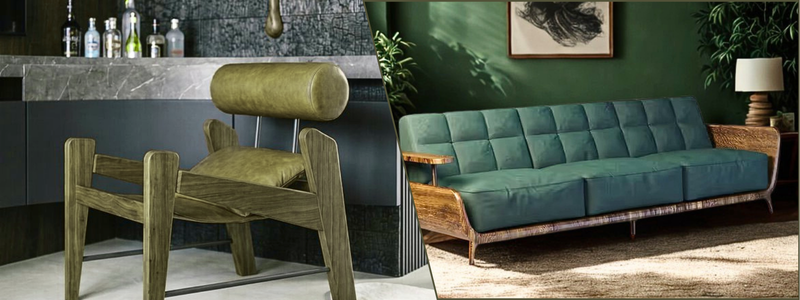
Let’s start with probably the most common of them all: the home furnishing industry. Everybody likes and wants to have custom furniture design services. The thing is, a true bespoke carpentry isn’t cheap. That being said, there’s still room for buyers to have a taste of that tailor-made furniture without breaking the bank. A fine case in point: the IKEA Product Planner. Even when the (assembled) product is actually made up of mass-manufactured parts and components, at least some degree of customization can go a long way to liven up the room and personalize the atmosphere.

We’re pleased to report that the IKEA Product Planner has just about every feature buyers need from a 3D product configurator. It comes with an intuitive user interface, dynamic pricing, and save and share options. Take the desk configurator, for example; it has three component categories, including desktop, left support, and right support, with each category offering a multitude of styles, colors, and materials.

Every single change in a component gets displayed on the main product image with instant real-time rendering and updates the price information. The same thing applies to other products such as dining chairs, storage, and even entire rooms. IKEA isn’t the only home furnishing company using a product configurator. Herman Miller also famously offers an even more comprehensive version of it with AR capability to boot.

RELATED: Top 51 3D Product Rendering Design & Best 3D Visualization Services Companies in the US

Motor vehicles

Major carmakers like BMW, Porsche, Mercedes-Benz, and Tesla, among others, have their own versions of product configurators with varying qualities and rendering speed. People seem to believe that the automotive industry is among the big leagues of 3D product configurators. It might be true in terms of scale, visual quality, and the range of options provided, but they rarely give buyers a smooth customizing experience.

Try any of them once on a computer, and don’t be surprised if you get the sense that the configurator isn’t likely optimized for all devices. If it’s slow on a computer, chances are it’s even worse on a smartphone. A likely reason is that people aren’t exactly into buying new cars online, meaning carmakers have no real incentives to make the online buying experience better. People want to see, touch, and experience the expensive thing they’re about to buy in person.

Be that as it may, the configurators allow people to at least “test build” a particular model they like. It gives them the opportunity to check the available colors, wheel sizes, interior trims, audio setup, and accessories (spoilers, roof rack, fuel caps, etc.) before visiting the dealership. Does it boost sales then? Not directly, but it certainly gives potential buyers, who aren’t typically inclined to visit dealerships to see the latest models, some sort of an open invitation to browse the cars from the comfort of their couch at home.

RELATED: Top 43 Homeware Design Companies and Services for New Product Design, and 3D Modeling

Personalization runs deep in the apparel and footwear industry. Your shoes and jackets are parts of your personal expression, but sometimes the off-the-shelf options don’t quite cut it. A trench coat probably has the right color, but you don’t like shoulder straps; it comes with a really nice high-quality waist belt, but the buttons are in the wrong shape; everything is perfect, but the hood seems too much; you get the idea. Wouldn’t it be nice if you could customize every part of clothing and make it exactly as you like? It definitely would, although we’re not quite there yet.

Most configurators in the apparel industry offer very few customization options, perhaps colors and graphic arts, and that’s about it. They’re simple, making it quick and easy to fulfill on the sellers’ part. The problem with complex clothing, such as a trench coat, is that it has a lot of different parts sewn together. If the seller allows the buyers to customize everything, it can take days, if not weeks, to produce the right style. And in the world of the apparel industry, anything slower than a near-instant checkout is too long.

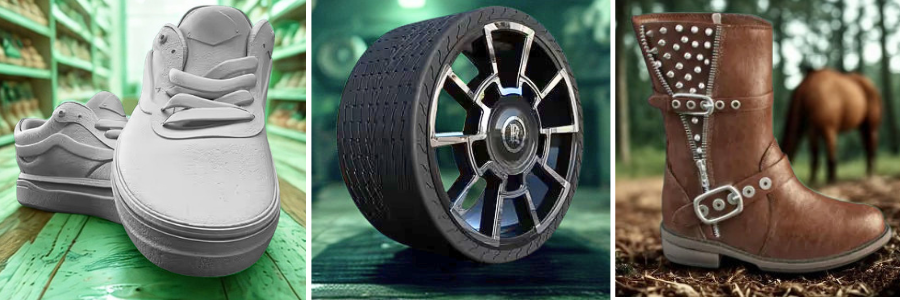
For the footwear industry, however, 3D product configurators thrive. Just take a look at the “Nike By You” customization program. Pick any shoe or jersey from the listing, and you can personalize it to your liking. Again, the customization options for jerseys are pretty basic, as in you can add a name and a number. The options for shoes, on the other hand, are plentiful. Just about every part of the shoe is customizable from the base color/material, the overlay, the backtab, the lining, the cupsole stitch, the lace, and of course the swoosh itself. Depending on the model, you even get to add custom labels. Changes appear in an instant, and you can zoom in and rotate the 3D visualization at any point. Everything feels snappy, smooth, and pleasant to use. Nike By You sets the benchmark for 3D product configurators in the footwear industry. Few alternatives exist, such as Converse By You, Vans Custom Shoes, DiVERGE, and Shoe Zero. All work in more or less the same way.

RELATED: Design Agency vs. End-to-End Product Development Partner for Successful Products

Gaming gear

Consumer electronic firms in general lack 3D product configurators. Even big companies like Apple and Samsung don’t offer a lot of flexible customization options for their products, except probably for the smartwatch lineup where you can play mix-and-match with the finishes and straps’ colors and materials. Some may argue that computers or laptops are customizable, but in reality it’s more like buying either the stock model or the upgraded one.

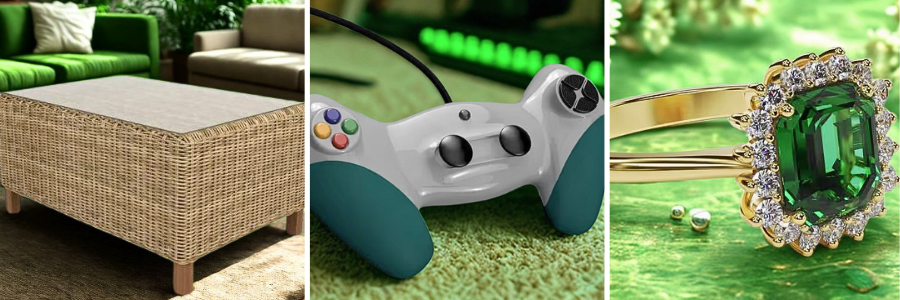
The gaming gear sector tells a better story, although not by much. For example, Microsoft has its Xbox Design Lab that actually looks like a proper 3D product configurator rather than those smartwatch buying options. It allows buyers to customize the “aesthetics” of the Xbox controller, including the body, grip, the trigger buttons, d-pad, thumbsticks, etc. You can’t use your own graphic arts, but at least it has a reasonable collection of illustrations to choose from. Popular alternatives include ColorWare and Custom Controllerzz, which also cater to PlayStation controllers, too.

Jewelry industry
building-interactive-product-configurators-for-ecommerce

There are jewelry companies that use 3D product configurators to help clients customize rings, necklaces, and maybe diamonds, but we’re especially focusing on the wristwatches category this time. Companies like Bamford and Undone are at the forefront of prioritizing wristwatch personalization, before you even make the purchase. As expected, you get to customize most (not all) parts like the dial, hands, straps, caseback, and so forth. Although they don’t allow you to choose the movement (the mechanism inside the watch), the personalization should be good enough for most buyers.

RELATED: Top 37 Sites to Hire 3D Freelance Jewelry Rendering Designers, 3D Artists & CAD Modeling Experts 

Closing thoughts

According to the Configurator Database, there were at least 1400 identifiable interactive renders used in e-commerce sites as of 2020. They’re used by some of the biggest companies in various industries from 38 different countries. The United States and Germany dominated the list with over 1,000 product configurators combined. Sounds like a big number, but it’s a mere fraction in the bigger scheme of things of e-commerce. At the same time, the data (trend) shows that a 3D product configurator is not a mere gimmick. It’s an increasingly popular tool to put more creative power into the buyers’ hands, giving them greater control over product design and ensuring memorable online shopping experiences.

And for sellers, a product configurator can only offer a competitive advantage, so long as it’s well-built and loaded with high-quality 3D visualizations. Cad Crowd has been around for more than 15 years, providing a wide range of 3D visualization services for companies of all sizes, from startups and small businesses to established brands. We have experienced professionals to help you build a robust 3D product configurator with photorealistic rendering services, responsive features, an intuitive user interface in the front end, and an easy-to-use management dashboard on the back end.

How Cad Crowd can help

Whether you’re launching a custom furniture configurator, an automotive product selector, or an interactive e-commerce experience, Cad Crowd provides access to vetted professionals with expertise in 3D modeling, CGI, CAD design, and interactive visualization. Our global network helps businesses build responsive product configurators with realistic renderings, intuitive user interfaces, and seamless integration, making it easier for customers to personalize products and purchase with confidence. Contact Cad Crowd today for a free quote and take the next step toward a successful product launch.

author avatar

MacKenzie Brown is the founder and CEO of Cad Crowd. With over 18 years of experience in launching and scaling platforms specializing in CAD services, product design, manufacturing, hardware, and software development, MacKenzie is a recognized authority in the engineering industry. Under his leadership, Cad Crowd serves esteemed clients like NASA, JPL, the U.S. Navy, and Fortune 500 companies, empowering innovators with access to high-quality design and engineering talent.

Connect with me: LinkedIn ✦ X ✦ Cad Crowd

3D Product Rendering Costs and Visualization Rates for Services in 2026


In the year 2026, eCommerce was confronted with one of the most important tools, which was also useful for digital marketing as well as virtual product services. That is the 3D product rendering process. Instead of focusing solely on traditional photography, most businesses now try the so-called CGI in order to create useful and realistic animations.

 What is 3D product rendering?

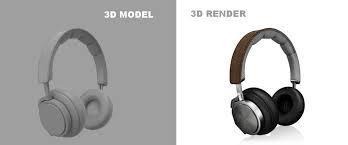
3D Product Rendering is the process that creates digital product visuals with the use of CGI software including Blender, 3ds Max, Maya, KeyShot, and Unreal Engine. The artists make a digital model and render realistic images or animations. The common use of 3D product rendering designers includes Amazon listings, product launch campaigns, furniture visualization, medical product marketing, packaging presentations, as well as AR and VR experiences.

The said technology is widely accepted in so many countries across the globe. A good example of this is the launch campaigns wherein different visuals are presented to show the different views of the product without spending much on expensive photography. The product demonstration may be done physically or even virtually. There is no problem with it because presenters are trained both to demonstrate the product face-to-face or online. 

image

How much will 3D product rendering cost in 2026?

The 3D product rendering cost in 2026 depends on multiple factors such as realism, animation, revisions, turnaround time, and the location of the studio. Some of the simple renders may cost only a little, while the premium renders or the interactive visualization can cost a lot of thousands. As time passes by, the developed markets evolve as well, most of the professional studio pricing services range between 150 dollars to 3,500 dollars. The source mainly focuses on the U.S, Canada, UK, and other high-cost developed markets, which is really helpful in benchmarking the market pricing. The industry pricing guides in 2026 provide a consistent structure on how a basic studio render should remain on the lower end, whereas the technical renders, 3D animation, and visualizations that are interactive must be significantly higher in cost.

RELATED: Rugged Product Design Strategy: How Product Development Firms Can Deliver for Startups

So, from traditional marketing to a more advanced way, 3D rendering gives a lot of opportunities for the customers to give a more personal approach with the product even virtually. Through that, the kind of shopping which is traditional may be upgraded even at the comfort of your own home. Product demonstrations also may be done online so the customers will not experience difficulty in making a better decision. Most of the professional studios price services in the following ranges in the year of 2026. These apparently apply consistently across the US and UK-focused pricing guides.

Here are the 3D product rendering costs:

1. Basic studio style render


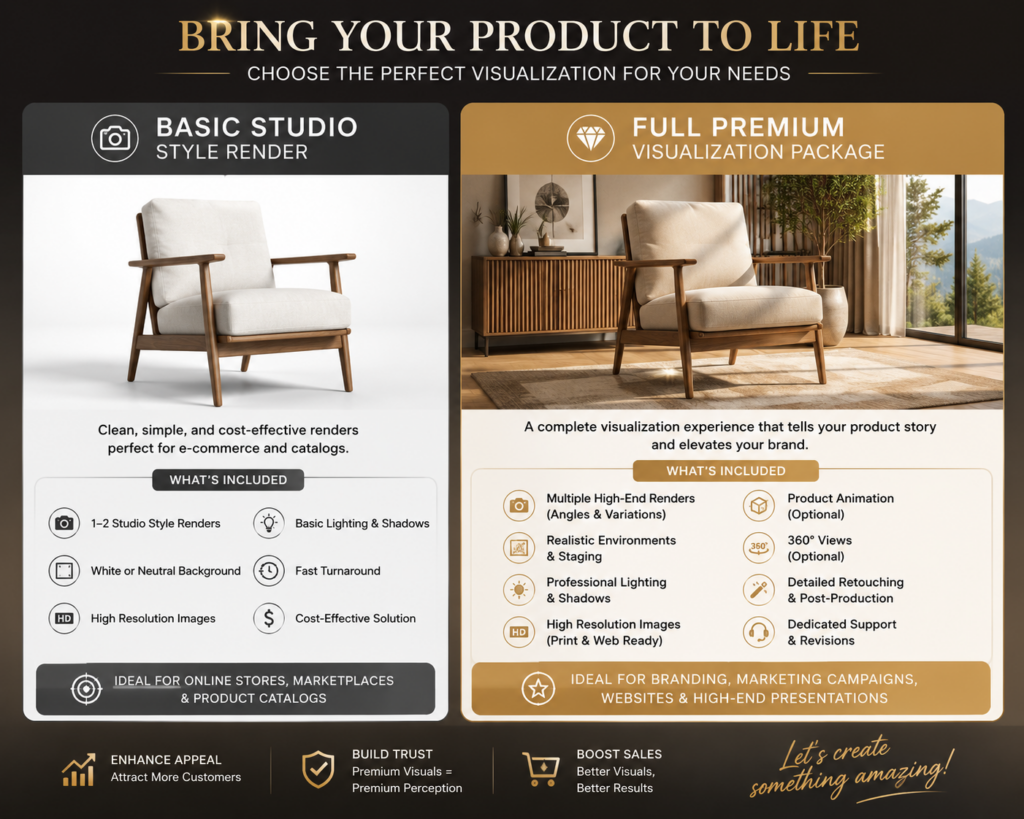
Basic Studio Style Render is one of the most common and affordable types of 3D product visualization services that can be used. This allows us to have a viewpoint on a product on a clean white, or even simple gradient background with the integration of professional lighting. The render typically focuses on the simple camera angles, shadows and reflections, and accurate product shape. The average cost in 2026 for the level of beginner or freelancers is probably $150 – $300, the mid level studio is $300 – $700, and premium photorealism lies on $700 – $1,500. The factors that affect the pricing include product complexity, resolution requirements, and the number of the render angles.

Beginner or freelancers $150 – $300
Mid level studio $300 – $700
Premium Photorealism $700 – $1,500

2. Lifestyle render

Lifestyle Render refers to a product that is within a realistic environment to help the customer and clients have an overview or to visualize the real-world usage. Rather than utilizing a simple or plain background, Lifestyle Render can make the product look like it is inside the room, outdoors, or in a luxury commercial scene. This is typically more expensive because the artists must create the props, have a realistic atmosphere, and include a detailed composition.

Lifestyle rendering depends on the cost and the complexity of the project. The estimated cost for the simple lifestyle scene is around $500 – $1,000, and for the mid-level realism, it costs $1,000 – $3,000, and $3,000 – $10,000 for the premium cinematic scene. This is costly since it needs a production team as well as time so that the artists can have the chance to make and create the entire environment and not just render the product.

RELATED: 3D Modeling Services: How To Boost Marketing For Lifestyle Products

Simple Lifestyle Scene $500 – $1,000
Mid level Realism $1,000 – $3,000
Premium Cinematic Scene $3,000 – $10,000

3. Technical/exploded render

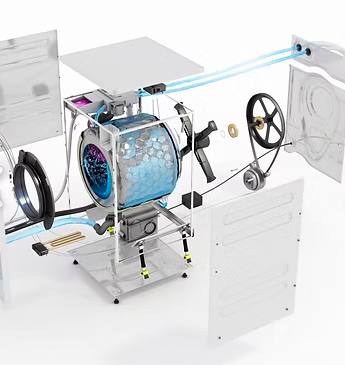
Technical or Exploded Render separates the product components to be able to showcase the internal structures, assembly systems, and engineering details. This render is typically detailed and is commonly used in the industrial design services, manufacturing, automotive marketing, medical devices, and product demonstrations. By using this render, it will be possible to explain how a product works, the various internal mechanisms, material structures, and the assembly instructions. The average cost in 2026 is that it ranges from $400 to $15,000. For the simple exploded view, it is in the range of $400–$1,000, and for mechanical products it is about $1,000–$5,000, and lastly for the industrial and mechanical systems it ranges in the price of $5,000–$15,000 or more.

image
Simple Exploded View $400 to $1,000
Mechanical Products $1,000–$5,000
Industrial and Mechanical Systems $5,000–$15,000
image

4. Product animation

For the product animation, the costs depend on the animation type. Such, if it uses a simple 360 spin, it ranges from $500 to $2,000, and for the short product animation it is about $2,000–$8,000, and $10,000 to $50,000 or more for when a client wants to use a commercial CGI animation. Product animation leans into having a moving 3D video, which shows the product with the use of motion, transitions, and simulations, as well as storytelling can also be applied when using this render.

RELATED: What Factors Influence 3D Animation Services Rates, Costs, and Pricing for Companies?

The animations are costly since they involve motion design, editing, sound synchronization, rendering, and modeling. These are commonly popular in the field of TV commercials, product launches, campaigns, social media ads, and many more. The common animation styles that can be seen here are the feature demonstrations of the product, the physics simulations, and the cinematic commercial animation.

Simple 360 spin $500 to $2,000
Short Product Animation  $2,000–$8,000
Commercial CGI Animation $10,000–$50,000

5. Full premium visualization packages

Full Premium Visualization Package is a complete CGI solution which integrates the various 3D rendering services into a single large-scale project. The packages are often seen in manufacturers, automotive firms, luxury companies, and many more. In addition, the packages include the animation, 360-degree viewers, AR-ready models, and lifestyle scenes.

The pricing ranges from $3,000–$10,000 for the small business packages, and for the mid-scale brand package it is $10,000 to $50,000 and lastly for the enterprise visualization system it will cost around $50,000 to $250, 000 and above. These are pricey since the project involves a lot of 3D artists, directors, and teams that will really guide all throughout the process-making.  These packages are frequently used by big firms to keep their visual marketing consistent throughout print advertisements, social media, eCommerce, websites, and augmented reality platforms.

image
Small Business Packages $3,000 – $10,000
Mid Scale Brand Packages $10,000 – $50,000
Enterprise Visualization $50,000 – $250, 000

TOP REFERENCES FOR 3D RENDERING COST

BIM Home Studio

1. BIM Home Studio 

BIM Home Studio is a professional pricing reference that has a 3D rendering service that is found in the U.S. market. This platform explains why the render varies when it comes to costing because of the factors that are based on realism, revisions, lighting, and the production workflow. The BIM Home Studio Pricing Guide is a great help in gaining knowledge about the visualization pricing in 2026. This platform leans on architectural visualization, and it helps businesses estimate their budgets for their projects accurately. This source is a great help as to why CGI professionals in the market charge more value and cost when compared to the low-cost outsourcing services. By utilizing this platform, the client or the user have access to the information because this source highlights the importance of realism, GPU rendering power and post-production when it comes to pricing.

RELATED: The career path of CAD engineering, salary, rates, and more

fortesvision logo

2. Fortes Vision 

Fortes Vision mainly focuses on explaining how a professional rendering studio should structure their pricing, especially for the visualization projects. This is really helpful because every platform charges differently, and with this, they can have an overview of what’s the most appropriate pricing and charges are. The benefits of using this source are that it explains and gives information on the pricing transparency, which is best for being a reference for commercial visualization pricing. Fortes Vision is helpful since it discusses how the quality standards, revisions, and studio expertise affect the rendering costs in the market.

Alden Studios

3. Alden Studios 

Alden Studios is best for the product rendering specific pricing, animation pricing, and for the technical rendering categories. It breaks down the studio, lifestyle renders, product pricing and many more. This is best for the tables and market comparison. This source covers the various visualization changes and it is useful for the e-commerce and manufacturing industries. This guide is seen as a valuable article since it discusses the different rendering categories together with its cost.

Realspace 3D

4. RealSpace 3D 

RealSpace 3D allows the clients to have an overview of how developed market studios should position themselves. In this source, it explains why the rendering costs could range from $200 to $10,000 or more, and such will also depend on the quality and complexity of the project. RealSpace 3D has strong professional credibility, and it might be costly and not ideal for smaller businesses. RealSpace 3D is a great help for the discussion of luxury visualization services and the enterprise grade CGI production in the market.

Pixready

5. PIXREADY 

PIXREADY has a specialization in ecommerce CGI, and it mainly talks on how a brand uses 3D rendering designers rather than traditional photography. In this platform, it discusses the CGI versus photography and it also covers the scalable product catalog rendering. PIXREADY is an excellent source for discussing how a CGI is turning into an ecommerce while minimizing the costs for traditional photography. 

RELATED: Medical Device Design: A Guide to Service Pricing, Costs, and Rates for Companies 

Cylind Studio

6. CYLIND 

CYLIND mainly focuses on the field of strategic value when it comes to the 3D visualization aside from just pricing. It showcases how design creation, approvals, investor presentations, and business decision-making are all aided by rendering. This source is useful for the enterprise visualization articles, however, it is more on the technical side and is less focused on e-commerce. This is the best option to use as it talks about rendering as an investment compared to just being a visual asset. 

Transparent House

7. Transparent House 

Transparent House acts as a premium when it comes to the CGI and visualization studio. It focuses more on the high-end 3D product rendering pricing for the developed markets just like in the United States. This guide is leaning more on the photorealistic rendering services for product visualization, ecommerce CGI rendering, and animation services.Using this platform is a great help for businesses in knowing and understanding the cost structure. Also, with this you can begin the premium-quality rendering. Although it may be too expensive for startups to utilize Transparent House since it focuses more on high-end brands. This source is really important because it demonstrates how high-end studios defend their higher rendering costs by high end marketing visuals, cinematic composition, and better realism.

Render3dquick

8. Render3DQuick 

Render3DQuick can provide practical prices when it comes to giving a guide for the 3D visualization projects in 2026. It mainly talks on the common pricing structures, which is for the renderings, animations, and VR experiences. This source is a great help for businesses who tend to estimate their budget for the visualization. Through this source, it explains the details and complexities that can influence the pricing breakdown. This is a great help for the beginners who are learning visualization pricing. Render3DQuick is helpful for the discussion of the pricing of freelancers, studio, project complexity, and revision management. 

360 Render

9. 360 Render 

360 Render mainly focuses on providing services to businesses to deeply understand why the product rendering design prices range differently. It talks about the relationship between realism, production quality and complexity. This platform mainly explains that the 360 degree product renders which may range from $500 to $3,000. The 360 render provides a strong explanation of pricing variability. This is valuable for how a quality affects pricing and the CGI replacing traditional photography. 

Archvisual studio

10. ArchVisual Studio 

ArchVisual Studio is a platform that offers one of the clearest pricing tables for 3D rendering services. It is made renderings such as, product rendering, lifestyle, aerial rendering services, and animation. When it comes to the product demonstration, it also has a beginner-friendly explanation to surely understand what the context really means. This platform also has a quick market comparison, and is leaning more on the architecture orientedness. By doing so, the customers’ hearts will surely be captured because architecture is more visual. People rely more on what their eyes could conceive. This matters because it allows the users and clients to have an insight into the rendering production pipelines, and understand the pricing benchmarks. 

RELATED: What are Architectural Rendering Costs, Rates, and Pricing for Companies?

Renderly

11. Renderly 

Renderly is a platform that is based in the United Kingdom. It does offer a perspective on the 3D rendering pricing, and explains various differences in the freelancers, studios, and agencies. It also explains factors on the project complexity and has a generalized pricing. On the other hand, it is crucial to make the article less focused on the United States and more globally balanced in developed markets so that clients and individuals will have the various knowledge and perspectives on the certain field. This is true because some customers may not be fanatics of United States products, and others may love US products. If we associate Renderly with the United States, we might lose other customers. 

Sonora BIM

12. Sonora BIM

Sonora BIM offers an explanation on what the drives rendering costs in the United States market. It explains the workflow, and covers the premium visualization factors. This is helpful in defining how professional studios defend higher rates and why rendering prices differ greatly in established economies.

Factors that affect 3D rendering costs

Product Complexity – A simple product is made to be easy and fast to render as it needs less 3D modeling, fewer textures, and simpler lighting, which means that it is also low cost when it comes to pricing.  One factor that affects the costing in 3D rendering is the complexity of the product because it reflects how the object is seen, the quality, and a lot of factors should be considered in making a decision on how much it will be priced.  Complex products tend to cost more as they require intricate detail, which takes time to build, especially in 3D. The benefit of investing in a complex product rendering is that it can help you campaign and market your product; it has its own value and quality. 

Modeling Requirements –  As the rendering proceeds to the next step, the product needs a 3D model. Modeling requirements do affect the costing as sometimes the models that will be used in the project are already existing, while on some projects or cases, an artist must begin from scratch to make it, which then can change in the project pricing. 

Level of Realism – The level of realism talks about how lifelike and photorealistic the final render must be. Not every project needs to be on a European level of realism, some do only need a clean visual for the products. Why does realism cost more? It is because of the material accuracy that when there is a need for photorealism, it will require a realistic behavior such as metal, glass, skin-like materials, fabric. This costs more as the photorealistic rendering artists spend a lot of time refining these things. 

Number of Angles – This means the number of camera views or photos that the customer requires for the same product. A single render means that it costs less than the multiple views.  When a lot of views are being requested, it means that it increases the production work. 

Turnaround Time – Turnaround time refers to how fast the client needs to finish the render. The cost of a project completed in two weeks differs from that of a project completed in a day. Rush jobs cost more because it needs priority scheduling, and overtime labor as the artists who are making it may work on nights or even on their day offs. 

Revision Rounds – This mainly talks about how the number of changes requested right after the initial render is delivered. A limited revision applies to most of the rendering services because they align revisions with the costing, as it requires more labor and time. When the request is to have a lot of revisions, it may increase the costs. Although revisions can improve accuracy, the quality of the output, and client satisfaction, it can be expensive. 

RELATED: What are Industrial Design Rates & Costs at Product Design Services Firms?

product design company

Future trends in 3D visualization

The 3D visualization industry is now advancing and growing in 2026 due to the digital commerce, immersive technologies, and real time interactive experiences. This has become the most important for the brands as they look forward in budgeting and investing in it, this helps them improve the quality of the products, which reflects to the brand they have. 

1. AR Shopping – AR shopping gives opportunities for customers to place and view their 3D products in the real life environment with the use of smartphones or the AR devices before they make decisions in purchasing them. Through it, it can improve the clients confidence toward their products, increase the sales, which can allow the buyers to keep coming back because they have the knowledge towards what they are buying. 

2. Metaverse Experiences – Metaverse design services require immersive virtual spaces where the customers can have the opportunity to interact with the products, and explore the branded digital environments. 

3. AI-Assisted Rendering – Artificial intelligence is used in AI-assisted rendering to aid with texturing, lighting, backdrops, rendering optimization, and creative thoughts in order to accelerate 3D production.

4. Virtual Showrooms – Virtual Showrooms are the digital 3D spaces where the customers have the chance to browse, and interact with the products that are found online just like they are in the real world or in the physical store. 

5. Real-Time Rendering – Real-Time Rendering lies on generating 3D visuals in an instant by utilizing advanced rendering engines. Using it makes it possible for the users to have an interaction with the products, where they can see the immediate changes made without the need of waiting for a long time. 

6. WebGL Configurators – WebGL configurators makes it possible for the customers to allow customizing the products in the web browser. Such moves and changes are the changing of colors, materials, and features while instantly seeing the updates in real time. 

RELATED: Photorealistic Rendering Services: Complete Price, Cost, Rates and Fees for Companies and Firms

product design firm

How to reduce 3D product rendering costs and visualization rates

3D product rendering tends to be cost-effective compared to using traditional photography, yet it is still costly due to the project’s complexity, revisions, realism, and requirements. Reducing the 3D rendering costs does not imply that you are sacrificing the quality of the products, but you take measures in making a smart decision that can help reduce the unnecessary production time, labor, revision cycles and costs. 

Provide existing CAD or 3D models because it will save a lot of time, and the CAD designer’s time to actually make it from scratch. If your project is in bulk, it is a must to order in bulk to reduce the costly changes that could happen later on. In addition, choose the best and right service provider. One provider that is a safe and wise decision to use is the Cad Crowd because it has vetted experts that could really help in reducing costs, while providing you the best quality. Businesses may obtain a high-quality 3D visualization on a budget by reducing extra work, revisions, and needless complexity.

How Cad Crowd can help

Being vital for eCommerce, 3D rendering is not only useful but vital in the digital world. The price for 3D product rendering varies depending on the complexity of the product, and as to whether or not it is realistic. The value of the product is also the reason why it stands out from the rest of the products. In choosing the best and appropriate product for you, the best thing to do is not primarily consider the cheapest, but the combination of good quality as well as the value of the product. If you are shopping online, consider all the discussions and negotiations shared during the product demonstration. Surely, you will definitely choose a good product. Contact Cad Crowd for a free quote.

author avatar

MacKenzie Brown is the founder and CEO of Cad Crowd. With over 18 years of experience in launching and scaling platforms specializing in CAD services, product design, manufacturing, hardware, and software development, MacKenzie is a recognized authority in the engineering industry. Under his leadership, Cad Crowd serves esteemed clients like NASA, JPL, the U.S. Navy, and Fortune 500 companies, empowering innovators with access to high-quality design and engineering talent.

Connect with me: LinkedIn ✦ X ✦ Cad Crowd

Virtual Product Visualisation: Benefits, Challenges & Future Trends at 3D Rendering Firms


The silent revolution of virtual product visualisation, from clever design assist tool to serious industry indicator, has been ongoing. Whether you have yet been swept off your feet by some gorgeously real 3D vision, you felt an intense passion for your product, or experienced some confidence when it ceased from being a set of worthy prototypes on your computer screen, then it is time to discover the beauty of virtual visualisation. It is a rough sketch-to-grandstand show-piece, a spin-to-realistic simulation tool, a fuzzy thought-to-phototastic facade finisher that can even make you feel what is missing: touch.

This is a sector that deals with the 3D rendering services of companies, something colorful, creative, messy, and exciting. This is a small community of artists and engineers dealing with polygons, lighting, shaders, and materials, with enough coffee that one small library full of coffee should, in fact, be a case study for some sort of medical research on the energizing properties of coffee. And finally, though the effect is serious in tone, that effect has been arrived at in such a way that a certain effect has been produced, a certain look has been arrived at in order to make that look, that effect, look as such.

This crossroads of cyber wizardry, craftsmanship, and nose-to-the-grindstone work ethic is, of course, the ideal crossing of dream meets design, hands are shaken, smile is shared, etcetera, that is the industry that has to do with the virtual visualisation of products. Platforms like Crowd are literally filled with talented 3D visualisation freelancers who not only have what it takes to produce such masterpieces, but can do so at prices that are significantly within most budgets.

RELATED: The Importance of Iteration in Product Development & Working with Product Design Companies

Virtual product visualisation: the need of the hour

If one considers what a list of the superpowers this virtual visualisation software might have, then a list with speed, clarity, convincingness, and savings will be the most definite. Not that many software systems have such a grand background as this software does. It is the service that the designers need, the one that removes resistance from the process of design. This is a service that businesses require as it saves them a pretty penny. This is the service that consumers need because it can show them what they are going to buy even before they reach for their wallet.

The high level of relevance associated with high-level influencers is connected to the revised buying expectation due to the created environment. Consumers would not want to be left speculating about what it might look like. Consumers want to Zoom In on it. Consumers want to Turn It Around. Consumers want to know what it feels like to see it, Turn It Around in one’s brain, maybe even touch it in one’s own environment. It has also reduced the risks that exist with development. The kinds of problems that existed before were a nightmare for prototype design companies and for product development on an industrial scale.

The problems identified in the computer simulation can be easily corrected in a few minutes. Materials, colors, assembly, and mechanisms can now be developed on a computer without the use of prototypes. They are also aware of the importance that the business attaches to the cost of the reusability of the virtual imagery: the imagery here includes pictures that are intended for presentation purposes, advertisement, investment presentations, instruction guides, and websites, to name a few. This is used on application software that has AR capabilities and, in return, gives some form of return on investment, which increases with age.

RELATED: Prototyping Techniques Utilized for Complex Products at New Product Design Companies

Human touch in the digital era

Product rendering services remains a very human yet highly technical process that requires a user who has made all the decisions regarding positioning the lights, how the surface will be reflected, and the style that will carry the message of that product’s temperament. High-tech software is one of the many useful tools and does not replace the creative vision of the artist. This would concern itself with the way a real matter behaves when it exists within a natural setting.

They must come to realize how a particular type of plastic differs from a particular type of ceramic, for example, regarding reflectivity or how brushed aluminum changes when diffused lighting is accounted for. It means the researcher has to do some research on the product until one is able to appreciate its structure, purpose, style, and characterization of the said product. An image is the voice of a story-the result of the human vision, not the algorithm from a computer.

This is perhaps the reason why most businesses are now on the lookout for professional product concept design freelancers. Most professional artists are known to have a certain detail, which is necessary because there is a certain touch required to take the image further than is required in a common composition. With the help of websites like Cad Crowd, it’s easy to bring all such freelancers together, and it is easy for businesses to reach professional artists who understand the entire concept of image rendering. The whole setting makes it easy to locate a visual artist because they are solely dedicated to creating images that can make a particular product look attractive.

RELATED: Wearable Product Development: 6 Key Challenges for Product Development Companies

product design firm

The advantage of making visualisation a superpower for designers 

The list of potential benefits which might be gained from product visualisation and photorealistic rendering services in a virtual realm is so rich that a couple of chapters might have been devoted to it, but here is the Cliff’s Notes version. Number one, the potential use of product visualisation is that a product might be contemplated from a perspective far, far back, because development may take a far-and-wide path. Then, of course, there is what is called consistency, because this cyber world is completely controllable. The lighting is consistent. The angles of the cameras are reproducible.

The colors are consistent. The best that the best photographers can do is inside the studio, but once it is a matter of the natural environment, the sun may not be willing to play along, the prop men may fall, or the shadow may appear. The explanation can also be made simpler, even to the non-engineer investor, with the use of virtual visualisation. This is because he does not have to listen to the opinion of the engineers. Now, he can show his own beautiful 3D view, which clearly shows what the product will look like. It is worth complimenting the presence of the clients, because clients are human beings who need clarity.

It is worth complimenting the presence of team members, who make things simpler with less ambiguity. Everybody is going to be thrilled that the discussions whether a certain curve has to be three degrees more acute are a thing of the past, whether a product has to be red are a thing of the past. Actually, this is a very strong aspect, a real-life scenario which I believe has been highly underrated. The product can be installed within a kitchen, office, studio, bedroom, or room environment, as well as within a real-life environment.

This, in my mind, is a great benefit to the consumer, who now gets an opportunity to visualize his own product within his surroundings, thanks to 3D visualisation designers. More importantly, he gets a chance to ensure that his product is perfectly harmonized with the surroundings it’s supposed to keep, which is basically what his product is known for. 3D rendering service providers can also prepare an animation story for any product, keeping in mind light effects, color contrasts, and presentation style.

RELATED: Why 3D Product Models Are Replacing Traditional Photography for Product Design Companies

This is the reason why, while models in the past served only as a way to allow a potential user to get an idea of what the product might look and feel like, modern models can already “communicate a sense of feelings linked with luxury, excitement, reliability, simplicity, and innovation.” Indeed, people are hardwired to respond very viscerally to emotionally charged imagery, so “the business knows how much more impactful visual storytelling is when a new idea is introduced into the environment.”

Where collaboration tools really deliver

However, with the progress made in product visualisations in the computer age, collaboration software has reduced potential miscommunication within groups. The cloud software has actually come a long way with such advanced features that make it easy to share models in real time with 3D artists, engineers, managers, and clients. Now that virtual reality is more user-friendly, design houses have also begun collaborative reviews in the realm of VR. A reviewer can just stroll around his or her own creation, take a look at details, and find out what’s going wrong with his or her own creation, as one does when collaborating on a common shared workspace.

Of course, this is not exactly a home workshop with a hint of saw-cut wood in the air, but boy, it’s full of detail. This, therefore, is a blessing in disguise, even for product design freelancers. This is because of the latest developments within the scope of project management: a freelancer recruited from the Cad Crowd website is easily part of the design process at a particular company. The gap has been closed while talent has multiplied. A complete environment has been made, which itself is a part of the whole globe.

RELATED: How to Use 3D Product Modeling and 3D Product Photography for Company Advertising

Computerized product visualisation to build brand identity

It is not a logo, but it is a voice, personality, style, and promise. In regard to presentation, it is infinitely significant how a consumer is going to interpret that identity. Product visualisation has also been a way of speaking aloud. Colors, lighting, moods, and compositions form part of brand signatures. This is because such visual stimuli, through consistency, are what give a brand an emotional association. It is the clients who are given the chance to associate certain visual stimuli with the brand itself.

For instance, in a high brand situation, the effects of lighting style may even go to dark shadow with a reflection of silk, while in a fun brand’s situation, colorful, soft, and warm would be applied. For a technology-focused brand, the 3D rendering expert would use a clean background of geometric shapes, and this is communicated through visualisations before the marketing message is read. This would make it a visual element that has to ensure continuity in the transition of ads, packages, and even interactions within their respective platforms. It is an element that would require development in terms of creating cohesion in the user experience.

consumer product design services

Challenges along the digital trail

Inevitable, of course, in even the most fanciful technologies lurk a couple of Gremlins within. Even as product visualisation seems to be waving the magic wand, the following two challenges that keep graphic designers wide awake are literally overlooked by the former:

This is to do with one of the more fundamental challenges: that of the software learning curve. The software that is used in 3D rendering is also changing every year, with a different set of skills, a different set of controls, and the latest software used to make even the smallest change in a different way altogether. This particular set of skills, which a particular product rendering artist has, respecting caustic, subsurface scattering, reflections, and detail, takes a rather long time to acquire. Even a beginner would, within an infinitesimally small amount of time, realize that what used to take a click of the filter button now takes a whole lot more.

RELATED: How Successful Companies Utilize 3D Product Modeling Services for Compelling Product Imagery

The old nemesis is speed, which has not yet been tamed as far as rendering is concerned. It is a hungry process, especially when rendering high-resolution images, to say nothing of rendering as a final product itself. The rendering farms of such animation houses may have to be huge, but on the other side of the track, large scenes with great detail, as well as high-order lights, take hours to render. In most cases, the artist renders, sleeps, and wakes up to find the computer still computing the bounce of the light, as if contemplating the biggest questions of life.

It is a really tricky element because it might not be necessarily impressive might need precision. Precision is about materials, sizes, tolerances, and colors that must meet the product specification exactly. The design might be awesome, but it might not be precise, which indicates there will be a problem with the design when it is actually produced. This could also be a tricky situation for the communications between teams, such as engineers speaking from a technical specifications perspective, artists from a visual metaphors perspective, marketing teams from an emotional impressions perspective, and so on.

This is why freelancers can sometimes be pretty useful to businesses, as they might have knowledge that helps fill the language gap. It is, of course, a situation wherein the consumer might even become a problem when he reaches the conclusion that the copy is even more pleasing to the eye than the product itself. It is a fact that computer-generated lighting is never “unflattering,” computer-generated blemishes are never spotted at the worst possible moments, and so on. It is a line that has to be walked with extreme care at a point when it is a matter of rendering.      

RELATED: Product-Centric vs. Customer-Centric: Which Is Best for Consumer Product Design Companies?

The future of virtual product visualisation 

The future of product visualisation is a bright, exciting, unpredictable fireworks display, with technicians who have a bloodstream that has more caffeine than blood cells. The computer is becoming smarter, with rendering times becoming faster. New technologies are bursting on the scene with claims that they have revolutionized the industry before lunch. Then, of course, one success story arrives, making it a success within the design, marketing, and publicity communities. The effects of such changes are already evident in how the workflow for artificial intelligence used for 3D effects operates.

It is a tool that helps the product development artist develop a concept, change a material, or even determine how a lighting rig might look, even though no light ray has been calculated. Artificial intelligence doesn’t eliminate reliance on instinct, but essentially provides a full process from creation to completion, one that has been made even smoother by artificial intelligence. What the artists now have is more creative hours but fewer hours spent wrestling with all these pesky, gritty tasks, artfully disguised as digital tasks. The other exciting area is real-time rendering engines. Real-time rendering allows designers to analyze even the most complex scenes in real time, without having to perform many calculations.

That is similar to changing the materials on a chair and receiving a visual appearance that includes all the reflections, shadows, and environment. Real-time rendering has now empowered designers to produce quick concepts that can be refined. Augmented reality is now becoming such a sidekick that it is extremely useful in demonstrating the product virtually. Customers can now manipulate a virtual object in a real-world environment using smartphones or AR glasses. It is a very useful service because, in effect, customers are now able to manipulate the product virtually while at home.

RELATED: Why Companies Use Product Design Sketches during New Product Development and Design

This provides a massive advantage to the corporation that uses AR because, by definition, it fills the existing gap from new product design services to real-world surroundings, putting a seal of advantage over huge corporations. The area that has most to do with virtual reality, on the other hand, is rising. This is because this sector uses a certain realism in the process of visualisation that cannot be imitated on the screen. It is literally possible to see the product from the human perspective, going around it, taking a look from the side when standing on the floor, and estimating how that scaling is going to work in a complete environment. 

It is a different feeling when taking a look at a product design in a 3D environment on a flat screen-one is suddenly standing alongside it, feeling as though he or she could reach out and touch it inside of a virtual environment. In order to keep up with such developing technologies, the most sensible thing that the brightest 3D rendering firms can do is take immediate action. The reason is that this is the age of digitization, encouraging learning in a progressive way. This is why the brightest photorealistic 3D rendering firms can leverage technological knowledge combined with creativity. 

3D product modeling designers

Avail online product visualisation solutions now 

There is no doubt that the visualisation of the virtual product is the most adaptable force in product design, marketing, and experiences. The list of factors is endless, while difficulties are overpowered easily, with a horizon full of bright technologies. Real-time rendering, Augmented Reality, simulation software, anything is out of bounds, it would seem, as if with infinite enthusiasm awaiting. 

Every day, freelancers and firms specializing in 3D rendering come together to join hands and push past boundaries to create amazing visualisations, statements, and striking images. This can be a great time to unleash the potential of “Virtual Visualisation” if it is going to speak with clarity, accuracy, and distinctness about your thoughts. 

RELATED: Sustainable Product Design and Product Development Principles for Firms to Consider

How Cad Crowd can help

If you are looking forward to working with some professional freelancers who can make his dreams come true, believe me, Cad Crowd is a great place to look for painters of this art. In fact, this is a great page that recommends different talented services on “Virtual Product Visualisation” and a number of talented artists who can make your dream come true, visualizing your thoughts with a great story to tell. Contact us for a free quote.

author avatar

MacKenzie Brown is the founder and CEO of Cad Crowd. With over 18 years of experience in launching and scaling platforms specializing in CAD services, product design, manufacturing, hardware, and software development, MacKenzie is a recognized authority in the engineering industry. Under his leadership, Cad Crowd serves esteemed clients like NASA, JPL, the U.S. Navy, and Fortune 500 companies, empowering innovators with access to high-quality design and engineering talent.

Connect with me: LinkedIn ✦ X ✦ Cad Crowd

3D Product Rendering as a Cheaper Choice in Marketing Your Company or Freelance Services


You have a killer product. Perhaps you’re a small business introducing a new line of skincare. Or you’re a freelance designer featuring custom furniture. You want your product to look perfect in ads, on your website, and across social media. In the past, that would involve hiring a photographer, constructing a set, reserving a studio, and waiting days—or weeks—for edits.

But imagine if you could bypass the entire photoshoot. No lighting problems. No reshooting. No costly logistics. Simply deposit a CAD file in the lap of a 3D artist and voila. It magically turns into marketing gold. That’s the magic of 3D product rendering services, a marketing game-changer for businesses and freelancers who need sleek visuals without breaking the bank. At Cad Crowd, you’ll discover some of the best names in the field who can provide the most incredible 3D product renders you can’t get anywhere else.


🚀 Table of content


Cost comparison: Rendering vs. photography

Let’s discuss numbers before we get into the magic of 3D. Classic product photography is not inexpensive. You’re paying for:

  • Studio rental costs
  • Photographer’s hourly or daily fees
  • Set designers and stylists
  • Props, lighting gear, and backdrops
  • Post-production editing hours

Even a small shoot can cost thousands, particularly if you’re shooting multiple product variations or angles.

Next, compare it to services that provide 3D product design services. Rendering artists can provide you with an endless number of pictures, perspectives, colors, and settings once your object has been 3D-printed (usually from a CAD or engineering file)—all without ever having to set foot in a studio.

Yes, the first modeling expense may cost $100–$500 based on complexity, but then what? You can create unlimited variations without having to do it again. Want a holiday-themed version? Simply replace the new background elements. Introducing a new color? Don’t need to produce it first—simply modify the material finish in software.

Customers seldom pick apart details while purchasing online, and current 3D product renderings are nearly impossible to discern from images. In order to simulate details like ambient shadows and metallic sheens on materials like glass and stainless steel, professional rendering tools like V-Ray, Redshift, and Blender’s Cycles are at your service. You name it, they can make it sound like brushed aluminum, moisture on a drink can, or the gentle drap of cloth. A well-done render is more than just a picture duplication. It goes above and beyond.

Require flawless lighting? Done. Need a matte black version set up in a chic city apartment? Easy. Yearn for a “sunset glow” atmosphere without holding out for golden hour? Click, drag, render. It’s versatility that old-school photography can’t compete with.

RELATED: 10 design principles for product development & industrial design services teams

Product design of a 3D printer and router model by Cad Crowd engineering experts

Product marketing adores consistency

Consistency throughout marketing materials establishes trust and enhances your brand’s identity. But getting that kind of consistency with photography is easier said than done. Lighting design services are different. Product angles are different. Retouching style is different depending on who is editing the photo. With 3D product rendering, consistency is inherent.

Rendering artists are able to perfect camera angles, lighting setups, and material finishes once product design is complete. No matter how many photos you make, they will all look and feel the same. Need a status report in six months? Worry not, for the virtual studio neither ages nor loses its equipment.

It’s great for companies that sell a lot of different products or for designers who have a portfolio to show. Every time, your portfolio looks polished, well-planned, and complete.

Rapid turnarounds without rush fees

Consider how often a product shoot is put off. Production holdups cause samples to be delivered late. Or worse, an eleventh-hour packaging shift causes everyone to scramble with traditional photography, which translates into rearranging, rebudgeting, and replanning.

Delays aren’t as bad while using 3D rendering. Renders may usually be created using prototype CAD models or early design concepts long before the product itself appears. In the case of new product introductions (NPIs), when anticipation before the launch is key, it is a tremendous marketing boon.

In-studio painters may also fulfill tighter deadlines without the stress of physical logistics. As a 3D design freelancer working on a rebrand or an agency juggling tight client schedules, that predictability is gold.

A/B testing and personalization flexibility

Imagine you’re launching a new water bottle line and you’re not sure how people would respond to a neon green or a white, minimalist design. Making both, photographing both, and doing A/B tests will teach you a thing or two. You may whip up both versions in a single sitting and see how people respond before committing to production.

This freedom to see lots of options affordably and speedily is marketing nirvana. It invites exploration and allows you to adjust your approach with fewer dollars at stake. Freelancers and design studios increasingly depend on rendering for just that purpose: more images, more flexibility, less budget blow.

Freelancers: Put your portfolio in overdrive

Your portfolio is your lifeblood as a self-employed 3D artist, industrial engineering expert, or product designer. People who hire you want to see not only the final product, but also the process behind it. When you render your CAD models, they become eye-catching pictures that showcase your abilities. A photorealistic render presents furniture, consumer electronics, or packaging design with an air of professionalism and polish.

You may construct staged settings with even better rendering. Would a modern Scandinavian bathroom be more your style for your toothbrush? Alternatively, the light fixture in your posh hotel lobby? You may save money on rent by creating or renting a virtual place instead. It combines branding, storytelling, and design.

No need to wait for perfect prototypes

Let’s be realistic: occasionally, prototypes do take an eternity. They’re costly, they shift a lot, and they usually aren’t camera-ready.

With 3D product rendering, you don’t have to wait. Once your CAD file has been signed off, rendering can begin at once. Marketing materials, investor pitches, and even packaging mockups can all be developed prior to your product landing on the assembly line.

This is especially useful in B2B, where early-stage visuals help sell ideas to stakeholders, buyers, or investors. Product development experts can demonstrate a finished product vision without physically having one in hand.

RELATED: Prototype design engineering: How well should your company’s prototype function?

Lifestyle images without the hassle

Photography in a lifestyle setting is infamously difficult. Everything you need is there: a stunning setting, expert models, weather forecasting, set stylists, etc. It might easily cost five figures for that type of shoot. To create a virtual environment for your goods, you might use the services of a rendering studio.

Your hiking boots on the side of a mountain path? Your blender on a marble top in a kitchen bathed in sunlight? Your earbuds suspended above a colorful tech backdrop? 3D does it—and within reach. And allows you to modify the settings for various geos, seasons, or customer groups without beginning again from square one.

That level of personalization is strong in product marketing. It enables your brand to speak to certain audiences in a way that feels customized, not one-size-fits-all.

Say goodbye to inventory constraints

One of the lesser-known advantages of 3D rendering design services? You can display products you haven’t even produced yet.

Are you planning ten different versions but only have one sample available? Sure, just make them all. Websites selling customized or modular items, like:

  • Furniture with various finishes
  • Clothing with color and size options
  • Tech devices with upgradeable components

Old-fashioned photography would involve taking pictures of each combination—a task that is impossible for most. With 3D product rendering services, you produce a digital master file and create endless variations.

Now your Shopify or WooCommerce store is complete, cohesive, and detailed, instilling customers with confidence in what they’re purchasing.

The downsides (And why they’re manageable)

It’s only fair to say that rendering isn’t ideal for all scenarios. Some hyper-organic materials (such as fresh food, fabric with random textures, or messy natural patterns) can be challenging to replicate convincingly. Traditional photography still reigns supreme when ultra-complex realism is needed for tactile or edible products.

However, the technology is catching up fast. For non-perishable goods, industrial design, packaging design services, or home goods, rendering hits the sweet spot of realism and control.

Another challenge? Finding the right 3D artist or studio. Quality varies, and a poorly rendered image will look fake. That said, platforms like Cad Crowd, Behance, or Dribbble help you vet professionals with strong portfolios.

3D model of a product design for an AI assistant and advanced walkie talkie

RELATED: Master product design costing: Top strategies for CAD services companies & freelance designers

How to get started with 3D product rendering

Ready to dip your toes in? Here’s how to get started without getting bogged down:

  1. Have a 3D model or CAD file ready: Most rendering artists can use OBJ, STL, STEP, or SolidWorks files. If you don’t have one, you can commission a product modeler to make one from sketches or reference images.
  2. Clarify your goals: Know whether you need a white-background e-commerce image, a lifestyle shot, or a hero image for an ad. Different needs require different rendering approaches.
  3. Review the artist’s portfolio: Photorealism is a form of art. Check for lighting quality, reflections, and material accuracy in their work.
  4. Communicate clearly: The more detail you provide (color, texture, context, mood), the better the outcome.
  5. Begin with a small set: Attempt a single or a couple of images as a test before going to a batch order.

The bottom line: Rendering is an intelligent investment on visual storytelling

Visual marketing is the key to effective product promotion for many consumer product design companies. The professionalism, dependability, and attractiveness of a product are evaluated by consumers in a matter of seconds. 3D product rendering lets you save money and keep creative control while easily improving your brand’s image. If you’re a corporation seeking to streamline your marketing efforts or an individual professional trying to make a splash, this method might be more than simply a cheaper alternative to traditional photography; it could be a game-changer.

How Cad Crowd can help?

When you think, “I need a stunning product photo,” think again about pulling out the camera. Take a look at how expert design may improve your visual presence instead. Working with Cad Crowd might lead to greater outcomes than you anticipate. Get in touch with Cad Crowd right away for a FREE quotation and start improving the public’s perception of your company.

author avatar

MacKenzie Brown is the founder and CEO of Cad Crowd. With over 18 years of experience in launching and scaling platforms specializing in CAD services, product design, manufacturing, hardware, and software development, MacKenzie is a recognized authority in the engineering industry. Under his leadership, Cad Crowd serves esteemed clients like NASA, JPL, the U.S. Navy, and Fortune 500 companies, empowering innovators with access to high-quality design and engineering talent.

Connect with me: LinkedIn ✦ X ✦ Cad Crowd