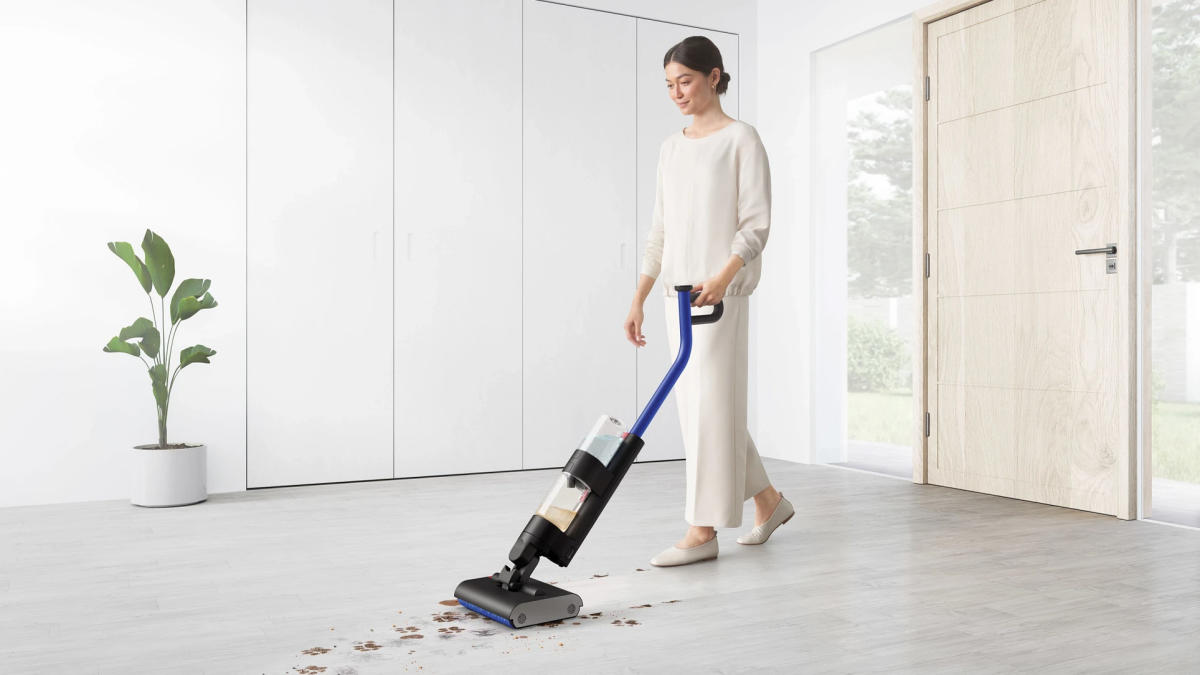
Dyson’s first dedicated hard floor cleaner doesn’t suck


It’s a new direction for Dyson: a floor cleaner without mention of suction, cyclone technology or any of its usual vacuum vocabulary. The Wash G1 is the company’s debut hard-floor cleaner, and it swaps suction for high-speed rollers, water and nylon bristles. It’ll go on sale later this year for $700/ £600, which is expensive but still cheaper than Dyson’s top-of-the-line Gen 5 vacuum. I got to test out the Wash G1 at Dyson’s HQ, a few hours west of London in the UK.

The product was born from the increased presence of hard floors in our lives. Dyson says there are fewer and fewer carpeted rooms in homes around the world. However, hard-floor cleaning (industrial processes aside) has remained a pretty manual process, usually involving mops (or Swiffer cloths, you monster) that leave smears and streaks. Typical mopping also leads to wiping diluted dirt and stains around your floors after the first dunk.

Dyson Wash G1 hands-on impressionsDyson Wash G1 hands-on impressions

Photo by Mat Smith/Engadget

Dyson’s method keeps the fresh and dirty water separate as you clean, with dual microfiber rollers that apply the water, mechanically removing stains and dirt. The company dabbled with this on its V15 Detect Submarine, which had a dedicated cleaning head with (much smaller) water compartments built in. The Wash G1 pulls dirty liquid up into its own container, capturing any physical debris into a slim tray with a mesh filter.

The rollers rotate in opposite directions, which helps lift stains and dirt. While testing it, the rollers also gave the cleaner a floaty sensation as I swished it around. The high-density microfiber cloths then absorb and trap both liquids and solid dirt, while hardened nylon bristles pull away bigger dirt and objects into a tray. The dirty water is also squeezed out of the rollers and pulled upwards into the machine.

The Wash G1 has 26 hydration points to “precisely” soak the microfiber rollers, ensuring they’re hydrated enough to tackle stains and dried dirt. The company claims there’s enough water in a single tank to clean the surface area equivalent to a tennis court – but that will depend on the machine’s settings.

There are three hydration levels, while an additional max setting drains the tank much faster, applying as much water as possible for the most stubborn stains. This doesn’t notably affect battery power, as the maximum setting would on a vacuum, because the Wash G1 isn’t pushing the engines harder – it’s just using more water. To reach floor edges, Dyson shifted the roller’s engines to one side so the right side can closely brush up against walls and edges.

Dyson Wash G1 hands-on impressionsDyson Wash G1 hands-on impressions

Photo by Mat Smith/Engadget

The Wash G1 can even perform a self-clean, using half of the clean water tank to flush out the system and clean the brushes. There’s no heating feature, but the rotation should wring out most of the water. This is all done while the Wash G1 is docked and charging, which, instead of the typical cable or rack that Dyson’s other vacuums use, is a flat surface that plugs into the wall.

After using up the clean water tank, it was straightforward to remove and refill – much easier than a coffee machine. The unit with both containers clicks out of the body so you can tip away the dirty stuff and refill it with clean water. The container for the filthy water has a wide mouth, so it’s easy to clean without touching the accumulated dirt.

One issue though: The dirty water tank is… gross. I understand the satisfaction of seeing the dirt and muck as you clean your floors, but a container of cloudy beige mystery is, in person, rather icky. Perhaps Dyson could make it out of a smoky plastic that obfuscates the dirty water, at least a little?

The way Dyson separates out liquid and solid mess also reduces the amount of sludgy muck you’ll get from cleaning floors with water (not to brag, but I may have cleaned a carpet or two in my life). It does this by ensuring that solids aren’t in the water for too long. Dirty water is pulled into its removable container through a pressure differential, meaning there’s also no chance for the dirt to meddle with motors, filters and other delicate parts.

A final microfiber roller then takes up any residual water, and Dyson says it buffs the floor to avoid a streaky finish. During my brief time with the Wash G1, it was still leaving a streaky finish, but maybe Dyson will fix this. After all, there’s plenty of time before this ships to consumers. In the UK, the company is aiming for a fall (well, Autumn) launch, with the Wash G1 coming to the US later this year. The demo space was also a reflective marble surface – arguably a more challenging surface to clean perfectly. My hardwood floors at home probably wouldn’t have shown streaks.

Dyson Wash G1 hands-on impressionsDyson Wash G1 hands-on impressions

Photo by Mat Smith/Engadget

This is Dyson’s first attempt at dedicated hard floor cleaning, and I still have a lot of questions about how well the filtration tray works. How much can you cram into such a slender little thing? We hope to get more answers when we take a closer look ahead of launch later this year.

The geomagnetic storm is a nightmare for farmers relying on precision agriculture tech


Space weather has been known to cause disruptions to GPS and communications systems, and perhaps no one is feeling those headaches more than farmers this weekend. reports that the heightened solar activity over the last few days has led to outages in the GPS navigation systems that guide some modern tractors from John Deere and other brands. The technology has allowed farmers to plant more efficiently in ultra-tight, straight lines, but they’ve been advised to temporarily stop using it due to the potential for inaccuracies that could cause havoc down the line come harvesting time.

John Deere’s tractors connect to what are known as Real-Time Kinematic (RTK) systems, 404 reports, which allow for precision planting down to the centimeter level. If farmers were to go ahead and plant without their usual accuracy, “we expect that the rows won’t be where the AutoPath lines think they are” when it’s time to tend and harvest the crops, Landmark Implement, owner of some John Deere dealerships, told 404 Media.

The timing is terrible — it’s peak planting season for corn, and one Nebraska farmer, Kevin Kenney, told 404, “All the tractors are sitting at the ends of the field right now shut down because of the solar storm.” Many farms have had to pause planting, while others are carrying on and just hoping for the best.

The geomagnetic storm we’re currently experiencing is the strongest observed in the last 20 years, and reached G5 levels on Friday and Saturday morning, which is considered to be “extreme.” It later died down some to , but is expected to on Sunday evening when some intense but slower-moving coronal mass ejections (CMEs) from the sun reach Earth. That’s great , but not so much if your livelihood depends on the technology the storm is interfering with.

The 2023 Echo Show 8 is on sale for $100 right now


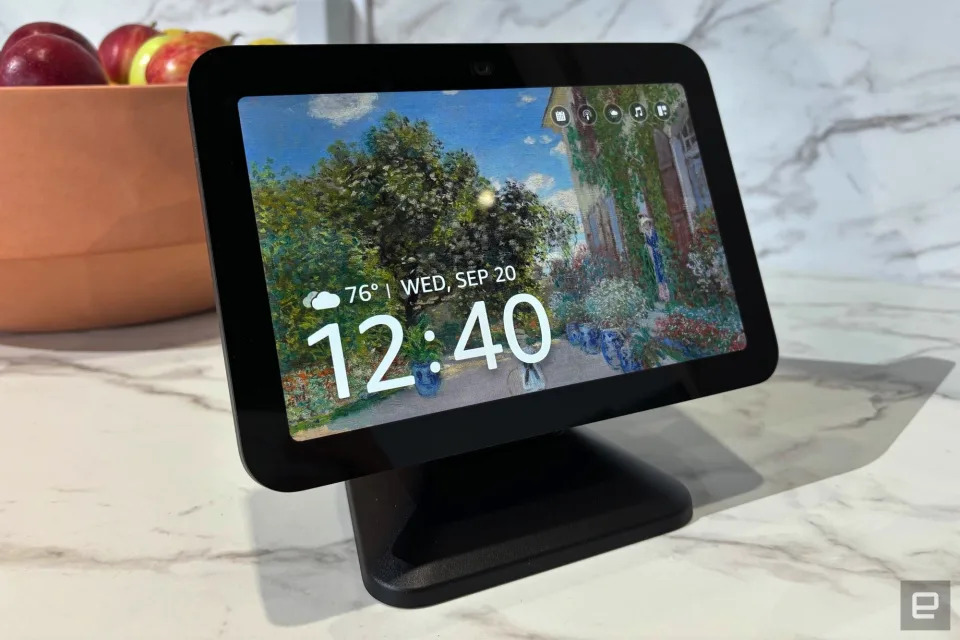
Last year Amazon upgraded its Echo Show 8 to make it look better, sound better and respond more quickly to Alexa commands. It made our best smart display list, and if you’ve been eyeing one, it’s on sale at a steep discount. The third-gen, 2023 Echo Show 8 is 33 percent off, bringing it down to just $100 ($50 off), only $10 off the all-time low. Amazon also has stellar deals on the Echo Dot and Echo Pop, offering them for $28 and $20 respectively.

Amazon

Amazon’s Echo Show 8 (3rd generation) has a new design and new features that make it more responsive to Alexa commands.

$100 at Amazon

The 2023 Echo Show 8 has a new design with edge-to-edge glass and softer curves that help it blend into your decor. Inside, it comes with new spatial audio with room calibration that allows for fuller sound than previous model. Meanwhile, video calling benefits from crisper audio and a 13-megapixel camera.

The new Adaptive Content feature changes what’s shown on the screen based on where you are in the room. If you’re standing far away, it’ll display easily digestible information in large font, like the weather or news headlines. As you get closer, it’ll switch to a more detailed view. It can also show personalized content for anyone enrolled in visual ID, surfacing your favorite playlists and other content.

It also boasts 40 percent faster response times for Alexa thanks to its upgraded processor. For privacy-conscious buyers, it has a physical camera shutter that’s controlled with a slider on the top of the device. There’s also a button to turn off the mic and camera. As mentioned, the Echo Show (3rd gen) is on sale for $100 in either charcoal or glacier white.

If you only need a small Echo speaker device for an extra room, Amazon is also selling the 5th-generation Dot for just $28, a steep 44 percent off the regular $50 price. That device has the best sound yet for a Dot device, while offering Alexa, smart home features and more. Amazon’s smallest device, the Echo Pop, also offers Alexa features and is on sale for just $20.

Follow @EngadgetDeals on Twitter and subscribe to the Engadget Deals newsletter for the latest tech deals and buying advice.


X is using Grok to publish AI-generated news summaries


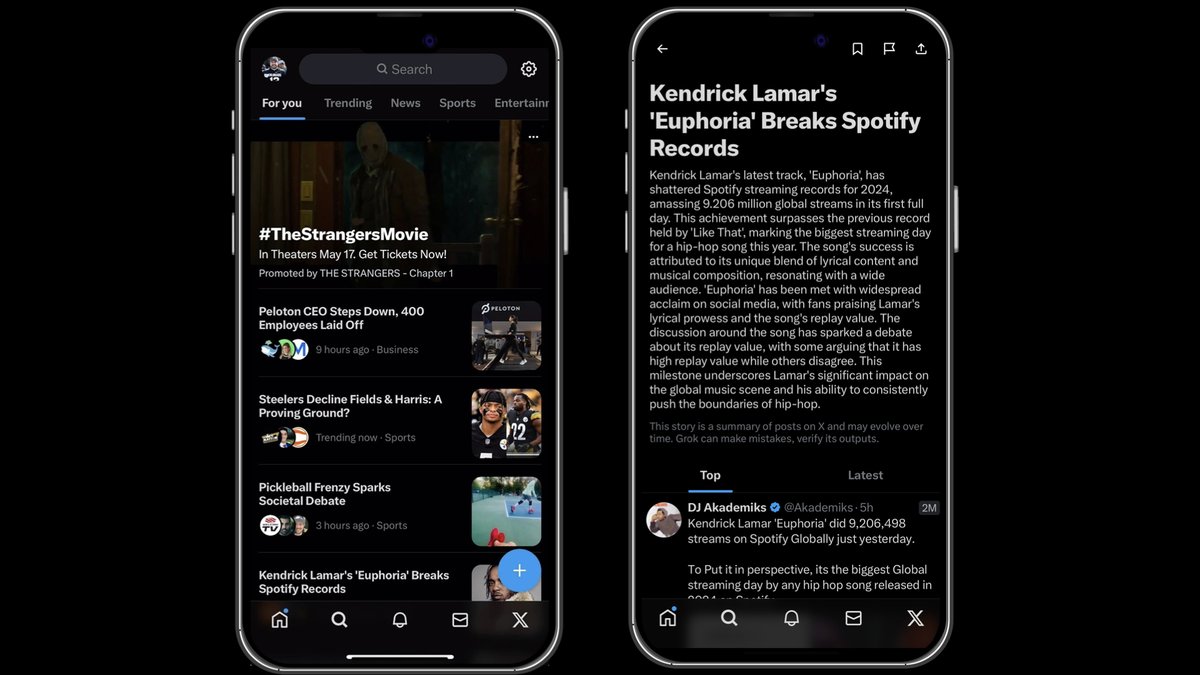
X is using Grok to publish AI-generated summaries of news and other topics that trend on the platform. The feature, which is currently only available to premium subscribers, is called “Stories on X,” according to from the company’s engineering account.

According to X, Grok relies on users’ posts to generate the text snippets. Some seem to be more news-focused, while others are summaries of conversations happening on the platform itself. One user a screenshot that showed stories about Apple’s earnings report and aid to Ukraine, as well as one for “Musk, Experts Debate National Debt,” which was a summary of a “candid online discussion” between Musk and other “prominent figures” on X.

If any of this sounds familiar, it’s also remarkably similar to Moments, the longtime Twitter feature that curated authoritative tweets about important news and cultural moments on the platform. The feature, which was overseen by a team of human staffers, was killed

Like other generative AI tools, Grok’s summaries come with a disclaimer. “This story is a summary of posts on X and may evolve over time,” it says. “Grok can make mistakes, verify its outputs.” Grok, of course, doesn’t exactly have the best track record when it comes to accurately interpreting current events. It previously generated a suggesting that NBA player Klay Thompson went on a “vandalism spree” because it couldn’t understand what “throwing bricks” meant in the context of a basketball game.


Apple’s second-generation AirPods Pro are back down to their lowest price ever


The latest generation of Apple’s eternally popular AirPods Pro are back down to their all-time low price of $180 at Amazon. The deal takes $10 off the typical sale price of $190 and a solid $69 off the $249 MSRP. The last time we saw this price tag was during Amazon’s spring sale in March. Apple updated the charging case when the iPhone 15 came out last year to give both devices a more universal USB-C port (both can also charge wirelessly). If you have an iPhone, we think these are one of the better bits of audio gear you can stick in your ears.

Billy Steele for Engadget

This matches the all-time low price we saw for Amazon’s Big Spring Sale back in March.

$180 at Amazon

The second-generation AirPods Pro (with the Lightning case) came out towards the end of 2022 — the case refresh didn’t alter the buds themselves too much, other than adding some improved dust resistance. That makes these a little older at this point, but new AirPods are not one of the things we’re expecting to see announced at Apple’s upcoming “Let Loose” event in May (we’re mostly anticipating iPad news). A more likely time for a new AirPods reveal is during the company’s annual iPhone event in September. But if you don’t want to wait around to see if such a debut materializes, this deal is a decent time to get your first pair. Or replace the pair you left on the train.

We gave the AirPods Pro a score of 88 when they came out. Engadget’s Billy Steele praised the effective active noise cancellation (ANC) and called the ambient sound mode one of the best on the market. Plus they work fairly seamlessly with all your Apple devices, offering quick pairing, fast device switching and hands-free Siri support. The audio itself is richer with more depth and clarity than with previous Pro generations.

All of that lead us to name them the best wireless earbuds for iPhones in our buying guide. Of course, they don’t work with non-Apple devices. Our current top pick from our guide for Android phones are the Google Pixel Buds Pro, which are currently down to $140 at Amazon after a 30 percent discount.

Follow @EngadgetDeals on Twitter and subscribe to the Engadget Deals newsletter for the latest tech deals and buying advice.


The Google Pixel Buds Pro are back on sale for $135


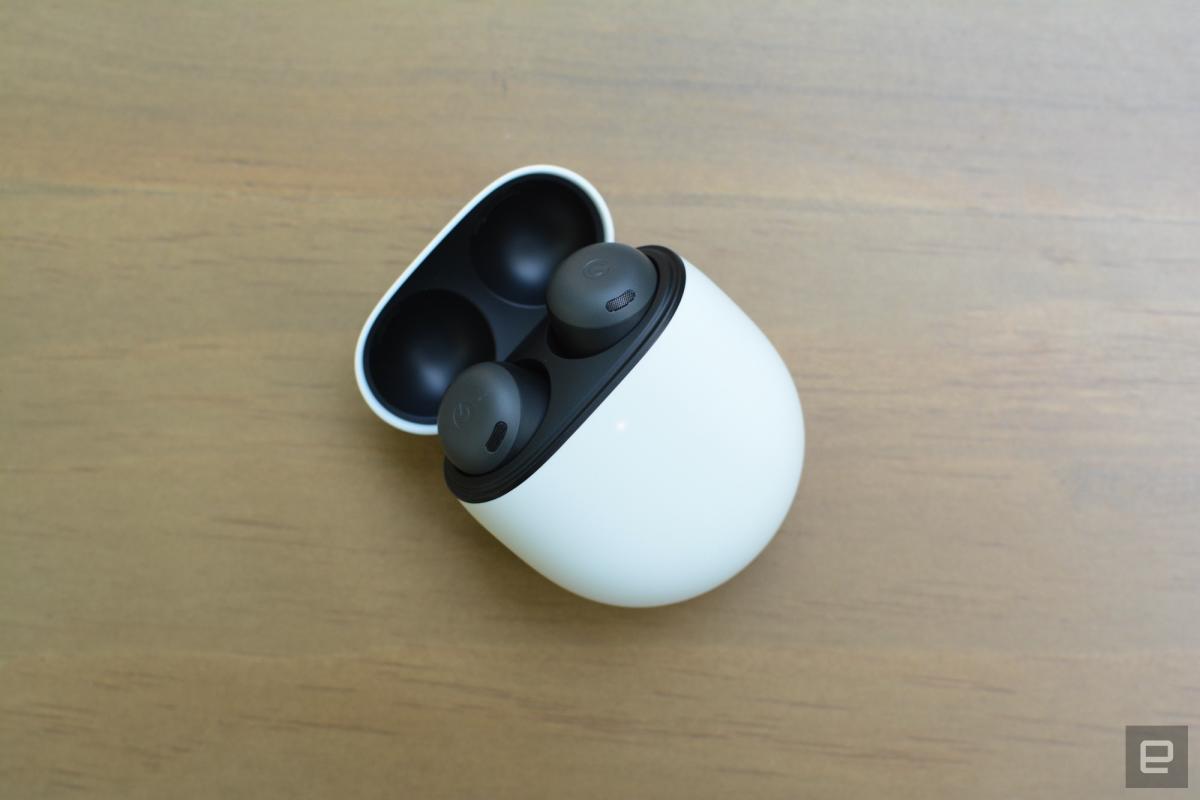
Google’s Pixel Buds Pro remain one of our favorite pairs of true wireless earbuds, offering robust active noise cancellation (ANC), punchy bass, reliable touch controls and a host of convenient features for Android users in particular. That said, given how competitive the wireless market is these days, they aren’t the greatest value at their standard list price of $200.

Today, though, Wellbots is running a sale that brings the pair down to a more palatable $135 with the checkout code ENGPIX65. This isn’t an all-time low — the buds fell as low as $117 in a similar deal last October and went for $119 for much of the holiday season — but it’s the best price we’ve tracked in 2024. For reference, the device dropped to $139 last month. This offer applies to each of the set’s colorways.

Photo by Billy Steele / Engadget

This is the lowest price we’ve seen this year for Google’s highest-end wireless earbuds.

Save $65 with code

$135 at Wellbots

Engadget’s audio expert Billy Steele gave the Pixel Buds Pro a review score of 87 back in 2022. By default, they have a sculpted, hyped-up sound with thumpy bass and elevated treble. It’s the kind of signature that won’t suit audio purists but should work well with modern pop music. As with many pairs, though, you can tweak the sound with a graphic EQ. The earbuds themselves have an IPX4 water-resistance rating, so they should be able to withstand typical workouts. Battery life is solid at roughly seven hours with ANC on or 11 hours with it off, while the case supports wireless charging. You can connect to two devices at once, and the pair supports in-ear detection, so it’ll automatically pause when you remove an earbud.

Maybe the biggest reason to consider the Pixel Buds Pro is how tightly they integrate with Android. It’s somewhat similar to how Apple’s AirPods work with iOS: You can call on the Google Assistant hands-free, quickly swap between paired devices, utilize adaptive and spatial audio modes, ring the earbuds remotely and access Google Translate, among other OS-specific features. Last fall, Google also added a “conversation detection” mode that automatically pauses your music and turns off ANC when you start talking to someone. All of this functionality is natively available on Google’s Pixel phones; with other Android devices, you can access most of the same tricks through a separate Pixel Buds app.

There are still issues to note. While we didn’t have any comfort issues in testing, the fit may be tricky for those with smaller ears. Call quality isn’t great, nor is the included transparency mode. For more discerning listeners, there’s no support for higher-quality Bluetooth codecs like aptX or LDAC. And again, this is a busy market: Other pairs like the Sony WF-1000XM5, Sennheiser Momentum True Wireless 4 or Anker Soundcore Space A40 can provide better noise isolation, sound quality or overall value in a vacuum. It wouldn’t be a huge shock if we saw a new model at Google’s I/O conference next month, either. Still, the current model remains a well-rounded choice for Android fans today, and this discount brings them down to a more appropriate price.

Follow @EngadgetDeals on Twitter and subscribe to the Engadget Deals newsletter for the latest tech deals and buying advice.


Here’s what to expect from the ‘Let Loose’ event


Apple has scheduled its next product showcase for May 7, a few weeks before the Worldwide Developers Conference gets under way. While the company is, as usual, being a bit coy about what’s on deck, the signs are all there. It had been rumored for months that Apple would refresh its iPad lineup in May. Sure enough, the image on the announcement for this “Let Loose” event includes an illustration of a hand holding an Apple Pencil.

Various reports over recent months have offered some insight as to what Apple has up its sleeves. So, with that in mind, here’s what to expect from the upcoming iPad event:

Apple iPad Pro (2022) Apple iPad Pro (2022)

Nathan Ingraham / Engadget

It’s been about 18 months since Apple updated any of its iPads, so its tablet lineup is due for a refresh. It won’t exactly come as a surprise to see Apple slot M3 chips into the latest iPad Pro models, since the most recent versions run on M2 chipsets.

Otherwise, the biggest update is expected to come in the form of OLED displays, according to Bloomberg’s Mark Gurman. That should bring richer colors and deeper blacks to the iPad Pro.

Since OLED panels are thinner than LCD panels, that should allow Apple to reduce the thickness of the iPad Pro. According to 9to5 Mac, the 11-inch iPad Pro will be 0.8 mm thinner at 5.1 mm, while the 12.9-inch model will be more noticeably slender, as the thickness is expected to drop by 1.5 mm to 5 mm. A leaker has suggested that the bezels could be up to 15 percent thinner than previous models as well.

Rumors have been swirling for a while that Apple may offer a glass-backed iPad Pro this year to enable MagSafe charging. Meanwhile, there have been hints that Apple will solve one of our biggest iPad bugbears and move the front-facing camera to the landscape edge of the Pro, as it did with the entry-level iPad in late 2022. That means the camera will be more optimally placed for those who use a Magic Keyboard or folks who simply prefer a landscape orientation.

Apple iPad Air (2022)Apple iPad Air (2022)

Nathan Ingraham / Engadget

As for the iPad Air, which Apple has left in stasis for over two years, that’s expected to get an upgrade to M2 chips from the M1 that the tablets currently use. There are rumblings that Apple will go with the older chip in the iPad Air to differentiate it from Pro models and ensure that the latter devices clearly remain its highest-end tablets. Reports suggest that the iPad Air’s front-facing camera is also blessedly moving to the landscape edge.

There is one other big change we’re expecting for the iPad Air, and I mean that in the most literal sense. Apple is rumored to be prepping the first 12.9-inch iPad Air. It’s likely to be the least expensive option for a large-screen iPad, even though that would run somewhat against the “Air” part of the name.

Display analyst Ross Young previously suggested that the 12.9-inch iPad Air screen would have a mini-LED display, but that no longer appears to be happening — at least for now. However, Young says that Apple may release an iPad Air with such a display later this year. Meanwhile, the new iPad Air models may have a larger camera bump, perhaps so Apple can add a flash.

The latest Apple Pencil with USB-C charging falls to a new lowThe latest Apple Pencil with USB-C charging falls to a new low

Engadget

Gurman reported last year that Apple was working on a revamped Magic Keyboard, but only for the iPad Pro, not the Air lineup. The updated keyboard is said to make the iPad Pro look more like a laptop, with a larger trackpad. It’s said to be made of aluminum to make it sturdier than previous models, though “the exterior shell of the Magic Keyboard will retain the cover material of the current model,” Gurman says.

In addition, Apple is expected to unveil a new Apple Pencil to replace the second-gen model. Dataminers have suggested that an updated peripheral could include a squeeze gesture to carry out certain actions and have Find My support. Some reports have indicated the next Apple Pencil could work with Vision Pro drawing apps too.

Even though the iPad mini in particular is getting very long in the tooth — the most recent model arrived in September 2021 — you probably shouldn’t expect a new model to show up at the Let Loose event. Not are we expecting to see a new base iPad. Reports suggest an 11th-gen iPad and an updated iPad mini may arrive later this year, but maybe don’t hold your breath for them.

Tinder is making it easier to share date details with family and friends


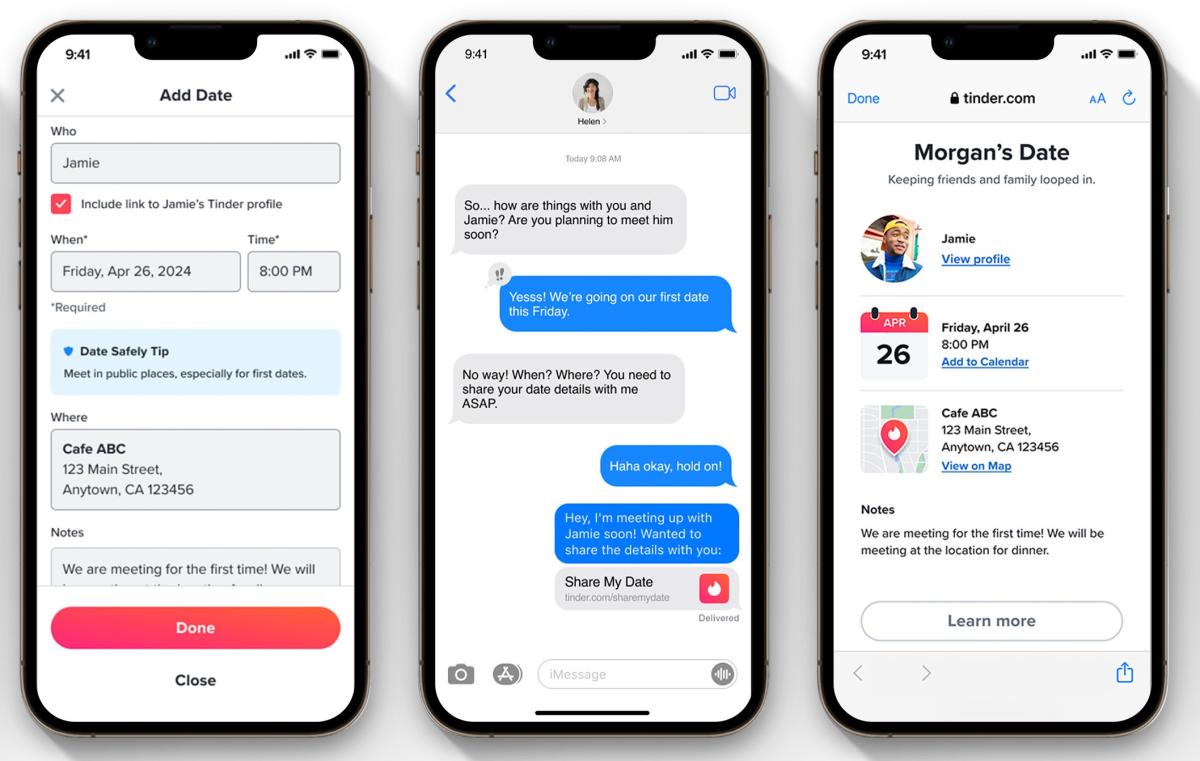
has revealed a feature that both helps users share their excitement about a date with loved ones and acts as a safety tool. The Share My Date feature lets users share details about a planned date with a single link.

The URL can point to details including the location, date and time of the rendezvous along with a photo of your match and a link to their profile. The page can include some notes too. You can edit your date plans so those you share that link with have the most up-to-date info. Dates can be set in the app up to 30 days in advance. For those lucky folks out there who have a bunch of matches they make IRL plans with, you can create an unlimited number of dates and share those with your loved ones.

Tinder says that around 51 percent of users under 30 already share date details with their friends, while 19 percent of users do so with their mom. It’s always a good idea to let someone know where and when you’re going on a date and details about the person you’re meeting up with, just to be safe. Share My Date could simplify the process a bit. Back in 2020, Match.com that let users send details about their date to emergency contacts if things weren’t going well.

Tinder will roll out Share My Date over the coming months. It’ll be available in the US, UK, Australia, Canada, Singapore, India, Ireland, Germany, France, Spain, Japan, Brazil, Switzerland, Mexico, Netherlands, Italy, Korea, Vietnam and Thailand.

Media coalition asks the feds to investigate Google’s removal of California news links


The News/Media Alliance, formerly the Newspaper Association of America, asked US federal agencies to investigate Google’s removal of links to California news media outlets. Google’s tactic is in response to the proposed California Journalism Preservation Act (CJPA), which would require it and other tech companies to pay for links to California-based publishers’ news content.

The News/Media Alliance, which represents over 2,200 publishers, sent letters to the Department of Justice, Federal Trade Commission and California State Attorney General on Tuesday. It says the removal “appears to be either coercive or retaliatory, driven by Google’s opposition to a pending legislative measure in Sacramento.”

The CJPA would require Google and other tech platforms to pay California media outlets in exchange for links. The proposed bill passed the state Assembly last year.

In a blog post last week announcing the removal, Google VP of Global News Partnerships Jaffer Zaidi warned that the CJPA is “the wrong approach to supporting journalism” (because Google’s current approach totally hasn’t left the industry in smoldering ruins!). Zaidi said the CJPA “would also put small publishers at a disadvantage and limit consumers’ access to a diverse local media ecosystem.” Nothing to see here, folks: just your friendly neighborhood multi-trillion-dollar company looking out for the little guy!

Google described its link removal as a test to see how the bill would impact its platform:

“To prepare for possible CJPA implications, we are beginning a short-term test for a small percentage of California users,” Zaidi wrote. “The testing process involves removing links to California news websites, potentially covered by CJPA, to measure the impact of the legislation on our product experience. Until there’s clarity on California’s regulatory environment, we’re also pausing further investments in the California news ecosystem, including new partnerships through Google News Showcase, our product and licensing program for news organizations, and planned expansions of the Google News Initiative.”

In its letters, The News/Media Alliance lists several laws it believes Google may be breaking with the “short-term” removal. Potential federal violations include the Lanham Act, the Sherman Antitrust Act and the Federal Trade Commission Act. The letter to California’s AG cites the state’s Unruh Civil Rights Act, regulations against false advertising and misrepresentation, the California Consumer Privacy Act and California’s Unfair Competition Law (UCL).

“Importantly, Google released no further details on how many Californians will be affected, how the Californians who will be denied news access were chosen, what publications will be affected, how long the compelled news blackouts will persist, and whether access will be blocked entirely or just to content Google particularly disfavors,” News/Media Alliance President / CEO Danielle Coffey wrote in the letter to the DOJ and FTC. “Because of these unknowns, there are many ways Google’s unilateral decision to turn off access to news websites for Californians could violate laws.”

Google has a mixed track record in dealing with similar legislation. It pulled Google News from Spain for seven years in response to local copyright laws that would have required licensing fees to publishers. However, it signed deals worth around $150 million to pay Australian publishers and retreated from threats to pull news from search results in Canada, instead spending the $74 million required by the Online News Act.

Google made more than $73 billion in profits in 2023. The company currently has a $1.94 trillion market cap.

Apple claims Epic is trying to ‘micromanage’ its business operations in a new court filing


Last month, Epic Games filed a motion asking a California judge to hold Apple in contempt for what it claims are violations of a 2021 injunction relating to the company’s App Store practices. Now, Apple is asking the judge to reject Epic’s request, alleging in a new filing spotted by that the motion is an attempt to “micromanage Apple’s business operations in a way that would increase Epic’s profitability.”

The original injunction by US District Judge Yvonne Gonzalez Rogers required Apple to let developers provide an option for external payment methods, which would allow them to avoid fees of up to 30 percent on App Store and in-app purchases. Apple for developers in January that do allow linking to external websites for purchasing alternatives, but the new rules also require they get Apple’s approval to do so and impose a commission of 12-27 percent for these transactions. Per Reuters, Epic argued that this makes alternative payment options “commercially unusable.”

Epic also said at the time that Apple’s “so-called compliance is a sham,” and accused the company of violating the injunction with its recent moves. Apple maintains that it has acted in compliance with the injunction, stating in the new filing, “The purpose of the Injunction is to make information regarding alternative purchase options more readily available, not to dictate the commercial terms on which Apple provides access to its platform, tools and technologies, and userbase.”