A Texas judge denied Media Matters for America’s request for a dismissal on Thursday allowing X’s lawsuit over alleged anti-semitic and racist content. The Verge reported that Northern District of Texas Judge Reed O’Connor dismissed the request for a dismissal paving the way for X’s lawsuit against Media Matters to continue.
Media Matters submitted its dismissal request in early March on the grounds that X’s case lacked “personal jurisdiction,” an “improper venue” and the “failure to state a claim.” O’Connor dismissed all of those claims, according to court records.
The lawsuit filed last year in federal court seeks damages from the media watchdog group over “maliciously manufactured” images reporting that X’s platform placed Neo-Nazi and white-nationlist content next to advertisers’ images causing advertisers to flee the site. The images Media Matters used weren’t manufactured but X’s claim is that its dogged pursuit of ads’ placement with racist content by using certain accounts to bypass ad filters caused irreparable harm to the social media giant.
X owner Elon Musk’s other companies are located in Texas but aren’t directly connected to the Media Matters lawsuit. X closed its San Francisco offices earlier this month and owner Elon Musk announced in July that X’s headquarters will move to Austin. Tesla moved its headquarters from California to the Lone Star State in 2021 and SpaceX from Delaware earlier this year when a judge threw out a $56 billion pay package from the state.
However, in dismissing the personal jurisdiction argument, O’Connor noted that two of X’s “blue-chip” advertisers like AT&T and Oracle included in Media Matters’ coverage are based in Texas. He cited the landmark 2002 Internet defamation case Revell v. Lidov quoting the 5th Circuit Court of Appeals’ assertion that “if you are going to pick a fight in Texas, it is reasonable to expect that it be settled there.”
Brazilian Supreme Court Justice Alexandre de Moraes has ordered the nation’s internet service providers to block the social media platform X. The New York Times reports that the order stems from owner Elon Musk’s refusal to appoint a legal representative for his case and comply with Moraes’ order to shut down X accounts he deemed as harmful to the democratic process. The order has been published online by Brazilian news site Poder 360.
The justice issued a deadline to telecom companies and tech giants to remove the X from its app stores and platforms. Apple and Google have five days to take down the social media app from its app stores. Brazil’s telecommunication’s agency Anatel has confirmed it has received the order, and ISPs in the country have just 24 hours to comply with the order.
Justice Moraes’ order doesn’t just block the country’s access to X. It also makes it a crime to use the app through a virtual private network (VPN). Anyone caught accessing X with a VPN could face a daily fine of 50,000 Brazilian Real (around $8,900).
Justice Moraes also froze the Brazillian bank accounts of SpaceX’s Starlink internet service provider on Thursday to further pressure Musk to comply with the court’s order. SpaceX, like X, is a private company majority owned by Musk, and X has $3 million in unpaid fines related to its case in the country. The day before, Justice Moraes issued a threat to ban the X platform entirely across Brazil if the social media company did not appoint a legal representative in the country. The deadline passed without any change to the court’s docket so the judge followed through on his promise.
Starlink expressed its disapproval with the order, vowing to fight the ruling. It even threatened to make its services free to customers to subvert the justice’s order.
The legal fight between Justice Moraes and Musk has been fuming for months. The Supreme Court Judge is also Brazil’s electoral authority and has been monitoring and issuing orders to candidates to steer clear of spreading false information through internet and social media channels.
Brazil’s 2022 presidential election between infamous incumbent Jair Bolsonaro and challenger and former President Luiz Inácio Lula da Silva was reportedly filled with attempts to present voters with false information. Justice Moraes was, until recently, president of the nation’s Superior Electoral Court, which gave him the power to order takedowns of content that violated previous court orders. The judge issued a similar block of the messaging app Telegram for failing to freeze offending accounts, which was lifted after compliance.
Musk characterized Moraes’ directives to take down or freeze similar misinformation accounts from X as “censorship orders.” Earlier this month, Musk expressed his continued refusal to comply with the court by closing X’s Brazilian office in order “to protect the safety of our staff.” X’s Global Governments Affairs team also promised to publish all of “Judge de Moraes’ illegal demands and all related court filings.”
X today that it is rolling out support for passkeys on its Android app. The social media platform formerly known as Twitter introduced this security option for iOS users in January, then in April.
Passkeys started to take off as an option from tech companies and online services last year. We have a detailed , but in short, this approach to protecting an account creates a digital authentication credential. It’s a stronger alternative to passwords, which can be guessed or stolen. Even have been moving to offer a passkey option for customers.
For X users, you’ll still need a password in order to create an account. But once you’re in the app, you’ll need to click through some menu options to a passkey. It’s listed under “Additional password protection” in the Security tab.
X has introduced new options for sorting replies that should make it easier to see the comments you’re actually interested in. The social media platform announced that replies can now be sorted by most relevant, most recent and most liked. While the average X user may not be getting hundreds of replies to their posts, the reply section on posts from accounts with thousands or millions of followers can be chaotic. And since replies from , what shows up at the top may not be what’s newest or most pertinent.
Being able to sort replies by most recent or most liked could help to cut through some of the noise. X hasn’t said how it will determine which replies are most relevant, but it appears that option just shows replies ranked the way already used to seeing them. The change started rolling out this weekend.
I think video game history will remember Hideki Naganuma for many reasons. Fans might lovingly bestow upon him the title of “Twitter weirdo.” Others — especially modern music producers — might cite him as an important influence in video game composition. That’s more than fair; the man is responsible for his fair share of video game bangers. Tracks like Jet Set Radio Future’s “The Concept of Love” — which stuffs warped vocal samples, bright electric guitar riffs, and rushing synthy drums — still turn heads when they come on the playlist.
Check out our special issue Polygon FM, a week of stories about all the places where music and games connect — retrospectives, interviews, and much more.
But for me, I’ll always remember him as the video game composer who put a sample of a Malcolm X speech in a Sonic the Hedgehog game.
The song appears on the soundtrack for Sonic Rush, a 2D Sonic game Sega released in 2005 for the OG Nintendo DS. It’s called “Wrapped in Black” and it plays during the final boss fight with Doctor Eggman. The track opens up with rushing violins and operatic vocals that convey the evilness of Doctor Eggman, but soon a sharp repeating vocal sample cuts through it all. The sample repeats “Too black, too strong” a few times and then comes back later in the song.
The audio for “Too black, too strong” comes from a 1963 speech given by Malcolm X titled, “Message to the Grassroots.” Naturally, his talk had nothing to do with Sonic, and dealt with far more serious matters. In the talk, the Black revolutionary outlined his idea of a Black nationalist philosophy and criticized the Civil Rights Movement. In the sample quote, Malcolm X used the image of coffee and creamer to explain what happened to the movement. He said:
“It’s just like when you’ve got some coffee that’s too black, which means it’s too strong. What you do? You integrate it with cream; you make it weak. If you pour too much cream in, you won’t even know you ever had coffee. It used to be hot, it becomes cool.”
That a Sonic game sampled this feels like nothing short of a fever dream. The composer commented on it once back in 2014 when he said, “‘Wrapped in Black’ is a song about coffee. lol.” And while the sample isn’t a joking matter, he is technically correct that the quote is, at least in part, about coffee.
Naganuma’s intensely stylized music fits his history as a composer and work on the Sonic series. Similar to how video games were a form of emerging media at the time, Naganuma experimented freely and didn’t limit himself to an idea of what art should be. He sent his first application to Sega in 1998, after which the first game he ever composed was a handheld toy called Hip Jog Jog. In 2000, he worked as the main composer for Jet Set Radio where he broke out as a composer. His uneven beats and screechy sounds brought influences from hip hop, electronic, dance, funk, jazz, and rock music into the fuzzy speakers of CRT the televisions of the 2000s.
Image: Dimps, Sonic Team/Sega
Making a splash in the canon of Sonic the Hedgehog music and Sega games in general is no small task. Modern Sonic fans tend to remember the Chemical Plant Zone theme or later songs like the easy breezy rock theme of “Escape From the City” from Sonic Adventure 2. Because of this, I think it’s relatively easy to miss the soundtrack on Sonic Rush. Sega shipped it early in the lifecycle of the nascent handheld, and its roughly 1.62 million copies sold never made it the most popular or well-known game of the Sonic series
And while the nostalgic charms of the original Green Hill Zone theme will never wear off on me, there’s something uniquely thrilling to starting Sonic Rush off to the blaring horns and cascading twangy guitar of “Right There, Ride On.”
The eccentricities of Naganuma’s work have infected my brain and continue to shape my media tastes as an adult. So maybe that’s why I won’t let myself — or anyone else — forget the time when he put Malcolm X on a Sonic game and into the ears of an impressionable video game-loving child.
Bluesky’s most prominent backer has left its board.
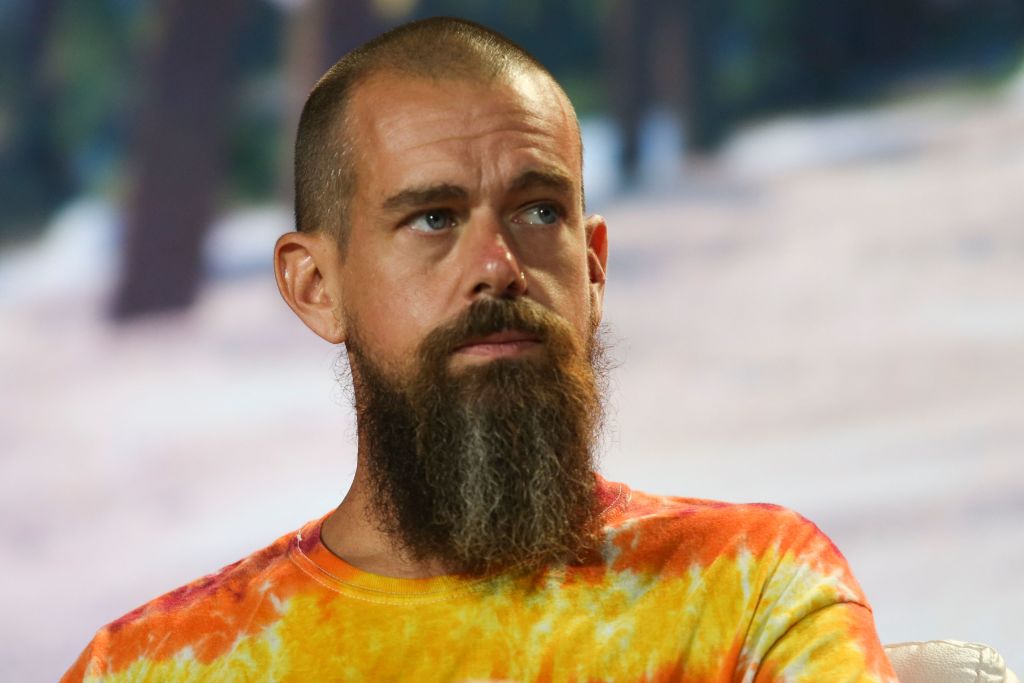
On Saturday, Jack Dorsey posted on X about grants for open protocols from his philanthropic Start Small initiative. This prompted someone to ask Dorsey if he was still on the Bluesky board, and he responded with a terse “no.” Dorsey did not answer any of the follow-up posts asking him to explain his departure.
We sincerely thank Jack for his help funding and initiating the bluesky project. Today, Bluesky is thriving as an open source social network running on atproto, the decentralized protocol we have built.
With Jack’s departure, we are searching for a new board member for the Bluesky public benefit company who shares our commitment to building a social network that puts people in control of their experience. More to come!
Dorsey first announced Bluesky in 2019, back when he was still CEO of Twitter. He wrote that Twitter (now X) was “funding a small independent team of up to five open source architects, engineers, and designers to develop an open and decentralized standard for social media.”




:format(webp):no_upscale()/cdn.vox-cdn.com/uploads/chorus_asset/file/25561945/Sonic_Rush_NightCarnival.png)