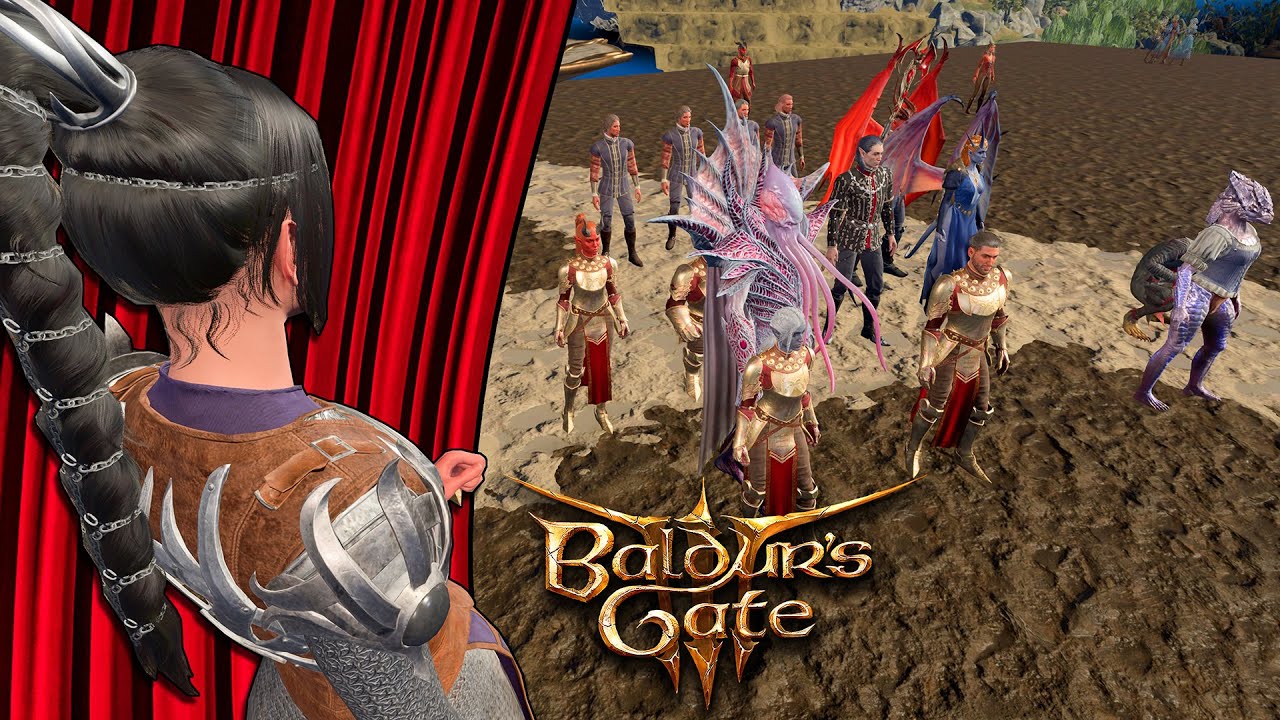
In YouTuber SlimX‘s accounting of Baldur’s Gate 3’s behind-the-scenes secrets, he hit me with one that sent my jaw through the floor: You can summon a magical sheep who can cast endgame spells by killing a minor NPC and ringing both of Act 3’s bell tower bells.
You may have encountered Harvard Willoughby in normal play: This monocole-wearing, mustachioed comedian will challenge you to a duel of wits at the Elfsong Tavern’s open mic night. Kill him, and your initiation to the Dark Brotherhood will be complete you’ll have taken your first step to meeting the real Harvard Willoughby.
What Secrets Are Hiding Out Of Sight In BG3 (FULL GAME MOVIE) – YouTube
Next, you have to climb the Lower City guard tower, then the Church of the Open Hand belfry in Rivington and ring their respective church bells in that order. There won’t be any pop-up or acknowledgement from the game, but a “Mysterious egg” will show up in your party camp.
I found it by the chicken coop in the Rivington bivouac, but I would imagine it has a corresponding location at the Lower City docks and in the Elfsong Tavern.
Click on the egg, and you’ll receive Harvard Willoughby, “Nature’s Fury,” as a summoned helper. This Harvard only has 29-54 HP depending on your difficulty, but he can cast an impressive array of high-level spells, including Call Lighting and Wall of Thorns.
Image 1 of 9
(Image credit: Larian)
(Image credit: Larian)
(Image credit: Larian)
(Image credit: Larian)
(Image credit: Larian)
(Image credit: Larian)
(Image credit: Larian)
(Image credit: Larian)
(Image credit: Larian)
He also lights on fire at the beginning of combat encounters, and has a chance of exploding at the beginning of each round that increases as the fight drags on. If Harvard Willoughby dies by this or any other means, he’ll be gone for good.
A developer comment in BG3’s code describes the human Harvard as “a tribute to our favorite sheep,” so this summoned Harvard is presumably the original—accept no substitutes.
Keep up to date with the most important stories and the best deals, as picked by the PC Gamer team.
I just love this: A good, well-hidden easter egg no normal person would find in a million years. I’m reminded of Diablo 2’s legendary Cow Level, which requires you to combine a dead NPC’s peg leg with a town portal scroll to enter a dimension of “Hell Bovines.”
There’s also The Elder Scrolls 3: Morrowind’s Eltonbrand, an upgraded version of the daedric katana, Goldbrand. To get Eltonbrand, you have to be a vampire with the standard sword, a specific key, and 11,171 gold in your inventory when you talk to a certain quest giver.
It’s all a confounding reference to former Duke and Chicago Bulls basketball player, Elton Brand, whose legacy on the court may wind up outlived by his one in CRPGs. As for Baldur’s Gate 3, I hope this game never stops surprising me.
I use VS 2022 17.6 and also VS 2022 17.8 Preview to connect to my to develop under .NET MAUI.
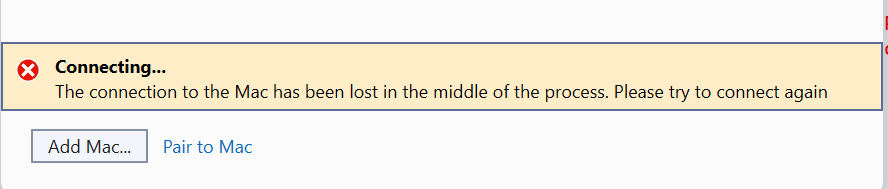
My problem is that very often I can’t establish a connection to Pair with my Mac
What I do then is clear Data on my Mac restart my Mac and also Windows and try again. I also try and delete my .vs-Directory. Sometimes it helps, sometimes it doesn’t.
When this is displayed, it is hardly possible to re-connect again. Sometimes I also loose the Connection to my Mac when it first worked well for long time. But, after losing it, it is not possible anymore to re-connect unless I try above steps.
Is there anything that I should setup or do, maybe also on the Mac that helps with these connection issues? Problem is, it takes so long to get it up and running again that it is a real pain in the ass and very time-consuming.
As cyberattacks escalate and IT complexity grows, businesses can no longer rely on outdated data security strategies. Protecting sensitive data demands more than reactive measures. It requires a unified and farsighted approach. That’s where Rubrik steps in.
Our latest report reveals the urgent realities of today’s data security landscape and what IT and security leaders must do to safeguard their organizations.
In this report, you’ll discover:
Why 98% of companies suffered a data breach in the last year and what they did next
The widening disconnect between IT and security teams and how to fix it
How automation and zero trust principles can close critical security gaps
What the top-performing companies are doing differently to stay resilient
Get the insights you need to future-proof your data security strategy.
When Samsung started overhauling Good Lock for One UI 7, Home Up was one of the modules that saw the biggest changes. Most of those changes were good, letting you modify edge panels, the taskbar (on Folds and tablets), the overview screen, and the home screen itself. As welcome as those features are, I found one of the additions harder to appreciate. DIY Home has a lot of potential, but despite the wonderfully awful home screens you can create with it, the implementation is flawed and reminds me of the worst days of Microsoft’s Windows experiments.
Have you tried to customize your phone with Samsung’s DIY Home?
653 votes
DIY Home: What is it and why do I hate it?
DIY Home removes all of the guardrails usually placed on home screen customisation. Grid, icon, and widget sizes are unrestricted, and you can put everything, everywhere, all at once. On the surface, that sounds pretty cool. Moving every element to exactly where you want it without any restrictions could lead to some cool setups and maybe a renaissance of the old custom launcher days. I initially hoped for that, but it hasn’t worked out. The way DIY Home has been implemented is almost unusable, and I can’t bring myself to use it for any longer than is needed.
Long-press on an empty space on your home screen or pinch out, and a new DIY Home button appears in the top right of the screen. Once you’re in the DIY editor, you can move icons and widgets freely without any limitation, resize and rotate them, and add stickers, emojis, and text.
Using DIY Home is like trying to play chess against an opponent who cheats, changes the rules, and flips the board if you start winning.
The controls are, in a way, too simple. Even on my S24 Ultra, which is realistically the biggest screen most people will try this with, there isn’t enough room to move things precisely with your finger. It needs a movement slider or arrow keys, like the widget creator in KWGT.
Another issue is the alignment presets, which are all unlabelled, so you have to press them to figure out what they do. By then, all of the icons you’ve selected are on top of one another in some incoherent mess that looks like it belongs in John Carpenter’s The Thing. Icon manipulation is also inconsistent. Sometimes tapping on a new icon and dragging it while a different one is already selected will clear that selection and only move the new one, while other times it’ll move both or neither.
Using DIY Home is like trying to play chess against an opponent who cheats, changes the rules, and flips the board if you start winning. It’s frustrating and confusing, and it nearly drove me to throw my phone at a wall.
Can you make DIY home screens look good on One UI?
Zac Kew-Denniss / Android Authority
The answer to that one is maybe. I definitely can’t; the screenshot above is the best I could do after nearly an hour of messing with it. Perhaps if you’re more patient or creative, you can squeeze a nice home screen out of DIY Home, but I think that effort would be better spent on Nova Launcher or KWGT. My colleague Ryan Haines agrees, too, saying he wishes he hadn’t even tried DIY Home.
I think Samsung’s efforts would be better spent elsewhere, too. One UI 7 introduced the vertical app drawer many of us wanted, but many users, including my wife, preferred the paginated horizontal layout. The option to revert to that, along with more blur and background color options, would be more useful than this.
In 1995, Microsoft released Microsoft BOB, which was meant to make navigating Windows more intuitive. It didn’t. Instead, it was an incomprehensible mess, just as most DIY Home creations are, and unless Samsung can overhaul it into something more usable, it’s best forgotten.
Do you like DIY Home, or do you think other features would be a better use of Samsung’s (and our) time? Let us know in the comments.
As financial institutions increasingly adopt Large Language Models (LLMs) to enhance customer experiences and streamline operations, a critical challenge has emerged: how can these powerful but inherently probabilistic systems be deployed safely in a highly regulated environment?
While LLMs like Claude and GPT bring unprecedented language capabilities to financial services, they come with significant limitations that pose real risks:
Lack of determinism: The same query can yield different results at different times
Hallucinations: LLMs can confidently generate entirely false information
Limited explainability: The “black box” nature makes regulatory compliance difficult
Vulnerability to prompt injection: Specially crafted inputs can manipulate model behavior
In financial contexts where precision, consistency, and regulatory compliance are non-negotiable, these limitations create substantial barriers to adoption.
The Solution: A Hybrid Approach
This white paper explores how deterministic graph-based inference systems can be integrated with LLMs to create AI solutions that are both powerful and predictable. This hybrid approach combines:
The linguistic fluency and generative capabilities of LLMs
The precision, consistency, and explainability of rule-based systems encoded in knowledge graphs
We detail two architectural patterns for implementation:
Graph-First Reasoning: Where the deterministic inference engine serves as the primary decision-maker while the LLM acts as an interface layer
Post-Generation Validation: Where the LLM generates responses that are subsequently verified and potentially corrected by the symbolic inference engine
The Benefits for Financial Institutions
Financial institutions implementing this hybrid approach can expect:
Complete transparency and auditability of AI decisions
Elimination of hallucinations and non-compliant information
Regulatory compliance by design rather than by hope
Consistent and reliable responses that build customer trust
Implementation with Rainbird
The paper concludes with a detailed implementation framework leveraging Rainbird’s enterprise-grade knowledge graph reasoning platform. Our approach enables financial institutions to transform complex regulatory frameworks into executable, deterministic systems that can effectively guardrail LLM implementations at scale.
Major banks and financial services firms are already deploying Rainbird to address the critical compliance challenges outlined in this paper, encoding regulatory expertise into verifiable knowledge graphs that ensure AI-generated content remains fully compliant with intricate financial regulations.
Download the White Paper
Ready to explore how your institution can safely harness the power of LLMs while maintaining regulatory compliance? Download our white paper to learn how deterministic graph-based inference can transform your AI strategy.
Courtesy or Notebook LLM there is also a podcast based on this white paper here.
For more information on implementing these solutions in your organisation, contact our team for a consultation.
Today’s post discusses the things you need to know when it’s time to pick the right construction drawings your firm needs for engineering and architectural projects. A single construction project’s successful completion is made possible thanks to the multiple industries working together. With the help of construction drawings services, these professionals will know even before the start of the project what exactly they will work on and what the expected result is.
You can say that these construction drawings offer a visual framework that solidifies a deeper understanding of those involved in their respective assignments and how these will come together to finish the structure.
Cad Crowd has 15 years of experience as an industry leader, providing outsourcing services to architectural and construction firms. Here’s what we learned.
A construction drawing is a visual plan that is either drawn manually or using a digital program to represent the structure that will be built, whether it is a commercial, public, or residential property. The drawings serve as a guide during the construction phase through their depiction of the dimensions of the structure, the materials that will be installed, and other similar factors.
These drawings also make it possible to make sure that the necessary permits will be granted to the project by the local authorities. Most of the time, architectural design firms are the ones in charge of creating a project’s construction drawings.
But there are also instances wherein other professionals also hand in a construction drawing or more. For bigger commercial projects, for example, engineers may opt to provide their own drawings for ventilation, fire protection, or plumbing.
For your next engineering and architectural projects, here are the most common types of construction drawings you can choose from:
Detail drawings
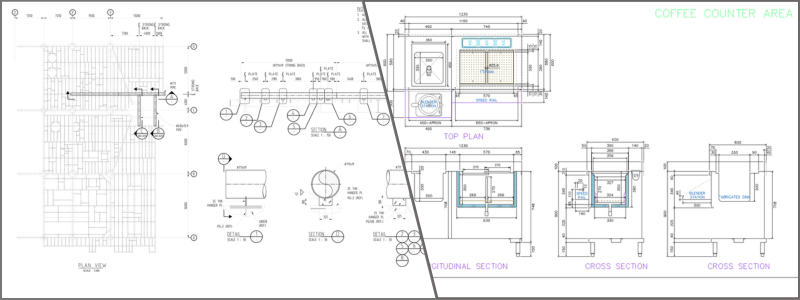
A detailed drawing depicts elements found in other forms of construction drawings but, this time, on a much bigger scale. These drawings offer more comprehensive data regarding the connections between and the placement of every part.
Architects may come up with detailed drawings for window frames, door frames, material connections where the foundation and a column meet staircases and cornices, or decorative features close to the top of the wall.
Say you want cornices to adorn your future house. Detail drawings should include all the nearby wall studs and roof rafters.
Electrical drawings
It is common for the drawings of most commercial or residential buildings to require a functional outline of how many light fixtures, fan fixtures, power outlets, and the like are there. Electrical drawings are also made up of wiring patterns and details about the specific electrical load that can be carried by the structure. Electrical 2D drafting services would most commonly cover most of this work.
Other common details indicated in these drawings include the layout of light fixtures, the cable tray layout, the earthing layout, the lighting protection system, the generator, and other similar equipment, as well as the classifications of hazardous areas.
An elevation drawing offers a vertical depiction of the structure as if you are looking directly at it. Elevation designers have these elevation plans drawn in two dimensions, which means that they don’t show the depth of the project.
Elevation drawings help present how the façade and exterior layout of the building must look like. If you wish to have a certain material for the roofing or siding of your structure, for example, this should be depicted in the elevation drawings. The drawings must also indicate the measurements for the distance between windows and for the rest of the exterior fixtures.
Excavation plans
Excavation is the first step in most construction projects, setting the stage for everything that follows. Excavation plan drawings are essential as they outline the dimensions and methods required to prepare the site. Whether trenching for utility lines or tunneling for a subway system, these plans specify the depth, width, and length of the excavation, ensuring the project starts on a solid foundation.
For example, a residential building with a basement will require deeper excavation compared to a structure without one. The accuracy of these plans is crucial, as any mistakes can lead to costly delays and structural issues down the line.
Finishing drawings
Finishing drawings are where the vision of the project begins to take shape. Unlike detail drawings, which focus on structural elements like door frames and windows, finishing drawings emphasize the aesthetic aspects of the building. These drawings might include floor patterns, wall paint colors, and plaster textures, allowing the client to visualize how the final product will look. This can further be utilized through architectural presentation services to help market or sell it.
For instance, if a client desires a particular floor pattern that complements the wall color, this would be detailed in the finishing drawings. These plans ensure that every design element is meticulously planned and executed, resulting in a cohesive and visually appealing final product.
The safety of the building’s occupants is paramount, and fire protection drawings are a critical component in achieving this goal. These drawings detail the placement of fire alarms, sprinkler systems, and fire extinguishers, ensuring that the building is equipped to handle emergencies.
Key elements of fire protection drawings include fire alarm plans, fire sprinkler plans, and fire extinguisher plans. These drawings must comply with fire safety codes and regulations, making them an essential part of the construction process.
Floor plans
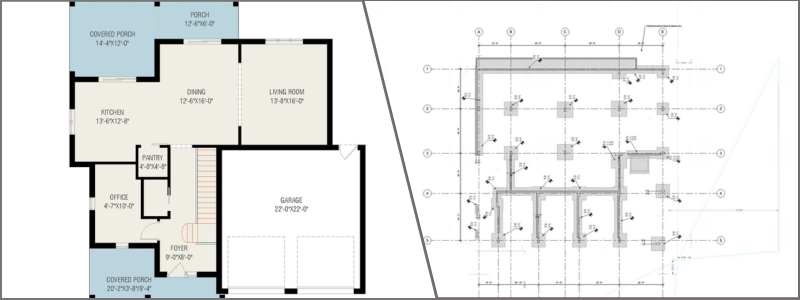
Floor plans provide a bird’s-eye view of the building without the roof, showing the layout of each floor. These plans include the dimensions of interior and exterior walls, room types, material specifications, and the direction of stairs. For multi-story buildings, a unique floor plan is created for each level, detailing everything from the kitchen layout on the first floor to the bedroom configurations on the second.
Floor plans are crucial for ensuring that the building’s layout meets the client’s needs and adheres to local building codes. They provide a clear roadmap for construction teams, ensuring that every element is built according to plan. 3D floor plan design services are one of the most common outsourced services as well.
Foundation drawings
Foundation drawings are arguably the most important part of any construction project. These drawings provide the blueprint for the building’s foundation, detailing the dimensions, layouts, and specific requirements needed to ensure structural stability. Foundation drawings are essential for meeting local building regulations and codes, as they dictate the entire structure’s stability above ground.
Without accurate foundation drawings, the risk of structural failure increases, leading to potential safety hazards and costly repairs.
Mechanical and electrical drawings are vital for detailing the design and location of the building’s power structures. These drawings might include thermostat placements, ductwork structures, switch locations, and wiring paths. Depending on the building’s complexity, these plans may be combined or separated.
For example, a hospital construction project might require separate mechanical and electrical drawings due to the complexity of its ventilation systems. In contrast, a small residential property may combine these elements into a single set of drawings.
These plans ensure that all mechanical and electrical systems are installed correctly, providing the necessary infrastructure to power the building safely and efficiently. Companies may consider using electrical schematic drawing services to standardize these systems.
Perspective drawings
Perspective drawings experts offer a three-dimensional view of the proposed structure, helping construction crews and clients visualize the final product. These drawings can show how elements like porches, balconies, or other architectural features will appear once constructed.
Perspective drawings are particularly useful for complex projects where the final appearance is a critical concern. They provide a clear picture of how the finished building will look, helping to align expectations and guide the construction process.
Plot plans
Plot plans are similar to site plans but provide more detailed information about the land where the structure will be built. These plans often include land survey marks and are used to establish the boundaries of the structure and the entire property.
For instance, a plot plan might show that the proposed building leaves room for landscaping on two sides. These plans are essential for ensuring that the building is constructed within the designated boundaries and complies with zoning regulations.
Plumbing and drainage drawings are critical for ensuring that water moves efficiently in and out of the building. Plumbing designers use these drawings to detail the exact locations and sizes of pipes, water tanks, pumps, drains, and vents.
Proper plumbing and drainage are essential for maintaining the health and safety of the building’s occupants. These drawings ensure that water systems are installed correctly, preventing leaks, floods, and other water-related issues.
Reflected ceiling drawings
Reflected ceiling drawings show what the ceiling will look like when viewed from the floor. These plans might include the placement of light fixtures, aesthetic features like cornices, and the design of visible columns.
Some reflected ceiling plans are more complex than others, depending on the building’s interior design. For example, a building with intricate cornices and decorative elements will require more detailed reflected ceiling drawings.
Section drawings
Section drawing designers provide a vertical perspective of the building, revealing the hidden structures beneath the surface. These drawings might show the inside of walls, the foundation, beams, columns, and other support structures.
For example, if a building includes stone columns, the section drawings would detail how these columns are constructed and integrated into the overall structure. These plans are essential for understanding how the building is put together and ensuring that all elements are properly aligned.
Site plans provide an overview of the entire construction site, including existing structures, topographical elements, and proposed changes. These plans might show nearby roads, buildings, and natural features like trees or changes in land elevation. Architectural site plan services specialize in this type of drawing, as opposed to a focus on specific structures or buildings like architects would have.
For example, if an apartment building is being constructed near existing trees, the site plan would show how the building will be positioned in relation to those trees. Site plans are crucial for ensuring that the construction project fits within the broader landscape and complies with local zoning regulations.
Structural drawings
Structural drawings provide a comprehensive view of the building’s primary framework. Created by licensed structural engineers, these drawings focus on load-bearing elements like steel beams, framing materials, and other critical components.
Structural drawings are essential for ensuring that the building is constructed safely and meets all necessary regulations. They provide a clear roadmap for the construction team, guiding them through the process of building a stable and secure structure.
How Cad Crowd can help
If you’re planning a construction project and need professional assistance with your construction drawings, Cad Crowd is here to help. Our team of experienced designers and engineers can create detailed, accurate drawings tailored to your project’s needs. Cad Crowd is an industry leader that’ll guarantee you get connected to the best drawing professionals. Contact us today to request a quote and get started on your path to a successful construction project.
MacKenzie Brown is the founder and CEO of Cad Crowd. With over 18 years of experience in launching and scaling platforms specializing in CAD services, product design, manufacturing, hardware, and software development, MacKenzie is a recognized authority in the engineering industry. Under his leadership, Cad Crowd serves esteemed clients like NASA, JPL, the U.S. Navy, and Fortune 500 companies, empowering innovators with access to high-quality design and engineering talent.
Things are about to get itchy with news that Emile Hirsch, Justin Long, and Kevin Connolly are set to star in an upcoming creeping, crawling horror movie called Lice. Directed by cinematographer Jonathan Bensimon in his directorial debut, the film is reported by Variety to be scuttling into the territory of The Breakfast Club and Lord of the Flies, only coming with a lot more bugs.
The story comes from an original concept by Connolly, who also backs the project through his company, ActionPark Productions, with a script penned by Anthony Musella and Shaun Harris. Set in the 1980s, the film follows an outbreak of lice in a Long Island high school that is forced under lockdown by the military, trapping the students inside. Pretty soon, there’s more getting under the occupants’ skin as they begin to turn on one another, with the school principal (Long) struggling to keep things under control and going a little crazy in the process.
Thankfully, there’s hope in the form of Detective Sikorski (Connolly), who is stuck on the outside trying to figure out how to stop the outbreak from spreading beyond school grounds. One person who could help in his mission is Mr. Shanker (Hirsch), a science teacher who is using all his knowledge to find out how to stop the bugs from breaking loose and where they originated from.
Speaking about the project and its inspiration, Connolly said, “I wanted to make the kind of movies that I loved as a kid. I’m a horror fan, and I wanted to make something for guys like me — fun, weird, scary, and completely unpredictable. It made perfect sense to launch our feature division with a project this bold and ambitious.” Praising his director on the movie, Connolly added, “Jonathan Bensimon is that rare combination of creative mind and brilliant technician. And when you get two incredible actors who can blend comedy and drama the way Emile and Justin can, you’ve really got something special on your hands.”
The film is currently doing rounds at Cannes, and Highland Film Group is handling international rights, so we’ll have to stay on this bug hunt for a while, hoping that something develops. If you’re up for seeing some favorite creature features to have hit the bug screen, check out our list of 15 unsettling insects in movies here.
Bringing all the latest movie news, features, and reviews to your inbox
Did you know a study from the University of Sussex found that reading can reduce stress by up to 68%—even more than listening to music or taking a walk? For book lovers, reading brings more than just joy; it can also bring extra money.
If you love spending hours lost in a good book, you’ll be thrilled to know real ways exist to get paid to read books from home. Keep reading to discover some of the best ways to earn by reviewing books, writing short reviews, joining online book clubs, working with self-published authors and even trying audiobook narration. We’ll also introduce you to platforms that pay for book reviews, making it even easier to turn your reading passion into cash.
Whether you’re looking for a side hustle or a future full-time job, you’ll find plenty of paid reader positions perfect for avid readers like you. Plus, when possible, we’ll share how much you can expect to make and offer expert tips to help you start strong.
Let’s dive into your next chapter (and maybe your next paycheck).
Pro tip: Reviewing books for money requires writing skills. That being said, you must learn how to become a freelance writer. For starters, join the Freelance Writers Den and get hold of the 300+ hours of powerful courses and training you can tap into anytime. Connect with hundreds or writers inside who trade tips, share job leads and help each other grow stronger freelance careers. Members also post referrals so you get even more ways to make money writing.
Get paid to read books online: 10 sites that actually pay
Here’s a breakdown of sites that pay people to read books and write reviews. Explore them all and choose the one that meets your expectations the most.
1. Online Book Club
Online Book Club is one of the best ways for book enthusiasts to get paid to read books. It connects book readers with self-published authors who need honest reviews. You sign up, pick a book you like, read it, and write a short review.
You can earn from $5 to $60 per review. Most people start with a free book only. Paid jobs come after your first sample review is approved. Do not expect a full-time job at first. It can be a good side hustle for extra money.
To start, sign up on the official website and submit writing samples. Then wait for a reply about the application process. They need honest reviews, not just positive reviews.
This platform suits avid readers who enjoy reading books and want free copies. It is perfect if you dream of running your own book review blog someday.
2. Reedsy Discovery
Reedsy Discovery is a book review platform where you can write reviews for self-published authors. It connects avid readers with authors who need high-quality reviews to promote new books.
You can earn tips from readers, usually $5 to $50 per book review. Some readers make more if they build a strong profile. Reedsy Discovery does not promise full-time jobs, but it is a great side hustle.
Start by creating a reviewer profile, uploading writing samples, and applying to review books in your preferred genres. You must provide helpful feedback and post short reviews that readers can trust.
Reedsy Discovery is great for book readers who want to get paid to read, start a book blog, or try freelance writing for different publications.
3. ACX (Audiobook Creation Exchange)
ACX is different from other review sites. It is for audiobook narration. You read books out loud and record your voice. Then you get paid either by a finished hour or through royalties.
Voice actors can earn $50 to $200 per finished hour. Some get extra cash from other voice-over work found through ACX. It is not easy money, though. You need good recording equipment and strong narration skills.
To start, create a profile on the official website, upload a few voice samples, and audition for projects. Many publishers look for new voices for young adults, adult fiction, and graphic novels.
If you enjoy reading audiobooks and want a side hustle that could grow into a full-time career, ACX offers a few options for paid reader positions.
4. Booklist
Booklist is one of the oldest review sites for book enthusiasts. It focuses on helping libraries and schools find good books through editorial reviews. You can get paid to read books and submit high-quality reviews.
Payment depends on the project, but usually falls between $15 to $50 per review. It is not a full-time job, but it can help you earn money on the side.
To start, visit the official website and look for freelance book reviews. You will need to send writing samples, professional references, and go through the application process.
If you dream of freelance writing for literary magazines or publishing companies, Booklist is a strong place to build reviewing skills.
5. The US Review of Books
The US Review of Books gives book fanatics the chance to get paid to read and write reviews for self-published books, adult fiction, and young adult novels. Reviews submitted must meet strict guidelines.
Reviewers usually earn about $25 to $75 per book review. It depends on the length and deadline. Jobs come through freelance writing gigs, not permanent contracts.
Start by going to the official website and applying by sending writing samples and professional references. The application process is simple but selective.
If you enjoy writing book reviews and want extra money or even build toward a full-time career, The US Review of Books is one of the best ways to grow as a book reviewer.
6. Kirkus Reviews
Kirkus Reviews is a big name in book reviews. They provide short reviews and editorial reviews for publishers, authors, and readers.
You can get paid to read books and earn steady freelance jobs if you do well. Payment depends on word count and speed. Many reviewers earn $50 to $75 per review. Some top reviewers earn extra money from bonus projects like beta reader work or audiobook narration jobs.
To start, visit the official website and look for paid reader positions on their job board. You must send writing samples and pass a test. They look for honest book reviews, not just positive reviews.
This platform is perfect for avid readers who want serious freelance writing gigs with many publications.
7. BookBrowse
BookBrowse is a book review platform focused on thoughtful, high-quality reviews for adult fiction, nonfiction, and young adult books. They care about deep reviewing skills, not quick posts.
Reviewers get paid for freelance book reviews. The exact pay is private, but most say it is $50 to $100 per accepted review. BookBrowse does not offer full-time jobs. Think of it as a side hustle for extra cash.
Apply with writing samples and a few sample reviews on the official website. You must enjoy reading books and giving helpful feedback.
If you love reviewing books and want to earn money while building your own blog or freelance writing career, BookBrowse is one of the better review sites today.
8. NetGalley
NetGalley lets readers get free copies of books in exchange for honest book reviews. You do not get direct money from NetGalley. But it helps you build reviewing skills, writing samples, and connections with publishing companies.
Many people who start on NetGalley move on to freelance jobs with literary magazines, publishers’ weekly, and paid review sites. You can also post reviews on your own blog or YouTube channel to get noticed.
To start, sign up at the official website and pick books based on your preferred genres. Submit short reviews after reading. Publishers often give more books to readers who provide helpful feedback.
NetGalley is one of the best ways for new reviewers who want to get paid to read books someday. It is a smart step before applying for bigger freelance writing jobs.
9. getAbstract
getAbstract is different from most book review platforms. Instead of writing book reviews, you write book summaries. They focus on nonfiction, business, and self-help books.
Writers get paid per summary. Rates vary, but many say it can be $100 to $300 per summary. The job takes strong reading and writing skills. You need to boil down a whole good book into a few pages.
To start, go to look for freelance writing jobs on the official website. Submit writing samples that show you can write clear and helpful summaries.
If you love nonfiction and want to get paid to read while improving your writing skills, getAbstract is a smart online platform for making extra money or even starting a full-time career in freelance writing.
10. eBookFairs
eBookFairs helps readers and self-published authors connect. It is a simple way to get paid to read books and write short reviews.
At first, you read two books for free. After that, you earn $10 per review. You can earn up to $50 total. It is not a full-time job, but it is great for extra cash or a side hustle. Many book readers use it to build writing samples for bigger jobs later.
To start, go to the official website and look for the Paid Reader Program. You must send writing samples to show you can provide helpful feedback. If you pass, you will get books to review based on your preferred genres. You post your honest book review on places like Goodreads, your blog, or a book club online.
If you enjoy reading books and want easy freelance reviews without a big application process, eBookFairs is one of the best ways to get paid to read and support self-published books.
BONUS: Publishers Weekly
Publishers Weekly is a well-known name in the publishing world, offering book reviews and industry insights. While mainly aimed at publishers and authors, it also offers opportunities for readers to get paid for reviews.
Freelancers can apply to write book reviews for various book genres. Acceptance requires a strong writing background and knowledge of the publishing world. Paid book review opportunities typically pay between $50 and $75 per review, depending on the book’s length and complexity.
This is a great option for experienced writers who want to expand their portfolio in the publishing industry. While not a full-time job, it provides solid freelance opportunities for those passionate about writing and reading.
Additional ways to earn money reading books
If you love reading books and dream of earning extra money doing it, good news! You can get paid to read books in many different ways. That being said, here’s a list of ways to turn your passion for reading into a side hustle.
We’ll also share how much you can expect to earn and offer expert tips to help you get started quickly. Let’s dive in and start turning your love for books into cash!
Critique partner
A critique partner helps other writers improve their work. This often happens in book clubs, writers’ groups, and job boards. Many critique partners exchange help for free. But if you build strong writing samples and gain trust, you can earn extra cash reviewing others’ work. Book lovers with editing skills often get paid when self-published authors need professional advice. Look for active groups where writers seek helpful feedback.
Expert tip: Create a small book review blog or post sample reviews to show your skills.
Professional reviewer
Professional reviewers read books and write book reviews for a living. Starting your own book blog, building a Goodreads profile, and joining review sites help you build trust. Platforms like Kirkus Reviews or Publishers Weekly want strong reviewers.
Expert tip: Focus on short reviews first. Then apply with writing samples to bigger sites to get paid for high-quality work.
Sensitivity reader
Sensitivity readers help writers create real, respectful characters. If you have cultural or life experience that adds depth, you can get paid to read books and provide honest, helpful advice. Publishers and self-published authors often seek sensitivity readers to catch mistakes.
Typical rates include:
Up to 5,000 words: $50
5,001–10,000 words: $50 plus 1 cent per word
Over 10,000 words: Lower per-word rates, but bigger pay
Expert tip: Build a simple website listing your background, preferred genres, and rates.
Audiobook reader
If you enjoy reading aloud, becoming an audiobook narrator could be one of the best ways to make money. Many book readers with a theater or voice acting background love this side hustle. Companies like Brilliance Audio often post jobs for readers.
Expert tip: Invest in a good microphone. Practice reading young adult, adult fiction, and graphic novels aloud to show range.
Translator
If you speak another language well, translating books could be a full-time career. You will work closely with authors and publishers, turning good books into fresh versions for new readers. Translators sometimes get royalties, too.
Expert tip: Specialize in genres you enjoy, like romance, fantasy, or thrillers, to make the work more fun and faster.
Beta reader
Beta readers test a story before it hits the shelves. As a beta reader, you point out slow parts, plot holes, or weak characters. This early feedback is critical for writers.
Expert tip: Charge fair rates. Join Facebook groups for beta readers and post about your reviewing skills.
Proofreader
Proofreaders polish a book right before printing. They catch grammar errors, missing words, or formatting issues manually or by using proofreader tools. Many freelance writers add proofreading to their service list to make extra money.
Expert tip: Focus on preferred genres like young adult or adult fiction. Building a niche speeds up finding paid work.
Acquisitions editor
Acquisitions editors pick which books a publisher invests in. They read the first pages fast to decide if a book has something special. Reading a lot and knowing trends in publishing helps a lot here.
Expert tip: Volunteer to help at literary magazines first. Build professional references while you build experience.
Get paid to read books and live your dream!
Now that you have a list of ideas on how to get paid to read books, it’s time to take action so you can start living your dream. However, take a few minutes to consider the following points before starting:
Resist the urge to pursue every option at once
Early on, try to review books you love
Read like a reader as well as a reviewer
Keep the author in mind
It’s easy to experience decision fatigue when presented with so many ways to get paid to read books. Instead of trying everything, choose one or two options that most intrigue you and start there.
Next, review books you love to allow you to write glowing reviews rather than cynical ones. While it’s important to be honest in reviews, always keep tact in mind.
Last, don’t forget that readers, as well as critics, will likely read your reviews, so tailor your review voice accordingly. And with that said, the authors themselves may read your review!
Whether you loved or hated their book, they spent hours, months, and possibly years of their lives getting their book into the world. Always remember to be gracious.
FAQs
Can I earn money by reading books?
Yes, you can earn money if you love to read books! There’s a wide range of options out there for readers who want to get paid to read books. Many online platforms pay people to write book reviews, give helpful feedback, or create short summaries. Some focus on book reviews for adult fiction, young adult stories, or graphic novels. Others need beta readers to provide honest review notes before a book is published.
Sites like Kirkus Reviews, Online Book Club and BookBrowse offer paid reader positions. You will usually need to send writing samples, show strong reviewing skills, and complete the application process. Freelance reviews can be a fun side hustle for avid readers who want extra money. It is not always a full-time job at first, but it can grow into freelance writing or even a full-time career if you build a blog or start reviewing books for many publications.
What company will pay you $200 to read a book?
Some companies and online platforms pay high rates for high-quality reviews or editorial reviews. Kirkus Reviews is one well-known book review site that sometimes pays top reviewers $50 to $75 per short review. Over time, when you build good relationships and strong writing samples, you might get bigger freelance reviews or special projects that pay up to $200.
Another place where you could earn around $200 for reading books is Reedsy Discovery. If you are a trusted book reviewer there, some self-published authors will pay more for detailed reviews and helpful feedback.
Also, companies like getAbstract can pay up to $300 for professional book summaries of nonfiction books. These jobs often ask for strong reviewing skills and a few professional references.
For avid readers who enjoy reading books and want to make money, finding the best ways to get paid to read is all about building experience and posting reviews on your blog, review sites or literary magazines.
What website pays $100 per hour for reading?
While there are sites that help you get paid to read books, very few actually pay $100 per hour. Some freelance jobs in audiobook narration or voice-over work for finished-hour projects could come close to that rate once you’re skilled.
For reviews, most sites like Online Book Club and Kirkus Reviews pay per review, not per hour. A really good freelance book reviewer might finish a detailed review faster and earn extra money, but it still depends on speed, preferred genres and the book itself.
Freelance writing for Publishers Weekly, literary magazines, or starting your blog can sometimes lead to high-paying jobs. But at first, most paid reader positions pay about $50 to $100 per review.
Readers looking for a side hustle should focus on building reviewing skills, providing helpful feedback, and writing high-quality reviews if they want to grow into top-paying freelance jobs over time.
Does Amazon pay you to read?
Amazon itself does not directly pay people just to read books. However, readers can still find a few options connected to Amazon to earn extra cash. Some self-published authors on Amazon’s Kindle Direct Publishing platform hire freelance book reviewers through job boards and online platforms like Reedsy Discovery or Upwork.
Also, programs like Amazon Vine invite top reviewers to get free products, including books, in exchange for writing honest review posts. While you do not get direct money from Vine, it is one of the best ways to get free copies and build your review portfolio.
If you enjoy reading books and want to make money, you could also start a blog or YouTube channel reviewing Amazon books. Over time, you can earn through ads, sponsorships, and affiliate links. This side hustle can turn into a full-time career for avid readers who provide high-quality reviews across many publications and review sites.
OpenAI is poised to help develop a staggering 5-gigawatt data center campus in Abu Dhabi, positioning the company as a primary anchor tenant in what could become one of the world’s largest AI infrastructure projects, according to a new Bloomberg report.
The facility would reportedly span an astonishing 10 square miles and consume power equivalent to five nuclear reactors, dwarfing any existing AI infrastructure announced by OpenAI or its competitors. (OpenAI has not yet returned TechCrunch’s request for comment, but to put that into perspective, that’s bigger than Monaco.)
The UAE project, developed in partnership with G42 — an Abu Dhabi-based tech conglomerate — is part of OpenAI’s ambitious Stargate project, a joint venture announced in January that could see OpenAI, SoftBank, and Oracle build massive data centers around the globe stocked with powerful computer chips to support AI development.
While OpenAI’s first Stargate campus in the U.S. — already under development in Abilene, Texas — is expected to reach 1.2 gigawatts, this Middle Eastern counterpart would more than quadruple that capacity.
The project is emerging amid broader AI ties between the U.S. and UAE that have been years in the making, and have made some lawmakers nervous.
OpenAI’s relationship with the UAE dates back to a 2023 partnership with G42 aimed at driving AI adoption in the Middle East. During a talk earlier that same year in Abu Dhabi, OpenAI CEO Sam Altman praised the UAE, saying it “has been talking about AI since before it was cool.”
As with much of the AI world, these relationships are… complicated. Founded in 2018, G42 is chaired by Sheikh Tahnoon bin Zayed Al Nahyan, the UAE’s national security advisor and younger brother of the country’s ruler. Its embrace by OpenAI raised concerns in late 2023 among U.S. officials, who feared that G42 could enable China’s government to gain access to advanced U.S. technology.
These concerns focused on G42’s “active relationships” with blacklisted entities, including Huawei and Beijing Genomics Institute, as well as ties to individuals connected to China’s intelligence efforts.
Following pressure from U.S. lawmakers, G42’s CEO told Bloomberg in early 2024 that the company was shifting its strategy, saying: “All of our China investments that were previously made are already divested. Because of that, of course, we have no need anymore for any physical China presence.”
Soon after, Microsoft — a major shareholder in OpenAI with its own broader interests in the region — announced a $1.5 billion investment in G42, and its president, Brad Smith, joined G42’s board of directors.
[Experience the Heroine’s Gradual Transformation] Witness the evolution of your relationship as the core gameplay element. The heroine’s attitude and attire change based on your growing influence. Multiple endings await based on your level of dominance. [Maximize Your Massage Session] Each body part allows for 15 minutes of massage time. Time decreases with each action you perform. Different techniques affect the heroine’s emotional gauge. Her reactions evolve as your relationship deepens, turning initial reluctance into acceptance. Indulge in this tantalizing game of revenge and seduction. Will you succeed in turning your former bully into your willing pet? Stolen Destiny
Features and System Requirements:
Make impactful choices that shape your relationship — from revenge to forgiveness, romance to awkward friendship. Multiple endings based on your decisions.
Engage in realistic massage mechanics with mini-games and interactive controls that simulate pressure, technique, and client reactions.
Unlock different outcomes depending on how you treat your ex-bully — will it end in reconciliation, love, or a dramatic fallout.
Enjoy beautifully illustrated characters and settings with expressive animations and polished UI design.