Donald Trump’s jaunt to the Middle East featured an entourage of billionaire tech bros, a fighter-jet escort, and business deals designed to reshape the global landscape of artificial intelligence.
On the final stop of the tour in Abu Dhabi, the US president announced that unnamed US companies would partner with the United Arab Emirates to create the largest AI datacenter cluster outside of America.
Trump said that the US companies will help G42, an Emirati company, build five gigawatts of AI computing capacity in the UAE.
Sheikh Tahnoon bin Zayed Al Nahyan, who leads the UAE’s Artificial Intelligence and Advanced Technology Council and is in charge of a $1.5 trillion fortune aimed at building AI capabilities, said the move will strengthen the UAE’s position “as a hub for cutting-edge research and sustainable development, delivering transformative benefits for humanity.”
A few days earlier, as Trump arrived in Riyadh, Saudi Arabia announced Humain, an AI investment firm owned by the kingdom’s Public Investment Fund. The Saudi firm launched with blockbuster deals already inked with Nvidia, AMD, Qualcomm, and AWS—US tech giants capable of building the infrastructure needed to train and power cutting-edge AI models.
Trump said in a speech in Riyadh that US and Saudi companies would do deals worth hundreds of billions of dollars, with a focus on infrastructure, tech, and defense.
The deals forged in the Middle East this week are meant to strengthen the global importance of American silicon and AI, but they will also help nations like Saudi Arabia play a more significant role in the global race to develop and distribute cutting-edge technology.
“It will help the Saudis and the UAE become bigger players in providing AI infrastructure,” says Paul Triolo, a partner at DGA-Albright Stonebridge Group, a geopolitical consulting group. “It’s a big deal to get access to these GPUs.”
Saudi Arabia’s deal with Nvidia, which dominates the market for AI training hardware, will amount to 500 megawatts of capacity and involve “several hundred thousand of Nvidia’s most advanced GPUs over the next five years,” the company said in a statement.
According to one estimate, this could translate to around 250,000 of Nvidia’s most advanced chips, which are four times better at training and 30 times better at inference (running models that have already been trained) than the next-best offering. This capacity could lead Saudi Arabia to create frontier AI models.
AWS and Humain said they would jointly invest $5 billion in infrastructure in Saudi Arabia. AWS said in March that it will build an AI infrastructure zone in the country, investing more than $5.3 billion. Humain and AMD said they would spend $10 billion on AI infrastructure in Saudi Arabia and the US over the next five years.
Saudi Arabia, the UAE, and other nations in the region have vast quantities of oil money, access to plenty of power, and a strong desire to shift toward more high-tech economies by building out cutting-edge tech infrastructure. The countries also, however, have significant business ties to China, which sells technology to the region, placing them at the nexus of a growing geopolitical rivalry over the future of AI.
Diffusion Rule
A few days before Trump’s visit to the Middle East, his administration reversed a major Biden-era ruling that would have limited the sale of cutting-edge chips globally. The directive created tiers of nations with different access to cutting edge chips, and sought to limit how many chips Saudi Arabia and the UAE could buy. Critics of the rule suggested it might push some countries to buy Chinese technology instead.
In a statement announcing the change, the US Bureau of Industry and Security said the Biden rule “would have stifled American innovation and saddled companies with burdensome new regulatory requirements” and “undermined U.S. diplomatic relations with dozens of countries by downgrading them to second-tier status.”
Let’s be real—structural design isn’t about bashing a few beams together and praying it works. Behind every mind-blowing building or warehouse that doesn’t have so much as a single creak is a small army of super-skilled designers, war-over-blueprints battles, battle-won concessions, and a metric ton of math. And when you add that to a best-in-class architectural design services firm from industry leader Cad Crowd? That’s when you get magic.
Whether you’re constructing a custom home, an office complex, or a moon-shot innovation facility, there are a couple of key ingredients that make a structural design and construction project great. So, put on your hard hat and steel-toe boots—let’s take a look at the blueprint for success.
🚀 Table of contents
Early collaboration is the MVP of structural success
Want your construction or renovation project to run like a well-oiled machine? Start with early collaboration. It might sound simple, but it’s the secret sauce that keeps everyone aligned—from concept to completion. Bringing architects, structural engineers, MEP consultants, interior designers, 3D rendering experts, and even landscape designers to the table from day one can prevent major headaches down the road.
Here’s the thing: when a structural engineering expert is hired after the architectural design is set in stone, it’s a recipe for disaster. Picture writing an entire album, then hiring the drummer afterwards—without consulting them. The rhythm’s off, and so is the balance of the entire piece. That’s what occurs when structure is an afterthought.
Architecture firms that emphasize early co-working not only minimize drag—they eliminate the necessity for massive design do-overs. By combining the work, this smooth process makes out-of-the-box problem-solving possible, where form, function, and even budget can be co-conspirators rather than adversaries.
Need a cantilevered deck with solar shade? Or a jaw-dropping atrium that won’t break the bank? These concepts thrive when all the benefits are discussed in advance. And let’s be honest—projects are just more fun when everyone is on the same page.
So, whether you’re constructing a gleaming new headquarters or a charming backyard studio, remember: early collaboration isn’t merely a good thing—it’s the MVP of building success.
Here’s a fanciful image: all buildings stand due to invisible “load paths,” as if choreographed gravity-pressure-resistance ballet. Knowing how forces travel through a building and into the ground is probably the most critical aspect of building design.
An ethical structural design service sees the load path before constructing the structure—similar to Neo anticipating the Matrix in code. She understands that every design choice should honor these intangible forces. Intelligent architectural offices make sure this information isn’t lost in calculations. It is brought to the table in design meetings, such that design decisions don’t counteract physics.
Apply 3D product rendering as a communication power
A napkin sketch? Aw. But for serious communication and client acceptance, nothing beats premium-grade 3D product rendering. It’s the virtual crystal ball that enables clients, contractors, and investors to see into the future.
Design companies that provide composite 3D product rendering services don’t merely display pretty images—They solve problems before they ever stand a chance to become apparent in the real world. You can spot mismatches, gain a sense of space, and imagine intuitively how light responds to surfaces. But more importantly, customers stop asking, “What will it look like?” because they’ve already received their answer.
And if it is a matter of securing permits, investor funding, or stakeholder consent, an accurate description is better than a thousand technical specifications.
Materials matter—More than you think
Selecting materials is similar to assigning your wish-list actors to a blockbuster film. Steel’s your action hero: tough, flexible, and ready to perform stunts on skyscrapers. Timber’s your art house sweetheart—green, lovely, yet cranky sometimes. Concrete’s the workhorse; everybody who always performs and never complains about it.
But material selection is not merely a matter of style or sustainability—it’s a matter of structural performance. Soil stability, climate exposure, intended load, and availability of materials locally in the marketplace are considerations.
A seasoned architectural design expert doesn’t simply spec off the catalog. They collaborate with structural engineers to figure out the proper balance of material for cost, durability, and design intent.
Gravity is simple: objects fall down. But lateral loads such as wind, seismic forces, or even explosions (yes, that’s a real thing) are more challenging. Those side forces can knock a building over if not properly managed.
Architecture firms designing with lateral resistance are future-proofing your building. That is, shear walls, braced frames, diaphragms, and other sound-of-entertainment-sounding elements that are not merely technical mumbo-jumbo—they’re lifesavers.
Particularly in seismically active areas or hurricane-prone coastal areas, disregarding lateral loads is like disregarding potholes on the highway while motorcycling—it won’t be good.
Adopt the power of Building Information Modeling (BIM)
The days of stand-alone CAD drafting services are over. BIM is the new sheriff in town, and it’s not a tool; it’s a way of thinking.
Architecture services firms using BIM consolidate architecture, structural engineering, and building systems into a single living, breathing model. The whole team has access to the same digital twin, and when the change occurs, the effect cascades onto the entire team.
This reduces errors, enhances coordination, and facilitates building. It also brings to an end RFIs’ nightmares that pile up when contractors are left dumbfounded with incomplete information.
Engineering is not math—It’s innovative problem-solving
Structural engineers, yes, exist in a world of equations, stress charts, and load tables. But they are problem-solvers too. They are juggling mutually contradictory demands on an ongoing basis: safety, cost, speed, aesthetics, and site limitations.
The best architectural companies treat their engineers as colleagues, not calculators. When these services are in balance, you have buildings that are not only technically sound but also inspiring and beautiful.
Want a staircase in mid-air? A patio with a cantilevered edge? A glass wall that appears to defy gravity? A good engineer will come up with a solution—within reason, of course.
Code compliance and permits—Beware at your own risk
Building codes are in place for a reason. They’re the result of decades (or centuries) of experimentation, disaster, tragedy, and success. They’re based on seismic information, wind flows, occupancy loads, fire hazards, and many other factors.
A reputable architectural planning and design services firm keeps up with every modification in local, regional, and global building codes. They understand which boxes to tick and whose inspectors to win over.
Permits are a bureaucratic grind, but companies with internal talent or well-regarded consultants can grease the skid. Nobody wants slowdowns because someone didn’t include stair tread depth in their equations.
One of the most famous myths? That structural design is where you cut corners. Huge error.
Cutting corners by downsizing a beam or skimping on materials to save money in the short term can cost astronomical amounts in the long term—litigation, rebuilds, or worse, safety issues. A good architectural firm will assist you in finding a balance between initial cost and long-term value.
By using smart design, strategic buying, and value engineering, seasoned services can reduce costs without sacrificing quality. The best solutions usually arise from limitations, not unlimited budgets.
Buildability: Because blueprints don’t swing hammers
You can create the most stunning building in the world, but if it can’t be constructed within a reasonable budget, it won’t happen.
Construction design and drafting companies have employees with a “buildability” mindset toward each design. They work closely with general contractors to ensure construction staging, access to the site, equipment delivery, and even weather conditions by season are considered.
There is a reason some companies provide design-build services or are close partners with builders: if builders and designers communicate early and often, the final result is easier, safer, and less expensive.
Structural redundancy: Design for “Just in Case” moments
You’re on an airplane. Would you like to feel safer knowing it has duplicate engines, just in case one of them fails? That’s redundancy.
Structural redundancy in building design refers to designing pathways and systems so that the building will still be stable even if some components fail. It’s an invisible safety net that you hope never to have to use—but if you do, you might save lives.
Firms offering top-notch architectural services and structural engineering companies know the importance of this precaution and incorporate it into the design process naturally.
Post-construction support is not optional
The ribbon-cutting ceremony may be the conclusion of the process, but the superior structural design is more than that.
From maintenance schedules and as-built records to post-occupancy analysis, the best architectural firms provide constant after-sales services that keep a structure safe, functional, and efficient.
Particularly with the trend of smart buildings and IoT connectivity, monitoring structural performance over time is a badge of honor and vision.
Solid structural design is not merely concrete, columns, and maths. It’s about relationship, communication, smarts, and shared vision. It’s about understanding when to challenge and when to yield to the laws of physics. And most importantly, it’s about designing spaces for real people, in the real world, for generations.
When you engage the services of an architectural services company that is a believer in collaboration, employs cutting-edge technology such as 3D product rendering, and treats structural engineering as both science and art, you place your project on the path to success.
So the next time you step inside a building and feel in awe, remember: it wasn’t luck. It was intelligent design, excellent coordination, and an army of experts from Cad Crowd who had their work exactly planned out. Request a free estimate today by reaching out to us.
MacKenzie Brown is the founder and CEO of Cad Crowd. With over 18 years of experience in launching and scaling platforms specializing in CAD services, product design, manufacturing, hardware, and software development, MacKenzie is a recognized authority in the engineering industry. Under his leadership, Cad Crowd serves esteemed clients like NASA, JPL, the U.S. Navy, and Fortune 500 companies, empowering innovators with access to high-quality design and engineering talent.
It’s been nearly 15 years since Final Destination 5, the most recent installment in the horror-movie franchise where someone responds to a premonition about deadly disaster by saving the victims, who death then jealously pursues in the order they should have died, through a series of ridiculous contrivances. The series revives with Final Destination: Bloodlines, which puts a new twist on the gimmick: This time around, one survivor of the original disaster staved off death long enough to have kids and grandkids, so death chases them down too, in order of birth.
For a lot of filmmakers, that time gap would be a reason to start from scratch as much as possible, to revamp and update the franchise. Directors Adam B. Stein and Zach Lipovsky (who also made the fascinating 2018 sci-fi puzzlebox movie Freaks, now on Netflix) certainly do some of that — including using their framing for an IMAX version of the movie they say will never be seen in any other format. But they also told Polygon that they went back to study the franchise’s previous films in obsessive detail, to capture everything that made these movies work.
“There are key shots in the previous movies that are iconic,” Lipovsky told Polygon via Zoom. “We just were so inspired by them. We even took it to the next level — we analyzed every single death set piece in all the previous movies, and built this incredibly complex spreadsheet with how many omens they had, what type of death it was, and what the other deaths were that came after it, to see what the pattern of death was, and which ones worked really well, and which ones didn’t. We really analyzed the key DNA pieces, the set pieces we could best learn from and bring into our movie.”
Photo: Eric Milner/Warner Bros. Entertainment
He says previous Final Destination movies showed death’s impending arrival on a scene in a variety of ways, “whether that’s through wind, or the way the camera moves, or the way water drips, or things like that,” which the directors picked up for Bloodlines. “But even the fun they had with the way they transition from one scene to the next, we were really inspired by that as well. One of our all-time favorite shots is when [2006’s Final Destination 3] cuts from the two tanning beds to the two coffins. It’s cinematic, but it also has an irony and a fun to it. That’s the tone you’re always trying to capture.”
The “arrival of death” tipoffs in a Final Destination movie also include creepy music cues, and ominous shots of the various mundane objects that are about to self-assemble into a murderous Rube Goldberg device leading to a messy death. But with Bloodlines, Stein says, the team added in IMAX camera cues.
“Because we got to work with the IMAX team, to film it for IMAX with their cameras and their specs, they really encouraged us to see if there was a way we could use the IMAX aspect ratio shift as a creative tool,” Stein says. “And that got us really excited to use it almost as a omen in itself. In the IMAX version of this movie, there is a specific shot where we have a creepy push-in for each death sequence that we designed to be the moment where we expand to the IMAX aspect ratio right as death arrives. It’s the harbinger of death.”
That effect won’t be visible at all for people in regular theaters, or watching the film later in home formats, Stein says. “It’s only in the IMAX version of the movie, which you can only see opening week in IMAX theaters. It’ll never be released on home video or on streaming. So for audiences that don’t know that’s what’s happening, they’ll just feel it as a bit of an increase in the intensity in those moments, as they get sucked into that bigger aspect ratio. And for the IMAX fans who have a keen eye, who are looking out for it, they’ll be able to see those particular shots where death arrives and leaves each scene.”
Photo: Eric Milner/Warner Bros. Entertainment
Stein and Lipovsky’s enthusiasm for the franchise shows through when they talk about the details of their plot, with the central family facing death one by one. But they light up even more when talking about the filmmaking process. “Final Destination is the ultimate treat for a filmmaker to shoot, because there is no personified antagonist,” Lipovsky said. “There’s no monster, there’s no man with a knife, no nothing. It’s just shots of objects and the wind, and the way the camera rotates slightly and pushes in. Ultimately, it’s really the filmmaking that’s coming for these characters, and all the clever ways these objects are misdirecting them and moving around them — which is ultimately us.
“So basically, Adam and I got to be death, to build all these crazy machines and use all the tools of cinema we delight in to create tension. And that’s a really just a beautiful gift as a filmmaker to indulge yourself with, and to play with all the incredible technicians we collaborated with, to just give the sense that there’s an evil force there, even though you don’t see anything.”
Stein says that dynamic — getting to “play death” in every sequence — made the project fun for him and Lipovsky in a way that they hope carries over to the audience. “A lot of people assume horror movie sets are very bleak, but there’s a great sense of playfulness and fun in horror,” he said. “Because you’re letting loose with your dark sense of humor, and all the technicians are having so much fun with being covered in fake blood, and having fake bodies being torn apart by puppeteers. All those practical effects bring a lot of fun to the set, as everyone’s figuring out how to do all this stuff.
“And I think that comes across on screen, especially in a tone like Final Destination’s. We always said we wanted to create a movie where you have to watch it through your fingers ’cause it’s so intense, but you’re also laughing at the same time. And when you see this movie in a packed theater with an audience that is really coming into the audience experience in that way — everyone is horrified, and they have to look away. But they’re also laughing uproariously, which I think surprises some people when they really see this movie in a packed theater.”
Final Destination: Bloodlines opens in theaters on May 16.
I’m learning C# and I don’t know exactly how to make a class visible to all projects inside the Solution.
Basically I have many projects, all Windows Forms, all of them have some similarity, so they can share a lot of classes. I think a good approach is put all the shared classes in the Solution folder and make all the project (apps) get the classes from there.
Is this a good approach?
And how to do it?
Another way to do it, I think, is to put all the shared classes in one project (app) and let the other projects refer to that project.
Is there a better approach?
I’m using Visual Studio 2019 and this is what my Solution looks like that I haven’t been able to share the classes between the projects:
These Banana Strawberry Cupcakes combine two favorite flavors in one irresistible treat. Each bite bursts with fresh strawberry filling and sweet banana goodness, topped with strawberry cream cheese frosting for a fun, fruity twist.
This post may contain affiliate links. Please refer to the terms page for more information.
These banana and strawberry cupcakes take a little more time than regular cupcakes, but the flavor is totally worth it! After baking, each cupcake gets a hole in the center that’s filled with soft, sweet strawberries, then topped with fluffy frosting.
Jump to:
Ingredients
Banana cupcake ingredients
All-purpose flour – sift your flour if necessary to remove any lumps
Baking soda and salt – be sure to use fresh baking soda. King Arthur has a great article here on how to test for freshness.
Granulated sugar
Bananas – use ripe bananas for the best flavor. This recipe requires 1 ½ cups of mashed bananas, which is about three medium-sized bananas.
Eggs – use large, room temperature eggs
Vegetable oil
Buttermilk – You only need ¼ cup of buttermilk for this recipe. If you don’t have any, you can make your own. Just mix ¾ teaspoon of white vinegar into ¼ cup of whole milk. Let it sit for about 30 minutes. The milk will curdle a bit and become tangy—just like buttermilk.
See recipe card for quantities.
Strawberry frosting and filling ingredients
Strawberries – use fresh strawberries. Rinse, dry, remove stems before starting the recipe. Strawberries are used both to fill the cupcakes and made into a puree to add to the frosting.
Granulated sugar – sugar is sprinkled over the strawberries to help soften them and draw out some of their juice before adding the strawberries to the center of the cupcake.
Unsalted butter and cream cheese (full fat) – bring both of these ingredients to room temperature before starting the frosting recipe
Powdered sugar – sift to remove any lumps
See recipe card for quantities.
Instructions
Banana cupcake instructions
The first step in making this dessert is to bake the banana cupcakes. Follow the instructions below:
1 – Combine flour, baking soda and salt in a bowl. Whisk well to combine. Set aside for later.
2 – Mash the bananas until mostly smooth with minimal lumps. Combine granulated sugar and bananas in a large mixing bowl. Stir well until combined. If using an electric mixer, combine using the paddle attachment.
3 – Add eggs to the bowl. Mix until well combined, scraping the sides and bottom of mixing bowl as needed.
4 – Add buttermilk and eggs to the bowl. Mix until well combined, scraping the sides and bottom of mixing bowl as needed.
5 – Add the dry ingredients (flour, baking soda, and salt) to the mixing bowl and stir until just combined. Avoid overmixing, as it can result in dense or tough cupcakes.
6 – Scoop batter into the cupcake liners until ⅔ full (note – recipe makes 18 standard sized cupcakes). Bake at 350℉ (180℃) for 20 -22 minutes.
7 – Allow cupcakes to cool completely before adding the filling and frosting.
Strawberry frosting and filling instructions
After the cupcakes have baked and cooled, it’s time to fill them with strawberries and add the frosting on top. Just follow the steps below:
1 – Wash, dry, and stem the strawberries, then chop into ¼” pieces. Toss with 2 tablespoons of sugar to soften for cupcake filling. Remove ⅓ cup of the strawberries and place in a saucepan. Set aside remaining strawberries for later.
2 – Place saucepan over medium-low heat. Stir often. Strawberries will break down and thicken into a purée – approximately 15 – 20 minutes. Remove pan from heat and set the purée aside aside to cool completely.
3 – To make the frosting, place softened butter and cream cheese in a mixing bowl. Mix on medium-high speed for 2 – 3 minutes or until creamy.
4 – Add powdered sugar to mixing bowl. Start mixing on low speed and gradually increase speed to medium. Scrape sides and bottom of bowl. Continue to mix until well combined.
5 – Add cooled strawberry purée to the bowl and mix on medium speed until combined. If frosting is too soft, mix in powdered sugar 2 tablespoons at a time until desired consistency is reached.
6 – Place an apple corer in the middle of each cupcake, press down about ⅔ into the cupcake, twist and remove the core of the cupcake.
7 – Fill the hollowed center of the cupcake with chopped strawberries. Reserve a few strawberries to sprinkle over top of frosting.
8 – Spread the frosting over the cupcakes or pipe onto the cupcakes using a piping tip of your choice. Add additional strawberry pieces and banana slices if desired.
Equipment
Gather the following equipment to make these banana strawberry cupcakes:
The filling and frosting on these banana and strawberry cupcakes need to stay cold so they don’t spoil. Put the cupcakes in an airtight container and keep them in the fridge for up to 3 days. Take them out about an hour before you serve them so the frosting has time to soften.
Once the cupcakes are filled and frosted, they don’t freeze well. But you can wrap the baked, undecorated cupcakes and freeze them for up to 2 months.
FAQ
How else can you make a hole in a cupcake for filling?
My preference is to use an apple corer but there are other options available. For example:
Cut a small circle (about the size of a nickel) out of the top center of the cupcake and scoop out some of the cake. Be careful not to go too deep.
Use the wide end of a large piping tip (like a Wilton 1A). Push it into the cupcake and twist slightly as you pull it out.
Gently scoop out the center using a melon baller or the tip of a small spoon.
More filled cupcake recipes
Looking for other recipes like this? Try these:
I hope you enjoy these Banana Strawberry Cupcakes as much as my family and friends have over the years!
📋 Recipe
Banana Strawberry Cupcakes
These Banana Strawberry Cupcakes have a sweet, juicy strawberry filling that adds fresh flavor in every bite. They’re topped with strawberry cream cheese frosting for a fun, fruity twist on a classic treat.
Prep Time 30 minutesmins
Cook Time 22 minutesmins
Cooling and assembly 1 hourhr30 minutesmins
Total Time 2 hourshrs22 minutesmins
Course Dessert
Cuisine American
Servings 18Standard cupcakes
Calories 287kcal
Equipment
Cupcake Pans recipe makes 18 cupcakes
Cupcake Liners
Bowls, measuring cups and spoons
Saucepan
Ingredients
Banana cupcakes
1CupGranulated sugar
1½CupsBananas, mashedapproximately 3 medium ripe bananas
Mash the bananas until mostly smooth with minimal lumps.
1½ Cups Bananas, mashed
Combine granulated sugar and bananas in a large mixing bowl. Stir well until combined. If using an electric mixer, combine using the paddle attachment.
1½ Cups Bananas, mashed, 1 Cup Granulated sugar
Add eggs to the bowl. Mix until well combined, scraping the sides and bottom of mixing bowl as needed.
2 Large Eggs
Add oil and buttermilk. Mix until well combined.
¾ Cup Vegetable oil
Add the dry ingredients (flour, baking soda, and salt) to the mixing bowl and stir until just combined. Avoid overmixing, as it can result in dense or tough cupcakes.
¼ Cup Buttermilk
Scoop batter into the cupcake liners until ⅔ full.
Bake for 20 -22 minutes, or until cupcakes are fully risen and a toothpick inserted in the center of the cupcakes comes out clean.
Place cupcakes on a rack and allow to cool completely before filling and icing.
Strawberry cupcake filling and frosting
Wash, dry and remove stems from strawberries. Chop into ¼” pieces.
1 Pint Strawberries
Sprinkle 2 tablespoons granulated sugar over strawberries and toss to combine.
2 Tablespoons Granulated sugar
Remove ⅓ cup of strawberries and place in a saucepan. Set aside remaining strawberries for later – these will be used to fill the cupcakes.
Place saucepan over medium-low heat. Stir often. Strawberries will break down and thicken into a purée – approximately 15 – 20 minutes. Remove pan from heat and set the purée aside aside to cool completely.
To make the frosting, place softened butter and cream cheese in a mixing bowl. Mix on medium-high speed for 2 – 3 minutes or until creamy.
½ Cup Unsalted butter, 1 Cup Cream cheese
Add powdered sugar to mixing bowl. Start mixing on low speed and gradually increase speed to medium. Scrape sides and bottom of bowl. Continue to mix until well combined.
2½ Cups Powdered sugar
Add cooled strawberry purée to the bowl and mix on medium until combined. If frosting is too soft, mix in powdered sugar 2 tablespoons at a time until desired consistency is reached.
Cupcake Assembly
Place an apple corer in the middle of each cupcake, press down about ⅔ into the cupcake, twist and remove the core of the cupcake.
Fill the hollowed center of the cupcake with chopped strawberries. Reserve some to sprinkle over top of frosting.
Spread the frosting over the cupcakes or pipe onto the cupcakes using a piping tip of your choice. Optional: add more strawberries for a decorative touch.
Notes
Storage – The filling and frosting on these cupcakes needs to stay cold so they don’t spoil. Put the cupcakes in an airtight container and keep them in the fridge for up to 3 days. Take them out about an hour before you serve them so the frosting has time to soften.
Andor‘s final batch of episodes had to walk a steady balancing act, tying together myriad swirling character arcs into the overarching looming shadow of not just the events of Rogue One, but the events of Star Wars itself. In navigating those final climactic days where Andor could be itself as well as the passer of the torch, the show managed to give us and its characters alike the endings that perhaps mattered most.
It’s impossible to talk about the final arc of Andor without talking about the ending it gets out of the way first. Luthen’s long-awaited confrontation with Dedra is tragic in many ways, not just because of his choice to sacrifice himself to deny her the information she craves, but because, in contrast to the other rebellious stories we see climax here, it’s so incredibly lonely. There is no grand exit, no long goodbye—he gets a brief moment with Kleya when he sends her away, and of course, Dedra’s attempts to keep him alive make the actual moment of his end occur after the course of episode 10, “Make It Stop.” He dies quietly, he dies unable to really know just what an impact he’s about to have on the people he knew, the people he loved, the Rebellion, and the fate of the galaxy itself.
But Luthen’s final moment standing, before he takes the knife to himself, as sad as it is, is also a beautiful one—one that thematically then ties the endings of the rest of the rebels across Andor‘s final act together brilliantly. “The Rebellion isn’t here anymore, it’s flown away,” he tells Dedra. “It’s everywhere now… there’s a whole galaxy out there, waiting to disgust you.” The work Luthen did may have been isolatory by design, playing cells and operatives off each other, the paranoia of all the secrets he helped keep. But as he burns brightly, for that sunrise he knew he’d never see, he is defiantly steadfast that what he has helped create has connected voices all over the galaxy. That there are, as his agents’ code phrase said, friends everywhere.
It is this particular thematic throughline sparked by Luthen’s words that also defines the endings of our Imperial antagonists across the arc in stark contrast. We’ll get to Dedra separately, but it’s interesting that the endings we get for Andor‘s ISB apparatus—represented by her, Partagaz, and Heert in these episodes, and to a lesser extent double-agent Lonni—are lonely for very different reasons than Luthen’s was. Syril’s death on Ghorman laid the blueprint here: Andor‘s vision of the Empire is defined in equal parts the abuse of its systems for personal glorification, and the deadly threat of that system subsuming even its most ardent supports and benefactors, because that’s exactly what the Empire is designed to do.
Lonni might die at Luthen’s hands, it’s implied, but he dies because his use as a tool of the system he’d turned on is over. Heert’s grand chase of Kleya—a mirror to Dedra’s obsession with Axis that he’d sneered at her for—is rewarded with K2 tossing his lifeless body around as a meatshield, crumpled and forgotten. Partagaz’s is perhaps the most deliciously bitter, not just for the system he helped create crashing down around him, but because, again, his final moments are spent realizing that the rebellion is so much bigger than the “disease” he thought he could contain and sterilize. He’s alone in a room, committing suicide, after hearing Nemik’s manifesto: he has no idea who it is. He just knows, again, that it’s getting out everywhere.
Kleya’s end is not so much an end, but a continuation of a legacy that she’s followed her whole life. Luthen’s sacrifice gives her a chance to flee and tell the Rebellion about the Death Star, but it also pushes her out from under his lonely world of cloak and daggers, in a way. In the flashbacks that are woven throughout her solo mission to lay Luthen to rest before the Empire can pull him from the brink, we see her story start alone and afraid and angry—and in choosing to save this orphaned child and help her point that anger somewhere as she grows up, Luthen’s final gift to Kleya is to give her something bigger to be part of. Perhaps it’s a story we’ll revisit someday, of Kleya’s life in the Rebellion, but in this moment that set of facts doesn’t really matter, it’s that she gets to carry on his spirit as the Rebellion flourishes.
It’s fitting and so telling then, that Kleya and Dedra’s final moments on-screen in Andor are side-by-side. If Kleya wakes up to on the new dawn of being part of the thing her mentor helped build, then Dedra—clad in those white-and-orange scrubs of the Imperial prison system—is to witness the structure that she helped build and champion chew her up and spit her out into some forgotten hole. We know from season one’s arc on Narkina-5 that the Empire has now designed these facilities to never really grant freedom. There’s a fascinating parallel to Syril’s own death in her ultimate punishment, the idea that her obsession with Axis, as his was with Cassian, pushed her and pushed her to a point where the Empire itself could turn on her and discard her, and she’d be too blinkered to notice it until it was too late.
It’s not just that Dedra’s hoarding of information she shouldn’t have lands her in Krennic’s crosshairs, it’s her drive to get Luthen, to keep him alive once he mortally wounds himself, in the hopes that she will be rewarded regardless of any transgression she’s made to get there. That the Imperial system she believed in will work for her, rather than her for it. But the Empire exists to consume even its most loyal adherents, and so her punishment for championing it so ardently is as satisfying to watch as it was inevitable.
If any of Andor‘s endings might prove controversial, it’s perhaps its very last one. In some ways, Bix’s isolation from the final act of Andor (a decision she makes, but one that still takes her out of the broader fight she had previously yearned to be part of), only for her to part the series with the revelation that she’s given birth to Cassian’s child—a child he’ll never know—treats her story as less her own, and more in the service of Cassian’s. But it’s likewise also compelling that Bix is the rare character who ends the series given the chance of peace, of not having to fight and struggle. Many of the journeys that close out Andor are ones that we know will continue, and more specifically that continue in the sense that their fight isn’t over yet. That she is the final vision we have the show feels, in part, that this is what it was all for: to be free to live life with loved ones, a generation that can grow up in the hope that they in turn don’t have to fight and struggle to maintain that peace.
But wait! Bail Organa’s journey doesn’t end in Andor. He’s in Rogue One! He’s technically in A New Hope, or at least very, very tiny atomized parts of him are!
But while those stories are, chronologically speaking, Bail’s last moments in the Star Wars saga, it feels like Andor actually gives the man himself a proper sendoff—more proper than the hasty one he gets in Rogue One to go meet his explosive destiny—in his brief chat with Cassian. It’s short and sweet but laden with meaning, to give Bail a little teeth, and a moment of bonding with Cassian after their initial disagreements. We don’t ever get to see Bail’s final moments from his own perspective on screen (they’re retold, if you’re interested, in the From a Certain Point of View anthology), but giving him a goal to go out swinging feels like a fitting coda.
But for all the above stories that Andor wraps up in its last act, there’s just as many—and it’s just as important—that it leaves so many paths open. There’s characters we just simply don’t see again, like Leida after her wedding, or even further flung characters like Kino Loy from season one. There’s characters for who the story just continues elsewhere, like Cassian and K2 themselves, or Mon Mothma, last seen chatting to Vel amid the hubbub of Yavin IV, or Saw, staring down the Imperial occupation of Jedha. Some of these are famous Star Wars figures, and we know where they end up, but just as important is getting flashes like Wilmon and Dreena sharing food, or, in a grimly hilarious fashion, a drunken Perrin hanging off the arm of Davro Sculden’s wife.
Perhaps most fitting then is an end we glimpse, but never get: when Cassian wakes from his slumber to go on his mission to Kafrene, he dreams of his long-missing sister. Andor‘s first major story thread, the focus of its opening scenes to put this whole story into motion, never gets resolved. Some people may be frustrated by that, in an age when Star Wars fans and Star Wars itself, at times, is obsessed with checking off the facts and details of its world. But we get everything we need to know: Cassian still thinks about her. He dies never getting the answer. We will, perhaps rightfully, never learn ourselves.
Not all ends definitively. Life goes on. Even as we know the broad strokes of what’s about to go down in this moment in Star Wars, some answers are just never found. But there’s a whole texture of existence beneath that sweeping saga and those big questions, and that’s what Andor was always reminding us of.
AI vs Automation: Understanding the Key Differences and Their Impact
In our high-speed era of a fast and furious digital lifestyle, the terms “automation” and “Artificial Intelligence (AI)” are drivers. While at first glance they appear to speak of the same things robots doing things with little human intervention, they are actually distinct technologies and have different jobs and impacts.
Knowing the main differences between automation and AI is vital, particularly with businesses and society becoming more reliant on them. This article discusses the difference between automation and artificial intelligence, challenges, and applications on industries and employees.
What is Automation?
Automation means applying technology to perform tasks with little or no human intervention. The overall goal of automation is to create efficiency, consistency, and speed. Through automation, we can definite procedures, rules, or processes, which are performed by equipment without having to “think” or “learn.”
Types of Automation
Fixed or Hard Automation: Applied in manufacturing, it is extremely structured, repetitive work with minimal variation.
Programmable Automation: Applied to batch production, the machines are reprogrammed to perform many different tasks.
Flexible or Soft Automation: Provides more flexibility, usually in robots or machines switched from task to task with little setup.
Business Process Automation (BPA): Used in the cyber world to perform repetitive tasks such as data entry, scheduling, and system monitoring.
What is Artificial Intelligence?
Artificial intelligence, however, is the simulation of human intelligence on machines. AI allows systems to learn through experience, adapt, and make decisions based on sophisticated algorithms instead of pre-programmed rules.
While automation only gets to do things according to the rule, AI gets to handle uncertainty, solve issues, and even mimic such high-level thinking as learning and solving problems.
Real-World Applications of AI and Automation
Automation in Practice
Manufacturing: Robot arms, automated conveyor belts, and quality checks.
Finance: Automated fraud detection and transaction processing.
Retail: Automatic restocking and checkout software.
IT Operations: Server monitoring, backup infrastructure, and software deployment.
AI in Practice
Healthcare: Predictive patient care insights, AI-based diagnostic tools.
Transportation: Autonomous cars and AI-based logistical planning.
Automation Vs AI: Impact on Industries
Manufacturing
Automation Impact: Increased productivity and reduced labor costs because of optimized production lines.
AI Impact: Predictive maintenance, computer vision-based quality control, and optimized supply chains.
Healthcare
Automation Impact: Automated scheduling of appointments, billing, and automatic updating of patient records.
AI Impact: Diagnostic imaging, virtual health assistants, personalized treatment plans.
Retail
Automation Impact: Inventory, checkout.
AI Impact: Dynamic pricing, customer behavior analysis, virtual shopping assistants.
Challenges of AI and Automation Adoption
Fear Of Employment Replacement
With automation and AI doing the repetitive jobs, many of the jobs, especially those in sectors like manufacturing and retail, are disappearing. This is supporting more stress on low-skilled workers and can widen the gap between the poor and rich.
Surveillance and Data Privacy
AI needs large amounts of data to operate optimally, but getting all that data is a direct threat to privacy. Tools like facial recognition can track people without their permission, overstepping on basic rights and freedoms if unregulated.
Transparency and Accountability
AI decides on black processes, but even to those who create it. However, when something goes wrong, like an incorrect medical diagnosis, it is unclear who is responsible.
Security and Safety Risks
As deals with data, AI systems can be hacked with disastrous effects. For instance, autonomous vehicles might be tricked by bogus information, or AI might be employed in cyberattacks. Strong defenses must be constructed to make these systems safe and secure.
Overdependence and Loss of Skills
As we increasingly depend on AI to make routine decisions, there’s a chance we’ll begin losing our own capabilities. If we let the machines do all the thinking for us, we’ll be forgetting how to make decisions, solve problems, or even perform our work efficiently without them.
The Future: Synergy, Not Substitution
True potential is not either-or, automation vs. AI, but mastering how to use them together. Used correctly:
Automation can handle repetitive, routine work.
AI can bring in intelligence and responsiveness.
Human beings can focus on strategy, creativity, and empathy work.
These companies that capitalize on this synergy will be able to innovate, compete, and build strong futures.
The Cost of AI Development
The expense of building AI can be prohibitive, here are some reasons why it is so costly:
1. Research and Development
It is expensive to recruit skilled AI researchers, data scientists, and engineers. They are in-demand individuals and get compensated well. The finest AI talent usually comes from academia or leading tech companies, so it is competitive and usually pricey to recruit them.
2. Data Collection and Labeling
AI models need huge amounts of high-quality data to learn from, especially for healthcare applications, where data must be carefully curated and anonymized. Collecting, cleaning, and labeling such data is labor-intensive, which reduces costs.
3. Computational Resources
Training advanced AI models like large language models or computer vision requires enormous computational resources. That entails high-end GPUs or TPUs, which are extremely costly to buy or rent from cloud providers. The power consumption also commands a significant portion of ongoing operational costs.
4. Infrastructure and Maintenance
Building and maintaining AI infrastructure, including servers, storage, networking, and monitoring software, requires long-term investment.
5. Testing and Safety Measures
AI development involves a lot of testing, including model verification, bias identification, and safety checks. For self-driving cars or medical diagnostics, this testing must be highly specific, sometimes to the extent of requiring real-world tests and regulatory approval, and both are expensive.
6. Legal and Compliance Costs
AI development must meet regulatory requirements and adherence to law in data protection (e.g., GDPR) saves costs significantly.
7. Deployment and Scaling
Migrating an AI model means adaptation and interfacing with other systems. Scaling AI to numerous regions, languages, or platforms adds additional expense.
AI and automation are change drivers with inherent strengths and potential. Where automation works by speed through inflexible, fixed principles, AI is gifted with learning, growth, and decision abilities. Rather than setting the two against each other as new technologies, they are better placed to be put side by side as complementary technologies. They revolutionize the way of living, working, and existing with the world entirely together.
You know what got announced a little over three years ago now? Kingdom Hearts 4. You know what hasn’t had a single new trailer in that time? Ding ding ding! If you said Kingdom Hearts 4, you don’t win anything because the direction of this bit was pretty obvious. The game still doesn’t have a new trailer, by the way, but the series’ official Blue Sky account did oh so generously offer up a handful of screenshots today which do show off some new bits (mostly).
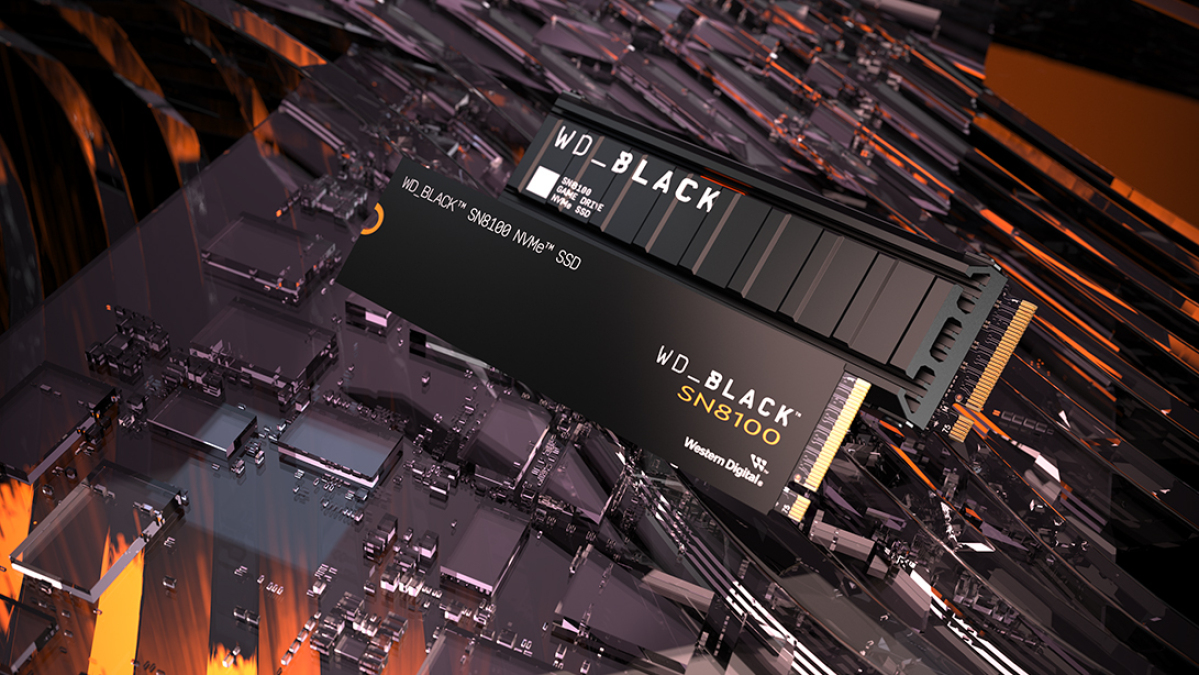
Gamers have a new Gen 5 SSD to consider for their next upgrade. Sandisk released its WD_Black SN8100 NVMe SSD, which, it claims, offers sequential write speeds up to 14,900MBps. Sandisk says that its new drive is the fastest PCIe Gen 5 NVMe SSD in the world. That appears to be the case, but just by a smidge. The Sandisk WD_Black SN8100 just beats out the Samsung 9100 Pro, which offers read speeds of 14,800MBps.
Credit: Sandisk
It will be interesting to see how Intel Core Ultra 200S series processors handle the WD_Black SN8100. As we noted recently, The SSD Review encountered some latency issues when testing 14,000MBps memory with Intel’s high-performance CPUs. The SSD Review tried different SSD modules and brands with the same results, suggesting that all SSDs might have reduced read times when paired with those CPUs. More testing will need to be done before that’s clear, though.
Beyond the blistering 14,900MBps sequential read speeds, the SN8100 also offers 11,000MBps sequential write speeds and random write speeds of 2.3 million IOPs. (That random write speed is for the 2TB and 4TB versions.) Sandisk offers the SSDs with or without the heatsink for different users and needs, but gamers will want to snag it with the heatsink. The passive WD_Black heatsink has customizable RGB lighting. That’s a nice touch for the sizeable chunk of gamers who dig LED lights in their PCs.
It’s worth noting that Sandisk is marketing the SSD for high-performance PCs and various AI uses, in addition to gamers.
Sandisk already has models available at 1TB, 2TB, and 4TB, with a whopping 8TB model coming “later this year.” It’ll be tempting to wait for that 8TB version, but with the 4TB module coming in at an MSRP of $569.99, you can expect the larger model to be a budget-buster for many prospective buyers.