Go to Hell in Doom: The Dark Ages, Now on Xbox Game Pass


Get ready to rip and tear your way through a medieval war against Hell. Xbox Game Pass subscribers can now play Doom: The Dark Ages, the latest installment in the gaming franchise.

Xbox Game Pass Ultimate — a CNET Editors’ Choice award pick — offers hundreds of games you can play on your Xbox Series X, Xbox Series S, Xbox One and PC or mobile device for $20 a month. A subscription gives you access to a large library of games, with new titles like Clair Obscur: Expedition 33 added monthly, plus other benefits, such as online multiplayer and deals on non-Game Pass titles.

Read more: Get Ready to Pay $80 for Xbox Games Later This Year

Here are the games Microsoft is adding to Game Pass in May. You can also check out what games the company added to the service in April

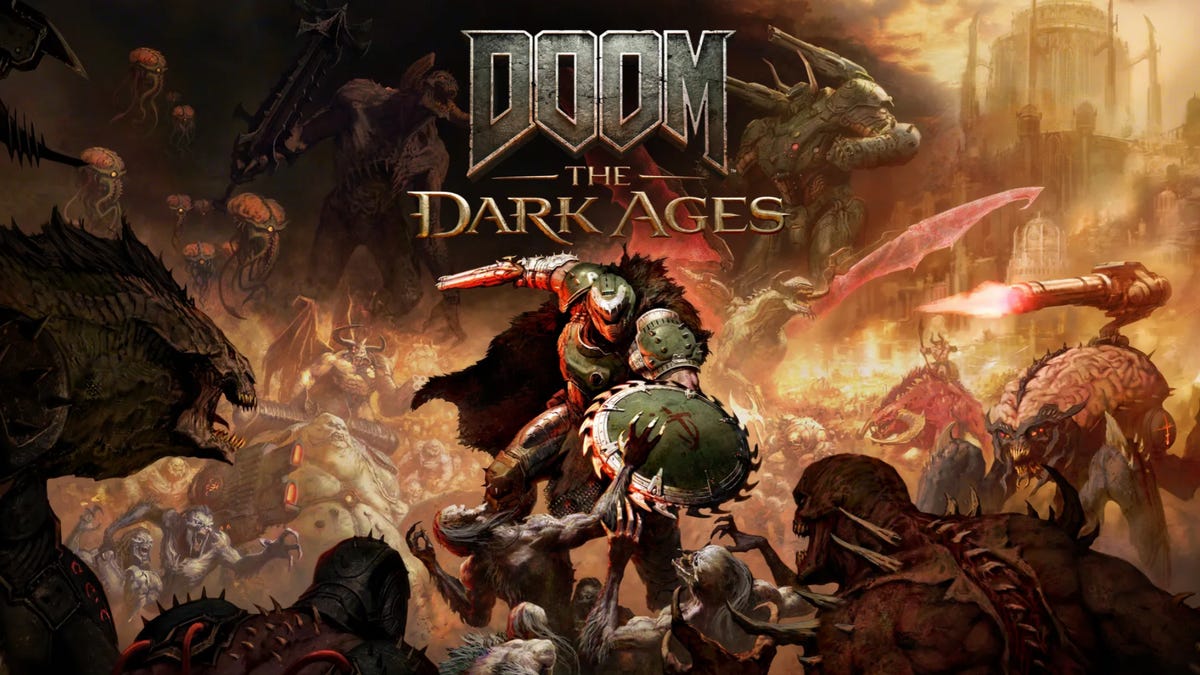
Doom: The Dark Ages

Game Pass Ultimate and PC Game Pass subscribers can play now.

The wait is over. Microsoft brought the next installment in the storied Doom franchise to Game Pass, and I couldn’t be more excited. This entry takes place before Doom (2016) and follows the Doom Slayer on his battles through a medieval Hell. There’s a shield that doubles as a chainsaw, a gun that grinds up skulls for ammo, a dragon and a huge mech you can pilot to beat down giant demons. What more could you ask for? 

If you want more Doom after playing this installment of the franchise, Game Pass has you covered. Here’s how you can play modern and classic Doom games on the service. 

Warhammer: Vermintide 2

Game Pass Ultimate and Game Pass Standard subscribers can play now.

This acclaimed co-op action game is returning to Game Pass more than three years after Microsoft removed it. The Chaos army and Skaven horde are out to crush the Empire, and the only thing standing in their way is you and your friends. Choose between five different characters, like a mercenary and a battle wizard, to fight through hordes of enemies in intense first-person combat. It’s a bloody good time.

Dragon Ball Xenoverse 2

Game Pass Ultimate, PC Game Pass and Game Pass Standard subscribers can play now.

Charge up your Spirit Bombs to save history in this action roleplaying fighting game. The flow of time has been disrupted, and it’s up to you to make sure history plays out as it was meant to. You’ll create your own custom character with their own abilities, explore Conton City and battle some of the strongest fighters in the universe. Multiplayer servers also hold up to 3,000 players, so there’s always someone new to fight. 

Dungeons of Hinterberg

New to Game Pass Standard.

Game Pass Standard subscribers can play this dungeon-crawling adventure almost a year after Game Pass Ultimate players could. This game combines combat, exploration and elements of social games into a charming and colorful package. You play as Luisa, who left her dead-end job to seek adventure in the regions surrounding the mountain town of Hinterberg. Wield magic, slay monsters, snowboard, make friends and sample delightful Austrian cuisine, like schnitzel and Eismarillenknödel, which is a type of ice cream dumpling filled with apricots that sounds wholly awesome.

Flintlock: The Siege of Dawn

New to Game Pass Standard.

Game Pass Ultimate players have had access to this action RPG game since July, and now Game Pass Standard do, too. The gods have scarred the world, so it’s up to you and your fox-like companion to take them all down in this game. You play as an elite member of a coalition army who uses melee, gunpowder and magical abilities to fight. If you use your abilities with precise timing in rhythmic battles, you can create deadly combos to take down the most enemies.

Metal Slug Tactics

New to Game Pass Standard.

Game Pass Standard subscribers can play the latest Metal Slug game a few months after it exploded onto Game Pass Ultimate in November. While past Metal Slug entries were filled with side-scrolling action, Metal Slug Tactics is a turn-based tactics game with RPG and roguelike elements. So you’ll be able to upgrade your characters and weapons to conquer the battlefield.

Revenge of the Savage Planet

Game Pass Ultimate and PC Game Pass subscribers can play now.

You’ve got no gear, no job and no plan at the start of this satirical sci-fi adventure. Thanks to corporate greed and stupidity, you’ve been abandoned on a planet and have to explore every nook and cranny to survive. You’ll have to use your wits in order to return to Earth, as well as to get revenge against your former corporate overlord.

Teenage Mutant Ninja Turtles: Mutants Unleashed

Game Pass Ultimate, PC Game Pass and Game Pass Standard subscribers can play now.

The heroes in a halfshell are back in a new adventure. Shipments of mutagenic ooze are arriving in the city, and some new mutants are rising from the mess. They’re not all bad, but you’ve got to find and stop the ones who are evil. You can also help citizens, deliver pizzas and build your own graffiti collection in this game. 

Kulebra and the Souls of Limbo 

Available to Game Pass Ultimate and PC Game Pass subscribers on May 16. 

Use your wits, kindness and the occasional whack to gather clues and help the souls of Limbo move on in this papercraft adventure game. As Kulebra, you’ll explore the colorful afterlife and meet some characters who are just as vibrant as the world around you. Some are still dealing with issues of loss or trauma, and it’s up to you to show them a better way forward in this whimsical game.

Firefighting Simulator: The Squad

Available to Game Pass Ultimate, PC Game Pass and Game Pass Standard subscribers on May 20.

Experience what it takes to be part of a firefighting crew in this simulator. You’ll operate digitally rendered Rosenbauer America fire trucks and use authentic firefighting gear from brands like Cairns and MSA. The game’s physics system will make the fires spread and destroy structures in realistic ways.

Police Simulator: Patrol Officers

Available to Game Pass Ultimate, PC Game Pass and Game Pass Standard subscribers on May 20.

If you’ve ever wanted to experience the day-to-day life of a police officer, now you can from the comfort of your home. You’ll start as a rookie and give out parking tickets before shouldering more responsibility around the fictional city of Brighton. Keep your eyes open because you might see a crash or other crime unfold right in front of your eyes. 

Games that left Game Pass

While Microsoft is adding those games to Game Pass, the company also removed five others from the service. So you’ll have to buy these games separately if you still need to finish your campaign or any sidequests. 

For more on Xbox, check out other games available on Game Pass Ultimate now, read our hands-on review of the gaming service and learn which Game Pass plan is right for you. You can also check out what to know about the upcoming Xbox games price hikes

Watch this: Hands-On: Doom The Dark Ages


Animal Spa Free Download (v1.0)


Animal Spa Pre-Installed Worldofpcgames

Animal Spa Direct Download:

Run a bathhouse visited by animals! Animal Spa is a relaxing simulation game that you can enjoy while doing other tasks, as it sits at the bottom of your screen. Place baths with different temperatures and rest areas to help a variety of animal friends unwind. Help your animal guests relax and unwind with a warm bath. Set the water temperature to your liking—cold, warm, or hot—or create special baths using bubble machines and herbal bags. Create a relaxing space for animals to rest after a good soak. From vending machines with thirst-quenching drinks to snack stands that fill their tummies, you have plenty of options to keep them happy. Cubic Odyssey

Have you ever dreamed of owning a bathhouse? Design it your way, from nostalgic tiled interiors to open-air baths that warm you up just thinking about them. Make your dream bathhouse a reality. Cats, dogs, rabbits, hamsters, and more. Many different guests from the animal world come to relax and unwind. Run your bathhouse and meet all kinds of wonderful visitors. Great service takes effort and care. Manage your staff to keep the floors dry and safe, restock supplies, and make sure every guest has a fantastic experience.

Features and System Requirements:

  • Decorate and upgrade different rooms including hot springs, massage rooms, grooming stations, and saunas.
  • Enjoy a soothing atmosphere with tranquil music, soft visuals, and relaxing animations.
  • Take part in limited-time events, unlock special animals, and collect seasonal decorations.
  • Manage a cozy animal spa where cute pets come to relax, bathe, and get pampered.

Screenshots

System Requirements

Recommended
OS: Windows 10
Processor: Intel® Core™ i3 @ 3.2 GHZ
Memory: 4 GB RAM
Graphics: Graphics card with DX9
DirectX: Version 9.0
Storage: 256 MB available space
Support the game developers by purchasing the game on Steam

Installation Guide

Turn Off Your Antivirus Before Installing Any Game

1 :: Download Game
2 :: Extract Game
3 :: Launch The Game
4 :: Have Fun 🙂

Why Human Oversight Fails AI


The Illusion of the Human Safety Net

As AI systems rapidly evolve from passive tools to autonomous agents, a dangerous assumption persists throughout the industry: that human oversight provides an adequate safety net for AI errors. This belief, that a person monitoring an AI’s decisions will reliably catch and correct mistakes, has become the default guardrail in many AI governance frameworks. Yet this approach fundamentally misunderstands both human psychology and the nature of modern AI systems.

The uncomfortable truth is that humans make exceptionally poor guardians for agentic, probabilistic AI. Our human cognitive architecture, evolved for a different world entirely, is ill-equipped to monitor complex AI decision-making. This mismatch creates a perfect storm where AI errors consistently slip through human oversight, sometimes with catastrophic consequences.

Why Human Oversight Fails

The limitations of human supervision extend far beyond mere inattention. Multiple factors conspire to make us unreliable guardians.

Automation bias renders objective oversight impossible. Humans exhibit an inherent tendency to trust computer-generated information over our own judgment. This isn’t simply laziness; it’s a deeply ingrained cognitive bias. When presented with AI recommendations or actions, humans consistently demonstrate an alarming propensity to defer to the machine, especially when it presents information with confidence and authority.

The tragic 2018 Uber self-driving car fatality in Arizona starkly illustrates this reality. The safety driver, meant to intervene if the AI faltered, had become complacent and distracted. This wasn’t an anomaly; it’s an inevitable result of how our brains respond to automation over time.

The opacity of modern AI creates an unbridgeable comprehension gap. Large language models and neural networks operate as “black boxes” that produce outputs through processes largely inaccessible to human understanding. How can a supervisor effectively evaluate a decision they fundamentally cannot understand? When an AI generates content that sounds plausible but contains subtle errors or fabrications, even expert reviewers may miss the problem entirely, as witnessed in embarrassing legal cases where lawyers have submitted entirely fictitious AI-generated case citations to courts.

The speed and volume of AI decisions overwhelm human capacity. As AI becomes more deeply integrated into business processes, the number of decisions requiring review exponentially increases. In domains like algorithmic trading, financial systems make thousands of micro-decisions per second, far beyond what any human could meaningfully monitor. By the time humans recognise a problem, significant damage may already be done.

From Linear Rules to Sophisticated Guardrails

If human oversight is inadequate, what’s the alternative? The answer lies not in simple linear rules, but in sophisticated deterministic guardrails; engineered constraints that reliably prevent AI systems from taking undesirable actions through a network of interconnected logical relationships.

Unlike the linear rule systems of the past that quickly became unmanageable and brittle, modern deterministic guardrails utilise graph-based knowledge structures that can represent complex regulatory frameworks and other knowledge-based processes with nuance and flexibility. These sophisticated structures encode complex causal relationships as formal, traceable networks of probabilities, weights and rules.

The power of graph-based deterministic inference is that it can handle the complexity and interconnectedness of real-world regulatory systems without sacrificing reliability. Unlike probabilistic AI models that produce varied, sometimes unpredictable outputs, deterministic graph systems follow explicit logical pathways with guaranteed outcomes that are entirely repeatable.

This approach creates a comprehensive safety system capable of understanding, for instance, that a financial product recommendation must simultaneously satisfy multiple interrelated regulatory requirements suitability for the client’s risk profile, all verifiable through traceable logical pathways.

This sophisticated graph-based approach can be deployed in two distinct architectural patterns: either as a validation layer to verify and correct LLM outputs, or as the primary reasoning engine with the LLM serving only as a natural language interface layer.

Pure Determinism: The Ultimate Safety Architecture

While validation of LLM outputs offers significant safety improvements, the most powerful configuration for high-stakes domains removes LLMs from the reasoning process entirely. In this pure deterministic architecture, graph-based inference systems handle all critical decisions independently, while LLMs serve solely as the interface layer, managing natural language understanding and communication. 

Most organisations operating in regulated environments would gladly sacrifice the general-purpose nature of LLMs (which, while impressive, is precisely what makes them prone to hallucination) for solutions that are narrower, domain-specific, 100% grounded in verified context, and utterly reliable. After all, why would a credit decisioning engine need to know about sports? Or a financial sanctions compliance system need to generate poetry? The flexibility to answer any question becomes far less valuable than the certainty of answering specific questions correctly every time—particularly when errors could trigger regulatory violations, financial losses, or reputational damage.

This approach completely removes the probabilistic element from the decision-making process itself. The LLM never makes substantive determinations, it simply translates between human language and the deterministic system. All core reasoning—eligibility determinations, compliance verdicts, risk assessments—occurs within the deterministic graph engine that traverses a knowledge network with logical precision.

This stands in contrast to the validation approach, where an LLM generates initial answers that are subsequently verified against the knowledge graph. In a pure deterministic configuration, the decision-making authority never resides with the probabilistic system. Instead, the inference engine and the graph becomes the authoritative reasoning component rather than just a guardrail.

The advantages of this “pure determinism” approach are profound:

  • Total elimination of hallucinations for critical decisions
  • Perfect repeatability across identical scenarios
  • Complete traceability of every decision to specific rules
  • True causal reasoning that follows explicit logical pathways
  • Independence from training data biases that affect LLMs

Consider a high-stakes financial services scenario, to determine whether a transaction requires additional anti-money laundering scrutiny. With a pure deterministic approach, the LLM may help extract relevant transaction details from unstructured sources, but the actual determination comes exclusively from the graph-based inference engine traversing a precisely encoded network of regulatory requirements, or other proprietary knowledge. This creates a system that is simultaneously conversational but also absolutely reliable in its core reasoning functionality.

Accelerating Knowledge Graph Development

While graph building was historically a significant bottleneck requiring months of manual knowledge engineering, recent breakthroughs have transformed this process. 

Specialised LLMs—fine-tuned on all classes of human reasoning, knowledge engineering patterns and a cross section of domain problems—have unlocked the ability to programmatically generate sophisticated knowledge graphs at unprecedented speed. They can extract structured knowledge from regulatory documents, policies, and even domain expertise, and build accurate and computable knowledge graphs—and maintain them. This eliminates what historically was months of manual work, compressing it into days or even hours. 

This capability fundamentally changes the economic equation for implementing a sophisticated knowledge management layer in the enterprise.

Creating Safe Agentic Systems

Looking ahead, the most sophisticated AI applications will likely involve autonomous agents—AI systems that can independently perform complex tasks without continuous human direction. This evolution from passive tools to active agents magnifies all the risks already discussed and introduces new ones around the delegation of authority in multi-step decision processes.

The development of safe agentic systems demands more than ad hoc guardrails or human monitoring; it requires a comprehensive architecture where deterministic graph-based inference serves as the logical foundation for all critical decisions. Such systems can reliably constrain agent behavior within carefully defined operational boundaries while still allowing for the flexibility and generative capabilities that make AI valuable.

Unlike post-hoc human oversight, which attempts to catch problems after they occur, deterministic guardrails prevent problems by design. The system simply cannot act outside its defined parameters, just as a well-designed electrical system has circuit breakers that automatically prevent dangerous overloads without requiring human intervention.

For organisations seeking to deploy agentic systems, this approach offers a pathway to production without rework, significantly lowering risk. Agents can operate while sophisticated deterministic guardrails act as the compliance officer within, ensuring that outcomes adhere to regulatory, ethical, and safety boundaries. This unlocks a future where AI systems can act independently while maintaining the precision and reliability that high-stakes domains demand.

The Implementation Question

For organisations looking to adopt this approach, there are several key considerations. The graph-based guardrails must be designed with sufficient sophistication to capture the nuance and complexity of regulatory frameworks without becoming unmanageable. This requires specialised tooling. 

The integration between deterministic systems and LLMs must be carefully architected to ensure clear separation of responsibilities. In pure deterministic configurations, the LLM should have no authority to override or modify the determinations of the graph-based inference engine; it should simply be constrained to translating logical outputs into natural language.

Testing must be rigorous and scenario-based, focusing particularly on edge cases. Unlike probabilistic systems that can only be evaluated statistically, deterministic systems can be verified through automated testing of logical pathways.

The Rainbird Approach

Rainbird has pioneered the application of deterministic graph-based inference as sophisticated guardrails for AI systems. The Rainbird platform is an ecosystem that enables organisations to transform complex regulatory frameworks and domain expertise into executable, deterministic knowledge graphs that can govern AI behavior with precision and reliability.

Rather than relying on brittle linear rules or unreliable human oversight, Rainbird’s approach uses programmatically-generated, sophisticated knowledge graphs to represent complex interrelationships between concepts, rules, and data. This creates guardrails that are simultaneously robust and flexible—capable of addressing complex regulatory requirements while adapting to evolving business needs.

For organisations deploying agentic AI, Rainbird’s newest capability, Noesis, provides a revolutionary approach to knowledge engineering. Noesis is a developer-first approach and automates the extraction and structuring of knowledge from regulatory documents and policies, transforming dense text into verifiable knowledge graphs with minimal human intervention. The result is sophisticated deterministic guardrails that scale with the complexity of the regulatory environment.

By encoding regulatory expertise into verifiable knowledge graphs, organisations can ensure that AI-generated content and decisions remain fully compliant with intricate regulations while providing the complete traceability and explainability demanded by regulators and stakeholders.

The future of AI governance isn’t about choosing between innovation and safety—it’s about taking a hybrid, neurosymbolic approach that enables both. By implementing deterministic graph-based inference as the logical foundation for agentic AI, organisations can build systems that operate in high-stakes environments, without sacrificing reliability, compliance, or trust.

For more information on implementing these solutions in your organisation, contact our team for a consultation.

Introducing the Designed for Xbox Floral Collection 2025


The new Designed for Xbox collection has arrived. Introducing the Floral Collection, designed for players who seek accessories that blend beauty with performance. Each piece in this collection is adorned with unique intricate floral patterns, bringing a touch of elegance to your game time.


Night Blossom: PowerA Advantage Plus Wired Controller

Take your game and style to new limits with the officially licensed PowerA Advantage Plus Wired Controller for Xbox Series X|S, Xbox One, and Windows 10/11, featuring the stunning Night Blossom design. With our patented Quick-Twist Thumbsticks, you can easily adjust the thumbsticks to three different height settings with a simple twist. Enjoy a smoother, pro-level feel thanks to Hall Effect Modules that utilize contact-free magnetic sensors in the thumbsticks to help with precision and longevity. Plus, two Mappable Advanced Gaming Buttons, Dual Rumble Motors, and more. Available today for $42.99 USD ERP.

Key Features

  • Quick-Twist Thumbsticks.
  • Hall Effect Modules.
  • Dual Rumble Motors.
  • Immersive Impulse Triggers.
  • Headset Compatible with 3.5mm headphone jack.
  • Extra-long 10ft. USB-C Cable.
  • PowerA Gamer HQ App – Adjust audio, triggers, rumble, dead zones, and more on your controller with this free app for Xbox and Windows.

Flora: Audeze Maxwell Headset

Game in style with the Audeze Maxwell Flora Limited Edition headset, featuring award-winning planar magnetic technology for immersive audio, low-latency wireless, and 80-hour battery life to outperform and outlast your competition. Available today for $339.99 USD ERP.

Key Features

  • Award-winning Audeze 90mm Planar Magnetic Drivers.
  • Ultra-Low Latency Wireless with 3x range of traditional 2.4Ghz.
  • 80hr+ battery life with fast charge in 20 minutes.
  • Class-leading high-resolution audio up to 24-bit/96kHz.
  • Filter noise reduction technology for clear communications.

Floral Fusion: WD_Black Storage Expansion Card 1TB

Expand your Xbox game collection by adding up to 1TB of space (actual user capacity may be less depending on operating environment) with the official Xbox-licensed WD_Black C50 Storage Expansion Card Floral Fusion. Built with a super-speed NVMe SSD core, the WD_Black C50 Storage Expansion Card for Xbox leverages Xbox Velocity Architecture to deliver extremely fast, low-latency performance that emulates the console’s internal SSDs. Enjoy a seamless gaming experience and switch instantly between multiple games with Quick Resume. Available later in May, please see retailer for pricing.

Key Features

  • Play effortlessly with full Xbox integration and enjoy gaming experiences that adhere fully to Microsoft’s quality standards.
  • With 1TB of storage, you have plenty of room to grow your game library.
  • Superseed NVMe Core revolutionizes your gaming experience with reduced wait times, fast responses, and full immersion.
  • Xbox Velocity Architecture unlocks the full potential of the WD_Black C50 Storage Expansion Card for Xbox, allowing it to achieve blazing-fast performance and seamless, high-speed access to your favorite games.
  • The storage expansion card seamlessly integrates with your console’s Quick Resume, enabling instant transition between multiple suspended games — so you can pick up exactly where you left off without delay.
  • Enjoy the fresh Floral Fusion design to get you in the summer gaming mood.

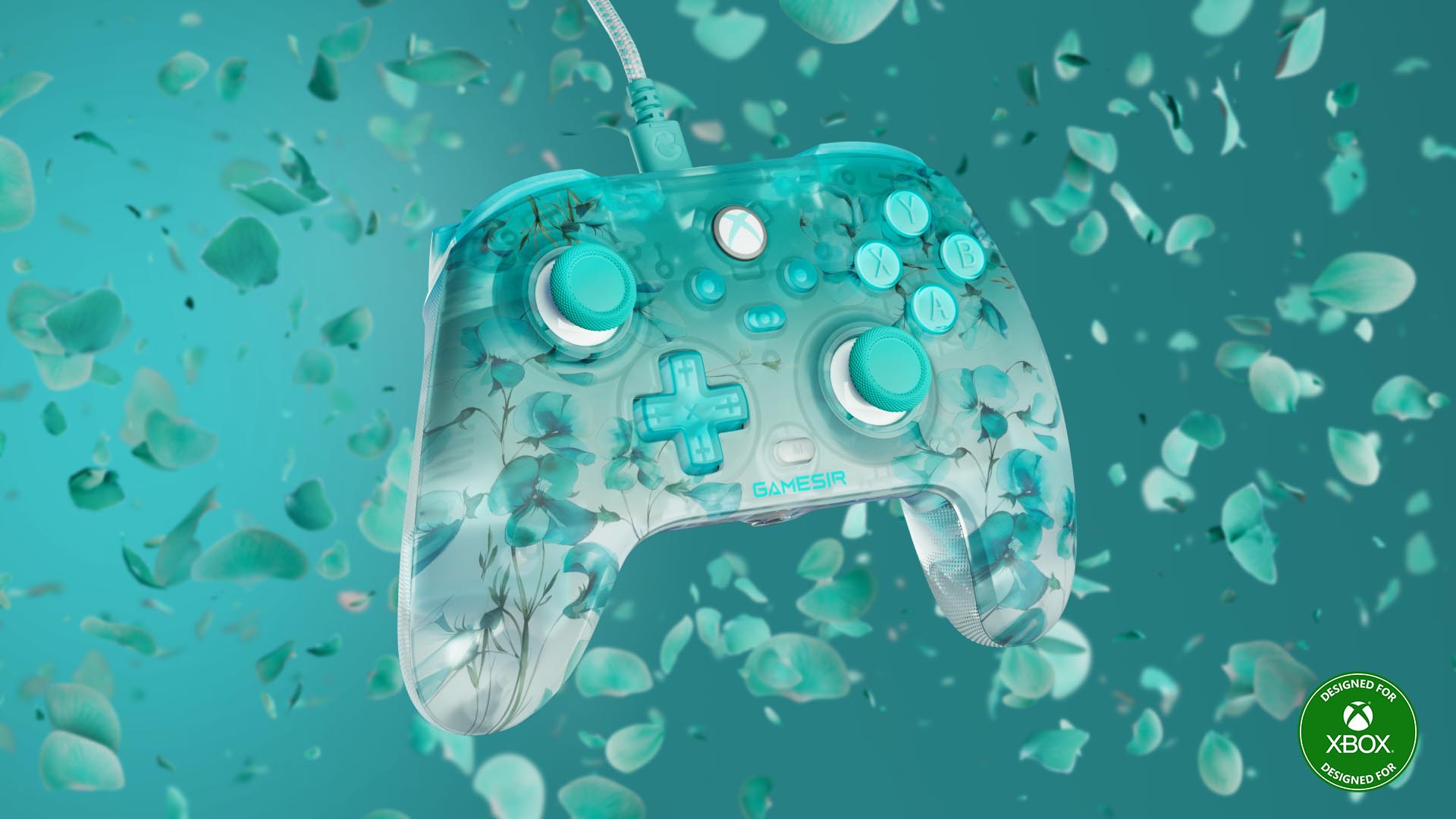
Spring Breeze: GameSir T7 Pro Floral Wired Controller

Embrace elegance and comfort with the GameSir T7 Pro Floral controller, featuring a stunning floral-patterned matte shell. Its semi-transparent design and dynamic RGB lighting create a mesmerizing visual experience. Shine with the T7 Pro Floral and elevate your gaming setup. The Game Sir T7 Pro Floral Wired Controller is available for pre-order today for $49.99 USD ERP.

Key Features

  • Hall Effect sticks & triggers.  
  • 2 Back buttons.  
  • Trigger Locks.  
  • Dynamic lighting on stick ring and ABXY buttons.  
  • Wired to Xbox or PC connection.

Elevate Your Gaming Experience

Enjoy beauty & performance with the Designed for Xbox Floral Collection. You can purchase your favorite accessory, or collect them all, at Best Buy online

AWS healthcare services – Tech Research Online


Learn how to enhance patient care with
AWS healthcare services

Calender Thursday 29th May

Clock 06:00 – 07:30 GMT-4

Profile Prerna Pandey

Mode Online

About the event

Explore how purpose-built healthcare services can improve patient care and operational efficiency. This virtual webinar introduces healthcare solutions on AWS featuring demonstrations of services like Amazon HealthLake to store, transform, query, and analyze health data at scale using FHIR industry standard. AWS HealthImaging to store, manage, and share medical imaging data in the cloud at petabyte scale using the DICOM standard. Amazon Omics to store, query, analyze and generate insights from genomics and other biological data through genomics-aware object store, analytics-optimized datastore, and managed compute capabilities. Amazon Comprehend Medical allows customers to submit service quota increase requests through AWS Support Console for processing medical information. A UK healthcare provider will share their real-world implementation experience, followed by an interactive Q&A session.

Learning objectives:

  • Build practical knowledge of AWS healthcare services and their applications in clinical settings
  • Understand how to implement healthcare related AWS services to streamline healthcare operations
  • Learn from successful implementations through a UK healthcare provider case study

Who this is for:

This event is designed for healthcare technology decision-makers, including Healthcare CIOs & IT leaders, clinical directors, and digital transformation managers, and healthcare technology innovators who want to modernize their healthcare delivery systems.

Now’s a good time to check in on your Steam account security


Update May 14, 6:38PM ET: Valve has confirmed that Steam systems were not breached and identifying user data has not been stolen or accessed by hackers. The company provided clarification in a Steam blog post:

“We’re still digging into the source of the leak, which is compounded by the fact that any SMS messages are unencrypted in transit, and routed through multiple providers on the way to your phone. The leak consisted of older text messages that included one-time codes that were only valid for 15-minute time frames and the phone numbers they were sent to. The leaked data did not associate the phone numbers with a Steam account, password information, payment information or other personal data. Old text messages cannot be used to breach the security of your Steam account.”

Our original story follows.


Steam has allegedly suffered a data breach in the past week. Details are scant and difficult to confirm, but a known hacker has claimed to be selling a database of more than 89 million user records for the gaming platform with one-time access codes obtained from a third-party vendor used by Steam. If accurate, that would include information about more than two-thirds of Steam’s audience.

The original LinkedIn post identifying a breach suggested that the leaked information came from cloud communication company Twilio. However, a Steam rep said the platform doesn’t use Twilio, so if there has been a breach, it may be through a different vendor providing SMS codes for access.

While we’re genuinely not sure what’s happening at this stage, the whole kerfuffle is a timely reminder to check in on your online security practices. In the case of Steam, Valve has a mobile authentication program called Steam Guard that can help keep your account secure. It’s also a good practice to make sure you’re regularly changing your pass codes, especially when it’s possible that some component of Steam Guard was at the root of this week’s security drama. A password manager can streamline that process. Since phone numbers appear to have been compromised, be extra alert to possible phishing attempts via text.

If you buy something through a link in this article, we may earn commission.

False alarm: Valve confirms that nobody hacked into over 89M Steam accounts and that your passwords are safe


The dark web doesn’t have your Steam account on it, Valve has confirmed in a news post after a report on LinkedIn claimed there was a massive data breach of more than 89 million users.

“You may have seen reports of leaks of older text messages that had previously been sent to Steam customers,” Valve wrote. “We have examined the leak sample and have determined this was NOT a breach of Steam systems.”

Master Product Design Costing: Top Strategies for CAD Services Companies & Freelance Designers


Getting more sales while profiting in the first place would mean one thing: proper pricing. Yet, it’s ironic because many designers find it hard to talk and write about pricing, even if everyone’s interested in and curious about it.

Cad Crowd is an industry leader in helping product design companies, and firms find the best professionals and product designers to help with their innovative ideas. Today’s blog post helps you master product design costing together with top strategies for CAD services companies and freelance designers.


🚀 Table of contents


3D examples of product designs

Importance of pricing in product design

A successful business will never thrive if it does not know and understand the effects of pricing on the behavior of customers. Pricing is not just an activity that has its relevance in numbers. Instead, it is a strategic level intended to shape the complicated network of customers’ buying decisions.

The effects of pricing go beyond the traditional exchange of currency and goods. It also affects the psyche of consumers because numbers shape their perceptions of what is quality, desirable, and worth it. So, if your pricing strategy is calibrated just right, you can expect more loyal customers.

On the other hand, that may scare away even the most willing buyers with one wrong move. That means you need to be very specific, more experienced, and acutely aware of the changing dynamics of CAD design services and the marketplace if you are to navigate it well.

Most of today’s businesses are exploring and investigating even more innovative pricing methods as part of their effort to catch up with the fast-changing market landscape. The most important among these pricing strategies, however, has to be based on subscriptions, for which these models increasingly pave the way for a recurring payment structure for customers to have continuous access to such services or products.

RELATED: How to cut costs in 3D product rendering: Tips for freelance designers & CAD firms

Dynamic pricing, using algorithms and real-time data, gives businesses the opportunity to adjust their price in light of the cost among competitors, the demand, and other variables around their market, making them competitive and optimizing revenue.

Pricing on value is also growing, and it anchors to value. It focuses on the alignment of prices with the perceived value their customers receive so businesses can capture the real value from their distinct offers.

Outcomes-based pricing is also directly connected with the costs and the results delivered to the customers. This pricing model is also in increasing demand as it promotes a result-oriented approach, and the pleasure of the customers is tied up with the product design company’s success.

As businesses are not immune to the dynamic changes in consumer behavior and technology, so they test various pricing models to stay responsive and agile in the present dynamic marketplace.

Here are some strategies that CAD providers can follow on the pricing of their projects:

It begins with knowing your worth.

The first step in mastering how to price the design of your product is knowing your worth right from the start. It’s because your individual perspective, experience, and skills you can bring to the table would help determine your worth.

If you do not know your worth, you might just underprice your work. That would then impact your earnings in this case because it sets a wrong example in the marketplace.

This will then soon lead to financial instability and burnout in the long run. Moreover, if you undervalue yourself, clients may just underestimate your work and its quality. This is a very serious issue in the design industry, which has extreme competition. What you set for the price can make or break the chance of succeeding.

Try to follow this framework to correctly ascertain your true worth and give your services the right pricing:

  • Evaluate your skills: Take note of your industry-relevant skills. Be specific, and then add specialized skills that distinguish you from the rest.
  • Assess your experience: Think of how many years you’ve been in the industry and your previously completed projects. Your services will be more valuable based on your experience.
  • Take a closer look at your unique value proposition: What makes you unique? Is it a class of specialized skills that cannot be found elsewhere? Some mannerisms and uniqueness that cannot be found anywhere else? Do you have an aura of being strict with attention to detail or efficiency?
  • Look at what is presently selling in the market: Then, compare your unique value proposition, experience, and skills with the present market rates to determine your market standing.
  • Consider your costs: Contemplate all the overheads to the hardware and the software. There are so much more.
  • Price it according to what you have above as factors: Ensure that it is market competitive, and of course, it better reflects your worth.

RELATED: How much do prototypes cost to make in 2025? Pricing insights from proven CAD product design firms

Study the prices in the market.

Once you have rated and appraised your worth, next is the research about the going rates in the market. Knowing what the existing market rates are will give you an idea of competitive pricing. You can determine the accurate market position for yourself so that your price is not too low and not too high.

There seems to be a perceived risk of running clients away from your competitors if you run under extremely high prices. On the other hand, extremely low prices may attract the wrong type of clients; therefore, it becomes hard to make enough profit to keep your consumer product designs above the water.

Here is a framework for you to follow in effective research of market rates:

  • Know your customers: List down five to ten other businesses or professionals in your industry with the same services.
  • Assess their pricing: Reach out to the ones above either directly or through checking their website to know what their prices are. Note prices for services similar to yours.
  • Consider the experience and expertise of your competitors: Are they specialized services? Do they have more experience compared to you?
  • Assess other services: If there are other additional services offered by your competitors, do not forget to consider them either because these would have a bearing on their pricing. For example, are they having a 24/7 customer support?
  • Determine your services’ average charge after collecting the pertinent relevant data.
3D product design of a quadrocopter drone

Consider each cost

Now is the time for you to consider the costs associated with your service since you already concluded your value and looked upon existing market rates. In general, you have to consider every possible cost so you can earn your profits first.

Apart from the direct costs, such as software and materials, indirect costs, like marketing and overheads, must be included. Failure to consider all these costs might make your profit margin much lower than expected, or worse, you might suffer losses. Here are practical tips to help you determine that no cost remains unconsidered:

  1. You have to start by gathering a list of all the direct costs that are applicable to the service you provide, which would include your materials, outsourcing services, software, etc.
  2. The,n there would be a list of indirect costs, which include your overheads, customer support, marketing, etc.
  3. An approximate estimate of the amount of time required to deliver a service or complete a project. Do not forget to add in the time allocated to administrative things, communications, and all the other hours that are not chargeable.
  4. Add the indirect and direct costs and value of your time to derive your total price.
  5. Target desired profit margin. This will differ from industry to industry, along with the worth you are providing. 6. Add the desired profit margin to your total cost and make the final cost for you.

RELATED: Key signs it’s time to reach out to outsourcing companies to improve your engineering business

Customized pricing

Once all the costs are factored into the picture, the third step in learning to cost product design or product engineering services is making tailored pricing. This is the most crucial step since you can fine-tune your prices according to your project, the value you bring, and your client.

Most of the time, it’s not recommended to adopt a one-size-fits-all kind of pricing strategy because each client will have a different budget and needs. The only way to achieve this is through the customized pricing model, which is to attract that type of client in bulk quantity to increase your revenue.

  1. Understand the specific requirements and needs of your client. What are their budgets and the scope of the project?
  2. What value are you providing? Do you do something that most designers don’t? Are your services in high demand?
  3. Assess your client. Will they refer you to others? Are they repeat clients?
  4. Re-price your product. Update the prices within the ideas provided. This can be offering discounts for large orders, charging premiums for special orders, and even adjusting the budget according to that of the client.
  5. Ensure the client is informed of the pricing and let them know the rationale behind any changes as well as the value you provided.

Practice clear communication

Now, to continue from the above point, clear communication in mastering product design costing is the final point. Critical to business communications of all kinds, but even more when it comes to pricing. Miscommunication with your pricing may spell missed opportunities, misunderstandings, and, worst of all, damaged relationships.

How Cad Crowd can help

Your pricing can make or break the success of your business and the project of your clients. To ensure that you will get the most out of your money, Cad Crowd, with its years of experience, can connect you with the best product designers who will handle your projects according to your needs and requirements without blowing your budget. Request a quote now.

author avatar

MacKenzie Brown is the founder and CEO of Cad Crowd. With over 18 years of experience in launching and scaling platforms specializing in CAD services, product design, manufacturing, hardware, and software development, MacKenzie is a recognized authority in the engineering industry. Under his leadership, Cad Crowd serves esteemed clients like NASA, JPL, the U.S. Navy, and Fortune 500 companies, empowering innovators with access to high-quality design and engineering talent.

Connect with me: LinkedInXCad Crowd

How to create a real custom Output window?


I’d like to create an extra, custom Output Window for MSVC 2022 for some extended login purposes. I’ve followed this article, implementing such a code:

using Microsoft.VisualStudio.Shell;
using Microsoft.VisualStudio.Shell.Interop;
using System;
using System.ComponentModel.Design;
using System.Globalization;
using System.Threading;
using System.Threading.Tasks;
using Task = System.Threading.Tasks.Task;
using Microsoft.VisualStudio;

namespace VSIXProject9
{
    /// <summary>
    /// Command handler
    /// </summary>
    internal sealed class My_Output_Wnd_1
    {
        /// <summary>
        /// Command ID.
        /// </summary>
        public const int CommandId = 0x0100;

        /// <summary>
        /// Command menu group (command set GUID).
        /// </summary>
        public static readonly Guid CommandSet = new Guid("e19c8dcd-4193-4104-b858-d3a7a29166c6");

        /// <summary>
        /// VS Package that provides this command, not null.
        /// </summary>
        private readonly AsyncPackage package;

        /// <summary>
        /// Initializes a new instance of the <see cref="My_Output_Wnd_1"/> class.
        /// Adds our command handlers for menu (commands must exist in the command table file)
        /// </summary>
        /// <param name="package">Owner package, not null.</param>
        /// <param name="commandService">Command service to add command to, not null.</param>
        private My_Output_Wnd_1(AsyncPackage package, OleMenuCommandService commandService)
        {
            this.package = package ?? throw new ArgumentNullException(nameof(package));
            commandService = commandService ?? throw new ArgumentNullException(nameof(commandService));

            var menuCommandID = new CommandID(CommandSet, CommandId);
            var menuItem = new MenuCommand(this.Execute, menuCommandID);
            commandService.AddCommand(menuItem);

            ///////////////////////////////

            IVsOutputWindow outWindow = Package.GetGlobalService(typeof(SVsOutputWindow)) as IVsOutputWindow;

            // Use e.g. Tools -> Create GUID to make a stable, but unique GUID for your pane.
            // Also, in a real project, this should probably be a static constant, and not a local variable
            Guid customGuid = new Guid("0F44E2D1-F5FA-4d2d-AB30-22BE8ECD9789");
            string customTitle = "Custom Window Title";
            outWindow.CreatePane(ref customGuid, customTitle, 1, 1);

            IVsOutputWindowPane customPane;
            outWindow.GetPane(ref customGuid, out customPane);

            customPane.OutputString("Hello, Custom World!");
            customPane.Activate(); // Brings this pane into view
        }

        /// <summary>
        /// Gets the instance of the command.
        /// </summary>
        public static My_Output_Wnd_1 Instance
        {
            get;
            private set;
        }

        /// <summary>
        /// Gets the service provider from the owner package.
        /// </summary>
        private Microsoft.VisualStudio.Shell.IAsyncServiceProvider ServiceProvider
        {
            get
            {
                return this.package;
            }
        }

        /// <summary>
        /// Initializes the singleton instance of the command.
        /// </summary>
        /// <param name="package">Owner package, not null.</param>
        public static async Task InitializeAsync(AsyncPackage package)
        {
            // Switch to the main thread - the call to AddCommand in My_Output_Wnd_1's constructor requires
            // the UI thread.
            await ThreadHelper.JoinableTaskFactory.SwitchToMainThreadAsync(package.DisposalToken);

            OleMenuCommandService commandService = await package.GetServiceAsync(typeof(IMenuCommandService)) as OleMenuCommandService;
            Instance = new My_Output_Wnd_1(package, commandService);
        }

        /// <summary>
        /// This function is the callback used to execute the command when the menu item is clicked.
        /// See the constructor to see how the menu item is associated with this function using
        /// OleMenuCommandService service and MenuCommand class.
        /// </summary>
        /// <param name="sender">Event sender.</param>
        /// <param name="e">Event args.</param>
        private void Execute(object sender, EventArgs e)
        {
            ThreadHelper.ThrowIfNotOnUIThread();
            string message = string.Format(CultureInfo.CurrentCulture, "Inside {0}.MenuItemCallback()", this.GetType().FullName);
            string title = "My_Output_Wnd_1";

            // Show a message box to prove we were here
            VsShellUtilities.ShowMessageBox(
                this.package,
                message,
                title,
                OLEMSGICON.OLEMSGICON_INFO,
                OLEMSGBUTTON.OLEMSGBUTTON_OK,
                OLEMSGDEFBUTTON.OLEMSGDEFBUTTON_FIRST);
        }
    }
}

but definitely NOT get what i’ve expected. The code here DO NOT create an extra, separate output window, BUT only creates so called "panel" for an existing Output window:
enter image description here

This panel is just a kind of sub-frame opened from "Select output from:" rollout WHILE what i want to get is, as stated earlier just another, separate output window like:
enter image description here

that can be moved/docked/placed inside the whole IDE window just like the original Output window, Call Stack or Breakpoints windows.

Is there a way to to achieve what i need?

I tested Suunto’s ultra-lightweight smartwatch, and it’s as capable as models twice the price


suunto-run1.jpg

ZDNET’s key takeaways

  • The Suunto Run is available now for $249
  • This new sports watch is very light at 36 grams with the strap, lasts for a week, has a bright AMOLED display, and provides accurate location tracking
  • SuuntoPlus apps are not supported and music storage doesn’t support subscription services.

I was reintroduced to Suunto last year with the fabulous Suunto Race GPS sports watch, and I have enjoyed months of running, rowing, biking, walking, and living with that flagship watch. The new Suunto Run provides a more focused experience at a very affordable sub-$250 price point with a size and weight that will appeal to just about everyone.

Also: The best sports watches of 2025

The Suunto Run is optimized for runners and is available in Black, Frost (white), Lime, and Coral, with the Lime one available for testing on my wrist. Running is one of my prime activities, so I appreciate the elegance of the Suunto Run with its minimalist design and user interface. While the watch is focused on running, 34 sports modes are supported with run-specific modes for activities such as marathon running and track running, where laps around the track are accurately recorded.

A 22mm quick-release strap is included with the Suunto Run, but you can find thousands of other 22mm bands to use with your watch as well. The included fabric strap is perfect for running, with the ability to flex while remaining secure and allowing you to sweat comfortably. The 36 grams total weight, including the textile strap, means that you can barely even feel the watch on your wrist, and this level of comfort also makes it a watch you can wear to bed to track your sleep and recovery with ease.

The Suunto Run (left) is much smaller and lighter than the Suunto Race (right)

Matthew Miller/ZDNET

Despite its light weight and small size, the watch provides at least a week of battery life with the always-on display turned off. The lift-to-wake function works well, and you may even see up to 12 days with light use. With all GNSS options enabled and in dual-band mode, the watch provides up to 20 hours of tracking so you can take on just about any challenge with the Suunto Run. A proprietary charging puck comes with the watch.

Three physical buttons on the right side of the display work with the touchscreen to provide a simple user interface. The top-right button takes you to your last activity. You can press the button once, confirm you want to perform the same activity, and then press it again to get going. A press of the center, rotating-crown button brings you to your list of recent activities so that you can get right into your preferred exercise mode quickly and efficiently.

The Suunto Run has three buttons on the right side and a capable heart rate sensor on the back

Matthew Miller/ZDNET

Customization of your various activities is supported right on the watch with interval training, duration goals, and even a ghost-runner mode so you can quickly check if you are ahead or behind the imaginary runner helping motivate you to achieve your goals. Support for five GNSS options is available, and the Suunto Run has proven to match closely with flagship watches that cost three to five times as much.

Also: One of the longest-lasting sports watches I’ve tested is also the most gorgeous

Although the watch is small and light, a brilliant 1.32-inch AMOLED display with a high resolution of 466 x 466 pixels is provided behind Gorilla Glass. The bezel is stainless steel, with a fiber-reinforced polymer case material and a 46mm diameter. The watch is 50-meter water resistant, so you can wear it in every condition you would run in.

Getting ready for a running workout with the Suunto Run

Matthew Miller/ZDNET

Heart rate accuracy matches closely with other watches and, unlike some recent smartwatches from Samsung and OnePlus, you can connect external heart rate monitors. Running power is also supported and is a good measure for effort if you prefer that option over heart rate.

The Suunto Run is an affordable watch, but one compromise compared to other Suunto options is that the watch does not support the SuuntoPlus application library. There is plenty of customization in the various exercise modes, widgets, and included apps. Apps you can find by rotating the digital crown include weather, sleep, flashlight, media player (MP3s downloaded and stored in the 4GB internal storage), breathe, alarm clock, and more.

ZDNET’s buying advice

The Suunto Run is clearly an option to consider if you enjoy running and are looking for an affordable and comfortable sports watch to help guide your training, track your running, and measure your recovery and progress. The Suunto smartphone application is powerful, with an AI-based Suunto Coach function to help you achieve your fitness and health goals. 

What are the tariffs in the US?

The recent US tariffs on imports from countries like China, Vietnam, and India aim to boost domestic manufacturing but are likely to drive up prices on consumer electronics. Products like smartphones, laptops, and TVs may become more expensive as companies rethink global supply chains and weigh the cost of shifting production.

Also: Tariff war has tech buyers wondering what’s next. Here’s what we know

Fitness devices, which are predominantly manufactured in these regions, are now subject to tariffs as high as 54% on Chinese imports and 46% on Vietnamese goods. As a result, consumers may see price increases of approximately 20% on these items. 

Manufacturers are exploring options like relocating production to countries with lower tariffs, but such shifts are complex and may not provide immediate relief. In the short term, shoppers should anticipate higher costs for headphones and wearables due to these trade policies.