Iran is offering to sell advanced weapons systems including ballistic missiles, drones and warships to foreign governments for cryptocurrency, in a bid to use digital assets to bypass western financial controls. From a report: Iran’s Ministry of Defence Export Center, known as Mindex, says it is prepared to negotiate military contracts that allow payment in digital currencies, as well as through barter arrangements and Iranian rials, according to promotional documents and payment terms analysed by the Financial Times.
The offer, introduced during the past year, appears to mark one of the first known instances in which a nation state has publicly indicated its willingness to accept cryptocurrency as payment for the export of strategic military hardware. Mindex, a state-run body responsible for Iran’s overseas defence sales, says it has client relationships with 35 countries and advertises a catalogue of weapons that includes Emad ballistic missiles, Shahed drones, Shahid Soleimani-class warships and short-range air defence systems.
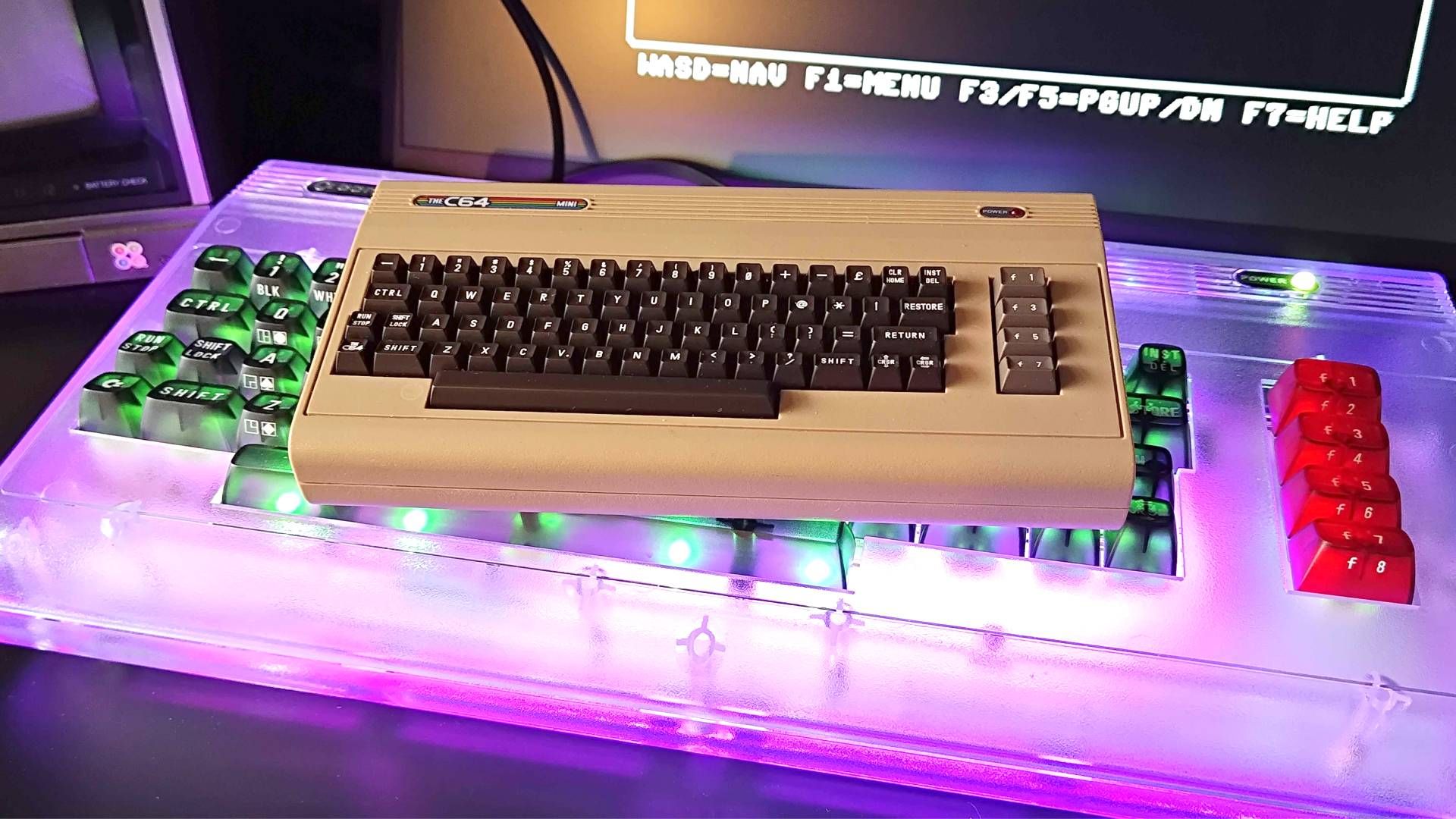
Messing around with old retro gaming setups is absolutely my bag, but trying to use microcomputers like the C64 can be a drag. Unlike consoles, PC precursors largely have to put a bit more effort into running games than simply blowing on a cartridge and jamming it in, and while the shiny new Commodore 64 Ultimate helps arm the iconic system with brand new tricks, I totally get why some of you might still go for its plug-and-play mini predecessor.
For what it’s worth, I think comparing the Commodore 64 Ultimate to the C64 Mini (THEC64) is silly. Yes, both machines are offering up access to the same game library and the microcomputer’s BASIC coding environment, but the new FPGA system is pretty much an exact hardware replica of the original, whereas Retro Games Ltd’s small doohickey feels more like a best retro console contender.
That begs the question, why would retro enjoyers want to grab a mini imitation of a C64 when they could have a souped-up version of the real deal? Well, there is a staggering price difference between the two, as the Commodore 64 Ultimate will set you back at least $300, whereas you can still grab the 2017 gadget for around $70.
(Image credit: Phil Hayton)
Yet, keeping your bank account happy isn’t the only reason to grab a C64 Mini over the new Ultimate machine. It’s actually a more logical jumping-on point for newbies than the more expensive and inherently complicated-to-use FPGA machine. That’s not to say any of those latter traits are actually a bad thing, as you pretty much get what you pay for and will have access to more advanced, authentic features. However, if you just want a taste of some microcomputing classics with little effort, the plug-and-play console is a better fit.
Microcomputing convivence
(Image credit: Phil Hayton)
There are absolutely two camps of retro gamers out there, and the C64 Mini absolutely caters to the minimalist collectors. By that, I’m describing the sort of player who still wants something pretty to sit pretty on a shelf, while being able to quickly tap into a system’s library on a modern screen. If that sounds like you, then you’ve likely already got a collection of tiny consoles like the NES and SNES classic editions or the Sega Genesis (Mega Drive) Mini, and they are undoubtedly one of the quickest ways to play a curated library on something physical.
That said, the C64 Mini does break tradition somewhat compared to those other tiny systems with its functionality. For starters, it natively lets you run your own backed-up games using a USB drive, so you aren’t stuck with just the 64 classics built in. Amusingly, that does mean that if you grab the OG Beige model instead of the newer Black edition with a reduced “neo-retro” collection of 25 adventures, you can potentially still play all those same games, and some of them are even free.
The C64 Mini also, perhaps surprisingly, provides access to BASIC, Commodore’s programming language. In theory, that means you can plug in a USB keyboard and start coding your own programs like it’s 1982, and while that’s hardly surprising given you can do the same on a PC using emulators, it still means you can use it as a dedicated device for trying out old school game development.
Weekly digests, tales from the communities you love, and more
(Image credit: Phil Hayton)
What I will say is that if you’re serious about getting into C64 game development, I would only use the mini for messing around. The console’s emulator will run code far slower than an actual assembly, and while you can save your creations to USB, it is a bit fiddly and temperamental. I’d still largely view the C64 Mini as an easy gateway to playing digitized games or even just its included collection, which does provide plenty of staples from the era.
One of the other biggies with the C64 Mini is that it comes with a USB joystick. It really has no choice in the matter since its tiny replicated keyboard isn’t actually usable, but it does mean you’ll be able to kick back on the couch and play games from the get-go. It will also work with a wide variety of wired controllers, meaning you won’t have to get gud with a stick if gamepads are your weapon of choice.
This is actually one of the few things the Commodore 64 Ultimate doesn’t quite nail, as it currently lacks USB controller compatibility. You do instead get a double helping of original DB-9 ports, so you can use a bunch of OG joysticks, Atari gamepads, or my personal favorite, a Sega Master System controller, but it does mean you won’t be able to use digital remakes like the recently announced Quickshot 2 (at least not right now).
(Image credit: Phil Hayton)
I should clarify that I get why the Ultimate both forgoes including a joystick and USB controller compatibility. It does come with a fully functioning keyboard, and since the OG microcomputer wouldn’t have come with a specific stick, sticking to the original format makes sense. The system’s enthusiast target audience will likely already have something they’d rather use, or potentially even just stick with keys by default, with the contrasting casual players pretty much relying on the accessory that comes with the Mini.
Ultimate by name…
(Image credit: Phil Hayton)
What I’m about to say feels incredibly cheesy, but there’s a reason why the new FPGA C64 is called the Commodore 64 Ultimate. I see it as pretty much the last rung on the platform’s ladder, one that you’ll consider after getting a feel for what you want from a microcomputer. The trick here is that you won’t necessarily know what you want until you actually try other available options, and the C64 Mini makes for a cheap place to start.
Whether or not you choose to climb up the C64 setup ladder fully depends on your appreciation for authenticity. I personally think hardware is a crucial component of the retro gaming experience, and mini plug-and-play systems that use software emulation can only take you so far. The sensation of using all the original buttons and dials, as well as hearing the delightful sounds like floppy drives and cassette decks, all help capture original vibes you may remember fondly or potentially missed out on.
Traditionally, you’d have to use original hardware to actually embrace those traits, and that comes with its own specific hurdles. While I’ve covered how to connect retro consoles to your TV or monitor, and I dedicate a lot of time to using OG hardware within new setups, devices that replicate circuitry using FPGA (Field Programmable Gate Array) tech make for a more reliable alternative.
(Image credit: Phil Hayton)
Enter the Commodore 64 Ultimate, a device that leverages an FPGA chip in that very manner, while technically going a step further than typical systems. As I already said in my full review, this device is a C64 in every way that matters, boasting full compatibility with all original accessories, games, CRT displays, and even the original SID chips for sound, all while throwing HDMI connectivity and USB drive support into the mix.
I don’t know about you, but that all helps explain why it costs over $300. We’re talking about a proper enthusiast-grade remake of the original Commodore 64 that preserves the hardware in multiple ways, and even the external shell is nearly identical to the ’80s microcomputer (providing you go for the beige rather than the flashy translucent, RGB-clad, Starlight edition).
My point here is that the Commodore 64 Ultimate is for those of you who want to have C64 cake and eat it too. I.e, you’d like original, authentic functionality paired with modern conveniences like HDMI output, and it really is the definitive way to experience the microcomputer if you have the cash. I do think it’s your final pitstop if you’re still exploring options, though, and while I know there will be gatekeepers who’d suggest avoiding cheaper emulation devices at all costs, it is worth considering the C64 Mini first to see if you even vibe with the system’s library.
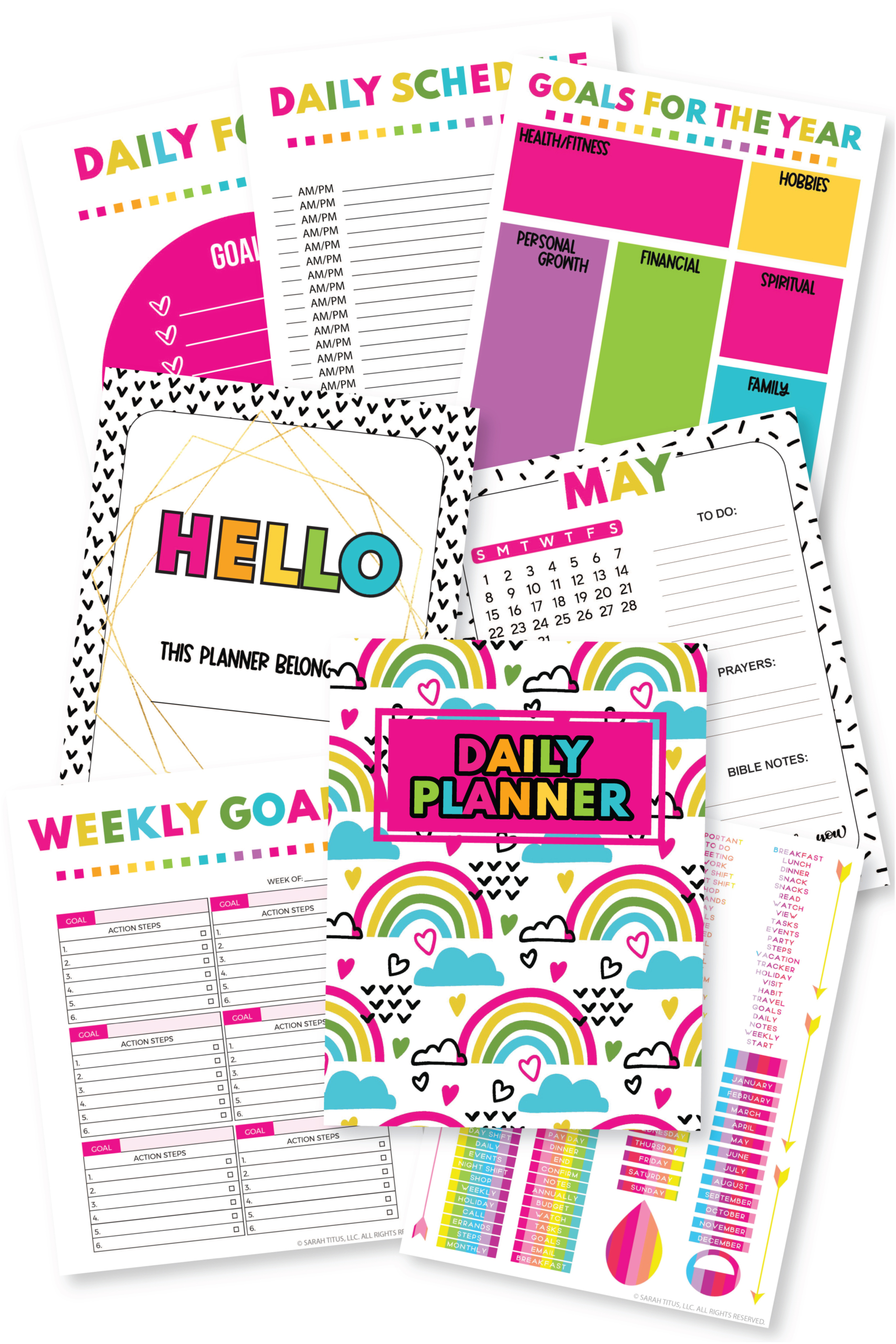
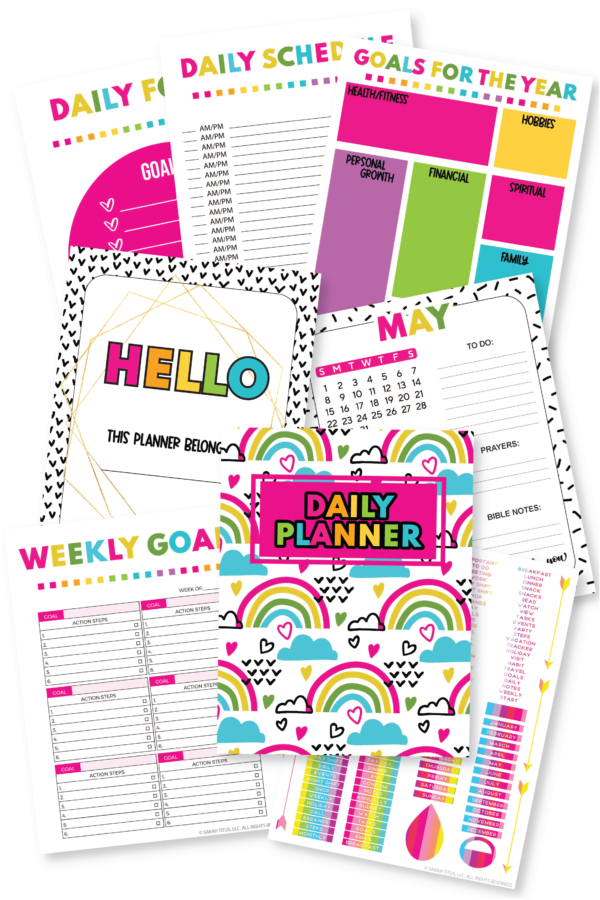
You guys ready to see the new 2026 Daily Planner printables?!?!
I’m so excited to share it with you. It’s hot off the press and ready to go!
There’s over 500 pages in this pdf, something for everyone. You’re gonna love it!!!
Free Daily Planner 2026 – 500+ pages:
If you already have a binder there are different sizes of spines to fit whatever size you have on hand…no need to go out and buy another binder. Just use one you already have and you’re good to go.
If you do need a binder, here are the appropriate ones on Amazon:
👉 Get it free when you use discount code: PLANME
Get easy access to the 2026 Daily Planner Printables
Don’t buy a planner in the store. Grab this cute weekly planner printable, then whenever you need more pages, simply print the ones you need.
Bada-bing-bada-boom, your life is now simpler (and less expensive)!
This printable calendar organizer will help you tame the wild beast we call life. Streamline your entire life with this ONE daily schedule planner. I know you’re gonna love it!
The BEST Daily Planner 2026 is a whopping 500+ pages!
Some of the printable PDF pages include:
Cover and Spines
Year at a Glance Calendar
Daily Planner Sheets With Times – Hourly Daily Schedule
Monthly Anniversaries Tracker
Monthly Birthdays Tracker
Monthly Important Dates Planner
Address Book
Encouraging Quotes
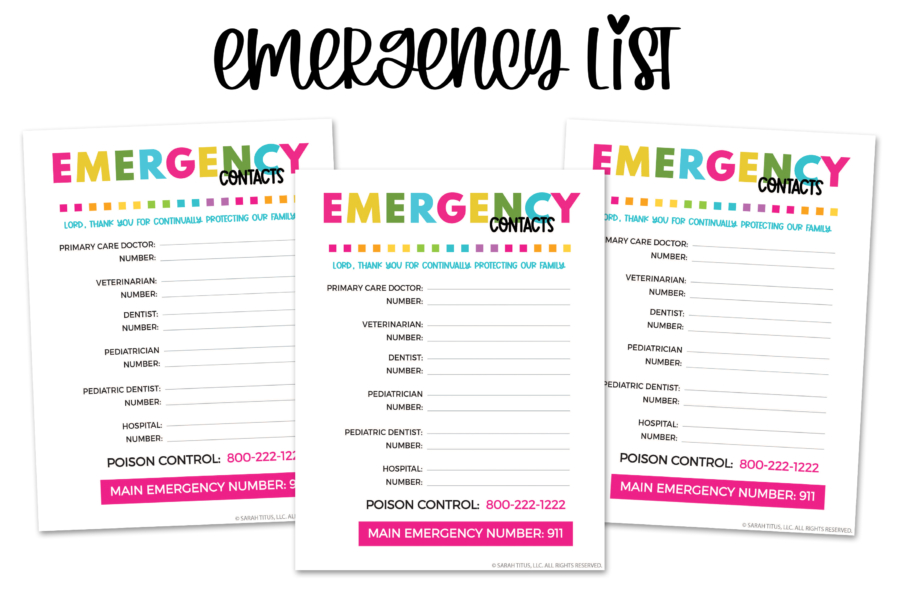
Emergency Contacts
Dated Daily Planners
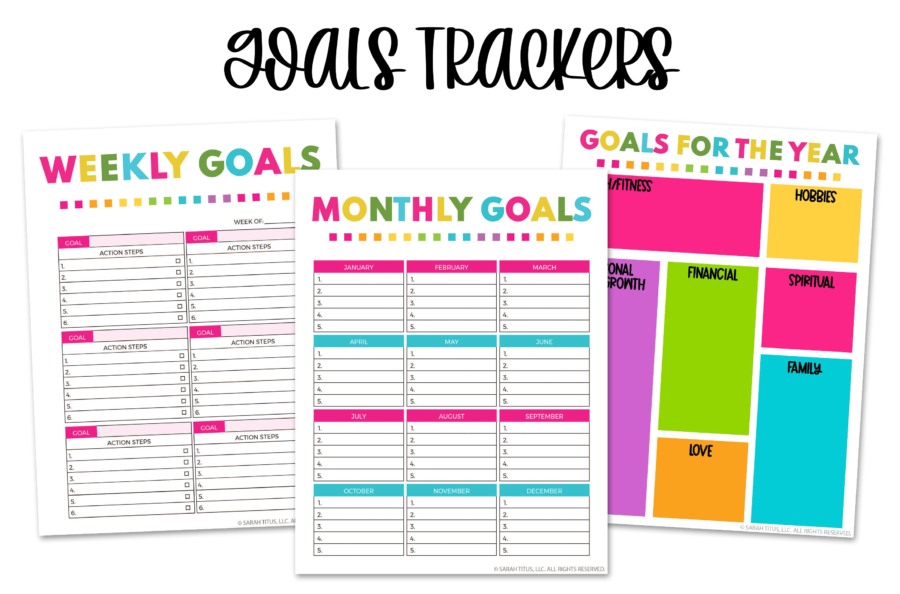
Weekly/Monthly Goals
Daily/Weekly/Monthly/Yearly Focus Goals
Planner Stickers (9 pages full!)
Monthly Cover Pages
Daily Calendar/Planner (pages for every day of the year)
Inspirational Wall Art
…and TONS MORE!!!
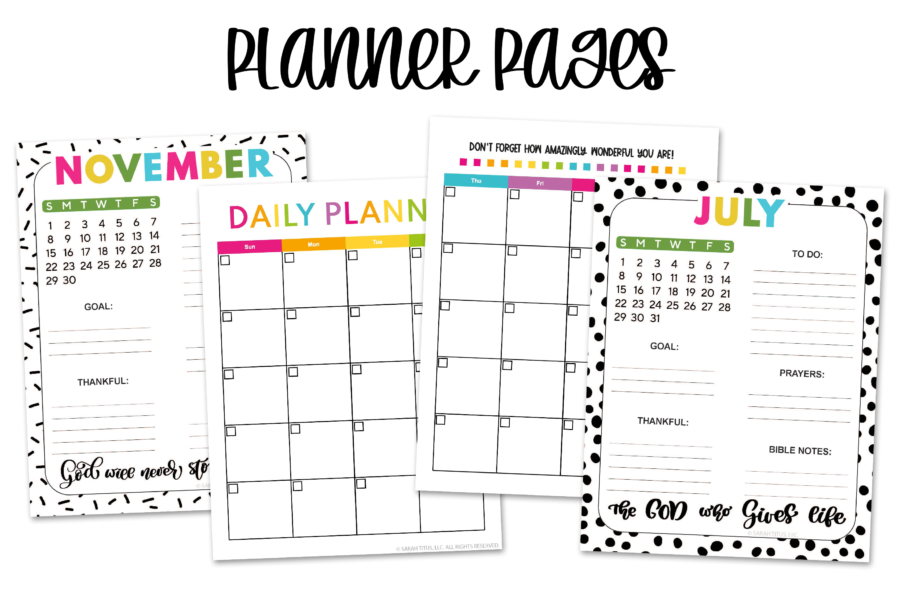
My Favorite Pages
There are several DIFFERENT types of planner pages in this 2026 Planner. That way, whatever it is that works best for YOU, it’s included. Everyone’s brain works in a different way and this Daily Planner accommodates for that. Whether you’re looking for monthly planner printables, hourly planner printables, a two-page template, or one page, you’ll for SURE, find what you’re looking for in this daily planner online!!!
Coloring Sheets
These coloring sheets were so much fun to create, one element at a time! I LOVE creating coloring sheets to color with my children and the fact that that they feature and highlight God, EVEN BETTER!!!! You can never have too much faith, that is for sure! ❤️
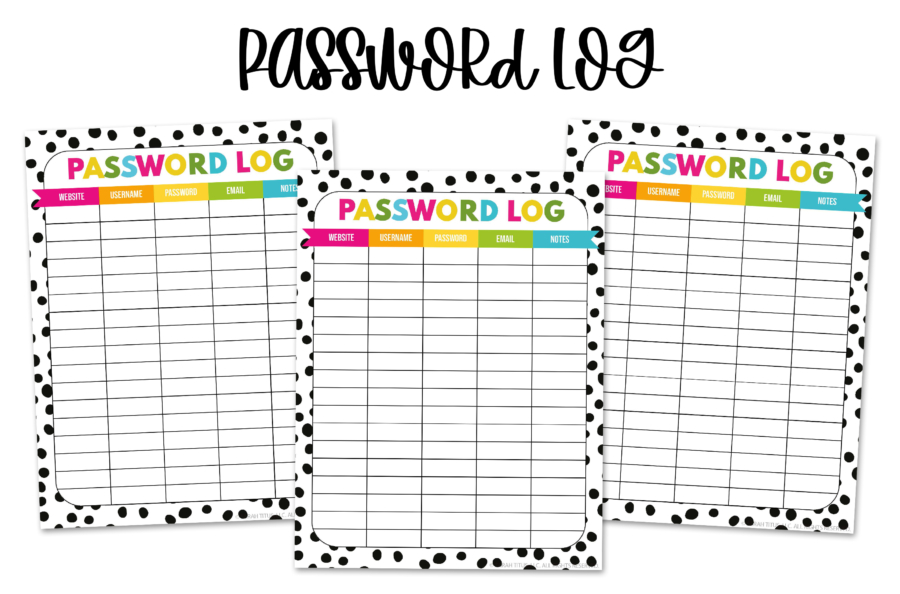
Password Log
Password Logs come in handy SOOO much. If you’re taking a vacation and want to have them handy or just have them all somewhere as a backup. For security purposes, I usually make my notes so that no one else will know what it is, even if they found them.
You could abbreviate, something like ConvertKit could be ck. Unless you’re a blogger, you wouldn’t really know what ck is. It could be Calvin Klein. haha. Also abbreviating my passwords as well or using numbers. 1 for example could be your main password, etc. Then, have the passwords in a separate place on a small card hidden somewhere, and that will help as well.
Some people even keep the sheets in their lockboxes. Whatever you do, these password log printables are perfect to keep those passwords safe.
Emergency Contact Page
If your kids are older and they stay home for short periods of time, or if you go on a date night with your spouse and you have someone watch your children, you’ll want to have an emergency contacts list.
It’s also great to have on your fridge (I keep mine on the side of the fridge) for any emergencies that come up in life, so you’re always prepared!
As your driving around, be sure you’re watching for emergency rooms, hospitals, and urgent care centers too. We live in a part of town that is growing and so they are building more centers and taking note of them mentally as well, to know how fast you need to get there and where is important.
That way, Lord forbid, something happens, you are not searching around looking for a place to go, but have it memorized and know where to go.
But ALL emergency types can be stored on this one list. You can even laminate it if you’d like!
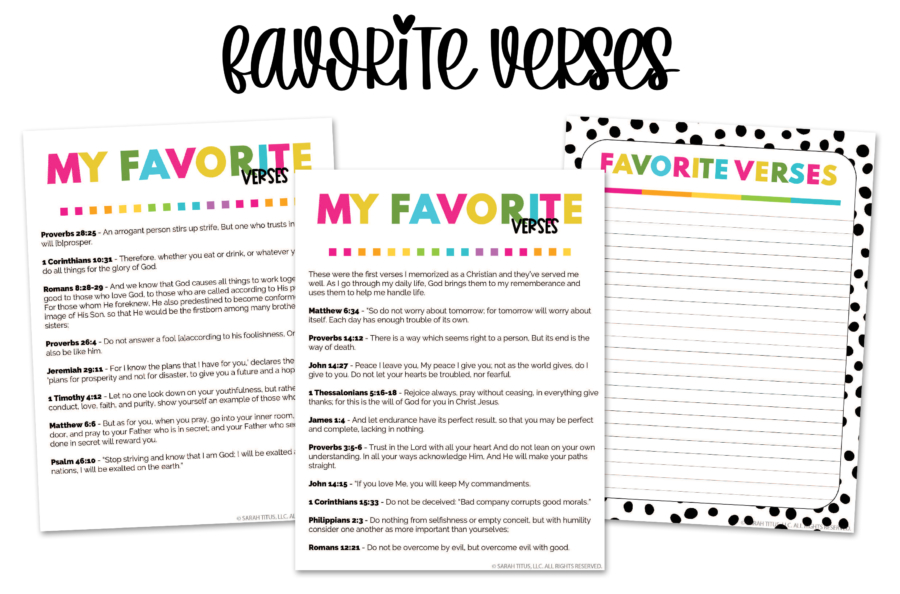
Favorite Verses
These verses have been so monumental to my Christian walk. As an early believer over a decade ago, I wanted to memorize verses that would help me in my daily life to live according to God’s ways and be more obedient to Him. As I struggled with certain topics (patience, worry, etc.) I would learn a verse on it to remind myself and get me through the trial or just everyday life.
It’s really served me well through the years and these are all the verses I started with my make my Christian journey more wholesome and be deeply rooted in Christ. There’s a place for you to record your own favorite verses as well as some pages for prayers, thankfulness, and answered prayers too!
Goal Trackers
If you want to accomplish your goals, you HAVE TO write them down! Writing them down helps permeate them into your mind. Working on little bits of your goals at a time until they are accomplished and never giving up on your goals is so important. Whatever your goals and dreams are, these goals trackers will help!
There are a ton of goal trackers included! You’ll also find pages for Daily Focus, Weekly Focus, Monthly Focus, Yearly Focus, 1 Month Focus, 3 Month Focus, 6 Month Focus, and 12 Month Focus. Everything you need to obliterate all your goals!!!
At this point, I’m not sure I could tell you how much time and money I’ve put into Strava. Yes, I paid for a membership for several years, and yes, it’s spent time as my number one form of social media, but I don’t really want to think about any of that right now. Why not? Well, I can’t shake the feeling that Strava has changed. It’s become like that friend from high school who became just a little too popular and was no longer fun to hang out with.
Strava being Strava pushed me to cancel my membership, and here’s why I don’t see myself going back any time soon.
Do you pay for Strava?
13 votes
It’s my data, why can’t I have it?
Kaitlyn Cimino / Android Authority
The first thing I’ll say about Strava is that, honestly, I forgot just how much of the platform is tied to its premium subscription. I’d grown so accustomed to having access to everything that I didn’t realize how much would be lost once I switched back to the free version. And, among all of the things that I lost, the one that surprised me most was my own data.
Yeah, when you take a step back from your Strava subscription, you lose a lot of your history. And no, I don’t just mean you lose Strava’s AI-generated breakdowns of your workouts — you do, but they were rocky at best. Instead, I mean that you can no longer see your own personal bests. You can’t go back and check on your fastest mile, fastest 5K, or fastest half-marathon. Strava has them, you just can’t see them.
I’m not asking for a free training plan, just access to my own data.
Also considered off-limits are your weekly goals, your training log, and most of your monthly recap. If you’re sticking with the free Strava experience, it also means you’re sticking to your hours of activity and monthly miles as your go-to metrics, and that’s it. Oh, and that includes the Year in Sport — you know, that record of all the data you’ve given Strava since the start of the year.
I won’t lie, I’m shocked at how Strava treats its Year in Sport recap. I actually cannot believe that it decided to put it behind a paywall, because nobody else does that. Spotify is more than happy to give you your Wrapped recap, as are YouTube and LinkedIn (if you really want that). Even the Dunkin app will run you through how many lattes you sipped and Munchkins you, well, munched, and you don’t need a premium subscription to see it — you just have to get yourself a little sweet treat.
So, for Strava to decide that its recap is for premium subscribers only feels like a bit of a slap in the face. After all, I ran the miles, skied the runs, and climbed the boulders, letting Strava build up its database along the way. I helped make it what it is in my own small way, and now it wants more money from me to tell me how I compare to my friends. And, if a real person put together the Year in Sport, I might oblige, but you and I both know it’s an AI-generated report these days.
Maps should be about safety, not money
Ryan Haines / Android Authority
One thing that I knew I would lose when I stopped paying for Strava was its extensive access to routes and maps. And yes, I’ve written several times about how much I liked having those maps — I don’t regret it. I really do think that they’re a good way to see a new place, and they make it much easier to know what roads are safe to run at night or are popular on a given week due to construction.
As soon as you leave, though, you get knocked back to the Global Heatmap with access to basic maps and points of interest. It’s still better than nothing — you can easily make out the most popular streets in a given place — but I don’t like that it puts a price on safety. At the very least, I’m surprised that Strava keeps its Night Heatmap locked up for subscribers. It’s not like a vast number of users will be running in unfamiliar territory after dark, but for those who do, I think that Heatmap should be open to the public.
Don’t expect access to your Personal Heatmap — that’s going to cost you, too.
To make matters worse, or at least more annoying, Strava isn’t always clear about the maps you do get. If you jump over to the Maps tab in the app, it will provide you with a couple of custom-made options, making it almost look like you could hop in and save them to your watch or phone. You can’t. You can view them and zoom in, but you can’t keep them without paying.
Don’t expect to make custom routes, either — that’s for subscribers only. Sure, you can feed your data into those maps to create routes for other people, but you can’t then use them for yourself. But hey, at least Strava isn’t only trying to gatekeep data from its users — it tried to start beef with Garmin, too.
Yes, somehow Strava decided that it was the king of maps, routes, and segments, and it thought it could push Garmin — whose maps, routes, and segments it uses — out of the picture. As a Garmin user, that put a pretty bitter taste into my mouth. I mean, if Strava thinks it’s more important than the devices that feed it, where does it end? A Strava-built wearable with its own monthly subscription?
These days, I only want Strava for its social aspects
Ryan Haines / Android Authority
When you strip out, well, all of the data-heavy bits of the Strava experience, what’s left? As far as I can tell, little more than the social media core. And you know what? That’s good enough for me. Instead of spending my days on Strava joining challenges and trying training plans and making routes, I’m just going to deal kudos from here on out. It’s a… less exciting existence, sure, but it doesn’t put money into pockets that I don’t think deserve it.
Besides, if I step back from all the things I’ve grown accustomed to paying for, I can finally remember what brought me to Strava in the first place: everyone else. I signed up because I wanted to see what my friends were up to and support them with comments and kudos along the way. And sure, there can be a toxic cycle of competition that comes out of that, but it’s also a good way to get my butt off the couch.
Treat Strava like the social media it is and free yourself from that sense of competition.
I’m replacing deep dives into training histories with funny captions and meaningful photos, and it’s making me enjoy running in the same way that I used to. I’m taking my workout planning off Strava (but not going to Runna, because that’s just Strava in disguise), and I’m taking a break from competing with friends. I can’t set my own weekly goals anymore, which means I can’t stress about hitting or missing those goals, and it’s bringing the fun back to running.
Would I still like to see Strava treat its free tier as something more than a data farm? Yes, absolutely, but until it does, I’ll be spending my time with running shoes on my feet and a Garmin on my wrist, waving to runners as I pass them in real life rather than waiting for proof on Strava.
Thank you for being part of our community. Read our Comment Policy before posting.
Play through the full story of Leaf Blower Co., clear away clutter and bring back a world of peace and tranquillity. And of course, no-one expects you to do all of this for free! Spend your hard-earned cash on new gear, upgrades, and even new styles. It’s important to have the right tool for the job, and if you don’t do it, who else is gonna skin your bin? Leaf blowing is not all just sunshine and rainbows – after all, the school playground still needs those leaves gone even if it is pouring with rain; a sudden snow storm at the tennis court is just an excuse for you to really put your leaf blower through its paces; and while it’s a bit unusual that the Mayor needs a last minute clean up of his garden after sunset, who are you to say no?
Feel the true satisfaction of restoring peace and tranquility after a job well done; get in the zone as you blow away anything out of place; and lose yourself as you wander through a host of warm and welcoming locales. Each location has a selection of optional bonus objectives and hidden easter eggs throughout to reward exploration of every nook and cranny. It’ll take a keen eye and knowledge of all the tools at your disposal to find them all! When you’ve finished the Campaign, look no further than Free Play mode to satisfy that Leaf Blowing itch. With the ability to choose whatever location takes your fancy, your perfect weather conditions, and your ideal time of day, the choice is completely up to you. From a snowy morning on the beach to a glorious sunset in the park, and everything in between, play Leaf Blower Co. your way!
Features and System Requirements:
Engineered for both residential yards and commercial landscaping needs.
Consistent power output even during extended use.
Weather-resistant components for outdoor durability.
Designed for long service life with minimal maintenance.
Screenshots
System Requirements
Recommended
OS: Windows 10 (64-bit) or newer
Processor: Intel(R) Core(TM) i5-7400 CPU/AMD Ryzen 5 2600 or Higher
Memory: 16 GB RAM
Graphics: NVIDIA RTX 3060/AMD Radeon RX 6600
DirectX: Version 11
Storage: 12 GB available space
Support the game developers by purchasing the game on Steam
Installation Guide
Turn Off Your Antivirus Before Installing Any Game
1 :: Download Game 2 :: Extract Game 3 :: Launch The Game 4 :: Have Fun 🙂
Today’s post covers how 3D artists convey emotions with beautiful architectural rendering and visualization services. Architectural visualization has taken a huge leap forward with the proliferation of 3D rendering software capable of generating lifelike imagery of a building before even the first brick is put in place. However, an effective visualization shouldn’t just be a mere illustration of a structure. It needs to convey a story, deliver a message, and form a cohesive narrative that may evoke emotions from the audience. In the same way that a photograph can elicit memories, imaginations, and perhaps inspirations from the viewers, an architectural visualization has the power to grow a strong emotional connection between the project and the client.
For the visualization to trigger a positive impact on the viewer’s perception, a render artist has to explore all the multifaceted aspects of a CGI (computer-generated imagery), including but not limited to composition, perspective, artistry, and lighting. Strategic use of colors and such photography principles as the rule of thirds, negative spaces, and leading lines also matter a lot to influence the viewer’s impression of the imagery. All those elements must work together in harmony to produce an emotionally resonant visualization without undermining design clarity.
Take, for example, using 3D interior rendering services for a home office – just because you want to highlight the presence of a massive desk right in the middle of the room, it doesn’t necessarily mean you have to direct all the lights toward the center and leave the corners unnaturally dark. It might work well as far as artistic expression is concerned, but the lack of balance in lighting makes the imagery ineffective for architectural visualization purposes. The article discusses the numerous factors that determine the efficacy of an architectural visualization, and the way a render artist can utilize them to foster or enhance communication among stakeholders.
Considering how the demand for photorealistic renderings has soared in the last few years, an in-depth understanding of those factors and a strong technical 3D CAD know-how are crucial skills in the trade. And for an unmatched expertise in architectural visualization, Cad Crowd is the one-stop shop where you can connect with the world’s most talented and experienced architectural render artists. The AEC-focused freelancing platform offers robust screening and a secure payment process to ensure that you receive nothing but the best for your money.
Storytelling with architectural visualization
Technology has changed the way stakeholders and clients communicate in the architectural industry. The old methods of using physical scale models and two-dimensional illustrations are still around, but they’re slowly going away, partly thanks to the rapid development and adoption of 3D renderings. The market is getting more saturated by the day, with more CAD companies and CAD design professionals offering architectural services at sensible prices. Potential clients, including homebuyers and real estate developers, are always in search of comprehensive information about houses and building designs, whether for immediate purchase, renovation projects, or even brand-new constructions.
With hundreds, if not thousands, of design agencies, firms, and freelancers competing in the market, one of the keys to establishing a place among the best 3D architectural rendering firms is to incorporate storytelling in the visualization. And of course, good storytelling is an effective way to elicit emotions. An architectural visualization isn’t just about showcasing the looks of a structure. It should convey a series of messages about design intent and purpose, be it efficiency, luxury, comfort, eco-friendliness, affordability, elegance, simplicity, and so forth. The narrative expressed by the imagery is expected to bridge a form of communication that surpasses conventional engagement and instead triggers positive emotional connections.
Storytelling can happen in a lot of ways. Apart from the conventional spoken and written forms, you can convey a meaningful narrative through signs, symbols, motions, expressions, fashion, or, in the case of architectural designs, lifelike visualizations. Using an immersive form of imagery where every visual element adds to important details, you can elevate an otherwise typical design presentation into an effective narrative tool that describes concepts, speaks values, and triggers emotional responses. The visualization from an expert visualization designer can then become a medium to bring about constructive communication among clients and stakeholders alike. Every single object and visual element visible in the imagery must serve as a building block to craft a compelling story.
When put together properly, you’ll be presenting not just a visualization, but a whole package of a virtual world in which the audience can immerse themselves, and potentially entertain the idea of living inside that world. In many cases, it all comes down to the atmosphere depicted in the 3D visualization, whether it is minimalistic, industrial, luxurious, practical, high-tech, or tranquil. And the visual elements have to become integral parts of the intended atmosphere. An architectural visualization has the potential to be both a technical exploration of ideas and a powerful narrative art, meaning it can deliver emotional resonance while still being an accurate depiction of the design. You want the audience to have the full imaginative experience of the building just by looking at the imagery, and you can do that by strategic use of the following elements.
Just like in photography, the world of 3D architectural visualization services has everything to do with composition. The arrangement and placement of objects within the frame create a specific look and feel that may guide the viewers’ eyes as they observe the visualization. Composition is intertwined with perspective; principles like the rule of thirds and depth of field are powerful tools to help the audience interpret the unspoken message the image tries to tell. How the objects relate to each other, where you put the focal point, what atmosphere is created by the color scheme, and the viewing angles play important roles in influencing individual interpretation, which ultimately leads to emotional responses.
The “rule of thirds” has been a prominent guiding principle in visual art for centuries, because it’s an effective method to keep the audience engaged. In general, you want the viewers to observe the image for quite a few moments so they can construct their opinions about it. Since the rule of thirds breaks down monotonous lines and symmetry in the frame, there’s an additional yet effortless tension to generate interest among the viewers. You don’t have to place the main object right in the center of the image, and instead let the viewers explore the asymmetrical composition to look for more details. Furthermore, you can enhance the impact by experimenting with perspectives such as linear, vanishing point, diminishing scale, or aerial views.
Every perspective offers a different kind of perception of the relationship between the objects in the image. With some exterior renderings, the exterior design expert uses an eye-level point of view for clarity. By putting the camera at a human’s eye level, the viewers can see the main object and everything else around it in a natural fashion. It offers a clear idea of the scale of things and is generally regarded as a comfortable perspective. Others use aerial views to showcase the dominance or the grandeur of a structure. The good thing about an aerial view is how it reveals details not normally visible from eye-level perspectives. An aerial view architectural rendering speaks not only about the structure itself, but also where it stands in the broader landscape.
Let’s also not forget about “close-up” shots of objects. When you move the camera closer to a particular object or area, you may have to sacrifice (basically remove) quite a lot of useful elements from the scene. This is why close-up is most often used by interior rendering designers, where panoramic atmosphere isn’t a major concern. The good thing about close-up is that it allows you to focus on elements typically obscured in a wide shot, such as details on patterns and textures on fabrics, material finishes, furniture designs, functional ornaments, or any other intricate elements.
Details like the unique aesthetic of the granite kitchen countertop or the elaborate craftsmanship of the stained-glass window might be overlooked without close-up views to enhance the immersive visual experience. Regardless of the perspective in use, it’s crucial to incorporate guiding lines to lead the viewers’ attention back to the focal point. Guiding lines bind the composition and perspective together into unity to create the flow of a visual narrative, naturally taking the viewers to always circle back to the main object in the scene.
For design process
As mentioned earlier, architectural renderings can be an excellent medium for design exploration. In addition to showcasing the aesthetics and functionality of a structure, detailed visualization allows the architects, engineering designers, and designers to test various concepts on screen. It helps them identify design issues and implement changes early on in the design process. Changes might be as simple as wall paint and flooring materials or complex structural-related matters like window placement, solar panel installation, etc.
Clear graphics certainly help understand the design intent, especially for non-technical stakeholders (which may include homeowners and investors) in the project. Detailed visualization makes sure that everyone involved shares a common understanding and contributes to every design decision.
An architectural rendering is a technical representation of a project as much as it is a visual art. It should convey the technical portion as well as the artistic expression of the design. If the rendering is only intended as a technical illustration, the visualization may come across only as a construction document that has little regard for emotional connections. At the same time, an architectural rendering that leans too heavily toward evocative purpose might not give technical accuracy enough consideration.
The 3D architectural designer must take both aspects into account, not just for the sake of balance, but also to make sure that whatever emotional responses are triggered by the imagery are authentic and have practical value. In other words, inaccurate architectural visualization may give a false impression. The good thing is that you can still incorporate some artistic inputs without compromising accuracy. It’s not impossible to introduce some touches of uniqueness that can actually improve (rather than diminish) the design visualization. Here are just a few examples.
Motion Blur
In animated media like video games from the bygone decades, motion blur exists to hide imperfections by giving the perception of smooth frame-to-frame motion. When used (strategically) in static architectural rendering, it brings about a sense of subtle movement in an otherwise motionless image. For example, an interior rendering of a living room that features a large window, a motion blur on leaves or trees in the backyard can effectively introduce the idea of a relaxing space alongside nature. An exterior rendering of a commercial building may also feature motion blur for the traffic in the street to suggest a bustling activity in a place full of life. In general, motion blur can bring a touch of realism to a lot of different objects, such as doors, water, clouds, cars, toys, window blinds, paper, and more.
The idea of a photograph is to capture an image or a moment and present an exact representation of how we saw and experienced it. Because the moment is captured within seconds (sometimes a fraction of a second), every single imperfection in the scene is also well-preserved. Imperfections come in all kinds of shapes and forms; clutter on the table, scattered pillows on the bed, dirty shoes, stains on porcelain tile, and so forth. Imperfections don’t make the photograph bad. On the contrary, they’re evidence of life and effective agents of storytelling. Photorealistic rendering services isn’t that much different from photography. The presence of a forgotten toy in the children’s room, droplets of water on the kitchen counter, leaves in a swimming pool, or scribbles on the desktop can be an excellent narrative tool.
Viewing angles
Finding the right point of view in architectural rendering is akin to choosing the right camera placement in photography. It determines what the viewers can see and therefore affects their emotional response. Ideally, you set the viewing angle in such a way that highlights the interplay between lights and shadows, the juxtaposition of patterns or textures, depth of field, motion blur, and imperfections. All those elements must be presented as naturally as possible, so the viewers aren’t overwhelmed by the bombardment of details.
Keep in mind that every element carries information that contributes to the narrative. For example, if there are people in the scene, the types of clothing they wear and activities they do may suggest whether they’re in a relaxing home environment or in an office setting; the objects visible from windows can indicate if the building is located in an urban neighborhood or the outskirts of a town; a cup of hot coffee with visible plume of steam implies that someone is in the room, even when the person isn’t in the scene. All these visuals work together to build a context, and as an architectural modeling expert you can experiment with them to craft a coherent story revolving around the design, the location, or even the lifestyle associated with the structure. This “association” will, in turn, create an impression and invite emotional responses.
The notion of the psychological impacts of color shades may seem trivial, but it is important nonetheless. In its most basic form, warm hues like oranges and red evoke vibrancy or vigor, whereas cool tones such as green and purple imply serenity or calmness. Every good render artist needs to have a good grasp of the application of hue and understand how each color tone is associated with specific emotions. Many people think of colors as nothing more than a superficial aesthetic aspect of an object, even in real life. For example, a red balloon is no different in functionality and purpose from the green, black, or orange ones.
While this is true to some extent, especially when you see a color as an individual element, a mixture of two or more colors within the same scene may offer hints to the intended context of the image. Suppose you have two renderings of the same room with identical layout, composition, and viewing angle. They even have the same objects positioned at the same spots. The objects in one room have dark hues, whereas you see bright colors in the other. When you’re presented with such a direct comparison, what immediately comes to mind is that the room with bright colors is more playful and lively compared to its darker counterpart.
Pretty much the same practice applies to exterior rendering services, where a serene landscape is best pictured with muted soft hues to depict a sense of peace and quiet, while busy urban streets should use bold shades to illustrate exuberance. In short, a clever use of colors in architectural visualization helps create context that communicates the nature and story of the structure.
Sometimes, the best way to achieve the correct color combination is by experimentation. Try using different shades of colors for the same visualization and see which version works better for the purpose. There’s no scientific formula to give you the right combination and ratio of colors, which means there’s no single best solution for every image. It all depends on how you want the viewers to emotionally connect with the visualization.
The most powerful narrative tool in visual art is lighting. Just about every other element in an architectural visualization is heavily influenced by the lighting effects you use. They contribute the most to the atmosphere of the scene and the expression of mood. Whether the cool glow of moonlight, the warmth of sunset, or the brightness of high noon, the lighting effects are of the utmost importance to set the stage for emotional resonance. Imagine an aerial rendering of an urban market square. In many instances, render artists opt for daytime visualization to showcase the liveliness of the structure populated by busy sellers and buyers.
The green trees around the main building, the white clouds, and the blue sky add to the narrative. Some may say that daytime rendering is preferable because of its clarity and inviting mood. But it doesn’t mean nighttime rendering can’t achieve similar results, or perhaps surpass the daytime ones. While the trees should at least partially appear dark and the sky isn’t going to contribute much to the narrative, nighttime rendering affords you the opportunity to experiment with artificial light sources. You can use various shades of light, be playful with neon signs, try different placements for the lamps and lanterns, etc.
Like lighting effects, weather conditions can dramatically change the whole atmosphere of an architectural visualization. Imagine an exterior rendering of a log cabin set during broad daylight in the summer. The front doors and windows are open to let the cool breeze flow through the structure, and natural light is reflected by the shiny floor. Trees look crisp against the backdrop of empty blue sky. Now, in another version of the same visualization, the weather is set to depict the height of winter during a snowy day.
The open doors and windows don’t seem to be welcoming, and instead, they make the cabin look deserted. Each image evokes a different emotion. When the 3D architectural animation firm includes lighting and weather effects, it play major storytelling functions in the scene. You can even say that they lead the direction of the narrative and can somehow dictate the viewer’s perception.
Takeaway
Every architectural visualization wants to tell a story, but whether or not the audience can capture and understand the concept is a different matter entirely. A great number of exterior and interior renderings out there are aesthetically pleasing and technically sophisticated, but the lack of artistic touch and ineffective use of perspectives diminishes their storytelling power. And when the audience fails to experience a connection of any sort with the visualization, they express no emotional connection and quickly move on to the next image without a second thought. People want to see architectural renderings that awaken their imaginative mind, create a strong impression, and drive them to an envisioned life in or around the structure.
How Cad Crowd can help
An effective architectural visualization can connect with the audience on an emotional level. It takes a render artist skillful enough in optimizing the intersection between the various visual elements to produce a visualization that conveys a clear narrative and resonates with viewers. Cad Crowd is the place where you can discover and collaborate with the world’s most talented render artists experienced in residential, commercial, and industrial projects. Whether you need a rendering of a simple, straightforward exterior or a highly complex interior visualization with unmatched details, there’s always a professional on the platform ready to meet and exceed your expectations.
MacKenzie Brown is the founder and CEO of Cad Crowd. With over 18 years of experience in launching and scaling platforms specializing in CAD services, product design, manufacturing, hardware, and software development, MacKenzie is a recognized authority in the engineering industry. Under his leadership, Cad Crowd serves esteemed clients like NASA, JPL, the U.S. Navy, and Fortune 500 companies, empowering innovators with access to high-quality design and engineering talent.
It’s no secret that AI-generated content took over our social media feeds in 2025. Now, Instagram’s top exec Adam Mosseri has made it clear that he expects AI content to overtake non-AI imagery and the significant implications that shift has for its creators and photographers.
Mosseri shared the thoughts in a lengthy post about the broader trends he expects to shape Instagram in 2026. And he offered a notably candid assessment on how AI is upending the platform. “Everything that made creators matter—the ability to be real, to connect, to have a voice that couldn’t be faked—is now suddenly accessible to anyone with the right tools,” he wrote. “The feeds are starting to fill up with synthetic everything.”
But Mosseri doesn’t seem particularly concerned by this shift. He says that there is “a lot of amazing AI content” and that the platform may need to rethink its approach to labeling such imagery by “fingerprinting real media, not just chasing fake.”
From Mosseri (emphasis his):
Social media platforms are going to come under increasing pressure to identify and label AI-generated content as such. All the major platforms will do good work identifying AI content, but they will get worse at it over time as AI gets better at imitating reality. There is already a growing number of people who believe, as I do, that it will be more practical to fingerprint real media than fake media. Camera manufacturers could cryptographically sign images at capture, creating a chain of custody.
On some level, it’s easy to understand how this seems like a more practical approach for Meta. As we’ve previously reported, technologies that are meant to identify AI content, like watermarks, have proved unreliable at best. They are easy to remove and even easier to ignore altogether. Meta’s own labels are far from clear and the company, which has spent tens of billions of dollars on AI this year alone, has admitted it can’t reliably detect AI-generated or manipulated content on its platform.
That Mosseri is so readily admitting defeat on this issue, though, is telling. AI slop has won. And when it comes to helping Instagram’s 3 billion users understand what is real, that should largely be someone else’s problem, not Meta’s. Camera makers — presumably phone makers and actual camera manufacturers — should come up with their own system that sure sounds a lot like watermarking to “to verify authenticity at capture.” Mosseri offers few details about how this would work or be implemented at the scale required to make it feasible.
Mosseri also doesn’t really address the fact that this is likely to alienate the many photographers and other Instagram creators who have already grown frustrated with the app. The exec regularly fields complaints from the group who want to know why Instagram’s algorithm doesn’t consistently surface their posts to their on followers.
But Mosseri suggests those complaints stem from an outdated vision of what Instagram even is. The feed of “polished” square images, he says, “is dead.” Camera companies, in his estimation, are “are betting on the wrong aesthetic” by trying to “make everyone look like a professional photographer from the past.” Instead, he says that more “raw” and “unflattering” images will be how creators can prove they are real, and not AI. In a world where Instagram has more AI content than not, creators should prioritize images and videos that intentionally make them look bad.
I have two versions of Visual Studio installed, VS 2022 and VS 2026. Currently, I am using a vcpkg instance compiled with the VS 2022 toolset and have enabled global integration by vcpkg integrate install . I noticed that when I use VS 2026, it also integrates the vcpkg instance compiled by VS 2022.
I am concerned about binary compatibility issues arising from different toolsets. I would like to integrate a new, separate vcpkg folder specifically for VS 2026. Is this feasible? If so, how should I implement it?
Samsung is seeking to make its Bixby voice assistant a worthy competitor to Google Gemini by leveraging Perplexity AI. A new leak from One UI 8.5 beta users shows that Bixby version 4.0.50.4 enables the assistant to send complex questions to Perplexity’s reasoning engine, similar to what Apple Intelligence does with ChatGPT. This provides users with detailed, research-backed answers rather than simple web search results, according to SammyGuru.
In the leaked example, a user asked Bixby about the weather, and the assistant used Perplexity to generate a forecast along with practical advice, such as whether to carry an umbrella. The interface features a card-style design that complements the visual refresh in One UI 8.5.
This solves a long-standing issue in which Bixby, much like Apple’s Siri, struggled with conversational context compared to newer AI options. This meant Bixby largely helped users control system settings and manage smart home devices, but its recent boost from Perplexity reportedly enables it to “execute web-based and research-heavy, complex prompts in real time.”
Earlier this year, we reported that Samsung and Perplexity were in talks to make Perplexity the default assistant on future devices. At the time, reports indicated that the companies discussed adding Perplexity to Samsung Internet and Bixby to reduce reliance on Google. Recently, Samsung has relied heavily on Gemini for its primary AI features; however, this new beta update indicates it is actively diversifying its AI partnerships ahead of the expected launch of the Galaxy S26 series in early 2026.
Crypto payments are gaining traction among home-based entrepreneurs. As global digital commerce grows, offering alternative payment options may help unlock new audiences and a stronger sales performance.
Many home-business owners are questioning whether crypto payments can strengthen income. Interest in digital assets continues to rise and crypto prices today show how quickly users engage with market movements.
This expanding activity urges entrepreneurs to think beyond traditional checkout tools and evaluate if flexible payment options enhance their operations.
Why Home Businesses Are Paying Attention to Digital Assets
Operating a business from home requires complying with various customer demands and for many consumers today, easy online payment services are attractive. For international transfer customers in particular, the speed and convenience that crypto provides offer several benefits.
Digital assets’ activity keeps escalating. As per the Monthly Market Insights report by Binance Research (30th June 2025), the overall crypto market expanded by 10.3% in May 2025, indicating that engaging with digital assets is no longer perceived as niche.
For any entrepreneur, this paradigm shift may imply that supporting crypto can help customers who already use digital means and possess digital assets.
What Market Insights Mean for Entrepreneurs
Market updates show consistent interest in leading digital assets, even during periods of volatility. These fluctuations influence how customers approach online spending, often prompting them to explore sites that accept their preferred payment methods.
As activity increases, more and more users find other ways to transfer their wealth, likely boosting payment-processing companies.
A recent industry statement highlights this reality effectively. On 21 November 2025, Binance CEO Richard Teng stated:
“As with any asset class, there are always different cycles and volatility. What you’re seeing is not only happening to crypto prices. Any consolidation is actually healthy for the industry, for the industry to take a breather, find its feet.”
For home-based businesses, this affirms that involvement in crypto is consistent with market movements and is therefore a tool that should be assessed rather than overlooked simply because of market fluctuations.
How Crypto Payments Could Support Revenue Growth
Crypto does not promise higher income, but it offers opportunities with strategic use. Home-based businesses gain from flexibility and the support of digital assets that align with this principle.
Here are practical advantages:
Access international buyers without worrying about currency barriers.
Collect payments more quickly to help achieve cash-flow objectives.
Offer modern checkout options that appeal to tech-forward customers.
Differentiate the business, especially in crowded digital markets.
These benefits enable online sellers to connect with customers who appreciate convenience and quick, transparent transactions, which makes the shopping experience feel simpler.
How Crypto Can Strengthen Customer Trust and Brand Image
Flexibility in payment options can shape initial perceptions, especially among online shoppers. A company that demonstrates awareness of modern solutions and global payment trends may be seen as innovative and trustworthy.
To adopt this image, accepting crypto may be one method to show willingness to meet the needs of all customers. Customers who prefer online payment solutions would find companies that offer multiple ways to complete a payment more organised and easier to deal with. In this case, the payment process seems more straightforward and more tailored.
Cultivating such an attitude can lead to more sales and customer retention.
What You Should Evaluate Before Accepting Crypto
The entry of crypto must be done with careful planning. Entrepreneurs may want straightforward answers before making such a decision.
Key considerations include:
Price fluctuations can affect the value of received payments.
Customer preferences, since some buyers still choose conventional methods.
Learning basic wallet management to keep transactions organized.
Understanding regional activity levels, as adoption varies by location.
Market insights from Binance Research’s May 2025 Regional Overview indicate that Asia-Pacific and Europe recorded strong user participation, while some regions saw slower growth. Knowing where your buyers are based helps determine whether crypto aligns with real customer behaviour rather than relying on general industry trends.
Evaluating these points ensures entrepreneurs introduce crypto responsibly and in ways that support long-term stability.
Building a Simple, Secure Flow for Crypto Payments
Involving crypto payments for home-based business requires keeping the process simple for both the business owner and the client. This encourages the business to adopt the system.
Entrepreneurs investing time and effort into proper workflow design know the appreciation customers show for this transparency and this is even more important for handling novel payment solutions. Testing adoption with crypto as a complementary feature can help businesses do so without disrupting current processes.
This helps to keep operations stable and provides customers with a smooth entry point for alternative payments.
Is Crypto the Right Fit for Your Home-Based Business?
This is based on your business model and your customers’ behavior and familiarity with online services. Online-oriented businesses such as consultancy, design, coaching and freelance services can benefit most from crypto services, as customers tend to make online transactions.
Market data still demonstrates high trading volumes and active user engagement, indicating that digital assets are increasingly adopted as common payment methods among consumers. Adding crypto does not replace traditional options; it simply broadens choice and reduces friction for tech-aware buyers.
For such payment processes to be efficient and effective, they should be supported by proper communication and customer service. In such a way, crypto payments for home-based business can increase exposure and efficiency while attracting more customers.
Although crypto may not be the best option for all companies, there can be significant benefits for flexible business leaders. For small businesses run from home, accepting crypto can be one way to reach more customers and increase business income in an online economy.