Orion is in space, the Artemis II crew will head to the moon, and you can follow their journey without leaving Earth.
NASA‘s Artemis Real-time Orbit Website, or AROW, allows the public to track the moonship. During the roughly 10-day test flight, anyone with a phone or computer can see how far the crew — Commander Reid Wiseman, pilot Victor Glover, and mission specialists Christina Koch and Jeremy Hansen — are from Earth.
The tracker turns a complex deep space mission into something easier to understand at a glance. With data from sensors on the spacecraft, AROW takes information already flowing to mission control in Houston and interprets it into simple visuals for the layperson. Instead of trying to picture where the crew might be, you can actually see their path, distances, and major milestones as they happen.
AROW began updating about a minute after liftoff on Wednesday, April 1, and will keep feeding live information until Orion dives back into Earth’s atmosphere for a splashdown at the end of the mission. Online, users can see where the spacecraft sits in space and trace its figure-eight route.
Mashable Light Speed
NASA’s Artemis Real-time Orbit Website provides the public with information about the Artemis II moon mission as it happens. Credit: NASA / AROW screenshot
NASA designed the website to show more than a dot on a map. It highlights key moments in the mission and points out features on the moon, including landing sites from the Apollo program. That lets viewers connect what they’re seeing today through Artemis — named after Apollo’s twin sister in Greek mythology — with the first era of human exploration on the lunar surface.
The NASA app includes similar features, plus an augmented reality tracker. After calibration, the app uses phone sensors to tell you how to move your device so on‑screen markers line up with where Orion is relative to your position on Earth.
Since launch, the crew has been in a high-Earth orbit, allowing them time to check out the systems aboard the spacecraft before pushing into a moon-bound trajectory.
Artemis II is NASA’s first crewed mission in the Artemis campaign and a major step toward landing on the moon and learning how to live there. By sending astronauts around the moon and bringing them home safely, NASA is attempting to prove the systems needed for future lunar landings — and, perhaps down the road, the first human mission to Mars.
With gas prices rising across the country, consumers are turning to electric vehicles as a way to save money on their commute. And while there weren’t a ton of all-new EVs on display at the 2026 New York International Auto Show, we did see some notable debuts from automakers including Subaru, Kia, Hyundai and more. So here’s a look at some of the most interesting upcoming EV models on display today, including a handful of previously announced vehicles that we haven’t had a chance to see in person before.
Subaru Getaway
Sadly, Toyota didn’t bring the Highlander EV to the NY Auto Show, so I couldn’t make a direct comparison to Subaru’s new three-row EV SUV. (Sam Rutherford for Engadget)
Built on the same platform as Toyota’s Highlander EV, the Getaway isn’t just Subaru’s first three-row EV SUV, it’s also its most powerful with up to 420 horsepower. Naturally, the car comes standard with the company’s signature Symmetrical all-wheel drive tech while the 95.8kWh battery on the long-range model delivers more than 300 miles. Sadly, with a lackluster expected charging speed of 150kW, the Getaway will need about 30 minutes to bring its battery from 20 to 80 percent. The Getaway is expected to arrive sometime in late 2026, and while Subaru has yet to reveal official pricing, it’s also planning on releasing a more affordable standard range model with a 77kWh power pack in the first half of 2027.
Hyundai Boulder Concept
Hyundai’s SangYup Lee on stage to show off the new Boulder SUV concept. (Sam Rutherford for Engadget)
2026 marks the 40th anniversary of Hyundai’s entrance into the US auto market. To help celebrate the occasion, the company showed off a new concept car called the Boulder. While concrete details are sparse, the prominent grille and body on frame construction strongly suggest that it won’t be a full BEV (battery EV). We’re looking at a hybrid or range-extended EV at best. That said, the Boulder showcases what Hyundai is calling its “Art of Steel” design philosophy which looks to emphasize the strength, flexibility and beauty of its metal exterior while looking a lot more approachable than a Tesla Cybertruck. Notably, while there’s no guarantee that the Boulder will look this big and brawny if it ever reaches production, Hyundai says this platform will underpin a future midsize pickup slated to arrive sometime in 2030.
Kia EV3
After going on sale in Europe in late 2024, the Kia EV3 is finally coming to the US. (Sam Rutherford for Engadget)
The EV3 has been on sale in Europe for about a year and a half, but today at the New York International Auto Show, Kia debuted the new 2027 model of EV3 that will go on sale here in the US sometime before the end of the year. As the smaller sibling to the EV9, the EV3 features a similar design that combines the chunky body of an SUV with clean, futuristic lines, but in a more compact vehicle similar in size to the Sportage. While Kia hasn’t released official pricing, the EV3 is expected to arrive in two main configurations: a standard-range model with a 58.3kWh battery and up to 220 miles of range that could start as low as $35,000, or a more premium long-range variant that promises 320 miles of range. Sadly, its 400-volt architecture means it won’t charge quite as quickly as some of Kia’s more premium EVs. But as a nice bonus, the company says the EV3 will come with vehicle-to-load technology, so you can use the car’s battery to power other devices like tools, lights or your home.
Genesis GV60 Magma
The GV60 Magma is drop dead gorgeous and a more luxurious take on the Ioniq 5. (Sam Rutherford for Engadget)
While it shares the same chassis and platform as Hyundai’s Ioniq 5N, the Genesis GV60 Magma looks to deliver a more luxurious take on what an electric hot hatch can be. And it looks damn good, especially with its molten orange paint job. Compared to the regular GV60, the Magma features exclusive 21-inch wheels along with streamlined canards, a much larger rear wing and a redesigned bumper that delivers better airflow. But the best part is that while it might seem like a custom creation designed solely to get attention at car shows, Genesis is actually going to put this thing into production with an expected release some time in mid to late 2026.
Polestar 4 Arctic Circle Edition
Even away from the frozen north, the Polestar 4 Arctic Circle Edition looks fantastic. (Sam Rutherford for Engadget)
Yellow isn’t my favorite color, but between its striking paint job and new cold-weather augments, the Arctic Circle version of the Polestar 4 looks absolutely fantastic. It also features 20-inch wheels from OZ Racing, a bunch of extra exterior lights and a rack for skis. And because the Polestar 4 relies on rear-facing cameras and a display built into its rearview mirror, you can still see out the back without anything getting in the way. Unfortunately, because this is a one-off model built for the F.A.T. International Ice Race, you won’t be able to buy one for yourself.
Hyundai Ioniq 5 XRT
The Ioniq 5 XRT is basically a do-everything EV hot hatch. (Sam Rutherford for Engadget)
A year and a half ago when I was in the market for a car, the Ioniq 5 was high on my short list. While I eventually went with a Mach-E, if this XRT edition had been available back then, it might have tipped the scales in Hyundai’s favor. This model combines the Ioniq 5’s signature pixelated good looks with some nice off-road touches to create a well-equipped midsize EV that can handle practically any situation. I especially like the addition of bright orange tow hooks that serve as a nice contrast to the subtle digital camo print on the XRT’s front bumper. And while its chunkier tires result in range that’s a touch lower than what you get from an equivalent Limited model (259 vs 269 miles), the XRT makes up for that by including Hyundai’s HTRAC All Wheel Drive system by default without a huge jump in price.
Corvette CX Concept
The CX Concept is meant to be a peek at what future Corvettes could be. (Sam Rutherford for Engadget)
With the 2026 Chevrolet Corvette ZR1X already boasting more than 1,200 horsepower, it’s kind of scary to think what the Corvette CX Concept could bring if it ever reaches production. Described as the vision of the future, the CX is Chevy’s take on an electrified hypercar while also serving as a template for future Corvettes as a whole. And while its proportions and styling are so extreme that it’s hard to believe they will make it onto a consumer vehicle, this thing sure is nice to look at.
Rolls Royce Spectre
If I had infinite money, the Spectre would definitely be in my dream three-car garage. (Sam Rutherford for Engadget)
For a brand as old and steeped in tradition as Rolls Royce, it’s easy to forget that the luxury automaker began its transition to the EV era back in 2022. And while the company wasn’t officially in attendance at the New York Auto Show, Manhattan Motorcars was nice enough to bring a Spectre to the show floor for plebs like us to gawk at. In many ways, this car is an ideal showcase of the advantages of electrification, as the Spectre offers ample power (up to 650hp for the Black Badge variant) and massive torque, but without all the commotion you get from an internal combustion engine. Despite weighing around 6,500 pounds (making it one of the heaviest passenger cars on the market), it still delivers more than respectable range, with up to 277 miles depending on the specific config. Although, it’s not like any Spectre owners are actually going to take this thing on a cross-country road trip.
In the early morning last September 30, hundreds of federal agents swarmed the South Shore Apartments, a beige brick building on Chicago’s South Side. As feds in body armor rappelled down from a Black Hawk helicopter overhead, others crashed through the building’s doors with battering rams, rounding up residents at gunpoint.
A group of burly, masked agents wearing helmets and bulletproof vests, and toting suppressor-equipped M4 rifles, moved through the hallways in a rapid, tightly organized file. Padraic Daniel Berlin, a 34-year-old Michigan native and son of a Detroit firefighter, held Yoda, his Belgian Malinois, on a leash. David Dubar Jr., a 53-year-old onetime construction worker, followed closely behind him. Their team leader, Corey Myers, a Marine veteran from the Border Patrol’s Tucson sector, checked apartment doors. Paul Delgado Jr., a standout cross-country runner in high school, was the final member of the entry team.
The four men are members of the Border Patrol Tactical Unit, or BORTAC. Based mainly out of Fort Bliss, with at least 11 detachments stationed around the United States, BORTAC and its sister unit, Border Patrol Search, Trauma and Rescue, or BORSTAR, were once reserved for desert rescues, executing high-risk warrants, conflicts with armed drug cartels, and manhunts.
Under Donald Trump, however, they have been sent into the streets of major US cities. The result is the largest known deployment of BORTAC and BORSTAR agents in US history, a fact made difficult to pin down due to the government’s secrecy around their operations. Many of the agents’ identities have remained hidden from the public. The decision to use an offensive, heavily armed paramilitary units for street-level immigration sweeps in American cities is a first—a bellwether of the Trump administration’s project to militarize domestic law enforcement operations.
Myers, Berlin, Dubar, Delgado, and their teammates seemed keyed up. The intelligence briefing they received claimed the building was controlled by Tren de Aragua, a Venezuelan street gang the Trump administration categorized—despite contrary evidence amassed by its own intelligence services—as a foreign terrorist organization. Gang members were supposedly occupying the building and storing grenades, handguns, and rifles on the second floor, where a suspect with an open warrant for firearms possession lived. This intelligence was never released or substantiated, and Illinois later launched an investigation into whether the property owner had sent baseless claims to the feds. But at that moment, it didn’t matter.
At every door approached by his team, Berlin yelled, “Police! Speak to me now or I’ll send the dog!” In a second-floor unit, the BORTAC team detained one man. Further down the hall, Myers noticed “signs of forced entry” and smashed open the door. Tolulope Akinsulie, an undocumented immigrant from Nigeria, happened to be hiding in the bedroom. Without issuing a warning or verbal command, Berlin let go of Yoda’s leash and the Malinois pounced, sinking its teeth into Akinsulie’s leg as he screamed in agony. Yoda bit Akinsulie repeatedly in the leg, hip, and hands before Berlin called the dog off and his team placed the man in cuffs. Akinsulie, who was not a target of the raid and has no known history of violent crime or gang affiliation, was treated for his injuries and taken to the Broadview Processing Center to face removal proceedings.
Berlin’s actions that morning were not isolated. He was involved in at least five uses of force during Operation Midway Blitz, the Trump administration’s 2025 surge of hundreds of immigration agents into Chicago and surrounding communities. Nor were the actions of his team, according to a WIRED analysis of US government records, which appeared to escalate tensions with civilian onlookers rather than quell them. Since last year, BORTAC and BORSTAR have fronted several of the US government’s invasions of its own cities, often engaging in almost theatrical uses of force that litter newscasts and social feeds, adding a new salience to US Border Patrol Special Operations Group’s self-proclaimed status as the “tip of the spear.”
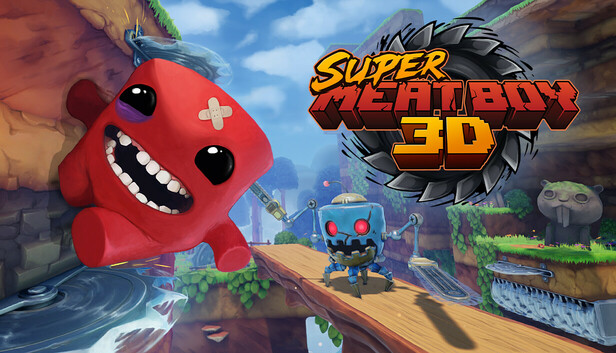
The infamous, tough-as-nails platformer – now in 3D!
uper Meat Boy 3D is a tough as nails platformer where you play as an animated cube of meat who’s trying to save his girlfriend (who happens to be made of bandages) from an evilfetus in a jar wearing a tux – IN 3D!
Our meaty hero will leap from walls, over seas of buzz saws, through crumbling caves and pools of old trash sacrificing his own well-being to save his damsel in distress – IN 3D!
Super Meat Boy 3D brings the old school difficulty of classic retro titles we all know and love and streamlines them down to the essential no bull straight forward twitch reflex platforming. Ramping up in difficulty from hard to soul crushing Meat Boy will brave lush (but also on fire) forests, vast dumps filled with the waste of mankind, and high-tech forges producing the very traps that will inevitably kill Meat Boy over and over and over – IN 3D! Virtual Cottage 2
And if a bunch of levels weren’t enough, we also have epic bossfights and tons of unlockable secrets – IN 3D!
Blaze Entertainment’s new Evercade gaming handheld device, the Evercade Nexus, is now available to preorder ahead of its October 2026 launch window. Billed as the successor to the Evercade EXP-R handheld, the Nexus is a $200 portable that’s compatible with Evercade’s other cartridge-based releases, and features plenty of onboard storage for more, plus wireless multiplayer capabilities. Even better, all units ship with a Banjo-Kazooie Double Pack cartridge, and if you preorder at Best Buy, you’ll also get a collection of Data East-published arcade games as a bonus
Decentralized finance company Drift says it has suspended withdrawals and deposits after confirming a security incident.
The crypto platform said in a post on X that it was “experiencing an active attack,” and that it was working to “contain the incident.”
Security researchers and public blockchain data suggest the losses could be significant. Blockchain security firm CertiK said on X that hackers may have stolen around $136 million, while crypto analytics firm Arkham put the figure at around $285 million stolen.
If confirmed, this would make the Drift hack the largest crypto theft of the year, according to the Rekt leaderboard, a site that tracks crypto thefts by size.
It’s not clear who is behind the attack, and a spokesperson for Drift did not immediately respond to a request for comment.
Security firms say North Korea was behind the most crypto thefts last year, netting at least $2 billion in stolen cryptocurrency, funds the regime is believed to use to finance its nuclear weapons program and skirt international sanctions that restrict its access to the global financial system.
NASA’s Space Launch System (SLS) rocket and Orion spacecraft launched from Kennedy Space Center in Cape Canaveral, Florida, at 6:35 p.m. ET on Wednesday, carrying a crew of four astronauts to low-Earth orbit. In about 25 hours, Orion will set course toward the Moon.
At T-0, the SLS boosters ignited in an explosion of fire, generating a whopping 8.8 million pounds of thrust to propel the Orion spacecraft skyward. The SLS lifted off about 11 minutes into the 2-hour launch window, which opened at 6:24 p.m. Shortly after ignition, the rocket cleared the launch tower, surpassed supersonic speed, and jettisoned its solid rocket boosters.
At 6:43 p.m., the rocket’s core stage separated, placing the Orion spacecraft and the upper stage (also known as the interim cryogenic propulsion stage) into LEO. About 16 minutes later, Orion’s solar array wings unfurled, completing a key configuration step. These arrays supply power to all of Orion’s systems, from propulsion to life support.
This is only the second flight for the SLS, the third for Orion, and the first crewed flight for both vehicles. It’s difficult to overstate how incredible it was to see them perform so spectacularly. Artemis 2 will serve as a critical stepping stone to a crewed lunar landing, currently slated for 2028. That ambitious goal has never felt more attainable.
Liftoff, at last
This achievement was a long time coming. It’s been 54 years since the last Apollo mission returned to Earth, and humans have not left low-Earth orbit since. Over the next nine days, the Artemis 2 astronauts will venture deeper into space than the Apollo missions ever did, swinging around the far side of the Moon and back to Earth.
The Artemis 2 launch also follows multiple delays. NASA had hoped to launch during the February window, but the SLS experienced hydrogen leaks during the wet dress rehearsal that derailed those plans. Then the March window went, well, out the window when NASA had to roll the SLS back to the Vehicle Assembly Building to repair a helium flow issue.
Today, tanking both the core and upper stages of the rocket went remarkably smoothly, with no major leaks or issues. Now that Orion is finally in space, humanity is poised to return to the Moon. If everything goes as planned over the next several hours, the ICPS will perform burns to boost the spacecraft’s orbit in preparation for its journey to the Moon.
Approximately 3 hours and 30 minutes after launch, Orion will separate from the ICPS, and the upper stage will begin a proximity operations demonstration to test its ability to maneuver and operate safely in close proximity to Orion. Once that’s complete, the ICPS will reenter Earth’s atmosphere and splash down in the Pacific Ocean. Orion will perform a burn to adjust its orbit, and that will conclude the first day of flight.
10 days of history in the making
Assuming the mission proceeds as planned, Orion will perform the critical translunar injection burn about 25 hours after launch. This will set the spacecraft on the path to the Moon.
Orion should enter the lunar sphere of influence on the fifth day of flight. At that point, the pull of the Moon’s gravity will be stronger than Earth’s, helping the spacecraft make a fuel-efficient lunar flyby. Orion will swing around the far side of the Moon, giving the Artemis 2 astronauts a full day to observe the surface. They will see parts of the far side never before seen with the naked eye.
NASA expects Orion to exit the lunar sphere of influence and enter a return trajectory on the seventh day of flight. The spacecraft will perform a couple more burns to adjust its trajectory on the ninth and tenth days of flight before the crew capsule separates from the service module. The crew capsule will reenter Earth’s atmosphere at speeds reaching 25,000 miles per hour (40,000 kilometers per hour) and splash down off the coast of San Diego, California.
Gizmodo will be following the mission every step of the way, bringing you the latest updates as humanity makes its epic return to lunar space. Watch this space for news on all things Artemis 2.
According to a recent job listing, Blizzard is cooking up a new game in an engine and a genre that none of its releases have used before. The studio is looking for a “Lead Designer, Innovation” to run development on a “AAA open-world shooter” without a name.
Right now, every Blizzard game except Hearthstone (made with Unity) were made with in-house engines, but this unnamed shooter will likely use Unreal Engine. The listing says the lead designer will need experience working with the popular engine for prototyping features.
On top of that, the job also requires “15 years of professional experience in game design or a related discipline”, which tells me Blizzard wants someone who’s probably done this kind of work before, possibly even more than once. Given the amount of layoffs the studio endured in the last few years, I’d imagine there are plenty of former Blizzard veterans out there who would fit the bill.
Article continues below
On Bluesky, Blizzard game designer Jeff Hamilton says the “fairly unique design role” will be part of his team, but his post sadly provides no clues on what the project even is—and neither does his LinkedIn page. My best guess is the new Starcraft third-person shooter mentioned in Bloomberg reporter Jason Schreier’s 2024 book Play Nice: The Rise, Fall, and Future Of Blizzard Entertainment.
Schreier’s reporting said Blizzard was “incubating” the project under the helm of former Far Cry producer Dan Hay. The book doesn’t mention a genre or even a timeframe for when it would be properly announced, but Blizzard is hosting a BlizzCon in September that could be where it’ll show up. Windows Central reporter Jez Corden corroborated Schreier’s reporting via his own sources in January, too.
Now before you get too excited, let’s remember that Blizzard also spent six years on a survival game only to cancel it after a massive round of layoffs in 2024. It’s possible this game—much like the infamous Starcraft: Ghost shooter that never was—might not see the light of day, especially when the videogame industry layoffs haven’t really slowed down.
However, the time is ripe for Starcraft to come back. The last game in the series was released 11 years ago (unless you count the Nova Covert Ops campaign that came out 10 years ago). An open-world shooter is a big leap from an RTS, but I imagine Starcraft fans will take anything at this point.
Keep up to date with the most important stories and the best deals, as picked by the PC Gamer team.
SAP NLP Search Solutions: Adding Intelligent Search to Your SAP Environment
The Data Access Problem Most SAP Shops Have Stopped Talking About
The data is in SAP. Everyone knows it is there. But getting to it requires knowing which transaction code to use, which fields to filter, and often which table names to query — knowledge that lives in a small group of power users and SAP consultants, not in the operations team, the supply chain planner, or the plant manager who actually needs it.
The result is a predictable pattern: analysts spend hours pulling reports. Decisions wait for data. The people closest to the operational problem rely on spreadsheet exports that are already 24 hours stale by the time they reach the right desk.
SAP NLP search solves this at the access layer. It lets users ask questions in plain language and get answers drawn from live SAP data — without transaction codes, without filter configurations, and without a power user in the loop.
USM Business Systems is a CMMi Level 3, Oracle Gold Partner Artificial Intelligence (AI) and IT services firm based in Ashburn, VA. We design and deploy SAP NLP search solutions for manufacturers, pharma companies, logistics operators, and other enterprises where the gap between SAP data and operational decision-making is costing time and accuracy.
What SAP NLP Search Actually Is?
SAP NLP search is a natural language interface layered on top of SAP data. A user types or speaks a question — ‘Which suppliers are running more than 5 days late on open POs this week?’ or ‘What is the current inventory for material X across all plants?’ — and the system retrieves the relevant SAP data and returns a plain-language answer or a structured result.
The technical architecture underneath involves three components working together:
A retrieval layer that connects to SAP Datasphere views, HANA models, or structured data extracts and fetches the records relevant to the query
An LLM (large language model) that interprets the natural language question, reasons about the retrieved data, and formulates a response the user can act on
A user interface layer, typically embedded in SAP Fiori or a standalone web application, that surfaces the interaction in a format the team already uses
This architecture is known as retrieval-augmented generation (RAG). It is the standard pattern for enterprise AI search because it grounds the LLM’s responses in your actual data rather than its training knowledge — which means the answers are accurate to your environment, not generic.
Where SAP NLP Search Delivers Measurable Value?
Supply Chain and Procurement
Supply chain teams field constant questions about supplier performance, open purchase order status, inventory positions, and demand deviations. In a typical SAP environment without NLP search, each of these questions requires a different transaction, a different filter configuration, and often a trip to the analyst team.
With NLP search on SAP Ariba and S/4HANA data, a supply chain planner asks the question directly and gets the answer in under 30 seconds. Forrester research found that enterprises deploying AI-assisted data access in supply chain operations reduced average data retrieval time by 68% within 90 days of deployment.
Plant managers and production supervisors need fast access to quality data, work order status, equipment maintenance history, and production schedule adherence. In SAP PP and SAP PM, this data exists but requires navigation through multiple transaction codes.
NLP search allows a plant manager to ask ‘What is the current first-pass yield for line 3 this week compared to last week?’ and get an answer pulled from SAP QM data — in the moment, on a tablet on the shop floor. The decision that used to wait for an end-of-day report happens in real time.
Finance teams use SAP NLP search to answer variance questions, retrieve specific transaction histories, and surface exceptions without constructing custom reports. Compliance teams in regulated environments use it to pull audit-relevant data on demand — a capability that previously required either a SAP power user or a scheduled report.
Buyers and category managers use NLP search to surface contract terms, pricing history, and supplier qualification status from SAP Ariba without navigating the full Ariba interface. A buyer preparing for a supplier negotiation asks what the last five purchase prices were for a given material category and gets the answer directly from SAP contract and PO data.
How does NLP search on SAP handle questions the system cannot answer?
A well-designed SAP NLP search system will indicate when a query falls outside its data coverage rather than generating a fabricated answer. This is controlled by the retrieval layer — if the relevant data is not in the configured Datasphere view or HANA model, the system returns a ‘data not available’ response. Configuration of the retrieval layer’s scope is a key design decision during deployment.
Can SAP NLP search be used by non-technical users without SAP training?
Yes — that is the primary value proposition. Users who have never navigated an SAP transaction code can access operational data through plain language questions. The system requires user management and access controls, but the operational interface requires no SAP knowledge. Teams report adoption rates of 80%+ within 30 days when the deployment covers data that users actively need.
What a SAP NLP Search Deployment Involves?
Phase 1: Data Domain Scoping (Weeks 1-2)
Define which SAP data the search system will cover. This is not ‘all of SAP’ — it is a specific set of data domains aligned to the team or use case being served first. Supply chain planner access to procurement and inventory data is a typical first domain. Finance team access to transaction history and variance data is another common starting point.
Phase 2: Data Readiness (Weeks 2-4)
Build or validate the Datasphere views or HANA models that the retrieval layer will query. This phase surfaces master data quality issues that need resolution before the NLP layer can produce reliable answers. Budget 2-4 weeks depending on the cleanliness of the target data domain.
Phase 3: Retrieval Layer Build (Weeks 4-6)
Configure the retrieval system that connects user queries to the relevant SAP data. This includes the embedding model that converts queries and data into a format the LLM can reason about, the vector search or structured retrieval logic, and the data access controls that ensure users only see data they are authorized to access.
Phase 4: LLM Integration and Response Configuration (Weeks 6-8)
Connect the retrieval layer to the LLM, configure the response format, and build the prompt structure that guides the model to produce useful, accurate answers rather than general responses. Test on 50-100 representative queries across the target data domain. Tune accuracy.
Phase 5: UI Integration and Rollout (Weeks 8-10)
Deploy the interface — typically a Fiori tile, a Teams integration, or a standalone web application — and roll out to the target user group. Collect feedback on query coverage gaps and expand the data domain in the next iteration.
A first-domain deployment typically reaches productive use in 10-12 weeks. Enterprises that have invested in SAP Datasphere can move faster because the data layer is already structured.
What Separates Good SAP NLP Search From Poor Implementations?
Scoped retrieval, not open-ended LLM access. The model must be grounded in your SAP data, not relying on its training knowledge. RAG architecture is the standard. Implementations without a proper retrieval layer produce hallucinated data.
SAP data structure knowledge. The engineers building the retrieval layer need to understand SAP table relationships, master data objects, and SAP Datasphere modeling — not just LLM APIs. The two skill sets are both required.
Access control from the start. SAP data carries access restrictions for good reasons. An NLP search system that allows any user to query any data field is a governance problem. Role-based data access needs to be designed into the retrieval layer from the beginning.
Iteration planning. No first deployment covers every query the users will try. The difference between a successful deployment and an abandoned one is whether the team has a process for expanding data coverage based on user feedback.
Why USM Business Systems?
USM Business Systems is a CMMi Level 3, Oracle Gold Partner AI and IT services firm headquartered in Ashburn, VA. With 1,000+ engineers, 2,000+ delivered applications, and 27 years of enterprise delivery experience, USM specializes in AI implementation for supply chain, pharma, manufacturing, and SAP environments. Our SAP AI practice places specialized engineers inside enterprise programs within days — on contract, as dedicated delivery pods, or on a project basis.
Ready to put SAP AI into production? Book a 30-minute scoping call with our SAP AI team.
Does SAP NLP search require SAP Datasphere, or can it work with HANA directly?
Both work. SAP Datasphere is preferred for new deployments because it provides a governed, semantically structured data layer that is well-suited to retrieval-augmented generation. HANA views and OData APIs can serve as the retrieval source for organizations that have not yet adopted Datasphere, though more custom engineering is required.
Which LLM works best for SAP NLP search?
The answer depends on your governance requirements. Azure OpenAI (GPT-4) is the most common choice for enterprises with existing Microsoft agreements and data residency requirements. Anthropic Claude and AWS Bedrock models are increasingly common in regulated industries that require stronger content controls. The LLM selection is less important than the retrieval layer architecture.
How is accuracy measured for SAP NLP search?
The primary accuracy metric is the rate at which the system returns a correct answer to queries tested against known SAP data. A second metric is the rate of ‘I cannot answer this’ responses versus hallucinated answers — the former is acceptable; the latter is not. Measure both during the testing phase and set minimum thresholds before production rollout.
Can SAP NLP search write data back to SAP, or is it read-only?
Most initial deployments are read-only — the system retrieves and presents data but does not modify SAP records. Write-back capability, where the system can initiate a SAP workflow or update a field based on a user instruction, is the next level and requires agentic architecture rather than pure NLP search.
What user adoption approach works best for SAP NLP search?
Start with the team that has the most acute data access pain and the most frequent need to query SAP. Supply chain planners, procurement buyers, and plant managers are typically the highest-value early adopters. Get that team productive, collect their feedback on query gaps, and use their results as the business case for expanding to the next team.
When you let loose your imagination on how the exterior face of a building is created, you’d think it may start from a sketch, a photo taken during a walk, or an idea from a meeting. This may be different in the world of architecture, as imagination will not be enough to build the concept. There are different factors to be considered to complete the design: precision, lighting, materials, and audience perspectives. That’s where realistic exterior rendering services come in. It turns an idea in your head into something you can actually see and almost feel, like it’s real.
Realistic exterior rendering is more than just about making something look pretty on a screen, but it also shows how everything comes together, taking in the geometric aspects of the building, its textures, lighting, and the environment around it as well. It gives the audience an idea of what it looks like in the real world. A well-executed render can give life to abstract ideas to concrete ones, be it an office, a residential, or a commercial building. This article will explore everything behind the renders, how it is done, the techniques, and even the most detailed ways to make a render stand out above average, so it looks realistic.
Understanding the purpose of realistic exterior renders
It is important that we understand first the purpose a realistic render exists in order to appreciate it. This is all about communication. Architects, developers, and marketing teams often need to show their ideas to clients, investors, or regulatory boards who can’t fully understand technical drawings or floor plans. A 3D exterior render turns those complicated plans into a visual that helps stakeholders understand what the building looks like, how it fits into its surroundings, and even the kind of mood it sets.
But showing how a structure looks is not really the only goal of rendering. Realistic exterior renders also aim to impress and bring the project’s vision to life and can further help in selling the idea, lifestyle, or brand it delivers. In a competitive market, the way a project is presented could really make a difference. A strong render may help in securing funding and permits and could also improve a company’s image. It blends technical accuracy with creative storytelling, which makes exterior rendering feel both an art and a science.
Starting with the blueprint: The importance of accuracy
A strong understanding of the basics can establish precise exterior rendering. Everything is built from a blueprint or architectural drawing services, and this serves as the foundation. A 3D drafter depends on these plans as the reference for the structure’s dimensions, shape, and layout for it to look accurate. The reference must be correct and aligned so that the 3D model will be too, as even advanced software can’t make up for the mistakes the original one has. Conflicts such as misalignment of walls, misplaced windows, and awkward roof angles can instantly make a render look unrealistic.
After doing the main model, drafters often do final touches, such as adding details that may not be present in the original drawings but can significantly improve the realism of the structure. Details like including exterior fixtures and drainage, as well as adding textures that could react to light and shadows, could show how a professional mindset is delivered, since paying attention to these subtle touches can make the building feel real to the viewer.
Material selection: More than just texture
One of the key elements of making an exterior render real is the materials. There’s a huge gap between a realistic render and a cartoonish one, and that’s how the surfaces are shown. In reality, various materials react to light differently, like how concrete can scatter light while glass reflects it, and how wood absorbs it. Even the metal may look dull or shiny depending on how the finish is. These are some things a cartoonish model can’t showcase, since most of them are just colors with no texture at all. A skilled 3D drafter pays attention to these details and recreates them in the software.
Textures may play a big role in this process as they define how a material simulates in real life. Drafters combine different texture maps to control color, surface roughness, and the way light reflects off a material. Scaling is also important and considered for each material. For instance, a rendered brick wall could appear too big or small and may impose an awkward appearance on the structure. Also, the materials should make it look like it’s affected by its surroundings, adding in weathering and aging. These surface adjustments can contribute to making the façade not look too flat under a natural setting.
Lighting the scene: The silent narrator
An accurate model can still feel lifeless if combined with poor lighting. That is why lighting design services are undeniably one of the most influential factors in rendering. It’s not only for the technical aspect, but it can also add to the artistic side. It sets the mood by defining shadows, highlights, and textures. Adjusting the lighting by setting it bright mid-day can highlight the sharp structures of the building, while making it into warm sunset lighting could make the structure feel inviting.
In order to achieve realistic lighting, HDRI is often used to replicate how light behaves in real outdoor environments. This helps simulate natural lighting and reflects details such as shadows, reflections, and sometimes other color changes that the light may influence. Some drafters or artists even add artificial lighting, if needed. This could include street ornaments and interior lighting inside glazing and windows. It is deemed believable to feel real when shadow, reflection, and brightness adjustments are all incorporated into the model, which is why it plays such a big role in the process.
Camera angles and composition: Guiding the viewer’s eye
How we view and see a building is influenced by composition and camera angles. Our perception can be shaped in any way a 3D drafter aims it to be, since they have full control over the viewpoint. They can choose angles; they emphasize it to be. They can highlight some key features or walk through the scene. The purposes of choosing an angle may differ, like how an artist sets it too low to make a building somehow feel imposing, and a high angle helps show its placement and layout in its surroundings.
Choosing a lens matters too, since wide-angle views may tend to exaggerate depths and emphasize more of its surroundings, while a telephoto view could compress and give focus to certain details. Oftentimes, several camera set-ups were done before picking the final scene of the building, knowing how certain angles could impose a different mood or atmosphere of how a building may feel. Mindful selection of scenes or framing is practiced to ensure that the render tells the story the architect or client wants to share.
Integrating environment and context
Every building does not exist on its own. Its surroundings, including the external landscaping and neighboring structures and streets, shape how it’s positioned in our viewpoint. Architectural drafting experts often add these details and elements to the model to give a true sense of place. Mindful placement and scaling of hardscape, softscape, trees, and planting, and even vehicles, could make the scene feel lived in rather than staged.
Aside from all of that, integrating outdoor conditions like fog, rain, or any reflections on a wet surface could further enhance the scene to make it feel real. However, just adding elements without careful judgment could make it look distracting or lacking. Realistic references should still be represented to get a correct simulation of the setting. Weather and seasonal changes, subject to project goals, can also be incorporated into the scene to make it feel authentic.
After applying materials, lighting, and some environmental elements, a render can be further completed with some post-processing. This is about tweaking things such as contract, color grading, sharpness, and other visual details meant to make the scene feel even more realistic. Subtle adjustments like correcting the exposure or applying a vignette can give a render a cinematic touch without taking the focus away from the structure. It just adds some dramatic feeling to it.
Post-processing is also where the drafters or artists often add little touches like some moving trees, water reflections, and a soft glow of the windows in the dusk. These details enhance the atmosphere of the scene and make it feel alive. Integrating all of it together shapes the emotions of a viewer. It is important to note that even though it makes everything feel alive, it still should be controlled because enhancements like these are for support and not to overshadow the building.
The role of software and tools
In every refined render lies a set of professional software tools. For 3D modeling design services, programs such as 3ds Max, Maya, Blender, and Cinema 4D are often used, while for heavy rendering, V-Ray, Corona, and Lumion are utilized. Each software is used according to its strengths and functions, which differ uniquely. Artists usually pick which one to use based on the project’s needs, the workflow required, and client preferences.
Certainly, these softwares keeps evolving, with frequent updates and even version changes, making the renders even closer to realism. And now, real-time rendering gives immediate feedback, making it even easier to alter and refine the scene. Software alone doesn’t mean you’d have an instant great render; it still depends on skill, creativity, and judgment of the drafter, who turns all those resources and information into something both accurate and visually compelling
Collaboration between artists and clients
Even though the 3D drafters or artists are the ones creating the model, rendering is not something done by themselves only. It is still a collaboration among 3D artists, architects, designers, and clients. These stakeholders are working closely to ensure that the render is aligned with the project’s vision. Setting clear communication and deliverables helps the team to set a smooth flow among the team. This process often circles around artists sharing the draft along the way, tweaking and refining based on feedback.
This approach can also serve as a risk mitigation process that helps during the pre-construction stage. A render can reveal conflicts in design, lighting issues, and other element clashes. From this, adjustments can be made without being costly. In this way, a good render serves not only as a marketing tool but also reduces risks, apart from adding value beyond just looking good.
Maintaining realism without overloading detail
What separates a seasoned professional from any other is how these artists are able to convey what they want to deliver, which may somehow look like they’re telling a story to their viewers, which is essential for architectural design firms. Anyone can present how technically skilled they are and may be showy about the techniques they have integrated into the model, but a professional one can balance both realism and clarity, giving only the context and not overwhelming the people.
Advanced techniques for enhanced realism
In basic modeling, we have understood that the render starts with the materials and lighting. To be more detailed, advanced techniques can be applied to enhance the model. One useful technique is photorealistic texturing, as the name implies, it’s an almost perfect picture of the real-world surfaces. It convinces the viewers that it is real. For materials like stone, wood, and brick, procedural textures can be used aside from texture maps. Procedural textures generate patterns that allow infinite variety even without all that stiff repetition, which can be very helpful to make the texture realistic to the eye and not too staged.
In real life, we can observe how light interacts beneath the surfaces. For materials like frosted glass, thin concrete panels, or any other translucent glazing, real-life light penetration can be significantly simulated by using an advanced technique such as subsurface scattering. This is a technique that plays with light and how it is simulated in the environment. This subtle touch can dramatically improve the realism of the materials.
Another technique related to lighting is photometric lighting. This is more of an accounting accuracy of light sources, such as lumens or candelas. This technique is used by architects to verify that the design is compliant with the standards and can perform in real life as well. This just shows how architects and designers are mindful not only to appeal to the audience with the aesthetics but also to show how well it can function in real life setting.
The exterior renders would feel like they were lacking if the surrounding environment is not well-incorporated. Adding in natural elements such as planting, water features, and even slope variations can definitely make the scene even more complete for architectural design & drafting companies. To do this, it does not mean just adding elements to the model. It still needs to be properly done. Scaling is one way to make it right since inappropriate sizes may disrupt the perspective and view. This is why it is very important to do the scaling first and carefully check the elements’ placement so it won’t feel like just being added to complete a picture, but rather simulate its alignment to the surroundings.
Adding water features can enhance further realism, but it needs to be done carefully since water reacts differently according to its type. For instance, a calm pond can feel like it reflects nearby structures and the sky, while a fountain can show full motion play in the environment. To be able to demonstrate the same outcome, experienced artists control and sometimes involve physics simulation.
Integrating natural elements into their appropriate placement helps the final render achieve a realistic design. This meant importing geographical data or drone imagery to shape how it can be perceived in real life. The position and layout of the building with the roads and other infrastructure should be placed in a way that makes sense, so the render looks good and feels realistic.
Human interaction and scale
When you see a perfectly rendered building, you could feel emptiness by seeing it. One subtle way to give life is by bringing in human elements. These may include occupants, walking neighbors, pets, and even cars. These features not only add life to the scene but also help the audience understand the proportional reference of the building, whether in comparison to the environment or to other structural elements. Integrating human activities like walking, talking, or driving in the scene can also feel inviting, as it helps to suggest how the place is meant to be used.
Still, these details are to be handled with care. The added elements should always complement and support the functionality of the building, how the people shown were dressed, their body languages and even the interaction can influence the atmosphere of the building. An example of this is how corporate buildings are often introduced with people dressed formally, carrying briefcases in surroundings with busy cars, and how 3D residential rendering services are simulating warm homes and friendlier neighborhood interactions. These details matter in determining the function and lifestyle of how the building is set to deliver.
Embracing weather and seasonal variations
Natural touches, such as weather and seasons, help in making the render feel even more alive. The mood of the scene changes with the use of elements such as sun, rain, clouds, and fog. Imagine how a building can look sharp and detailed when it’s in bright sunlight, but looks so soft with shadows if in a cloudy setting. The rain could show reflections, and how fog can create depth simply by making distant objected faded.
The seasonal setting is sometimes used for more of a marketing approach, showing how the structure fits in year-round. It could show a warm and cozy autumn or a cold winter, depending on what mood they are trying to portray. It could also give an idea of how cherry blossoms or summer can brighten up the neighborhood. A skilled renderer can recreate all these while keeping lighting, materials, and texture consistent and making them feel realistic.
Optimizing render time without sacrificing quality
While realism is the ultimate goal, there are still limitations that can influence the outcome. To achieve a certain level of quality, time and resources should be accounted for. Aiming for a high-quality render can be costly since there would be a lot of frames and elements, and this can take a lot of time to work on. With these, professional 3D artists came up with techniques to balance both quality and efficiency without compromising either.
Artists often simplify details for objects that are far from the camera, using fewer elements and lower resolution material textures, since they may be too small or too far for the audience to notice. This common technique is called level of detail (LOD) management. Additionally, artists also practice the utilization of render passes, which is done by breaking it down to shadows, reflections, and lighting. This allows easy and convenient adjustment and alteration to certain parts if needed, without the need to undergo rendering again, saving quite a lot of time.
Demanding projects are a lot more demanding, and to manage this, artists rely on render farms or cloud-based systems. This meant spreading the whole workload among multiple devices. This can aid and support high-resolution images, animations, or virtual reality content. These approaches and strategies aim to not only rely on technical skill, but also practice working efficiently and follow a smart workflow.
The psychology of perception in exterior renders
Interestingly, realism isn’t all just about the visuals or what our eyes can see, but about how we perceive it. Experienced artists notice how people notice and observe light, texture, and materials, and they use that to walk through with the viewer’s experience and relate it to the model. Shadows and contrasts can create depth, while brightness can set the mood. These things influence our brain, so whenever small mistakes are noticed, it can make the render feel fake, especially for HDR rendering design services.
Human perceptions are what make the artist decide on the technique they use, and this is how they trick the audience to make it feel real. The tones, materials, and textures are adjusted in a way that the artist thinks relates to how it will be perceived in a certain scene. They’d adjust positions and align reflections and shadows to highlight important features. Doing all these adjustments to make it relative to a human experience and perception can actually be convincing and engaging, which makes the render look natural.
Not all professional 3D artists can really perfect exterior rendering; there are still struggles and challenges being encountered. One of the most common challenges is overloading the scene. It is indeed tempting to include a lot of details and elements in a scene, like some tree, or another passerby, or a cute cat that can liven up the atmosphere, but having a lot of things happening in the scene can distract the audience and may stray from what the building is all about. It is better to be selective and focus on the main subject first and work your way around it than to show everything around it.
Another frequent error is inconsistent lighting and misalignment of materials. It could be how reflections do not really match the nearby structures, or that the textures are of the wrong scale, or a shadow falls in the opposite direction. These things, individually, may look small but can subtly make the render feel off. These errors are sometimes observed during draft reviews, which is why continued communication is needed for review and quality checking.
Finally, overlooking the context can make a render fall flat. It is important to take into account the relationship of the building to its surroundings, considering its terrain, landscaping, or any cultural context. Knowing its function and the role it plays in the surroundings can make the render feel like it belongs there and not feel disjointed. A successful 3D rendering design service should make the structure blend seamlessly into the environment, respecting the physical setting and the context of the project.
The value of iteration and feedback
Not all renders are successful at first try. It is still a series of adjustments, tweaking, refinement, and multiple applications of feedback. This iteration allows the final render to align with its respective vision and project goals, all while ensuring it still feels realistic.
Feedback is what makes the render real. It gives the stakeholders chances to check and suggest subtle changes, whether it’s for the perspective, lighting, materials, or any other elements in the model. These feedbacks are incorporated and applied into the model without losing its overall look. Iteration gives room for improvement and exploration of creativity, and sometimes it can be time-consuming and tedious, but this adds depth and variety to the project.
Rendering for marketing, planning, and visualization
And while renders are often an aid to support marketing, their function is not just for promoting the structure, as it also serves planning support and helps the design team foresee possible construction clashes and conflicts, assess material selection, and coordinate with the engineering team. 3D architectural rendering services also function as a medium for engagement among stakeholders, giving access to understanding the discipline behind the technical side of modelling.
As marketing support, renders in this function focuses with the visual and emotional appeal to the audience. It is meant to be relatable and resonate with the audience, inviting them and having a warm welcome feeling that will make them enjoy the ambiance, be it a residential or corporate building. Still, a combination of technical accuracy and creative story is what’s needed and has to be balanced.
Keeping up with industry trends
Exterior rendering keeps advancing quickly as time goes on. New technology and techniques are constantly being introduced, such as real-time rendering, virtual reality, and even artificial intelligence. These tools are reshaping how artists create visuals. Convenient and on-the-spot adjustment and tweaking of lighting, camera angles, and such are now possible with real-time engines. AI tools have become a support in generating finishes, optimizing scenes, and improving post-processes, making it easier to streamline workflows without sacrificing quality.
Professional 3D artists keep on being adaptive to current trends, trying to keep up even if it means learning something way out of their usual. Upskilling helps the artists stay updated and aligned with the current standards of efficiency, realism, speed, and engagement. It is important to be flexible, especially for companies that not only want the aesthetics but also want them to be technically accurate and appealing to modern times.
Styling and aesthetic considerations
Certainly, realism is obviously important, but style matters just as much. It is crucial to balance technical accuracy, project intent, and the visuals it is meant to portray. There are some projects that may need to opt for hyper-realistic renders, which show every crack in the walls or pavement, or a cloud reflection in the glazing. Others could try to explore styles depending on their brand instead of copying reality perfectly.
Colors can also influence how everything ties up together. When not thought of, the colors may feel random and not put-together. A consistent color scheme can emphasize a building’s important features. Styles can really vary, and it is okay as long as there’s consistency and it is still aligned with the project’s intent.
Measuring success in exterior rendering
Success in exterior rendering isn’t just about how the model looks; functionally, it matters too. Sure, the building can look real, convincing, and be perfectly aligned with the project’s objectives, but it should also be functional. In a way, it should be able to communicate proper scale, context, materials, and influence people in their decisions to approve designs. After all, a successful render could serve as a tool to simultaneously aid design, marketing, and planning.
To determine the success of render, it can be measured with feedback from the client expressing their satisfaction, approval from authorities, engagement in marketing, and how well it can secure investors. Professionals pay attention closely to feedback to improve their approach. This shows how rendering is not just an art but a form of result-driven discipline.
High-quality visuals are costly but can offer a strategic advantage, especially for companies. This is because investing in professional exterior rendering can make a brand look stronger. It builds confidence in both the team and client, knowing that they’re in the right hands. From this stage, potential risks and conflicts in the design can be spotted, so it is really a great risk-mitigation asset. On top of that, renders are considered a great marketing tool because they can make a project appealing, adding value, speeding up approvals, and securing funding and sales.
In the competitive market, what sets the standard architectural drawings apart from the render is how one can grab the attention of the viewers. Renders can give an edge to the company, combining both technical accuracy and visual context that leaves a remarkable impression.
Conclusion: Bringing your vision to life
Realistic exterior rendering is more than just making a digital model to show how a structure looks. It is a discipline of translating architectural drawings accurately into a compelling narrative. Using necessary tools and software, as well as tweaking lighting, environmental elements, and applying human perception, professional 3D artists make renders that are accurate and engaging.
From planning up to the final marketing presentation, the renders turn imagination into reality. It all started with planning, drawing, scaling, material selection, and aesthetics, all of which allowed all stakeholders to communicate their preferences and understand the project vision fully. And through careful and mindful styling, applying advanced techniques and thorough iteration, all these preferences and feedback were turned into a single visual story that resonates not only with the developer but most importantly with the audience.
Working with professional 3D artists has always been the key to getting the most out of professional exterior rendering. On Cad Crowd, you can find experienced freelancers who specialize in high-quality exterior visualization. Partnering with experts who know both the creative side and the technical side of rendering lets your vision come to life in a way that’s clear, realistic, and aligned with your project goals.
Check out Cad Crowd today, and you’ll discover top-notch 3D artists who can turn your ideas into visuals for your project and branding. With the right talent, your imagination, design, and concept can go beyond blueprints and sketches. Request a quote today.
MacKenzie Brown is the founder and CEO of Cad Crowd. With over 18 years of experience in launching and scaling platforms specializing in CAD services, product design, manufacturing, hardware, and software development, MacKenzie is a recognized authority in the engineering industry. Under his leadership, Cad Crowd serves esteemed clients like NASA, JPL, the U.S. Navy, and Fortune 500 companies, empowering innovators with access to high-quality design and engineering talent.