Few things ruin a quiet evening faster than a robot vacuum roaring through the living room. Most of us end up pausing the cleaning run, which defeats the whole purpose of owning one. Matic thinks it has the answer with its new Serene robot vacuum, and the big selling point is how little noise it makes.
The Matic Serene runs at 52 decibels even when cleaning at full power. To put that in perspective, Matic compares it to the hum of your refrigerator. It is available now for $1,695, which is $200 more than the original Matic’s current price.
Why does 52 decibels matter?
Most robot vacuums force you to pick between clean floors and a quiet home. Their silent modes drop to somewhere around 55 to 60 decibels, but only by weakening suction. Switch them to full power, and the noise climbs to roughly 70 decibels.
Matic
The Serene doesn’t make you choose. It is three decibels quieter than the original Matic while still cleaning at maximum suction. Matic cofounder and president Mehul Nariyawala told The Verge, “It’s very quiet on carpets, on hard surfaces; you mostly hear brush roll now.”
According to Nariyawala, the Serene is built for people “who are extremely noise sensitive,” and apart from the new hardware, it’s “exactly the same Matic.” You still get the same camera-based navigation and design that make Matic stand out from the usual disc-shaped robots.
Can you upgrade your current Matic?
You can. Starting in early 2027, Matic owners can request a Serene hardware upgrade by paying the difference between their original purchase price and $1,695. The catch is that Matic’s prices have gone up a few times since launch. If you bought yours at the original $1,095 price, you will be paying $600 to upgrade.
That’s a steep price for a quieter vacuum. However, if noise is what kept you away from robot vacuums, the Serene could finally win you over.
There are 57 million people worldwide living with dementia today. For the researchers working to help them, the obstacle isn’t a lack of effort — it’s too much data, too few experts to synthesize it and a pace of discovery that can’t keep up with the disease.
The Consortium for Biomedical Research and AI in Neurodegeneration (C-BRAIN), working with NVIDIA, is using AI to change that.
Alzheimer’s disease is one of today’s leading global health challenges, with over 10 million new dementia cases diagnosed each year. Despite a 7x increase in National Institutes of Health funding in the last 15 years — reaching $3.9 billion annually — no treatment has been found to stop, prevent or reverse the disease yet.
The bottlenecks are not enough high impact scientific findings, too much data living in institutional silos and too slow a pace of synthesis to keep up with the research that is published.
C-BRAIN, led by Dr. Randall Bateman and a consortium of 18 member institutions across academic, philanthropic, pharma and research organizations, launched in November 2025 to help scientists make better, faster discoveries by accelerating the research that makes new treatments possible.
“We have a window of opportunity with artificial intelligence to do research fundamentally different than we’ve ever done before, in a way that accelerates discoveries to help patients,” said Bateman, founder and director of C-BRAIN and the Charles F. and Joanne Knight Distinguished Professor of Neurology at the Washington University School of Medicine in St. Louis. He described their work as “AI tools built by scientists, for scientists.”
The consortium is building a system that harnesses previously untapped Alzheimer’s research data to support scientists’ work.
Speeding Research From Weeks to Hours
Essential assets in Alzheimer’s research are datasets that have never been publicly accessible to AI tools or human researchers. This includes unpublished findings, negative results and governed proprietary data from member institutions.
“A lot of life sciences data doesn’t make its way into the frontier models,” said Dr. Ade Ojewole, chief technology officer of C-BRAIN. “The consequence of that is we’re leaving a lot of intelligence on the table.”
C-BRAIN refers to this as “dark data,” which slows down Alzheimer’s research.
Some dark data is directly deposited into secure computer systems for AI tools to access. To use this data without compromising patient privacy or institutional governance, C-BRAIN uses a hybrid centralized and federated approach — where AI models learn from data at each institution without that data ever having to leave its walls. This kind of infrastructure is technically demanding to build and scale, which is part of what NVIDIA brings to the collaboration.
C-BRAIN currently runs 64 NVIDIA data center GPUs on premises alongside cloud-based nodes on Microsoft Azure, with additional NVIDIA GPU capacity, including NVIDIA Blackwell systems, on the horizon as the consortium’s ambitions scale.
To explore how AI and accelerated computing can advance Alzheimer’s research while navigating its technical demands, C-BRAIN is working with NVIDIA to incorporate technologies including the NVIDIA BioNeMo open developer platform and the MONAI framework for C-BRAIN’s research pipelines.
“The C-BRAIN collaboration with NVIDIA aims to unlock those models in a way that they can deliver something quite impactful and important,” said Bateman.
“A great deal of optimization is going to be needed as we push the boundaries of what today’s spatial omics machine learning architectures can model,” Ojewole said. “NVIDIA software is definitely going to come into play there.”
Researchers at C-BRAIN have already built two tools: OpenScientist — built with Lawrence Berkeley National Laboratory in an effort led by research scientist Justin Reese — and InsightEngine, built with 387 Labs.
OpenScientist is an open source agentic AI co-scientist that takes a scientist’s research question and dataset, then semi-autonomously generates hypotheses, runs analyses and produces verifiable, auditable insights. InsightEngine is an open source research platform that uses agentic AI to test hypotheses against the scientific literature, analyzing user-supplied datasets, exploring a biomedical knowledge graph and checking every claim against evidence to catch hallucinations before researchers commit to costly experiments.
In published case studies, OpenScientist completed analyses in minutes that domain scientists estimated would take weeks to months, at a cost of under $10 per run. At C-BRAIN’s current reach of over 200 research groups, this capability could release substantial research capacity, potentially exceeding one million hours annually at scale.
From Correlation to Cause
Looking ahead, C-BRAIN aims to build a multimodal biological foundation model trained on the full breadth of its data — neuroimaging, multi-omics, fluid biomarkers and longitudinal clinical measures.
By year three, it aims to discover new causal mechanisms of brain aging and Alzheimer’s disease, moving to testable scientific principles using the full scope of available research and data.
Bateman said, “AI that can think and reason has the potential to accelerate discoveries that will lead to powerful and implementable preventions and treatments for the entire population.”
With Halloween just around the corner, Best Buy this week is detailing its sale plans for the holiday, as well as the rest of the year. This includes a special event on Friday, October 30, and the usual month-long discounts leading up to Black Friday on Friday, November 27.
Note: MacRumors is an affiliate partner with Best Buy. When you click a link and make a purchase, we may receive a small payment, which helps us keep the site running.
Best Buy will kick off its holiday sales with “DoorBOOsters” on the day before Halloween, with additional doorbusters dropping on select tech products every week of the holiday season. My Best Buy Plus and Total members can expect to get added rewards for select doorbusters this season as well.
Afterwards, Best Buy’s Black Friday sale will officially start on Thursday, November 19 and run through Saturday, November 28. Cyber Monday deals will then appear on Sunday, November 29 and run through Monday, November 30. There will also be a week of last-minute savings from December 18 through December 24.
Deals Available Now
Ahead of these events, there are also a few notable discounts happening at Best Buy this week, including great deals on TVs, Apple products, and more. This event is available to all customers and doesn’t require a My Best Buy Plus or Total membership.
If you’re on the hunt for more discounts, be sure to visit our Apple Deals roundup where we recap the best Apple-related bargains of the past week.
Deals Newsletter
Interested in hearing more about the best deals you can find as we head into the holidays? You can sign up for our Deals Newsletter and we’ll keep you updated so you don’t miss the biggest deals of the season!
Last week’s Steam Next Fest had over 8,000 demos; now Valve has revealed the 50 most-played among them. The results aren’t surprising: there’s lots of friendsloppy casual co-op, incremental games continue to be popular, and players have by-and-large rejected games with overt generative AI use, with only four of the games among the 50 declaring AI use in development.
Here are some other factoids:
Among all 50 of these games, the only entry published by a traditional “blockbuster” publisher was Tropico 7, a Ubisoft affair [Oops, it’s actually a Kalypso Media affair].
Latest Videos FromPC Gamer
Teach My Little Sister How To Drive was one of the four games with AI disclosures. It leans heavily on an LLM-powered NPC which apparently cost its developer over $1,000 a day.
I’m not super surprised by the list, which you can find here, and which is topped by 1-6 player “asymmetric party game” Worst Class Ever. I’m not surprised because it really does capture the zeitgeist, but it’s nevertheless pretty eye-opening when you compare it to the kinds of games that dominated the event only five years ago. For example, this Reddit thread lists highlights like Norco, Death Trash, Sable, Unpacking and The Inheritance of Crimson Manor, all of which people still talk about and play (though I am still waiting for Death Trash to enter 1.0).
It’s hard not to see the outsize influence of Roblox and UGC in general on this list, which can sometimes be unappreciated by people who like to pay for games on Steam and read about them on PC Gamer. It’s possible that the kids who were reared on cheap smartphone software are responsible for the surge in freewheeling online co-op games with simple graphics, but whatever the case, 2026 feels very, very different to 2021.
Keep up to date with the most important stories and the best deals, as picked by the PC Gamer team.
eMudhra, the certificate authority that issued eight intermediate TLS credentials so weak that anyone could mint certificates for any website or mail server—one had a private encryption key of just 4—said it’s getting out of the business.
V. Srinivasan, chairman of India-based eMudhra Limited, cited increasing costs and complexities of compliance requirements—paired with the business generating just 1 percent of its revenue. He also said that the emergence of organizations providing TLS certificates free of charge further reduced returns on investment when compared to other products and services the company offers.
Don’t let the door hit you on the butt
“However, the level of social media amplification around this incident has brought scrutiny that is out of proportion to SSL/TLS’s place in our business,” the company continued in a Thursday post. “In view of this, after detailed deliberations our board has concluded that withdrawing from global SSL/TLS is the right decision for eMudhra and its shareholders.”
The announcement came two days after researchers revealed eMudhra had issued eight certificates with private keys so defective they were trivial to discover. Anyone who took the time—which was measured in milliseconds—could crack them and then use them to generate TLS certificates that would be trusted by all major browsers, as well as an untold number of email servers, IoT devices, Docker containers, forgotten Linux machines, and unmaintained CLI tools that ship their own copy of the roots.
Whereas NIST P-384 elliptic curve cryptography private keys—used in the type of certificates eMudhra issued—are supposed to contain roughly 384 bits of entropy, the eight compromised certificates had key sizes ranging from 3 to 8 bits. Stated differently, whereas there are supposed to be 2384—a number with 116 digits—different key possibilities, the strongest of the defective keys had a maximum of just 256. The private keys were 4, 56, 66, 115, 155, 156, 230, 237.
WELCOME TO GROUNDWORK SIMULATORFINAL FANTASY RESONANCE Groundwork Simulator puts you behind the controls of heavy machinery, with a landscape to reshape and gold to uncover. Dig into the hillside, haul material across your site and set up the equipment that turns a bucket of dirt into your next gold recovery. Work at your own pace or share the job with friends.
EVERY BUCKET CHANGES THE LANDSCAPE Dig trenches, cut into hillsides and build up piles as you shape your worksite. Every scoop changes the ground you work on, creating new routes, steeper slopes and fresh challenges. Plan your approach, the ground you leave behind becomes the foundation for your next job.
REALISTIC PHYSICS Dig with a realistic excavation engine and simulated hydraulic feedback that brings resistance to every scoop. Feel your machine respond as the bucket meets the ground and material builds up inside it. Adjust your angle and work with the available hydraulic power to cut through the terrain, fill your bucket and lift the load.
FROM DIRT TO GOLD Explore the land in search of gold-rich ground. Drill and test for deposits, choose your digging spot and set up your wash plant. Excavate promising material, wash it through the sluice boxes and process the concentrate on the shaking table, from your first test hole to your next gold recovery.
WORK SOLO OR SHARE THE SITE
Run the operation yourself or divide the work in online co-op. Take the excavator while a friend handles transport, or keep material moving together between the digging area and the wash plant. Coordinate your machines and turn a patch of untouched ground into a busy worksite..
FIGHT THE TERRAIN Mud, slopes and rough ground make every route a decision. Watch your traction, choose your approach and take care with a heavy load. Sometimes the next job is improving the ground beneath your wheels before you can get back to digging.
Screenshots
SystemRequirements
Minimum Requires a 64-bit processor and operating system
OS: Windows 10
Processor: Intel Core i5-8400 / AMD Ryzen 5 2600
Memory: 16 GB RAM
Graphics: NVIDIA GTX 1070 — 8 GB VRAM
DirectX: Version 12
Storage: 10 GB available space
Additional Notes: Groundwork Simulator’s detailed soil and water physics place a heavy load on the CPU. These complex simulations make the game demanding, even if its visuals may suggest otherwise.
Support the game developers by purchasing the game on Steam
InstallationGuide
TurnOff Your Antivirus Before Installing Any Game
1 :: Download Game 2 :: Extract Game 3 :: Launch The Game 4 :: Have Fun 🙂
Herein, we would like to go beyond the AI trends that exist in this ever-growing healthcare sector & benefits of artificial intelligence in pharmaceutical industry. Let’s start!
In our research, we found that approximately 50% of global healthcare companies will implement AI strategies and broadly adopt the technology by 2025. In particular, global pharma, drug development, and biomedicine companies will invest more in discovering new drugs for chronic and oncology diseases.
Biomedicine companies are adopting AI and its tools for conducting accurate laboratory and scientific tests and predicting the right diagnosis and treatment of disease. By automatically deriving patterns into various oncology diseases, AI use cases in pharma and biomedicine ensure wide opportunities and make workflows faster and more efficient.
In this article, we aimed at clearing the doubts that most healthcare business leaders have in mind such as-
Are these companies follow common AI trends to reap the benefits? If so, what are the AI trends for Pharma companies?
How much global pharmaceutical and drug development companies are investing in machine learning and AI applications?
Now, we will directly move into our topic “how top pharma companies (like Johnson & Johnson, Roche, Pfizer, Bayer, and Novartis, etc.) are implementing AI applications.
I hope this article would help pharma companies to know how AI help them in generating increased RoI.
#1 Johnson & Johnson- The America’s top pharmaceutical company
Johnson & Johnson (J&J) has started implementing AI since 2015 after the collaboration with IBM’s Watson Health. IBM Watson is an AI-powered cloud system designed to process enormous amounts of healthcare data. It provides proof-based responses to professionals in natural language.
At present, the company is striving to put its total efforts to combine expertise and the power of AI and ML to come up with new drugs, treatments, and surgical methods.
It is a novel application of artificial intelligence in pharma and biomedicine. It is a trending role of AI in the pharma and medical field.
J&J has created a joint venture- Verb Surgical, in partnership with Google Verily in 2015 to develop AI and ML-powered surgical robots to perform minimally invasive medical surgeries. Still, research works ongoing on Verb’s robots and is expected to come into the market by the end of 2020.
AI In Drug Discovery & Development
Artificial intelligence in drug discovery is another significant Pharma use cases. The benefits of AI in pharma and biomedicine are not limited to robotic surgery and pattern recognition, drug discovery, design, and development are a few key roles of AI in pharma and biomedicine.
To remain competitive in this digital world, J&J continuing to merge its expertise and intelligent AI strategies to bring outstanding drugs and surgical solutions into the market.
The company is investing heavily in developing precision medicine. Using the capabilities of AI and machine learning technologies, the company is aiming to provide more personalized healthcare services to patients based on their genetic profiles. Hence, this will help to improve patient outcomes and reduce healthcare costs.
It is the best RPA use cases in pharma. RPA-Robotic Process Automation is one of the key technologies of AI and is being used to ensure accuracy in drug development and make clinical development activities faster. The real world use case of RPA in pharma is maintaining quality data, performing rule-based tasks, streamlining processes, and generating compliance-safety medical and clinical reports.
Get more information of RPA use cases in pharma and development cost of RPA software applications for healthcare!
AI to treat Alzheimer’s
AI for treating Alzheimer’s disease is the best application of artificial intelligence in pharma and biomedicine. We can say that it is the best AI use cases in pharma. In collaboration with WinterLight Labs, J&J reaps the benefits of an AI platform to monitor neuropsychological details to treat Alzheimer’s.
WinterLight’s speech-based smart AI platform can detect, understand, and record hundreds of measurable variables from a patient’s natural language. So that the automatic analysis of Alzheimer’s can be detected.
Future Plans Of J&J Using AI, IoT & Cloud Technologies
In addition to these, J&J continues to invest in existing digital initiatives to grab digital opportunities. For instance: J&J uses IoT to monitor product distribution, and their interaction with patients seamlessly.
By integrating IoT sensors into medical devices such as lenses and artificial joint replacement products, J&J was in plans to advance the clinical monitoring process of patients after surgeries.
If you’re ready to find a challenging business with AI, We’d love to meet you. CONTACT US to know more about the use cases of AI that help Pharma companies.
These are top pharma use cases on which J&J is spending more investments to remain competitive. Every application of artificial intelligence in pharma and biomedicine will offer the best results to organizations. Implementation of all the above-listed top AI use cases in pharma and biomedicine will streamline operations, increase the level of automation, and make processes smoother, faster, and more efficient.
One of the key roles of AI in pharma and biomedicine is to automate the regular tasks of admin. Starting from records maintenance and recording novel drug data to clinical trials data and FDA approval copies, everything can be stored automatically using AI apps without errors.
#2 Roche Holding AG- Top AI Investor
Roche Holding AG is one of the global largest pharmaceutical and diagnostic companies. For the past few years, it is spreading announcements regarding how it is using AI technology to enhance its drug development operations rapidly.
Recently, in 2018, it acquired Flatiron Health. Flatiron Health is engaged in maintaining a vast amount of oncology data. This collaboration helped Roche to feed its ML systems for efficiently analyzing oncology disorders with more accuracy.
Later, in 2019, the company together with its subsidiary Genentech also started a predictive analytics project to better predict which diabetic retinopathy patients.
Likewise, Roche collaborated with IBM and Sensyne Health to use AI for predicting chronic kidney diseases and for performing clinical trials respectively.
#3 Pfizer
Pfizer, America’s one of biggest multinational drug development organizations, in partnership with IBM, is rushing to fully catch up with AI technology. With the help of the cloud-based platform, IBM Watson, Pfizer is targeting on getting millions of medical data to early detect and find novel therapies for cancers.
In a research collaboration with IBM, Novartis has to spread its arms into AI to get the best outcomes and efficiently finding treatment options for breast cancers.
Using the real-time data provided by IBM’s cloud-based platform, Watson the company is deriving valuable insights related to the efficient outcomes of breast cancer treatment.
This biggest pharma company is highly investing in emerging technologies like AI and ML to discover novel drugs for cancer and other life-threatening disorders.
As of media reports, in January 2020, the company has made a research collaboration agreement with the Exscientia to come up with the innovative drugs for cancer and cardiovascular diseases.
The company believes that the innovative AI technology can improve quality and size and reduce developing costs too. Hence, the company continues to invest in AI to achieve fast discovery and development of drugs.
Conclusion
Just think, these pharma and biomedicine companies are already proved their strength in the global drug development industry. Then, why they are investing in AI technology or artificial intelligence in pharmaceutical manufacturing?
The simple answer is that they are trying to become more competitive and advanced in the industry. Then, why don’t you invest in AI? If not yet invested to make your processes seamless and efficient.
USM, the best AI services provider in the USA, stand beside pharma, biomedicine, and healthcare companies to transform and make their operations smart and efficient.
Get in touch to get your AI development quote now!
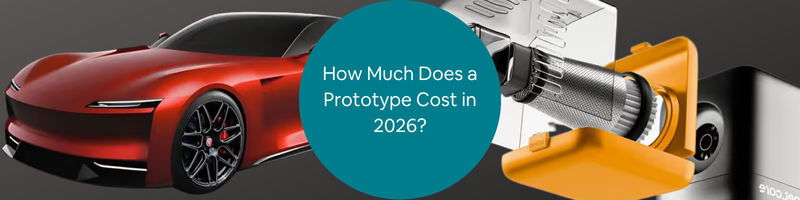
A prototype cost depends on its type, function and resemblance to the actual and final product. It could cost $100 to $100,000. If for a simple 3D printed model that’s used for checking the design and physical attributes, it could cost $20-$200. If it’s for an electronic prototype, with custom circuit boards, it could cost $5,000 to $50,000 or even more. Most products that are generally under highly regulated industries like medical devices or automotive, it is more expensive because it would require specialized materials and extensive testing and documentation. The total cost is not fixed. It is driven by a lot of factors that are sometimes overlooked. To help you in building your team for prototyping, check out Cad Crowd now.
What is a realistic prototype budget in 2026?
Realistically, in one-off projects, the budget can range from $50 up to $10,000. This is a 2026 estimated range but the final cost would really depend on the product’s design, materials and manufacturing requirements. For a basic prototype with a simpler shape and just made of common plastic using 3D printing services – little to no custom tooling is required. This is considered as the most affordable and cost-efficient choice. Simple prototypes are said to cost under $50 and if it’s injection-molded, it can exceed $10,000. When the prototypes has included electronics, it can be more expensive since it would require custom-printed circuit boards, firmware development, wiring and other housing or enclosures. The cost would range from $500 up to $50,000.
How does prototype cost break down by manufacturing method?
Every manufacturing method has an equivalent cost implication. The right option would be to select one that fits not just the project budget but also its production timeline and goals. There are methods that could have a cheaper upfront cost, ideally for simpler prototypes and exploration of ideas. There are also others that would feel like an investment because of its high price but are a lot more practical when thinking about long-term massive volume of production. Through matching the method to project needs and goals, there’s balance among quality, speed and cost.
3D printing (FDM/SLA/SLS)
One of the most popular and affordable methods for creating early prototypes is 3D printing. This is because it does not necessarily require expensive molds or prototype tooling. It only needs a machine to build a part layer by layer directly from a digital design. This makes it a lot more ideal and efficient for testing out concepts and ideas. It’s also used for checking dimensions and evaluating how it overall looks and fits before committing to production. In this method, little to no set-up is needed, and it can also be finished in just hours or within the day. It helps businesses to save more money and time during product development. The cost of 3D printing depends on materials, size of part and the level of detail it needs, ranging from $20 to $200 per part.
CNC machining involves creating parts by cutting away material from a solid block of metal or plastic through computer-controlled machines. It removes the material to produce an accurate and durable part. This is commonly used from prototypes that have to closely resemble the actual final product. It is mostly ideal for functional testing and engineering validation. The cost of CNC machining is a bit higher since it involves operating time, cutting tools, and other skilled programming. It costs $100 to $100 or even more, depending on a part’s complexity, size and required precision.
Urethane casting is considered as a prototyping method that sits between 3D printing and injection molding. It involves a process of creating a flexible silicone mold through a master pattern made through 3D printing or CNC machining. This process is more ideal for creating small batches of high-quality prototypes, without the costly manufacturing of metal molds. This method typically ranges from $200 to $5,000 and may even cost more depending on the complexity, size and the volume of units needed to produce. This is best suited for small quantity batches since the silicone mold wear out after production of several units.
Rapid injection molding with aluminum tooling
For a bigger volume of producing prototype parts, rapid injection molding and casting services are typically and commonly used. This method uses materials that are closely matched to the final product. It uses aluminum tooling instead of expensive steel molds. This helps in doing a faster and more affordable production process. Rapid injection molding is considered an ideal method for testing product performance, fit and function before committing to full-scale production. The molding of this process can be quite costly. A basic aluminum mold would typically cost $2,000 to $10,000. Once the mold was created, the production costs for each part could drop dramatically. It could range from $0.50 to $5.00 per part, depending on the material and design. For larger production, a more durable steel mold is used and would cost around $100,000 and even more for a more complex project.
In sheet metal fabrication, it involves the process of cutting, bending and shaping thin sheets of metal to produce parts such as brackets, enclosures, panels and other structural parts. This process is most commonly used for products that would require strong, lightweight and durable parts. It’s most suited for small production runs for functional prototypes. It also matches the final product look. The costing depends on the type and thickness of the metal, number of bends and other complex features and finishes it could have. The pricing can be comparable to CNC machining because of its set-up and precision fabrication. If the fixtures and tooling are already existing and prepared, the costs per part may drop.
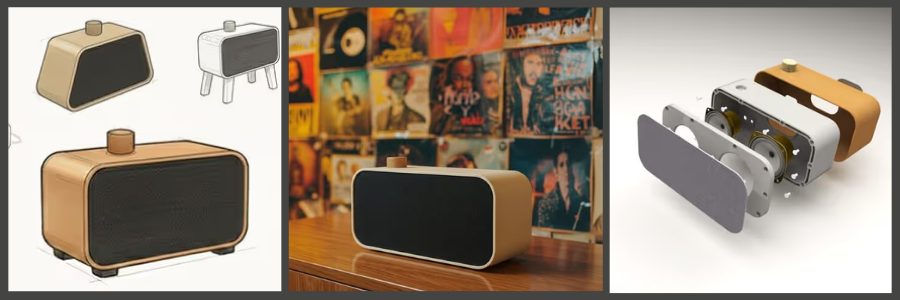
The cost of prototype design services can significantly vary depending on how precise the resemblance is to the final product. During the early stage, low-fidelity models are produced and created to check and evaluate the overall concept, appearance and fit rather than functionality. They are made of simpler materials and 3D prints, and costing depends on materials, tolerance and extensive techniques to finish the project.
One of the earliest and simplest types is Proof-of-concept prototypes. This is used to determine if the design model is technically possible before committing to produce it into a more detailed setting. This does not necessarily look exactly like the final product. It just focuses on testing the core concept, function or key components. This can be produced through 3D printing, basic electronics or just from readily available parts. Since it does not require many materials and engineering techniques, it typically costs $50-$500.
A looks-like prototype focuses on the overall appearance, size and design of the product. It does not necessarily have to test its functionality or performance. This is created to evaluate and check how the final product would look. This helps the team know the possible areas of improvement for its shape, materials, and other visual details. These prototypes are typically used for market pitches, presentation, investor reviews and approvals or getting feedback. The costing ranges from $200-$2,000. This depends on the level of detail needed, materials used and the quality of the finish. For basic models, it would only need simple 3D printing design and finishing.
A works-like prototype is created to test and evaluate the production functionality and system mechanisms. It’s used to verify if it’s able to work as intended. It does not need to match the overall appearance of the product, it just needs the core parts to ensure the functionality of the product. This helps the engineers behind it to identify technical issues and improve its overall performance. The costing of this prototype ranges from $1,000 to $15,000, depending on how extensive the needed technology is to produce it.
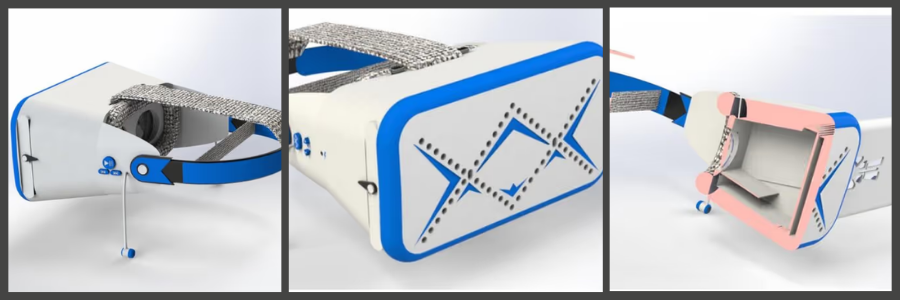
For prototype design engineering services, the design is more of a combination of a product’s functionality, appearance and technical requirements. It’s not just about testing one attribute but an evaluation of it as a whole. It should be built in a way that it almost matches the final product version. This helps engineers and designers to evaluate not just its performance and appearance, but also its assembly methods, materials and manufacturing challenges. It helps in addressing possible risks before full production.This type of prototype may require a more advanced process like CNC machining or other specialized techniques and customization. It could cost more depending on how extensive the processes and documentation are.
Pre-production prototypes
Pre-production prototypes cover final stages before a full-scale manufacturing. It tests units in real-world settings to check its reliability and readiness in production. These kinds of builds are commonly divided into Engineering Validation Test (EVT), Design Validation Test (DVT) and Production Validation Test (PVT). These prototypes were made the same way a final product should be produced. This helps in evaluating realistic issues a unit may encounter once manufactured. Its cost could dramatically increase depending on the required tooling, quality testing and compliance checks. For a complex or regulated product, it may cost $50,000 because of the additional testing and certification requirements.
When does 3D printing stop being cheaper than injection molding?
It is common knowledge how 3D printing is known as an affordable and practical option. In this method, it is simply less expensive because it does not require costly prototype tooling and each part does not have major upfront costs. However, it may not always be the case once the production volume increases. This is because it would require similar material and machine every single time. Injection molding works the opposite way, it has higher initial investment but the additional batches would be cheaper to produce. This is when the injection molding becomes a more cost-efficient option. Choosing the right method depends on the project stage and goals. Knowing it would give a more accurate budget anticipation.
Volume
Ideal option
Reason
Under 50 parts
3D Printing
Zero tooling cost, fastest iteration
50-200 parts
Depends on complexity
Simple parts favor molding earlier
200-1,000 parts
Rapid tooling (aluminum)
Bridges cost gap before full production
1,000+ parts
Injection Molding
Per-part cost drops sharply
Source: Hotean CNC manufacturing cost analysis
Injection molding can actually be more affordable than 3D printing when it has reached a larger volume of production. For instance, a simple snap-fit enclosure using $3,000-$4,000 aluminum mold may reach its breaking point at around 200 units. But a more complex design unit using injection molding amounting to $12,000-$15,000 mold would still not break until 700-800 units. The choice really depends on the stage the model is in to make it cost-effective.
What hidden costs do people forget to budget for?
Most startups would only focus on the provided quotation for manufacturing a prototype. It is often overlooked how this is just a part of the total cost. Transforming a concept to a finished prototype often involves more additional expenses than imagined. Each small fee can cause a significant increase in the overall budget. The common overlooked costs are design revisions, testing and certification, shipment and logistics, and other substantial or custom fees. Being aware and factoring these expenses would provide a more realistic budget anticipation.
CAD work to get a printable or moldable model.
One of the most common overlooked expenses is CAD work. Manufacturers would expect a complete, manufacturing-ready CAD file. If the idea is only on a rough sketch or drawing, or 3D scanning services, it still must be converted into a detailed 3D model so that it can be manufactured. The model is created in detailed information, ensuring correctness in dimensions and tolerances to ensure it can be successfully processed through 3D printing, CNC machining or injection molding. Accounting design work can help in reducing delays and provide a more reliable budget planning.
Design iterations between rounds.
It is rare for a prototype to successfully pass in one round of tests. It is important to account how many iterations there can be before a prototype can pass. It is not bad to fail a few times since iterations are meant to identify and spot possible failure and weak points. It is to ensure that a product can survive in a real-world setting. Accounting iterations costs are significant, especially during later stages of development. Being aware of these costs help in avoiding unexpected fees.
Shipping and logistics can be another overlooked expense. A quotation received may not be able to account for the delivery of the prototypes and rush express shipping may significantly cause higher cost implications. It’s also important to consider possible other incurred costs if ordered internationally, such as customs, import taxes and brokerage fees. These extra costs may add up to 30% of the total project budget and may be hard to take for startups.
Prototype cost by industry
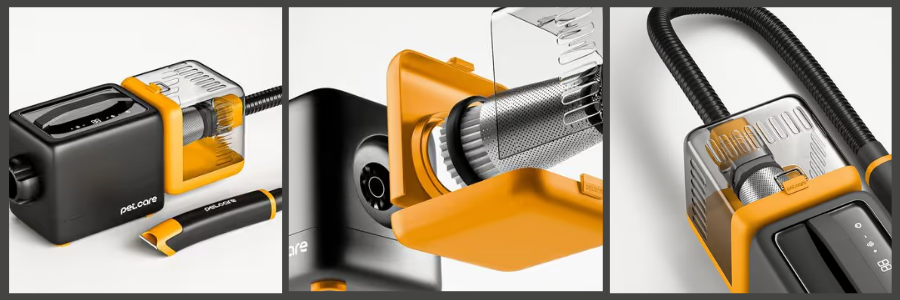
For consumer product design firms, the cost range is typically $500-$10,000 per prototype. This depends on the level of complexity and refinement required. Most companies would choose 3D printing since it’s low cost. The most common and ideal approach for this is focusing more on design improvements before committing to production molds.
Electronics and IoT devices
For electronics and IoT devices, the cost range is typically $5,000-$50,000+ per prototype. This could still change depending on how detailed and customized the PCB, firmware, sensor, and enclosures are. It also needs to account for the testing and certification needed to produce it.
Medical device design services are considered the most expensive since they have to meet strict compliance to safety standards and regulatory requirements. More than the prototype development, it still needs to account for biocompatibility testing, sterilization validation and extensive documentation before regulatory approval. The total development may cost more than $100,000, especially for units that are for clinical and commercial use.
Automotive and industrial equipment
For automotive and industrial equipment, it typically costs around $2,000 for simple models and more than $50,000 for a fully functional assembly. In here, the most common process used is CNC machining since it demands operating conditions to meet performance requirements.
In aerospace engineering and defense prototypes, high-performance materials require compliance with strict quality and safety standards. It would also require tight machining tolerances and complete traceability for every material and manufacturing process. These additional extensive requirements would lead to an expensive cost implications for the budget before full production even begins.
Hire a designer on Cad Crowd before you quote a prototype
For best practices, CAD models have to be developed first before requesting for manufacturing quotes. Browse Cad Crowd and connect with freelance designers who are specialized in product design and prototype-ready CAD.
What is the cheapest way to prototype a new product?
3D printing is easily one of the lowest-cost options since it requires little to no tooling. For a simple concept model, it can just cost as little as $20-$200.
How much does a functional prototype cost?
A functional electronics prototype may just typically cost $5,000-$50,000+. It just depends on the PCB complexity, enclosure, and the number of test units needed to produce.
Why do prototype costs vary between industries?
This is because not all prototypes are the same. They have different functionalities and uses. Some industries, like the healthcare industry, require following a bunch of standard regulations, certifications, compliance testing, and biocompatibility validation in manufacturing costs. That’s why the costs of prototypes are different between industries.
Do I need to submit a finished CAD file before getting a prototype quote?
Generally, yes. Manufacturers would expect that the CAD is ready for their use. Although some people don’t know this information, and still push to create prototypes due to the time constraint and rushed deadlines. This can result in an expensive failure, and failed product.
Should I prototype in-house or outsource it?
Doing an in-house prototype would give more control but it requires equipment and skilled labor. This will incur additional overhead costs. Outsourcing to a freelancer is a more cost-effective option since it avoids the overhead costs.
How Cad Crowd can assist
Prototyping in 2026 can typically range from a few hundred dollars but this depends on a lot of things, method, design complexity, project stage and even industry requirements. It is important to understand the cost drivers to come up with more reliable budget planning. By selecting a prototype that fits your project needs and goals, you are removing risks and improving the overall efficiency of production. If you’re ready to move your idea from sketch to a manufacturing-ready model, browse Cad Crowd and hire a vetted freelance designer or engineer for your next prototype. Contact us for a free quote.
MacKenzie Brown is the founder and CEO of Cad Crowd. With over 18 years of experience in launching and scaling platforms specializing in CAD services, product design, manufacturing, hardware, and software development, MacKenzie is a recognized authority in the engineering industry. Under his leadership, Cad Crowd serves esteemed clients like NASA, JPL, the U.S. Navy, and Fortune 500 companies, empowering innovators with access to high-quality design and engineering talent.
There’s no telling what the role of generative AI in game development will look like in the future, but if there’s anyone who can predict that trajectory with any sense of authority, it’s a team of veterans with more than 100 years of experience leading some of the most beloved franchises of all time.
I’m referring to Square Enix veterans and JRPG architects Yoshinori Kitase, Hiromichi Tanaka, and Koichi Ishii, who were instrumental in the conception and general direction of the Final Fantasy and Mana series. The trio recently sat down with Famitsu (via Automaton) for Mana’s 35th anniversary and to talk about the future of AI in game development. While their insights and predictions aren’t exactly the hottest of takes, it’s always worth paying attention when developers of their caliber are willing to share insights into such a hot button issue.
Essentially, the JRPG veterans believe AI is and will continue to make it easier to make games, but they’re cautioning against the idea of AI-generated concepts for games, which they say humans will always be essential in creating. “Humans need to be involved in the initial step of turning zero into one. That will never change,” Kitase says. “The next generation of creators absolutely needs the ability to turn zero into one.”
Latest Videos FromGamesRadar+
Agreeing with Kitase, Tanaka says the games industry will keep trending toward a “competition of ideas” in which humans come up with the initial concept while AI helps streamline development processes.
The prevalence of AI in game development is one of the major factors fueling an ongoing layoff crisis in the industry as companies replace human workers with AI particularly for non-creative tasks like routine coding, QA, and debugging. Adding on to his previous statement, Kitase says relegating menial tasks to machines will help humans focus on the soul of the game.
“During the process of turning one into a hundred, if we can improve efficiency by supplementing traditional human work with support from AI and game engines, I think people will be able to focus more on that initial stage of turning zero into one,” he says.
Echoing his peers, Ishii is optimistic about AI’s potential for prototyping and testing, but agreed that there will always be a demand for human-centric design. “If AI does everything on its own, the result might be polished, but it could end up feeling like it’s missing human warmth,” he says.
Weekly digests, tales from the communities you love, and more
A Variety report says that Walter Koenig, known to the world as Star Trek’s Russian hothead Pavel Chekhov, has died.
Koenig’s big break in show biz came in 1967, when he was cast as Chekhov in the second season of the original Star Trek series. He portrayed the character until the show’s cancellation, and then through seven feature films; he had a particularly memorable scene in Star Trek 2: The Wrath of Khan, when a Ceti eel burrowed its way into his brain.
Even now, it’s pretty gnarly.
Latest Videos FromPC Gamer
Ear Bug Scene – Star Trek 2 Wrath of Khan – YouTube
The downside of that early-career fame is that Koenig was typecast, and acting roles following the end of the Star Trek series were sparse. He turned to screenwriting through the 1970s; ironically, while the character of Chekhov was not included in the Star Trek animated series that ran for two seasons after the live-action show was cancelled, he wrote the script for an animated series episode called The Infinite Vulcan, making him the first member of the cast to write an episode for the Star Trek franchise.
But Koenig also played very much against type in at least one memorable role: Alfred Bester, a powerful Psi Corps officer in Babylon 5. Where Chekhov was brash, good-hearted, and a little naive, Bester was a charismatic, stone-cold villain with a talent for manipulation and complete indifference to human life. He was the sort of character who was born to chew scenery, but Koenig took a more understated approach that imbued Bester with real menace. It was a good bit of casting.
Koenig also had a handful of videogame credits to his name, all but one for Star Trek games—the exception being something called Stretch Armstrong: The Breakout, an “interactive movie” created for Netflix in 2018.
My heart is heavy. Walter Koenig, our Ensign Pavel Chekov, passed away early today.
Walter and I met on the bridge of the Enterprise in the 1960s, and we stayed friends for nearly six decades. When Brad and I married in 2008, Walter stood beside us as our best man.
“My heart is heavy. Walter Koenig, our Ensign Pavel Chekov, passed away early today,” George Takei, who played Koenig’s helm partner Hikaru Sulu, wrote on Bluesky. “Walter and I met on the bridge of the Enterprise in the 1960s, and we stayed friends for nearly six decades. When Brad and I married in 2008, Walter stood beside us as our best man.
Keep up to date with the most important stories and the best deals, as picked by the PC Gamer team.
“Just last month, on Sept. 14, he turned 90, on the same day Brad and I celebrated our 18th wedding anniversary. I will always treasure that he and I shared that date. Walter was more than Chekov. He was a writer, a teacher, a thoughtful man, and a loyal friend. To the fans who loved him for so many years, thank you. He loved you too. Rest well, my dear friend. Keep navigating a steady course.”
Variety says Koenig died of natural causes. He was 90.





 Note: MacRumors is an affiliate partner with Best Buy. When you click a link and make a purchase, we may receive a small payment, which helps us keep the site running.