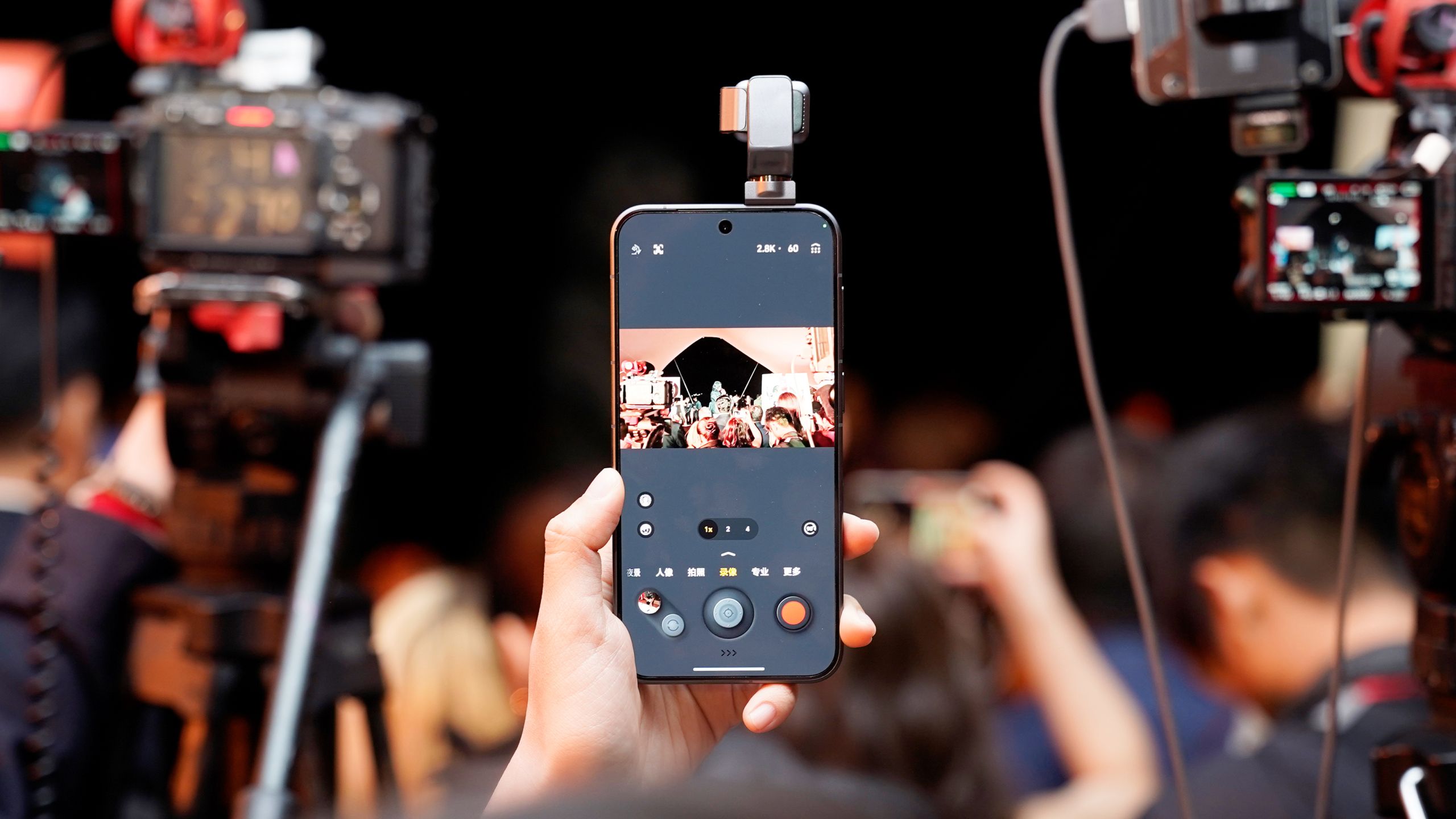
At MWC, Honor officially showcased the Robot Phone after first teasing it late last year as a concept. Back in Barcelona, the company only confirmed that the phone would launch in the second half of 2026, but it has now narrowed things down further, officially confirming a Q3 2026 launch window.
Honor has been heavily hyping up the Robot Phone ever since its first teaser. We also got to see it in person at MWC, and for those who don’t remember, the Robot Phone features a gimbal-style camera system on the back that can automatically track your movement. It’s almost like having a DJI Osmo Pocket built directly into a smartphone.
Latest Videos From
(Image credit: Sanuj Bhatia / Android Central)
In fact, Honor even took the Robot Phone to the Cannes Film Festival’s China Night event to showcase it again. During the event, the company also announced a partnership with ARRI, the German camera maker known for high-end cinema and motion picture equipment. That partnership could mean the Robot Phone ends up bringing some genuinely serious video capabilities.
It’s honestly good to finally see Honor confirming the launch timeline. And with a Q3 launch, the Robot Phone will go directly up against several major devices expected around the same time, including the Pixel 11 series and even Apple’s first foldable iPhone.
We still had a lot of questions around durability and long-term reliability when we first saw the device at MWC, but thankfully, it looks like we won’t have to wait much longer to properly test all of that.
What we still don’t know, though, is which markets the Honor Robot Phone will actually launch in. Considering Honor’s track record, we expect the device to debut in China first and then potentially make its way to global markets later on, if at all.
Get the latest news from Android Central, your trusted companion in the world of Android
Android Central’s Take
The Robot Phone was easily one of the wildest things I saw at MWC this year, and honestly, I’m glad Honor has finally given us a launch window. The ARRI partnership just makes this even more interesting.
Asus ROG’s Xreal R1, the world’s first pair of AR smart glasses capable of projecting a virtual screen before your eyes with a blistering 240Hz rate, finally has… a price and preorder dates.
Ahead of Google I/O 2026, Asus ROG has announced the Xreal R1 costs $849—$200 more than the $650 MSRP for the Xreal One Pro, which top out at a 120Hz refresh rate. The gaming-focused AR smart glasses can be ordered from Best Buy starting today, May 15. The Xreal store will accept preorders on May 17 at 3 a.m. ET / 12 a.m. PT.
Spec for spec, the Xreal R1 and the Xreal One Pro are the same, except for that refresh rate and the slightly more gamer-y design. You get the same 171-inch (1,920 x 1,080) virtual display through the micro OLED panel, 57-degree field of view, Bose-tuned sound, 3DoF (three degrees of freedom) tracking technology used for anchoring virtual windows, and more. Asus ROG is hoping the 240Hz refresh rate will be worth the additional cost.
The only other difference is that the Xreal R1 comes with an “ROG Control Dock.” This docking station lets you switch between three connected devices (two via HDMI 2.0 and one through DisplayPort 1.4). So for example, with the push of a button, you could flip between a PS5, Switch 2, and a PC. Asus ROG touts the Xreal R1 as requiring no additional software to get up and running. Just plug the AR smart glasses into the Control Dock, select an input, and get gaming on your 171-inch virtual screen. You can also connect the Xreal R1 to any phone, tablet, laptop, or handheld that supports display out. For the Switch 2, you will need to use the Control Dock, as the Xreal Neo adapter/video was canceled before it could launch.
Will a 240Hz refresh rate in video smart glasses make any meaningful difference when you’re gaming? Who knows, but we’re hoping to find out soon when we get a pair to try out.
The silent revolution of virtual product visualisation, from clever design assist tool to serious industry indicator, has been ongoing. Whether you have yet been swept off your feet by some gorgeously real 3D vision, you felt an intense passion for your product, or experienced some confidence when it ceased from being a set of worthy prototypes on your computer screen, then it is time to discover the beauty of virtual visualisation. It is a rough sketch-to-grandstand show-piece, a spin-to-realistic simulation tool, a fuzzy thought-to-phototastic facade finisher that can even make you feel what is missing: touch.
This is a sector that deals with the 3D rendering services of companies, something colorful, creative, messy, and exciting. This is a small community of artists and engineers dealing with polygons, lighting, shaders, and materials, with enough coffee that one small library full of coffee should, in fact, be a case study for some sort of medical research on the energizing properties of coffee. And finally, though the effect is serious in tone, that effect has been arrived at in such a way that a certain effect has been produced, a certain look has been arrived at in order to make that look, that effect, look as such.
This crossroads of cyber wizardry, craftsmanship, and nose-to-the-grindstone work ethic is, of course, the ideal crossing of dream meets design, hands are shaken, smile is shared, etcetera, that is the industry that has to do with the virtual visualisation of products. Platforms like Crowd are literally filled with talented 3D visualisation freelancers who not only have what it takes to produce such masterpieces, but can do so at prices that are significantly within most budgets.
Virtual product visualisation: the need of the hour
If one considers what a list of the superpowers this virtual visualisation software might have, then a list with speed, clarity, convincingness, and savings will be the most definite. Not that many software systems have such a grand background as this software does. It is the service that the designers need, the one that removes resistance from the process of design. This is a service that businesses require as it saves them a pretty penny. This is the service that consumers need because it can show them what they are going to buy even before they reach for their wallet.
The high level of relevance associated with high-level influencers is connected to the revised buying expectation due to the created environment. Consumers would not want to be left speculating about what it might look like. Consumers want to Zoom In on it. Consumers want to Turn It Around. Consumers want to know what it feels like to see it, Turn It Around in one’s brain, maybe even touch it in one’s own environment. It has also reduced the risks that exist with development. The kinds of problems that existed before were a nightmare for prototype design companies and for product development on an industrial scale.
The problems identified in the computer simulation can be easily corrected in a few minutes. Materials, colors, assembly, and mechanisms can now be developed on a computer without the use of prototypes. They are also aware of the importance that the business attaches to the cost of the reusability of the virtual imagery: the imagery here includes pictures that are intended for presentation purposes, advertisement, investment presentations, instruction guides, and websites, to name a few. This is used on application software that has AR capabilities and, in return, gives some form of return on investment, which increases with age.
Product rendering services remains a very human yet highly technical process that requires a user who has made all the decisions regarding positioning the lights, how the surface will be reflected, and the style that will carry the message of that product’s temperament. High-tech software is one of the many useful tools and does not replace the creative vision of the artist. This would concern itself with the way a real matter behaves when it exists within a natural setting.
They must come to realize how a particular type of plastic differs from a particular type of ceramic, for example, regarding reflectivity or how brushed aluminum changes when diffused lighting is accounted for. It means the researcher has to do some research on the product until one is able to appreciate its structure, purpose, style, and characterization of the said product. An image is the voice of a story-the result of the human vision, not the algorithm from a computer.
This is perhaps the reason why most businesses are now on the lookout for professional product concept design freelancers. Most professional artists are known to have a certain detail, which is necessary because there is a certain touch required to take the image further than is required in a common composition. With the help of websites like Cad Crowd, it’s easy to bring all such freelancers together, and it is easy for businesses to reach professional artists who understand the entire concept of image rendering. The whole setting makes it easy to locate a visual artist because they are solely dedicated to creating images that can make a particular product look attractive.
The advantage of making visualisation a superpower for designers
The list of potential benefits which might be gained from product visualisation and photorealistic rendering services in a virtual realm is so rich that a couple of chapters might have been devoted to it, but here is the Cliff’s Notes version. Number one, the potential use of product visualisation is that a product might be contemplated from a perspective far, far back, because development may take a far-and-wide path. Then, of course, there is what is called consistency, because this cyber world is completely controllable. The lighting is consistent. The angles of the cameras are reproducible.
The colors are consistent. The best that the best photographers can do is inside the studio, but once it is a matter of the natural environment, the sun may not be willing to play along, the prop men may fall, or the shadow may appear. The explanation can also be made simpler, even to the non-engineer investor, with the use of virtual visualisation. This is because he does not have to listen to the opinion of the engineers. Now, he can show his own beautiful 3D view, which clearly shows what the product will look like. It is worth complimenting the presence of the clients, because clients are human beings who need clarity.
It is worth complimenting the presence of team members, who make things simpler with less ambiguity. Everybody is going to be thrilled that the discussions whether a certain curve has to be three degrees more acute are a thing of the past, whether a product has to be red are a thing of the past. Actually, this is a very strong aspect, a real-life scenario which I believe has been highly underrated. The product can be installed within a kitchen, office, studio, bedroom, or room environment, as well as within a real-life environment.
This, in my mind, is a great benefit to the consumer, who now gets an opportunity to visualize his own product within his surroundings, thanks to 3D visualisation designers. More importantly, he gets a chance to ensure that his product is perfectly harmonized with the surroundings it’s supposed to keep, which is basically what his product is known for. 3D rendering service providers can also prepare an animation story for any product, keeping in mind light effects, color contrasts, and presentation style.
This is the reason why, while models in the past served only as a way to allow a potential user to get an idea of what the product might look and feel like, modern models can already “communicate a sense of feelings linked with luxury, excitement, reliability, simplicity, and innovation.” Indeed, people are hardwired to respond very viscerally to emotionally charged imagery, so “the business knows how much more impactful visual storytelling is when a new idea is introduced into the environment.”
Where collaboration tools really deliver
However, with the progress made in product visualisations in the computer age, collaboration software has reduced potential miscommunication within groups. The cloud software has actually come a long way with such advanced features that make it easy to share models in real time with 3D artists, engineers, managers, and clients. Now that virtual reality is more user-friendly, design houses have also begun collaborative reviews in the realm of VR. A reviewer can just stroll around his or her own creation, take a look at details, and find out what’s going wrong with his or her own creation, as one does when collaborating on a common shared workspace.
Of course, this is not exactly a home workshop with a hint of saw-cut wood in the air, but boy, it’s full of detail. This, therefore, is a blessing in disguise, even for product design freelancers. This is because of the latest developments within the scope of project management: a freelancer recruited from the Cad Crowd website is easily part of the design process at a particular company. The gap has been closed while talent has multiplied. A complete environment has been made, which itself is a part of the whole globe.
Computerized product visualisation to build brand identity
It is not a logo, but it is a voice, personality, style, and promise. In regard to presentation, it is infinitely significant how a consumer is going to interpret that identity. Product visualisation has also been a way of speaking aloud. Colors, lighting, moods, and compositions form part of brand signatures. This is because such visual stimuli, through consistency, are what give a brand an emotional association. It is the clients who are given the chance to associate certain visual stimuli with the brand itself.
For instance, in a high brand situation, the effects of lighting style may even go to dark shadow with a reflection of silk, while in a fun brand’s situation, colorful, soft, and warm would be applied. For a technology-focused brand, the 3D rendering expert would use a clean background of geometric shapes, and this is communicated through visualisations before the marketing message is read. This would make it a visual element that has to ensure continuity in the transition of ads, packages, and even interactions within their respective platforms. It is an element that would require development in terms of creating cohesion in the user experience.
Challenges along the digital trail
Inevitable, of course, in even the most fanciful technologies lurk a couple of Gremlins within. Even as product visualisation seems to be waving the magic wand, the following two challenges that keep graphic designers wide awake are literally overlooked by the former:
This is to do with one of the more fundamental challenges: that of the software learning curve. The software that is used in 3D rendering is also changing every year, with a different set of skills, a different set of controls, and the latest software used to make even the smallest change in a different way altogether. This particular set of skills, which a particular product rendering artist has, respecting caustic, subsurface scattering, reflections, and detail, takes a rather long time to acquire. Even a beginner would, within an infinitesimally small amount of time, realize that what used to take a click of the filter button now takes a whole lot more.
The old nemesis is speed, which has not yet been tamed as far as rendering is concerned. It is a hungry process, especially when rendering high-resolution images, to say nothing of rendering as a final product itself. The rendering farms of such animation houses may have to be huge, but on the other side of the track, large scenes with great detail, as well as high-order lights, take hours to render. In most cases, the artist renders, sleeps, and wakes up to find the computer still computing the bounce of the light, as if contemplating the biggest questions of life.
It is a really tricky element because it might not be necessarily impressive might need precision. Precision is about materials, sizes, tolerances, and colors that must meet the product specification exactly. The design might be awesome, but it might not be precise, which indicates there will be a problem with the design when it is actually produced. This could also be a tricky situation for the communications between teams, such as engineers speaking from a technical specifications perspective, artists from a visual metaphors perspective, marketing teams from an emotional impressions perspective, and so on.
This is why freelancers can sometimes be pretty useful to businesses, as they might have knowledge that helps fill the language gap. It is, of course, a situation wherein the consumer might even become a problem when he reaches the conclusion that the copy is even more pleasing to the eye than the product itself. It is a fact that computer-generated lighting is never “unflattering,” computer-generated blemishes are never spotted at the worst possible moments, and so on. It is a line that has to be walked with extreme care at a point when it is a matter of rendering.
The future of product visualisation is a bright, exciting, unpredictable fireworks display, with technicians who have a bloodstream that has more caffeine than blood cells. The computer is becoming smarter, with rendering times becoming faster. New technologies are bursting on the scene with claims that they have revolutionized the industry before lunch. Then, of course, one success story arrives, making it a success within the design, marketing, and publicity communities. The effects of such changes are already evident in how the workflow for artificial intelligence used for 3D effects operates.
It is a tool that helps the product development artist develop a concept, change a material, or even determine how a lighting rig might look, even though no light ray has been calculated. Artificial intelligence doesn’t eliminate reliance on instinct, but essentially provides a full process from creation to completion, one that has been made even smoother by artificial intelligence. What the artists now have is more creative hours but fewer hours spent wrestling with all these pesky, gritty tasks, artfully disguised as digital tasks. The other exciting area is real-time rendering engines. Real-time rendering allows designers to analyze even the most complex scenes in real time, without having to perform many calculations.
That is similar to changing the materials on a chair and receiving a visual appearance that includes all the reflections, shadows, and environment. Real-time rendering has now empowered designers to produce quick concepts that can be refined. Augmented reality is now becoming such a sidekick that it is extremely useful in demonstrating the product virtually. Customers can now manipulate a virtual object in a real-world environment using smartphones or AR glasses. It is a very useful service because, in effect, customers are now able to manipulate the product virtually while at home.
This provides a massive advantage to the corporation that uses AR because, by definition, it fills the existing gap from new product design services to real-world surroundings, putting a seal of advantage over huge corporations. The area that has most to do with virtual reality, on the other hand, is rising. This is because this sector uses a certain realism in the process of visualisation that cannot be imitated on the screen. It is literally possible to see the product from the human perspective, going around it, taking a look from the side when standing on the floor, and estimating how that scaling is going to work in a complete environment.
It is a different feeling when taking a look at a product design in a 3D environment on a flat screen-one is suddenly standing alongside it, feeling as though he or she could reach out and touch it inside of a virtual environment. In order to keep up with such developing technologies, the most sensible thing that the brightest 3D rendering firms can do is take immediate action. The reason is that this is the age of digitization, encouraging learning in a progressive way. This is why the brightest photorealistic 3D rendering firms can leverage technological knowledge combined with creativity.
Avail online product visualisation solutions now
There is no doubt that the visualisation of the virtual product is the most adaptable force in product design, marketing, and experiences. The list of factors is endless, while difficulties are overpowered easily, with a horizon full of bright technologies. Real-time rendering, Augmented Reality, simulation software, anything is out of bounds, it would seem, as if with infinite enthusiasm awaiting.
Every day, freelancers and firms specializing in 3D rendering come together to join hands and push past boundaries to create amazing visualisations, statements, and striking images. This can be a great time to unleash the potential of “Virtual Visualisation” if it is going to speak with clarity, accuracy, and distinctness about your thoughts.
If you are looking forward to working with some professional freelancers who can make his dreams come true, believe me, Cad Crowd is a great place to look for painters of this art. In fact, this is a great page that recommends different talented services on “Virtual Product Visualisation” and a number of talented artists who can make your dream come true, visualizing your thoughts with a great story to tell. Contact us for a free quote.
MacKenzie Brown is the founder and CEO of Cad Crowd. With over 18 years of experience in launching and scaling platforms specializing in CAD services, product design, manufacturing, hardware, and software development, MacKenzie is a recognized authority in the engineering industry. Under his leadership, Cad Crowd serves esteemed clients like NASA, JPL, the U.S. Navy, and Fortune 500 companies, empowering innovators with access to high-quality design and engineering talent.
Back in December of last year, despite being the head of the studio, James Ohlen left Archetype Entertainment, also leaving his role as producer on Exodus behind. It was a bit of a surprise, given that he co-founded the studio after having retired from BioWare in 2018. Now, in a recent interview, Ohlen explains why he made the call, coming down to potentially the most unifying experience in game dev: burnout.
“I was running on fumes, and it was hurting my health, and my personal life, and everything. I just needed to step away,” Ohlen explained to PC Gamer. “As a creative you care about everything so much, and then as the head of the studio, you have to be cutting the baby in half all the time, and having people attack your vision constantly. I definitely wouldn’t put myself in that situation again; that’s not a healthy place to be.”
Archetype Entertainment were actually founded way back in 2019, and are still yet to actually release a game. When getting it all started, having to set up yet another studio that will make a big, AAA game with staff from similar backgrounds, Ohlen questioned his decision to do so, saying, “Maybe I fooled myself. I fooled myself that I wouldn’t be dying inside. But yeah, it was just too much.”
It doesn’t sound like it was an easy time either, as he explains, “You’re trying to manage all sorts of different personalities, and people, and groups, and organisations, and then there’s the pressure cooker of being on a big budget title.” Plus there’s the fact that Exodus features the writings of Peter Hamilton, a consultant on the game, with contract negotiations for getting him involved sounding quite tough too’ “That nearly killed me,” Ohlen said, saying that it ended up with “three different groups all trying to negotiate a contract, and [only] one of them seemed to want to get it to the finish line. I was taking calls at like, 11:00 pm.”
Now, Ohlen is focusing on three RPG adventure books as part of Arcanum Worlds, a company he set up with Jesse Sky, also a BioWare alum and Archetype Entertainment co-founder who is now serving as the creative director on Exodus. Perhaps there’s a lesson in all of this in AAA games being just a little bit too big, ‘ey? Food for thought! The full interview is worth a read, as it also goes into the trials and tribulations Ohlen went through developer Star Wars: The Old Republic.
If you lead a development team, you already know the pattern. You approve the travel, your developers attend a great conference, they come back energized, and then the work resumes exactly as it was. The ideas don’t survive contact with the backlog.
We’re adding the VSLive! Microsoft AI Hackathon 2026, a focused, hands-on build event that runs alongside the conference. Your developers learn during the day, then build at night, on the Microsoft campus, with Microsoft engineers and MVPs in the room. They leave with working code, not just notes.
Why this matters for dev leads
Most of your team is being asked to ship AI features into production right now. Most of them have not had uninterrupted time to actually build with Microsoft Foundry, Azure OpenAI, GitHub Copilot, or agent-based patterns under realistic constraints. Sprint work doesn’t allow it. Brown-bag sessions don’t go deep enough. Internal POCs get deprioritized.
This is structured time, with expert mentors, focused on the exact stack your team already runs on.
If you send two or three developers together, you get a small working group that returns with shared context, a real artifact, and the start of a pattern your team can extend. That’s a much better outcome than three separate sets of session notes.
Learn during the day. Build at night.
VSLive! @ Microsoft HQ runs on the Microsoft campus, which means your team is spending the week alongside the engineers, product managers, and MVPs who build and ship these tools.
Days cover Visual Studio, C#, .NET, Azure, Microsoft Foundry, Azure OpenAI, GitHub Copilot, agent-based development, and modern application patterns.
Evenings shift to the VSLive! Microsoft AI Hackathon, where the focus is building. Your developers take what they saw in sessions and apply it the same day, while it’s still fresh, with mentors on hand to unblock them.
They’ll work through the decisions that matter in production: architecture, security, user experience, and whether a pattern is actually viable for the kind of software your team supports.
The judging criteria reflect real engineering
Projects are evaluated on:
Architecture and design
Security and safety
Relevance to real business problems
User experience and execution
Practical use of Microsoft AI technologies
This is the right bar. AI is moving fast, but enterprise teams still have to ship software that is secure, maintainable, and defensible in a code review. The criteria reward the kind of thinking you want your developers practicing.
What your team can build
The goal is something a developer can demo, explain, defend, and improve. Not the flashiest demo, the most useful one.
That could be a C# application, a .NET service, an internal developer tool, an agent-based workflow, a line-of-business app, or a creative project applying AI to content or interactive scenarios.
Participants declare a primary category, with the option to add a secondary:
Microsoft .NET Powered Business Applications
Best AI Agent or Workflow Automation
Best Azure OpenAI / LLM-Powered App
Best GitHub Copilot Integration
Creative Applications
Participants retain full ownership and rights to their project IP. What your team builds belongs to them, and to you.
Who this fits
This is a fit for C# and .NET developers building business apps, web apps, desktop apps, cloud services, backend systems, and internal tools. It’s also a fit for developers exploring how AI fits inside the software they already build, whether that’s adding intelligence to an existing application, building an agent workflow, or improving a developer tool.
It’s approachable for developers new to hackathons and substantive enough for senior developers, architects, and dev leads who want practical patterns to bring back.
Your team can compete solo or as a team of up to four. Developers attending alone can form teams onsite.
Event details
Location:
Microsoft Commons Mixer, Building 98
Microsoft Headquarters, Redmond, WA
Schedule:
Tuesday, July 28, 2026, 6:00 PM to 10:00 PM
Kickoff, team formation, idea pitches, planning, first coding sprint.
Wednesday, July 29, 2026, 5:00 PM to 9:00 PM
Build time, mentor check-ins, final submissions, demo video submissions.
Thursday, July 30, 2026, 11:00 AM to 11:30 AM
Awards and select demos before the Thursday keynote.
Confirmed judges and proctors include Brian Randell, Phil Japikse, Eric Boyd, Allen Conway, and Microsoft representatives.
Prizes
Awards total up to $25,000, with a $6,000 Hackathon Grand Champion prize and additional team, solo, and category awards. Each project or team may win one monetary prize. Additional sponsored awards may be announced closer to the event.
A few logistics worth knowing
This is in-person only. There is no virtual option. Participation is capped, and once it’s full, it’s full.
If your developers are attending VSLive! @ Microsoft HQ, they can add hackathon participation during registration. There’s also a hackathon-only option for community attendees who aren’t doing the full conference.
If you’re local to Redmond, come spend an evening with us
If you’re in the Puget Sound area and the full conference isn’t in the cards, the hackathon-only pass exists for exactly this reason.
You don’t need a travel budget. You don’t need a hotel. You need an evening or two, a laptop, and an interest in building something real with the people who build the tools.
Being on the Microsoft campus after hours, working through a build with engineers, MVPs, and other developers in the room, is a different kind of experience than reading docs at your desk. The conversations are better. The unblocks are faster. The work sticks.
If you’ve been meaning to get more hands-on with Microsoft Foundry, GitHub Copilot, or agent-based development, this is a low-friction way to do it. Grab the hackathon-only pass, show up Tuesday night, and see where the build takes you.
The case for sending more than one
The single best decision a dev lead can make about this event is to send people in pairs or small groups. Two developers from the same team, in the same sessions, building together at night, will return with a shared frame of reference and the start of something your org can actually use. One developer returning alone has to re-explain everything to skeptical teammates, and most of what they learned will quietly evaporate.
If you’ve been waiting for the right reason to get a few of your developers to Redmond, this is it. They’ll learn from the people building the tools, build alongside the community, and come back with working code your team can keep improving.
And…. if you have an active Visual Studio Pro or Enterprise Subscription, don’t forget to login to my.visualstudio.com for your exclusive conference discount code.
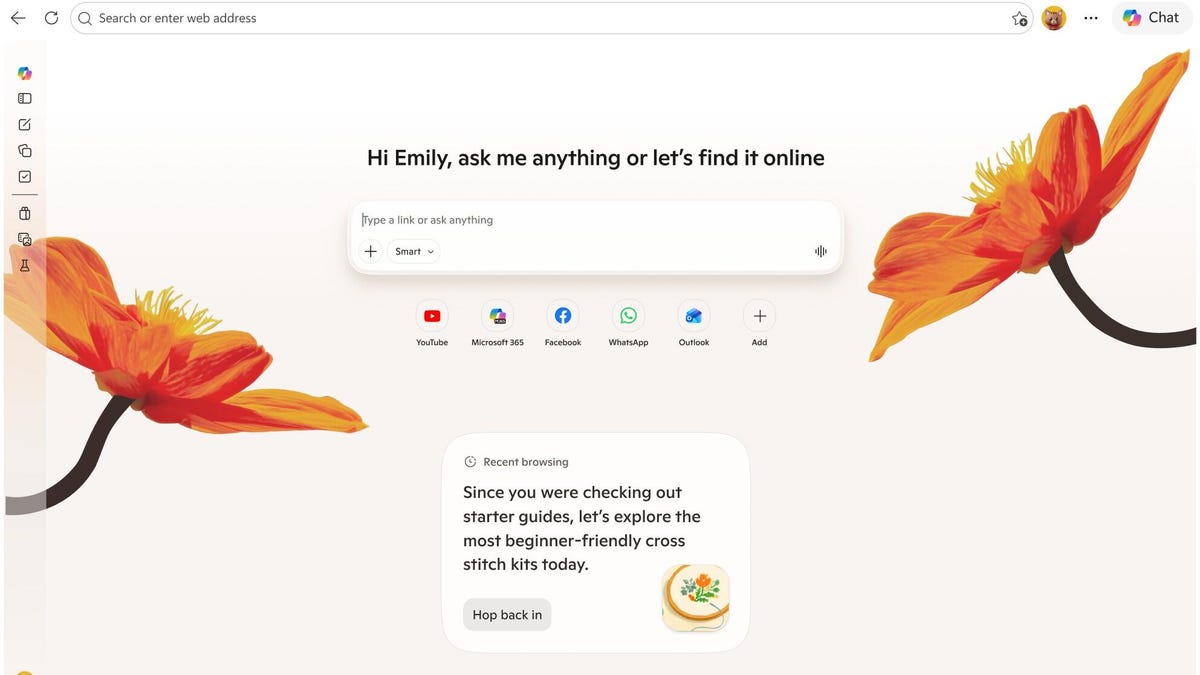
In a Wednesday blog post, Microsoft said it’s continuing to expand the ways that Copilot, the AI technology in which Microsoft has invested billions, works with its web browser. The company was already doing this for the desktop browser, and those capabilities now extend to the mobile version of Edge as well.
Copilot is using your browsing history to provide contextual suggestions, tips and guidance. On its Copilot in Edge page, Microsoft says it can scan your open tabs to compare options, highlight key details and deliver clear answers without requiring you to switch between tools.
In screenshots and videos posted on Microsoft’s blog, examples include chat dialogue boxes that pop up with reminders of past shopping activity and even the option to turn all the activity in your browser tabs into an audio podcast.
Microsoft says that Edge Copilot accesses user data only upon activation and that it “only collects what’s needed to improve your experience — or what you choose to provide via Personalization settings.” Yet skepticism persists about its privacy practices. While opting out of AI features is an option, some users remain distrustful of the company’s data-handling policies.
Microsoft specifically warns on its support page: “When getting started with agentic browsing, be careful to avoid using sensitive or personal information,” including financial or banking activity, Social Security identification or medical records.
What’s changing in web browsing with Copilot
These changes center on Copilot recording and building on interactions, acting as a constant, active presence during web-browsing activity, versus a pop-up you open on demand, like the company’s much-mocked old mascot Clippy.
As Microsoft puts it, “Copilot remembers what you’ve worked on, so you don’t start over. The more you use it, the more helpful and personalized it becomes.”
Apart from interactions that occur without prompting, people using Edge can access Copilot as a chatbot via a button at the top-right of the browser window. Microsoft is retiring Copilot Mode, which could perform actions in-browser. Copilot Mode was also accessible with a Copilot button, but now it’s called Browse With Copilot.
Browse With Copilot could also create quizzes and study guides from the material you’re viewing and organize your recent browsing into categories to explore. There’s also a new landing page for the tab that more clearly integrates Copilot chat.
Is this what people want? Copilot so far has not been met with the kind of enthusiasm that greets, say, new versions of ChatGPT or Anthropic’s AI models. And as online privacy and data collection practices are paramount concerns in the era of AI, it’s unclear how popular it will be to opt into another tool that has access to browsing data.
On the other hand, people who are already using Microsoft Edge may be more likely to be peacefully coexisting with Copilot by this point and to find useful features in the AI service.
A brutal bodycam revenge FPS set in Hong Kong. Slide into bullet time, fight up close, take down your kidnappers, and record every second of your revenge.
A brutal FPS. One girl. One gun. One recording. They broke into her life. They filmed her. They destroyed her. Now she’s back – and she’s filming them. Black Jacket
Better Than Dead is a brutal first-person shooter set in the depths of photorealistic Hong Kong. You play as a survivor who’s done running. She’s got a pistol, a bodycam, and a kill list.
Every level is a raid. Every fight is personal. Saving the other girls isn’t enough – you have to find the ones who broke you and show the world as you take them down.
Ticket to Ride: Poland Expansion is available on May 13 for Xbox Series X|S and Xbox One.
We go behind the scenes of Ticket to Ride’s ten expansions.
Exclusive to Xbox Wire readers, Marmalade Game Studio confirms a fan-favourite map is in the works.
Three years, ten expansions – and the Ticket to Ride train isn’t slowing down!
But we’re getting ahead of ourselves. Before we start gazing upon the horizon, we have our next stop to consider: Ticket to Ride’s tenth expansion, Poland. This marks the fifth digital debut for the game, following the well-received Heart of Africa, Japan, San Francisco, and Passenger-including Germany expansions!
Available on Xbox from May 13, the Ticket to Ride: Poland Expansion brings a new gameplay mechanic for you to master. It also includes two more locomotives, two additional carriages, and two original characters to play as.
From cards to coins
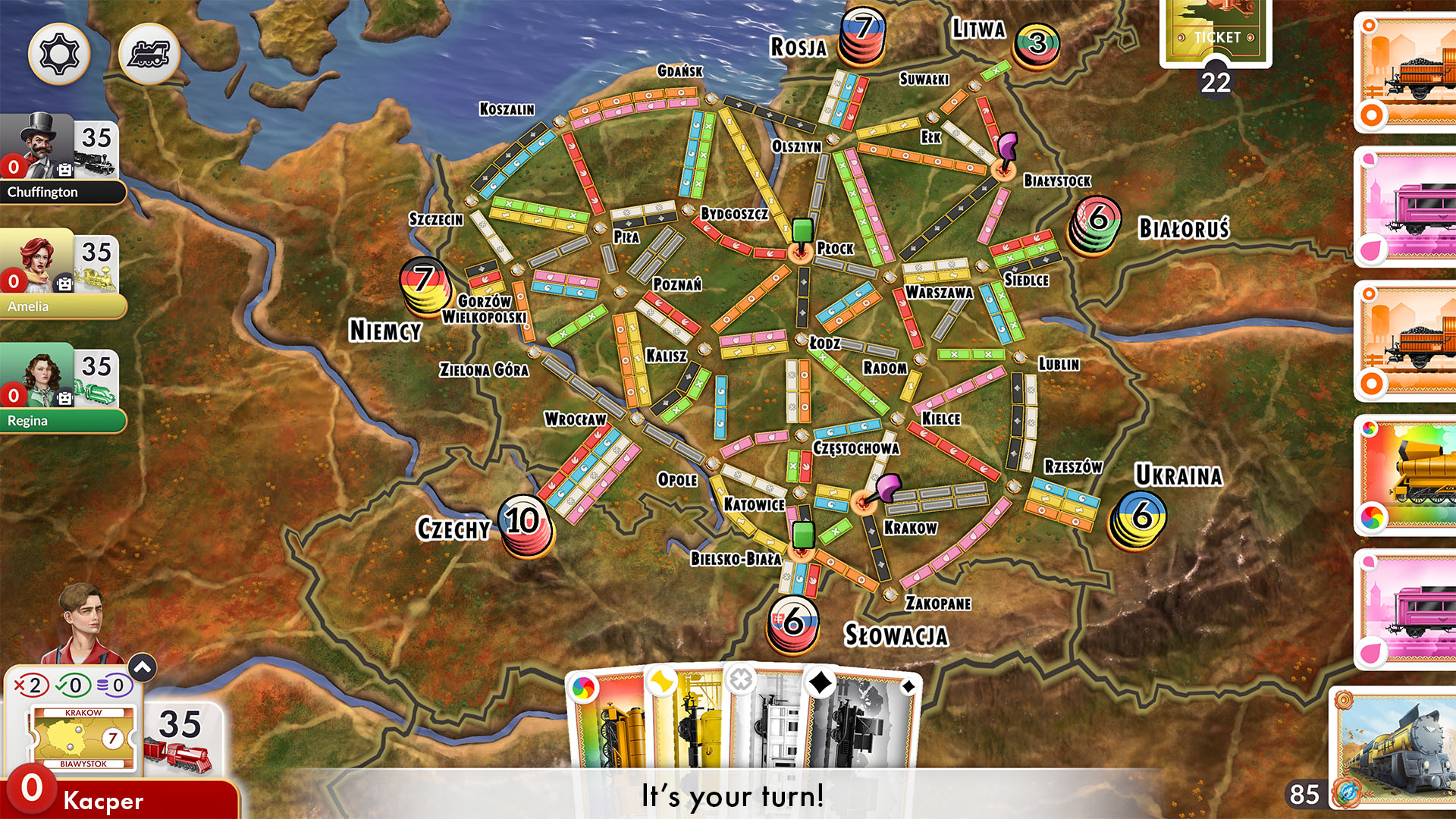
In the physical version of Ticket to Ride: Poland, you earn additional points by connecting neighbouring countries and picking up Country Cards. For the digital version, we’ve streamlined this mechanic by using Country Coins instead!
The game will take care of everything, setting up the Country Coins at the start of the match. Each country node gets a small pile of coins with different values shown on the top. When you connect one country to another, you get a coin from each node you built between – assuming there are any left in the pile, of course!
Then, at the end of the game, your Country Coins are added to your score. The trick is whether to focus on building out your railway network and completing tickets, or whether you rush to gather up as many Country Coins as you can before they all get swiped up by the other players!
Dance across Poland’s railway tracks and pick up those valuable Country Coins while riding the Polonaise train, or set off in the iconic Copernicus. Add the comfy Kujawiak carriage, or trust your cargo to the Orbiting Greatness carriage. You can also play as talented makeup artist Regina Kamińska or energetic drummer and student Kacper Pawlak.
Designed by history
As with all our Ticket to Ride expansions, history heavily influenced the design of the Ticket to Ride: Poland Expansion.
Filipa Semedo, Concept and 2D Artist at Marmalade Game Studio, explained: “I spent a lot of time researching 1950s Poland. The Polish government, highly influenced by the Soviet Union at the time, advised people to act and dress modestly. But American influence directly contradicted that. Since many Polish people had family in the US who sent them clothes, designs such as the American ‘A’ silhouette dress grew in popularity in Poland.
“Alongside fashion, jazz music became really popular with Polish youth too. We added a lot of that new subculture to Kacper Pawlak’s design.”
Going around the world
It’s not just historic research that drives Ticket to Ride‘s additional content. It’s been a long road to turn the maps you love into digital masterpieces!
Mike Rosser, Creative Director at Marmalade Game Studio, explained how the team selected ten expansions from the physical game’s library of maps.
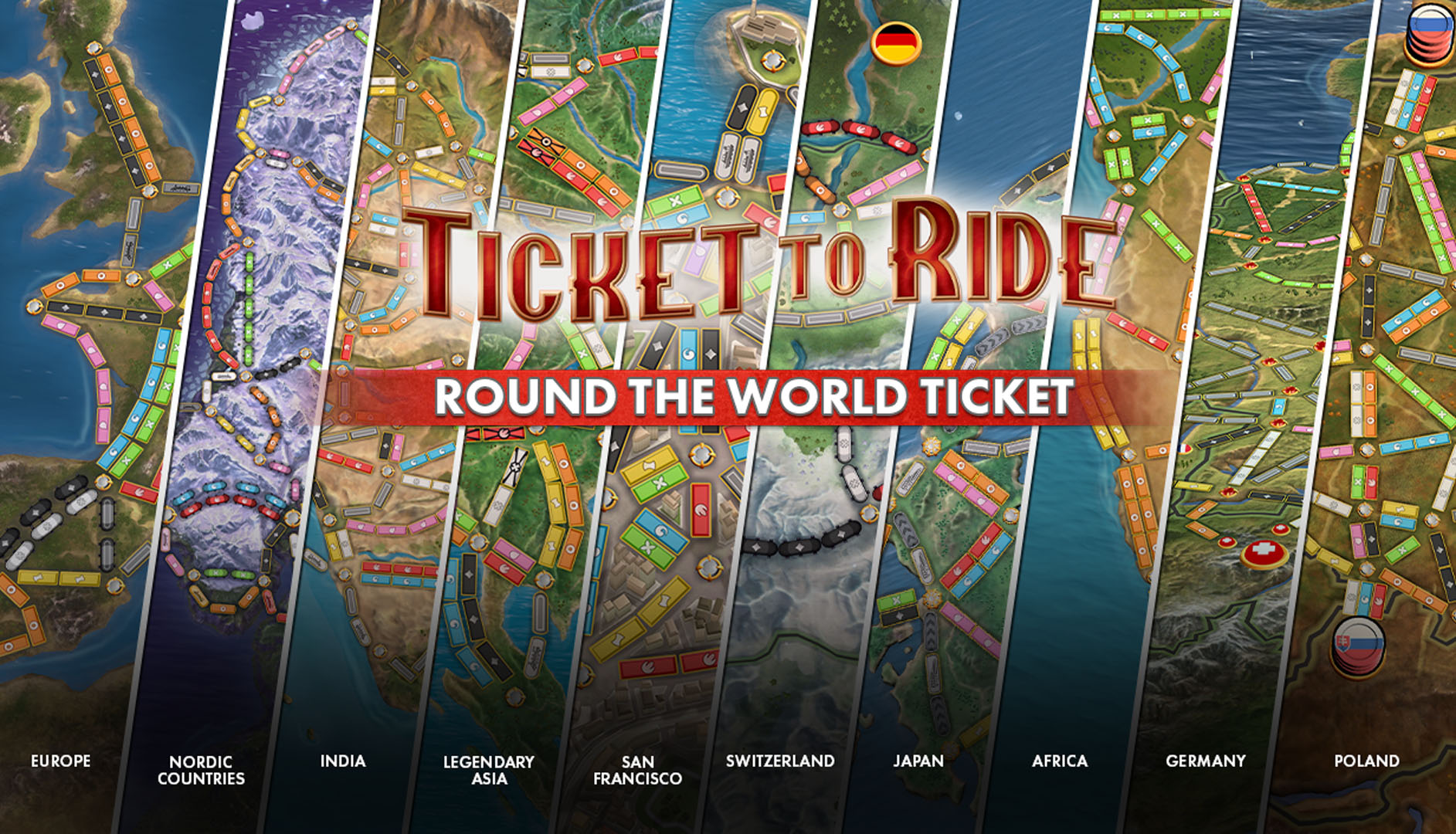
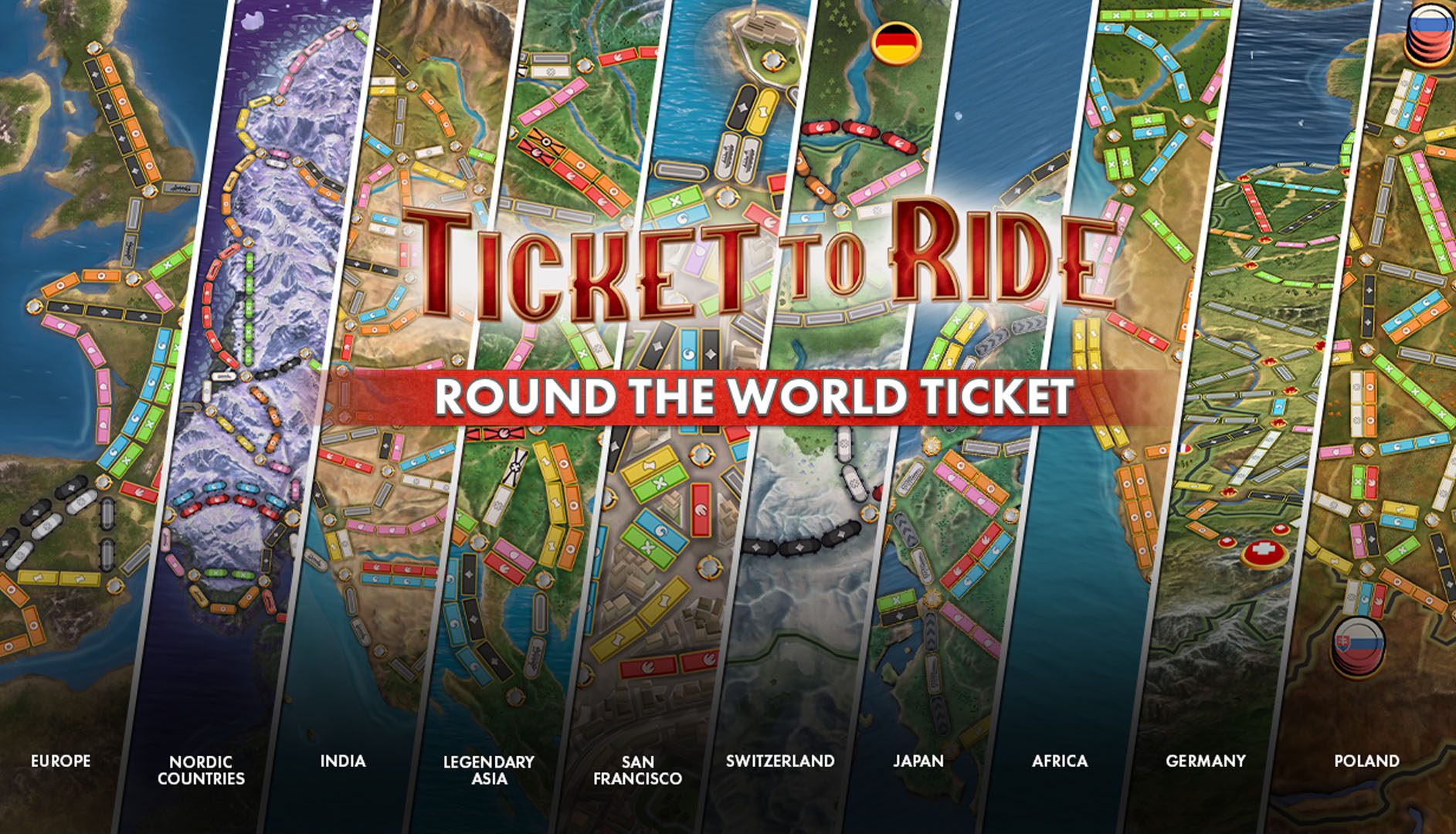
“We aimed to have a good mix of expansions in the Round the World Ticket so that there are maps in there that appeal to all players. Some are more competitive, such as the India Expansion. Some are much more relaxed, like the co-operative vibes of the Japan Expansion.
“We also wanted a balance of complex maps that can take a while to play, and simpler, faster maps. By doing this, players always have a great choice available, regardless of how much time they have to play.”
“It was also important that we offered a mix of classic fan favourites like the Switzerland and Nordic Expansions along with more niche maps like Poland. We’re proud to have released some digital debuts too, like a full rendition of the Germany Expansion complete with its iconic Passenger mechanic.”
When you pick up the Round the World Ticket for Ticket to Ride, you’ll receive all ten currently released expansions to play with right away. That’s a lot of content to keep you going, but we’ve had a lot of questions about whether there’ll be more expansions beyond the ten that make up the Round the World Ticket.
What’s on the horizon for Ticket to Ride?
Well, we’re happy to confirm that there will be further content for Ticket to Ride. Plus, as an exclusive reveal for Xbox Wire readers, we can confirm that the highly requested Ticket to Ride: Pennsylvania Expansion is in the works! It’s still early days on that front, but you’ll be able to play this amazing map on Xbox in the future.
Full steam ahead, everyone!
Ticket to Ride and its current expansions are available now on the Xbox Marketplace.
Ticket to Ride: Poland Expansion is available from the May 13.
Ticket to Ride®: Deluxe Edition
Marmalade Game Studio Ltd.
☆☆☆☆☆ 23
★★★★★
$39.99
$19.99
Prepare for an adventure on a global scale! The Ticket to Ride Deluxe Bundle has everything you need to kickstart your railway empire.
With the base game, you’ll be able to explore North America with six characters, seven trains and six carriages to choose from. When you’re ready to chase new horizons, the Round the World Ticket included in this bundle will open up a total of ten expansions – all currently released expansions will be playable immediately, then the remaining expansions as they release. Plus, enjoy two Ticket Packs – Europa 1912 and USA 1910, adding more tickets and game modes!
Europe Expansion:
Play as Erika Ford and Bertie Hawkes, and power your enterprise with the Rocket and Dolomyte Dynamite locomotives! Bonus content includes the Europa 1912 Ticket Pack, which adds three new game modes and new tickets to the Europe Expansion map.
Nordic Expansion:
Build routes between colourful Nordic cities, claim the sprawling Murmansk route and earn the Globetrotter Bonus in the world’s favourite train-adventure game!
India Expansion:
Set off on an adventure in India! New characters, locomotives and carriages await in this vibrant map. Rethink your strategies and ponder beyond single routes as you chase the elusive Mandala Bonus, awarded for completing tickets in multiple different ways!
Legendary Asia Expansion:
Journey along the Silk Road and take on the mighty Himalayas in Legendary Asia! Make new friends in Wang Ling and Lê Chinh, add new locomotives and carriages to your fleet and aim for the Asian Explorer Bonus!
San Francisco City Expansion:
Cruise through San Francisco in the Sixties as this fan-favourite map goes digital for the first time! Jump aboard a tram or get a lift from fashion designer Summer Ashbury or silver-screen icon Felix Woods as you take in the city sights and seek out Souvenirs.
Switzerland Expansion:
Take in the stunning sights of nature’s very own masterpiece as you strategise your way across Ticket to Ride’s most competitive map yet – the Switzerland Expansion! Connect Switzerland’s neighbouring countries as you travel along with two brand-new characters.
Japan Expansion:
For the first time ever, play Ticket to Ride: Japan Expansion in digital form! Work together with other players to build the Bullet Train network with travel blogger Nakanishi Kimiko and Gyōji Moriyama Isamu.
Heart of Africa Expansion:
Build your railway network across incredible new landscapes with festival organiser Blessing Kipruto and griot Nnamdi Okpara.
Germany Expansion:
Pick up Passengers when you join atelier owner Franziska Braun and scholar Reinhard Hofmann on a trip across Germany!
INCLUDES:
– Ticket to Ride Base Game
– Round the World Ticket
– Europe Expansion
– Nordic Expansion
– India Expansion
– Legendary Asia Expansion
– San Francisco City Expansion
– Switzerland Expansion
– Japan Expansion
– Heart of Africa Expansion
– Germany Expansion
– Europa 1912 Ticket Pack
– USA 1910 Ticket Pack
Ticket to Ride®
Marmalade Game Studio Ltd.
☆☆☆☆☆ 19
★★★★★
$24.99
$9.99
Ticket to Ride has arrived at Platform Xbox!
Discover a fresh adaptation of the iconic, multi-award-winning board game. Play against fellow fans around the world, or take on state-of-the-art AI opponents. Build a railway empire, claim routes and dominate your competitors on the leaderboards in this fan-favourite modern classic!
FEATURES
– A TRULY SOCIAL TAKE ON MULTIPLAYER – Play online with friends or enjoy a seamless matchmaking experience when you challenge players from around the world. Alternatively, take on your friend sitting right next to you in couch play – use the free Ticket to Ride Companion App to really boost your couch gaming session!
– PLAY AROUND YOUR BUSY DAY – Set up a game in async mode and play a game across multiple days.
– SINGLE-PLAYER MODE DRIVEN BY EXPERT AIs – Powered by an innovative adaptive AI system, single-player mode offers a challenge for new and experienced players alike.
– AN IMMERSIVE EXPERIENCE – Every moment has been brought to life with beautiful graphics that will immerse you in the adventure.
– STRATEGIC GAMEPLAY – Every game presents fresh challenges, and it’s your mission to work out the most efficient solutions. Collect points by completing tickets, linking destinations and building the longest route.
Join the Marmalade Game Studio Discord server to connect with players, organise matches, see the latest news and updates, and take part in events!
Contains:
– Ticket to Ride base game – the fan-favourite train-adventure game that started it all!
– Europe Expansion – includes the Europe map, two additional characters, two additional locomotives and two additional carriages
If you’ve been pouring hours into Instagram reels, stories, and short-form content and still ending the week wondering where the actual clients are, you are not alone.
So many business owners are caught in the same exhausting loop.
Content creation starts consuming your life, but the results never quite connect back to your business.
The likes are there.
The views are there.
Maybe the follower count is even creeping up.
But real conversations? Qualified leads? Paying clients?
Still cricketsville.
Here’s what most people don’t realize: it’s not a you problem.
It’s a platform problem.
That’s exactly where Coach Tony found himself before making the shift from Instagram to YouTube.
He was showing up consistently, posting reels, staying visible.
But something felt hollow.
Interactions stayed surface-level.
People were consuming his content without ever truly connecting with him.
And the business?
Barely moving.
So he started wondering if long-form content could create something completely different.
Spoiler: it absolutely did.
What started as a workout video filmed in his garage gym became a turning point for his audience, his authority, and his business.
And he was a total beginner when he started.
In this episode, I’m sitting down with Tony Omogrosso to break down how he turned YouTube into a real client-generating machine, why long-form content builds trust that actually converts, and the simple strategies he used to hit 500 subscribers fast.
If you’re ready to stop performing for the algorithm and start attracting the right people, this one’s for you.
VIDEO: Is YouTube Too Saturated for Your Business?
Some product links in this post are affiliate links, and I will be compensated when you purchase by clicking our links. Read my disclosure policy here.
The Problem With Short-Form Content That Nobody Talks About
Short-form content can absolutely help you get visibility online. It can help people discover you. It can even help you build momentum quickly.
But visibility alone is not always enough to grow a business.
Tony explained that while Instagram was getting him engagement, it wasn’t creating meaningful interaction with potential clients. The comments were surface-level. The conversations rarely went deeper. And despite all the effort going into content creation, it was not leading to the kind of trust needed for someone to hire a coach.
That distinction matters so much.
Because business owners do not just need attention. They need connection.
They need content that allows people to understand their philosophy, personality, communication style, and expertise. Especially in industries like health, wellness, coaching, or consulting where trust plays such a huge role in the buying decision.
That’s why the transition from Instagram to YouTube for business can feel so powerful.
YouTube gives people time to actually get to know you.
The Garage Workout Video That Changed Everything
One of the best parts of Tony’s story is how uncomplicated his breakthrough really was.
He did not wait for the perfect setup.
He did not overthink the editing.
He did not spend weeks scripting every word.
He simply decided to record a workout video inside his garage gym, figured out a solid hook, pressed record, and naturally talked through the exercises as he demonstrated them.
Then he uploaded the video and completely forgot about it for a few weeks while focusing on other parts of his business.
When he finally came back to check the analytics, the video had already reached thousands of views.
But what impacted him even more than the views were the comments.
Real people were sharing real experiences.
One viewer commented that they were in their seventies and had completed the workout successfully. Others shared how much they appreciated the approachable style and practical format.
That level of engagement felt completely different from what he had experienced on Instagram.
People were not just scrolling past his content.
They were watching.
Listening.
Participating.
Connecting.
That was the moment Tony realized YouTube could become a central part of his business strategy instead of just another social media platform.
Why Long-Form Content Builds Trust Faster
This is one of the biggest reasons YouTube works so well for business owners.
Long-form content creates space for trust.
When someone spends 10, 15, or even 20 minutes watching your videos regularly, they start feeling familiar with you in a way that short-form content rarely creates.
They begin understanding how you think.
They hear your tone of voice.
They notice your teaching style.
They start deciding whether your personality and philosophy align with what they need.
That trust-building process is incredibly important when you sell services, coaching, memberships, or programs.
Tony explained that by the time someone reaches out to work with him, they already feel like they know him. They already understand his approach to fitness and health. They already know he is not the type of coach screaming aggressively into the camera.
His audience understands his calm, philosophical, low-key style before ever booking a call.
That changes everything about the sales process.
Is YouTube Too Saturated? Not If You Understand What Makes You Different
The fitness industry is one of the most crowded spaces online, which made Tony’s success even more interesting.
So what helped him stand out?
His differentiation came from experience and perspective.
Tony is over 40 and specifically helps people over 40. That immediately changes the relationship he has with his audience because he genuinely understands the lifestyle, limitations, and priorities of the people he serves.
He is not trying to teach from a completely different stage of life.
He also brings a background in Muay Thai and combat sports, which shapes his philosophy around fitness. His approach focuses on realistic home training, minimal equipment, and sustainable workouts that fit into everyday life.
That combination made his content feel specific and relatable.
And honestly, this is such an important reminder for business owners who worry their niche is already crowded.
Two people can teach the exact same topic and still create completely different experiences for viewers because personality, life experience, and communication style matter.
Tony realized that once he stopped trying to compete with everyone else and focused on showing up authentically, the right people naturally gravitated toward him.
That’s the real advantage when transitioning from Instagram to YouTube for business.
You stop trying to appeal to everyone and start attracting the people who genuinely connect with you.
Tony openly admitted that being on camera felt awkward at first.
He had never created social media videos before this journey, and perfectionism made the process even harder.
At one point, he would spend an entire hour walking through a park just trying to record two minutes of footage because he kept overthinking everything.
And honestly, so many business owners can relate to that.
The fear of judgment is real.
Interestingly, Tony said the people he worried most about were people he already knew in real life. But instead of criticism, he received encouragement and support from old friends and acquaintances who were excited to see what he was building.
Over time, the repetition itself helped.
Creating short-form content gave him practice speaking on camera, and eventually recording videos started feeling natural instead of intimidating.
Now he actually enjoys it because he gets to talk about topics he genuinely cares about.
That transformation only happened because he kept showing up before he felt fully comfortable.
His Content Strategy Is Surprisingly Simple
A lot of creators assume successful YouTube channels require complicated planning systems and endless brainstorming sessions.
Tony’s strategy is refreshingly practical.
Most of his content ideas come directly from conversations with clients.
He listens carefully to their struggles, frustrations, questions, and goals because those conversations reveal exactly what people want help with.
That becomes his research process.
Instead of chasing random trending topics, he creates videos around the real pain points his audience is already experiencing.
He also gives himself intentional space to think creatively.
He mentioned going for walks in nature to quiet his mind and allow ideas to surface naturally. Whenever inspiration hits, he records audio notes or saves screenshots so he can revisit the ideas later.
His production process is intentionally simple too.
He records on weekends or quieter afternoons when the house is calm, and he stopped trying to overproduce his videos with excessive intros, B-roll, or complicated editing.
In fact, many of his best-performing videos are simply him talking directly to the camera in his garage gym while demonstrating exercises naturally.
That human element is a huge part of why the content works.
Especially now, audiences are craving creators who feel real and conversational instead of overly polished and robotic.
Tony said he wants viewers to feel like they are interacting with the same person they would meet in real life. That mindset helps remove the “digital barrier” between creator and audience.
And honestly, that authenticity is becoming one of the biggest advantages on YouTube right now.
Tony’s thumbnails looked incredibly strong for a newer YouTube creator, but his approach was actually very simple.
Instead of constantly reinventing his designs, he focused on consistency.
He usually keeps his photo positioned on one side of the thumbnail and text on the other. He also sticks with recognizable branding colors, including darker backgrounds and a signature shade of green.
That consistency helps viewers recognize his content immediately while scrolling.
And importantly, he emphasized that you do not need advanced graphic design skills to make this work.
He specifically mentioned using Canva as an accessible option for creators who are not designers.
The goal is not perfection.
The goal is recognizability.
The Gear He Uses for YouTube
Another encouraging part of Tony’s story is that he did not start with expensive equipment.
Like many creators, he started with his phone and upgraded gradually over time.
As his channel grew, he gradually upgraded his setup to include:
Riverside for recording videos
A Sony ZV-E10 camera
A Rode PodMic connected through his laptop
A Godox softbox for lighting
He also mentioned that he moved away from lapel microphones because they picked up too much background noise, while the Rode PodMic gave him cleaner and more professional audio.
But the most important takeaway here is that the equipment came later.
The momentum came first.
Too many business owners delay YouTube because they think they need a perfect setup before publishing content. Tony’s experience proves that consistency and authenticity matter far more than having the fanciest gear on day one.
How YouTube Actually Turns Viewers Into Clients
This is the part most business owners really care about.
How does YouTube actually create revenue?
For Tony, YouTube acts like pre-coaching before someone ever hires him.
Because health and fitness are personal topics, people want to feel comfortable with the coach they choose. Watching long-form content allows viewers to spend hours learning from him before they ever reach out.
They already understand his teaching style.
They already know his personality.
They already know whether his philosophy fits what they need.
That trust dramatically shortens the gap between viewer and client.
Tony even mentioned making sales simply by including links to low-ticket products in his video descriptions without heavily promoting them.
The videos themselves were doing most of the trust-building work.
That is one of the biggest reasons long-form YouTube content works so well for service-based businesses.
The relationship starts long before the sales conversation ever happens.
Conclusion
If you’ve been wondering whether the move from Instagram to YouTube for business is worth it, Coach Tony’s story is such a powerful reminder that there is still plenty of room for business owners on YouTube.
Even in competitive industries.
Even if you are introverted.
Even if you are starting with basic equipment.
What matters most is not trying to become the loudest creator online. It is learning how to become the most authentic version of yourself consistently enough for the right audience to find you.
Tony did not build momentum by chasing trends or creating flashy content.
He built it by sharing practical advice, showing up consistently, and allowing viewers to genuinely get to know him through long-form video.
And honestly, that is what makes YouTube such a valuable platform for business owners right now.
You are not just creating content.
You are building trust at scale.
So if you’ve been sitting on the sidelines wondering whether your niche is “too saturated,” maybe this is your reminder to stop overthinking it and finally hit record.
Your audience might be looking for someone exactly like you.
If you have an online business with a course, program, or any other kind of offer, and you’re not currently generating consistent sales on autopilot, I’d like to introduce you to the hands-off YouTube funnel that has made me over $20k on a $147 course! That way, you too can make consistent sales of your offer, with the beauty and simplicity of organic, evergreen traffic from YouTube! Start here with my free “AIT Method” training.
Welcome to the 1.121 release of Visual Studio Code.
Happy Coding!
May 13, 2026
Add support for pinning favorite models in the language model picker. #299776
Set a VSCODE_AGENT environment variable when Copilot Chat runs commands in the terminal. #311734
Add an “Add to Chat” option to the right-click context menu in integrated browser. #305718
Automatically dispose background terminals created by the chat agent once their command finishes. #287177
Allow extensions contributing markdown.previewScripts to declare their scripts as ES modules by using the { "path": "...", "type": "module" } object syntax. #316328
Expand terminal tool output compression to cover more commands, including test runners (pytest, jest, cargo test), build tools (tsc, cargo build, make), linters, Docker, and package managers. #315881
May 12, 2026
Add an idle-silence timer to the run_in_terminal tool that automatically promotes a sync command to background execution when it produces no output for a configurable period. #315884
Fix multi-line shell commands in the Agent Host terminal tool. #312922
Bundle a newer version of ConPTY (conpty.dll) directly with VS Code on Windows. #224488
May 11, 2026
Add keyboard-interactive authentication support for Agent Host SSH connections. #315588
We really appreciate people trying our new features as soon as they are ready, so check back here often and learn what’s new.