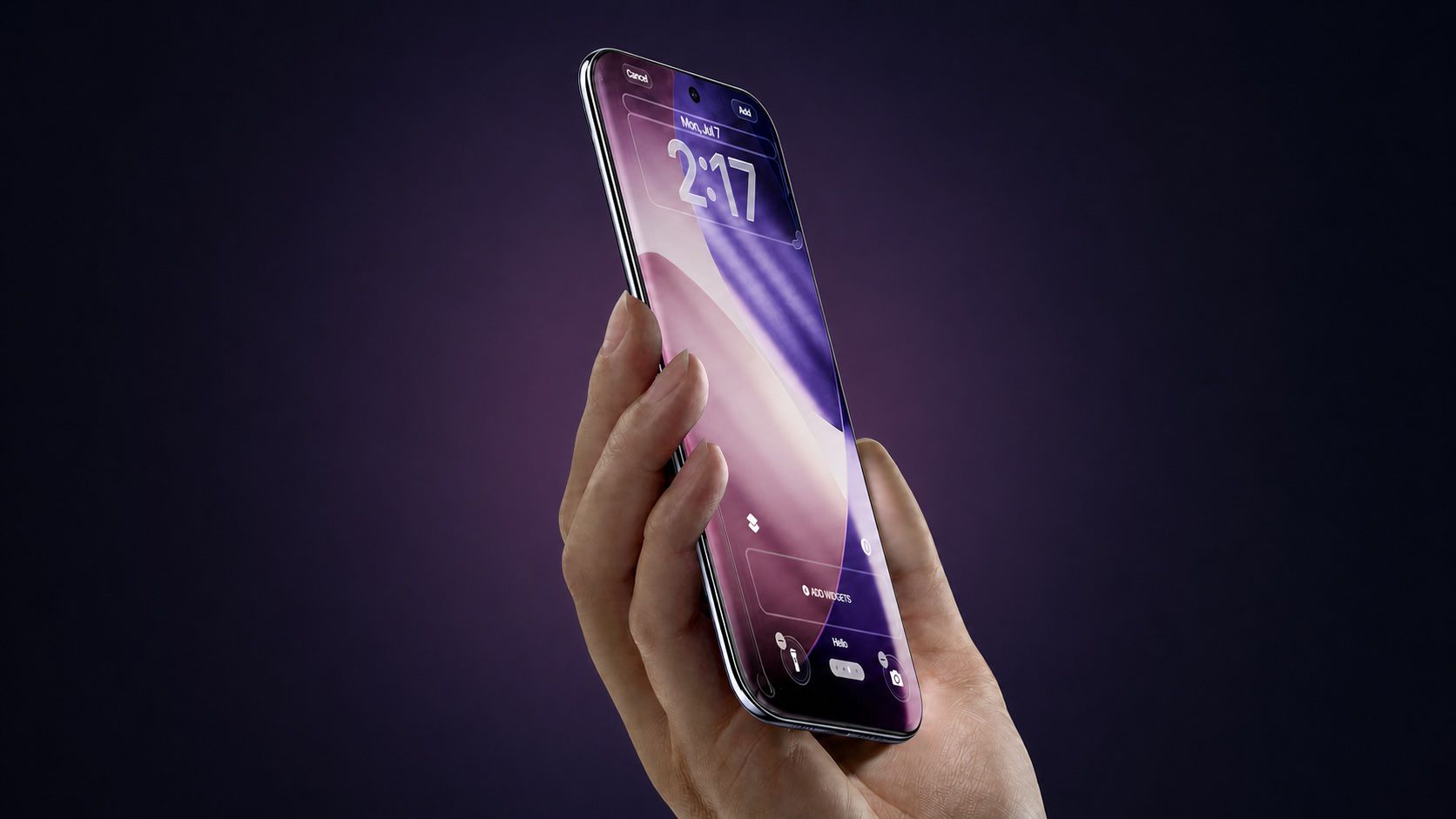
iPhone 18 Pro and Foldable iPhone Could Sell Out Fast Due to Memory Shortage


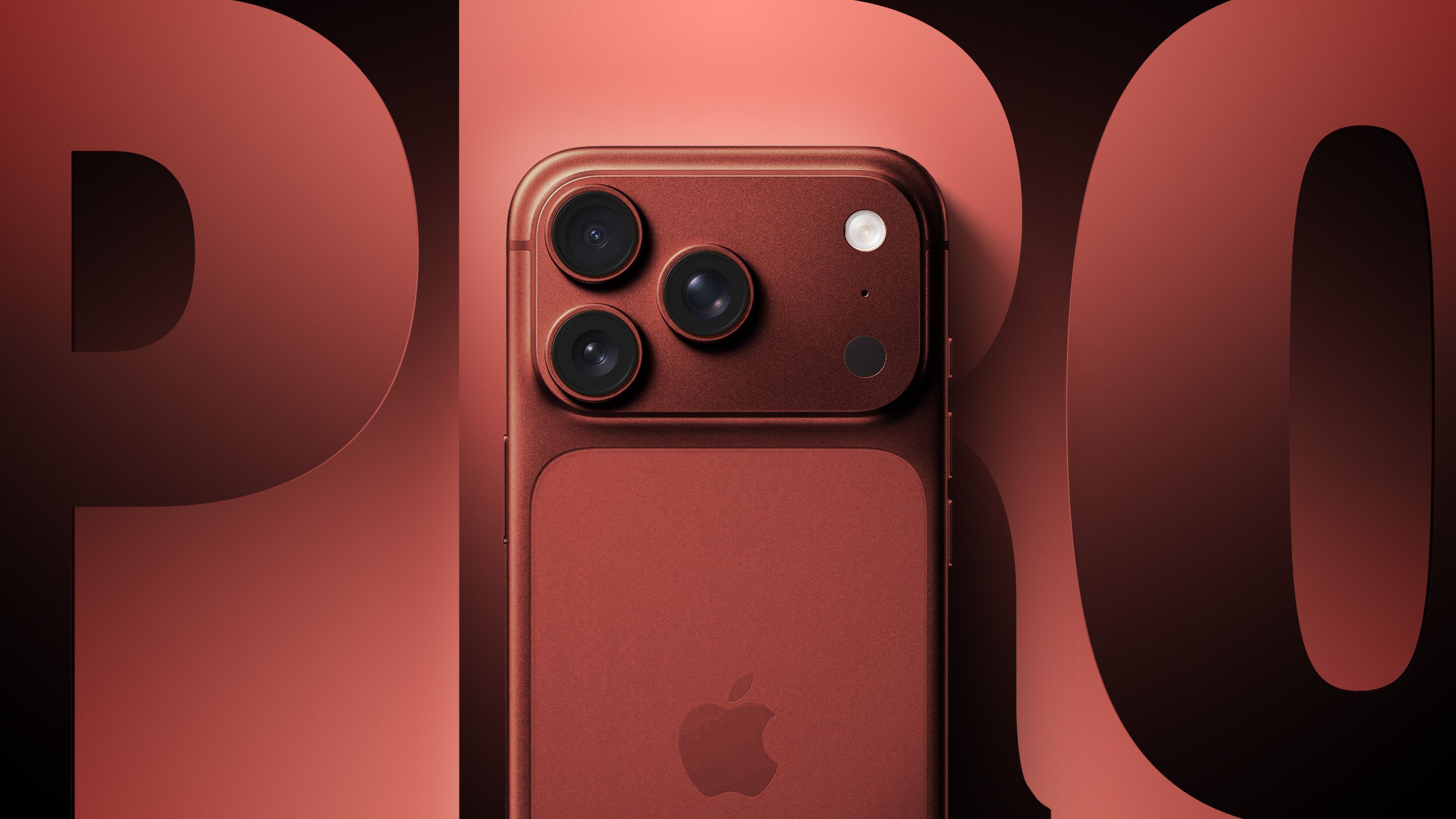
The iPhone 18 Pro, ‌iPhone 18 Pro‌ Max, and foldable “iPhone Ultra” could be in short supply this year, leading to long wait times and an initial sellout during preorders.

iPhone 18 Pro Deep Red Feature
Semiconductor analyst Tim Culpan says Apple is having trouble getting enough DRAM to finish production of the new iPhone models, and chip supplier TSMC has $1 billion worth of unpackaged processors waiting on memory chips.

Apple’s new A20 Pro chips are built on TSMC’s 2nm process and use Wafer-Level Multi-Chip Module packaging to integrate the processor and DRAM at the wafer level. Unfortunately, that means TSMC needs to have the DRAM on hand for assembly, and it can’t be added at a later step. Apple is not able to stockpile finished dies and then add DRAM when it becomes available.

Apple and its assemblers think they can meet initial demand, but retail inventory could sell quickly, leading to prolonged delivery estimates. The chip backlog will delay main logic board assembly and final device assembly, which could impact production at Foxconn and other assemblers.

DRAM has been in short supply for months and has led to long wait times for the Mac Studio, Mac mini, and MacBook Air. Companies that make memory are prioritizing chips for AI data centers because those chips are more profitable, leaving little capacity available for manufacturing chips for consumer devices.

We’ve had ongoing rumors about manufacturing issues with the ‌iPhone Ultra‌ due to the complexity of the design, and supplies of the new foldable could be the most limited of the three iPhone models. Some reports suggest the foldable iPhone could be introduced in September and then launch later, in October or November, but others say it will be available at the same time as the ‌iPhone 18 Pro‌ and Pro Max.

The ‌iPhone Ultra‌ is going to cost as much as $2,500, but the novel form factor and Apple’s new Apple Upgrade pricing option could lead to more people being willing to shell out for the device. Apple is also expected to raise prices for the ‌iPhone 18 Pro‌ and ‌iPhone 18 Pro‌ Max, and analysts believe the devices could be up to $300 more expensive because Apple is paying more for RAM.

Last year, the iPhone Air, iPhone 17 Pro, and ‌iPhone 17 Pro‌ Max sold out during the preorder period, and shipping times extended into October. Along with potential production delays impacting supply, there will be no lower-cost iPhone 18 for people to choose this year, putting more pressure on ‌iPhone 18 Pro‌ supplies. Apple is not planning to launch the standard ‌iPhone 18‌ until early 2027.

If you’re looking to get one of the new iPhone models in September, it’s a good idea to preorder right when the devices become available for purchase to have the best chance of getting one on launch day.

Thousands of servers can be backdoored by exploiting buggy motherboard controllers


Thousands of Internet-connected servers sold by the world’s biggest manufacturers can be remotely backdoored by exploiting critical vulnerabilities—some more than a decade old—that lurk deep inside system motherboards, according to research presented Wednesday.

Baseboard management controllers are miniature computers that are embedded into the motherboards of virtually every enterprise server. The microcontrollers, typically abbreviated as BMCs, run with their own operating system firmware, network stack, and IP address. Administrators rely on them to monitor the physical status of large fleets of servers and to perform a variety of tasks, including rebooting machines, installing updates, and even reinstalling operating systems. BMCs provide what’s known as “lights out” and “out-of-band” management because they work even when servers they’re attached to are turned off or are unresponsive.

A “pervasive, under-monitored, under-patched parallel attack surface”

Researchers have warned since at least 2013 that BMCs present a golden opportunity for hackers looking for ways to gain deep and persistent access to datacenters. The chief culprit was IPMI, the protocol that allows BMCs to operate independently of servers and to perform administrative tasks. Vulnerabilities in this firmware made it possible for attackers to remotely execute malicious code on the controllers and, from there, infect the servers they manage.

Read full article

Comments

Waymo CEO Explains Why Camera-Only Self-Driving Falls Short


Longtime Slashdot reader AmiMoJo shares a report from Electrek: Waymo co-CEO Dmitri Dolgov laid out the clearest technical case yet for why cameras alone can’t take a self-driving system to full autonomy, arguing that “weak sensing” hits a safety ceiling long before it reaches superhuman performance. […] Dolgov made the comments in a talk at Y Combinator’s Startup School, walking through the lessons Waymo has learned building its driver over close to two decades. He put the sensor question on the table plainly: “there’s been a long-standing debate about what kind of sensors do you actually need for autonomous driving.”

His answer draws the line that camera-only advocates tend to skip right past. “Humans of course can drive with just eyes, so there’s that proof of existence,” he said. “If the goal were to just approximately match human performance or to build an assist product, that’s a very reasonable way to go.” Then the catch. If you’re targeting full autonomy and strongly superhuman performance, he said, “you find that weak sensing just leads to a safety curve that flattens out way too early.” Dolgov said that cameras, lidar, and radar are complementary rather than redundant: “These different sensing modalities, they’re not backups to each other,” and combining them produces a view “vastly superior to what you get with any one sensor.” He said multiple sensor types also protect against physical failures, such as a leaf or branch blocking a camera, while helping Waymo climb the “exponential ladder of nines” required for fully driverless safety.

Dolgov warned that camera-only systems may improve quickly before plateauing “way before the performance that is required by your product.” He also pushed back on the cost argument against lidar, calling it “a number that has a fairly short shelf life” as hardware costs continue to fall.

This new smartwatch can last a full week on a single charge


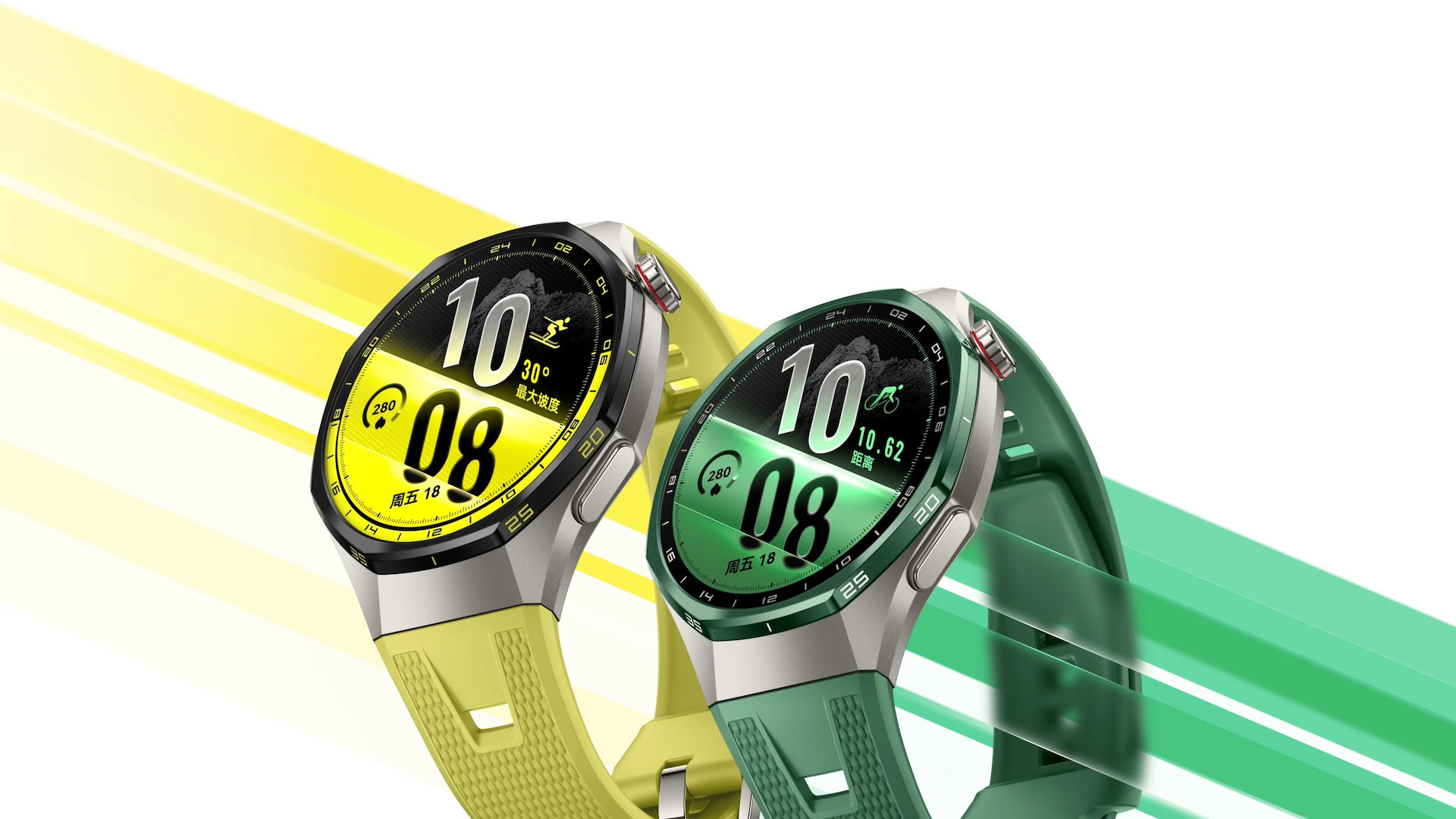
An image depicting the Huawei Watch GT 7 Pro

TL;DR

  • HUAWEI has just released the Watch GT 7 and GT 7 Pro featuring largely unchanged hardware.
  • Both smartwatches in the Watch GT 7 series retain their week-long battery life while gaining new colors and updated wristbands.
  • The Watch GT 7 Pro will be available in China for 2,688 CNY (~$398), whereas the 41mm Watch GT 7 will start from 1,588 CNY (~$235) in the region.

HUAWEI is no stranger to smartwatches, having set high benchmarks with the Watch GT 6 and its Pro sibling last year. It’s nearly that time of year when the company refreshes its smartwatch lineup, and right on schedule, the Watch GT 7 and the Watch GT 7 Pro are going official.

Following days of teasing their arrival on social media platforms, HUAWEI has finally taken the wraps off the smartwatches, but only for the Chinese market. While the Watch GT 7 and GT 7 Pro don’t differ much in the design department from their predecessors, HUAWEI now offers them in updated colors and revamped wristbands.

Starting with the GT 7 Pro, HUAWEI has retained the 1.47-inch, 466 x 466 AMOLED screen with a maximum brightness of 3,000 nits, housed in a titanium case. All of this is virtually identical to the Watch GT 6 Pro, as are the wide array of health-tracking sensors, including SpO2, ECG, heart rate, as well as a skin temperature sensor.

HUAWEI is offering a Pro Ski mode with the Watch GT 7 Pro along with updated sports and activity-tracking modes. The smartwatch offers 21 days of battery life with light usage, 12 days with regular use, and seven days with the always-on display (AOD) enabled, the company says. This wearable will be available in new yellow and green colorways paired with a silver case, in addition to the existing black/silver variant from the last-gen model.

Meanwhile, the manufacturer will offer the vanilla Watch GT 7 in 41mm and 46mm variants (pictured below), featuring a 1.32-inch and 1.47-inch AMOLED screen, respectively. The smartwatch lacks an ECG sensor, but includes SpO2, heart rate, and skin temperature sensors.

Huawei Watch GT 7

Similar to the Watch GT 7 Pro, buyers can expect the 46mm variant to last up to 21 days on a full charge with light use and up to seven days with AOD enabled. HUAWEI says the 41mm model offers a 14-day battery life with light usage and five days with always-on display turned on.

The Watch GT 7 in the 41mm version will set customers back by 1,588 CNY (~$235), while the 46mm model will sell for 1,688 CNY (~$250) in China. The premium Watch GT 7 Pro will cost 2,688 CNY (~$398) in the region. HUAWEI’s Harmony OS is the software of choice for the Watch GT 7 series, which means it will miss out on some of the benefits available to Wear OS smartwatches.

HUAWEI hasn’t revealed when (or if) an international launch is on the horizon, though we’d be surprised if the two smartwatches didn’t appear on global retail shelves sometime soon.

Thank you for being part of our community. Read our Comment Policy before posting.

Elon Musk repeatedly one-upped his execs on SpaceX’s first earnings call


Elon Musk spent SpaceX’s first earnings call making some out-of-this-world claims about the company’s business and future prospects, while his fellow executives kept trying to bring his ideas closer to Earth — providing a hint of what’s to come now that his rocket-launching, compute-leasing, satellite-based telecom is public.

The conference call, held Tuesday, was the latest in a years-long succession of Musk making outrageous promises that his executives then have to make more digestible for the investing public — like at Tesla, where a recent analysis by TechCrunch showed that the world’s richest man is increasingly focused on futuristic topics while his colleagues spend their time talking about the actual business of selling cars.

Let’s start with one of the biggest ideas Musk floated on the call: that he expects SpaceX’s Starlink service to “deliver a majority of the world’s internet” in “less than 10 years.” Musk made the comment in the context of SpaceX preparing to launch the first “V3” versions of its Starlink satellites, which have much higher bandwidth than previous versions.

Here’s what he said:

It’s kind of hard for people to wrap their minds around this, but like, it’s not out of the question that at some point, Starlink will deliver a majority of the world’s internet, at least in countries where we’re allowed to operate, which is the vast majority of countries. So this is, you know, important to bear in mind, and it’s not in like the infinity future. It’s, you know, less than 10 years.

Contrast that with what chief operating officer Gwynne Shotwell said just a few minutes later, emphasis mine:

The significant amount of capacity we’re able to add to the Starlink constellation from the V3 satellites will enable us to continue providing even better service — and it’s pretty great already — but to do so while serving more and more customers over the world. In fact, in the years ahead, we expect Starlink will represent a significant portion of global internet traffic, which Elon also talked about.

It’s a far more lawyered-up claim to make, even though it’s still obviously ambitious.

But that was not the only instance where Musk optimistically diverged. At one point, SpaceX chief financial officer Bret Johnsen offered investors one of the few new financial targets discussed on the call. Johnsen was highlighting SpaceX’s relatively new business of renting out compute power to other AI players, which has helped the company generate billions in fresh, fast cash.

I’ll once again emphasize the big promise Johnsen made during his prepared remarks, and note how carefully he phrased it. It’s a very hedged and quite specific claim that he’s making. It’s clearly meant to excite investors while also leaving room for the company to avoid legal exposure if it misses the projection:

Looking ahead, we continue to see robust demand in all three of our business segments, but in particular in our cloud services arrangements. We see increasingly favorable economics with each agreement we sign, and as Elon mentioned, we expect the supply-demand imbalance in the compute market to continue. The current economics have translated into a less than one-year payback on our new capital deployments for compute. For example, in the first few weeks of the third quarter, we’ve already contracted an additional $6.7 billion of cloud services revenue over a six-month period that begins ramping starting in October of this year. We believe this puts us on a trajectory, including contribution from Cursor, to reach $100 billion of ARR, or annualized revenue run rate by the end of this year, based on our expected revenue in the month of December of this year.

Musk, 20 minutes later, bulldozed that carefully constructed statement before immediately inflating it:

To be clear, the $100 billion ARR in December is not a question mark. That’s… that’s what we would achieve if we basically did nothing. So like, you know, I think it may be higher than that. It probably will be higher than that.

Musk also riffed on another major prediction about overall revenue on the call, pumping up a goal that SpaceX laid out just two months ago in its IPO documents:

It’s probably also worth mentioning that our internal projections for reaching a trillion dollars in revenue, not ARR, but revenue, have moved up from 2031 to 2030. So prior to the IPO, the financial projections we had were reaching a trillion dollars in revenue in 2031. We now expect that to be in 2030. And there’s a non-zero chance of that being in 2029.

The pattern kept repeating throughout the call. A shareholder question about progress on the “human landing system” that SpaceX is developing for NASA’s Artemis moon missions using Starship prompted Musk to all but claim that the prototype rocket will be ready to fly people by the end of next year. He later said SpaceX would be flying Starship rockets once a day, or “possibly more,” by this time next year.

Shotwell immediately followed Musk’s comments about human flight to clarify that SpaceX is still focused on NASA-mandated milestones, and offered a more vague (but still ambitious) goal (again, emphasis mine) that “we want to put boots on the ground, boots on the moon, in 2028.”

None of that will happen unless SpaceX can prove that Starship can fly without failing and, crucially, become fully reusable. A huge part of making it reusable is the heat shield that keeps the Starship upper stage from exploding when it re-enters Earth’s atmosphere. The company saw the best results from its improved heat shield on the most recent Starship test flight, which splashed down in the Indian Ocean last month and is still intact. But before the rocket stage had even been recovered, Musk was willing to claim on Tuesday that he’d “consider the heat shield problem solved at this point.”

Musk has made many wild promises about SpaceX that never came true, such as when he said in 2016 that he’d put humans on Mars in six years. The difference now is that SpaceX is a public company, and ostensibly subject to regulation and fines if the company and its executives make promises they know can’t be met.

Of course, the Securities and Exchange Commission has pulled way back on corporate enforcement, especially against public companies. The Department of Justice is doing the same. And if SpaceX can’t follow through on Musk’s wide-eyed claims, investors won’t even be able to do much in civil court — because the company has all but inoculated itself against those kinds of lawsuits by incorporating in Texas.
When you purchase through links in our articles, we may earn a small commission. This doesn’t affect our editorial independence.

How to sign up for Mashable push notifications


The internet moves fast. Fortunately, you don’t have to spend all day refreshing your browser to keep up with it.

Mashable push notifications deliver our latest news, trending stories, and hottest deals directly to your screen. Here’s how to turn them on in just a few clicks.

Google Chrome on Android

  1. Open Chrome and visit Mashable.com.

  2. Tap the three-dot menu to the right of the address bar.

  3. Select Settings, followed by Site settings and Notifications.

  4. Make sure notifications are enabled.

  5. Return to Mashable. Tap the site information icon to the left of the address bar, select Permissions, and set Notifications to Allow.

Google Chrome on a PC or Mac

  1. Visit Mashable.com.

  2. Click the View site information icon to the left of the URL in your address bar.

  3. Select Site settings from the menu.

  4. Find Notifications and select Allow from the dropdown menu.

  5. Return to Mashable and refresh the page.

That’s it. We’ll take it from here.

Safari on a Mac

  1. Open Safari and visit Mashable.com.

  2. When Safari asks whether you would like to receive notifications from Mashable, select Allow.

  3. If the request doesn’t appear, go to Safari > Settings > Websites > Notifications. Find Mashable and select Allow. You should also make sure Allow websites to ask for permission to send notifications is turned on.

Microsoft Edge

  1. Visit Mashable.com.

  2. Click the site information icon to the left of the URL.

  3. Open Permissions for this site.

  4. Find Notifications and select Allow.

  5. Return to Mashable and refresh the page.

Mozilla Firefox

  1. Visit Mashable.com.

  2. When Firefox asks whether Mashable can send notifications, select Allow.

  3. If you don’t see the prompt, open the Firefox menu and go to Settings > Privacy & Security. Scroll to Permissions, find Notifications, and click Settings. Locate Mashable, change its status to Allow, and save your changes.

Help! I signed up, but I’m not receiving notifications

If you followed the steps above but Mashable alerts remain suspiciously absent, don’t worry. A browser or device setting may be getting in the way.

1. Check your browser settings

Start by returning to Mashable.com and clicking the site information icon beside the URL. Make sure Notifications is set to Allow.

You can also check the notification permissions in your browser’s settings:

  • Chrome: Settings > Privacy and security > Site settings > Notifications

  • Firefox: Settings > Privacy & Security > Permissions > Notifications

  • Safari: Settings > Websites > Notifications

  • Edge: Settings > Cookies and site permissions > Notifications

Find Mashable and confirm that notifications are allowed.

2. Check your device settings

Your browser may have permission to send alerts while your computer is quietly blocking them.

On a Mac, open System Settings > Notifications. Select the browser you used to sign up, turn on Allow notifications, and choose Banners or Alerts as the notification style. On older versions of macOS, you may find these controls under System Preferences.

On a Windows PC, open Settings > System > Notifications. Make sure notifications are turned on for Chrome, Firefox, Edge, or whichever browser you used.

3. Make sure notifications aren’t silenced

Finally, check whether a focus setting has put your alerts on mute.

On a Mac, open Control Center > Focus and make sure Do Not Disturb is turned off.

On Windows 11, go to Settings > System > Notifications and check that Do not disturb is disabled. If you’re using Windows 10, open Focus assist and make sure it is not set to Alarms only.

Once those settings are cleared, Mashable notifications should be free to make their grand entrance.

Want more tech and digital culture news delivered to your inbox daily? Sign up for Mashable’s Top Stories newsletter today.

Barbara Pavone contributed to this article.

The Real Story Behind the 2018 Google Walkout


In 2018, Claire Stapleton was living in New York, raising a young child, and working at Google as a marketing manager. In October of that year, upset with how the company had handled sexual harassment claims, she helped organize what became known as the Women’s Walkout. In this new excerpt from her book Don’t Be Evil, she explains how one Google Group helped start it all.


On the Saturday after I started the womens-walk Google Group, I sprang awake at 6 and opened my laptop, stealing time before my son Malcolm stirred. My inbox was dotted with the usual weekend emails from my manager, Marion. We were in the middle of a big push involving Article 13, a piece of EU legislation that would hold platforms liable for user-­generated content. I’d strenuously avoided learning the ins and outs of this particular bit of lobbyist infighting. But the drumbeat went on. “#SaveYourInternet!” we screeched from our Twitter and Instagram accounts, multiple times a day, with slick branded graphics. It was supposedly “top urgency,” despite being both inside baseball and counter to every brand goal we’d set for the year.

I’d been at YouTube long enough to know the truth: If Google wanted this law overturned so badly, Article 13 was probably good for the world. The company didn’t want limits on growth, accountability, or liability; it wanted a frictionless, consequence-­free internet and the endless consolidation of power that came with it.

I couldn’t absorb Marion’s Saturday to-­do list. My mind was consumed by the Women’s Walk. I refreshed the tab where I’d set up the new Google Group. An avalanche of names had joined— only a handful I knew. Most were strangers, and yet their presence felt like a new kind of belonging.

I wasn’t overthinking anything; I was just writing, sending, doing. The energy was right there, primed. I typed an email—from my own account, my name fully attached, come what may.

From: Claire Stapleton Sat, Oct 27, 2018 at 6:46 am

To: womens-­walk

*rolls up sleeves*

welcome to ground zero of the google women’s walkout / a day without women (naming/branding tbd).

couple of open Q’s for the group (200 of us and counting!) as we start to formulate the statement of purpose and next steps:

what do you hope this collective action accomplishes (could be what we express/communicate to leadership, could be an action leadership agrees to take, could be a more existential cultural change we set into motion)? put another way:

why are you here?

thoughts on when we should do it? mindful of giving us enough time to make this as global, inclusive, and big as we can while also capitalizing on the rage-­buzz-­momentum we have flowing right now. there’s also the US midterms (a week from Tuesday) to consider.

please forward to friends who’d be interested in getting involved.

–claire

Replies shuffled in all weekend. People wrote under their real names; the anonymity cloak was gone. The I’m so fucking mad emails gave way to discussions of culture, then strategy. We made our first decision almost immediately: The walkout would be Thursday, November 1—just five days away. The US midterms were November 6; waiting would dilute everything, especially our greatest asset: rage.

What followed was a week at Google unlike any other. Here’s how it unfolded.

The Walkout was all I wanted to work on, but there was the usual rigmarole first. Article 13 had momentarily faded, so we pivoted to a slate of uninspired Halloween tweets—special-­effects makeup tutorials, a stop-­motion pumpkin. The contrast between that bullshit and the walkout planning—with its electricity and urgency as women across Google convened—was almost psychedelic.

A16Z Brags That Its AI Is Great for Poisoning the Internet With Fake Tech History


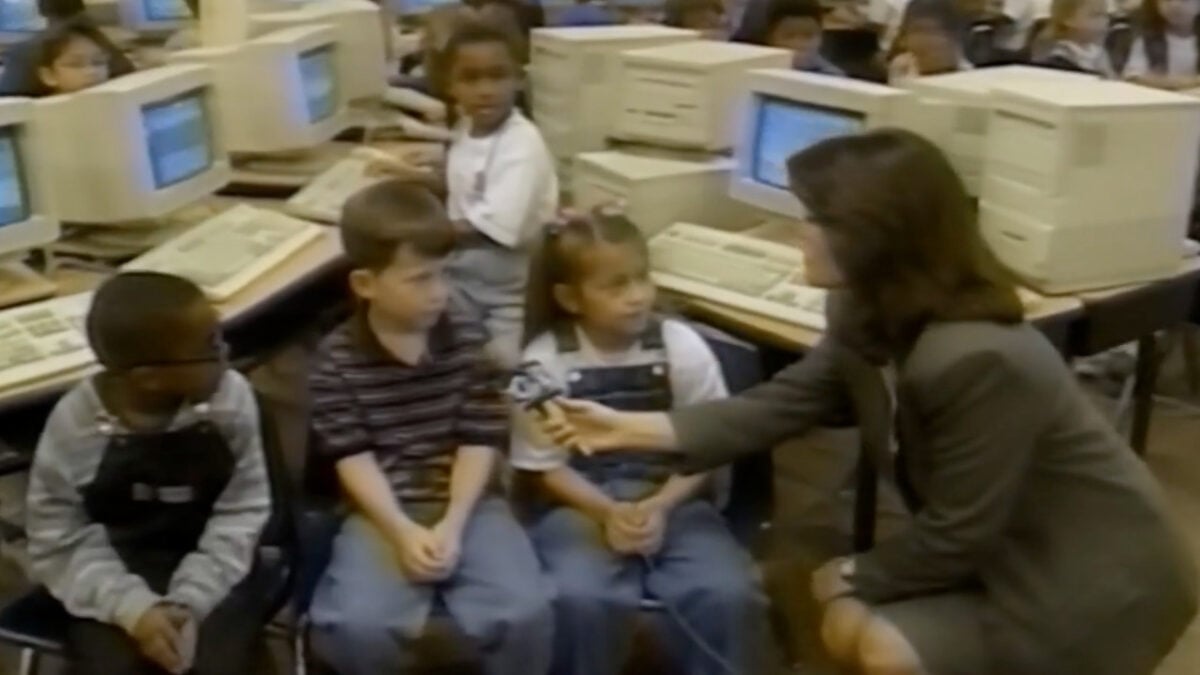
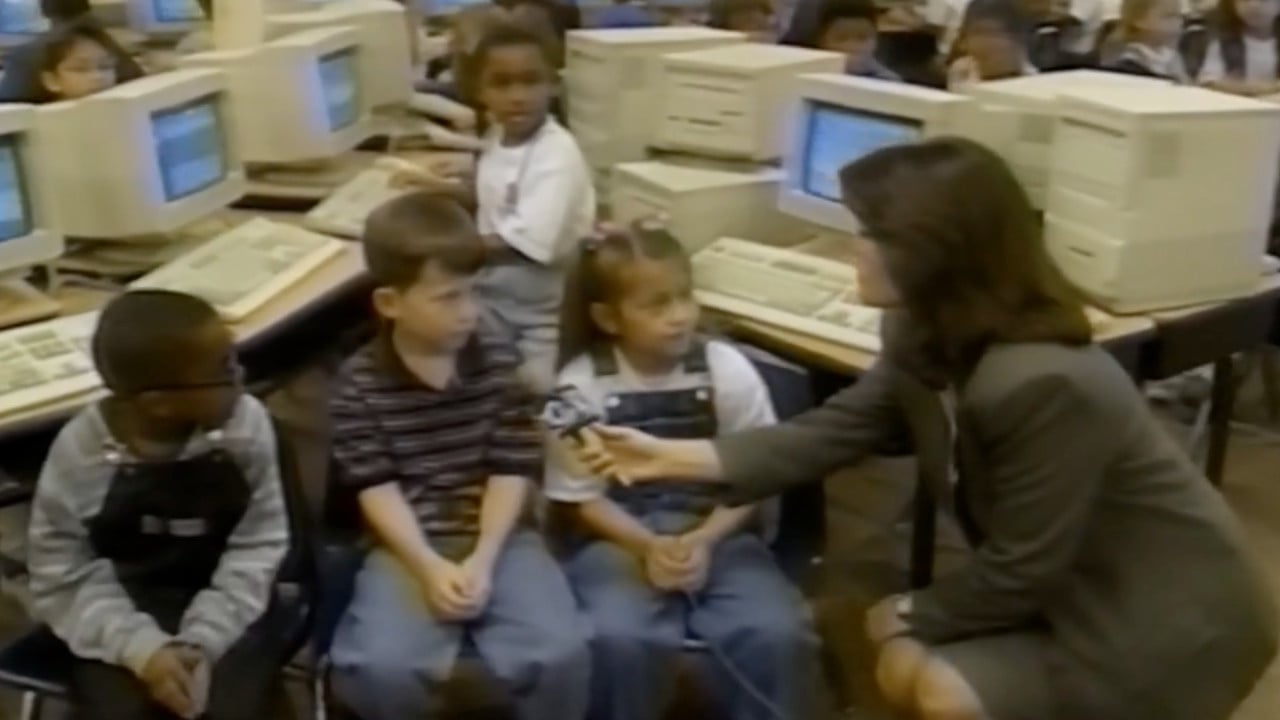
Did you recently see a video of kids from the 1990s predicting how computers would be used in the future? It’s fake. The video was created using Flux 3 and if you didn’t inspect it too closely, it looks pretty authentic as an artifact from 30 years ago. But it serves as a great reminder that we really can’t trust our own eyes here in 2026.

Justine Moore, a partner at venture capital firm Andreessen Horowitz, tweeted the video last week, writing that Black Forest Labs’ Flux 3 is “exceptional at generating historical footage.” The venture capital firm announced it was investing in Black Forest Labs in 2024.

Moore noted that the last girl in the video was her favorite, perhaps because it has some awkward silences that make it appear much more realistic.

The video has an aesthetic quality that feels like 1990s video and the outfits are decade appropriate. The answers given by the AI kids are also very believable. “They’ll probably do our homework,” one AI-generated kid says. Another responds, “Maybe they’ll make movies for us,” an obvious nod to the agenda of tech boosters who think AI tools will soon replace Hollywood films.

“I think we’ll just tell them what to do,” another fake AI kid says in the video. That one feels like a wink to folks who are worried about AI going rogue. OpenAI and Anthropic have had some experience with that lately.

These kinds of predictions were extremely common in the 20th century. Kids frequently predicted that computers (or robots) would do their homework for them. A few years back I looked at some predictions for robots in the future from kids in the 1980s and they sounded identical.

“I want my robot to do things for my mom and me. I want my robot to do my homework,” one Kentucky first grader in 1988 wrote.

Kids were predicting the same kind of stuff as far back as the 1950s. So it’s clear where the creators of this video were pulling this idea from. But the video presents a unique challenge for the future of humanity.

What happens when people make realistic AI videos that change how we understand history? Obviously this one is fairly innocuous, even if the goal is to normalize AI use through subtle propaganda. But what about people who create new versions of events in history and treat them like newly uncovered video? Perhaps we get an AI-generated wide angle view of the airplane that crashed into the Pentagon on September 11, 2001. Or maybe we get a new angle on the assassination of John F. Kennedy that reveals the president was actually killed by Tiny Tim?

This is just the world we live in now. And we have to navigate it with proper skepticism. Unfortunately, people can be so skeptical that they discount very real photos and videos. Have you heard that some pro baseball players have started to insist Babe Ruth didn’t actually exist? The evidence for this claim is that apparently there isn’t enough video footage of the late baseball great. But it’s a ridiculous idea for so many reasons, not least of which is that we actually have a fair amount of motion picture film showing Babe Ruth in action.

President Donald Trump benefits from the same kind of skepticism in a perverse way. It’s known as the liar’s dividend, where someone can claim that real footage is fake because there’s enough doubt based on the available technology to create a plausible fake video.

I’m not saying that Tiny Tim actually killed Kennedy. I’m just saying that if he really did and there was video proving it, nobody would believe it’s real. And if someone made a fake AI video showing Tiny Tim killing Kennedy there would be people who absolutely think it’s real.

In short, we’re just cooked as a species at this point.


I went running with the Galaxy Watch 9 in London, and it taught me something new


watch9buckinghamfar

Nina Raemont/ZDNET

Follow ZDNET: Add us as a preferred source on Google.


ZDNET’s key takeaways 

  • I went for a run with the Galaxy Watch 9 while visiting London. 
  • Samsung added several helpful features, such as hydration tracking. 
  • Ultimately, it’s an intelligent workout companion that’s lighter (and classier) than the Galaxy Watch Ultra 2. 

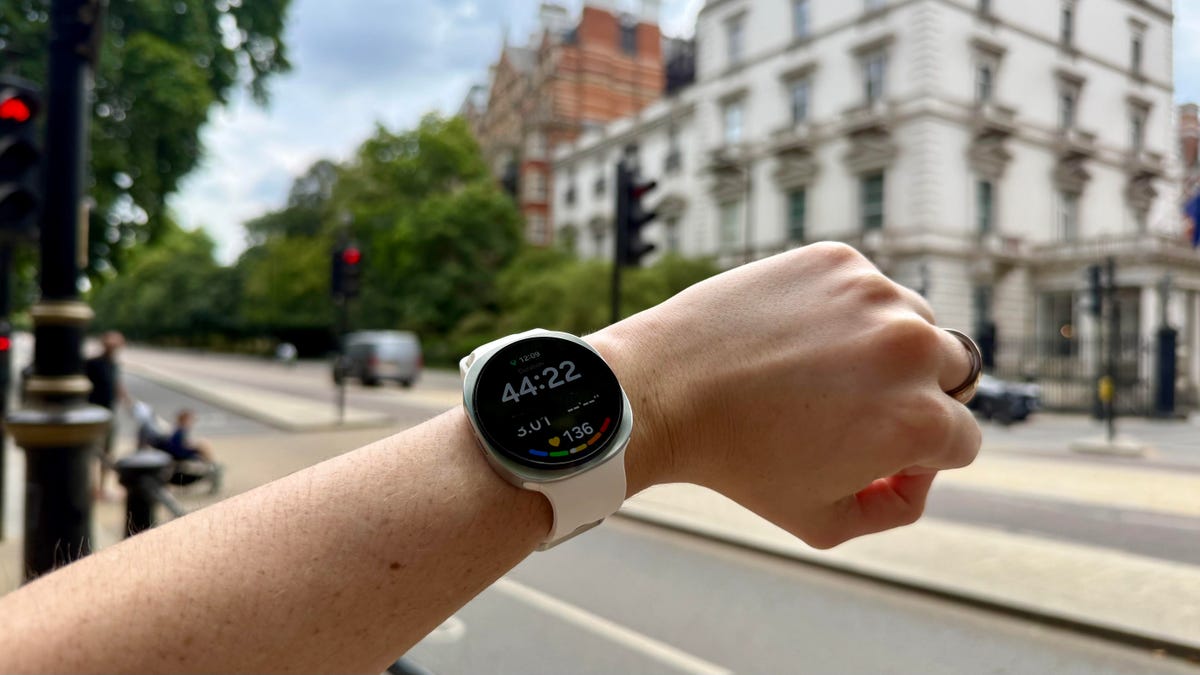
As a tourist, there’s one thing I try to do on each trip I go on — go for a run to see some sights (and get in a few hours of exercise). So, of course, while I was in London for Galaxy Unpacked, I decided to go on a run with the Galaxy Watch 9, Samsung’s newest smartwatch it unveiled on Wednesday. 

I had been testing the Galaxy Watch Ultra 2 for around a week before I got my hands on the Galaxy Watch 9. While I enjoyed the rugged design of the Watch Ultra 2, I’ll be honest, it is a honker of a smartwatch, and its chunky build doesn’t necessarily work with my wardrobe or vibe. The Watch 9, though? Well, it’s a match. 

Also: Everything announced at Samsung Unpacked 2026: New foldables, smartwatches, and smart glasses

For starters, it’s smaller and more comfortable to wear. The white band and silver case look great, and it’s just the type of exercise smartwatch I want, something that’s style-minded but still functional as a workout companion. Here are my thoughts as I wore it on my run around Buckingham Palace and Hyde Park.   

Best smartwatch deals of the week

Deals are selected by the CNET Group commerce team, and may be unrelated to this article.

This thing is light 

Samsung created this smartwatch to be more comfortable to exercise, sleep, and live in, and that was certainly accomplished with the Watch 9. It’s pleasant to run and work in for long periods of time. 

watch9after

Nina Raemont/ZDNET

I’ve worn two generations of both the Pixel Watch and the Galaxy Watch now, and one thing I prefer on the Galaxy Watches is the flattened watch display. Viewing information — whether a text message or my pace per mile — is easy to see on the watch, thanks to the 3,000 nits super AMOLED display. Also, in my opinion, the flatter display makes the watch look a tad classier than the Pixel Watch. 

Hydration guidance is a nice touch 

It’s July, so during my run through Hyde Park and Buckingham Palace, I naturally started to get hot. 40 minutes into the run, I got my first hydration alert through the nutrition function. It told me that I had lost 0.5% of water during my workout, and I should rehydrate with one cup of water. 

Also: Galaxy Watch 9 vs. Galaxy Watch 8: I’ve compared both models, here’s my advice

Rehydrating after a sunny, outdoor workout is not rocket science, and drinking one cup of water after a 40-minute run is nearly intuitive. However, for marathon trainers who are running for hours on end, or cyclists biking 50 miles out in the sun, those hydration alerts could more accurately supplement watch users’ training — especially if you’re pushing yourself to the limit. You can configure this setting in the watch app, so be sure to enable it if you want these alerts. 

I’m still waiting on a Samsung AI health coach 

Don’t get me wrong, I enjoy the Galaxy Watch 9 so far. But if we’re comparing the Pixel Watches to the Samsung Galaxy Watches, I’d be remiss to not mention Google’s AI health coach. I can see all the puzzle pieces for a Samsung AI health assistant coming together on the Samsung Health app — and even an opportunity to beta test an AI health coach coming soon. 

watch9hydration

Nina Raemont/ZDNET

The watch monitors more biomarkers than ever, with new scores for heart health, cardio, blood pressure, and more. An AI health coach could fit into that equation of data with context and plain language explanations, alongside an opportunity for users to ask health questions and contextualize their wellness journey. 

Samsung seems to be taking its time with this feature, but that’s not necessarily a bad thing. AI-powered health devices must be clinically tested and rigorously developed, so as to not provide uninformed users with wrong information — or abuse the health data users provide. 

Also: I wore the Samsung Galaxy Watch Ultra 2 for a week – it’s a true Apple Watch Ultra 3 rival

I’ll get more in depth with the Galaxy Watch 9 soon — particularly to test how it compares with the new flagship, the Galaxy Watch Ultra 2, and its previous-gen counterpart, the Galaxy Watch 8. 


6 Things We Already Know About the 2028 iPhone


Rumors about Apple’s 2028 iPhone are already starting to circulate, offering an early look at how the company plans to evolve the iPhone’s design, display, and cameras.

iphone 2028 punch hole design
The 2028 device will follow the 20th anniversary iPhone, which is set to introduce a display that curves down around all four edges for a near borderless effect. Reports suggest the first version of that design will launch with some visible compromises, and that the 2028 model is where Apple intends to resolve them. As with all rumors this far out, the details remain subject to change.

Because the 2028 iPhone is expected to refine the anniversary design rather than replace it, it should carry over much of what defines the 2027 model. That includes the curved all-glass body with a display that wraps around all four edges, a crater-shaped light diffusion layer that keeps brightness uniform across the curved screen, and a potential shift to solid-state haptic buttons integrated into the frame.

Apple’s goal of moving the Face ID system and front camera beneath the display for a front free of cutouts remains, and the 2028 model may stand a better chance of achieving an uninterrupted display if the technology is not ready in time for 2027. Here are the six key rumors about the 2028 iPhone:

  • Refined curved-glass display: The 2028 iPhone is expected to use a more advanced version of the four-edge curved display debuting on the 2027 model. Where the anniversary iPhone is said to use a magnesium-silver alloy in its cathode layer, which can introduce image distortion and brightness loss in the curved areas, the 2028 model is reported to switch to more transparent indium zinc oxide cathodes. According to Korea’s ETNews, the change should deliver less distortion, more even brightness, and fewer heat issues at the curved edges.
  • Hole-Punch Dynamic Island: DSCC’s Ross Young has said under-display ‌Face ID‌ is unlikely to be ready in time for 2027, meaning the 20th anniversary model may retain a Dynamic Island similar to the one on the iPhone 18 Pro. That would leave the 2028 iPhone as the more likely candidate to take the next step toward a cutout-free front, whether through an even smaller hole-punch or a move to place the ‌Face ID‌ system and front camera under the display.
  • Narrower bezels: The move to indium zinc oxide cathodes is also expected to let Apple narrow the bezel further than on the 2027 anniversary model, bringing the design closer to a true all-screen front. It is one of several improvements ETNews attributes to the more transparent cathode material.
  • Tandem OLED: Apple is reported to be weighing tandem OLED technology for the iPhone as early as 2028, having already adopted it on the M4 iPad Pro. The structure stacks two organic light-emitting layers for improved brightness, a longer lifespan, and better power efficiency than the single-layer panels used in current iPhones. LG Display is said to be promoting a “simplified tandem” approach that stacks two layers for the blue sub-pixel only, though the final decision rests with Apple.
  • ‘A22 Pro’ chip: The high-end 2028 models are expected to move from the 2-nanometer process used in 2027 to a 1.4-nanometer “A22 Pro” chip. Bloomberg‘s Mark Gurman reported that the chip will be built on TSMC’s A14 node, which is said to offer up to 15% better performance than a 2nm chip, or the same performance with 30% lower power draw. TSMC is expected to make the majority of the chips, though Apple is also apparently considering Intel for some of them.
  • 200-megapixel telephoto camera: Apple is reported to have tested a 200-megapixel periscope telephoto sensor in prototypes, but the technology is unlikely to reach the iPhone before 2028, according to the leaker known as “Digital Chat Station.” Morgan Stanley similarly reported that Apple is working to bring a 200-megapixel camera to the iPhone as soon as 2028. The higher resolution would capture greater detail and allow photos to be cropped further or reproduced at larger sizes without a loss of quality.

With the 2028 iPhone still around 26 months away, none of this is settled, and the further out a rumor sits, the more room there is for Apple’s plans to change before the device reaches production. Still, rumors about the device are more relevant than they might first appear.

Anyone buying an iPhone 18 Pro this September on a common two-year upgrade cycle will be due their next iPhone in 2028, meaning this is the model many of this year’s buyers will actually upgrade to. The picture forming now is an early look at what that upgrade could hold, and part of a longer redesign arc that begins with the 2027 anniversary model before reaching its more polished form the following year.