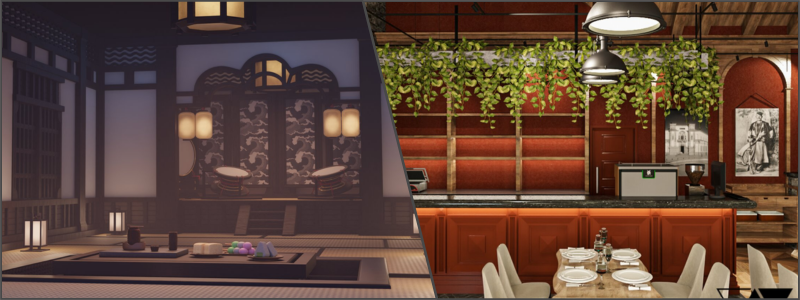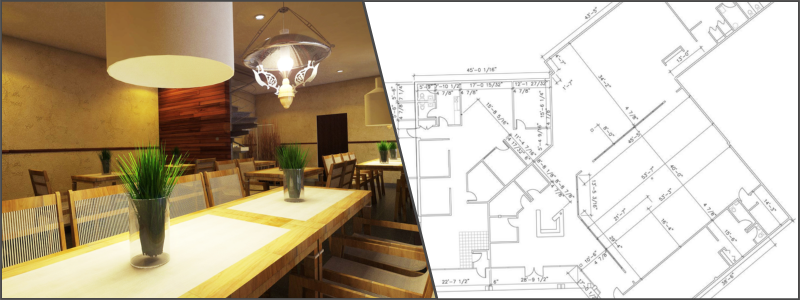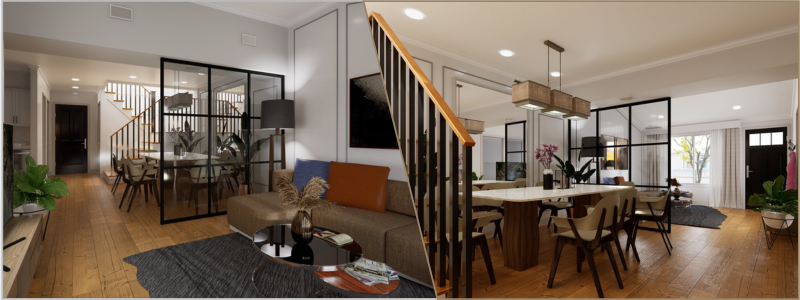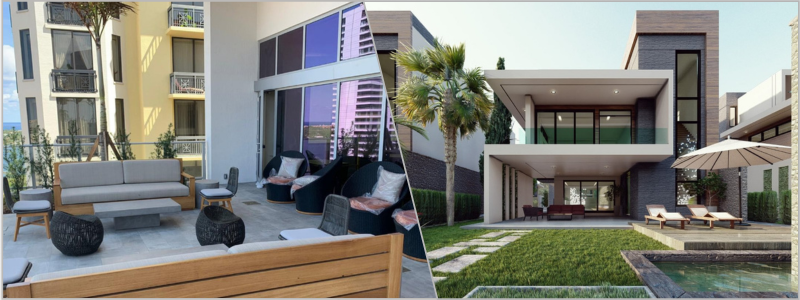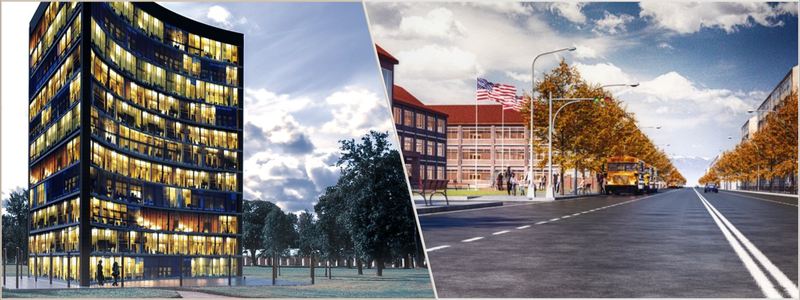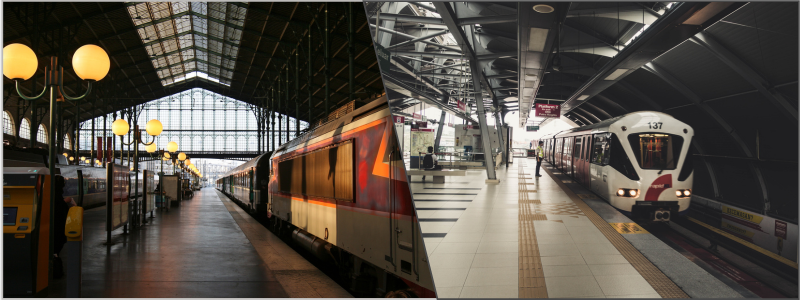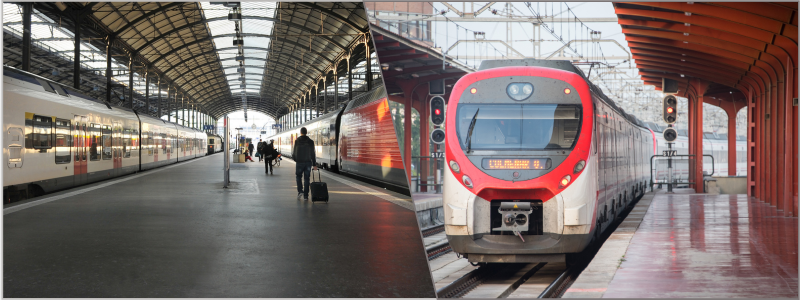
Important Benefits of Public Transportation Train Station 3D Renderings for Companies and Firms


With the cost of quality public transportation and train station 3D renderings services getting more affordable these days, the perks and use cases of this powerful form and tool of communication have also increased. The following are some benefits of public transportation train station 3D renderings for companies and firms in different stages of the project.


:rocket: Table of contents

Benefits of 3D renderings  for the planning stage

1.  Alternative analysis

From the earliest phases of a project, stakeholders must grasp and understand the available alternatives and concepts. 3D visualization services can help clearly and quickly explain various alternatives to those who have a vested interest in the project.

2.  Communication with all stakeholders

Although design and similar technical documents are often made for construction or engineering personnel, 3D renderings are created for everyone regardless of background. They can clearly illustrate complex designs to make them understandable for anyone, including the legal, political, and financial team members, as well as the general public.

RELATED: All you need to know about interior and exterior 3D commercial rendering services

3.  Long term planning

It is common to break down large projects into a few phases over several years. Various printouts of a quality 3D rendering or a phasing animation from 3D rendering firms can give a clear presentation of the process, even if the project lasts for decades.

4.  Presentation for requests for funds

Transportation and other projects are often worth millions and even billions of dollars at times. With such figures, it won’t be too much to say that the stakes are high. Presenting alternatives or early concepts for funding requests with precise 3D renderings can quickly convey the idea while reducing the possibility of misunderstandings.

5.  Public feedback

Different phases of the project usually involve public feedback. Opting for 3D renderings instead of simple ages can change the involvement of the public in the project, turning them from enemies into allies.

RELATED: 3D visualization for bars, businesses, and restaurants: 3D interior rendering services 

6.  Stakeholder input

Stakeholders from various disciplines can give their feedback during the planning stages. Using 3D photorealistic rendering designers to draft renderings for meetings can make everyone involved quickly explain and point out their project vision without leaving anything to mere imagination.

3d architectural visualization experts

Benefits of 3D renderings for the design stage

7.  Integration of aesthetics with current conditions

Artistic detailing and aesthetic considerations from years ago can clash against newer and more contemporary designs. 3D renderings can provide a quick comparison of the appearance of the latest design among the existing aesthetic details.

8.  Aesthetics

It’s not just desirable to ensure that a project looks good because it is often required, with a specific part of the budget allotted, particularly for aesthetics. It can affect most people who are part of the project’s design, from landscape architects to roadway designers. 3D rendering designers make it easier to envision and coordinate aesthetics.

RELATED: Better 3D rendering and retail store design services for commercial spaces

9.  Bridge aesthetics

Bridges are among the most critical categories of any public transportation project because they require a substantial chunk of the budget in both construction and design. Trying different designs, materials, and artistic details with 3D renderings can guarantee that the correct option will be selected for the budget and location of the project in question.

10.   Line of sight

Another important aspect of public transportation design is line of sight, and 3D renderings can help transform the process from cutting 2D cross sections to instantly showing exactly what drivers will see from any part of the project.

11.   Marquee location

Public transportation and train station projects usually include huge marquee signs to welcome visitors to places and key locations or destinations. Using 3D architectural visualization services to create accurate 3D renderings can ensure that the correct location will be chosen and stakeholders will give their approval before the start of the actual construction.

RELATED: 3 Advantages of using 3D rendering services for city planning and development

12.   Pedestrian experience

During public transportation projects, it is common to pay close attention to the driver experience. However, even the smallest redesign can affect pedestrians equally. Showing the projects with pedestrians around and on the location, as well as 3D renderings from the perspective of pedestrians, can boost the engagement and excitement of those who might not always be in a car while around the site. This also applies to bicycle riders, who are now starting to become a growing segment of the demographics of modern commuters.

13.   Scenic view study

Public transportation projects may include a particular area allotted as a scenic view now and then. 3D renderings from 3D architectural animators can help pick the best location for these scenic views and show how they will look upon completion. This comes in handy for places that might not yet be accessible, such as those located deep into a forest that will soon be cut for a part of the roadway or railway.

14.   Sign Placement

Numerous factors affect the placement of signs, such as vegetation, structure locations, and clear zone distances. 3D renderings can help the process by visually checking the best spots for sign placement, specifically for major signs.

RELATED:  How 3D virtual reality rendering is shaping the construction industry

urban planning and design services

15.   Solar or shade studies

Public transportation projects not only change views or commutes because they can also shine where it doesn’t. Conducting a solar study can help show where the changes take place and how these might or might not affect those near or within the project’s boundaries.

16.   Utility conflict

Conflicts between an existing utility, such as a water main or high-pressure gas line, and a public transportation project can make or break its budget. Coming to the meeting with a utility company prepared and armed with 3D renderings can help communicate the problem right away, paving the way for the discussion of alternatives without any misunderstanding or confusion.

Benefits for the construction stage

17.   Advertisements 

Sometimes, after the contractor has completed a job, it’s not easy to prove why they were suitable for the job. 3D renderings can showcase the unique methods they used. These tools can also be useful for ads on their website and trade publications.

RELATED: How the construction industry benefits from architectural visualization services

18.   Construction animation 

Showcasing all or just some parts of a public transportation project in 3D renderings can sometimes convey even the most confusing concepts. For instance, using 3D renders from expert 3D construction rendering professionals to show the correct installation of soil nail walls will ensure that new members of the construction team will be familiar with the concept before the start of the project.

19.   Construction phasing 

3D renderings of construction phasing can help contractors snag more projects and help in their management. A meeting with 3D renderings that showcase the sequencing of the project will quickly demonstrate the whole process instead of a tedious meeting that goes on for hours using sketches and images. 

20.   Project coordination 

Engineers, project managers, operators, workers, and hundreds of other members must be on the same page during a construction project. While meetings are the most popular approach to address this issue, 3D renderings can simplify the approach further.

RELATED: Urban planning and freelance CAD design services cost, rates, and pricing for companies?

21.   Public outreach 

One of the contractors’ obligations is to communicate the project’s progress to the general public. It is often done through websites, statements, or media personnel. Precise 3D renderings from 3D commercial rendering designers can make the whole process so much easier.

22.   Safety videos 

3D renderings can show why and how safety procedures are implemented, either for a specific project or in general. Depending on the specific use case, these can often be done faster and cheaper than simple videos.

23.   Traffic control phasing 

Many public transportation and train station projects require some kind of traffic control. It might be among the most frustrating aspects of a project, even more so from the public’s perspective. A traffic control 3D rendering can prepare commuters and address misconceptions regarding the project.

RELATED: How architectural design services are creating sustainable architecture

24.   Utility discovery 

Billions are lost every year because of construction accidents. However, 3D renderings can help mitigate these losses with the help of CAD files, as-built drawing services, and below-ground scans. Many construction equipment today even use built-in 3D renderings.

25.   Vendor-to-contractor communication 

A specialty vendor implements most of the elements of a public transportation project. These vendors can demonstrate the benefits or usefulness of their products by developing 3D visualization visuals and diagrams. These could range from new traffic signal designs to clever MSE wall panels.

26.   Winning work 

Any contractor knows that the main difference between not winning and winning a job often calls for creative approaches in proposals. Today, it seems that an increasing number of contractors are using 3D renderings made specifically to win more projects, and this trend will most likely continue well into the future.

RELATED: How various companies and industries embrace 3D rendering services and applications 

The bottom line

Public transportation and train station 3D renderings are revolutionizing the construction and design of public transportation hubs. These tools improve communication and visualization, save costs, and efficiently plan space. As urban areas continue to grow and with the increased demand for efficient public transportation and trains, rendering technologies and urban and design services will continue to play a more significant role in developing architecturally impressive stations that are also highly accessible, user-friendly, and functional.

How Cad Crowd can help

Cad Crowd is the best resource for reliable providers of public transportation and train station 3D renderings for companies and firms of all sizes.

Get a free quote today!

author avatar

MacKenzie Brown is the founder and CEO of Cad Crowd. With over 18 years of experience in launching and scaling platforms specializing in CAD services, product design, manufacturing, hardware, and software development, MacKenzie is a recognized authority in the engineering industry. Under his leadership, Cad Crowd serves esteemed clients like NASA, JPL, the U.S. Navy, and Fortune 500 companies, empowering innovators with access to high-quality design and engineering talent.

Connect with me: LinkedInXCad Crowd

Marketing Real Estate: Top Real Estate 3D Rendering Trends for Companies and Firms


Do you feel like you’re doing everything to pre-sell more properties but that you can still do better? Don’t worry because you’re not alone.

A lot of realtors and developers today use the most state-of-the-art sales tactics only to be disappointed with the slow flow of deals. Is there something you can do to maintain a steady stream of prospects that also brings more sales fast? It is where real estate 3D rendering services can help convince more clients to sign the dotted line.

Thanks to real estate 3D rendering, real estate or development businesses can get and use photorealistic visuals that they can use for promoting properties, including those that are still under construction or aren’t even built yet.

Real estate CGI is made not only with still images but also with interactive 3D panoramas, digital videos, and virtual reality experiences. When used smartly and correctly, these types of content can be elevated to the next level by your promotional strategies: they have the potential to improve effectiveness.


:rocket: Table of contents

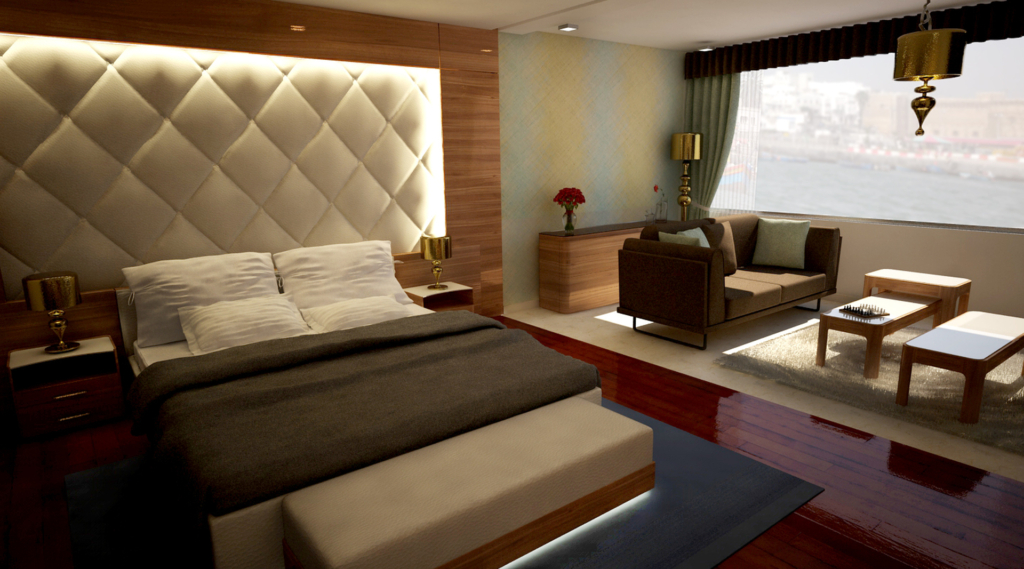
3d bedroom for real estate

Artistic and cinematic rendering

Real estate renderings are no longer limited to just technical representations because they have evolved into more enticing cinematic experiences and artistic experiences.

Expert 3D visualization artists and real estate professionals are using new original approaches that blend mood, atmosphere, and storytelling in their renders.

Presentations appeal to the public and clients because they are visually stunning and emotionally engaging.

Setting up the movement and camera position allows real-time exploration and navigation of the 3D model. Companies can manually control the camera and define its paths to show different angles and perspectives of the design.

Movements of the camera can be fluid and smooth to give stakeholders and clients a more immersive experience.

Cloud rendering

Cloud rendering is another trend in real estate 3D rendering. It is an excellent technological solution that helps 3D visualization service providers use the power or remote computer cluster for rendering CG imagery.

Since cloud rendering is a type of on-demand service, it gives access to an almost endless resource of many GPUs and CPUs to work on their files. This only happens while it renders visuals and takes time. It increases computer power allocation—speeding up the whole rendering process.

Most specialists in the CGI production industry have stated that the use of cloud rendering helps them get 3D renders in just a matter of minutes. Using in-house render farms, on the other hand, would have taken hours to do the same thing.

Through this reduced time, 3D artists can simultaneously work on multiple projects. It means a lot to real estate professionals as they can significantly improve their communication with project stakeholders through faster design updates and iterations.

Cloud rendering services are also anticipated to see a significant growth rate in the coming years. Thus, it is safe to say that the surge of ultra-fast visualization will happen and might even become the new norm sooner rather than later.

Emphasis on materials and detailing

The rise of 3D rendering technology resulted in the growing emphasis on accurate and detailed representations of finishes, textures, and materials. Real estate companies can now present intricate details with incredible realism and precision, including meticulous patterns, ornate facades, and interior elements. This trend allows stakeholders and clients to better envision the quality and aesthetics of the design.

It is vital to apply the correct textures and materials to the 3D model to achieve more realistic renderings. Modern real-time rendering supports different material properties, including transparency, roughness, bump maps, and reflections. The textures and materials must be chosen with great care and applied correctly to the model’s different elements for the accurate representation of their counterparts in the real world.

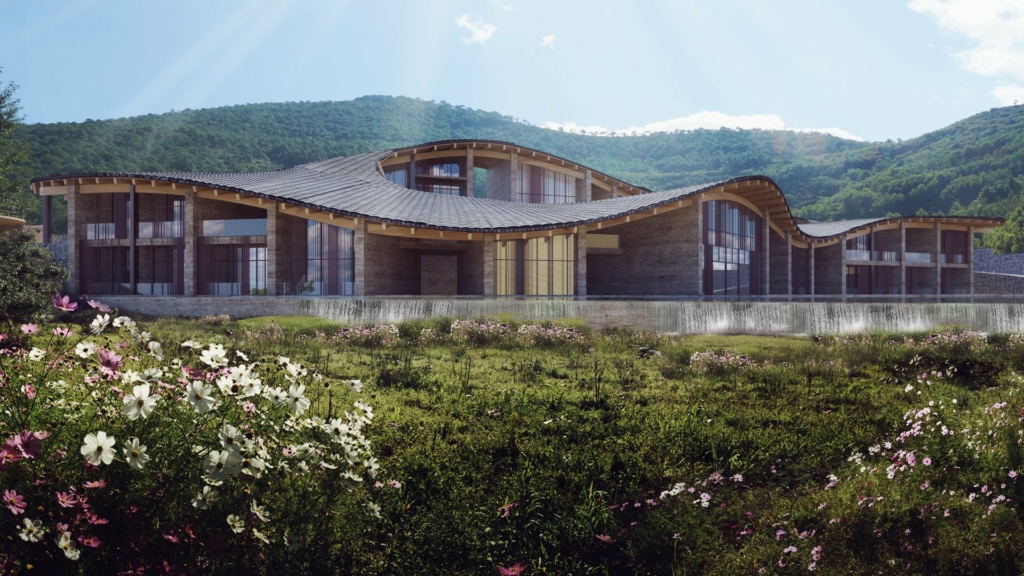
3d real estate exterior luxury hotel

Environmental sustainability

With sustainability becoming one of the primary considerations in real estate, it is only expected for it to be one of the trends in 3D rendering. Real estate companies and firms are using different rendering techniques more and more to analyze and simulate the environmental performance and structure of buildings. These include thermal performance, daylighting, and energy consumption. It lets them optimize designs for sustainability and energy efficiency to create more environmentally friendly buildings.

Vertical gardens are perfect examples of environmentally friendly architectural services. It involves the application of different shapes, textures, and levels of vegetation to create visually dynamic and stunning green walls. 3D vertical gardens use a combination of plants with varying growth patterns, foliage colors, and heights to add dimension and depth to the space. This can also transform flat surfaces into living and vibrant works of art.

This strategic three-dimensional plant arrangement creates an ever-changing and immersive experience wherein the interplay of shadow and light further highlights the complexity and beauty of vertical gardens.

Automation and AI integration

Automation and artificial intelligence, or AI, have now found their way into many industries, including real estate rendering. AI-powered tools and algorithms can help automate repetitive tasks, allow efficient generation of more realistic scenes, and streamline the entire rendering process. The integration of automation and AI can reduce costs, enhance productivity, and give designers more time to focus on design refinement and creativity.

AI techniques, including GANs or generative adversarial networks and procedural generation, can come in handy for generating realistic and complex environments. AI algorithms can also produce realistic 3D assets, including landscapes, buildings, and expert furniture design, according to design constraints and the given parameters.

This trend in real estate rendering makes way for the rapid production of scenes on a larger scale and improves the level of realism and detail in renderings.

Photorealistic rendering

There is an increasing demand and clamor for photorealistic rendering in real estate, and this is no surprise. Clients, after all, expect highly realistic and detailed renderings with close resemblance to the final product. The availability of high-quality materials and textures, enhanced hardware capabilities, and advancements in rendering software all made it possible for 3D renderings to achieve excellent levels of realism.

Photorealistic renderings offer potential investors and buyers a lifelike glimpse of the property before its construction or renovation with the help of elements like specialized landscaping, textures, materials, and lighting.

This trend in real estate marketing is an essential tool for marketing as it helps convey the unique features, aesthetic appeal, and ambiance of a property. It helps clients make better decisions and imagine themselves being in and using the space.

Real estate companies and firms can also use photorealistic rendering to present their designs in such a way that is more enticing while helping them with their pre-selling and marketing efforts.

3d apartment for real estate

Real-time rendering

Another significant trend that has been enjoying a surge in popularity for the past few years is real-time rendering. With the rise of real-time visualization software and powerful GPUs, real estate companies can now engage in real-time creation and manipulation of 3D models to make the design process more efficient and interactive. Real-time rendering allows faster decision-making, instant feedback, and quick design iterations.

A specialized rendering software or engine is also used to make real-time rendering possible. These engines use state-of-the-art optimization algorithms and rendering techniques to produce interactive frame rates for high-quality renderings. It is how realistic walkthrough experiences, virtual reality tours, and 3D animation are made.

Storytelling

Storytelling is one of the key trends in real estate rendering. Technically, this is not a new trend, but it’s poised to continue in the years to come without any signs of going anywhere at all.

The use of storytelling puts more aesthetic and thought into images to the point that you will still find yourself mesmerized even after looking at them several times.

If you wish for your real estate ads or project presentations to appeal to the emotions of prospects and clients, tapping into storytelling’s undeniable power is something you shouldn’t miss out on.

AR and VR

Augmented and virtual reality technology firms have been making dramatically immense advancements, which are extensively utilized by real estate. With VR, users can have a more realistic and immersive experience through virtual walkthroughs of a space or a building.

On the other hand, AR overlays the virtual elements into the real world to allow real estate companies to envision their designs in the existing environment. AR and VR make it easier for clients to understand the design and bolster communication among all the involved parties.

A 3D real-time architectural walkthrough is an excellent example of a VR experience. Virtual real-time walkthroughs offer the ability to interact with objects, move freely in a virtual space, and make on-the-spot design modifications. It allows viewers to fully understand and experience the materials, spatial qualities, and design intent of the project in general before its physical construction.

This experience driven by technology improves communication, allows better decision-making, and facilitates visualization of designs in ways that weren’t imaginable in the past.

How Cad Crowd can help

Real estate marketing has never been easier with today’s innovative trends. Reach out to Cad Crowd, and we’ll connect you with top-notch professionals to deliver outstanding results tailored to your needs.

Get a free quote today!

author avatar

MacKenzie Brown is the founder and CEO of Cad Crowd. With over 18 years of experience in launching and scaling platforms specializing in CAD services, product design, manufacturing, hardware, and software development, MacKenzie is a recognized authority in the engineering industry. Under his leadership, Cad Crowd serves esteemed clients like NASA, JPL, the U.S. Navy, and Fortune 500 companies, empowering innovators with access to high-quality design and engineering talent.

Connect with me: LinkedInXCad Crowd

Camera Angles in the 3D Architectural Visualization Realm for Your Projects


One of the most critical aspects of creating a compelling project brief is to communicate the correct camera angles. After all, your chosen views have a direct and drastic effect on the impression that the audience will have. The angle presented to your client is the first image that will be imprinted to their brain as the first impression of your projects.

Using the right camera angles will help you redirect the focus of the attention of your audience to the specific features you wish to highlight. This article talks about presenting camera angles with 3D architectural visualization services for projects.


:rocket: Table of contents

Camera angles as essentials in 3D architectural visualization

Modern 3D visuals that use CGI have made it easier and possible for buyers to view and explore the corners and spaces of properties even before their actual construction. Camera angles play a critical role in the customer’s exploration.

The dramatic enhancement of the perspective of a building is mainly dictated by the specific camera angles chosen and used during rendering. Simply put, the best camera angles can breathe life into rendered projects and transform expert 3D visuals into vivid and realistic depictions just by seeing it in the right angles.

Camera angles for 3D architectural visualization have now become a vital tool for both architectural companies. They are the primary features that make 3D architectural visualizations more appealing and impactful. The right camera angle will not only improve the final results but also showcase the best features that your customers are meant to see to ultimately help them decide.

This is why it is essential to know the best camera angles that will strike the perfect visuals to show off a balance between the fine architectural details of a building and how it complements the surrounding area.

The following are some of the best camera angles in 3D architectural visualization services for your projects.

RELATED: Optimal angles for real estate rendering services: immediately enhancing your listings

exterior skyline angle of an apartment

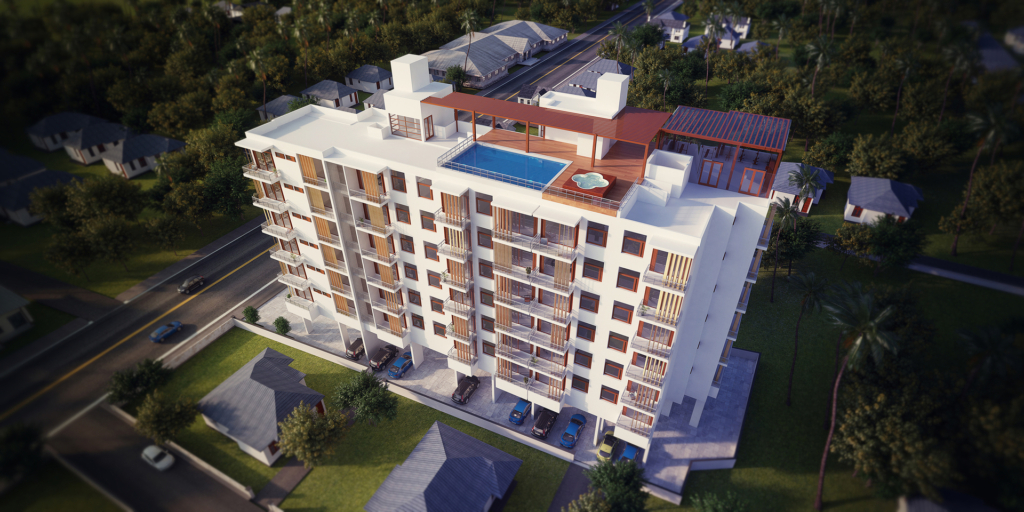
Bird’s eye-view or aerial shot

Also called a context shot and aerial view, a bird’s eye view presents either the interior or exterior visuals from a point where the overall picture can be seen, just like a bird flying over a property. Exterior or Interior rendering services made using this approach give the image its context. These angles are perfect for architectural structures with unique surroundings and landscapes.

These camera angles can be produced from the location’s drone shots or developed from scratch in 3D software. These top-down perspectives can put the property within the context of the surroundings. When done right, aerial shots can produce an ideal sense of scale.

Bystander’s eye-level angle

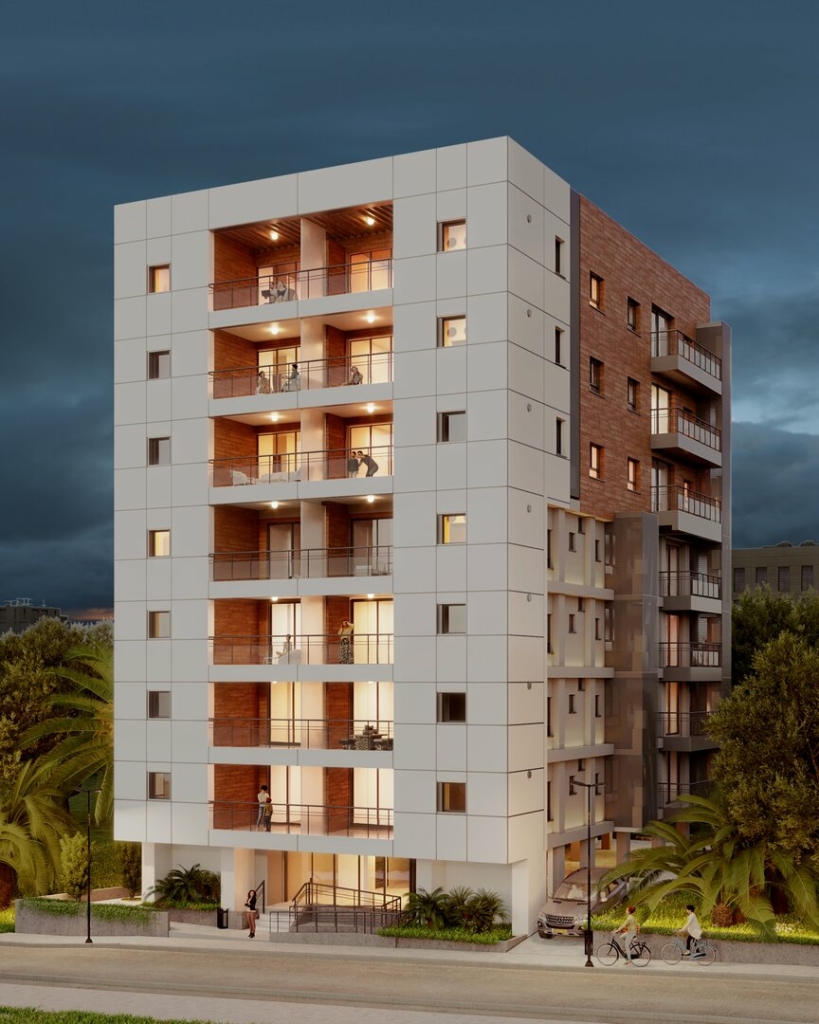
Also called the street view, the name bystander’s eye-level angle is self-explanatory. The angle shows the property from the perspective of a passerby. These angles are recommended for exterior 3D architectural renderings services because they give the visuals a sense of life.

Potential property buyers can get a clearer idea of how well a building will blend in with the urban context. The primary goal of this angle is to give the stakeholders a scaled view of the construction.

Close-up angle

Close-up angled 3D shots give realtors the perfect opportunity to entice more potential buyers while showing off the property and all its exquisite details. 3D architectural visualization made in this angle emphasizes all the details of the architectural structure.

These camera angles can portray elegant structures, interior or exterior dimensions, textures, ornate design elements, materials, and other aspects. These all demonstrate the architect’s craftsmanship and entice buyers to sign the dotted line.

Corner angle

Corner angle shots are recommended for interior architectural rendering projects. These camera angles show two different walls in the same room in just one image. Different architectural components including windows, doors, crown moldings, ceilings, rafters, and others are presented to the potential buyers using these CG images.

This specific angle creates a better sense of depth and dimension. It offers the buyers a more visually engaging and immersive viewing experience of the property. Corner views can also work well for exterior shots. These can show a distinct angle where a house’s two sides meet.

RELATED: Top photorealistic furniture rendering techniques for interior design companies 

3d camera angles

Down angle

3D artists recommend the down-angle view for interior architectural rendering services. Down angles give the audience a better view of all the elements of the interior design. It is most suitable for bigger rooms where it can be challenging to capture the whole space at eye level.

Buyers will be able to see the entire layout in just one go using these camera angles. They get a clearer view of the critical determiners, including how the placement of furniture or the décor elements complement the space.

Down camera angles in 3D architectural visualization work ideally for online property listings where there are hundreds and even thousands of potential buyers looking for their dream properties. Aside from online forums and listing websites, realtors also take advantage of these images for their printed marketing materials like brochures.

Elevated angle

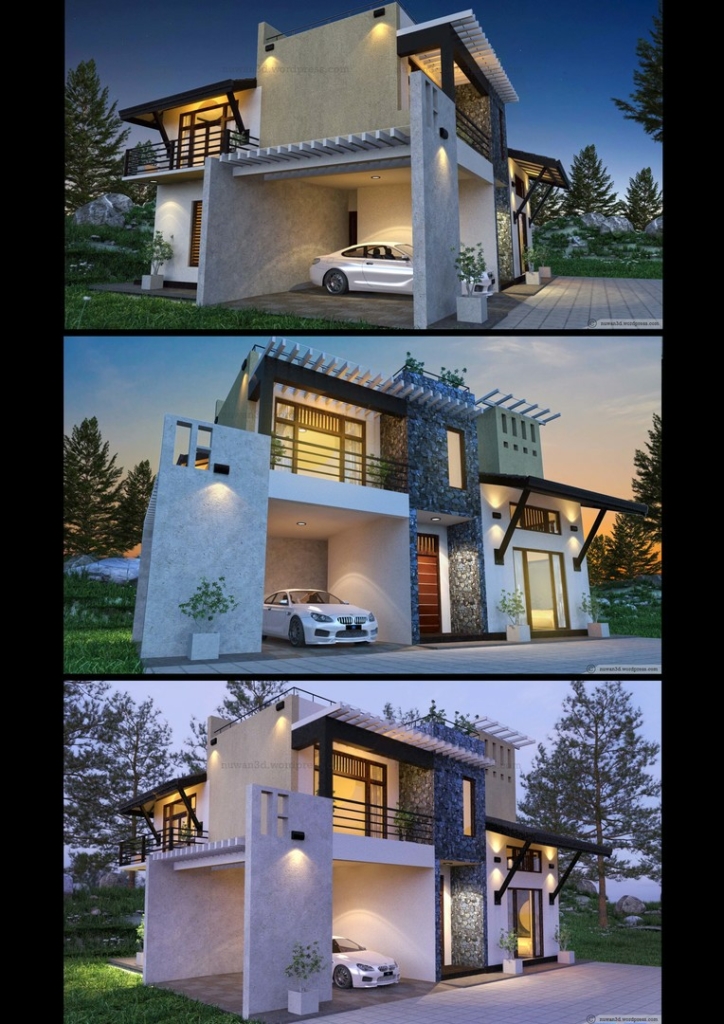
Elevated angles are also called semi-aerial views. Based on their name, these angles present the structure from an elevated view or a slightly higher perspective. These angles for architectural exterior rendering are best proven to give a complete view not just of the property but also of the surrounding local area. These shots show the surroundings to let the viewers see the landmarks close to them if there are any.

Eye level angle

Eye-level shots are informally referred to as the hero shot as far as architectural jargon is concerned. These angles offer a human-eye perspective that puts the audience up close and personal with the property. It makes it easier for them to scale and appreciate the proportions of the scale.

The eye-level exterior or interior angle shows lots of details that mimic points of view in real life. CG images produced using this angle can almost instantly resonate with prospective buyers.

Panoramic angle

Panorama is another ideal camera angle used for 3D architectural visualization presentations. This is among the most perfect interior rendering solutions that can offer potential buyers an immersive viewing experience. Panoramic 3D-rendered images give real estate developers or dealers the most complete views of a property’s interiors.

It’s more preferred to render rooms with unique features or details in a panorama. Since panoramic angles offer a projection of the space in 360 degrees, viewers can fully experience and appreciate the complexity, dimension, and scale of a room. The angle is also recommended for 3D virtual house tours.

RELATED: 3D Rendering: 15 reasons to use 3D photorealistic rendering at your furniture company

Profile or side view

The profile view or side angle shows one specific side of the property. Side views are regarded as equally critical as the rest of the angles. It is primarily because such angles can add a better variation and perspective to the visuals. These angles also make it easier to understand how the property and its surrounding neighborhood interact with each other.

Wide angles

Wide angles are recommended for interior renderings presenting the whole space. These angles are more descriptive instead of focusing on just a single aspect or feature of a property. Wide-angle lenses at 16 to 28mm are used to take these shots in architectural photography. The photographer captures a snap from the rear of the room to cover the whole space in the frame.

With the use of 3D modeling software and technology, professional 3D modeling specialists produce wide-angled views of a property. These architectural renders give buyers a clearer view of the overall design, layout, and proportions of a room.

Wide-angle shots are recommended for images used on social media platforms and property listings. These are also ideal for traditional promotional materials such as flyers, brochures, magazines, banners, leaflets, and the like.

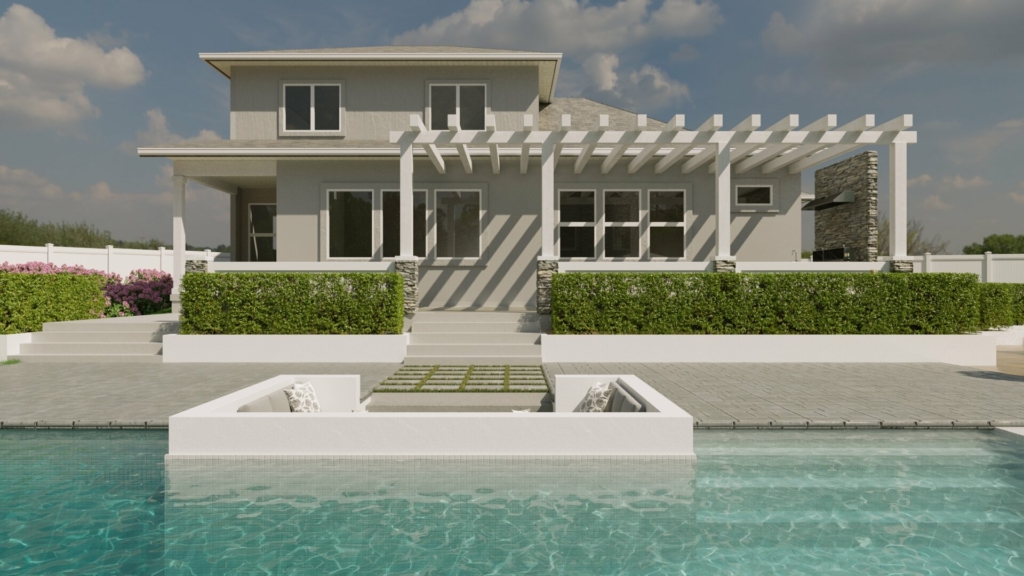
wide angle exterior with pool

RELATED: Creating exterior renderings using 3D exterior rendering services for architects

Tips for capturing the best camera angles for 3D architectural visualization

Here are helpful tips for capturing the best camera angles that can be used for 3D architectural visualization:

Provide elevation drawings to show exterior camera angles. These not only indicate the preferred angles but also offer insights into materials, height, and architectural features.

Adding indications on floor plans for interior rendering and on-site plans for exterior rendering is a great way to show your preferred camera angles.

Hand-drawn sketches are invaluable for 3D modeling or construction projects that are yet to be done.

Creating 3D models is no doubt the best way to get the exact results you’re looking for in both interior and exterior architectural visualization. Showing different views will ensure that the layout and architecture of the project are accurately captured. There is also no room for ambiguity when presenting camera angles. The artists can capture your vision right from the start to avoid revisions.

If you’re unsure about the camera angles to use for your project, work with professional artists who can simplify the job for you. All you have to do is tell them if you prefer top, frontal, or side views. You can even just leave things to the discretion of the artist. Professional 3D experts will choose the best angles that can highlight your project and its most vital features.

Wrapping it up

When trying to determine how to present camera angles in your next project, always remember that it is always better if you also show more detailed visuals.

How Cad Crowd can help

Cad Crowd will help you find the best 3D architectural visualization services that use only the most suitable camera angles that can bring your projects to life! Experienced artists can masterfully fulfill your visions even if your project is still in its earliest stages.

Contact us today for a free quote!

author avatar

MacKenzie Brown is the founder and CEO of Cad Crowd. With over 18 years of experience in launching and scaling platforms specializing in CAD services, product design, manufacturing, hardware, and software development, MacKenzie is a recognized authority in the engineering industry. Under his leadership, Cad Crowd serves esteemed clients like NASA, JPL, the U.S. Navy, and Fortune 500 companies, empowering innovators with access to high-quality design and engineering talent.

Connect with me: LinkedInXCad Crowd

Key Signs It’s Time to Reach Out to Outsourcing Companies to Improve Your Engineering Business


If anybody tells you that outsourcing is a lot of work, you can be sure that they make it sound much more complicated than it really is. Outsourcing is as simple as hiring someone to do a specific job for a specific period of time. You do it when you need to ease the workload for your in-house expert engineering team, or anytime a project requires a talent or skill set your company doesn’t currently have.


:rocket: Table of contents
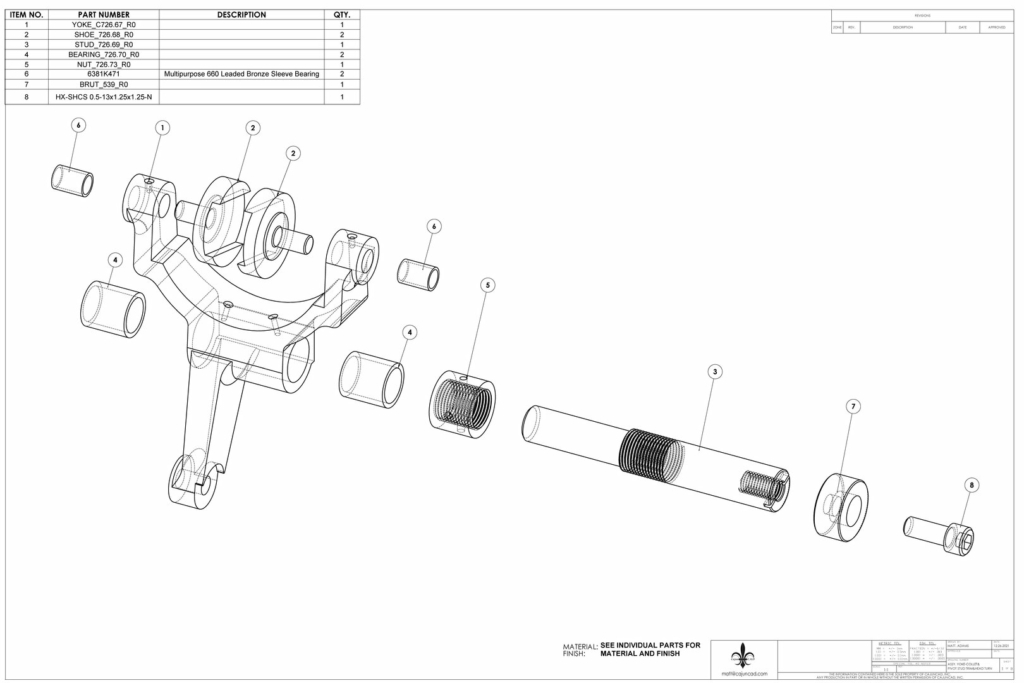

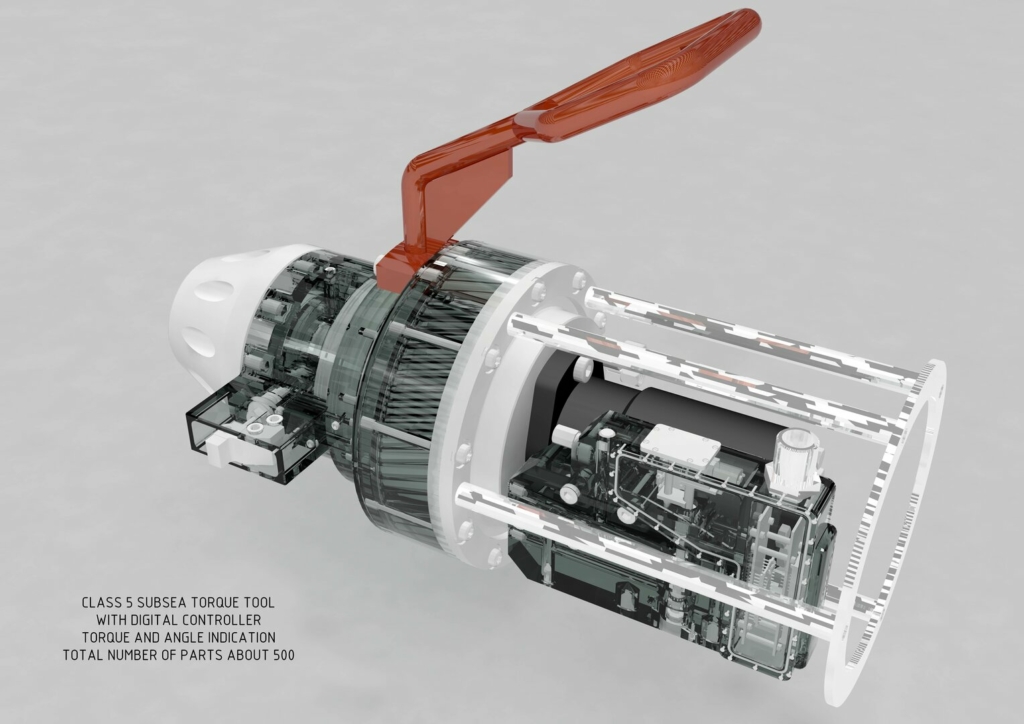
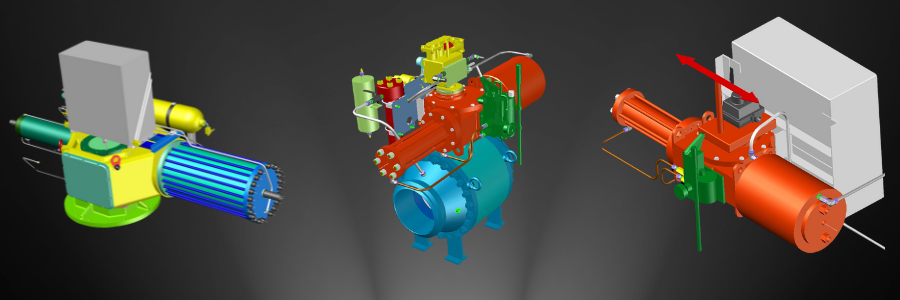
outsourced class 5 subsea torque tool

RELATED: How to outsource 3D rendering services for your company to visualization studios for 2025

Outsourcing is an option

Outsourcing is neither the answer to every problem nor the only way to improve your engineering business. Also, no one can tell you whether you should embrace it wholeheartedly or avoid it at all costs, but there are certain signs to tell you that it might be time to reach out to outsourcing companies.

You find your companies lacking certain engineering skills

No one knows better than you that “engineering” is a broad term. An engineering firm might do its business in architectural projects, automotive designs, civil constructions, IT infrastructures, electronic products firms, medical devices, footwear, fashion accessories, or just about anything else you can think of. No matter the company and regardless of what industry it’s in, chances are it has a team of engineers of different specializations on the payroll. In other words, there’s a team of engineers behind nearly everything it sells. And unless you run a pretty massive corporation that makes products in every category, you probably don’t have engineers from every single specialization.

Sometimes, you may come across a project (or a portion of a project) that necessitates an engineering skill you currently don’t have in-house. For instance, your company mainly produces mechanical toys, but at the moment, you’re planning to penetrate the RC cars market for the first time. As experienced and talented as your existing team of mechanical engineers might be, it’s probably best to leave the electronics design (for the remote controls and the toy cars as well) to an expert electrical engineer. The only problem is that there’s no electrical engineer in your team. Instead of going through all the troubles of hiring another full-time employee, outsourcing is more practical and less expensive.

The task in question isn’t actually part of your business’s core activities

Let’s say you’re in a furniture business. Most of what you sell include handcrafted chairs, tables, cabinets, nightstands, bedsteads, doors and windows made primarily of wood and metal. One day, a client wants you to build a completely “custom” furniture set for a freshly renovated home. This is an unusual project for you because most of the time you sell products of your own designs. Since you have to build the products based on the custom specification given to you by an interior designer, you also need to produce millwork drawings.

Mind you, millwork drawing isn’t actually a recurring task on your part, but you need it in this case nonetheless. And because it’s not a recurring activity, you have little reason to put someone on your payroll for the task when there’s not enough for them to do the rest of the year. You need a drafter to produce the drawing at the moment only, not all the time. You probably have a mechanical engineer or two in your team, but none of them have any experience producing an actual millwork drawing. For this project only, you must produce and send the drawings to the designer, but then again, it’s not part of your main business activities. So, outsourcing is the clear solution here.

RELATED: How to select a 3D furniture rendering services company for photorealistic results

Or, the tasks are actually easy, but time-consuming

These tasks can be anything from keeping tabs of the to-do list to maintaining social media presence. They’re not exactly difficult, but you just can’t find the time to work on them on a regular basis. For example, making appointments with potential clients doesn’t seem like much, but it’s still an important thing to do. The same thing applies to maintaining your website or social media. Remember that posting a weekly update of your products, uploading pictures of new designs, and replying to comments on your YouTube channel are also parts of your business marketing strategy.

In the middle of a hectic workday due to a looming deadline and all that, is it reasonable to expect an engineer to take photos and edit videos for social media posts? No, it isn’t. Can they do that? Of course, they can. But it’s not a question of whether they can – it’s about whether they should. Asking an experienced engineer to handle social media marketing is an inefficient use of resources. You don’t want a mechanical engineer to get busy with Twitter and YouTube, when you can use the expertise for bigger, more challenging tasks instead. So, why don’t you just outsource the marketing parts to a specialist?

oil and gas instrumentations

It’s time to scale up the business

While it’s always exciting to finally come across the opportunity to scale the business up, you can’t help but to feel a bit overwhelmed by the prospect of handling much more projects than what you’re accustomed to. As your business grows, there will be new challenges and obstacles along the way, but the most difficult part usually happens during the transition period as you’re scaling up. Suddenly you find yourself in need of a bigger engineering team, and there’s no way you can get new hires quickly enough to fulfill the demand.

Suppose you run a startup architectural firm that specializes in small to medium-sized houses. After a few years in the business, your reputation is moving up in the world. More orders are coming in; some of them involve building bigger-than-average houses. It’s the kind of opportunity you’ve been waiting for a long time, but at the moment, with your existing team of engineers, there’s no way you’re going to get the job done on time. Because hiring new people is a slow process and that you need the reinforcements today, outsourcing some of the tasks to a team of experienced engineers is the obvious answer to the challenge. This is how you can maintain the momentum and make progress without getting overwhelmed by the additional workload.

RELATED: How successful companies use industrial design services for product development & CAD design

You’re struggling with time management

Any business has its ups and downs. There are times when you have a good sales number, but there are also those weeks when the business feels like it’s as slow as it can get. But when the latter happens more often than you expect, numerous factors could be at play. It takes a little bit of investigation to pinpoint the exact problem, but if it turns out that clumsy time management is the culprit, you probably stand a good chance at fixing it by hiring an external firm to assist with productivity.

Although poor time management probably doesn’t cause too much trouble at the beginning, leaving the issue unaddressed can negatively affect sales. You have a pile of unfinished projects on the desk, and the pile just keeps getting higher, even if it seems like you work overtime every day. Outsourcing doesn’t necessarily mean handing over an entire project or two to an external firm. You’re still in complete control of what tasks to outsource and what duties for the internal team to handle. Ideally, the in-house engineering team takes care of the most important parts of the job, whereas the external firm works on minor chores. For example, in an architectural project, the in-house team determines the style, design, construction planning, and budget calculation, while the external team does the on-site survey and 3D rendering services.

The business needs to reduce operational cost

One of the most common misconceptions about outsourcing is that it tends to add business operation cost. In reality, it’s the exact opposite. Everybody knows that cost reduction is among the main advantages of outsourcing. When you’re working with an outsourcing partner, you pay for what you need when you need it. If some external talent can get the job done, you save money by not keeping anyone (to do the same job) on your payroll. This is especially true when business is slow.

For instance, you’re hired to do an interior renovation project on a medium-sized house. You have a small team of engineers to handle everything, except the 3D floor plan services. It all comes down to several options: you hire a full-time 3D render artist, you invest in training, or find an external talent to produce the image. Needless to say, the last option is the quickest and most practical. If you’re doing it right, you can even get an experienced outsourcing partner to produce professional-quality rendering – all without spending too much money.

You’re in desperate need for innovation

When your engineering team has been working on the same kind of projects or designs over and over again for many years, there are times when the company feels like it’s not moving toward innovation. It’s true that you should not fix what’s not broken, but sometimes that’s exactly what you need to do to be innovative. A fresh perspective is hard to come by when you’re an insider. You’re too close to the job to the point where you just can’t afford to think outside the box. At the same time, it shouldn’t come from someone who’s too far detached from the job because it might miss the mark as well. The fresh perspective must be from an experienced professional (or an expert if you like, in the engineering industry) who also understands the market. You might hire this person to function as a consultant, an educator, or a mentor to get the creative mindset moving along in the company.

RELATED: How are product concept design services used to innovate during product development?

yoke sub assembly

How Cad Crowd Can Help

Outsourcing might sound scary, and even more so if you haven’t done it before. Here at Cad Crowd, we strive to make things simple and easy for our clients. We help you connect with thousands of experienced professionals and experts from all industries to help you tackle various challenges, ease the workload, and propel your engineering business toward improvements. Give Cad Crowd a call today, and we’ll give a detailed walkthrough on how we get things done and how you can benefit from our partnership.

author avatar

MacKenzie Brown is the founder and CEO of Cad Crowd. With over 18 years of experience in launching and scaling platforms specializing in CAD services, product design, manufacturing, hardware, and software development, MacKenzie is a recognized authority in the engineering industry. Under his leadership, Cad Crowd serves esteemed clients like NASA, JPL, the U.S. Navy, and Fortune 500 companies, empowering innovators with access to high-quality design and engineering talent.

Connect with me: LinkedInXCad Crowd

13 Mistakes When Employing 3D Architectural Visualization Specialists for Companies


The expertise brought by the experience of 3D architectural visualization specialists can boost your projects with that extra oomph they need to stand out among others. Unfortunately, not all 3D specialists are made equal, with some falling short of their promises of making your visions come to life. Here are some of the most common mistakes that you may overlook when gathering your dream team of 3D architectural visualization specialists for your company’s projects.


:rocket: Table of contents


13 mistakes when employing architectural visualization specialists

Mistake #1: Expecting turnarounds in a snap of a finger

Let’s be for real here: your 5-minute instant noodles taste nothing compared to the pasta made from scratch you get from restaurants. Likewise, 3D architectural visualization with top-notch quality also takes some time to generate. Depending on the project’s complexity and coverage, it may take a few days or weeks. You might end up disappointed with some half-cooked output if you try to rush the process.

In order to ensure that you will be given a well-designed output, you have to remember to communicate a realistic timeline aligned with sufficient resources to your specialist. Setting expectations that are aligned on both sides can save you from frustrations and misunderstandings, ultimately making sure that you and your specialist are on the same page when it comes to various things, such as turnaround time.

RELATED: Freelance 3D rendering or photography for architecture: which is better?

Mistake #2: It’s NOT all about the price

A 3D architectural visualization specialist who offers rock-bottom prices won’t probably deliver the highest quality results, but this does not necessarily equate that specialists with skyrocketing prices will always give you the best results. While cost is still one of the things that you should consider, you still need to review and assess the specialist’s client reviews, portfolios, and interactions.

Always keep in mind that the value that a specialist brings to your table is your top priority, as this is what will be reflected in your projects, regardless of the price you pay. The ideal is to strike the perfect balance between fair pricing and quality.

Mistake #3: Not reviewing the software guidelines thoroughly 

With the new and fancy technology we have today, we also have different 3D modeling software programs for different purposes. There are those that only create 3D prints, but some can even create printable 3D models for designers and 3D artists. Although all software programs share the same basic features, you might need to manually align and adjust some features to properly cater on the finer details you want to work on.

RELATED: Visualize your dream home with 3D architectural visualization services

For example, some of the software programs can automatically set the thickness of a manual, but some might need some human intervention. Depending on which specific software you’re using, you might need to manually set the printing sizes, join the shells, and watertight the models. The solution for all these can be found in their respective software guidelines.

To get started, watching tutorials are always a first step so that is not a bad idea. But discussions made by humans in the community such as official forums and websites are also a step closer to solving whatever problem you encountered while using the software.

3d interior rendering company (2)

Mistake #4: Not laying out the whole plan

Before handing over your project to a 3D architectural rendering professional, you have to make sure that you brief them thoroughly regarding the finer details of your project. An inaccurate and incomplete briefing will most likely result to an unaligned vision that will only cost you more money and time in the long run.

RELATED: What is architectural visualization and why architectural rendering services use it

Here are a few key details you need to make sure are discussed comprehensively with your specialist:

  • Define the layouts of the rooms and building
  • Electrical plans
  • Guide for interior style
  • Landscape plans
  • Selection of exterior colors
  • Selection of interior details
  • Site photography
  • Window finish and frames

Mistake #5: Inadequate visual references

Most of the time, words just don’t cut it when it comes to describing your desired visual outcome. It is preferred that, on top of the detailed instructions, you should also provide a visual map to serve as a guide to your specialist. Doing so will help everyone save time because you won’t have to spend so many hours on visual samples. Having two or three references will be adequate as long as you explain the aspects of the images you gave to the specialist.

RELATED: How to choose the best freelance architecture visualization services and designers

Mistake #6: Failure to ask about additional services

Most companies provide complementary services meant to add value on top of 3D rendering. These may include 3D animation services, digital staging, VR tours, marketing materials, graphic design, and more. Avoid assuming the scope of work. Make sure you ask the specialist directly about their additional services if they have any. You can streamline your experience better if you make the most out of these add-ons.

Mistake #7:  Not inquiring about revisions

You must know and understand the specific number of changes or tweaks included in the service right from the beginning. Some specialists may offer unlimited tweaks, while others may charge for extras or limit revisions. Define everything early on to avoid additional costs or surprises down the road. You can ensure that the finished visuals will perfectly match all your requirements if you are familiar with the revision policies from the beginning.

Mistake #8: Not going through reviews and references

A reputable 3D visualization company will be more than happy and willing to give you testimonials and references from their clients. Check reviews on industry sites, Google, and Facebook as part of your homework. Connect with past clients to inquire about their experience working with the specialist. Doing so will help you avoid ending up with the wrong partner.

RELATED: 3D visualization: the future of architectural design

Mistake #9: Not comparing several bids

Don’t just go for the first specialist you meet. Try to compare multiple bids first to find the right combination of pricing, responsiveness, capability, and experience. Ask each of them regarding their particular approach. Choose the one who understands your company’s specific objectives when it comes to renders. You should also opt for a specialist who can bring the most creative and intuitive ideas to the table.

3d commercial rendering services (2)

Mistake #10: Not offering enough direction and details

One of the most serious mistakes your company can ever make is failing to provide the 3D rendering designer with enough direction and information upfront. See that you give them specific details regarding the colors, lighting, textures, views, concepts, and styles you wish to be depicted. Provide them with samples, plans, photos, and all available visual references. A clear creative brief will ensure that your 3D renders perfectly match your vision.

Mistake #11: Not communicating the changes correctly after reviewing the initial draft

Say the specialist gave you the initial draft of the project. You meticulously go through the design to emphasize some missing details. You even list the changes you want and let the rest of your team review the design. Sadly, these changes weren’t implemented or followed in the second draft. Why? It’s simply because the specialist wasn’t informed regarding the specific revisions that need to be made.

RELATED: Architectural visualization services: a comprehensive guide to mood and atmosphere

It is another common mistake that companies make when hiring 3D architectural visualization specialists. You can Redline or list out the changes separately to communicate them. Just vaguely saying that you don’t like something will only lead to more confusion. Rather than this, you need to point out everything specifically, like the color palette you want to change or the window frame you didn’t like.

Mistake #12: Skipping agreements and contracts

To secure your project, you need an official letter of agreement or contract to protect you and your chosen 3D designer and ensure alignment regarding usage rights, confidentiality, deliverables, timelines, rates, scope, and other relevant terms. Legal documentation will give you recourse when something goes wrong with the engagement. Verbal agreements and handshakes alone don’t make the cut here.

Mistake #13: Hiring a specialist unsuitable for your project

The result you expect from your project should always serve as your basis for the specialist you will be working with. There are also instances when the final renders need certain textures and finishes for the surfaces. See to it that the specialist you hire has enough experience in the specific areas you want to focus on. Their portfolio will give you a glimpse of their work quality.

RELATED: 5 Myths about working with an architectural visualization service

Almost all 3D architectural visualization specialists can come up with 3D drafts if your only goal is to get the job done. However, if the basis is quality, you might need to ask the specialist to share some samples of their past projects so that you can get a good idea of their capabilities. As long as you avoid these common mistakes, you can look forward to an amazing and seamless experience with a 3D architectural visualization specialist. Be sure to always do your homework when choosing the right partner.

This way, you can be sure that the 3D renders you will get at the end of the day will become phenomenal assets for your project and your company as a whole as long as you work hand in hand with the correct and most suitable partner.

How Cad Crowd can help

Employing a 3D architectural visualization specialist can offer you a long list of benefits if you make the right choice and do it right from the start. Sticking to a strategic process can give you exceptional visuals that will ensure the success of your project.

Avoid cutting corners or rushing the selection and evaluation steps. Always invest your time clarifying the details and finding the correct partner for your needs here at Cad Crowd. We will help connect you with the best specialist to bring your projects to life and ensure their success and your company.

author avatar

MacKenzie Brown is the founder and CEO of Cad Crowd. With over 18 years of experience in launching and scaling platforms specializing in CAD services, product design, manufacturing, hardware, and software development, MacKenzie is a recognized authority in the engineering industry. Under his leadership, Cad Crowd serves esteemed clients like NASA, JPL, the U.S. Navy, and Fortune 500 companies, empowering innovators with access to high-quality design and engineering talent.

Connect with me: LinkedInXCad Crowd

3D Commercial Rendering: Effective Retail Design Layouts for Your Company


A well-designed retail space always pays off by boosting your sales and the store’s success. The store’s branding is the face and embodiment of what your store holds and the value that it wants to engrave into the first impression of your potential customers. The branding is both a sneak peek and the bigger picture of what your store wants to showcase, such as products or services. To capture your brand’s unique identity, the design should be fashionable, sleek, and practical. Companies have turned to 3D commercial rendering to plan, build, and market their retail projects.


:rocket: Table of contents
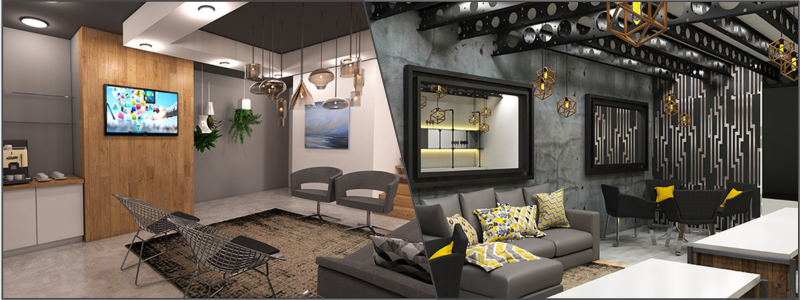

Retail rendering at a glance

Retail rendering involves the process of developing three-dimensional images of retail spaces to give a better grasp and feel of how the space would look like, especially how you and the clients will feel when immersed in the environment. This helps in the visualization of a space and by providing you visuals of how your retail store will look after its initial design and construction. 

Retail renderings are recommended for new construction projects, as well as existing buildings slated for remodeling or renovation. These renderings can be done using professional software programs. Early stages of new construction projects can rely on these 3D renderings for the visualization of how the building or your retail space can potentially look like.

RELATED: Why 3D rendering and retail store design services for commercial spaces are important

commercial

Importance of 3D rendering for effective retail design

A retail store’s appeal is one of the things that first catches the customer’s attention into looking into your store and products. With that, a trendy and eye-catching retail design is a need if you want your store to stand out among the other stores in the retail industry, which can be achieved by careful planning using 3D rendering designs.

3D rendering lets you produce and visualize realistic representations of your desired retail store designs. It allows easy visualization of the appearance, and the rendering process makes it easier to ensure that each part and element of the design work together to deliver a coherent overall look for the place.

These renders can also be used for the production of remarkably lifelike images that can be used on marketing materials to help entice potential customers and generate foot traffic to your store.

Benefits of 3D retail design rendering

Using 3D rendering in your retail store provides many advantages thanks to its top-of-the-line quality.Its benefits include:

Showcase retail design in full motion

3D rendering animations can bring any retail space to incredibly real-like experience. These visuals breathe life into any retail space and offer potential customers a glimpse of accurate visual depictions of what and how it would look and feel like to go about their shopping in the store.

These 3D animations can be particularly useful for marketing. With 3D rendering, the possibilities are endless, allowing for the inclusion of animations, visual elements, signs, and more to enhance the overall appeal of retail store advertisements.

Rectify pre-construction errors

By experiencing the actual design of your retail space in 3D, you can identify and pinpoint potential issues early, which will save you a lot of trouble in the later phases of construction such as renovations, adjustments, and redesigning. This approach not only saves time and money but also ensures that the final project is both functional and safe.

With 3D renders playing a key role in the planning and installation of fire protection, mechanical, electrical, and plumbing systems, it will be easier to check and verify the correct implementation of these critical systems during the design stage. Laying everything out and seeing it in actuality helps big time when it comes to these implementations.

Thanks to this, companies and firms can recognize different issues with the construction well ahead of time and identify solutions to guarantee a flawless result without any signs of safety hazards whatsoever.

Clear display of the retail layout

Customers will have an easier time navigating properly rendered 3D spaces to help them find whatever they are searching for in the fastest and most efficient way possible. It is one of the key elements of all design and construction projects. 3D renderings and animations give you an immersive experience by allowing you to actually experience how it would feel like navigating in the space of your future retail space.

A very advanced and high-tech ship can’t take you anywhere without having a driver to navigate it for you. The same applies to 3D technology, it’s not enough that you just use the right 3D technology, as you also need to work with a good designer. The best retail designers know how to come up with a logical layout that is not just convenient for the customers and retail owners but also the interior designers. The ability to view the 3D design from different angles can help in improving it to make it user-friendly and as flawless as possible.

Present multiple designs

3D retail design rendering lets companies and firms visualize numerous designs simultaneously to make it easier to compare and contrast all available options. It’s possible to create several versions of the suggested design or just update or change some minor stuff such as shelves, furniture, or placements of some elements. This also helps in comparing different textures, colors, and almost anything else.

RELATED: How to choose the best freelance architecture visualization services and designers

Highlight the store’s branding, vibe, and style

The vibe, branding, and overall atmosphere are critical for all retail stores regardless of size and shape. You need to attract customers and offer them a one-of-a-kind and enticing shopping experience.

With the help of 3D retail design rendering, it’s possible to get full control of the look and feel of the store, from the smaller details such as lighting and signage to its overall aesthetic.

Versatility

3D rendering also offers versatility that allows you to add colors, accessories, materials, finishes, textures, lighting fixtures, and furniture pieces into the design to give a better understanding of the function and appearance of the space after its completion. To make sure that we can provide customer satisfaction to the retail stores’ clients, unique elements customized to represent the brand can also be requested. Since 3D rendering can accommodate multiple revisions, you can also try various arrangements and tweaks to the design until you are fully satisfied.

3D motorcycle and vehicle shop

Types and uses of different 3D retail designs

Retailers can also use 3D animation to foster a more engaging and interactive shopping experience for the customers. This technology allows designing virtual stores to give customers the virtual experience of interacting and browsing with products on their own terms, giving the store both exposure and traffic.

By making products more visually appealing, 3D animations can help attract more attention and ultimately boost sales. They’re also useful for showcasing promotions, making it easier for customers to find the best deals.

In addition, these animations can bring energy and excitement to a store’s atmosphere, appealing to families and children, who are often key shoppers. Through these dynamic features, retailers can offer a more enjoyable and memorable shopping experience.

3D floor plans

Architectural projects are not complete without 3D floor plans since these let you understand the space and its entire layout to envision how fixtures and furniture pieces will look and feel in relation to each other.

3D retail design rendering is a force to reckon with in the creation of floor plans that are visually appealing and accurate at the same time.

As far as retail stores and spaces are concerned, it’s important to keep in mind that 3D floor plans determine the way customers will navigate the space and the recommended display for products. 3D commercial rendering offers a more lifelike glimpse of the entire space. It serves as an effective tool for planning the perfect space and product layout.

Exterior visualization

The exterior of any retail store is a critical part of the entire shopping experience, even if most store owners don’t realize it. Among the main perks of 3D exterior rendering of retail design is that it gives owners a glimpse of how their store will look when seen from the outside before its actual construction begins. You can add people, benches, and trees, create a parking lot design, and make other forms of architectural renderings to fully envision the area before its construction begins.

Interior rendering

3D rendering technology can be useful when it comes to designing the interior of a retail store. Interior retail rendering involves physical models of pretty much everything, including the checkout areas, aisles, shelves, shelves, and more.

For instance, a beauty section can be modeled and this model can be used to decide where to place samples, marketing materials, brand stands, ads, and the like.

Virtual tours

Virtual reality and 360-degree tours are increasingly popular methods for shopping in retail environments. These 3D tours provide potential customers with a comprehensive view of the store, delivering a more immersive experience to help them make better-informed purchasing decisions.

They also give shoppers a clearer understanding of the store’s layout, which may encourage them to visit or even fall in love with it. Additionally, these tours are useful when you’re looking for a specific item or unsure about the exact location of something.

3D virtual tours also give customers a much better idea of the retail store’s overall atmosphere to get a feel of its vibe. It is especially imperative for customers suffering from disabilities as it will help them learn how they can navigate the store more easily.

RELATED: How 3D virtual reality is changing the real estate industry

gourmet restaurant

Tips to make good 3D retail design rendering

The main point of making excellent 3D retail design rendering is to create a realistic and immersive environment that prospective customers can discover and explore. There are a few helpful tips to make the designs truly stand out from the rest:

  • Add a few interactive elements.
  • Work with the experts
  • Don’t go overboard with the 3D retail store renderings.
  • Pay close attention to the lighting.
  • Present several designs.
  • Use high-quality materials and textures.

How Cad Crowd can help

If your company or firm is in charge of some retail projects, this is the best time for you to start thinking and considering how to make the most out of 3D commercial rendering to make your brand stronger and offer your clients a better experience.

Contact Cad Crowd today to find the best retail designers who can make your visions become realities in no time.

author avatar

MacKenzie Brown is the founder and CEO of Cad Crowd. With over 18 years of experience in launching and scaling platforms specializing in CAD services, product design, manufacturing, hardware, and software development, MacKenzie is a recognized authority in the engineering industry. Under his leadership, Cad Crowd serves esteemed clients like NASA, JPL, the U.S. Navy, and Fortune 500 companies, empowering innovators with access to high-quality design and engineering talent.

Connect with me: LinkedInXCad Crowd

How to Outsource 3D Rendering Services for Your Company to Visualization Studios for 2025


Among the many solutions by companies that strive to make their design processes more efficient, of higher quality, and creative, outsourcing 3D rendering services is one of the most popular solutions. Being an architect, real estate developer, or product designer, with a professional 3D visualization studio, saves much more time and reduces cost associated with it to bring your ideas into incredible detail and realism. This trend shall continue its trajectory in 2025 with the increased demand for high-quality visual content across various industries.

But how do you succeed in the outsourcing of 3D rendering services by a visualization studio? Here, we will go through the essential steps, considerations, and benefits that will guide you in making an informed decision that works with your goals and ambitions of the company.


:rocket: Table of contents
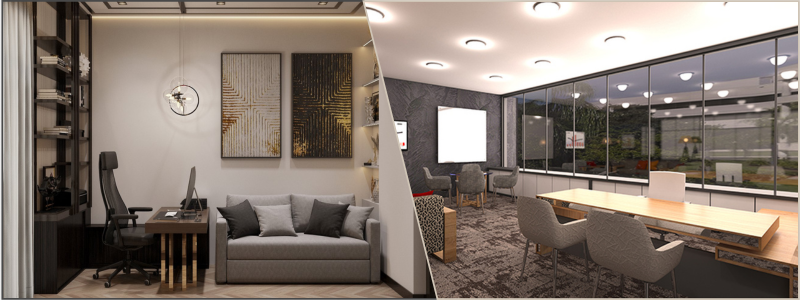

What is 3D rendering and why do you need it?

Before diving into the outsourcing procedure, let’s first briefly explain what 3D rendering is and why it’s so vital for your business.

A 3D rendering is a process that generates a photo-real or stylized image from a 3D model. Such a process is based on complex software tools and makes possible the depiction of scenes, lighting, texture, and environments in a close-to-life presentation. In today’s world, 3D rendering is applied in a number of industries for various purposes:

• Architecture: Virtual tours and real building renderings.

• Property: Pictures of properties, real estate, with provisions that will be constructed.

• Product: Prototypes and designs of any product for use in marketing or approval by a client.

• Entertainment and Multimedia: including animation, video games, special effects

The difference in the hyper competitive market that high-quality visuals make will have your business stand out among competitors when showing products, services, or architectural designs.

However, maintaining an internal 3D rendering team is also resource-intensive and expensive, especially when it involves specialized skills and high-end hardware. Outsourcing to a visualization studio could be more cost-efficient, flexible, and scalable.

RELATED: 3D modeling vs. 3D rendering services

3D serene home

Why outsourcing 3D rendering services is a smart move for your company

Here’s why outsourcing 3D rendering services is beneficial for your business in 2025:

1. Access to Expertise: These visualization studios hire very skilled people with expert skills and education in 3D rendering. By outsourcing, you will be able to make sure you get the best possible output from industry professionals, usually sooner, and paying more attention.

2. Cost Efficiency: Paying for a full-time in-house team and ensuring you have the right people with the required expertise in a business is very costly. Outsourcing gives you the chance to pay only for services required at an expense that would result in reduced overhead costs.

3. Higher Speed of Turnaround: Technologies in 3D rendering studios are so advanced that their teams can finish projects much sooner than an in-house team could. Weeks may pass before in-house teams get things done, but in outsourcing, turnaround is more accelerated.

4. Kept Free Time for Strategic Business Activities: Out-sourcing allows your in-house teams to keep time free for higher-priority strategic business activities such as strategy formation, product development, or customer engagement. The technical work can then be left to the professionals.

5. Scalability: 3D rendering services required for your needs can easily be scaled up or down depending on the scope of your project. Huge projects are undertaken by studios with serious workloads. Small projects can be selectively outsourced to create flexibility without commitment.

With these strong reasons in mind, let’s see how you can outsource 3D rendering services effectively.

RELATED: Integrating 3D rendering with photography for architectural development companies 

How to effectively outsource 3D rendering services

Here is a quick step-by-step guide to outsourcing 3D rendering services:

Review your 3D rendering needs

The first step in outsourcing 3D rendering services is to determine your exact needs. These include such factors as the type of rendering you require, which could be architectural visualizations, product renderings, and so on. The type of rendering will determine what kind of people and software you need.

  • Scope of project: Is it a one-shot project, or an ongoing renderings project? As much detail as you can give your studio on the scale and complexity of your project will immediately help narrow it down for them in finding one that meets your needs.
  • Level of detail: 3D renderings vary from model to fully detailed photorealistic images. Define as you approach the studio for your needs.

Knowing what you need clearly will make communication of expectations easier, so you end up with the studio that specializes in specific services that you need.

List possible 3D rendering studios

Once you have a sense of needs, the next essential step is to identify potential visualization studios. Here’s how you can do it:

Online search: Find the Top 3D rendering studios on the web. Websites, portfolios, and reviews can help you examine the style and the class of work as well as the specialty of the studio you are considering.

  • Industry network: If in an architecture or real estate line, you can reach out to your colleagues or industry forums for recommendations about which studios are best. Networking could just lead you to the most trusted studios that have much experience in your field.
  • Portfolio scanning: Scan through some studios that have been proposed. Identify cases of work that will be equivalent to level and quality needed. Take a considerable amount of time to notice how close their previous work is to your project’s vision. Research studios that have rendered 3D for firms like yours.
3D rendering of diamond and sapphire rings

Studio capability and technology evaluation

Not all 3D rendering studios are alike. One needs to be cautious while evaluating the capabilities of any such prior to collaborating. The following points must be considered:

  • Software skills: As much as possible, ensure that the studio has the skills to go with industry-standard software like 3ds Max, V-Ray, SketchUp, or Blender. It is the advanced software that gives them the ability to create detailed and quality renderings.
  • Technical resources: Check if they own the right kind of hardware and infrastructure, from high-end computers to rendering farms, to handle big jobs or complex pieces of work.
  • Process and workflow: Ask their process for the workflow and project management process. Do they have defined processes in place, such as stage development, feedback, revisions, and final delivery? The more structured the workflow tends to be, the less likely there will be errors and the work will fit together.

By vetting these factors diligently, you ensure the studio has what it needs to be able to do its best.

RELATED: Utilizing 3D rendering services for companies in architectural property development

Communicate your expectations clearly

Clear communication is the lifeblood of any outsourced project. When discussing your project with a visualization studio, make sure you:

  • Create a detailed brief: Share with them what your project’s goals and desired outcomes are as well as the specific requirements. Include reference images, CAD files, blueprints, or other visual aids that will help the studio understand your vision.
  • Craft and plan for timelines: Break some realities with the timelines, according to the studio’s capacity and your needs. Contain in that timeframe a revision and a feedback loop.
  • Have budget guidelines: Talk about the budget beforehand so there’s no confusion in the later stages. Moreover, know how the studio works in terms of pricing; whether it is per image, per project, or any kind of additional revisions that need to be done, or expedited services.

A clear, well-documented agreement on all these points will ensure smoother cooperation and at least minimize risks of delays or miscommunication.

Test project

Right before such an important project, you might ask the studio to do a smaller test rendering. This is where you can gauge the quality of work, the turnaround time, and how responsive they actually are. You can understand how much they get your needs and how much more they pay attention to your feedback.

A test project also allows you to review the workflow and communication of the studio with your expectations.

Coordinating collaboration

Once you outsource your 3D rendering project, managing the cooperation correctly comes in the important checklist. Consider the following:

  • Check-ins: Have scheduled check-ins to ensure the work is on schedule and track of the plan. As much as possible, utilize collaboration tools or project management software to track the timeline and revisions.
  • Constructive feedback: If the item needs revisions, speak up. A good studio will appreciate specific details which help in fine-tuning the work towards your expectations.
  • Quality control: Look at the quality of your renderings every so often, observing whether or not they meet your expectations. Don’t hesitate to change what doesn’t meet your demands.

The bottom line is that a collaborative and open relationship with your visualization studio makes all the difference.

RELATED: Creating exterior renderings using 3D exterior rendering services for architects

3D rendering of wheel suspensions

Conclusion: why outsourcing 3D rendering will be the future

Outsourcing your 3D rendering services in 2025 is the efficient and cost-effective way of creating the right high-quality visual content that your company needs. By approaching the process strategically-through need assessments, selection of the right studio, effective communication, and effective management of collaboration-you will ensure a successful outsourcing experience.

With the technology used in 3D rendering being evergreen, outsourcing continues proving to be a must-have for companies interested in being competitive, bringing their projects to life in unprecedented realism, and delivering exceptional visuals.

How Cad Crowd can help

Your company can gain world-class design capabilities without the headache of having to build an in-house team. This means you’re left to do what matters most: grow your business. Let us help you do exactly that. Contact Cad Crowd and request a quote today.

author avatar

MacKenzie Brown is the founder and CEO of Cad Crowd. With over 18 years of experience in launching and scaling platforms specializing in CAD services, product design, manufacturing, hardware, and software development, MacKenzie is a recognized authority in the engineering industry. Under his leadership, Cad Crowd serves esteemed clients like NASA, JPL, the U.S. Navy, and Fortune 500 companies, empowering innovators with access to high-quality design and engineering talent.

Connect with me: LinkedInXCad Crowd

From Blueprint to Reality: 3D Printing’s Impact on Architectural Design and Visualization for Companies and Freelancers


3D printing has completely changed the landscape of architecture. This is not a fad; its influence has transformed architects, designers, and engineers’ thoughts and approach toward designing a project. It is very good for companies and freelancers operating in the architecture sector to give unprecedented creativity, efficiency, and involvement with the client.


:rocket: Table of contents


Know about 3D printing in architecture

It refers to printing a three-dimensional object on a layer by layer fashion from a digital file. Currently, this is the area of additive manufacturing in architectures that has helped produce and model complex structures and full-scale prototypes. Today, building models come out in detailed dimensions, whole structures, or simply anything based on the architect’s creativity. This normally begins with a CAD file, or a blueprint for the printed model. This advanced software enables architects to draw precisely and in details to the extent that each unit within the building is improved.

Upon design, there will be a 3D printing that uses plastics, metals, and even concretes to print models. This way, aside from the fact that this is going to make everything much easier, it helps eliminate waste and cut materials for any business size-an exciting reason.

RELATED: What is 3D printing? A beginner’s guide

3D printed furniture and objects

Benefits of 3D printing for architectural design

Visualization

One of the effects 3D printing will impact on architectural design is seeing designs more concretely into realisation. Sometimes a set of sketches and the respective two dimensional drawings may not tell very much about a design in an almost authentic sense. That notwithstanding, through 3D printing, architects can visually project what they intend or are coming up with via making of physical models offering an authentic way of projection of a design.

These models can be used in client presentations, which allows the stakeholders to experience the design in ways that drawings cannot. It is possible for the client to get a close-up view of scale, proportions, and details about a project, thus providing better decision-making and increased satisfaction with the final product.

Rapid prototyping

Another important advantage of 3D printing, however is the speed at which one can produce models. It allows architects and designers to quickly come up with prototypes so that they may easily iterate much faster. The speed of production is pretty beneficial in the preliminary stages of a project. Indeed, the number of possible designs can be quite vast at this stage.

With several designs being released pretty fast, architects will try several concepts and use the data to determine material and aesthetic choices versus functional ability. This encourages more creativity but speeds up the total project timeline, the critical motivator in current high-speed construction environment.

Cost efficiency

Cost always goes to the front when an architectural project is to be undertaken. And also 3D printing really cuts expenses. In comparison with conventional prototyping, expensive materials and processes that consume labor usually find an application for prototyping. On the other hand, 3D printing is low waste because only the required quantities of materials are needed thus lowering cost production from waste.

Further, with the 3D printing technology, the models can be printed at a highly accurate level and, thus, less potential for costly errors in the on-site construction. This saving can work as a critical difference for freelancers and small firms that can enable them to be in a better position when competing with the bigger firms.

Customization and personalization

The ability to generate items with 3D printing makes customization easy as well as inexpensive, thereby making impossible things a matter of reality. In evidence is the case with architects who can design any style of facade, intricate detailing even customized interiors that cannot have been achieved with any known method.

This is very useful to freelancing architects because they spend much time developing their own solutions to clients. This capacity will ensure that freelancers develop unique designs, which will be the best way for them to stand out from other freelancers in a competitive market, thereby having stronger ties with the clients and establishing excellent reputations.

RELATED: 6 ways 3D printing will change the world

Applications of 3D printing in architectural design

Scale models

Architects have used scale models in the presentation of architecture for a long period of time. With 3D printing now available, models are so easy to make and also quite fast. The detailed accurate representation of the architect makes it possible for the clients to know the proportion and scale involved in a project.

These models can be printed with different materials such as PLA, ABS, and resin. Each has a different aesthetic and tactile quality. High-quality scale models can now be produced quickly, enabling the presentation of designs to be made more effectively and a real-time response to client feedback.

Facade elements

It also enables architects to design and produce intricate façade elements that can add an aesthetic value to a building. Additive manufacturing techniques allow one to get custom patterns, textures, and forms quite easily. This is helpful in modern architecture, where one demands extraordinary façade designs for a statement or functional objectives, such as energy efficiency and climate responsiveness.

Building elements

Some companies are studying the possibility of printing entire building elements like walls, columns, and structural elements with 3D printing. It does not have the intricacies associated with construction but gives free rein to innovative designs, which will not be tamed by existing architecture conventions. An example would be projects that actually created complex geometries via 3D-printed concrete, impossible to manufacture if produced conventionally. Thus, such a method can even diminish the construction time and human costs in labor without compromising structure.

Urban models for planning

Besides creating standalone structures, 3D printing can actually play an important role in urban design. The designers can build large neighborhood and district models showing how those developments are going to work in the place.

These models can even facilitate discussions with the city planners, stakeholders, and the community generally. They offer a physical reference to proposed changes. 3D printing makes ways to make developments relevant in the eyes of community need while increasing public involvement with planning activities.

RELATED: Redline & as-built drawings explained for construction companies and architects

Obstacles and issues

Despite its potential positives, introduction of 3D printing for architectural design still contains disadvantages.

Lack of materials

In addition, despite so many advancement opportunities, 3D printable materials available in the field of construction are really low if compared with building material kinds. The architects need to ensure that there is enough property in the strength, durability, and sustainability of materials in the process of designing for 3D printing.

Regulatory compliance

Regulatory compliance remains a great challenge with any new building construction method. Building codes and standards may not be updated to cover structures printed with 3D printing; hence the architect has to navigate a complex legal framework. This would push the acceptance of the project, and therefore the construction back.

Technical expertise

With regards to technical know-how, for 3D printing to be successfully put into action, architects must have technical know-how. This is through being well conversant with CAD software and having knowledge of how 3D printing is performed, in addition to the material properties. This would present a challenge to entry for freelancers or small firms that do not have dedicated technical teams.

Initial investment

A fairly significant initial investment in technology, a 3D printer requires of the firms desirous of getting a high quality one, and all the material that goes with it. To a small firm, the money may not easily run its course without seeing returns pretty soon.

RELATED: 8 tips companies use to simplify design manufacturing or design for manufacturing

3d air blower prototyping

Future architecture of 3D printing

As technology advances, the future of 3D printing in architecture seems to be doing all right. Probably, next-generation materials will be biobased and recycled resources, which could further expand the potential for sustainable building practices and even more ambitious architectural projects through advancements in printing speeds and precision.

The integration of 3D printing with other technologies, like BIM and AR, would make design more effective, but the project workflow becomes more smooth. For example, through AR, architects can already see a 3D-printed model in place to be constructed so that some adjustments can be made even before the construction phase.

Wrapping it up

This means that it has fundamentally affected the way architectural designs and visualization are approached and will be concluded. It is a new step forward for companies and freelancers with rapid prototyping, designing down to a high degree of customization, and generation of detail models. In its further development, it will begin to shape innovative and efficient ways of leading the architecture to a sustainable future.

3D printing is not only giving life to plans for architects, but it is also making the architectural practice of the 21st century different and better. It will also bring architects to the game, helping them to be leaders in innovation and satisfying ever-evolving needs of the clients and communities around the world.

RELATED: Understanding the cost of prototyping for product design services and budgeting for your company

How Cad Crowd can help

Nobody would disagree with the huge impact of 3D printing on architectural design and visualization. For this reason, companies and freelancers must join the bandwagon of utilizing the new technology and harness it to gain an upper edge over their competitors. At Cad Crowd, we’ll ensure that you are working with experts in 3D printing who will turn your concepts into realities. Request for a quote today.

author avatar

MacKenzie Brown is the founder and CEO of Cad Crowd. With over 18 years of experience in launching and scaling platforms specializing in CAD services, product design, manufacturing, hardware, and software development, MacKenzie is a recognized authority in the engineering industry. Under his leadership, Cad Crowd serves esteemed clients like NASA, JPL, the U.S. Navy, and Fortune 500 companies, empowering innovators with access to high-quality design and engineering talent.

Connect with me: LinkedInXCad Crowd

How Firms Can Create Engaging Institutional Interior Design 3D Renderings


This post covers how design firms can create engaging institutional interior design 3D renderings. Just a few words here and there won’t be enough to describe 3D rendering services and its effects on the interior design industry. The real world and the virtual world have now come together to offer a clearer peek into the space before the construction even begins. 

As far as institutional settings, including offices, hospitals, schools, and the likes are concerned where aesthetics and function should always join forces, 3D renderings have an even more critical role to play in conjuring images of the final design. 


:rocket: Table of contents


3D renderings and their role in institutional interior design

Institutional settings are expected to have a great ambiance without losing their practical touch. Interior design should be able to address different needs, then, while meeting the standards for efficiency and safety. It’s simple: school areas must be conducive to learning while being cozy. Hospitals, in contrast, must offer a sense of comfort without jeopardizing the safety of patients and employees. Check out below to know the key aspects where 3D renderings become priceless tools:

RELATED: 5 Business tips for creating photorealistic interior renderings for your company

Client and stakeholder communication 

Let’s face it: not all clients can understand technical drawings, even more so by those who aren’t even familiar with them in the first place. 3D architectural rendering firms can offer clearer communication to ensure that all the people involved are always on the same page about the final look of the design. 

Personalized choices just for you

Institutional spaces must have interiors with a customized look and feel to cater to certain functional requirements. 3D renders should give designers the chance to play around with different furniture setups, color combos, and layouts to balance out function and form to perfection. 

Visualization opportunities

3D renderings can also photorealistically depict spaces. This isn’t something you can expect from flat traditional 2D drawings or blueprints. As a result, it wouldn’t take much for stakeholders to conjure images of the design with suitable spatial proportions, textures, and lighting fixtures. 

RELATED: The Impact of 3D interior rendering services for boosting hotel and resort bookings

Institutional interior design essentials 

As far as the world of interior design services is concerned, the guidance and expertise of the experts are necessary when developing the design of the interiors of institutional spaces. It requires various elements that need cautious deliberation. 

3d interior rendering services

The whole thing should meet the terms of the local regulations and rules to create a more positive learning environment. It also involves ensuring that all safety protocols are adhered to. These elements must be synchronized to give the institution its distinct character and personality. Here are some of the essentials that any institutional interior designer should never do without:

Creativity 

It’s always a creative experience to learn and teach things. It means institutions where learning and teaching take place should never be monotonous, dull, and boring.  You can throw in some significant visual elements to the interior design of the institutional space to create an enticing environment for all the people in it. 

RELATED: 7 Ways 3D interior designer services are used to maximize living and working spaces

You can make it happen by doing a couple of things or so. For educational institutions, the 3D interior rendering expert can add bright colors to the play areas. This works great for younger students. Interactive displays can also be added to reading nooks like libraries to keep students interested. The design of the campus’ on-site bookstore should be inviting and warm, too. The cafeteria must have enticing shelf displays and menus that will whet the appetite. 

Exceptionality 

Educational institutions follow some ideologies and principles of their own. Designers can help you give this distinct personality to your institution through the process of comprehensive collaboration and discussion. It’s where 3D logo design services and branding enter the picture. Make sure that these visual elements are used and incorporated wherever possible. While you’re busy creating a unique identity for the institution, see to it that you don’t put the functional aspects to the side. 

Ample lighting 

Natural lighting should always be sufficient in institutions to promote learning. Continuing from the example above, classrooms can be designed with large windows. Everyone is aware of the positive effect of natural light on people’s cognitive and mental abilities and in turn, this will boost their ability to grasp and learn things.

RELATED: The benefits of using 3D interior design, CAD drafting & rendering for your company 

Artificial light sources should also be enough for gloomy and dark days when the sun might not be in its full force. Ample lighting in classrooms is mandatory to make sure that teachers and students alike maintain healthy vision and eyesight. 

Functional layouts 

Planning layouts is huge as far as institutional interior design and floor plan renderers are concerned. Make functionality your priority and base your layout on it. For primary or elementary schools, your main focus should be the corridors and passages since these areas will be crowded with students and faculty members throughout the day. Another important factor here is observing the correct distance between the student benches and the whiteboards or blackboards, whichever is applicable. 

3d architectural rendering firm

Meanwhile, practical workshops and laboratories occupy the biggest part of the layout of vocational colleges. It means that you need to set up the rest of the elements around them. In this case, start by evaluating the functionality and then work with the designers to create a layout that caters to these requirements. 

Cosy furniture 

Comfort should always be your foremost consideration when looking for furniture pieces to put in educational institutions. The safety and well-being of teachers and students should always be the priority here. Comfy pieces of furniture will ensure that students won’t worry about anything else and just focus on learning alone. You can talk to your interior designers and ask if they can help you look for quality furniture that won’t cost you an arm and a leg. 

RELATED: Top photorealistic furniture rendering techniques for interior design companies

Adherence to local regulations

Institutional buildings must also adhere to local regulations and laws. Before you start on your project, never forget to verify whether or not the premises comply with security and safety rules for the benefit of all building occupants and visitors. 

All types of institutions, from schools to universities, hospitals, libraries, and other commercial setups, meet fire safety protocols. This also applies to drainage and plumbing systems, and electrical wiring, sockets, and switches. Failure to comply in these areas may lead to some serious consequences later on, whether it is on the reputation of the institution or its monetary expenses. 

3D rendering strategies for institutional interior design

To produce informative and compelling institutional interior design 3D renderings, you should always observe the combination of technical skills, attention to detail, and creative flair. The following strategies can help you achieve exactly just that:

RELATED: What is architectural visualization and why architectural rendering services use it

Safety and accessibility 

Safety and accessibility are the topmost priorities in any institutional setting. 3D architectural visualization designers should create 3D renders that reflect adherence to all the relevant standards and codes to make sure that they are always safe and accessible from top to bottom and vice versa. These two primary aspects are a must in any institutional design. Settings such as public buildings and hospitals should have room for and cater to different groups of people. 3D renderings of institutional interior designs must clearly show these.

They should also take into consideration the local regulations and requirements. The renders must also have elements like spacious corridors, non-slip surfaces, ramps, and elevators. These features are an assurance that the space adheres to all accessibility and legal safety requirements. 

In-depth precision

Every detail should also go through careful scrutiny. All aspects and facets of the render should be accurate and in line with the requirements of the project, from the lighting fixtures to the placement of furniture pieces. 

RELATED: The best architectural rendering companies and 3D rendering services

3d interior rendering services

Contextual elements

Contextual elements including branding elements such as mission statements or logos, signage, and landscaping, must be included to give your renders enough context and depth. 

Cultural sensitivity

It’s common for institutional spaces to turn into cultural hubs that represent and serve different communities. This means that the 3D renderings of institutional interior designs must be a reflection of this diversity. The design itself must be sensitive enough to different cultures. You can use historical references, showcase works of art, and reference other similar design elements to achieve just that. When your design feels and looks more inclusive, you can make it feel more welcoming and relatable to different groups. 

Human touch

You can give your 3D renderings a better sense of scale if you add some human figures here and there. This way, stakeholders and clients can easily imagine how the space and the people in it will interact with each other, letting them evaluate its functionality. 

RELATED: Learn about the types of architectural rendering services available for your company

Identity and branding

The presentations of institutional and commercial spaces have almost the same requirements. Both should align with the unique brand identity of the organization. 3D renderings from 3D architectural animation services must depict how the design will integrate with the color schemes, logs, and other similar branding elements of the institution. It will further strengthen the brand for the audience to have a stronger visual connection with it. It can also help convey the values of the institution and solidify its image in the eyes of the general public. 

Interactive elements 

Virtual reality or VR experiences and interactive 3D models can also be used to make the 3D renders look and feel more immersive. This will help the clients explore and navigate the space from various angles so they can make better decisions. 

Positive user experience 

3D renderings of institutional interior designs must also exude a welcoming environment. Furniture pieces should be arranged comfortably, color schemes must be pleasing to the eyes, and layouts should allow easy navigation. 

RELATED: Why are companies and firms moving from 2D to 3D CAD architectural renderings and models? 

How Cad Crowd can help

Institutional interior design 3D rendering always has more to it than just visual appeal alone. If you’re looking for the best 3D renderings that can come up with the suitable designs for your institution, Cad Crowd got your back. Our 3D rendering services undergo screening and are highly recommended across the industry. Get a free quote today

author avatar

MacKenzie Brown is the founder and CEO of Cad Crowd. With over 18 years of experience in launching and scaling platforms specializing in CAD services, product design, manufacturing, hardware, and software development, MacKenzie is a recognized authority in the engineering industry. Under his leadership, Cad Crowd serves esteemed clients like NASA, JPL, the U.S. Navy, and Fortune 500 companies, empowering innovators with access to high-quality design and engineering talent.

Connect with me: LinkedInXCad Crowd

How to Integrate Virtual Reality (VR) in Your Real Estate Firm’s 3D Virtual Staging Services to Drive Growth


Perhaps real estate is one of the fields that have always been adopters of new technologies to serve their clients and market better. With this improvement in the evolving digital landscape, sophistication tools will become even more prevalent, and nowadays, many relevant tools emerged in Virtual Reality (VR) and 3D virtual staging. These technologies open a real opportunity for real estate firms to provide more engagement, realism, and convincing property experience for prospects, so subsequently, generate growth and business success.

The article explains exactly how incorporating VR into your company’s 3D virtual staging services can enhance the buying experience, improve customer engagement, and contribute to long-term growth. Whether you’re a small real estate agency or a large firm, adopting VR can put you ahead of others in the industry and attract more buyers to your listings.


:rocket: Table of contents


What is 3D virtual staging?

The term virtual staging refers to the process of virtually furnishing and decorating an empty or sparsely furnished property so buyers can envision how much space is available for them. Virtual furniture, decoration, and accessories are used in property photos with the help of 3D software to create a realistic and attractive image of the home. It is an increasingly popular alternative tool in real estate marketing, especially virtual staging since it has proved to be inexpensive, flexible, and visually attractive compared to other traditional staging methods.

3D virtual staging services allow real estate agents to present beautifully crafted and customized visuals of their listing without the pains and associated expensive logistics of physical staging. In what ways, though, might Virtual Reality further improve this process and potentially fuel growth for real estate companies?

RELATED: Virtual room design services and 3D room design tips for companies and firms: Complete breakdown

3d studio apartment living room

How VR enhances 3D virtual staging in real estate

VR integration is a game changer with 3D virtual staging services. Traditionally, 3D virtual staging allows potential buyers to stroll through an interactive, lifelike 3D environment, making it from static images to an exciting experience. From being passive to active viewers, this would bring a flood of advantages for real estate firms to enhance engagement and conversion rates.

Competitive advantage

As real estate competes in the field of technology, much better positioning against such rival firms is always ideal. Of course, VR-based virtual staging will give your real estate firm an edge over your competitors, especially from the traditional staging and 2D imagery approach. This means standing out through immersive VR experiences, showing your business at the forefront of real estate marketing technology. This not only attracts more buyers but also increases your market visibility and enhances your brand reputation.

Global reach

One of the most significant advantages of applying VR to your real estate business is that it will help you extend it to very long distances for buyers. The real estate market is, by and large, global, and nearly all buyers wish to have an overseas investment in a property. With the help of VR-enabled virtual staging and tours, you’ll be reaching a much larger audience-people all across the globe.

This becomes especially crucial in the post-pandemic world today; international travel remains limited, or a buyer is too busy to make a trip for viewings. With VR, potential buyers can look around from anywhere, at any time, and are more likely to attract high-quality leads.

Immersive buyer experience

Prospective buyers will experience a virtual world that emulates a very close feel of visiting the property. One can go through every room, rotate details, and zoom in on areas. Buyers can even change the perspective or even the layout of a given space. Such immersion cannot be seen in traditional 3D virtual staging.

What with the ability to “walk through” a property virtually, that which gives buyers a much more intimate understanding of the layout, size, and flow of a given space, it really creates more of an emotional connection to the property-more and more now the main factor in driving purchasing decisions.

RELATED: How 3D virtual reality services can improve your real estate business

3D VR Visualization

Better marketing and sales tools

VR is the perfect tool to create more compelling marketing materials beyond the traditional listings: high-quality virtual tours, VR-enabled advertisements, and much more interactive property showcases. You will engage prospective buyers in ways that are just impossible with traditional photos and videos. VR is a great tool for differentiating property listings, driving more attention to your offerings, and adding that storytelling dimension to your marketing.

Additionally, VR allows for tracking user interactions, which can provide valuable insights into buyer behavior. By analyzing how buyers interact with virtual properties—such as the areas they focus on or how long they spend in certain rooms—you can tailor your marketing strategy to better align with their interests and needs. This data-driven approach can lead to more efficient marketing efforts and higher conversion rates.

Increased buyer confidence

Homebuyers aiming to acquire their dream home want to be assured that they are making a good choice. They are concerned with knowing everything there is to know about a property before actually spending their money. Virtual tours, fueled by VR, allow for 360 degree view of a house, thus affording potential buyers to see every part of the house without having to physically be there. And then this experience helps build trust, giving them a clear, complete picture of the property.

Therefore, virtual reality can boost buyer confidence through the engagement and involvement the process of inspecting houses presents. It is possible to see a number of properties during one sitting, make direct comparison of layout and design, as well as pay attention to specific details such as room dimensions, lighting, or finishes. The more knowledgeable and confident a buyer is, the more likely they will be to take the next step in the purchasing process.

RELATED: Architectural VR/AR 3D rendering costs, rates & 3D modeling pricing for design firms

Personalization and customization

With one of the strengths of VR integration when it comes to virtual staging, one could definitely personalize for the individual buyer. Since every buyer is unique with different tastes, preferences, or even lifestyle needs, they can visualize how the property could fit their unique style by allowing them to interact with space in VR. They may alter the colors of the walls, change some furniture pieces, or even simply change some decorative elements to see how well it fits in that area.

This is a level of personalization more likely to elicit an emotional connection on the part of the buyer. They’re no longer looking at some generic, staged home; instead, they can imagine living in that space and how it reflects their personal vision. The more personalized the experience, the more a buyer will be driven to make a decision about moving forward with a purchase.

Time and cost efficiency

Integrating VR into your virtual staging solutions is the most cost-effective way of delivering an elevating experience without the high costs of physical staging. Staging, in its conventional form, may require renting furniture, hiring decorators, and even hiring professional photography-all very expensive operations. Virtual reality, on the other hand, enables you to stage properties digitally and offer clients infinite opportunities for virtual tours at a fraction of the price.

There is also time saving. Using VR, you don’t have to schedule multiple in-person showings nor wait for furniture to arrive. You can make adjustments to the virtual staging almost on the spot. Flexibility makes your business much more efficient than before, but it also improves the experience for clients who prefer convenience and flexibility more and more.

RELATED: When do companies use freelance 3D virtual staging services vs. traditional staging? Full breakdown

How to integrate VR in your real estate firm’s services

Of course, integrating VR into your 3D virtual staging services requires the right strategy and the right technology; here’s where to start:

1. Choose an appropriate VR technology: Choose a suitable VR software or platform that easily fits your available tools. As it is widely understood, most VR solutions are created to integrate well with 3D modeling software from where virtual staging designs may be imported into VR environments. Consider a platform that is easy to use, of quality visuals, and allows for an interactive experience of users.

2. Invest in VR headsets: Investment in VR headsets will largely depend on your business model. Some cases require you to buy headsets for showing to clients, or you can prepare web-based virtual reality tours accessible from the client’s smartphone or computer.

3. Train your team properly: Train your team on how to use VR tools and virtual staging software. These professionals must be fast and agile in creating and modifying virtual tours, adjusting the experience as clients desire, and guiding clients to expert recommendation.

4. Market VR services: After integrating VR to your virtual staging services, make sure to market it properly. Emphasize in marketing literature, web site and social media campaigns how this is actually an immersive experience, made much more convenient, and allows greater personalization.

5. Seek client feedback: Ask your clients for their feedback if they have experienced your VR services. This will give you the ability to get improvements in your offerings and fix issues and ensure your services are fulfilling their needs.

RELATED: Expert 3D store rendering and floor plan design services: attracting retail customers

Wrap up

The adoption of VR by 3D virtual staging services is one of the high-power moves to make growth look out for in the real estate industry. It can give an immersive, cost-effective, and personalized experience that can better boost engagement, increase confidence, and expand the market.

In this recent era of total competitiveness, the use of VR technology will make your business company become highly competitive in comparison and attract more buyers, which will make it separate from the competition pool.

Investment in VR and virtual staging services fits into the nowadays rising trend of technology innovations in real estate; it future-proofs the business in the ever-changing marketplace.

How Cad Crowd can help

The key to growth lies in staying ahead of trends, and VR offers an exciting opportunity for transformative change in how your firm approaches marketing and selling properties. Cad Crowd will make sure you’ll stay on top of this trend. Request a quote today.

author avatar

MacKenzie Brown is the founder and CEO of Cad Crowd. With over 18 years of experience in launching and scaling platforms specializing in CAD services, product design, manufacturing, hardware, and software development, MacKenzie is a recognized authority in the engineering industry. Under his leadership, Cad Crowd serves esteemed clients like NASA, JPL, the U.S. Navy, and Fortune 500 companies, empowering innovators with access to high-quality design and engineering talent.

Connect with me: LinkedInXCad Crowd