5 Key Factors Influencing 3D Exterior Rendering Costs, Rates & Pricing for CAD Companies and Firms


3D exterior rendering is quickly becoming very important for architects, developers of real estate, and design firms. What it does is create highly photorealistic visualizations, which will help a client or a stakeholder in making investment decisions as complex design concepts are transformed into vivid images before one brick is laid on the ground.

Interior 3D rendering services cost has recently become the standard of costs on an architect’s presentation budget. The benefits of architectural photorealistic visualization are rather obvious: clients see a vivid, almost tangible preview of a built project, making it infinitely more convincing than a traditional sketch by hand. Architects can, therefore, present their vision more successfully and often enjoy increased client enthusiasm and approval.

Professional 3D rendering companies can accept even the most complicated and detailed visualizations. It is quite logical to believe that the more complex and detailed 3D visualization is, the costlier it will be.

The question is, what factors directly affect the cost of 3D visualization?

Pricing, however, is very complex, and the price setting for 3D exterior rendering services is questionable. There are factors that comprise the service charged by firms to their clients, and understanding those factors gives architects a clearer idea of what they pay for. They thus exercise more influence over costs as well as the impact of visualizations on clients.

An astute architect who needs to cut some expenses can cut out the non-essential elements.

Cad Crowd is an industry leader in providing architectural, design, and engineering firms with the best 3D rendering experts. Today, we are spelling out the five main factors that impact the cost of exterior 3D rendering and a guide on how to navigate those decisions in terms of how one determines the best way to proceed.


🚀 Table of contents


Project complexity

The complexity of the project is perhaps the most significant factor influencing the cost of 3D exterior rendering. CAD companies charge based on how detailed and intricate the project is, which directly impacts the amount of time, effort, and skill required to produce high-quality renders.

Intricate architectural designs, such as in the facade, with intricate patterns, ornate decorations, and complex geometrical patterns, take more time to model and demand more experience. The higher the detail, the more realistic the rendering software and techniques must be to reproduce those details. A simple structure like that of a suburban house will definitely take less time and effort to render compared to a modern skyscraper with complex facades and uniquely designed elements.

  • Landscaping and the surrounding environment

All this, including the surrounding environment, landscaping, and natural elements such as trees, gardens, water bodies, or even the surroundings of the urban area, adds complexity to the project. Creating landscapes with realism that get beautifully attached to the architectural structure requires intricate techniques that add to costs for architectural design firms.

For example, a villa in the midst of deep green forests can add intricate details of the vegetation, lighting adjustments, and further textures to create true-to-life visuality.

  • Special features and custom elements

Custom features – unique lighting setups, animated objects, or bespoke materials – also contribute to complexity. Extra assets in the scene – such as swimming pools, outdoor furniture, cars, or fountains – require more work from a rendering team, which translates into higher price points.

A CAD company usually examines the complexity of the entire scene and will price before arriving at a quote – in other words; they take specific uniqueness of project factors into account.

RELATED: How emotional design in architecture enhances mood for 3D modeling & architectural services firms

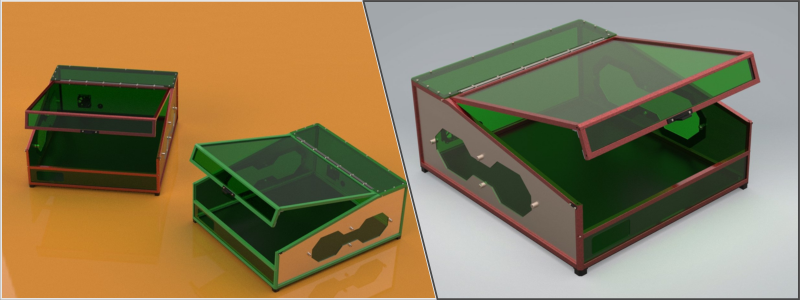
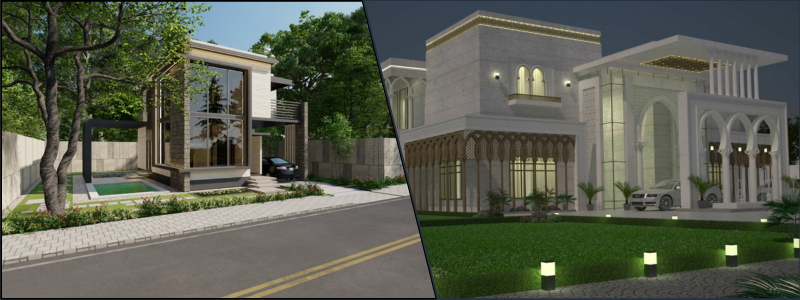
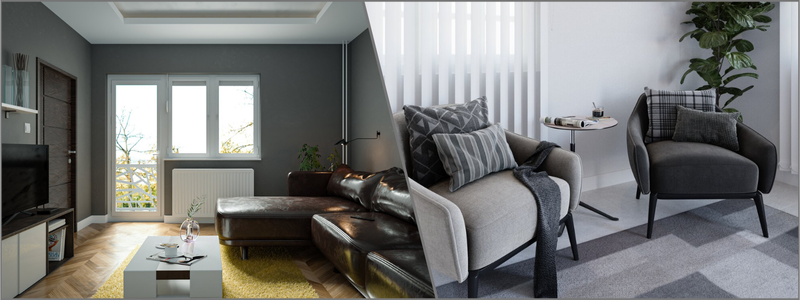
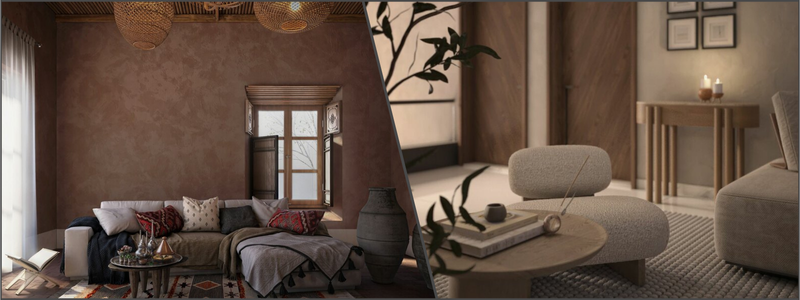
3D visualization of a duplex building and large residence

Rendering quality and resolution

The final render quality and resolution are of great significance in pricing. CAD design companies offer varying levels of rendering quality, ranging from simple low resolutions sufficient for preliminary stage concept design to ultra-high resolutions photorealistic renders for marketing purposes and client presentations.

  • Simple render vs. photorealistic render

The simple render tends to be less expensive as it would take less time and fewer resources. They tend to work on early phases of the design, especially when the client will need to see an initial view of the project’s scale, layout, and proportions.

Photorealistic rendering services and the inclusion of precise textures, reflections, and shadows is a huge deal: it requires advanced software, powerful hardware, and highly skilled artists, which makes it expensive. The level of quality is usually required in highly-charged presentations or marketing materials where details are important.

Another element is the resolution of the final images. Higher-resolution rendering requires more processing time and bigger file sizes, which might impact the speed of the overall rendering pipeline. For example, rendering at 1080p is less expensive than one at 4K or even 8K because there will be a longer processing time needed to reach enough detail for the final image. High-resolution renditions are critical for large-format print materials, such as billboards, whereas lower-resolution images would suffice for digital presentations or usage on the web.

  • Post-production enhancements

Such post-production services as color grading, the addition of atmospheric effects like fog or modification of lighting conditions, and tweaking of the general look can push the overall expense into a high range. Although these final embellishments can turn an excellent rendering into an eye-catching one, they would need specific skill and time, which adds to the cost.

RELATED: Marketing real estate: Top real estate 3D rendering trends for companies and firms

Software and tools used

Another critical factor that determines the cost is the software and tools being used in the rendering process. Different CAD firms may use various tools and software with different capabilities and levels of complexity. The quality of output and time taken for the project depends on the type of software selected.

  • Industry-standard vs. specialized software

Expert CAD professionals use applications primarily industry-standard, such as Autodesk 3ds Max, V-Ray, Lumion, and SketchUp, that have licensing fees and require special education. They provide the best, most professional way to create photo-realistic textures, lighting, and animations; however, the cost could escalate the project.

Other companies may select additional specialized software depending on the type of work that needs to be done again; Rhino or Blender, for example, also affects price based on what those other tools can deliver.

  • Rendering engines and hardware requirements

Rendering engines like V-Ray and Corona are often used for realistic photograph simulation, that is to say, realistically photorealistic image production, which is computationally expensive by definition. High-quality rendering demands a lot of hardware that can make effective use of multi-core processors, GPUs, and large amounts of RAM to minimize rendering times and remain efficient.

The biggest influence on the final price charged to clients is the demand for advanced hardware setups, which some rendering firms maintain at a considerable cost. The more complex the scene and the higher the resolution required, the more computational power will be needed, therefore increasing the cost.

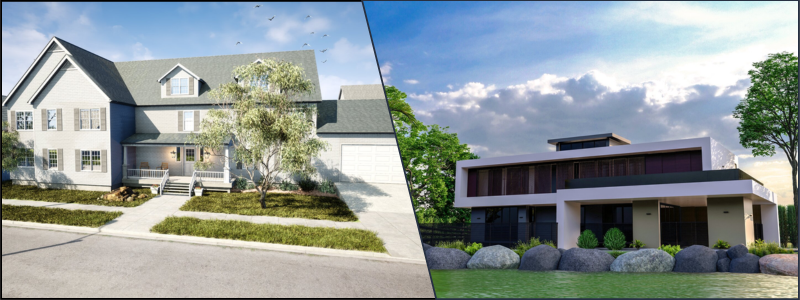
3D visualization of a two-storey home and a lakeside house

RELATED: Camera angles in the 3D architectural visualization realm for your projects

Turnaround time and deadlines

Time = money, and in the 3D world, expediting work is pricey. Things have to get done fast in the construction world; the same applies to real estate architecture firms or engineering firms. The speed at which a client needs a job can, therefore, cost deeply.

Most CAD companies offer turnaround times, which can vary from a few days to several weeks. When a client demands the creation of a project on short notice, the rendering teams might have to work overtime, hire extra resources to handle the job, or push some other projects aside. Expedited delivery services can cost up to 25% more in total for the project, depending on how fast the client needs the renders done.

  • Project and revision stages

Turnaround time will also largely depend on how many revisions the client wishes to make to the final project. Most rendering firms factor a few revisions into their price packages. Beyond these standard revisions, especially in the later stages, increase costs and lead to delays. The clients should be made aware, at the outset, about the scope of the allowed revisions so that they are not faced with cost surprises later.

Location and labor cost

The location of the 3D rendering firm or CAD company largely dictates the cost of 3D exterior rendering. Labor costs vary drastically in relation to the location of the firm, and such factors are usually transferred to the client.

This also tends to reflect in the form of a lower price that companies in India, China, or other developing countries like Eastern Europe can offer as opposed to the prices offered by North American, Western European, or Australian firms. It might very well be the case wherein offshore companies can provide the same quality as a local company but for a fraction of the cost. Nevertheless, working with offshore companies might also pose challenges like time zones, language barriers, and possible problems with project management and overall monitoring and control.

Even within the same country, conditions governing prices can differ depending on local market conditions. Within the same country, in an urban area with high demand for an architectural visualization service, CAD firms charge more than in areas such as smaller towns or other regions that charge low prices to remain competitive.

RELATED: Creating exterior renderings using 3D exterior rendering services for architects

Conclusion

There are several main factors that determine the costs of 3D exterior rendering services for CAD companies and firms. Some of the major variables ruling the pricing scale here include project complexity, quality of renders, software and tools, turnaround, and location.

With this understanding, they will be able to make the best and most informed decisions when choosing a rendering service provider for their project and devising a suitable budget. With the scope of work for a particular project and its specific needs in mind, the clients will be able to settle for an equilibrium between value for money and the quality so received.

The fast world of architecture and design is one where, for a project, initial impressions can make or break it. Doing so would require investment in high-quality 3D exterior rendering experts. At the same time, though, with a good understanding of what drives costs, clients would be able to navigate this pricing landscape better, choosing the right rendering firm that meets their needs yet does not infringe on their budget.

How Cad Crowd can help

CAD companies and firms follow some key factors that guide their determination of cost, rate, and pricing for their 3D exterior rendering projects. Cad Crowd is an industry-leading platform that can connect you with the perfect professionals who can deliver excellent results within or according to your budget. Request a quote now.

author avatar

MacKenzie Brown is the founder and CEO of Cad Crowd. With over 18 years of experience in launching and scaling platforms specializing in CAD services, product design, manufacturing, hardware, and software development, MacKenzie is a recognized authority in the engineering industry. Under his leadership, Cad Crowd serves esteemed clients like NASA, JPL, the U.S. Navy, and Fortune 500 companies, empowering innovators with access to high-quality design and engineering talent.

Connect with me: LinkedInXCad Crowd

Why 3D Architectural Renderings Include CGI Imperfections: Details for Design Firms


3D architectural renderings can definitely take an architect’s presentations to a whole new level of “WOW” factor. These renders literally bring an architect’s brilliant ideas and concepts into life for your clients to indulge themselves with. Designs translated by 3D architectural renderings stir up emotions and engage with your customers so much better compared to physical models or drawings of a building.

That’s why a lot of architects and 3D design firms confidently opt to give it a go after considering all the advantages that 3D architectural renders can offer. But the question now is, what sets excellent CGI images apart from mediocre ones? Contrary to popular belief, 3D architectural renderings aren’t meant to be flawless. The truth is that they need imperfections to make your designs truly perfect. 

Cad Crowd is a leading provider for architectural and design firms looking for the best talent for their projects quickly and reliably. In this article, we’ll share our experiences regarding how the most reputable architectural firms use imperfections as a design choice.


:rocket: Table of contents


RELATED: Expert 3D store rendering and floor plan design services: attracting retail customers

The need for imperfections in 3D architectural renderings

It’s no secret that life is not spotlessly clean, nor is it geometrically ideal or symmetrical. The same rule applies to realistic 3D architectural renderings. Even the tiniest imperfections can make renderings more interesting and realistic. Creases on the blanket, an unfinished cup of coffee on the breakfast table, or a pile of dirt on the driveway are all small details that can make a big difference to the overall vibe and look of a space. 

It’s also important to ensure that there is no repetition. No object should seem as if it was copied and pasted and then placed at a similar distance from one another. Since there are no two identical chairs, trees, and other objects in reality, none should also be present in CGI images. The 3D architectural rendering expert do not place neat lineups of décor pieces or furniture at a similar angle. A bit imperfect but still well-curated arrangement will make the entire composition livelier and more compelling.

Again, nothing is perfect in the real world, so your designs shouldn’t have to be. Try to incorporate surface imperfections such as rust, dents, and scratches to create a more immersive and realistic design. These can add depth and character to your designs. Also, as they always say, the devil is in the details, and this is specifically true when creating photorealistic renders. Be sure to pay close attention to every single detail, from the curtain patterns to the wall textures.

RELATED: Creating exterior renderings using 3D exterior rendering services for architects

These tiny details have a significant impact on the final image. Sharp corners and edges can make your designs look unrealistic and artificial. To achieve a more natural look, round the edges of materials and objects. This will make your designs look true to life and more organic. Now that you know why your 3D architectural renderings should include CGI imperfections, it’s time to familiarize yourself with other common issues that 3D architectural visualization firms experience that you can address accordingly to create the most lifelike renders possible.

1. Too simple designs

Real-life 3D architectural renderings are intended to tell a story and convey a message. These renders are a compelling way to entice more clients and convince them to concur with your idea. The primary goal of 3D architectural renders is to show what an entire object or a room will look like in real life. It is one aspect where a lot of artists often commit a mistake. Many visualize rooms with only doors, walls, and windows, which will never be enough to blow clients away.

Believe it or not, it makes your render unconvincing, unnatural, and downright boring. 3D architectural renders are all about breathing life to your renders, which is important to impress more clients. The good news is that you can easily remedy this mistake if you add a few basic details, such as furniture, plants, bookshelves, or anything else that will bring life to your renders and give them a lifelike appearance.

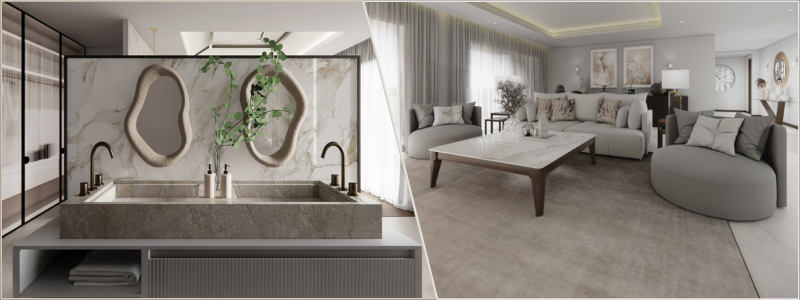
3d interior rendering services

RELATED: Creating lavish real estate listings with 3D services and 3D real estate rendering

It is what you call adding a human touch, intended to help 3D artists communicate their ideas to their clients. These kinds of unique details will convince clients that your space is livable. But of course, it’s also essential to incorporate just enough details to show what a room, home, or building will look like in real life. 

2. Light bouncing  

Many artists tend to skip on some light bounces because they can use this nice cheat to save some rendering time. Light bouncing pertains to global illumination or indirect lighting. This kind of effect lets you present shadows. Just some light bounces can make shadows look dark, and adding more bounces can make them seem partially lit. 

But this is where things can go wrong. Many 3D rendering artists never pay enough attention to the number of light bounces required for their 3D architectural renderings to look real enough. Adding too many will result in a mess, but too few will eliminate the realism that can help you blow clients away. Make sure you take extra care when adding more light bounces to your design. 

RELATED: How to include people in 3D architectural CGI projects: benefits for companies

3. Recycling

It is quite a common thing in 3D architectural renderings to encounter scale figures and people free for downloading. These details often fit concepts quite well as long as they are placed at the right angles. Although it is an excellent option more often than not because it saves effort and time, it also has its downside. While you have to include objects and people in your renders to make them look more realistic, you have to be extra careful as you do so. 

The most common issue with people and objects is that a lot of artists use the same people and figure models. As a result, it can become a big distraction that can take away the essence of your design. Rather than focusing on your render’s focal points, the recycled details will only distract your clients. There’s nothing wrong with recycling objects and people as part of your 3D animation services, as it can be extremely handy in some cases. However, it’s imperative to ensure that you use them sparingly. Try to look for a rendering library that also includes other options to make things even more appealing. 

4. Reflection rendering

Reflections are critical regardless of the type of 3D rendering in question. While almost all objects reflect light to a certain extent, it can be very tricky to recreate this exact effect and make it look lifelike. If you ever need to recreate mirror or glass surfaces, you might end up with unrealistic renders. These renders will look sloppy, unconvincing, or even deceiving in the eyes of your clients. The best way to prevent this is to consider all the imperfections.

RELATED: How 3D rendering enhances great architectural design presentations for companies

Professional 3D animation experts add some imperfections here and there to fix unrealistic renders and make them look more authentic. Certain imperfections, such as scratches or dust, can properly diffuse light to make the design look more lifelike. The design will look and feel unnatural if you add light and reflections when you only opt for straight and sharp edges when rendering a structure or building. 

5. Textures

3D architectural renderings are all about textures. You will need high-definition textures if you want to give your renders a human touch. Many artists make the common mistake of overlooking the quality of textures, but they need to realize that this is what attracts clients and investors. The main issue with textures is that their quality affects the entire project, regardless of how real the render looks.

3d rendering studio

Take note that even the smallest detail matters here, and although you need to make all details seem perfect, making them too perfect will only be a distraction. To ensure that your design doesn’t look like plastic, you can add some high-definition textures as needed as long as you don’t go overboard with it. In addition, you only need textures to add a human touch that will grab the audience’s attention. 

RELATED: 3D visualization for bars, businesses, and restaurants 

6. Too futuristic

While using some imagination in 3D rendering services is good, you will only do more harm than good if you let it run wild. Designing objects to the extent that they already seem too realistic, like those in sci-fi movies, will only make them look unnatural and uncommon. Instead of impressing clients, you will end up driving them away if you present them with things they can’t get behind and don’t fully understand. You should never add such details unless the instruction specifically tells you to make a futuristic design. 

You need 3D architectural renders that clients can comprehend and conceptualize easily. You also have to consider the current 3D trends because this is what will sell your ideas. Even if you have the most stunning design, people will hesitate to invest in it if it looks too futuristic. To prevent this from happening, make sure you keep it looking real and natural. Excessive details, out-of-this-world lighting, and attention-grabbing backdrop will only distract your clients’ eyes. 

They only need the right amount of details so they can focus on the one thing that matters the most: the object itself. Keep in mind that 3D photorealistic renderings are a form of art that requires skills, talent, and diligence to create them. Pay close attention to the details to give clients exactly what they expect and want. 

RELATED: How better 3D residential renderings help architects, builders, realtors, and companies

How Cad Crowd can help

Cad Crowd is an industry leader platform for freelancers, providing design firms and companies with the both general and specialized experts in 3D rendering, architecture, engineering and more.

CGI imperfections are the epitome of perfectly imperfect so be sure to contact Cad Crowd today and let us help you find the best 3D architectural rendering service for your next projects! 

author avatar

MacKenzie Brown is the founder and CEO of Cad Crowd. With over 18 years of experience in launching and scaling platforms specializing in CAD services, product design, manufacturing, hardware, and software development, MacKenzie is a recognized authority in the engineering industry. Under his leadership, Cad Crowd serves esteemed clients like NASA, JPL, the U.S. Navy, and Fortune 500 companies, empowering innovators with access to high-quality design and engineering talent.

Connect with me: LinkedInXCad Crowd

Why 3D Product Visualization and Asset Customization is Crucial for E-commerce Company Success


Due to e-commerce, the dynamics of the consumer shopping experience have changed: it is more convenient, faster, and more accessible. In such a competitive, dynamic environment as the digital marketplace, e-commerce companies have greater difficulty in breaking through the crowds and into the ever-more critical minds of online shoppers.

One of the most effective strategies is the use of 3D product rendering and design services, as well as asset customization. All these tools will improve the shopping experience but also contribute to greater sales growth, brand loyalty, and customer satisfaction.

Cad Crowd has helped companies connect with the best product visualization experts to get their products noticed AND cared about. The article explores why 3D product visualization and asset customization are successful for e-commerce companies, drawing from industrial trends and practical examples.


🚀 Table of contents


The power of 3D product visualization

Whereas traditional product images are an everyday feature of e-commerce, they still cannot give the customers a complete picture of what they are purchasing. Static images cannot capture the texture, scale, and intricate details of a product and so cannot present a complete picture in the customer’s mind. 3D product visualization, on the other hand, addresses these issues by offering interactive, highly detailed representations of products that customers can rotate, zoom into, and view from every angle. This technology allows for a more dynamic and immersive shopping experience.

RELATED: Key signs it’s time to reach out to outsourcing companies to improve your engineering business

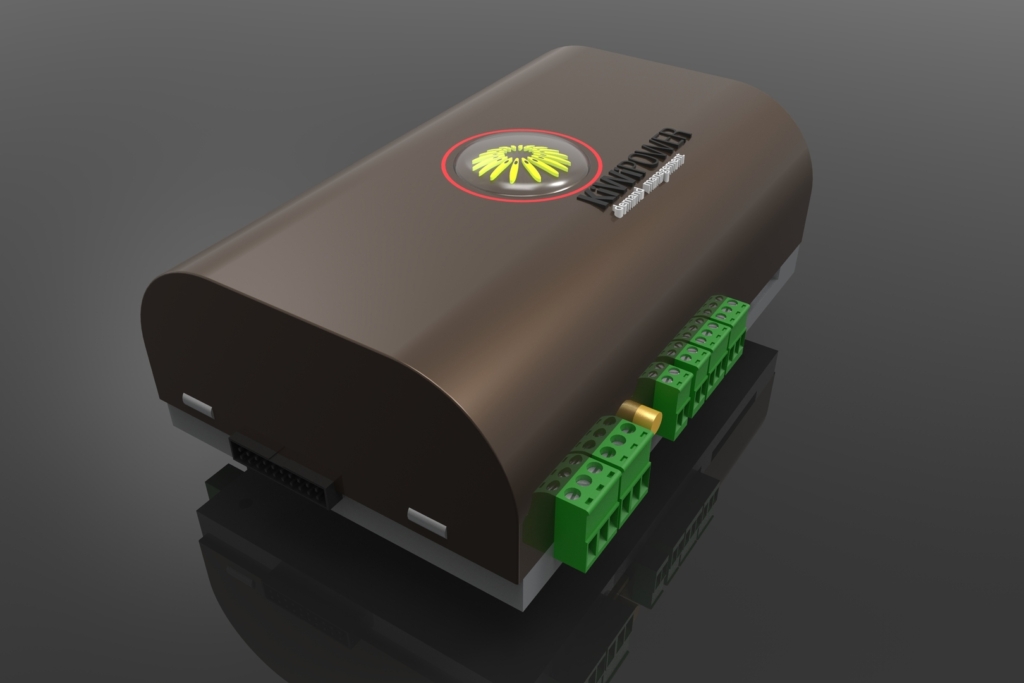
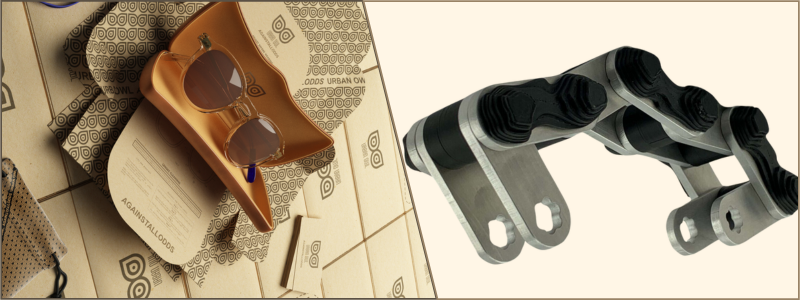
product visualizations of a stylish sunglass brand and a modified rigging bag holder

Enhanced customer confidence

For online shoppers, the inability to physically touch or interact with a product can lead to hesitation and doubt. Customers are more likely to abandon a transaction when they feel that the item’s quality or fit is uncertain. 3D product modeling services closes this gap with regard to experience, as it provides a virtual experience of getting an in-store feel. Being able to view a product in 3D allows the customer to inspect it from all angles, enlarge it for further inspection of fine details, or view it in a more realistic scale and proportion.

This developed view provides confidence in the purchase, as customers will feel more sure about knowing what they are purchasing. Therefore, this will likely decrease the number of returns or exchanges, a common source of pain for e-commerce companies. Less likely to experience buyer’s remorse when the customers will be able to see and play with it as if they were holding it in their hands.

Increased product visualization

3D models allow e-commerce firms to present their products in ways traditional photography cannot. For instance, an expert 3D render can emphasize a product’s texture and finishes, along with even interactive parts as buttons or moving parts of it. Therefore, this kind of detailed approach provides customers with a more comprehensive understanding of the quality and value that a product offers, specifically for high-end and luxury goods.

Further, the lighting effects and real-looking textures can be used along with 3D models to make the overall visualization of the product as real as possible. This is helpful when the aesthetics of the product dominate the purchasing decision-making for an industry such as in fashion, furniture, and automotive. The dynamic and eye-catching presentation of products not only increases customer satisfaction but can also increase the perceived value of the product.

Asset customization: customer experience personalization

Possibly the most compelling application of 3D visualization services is also its integration of asset personalization. Personalization may allow customers to customize products according to their preferences, such as the color, material, or design elements. Today, this level of personalization is fast becoming the edge of an e-commerce company, as people want more unique and tailored products.

RELATED: Designing prototypes: 3D design services for inventors and companies

Meeting the customers’ expectations

The modern consumer is no longer satisfied with ‘off-the-shelf’ products. Customers want items that reflect their individuality and style. It is through such a change in consumer expectations that demand for customized products is increasing across all industries. The best examples would range from niche sneakers to furniture or even configurations of cars – whatever a client may want, he or she wants the ability to design.

Enabling the online company to supply this demand, 3D asset customization allows customers to see in real time how their customizations might appear. Consider a client purchasing a piece of furniture: they can choose from different fabrics and colors of a sofa and select whether it should have legs or be on wheels, seeing immediately how that decision affects the design of the sofa. This interactive approach not only enhances the customer experience but also increases the likelihood of purchase by providing a sense of ownership over the product.

Increased engagement and conversion rates

Customization options are considered to be one of the ways to increase customer engagement and thereby increase conversion. Research has shown that consumption occurs more readily when the customer is able to ‘engage’ with the product being sold, especially through customized products. E-commerce companies now offer customers options to tweak and personalize certain products to satisfy customers’ needs.

Another essential feature is the ability to visualize customizations in 3D, making the process smoother and more enjoyable. Rather than having a static image or limited options, customers can try various combinations and then immediately see the results of their choices on the product. This kind of dynamic interactivity helps build a stronger bond to the product, thereby making it more probable that the customer will complete the purchase.

Besides this, a customer is not likely to switch from a product that can be customized. Customization can become a USP for a brand and thus maintain a competitive difference in the market.

RELATED: Understanding the cost of prototyping for product design services and budgeting for your company

Role of 3D product visualization and personalization in return minimization

Return of products is a growing issue in e-commerce. Customers often send back the purchased items because the products they got and what they ordered were different, either because of color differences, size, or even just because they were not up to quality standards. In addition to costs associated with logistics, it also destroys customer confidence in the e-commerce firm.

Minimize returns: E-commerce companies can minimize returns with the help of 3D product visualization and asset customization. Customers will be sure of what they’re getting; they will be making a better-informed decision, meaning that there is more of a chance that the disappointment when the product arrives won’t be so biting.

Furthermore, since customers can choose to have the product in accordance with their wishes, they are more likely to be satisfied with the purchase. When a customer can choose the exact specifications of a product, then the scope for being disappointed afterward gets minimized.

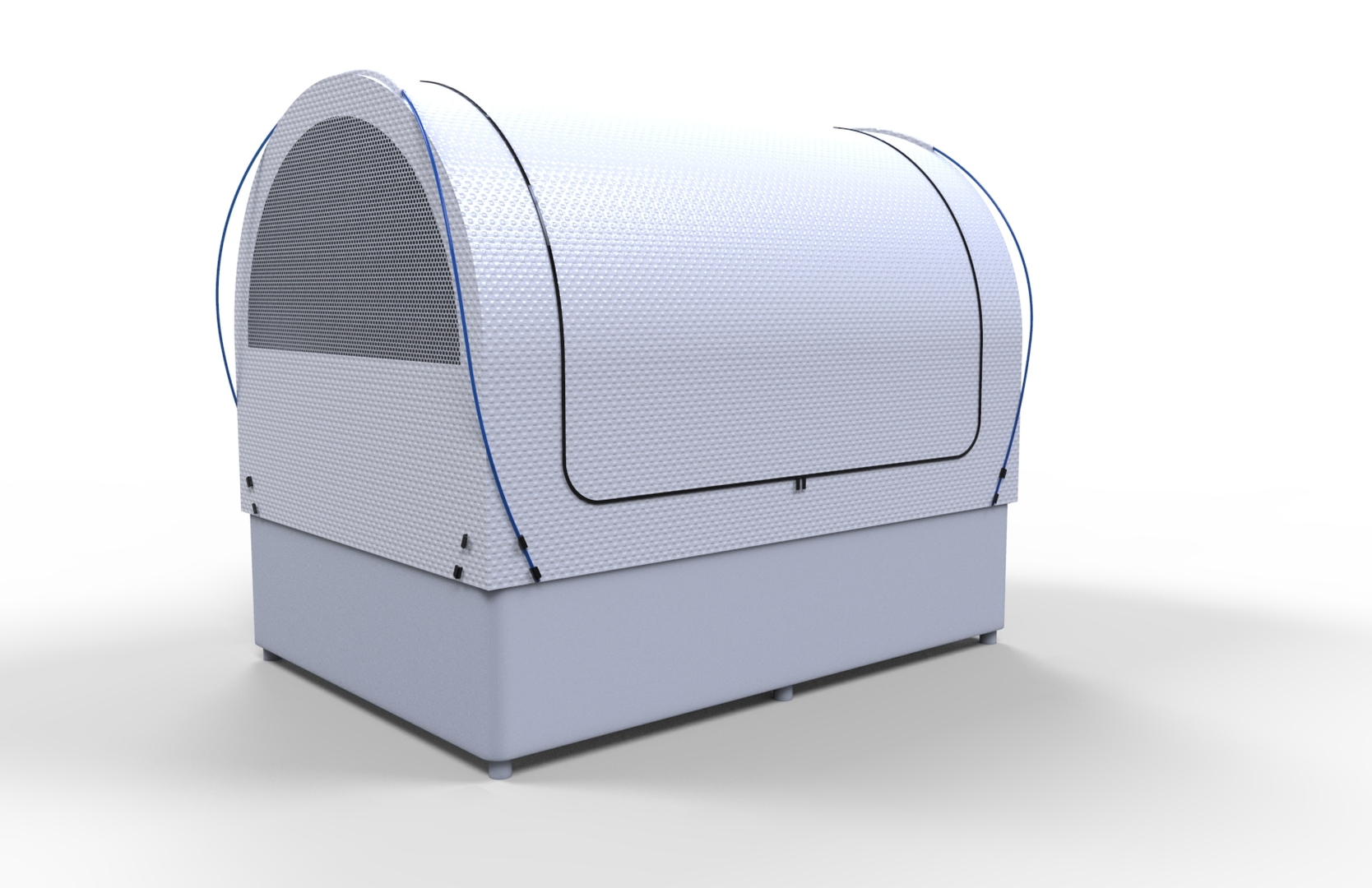
urban easy tent product visualization

Supply chain simplification and waste reduction

A further benefit that 3D product visualization services and customization offer for the supply chain and sustainability efforts of e-commerce companies is related to excessive inventories. Customers can see and personalize products at the point of interaction without actually needing to manufacture or ship them; this reduces the necessity for huge amounts of inventories, lowers overstocked items and waste minimization, and better resource allocation.

For instance, a fashion design firm that designs personalized apparel or accessories will be manufacturing pieces on demand according to the specifications of each customer. This helps minimize the amount of excess inventory but also decreases associated environmental impacts from mass production. The more flexible options are available, the better e-commerce companies are placed to attract eco-conscious consumers.

RELATED: Preparing your firm’s product design for manufacturing: How to streamline development and reduce costs

The future of e-commerce: immersive shopping experiences

As technology continues to evolve, 3D product visualization and asset customization are expected to play an even more significant role in shaping the future of e-commerce. Virtual and augmented reality (VR and AR) are already being integrated into e-commerce platforms, enabling customers to experience products in even more immersive ways. For example, AR technology enables customers to virtually “try on” clothing or visualize furniture in their homes before making a purchase.

Such innovations advance in the benefit of 3D product visualization, with even more interactive and personalized experiences. Over time, more interactive technologies become pervasive, and embracing it early will set some e-commerce companies clear leadership in their respective industries at the front.

Conclusion

3D product visualization services and asset customization could be more significant breakthroughs for the e-commerce sphere. Since these technologies allow customers to understand products much better and more interactively, confidence will be built, and sales growth is to be anticipated. Moreover, it will be possible to offer customized options, which increases the demand for personalized products even more and further strengthens customer engagement and loyalty.

Advanced technologies such as 3D product visualization and asset customization will continue to amend the expectations of consumers and intensify competition among e-commerce firms. In that regard, it not only develops the bottom line but also makes it more sustainable, efficient, and customer-centric. The future of e-commerce lies in immersive and personalized shopping experiences—3D product visualization and asset customization are key to unlocking that future.

How Cad Crowd Can Help

No single site can compare with Cad Crowd in 3D product visualization and asset customization. What success in an eCommerce business can lead to is the association with experienced professionals having some top-tier 3D designers design solid and interactive product visuals. This improves the experience a customer receives from shopping by clearly detailing and allowing customizing product representations resulting in higher conversion rates. 

In addition, asset customization experts help companies offer highly customized products, which increases the level of customer interaction. Through collaboration with Cad Crowd, e-commerce companies can ensure their products stand out, contribute to increased sales, and win the race in this fast-moving online marketplace.

Request a free quote today.

author avatar

MacKenzie Brown is the founder and CEO of Cad Crowd. With over 18 years of experience in launching and scaling platforms specializing in CAD services, product design, manufacturing, hardware, and software development, MacKenzie is a recognized authority in the engineering industry. Under his leadership, Cad Crowd serves esteemed clients like NASA, JPL, the U.S. Navy, and Fortune 500 companies, empowering innovators with access to high-quality design and engineering talent.

Connect with me: LinkedInXCad Crowd

3D Rendering in Project Presentations: Expert Night-mode Scenes for Architectural Firms


When night falls, everything feels a bit more magical. The sky shifts from blue to deep indigo, and starts to create a calming atmosphere. For architects, nighttime scenes in 3D renderings can highlight lighting design and add a sense of mood and depth to projects. It’s a great way to showcase how a building comes alive after dark. Scenes set in nighttime often give off a different mood and ambiance that is unmatched during daytime.

Night settings seem to have this mystic appeal to them to the extent that people see things in a different light, so to speak. It’s also interesting how nighttime scenes seem to highlight key features often overlooked or even ignored when seen with the sun high up in the sky. This is more than enough reason to include 3D nighttime scenes architectural renders. These nighttime scenes offer a unique point of view that can take the aesthetic, emotional, and functional appeal of a project to the next level. 

Cad Crowd has worked with leading designers and architectural firms to close deals and make an impact through project presentations. What we’ve noticed is that the adage, a “night and day difference” holds especially true for 3D renders. Let’s take a look at what we’ve learned.


:rocket: Table of contents


RELATED: Creating lavish real estate listings with 3D services and 3D real estate rendering

Daytime renders 

To master the art of nighttime scenes in 3D rendering services, you first have to learn about daytime scenes. Daytime scenes are most normally used in 3D settings to show projects during the brightest times of the day. Daytime scenes show clear blue skies between 11 in the morning and 2 in the afternoon. The primary source of light in daytime renders is the sun. As a result, it’s important that proper positioning is always observed here.  Scenes set during the daytime look best when they feature large bodies of water as well as reflective surfaces.

Oceans, ponds, and swimming pools mirror the sky, light, and the environment in renders almost to perfection. The same effect is also achieved in projects where there are window walls or windows, particularly in skyscrapers and huge buildings. Daytime renders are recommended for high rises in coastal areas, structures on water, multiple housing developments, residential buildings with minimal exterior lights, outdoor areas with bodies of water, and structures in bright white color.  

Nighttime renders 

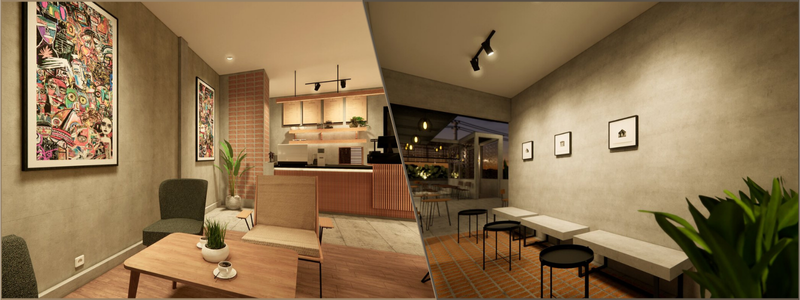
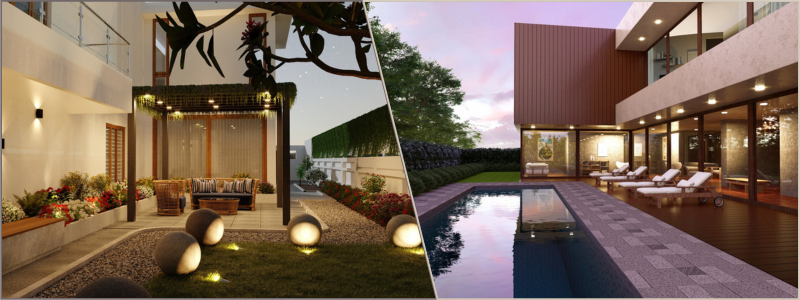
Nighttime renders are used to visualize projects after sunset. Although the light sources may replicate the street lights and the moon, most of the lighting still depends on the project’s external and internal lighting. This is why you have to factor in a building’s external and internal light fittings and whether these are suitable for a nighttime 3D render or not. It’s no secret that you can see better from inside the building when darkness has fallen outdoors with the lights switched on around and inside the structure. 

RELATED: How to include people in 3D architectural CGI Projects: Benefits for Companies

Even this tiny detail included by the 3D architectural rendering expert can give a unique sneak peek inside the structure. It gives the render a touch of real character. Since several smaller sources of light are used, the light can also have a significant effect on the smaller and other nearby reflective surfaces such as windows, vehicles, or even small bodies of water. Nighttime renders work great for high-car-traffic areas, contemporary or dark homes, high-end houses, and buildings with extensive use of lights, both inside and outside. 

Suppose you still haven’t been using 3D nighttime scenes as part of your marketing materials and project presentations. If so, take a lot of the main reasons why you might want to consider adding a touch of the dark of the night into your next architectural renders. 

There’s something special about nighttime scenes 

Nighttime 3D visuals are uniquely atmospheric, don’t you think? Scenes set at night may showcase any of the following:

  • A bright, cozy building with interior lights installed tactically 
  • Parties or holiday festivities
  • A warm, inviting house with a snow-covered landscape around it
  • The northern light,s with their magical glow
  • Vibrant city lights at night

RELATED: How to render architecture: tips from an architectural rendering company, Los Angeles

3D nighttime scenes can induce strong emotional responses during any of these scenarios. They don’t just inform in this case. If your goal is to make your potential investors or clients form a deeper connection with your project, nighttime 3D visualization services will help you achieve this exact objective. 

3d architectural rendering company

Exterior lights look more appealing at night

Aesthetic designs can never do without exterior lighting. Most of the time, it even makes or breaks the visual appeal of the project as a whole. Nighttime renders can be used to highlight those lovely lights outside a building or home. These renders clearly show the design of the exterior lights, which can showcase architectural features and emphasize the details across different structures and surfaces. 

Materials look different during nighttime 

Materials always look different under different lighting conditions; your project presentations should reflect that. Nighttime scenes in 3D will let you show the changes in the appearance of the colors and textures under artificial lighting. It can significantly impact animations that feature timelapse transitions from daytime to nighttime. These visuals from 3D architectural animation firms allow the audience to see and understand the interplay of light and materials. This can make your project presentation not only more informative but also more appealing. 

RELATED: Leveraging 3D architectural animation to attract new clients in real estate

Projects gain a different context with nighttime scenes

3D nighttime scenes also help the audience view the project and its entirety in relation to its surrounding environment. The serene twilight in a peaceful neighborhood in the suburbs or the bright neon city lights can give the whole context a touch of real life. This can improve how viewers perceive the project. It makes it easier for them to imagine being inside or near the building themselves. 

It’s cheap and fast to complete nighttime scenes 

If your project doesn’t intend to highlight the nighttime scenes per se, you can produce them faster and cheaper than the main renders. Many 3D designers and artists today even offer discounts for more views after the initial 3D model is completed. It explains why 3D nighttime scenes are a more cost-effective solution that can make your presentations more substantially valuable.  

Nighttime scenes show how lighting ensures safety

Lighting is there not only for aesthetic purposes, but also for safety above anything else. It is specifically important for residential complexes, public spaces, and commercial buildings. Nighttime scenes done in 3D can show the strategic locations of the lighting fixtures on walkways, hallways, staircases, and other similar areas. They help you convince stakeholders and clients that the designed spaces are safe and follow the local rules and regulations accordingly. 

RELATED: The best architectural rendering companies and 3D rendering services

Some projects need nighttime scenes 

Some buildings and structures are meant to be seen mostly at night. Good examples of these are restaurants and nightclubs. In these cases, it’s essential to showcase their designs using nighttime settings. A 3D nighttime scene will present these special projects in their natural state to show off their vibrant appeal after sunset. A 3D render like this can also be a great point of argument during contest bids or presentations, especially for projects that involve nighttime businesses. 

It’s safe to say that nighttime 3D renders are must-have tools for architectural firms, designers, and real estate professionals. Thanks to these renders, viewers can gain a better glimpse of both the aesthetics and functional qualities of the design. Adding these nighttime scenes to your pitch will help make your project more visually appealing while offering a more holistic view.

3d architectural visualization experts

Tips to master nighttime scenes in 3D rendering

The use of nighttime scenes in 3D renderings is a unique form of art that requires a better understanding of various sources of light combined with strict attention to detail. While there are lots of tutorials offering helpful tricks and tricks to improve your workflow, the use of high-dynamic-range images, or HDRIs, is still associated with a long list of misconceptions.  

RELATED: 3D architectural rendering: pros and cons of creating presentations in-house

HDRIs are often used in 3D architectural visualization services to add more realistic lighting in 3D scenes, particularly for nature and outdoor environments. However, problems may pop up the moment these HDRIs produce light from different directions. This doesn’t happen in real life, though, where every source of light has its own angle and direction. This notable difference can lead to unrealistic and twisted results, especially in nighttime settings. What’s real here is that sources of light such as lamps, ceiling lights, or sunlight coming in through the windows can light up scenes from just a single direction.

Once you transition to 3D nighttime scenes, the use of HDRIs alone will strip the scene of its authenticity, particularly when the sun has set on the horizon.  To address this issue and make the quality of 3D nighttime scenes in your project presentations much better, it’s a must to follow a unique approach to lighting. There are a handful of tips you can factor in rather than relying only on HDRIs. For example, you can add areas or spotlights in your renders.

You can try to play around with these to resemble realistic sources of light in your scene. You can also identify strategic spots for these lights to emphasize focal points and achieve the kind of ambiance you wish to create. You can also set the colors to a dark navy tone to mimic nighttime hues. You can also tweak a few things here and there produce a subtle ambient glow.

RELATED: Premier architectural rendering blogs to elevate your firm’s visual design expertise

With the strategic and insightful implementation of these changes, you can use the lights in your nighttime scenes to evoke a more visually pleasant and authentic atmosphere. These subtle nuances in the lights’ direction and their intensity can have a significant impact on the overall feel and look of your 3D renders. 

How Cad Crowd can help 

Planning to add a different touch to your project presentations? Cad Crowd boasts a network of professionals excelling in 3D rendering built through years of experience working with the best design firms. Why not get in touch with Cad Crowd today? We will help you find the best freelancers who can strategically use nighttime scenes and turn your presentations into enticing works of art!

Contact Cad Crowd today for a free quote.

author avatar

MacKenzie Brown is the founder and CEO of Cad Crowd. With over 18 years of experience in launching and scaling platforms specializing in CAD services, product design, manufacturing, hardware, and software development, MacKenzie is a recognized authority in the engineering industry. Under his leadership, Cad Crowd serves esteemed clients like NASA, JPL, the U.S. Navy, and Fortune 500 companies, empowering innovators with access to high-quality design and engineering talent.

Connect with me: LinkedInXCad Crowd

Complete Costs of Injection Molding Design, DFM Engineering Rates, & Manufacturing Pricing for CAD Services


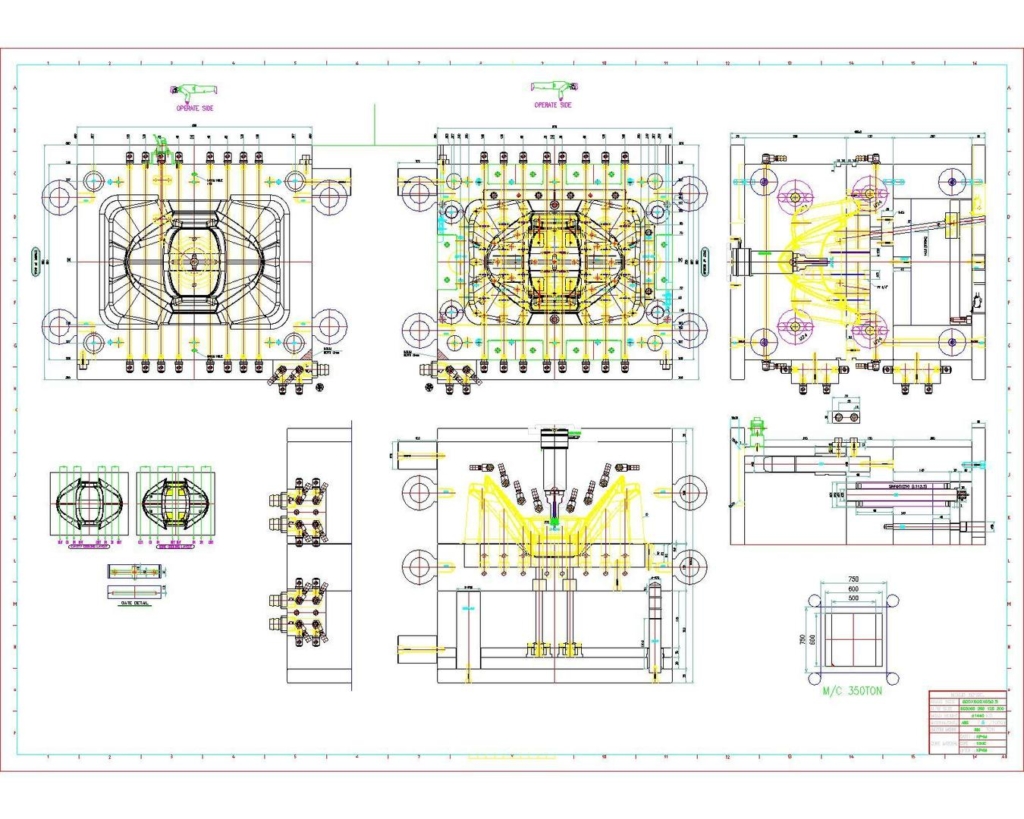
Quality injection molding can only happen if you have accurate tooling (mold) to begin with. Although the design – of the mold – essentially follows the geometry of the product or its parts, fabricating the mold presents its own engineering challenges depending on complexity and materials, adding up to the total design cost.

Cad Crowd is one of the leading services in finding the best experts in tooling design, and we’ve collected all we know about its costs (depending on each project) into this one article.

Here’s a simple breakdown of the estimated cost of tooling design services.


🚀 Table of contents


Overview

Task Complexity Estimated price range (USD) Note
Engineering services Feasibility studies and concept development $100 – $250 Hourly rate
Detailed design and structural analysis/optimization $100 – $300
Physical prototyping and testing for manufacturability $500 – $5,000 Per iteration
CAD drawing Straightforward geometry with simple parts $500 – $1,500 Per project
Detailed features and precision components $1,500 – $5,000
Intricate assemblies consisting of multiple parts $5,000 – $15,000
3D modeling Static 3D assets based on well-defined sketches $50 – $150 Hourly rate
Animated models with renderings and animations $100 – $250

To make things much simpler, the following table gives a rough cost estimation based on project size:

Project size Note Estimated cost (USD)
Small Simple products achievable with basic engineering and CAD skills $1,000 – $5,000
Medium Intricate designs requiring advanced 3D modeling and multiple prototypes $5,000 – $20,000
Large Sophisticated or unique products that necessitate comprehensive engineering services $20,000 – $50,000

RELATED: Why prototype DFM services are useful for product design at companies and firms

You should know by now that, like all custom fabrication services, there’s no fixed engineering cost to build injection molds. The exact cost is always affected by a multitude of factors, including but not limited to size, details, complexity, materials, fabrication method, and the company you hire for the job. In general, a small mold for a simple part/design may cost anywhere from hundreds of dollars to a thousand, while an advanced build for intricate objects could cost you tens of thousands.

There are also all sorts of material options, such as stainless steel, aluminum, composites, and even plastic. Steel and aluminum are the most widely used options, as they’re known to have excellent heat distribution and dissipation properties, durability, and suitable hardness for detailed features (the ability to hold shape in high-precision corners). Hard steel is, by far, the most widely used material to build molds thanks to its ability to withstand large-volume production, whereas aluminum is both conductive and cost-effective. It’s worth mentioning that some types of modern hard aluminum (such as 2024 and 7075 alloys) are easily capable of producing 100,000 parts without any major maintenance. Some companies build hybrid molds made primarily of steel and aluminum inserts to get the best of both materials in one package.

A hard aluminum mold costs on average $3,000 for a custom yet basic electronic enclosure design or anything of similar complexity, whereas a machined steel type can go for $20,000 or more. A plastic mold, typically built using 3D-printed polymer, is the cheapest option at around $100 each.

injection moulding plate

RELATED: DFM for new product design excellence: Complete guide for company success

The engineering cost

Injection molding design services are not cheap. Apart from the engineers’ hourly rates, you also have to cover the cost of equipment usage, materials, and labor (fabricators). You don’t have to purchase an entire range of equipment just to build a couple of molds, but the fabricators can’t afford to let you use their machines (whether EDM, CNC machine, or 3D printer) for free. Well, technically, they’re using their own machines, but they do it on your behalf, so you take the bill at the end of the day.

Tooling/mold

Assuming the product parts have already been designed, it’d take around 2 – 4 weeks to build a simple mold and about 6 – 8 weeks to create a complex one. While a custom fabricator can probably take care of the design task for you, there’s nothing wrong with sending them an already-finished mold design, especially if you have the engineering team to do it in the first place. This is to reduce the turnaround time and, ultimately, cost. Furthermore, the engineers know what the final product should look like, so they’re more than qualified to design the mold for it as well. At the very least, send a CAD drawing or STL file to the fabricator to streamline the workflow.

Tooling is the main cost driver. Molds for injection molding are most commonly made using any of the following methods:

  • CNC machining: a high-precision subtractive fabrication technique and the obvious choice because most molds are made of metal, either steel or aluminum. A block of raw material is secured/mounted to a fixed position and then rotated against various cutting blades, drill bits, grinders, and so on. In some cases, depending on the mold design, the material sits still as the sharp instruments maneuver around it along at least two axes (X and Y). The more advanced machines can operate on several additional axes as well.

    CNC machining can produce highly complex molds with intricate cavities and texturing details. The cost, excluding the materials, is around $80 per hour for a 3-axis machine and $200 per hour for the 5-axis type. CNC machines are industrial tools and should be operated by trained professionals only. The aforementioned cost already covers the labor.

  • EDM (Electrical Discharge Machining): in case the molds are too complex, even for a 5-axis CNC machine, EDM is the answer. As the name implies, the machine shapes or cuts through metal using powerful electrical sparks. Both the workpiece (material) and the tool have their electrodes, so they’ll generate electrical discharge when in proximity to each other. Every discharge slowly builds the workpiece into shape.

    EDM is accurate to 1/10,000th of an inch (or about 10 times narrower than the average width of a human hair), and it hardly requires any post-processing. As long as you’re working on metals or any electrically conductive materials, EDM is one of the best tools for the job. A reputable EDM shop will charge you anywhere from $50 to $100 per hour. 

  • 3D printing: to say that you can 3D print a mold would be a bit of a stretch, but it’s not impossible. A 3D printer is, in essence, an additive rapid-prototyping tool that allows you to build just about every shape, simple or complex, using mainly plastic-based filaments with great accuracy. It’s most commonly used in the product development process to build early prototypes.

    One thing to remember is that 3D-printed molds – since they’re made of plastic materials – won’t be suitable for large-volume production. If you intend to make a limited edition of a product in a very low production run, however, 3D printing starts to make sense. The cost for a 3D-printed mold would be around $200 or less for a simple design.

In terms of speed and budget, 3D printing services are the clear winner of the three. Once the STL (printable CAD file) is done, the fabrication process can start right away. Depending on the complexity, the printing process – using plastic filaments – should be done within a few hours. CNC machining and EDM take the throne for efficiency; they’re not as affordable as 3D printing, but they can shape hard metal that you can actually use for mass production.

RELATED: 5 Reasons to hire a CAD Design specialist to bring your company’s concept to market

Other cost factors

A few more variables that are directly related to the cost of injection molding design include:

  • Part size: the mold has to accommodate the part to be molded. A larger mold requires more materials, so you need to consider the cost of steel, aluminum, or 3D printing filament. If you order two identically-designed molds, but they’re in different dimensions, the smaller mold will be cheaper than the larger one.
  • Part design: It goes without saying that the more intricate the mold design is, the more complex the engineering/fabrication process is. A mold design has two sides: the cosmetic (side A) forms the outer layer of the product, and Side B is where you’ll find the hidden support structures. Side A is often aesthetically-pleasing, whereas Side B might be (although not always) rougher, but it’s populated by all the essential parts. You can design the cosmetic side as polished or shiny as possible and texturize in any way you want, as long as the end result doesn’t affect features and functionality. Side B must be fabricated according to the specifications. The more complex they get, the more expensive the engineering and fabrication costs.

As if to reiterate, the intended production volume determines the fabrication method. Large-volume projects definitely called for hard steel or aluminum mold. This means you have to go with CNC machining or EDM; each is more expensive than 3D printing.

Design for manufacturing vs. 3D printed molds

When you plan for product development, you expect the engineering firm to do their job with a DFM (Design for Manufacturing) approach. DFM is an engineering practice in which a product is designed in such a way that it can be mass-produced in the most efficient way possible. Cost reduction is the main goal. Over the last decade, 3D printing has been touted as the revolutionary next-generation manufacturing method to build any imaginable product easily. This is probably true in small-volume production due to the accessibility of filaments and the decreasing price of desktop 3D printers.

Mass manufacturing is a different thing entirely. You’re talking about a product designed to be manufactured in the tens of thousands, if not more. Even the most sophisticated 3D printers today can’t handle such a load, at least not as quickly as the gold-old injection molding anyway. So long as your design is intended for mass-production, your engineering team probably won’t take “3D-printed molds” into account throughout the development process because it would be counter-productive.

Cad Crowd is here to help

Here at Cad Crowd, we connect you with experienced engineers and fabricators to help you design even the most complex products and intricate molds. Whether you intend to mass-manufacture the products or have a limited production run, we have everything covered at affordable cost.

Feel free to call Cad Crowd to get your free quote.

author avatar

MacKenzie Brown is the founder and CEO of Cad Crowd. With over 18 years of experience in launching and scaling platforms specializing in CAD services, product design, manufacturing, hardware, and software development, MacKenzie is a recognized authority in the engineering industry. Under his leadership, Cad Crowd serves esteemed clients like NASA, JPL, the U.S. Navy, and Fortune 500 companies, empowering innovators with access to high-quality design and engineering talent.

Connect with me: LinkedInXCad Crowd

How to Cut Costs in 3D Product Rendering: Tips for Freelance Designers & CAD Firms


A lot of expert 3D rendering projects have similar requirements: create 3D models, apply textures and colors, rendering happens, have some final touch-ups done, and deliver the image. The basic workflow is almost exactly the same regardless of the project, but there can be plenty of different details in each step depending on what the client needs.

Take exterior rendering, for example; one client wants to have a complete aerial view, while another only needs a plain white background. Both projects result in a photorealistic visualization of an exterior, but the latter should be more affordable and quicker because it involves much less work on your part.

Cad Crowd has experience with working with a wide range of projects – big and small – and we understand what it means to find the best balance between quality, budget, and timeline. Let’s take a look at some strategies you can use and how outsourcing 3D rendering projects can give you the boost you need.


🚀 Table of contents


Cut rendering costs

3d product rendering design examples

RELATED: How are product concept design services used to innovate during product development?

Whether or not you realize it, there are plenty of opportunities to save money (along with time and energy) in every project. No matter the objectives, chances are you can implement these cost-saving strategies for yourself and your clients.

Define the project outline and strategy ahead of time

The main idea behind having a clear project outline is to avoid doing unnecessary work. You’ll find that taking just enough time (at the beginning of the project) to craft a detailed plan can save you from getting a lot of headaches in the days to come. The outline keeps your workflow organized and streamlined. Furthermore, it helps you realize some project requirements that might not be clearly apparent.

Example: you’re working for a client who wants a complete set of 3D visualizations services for a product page. The client specifies that the set should include multiple static renderings and an interactive product viewer. If the static renderings include six images (viewed from the front, back, right side, left side, top, and bottom), it seems like you only need to stitch them together for the viewer. As you create the project outline, you come to realize that the product viewer must use full rotation, so the object can be seen from just about every angle, including the corners. Thanks to the outline, you can now manage the workload better; as in, you can plan for the viewer while working on the static renderings. A more manageable workload means quicker completion time and an overall better cost-efficiency.

RELATED: 3D product rendering company or 3D artist: How to hire for new product designs?

Make a list of everything required for the final image

Think about the image format, resolution, and viewing angles for the final image. Having a clear vision of the final image can help you identify potential cost-saving strategies during the modeling, texturing, and UV mapping works. Let’s say a client wants to have some close-up shots of a furniture product. This means you need to get all the details right with the materials, carvings, wood grain, fabrics, and even nailheads. All of those require extra work during the modeling process. If the client has no need for close-up shots, you can spend less time creating details on the 3D models. And at the end of the day, the rendering should cost less money as well.

Example: a product visualization project needs several renderings to showcase the object in different color variations. Each of them needs to show the object in a specific combination of finishes and colors. The client mentions that the final images will be placed in the corner of the scene, so they’re pretty far away from the camera position. Since there are no close-ups to focus on the finer details of the object, you can afford to create fewer texture maps and spend less time on modeling virtual materials. Furthermore, the lack of close-up views allows you to use a “medium” quality render setting – as opposed to an optimum one – to save time and cost, without sacrificing quality.

Work on similar tasks first

Now that you’ve defined the project outline and listed everything you need for the final images, it’s time to group similar tasks based on their categories. When you’re working with a 3D rendering service from scratch, you have no option but to shift to different mindsets as you go through the workflow stages. The most common groupings would look like this: 3D modeling, UV mapping and texturing, rendering, and post-processing.

You’re not focusing on textures when you build the 3D models, and you couldn’t care less about lighting when applying textures. You may have to switch between software packages as you progress, so the grouping helps you stay focused on the immediate tasks at hand. This forces you to actually complete a big portion of the job before moving to another. Grouping similar tasks brings about the sense of accessible workflow, preventing you from wasting too much time going back and forth between different phases of the project.

Example: let’s just say you’re hired to do a rendering project for a brand-new product. The client’s marketing team wants you to deliver a dozen renderings. Half of them are based on different prototype models, and the other half are reserved for the final production version. The first phase has to go through a rather cumbersome and lengthy process of submission, refinements, revisions, and approvals for each model. The client ends up paying $50 per render, mostly due to the modeling complexities. Now that the final version is ready, you need to deliver the remaining six images. But since these renderings are all based on the same model, your workflow is more manageable as you can group similar tasks together for all images. The project is much more time-efficient now, and the client ends up paying $35 per render.

RELATED: 3D rendering: What it is and why you should care

Take the 90% rule as a guideline

No matter what software you use, the hard truth is that 3D rendering can’t reach perfect lifelike quality in many cases, especially for large architectural objects or natural sceneries even for large architectural firms; it’s always either lacking or over-the-top. It might not be a problem for small objects like a tree, a rock, a glass of milk, a smartphone, etc. But when all those objects are put together in the same frame, complexities arise in terms of lighting, shadows, perspectives, reflections, and so forth. At some point in your rendering workflow, the amount of time and effort you put into the imagery becomes no longer effective. It’s as if you’re trying to improve something that’s already as good as it’ll ever be.

You might as well stop just as soon as you reach the 90% photo-realism mark. Any attempt to improve the rendering beyond that point will probably take a much larger investment no client is willing to consider. Unless you’re working as a CGI professional on the next Hollywood blockbuster, no one really cares if the fabrics in the upholstery don’t shine as much as they should.

Example: it’s not a secret that cloth is a challenging material to render. It has a depth of texture quality and comes with subtle reflective properties. In a close-up rendering, most artists will focus on the stitching and seam lines to create easily noticeable focal points and distract the audience from the tiny imperfections. You should be able to deliver a 90% realism for around $200; to get the next 10%, however, you might have to charge the client 5x higher, because you need to work 5x as hard to achieve it. For practical purposes, the additional 10% isn’t worth the extra investment. It takes away a big chunk of the work on your part, and helps the client save money.

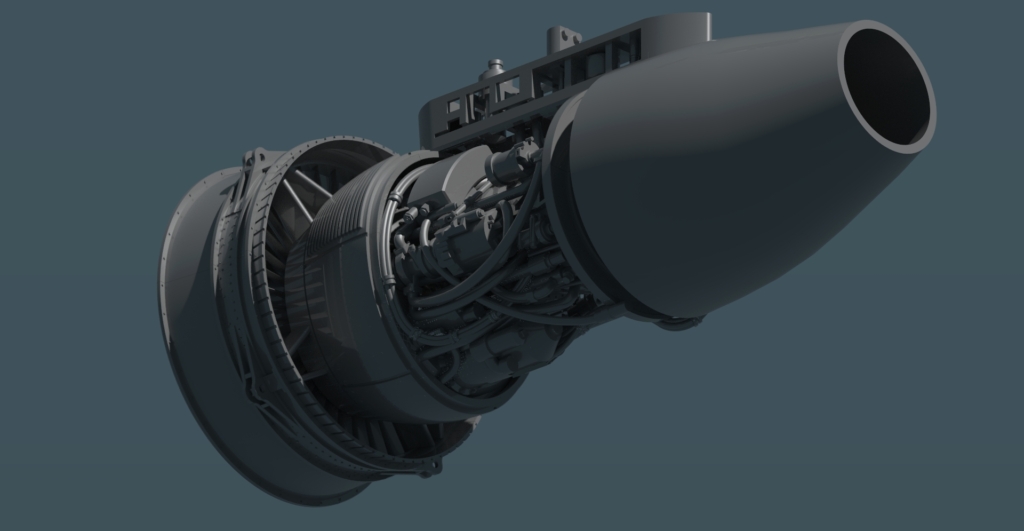
3d product rendering of an advanced heli-like drone and a workout machine

Make use of CGI library

Most expert 3D modelers and render artists are paid on an hourly basis. If you can finish the job sooner than expected, the client gets more affordable prices, and you can move on to the next project quickly as well. One of the most time-consuming tasks in a 3D rendering workflow is the modeling part, especially if you have to build the model from scratch. But this isn’t always the case. When the circumstances allow, you can use (purchase) ready-made models from 3D assets marketplaces at affordable rates. Of course, you still have to modify them to make unique pieces. Modeling might take you 3–4 days for a relatively simple object, but purchasing a low-quality model and then improving it to good quality can cut the workload to a great deal.

Example: a new client asks you to build a rendering of a kitchen. The final image must include all the appliances, lighting, fixtures, a countertop, a cutlery set, and so forth. It should come as no surprise that there are hundreds if not thousands of 3D assets out there for all the things typically found in a kitchen. If you have to create every model, from knives and glasses to cabinetry and appliances, it’ll take at least a week just to get the first phase of the project done. 3D assets marketplaces have all the models ready for you. Some are high quality, while others are barely passable; each is priced accordingly. Pick a good balance between cost and quality so you don’t have to spend too much time on improving it, yet you still come up with 3D models of respectable quality. Some marketplaces even sell ready-made 3D scenes.

RELATED: Photorealistic rendering services: complete price, cost, rates and fees for companies and firms

But how is it made?

While no two CGI renderings are exactly the same, the workflow almost always goes along the same steps.

Gain through understanding of the brief: an effective way to ensure time efficiency (and also reduce production cost) is to learn all the information provided by the client in detail. This is where you can properly estimate how complex the project will be and how long it will take to finish everything. Accordingly, you’ll be able to determine how much to charge the client because a more intricate project costs more money.

Create the geometry: whether you’re making a CGI for a small desk or an entire residential area, you need the 3D modeling services first. You build a grayscale model (sometimes also referred to as a clay model). Your focus should be on dimension, shape, and proportion. Everything else, including textures and colors, are not the main concerns here. Grayscale models are your first deliverables. You present the “textureless and colorless” models to the client for approval before moving forward to the next phase. Ideally, you build several models to showcase the object from different viewing angles. If the client wants revisions, you make the required changes and resubmit the models until the client gives the green light to proceed.

Every revision means a delay in completion. Not to mention, you need to spend more time working on the same models twice or more. The good thing is that you can minimize the possibility of having to revise the model multiple times by, once again, gaining a good understanding of the project brief in the first place.

Apply textures and colors: now that the grayscale models are approved, it’s time to apply textures and colors. But you can’t just slap some assets onto the surface of the models. You need to do some UV mapping first. Basically, you divide the surface (of the model) into multiple elements; each element must be “unwrapped” or transformed into a flat plane. And then, you apply the textures or materials and colors as needed. Doing it on a flat plane makes sure that the surfaces are laid evenly so you get realistic-looking patterns.

Add lighting: the whole point of rendering is to make a computer-generated image as realistic as possible. To do that, of course, you need to add some lighting as well. This doesn’t necessarily mean you need to paint lights and shadows on the image. Instead, the rendering software usually offers various settings for light directions, angles, sources (natural or artificial), and intensity. Remember that some materials and surfaces interact with light in their own distinctive ways. For example, glass is translucent, so it refracts and reflects a certain amount of light. Solid objects with shiny surfaces, such as polished metals or wood, can have reflective characteristics to an extent as well.

Render the image: once the models are ready and the lighting is configured, the actual rendering begins. It’s a fully-automated process with minimum user input. Rendering software can create a single static image or a series of images in rapid succession to create the illusion of motion.

Post-production: The rendering process can take anywhere from just a few minutes for a simple image or many hours for a complex one. When the rendering is done, the only thing left to do is to enhance the visuals through post-processing services. Compared to modeling, post-processing involves relatively simple tasks like adjusting the contrast, hue, saturation, etc. The idea is to make the image look vibrant without losing its photo-realism effect.

3D photorealistic rendering services itself comes with several different methods, such as real-time and ray-tracing, and each can affect the final image quality.

Cad Crowd can help

There are many aspects of a 3D rendering project where you can improve cost-efficiency without sacrificing quality. Just because you provide rendering services at affordable rates, it doesn’t necessarily mean you deliver poorly executed visualizations. Reducing cost isn’t always about cutting corners, but making the most of every penny. And if you’re a client looking for quality 3D rendering services, look no further than Cad Crowd, where thousands of independent, talented, professional render artists offer custom services for every budget.

Give Cad Crowd a call today to get your free quote.

author avatar

MacKenzie Brown is the founder and CEO of Cad Crowd. With over 18 years of experience in launching and scaling platforms specializing in CAD services, product design, manufacturing, hardware, and software development, MacKenzie is a recognized authority in the engineering industry. Under his leadership, Cad Crowd serves esteemed clients like NASA, JPL, the U.S. Navy, and Fortune 500 companies, empowering innovators with access to high-quality design and engineering talent.

Connect with me: LinkedInXCad Crowd

Backdrop Photo or Full 3D Aerial View Rendering Options: Which is the Better Choice for Architects?


Today’s post talks about backdrop photos or full 3D aerial view rendering options to identify the better choice for architects. An ever-increasing number of architects today are making the most out of 3D aerial view renderings, both animated and static, to spice up their architectural visualization projects. 3D aerial rendering services are enjoying a higher demand because these renderings are informative, captivating, and striking. 

But how are they even made in the first place? What actually goes into creating aerial view renderings? Aside from the 3D models of the main structure, a large-scale detailed backdrop photo is also required to show its immediate surroundings. 

There are two popular methods you can choose from to produce such backdrops. These are the use of drone photography and 3D scenes. The methods have their own sets of strengths and weaknesses that can make or break the final CGI’s visual impact. Familiarizing their upsides and downsides will affect your project and its results. 

Cad Crowd has worked with both general design firms and the aerospace industry (NASAJPL) and understands how each industry uses varied levels of aerial views for different purposes. In this article, however, we’ll take those insights and focus on their use for architects and architecture firms.


:rocket: Table of contents


RELATED: How can 3D architectural aerial renderings benefit your company?

Drone-captured backdrop photos

Those footage captured by drones can make your backdrop photos look accurate and real. They do so by showing the environment and its appearance in the real world. Apart from giving viewers a real-life glimpse of the nearby landscape, it is also a more economical solution than a 3D designer trying to capture a scene in full aerial rendering. It also happens to be a speedier process, provided that you capture the ideal weather and lighting conditions right on the first try of shooting with the drone. 

There’s a catch here, though. With the rendering relying a lot on the footage of the existing environment, the 3D artists won’t have any other options but to exert more effort to give the backdrop some tweaks here and there. The following factors distinguish backdrop photos from aerial renders:

Reasonable and authentic

Backdrop photos can be quite appealing when added to archviz projects mainly because they are as authentic as they can get. These images illustrate the immediate environment to give the proposed structure a more realistic context. Such level of authenticity becomes more enticing while presenting the project to the clients. As you might already know, it is common for clients to focus their attention on the project’s real-life representation and how it works with its surroundings. 

RELATED: Optimal angles for real estate rendering services: immediately enhancing your listings

Meeting the preferences and perception of clients 

With backdrop photos at your disposal, you can give your target clients a more familiar perspective that reassures them. It’s that one thing that traditional architectural presentation services may not offer.  The proposals of planned buildings in their actual locations that look realistic can boost the confidence of clients. It also urges them to decide sensibly during every stage of the life cycle of the project.

One with the surroundings 

Backdrop images can blend the proposed building and its surrounding environment. This combination allows both architects and clients to envision how the proposed structure will interact in the future with the neighboring streets, other structures, and the rest of the nearby landscapes. This also promotes better decision-making when it comes to the elements that go or don’t go well with the backdrop. 

Efficient use of monetary and time resources 

Opting for backdrop photos can save the monetary and time resources used when hiring a 3D architectural rendering company. Instead of having to produce the 3D environment from the ground up, architects can direct their focus to the details of the structure itself and the photo as a reference for external context as they do so. Such a sleek tactic is advantageous for your projects whose deadlines are tight or budgets are limited. 

3d aerial rendering services

RELATED: How better 3D residential renderings help architects, builders, realtors, and companies

Despite the benefits of backdrop images, their limited flexibility remains their major shortcoming. The variations in lighting conditions, as well as changes in season and weather, all have an influence on the background imagery and even its consistency as opposed to 3D rendering services. Tweaks to the design of the structure may also require the backdrop photo to be updated. This can make the project more complex and expensive in the end. 

To put it simply, backdrop photos have the following key strengths:

  • The level of realism is higher because the scenery in real life is being depicted.
  • Turnaround time is faster.
  • Background photos are more economical compared to aerial renderings, making them suitable for projects whose budgets might be limited. 

On the other hand, below are some of the challenges that architects may encounter if they consider using backdrop photos:

  • A backdrop photo depends on light and weather conditions that may change out of the blue. While producing the views may be faster if the weather is favorable, delays may still happen while trying to wait for the conditions to become more ideal.
  • There is less control over the details of the surroundings. 
  • There might restrictions when it comes to the angles and perspectives that the camera may capture like when trying to shoot in a neighborhood dotted with buildings. 

RELATED: Highrise 3D rendering designs: CGI for architectural company’s presentations

Full 3D aerial view rendering

The 3D modeling designer can enjoy more freedom in terms of creativity and better control if you opt for a 3D aerial view render. It gives you a chance to play around with diverse points of view, weather, and lighting to portray scenarios that might be complicated or even downright impossible to shoot or capture in real life. A good example of this is showing quick transitions between different seasons. 

Control and customize with enhanced creativity

Among the best perks of complete 3D aerial view rendering is the fact that they provide an unparalleled level of control and customization. It’s possible for the architects to design the different parts and areas of the surroundings, such as nearby terrains, vegetation, and buildings, with extra care. It gives the assurance that everything will be in perfect synchronization with the proposed structure. Such a detailed approach gives architects the opportunity to showcase precise and artistically refined visions. 

Keep it consistent and flexible 

Aerial renders in full 3D are different from backdrop photos in the sense that they are more consistent as far as changes in lighting, weather conditions, and seasons are concerned. Architects will also enjoy better flexibility in terms of making dynamic adjustments to the elements to showcase the building and how it can adapt to different environmental conditions. This level of consistency ensures that the images rendered are an accurate reflection of the proposed architectural vision during the entire life cycle of the project. 

RELATED: What is 3D architectural rendering, and how do companies benefit from its use?

Future-ready designs

The 3D visualization expert can create an aerial view 3D render that can also be used for developing architectural designs for the future. They can be used to anticipate and accommodate future developments in the surrounding urban landscape. It is something critical for large-scale developments or projects in urban areas that change too fast and require long-term planning and adaptability. 

Upfront expertise and investment 

To create a full 3D aerial view render, upfront investments in software resources and a skilled workforce are non-negotiable. Architects who have already become masters of the art of 3D rendering and modeling methods and those who collaborate with 3D visuailizer teams specializing in visualization can use their abilities to produce immersive and eye-catching renders. While the initial investment might be costly, the long-term benefits such as the quality of presentations and the flexibility in design can offset the costs easily. 

Exceptional visualization and design

3D aerial renders support a good design process for the architects to explore various design alternatives and scenarios with the least effort on their part. It’s also feasible to envision the changes or adjustments to the orientation of the building, urban context, or landscaping in real time. It helps architects to make more educated decisions and make further improvements to their designs. 

RELATED: 7 Benefits of 3D architectural rendering services for real estate

Below are some of the most notable benefits of using full 3D aerial view renders:

  • You can come up with aerial views and angles that drones alone might never be able to shoot or capture. 
  • There’s no need to depend on natural weather or lighting conditions. 
  • There are endless possibilities to be creative and to customize. Full 3D renders are ideal if the aerial view has a touch and feel of artistry. 

Using full 3D aerial view renders also has its own drawbacks:

  • These full renders are more expensive as a result of the numerous resources and extensive work needed for the production of a realistic aerial rendering. 
  • The timeframes for producing aerial renders are often longer. 3D artists need a longer time to develop large-scale detailed scenes and then render them afterward. 
  • You should also take into account that this method needs a higher level of 3D rendering and modeling expertise. Access to modern and state-of-the-art equipment is also a must.
  • Work with an inexperienced 3D artist or an agency that doesn’t maintain a rendering farm. It might have negative effects on both the timelines and the overall quality of the results. It explains why it’s important to hire only the best CGI contractors armed with the right skills and toolset to pull off the job. 

How Cad Crowd can help

Do you need the best 3D architectural visualization services that can take your presentations to the next level? Never waste your precious time and contact Cad Crowd for the best and most suitable 3D artists who can bring your renders to life. It doesn’t matter if you prefer the high realism of backdrop photos or conceptual full aerial rendering, Cad Crowd will connect you with the team that can uplift your marketing materials and presentations. 

Contact us for a free quote today.

author avatar

MacKenzie Brown is the founder and CEO of Cad Crowd. With over 18 years of experience in launching and scaling platforms specializing in CAD services, product design, manufacturing, hardware, and software development, MacKenzie is a recognized authority in the engineering industry. Under his leadership, Cad Crowd serves esteemed clients like NASA, JPL, the U.S. Navy, and Fortune 500 companies, empowering innovators with access to high-quality design and engineering talent.

Connect with me: LinkedInXCad Crowd

Essentials of 3D Design for Fine Dining & Restaurants: What Makes a Restaurant Truly Stand Out


As people in the restaurant industry nowadays are in a tough competition, gone are the days when it is just about good food or wonderful service. As times progress with social media and with the rise of ever-changing dining trends, the ambiance of a restaurant along with its aesthetics is as essential to the dining experience as the meal itself.

Probably the most effective tool to deliver such an authentic and exciting experience is nothing short of 3D design. Technology lets restaurant owners, designers, and architects to see every miniscule element in the three dimensions and modify or enhance a concept long before a building structure even hits the ground and helps result in an even more nuanced and delightful setting that could easily transform a culinary experience.

This article will discuss the fundamental principles of 3D design services when applied to fine dining and restaurants and explore where it helps in developing the ultimate unforgettable experience. At the same time, it looks into what makes a restaurant truly distinctive among many others.


🚀 Table of contents


Role of 3D design in restaurant

Visualize the concept

3D design can take any abstract idea to the physical dimension by visualizing. It is essential to come up with an exact vision of how the place would work or look. 3D design tools for restaurant owners or designers allow this to be accomplished by bringing this vision to reality using photorealistic renderings of the space.

These visualizations help ensure that the restaurant design is in line with the brand identity and concept. For example, a fine-dining French bistro and a trendy, casual sushi restaurant would have different design requirements. Using 3D architectural visualization services, designers can try out concepts for lighting, layout, furniture, and color schemes before expensive decisions are made.

RELATED: Creating exterior renderings using 3D exterior rendering services for architects

Space planning and optimization

Effective space planning is a very essential aspect of restaurant design. The restaurant has to balance comfort, aesthetics, and functionality so that the customers are able to dine in a pleasing atmosphere while servers are able to easily navigate the area. With 3D design, both front and back-of-the-house space can be accurately planned so potential problems are known before the actual construction process.

For example, 3D modeling allows there to be ample space between tables so that the guests do not feel crowded. This also gives the designers a chance to look at the flow of traffic so that the servers can easily move in and out of the kitchen to the dining area. In addition, 3D tools will optimize the kitchen space so that the staff will have enough space to work without overcrowding.

Accurate lighting and ambiance projections

Lighting determines the ambiance of a restaurant. While an upscale fine dining restaurant would want soft, warm lighting, a trendy bistro might want bright, modern lighting. Using 3D design software, designers can create the idea of how light will work in one area versus another to ensure that the lighting dictates the intended atmosphere in the restaurant.

Other than the visualization of the lighting effect, 3D modeling firms will also consider other practical lighting concerns that involve energy efficiency and placement with a view of avoiding glare or shadow. It is the accuracy of lighting projection that gives this space an aesthetic appeal and functionality.

3d rendering fine dining restaurant

RELATED: How has architectural visualization changed the way companies present projects

Exploring materials and finishes

The materials and finishes in a restaurant often play a great role in determining the overall design and feel of the space. Be it luxurious marble for a fine dining experience or reclaimed wood for a rustic bistro, 3D design allows for testing various materials and finishes without costly prototypes or physical samples.

This part of 3D architectural design services is also where testing of the texture and colors would come in, from the floor coverings to furniture, everything being in perfect coordination with the ambiance of the restaurant. By having a 3D model and simulating many materials, one can immediately view how these are going to function with light and space as well as other components of design.

Branding and identity

A restaurant’s style should resonate in its branding so that there would be consistency as guests walk out of it. Whether a sophisticated, simple setup or something edgier with more eccentricness and vibrant tone, 3D design tools come in handy for correlating the place with the restaurants’ conceptualizing brand identity in general.

These can all be put into the 3D model in terms of logos, color schemes, and signage, making visual identity coherent in all the spaces: exterior façade and details of the interior like menus, wall art, even uniforms of the staff.

What makes a restaurant stand out?

Though 3D design is very valuable for a restaurant’s visually appealing and functional nature, there are many other elements that contribute to making a restaurant truly stand out. All these factors together make the dining experience unforgettable, keeping customers coming back for more.

Unique concept and ambience

A very good concept from a restaurant should be one of its prime distinctions. Between themes and approaches in restaurants, it is hard to distinguish which make them distinctive. It is either the farm-to-table concept or an immersive experience, or anything multi-sensory restaurant-a clear and distinctive concept sets restaurants apart from the rest.

Ambience is integrated into this concept. Ambiance should supplement the kind of dining experience being offered by the restaurant. Whether minimal décor is going to create the elegant atmosphere of the restaurant or it’s going to be bold with vibrant colors creating an energetic feeling in a more casual environment, the interior must reflect and strengthen the overall idea. 3D design could help explore what style, what color, or what material, to achieve the ultimate ambiance.

Exceptional customer service

Customer service is what often makes a good restaurant great. Great service will make guests feel valued and ensures that their dining experience is smooth and enjoyable. In the context of design, this means creating an environment where service staff can easily attend to customers, anticipate their needs, and respond quickly.

3D architectural design and drafting services would contribute some values in the optimizing the lay out and flow within the restaurant on how to ensure efficient service is carried out. For example, where the serving stations are put up, positioning of tables and positioning of areas with kitchen installations make all the difference in whether staff will successfully connect with customers for good service delivery.

RELATED: Leading home design & modeling 3D technology for builders, companies, and firms

3d restaurant example with floor plan

Culinary competency and innovations

At the end of it all, food is what differentiates any restaurant. Such restaurants need to provide dishes that are unique, high quality, and meet the concept. The restaurants specializing in fine dining rely on menus with creative approaches to serving and exceptional ingredients for their food to leave an indelible memory for customers.

3D design can also support culinary creativity by helping to visualize plating presentations and layout. For example, fine dining restaurants can use 3D modeling to test how plates, cutlery, and glassware complement the dish’s presentation and design the optimal space for plating in the kitchen.

Technology integration

In today’s world, technology has a very major impact on customer experience in business. The adoption of ordering systems via tablet, digital menus, and even reservation platforms gives tech-savvy restaurants a chance to innovate and become more convenient. Integrating these technologies into the restaurant’s design means that when the customer arrives at the restaurant, they can have an excellent experience.

This would be possible with 3D architectural planning services in how technology will fit into the restaurant’s layout, be it an in-wall speaker, a point-of-sale system, or a digital menu board. In this way, technology does not disrupt the flow of the space but enhances the overall experience.

Sustainability and eco-friendliness

For restaurants, sustainability has become a big concern in this modern world because of the rising awareness of the public about the environmental issues that have been created. Sustainable design helps a restaurant be different while it attracts environmentally conscious customers by the use of eco-friendly materials during construction and designing, energy-efficient systems, and waste reduction practices.

3D design allows for sustainable design elements to be explored such as energy-efficient lighting and low-impact materials. It can help in planning areas for waste management and optimizing airflow and lighting for energy consumption reduction.

RELATED: Why as-built drawings services are important for architects and designers

Conclusion

Fine dining and restaurants are worlds where competition is so high; thus, what will make a place stand out from the rest is as vital as the food quality and the services provided. With 3D design, the owners and designers can visualize the perfect space with perfection, guaranteeing that atmosphere, functionality, and aesthetic appeal of the space correspond to the concept and brand of the restaurant.

All these integral factors together with a unique concept, exceptional customer service, great food, technology, and sustainability can make a restaurant pretty special with 3D design.

How Cad Crowd can help

Through the integration of all essentials within the thought process and harnessing the power of 3D design, restaurant owners can build and craft the spaces that attract customers yet show minimal details that leave their taste buds in absolute amazement. Cad Crowd will be right there by your side every step of the way. Let us help you turn your restaurant and fine dining venues into three-dimensional visions with the help of experts in 3D design. Request a quote today!

author avatar

MacKenzie Brown is the founder and CEO of Cad Crowd. With over 18 years of experience in launching and scaling platforms specializing in CAD services, product design, manufacturing, hardware, and software development, MacKenzie is a recognized authority in the engineering industry. Under his leadership, Cad Crowd serves esteemed clients like NASA, JPL, the U.S. Navy, and Fortune 500 companies, empowering innovators with access to high-quality design and engineering talent.

Connect with me: LinkedInXCad Crowd

3D Real Estate Rendering Services: What is the Primary Purpose of 3D Real Estate Virtual Tours?


3D real estate virtual tours use advanced cutting-edge 3D photography and editing to give you a lifelike, online property experience. Real estate pros know how these tours are the main contributors to boosting sales, often at higher prices, while creating a better experience for buyers and more satisfied sellers.

Cad Crowd has extensive experience finding the best 3D rendering freelancers for architectural firms looking to spice up their marketing and offer a unique look into their spaces. We’ve taken all that we’ve learned to provide you with the best insight into 3D real estate tours and how its interactivity can turn into more sales and a memorable customer experience.

Here’s why 3D rendering services for virtual tours are a must-have in today’s market.


:rocket: Table of contents


Make the listing unforgettable for buyers

Visual information is hard to forget. The experience of going on virtual tours can help buyers remember every detail of the listing. Just so you know, most people tend to recall visual details for a maximum of three days compared to spoken or written content. Prospective buyers can also more easily refer to 3D visual staging if they ever need assistance to recall the details about the property later on. When a buyer knows and remembers more information, there is a higher chance of them deciding faster, resulting in faster efforts.

RELATED: How to create a virtual tour of homes with 3D rendering services

Buyers choose what to see on virtual tours

Buyers get to decide what they like to see during 3D real estate virtual tours by controlling the direction and pace of the tour. When buyers are in control of these tours, they offer several benefits, such as:

  • Buyers get to choose to spend more time checking the features they find interesting.
  • Buyers can just change the direction if they ever miss an amenity or feature of a space or room.
  • Buyers can go back to spaces and rooms they like to see again.
  • Potential buyers can direct their virtual tour, decide where they wish to go and set their own pace during 3D real estate virtual tours.

Allow more time for buyers to connect emotionally

A home purchase is both a financial decision and an emotional decision at the same time. Experienced real estate agents know buyers require more time to form an emotional connection with a property. 3D real estate rendering firms creating 3D virtual tours give buyers more time to evaluate listings and determine whether they have an emotional bond with the property. Letting buyers spend more time with a listing improves their chances of forging an emotional bond with the property.

RELATED: Virtual tours vs. static renders: which to use for your real estate marketing

Increased social media visibility

Eye-catching 3D real estate virtual tours have more chances of going viral on social media. More people will likely share these virtual tours on their social media pages and tell their networks about it. 3D real estate virtual tours can be easily shared on social media, increasing your visibility in search results and driving more traffic.

Major search engines rank listings based on social media signals. Once website content goes viral on a social media platform, this will positively impact the overall rankings of the listing. A listing with more exposure ensures a higher chance of making a faster sale at great prices.

3d real estate virtual tours

RELATED: Selling homes remotely using VR architectural services to create virtual tours

Boost site traffic

3D virtual reality & VR/AR rendering services are breakthrough technologies that can drive more traffic to real estate websites, attracting more prospective clients. Increased site traffic offers several benefits. Listings that 3D real estate virtual tours tend to get more clients than those that only use images or photos. Your real estate website will have a higher search result ranking if you get more clicks. More online visitors will mean more showings and more offers as a result. Buyers love 3D real estate virtual tours and using them as part of marketing campaigns will attract more people to the listing.

Offer spatial context

Adding photos to listings is important in selling real estate properties. These images, after all, often capture the interest and attention of buyers before anything else. However, even the most captivating property images will never completely convey the spatial context, flow, and layout of the area. This is where 3D architectural visualization companies come in handy.

RELATED: All you need to know about 3D visualization for architectural design and CGI projects

Here are some of the most common limitations of using photos alone for real estate listings:

  • Photos alone can never go into extensive details about the amenities and features of a property.
  • It’s difficult to determine if a piece of furniture will fit into space by looking at still images alone.
  • You can’t present a room’s perspectives and angles in photos.
  • Photos can never completely convey the flow and layout of a property from one room to another.

3D real estate virtual tours help buyers feel like they are within the property. They will be able to control the virtual tour to explore size, spatial context, and flow. These virtual tours, combined with well-done floor plans from floor plan designers, can give sellers the details they need to reach an educated decision.

Reach more buyers

3D real estate virtual tours can augment the number of buyers your ads can reach. Various marketing methods appeal to different audiences. Here are the ways that these tours can expand the reach of your marketing efforts:

RELATED: Learn about the types of architectural rendering services available for your company

  • Buyers with hectic work schedules usually find it difficult to include showings in their routine. A virtual 3D real estate tour will let them see and explore the property whenever they want.
  • 3D real estate virtual tours will let you show the house to buyers no matter where they are.
  • With a 3D real estate virtual tour, buyers with mobility and health concerns can easily see the whole property.
  • Showings can happen regardless of the weather with 3D real estate virtual tours.
  • All real estate professionals know that a bigger pool of buyers will boost market exposure, which means more offers at much better prices.

More cost-effective to produce

A lot of real estate professionals often have the misconception that 3D photorealistic rendering design experts or 3D real estate virtual tours are costly and take a long time to make. However, these are nothing but industry myths. The truth is that these tours are not only easy to use but are also extremely affordable. Creating 3D virtual tours doesn’t need tons of expertise or money to produce. As long as the 360 images are ready, it only takes a few clicks to transform them into engaging and meaningful virtual tours.

Cut down on unnecessary showings

Most buyers often schedule showings for a property they are not yet sure of, assuming that there’s nothing wrong with it. However, you can reduce unproductive showings if you give buyers the option to go on a thorough virtual walkthrough of the property instead.

RELATED: How 3D virtual reality is changing the real estate industry

There are a few scenarios where virtual tours can come in handy:

  • A couple searching for their first house wants to know if their king-size bed will fit into the master bedroom.
  • An interested buyer wants to get a better feel of the overall flow of the property that listing photos can’t provide.
  • A family is unsure if they can all fit comfortably in the living room.
  • A buyer wishes to know if the size of the kitchen can accommodate the needs of a bigger family.

Before a 3D real estate virtual tour, these people would have already scheduled a personal showing to get the details they need. But with the help of 3D visualization professionals and virtual tours, they can quickly get the information online to save them and the real estate professional from the need to spend time on an in-person showing.

3d exterior rendering

RELATED: Why freelance 3D real estate rendering services are becoming more popular for companies

Save buyers from pressure

Over the past several years, almost all real estate markets have experienced rapid sales growth and buyer demand. Many homes receive multiple offers and sell in hours. 

Here are some realities during the house-buying process:

  • Agents of buyers usually push for a faster decision about the property.
  • A lot of potential buyers often feel pressured by fellow buyers waiting next in line to view the property.
  • Many showings last for half an hour but it can be difficult to schedule follow-up showings.
  • Rushed decisions in real estate often lead to sales falling apart down the line.
  • 3D real estate virtual yours can save buyers from the pressure to give them more space and time to make serious and informed offers.

Stand out with modern technology

Real estate experts constantly search for ways to set themselves apart from their competition. Using technology as part of your marketing campaigns will help you stand out in several ways:

  • 3D real estate virtual tours often receive more attention and interest online which is good for a real estate business.
  • Sellers and buyers alike will find these marketing efforts impressive to help you attract more clients.
  • 3D virtual tours can be customized to your brand to make it easier to promote all your services.

RELATED: How 3D virtual reality services can improve your real estate business

There is no drawback when it comes to using 3D real estate virtual tours, from showcasing your skills in marketing to boosting your visibility and impressing clients. You see, 3D real estate virtual tours can make your listing stay in the minds of buyers for a long time and make it stand out from the rest.

How Cad Crowd can help

Cad Crowd can help you connect with the most trusted 3D real estate rendering services to help you experience the benefits of 3D real estate virtual tours.

Contact Cad Crowd today for a free quote.

author avatar

MacKenzie Brown is the founder and CEO of Cad Crowd. With over 18 years of experience in launching and scaling platforms specializing in CAD services, product design, manufacturing, hardware, and software development, MacKenzie is a recognized authority in the engineering industry. Under his leadership, Cad Crowd serves esteemed clients like NASA, JPL, the U.S. Navy, and Fortune 500 companies, empowering innovators with access to high-quality design and engineering talent.

Connect with me: LinkedInXCad Crowd

The Role and Benefits of CGI Rendering in Architecture: Why Service Providers and Freelancers Rely on It


Architectural CGI rendering services involve converting 3D CAD models of buildings, bridges, monuments, or structures of any sort into photorealistic images or animations. The rendering might include the exterior, the interior, the landscape, or the aerial view of the structure. Unlike traditional photography that necessitates a physical object to be captured on camera in the first place, a render artist can create lifelike visualizations of an architectural object long before construction even begins. And if you need a rendering of an existing building, you can tap into the power of 3D scanners.

The technology enables architects and engineers to create an accurate representation of a future project, helping stakeholders and clients envision the final product. Some designs and ideas can be far too complex for the average person to understand just by looking at the blueprints. This is not to say that blueprints are a bad idea; it’s just that the two-dimensional drawings are pretty technical and created mainly for general contractors and builders alike. For the vast majority of clients, on the other hand, CGI rendering is easily the most accessible way to see inside the architect’s mind. In general, photorealistic rendering is like a bridge that connects the gap between concept and reality.


🚀 Table of contents


Old vs. new methods

Before CGI technology – and therefore photorealistic rendering – existed, architects relied on manual methods to visualize their projects. Among the most commonly used manual tools included hand-drawn sketches and oil painting. Certain projects required scale models made of easily sourced materials, such as paper, wood, cardboard, glass, and metal. They took a significant amount of time to produce and were very limited in terms of details. Since they must be done manually by hand, you had to deal with the likelihood of inaccuracies in various intricate spots. The old methods are still used now, but mainly for their artistic appeal.

RELATED: Creating exterior renderings using 3D exterior rendering services for architects

3D rendering is all about automation, but certain steps require manual work, especially during the early modeling process (remember that 3D rendering doesn’t happen without 3D modeling first). The good thing is that 3D modeling is also done on a computer using CAD software, so there are still some extensive automations involved. You need an experienced modeling service to create an accurate representation of an architectural object, as it’s much more of a technical work rather than an artistic one. In other words, you don’t have to be a talented artist to build a digital 3D model, but it’s not exactly a walk in the park either. While user input plays a major factor to determine quality, the computer/software helps a lot to avoid incorrect geometries.

The same thing applies to the rendering process, although this is admittedly a little bit more artistic than modeling. The rendering alone is all automatic, but you have to configure various settings, such as lighting intensity, camera position/viewing angle, textures, etc. Post-processing is also necessary to apply colors and repair minor imperfections, like brightness and contrast.

Architectural visualization accuracy and quality are greatly improved with modern CGI technology. Architects can experiment with various designs, materials, and textures during the modeling work. They have the freedom to explore different concepts without much to lose during the process. Because everything is done on screen, they can quickly change something and see the result almost in an instant. Mind you that all the modifications must be done during the modeling. Once the model is rendered, it doesn’t offer as much flexibility because it’s an already done image. In case something doesn’t look right and just be changed, such as when the windows are too large or the flooring material is wrong, you have to modify the model first and then re-render it.

Despite the seemingly complicated workflow, expert CGI rendering is still miles better than sketches and even scale models. Apart from the clearly better-quality result, the process is more practical and flexible.

CGI winter home

RELATED: How 3D rendering enhances great architectural design presentations for companies

Why 3D rendering

Even if you took architectural CGI rendering at face value, at the very least you’d still get photorealistic imagery of a planned construction that accurately depicts the otherwise abstract concept and ideas. It’s an imagery to showcase an architect’s visions – how it should look in the real world when it’s done and what it represents. The project could be a statement of the client’s achievements, creative mind, minimalist lifestyle, taste for luxury, or everything else in between. Once the client and stakeholder see the architect’s take on the idea thanks to the realistic visualization, they’re expected to have a better collaboration in the decision-making processes.

Communication tool

With that in mind, you start to realize that architectural rendering services actually functions as an excellent communication tool. A clear, realistic, detailed visualization makes sure that the architect and the client are on the same page right from the beginning of the project. And since the rendering is supposed to be easy to understand, the client feels encouraged to provide feedback. While the architect is basically given free rein (with budget constraint, of course) over the project, the client remains the final decision maker. Any kind of constructive criticism is welcome; if some things have to be altered or modified in any form or shape, all the changes might as well happen now when the construction hasn’t even started yet. The visualization makes it easier to identify problems during the early design process.

Iterative design

As mentioned before, architectural rendering brings about design flexibility. An architectural project of any sort, even a small one, likely costs a sizable amount of money. So long as your project necessitates the involvement of an architect or general contractor, chances are the scope of work calls for a pretty big budget, like a major renovation, design overhaul, or brand-new construction rather than the likes of plumbing repair or installing a garage door. Because the project will result in permanent structural changes, you want to get the most for your money.

RELATED: Architectural illustrations vs. architectural visualization services

One way to achieve that is by implementing an iterative design approach. The process will involve some trials-and-errors, but everything happens on screen with 3D modeling and renderings. Such a flexibility opens the door to an iterative design process, where both the architect and the client combine their ideas and come up with solutions to solve both functionality and aesthetic problems. Think of it as a “measure twice and cut once” method implemented to a larger architectural scale. Taking more time in the design process to minimize risk of mistakes is better than rushing it and repairing problems later.

modern biophilic cgi

Roles in architectural project

Collaboration is a crucial element of any architectural project. Proper collaboration can only happen when all parties involved in the project, including architects, clients, and all stakeholders, have a clear understanding of the proposed design. Clarity in both design approach and architectural style is easily achievable with photorealistic rendering. You can’t expect everybody to actively collaborate with each other if they don’t have a good grasp of the design to begin with. And when all discussions and feedback revolve around the same straightforward visualization, you also reduce the risk of miscommunication.

Involvement in design process

A lot of people seem to think that a CGI rendering is always a visualization of the final product. While this is true in many cases, a rendering might actually serve as a starting point of a design process. You can treat it merely as a concept, and proceed to have a brainstorming session with clients, architects, and all stakeholders to materialize and improve the design. The clients feel at ease proposing ideas, requesting changes, and articulating their perspectives because they have the visualization to facilitate communication. If you manage to have the clients involved in the design process, you can run the project with much better confidence.

Streamlined workflow

With architectural visualization services as a communication tool, the project workflow becomes much more streamlined as well. You don’t have to spend too much time on asking for revisions and approval with every subsequent change in design. The visualization can cover every single aspect of the project, from the overall exterior to tiny little components in HVAC and solar panels. If the early discussion is executed properly, it’s not impossible to get an agreement on all design elements – along with the approvals – before the construction. This kind of efficiency keeps the project on schedule and within budget.

RELATED: Best practices for architecture firms: residential and commercial architectural site planning

What it does to freelancers and service providers

Freelancing is on the rise all across the United States. Over the last decade or so, the number of workers who freelance (either full-time or part-time) has grown from around 53 million in 2014 to 64 million in 2023, representing 38% of the entire American workforce, according to a Freelance Forward Research Report (published in December 2023) by Upwork. The COVID-19 pandemic did have something to do with that growth; in fact, there was a 22% increase in the United States in 2019 alone. Half of those freelancers consider the work style a long-term career path, not a temporary choice.

The numbers represent all freelancers of all industries, not only those who work in the architectural sector. But there’s no doubt that architects (or the architectural sector at large) have embraced freelancers to a degree. On some of the most popular freelancing sites, there are hundreds of professionals offering all kinds of architectural services, including but not limited to interior designs, floor plan drafting, 3D modeling, and of course, rendering.

building and school road cgi

Based on a Firm Survey Report (2020) by AIA (American Institute of Architects), over 25% of approximately 19,000 member-owned architecture firms were sole practitioners, meaning they’re effectively running a freelance business model. Not every freelancer is an independent/individual professional, as many services are actually procured by architectural firms big and small. Among the most common types of services provided by those firms are architectural illustration, 3D modeling, and 3D rendering – this makes sense because modeling and rendering can be pretty resource-demanding in terms of computational power.

With all the benefits of 3D rendering, however, architectural service providers and freelancers will always use CGI visualization to assist with whatever projects they do. As a matter of fact, they rely on 3D rendering to propel efficiency, especially if they have to work off-site (remotely), during the early phase of the project. The good-old familiar adage “a picture is worth a thousand words” is played to its full potential here. Freelancers, whether architects or designers, are able to communicate their ideas, no matter how complex, in the most efficient manner possible using visualizations.

How Cad Crowd can help

The future of 3D rendering is bright. Here at Cad Crowd, we have thousands of talented freelance 3D modelers and render artists to help you create the most convincingly realistic architectural visualizations, either static or animated, using the latest CGI technologies, including Augmented Reality (AR) and Virtual Reality (VR).

Give Cad Crowd a call today to get your free quote.

author avatar

MacKenzie Brown is the founder and CEO of Cad Crowd. With over 18 years of experience in launching and scaling platforms specializing in CAD services, product design, manufacturing, hardware, and software development, MacKenzie is a recognized authority in the engineering industry. Under his leadership, Cad Crowd serves esteemed clients like NASA, JPL, the U.S. Navy, and Fortune 500 companies, empowering innovators with access to high-quality design and engineering talent.

Connect with me: LinkedInXCad Crowd