Commercial 3D Rendering Rates for Buildings, Services Costs, and Pricing for Architectural Firms


Let’s set one thing straight: there isn’t any difference in the process and production of commercial and residential architectural services in the sense that both aim to create a photorealistic visualization of a building, including its interior, exterior, and the surrounding environment. The only distinction between the two is the object to be rendered. Commercial rendering deals with non-residential buildings like office centers, shopping malls, universities, restaurants, hotels, airports, sports stadiums, industrial facilities, etc.

Cad Crowd is an industry leader in providing outsourced 3D rendering services for architectural and engineering companies. This article will explore 3D rendering for commercial spaces and its associated costs.


🚀 Table of contents


Rates for commercial 3D rendering

The following rates apply to 3D rendering services for commercial buildings in various project scenarios and pricing structures.

Pricing per image
Rendering scenario Provider
Freelancers Small to mid-sized businesses Large design firms
Exterior $550 – $2500 $1100 – $3500 $2500 – $5500
Interior $750 – $3000 $1500 – $5000 $3000 – $10000
Exterior and interior $1500 – $5000 $3000 – $10000 $8000 – $30000

Note: there isn’t a clear-cut price range for every service because it all depends on the project’s specific details and the experience level of the render artist or firm handling the task. An experienced freelancer with a reputable portfolio may charge higher than a mid-sized design firm for the same rendering work.

3D rendering service rates per hour
Experience levels (in Years) Provider
Freelancers Small to mid-sized businesses Large design firms
0 – 4 $30 – $60 $50 – $80 $70 – $110
5 – 10 $50 – $80 $60 – $120 $90 – $140
10 or more $110 – $140 $130 – $180 $160 – $225

Note: to ensure good quality, an entry-level render artist should be tasked only with simple work such as exterior silo rendering where the building is placed against a plain background. Senior render artists can handle and manage complex projects that require advanced techniques, extensive details, and artistic touches. 

3D Rendering Service Rates Per Square Foot
Rendering complexity Provider
Freelancers Small to mid-sized businesses Large design firms
Basic $1.50 – $3.50 $3.50 – $6.50 $7.00 – $10.00
Advanced $2.50 – $6.50 $5.00 – $8.50 $9.00 – $12.50
Complex $5.50 – $8.50 $7.50 – $13.00 $12.00 – $20.00

Note: the pricing structure is best when you only have to render a small area to save cost. Consider the number of details you expect as well because the final price might come as a surprise unless you know exactly the amount of work involved in getting the render done.

We’re talking only about static rendering here with Full HD (1920x1080p) resolution at a 16:9 ratio as the minimum viable option for online use. 2K is becoming the new standard, and anything higher than 4K can be an overkill for most purposes. Let’s not forget that a 4K visualization requires at least twice as much as Full HD rendering professionals.

For print purposes, 300 DPI should be more than acceptable for magazines, brochures, and newspaper pages. In the case of billboards, due to the sheer size of the canvas and long viewing distance, you can afford to go lower than 150 DPI without losing quality.

What affects the cost of commercial 3D rendering

While a universally agreed-upon formula to determine the cost of commercial 3D rendering services doesn’t exist, there are several factors that directly correlate with how companies calculate their prices.

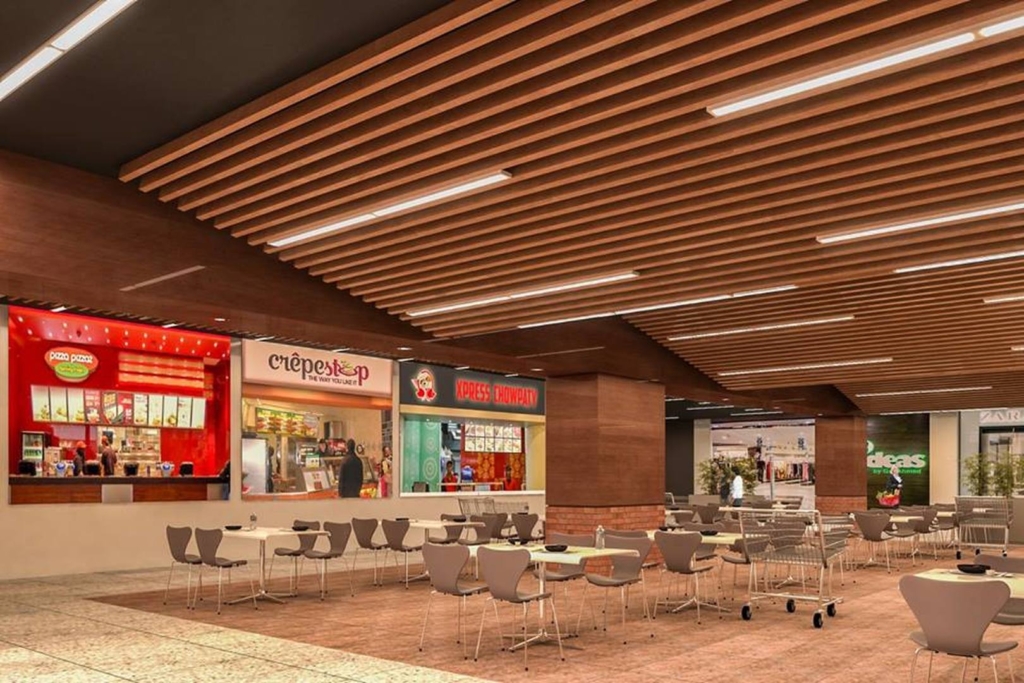
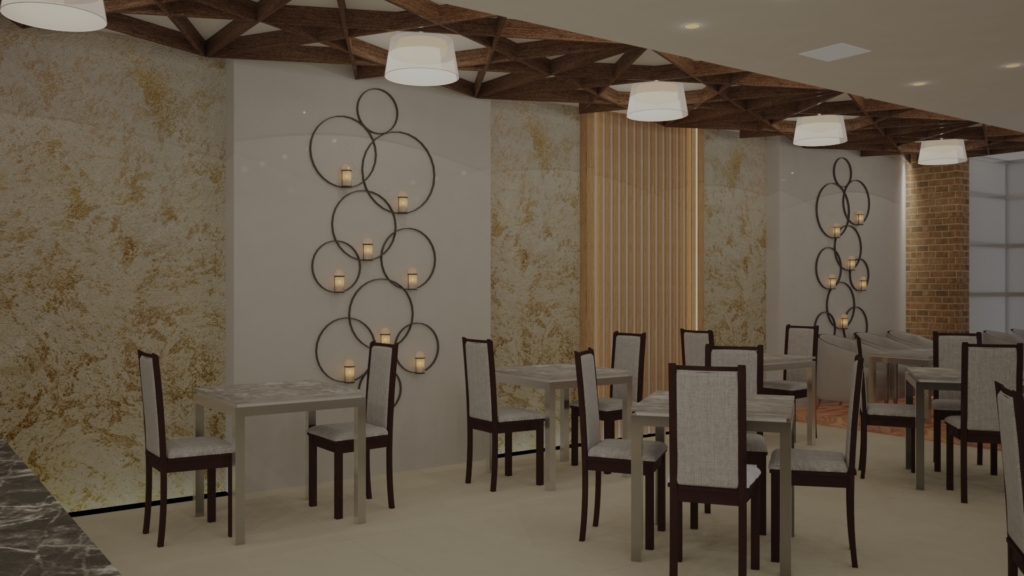
food hall interior 3d visualization

Project scenarios

Architectural 3D rendering comes in three major types: exterior, interior, and both of them. The main differences among them mainly concern size, level of detail, and number of visible objects in the frame. As far as commercial buildings are concerned, exterior rendering is likely the most affordable and the most common of the three. An exterior rendering often features a variety of environmental elements in addition to the building’s exterior itself, but the process doesn’t actually take as much level of creativity as interior visualization does.

A render artist can only do so much to generate realistic colors for the clouds, unique shapes for the trees, imagery of the moon, hues of water, piles of snow, and so on. However, the artist can be playful with the composition. Some might say imagination is the limit, although this is actually counterproductive because architectural rendering aims to resemble reality as closely as possible.

On the other hand, expert interior rendering can be as complex as it can get thanks to the limitless options for furniture design, room layout, types of light sources (natural or artificial) and placement, wall colors, flooring, and tiny yet important details like crown molding, upholstery textures, and all sorts of decorative pieces. Most (if not all) of those objects, especially when built as custom products, require a lot more modeling work compared to natural objects.

Complexity

A 3D rendering page of a typical house living room is, of course, much less complex than that of a business center lobby. In fact, the former often only includes the interior part of the building, whereas the latter usually showcases the view of the outside area as well; this is to indicate that the building is open to public access, so it needs to show people walking on the sidewalks nearby, street signs, parked cars, and sometimes a glance at adjacent buildings too. The same thing applies to cooking stations at a restaurant, which are almost always more complex than a typical home kitchen.

Complexity refers not only to the number of objects visible in the frame but also to the camera positioning or viewing angle of the image. For aerial rendering services, an aerial shot (or a zoomed-out view) has more visible objects, albeit smaller, in the frame than an eye-level angle, so it’s more expensive. A close-up view doesn’t cover a lot of objects, but it might be used to highlight specific details to serve as focal points, such as a fountain, a statue, an entrance, or unique architectural styles. Sometimes, an eye-level exterior rendering omits the background objects entirely, so the image is presented on a blank page to avoid distraction. It’s not realistic, but it allows viewers to focus solely on the building.

Modern CGI technology also offers interactive 3D rendering, where you can rotate the image to see the building at eye level from various angles. Interactive rendering like this cannot be printed on paper and is only usable as a digital file or a webpage element.

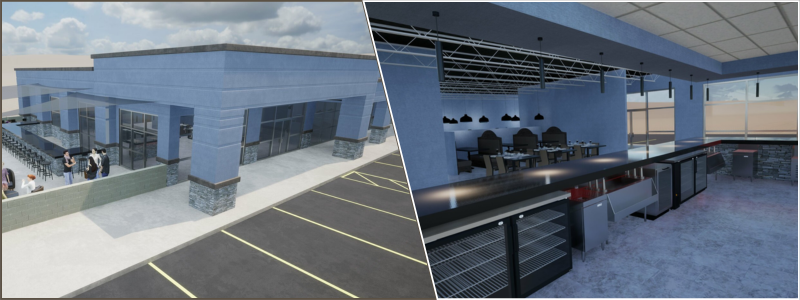
commercial building interior and exterior rendering

Level of details

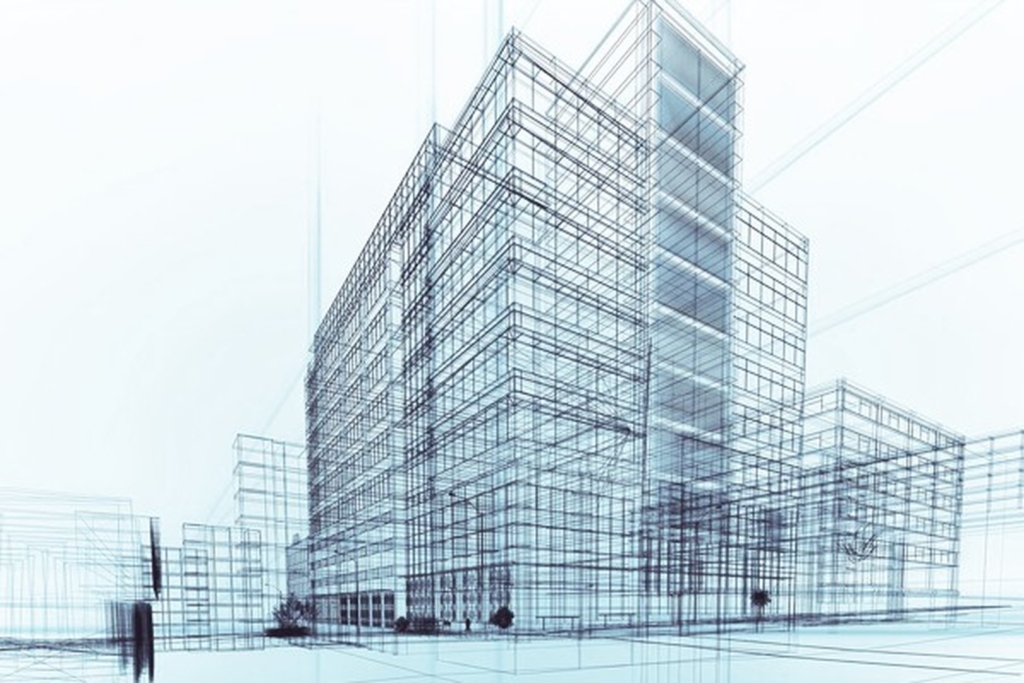
Let’s take the exterior renderings of a skyscraper and a football stadium as examples. A lot of skyscrapers use a combination of concrete and glass to build the external walls; there might be some variations in terms of geometric shape, main entrances on the floor level, several decorative touches (such as gargoyles), and unique structures at the top. Most skyscrapers are rectangular, although there are some notable oddly-shaped buildings as well. An exterior rendering from an architectural design firm of a skyscraper doesn’t usually offer detailed imagery due to the monumental size of the building – you need to position the viewing angle at quite a distance from the object to see it as a whole in one frame.

You can probably say the same thing about large stadiums, but they’re admittedly more playful when it comes to architectural style. Unlike the typical rendering of a skyscraper that barely shows anything about the interior, photorealistic imagery of a football stadium cannot afford to omit details like the pitch, the stands, the lighting, and the skyboxes. And if it’s an open-roof stadium, it’s just impossible to exclude those elements.

A skyscraper is most likely pictured as a vertically imposing structure with columns and rows of window glass in the walls, whereas a football stadium has a much larger variety of objects, each with its own tiny details to highlight. Due to the differences in the expected level of detail, you can expect to spend more on the latter.

Page count

Every page is for one rendering only. A commercial building is a massive undertaking, both in planning and the actual construction work. A single rendering page simply won’t be enough to capture all the details you want to showcase. Having only one exterior rendering might be enough, but you need page after page of rendering to visualize the interior. Even if the commercial building is a mostly empty warehouse, chances are you want to highlight the flooring, the roof structure, the massive industrial-grade door, etc.

Some render artists offer one revision free of charge as long as the revised portion doesn’t exceed a specific percentage of the original work. For instance, free revision is only available when the modification amounts to no more than 10% of the submitted document; anything more will count as a new page and an additional fee.

Timeframe

The actual rendering time of an architectural visualization service doesn’t take that long, thanks to modern cloud-based rendering farms. But the early steps of drafting, modeling, and lighting setups might take a few days for a commercial rendering – and that’s assuming the project is handled by a relatively large design firm with multiple artists working on the same visualization. A one-person operation will need more time to finish the same job. Let’s not forget that the image still needs a few post-processing touches after the rendering is complete. Like all services, companies usually offer standard pricing for non-expedited projects and premium rates for rush jobs.

Commercial 3D rendering with Cad Crowd

All sorts of rendering tasks fall under the CAD (computer-aided design) category. It doesn’t matter if you need exterior or interior renderings (or both of them) in a project, Cad Crowd is an industry-leading service that helps you get in touch with some of the world’s most qualified professionals for commercial 3D rendering jobs. Every single one of our render artists has been properly vetted to the highest standard to ensure quality and value for money.

Reach out to Cad Crowd any day of the week now for your free quote, and have your commercial 3D rendering projects done by the experts in the most efficient way possible.

author avatar

MacKenzie Brown is the founder and CEO of Cad Crowd. With over 18 years of experience in launching and scaling platforms specializing in CAD services, product design, manufacturing, hardware, and software development, MacKenzie is a recognized authority in the engineering industry. Under his leadership, Cad Crowd serves esteemed clients like NASA, JPL, the U.S. Navy, and Fortune 500 companies, empowering innovators with access to high-quality design and engineering talent.

Connect with me: LinkedInXCad Crowd

Create Gorgeous 3D Restaurant Renderings When You Hire a 3D Design Services Company


Today’s post discusses the ability to create gorgeous 3D restaurant renderings when you hire a 3D design services company. Cad Crowd is a leading provider in outsourcing 3D renderings and services for the best architectural, design, and engineering firms. We’re here to explore how you can maximize 3D restaurant renderings.

It’s already common knowledge that the world has been on an endless cycle of change. What do all these changes mean to a restaurant owner? It merely implies that they, too, need to cope with the changes if they hope to rise to the top.

Restaurants are all expected to have a smooth flow to give customers the most positive experience. A seamless design also guarantees that staff members will be more effective in carrying out their day-to-day tasks and responsibilities.

A surfeit of factors taking place all at the same time allows a restaurant to operate smoothly like well-oiled hinges. Try imagining this: the chefs are busy cooking in a corner, the waiters are passing through the aisles with their hands full of trays to serve dishes, while the diners are seated at their respective tables. For example, you might have to find 3D furniture rendering services to help you make strategic decisions about furnishings.

With all of the hullaballoo occurring, it only makes sense that a restaurant should be in organized and tiptop condition to give both customers and staff members their much-needed space and elbow room.

3D restaurant visualization has a single important purpose, and that is to organize the entire space to ensure that everyone in there is well-accommodated. These models help come up with a carefully planned and complete restaurant model that can be presented to clients.

Thanks to these images, you can pinpoint problems early on and address any possible issues for the restaurant concept to be polished out through and through. A 3D restaurant render will let you envision the whole space, anticipate any areas that may have room for improvement, and get some solutions in line for them.

RELATED: 3D commercial rendering: Effective retail design layouts for your company


🚀 Table of contents


3D restaurant renderings at a glance

3D restaurant visualization involves the use of state-of-the-art motion graphics to create digital depictions of interiors. The renders are detailed displays of every aspect and element of the design. These include the layout, the textures, the lighting, and even the furniture. The primary goal is to come up with a lifelike image to allow stakeholders to envision the result before the start of the actual physical work.

3D renders for restaurants have changed the presentation procedure for design concepts to offer perks that old-school sketches and blueprints can never offer. The ability to view a photorealistic image of a product prior to its completion makes way for an improved planning process, adjustments to the design as needed, and a more visually enticing and cohesive space.

In the dog-eat-dog world of restaurants, 3D modeling design services can change your plans and marketing efforts in the most dramatic ways thanks to the improved visual appeal and ambiance.

rooftop restaurant 3d interior rendering

Why use 3D restaurant renderings

You simply can never overstate the benefits that 3D restaurant renders can offer, which include but are not limited to the ones below:

  • Budget-friendly solutions

3D images for dining spaces can help significantly cut down the costs that often come with revising designs. Rather than having to make adjustments throughout the construction stage, both clients and designers will be able to view possible problems in the rendering and change them as needed. The proactive approach reduces expensive rework and errors. It can then make both the budget management and project timelines more efficient.

If, during the rendering phase, some design elements were shown to need some requirements, these can be addressed accordingly to smooth out the entire process of construction. Envisioning the design in advance minimizes the need to make changes right on-site, which saves money and time alike.

3D restaurant models are also a big help for real estate developers who need to blow away potential buyers with a restaurant design presentation. Thorough 3D commercial renderings give developers a tool for demonstrating the potential of the space and the possibility of transforming it into a bustling dining spot.

  • Unparalleled visualization

The accurate visualization of the final design of the restaurant is the most undeniable benefit of 3D renders. The images help you make wiser decisions regarding the décor, ambiance, and layout of the space.

Detailed 3D renders also allow designers to play around with various materials, colors, textures, and other design elements to view their appearance once added to the actual area. Such a level of intricate detail is something you can’t expect from conventional 2D drawing services.

Improved visualization can also help pin down possible issues with the design while the process is still in its early stages. If a specific material or color scheme doesn’t give off the same vibes it was expected to, you can make the tweaks easily right away before the start of any actual physical work. It can help you save a significant amount of money and long hours of time just to ensure that the final design will cater to the expectations of the customer.

3D restaurant renders also allow visualizing the ambiance and vibe of the area to make it a breeze to achieve the preferred look and feel for the space. Top-of-the-line restaurant renders can show the effect and relationship between different setups of lighting and their influence on the overall ambiance to create the most unforgettable dining experience.

RELATED: Why 3D rendering and retail store design services for commercial spaces are important

3d interior restaurant design
  • Efficient marketing endeavours

Topnotch 3D restaurant visuals can also serve as a powerful tool for marketing as they vividly present not just the design but also the ambiance of the space. You can use these visuals and add them to your social media posts, websites, and brochures. These are great enticements for prospective investors and clients because they showcase the look and feel of the restaurant.

You can even consider using the same visuals during project presentations to convey the vision of a space effectively. It is a far cry from just sticking with traditional photos or drawings of barren spaces.

With today’s hospitality market becoming even more cutthroat, you’ll be making a big difference if you use visually enticing materials for your marketing campaigns. Some companies regularly utilize 3D presentation services to make sure they get the bang for their buck when it comes to marketing.

Several hotels today are already using 3D renders to highlight the posh ambiance and vibes of their on-site restaurants not only to attract more guests but also to set themselves apart from their competitors.

Captivating and detailed visuals can help communicate the one-of-a-kind experience that the restaurant has to offer. This will then result in more positive reviews and reservations.

3D rendering services for dining places are great for marketing purposes because they give prospective diners a rare chance to experience the space first with the help of lifelike images.

The said method changes the way restaurants attract and engage with their target clients. Most importantly, it offers a more convincing and immersive glimpse of what their dining experience would be like.

How to create gorgeous 3D renders for restaurants

The following are the steps involved in the development of amazing 3D visualization images for restaurants:

1. Creating the layout in 3D

The very first step in the process of producing 3D restaurant renderings is the layout design. It encompasses adding fixtures, furniture, and other elements to guarantee that the flow and space are used optimally.

The process of making this layout involves the client and the designer working closely together to understand the former’s requirements and vision and translate these into detailed 3D models.

2. Designing the floor plan in 3D

A thorough expert 3D floor plan is designed to offer a complete glimpse of the space. It helps understand the dimensions of the various elements of the design and the spatial relationships among them. This floor plan also provides detailed configurations and measurements of the layout to give a clear blueprint for the design and construction process.

These floor plans in 3D are of great use to interior designers and real estate developers. They provide a detailed and clear representation of the area to help in the decision-making and planning process.

RELATED: Better 3D rendering and retail store design services for commercial spaces

restaurant 3d visualization example

3. Using lighting techniques in 3D

Lighting has a key role to play in the overall ambiance of restaurants. More sophisticated techniques for 3D lighting design services are used to replicate different lighting scenes. These ensure that the final design will achieve the preferred atmosphere and mood. These lighting methods can include artificial lighting setups, simulations of natural lighting, and special effects to achieve a particular ambiance.

With the use of state-of-the-art 3D lighting methods, designers can come up with lifelike images that are accurate representations of how the space will look under various lighting conditions. It then creates the desired atmosphere and vibe for the restaurant.

4. Adding textures, materials, and decoration

To create a realistic restaurant rendering, it’s critical to choose the right textures, materials, and decorations. Detailed decorations and high-quality textures can breathe like into the render and make it resemble reality as closely as possible.

The materials that the rendering uses must be a representation of the actual materials to be used during the construction to create the final design’s accurate depiction.

With the help of reliable 3D design services, it’s possible to create realistic and detailed textures that can boost the render’s quality in general. It includes the use of sophisticated rendering methods and high-resolution images to produce a naturalistic demonstration of the decorations and materials.

How Cad Crowd can help

Cad Crowd will be more than happy to connect you with the most dependable 3D design service company that can transform the design of your restaurant with gorgeous 3D renderings. We have more than 14 years of experience connecting top architectural, design, and engineering companies to pre-vetted professionals quickly and reliably. We will guide you in finding the right team that can create realistic and detailed renders that are guaranteed to attract more traffic to your restaurant. Get a quote today.

author avatar

MacKenzie Brown is the founder and CEO of Cad Crowd. With over 18 years of experience in launching and scaling platforms specializing in CAD services, product design, manufacturing, hardware, and software development, MacKenzie is a recognized authority in the engineering industry. Under his leadership, Cad Crowd serves esteemed clients like NASA, JPL, the U.S. Navy, and Fortune 500 companies, empowering innovators with access to high-quality design and engineering talent.

Connect with me: LinkedInXCad Crowd

Benefits of Outsourcing Steel Detailing Services for Engineering Firms and CAD Design Companies


Steel detailing happens to be the most important process in the building industry, as it bridges the gap between the initial thoughts of designs and the final construction of the steel structures. It requires very accurate translation of architectural and engineering data into detailed plans for specific steel fabricators. Such plans are complete specifications along with expert technical drawings that provide clear instructions for all aspects of the steel components, from fabrication and assembly to the ultimate erection on site.

For this reason, during the detailing process, structural steel detailers interact closely with architects, engineers, and contractors. Nevertheless, the complexity of projects, coupled with the high demand for quick deliveries, leads many firms to outsource their services of detailing steel. This article delves into compelling and vital reasons why outsourcing is proceeding to streamline workflows, increase the efficiency of projects, and also provide cost-effective means of ensuring successful construction projects.

Cad Crowd has worked with many contractors, firms, and clients for over 15 years to find the best freelance service for steel detailing, and other architectural, structural, and interior designs. We’ve seen first-hand how steel detailing services (and similar ones) helped companies achieve success faster than they would have traditionally. Let’s take a look at some of the specific benefits you can take advantage of for yourself.


🚀 Table of contents


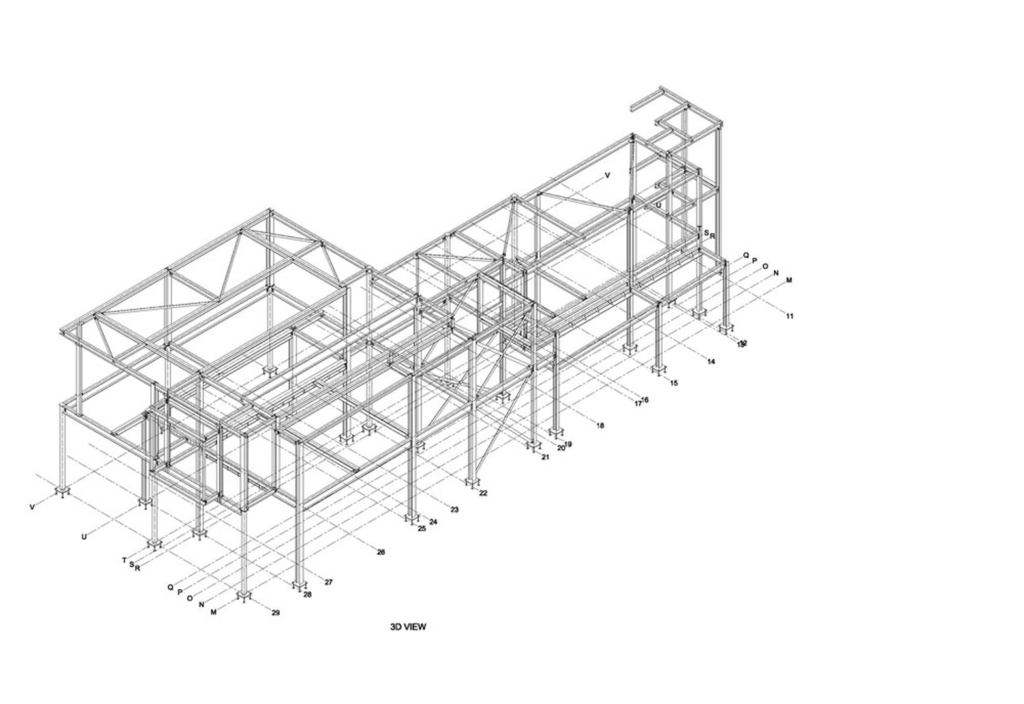
steel detailing 3d view

What is steel detailing?

Structural steel detailing involves almost 99 percent accuracy since slight errors can cause huge time and cost losses. It is required in all manufacturing and construction works like residential or commercial buildings, factories, shipbuilding, etc.

This communication link should be inevitable between engineers, architects, contractors, and fabricators for accurate detail at any level of the process. This might mean outsourcing services to such professional companies with qualified engineers. Professional engineers have the technical know-how and experience in the preparation of designs, details, and drafts and will be able to handle complex design issues that are more suitable for the project outcome.

RELATED: Structural steel detailing services for companies: Steel detailer costs and rates complete breakdown

Importance of steel detailing services

Structural steel detailing services deliver detailed drawings, models, and documentation that can reproduce structural elements of a design for building or infrastructure projects. These services ensure that structures are safe, intact, and serve their purpose. Therefore, detailing comes in many forms- from steel and rebar to precast panels, among others and all require extreme accuracy and expertise in bringing the architectural design to reality.

steel detailing 3d sketch and 3d plan

Structural detailing problems

Structural detailing is a very involving process. However, complicated factors present problems for the success of a project. Complex designs, tight deadlines, and budgets often turn to pressurizing resources inside. Therefore, quality may deteriorate while project time schedules become susceptible to risk. Outsourcing structural steel detailing services can neutralize these problems and provide firms with a competitive advantage in the business environment.

Benefits of outsourcing structural steel detailing services

Structural steel detailing can be outsourced to provide various advantages. So let’s dive in and take a closer look at some of the key benefits:

1. Cost and time savings

Faster project turnaround: Generally, the outsourcing company has the manpower and experience to do the jobs efficiently, thus leading to a generally shorter period to complete the project.

Improved project predictability: Through outsourcing, firms can experience a probable detailing process leading to not-so-frequent delays and cost overruns often encountered with in-house efforts.

Reduced software and training costs: Outsourcing saves on the cost of purchasing expensive software licenses and training the employees about using the software. It not only reduces the cost but also frees time to bring the team up to speed.

2. Better communication and collaboration

Clear communication channels: Detailing companies have systems in place with robust communication protocols to keep clients informed during the entire project lifecycle. This close collaboration also helps ensure that specific needs are understood and addressed.

Responsive troubleshooting: Should questions or issues arise during the detailing process, dedicated teams in outsourcing partner companies can resolve them quickly, ensuring a smooth workflow.

3. Expertise and efficiency

Skilled experts: Designs of steel require strong structural engineering knowledge and industry practices. Outsourcing will connect you with outsourcing firms’ professional detailers who have special training. This ensures project completion is both efficient and fast.

Efficient process flow: Detailers employed by engineering outsourcing firms have already engineered processes to optimize for both speed and accuracy, which allows them to process projects within a short timeframe while freeing up internal capacity to use on the big things.

RELATED: A comprehensive guide on steel shop drawings for freelancers and construction companies

steel detailing 3d sketch

4. Flexibility and scalability

Outsourcing enables firms to gauge their structural detailing requirement related to the needs of the projects. This helps companies adjust resources up or down to meet either flexibilities or cost objectives.

5. Concentrated competency

Let other professionals handle the core competencies of management and engineering and structural detailing outsourced to a trusted partner. This would focus more on the project and make more efficient use of available time, increase productivity, and thus lead to more successful projects.

6. Quality assurance

Accuracy and detail: Great detailers are very painstaking; they come up with excellent drawings without errors that could be done when the fabrication and building take place.

Industry compliance: Professional detailing companies and firms are always compliant with all industry standards and codes so that errors related to such non-compliant detailing are lessened and delayed.

7. Minimum investment in technology

Access to latest software packages: Steel detailing requires advanced CAD software and BIM platforms, which are very expensive to maintain. Outsourcing allows companies to take advantage of the latest tools available through the detailing service provider.

Other specialized tools aside from CAD and BIM: Link designs, material analysis, etc. They can avail of all these comprehensive tools without committing much front-end investment by outsourcing.

Types of steel detailing drawings

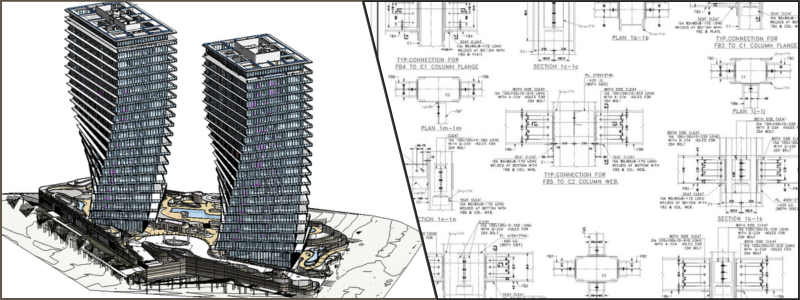
Steel detailing drawings are fundamental plans in construction. They avow the major specifications on how a given steel component should be manufactured and put together. There are two major types of detailing drawings

1. Erection drawings

The drawings serve as a guideline for ironworkers when fabricating the steel structure on the site. Some of the crucial information includes:

  • Dimensions: Precise measurements of where to position each steel part relative to its location in the structure.
  • Placement: Direct guidance on placing the steel elements.
  • Connection types: Information on how to connect various steel pieces, including different types of connections (for instance, bolting and welding) as well as the welding requirement.
  • Site work: The other work on site, whether bolting procedures or installing anchors.

2. Shop drawings

Shop drawings are a manufacturing guide, preparing fabricators to manufacture components of steel off-site. They contain the most critical details of:

  • Dimensions: All the accurate measurements for every piece of steel by length, width, and thickness.
  • Material specifications: Details about the kind of steel to be used for every component.
  • Cutting and bending details: Instructions on how to cut and bend the steel.
  • Hole placement and sizes: Dimensions for holes within the connections, when required.
  • Welding details: Descriptions of any welds necessary, which include sizes, types, and locations.
bridge steel detailing 3d rendering

RELATED: 5 benefits of using sheet metal for your CAD design

The steel detailing process

Steel detailing services is a very critical process to ensure successful fabrication, assembly, and installation of a steel structure. Here’s a step-by-step look at each stage.

1. Creation of design drawings

  • Software: Details utilize computerized software to produce both 2D and 3D drawings.
  • Components: Drawings of individual parts of steel, which include columns, beams, and braces.
  • Specifications: Engineers must provide all critical details, such as dimensions, orientation, and the connection method.
  • Other details: The drawings also include floor-level details and alternate material considerations.

2. Materials and budget assessment

  • Drawing review: Design drawings form the basis for the contractor, fabricator, or erector to review the project.
  • Evaluation criteria: Assessments examine the possible utilization of steel, material inputs, estimated time to the point of completion, available resources, and other potential issues.
  • Cost estimation: This evaluation, therefore, results in a precise cost estimate for the project.

3. Shop drawings

  • Fabrication instructions: Shop drawings are the detailed outline of fabrication procedures interpreted from the design drawings by fabricators in the actual manufacturing of steel elements.
  • Key information: Shop drawings shall include accurate measurements, material specifications, connection details, and welding processes.
  • Erection marks: This is the outlining of the erection process.

4. General Arrangement Drawing (GAD)

  • Software used: General Arrangement Drawing is generated by modeling software; it’s also referred to as a marking plan.
  • Purpose: This drawing indicates the location of all shop-produced elements on site as well as their interfaces with other structural members.

5. Coordination and teamwork

  • Team collaboration: During detailing, structural steel detailers consult with architects, engineers, and contractors
  • Verification and checking: This coordination ensures no deviation from the intent of the design and that the structure meets structural intent
  • Troubleshooting: The team solves all design problems that may crop up during construction for a smooth process.

Factors in choosing an outsourcing partner

The outsourcing partner in a given structural detailing service is very crucial. The following are some of the important factors for consideration:

1. Communication and project management capability

This is one of the crucial factors involved in any outsourcing partnership. Choose a partner who has good lines of communication and effective project management practices to streamline your relationship.

2. Data security and confidentiality measures

Data security is always something to be considered while outsourcing structural detailing. The outsourcing partner needs to have appropriate security systems in place to protect and maintain confidentiality with sensitive project data.

3. Experience and expertise

Evaluate the experience and reputation of the outsourcing partner, particularly in the industry. Try to look out for a team that has a proven track record of successful completion of structural detailing work.

4. Pricing models and contractual agreements

Evaluate the pricing models of the outsourcing partner to ensure they align with your budget and project requirements. Careful review of contractual agreements will clear all deliverables, timelines, and payment structures.

5. Quality assurance processes and certifications

Ensure the outsourcing partner ensures the strictest quality assurance processes are followed and is certified under any such recognized certifications, such as ISO. This would ensure that the deliverables would be maintained according to the industry standards.

RELATED: Structural engineering rates & costs for architectural design firms

Possible risks and mitigation strategies

While outsourcing structural design services has many benefits, there are risks, too. Consider the following and implement the mitigative measures appropriately.

1. Data protection and confidentiality

Mitigate security risks in data by taking protective measures, making NDAs with parties involved, and scheduling some audit compliance.

2. Language and cultural barriers

Implement the necessary effective communication channels and promote teamwork with cultural orientation to overcome possibly influential language and cultural differences.

3. Time zone differences

Working with an outsourcing partner in another time zone can present challenges. Overlap working hours, use project management tools, and establish clear communication protocols.

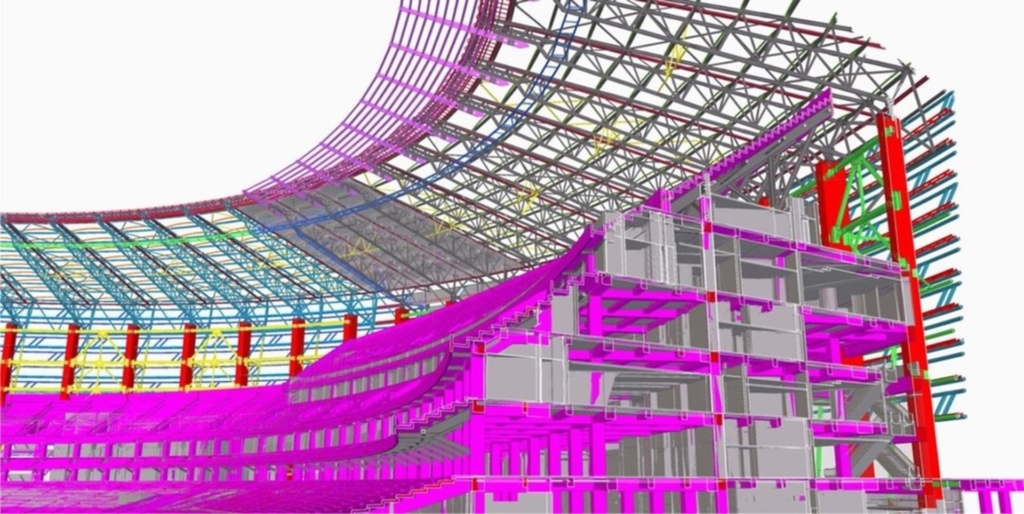
structural steel detailing example color coded

Best practices when outsourcing structural detailing services

You should consider some best practices while exploring how to optimize the benefits of outsourcing structural detailing services:

1. Define project requirements clearly

You ought to communicate project requirements and expectations clearly to the outsourcing partner. To the outsourcing partner, what will be communicated will ensure accuracy and quality with the deliverables.

2. Provide periodic progress reports

Conduct periodic monitoring of project progress and perform quality control checks for conformance to specifications. Do this in a manner that provides on-time feedback as a motivator for continuous improvement.

3. Continuously review the outsourcing partnering

Regularly review the outsourcing partnering process and identify possible areas for improvement. Gather comments from other stakeholders of the project, learn lessons from every collaboration, and bring these lessons learned into the next partnership.

4. Establish mechanisms for communication

Keep in touch through regular communication and transparent transmission of updates, and address concerns immediately. An effective collaboration approach with numerous communication tools will be utilized.

5. Collaborative relationship

Establish a strong collaboration on trust and transparency. Encourage an open exchange and proactive problem-solving approach for successful project outcomes.

Wrapping it up

Outsourcing structural steel detailing services will also provide a strategic advantage over most architectural design firms’ in-house detailing efforts. Some of the expected benefits that the company will gain after outsourcing are the lowering of costs, improvement of efficiencies, and getting hold of the latest technologies and expertise.

This way, internal teams can concentrate on core competencies while quality, error-free steel detailing guarantees successful outcomes for every project. Thus, with the construction industry evolving, embracing outsourcing as the best way to remain competitive while delivering projects on time and within budget will be important.

How Cad Crowd can help

Engineering firms and CAD design companies can always use some help with their projects. You might realize it even more so if you’re dealing with some steel detailing. Cad Crowd can connect you with the best and most trusted steel detailing services that will help you pull off quality results that will blow away your clients. Request a quote today.

author avatar

MacKenzie Brown is the founder and CEO of Cad Crowd. With over 18 years of experience in launching and scaling platforms specializing in CAD services, product design, manufacturing, hardware, and software development, MacKenzie is a recognized authority in the engineering industry. Under his leadership, Cad Crowd serves esteemed clients like NASA, JPL, the U.S. Navy, and Fortune 500 companies, empowering innovators with access to high-quality design and engineering talent.

Connect with me: LinkedInXCad Crowd

Revolutionary 3D Prosthetic Design Services for Companies to Consider for Accessibility


Prosthetic design has a very long history, and few advanced technologies have changed as much as 3D printing does. It brings access, affordability, and personalization on a global scale for revolutionizing prosthetics. Companies who service the healthcare sector or serve consumers who are vulnerable to accessibility are embracing 3D prosthetic design services as key factors that positively impact the lives of limb-different individuals.

The article breaks down the innovative aspects of 3D prosthetic design services and why companies should consider these services within their operations and how they impact accessibility for millions around the world.


🚀 Table of contents


The emergence of 3D printing in prosthetics

Traditionally, prosthetics manufacture is a long and expensive process. It involves custom molds, huge amounts of manual labor, and expensive materials. Thus, prosthetic devices were highly expensive for a large part of the population, especially in developing countries. Here again, 3D printing technology services has totally shaken the model by permitting the rapid and affordable manufacture of prosthetics, which are functional and tailored to specific needs.

3D printing, or additive manufacturing, is a use of CAD software that creates highly detailed, three-dimensional objects layer by layer. This enables the production of custom-made limbs that fit precisely to measurement and mobility requirements in prosthetics, resulting in a more comfortable, functional, and far more affordable prosthetic than traditional ones.

This is where 3D prosthetic design comes into play. These services are leveraging the possibilities of 3D printing to create, develop, and manufacture on-demand customized prosthetic limbs, unlocking a life-changing opportunity for users in this field. For business innovators looking to disrupt the industry in the health sector, 3D prosthetic design services open opportunities to participate in a revolution changing accessibility.

RELATED: Designing prototypes: 3D design services for inventors and companies

prosthetic design services

Key benefits of 3D prosthetic design services

Customization and personalization

One of the most important advantages 3D-printed prosthetics can offer is extreme customization. No two limb differences are alike, and no two individuals are alike for mobility, comfort, or a little bit of both. Traditionally made prosthetics could only have a few “standard” configurations with very little room for personalization, but 3D designers make prosthetic limbs tailored precisely for the body dimensions of the user, thus enabling a more comfortable fit and better functionality.

3D prosthetic design services includes detailed consultations in which scans of the residual limb or affected area are taken. Digital models can then be imported into CAD software to allow the designer to alter the prosthetic to the user’s exact requirements. The result is a prosthetic that feels much more natural and is greatly more user-friendly than those off the shelf.

Decreased costs and increased affordability

Traditional prosthetics can be very expensive, reaching in some cases as high as tens of thousands of dollars. Such costs are often simply unaffordable to the populations in many lower-income regions; hence this meant that many people remained without access to prosthetic devices needed for everyday living.

These costs are drastically cut through 3D printing since the production of such prosthetics saves on material and labour costs. In fact, material cost has been largely brought down through the use of light weight yet strong material such as polylactic acid, a biodegradable plastic, and other plastics, while their production process has saved on so many labor hours.

The cost of high-quality prosthetics continues to fall as more people are utilising 3D printers, which are becoming easier to access. Having adopted 3D prosthetic design services, companies can make a meaningful contribution to accessibility while providing a more accessible and affordable solution for those who really need it, so it opens up the market and expands their social responsibilities to larger scales.

Faster turnaround time

The turnaround time for a custom limb can be weeks to months in traditional prosthetic-making processes. Such a long period of waiting may become very exasperating for users who rely on prosthetics in everyday life for mobility and dependence.

A clear benefit of using 3D prosthetic design services is the drop in waiting time. From the point of having a digital model, a prosthetic can be printed in hours or days, depending on the detail of the design. It makes the prosthetics delivery much faster because a person can get back to their feet and start life as soon as possible.

Companies that offer swift, 3D prosthetic service can look forward to this speed as an advantage of differentiating them from their competitors who are still dependent on the most traditional and slow ways. This is one such scenario where a limb needs to be readjusted or should be changed periodically, like in case of medical emergencies or for children who grow faster.

RELATED: What are the main prototypes used by companies in industrial design prototyping?

Lightweight but rugged materials

Many traditional prosthetics, particularly those made from metal or heavy polymers, are notorious to be extremely heavy and clumsy. This can be inconvenient for a long time wear and thus give the user limited mobility and even strain other parts of the body.

3D design for prosthetic lightweight is very durable. Advanced composites such as carbon fiber or flexible polymers are frequently used to make prosthetics offering comfort and durability against the common wear and tear of everyday life. Their application also allows for more ergonomic designs, decreasing wear and tear fatigue, and thus raising the overall satisfaction level of users.

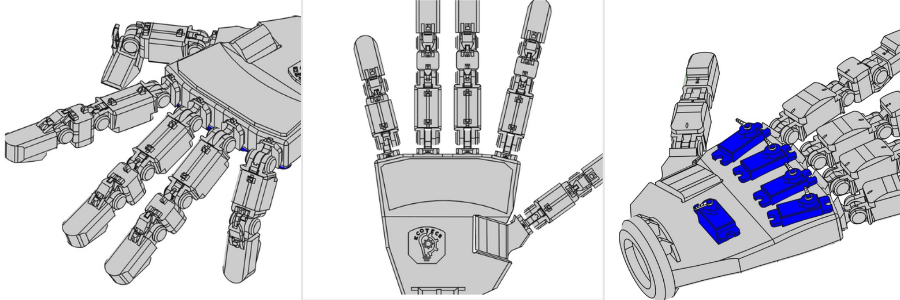
3D hand prosthetic prototyping

The state-of-the-art functionality and aesthetics

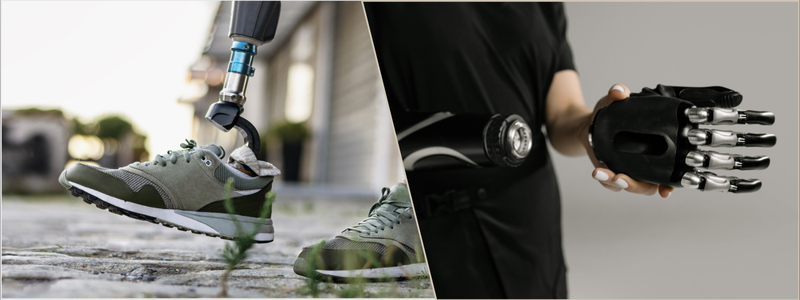
Besides limb replacement, 3D prosthetics are now opening up entirely new and different capabilities both in functionality and aesthetics. With 3D design, even the complex, multi-jointed designs that closely mirror natural movement can be included. For example, very newly prosthetic hands made via 3D printing can now add independently moving fingers for giving the user higher dexterity as well as control.

Aesthetically, 3D rendering design services enable users to personalize prosthetics in ways unimaginable before. Users can customize according to color, texture, and design elements that they can turn a prosthetic into an extension of their personality. In fact, some companies have prosthetics resembling superhero or futuristic motifs, designed to be fun and empowering for the users, particularly the children.

Industry adoption of 3D prosthetic design solutions

Most companies with diversified business lines have recognized their prospects in 3D prosthetic design solutions and are now embracing the solutions into their business lives. Not even governmental agencies, health care organizations, and other charities can resist the advancement as it will enhance accessibility of health care facilities and improve the quality of life among people with disabilities.

Healthcare organizations

Hospitals and healthcare organizations are the biggest users of 3D prosthetic design services. It enables healthcare organizations to quickly make suitable prosthetic devices for patients within a short and much cheaper time frame. Medical practitioners have also been shocked to discover that a more comfortable, functional design leads to better patient outcomes, including greater patient satisfaction and fewer long-term complications.

Non-profit organizations

Non-profit organizations, which are generally non-profit organizations with the mission to deliver medical relief in poor nations, would employ 3D printing technology in order to provide prosthetics to the less privileged. In liaising with 3D prosthetic design services, these organizations can deploy low cost yet very high quality prosthetic limbs to people who are otherwise unable to get them.

Government and public policy

Governments worldwide are gradually becoming aware of the extra benefits that 3D prosthetic design services have with regard to accessibility and public health. Some governments initiate policies that promote the use of 3D-printed prosthetic aids in public healthcare services, providing financial incentives to organizations and businesses in the form of subsidies or grants to adopt this technology in their provision.

RELATED: Freelance rapid prototyping costs, pricing, and rates for companies and inventors: All you need to know

Needs of companies entering the market

For businesses that want to offer 3D prosthetic design services, here are a few considerations that should be taken into account before doing so. First of these would include investment cost, the potential need for technical and/or specialized skills and software, and working closely with healthcare professionals to deliver the best possible outcomes for patients.

Investment in equipment and expertise

Although 3D printing has minimized prosthetics costs, its startup cost for equipment and expertise is high. First of all, the companies will have to invest in high-quality 3D printers that can print medical-grade devices. They will also have to educate their employees on how to use CAD software in making custom prosthetic

Collaboration with healthcare professionals

Organizations offering 3D prosthetic design must have a close association with health care providers who may include doctors, physical therapists, and prosthetists. The last will be responsible for assessing the patient’s needs and ensure that the prosthetic is fit appropriately and thus serves its purpose correctly. In addition, they offer support after the rehabilitation process.

Compliance with standards requirements

As prosthetics fall under the umbrella of medical devices, it requires that companies do not heed lax regulations but rather meet the very stringent regulatory requirements enforced to ensure these products’ safety and efficacy. This may involve certification, for instance, ISO standards governing medical devices, and others such as laws governing healthcare at the local level.

The future of accessibility with 3D prosthetics

The 3D prosthetic design service is changing the face of prosthetics, making them more accessible and affordable and personalized than ever. Companies looking to innovate in the healthcare and accessibility markets will find an opportunity to touch lives, at the same time tapping into the growing market, by embracing the services. The benefits of 3D printing technology can really help fill in the gaps between accessibility and affordability through custom, high-quality prosthetics, hence improving mobility, comfort, and independence for millions.

How Cad Crowd can help

Accessibility is now a must-have for companies, and if you want to stay ahead of the game, taking advantage of revolutionary and breakthrough 3D prosthetic design services can help you achieve just that. Cad Crowd will help you find the most suitable services for your budget and requirements. Request a free quote today.

author avatar

MacKenzie Brown is the founder and CEO of Cad Crowd. With over 18 years of experience in launching and scaling platforms specializing in CAD services, product design, manufacturing, hardware, and software development, MacKenzie is a recognized authority in the engineering industry. Under his leadership, Cad Crowd serves esteemed clients like NASA, JPL, the U.S. Navy, and Fortune 500 companies, empowering innovators with access to high-quality design and engineering talent.

Connect with me: LinkedInXCad Crowd

From Concept to Car: How 3D Renderings Are Shaping the Automotive Industry for Freelancers and Companies


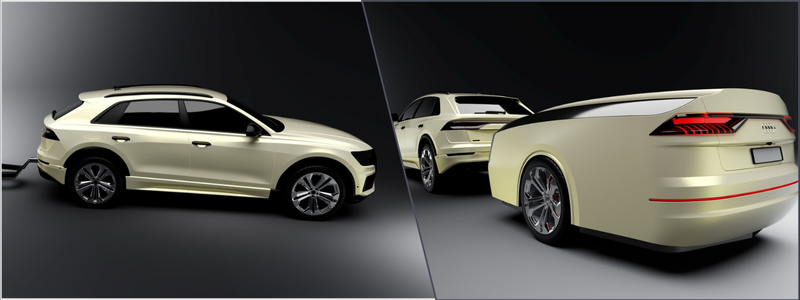
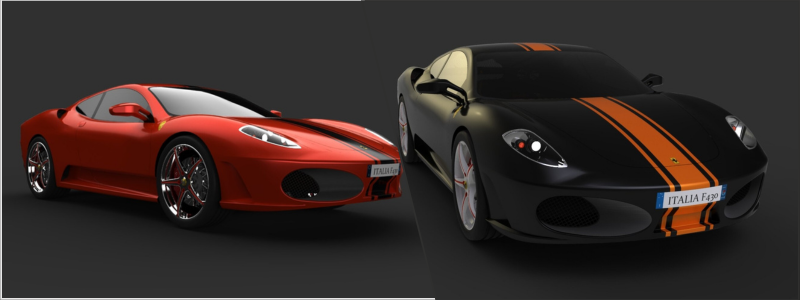
Nothing does it better than the auto industry. A simple pencil sketch transforms into a ready and rolling finished product that offers quite a ride. Traditional processes, dozens of sketches made with clay models, literally endless design iterations, and 3D technology forever changed the landscape that it is today in this current digital marketplace. There are 3D designers, engineers, and even marketing teams who have produced their ideas at high speeds in the blink of an eye as they bridged their imagination and reality.

For both freelancers and companies, 3D rendering now opens up this new frontier of possibilities as it streamlines the whole design process, making the process speedier, cost-effective, and, above everything else, spectacularly immersive. Thus, what is the role of 3D renderings within the modern automotive industry? Why should freelance designers and firms care? Let us follow this concept-to-car journey where the art of rendering meets the power of engineering.

3D renderings in the car industry

3D rendering in the automotive industry is revolutionary. It helps designers and engineering design professionals visualize and enhance the conceptual vehicle in a very realistic virtual space. Through 3D rendering, an automobile company can build accurate models of the interior and exterior, as well as individual parts, to analyze aesthetics, ergonomics, and functionality even before production begins.

RELATED: CAD Automotive Design – When Driving Becomes Personal

This technology accelerates design iterations, reduces prototyping costs, and helps in identifying design flaws early, thus enhancing overall product quality. Moreover, 3D renderings are of extreme importance in marketing as they provide lifelike images of the models that will soon be released, can really capture the customers’ imagination, and provide a preview of new features in an interesting way.

The power of visualization

Concept cars were once relegated to sketch or low-fidelity prototypes for years, preventing development and making feedback a long, arduous process. 3D rendering has been a game-changer for designers who can now see cars in an extraordinary level of detail, from the subtle curve of a fender to the sparkle of a headlamp; everything can be rendered digitally to make even the wildest ideas tangible. These hyper-realistic images also give companies a chance to analyze each element of their design even before the model begins to be handcrafted into reality.

This is very important to people who want to work freelance, especially breaking through into the automotive market. This offers a potential gateway for accessing high-profile projects. For instance, you are displaying the finished car, but you are actually only in the conceptual phase. Manufacturing companies will not have to wait to build prototypes; they will take clients, investors, and even consumers based on your 3D rendering. Thus, in this industry, as time equals money, you can be very flexible.

RELATED: Automotive Design & Engineering Services, Costs, Rates Pricing for Companies

Functional prototyping in 3D

The most exciting application of 3D rendering is that it goes beyond the aesthetic layer into functional design. Let’s face it—cars aren’t just rolling sculptures; they’re complex machines with intricate engineering beneath the surface. With advanced CAD software and simulation tools, designers can now create models that look good but also incorporate accurate physics, aerodynamics, and structural integrity.

automotive engineering design services

This is where the freelancer who has experience with CAD can carve out a unique niche. Merging design aesthetics with engineering precision, the freelancer can create functional prototypes that allow companies to test various aspects of their designs in a virtual environment. These 3D models can be stress-tested under different conditions—how would a particular body shape handle in high winds? What about the heat dissipation for a particular battery layout? 3D renderings are no longer only about aesthetics; rather, they have become the cornerstone of functional validation.

Time and cost savings

Perhaps one of the strongest selling points to companies in 3D product rendering services lies in saving costs. In the old-fashioned way, physical prototypes require time and expense to produce and will often involve multiple attempts at getting something right. The smallest of tweaks required, in earlier times, was going back to the drawing board quite literally. In a digital world, though, companies can tweak and modify with the click of a mouse. Ideas are tested, refined, and ready in real time.

RELATED: Revolutionizing the Automotive Industry Using 3D Printed Cars and Innovative Services 

This efficiency is not only good for large corporations but also for smaller studios and freelancers. For independent designers, 3D rendering provides a means of competition with larger studios in model creation that can be refined iteratively without the cost of overhead. Efficiency for clients also means that changes can be seen within hours rather than weeks. Those who learn to control fast, precise changes to renderings will be much in demand among companies that aim to shorten the design period.

Aiding collaboration across teams and borders

In today’s globalized world, projects in the automotive industry stretch across continents. Design can be done in California, engineering can be done in Germany, and testing can be done in Japan. And 3D renderings are the universal language connecting those geographically dispersed teams. Cloud-based rendering platforms now enable designers and engineers across the globe to collaborate in real-time to share their feedback on every detail of a car’s design, from the smallest rivet to the largest sheet metal.

For 3D rendering freelancers, that’s obviously an important form of connectivity. Now, they can conveniently work with companies from across the globe without needing to show up on-site at a client office. Imagine a freelancer designer being in a room in their studio, chatting with people on main automotive campuses all over the world nonstop.

RELATED: Get Your Engine Revving: 5 Automotive CAD Designs

It makes design an interaction and immediately sends and receives renderings through the means. Companies also benefit from these new designs since there is quicker time to market them. Development cycle risks that would result in miscommunication decrease as more time moves closer to these new designs going into mass production.

Making concepts sellable

The magic of 3D rendering really shines in marketing in the world of autos. Well, after the design, then, showing them to the public in an attention-catching manner presents the problem. No more black-and-white sketches or clay models would do; companies and freelancers must now generate truly captivating and life-like renderings that will make people say, “I want this car.”.

For marketers, with the help of 3D renderings, a car can be viewed in different surroundings, in various colors, or even in lighting conditions, and thus, consumers can experience and get absorbed into a product with a higher resolution. Freelance professionals may mean designers are included beyond the designing process itself to help in the sale of the idea. For freelance 3D artists who specialize in product visualization, companies turn to the side of automotive designers seeking freelance work, a potential stream of revenue, and equity within the marketing efforts behind car designs.

3d modeling design company

Virtual reality and interactive experiences

Advances in 3D rendering technology blur the digital to physical-experience line. Virtual and augmented reality technologies are now embracing mainstream media and bringing immersive experiences to automotive design beyond anything previously imagined. Imagine a potential buyer stepping inside a virtual car showroom where he or she can walk around, sit inside, and experience various driving conditions- all before there is even a physical car.

RELATED: How Are Companies Utilizing CAD Technology to Drive Innovation in Automotive Design? 

This is the perfect opportunity for freelancers. As companies continue to invest in VR and AR experiences, they will need talented AR/VR rendering designers who can bring such interactive 3D experiences to life. Freelancers who specialize in creating VR-ready models or interactive 3D animations can capitalize on this trend, partnering with companies to develop next-level virtual showrooms or even concept test drives that can be enjoyed from the comfort of a customer’s own living room.

Designing for a greener future

3D rendering not only makes the design process faster and more efficient but is also a step toward sustainability. As the need for multiple prototypes is cut down, there will be less waste. Also, with 3D rendering tools, the designers can look into options for environmentally friendly materials and energy-efficient designs before production.

This focus on sustainability strongly resonates in the market, particularly with the newer, more conscious consumers, and companies want to factor in sustainable practices while designing things. 3D product modeling freelancers who show eco-friendly design practices are going to have an easy time getting jobs from companies that need sustainable processes. Freelancers can come into alignment with forward-looking automotive brands that prefer reducing their environmental impact by using sustainable materials, processes, or concepts for designing.

RELATED: The Future of Electronic Design Engineering: Innovations and Trends for CAD Services Companies

The road ahead for freelancers and companies

The automotive industry is embracing 3D rendering to dramatically alter how a car starts and, ultimately, lives. It has several benefits in the turnaround for companies: cost-effective and rapidity, and innovation never thought possible. Freelancers can enter the industry and work on interesting concepts through virtual showrooms and everywhere in between.

The 3D rendering skill mastered by freelancers puts them in a position to offer themselves as an invaluable resource for companies looking to gain an edge in the highly competitive automotive space. From functional testing to immersive marketing, 3D renderings are now as much a part of the car’s DNA as its engine. And while the latest VR, AR, and other innovations advance from dream to design and eventually to highway, the world will never take as entertaining of a path. As long as you’re freelancing or a corporation, then it’s going to get wild.

How Cad Crowd can help

Freelancers and companies should never let their game down if they want to make it big in today’s automotive industry. Here at Cad Crowd, we will make sure that you will be working with the best 3D rendering services that don’t just design car concepts but turn them into tangible realities. Request a free quote today.
author avatar

MacKenzie Brown is the founder and CEO of Cad Crowd. With over 18 years of experience in launching and scaling platforms specializing in CAD services, product design, manufacturing, hardware, and software development, MacKenzie is a recognized authority in the engineering industry. Under his leadership, Cad Crowd serves esteemed clients like NASA, JPL, the U.S. Navy, and Fortune 500 companies, empowering innovators with access to high-quality design and engineering talent.

Connect with me: LinkedInXCad Crowd

What to Consider in Developing the Enclosure Design of Your Company’s Electronic Products


For the post today, you will learn about what to consider when developing the enclosure design of your company’s electronic products. When developing electronic products, the enclosure design plays a crucial role in ensuring the product’s success.

The enclosure is more than just a protective shell; it’s a critical component that influences the product’s durability, usability, aesthetics, and overall market appeal. A well-designed enclosure can make the difference between a product that thrives in the market and one that struggles to gain traction.

Cad Crowd is an industry leader in connecting engineering and design companies with the best designers and engineers. Here are key considerations when looking for the best electronic enclosure design service to develop your company’s electronic products to ensure that you will be getting the results you’re after.


🚀 Table of contents


Material selection

The choice of materials for the enclosure is foundational. The material must provide adequate protection for the internal components while also meeting aesthetic and ergonomic requirements. Common materials used by product design companies include:

Widely used for their versatility, plastics like ABS, polycarbonate, and polypropylene offer good impact resistance, flexibility in design, and cost-effectiveness. However, considerations around thermal management and electromagnetic interference (EMI) shielding must be addressed when using plastics.

Aluminum and stainless steel are two major types of metals that are popular for their strength, durability, and superior heat dissipation properties. They are often used in products that require robust protection against external forces or that generate significant heat during operation.

Composite materials combine the benefits of plastics and metals, offering strength, lightness, and thermal management properties. They are ideal for products that require a balance of strength and weight.

When selecting materials, engineering firms consider factors such as the product’s operating environment, regulatory requirements, and cost constraints. For example, a product intended for outdoor use may require UV-resistant materials, while a medical device may need to meet strict regulatory standards for biocompatibility.

RELATED: What are the costs for new hardware product design, PCB prototyping rates, and services pricing?

Thermal management

Effective thermal management is crucial to ensure the reliable operation of electronic components. Excessive heat can lead to component failure, reduced performance, and shortened product lifespan. The enclosure design must facilitate heat dissipation through natural or forced convection, conduction, or radiation.

Incorporating heat sinks, vents, and fans into the enclosure can enhance airflow and heat dissipation. The placement of these features should be carefully planned to avoid dust ingress or moisture, which could compromise the product’s performance.

The material’s thermal conductivity plays a vital role in heat management. Metals like aluminum are excellent conductors of heat and can help in dissipating heat from internal components. Plastics, on the other hand, are poor conductors and may require additional thermal management solutions.

Utilizing thermal simulation tools during the design phase can help predict how the enclosure will manage heat. This allows for the optimization of design features by design engineering professionals before moving into the prototyping stage, saving time and costs.

laser enclosure examples

Ergonomics and usability

The enclosure design should enhance the product’s usability and user experience. Ergonomics is a critical consideration, especially for handheld or wearable devices. The concept design service should take into account how the product will be used, who will use it, and under what conditions.

The size, shape, and weight of the enclosure should be designed for comfort and ease of use. For example, a handheld device should have a form factor that fits comfortably in the user’s hand, with controls that are easy to reach and operate.

Consider how the enclosure will be assembled and disassembled, particularly for products that require regular maintenance or battery replacement. Features like snap-fits, screws, and latches should be designed for easy access without compromising the enclosure’s integrity.

  • User interface integration

If the product includes buttons, screens, or other interface elements, the enclosure must be designed to accommodate these components seamlessly. The placement and tactile feedback of buttons, as well as the visibility and durability of screens, should be carefully considered.

RELATED: Guide to new electronics prototyping for hardware startups & design companies

Aesthetics and branding

A well-designed enclosure contributes significantly to the product’s visual appeal and brand identity. The enclosure is often the first thing a customer notices, so it should reflect the brand’s values and target market.

The enclosure design should align with the brand’s design language, whether that’s sleek and modern, rugged and industrial, or minimalist and elegant. Consistency in design across different products helps reinforce brand recognition and loyalty, as any consumer product expert designers would attest.

The choice of color and finish can affect the product’s perception. Matte finishes, glossy surfaces, or textured coatings can all convey different messages about the product’s quality and intended use. Color choices should also consider the product’s use environment; for instance, bright colors might be preferred for safety equipment to enhance visibility.

Incorporating logos, trademarks, or other branding elements into the enclosure design can enhance the product’s marketability. Techniques such as laser engraving, pad printing, or embossing can be used to add these elements to the enclosure.

jet engine enclosure examples

Durability and protection

The enclosure must protect the internal components from environmental factors such as dust, moisture, and physical impact. Durability is particularly important for products used in harsh environments, such as industrial or outdoor settings.

  • Ingress protection (IP) rating

The IP rating system measures the enclosure’s ability to resist dust and water ingress. Products intended for outdoor or industrial use may require a high IP rating to ensure they are protected from environmental hazards.

  • Shock and vibration resistance

The enclosure should be designed to absorb shock and vibration, which can damage sensitive electronic components. Materials like rubber or foam padding can be used inside the enclosure to cushion components and reduce the impact of shocks.

In some applications, the enclosure may be exposed to chemicals or corrosive substances. In such cases, the engineering firm should determine the material chosen for its chemical resistance properties to prevent degradation over time.

RELATED: How to develop a new electronic hardware prototype & products for your company

Regulatory compliance

Electronic products are subject to various regulatory standards, depending on their intended use and market. The product design firm must comply with these regulations to ensure the product can be legally sold and used.

The enclosure should be designed to minimize electromagnetic interference or EMI and ensure electromagnetic compatibility or EMC. This often involves the use of shielding materials, grounding, and careful placement of components within the enclosure.

Depending on the product’s application, it may need to comply with safety standards such as UL Underwriters Laboratories, CE, or Conformité Européenne. These standards often include requirements for the enclosure’s material, design, and labeling.

  • Environmental regulations

Products sold in certain markets may need to comply with environmental regulations, such as RoHS or Restriction of Hazardous Substances or WEEE or Waste Electrical and Electronic Equipment. These regulations may limit the use of certain materials or require specific labeling and recycling instructions.

Manufacturability and cost efficiency

The enclosure design should be optimized for manufacturability to ensure it can be produced efficiently and cost-effectively. Consideration should be given to the manufacturing process, tooling costs, and material waste.

  • Design for manufacturing (DFM)

DFM principles should be applied during the design phase to simplify the manufacturing process. This includes minimizing the number of parts, using standard components where possible, and designing for easy assembly.

  • Tooling and production costs

The choice of materials and manufacturing processes will impact the tooling and production costs. For example, injection molding requires an upfront investment in tooling but is cost-effective for high-volume production. CNC machining, on the other hand, maybe more suitable for low-volume or custom production runs.

The enclosure design should aim to minimize material waste during production. This can be achieved by optimizing the design for the chosen manufacturing process, such as minimizing the number of cuts or using nesting techniques to reduce material waste in sheet metal fabrication.

enclosure example

RELATED: Consumer electronic product design services: All you need to know about costs, rates, and prices for freelancers

Prototyping and testing

Before moving to full-scale production, it’s essential to prototype and test the enclosure design. Prototyping allows for the validation of design assumptions, identification of potential issues, and refinement of the design.

3D printing services are excellent tools for rapid prototyping, allowing for the creation of physical models to test fit, form, and function. This can be done quickly and cost-effectively, enabling iterative design improvements.

The prototype should undergo functional testing to ensure it meets all performance requirements. This includes testing for thermal management, durability, ingress protection, and user interface functionality.

Involving end-users in the testing process can provide valuable feedback on the product’s usability and ergonomics. This feedback can be used to make design adjustments before finalizing the enclosure design.

The enclosure design of your company’s electronic products is a critical factor in determining their success. Through a proper and careful consideration of material selection, thermal management, ergonomics, aesthetics, durability, regulatory compliance, manufacturability, and prototyping, you can develop enclosures that not only protect and enhance your products but also contribute to their market appeal and user satisfaction. Investing time and resources in the enclosure design process will pay off in the form of a more robust, user-friendly, and competitive product.

How Cad Crowd can help

Do you want to take your enclosure design to a whole new level this time? Don’t hesitate to get in touch with Cad Crowd today to request a quote and find out how we can connect you with expert designers who can help you create the perfect enclosure for your electronic products. We have over 14 years of experience as an industry leader that can help you find the right talent for your project today. Contact us for a free quote.

author avatar

MacKenzie Brown is the founder and CEO of Cad Crowd. With over 18 years of experience in launching and scaling platforms specializing in CAD services, product design, manufacturing, hardware, and software development, MacKenzie is a recognized authority in the engineering industry. Under his leadership, Cad Crowd serves esteemed clients like NASA, JPL, the U.S. Navy, and Fortune 500 companies, empowering innovators with access to high-quality design and engineering talent.

Connect with me: LinkedInXCad Crowd

How 3D Real Estate Rendering Services Boosts Traffic and Visibility for Realtors


3D modeling and rendering are getting more popular and in demand in today’s real estate industry. It’s expected that the 3D rendering market will expand further now that an increasing number of industries are starting to realize how 3D rendering techniques can really help them reach their business goals, including their advertising and marketing objectives. This article discusses how 3D real estate rendering services boost traffic and visibility for realtors.


🚀 Table of contents


How 3D real estate rendering services boosts traffic and visibility for realtors 

Enhanced aesthetics 

3D real estate rendering firms help realtors create striking photorealistic imagery and 3D visual configurations with stunning aesthetics. These help improve the elegance and appeal of properties on sale, including both exterior and interior views. These renderings help put the property under a spotlight to capture the attention and interest of the intended clientele and increase the possibility of closing a deal. For a project to be successful, it’s critical to detect any flaws in structure and design before the actual construction.

RELATED: Optimal angles for real estate rendering services: immediately enhancing your listings

This not only helps save precious effort and time but also enhances customer satisfaction because it becomes easier to implement customers’ ideas and concepts in existing projects with just little tweaks here and there. 3D real estate rendering services also make it easier to shift the attention to the major highlights of the property. Advanced and modern 3D real estate rendering imagery is extremely lifelike and realistic, allowing 3D artists to emphasize the most critical features of residential and commercial structures alike.

These services let you perfectly showcase a property’s functional and aesthetic features to perfection, including exterior and interior spaces. Thanks to 3D real estate architectural designers, realtors can also easily highlight safe and comfortable living standards and present layouts, rooms, lighting, and others in the most enticing way without breaking the bank. 

Better materials for your marketing purposes 

3D real estate rendering can help improve your marketing materials and create excellent and pleasing experiences for clients. As far as real estate marketing is concerned, customer experience is unquestionably the most effective tool that helps realtors approach clients in a customer-centric and personalized way and cater to their specific requirements and needs. These renderings are also an excellent way to give clients the chance to form an emotional connection with the property on sale.

RELATED: Creating lavish real estate listings with 3D services and 3D real estate rendering

The renders can display the property in a user-friendly way that provides a complete user experience. This is almost similar to going on an actual walkthrough. This means that clients get the chance to connect with the property and establish a relationship with properties and realtors before they visit them in person. In addition to ensuring the happiness and satisfaction of your clients, this can also increase the ROI (return on investment) for your marketing campaigns within a short time by reaching your target audience faster with your various real estate renders.

Realistic 3D real estate renderings and visualizations can also make strong first impressions on clients. For example, animated real estate walkthroughs are a great way to improve your marketing campaigns and materials and let your clients envision the final look of their future homes. These renders are powerful marketing tools that realtors can use to promote their listings on social media channels, including Facebook, Instagram, YouTube, LinkedIn, and TV.

Improved property overview 

3D real estate renders can help interior design services, architects, constructors, and engineers understand the entire property in a better way. These renders offer a more comprehensive, detailed overview of the property in general. Every party involved in the project will be able to understand the property’s strong points and best features and weaknesses. They can also identify defects and errors and make the necessary adjustments on the go without causing any significant increase in the property’s overall cost.

RELATED: 7 Benefits of 3D architectural rendering services for real estate

3D visualization experts

The parties involved should all be in agreement in order to help save money and time while also allowing a safer and more accurate construction process. Having a better overview of property leaves nothing to chance, thus solving any future headaches from errors and giving it more value in the future. Giving people the chance to envision the property before its actual construction can help realtors close more deals.

They can use realistic 3D real estate rendering visualizations from 3D architectural visualization designers and images to highlight the property’s details and features and increase the chances of sale. In turn, this will help reach more clients and increase revenues and sales down the line. 

Customers adore new and fancy technologies 

Realtors who want to reach a wider audience need new technologies to help them reach more prospects by connecting with them using their preferred communication channels. In addition to enticing new clients, today’s latest technologies are also more customer-centric. Renders generated for your real estate can fully showcase the intricate quirks and details that some clients may be very specific about. The same applies to 3D real estate rendering. These renders are eye-catching and immensely immersive.

RELATED: Leveraging 3D architectural animation to attract new clients in real estate

Aside from attracting new clients, realtors can also harness the possibilities of new software tools and technologies to craft marketing materials and advertising campaigns with their target customers in mind. 3D rendering services also offer an incredibly extensive array of 3D effects that are more engaging, attention-grabbing, and immersive than traditional 2D images. The latest rendering engines also come with advanced features that let realtors present the most lifelike representation to clients that can transform their concepts and ideas into reality.

With the help of software tools equipped with AR, VR, and AI features, you can take clients on virtual tours around the properties to make a good impression and win over their hearts with your properties. You won’t be able to do this with simple video presentations, and it will really seem flat and unengaging, even if you try.

Visual advertising is in demand 

Studies reveal that there are some telltale signs that visual ads lead to customers being able to relate to advertisements on a more personal and psychological level. You can boost your sales significantly if you use visual advertising to interact with your clients. But of course, you will only be able to achieve this kind of effect and leave a profound, long-lasting impact among your customers if you use professional 3D real estate rendering imagery. Realtors can use photorealistic renders to give stakeholders a certain level of freedom and let them experiment with the image renders as they please.

RELATED: 3D rendering for marketing real estate: what it is and how it can improve your real estate business

3D architectural rendering companies also allow clients to make last-minute alterations when they feel the need to. The properties’ 3D visuals can be easily resized to fit the ad space available across different marketing channels. All you have to do is develop striking visual ads and scale them down or up to fit any advertising space size. This lets you enter and dive into specific markets and entice more audiences by connecting with them on a more personal level.

With all the different advertising and marketing options available, you’ll be able to tap into various markets in specific ways and guarantee an increase in your sales, revenues, and ROI. This also benefits your brand’s market visibility and visual presentation. Just ensure that the visuals conform to the correct requirements for scaling and sizing because these may vary depending on the specific channel that you will use. 

3d architectural rendering designers

Quotes made easier

You can never expect to give due justice to the cost of properties with only 2D drawings and floor plan design services, drafts, and rough sketches alone. Meticulous 3D renderings will make it easier for you to give quotes and expound on the price breakdown of properties. This makes it easier to achieve those real estate sales. 3D real estate renderings and visualizations also offer clients a more lifelike and comprehensive experience of properties, helping them understand the factors and features that drive their actual value and see if it’s worth the price they are asking.

RELATED: The ultimate guide to virtual staging for real estate and architecture companies

3D real estate rendering services also offer invaluable education and knowledge regarding the materials used for the building, allowing clients to better understand the value they can expect to get out of their investments. For realtors trying to sell a property, on the other hand, it’s important to showcase the beauty of the location, neighborhood, and surrounding environment in general. This offers a more holistic understanding of all special features, including fancy landscapes, underground parking, unique architecture, nearby schools, etc.

The combination of these elements will make it easier for potential clients to understand the price and true value of their future investments. If clients can see exactly what they will pay for, giving quotes becomes almost effortless. Rather than simply showing them the property and giving them an upfront quote, you can evoke real emotions among clients to help you get closer to scoring a deal. 

Tell a story more easily

3D real estate rendering images are known for their exceptional ability to share a story. When it comes to real estate, these renders created by 3D designers help convey your business’s mission. Today’s homeowners and clients no longer find it satisfactory just to hear the story about your business goals, brands, and the like. They need and expect beyond this. Clients prefer vivid visualizations that stir emotions and convey the message faster. Every realtor has a story to tell that aims to attract a particular audience.

RELATED:  Types of 3D visualization for architectural design and CGI projects

3D real estate rendering can make it easier for you to tell your story in such a way that will resonate well with your target clients. This is one of the most effective ways to draw their interest and attention to your skills, potential, advertisements, and more. Overall, 3D real estate rendering also defines what sets your brand apart from others through photos and videos. When these speak more to your clients, it also increases the chances of sealing the deal. 

How Cad Crowd can help

If you’re planning to hire a 3D real estate rendering service, Cad Crowd has years of experience as an industry-leading platform that can connect you with the best in the field so you can boost your visibility and traffic in no time. Get a free quote today.
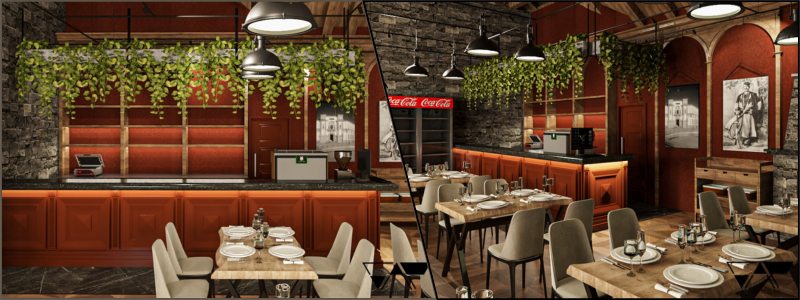
author avatar

MacKenzie Brown is the founder and CEO of Cad Crowd. With over 18 years of experience in launching and scaling platforms specializing in CAD services, product design, manufacturing, hardware, and software development, MacKenzie is a recognized authority in the engineering industry. Under his leadership, Cad Crowd serves esteemed clients like NASA, JPL, the U.S. Navy, and Fortune 500 companies, empowering innovators with access to high-quality design and engineering talent.

Connect with me: LinkedInXCad Crowd

How 3D Printing & CAD Services Will Revolutionize New Product Development at Your Company


3D printing and CAD services are changing new product development across industries. From quick prototyping to low-cost manufacturing, businesses adopting these technologies are experiencing faster time-to-market, better design accuracy, and more innovation possibilities.

As a certified professional industry expert, Cad Crowd is well aware of the requirement for good quality 3D printing and CAD services, particularly for businesses whose products are being manufactured. These businesses are brought into contact with the finest talent on the platform that can bring back results and give more than expected.

Whether you have just started a business or are an established company, the collaboration of CAD services and 3D printing can enhance product development efficiency greatly, lower the cost of production, and provide customized solutions with ease.

Here, we will see how 3D printing and CAD services are revolutionizing product development, what the main advantages of their implementation are, and how they will mold the future of manufacturing and innovation.


🚀 Table of contents


The role of CAD in product development

CAD software is no longer a tool but an integral component of the entire design and manufacturing process in the current product development age. CAD is at the forefront of producing new products that are efficient, precise, and viable from idea creation to production finish. Designers and engineers use CAD to envision, design, and finalize their concepts before they are ever real prototypes. Its influence is felt across industries as diverse as automotive and aerospace, consumer electronics, and furniture design.

RELATED: Benefits of AutoCAD for electrical drawings with freelance engineering services & companies

Improved design capabilities

One of the greatest advantages of CAD is that it can produce intricate and detailed designs that would be practically impossible—or at least highly impractical—to do manually. Traditional drafting methods, while helpful, cannot compete with the flexibility and precision provided by CAD software. Designers can easily change dimensions, modify ratios, and make design changes with parametric modeling without having to redo from scratch.

Furthermore, CAD technology has high-end simulation capabilities that enable designers to see the finished product in a virtual environment prior to actual production. This capability eliminates guesswork and enhances creativity through rapid checks on various design parameters. From an ergonomic tweak in a chair to a structural reinforcement in an aircraft part, CAD experts enable every single design change with precise digital models.

Better collaboration

Product development is seldom a solo effort. There are numerous stakeholders, including engineers, industrial designers, marketers, and manufacturers, who need to collaborate to take a product from idea to reality. CAD tools, particularly cloud-based tools, have revolutionized collaboration between teams.

With access to design files in real-time, remote teams are able to see, modify, and improve models without the lag normally seen through email conversations or paper reports. Changes are immediately apparent, cutting down on miscommunication and version control problems. This integration allows for a more streamlined workflow, enabling companies to cut development times and respond faster to design feedback.

RELATED: Essential product design checklist when working with freelance experts & services companies

3D printing and CAD of a robotic arm and control valve example

Design validation and optimization

After a product is already being tested during production, however, it would have already been subjected to durability, performance, and accuracy tests of how it would fare in actual conditions. CAD software can include simulation tools and analysis programs that would enable its users to conduct virtual stress tests, thermal analyses, and movement simulations. These tests enable these companies to detect and correct faulty designs before manufacturing results in heavy financial losses through errors or defects.

This design validation ahead of time conserves material, reduces the cost of production, and leads to a better-quality end product. Whether it’s evaluating the aerodynamics of a new car design or the ability of a bridge component to handle loads, CAD-based analysis markedly enhances design trustworthiness.

Seamless interfacing with 3D printing

3D printing design services have changed the game when it comes to product prototyping, and CAD is its foundation. The CAD models can be easily converted into 3D-printable files, enabling us to obtain rapid prototyping with a precision hitherto unmatched. It enables the designers to convert their digital models into physical prototypes within hours instead of weeks.

By marrying CAD with 3D printing, businesses have the ability to prototype form, fit, and function early on in the design process and fix prior to scale manufacturing. Virtual design coupled with physical prototyping speeds up innovation and shortens the time to market.

CAD has revolutionized product development at its core by offering increased design accuracy, encouraging collaboration, allowing proper verification, and seamlessly integrating with newer manufacturing technologies such as 3D printing. As the world of industries continues to explore newer horizons in innovation, CAD will be at the forefront, charting the path for the future of product conception, making, and realization.

How 3D printing aids product development

3D printing or additive manufacturing has transformed the environment of product development experts. The technology has opened the door for companies to prototype, test, and produce products faster and more flexibly than ever before.

A product that takes weeks or months to develop now can be achieved in days or hours. Aside from speed, 3D printing is also cost-effective, supply chain resilient, and can produce geometries that are difficult or even impossible to produce using conventional manufacturing techniques. Let us explore further how 3D printing affects product development in concrete, industry-changing ways.

Related: How much does PCB assembly cost? 5 expert tips to reduce rates and pricing for design companies

product CAD examples of 3D printed parts ofa ski and valve joints

Rapid prototyping: speeding up innovation

Prototyping is a critical phase of product development, where concepts are brought into physical existence to test and audit. In conventional manufacturing, making a prototype entails sophisticated tooling, machining, and molding, an expensive and time-consuming affair. With 3D printing, businesses are able to circumvent all these limitations by making a functional prototype in weeks, not months.

For instance, imagine a startup firm creating a new shape for a smartwatch. With 3D printing design experts, the design team can print out a functional prototype overnight, try it on, check its ergonomics the following day, and make design adjustments a little while after that. This quick iterative process reduces development cycles by a great deal, allowing firms to get products to market sooner and keep their competitive advantage.

Second, 3D printing allows it to produce many iterations without necessarily spending too much. If there is a prototype that requires minimal adjustments, then the computer file can be edited and then reprinted afterward, avoiding retooling time and costs in conventional processes. This is highly beneficial in industries that require design accuracy to be at the top, including medical devices, car parts, and wearable technology.

Economical production: minimizing overheads and waste

Production costs can be the killer of a product’s profitability. Conventional technologies have the propensity to involve expensive molds, tooling, and high-volume runs to make an effort to amortize expenses. 3D printing reduces most of the drivers of cost by enabling businesses to create parts from computer models without requiring specialty molds or sophisticated assembly lines.

One of the largest benefits of 3D printing is that it minimizes material waste. Conventional subtractive manufacturing technologies, such as CNC machining, remove a shape from a material block, resulting in great volumes of scrap material. Additive manufacturing, by contrast, layers up products in layers, only consuming the material that is needed. This saves waste, minimizing both environmental impact and material expense.

Moreover, low-run productions become more economical. Small firms and start-ups, not being able to place minimum order quantities in conventional manufacturing design services, are able to produce small batches of customized or niche products at affordable costs without shelling out the big bucks.

Customization & personalization: meeting individual needs with ease

One of the most important characteristics of 3D printing is that it has the ability to create fully personalized products with no extra expense. Conventional manufacturing is a principle of mass production in which prices are established on economies of scale. If an individual needs a personalized modification, this typically implies expensive retooling or independent lines of manufacture. In 3D printing, customization is only a matter of changing a digital file prior to printing.

Consider the healthcare sector. Patients requiring prosthetics, orthotics, or implants in the teeth usually need customized-fit solutions to their physiology. With 3D printing, doctors can now create custom-fit dental crowns or prosthetic limbs that fit absolutely a patient’s specific requirements to enhance comfort and functionality at pennies rather than conventional costs.

In the same way, 3D printing is also useful in the automotive design industry. From personalized dashboard components to bespoke tools for mechanics, automobile manufacturers can create individual designs or batches at reasonable prices. Even domestic items and the fashion industry have started using 3D printing to design unique footwear, frames, and other accessories according to an individual’s personal style and size.

a shaft coupling assembly of three parts

RELATED: The role of human factors engineering in product design for CAD companies and freelance services

Simplification of supply chains: increasing efficiency and agility

The COVID-19 pandemic exposed the vulnerabilities of global supply chains, with manufacturers struggling to secure essential components due to shipping delays and supplier disruptions. 3D printing presents a solution by enabling localized production and reducing reliance on complex supply networks.

Rather than waiting weeks for a part that is imported from overseas, a business can print the component on-demand at a local factory or even in-house. This reduces lead times and provides a more resilient supply chain. Furthermore, businesses don’t have to keep huge inventories of spare parts, as they can just have digital files on hand and print as required.

For organizations such as defense and aerospace, where supply chain integrity is most critical, 3D printing is a strategic strength. Aerospace engineers and defense organizations can manufacture replacement parts in-house with no loss of production time, enhancing their readiness for operations. Likewise, industrial machinery makers can offer on-site replacement parts for obsolete components, extending the lifespan of machines and lowering maintenance.

Complex geometry and lightweight structures: reducing new design freedom

The most thrilling feature of 3D printing is the capacity to create complex, organic shapes that are not possible or hard to produce using conventional manufacturing methods. In contrast to conventional methods involving cutting, molding, or casting, 3D printing has the capacity to create complex internal structures, lattice structures, and hollowed-out parts without loss of strength or durability.

This is especially useful in the automotive and aerospace industries, where weight needs to be kept to a bare minimum. The lighter the component, the greater the fuel economy, reduced emissions, and improved power. For instance, airplane manufacturers can fabricate 3D-printed engine parts and brackets with lattice structures inside them that have equivalent strength but substantially reduced weight.

With 3D printing in consumer electronics design services, it is possible to build thin, high-performance devices with material positioning for the best performance. Laptop housings, heat sinks, and cooling systems may be designed with fine details that enhance efficiency without an increase in size. Even sporting equipment is made possible by designing lightweight but extremely resilient bicycle frames, golf clubs, and protective equipment.

3D printing is no longer the domain of hobbyists and engineers; it has become a must-have innovation enabler across multiple industries. Through rapid prototyping, low-cost manufacturing, easy customization, lean supply chains, and unfettered complex design ability, 3D printing is transforming product ideation, product development, and product launch.

As technology advances, we will only see more efficiencies, better materials, and further applications from industry to industry, from medicine to construction. Having the capacity to print as one needs, create complex and thin structures, and tailor products on a mass level will continue to increase, solidifying 3D printing as a cornerstone in contemporary product manufacturing.

To businesses that need to remain on top of their game, investment in 3D printing technology is not only an option—it’s a strategic imperative.

RELATED: Why additive manufacturing is the future of CAD and 3D modeling services for engineering firms

Industries that profit from CAD and 3D printing

Aerospace & defense

The aerospace and defense industries make widespread use of CAD (Computer-Aided Design) and 3D printing for innovation and efficiency. The technologies allow manufacturers to produce light yet durable components, reducing airplane weight and fuel usage. Aerospace engineers create intricate geometries that are impossible with traditional manufacturing. In addition, 3D printing enables quick prototyping and the creation of customized parts for aircraft, spacecraft, and military applications. It also reduces assembly time and the risk of mechanical failure since intricate parts can be produced in a single print.

Automotive

Automotive firms and suppliers incorporate CAD design experts and 3D printing in the manufacturing and design process to make it more efficient. CAD computer applications allow designers to visualize new models of cars with stunning precision, and 3D printing streamlines the process of making test prototypes for assessing aerodynamics, safety, and performance. It saves a great deal of time and money when it comes to verifying designs. 3D printing also facilitates the economic creation of customized auto parts, especially for sports and high-end cars where one-off parts are required.

Healthcare & medical devices

The medical field has embraced 3D printing since it is capable of creating patient-specific treatments. Prosthetics and implants can be tailored to the individual anatomy of a patient, which makes them more functional and comfortable. Surgeons also use CAD-based 3D models to plan complex surgeries, reducing risks in surgery and improving patient success. Aside from implants and prosthetics, bioprinting is revolutionizing medicine, allowing researchers to create artificial tissues that could one day lead to functional organ transplants.

Consumer goods & electronics

Consumer electronics and home appliances firms use CAD and 3D printing to minimize product development time. Rapid prototyping design services enable designers to experiment with different shapes of a product before mass production, ensuring high quality and functionality. 3D printing also facilitates the easy production of small batches or bespoke products, like personalized phone accessories, wearables, and even apparel. This provides companies with the option to cater to niche markets without having to commit to mass production.

Architecture & construction

CAD and 3D printing are employed by architects and construction companies to transform building design and manufacturing. Scaled models of buildings enable stakeholders to visualize projects prior to the start of construction. 3D printing facilitates the production of prefabricated building parts, minimizing waste and accelerating construction timelines. Companies are even testing the production of entirely 3D-printed buildings, which offer affordable and sustainable options for housing and infrastructure construction.

Ultimately, CAD and 3D printing are changing businesses across numerous markets with increased precision, reduced manufacturing costs, and degrees of customizability unseen before.

RELATED: Enhancing parts design and engineering with 3D scanning: A guide for company services & freelancers

industrial air blower and electrical air blower cad and 3d printing examples

Difficulties and considerations

Although CAD and 3D printing bring much to the business, organizations do have some issues to get around when utilizing them:

  1. Initial investment expenses: Industrial-level 3D printers and software of the highest quality come with some initial investment costs. Still, long-term returns on the savings and efficiency can usually absorb the initial outlay.
  2. Technical expertise requirement: Experts are needed to operate CAD and 3D printing technology. Businesses might be forced to train staff or employ experts in a bid to maximize the application of such technology.
  3. Material limitation: While 3D printing material has improved, certain applications still call for conventional production because of requirements for the strength or durability of materials.
  4. Intellectual property concerns: Due to the ease of dissemination of digital files, the secrecy of proprietary designs and intellectual property is still a worry for firms that embrace 3D printing and CAD services.

Emerging CAD and 3D printing trends in product development

  1. AI-based design optimization: Artificial intelligence is utilized in CAD tools to optimize designs automatically for performance, material use, and design for manufacturability services.
  2. Multi-material & advanced 3D printing: Future 3D printing technologies will provide the ability to print in multiple materials, producing very functional and integrated components.
  3. Eco-friendly materials & sustainability: In the future, more recycled and biodegradable materials will be utilized for 3D printing to minimize environmental problems.
  4. On-demand & distributed manufacturing: Localized production is facilitated by 3D printing, minimizing supply chain dependency and providing opportunities for decentralized models of production.

RELATED: Using 3D printed injection molds and prototyping for high quality company product design ideas

The bottom line

The combination of CAD services and 3D printing is revolutionizing new product development through the improvement of the functionality of the design, cost reduction, and faster time-to-market. Organizations that adopt such technologies can gain a competitive advantage, improve innovation, and shorten their manufacturing cycle. By leading through barriers and being on the cutting edge of the next trends, organizations can leverage the full benefit of 3D printing and CAD to transform their product development approaches.

Cad Crowd is here to help

Companies now need to invest in these emerging technologies and leverage their potential to shape the future of manufacturing and innovation. Cad Crowd is an industry leader that can get you the talent you need to foster better products. Reach out to Cad Crowd today to discover more about our 3D printing and CAD solutions.

author avatar

MacKenzie Brown is the founder and CEO of Cad Crowd. With over 18 years of experience in launching and scaling platforms specializing in CAD services, product design, manufacturing, hardware, and software development, MacKenzie is a recognized authority in the engineering industry. Under his leadership, Cad Crowd serves esteemed clients like NASA, JPL, the U.S. Navy, and Fortune 500 companies, empowering innovators with access to high-quality design and engineering talent.

Connect with me: LinkedInXCad Crowd

Main Differences between Architectural Construction Drawings, Shop Drawings & As-Builts Services Companies


Architectural construction plans, shop plans, and as-built plans are all important for a variety of reasons. These plans have different purposes, address different stakeholders, and have different roles to play during the project cycle. As a contractor, architect, or services company with a focus on these types of services, understanding the differences can simplify project workflows and enhance communication.

Cad Crowd is a standout in the industry when it comes to architectural construction drawings, shop drawings, and as-built services. Cad Crowd will give you proficient experts who will help your company with its next ventures.


🚀 Table of contents


Architectural construction drawings: the blueprint of intent

Architectural construction drawings are the foundation of every construction project since they are the intent of closing the gap between design and build. They represent the architect’s vision, an actualization in the form of the overall intent design that drives every stage of construction. They are not only works of beauty; they are technical plans in the form of detailed information imperative in realizing an idea design into reality.

Most important features of architectural construction drawings

  • Focus on design: At the heart of architectural construction drawings is the architect’s creative and functional design. They represent both the aesthetic desire and functional requirements of the project. These comprise spatial planning, with an aim towards efficient utilization of space and adherence to local building codes and standards. The drawings describe how the building is going to look and operate, taking aspects such as lighting, flow, and accessibility into consideration.
  • Extent of detailing: These drawings include many details necessary in the construction process. Besides the standard floor plans and elevations, they have structural plans showing load-carrying members, electrical and plumbing plans symbolizing wiring and piping routes, HVAC systems, and even landscapes where applicable. The extensive detail ensures every element of the building is planned and coordinated well.
  • Guidance tool: Architectural construction drawings serve as crucial guidance tools for contractors, engineers, project managers, and construction workers. They provide precise instructions on what to build, how different components fit together, and what materials to employ. By providing clear and detailed visual representations, these drawings made by architectural design firms help minimize misunderstandings and errors during construction.

RELATED: How CAD technology is transforming the future of architectural design services companies

shop drawings examples of hvac and a building

Standard components of architectural construction drawings

  • Floor plans and site layouts: Top-down illustrations of how areas within the building are arranged, i.e., room dimensions, where walls, doors, windows, and equipment are located. Site layouts further the view to include where the building is in relation to the surrounding site, including parking lots, access, and landscaping.
  • Elevations and cross-sections: Elevations provide a view from the front of each facade, illustrating the exterior look of the building, including materials, textures, and architectural elements. Cross-sections cut through the building to reveal the inside construction, illustrating relations between floors, rooms, and building components.
  • Structural, mechanical, and electrical details: These types of building blueprints explore aspects that have to do with the way the building should be assembled. Structural drawings focus on the importance of the body of the building, i.e., beams, columns, and foundations. Mechanical drawings touch upon HVAC systems, while electrical designs cover wiring, outlets, and lighting configurations.
  • Specifications of materials: Detailed notes and schedules specify material types to be utilized, as well as quality, finishes, and installation techniques. This assists in ensuring conformity and ease in procurement and estimating costs.

Service firms importance

Construction plans are largely reliant on architectural services companies in an effort to provide accurate and efficient project outcomes. Such plans play a crucial role in:

  • Cost estimation: They provide the detailed information needed to create reliable budgets, including material quantities and labor requirements.
  • Construction planning: By defining construction sequences and processes, they help schedule tasks, allocate resources, and manage time effectively.
  • Regulatory compliance: Building drawings guarantee that the project is in compliance with building codes, zoning regulations, and safety standards, reducing the likelihood of legal disputes or costly changes.
  • Contractual basis: They are binding agreements in contracts between clients, architects, and contractors, defining the scope of work and expectations for the delivery of the project.

Ultimately, architectural site plan services are responsible for not just blueprints but the keystone to successful building, bridging an architect’s vision to a buildable, structured entity.

RELATED: Techniques for 3D architectural visualizations and tips for your services firm

Shop Drawings: the fabrication blueprint

While building plans provide a general design overview, shop drawings focus on the minute details needed for fabrication and installation. Drafted by contractors, subcontractors, manufacturers, or specialized drafting companies, shop drawings are the critical link between architectural concepts and real construction. They translate the architect’s intent into actionable plans for specific building components so that every detail is accurately captured before it’s delivered to the job site.

Key features of shop drawings

  • Exact specifications: Shop drawings focus on detailed details that may not be given importance by construction drawings. They give exact dimensions, manufacturing specifications, material specifications, and installation procedures for components like structural steel beams, HVAC units, cabinetry, electrical panels, and piping. These specifications allow manufacturers to create items accurately and with little scope for interpretation or error.
  • Technical accuracy: Shop drawings differ from general design plans in that they contain very technical information. They specify fabrication methods, welding details, screw and bolt locations, assembly procedures, and tolerable deviation. This degree of accuracy guarantees that parts fit together perfectly when installed, ensuring the integrity of the overall design.
  • Review and approval process: Shop drawings are strictly reviewed and approved by architects, engineers, and project managers. The tiered review process checks that the drawings meet the original construction documents and project specifications. Differences are identified and adjusted before fabrication to prevent on-site mistakes and delays, which are extremely expensive.

Elements of shop drawings in common

  • Accurate illustrations of prefabricated components: These plans show individual elements and assemblies, illustrating how every element is integral to the complete structure.
  • Material grades and finishes: Shop drawings services clearly indicate the materials to be utilized, including grades, coatings, and surface finishes, to meet functional and aesthetic requirements.
  • Installation instructions and connection details: They give sequential instructions for the assembly and installation of elements, including connection techniques, anchor locations, and interface information with other structural components.

Significance to service firms

Shop drawing service firms are essential in bridging the gap between design and construction. Their experts ensure each part is manufactured with accuracy, minimizing errors and conserving materials. With precise instructions, these drawings optimize on-site productivity, allowing construction crews to work faster and more effectively.

Besides, accurate shop drawings can reduce project costs significantly. They allow problems that might arise during construction to be established from the start, saving costly time and effort on rework. In complex projects such as high-rise buildings or factories, the significance of accurate shop drawings cannot be overstated—they are crucial in the maintenance of project schedules and the structural stability of the build.

Short of being mere technical documents, shop drawings are the foundation on which successful fabrication and installation rest. By their capacity to interpret architectural imaginations and translate them into accurate, actionable plans, they ensure all components fit hand in glove, function as designed, and serve to enhance the quality of the finished building.

RELATED: Top tips you need to know for choosing a BIM company for architectural design & CAD services firms

drawings of a water tank design

As-built drawings: the record of reality

When the dust has settled, and the construction phase is nearing completion, as-built drawings are an integral part of the project records. These important documents record the “as-is” condition of the completed building, including all the changes and variations from the original building plans. Unlike design blueprints, which are the hoped-for vision, as-built drawings services depict factual and detailed descriptions of what has been built.

Key features

  • Recording changes: One of the primary reasons as-built drawings are employed is to record all changes that take place during the construction process. These changes can include dimension changes, material changes, location changes of mechanical, electrical, and plumbing systems, and unforeseen adjustments required because of site conditions or design changes. Construction projects have real-world conditions that demand decisions to be made on the spot, and as-built drawings assist in recording these decisions in detail.
  • Detailed records: As-built drawings are not sketches. They include detailed annotations, redlines, and comments showing deviations from the original plan. These records form a middle link between original plans and final results, giving a comprehensive overview of how the project went. The fine detailing is such that all changes, however small or big, are captured for posterity.
  • Facility management tool: As-built drawings are a treasure trove for facility management, being a major tool for future repairs, renovations, and maintenance. They provide an accurate record of the built environment, allowing property managers, maintenance personnel, and contractors to understand the conditions as they exist without guesswork. From locating hidden utilities to designing new installations or resolving issues, as-built drawings serve as a point of reference certainty.

Common components

  • Final floor plans, elevations, and sections: These are the final layout and any modifications from the original design. 3D floor plan design services provide a clear image of the spatial relationship and structural details.
  • Final locations of structural, mechanical, and electrical systems: The accurate location of these systems is crucial for future building. As-built drawings indicate where pipes, ducts, wiring, and support structures are actually located, which may vary from the initial plans.
  • Deviation notes from original specifications: Comprehensive notes describe why some changes were implemented, giving context that can be useful for future projects or legal purposes.

Significance for service companies:

As-built services companies specialize in creating these detailed reports, offering documentation that makes facility management, legal compliance, and future project planning easier. They are a treasure to property owners, maintenance staff, and renovation contractors.

Accurate as-built drawings can make renovation projects run more smoothly, save money by preventing surprises, and ensure that any changes comply with safety and building codes. Furthermore, they can serve as legal documents, attesting that construction was in accordance with contractual requirements and regulatory requirements.

In brief, as-built drawings are greater than end-of-construction blueprints; they are the ultimate snapshot of a project’s existence. Their accuracy and detail make them a treasured resource for anyone involved in a building’s life cycle, from construction and management to renovation and even demolition.

RELATED: Marketing real estate: top real estate 3D rendering trends for companies and firms

How service companies address these differences

Service companies that specialize in architectural drawings, shop drawings, and as-built documentation must be sensitive to the specific demands of each. This is how they effectively obtain these differences:

  • Specialized expertise: Each of these kinds of drawings typically has its own dedicated personnel at firms so that employees with the right expertise perform specific work.
  • Workflow integration: Seamless workflow between design, fabrication, and construction documentation teams reduces errors and ensures consistency across project phases.
  • Technology utilization: Advanced CAD design experts, BIM software, and cloud-based tools allow for efficient drawing-making, checking, and managing.
  • Quality check: In-depth checking procedures confirm cross-checking of drawings against project requirements, building codes, and site conditions.

Cad Crowd is here to help

Understanding the distinctions between architectural construction drawings, shop drawings, and as-built drawings is not merely an intellectual exercise—it’s a necessity for anyone who works with construction projects.

Cad Crowd has worked with tons of architectural, real estate, and design companies to find the best-outsourced talent as an industry-leading platform. Contact us at Cad Crowd today for a quick and easy free quote.

author avatar

MacKenzie Brown is the founder and CEO of Cad Crowd. With over 18 years of experience in launching and scaling platforms specializing in CAD services, product design, manufacturing, hardware, and software development, MacKenzie is a recognized authority in the engineering industry. Under his leadership, Cad Crowd serves esteemed clients like NASA, JPL, the U.S. Navy, and Fortune 500 companies, empowering innovators with access to high-quality design and engineering talent.

Connect with me: LinkedInXCad Crowd

Streamline the manufacturing processes with CAD automation services at your company


Efficiency is all about in the frantic industrial age. Manufacturers are desirous of cutting costs, reducing mistakes, and accelerating the time of production. One of the best ways to achieve these ends is by leveraging CAD automation services.

With the application of Computer-Aided Design (CAD) automation, companies can streamline processes, lower the rate of errors, and improve product quality in a cost-saving and timely mode. That is precisely where Cad Crowd steps in. Cad Crowd is a reputable industry player that offers CAD automation services companies ought to employ.

No matter, if you are in the automotive, aerospace, furniture design, or consumer electronics industry, CAD design services and automation, can transform your business. In this article, the benefits, applications, and how-to of CAD automation services for production, as well as how they can make your company’s business easier, will be addressed.


🚀 Table of contents


The role of CAD in manufacturing

Computer-aided design (CAD) revolutionized the manufacturing industry by providing designers and engineers with powerful tools to design, modify, analyze, and optimize products before their actual production. CAD software enhances accuracy, reduces design flaws, and allows visualization of complex geometries that would be difficult to accomplish manually.

As technology has advanced, manufacturing has been evolving, and the role of CAD has also shifted from just design activities to automation, simulation, and integration with production.

Enhancing Design Efficiency and Accuracy

One of the biggest advantages of CAD in production is its design accuracy. Hand-drawn blueprints can contain human mistakes, but with CAD, dimensions, alignment, and tolerances are accurate to the last detail. With 3D modeling expert capability, engineers can visualize and validate designs in simulated environments where the possibility of expensive mistakes being made on the assembly line does not exist.

Additionally, CAD technology facilitates parametric design, where modifications to a single component update connected components within an assembly automatically. This helps preserve design integrity and saves a great deal of time when modifications are required. Designers can test different materials, forms, and configurations without ever creating physical models, leading to shorter product development cycles.

RELATED: Tips to optimize new invention development and product development for companies

CAD design of a welding gig and two-gear valve box

Automating CAD processes for speed and consistency

Manual CAD modeling is productive but time-consuming, particularly when there are detailed designs with repeated processes. CAD automation is where it is relieved of. CAD automation uses scripts, templates, and artificial intelligence-driven algorithms for repetitive tasks such as dimensioning, patterning, and placing assembly. Using automation, companies are able to reduce human handling, thus cutting down the scope of errors and improving efficiency.

For example, CAD automation enables firms to design standardized templates for frequent parts. Rather than redesigning similar parts from scratch, engineers can easily modify parameters in the templates to generate new versions. Furthermore, AI-driven CAD software can offer design optimizations through rules-based configurations to ensure consistency with industry standards and best practices.

Integration with manufacturing processes

Modern CAD tools seamlessly work with Computer-Aided Manufacturing (CAM) and Computer-Aided Engineering (CAE) systems. By doing so, it completes the loop between manufacturing and product design firms. It enables manufacturers to directly translate CAD models into CNC (Computer Numerical Control) machine code, 3D printer code, and robotic assembly code.

By combining simulation and analysis tools in a single environment, CAD allows manufacturers to predict the behavior of a product under real-world conditions. Engineers can carry out stress testing, thermal simulation, and fluid dynamics analysis inside the CAD environment itself, reducing the need for physical tests. The forecasting ability not only reduces time but also reduces time-to-market for new products.

CAD emerges as a crucial part of modern manufacturing via greater design accuracy, error reduction, and easy integration into manufacturing processes. Automation integration complements these benefits via increased design time and project consistency. With continuous technological improvement in manufacturing, CAD has become and will remain a cornerstone of innovation, promoting efficiency and enabling more intricate and better product design.

RELATED: How brand consistency enhances product design and insights from CAD services firms

Principal benefits of CAD automation in manufacturing

In the age of rapid production, CAD automation has revolutionized design and production activities. Eliminating mundane procedures, reducing manmade errors, and streamlining processes, CAD automation has proved to be the principal driver behind businesses seeking improved efficiency, accuracy, and economic benefits. These five are significant benefits of CAD automation in production, with true-life examples indicating its impact.

Enhanced efficiency and speed

One of the key advantages of CAD automation is the drastic reduction in design speed and efficiency. Traditional CAD processes have design engineers making manual changes and adjusting parts, which may be laborious and repetitive. Automation obliterates such interferences by providing bulk changes, pre-determined design rules, and template-based processes to help streamline the operation.

For example, weeks were historically required to design chassis components in auto production due to the complexity and magnitude of changes. Through automation with CAD, engineers can execute scripts that would automatically update the measurements, realign tolerances, and add standard features all at once for a batch of components in real-time. Design time is reduced to hours from weeks, and manufacturers are then able to accelerate product development and react more to the market.

RELATED: How much does it cost to outsource PCB design services & electronics engineering complete prices for companies

hydraulic cylinder and intake assembly examples of CAD design

Lower errors and better accuracy

Manufacturing has high accuracy requirements, and minor design faults in the manufacturing process result in complete production delays. CAD design with manual workflows exposes it to design errors like measurement inaccuracies, misplaced parts, or inconsistent specifications for materials. CAD automation disposes of the risk by defining design constraints, providing input validation, and checking if it meets the standards of the manufacturing design industry.

Aerospace manufacturing, for instance, relies on accurate tolerances in an attempt to ensure structural integrity and flight performance. CAD automation ensures every component has exact specifications, minimizing tolerances that lead to rework costs or even structural collapse. With the use of automated test validation, businesses can achieve more accurate designs as well as improved end-product quality.

Manufacturing cost savings

Greater efficiency and less error result in huge cost savings. With less time used for design, less material wasted, and fewer prototype revisions, CAD automation allows manufacturers to utilize their assets more fully and decrease the cost of production.

Consider, for example, a case of a custom cabinetry company. Without automation, designers create each unique order size and material adjustments by hand, involving more labor costs and material loss. With CAD automation, the company can create maximally optimized layouts for improved material usage, with waste reduced by up to 20%. Moreover, automation decreases the number of costly prototype revisions and improves profitability.

Increased customization and scalability

CAD designers require tailor-made designs to meet client-specific needs. CAD automation accelerates customization by allowing manufacturers to create parametric models that automatically change based on user-defined specifications.

For example, a company that deals with custom-sized enclosures can employ parametric CAD automation to create various configurations of size in an instant based on user input. This is not only more versatile in design but also mass-producible in manufacturing to meet variable customer needs with ease.

Seamless integration with manufacturing operations

Unified CAD automation enables a seamless transition from manufacturing to design. CAD models are readily integrated with Computer-Aided Manufacturing (CAM) systems that enable precise machining, minimized setup time, and enhanced production efficiency.

With CAD automation of CNC machining, there is an assurance that designs are optimized according to manufacturing constraints, reducing setup time and lessening material usage. Tool path designs can be automatically created by engineers, select efficient cutting methods, and optimize machining processes, opening the door for higher throughput and reduced operating expenses.

CAD automation has transformed manufacturing with increased efficiency, precision, cost-effectiveness, and scalability and is highly appreciated by product development professionals. With the integration of automation in CAD processes, companies can not only accelerate the design process but also ensure higher consistency and improved integration with production. As automation is increasingly applied across industries, the future of manufacturing will be characterized by increased innovation, reduced costs, and faster responsiveness to market needs.

RELATED: Enhancing parts design and engineering with 3D scanning: A guide for company services & freelancers

single plate clutch and belt roller examples of cad design for manufacturing

Applications of CAD Automation in Production

CAD automation in modern production has changed product design, verification, and production. Through the application of automation to CAD processes, organizations can considerably enhance efficiency, accuracy, and customization levels. Below are the five most critical applications of CAD automation in manufacturing:

Parametric design automation Due to the rising demand for personalized products, companies integrate web-based configurators and CAD automation so that customers can personalize products directly through an interface on a website. Configurators facilitate modifications in real time and generate CAD files in real time-to produce.

For example, a furniture design service with a modular design option has an Internet-based configurator where customers select sizes, materials, and colors for their furniture products. As a customer configures a product according to its dimensions, CAD automation generates the input and produces a producible file. This reduces lead times, increases customer satisfaction, and minimizes errors in production.

The application of CAD automation in production offers unmatched efficiency, precision, and scalability. From real-time design changes and auto-drafting to advanced simulation and mass customization, automation is transforming the product development process across industries. With continued advancements in technology, businesses that use CAD automation will enjoy a solid competitive advantage, reducing costs and improving product quality in the long run.

Automatic drawing development Previously, creating 2D technical drawings from 3D models required a lot of time and human effort. CAD automation does this through the instant creation of precise drawings in the same way, ending inconsistency that may occur when manual production is done.

For example, a building construction firm undertaking bulk residential development projects can utilize CAD automation, such as 3D rendering services, to automatically generate floor plans and blueprints from project specifications. Once a 3D building model is developed, the automation tool takes necessary views, measurements, and markings and generates complex building construction drawings. This avoids errors and speeds up approvals and implementation of projects.

Design validation & simulation Validation of the design is an important step in production to lock in products as safe and durable and perform their function as intended. Due to CAD automation and the integration of Finite Element Analysis (FEA) and Computational Fluid Dynamics (CFD) simulation, the detection of anticipated design problems in the development phase might be facilitated and thus can avoid cost-incurring in prototyping and re-doing.

For example, an orthopedic implant-producing medical device company employs CAD automation to perform stress tests on different models of implants. It applies designed loads and material values automatically by the system to the models for use conditions modeling purposes.

The engineers, such as mechanical engineers, analyze the results and adjust them accordingly without any interference to meet stringent regulatory requirements before physical testing.

Automated BOM (Bill of Materials) generation A bill of materials (BOM) is an absolute necessity in manufacturing because it specifies all the materials, components, and assembly procedures required. BOM creation automation prevents errors, reduces purchasing time, and gives accurate costing.

For example, in electronics manufacturing, CAD automation can create a BOM automatically from PCB design services. Once an engineer finishes a circuit design, the system will generate a BOM with parts, quantities, and suppliers automatically. This automation facilitates procurement and assembly and reduces the risk of incompatible parts.

Mass customization & configurators Due to the rising demand for personalized products, companies integrate web-based configurators and CAD automation so that customers can personalize products directly through an interface on a website. Configurators facilitate modifications in real time and generate CAD files in real time-to produce.

An exercise equipment design service with a modular design has an Internet-based configurator where customers select sizes, materials, and colors for their furniture products. As a customer configures a product according to its dimensions, CAD automation generates the input and produces a producible file. This reduces lead times, increases customer satisfaction, and minimizes errors in production.

The application of CAD automation in production offers unmatched efficiency, precision, and scalability. From real-time design changes and auto-drafting to advanced simulation and mass customization, automation is transforming the product development process across industries. With continued advancements in technology, businesses that use CAD automation will enjoy a solid competitive advantage, reducing costs and improving product quality in the long run.

RELATED: Preparing your firm’s product design for manufacturing: How to streamline development and reduce costs

How to automate CAD in your business

Assess your needs and goals

Conduct a complete study of your company’s manufacturing and design operations prior to automating them with CAD. Identify those areas where human processes are hindering manufacturing or generating wasteful mistakes. Common bottlenecks are redrawing modeling, drawing generation, and data input. If your engineers are spending too much time on routine changes or design errors, leading to excessive rework, automation can provide a huge efficiency gain. Define your objectives—whether it’s reducing design time, reducing the number of human errors, or improving the consistency of workflow—so that you can make optimal automation choices.

Choose the most appropriate CAD automation tools

Various industries and CAD systems need their own respective automation programs. Proper technology selection can assist in realizing desired efficiencies. Below are the most commonly used CAD automation solutions:

  • SolidWorks API – Best suited for repetitive tasks on SolidWorks, like designing variants of standard components or running batches of files.
  • Autodesk Inventor iLogic – Enables automation of parametric designs using rule-based processes and thus efficient variation setup without manual intervention.
  • Siemens NX Open – Provides advanced industrial design and manufacturing automation with a high degree of customization.
  • Python & VBA Scripting – Both scripting languages can be used to create custom automation scripts for AutoCAD and other software, enabling customized solutions to a company’s specific requirements.

Your choice of appropriate tool depends on your existing CAD software, business requirements, and the degree of sophistication in your automation needs.

cad design examples of jet engine and propulsion system

Train your staff and develop expertise

The implementation of CAD automation comprises an employee resource pool that is knowledgeable in the design process and automation techniques. Invest in reskilling your staff with education in automation software and skills involving the design process, such as Python and VBA script programming languages, as well as training in those automation tools and software fitting your CAD solution.

Your engineers can be educated through online tutorials, workshops, and vendor-driven training sessions. Also, consider hiring CAD automation professionals who already possess experience in developing and designing automation solutions. This will assist in providing a smoother roll-out and longer-term use of automation.

Integrate with existing systems

To achieve the maximum benefits of CAD automation, integrate with other business systems such as Computer-Aided Manufacturing (CAM), Enterprise Resource Planning (ERP), and Product Lifecycle Management (PLM). An integrated system offers a seamless flow where design data can move freely from concept to production without the intervention of human beings. This minimizes errors and increases total productivity. Coordinate with your IT department and software vendors closely to set proper data exchange procedures and integration mechanisms.

Begin small and scale up slowly

Rather than attempting an all-at-once overhaul of automation, begin small by piloting a single activity. Select a single, high-impact task—such as automating part drawings or BOM creation—and pilot the automation process in a controlled environment. Engineering design services Measure the benefits, gather feedback, and adjust the implementation before automating across design processes. Phased-in automation will create a smooth transition, lower risk, and enable your staff to acclimatize at a more manageable rate.

By following these steps, companies can efficiently automate CAD, enhance efficiency, reduce errors, and streamline design processes to make them smoother for greater competitiveness in the market.

RELATED: How are product concept design services used to innovate during product development?

Future CAD automation trends in manufacturing

  1. Design automation with AI: Artificial Intelligence (AI) will revolutionize CAD by generating optimized designs based on real-world limitations with minimal intervention from humans.
  2. CAD automation in the cloud: Cloud technology will enable remote collaboration with the added feature of automating design processes in real-time.
  3. Generative design: CAD software will learn to automatically offer design alternatives that will optimize material use, weight, and life.
  4. IoT-Enabled CAD systems: CAD automation will be combined with IoT sensors to provide real-time design adjustment based on available product performance data.

Bringing it all together

CAD automation services are no longer an option but an imperative for manufacturing companies that have to be cost-effective and competitive and make their goods superior. Through parametric modeling to auto-drawing generation, the benefit is clear: compressed production cycles, reduced error, and more productivity.

Whether you’re an industrial giant or a small business, adding CAD automation to your company will automate your production, boost productivity, and prepare your company for the future. Start small, choose the right tools, and watch your efficiency soar!

Cad Crowd is here to help

Ready to streamline your CAD processes? Contact industry experts at Cad Crowd and find out what is best for you. Cad Crowd is the industry leader in finding the best services for your company. The future of manufacturing is automated—don’t get left behind! Contact us today!

author avatar

MacKenzie Brown is the founder and CEO of Cad Crowd. With over 18 years of experience in launching and scaling platforms specializing in CAD services, product design, manufacturing, hardware, and software development, MacKenzie is a recognized authority in the engineering industry. Under his leadership, Cad Crowd serves esteemed clients like NASA, JPL, the U.S. Navy, and Fortune 500 companies, empowering innovators with access to high-quality design and engineering talent.

Connect with me: LinkedInXCad Crowd