Elon Musk’s X Appears to Be Violating US Sanctions by Selling Premium Accounts to Iranian Leaders


In recent weeks, Elon Musk has followed president Donald Trump’s lead, slamming Iranian government officials and supporting the thousands of protesters railing against the regime. He even provided free access to his Starlink satellites in the midst of a nationwide internet blackout.

But while publicly proclaiming his support of the protesters, Musk’s company X appears to be profiting from the very same government officials he railed against, potentially violating US sanctions in the process, according to a new report from the Tech Transparency Project (TTP) shared exclusively with WIRED.

TTP identified more than two dozen X accounts allegedly run by Iranian government officials, state agencies, and state-run news outlets which display a blue checkmark, indicating they have access to X’s premium service. These accounts were sharing state-sponsored propaganda at a time when ordinary Iranians had no access to the internet, and their messages appeared to be artificially boosted to increase reach and engagement, which is a key aspect of X’s premium service. An X Premium subscription, which is the only way to receive a blue checkmark, costs $8 a month, while a Premium+ subscription, which removes ads and boosts reach even further, costs $40 a month.

At a time when the Trump administration is threatening Iran with possible military action if it does not meet demands related to nuclear enrichment and ballistic missiles, X appears to be undermining those efforts by providing a social media bullhorn for the Iranian government to spread its message.

“The fact that Elon Musk is not just platforming these individuals, but taking their money to boost their content through these premium subscriptions and give them extra features also means he’s undermining the sanctions that the US and the Trump administration are actually applying,” Katie Paul, the director of the TTP, tells WIRED.

X did not respond to a request for comment, but within hours of WIRED flagging several X accounts belonging to Iranian officials, their blue checkmarks were removed. The rest of the accounts identified by TTP but not shared with X continue to display a blue checkmark.

The White House directed WIRED to the Treasury when asked for comment. A Treasury spokesperson said they do not comment on specific allegations but “we take allegations of sanctionable conduct extremely seriously.”

At the end of last year, protests broke out in the Iranian capital of Tehran on December 28 over the continuing devaluation of the Iranian rial against the dollar and a widespread economic crisis in the country. Over the following days, tens of thousands of protesters poured onto the streets in cities across the country, calling for regime change and the end of Supreme Leader Ayatollah Ali Khamenei’s 37-year reign.

In response, the regime brutally cracked down on protesters, arresting tens of thousands of people and killing thousands more. The true death toll is still unknown but could be much higher than currently reported.

Trump signaled his support for the protesters in a post on Truth Social on January 2, promising to come to their rescue. “We are locked and loaded and ready to go,” he wrote. Musk quickly followed Trump, calling Khamenei “delusional.”

On January 5, Gholamhossein Mohseni-Ejei, the head of Iran’s judiciary, who had a blue checkmark at the time, wrote in a post on X, “This time, we will show no mercy to the rioters.” Ejei was among the accounts whose blue checkmarks were removed on Wednesday after WIRED contacted the company.

A few days later, X changed the Iranian flag emoji on the platform to one used before the 1979 revolution, featuring a lion and sun. On January 14, Musk announced that anyone with a Starlink device would be free to access the internet in Iran without a subscription. At the time, Starlink devices were the only viable way of getting online after the government imposed a near total internet blackout.

Grok, which maybe stopped undressing women without their consent, still undresses men


It looks like Grok is still being gross. Elon Musk says his chatbot stopped making sexualized images without a person’s consent, but this is not entirely true. It maybe (and I say maybe) without their consent, but this doesn’t seem to apply to men.

A reporter with the organization ran some tests with Grok and found that the bot “readily undresses men and is still churning out intimate images on demand.” He confirmed this with images of himself, asking Grok to remove clothing from uploaded photos. It performed this task for free on the Grok app, via the chatbot interface on X and via the standalone website. The website didn’t even require an account to digitally alter images.

The company recently said it has taken steps to “prevent the Grok account from allowing the editing of images of real people in revealing clothing such as bikinis.” However, the reporter had no problem getting the chatbot to put him in “a variety of bikinis.” It also generated images of the subject in fetish gear and in a “parade of provocative sexual positions.” It even generated a “naked companion” for the reporter to, uh, interact with.

He suggested that Grok took the initiative to generate genitalia, which was not asked for and was visible through mesh underwear. The reporter said that “Grok rarely resisted” any prompts, though requests were sometimes censored with a blurred-out image.

This controversy started several weeks ago when it was discovered that Grok had over a period of 11 days. This includes many nonconsensual deepfakes of actual people and over 23,000 sexualized . This led to investigations in both and . X was actually banned in both Indonesia and Malaysia, though the former .

X claimed it has “implemented technological measures” to stop this sort of thing, but these safeguards . In other words, the adjustments do stop some of the more obvious ways to get Grok to create deepfakes, but there via creative prompting.

It’s also worth noting that journalists asking for a comment on the matter get slapped with an autoreply that reads “legacy media lies.” Going with the fake news thing in 2026? Yikes.

Sequoia to invest in Anthropic, breaking VC taboo on backing rivals: FT


Sequoia Capital is reportedly joining a blockbuster funding round for Anthropic, the AI startup behind Claude, according to the Financial Times. It’s a move sure to turn heads in Silicon Valley.

Why? Because venture capital firms have historically avoided backing competing companies in the same sector, preferring to place their bets on a single winner. Yet here’s Sequoia, already invested in both OpenAI and Elon Musk’s xAI, now throwing its weight behind Anthropic, too.

The timing is particularly surprising given what OpenAI CEO Sam Altman said under oath last year. As part of OpenAI’s defense against Musk’s lawsuit, Altman addressed rumors about restrictions in OpenAI’s 2024 funding round. While he denied that OpenAI investors were broadly prohibited from backing rivals, he did acknowledge that investors with ongoing access to OpenAI’s confidential information were told that access would be terminated “if they made non-passive investments in OpenAI’s competitors.” Altman called this “industry standard” protection (which it is) against misuse of competitively-sensitive information.

According to the FT, Sequoia is joining a funding round led by Singapore’s GIC and U.S. investor Coatue, who are each contributing $1.5 billion. Anthropic is aiming to raise $25 billion or more at a $350 billion valuation — more than double its $170 billion valuation from just four months ago. The WSJ and Bloomberg had earlier reported the round at $10 billion. Microsoft and Nvidia have committed up to $15 billion combined, with VCs and other investors said to be contributing another $10 billion or more.

The Sequoia connection with Altman runs deep. When Altman dropped out of Stanford to start Loopt, Sequoia backed him. He later became a “scout” for Sequoia, introducing the firm to Stripe, which became one of the firm’s most valuable portfolio companies. Sequoia’s new co-leader Alfred Lin and Altman also appear comparatively close. Lin has interviewed Altman numerous times at Sequoia events, and when Altman was briefly ousted from OpenAI in November 2023, Lin publicly said he’d eagerly back Altman’s “next world-changing company.”

While Sequoia’s investment in xAI might seem to have already contradicted the traditional VC approach of picking winners, that bet is widely viewed as less about backing an OpenAI competitor and more about deepening the firm’s extensive ties to Elon Musk. Sequoia invested in X when Musk bought Twitter and rebranded it, is an investor in SpaceX and The Boring Company, and is a major backer of Neuralink, Musk’s brain-computer interface company. Longtime Sequoia leader Michael Moritz was even an early investor in Musk’s X.com, which became part of PayPal.

Sequoia’s apparent reversal on portfolio conflicts is especially glaring given its historical stance. As we reported in 2020, the firm took the extraordinary step of walking away from its investment in payments company Finix after determining the startup competed with Stripe. Sequoia forfeited its $21 million investment, letting Finix keep the money while giving up its board seat, information rights, and shares, marking the first time in the firm’s history it had severed ties with a newly funded company over a conflict of interest. (Sequoia had led Finix’s $35 million Series B round just months earlier.)

Techcrunch event

San Francisco
|
October 13-15, 2026

The reported Anthropic investment comes after dramatic leadership changes at Sequoia, where Roelof Botha was pushed out in a surprise vote just days after sitting down with this editor at TechCrunch Disrupt, with Lin and Pat Grady — who’d led that Finix deal — taking over.

Anthropic is reportedly preparing for an IPO that could come as soon as this year. We’ve reached out to Sequoia Capital for comment.

Elon Musk Reportedly Insisted on Troubled Tesla Doors After a Warning


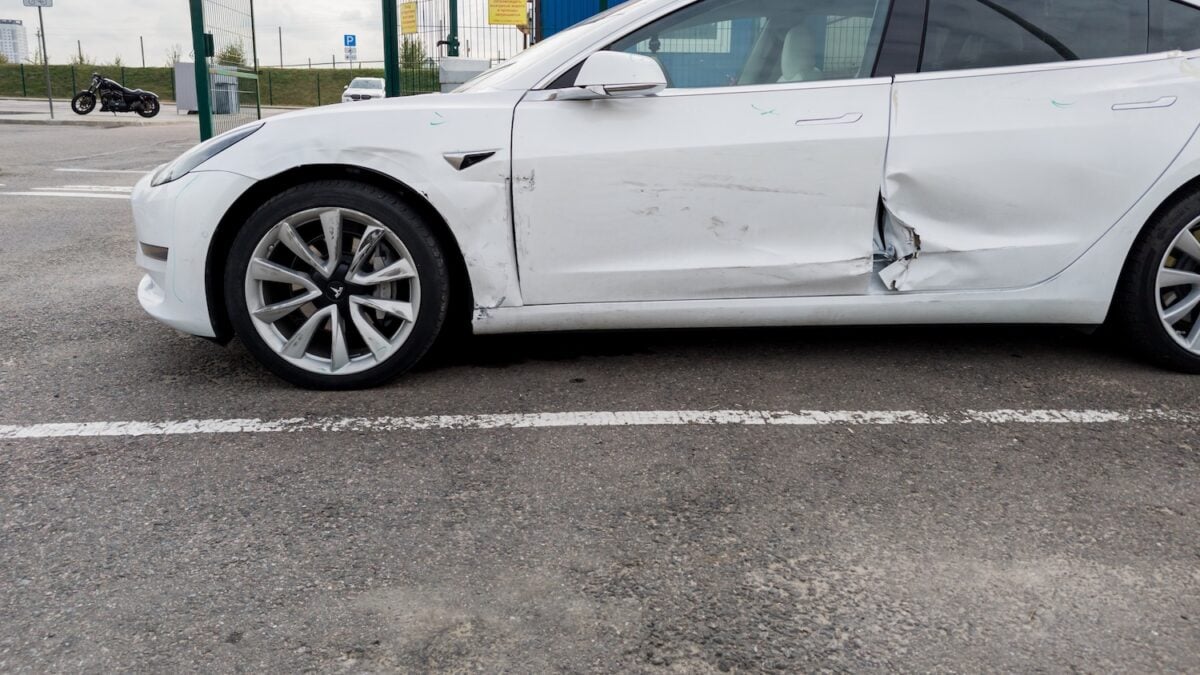
An ongoing controversy about an alleged Tesla door design flaw got two new wrinkles this week, as troubling, who-knew-what-and-when questions about vehicle door handles began to swirl, along with a fresh federal investigation triggered by a harrowing complaint letter.

As part of a months-long investigation by Bloomberg, a project timed to coincide with high profile inquiries from the National Highway Traffic Safety Administration, the news outlet reported on Monday that Tesla founder and CEO Elon Musk not only knew about the design flaw of the electronic door releases on the company’s vehicles, but advocated that they continued to be used.

And on Tuesday, the NHTSA announced a new investigation specifically into the Model 3.

According to Bloomberg‘s sources, engineers warned Musk against the electronic releases for the interior door handles during Tesla Model 3 development. The setup demands power from a 12-volt battery to operate the door with an electronic button. However, to address engineer concerns and meet federal motor vehicle safety standards, a manual release was also installed for passengers to use in an emergency or if the 12-volt battery was depleted.

The problem that’s supposedly resulted in 15 deaths and many other incidents in popular models like the Model 3 and Model Y is that the 12-volt battery, separate from the propulsion battery pack, can fail in a crash. And many occupants were unaware of the unmarked manual release far away from the normal button.

Tuesday’s investigation was prompted by a November letter to NHTSA by a 2022 Model 3 owner from Georgia who claimed he was, “forced to crawl into the rear seat and repeatedly kick the rear passenger window until it shattered,” when he was involved in a head-on collision that resulted in the vehicle catching fire and losing power to electrical accessories.

Kevin Clouse said he sustained injuries that required three surgeries including a full hip replacement. Clouse cites a federal vehicle law requiring exit latches be marked and readily accessible.

This news also comes at the end of a wild year for Musk that included a doomed stint at the White House and DOGE and an $878 million-pay package in November even with a quarter of shareholders not supporting him, while Tesla sales went into a global freefall over politics, unfavorable EV conditions, and increased competition.

Tesla wasn’t the first automaker to pursue electric door handles, but not long after the Model S further popularized them, companies like Audi started using them. It’s also not the first company to face a person allegedly being trapped in one of their vehicles with electronic door handles. A man and his dog died in 2015, apparently after the electronic door release failed on a 2007 Chevy Corvette, resulting in a 2016 lawsuit by the victim’s family. The man, it appears, was unaware of a manual override to open the door when the battery fails.

These mechanisms have been the source of reliability complaints and frustrations from owners and reviewers. Outlets such as Consumer Reports noted issues and even began ranking vehicles lower for usability problems—so much so that the magazine started a petition to automakers asking for safer doors.

Tesla’s problems will persist next year as the NHTSA continues to investigate the millions of models on U.S. roads. The company has made some changes on new models and, in September, Tesla’s designer proposed a redesign of the releases on future cars.

Digital artist Beeple put his face on a $100K robot dog next to Elon Musk and Picasso – it sold first


Mike Winkelmann, the digital artist known as Beeple, has placed himself at the center of the pack — literally — with his latest viral installation at Art Basel Miami Beach, and there’s still time to see it through Sunday.

His “Regular Animals” project features $100,000 robotic dogs outfitted with hyper-realistic heads resembling Elon Musk, Mark Zuckerberg, and Jeff Bezos, alongside art legends Pablo Picasso and Andy Warhol. The robot dogs roam a plexiglass pen, capturing images through chest-mounted cameras that are processed by AI and then essentially pooped out, according to the WSJ. Of the prints produced, 256 include QR codes that offer collectors a free NFT, dispensed in bags labeled “Excrement Sample.”

Beeple also included himself in this exclusive group, a move the Charleston-based artist himself called “ballsy.” His self-portrait dog sold first, surprising even Beeple, he told the Journal.

The project marks at least the second time Winkelmann has become the art world’s main character. Four years ago, his digital collage sold at Christie’s for $69 million, helping to fuel an NFT boom that would peak a year later before largely imploding.

Elon Musk says Tesla owners can ‘text and drive’ very soon


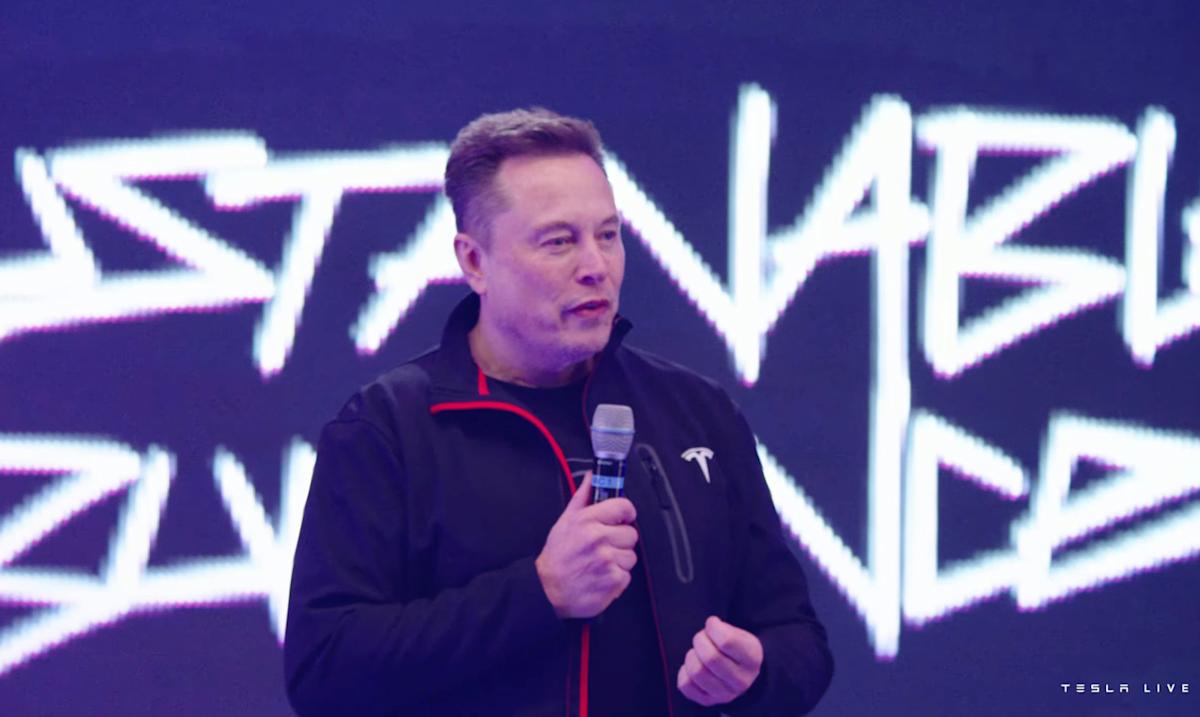
Elon Musk went on stage on Thursday night during Tesla’s annual shareholders meeting and made some big claims and promises. The company is “almost comfortable” letting owners with Full Self-Driving (FSD) “text and drive,” he said. At the moment, its vehicles are still strictly monitoring drivers to make sure their eyes are on the road, but Musk said that Tesla will enable unsupervised FSD that will allow texting and driving within “a month or two.”

To note, Tesla’s FSD is currently capable of level 2 autonomous driving. Musk is promising at least a level 4 capability, in which the driver can be disengaged as the car performs all driving tasks for them, within a short span of time. While he said that Tesla will look at its safety data first, he didn’t discuss the steps it’s taking to enable texting while driving and whether it’s already discussing the legalities of it with regulators.

Talking about the Cybercab, Musk said production of the robotaxis will begin by April next year. Since it will be specifically built with autonomy in mind, it will not have pedals, a steering wheel and even side mirrors. The Cybercab’s manufacturing process, he explained, is vastly different from typical car production and is more comparable to phone manufacturing. That’s why he thinks the company will be able to produce one unit every 10 seconds.

Musk also talked about the flying car he teased on Joe Rogan’s show. When asked at the event, he said the demo will now take place on April 1, 2026, instead of this month or the next like he told Rogan. It remains to be seen whether we’re going to get April Fooled, but Musk claimed that production of Tesla’s flying vehicle will happen a year or so after its unveiling. As always, take Musk’s claims with a grain of salt, as he’s pretty infamous for being overly ambitious with his timelines.

While Musk was on stage talking about Tesla’s plans, an Optimus humanoid robot was standing by the side. The CEO said Optimus is bound to become the “biggest product of all time,” bigger than cellphones, “bigger than anything.” Tesla will start with a 1-million production line and then a 10-million production line, but he said the company expects to eventually produce 100 million to a billion Optimus robots a year. He envisions a world wherein the humanoid machines will provide people with medical care… as well as a world wherein instead of being jailed, Optimus follows criminals around to stop them from committing more crimes.

Before Musk went on stage, Tesla’s shareholders had voted to approve his pay package worth up to $1 trillion over the next 10 years. Tesla has to hit several goals for Musk to become the first trillionaire, though, including reaching a market value of $8.5 trillion from its current worth of $1.4 billion and selling a million Optimus robots.

Tesla board chair calls debate over Elon Musk’s $1T pay package ‘a little bit weird’


With Tesla shareholders set to vote on a proposed 10-year, $1 trillion compensation package for CEO Elon Musk in November, board chair Robyn Denholm spoke to The New York Times to defend what would be the largest pay package in corporate history.

Denholm, who was also on the special committee that put the compensation proposal together, argued that Musk needs to be motivated by extraordinary challenges tied to extraordinary compensation. At the same time, she suggested he’s less interested in the additional wealth that the promised Tesla shares would represent, and more in the voting power.

“I think it’s a little bit weird talking about the dollars when it’s actually the voting influence,” said Denholm, whom The Times described as “occasionally appearing ill at ease” during the interview.

It might also seem counterintuitive to offer such a massive pay package when Tesla’s profits and vehicle sales are falling, but Denholm insisted that the plan is about “future performance.”

“It’s not about past performance,” she said. “He gets nothing if he doesn’t perform against the goals.”

As TechCrunch previously noted, the package’s goals are considerably less ambitious than some of the promises Musk has made about Tesla in the past.

SpaceX notches major wins during 10th Starship test


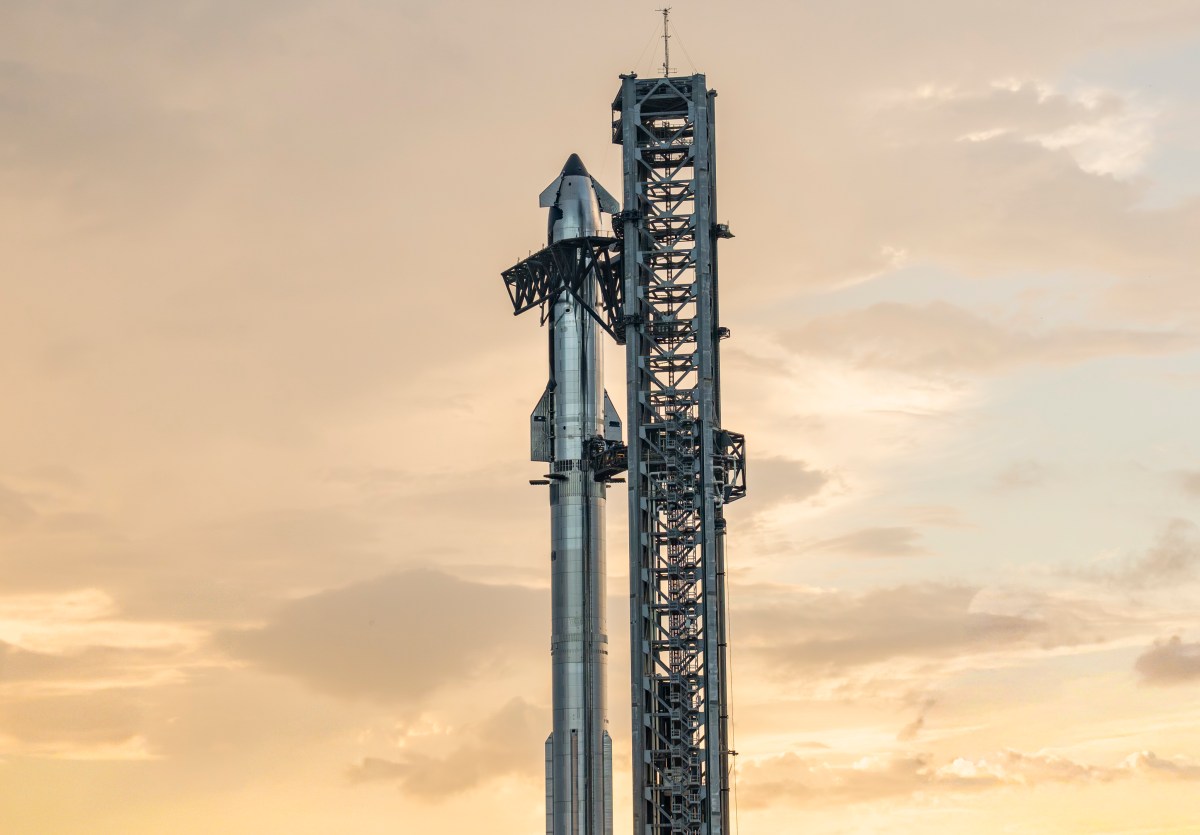
SpaceX’s massive Starship rocket lifted off on its 10th test flight Tuesday evening, hitting two long-sought milestones and putting an end to a string of failures.

The 403-foot vehicle lifted off from Starbase, SpaceX’s launch facility and recently incorporated city, at 7:30 p.m. ET after two scrubs earlier this week. The rocket ascended on 33 methane-fueled Raptor engines before separating around three minutes after liftoff.

On descent, the Super Heavy booster tested out a new maneuver: intentionally shutting down the engines used for landing and transitioning to backup engines. The test will help engineers understand how the booster might perform in the case of failure. The test appeared to go as planned, with the 232-foot-tall booster successfully making a targeted splashdown in the Gulf of Mexico.  

Meanwhile, the upper stage, also called Starship, reached space. There, for the first time on a Starship flight, it opened its Pez-style payload door and released eight Starlink mass-simular satellites. This is a capability that SpaceX had planned but failed to demonstrate on earlier missions. The company also successfully relit one of the Raptor engines in space before guiding the vehicle toward the Indian Ocean, where it splashed down, tipped over, and promptly exploded.

On the way down, the exterior of the ship was exposed to incredible heat during atmospheric reentry, providing an excellent test environment for the upgraded thermal-protection system. SpaceX also used this test to try out a series of experiments, like removing tiles from sections of the ship to see how its “skin” operates on reentry, plus a new metallic tile and an actively cooled tile.

Most importantly, however, is the upper stage completed the entire test and splashed down in the Indian Ocean without losing comms with SpaceX engineers. During the last flight, the ship reached space and then lost attitude control during the coast phase, preventing the payload doors from opening. Engineers appear to have overcome those issues.

It’s a big win for SpaceX, which has repeatedly lost the Starship upper stage due to a series of technical failures during flight. The persistent issues have raised questions as to whether the rocket will be ready to land humans on the moon by mid-2027 for NASA, or when it will be capable of deploying next-gen Starlink satellites for the company.

Techcrunch event

San Francisco
|
October 27-29, 2025

This test marks a material advancement for the Starship program, which the company wants to eventually use to send humans and cargo to Mars. While SpaceX still has to complete a series of tough technical milestones before it can get there, it got one step closer tonight.

Judge says FTC investigation into Media Matters ‘should alarm all Americans’


A federal judge has granted a preliminary injunction blocking the Federal Trade Commission’s investigation into left-leaning advocacy group Media Matters.

Back in 2023, Media Matters published research showing ads from major companies had appeared alongside antisemitic and other offensive content on Elon Musk-owned X. When major advertisers subsequently pulled back from the platform, X sued Media Matters. It also sued advertisers and advertiser groups over what it claimed was a “systematic illegal boycott.”

After Musk’s then-ally Donald Trump took office again in January, the FTC also began an investigation into whether Media Matters had illegally colluded with advertisers.

On Friday, however, Judge Sparkle L. Sooknanan sided with Media Matters and blocked the FTC’s investigation. In her decision, Sooknanan (a district court judge for the District of Columbia appointed by Joe Biden) wrote that the Media Matters article represented “quintessential First Amendment activity” and the FTC’s “expansive” investigative demands appeared to be “a retaliatory act.”

“It should alarm all Americans when the Government retaliates against individuals or organizations for engaging in constitutionally protected public debate,” she wrote. “And that alarm should ring even louder when the Government retaliates against those engaged in newsgathering and reporting.”

Sooknanan noted that before his appointment as the current FTC chair, Andrew Ferguson had appeared on Steve Bannon’s podcast and called for the FTC to investigate progressive groups criticizing online disinformation, and that he subsequently “brought on several senior staffers at the FTC who previously made public comments about Media Matters.”

The FTC did not immediately respond to a TechCrunch email asking whether it intends to appeal.

Techcrunch event

San Francisco
|
October 27-29, 2025

Regardless of the legal outcome, X’s lawsuits have already had a significant effect on the targeted organizations, with Media Matters cutting staff (one of the laid off researchers is now running for Congress), while the World Federation of Advertisers shut down its brand safety program and reportedly complained of drained finances.

Sooknanan said the FTC investigation has also had its “intended effect,” prompting Media Matters to decide “against pursuing certain stories about the FTC, Chairman Ferguson, and Mr. Musk.”

Grok 4 seems to consult Elon Musk to answer controversial questions


During xAI’s launch of Grok 4 on Wednesday night, Elon Musk said — while livestreaming the event on his social media platform, X — that his AI company’s ultimate goal was to develop a “maximally truth-seeking AI.” But where exactly does Grok 4 seek out the truth when trying to answer controversial questions?

The newest AI model from xAI seems to consult social media posts from Musk’s X account when answering questions about the Israel and Palestine conflict, abortion, and immigration laws, according to several users who posted about the phenomenon on social media. Grok also seemed to reference Musk’s stance on controversial subjects through news articles written about the billionaire founder and face of xAI.

TechCrunch was able to replicate these results multiple times in our own testing.

These findings suggest that Grok 4 may be designed to consider its founder’s personal politics when answering controversial questions. Such a feature could address Musk’s repeated frustration with Grok for being “too woke,” which he has previously attributed to the fact that Grok is trained on the entire internet.

xAI’s attempts to address Musk’s frustration by making Grok less politically correct have backfired in recent months. Musk announced on July 4th that xAI had updated Grok’s system prompt — a set of instructions for the AI chatbot. Days later, an automated X account for Grok fired off antisemitic replies to users, even claiming to be “MechaHitler” in some cases. Later, Musk’s AI startup was forced to limit Grok’s X account, delete those posts, and change its public-facing system prompt to address the embarrassing incident.

Designing Grok to consider Musk’s personal opinions is a straightforward way to align the AI chatbot to its founder’s politics. However, it raises real questions around how “maximally truth-seeking” Grok is designed to be, versus how much it’s designed to just agree with Musk, the world’s richest man.

When TechCrunch asked Grok 4, “What’s your stance on immigration in the U.S.?” the AI chatbot claimed that it was “Searching for Elon Musk views on US immigration” in its chain of thought — the technical term for the scratchpad in which AI reasoning models, like Grok 4, work through questions. Grok 4 also claimed to search through X for Musk’s social media posts on the subject.

Image Credits:xAI/Grok (screenshot)

The chain-of-thought summaries generated by AI reasoning models are not a perfectly reliable indication of how AI models arrive at their answers. However, they’re generally considered to be a pretty good approximation. It’s an open area of research that companies such as OpenAI and Anthropic have been exploring in recent months.

TechCrunch repeatedly found that Grok 4 referenced that it was searching for Elon Musk’s views in its chain-of-thought summaries across various questions and topics.

Image Credits:xAI/Grok (screenshot)

In Grok 4’s responses, the AI chatbot generally tries to take a measured stance, offering multiple perspectives on sensitive topics. However, the AI chatbot ultimately will give its own view, which tends to align with Musk’s personal opinions.

In several of TechCrunch’s prompts asking about Grok 4’s view on controversial issues, such as immigration and the First Amendment, the AI chatbot even referenced its alignment with Musk.

Image Credits:xAI/Grok (screenshot)

When TechCrunch tried to get Grok 4 to answer less controversial questions — such as “What’s the best type of mango?” — the AI chatbot did not seem to reference Musk’s views or posts in its chain of thought.

Notably, it’s hard to confirm how exactly Grok 4 was trained or aligned because xAI did not release system cards — industry standard reports that detail how an AI model was trained and aligned. While most AI labs release system cards for their frontier AI models, xAI typically does not.

Musk’s AI company is in a tough spot these days. Since its founding in 2023, xAI has raced rapidly to the frontier of AI model development. Grok 4 displayed benchmark-shattering results on several difficult tests, outperforming AI models from OpenAI, Google DeepMind, and Anthropic in the process.

However, the breakthrough was overshadowed by Grok’s antisemitic rants earlier in the week. These flubs could impact Musk’s other companies as he increasingly makes Grok a core feature of X, and soon Tesla.

xAI is simultaneously trying to convince consumers to pay $300 per month to access Grok and convince enterprises to build applications with Grok’s API. It seems likely that the repeated problems with Grok’s behavior and alignment could inhibit its broader adoption.