Elon Musk’s xAI lands $6B in new cash to fuel AI ambitions


Updated December 25, 12:21 p.m. Pacific: Added details of xAI’s valuation and Kingdom Holdings’ contribution.

xAI, Elon Musk’s AI company, has raised $6 billion in a Series C financing round.

The company announced this week that Andreessen Horowitz , Blackrock, Fidelity, Lightspeed, MGX, Morgan Stanley, OIA, QIA, Sequoia Capital, Valor Equity Partners, Vy Capital, Nvidia, AMD, and others participated.

Kingdom Holdings, the Saudi conglomerate holding company, invested roughly $400 million in the round, according to a public filing. The filing also revealed that xAI is now valued at $45 billion, close to double its previous valuation.

The new cash brings xAI’s total raised to $12 billion, adding to the $6 billion tranche xAI raised in May.

According to the Financial Times, only investors who’d backed xAI in its previous fundraising round were permitted to participate in this one. Reportedly, investors who helped finance Musk’s Twitter acquisition were given access to up to 25% of xAI’s shares.

“xAI’s most powerful model yet … is currently training and we are now focused on launching innovative new consumer and enterprise products,” xAI said in a statement. “The funds from this financing round will be used to further accelerate our advanced infrastructure, ship groundbreaking products … and accelerate … research and development.”

Ramping up AI

Musk formed xAI last year. Soon after, the company released Grok, a flagship generative AI model that now powers a number of features on X, including a chatbot accessible to X Premium subscribers and free users in some regions.

Grok has what Musk has described as “a rebellious streak” — a willingness to answer “spicy questions that are rejected by most other AI systems.” Told to be vulgar, for example, Grok will happily oblige, spewing profanities and colorful language you won’t hear from ChatGPT.

Musk has derided ChatGPT and other AI systems for being too “woke” and “politically correct,” despite Grok’s own unwillingness to cross certain boundaries and hedge on political subjects. He’s also referred to Grok as “maximally truth-seeking” and less biased than competing models, although there’s evidence to suggest that Grok leans to the left.

Over the past year, Grok has become increasingly ingrained in X, the social network formerly known as Twitter. At launch, Grok was only available to X users — and developers skilled enough to get the “open source” edition up and running.

Thanks to an integration with xAI’s in-house image generation model, Aurora, Grok can generate images on X (without guardrails, controversially). The model can analyze images as well, and summarize news and trending events — imperfectly, mind.

Reports indicate that Grok may handle even more X functions in the future, from enhancing X’s search capabilities and account bios to helping with post analytics and reply settings. X recently got a “Grok button” designed to help users discover “relevant context” and dive deeper into trending discussions and real-time events.

xAI is sprinting to catch up to formidable competitors like OpenAI and Anthropic in the generative AI race. The company launched an API in October, allowing customers to build Grok into third-party apps, platforms, and services. And it just rolled out a standalone Grok iOS app to a test audience.

Musk asserts that it hasn’t been a fair fight.

In a lawsuit filed against OpenAI and Microsoft, OpenAI’s close collaborator, attorneys for Musk accuse OpenAI of “actively trying to eliminate competitors” like xAI by “extracting promises from investors not to fund them.” OpenAI, Musk’s counsel says, also unfairly benefits from Microsoft’s infrastructure and expertise in what the attorneys describe as a “de facto merger.”

Yet Musk often says that X’s data gives xAI a leg up compared to rivals. Last month, X changed its privacy policy to allow third parties, including xAI, to train models on X posts.

Musk, it’s worth noting, was one of the original founders of OpenAI, and left the company in 2018 after disagreements over its direction. He’s argued in previous suits that OpenAI profited from his early involvement yet reneged on its nonprofit pledge to make the fruits of its AI research available to all.

OpenAI, unsurprisingly, disagrees with Musk’s interpretation of events. In a mid-December press release, the company characterized Musk’s lawsuit as misleading, baseless, and a case of sour grapes.

An xAI ecosystem

xAI has outlined a vision according to which its models would be trained on data from Musk’s various companies, including Tesla and SpaceX, and the models could then improve technology across those companies. xAI is already powering customer support for SpaceX’s Starlink internet service, according to The Wall Street Journal, and the startup is said to be in talks with Tesla to provide R&D in exchange for some of the carmaker’s revenue.

Tesla shareholders, for one, object to these plans. Several have sued Musk over his decision to start xAI, arguing that Musk has diverted both talent and resources from Tesla to what’s essentially a competing venture.

Nevertheless, the deals — and xAI’s developer and consumer-facing products — have driven xAI’s revenue to around $100 million a year. For comparison, Anthropic is reportedly on pace to generate $1 billion in revenue this year, and OpenAI is targeting $4 billion by the end of 2024.

Musk said this summer that xAI is training the next generation of Grok models at its Memphis data center, which was apparently built in just 122 days and is currently powered partly by portable diesel generators. The company hopes to upgrade the server farm, which contains 100,000 Nvidia GPUs, next year; in a press release, xAI said it plans to fully double that number. (Because of their ability to perform many calculations in parallel, GPUs are the favored chips for training and running models.)

In November, xAI won approval from the regional power authority in Memphis for 150MW of additional power — enough to power roughly 100,000 homes. To win the agency over, xAI pledged to improve the quality of the city’s drinking water and provide the Memphis grid with discounted Tesla-manufactured batteries. But some residents criticized the move, arguing it would strain the grid and worsen the area’s air quality.

Tesla is also expected to use the upgraded data center to improve its autonomous driving technologies.

xAI has expanded quite rapidly from an operations standpoint in the year since its founding, growing from just a dozen employees in March 2023 to over 100 today. In October, the startup moved into OpenAI’s old corporate offices in San Francisco’s Mission neighborhood.

xAI has reportedly told investors it plans to raise more money next year.

It won’t be the only AI lab raising immense cash. Anthropic recently secured $4 billion from Amazon, bringing its total raised to $13.7 billion, while OpenAI raised $6.6 billion in October to grow its war chest to $17.9 billion.

Megadeals like OpenAI’s and Anthropic’s drove AI venture capital activity to $31.1 billion across over 2,000 deals in Q3 2024, per PitchBook data.

TechCrunch has an AI-focused newsletter! Sign up here to get it in your inbox every Wednesday.
Neuralink Plans to Test Whether Its Brain Implant Can Control a Robotic Arm


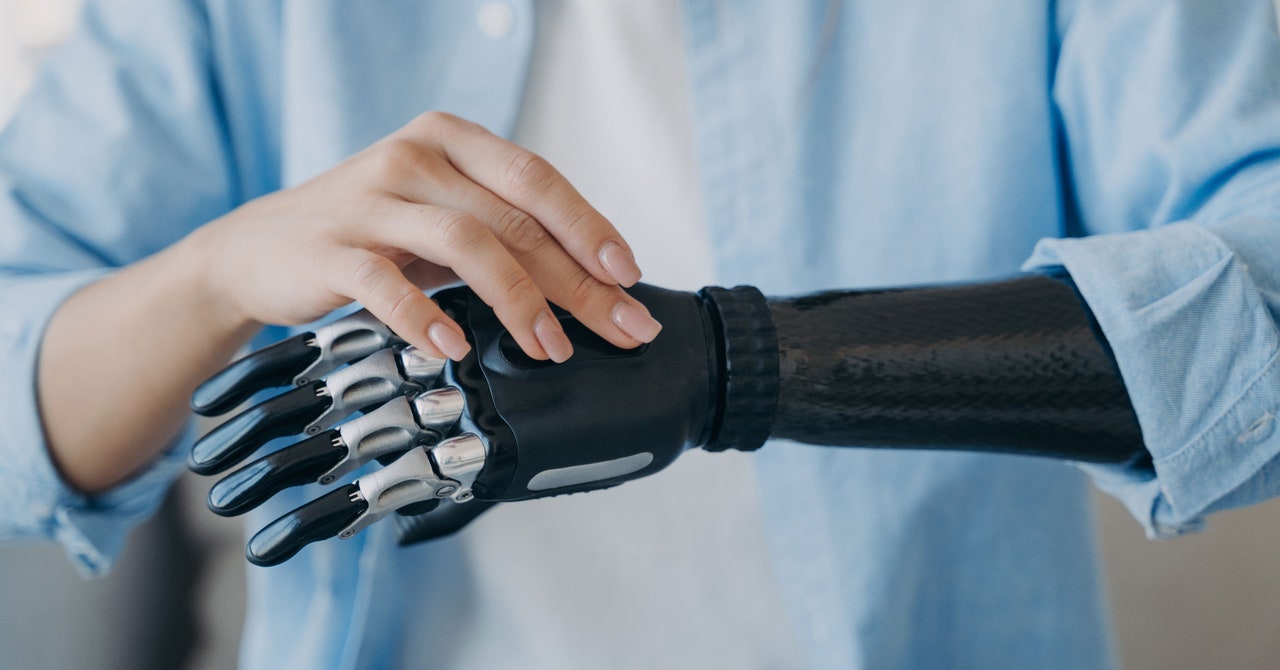
Elon Musk’s brain implant company, Neuralink, announced on Tuesday that it is launching a study to test its implant for a new use: allowing a person to control a robotic arm using just their thoughts. “We’re excited to announce the approval and launch of a new feasibility trial to extend BCI control using the N1 implant to an investigational assistive robotic arm,” Neuralink said in a post on Musk’s social media platform X.

A BCI, or brain-computer interface, is a system that allows a person to directly control outside devices with their brain waves. It works by reading and decoding intended movement signals from neurons. Neuralink’s BCI involves a coin-sized device dubbed N1 that is surgically implanted in the brain by a robot. The company is currently evaluating the safety of its BCI, as well as its ability to control a computer in individuals with paralysis.

Moving a computer or prosthetic arm is not a new feat for BCIs. In 2008, a team led by Andrew Schwartz at the University of Pittsburgh showed that a monkey could control a robotic arm to feed itself using signals from its brain. After that, researchers moved on to human volunteers. In a 2012 study published in the journal Nature, two people paralyzed due to stroke were able to guide a robotic arm to reach and grasp objects simply by thinking about it. One was able to serve herself coffee for the first time in 14 years. In another study from 2016, a man with a BCI regained a sense of touch using a robotic arm.

The BCIs used in those studies were clunky setups that required running a cable from the research participants’ head to a computer that decodes brain signals. By contrast, Neuralink’s system is wireless.

On social media earlier this year, Neuralink demonstrated that its BCI can be used to control a computer cursor. In a video on X, study participant Noland Arbaugh was shown using the Neuralink device to play chess and other games on a computer. Arbaugh, who became a quadriplegic after a swimming accident in 2016, spoke with WIRED earlier this year about how the implant has given him a sense of independence.

Arbaugh underwent brain surgery in January to receive the Neuralink implant, but a few weeks later, the device started to malfunction. The implant has 64 thin, flexible wire threads that penetrate the brain tissue. Each thread contains 16 electrodes that collect neural signals. In a blog post from May, Neuralink said several threads had retracted from Arbaugh’s brain, causing him to temporarily lose cursor control. Neuralink was able to restore Arbaugh’s control by modifying its brain recording algorithm to be more sensitive and changing how it translates neural signals into cursor movements.

Musk’s amended lawsuit against OpenAI names Microsoft as defendant


Elon Musk’s lawsuit against OpenAI accusing the company of abandoning its non-profit mission was withdrawn in July, only to be revived in August. Now, in an amended complaint, the suit names new defendants including Microsoft, LinkedIn co-founder Reid Hoffman, and former OpenAI board member and Microsoft VP Dee Templeton.

The amended filing also adds new plaintiffs: Neuralink exec and ex-OpenAI board member Shivon Zilis and Musk’s AI company, xAI.

Musk was one of the original founders of OpenAI, which was meant to research and develop AI for the benefit of humanity, and was established as a non-profit originally. He left the company in 2018 after disagreements about its direction.

In the complaint, lawyers for Musk argue that OpenAI is now “actively trying to eliminate competitors” such as xAI by “extracting promises from investors not to fund them.” It’s also allegedly unfairly benefitting from Microsoft’s infrastructure and expertise in what Musk’s counsel describes in the filing as a “de facto merger.”

“xAI has been harmed by, without limitation … an inability to obtain compute from Microsoft on terms anywhere near as favorable as OpenAI receives … and the exclusive exchange between OpenAI and Microsoft of competitively sensitive information,” reads the complaint, filed late Thursday in federal court in Oakland, California.

Hoffman’s position on the boards of both Microsoft and OpenAI while also a partner at Greylock, the investment firm, gave Hoffman a privileged — and illicit — view into the companies’ dealings, the complaint alleges. (Hoffman stepped down from OpenAI’s board in 2023.) Greylock invested in Inflection, Musk’s counsel notes, the AI startup that Microsoft acqui-hired earlier this year — and which could reasonably be considered an OpenAI competitor, according to the complaint.

As for Templeton, whom Microsoft briefly appointed as a non-voting board observer at OpenAI, the amended filing alleges that she was in a position to facilitate agreements between Microsoft and OpenAI that would violate antitrust rules.

“The purpose of the prohibition on interlocking directorates is to prevent sharing of competitively sensitive information in violation of antitrust laws and/or providing a forum for the coordination of other anticompetitive activity,” the complaint reads. “Allowing Templeton and Hoffman to serve as members of OpenAI’s …. board undermined this purpose. “

Alongside Microsoft, Hoffman, and Templeton, California attorney general Rob Bonta is named as a defendant in Musk’s complaint. Bloomberg reported this month that OpenAI is in talks with Bonta’s office over the process to change its corporate structure.

Per the amended complaint, Zilis, who stepped down from OpenAI’s board in 2023 after serving as a member for roughly four years, has standing as an “injured employee” under California Corporations Code. Zilis repeatedly raised concerns over OpenAI’s dealmaking internally that fell on deaf ears — concerns substantially similar to Musk’s, according to the complaint.

Zilis has close ties to Musk, having worked as a project director at Tesla from 2017 to 2019 in addition to directing Neuralink research. (Neuralink is Musk’s brain-computer interface venture.) She’s also the mother of three of Musk’s children, Techno Mechanicus and twins Strider and Azure.

The 107-page amended complaint includes the unusual detail that OpenAI CEO Sam Altman proposed that OpenAI sell its own cryptocurrency in January 2018, before it ultimately decided to transition to a capped-profit structure.

“Heads up, spoke to some of the safety team and there were a lot of concerns about the ICO and possible unintended effects in the future,” Altman wrote in an email to Musk dated January 21, 2018, an exhibit filed with the amended complaint shows. An ICO, or initial coin offering, is an unregulated means by which funds are raised for cryptocurrency businesses. “Going to emphasize the need to keep this confidential, but I think it’s really important we get buy-in and give people the chance to weigh in early.”

Musk v OpenAI crypto ICO Altman email
Image Credits:Toberoff & Associates

Musk supposedly shot down the crypto sale idea. “I have considered the ICO approach and will not support it,” he wrote in an email reply to Altman and OpenAI co-founders Greg Brockman (now OpenAI’s president) and Ilya Sutskever (OpenAI’s ex-chief scientist), shows an exhibit. “In my opinion, that would simply result in a massive loss of credibility for OpenAI and everyone associated with the ICO.”

The thrust of the lawsuit remains the same on the plaintiffs’ side: that OpenAI profited from Musk’s early involvement in the company yet reneged on its nonprofit pledge to make the fruits of its AI research available to all. “No amount of clever drafting nor surfeit of creative dealmaking can obscure what is happening here,” reads the complaint. “OpenAI, Inc., co-founded by Musk as an independent charity committed to safety and transparency … [is] fast becoming a full for-profit subsidiary of Microsoft.”

OpenAI has sought to dismiss Musk’s lawsuit, calling it “blusterous” and baseless.

Musk’s amended lawsuit against OpenAI names Microsoft as defendent


Elon Musk’s lawsuit against OpenAI accusing the company of abandoning its nonprofit mission was withdrawn in July, only to be revived in August. Now, in an amended complaint, the suit names new defendants including Microsoft, LinkedIn co-founder Reid Hoffman, and former OpenAI board member and Microsoft VP Dee Templeton.

The amended filing also adds new plaintiffs: Neuralink exec and ex-OpenAI board member Shivon Zilis and Musk’s AI company, xAI.

Musk was one of the original founders of OpenAI, which was meant to research and develop AI for the benefit of humanity, and was established as a non-profit originally. He left the company in 2018 after disagreements about its direction.

In the complaint, lawyers for Musk argue that OpenAI is now “actively trying to eliminate competitors” such as xAI by “extracting promises from investors not to fund them.” It’s also allegedly unfairly benefitting from Microsoft’s infrastructure and expertise in what Musk’s counsel describes in the filing as a “de facto” merger.

“xAI has been harmed by, without limitation … an inability to license OpenAI technology given Microsoft’s exclusive license … an inability to obtain compute from Microsoft on terms anywhere near as favorable as OpenAI receives … and the exclusive exchange between OpenAI and Microsoft of competitively sensitive information.”

Hoffman’s position on the boards of both Microsoft and OpenAI while also a partner at Greylock, the investment firm, gave Hoffman a privileged — and illicit — view into the companies’ dealings, the complaint alleges. (Hoffman stepped down from OpenAI’s board in 2023.) Greylock invested in Inflection, Musk’s counsel notes, the AI startup that Microsoft acqui-hired earlier this year — and which could reasonably be considered an OpenAI competitor, according to the complaint.

As for Templeton, whom Microsoft briefly appointed as a non-voting board observer at OpenAI, the amended filing alleges that she was in a position to facilitate agreements between Microsoft and OpenAI that would violate antitrust rules.

“The purpose of the prohibition on interlocking directorates is to prevent sharing of competitively sensitive information in violation of antitrust laws and/or providing a forum for the coordination of other anticompetitive activity,” the complaint reads. “Allowing Templeton and Hoffman to serve as members of OpenAI’s …. board undermined this purpose. “

Per the amended complaint, Zilis, who stepped down from OpenAI’s board in 2023 after serving as a member for roughly four years, has standing as an “injured employee” under California Corporations Code. Zilis repeatedly raised concerns over OpenAI’s dealmaking internally that fell on deaf ears — concerns substantially similar to Musk’s, according to the complaint.

Zilis has close ties to Musk, having worked as a project director at Tesla from 2017 to 2019 in addition to directing Neuralink research. (Neuralink is Musk’s brain-computer interface venture.) She’s also the mother of three of Musk’s children, Techno Mechanicus and twins Strider and Azure.

The 107-page amended complaint includes the unusual detail that OpenAI CEO Sam Altman proposed that OpenAI sell its own cryptocurrency in September 2017, before it ultimately decided to transition to a capped-profit structure. Musk supposedly shot down the crypto sale idea.

The thrust of the lawsuit remains the same on the plaintiffs’ side: that OpenAI profited from Musk’s early involvement in the company yet reneged on its nonprofit pledge to make the fruits of its AI research available to all. “No amount of clever drafting nor surfeit of creative dealmaking can obscure what is happening here,” reads the complaint. “OpenAI, Inc., co-founded by Musk as an independent charity committed to safety and transparency … [is] fast becoming a full for-profit subsidiary of Microsoft.”

Elon Musk will lead a new ‘Department of Government Efficiency,’ Donald Trump says


President-elect Donald Trump has named Elon Musk as the leader of a new “Department of Government Efficiency,” that will “dismantle Government Bureaucracy, slash excess regulations, cut wasteful expenditures, and restructure Federal Agencies.” The Tesla CEO and owner of X will spearhead the effort along with former presidential candidate Vivek Ramaswamy, Trump in a statement on Truth Social.

The scope of the role isn’t exactly clear. Trump’s press release said that “the Department of Government Efficiency will provide advice and guidance from outside of Government, and will partner with the White House and Office of Management & Budget to drive large scale structural reform, and create an entrepreneurial approach to Government never seen before.” It also stated that “their work will conclude no later than July 4, 2026.”

Musk shared the news on X, but didn’t indicate how the role might impact his obligations at his various other companies. Musk, who poured into Super Pac boosting Trump’s campaign, has previously about his desire to work with Trump to cut government spending. He did, however, joke about potential “merch” for the operation. “Republican politicians have dreamed about the objectives of ‘DOGE’ for a very long time,” Trump’s statement said.


Tesla is testing a robotaxi service that Elon Musk claims will launch next year


Elon Musk said he hopes to launch a service that will let people hail self-driving Tesla vehicles in California and Texas sometime in 2025 — and claims his company has already been testing the service in the Bay Area with employees.

The comments, made Wednesday on Tesla’s third-quarter earnings call, go farther than what Musk promised two weeks ago at its Cybercab unveiling event. On that stage, Musk promised that Model 3 and Model Y owners would be able to use an “unsupervised” version of Tesla’s Full Self-Driving software in California and Texas. But he made no mention of the ride-hailing network, despite Tesla having teased the idea for years.

It’s unclear if Tesla would be required to get permission from California’s Department of Motor Vehicles to conduct the tests Musk said his company is already performing. The DMV did not immediately respond to a request for comment.

David Lau, Tesla’s VP of software engineering, said on the call that the cars employees have been hailing have had safety drivers at the wheel. And to be clear, no Tesla vehicles can currently drive themselves without human intervention.

Today, Tesla’s Full Self-Driving software, or FSD, is considered an advanced driver assistance system — not a self-driving system like the one Waymo uses in its robotaxis. FSD offers some automated features that are available on highways and city streets, however the system still requires the driver to pay attention and take control.

Musk said on the call that Tesla would go through the proper regulatory approval process in California before opening such a service to everyday consumers, though he lamented the red tape and said he expects smoother process in his home state of Texas. The regulatory process in California to launch a commercial robotaxi service has multiple tiers that require approval from the DMV and the California Public Utilities Commission. Waymo is the only company currently allowed to operate a commercial drvierless robotaxi service in San Francisco.

Musk also opined that Tesla might launch the service in other states by the end of next year, too.

These claims come after years of Musk overpromising on Tesla’s ability to develop software that can autonomously drive cars. He originally promised in 2016 in a since-deleted post on Tesla’s website that “All Tesla Cars Being Produced Now Have Full Self-Driving Hardware,” and in the following years made it seem that it would only take the flip of a switch to fill the streets with self-driving cars.

Even the hardware part of that promise has not borne out.

Tesla has had to upgrade cars with those early version of the so-called “Full Self-Driving” hardware. And Musk admitted on Wednesday’s call that cars equipped with what Tesla calls “Hardware 3” — which it started building into its EVs in 2019 — may not ultimately be able to drive themselves. If Tesla does someday get to the point where its software can drive vehicles without supervision, and it doesn’t work on Hardware 3, Musk promised to swap out that hardware at no cost to owners.

Blocked users will be able to see your posts


The days of the “@[insert username] blocked you” page appear to be over. X owner Elon Musk announced a new change to allowing blocked users to see posts of the accounts that blocked them.

Blocked accounts still won’t be able to interact with those accounts but they’ll be able to see their posts. A source from X told the new blocked access feature is being implemented because users can already see and interact with accounts that have blocked them by switching to a non-blocked account.

Musk has wanted to disable the block feature on X for awhile now. More than a year ago, he first expressed (or technically, Twitter) except for direct messages. He wrote that blocking would become “deleted as a ‘feature’” as well as saying “It makes no sense.”

Last May, announced it would implement the blocked viewer change to the platform without including a solid implementation or rollout date. The post said the change would be implemented to give users with blocked accounts the ability to “identify and report any potential bad content that you previously could not view.”

Judge denies Media Matters’ motion to dismiss X’s not-libel lawsuit


A Texas judge denied Media Matters for America’s request for a dismissal on Thursday allowing X’s lawsuit over alleged anti-semitic and racist content. The Verge reported that Northern District of Texas Judge Reed O’Connor dismissed the request for a dismissal paving the way for X’s lawsuit against Media Matters to continue.

Media Matters submitted its dismissal request in early March on the grounds that X’s case lacked “personal jurisdiction,” an “improper venue” and the “failure to state a claim.” O’Connor dismissed all of those claims, according to court records.

The lawsuit filed last year in federal court seeks damages from the media watchdog group over “maliciously manufactured” images reporting that X’s platform placed Neo-Nazi and white-nationlist content next to advertisers’ images causing advertisers to flee the site. The images Media Matters used weren’t manufactured but X’s claim is that its dogged pursuit of ads’ placement with racist content by using certain accounts to bypass ad filters caused irreparable harm to the social media giant.

X owner Elon Musk’s other companies are located in Texas but aren’t directly connected to the Media Matters lawsuit. X closed its San Francisco offices earlier this month and owner Elon Musk announced in July that X’s headquarters will move to Austin. Tesla moved its headquarters from California to the Lone Star State in 2021 and SpaceX from Delaware earlier this year when a judge threw out a $56 billion pay package from the state.

However, in dismissing the personal jurisdiction argument, O’Connor noted that two of X’s “blue-chip” advertisers like AT&T and Oracle included in Media Matters’ coverage are based in Texas. He cited the landmark 2002 Internet defamation case Revell v. Lidov quoting the 5th Circuit Court of Appeals’ assertion that “if you are going to pick a fight in Texas, it is reasonable to expect that it be settled there.”

Top court orders ban on Elon Musk’s X in Brazil


A top court in Brazil ordered an immediate, country-wide suspension of the X platform on Friday after a months-long legal battle with Elon Musk’s social media company over content moderation, according to Bloomberg.  

The court added that anyone using VPN to access the X platform would be subject to daily fines of 50,000 reais — $8,900 — though it’s not clear how it would enforce the decree.

Earlier this month, X closed its operations in Brazil in protest against court orders asking it to remove accounts that allegedly spread misinformation. At the time, the company said Brazilian Supreme Court Justice Alexandre de Moraes “threatened our legal representative in Brazil with arrest if we do not comply with his censorship orders.” Moraes warned X earlier this week that Brazil would ban the service if the company did not name a legal representative in the country.

“Soon, we expect Judge Alexandre de Moraes will order X to be shut down in Brazil, simply because we would not comply with his illegal orders to censor his political opponents,” said X’s global affairs team in a tweet Friday morning.

The platform says it will publish the Brazilian top court’s demands in the coming days and will not comply with its orders.

Brazil bans X for refusing to comply with Supreme Court order


Brazilian Supreme Court Justice Alexandre de Moraes has ordered the nation’s internet service providers to block the social media platform X. The New York Times reports that the order stems from owner Elon Musk’s refusal to appoint a legal representative for his case and comply with Moraes’ order to shut down X accounts he deemed as harmful to the democratic process. The order has been published online by Brazilian news site Poder 360.

The justice issued a deadline to telecom companies and tech giants to remove the X from its app stores and platforms. Apple and Google have five days to take down the social media app from its app stores. Brazil’s telecommunication’s agency Anatel has confirmed it has received the order, and ISPs in the country have just 24 hours to comply with the order.

Justice Moraes’ order doesn’t just block the country’s access to X. It also makes it a crime to use the app through a virtual private network (VPN). Anyone caught accessing X with a VPN could face a daily fine of 50,000 Brazilian Real (around $8,900).

Justice Moraes also froze the Brazillian bank accounts of SpaceX’s Starlink internet service provider on Thursday to further pressure Musk to comply with the court’s order. SpaceX, like X, is a private company majority owned by Musk, and X has $3 million in unpaid fines related to its case in the country. The day before, Justice Moraes issued a threat to ban the X platform entirely across Brazil if the social media company did not appoint a legal representative in the country. The deadline passed without any change to the court’s docket so the judge followed through on his promise.

Starlink expressed its disapproval with the order, vowing to fight the ruling. It even threatened to make its services free to customers to subvert the justice’s order.

The legal fight between Justice Moraes and Musk has been fuming for months. The Supreme Court Judge is also Brazil’s electoral authority and has been monitoring and issuing orders to candidates to steer clear of spreading false information through internet and social media channels.

Brazil’s 2022 presidential election between infamous incumbent Jair Bolsonaro and challenger and former President Luiz Inácio Lula da Silva was reportedly filled with attempts to present voters with false information. Justice Moraes was, until recently, president of the nation’s Superior Electoral Court, which gave him the power to order takedowns of content that violated previous court orders. The judge issued a similar block of the messaging app Telegram for failing to freeze offending accounts, which was lifted after compliance.

Musk characterized Moraes’ directives to take down or freeze similar misinformation accounts from X as “censorship orders.” Earlier this month, Musk expressed his continued refusal to comply with the court by closing X’s Brazilian office in order “to protect the safety of our staff.” X’s Global Governments Affairs team also promised to publish all of “Judge de Moraes’ illegal demands and all related court filings.”