The True Cost of Injection Molding vs. 3D Printing for Product Prototyping Services


As regards product prototyping, the selection of manufacturing processes lies at the center of the time-quality-cost tradeoff. Two of the most widely used processes with different advantages are injection molding and 3D printing. Injection molding produces a mold where molten material is poured in, and therefore, it is ideally suited for large-scale production as it can be replicated and is affordable.

Whereas front-end tooling is expensive to buy, it is expensive. But 3D printing or additive manufacturing services print objects by object off computer blueprints, and that is more generic and lower initial upfront cost to begin with, and that is more appropriate for small volume manufacturing or complex design. It is useful to have the approximate actual cost of each process to companies so that they can maximize prototyping.


🚀 Table of contents


Injection molding versus 3D printing of product prototypes: What’s most effective?

Product prototyping is a highly important phase of new product development, whereby designers and engineers have an opportunity to prototype, test, and refine their ideas prior to production being in mass quantities. Injection molding and 3D printing are among the most used manufacturing methods applied in prototyping. Both processes have pros and cons, and the right one to be used depends on the complexity of the design, cost, time, and production volume. In this article, we’ll compare injection molding and 3D printing for product prototyping, exploring their key advantages and limitations.
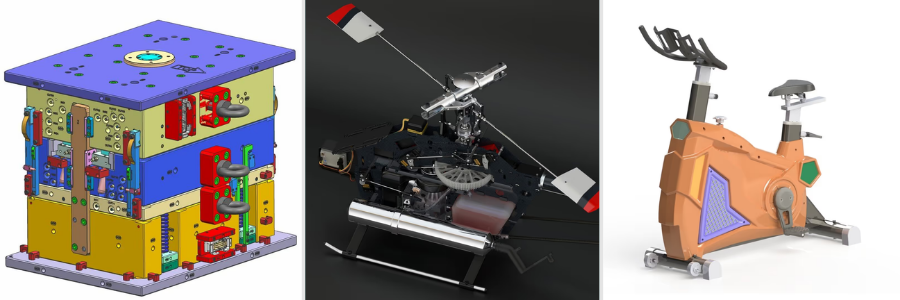
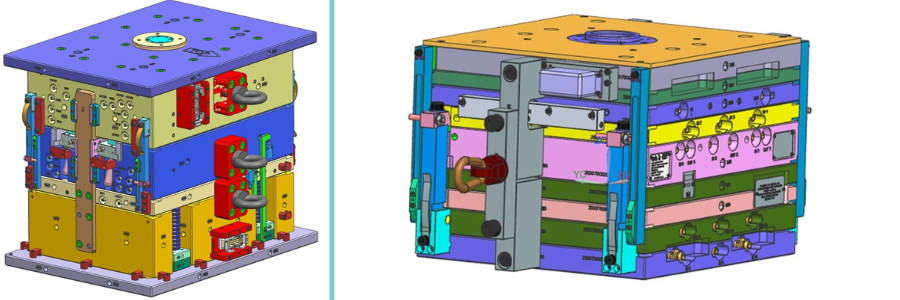
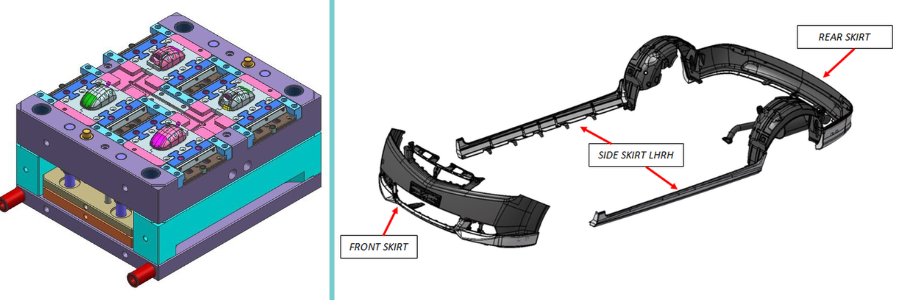
Injection molding design examples by Cad Crowd design experts

RELATED: How CAD modernizes product concept design at industrial design services companies

Injection molding: An overview

Injection molding is a manufacturing process whereby hot material – plastic in the majority of instances – is inserted into a mold. The mold is of the same shape as the model, and when the material has hardened and set, the part is pushed out. Injection molding services are a widespread practice in the automotive, consumer goods, and medical devices sectors to produce high-quality, long-lasting parts.

Advantages of using injection molding for prototyping:

1. Accuracy and smooth finish parts: Injection molding is also used to create parts with accuracy and a smooth finish. Injection molding is easy to handle without compromising fit and performance.

2. Material versatility: Materials used in injection molding can be anything from plastic, elastomers, or thermosets, with freedom of product forms.

3. Scalability: Once the first prototype has been produced, mass production can be done with injection molding and thus is best adapted for production on a large scale.

4. Strength and durability: The products produced with injection molding are stronger and more durable compared to those produced by 3D printing and thus best adapted for use in actual conditions.

Disadvantages of using injection molding for a prototype

1. Extremely high initial capital: Injection molds are expensive and require a massive initial investment. Injection molding becomes uneconomical to produce prototypes in phase one or to make low runs.

2. Longer lead time: Taking weeks to create an injection mold may not be suitable for the need for immediate prototyping.

3. Limitations of design complexity: Injection molding is suitable for simple flat designs, but it is not easy to design products with internal complexity or complicated details.

3D printing: Overview

Additive printing or three-dimensional printing is the layer-by-layer building of parts directly from a computer-aided design model of 3D through CAD design services. The technology is known to be highly flexible, such that designers can model prototypes of complex geometry at an extremely fast speed that would be impossible or would take an unrealistic amount of time using conventional production techniques.

RELATED: Guide for the new product design process when hiring a design services firm

Benefits of 3D printing for prototyping:

1. Big turnaround time: 3D printing enables prototypes to be printed in days or hours, and hence is apt for rapid iteration and rapid prototyping.

2. Less expensive for low-volume: There are no expensive molds and tooling involved when employing 3D printing, and hence, a cheaper process for low-volume or one-off prototyping.

3. Design flexibility: 3D printing designs are precise and possess much detail, such as inner detail and contours, which are possibly hard to achieve using injection molding.

4. No tooling charge: Since in 3D printing there is no special mould or tooling needed, there is no extra charge involved in manufacturing such a part, thus making it less expensive for a one-off model or small numbers.

Disadvantages of 3D printing as a prototyping technique

1. Weaker strength and wear resistance: Parts produced via 3D printing services will either be weaker, more prone to wear, or have a compromised surface finish in comparison to the injection-molded parts, particularly when produced with certain materials. This is a disadvantage for functional part tests in harsh environments.

2. Material limitations: While 3D printing can handle a ginormous list of materials, this is not always true. The material that has been used may not be as mechanically stable as its utilization via some plastic injection, and may only be applied on a limited basis in specific industries.

3. Surface quality: Prototype parts printed using 3D printing show visible lines of layers that need to be removed using post-processing, such that a level surface is exposed. That is a plus point when producing prototype parts with quality finishes.

What is the best prototyping option?

The choice between injection molding and 3D printing is mostly a function of the specific needs of the project.

For rapid prototyping: If time and cost are concerns, especially with low-volume or complex designs, the initial best choice is 3D printing. There can be quick iteration, and designers can update their prototypes without sacrificing costly molds or huge lead times.

High volume production: When functional prototypes close to the final product’s strength, durability, and material properties are to be made, then injection molding would be best for product engineering services. Though it might be costly to start with, it is more cost-effective in the long term for high-volume production.

For detailed designs: 3D printing is best utilized when geometries in question are complicated, which would be extremely difficult or even not possible to possess in the case of injection molding. It is thus ideal for subtle details or inner geometries.

In prototyping a product, the process that is being used can truly break or make a project’s timeline and budget. Among the most common kinds of prototyping processes that are being used are injection molding and 3D printing, and both are good at and bad at something. Knowing how much each of these processes costs is incredibly crucial in knowing which is best to use that is most suited for your individual requirements.

Second, let’s consider cost differences between injection molding and 3D printing when considering material prototyping service expenses, including material expenses, tooling expenses, labor, rate of production, and other basic factors.
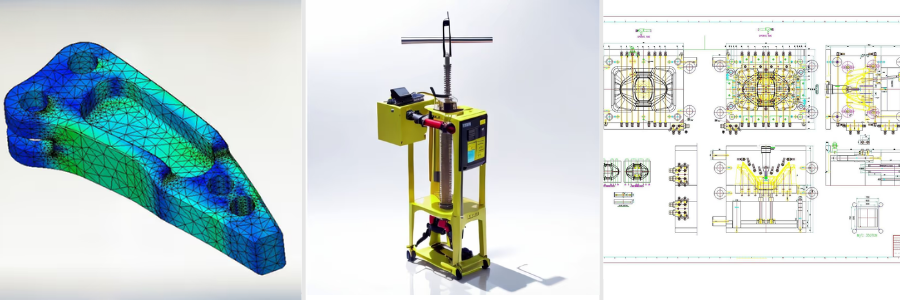
injection molding design by Cad Crowd design experts

RELATED: What are proven product design principles when working with companies & freelancers?

Material costs

At the core of each item of work of prototyping design services are materials, and they constitute a considerable cost. Injection molding is based on the raw material treatment process, where raw material in plastic pellet form is melted and compressed under pressure into the mold in an attempt to produce a part. Material used for molding can be blended, but typical molding materials are thermoplastics such as ABS, polycarbonate, and polypropylene. All these are normally purchased in bulk and therefore become easy to determine prices and reduce the cost of material per unit while producing en masse.

3D printing uses filaments or resins, which are available in all the material combinations, such as PLA, PETG, nylon, or special resins such as carbon-fiber-reinforced resins. They are usually purchased on spools or vats and, though sometimes cheaper than injection-molded bulk plastics, are not. A range of advanced 3D printing resins, such as those with extremely high heat stability or which deliver specific mechanical properties, enables a cost per unit at times. Besides, material supply to 3D printing increases but remains a monstrous deficit behind capability relative to applications using injection molding, especially industrial-grade polymers relevant in specific environments.

Tooling and setup costs

The second critical region where injection molding and 3D printing differ is tooling. Injection molding requires the building of a mold for each part to be manufactured. The mold is aluminum or steel and varies based on the design complexity. The true cost of the mold itself will be thousands to tens of thousands of dollars, especially if there are a multitude of parts or intricate designs to make.

The cost of the tool in injection molding is front-end-biased to a tremendous extent for product design companies – tremendous upfront capital expenditure, but unit cost drops like a stone as the volume of units produced increases. Basically, the bigger the units you produce, the more you can spread your initial tool investment over the units, and therefore it becomes economically feasible for bulk quantities.

3D printing is a “tool-less” process, though. There’s no need to have a mold setup, and setting it up online is just a matter of accessing the 3D design files and configuring the printer. That’s a heck of a lot less startup expense. There is some cost of capital involved in 3D printing; however, in terms of an industrial-grade or high-end printer, that may be several hundred thousand to a few thousand dollars, depending on what the printer will be doing.

Labor costs

3D printing and injection molding are going to bear differing labor costs considerably, though in the overall sense, 3D printing will incur less human labor in the procedure. Injection molding requires people who have been instructed to operate the equipment, maintain the process, check for quality, and, if possible, strip and coat parts upon completion of molding. Labor cost on such injection molding, then, may be higher, especially for high precision or produced in a nation where manpower is costly.

Conversely, 3D printing, while still controlled, is arguably less labor-intensive and more machine-intensive in printing. Most of the coming generation of 3D printers will have the capability of printing with minimal direct supervision. This reduces the cost of labor in printing, although design intricacy and post-processing may be more time-consuming and involve experienced personnel. Also, the price of labor on printing 3D models, debugging, and post-processing, like sanding, washing, or curing, will add some extra cost to the end-product.

Production time and speed-to-market

Speed will be one of the biggest drivers for deciding between using injection mold tooling and 3D printing for prototyping, or even rapid prototyping services. Injection mold tooling is faster to produce in volume once mold development is set in motion. The actual molding cycle is minutes or seconds per part based on part size and complexity. But initially, the use of the original previously used to take until one can experiment, draw, and build the mold can take weeks from the project. And with any design change, the mold has to be rebuilt, thus it is more costly and time-consuming.

On the other hand, 3D printing is faster to print prototypes, especially one-off or low-series parts. The printer will begin to print out the part once the design file has been readied, and the part is available within hours to days, depending on the material and complexity. It is significantly an attractive solution if iteration needs to be fast and product development is emergent.

But keep in mind that 3D printing will not be so fast for very big and complicated parts, or where huge amounts of prints need to be produced. Large batches take away the speed advantage that injection molding has. Costs decrease.

Post-processing and finishing costs

Post-processing is also the kind where 3D printing and injection molding both have costs. Post-processing in injection molding generally consists of performing any other process, excess removal, and part ejection from molds. These are processes that may incur labor cost and project time but are largely routine and well-documented.

Post-processing in 3D printing may be more time-consuming, especially for parts that are printed using SLA (stereolithography) or other resin-based technologies. It could be part cleaning, support removal, curing the resin, and polishing and sanding of the surface to provide a finished look for consumer product companies. All these consume efforts and time, and post-processing expense will be largely dependent on the finish and part complexity. Post-processing may be extremely time-consuming and a function of total cost in case of high-definition 3D printing, but nothing in case of low-key prints.

Design flexibility and complexity

Design flexibility is an area where 3D printing is head and shoulders above the rest. Since 3D printing builds parts in layers, it will not mind high-complexity geometries, internal geometry, and custom geometries without paying the costs of expensive molds or tool overhauls. One can reverse-engineer and iterate as fast as if one were sketching out parts impossible or downright too expensive to manufacture with injection molding. The price of adding fine detail or re-designing is free in 3D printing, and it is more design-experimentation-culture-friendly.

In contrast, injection molding is not as forgiving of design change or complexity. Design change will typically involve changing the molds, and this costs money and takes time. Small changes in the design can even require new molds or new molds to be made, and injection molding is less amenable to quick iteration or highly complex designs.

Economies of scale

Most importantly, injection molding can be volume-multiplied. After the master mold is created, it is much cheaper to produce each subsequent unit as volume grows. It is costly initially, but for volume production, the unit cost is very low, especially with the help of injection molding services. This is why injection molding is particularly well-suited to massive runs of production where thousands and even millions of units must be produced.

3D printing lacks these economies of scale, however. It costs roughly as much to make additional units as it does to make the first unit, and so unit prices never fall with higher unit quantities. Thus, 3D printing is most suitable for low-run production, rapid prototyping, and where having the ability to customize and be flexible is valued more than cost-per-unit.

RELATED: Designing rototypes: 3D design services for inventors and companies

Environmental impact

While both injection molding and 3D printing do have some environmental impact, the character of their impact is different. Injection molding generates an enormous amount of scrap in the production of the mold, as the excess material not absorbed by the part generally must be discarded. It is a plastic material and energy-based, and very non-biodegradable.

3D printing would be more environmentally friendly in the sense that it generates less scrap. Since 3D printing is an additive, layer-by-layer technology, it uses as much material as the part and therefore does not waste. In addition, with increasingly advanced 3D printing technology, more eco-friendly materials such as biodegradable filaments and recyclable resins are now available in the market. But like in injection molding, 3D printing too consumes energy and burns it, and some of the 3D printers (especially the industrial ones) consume massive amounts of energy.

Maintenance

Maintenance of an injection molding system is an example of keeping up with a whole bunch of small things. The mold wear-and-tear will need to be monitored regularly, and how much fixin’ or mold finaglin’ will be done will be questionable. The injection molding machines themselves will need servicing and eventual replacement or rebuilding from time to time, at least in applications where they’re being worked hard by tool design services.

3D printer maintenance is predominantly model-dependent. Low-end machines are low-maintenance with a higher rate of generic type breakdowns, primarily in manufacturing applications. High-end machines, particularly those utilizing resin processes, involve a high level of labor and effort to clean and service in order to produce high-level prints.

Lastly, injection or 3D printing in product design is an option that relies on a series of variables: volume, design complexity, time to make, and material requirements. Injection molding provides a lower cost per unit at high volume, but 3D printing provides unparalleled flexibility and rapid iteration at low volume or complex designs.

For companies trying to determine how best to handle prototyping services, it will depend on the volume of production, design sophistication, and expense. All have pros and cons, and expenses per stage, from material and tooling to man-hours and post-processing, can make the decision an informed one.
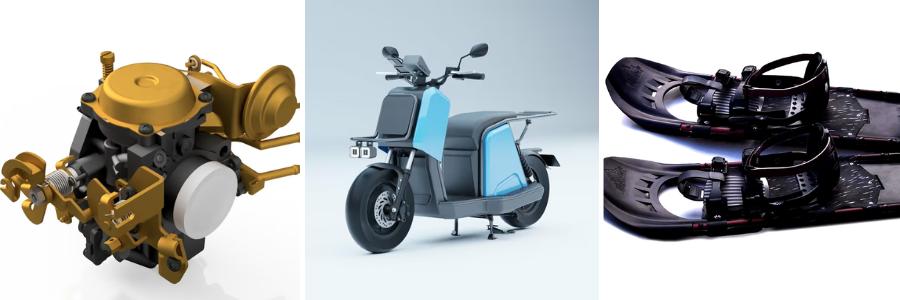
3d printed and injection molded design by Cad Crowd freelance experts

RELATED: How innovative design techniques can supercharge your new product concept

Cad Crowd is here to help

The choice between injection molding and 3D printing largely depends on your project requirements, including production volume, design complexity, and cost. Injection molding is cheaper for high production, while 3D printing is cheaper at low production with little initial investment. Expert advice will allow for a seamless transition through alternatives.

Companies like Cad Crowd are acting as bridges to a global pool of freelance CAD designers and engineers who are waiting to provide specialist services and consultancy to fulfill your prototyping requirements. For more information on how Cad Crowd can help your project and receive a price quote within your budget, call Cad Crowd and talk to experts who are ready to turn your idea into reality. Your price quote is free, so call us today. Request a quote today.

author avatar

MacKenzie Brown is the founder and CEO of Cad Crowd. With over 18 years of experience in launching and scaling platforms specializing in CAD services, product design, manufacturing, hardware, and software development, MacKenzie is a recognized authority in the engineering industry. Under his leadership, Cad Crowd serves esteemed clients like NASA, JPL, the U.S. Navy, and Fortune 500 companies, empowering innovators with access to high-quality design and engineering talent.

Connect with me: LinkedInXCad Crowd

Top 31 Sites to Hire Injection Mold Designers & CAD Design for Manufacturing (DfM) Engineers


Looking for an injection mold designer or a CAD pro who speaks fluent “DfM” (Design for Manufacturing) without breaking into a nervous sweat at the sight of complex geometries? You’re in the right place. The hunt for top-tier design talent doesn’t have to feel like sifting through a hardware store’s junk bin. In fact, with the right platforms, it can be almost fun to design for manufacturing firms.

Say hello to Cad Crowd, the brain trust community on which pre-screened engineers and mold design experts meet to turn your best product concepts into producible realities. But Cad Crowd is not the only game in town. From specialty sites to industry leaders of freelancing, we’ve dug high and low to find the 31 best sites to hire injection mold designers and DfM engineers so you can pick the right pro without pulling your hair out (or your CAD files in half). 


Cadcrowd

Cad Crowd

Ever wanted to say, “I’d like to call up a genius CAD wizard without too much looking until forever,” Cad Crowd is kinda your fairy godfather in shades. This site hand-selects capable designers who get injection molds the way baristas get their espresso shots. Silky-smooth prototypes, hardcore design-for-manufacturing solutions, or whatever design crisis you’re experiencing—Cad Crowd connects you with talent faster than you can say “draft angle.” It’s not your ordinary run-of-the-mill freelancer bog; it’s a real VIP club where CAD junkies gather, use their brain muscles, and turn your plastic dreams into production-ready reality. 

Website: CadCrowd.com

Guru logo

Guru

Guru has a wizardly mountain sage-sounding name to it, and honestly, it kinda is, but with incantations substituted by bringing you into contact with engineers, CAD designers, and manufacturing whisperers. With its enormous talent pool of freelancers, you can have someone who is not only an expert in CAD but also your wallet and your all-nighter-with-coffee design tweaks. Guru’s smart “Work Rooms” organize all about projects so you’re not swimming in email threads or sticky notes. You post an ad, get proposals, and voilà, your guru arrives. Need an injection mold sorcerer or a DfM guru (pun entirely intended)? Your stand-alone fortune cookie, this website is. 

Website: Guru.com

kolabtree logo

Kolabtree 

Picture this: a fantastic lab full of PhDs, engineers, and experts where their coffee breaks are filled with flinging around buzzwords such as “finite element analysis.” That is Kolabtree in a nutshell. It’s not a website; it’s more like LinkedIn and Hogwarts had a baby, and the baby turned out to be CAD crazy. CAD design companies looking to hire mold designers and DfM engineers can post openings, then relax while experts come rolling in with answers that sound both smart and slightly scary. But they are nice nerds, so calm down. Whatever it takes to reshapen your CAD model or stress-analyze your injection mold design, Kolabtree is basically where freelancing and science swipe right. 

Website: Kolabtree.com

Injection molding examples by Cad Crowd engineering experts

RELATED: Adaptive and iterative prototyping: Iterate on your product design with industrial design firms

MFG.com_

MFG.com

It’s as if eBay and LinkedIn had a love child that went in the direction of manufacturing-addicted, and that would be MFG.com. It’s not your typical gig marketplace but rather a maker match-maker. You post up your part specs, and manufacturers (real shops with real equipment and some ambition and oil) queue up to quote. Best when you already have a CAD design and are ready to go, but need a factory-side collaborator who won’t ghost after the initial email is sent. Everything from injection mold wizards to production full-blown wizards, MFG.com is manufacturing Tinder without the cheesy bios. Swipe right on productivity, swipe left on delays. 

Website: MFG.com

thumbtack logo

Thumbtack

Thumbtack is sort of like the contemporary community bulletin board, except instead of guitar teachers and babysitters, you will find professionals to accomplish pretty much anything, including product and CAD design. Here is how it works: it flips the script around: you define what you require, and pros reach out to you. It’s great for last-minute matches, but the trade-off is that even if you do pick up a diamond who’s had some CAD or engineering work under their belt, Thumbtack is not necessarily trained for injection molding expertise. It’s more local-service-oriented, more generalist. Great if you need someone to repair your sink, but not the most brilliant bulb in the box when it comes to creating things. 

Website: Thumbtack.com

toptal

Toptal

Toptal actually boasts that it can find the crème de la crème somewhere out there, which more or less means that only the top 3% make it through their gladiator-like vetting process. Looking for a CAD or injection mold engineer who’s not just “good enough,” but someone who’ll put your old designer to shame and make him seem like he’s doodling with crayons? Toptal’s got your back. Their candidate pool is screened so thoroughly that it’s like getting hired by the CIA, but with additional AutoCAD tests and fewer lie detectors. It costs more than the bargain-basement sites, but every now and then, you require champagne talent, not gas-station cola. Think of Toptal as the velvet rope club for engineering brilliance. 

Website: Toptal.com

LinkedIn logo initial

LinkedIn Services Marketplace

LinkedIn is not simply for humblebrag promotion announcements or motivational quotes that you’ve already found on Instagram. Nope, it’s also where you might, might possibly be able to find a real injection mold designer or DfM engineer without ever having to leave your corporate bubble. The Services Marketplace is speed dating for professionals, but instead of awkward small talk, you get to see their credentials, contacts, and probably a selfie with a 3D printer. Want to sneak a peek at their work history before you hire? Be my guest, it’s pretty much an invitation here. In the event of a need for brains, badges, and backgrounds all rolled into one scroll, LinkedIn’s Marketplace makes talent-seeking weirdly social. 

Website: LinkedIn.com

bark logo

Bark

Bark is basically the community of freelancers’ version of the dating app, but with less dinner rejection and more CAD proposals. You tell them what you have to, “injection mold designer capable of tolerating my coffee-fueled ramblin’,” and Bark goes fetch for you. It’s fast, it’s simple, and it’s got the bright “we’ll find them for you” feel, so you don’t feel like screaming into the wind. The icing on the cake? Designers are vying for your attention and not vice versa. It’s being the cool kid at school again, except all the designers are trying to help you get your product out on the road. Everyone wins. 

Website: Bark.com

Thomasnet.com_

Thomasnet

Thomasnet is literally the Yellow Pages for manufacturing, but they aren’t greasy from pizza, and your cat hasn’t chewed off the corners. It’s opening up a treasure chest of injection mold specialists and CAD-competent partners with more than half a million listed manufacturers and suppliers. Instead of losing hours of time navigating Google rabbit holes, you can focus on experts who understand the difference between a parting line and a cooling line. One mold run or high-volume production? Thomasnet has the Rolodex to enable it. It’s your own little fast manufacturing bible with none of the snooze parts. 

Website: Thomasnet.com

Zintro

Zintro

Zintro is more of an intellectual cocktail party, and everyone in the room is an expert in their area, and you are simply the guy with the mic. Stick your project up and say, “I need a CAD engineer to create injection molds which will be works of art,” and sit back and see consultants, freelancers, and gurus put their name in the ring. It’s not actually about the freelance business and all that, but it’s more about top-of-the-line expertise, so don’t be surprised to not hear people speaking as if they came up with thermoplastics themselves. It’s a specialist field, it’s a bit geeky, and it’s guaranteed to be where you end up when you need information that isn’t on YouTube how-to videos. 

Website: Zintro.com

Catalant logo

Catalant

Catalant is a behind-the-scenes treasure trove of corporate talent, with an army of experts, engineering design experts, and consultants sitting in wait, itching for a good, gnarly challenge to sink their teeth into. Imagine a “talent think tank on tap.” Want a DfM engineer to de-spaghetti your ridiculously complicated CAD drawing? Catalant probably has five in their sleep before they’ve had their second cup. It’s for businesses that want freelancers but not just any freelancers – they want real strategic partners. The vibe? Fewer “bargain basement gig spots” and more “execs brainstorming over lattes.” High-level injection mold specialists without rummaging through random bulletin boards? Catalant is your VIP pass. 

Website: Catalant.com

expert360 logo

Expert360

Expert360 is basically the Aussie cousin who shows up to the party with brains, charisma, and a Rolodex of absolutely smart professionals. This platform matches businesses and freelancers who actually have a clue about what they are discussing, like injection mold designers who can define tolerance stacks without yawning in your face. Instead of sifting through a hundred “meh” profiles, Expert360 makes sure you are working with someone who thinks CAD is their second language. It’s not so elementary as your average gig website, and companies use it when they need it yesterday. Short and sweet: Expert360 is LinkedIn after three flat whites of quick, sharp, and slick.

Website: Expert360.com

RELATED: Product development firms: 4 key factors to consider before hiring services companies

Coroflot

Coroflot

Coroflot is where creativity has its rugged motorcycle parked and tosses you a helmet. This site has been around since the beginning of time, low-key pairing designers with employers looking for real talent. Even with its pro-industrial and product design bias, you’ll find CAD experts and mold masters who will transform your lump of plastic into production-perfection. The mood is edgy but authentic, think more “design studio hip” than “gig marketplace madness.” Listings on the site are geared toward designers who don’t cringe at both sketchpads and SolidWorks. If you require your injection mold designer to have just the perfect dash of panache, Coroflot is your stylish sidekick. 

Website: Coroflot.com

core77 logo

Core77 Design Jobs

Core77 is the cool table of industrial design, and its job board is where you’ll find some of the world’s top CAD and DfM talent. It’s not your average “anyone can join” site. Nope, this is where companies go when they want designers who’ve been sketching products since kindergarten. Need someone to perfect a mold draft or refine your 3D model? Post here, and you’ll attract creatives who treat geometry like poetry. The crowd leans design-first, so you’ll get pros who make functionality look good. Basically, it’s where art and engineering sneak out for coffee together. 

Website: Core77.com

Behance-logo-small

Behance

Behance is like Instagram for creatives, except instead of brunch photos, you’ll find jaw-dropping portfolios that make CAD models look like fine art. Though everyone assumes it’s a hotbed of graphic design, industrial design experts and engineers get to flex their technical muscles here as well. Need to see inside the head of a mold designer prior to considering hiring them? Scroll through their portfolio, and it’s all there, glistening renders and all. The atmosphere is halfway gallery, halfway talent scout heaven. If you’ve ever wished job hunting could feel like wandering through an art museum (but with more blueprints), Behance is your happy place. 

Website: Behance.net

Dribbble

Dribbble

Dribbble is what designers do when they decide portfolios need to be as habit-forming as junk food. It’s largely UX/UI and brand frippery, but industrial designers creep in here too, sharing lush renders, exploded views, and CAD glamour shots that make fillets coquettish. You don’t straight-hire off a “buy now” button; you prospect, short-list, and slide into DMs or pin up a vacancy. The plus: you have a taste level in an instant. The good: it’s not injection-molding Ground Zero, so you’ll need to dig for people who can spring from pretty pictures to DfM realities draft angles, ribs, bosses, gates, the whole nine. Come for inspiration; take away prospects willing to deliver. 

Website: Dribbble.com

indeedcom logo

Indeed

Indeed is the Costco of job boards, huge, with plenty of choices, and sometimes maddening, but always a blessing when you’re looking for something. Looking for an injection mold designer or CAD DfM engineer? Type it into the search engine, and you’ll get more resumes to shake a caliper at. Sure, you might need to weed through a few “close but not quite” prospects, but gems are abundant. And their resume database lets you track down and research prospective candidates before extending an invitation to the party. Picture Indeed as your giant net in the sea of engineering ability. Just watch out for seaweed. 

Website: Indeed.com

ZipRecruiter Logo

ZipRecruiter

ZipRecruiter is basically the over-eager friend who is just itching to present you to all his/her friends. You post a job, and boom, it gets shotgunned all over the internet faster than an aunt’s email thread. Need a DfM engineer to make your CAD files shine like diamonds? ZipRecruiter attempts to place your job listing in front of the right peepers. The “AI match” is a match algorithm, sending applicants your way while you drink coffee. Job spam, complain some; hiring miracle, say others. Either way, however, it’s shouting your engineering needs from a megaphone, and for some reason or other, the right ears catch it. 

Website: ZipRecruiter.com

Cad Crowd engineers design through injection molding

RELATED: Why should you hire professional product design companies and services experts

Glassdoor

Glassdoor

Glassdoor: the site where interviewees peer behind the curtain, and businesses anxiously hope that their previous employees didn’t annihilate them too mercilessly. Aside from the company feedback and pay rumormongering angles, though, it’s also a fairly decent job posting venue. Need an injection molding service that is familiar with their shrinkage ratios versus their runner systems? List your job on Glassdoor, and you’ll have applicants who have done research on you and the position. The best part? Honesty. Applicants who are applying already have some notion about your culture (positive or negative), which prevents mismatches. Glassdoor is speed dating with stringent background checks. A little scary, but effective. 

Website: Glassdoor.com

SimplyHired logo

SimplyHired 

SimplyHired does what it claims it makes hiring simple, that is. Think of it as the no-frills diner of job boards: straightforward menu, quick service, and no frills trimmings. Do you need CAD experts or injection mold engineers? Post the job, and the listing is syndicated to a massive associate network, spreading your opportunity like butter on bread. The UI doesn’t assault you with bells and whistles, though that’s really the idea. For frazzled managers who simply need the results and don’t have time to spend an hour messing around with filters, SimplyHired is the ticket. It’s basically the Cliff Notes of hiring. 

Website: SimplyHired.com

wellfound logo

Wellfound (AngelList Talent) 

Wellfound (formerly AngelList Talent) is kind of like a hip co-working space for startups with whiteboards on the walls, buckets of high-test coffee, and half-asleep prodigies. It’s built to match early-stage companies with talent that not only knows how to make things, but isn’t afraid to toss buzzwords out the window. Need to hire a CAD designer who enjoys startup chaos and can get injection mold production-ready? You’re there. The culture at this place is entrepreneurial, so you’ll have engineers who are just as excited about your idea as you are. It’s less suited, more “garber-turned-future-unicorn.” If your wavelength is gritty innovation rather than corporate world suits, Wellfound is pretty much your playground. 

Website: Wellfound.com

hiredcom logo

Hired 

Hired is dating, but for designers and engineers who don’t just talk about it. No more swiping through a never-ending line of profiles, the talent approaches you, pre-screened and ready to go. Need a CAD designer who sleeps in extrusion profiles or a DfM engineer who can debate gate location like it’s haute art? Hired has your match. The model turns the script around so that you don’t catch candidates; they get paired up with you. It’s not so much fishing, but more like a personal chef serving dinner at your table. That is, Hired saves you from inbox chaos and delivers talent who’ve already marked off your dance card. 

Website: Hired.com

jooble logo

Jooble

Jooble is the job aggregator that does it all like an overachieving librarian, scooping up listings all over and piling them in one massive heap for you to sort through. Searching for injection mold designers or CAD design experts here is like opening Pandora’s box, but with a good turn of events. It is not a real marketplace but a super search engine that saves you the hassle of typing “mold designer jobs” in fifty locations. You enter your search, and Jooble gathers results from the farthest corners of the web that you weren’t even aware of. It’s a treasure hunt with a very hyperactive tour guide who won’t leave anything behind. 

Website: Jooble.org

RELATED: Product-centric vs. customer-centric: Which is best for consumer product design companies?

Workana logo

Workana

Workana is the Latin American freelance gold rush, and it’s full of talent that’s a blend of engineering, creativity, and “let’s do this” attitude. Need a CAD designer who can also handle the emergency late-night calls that span time zones? Workana’s got a bunch of those. The culture here is community-minded and cooperative, so it’s not the same kind of corporate environment and is more “mission-collaborative.” Businesses relocate here when they need the top talent without reducing their wallet to ashes in the process, quicker than a busted injection mold. If you like working with handy, multi-skilled masters who infuse a dash of cultural flavor into their CAD wizardry, Workana is a gem. 

Website: Workana.com

Truelancer logo

Truelancer

Truelancer is the blue-collar smashup of freelance sites, blowing its “cheap but good” banner loudly. It’s not fancy branding and constant gatekeeping; it’s about connecting you with the good pros who actually get the work done. Need someone to edit your CAD files, design for DfM, or build a mold that won’t explode? You’re in luck. The site is huge in Asia but global in reach, and the rates can be very wallet-friendly. Truelancer is the hidden food stall in the Nutty Market. After having it, you’re thinking how you were overpaying elsewhere. Undercharged? Yes. Work getting done? Yes. 

Website: Truelancer.com

designrush logo

DesignRush 

DesignRush is the glitzy talent directory magazine, filled with agencies and experts who make everything look a bit too perfect. It’s more high-end teams willing to come down and collaborate on big projects, not single freelancers. Need injection mold designers or CAD engineers who can work in parallel with branding, prototyping, and manufacturing experts? DesignRush makes it happen. It’s extremely “agency chic” in atmosphere, so be prepared for shiny portfolios and plenty of “wow” factor. It’s like hiring a design SWAT team, stylish, professional, and ready to turn your product into something you’d proudly show off at CES. 

Website: DesignRush.com

Clutch logo

Clutch

Clutch is Yelp for B2B, but with fewer food photos and more engineering companies eager to make your dreams a reality. No lone freelancers here, but agencies and studios that deal in CAD, product design services, and yes, injection molds too. The catch? Checked customer testimonials, so you’ll know whether that flashing five-star shop actually delivers or simply sports an amazing logo. If you want more than an individual freelancer can deliver, Clutch introduces you to teams war-tested in the process. Match-making, but with no star signs and astro-marked demeanor. Reliable, transparent, and steadfastly pleasant. 

Website: Clutch.co

peopleperhour logo

PeoplePerHour

PeoplePerHour is your local coffee bar where freelancers set up shop with “hourlies,” bite-sized services à la carte. You require a CAD tweak, draft correction in a mold, or advice on a hastie DfM? Get it like an extra-foamy latte. Unlike the monolithic platforms, PeoplePerHour keeps it homely, where you can post a project or browse pre-bundled deals. The vibe is no-frills, gritty, and tenacious, perfect if you want results without all the corporate frippery. It’s not stacked with big agencies, yep, but if you need cheap, in-budget injection mold talent, PeoplePerHour serves it up hot, straight outta the box, and in a rush. 

Website: PeoplePerHour.com

fiverr logo

Fiverr

Fiverr is one of the biggest freelance platforms in the multiverse, but give it a break, it’s a grab bag. You can obtain from logo scribblers to voiceover artists for your cat, and yes, even the occasional CAD engineer. The exception? It’s not intended for injection molding or manufacturing in its sights, so it spans the full spectrum in terms of quality and experience. Fiverr is okay for quick, low-stakes work, but hiring out for something as specialized as mold design or DfM engineering on here is not recommended. Try buying engineering hardware at a dollar store, you might be able to, but the likelihood is your guess when accuracy is the name. 

Website: Fiverr.com

Upwork-logo

Upwork

Upwork is gigantic, with millions of freelancers, thousands of categories, and so many profiles that it’ll make your head spin. And that’s great, but the sheer depth is its worst feature for such specialties as injection molding. You can outsource an engineer, yes, but you’re going to be wasting hours reviewing bids that overall come up short of the technical expertise you require. Upwork is perfect for boilerplate work, virtual assistants, copywriting, or general design, but is it suitable for specialist engineering or consumer product design services? It’s a haystack, and you’re looking for an incredibly, incredibly tiny needle. With CAD and DfM, you need platforms dedicated to engineering accuracy. 

Website: Upwork.com

Injection molding design examples by Cad Crowd engineers and product designers

RELATED: Industrial design vs. product design: What sets these services apart for companies?

freelancercom

Freelancer

Freelancer casts the broadest net of all into freelancing, matching business to skill in all kinds of activity. The hitch? That net is much too wide if you’re searching for something as niche as injection mold design. You’ll likely be deluged with bids many of which are generalists and not the extensive manufacturing know-how you actually need. It’s more of a bidding circus than a specialized solution to contracting. Freelancer is fine for generic projects, but when the work involves technical expertise, exact CAD modeling, and mold-specific knowledge, this is where not to bet the farm. Bottom line: go elsewhere for serious engineering help. 

Website: Freelancer.com

Closing words 

When it comes to finding injection mold designers and CAD DfM engineers, the internet is overflowing with platforms promising “the best talent.” Some deliver, some feel like rummaging through a thrift store, and some are better left for general gigs. But if you’re serious about getting parts designed right the first time, Cad Crowd sits in a league of its own. As opposed to the shotgun marketplaces, Cad Crowd only wants proven, manufacturer-oriented professionals who get tooling, draft angles, and production realities. Bottom line? Stay away from the noise. For injection molding experience that actually works for production, Cad Crowd is hands-down #1. Get a free quote today.

author avatar

MacKenzie Brown is the founder and CEO of Cad Crowd. With over 18 years of experience in launching and scaling platforms specializing in CAD services, product design, manufacturing, hardware, and software development, MacKenzie is a recognized authority in the engineering industry. Under his leadership, Cad Crowd serves esteemed clients like NASA, JPL, the U.S. Navy, and Fortune 500 companies, empowering innovators with access to high-quality design and engineering talent.

Connect with me: LinkedInXCad Crowd

Using 3D Printed Injection Molds and Prototyping for High Quality Company Product Design Ideas


Injection molds and prototypes, usually made using materials like steel and aluminum, can be outputted with the help of CNC programming services. It is highly recommended, and designers tend to lean towards using it when it comes to designing injection molds because of its precision, accuracy, and exceptional suitability for different mold designs. Sadly, this option is far from ideal if you want to launch your new products faster or if you have a limited budget.

It is good that 3D printing is now here to improve manufacturing injection molds and prototypes. 3D-printed injection molds are made using plastic polymers like polyethylene, and ABS using any of the various types of modern 3D printing technologies. The choice to use 3D printing technology mainly depends on the properties, intended mold sophistication, and material makeup of the mold. 

3D printing injection molds is an affordable process that suits different designs, not to mention that it is also faster to manufacture the mold. The overall process that prototype design professionals use for part and prototype production that involves injection molding is also quicker. 


:rocket: Table of contents


RELATED: 10 Injection molding design mistakes to avoid while working with CAD design services & engineering firms

Benefits of using 3D printed injection molds and prototyping 

3D printed injection molds are critical in part manufacturing and prototyping thanks to their flexibility, low cost, and other benefits. Here are more reasons to convince you to use these technologies for your following projects:

A more straightforward and more flexible mold design process 

3D printing offers better skills when it comes to mold design. This helps mold manufacturers and designers to design and produce molds more easily. Aside from this, correcting mistakes after a mold has been 3D printed is so much easier and cheaper, thanks to the use of plastic. 

Lower cost

Injection molds are produced using plastics that are much more affordable compared to metals like steel and aluminum used in the traditional process of injection molding. 3D printers used by 3D printing experts are also cheaper than CNC machines. There is also the fact that the printing process consumes considerably less time. Thanks to this cheaper price, the 3D-printed injection molds can be considered the most cost-effective choice for production runs that only require low volumes. Enthusiasts even claim that the use of one can already save around 80% of the total costs of mold manufacturing.

RELATED: How to design products for injection molding & prototyping firms

As mentioned earlier, 3D-printed molds are better for low-volume production runs than CNC-machined molds. For starters, the initial investment required to make them is much lower than that required for CNC machining. In addition to this, the materials used for manufacturing, specifically plastics, are way more affordable. This means that mold designers no longer have to worry about augmenting the number of injection molded parts just to cover the production cost. 

prototype design services

Less industrial expertise is required

Anyone who has good knowledge and familiarity with 3D printing can easily print injection molds, This eliminates the need for specialized industrial design services, which will only increase the cost of labor of traditional processes of mold manufacturing such as CNC machining. 

Important considerations before using 3D printed injection molds

The process of injection molding will only be successful depending on the 3D-printed mold. Thus, it is essential to consider several critical factors, including the draft angle, number of prints, and others, as listed below:

RELATED: Understanding injection molding, insert molding, and overmolding for companies

Draft angle

The draft angle helps in the correct ejection of the part that has undergone injection molding after the process is completed. It means that you have to make sure that you properly integrate the correct draft angle while designing the mold. The suggested draft angle of 20 can make it easier to remove the molded part. 

Shape and size

It is essential to determine the size of the part that will undergo injection molding and select the corresponding shape and size for it. Among the key differences between a CNC-machined and a 3D-printed mold from injection molding and casting experts is none other than its size. In general, 3D-printed molds are smaller. The result is that it cuts down the size of the parts that have been injection molded that you can work with, unlike CNC-machined molds. 

Smooth finishing

The surface integrity of 3D-printed molds is often lesser than that of metallic injection molds because of the high temperature used in injection molding, which can cause degradation of the mold. This is why these molds might not be the best choice for projects that require smooth finishing. Instead, it makes more sense to opt for steel or aluminum injection molds. 

RELATED: Prototype injection molding: 7 materials commonly used by design firms

One more possible solution here is to take advantage of a protective coating crafted on the printed mold from materials like ceramic to cut down heat degradation and create a smooth finish. Take note that the cost of the 3D printing technology, material, and general service will have a direct effect on the kind of 3D-printed mold selected. 

Number of prints

A 3D-printed injection mold has weaker structural integrity compared to its counterparts made in metal. This is why they are more recommended for low-volume manufacturing. Many 3D-printed molds, in general, only apply to just 30 to 100 runs. This makes them the ideal choice for rapid prototyping services. On the other hand, opt for a traditional mold made from steel or aluminum if you need something higher. 

automotive design services

Design tips for 3D printed injection molds

It would be best if you considered essential factors like materials, injection molding defects, parts, and others when designing a mold with the help of 3D printing. Here are some helpful tips for cutting down the challenges and difficulties often associated with using 3D printing when using injection molds:

RELATED: An overview of injection mold materials and SPI standards for companies and firms

Materials

Most materials can be used to make 3D-printed injection molds, including acetal, PP, Nylon, ABS, and PETG. There are two primary things that you should consider before you choose a material to use to 3D print plastic molds: stiffness or strength and temperature resistance. The suitable plastic polymer for 3D-printed injection molds must be stiff and robust after printing. Stiffness and strength will help the mold endure the pressure produced during the process of injection. 

Injection molding takes place at a high temperature to make sure that the molten plastic will have maximum flow. Thus, the melting point of the plastic material that will be selected to make the mold must be higher compared to the injection molding material. 

Mold design

The mold design is the foundation of mold manufacturing design services. Inner face orientation, layer height, shallow air vent, and channel are some of the critical factors to consider when evaluating a 3D-printed mold’s mold design. The orientation of the inner face of the mold must not allow any contact with support. The surface quality of the printed parts will increase because of the total avoidance or reduction of support marks. It also cuts down the need for post-processing. 

RELATED: Overmolding design success: strategic considerations for company prototype designs

Printing at a lower layer height also improves the printed mold’s smoothness. It reduces the visibility of print lines. Meanwhile, adding an air vent to the mold design can help expel any air trapped during the process of injection molding. The recommended shallow air vent of around 0.5mm can help decrease the risk of defects like injection molding flash. 

Channels can also be incorporated into the design of those molds intended to be used for over 20 runs. It will let you embed metal tubes and rods and lessen defects in the injection molded parts like warping. The use of a channel also reduces cooling times. 

Part design

Just like the mold, you might also want to add some of the design tips stated below to the injection mold part you plan to make:

RELATED: Guide to surface finishing for 3D printed parts

Include a draft angle

The draft angle part design experts use will make it easier to remove the injection molded part from the mold used for the printed injection process. The suggested draft angle is 20, which depends on the specific part in question. Stay away from sharp corners. You can prevent sharp corners if you include radii on the corners and edges of the mold. Observe uniform thickness. A uniform wall thickness is expected across the entire injection mold part to reduce potential defects like warping after and during injection. However, in instances where the walls must be thin, gussets and thin ribs can be included to improve the wall strength. 

Get rid of flash 

Flashing is a widespread flaw in injection molding, where the molten plastic ends up spilling from the mold throughout the injection process and then solidifies afterward. This happens because of the high injection pressure, an overfilled mold, or an imperfect mating of mold halves.

Using runner systems in the mold design and guaranteeing tolerance in the part line can help get rid of flashing with 3D-printed injection molds. But if these fail to work, post-design tweaks can also be done, such as cutting down the injection pressure and enhancing the clamping force. 

RELATED: Injection molding tips for cost-effective prototypes and mass-manufacturing by a mold design firm

The bottom line

3D-printed injection molds are different from traditionally designed molds. These are applicable in various industries that need low-volume production for complex and simple product designs. Taking advantage of this modern technology can help bring your ideas to life. 

How Cad Crowd can help 

Contact Cad Crowd today and let us connect you with the best providers of 3D-printed injecting molding services that can turn your company’s product design ideas into reality. Get a free quote today.
author avatar

MacKenzie Brown is the founder and CEO of Cad Crowd. With over 18 years of experience in launching and scaling platforms specializing in CAD services, product design, manufacturing, hardware, and software development, MacKenzie is a recognized authority in the engineering industry. Under his leadership, Cad Crowd serves esteemed clients like NASA, JPL, the U.S. Navy, and Fortune 500 companies, empowering innovators with access to high-quality design and engineering talent.

Connect with me: LinkedInXCad Crowd

Overmolding Design Success: Strategic Considerations for Company Prototype Designs


Today’s post covers overmolding design success tips for designing company prototypes. Can you quickly tell the quality of a pair of pliers by just looking at it? Will the battery pack of a drill drain fast after you pull the trigger? Can you determine a product’s overall integrity based on its appearance or how it feels in your hands? Believe it or not, you’re not the only one who doubts some products before you touch or use them. Even the most minor design details can provide insight into the material’s sturdiness and the quality of the engineering design services and applications used. 

Before a product comes to fruition, companies create several prototype designs, where overmolding enters the picture. Overmolding is a feature that can take the appearance and feel of a product to the next level. It enhances aesthetics, performance, and functionality, making it more popular and in demand among manufacturing prototype design firms for portable devices, medical devices, and consumer products. Continue reading to know more about the strategic considerations to ensure a successful overmolding design:

RELATED: Different kinds of prototypes and how to use them for your design project

What is overmolding?

Overmolding refers to the process of making one part using the combination of two or several different materials. The first material, the substrate, is often fully or partially covered by overmold or subsequent materials throughout the manufacturing process. The substrate can be anything, including a molded plastic part, a machined metal part, or even existing products such as electrical connectors, screws, or threaded inserts. This first piece will soon transform into one continuous part of often mechanically interlocked and chemically bonded materials of different types. 

Overmold materials, usually plastic, begin in pellet form. The design for additive manufacturing company combines the pellets with additives such as foaming agents, colorants, and other fillers. These are heated afterward to their melting point before they’re injected in liquid form into the mold tooling. There are several limitations on the types of materials suitable for use for overmolding. If you’re overmolding a metal part with plastic, any plastic can be used. There might be compatibility issues if you’re overmolding a plastic part with a different type of plastic, TPE, or rubber.

RELATED: 10 Injection molding design mistakes to avoid while working with CAD design services & engineering firms

The material manufacturer often releases compatibility charts for overmolding. As a unique process of custom injection molding and casting services, overmolding leads to the seamless mixture of several materials into one product or part. It often involves a plastic-base and rigid component overload with rubber-like, pliable, and thin TPE or thermoplastic elastomer exterior layer or other types of materials with the use of either two-shot or multiple-shot molding method or a single-shot or insert molding. After considering its benefits, plastic overmolding may be ideal for your company’s projects. 

Common uses and applications of overloading 

Overmolding is used for different reasons that may vary based on the specifics of a particular project. Some of the common materials where the process is used include personal care items and tool handgrips. Below are several typical applications of overmolding:

Plastic over plastic 

Molding a rigid plastic substrate is the first step. Another rigid plastic will be molded around or onto the substrate. These plastics may differ in resin or color. 

Rubber over plastic 

A rigid plastic substrate is molded first. TPE or soft rubber is molded around or onto the substrate. It typically creates a soft grip spot on a tricky area. 

RELATED: How to design products for injection molding & prototyping firms

Plastic over metal 

A metal substrate is formed, cast, or machined. The substrate will be inserted into the injection molding tool. The plastic is molded around or onto the metal. It is usually used for capturing metal components in the plastic part.

prototype-design-services

Rubber over metal

A metal substrate is cast, formed, or machined. The substrate will be inserted into the injection molding tool. The TPE or rubber will be molded around or onto the metal. It is usually used to create a soft grip surface. However, there are compatibility issues and limitations when using different materials. It also doesn’t mean that you can only use two materials. It’s common for 3D product modeling companies to design products where one part uses three materials to achieve grip surfaces and color breaks. 

The overmolding process 

The substrate part or material is typically placed into the injection molding tool. The overmold material is then shot around, onto, or into the substrate. Once the overmold material solidifies or cures, the two materials will be combined to form a single part. It is often a good idea for the mold material and substrate to interlock in a particular mechanical capacity. It will help ensure the two materials are physically held together and not just chemically bonded. 

RELATED: Which manufacturing technology is right for your new invention?

Strategic considerations before overmolding design 

Although the overmolding process is cost-effective and can offer outstanding adhesion between the materials, proper planning is required to ensure its success. The machinist, for example, should choose suitable materials to achieve optimum adhesion and carry out the function of the part. It is one of the main reasons why the machinist should have proper planning of the overmolding design guide. 

Since the design is often complex, you must be extra careful when developing the overmold design.
Consider the following elements that contribute to the success of the design, ensuring its effective realization.

The function of the part 

A complete understanding of the part’s intended function plays a significant role in successfully designing an overmolding part. For this to be possible, you must ask several questions about the part. 

RELATED: An overview of injection mold materials and SPI standards for companies and firms

1. What is the proposed objective or purpose of the part?

The design process must first understand the purpose of designing the part. Since overmolding has several uses and applications, knowing the goal of the product is essential to determine the suitable process to use. If you’re planning to have a seal molded on a water-resistant case, the goal of the product is a waterproof seal. 

2. What kind of exposure will the part endure and deal with? 

You also need to consider the kind and amount of exposure the product will be dealing with when it’s in the line of duty before you develop a design. If the part endures harsh radiation such as UV light, this type of product can use certain plastics. 

RELATED: Injection molding tips for cost-effective prototypes and mass-manufacturing by a mold design firm

3. Why do you want to mold the part over?

The main reason why you plan to use overmolding for the part can help you determine the complexity of the design. If you hire an injection mold designer to develop a TPE overmolding design guide for rubber-like or TPE to be cast on a product handle, the proposed gadget could be for grip, comfort, ergonomics, or vibration absorption. A satisfactory answer to this question will help you determine the most appropriate material and map out a correct overmolding design guide. 

4. Will the part receive a large-scale production?

If the part is planned for large-scale production, you must consider it when developing your overmolding design guide. For example, an overmolding part intended for vibration dampening will feature a thick wall that will require a longer cycle time and more materials to produce each part. Making this kind of product can get quite costly, although it might be worth the investment if you only need several pieces. 

RELATED: Prototype injection molding: 7 materials commonly used by design firms

product-modeling-company

Scenario 

Once you have confirmed that the function of the part will fit in with the design, your next step for the 3D design services is to evaluate the instances where it will be used and their effect on the physical features. The following are the four most common scenarios where overmolding products are used:

1. Grip addition to a substrate 

Different products, including kitchen utensils, garden hoses, and drills, require a certain amount and level of grip that allows users to control the product even under wet conditions. In cases like this, the most recommended way to add grip to such products is to cast rubber-like plastic over the handles. This process only needs a little material and may only need production in low quantities more often than not.  

2. Comfort 

When the grip is added to a substrate, this also acts as a source of comfort every time the product is used. The scenario is the same as the first point in most cases. The rubber grips used on bicycle handles are the perfect example of products that combine the two scenarios. 

RELATED: Mold design tips for manufacturing — mass-manufacture your company products at the lowest possible cost

3. Sealing

This scenario requires longer cycle times and more materials to make an overwhelming product. These seals often feature water-resistant properties and must achieve optimum substrate adhesion. Before you design this type of part, looking for the material that will create the maximum adhesion with the substrate and offer the highest form of waterproof abilities is essential. 

4. Vibration dampening

This specific type of usage not only has the longest cycle time but also needs the most amounts of materials. The TPE part that will be produced must have an adequate thickness for absorbing the vibrations of the substrate you plan to cast it on. This scenario is applied to most high-energy machines, such as drills and pumps. 

How Cad Crowd can help with overmolding design

Contact Cad Crowd to help you find the best overmolding experts to help you with the following prototype designs for your company. Get a free quote now.

Understanding Injection Molding, Insert Molding, and Overmolding for Companies


Have you ever wondered why most tools are easy to hold and grip? It’s all thanks to the introduction of processes, including injection molding and casting services, insert molding and overmolding. However, if you’re not part of the industry or haven’t heard of these terms, they can be confusing. It’s understandable because insert molding and overmolding are two types of injection molding. Continue reading below to learn more about injection molding, insert molding and overmolding processes.

What is injection molding?

Molten plastic is injected into a mold during injection molding. The mold will then cool down, and the plastic will become solid. Companies use injection molding to produce various products, such as consumer goods, automotive parts, and medical devices. 

RELATED: How to design products for injection molding & prototyping firms

How does injection molding work?

A popular technique used by manufacturing design firms, injection molding is used to create parts by injecting molten materials into molds. This is a relatively common process for plastics, although it applies to glass, ceramics, and metals.During this process, the mold of the product is made first. A mold is a hollowed-out block that will give shape to the liquid or molten material. The mold will then be placed on the injection molding machine. 

The plastic pellets will be heated until they melt. This molten plastic will go under high pressure into the mold. While the material hardens as it cools, it will take on the mold cavity’s shape. Once the plastic cools down and solidifies, the product or part will be ejected from the mold. Injection molding allows the creation of parts of all sizes and shapes. Molds can also be designed to produce more complex internal features. This ability to develop intricate designs is why injection molding is applicable in different industries. 

RELATED: 10 Injection molding design mistakes to avoid while working with CAD design services & engineering firms

What is insert molding?

The manufacturing process of insert molding involves adding parts, mainly metal, on top of the molded parts. Insert molding consists of the use of inserts in the injection molding process. This process is done before the product is cured and helps cut down the processes required during assembly following molding. After the parts that will be molded on top of the product are obtained, another layer will be accepted after the parts are inserted into the mold. 

Insert molding can be carried out in two ways: automated and manual. Manual insert molding is relatively cheaper than automatic insert molding. But as far as consistency is concerned, automated insert molding is the ideal choice. It reduces human errors and increases efficiency. Introducing inserts onto the mold cores cast using the automated or manual process will result in plasticizing the plastic pellets after the mold halves are closed.

The pieces will be ejected from the mold after the plastic hardens. The inserts will then be encapsulated in the parts. An excellent example of insert molding is the addition of a plastic layer over the screwdriver’s metal part for the plastic handle to be produced. 

RELATED: Which manufacturing technology is right for your new invention?

product-design-and-development-company

What is overmolding?

Overmolding is a manufacturing process involving a seamless combination of different materials into a single item or part. The overmolding process involves two essential steps. Molding and curing the substrate, typically plastic, is the first step. This is followed by direct molding the layer over the initial layer to produce a single product. Product design companies designing a toothbrush is a typical example of overmolding, where a basal layer is formed first, followed by a rubber layer. 

Overmolding can significantly reduce production costs. Some of the critical components of the process include the rigid plastic base covered by a flexible, thin, rubber-like material. This manufacturing process has astounding versatility as it is helpful for different home items, including toothbrushes, hand tools, and razors. 

Advantages of injection molding 

1. High and efficient production 

After the molds are developed, it speeds up the process, with cycle times only requiring 10 seconds. This ideal option for high- and medium-volume production runs from 10,000 parts to more than 100,000, depending on the molds used. 

RELATED: An overview of injection mold materials and SPI standards for companies and firms

2. Intricate detail

High-pressure injection forces molten plastic into the mold, enabling the creation of intricate and detailed shapes.

3. More choices of materials 

Choose from a diverse array of plastic materials tailored to meet the specific properties required for the final part.

4. Minimal to no post-production 

Little to no post-production is required since the parts often have pleasing aesthetics. 

5. Lower cost per part

The cost per part is meager for high-output production runs. 

6. Reduced waste 

Unlike most manufacturing methods, very little waste is produced during molding. 

RELATED: Injection molding tips for cost-effective prototypes and mass-manufacturing by a mold design firm

7. Repeatability

Identical products can be manufactured repeatedly. It’s a good choice for parts with high reliability and tolerances across high volumes. 

Disadvantages of injection molding 

1. Design limitations

There are several design elements a product designer need to consider during injection molding. These include controlling the thickness of the wall, preventing sharp edges and undercuts, and using radii and drafts to eject the parts. 

2. High initial cost 

A substantial capital cost might be required for higher volumes of production that require a great deal of machining and time to produce. 

3. Longer initial lead times

Some tools may take several weeks to be produced, so consider using other technologies like CNC machining services or 3D printing, especially for lower production runs. 

prototype-design-firm

4. Not cost-effective for small production runs

Injection molding might be unsuitable for smaller production runs when other manufacturing processes are more suitable. 

RELATED: How to save money on injection molding: 10 tips from an engineering design firm

Advantages of insert molding 

1. Lower cost 

Insert molding makes it possible to create thousands of parts of products in just one day. Its economic significance leads to reduced costs for the entire molding production process. 
2. Faster assembly time 

The assembly of products needed in CNC machining is often challenging. However, insert molding can do away with the need for assembly. The overall production cost is reduced because no assembly time is involved. 

3. Multipurpose parts

The parts produced by 3D modeling design services for machine parts using insert molding can serve various purposes depending on the specific function that the product is intended to serve. The combination of metal and plastic parts will benefit not only the end users of the product but even the manufacturers. The use of plastic parts can also improve the design’s flexibility and make it lighter than metal. 

RELATED: 3D printing technologies for modeling and prototyping

Disadvantages of insert molding

1. Multiple technologies for manufacturing 

Machining processes such as die casting are required for custom-designed inserts. This is made before the start of the actual process of insert molding. This results in a higher cost per part. 

2. The complexity of part design

The injection molding designers must be familiar with the design of the technology’s manufacturing principles for them to produce custom-made metal inserts in insert molding. This is the only time when it becomes practical to integrate the involved technologies. 

Advantages of overmolding 

1. Eliminate the need for adhesives 

Adhesives are no longer required in overmolding since the different parts get the chance to fuse during the process. This will increase the durability of the parts or products produced. It also results in an overall reduction in production costs. 

RELATED: A product designer’s guide to design for manufacturability

2. Better product performance

Adding other suitable quality materials to a product can significantly improve its performance. Those products that go through overmolding have two edges in terms of materials over the traditional products used in most industries. This will, therefore, enhance the performance of the products made using overmolding. 

3. Improved flexibility of materials 

Combining several parts is required in overmolding, increasing the part’s flexibility because it leverages each of the benefits of the involved materials. Design for manufacturing and assembly firms can also use an overmolding design guide to enhance flexibility further. 

RELATED: Design for manufacturing and assembly tips (DFMA) — cut your product design company’s production costs

Disadvantages of overmolding 

1. De-bonding

The risk of delamination may occur if two different parts are bonded together in an injection mold. Delamination may take place if there is a change in the range of optimal temperatures. Mechanical interlocks will be required when the available heat fails to bond the two materials successfully. 

2. Multiple processes of production 

Two steps are involved during manufacturing using overmolding, which can increase the cycle time of each part. The production cost may also be higher than just molding one part in one process. Overmolding also needs more tools compared to single molding because the process involves two steps. 

How Cad Crowd can help 

Injection molding and its two specific types, insert molding and overmolding, are efficient and helpful processes. These techniques help produce different parts with various uses and applications. Before embarking on your project, it’s vital to assess these methods to make a well-informed decision. Knowing what type of finished part you plan to make and its specific application will help you identify the proper process. Cad Crowd offers injection molding and casting services and can help you find specialists to guide you through every step to ensure successful production.  Contact us for a free quote.