Low Volume, Cost-Effective Alternatives to Injection Molding with Manufacturing Firms & Product Designers


There’s a reason product developers, startups, and designers raise their eyebrows when they hear “injection molding.” It’s not just the cost of the mold that costs from $5,000 to $100,000, but it also means you need to commit to it. Injection molding is the long game. If you’re producing hundreds of thousands of parts, it’s the perfect choice. But what if you’re still validating your idea? What if your production runs are in the hundreds or low thousands? What if you’re bootstrapped?

That’s where low-volume, cost-effective alternatives come in because they’re more flexible, accessible, and design-friendly than ever. Let’s explore the practical choices of smart product teams at Cad Crowd, where advanced injection molding is favored over traditional methods, and how manufacturing firms alongside freelance product design experts confidently support this journey. Cad Crowd has over 94,000 experts ready to turn your ideas into a tangible one.


🚀 Table of contents


Why go low volume?

Before exploring manufacturing options, you should think about low-volume production. Because not all projects require, or can afford, the grand scale and expense of conventional injection molding. For startups, entrepreneurs, or even established businesses experimenting with new concepts, taking it low volume provides a more versatile, affordable route in making a realistic physical product.

Think of starting a crowdfunding campaign, and you only require 200 beta units to send out to early supporters. Or you’re about to pitch a fresh idea to investors and would like to present them with a finished, physical prototype. Perhaps you’re launching a custom product line for a specialized niche, or publishing annual model updates and need the capability to make adjustments on a regular basis. In each of these situations, going into high-volume production is risky, costly, and inflexible.

Injection molding and casting design services, though perfect for bulk production, have draconian up-front tooling expenses. One mold might eat your entire development budget before a single component comes off the line. Worse, once such a mold is created, your design is fixed. Revisions become costly and slow, if not downright impossible.

Low-volume production, by contrast, enables you to remain nimble. With CNC machining, 3D printing, or urethane casting, the focus is on responsiveness, speed, and flexibility in the face of change. You can iterate on your design over multiple batches, gather user input, and course-correct as necessary—all without wasting capital.

At best, low-volume manufacturing is just a backup alternative—it’s the intelligent, well-thought-out strategy for innovative product development if speed, versatility, and controlling costs are primary concerns.

RELATED: The simple secret to unlocking new product innovation at design services companies

urethane casting design product example of a gel blaster and plastic enclosure

Urethane casting: The unsung hero of prototypes

Consider urethane casting molding design services (also referred to as RTV or silicone molding) to be the door to high-quality professional parts at a fraction of the tooling expense. Here’s the process: A master part—usually 3D printed or CNC machined—is utilized as a template to make a silicone mold. Liquid polyurethane resin is then filled into the mold to duplicate the part.

Why does it work?

  • Low initial investment: No steel or aluminum tooling necessary.
  • Low lead times: Molds are made in days, not weeks.
  • Ideal for design verification: You can make 10, 20, even 100+ parts that look and feel nearly final.
  • Material versatility: Select rigid, rubber-like, clear, or colored resins.

When to use it?

Urethane casting is ideal for marketing samples, investor demos, or low-volume production runs where appearance is important.

3D printing: Fast, intelligent, and versatile

We’ve come a long way from the clunky, brittle prototypes of early 3D printers. Today, additive manufacturing services aren’t just for early-stage concepts—it’s a serious option for low-volume production.

Here are some popular technologies:

  • FDM (Fused Deposition Modeling): Great for functional parts and cost-effective prototyping.
  • SLA (Stereolithography): Delivers high-resolution, smooth finishes ideal for cosmetic models.
  • SLS (Selective Laser Sintering) and MJF (Multi Jet Fusion): Use durable nylon parts that rival molded plastics.

Listed below are the pros and cons of 3D printing:

Pros Cons
• No tools needed -Ideal for one-offs and high-speed iteration.
• Design flexibility –  Design geometries that are not possible with molding.
• Zero minimums – Technically, a single part suffices.
• Part toughness
• Surface quality depends on the process
• Post-processing is labor-intensive. 
• 3D printing is difficult to top for special-purpose enclosures, internal mechanics, and test cases.

RELATED: Cost-effective methods for new product design & development services for your company

CNC machining: Accuracy at low volumes

When tolerances are close and strength is an issue, CNC machining takes its rightful place. It’s not the most cost-effective per part, but for functional prototypes or low-run production of metal or hard plastic parts, it’s a worthwhile investment for manufacturing design firms.

Advantages:

  • Material flexibility – Aluminum, stainless steel, PEEK, ABS, you name it.
  • High precision – Best for mechanical or load-bearing parts.
  • No molds needed – Every part is machined from a solid block or rod.
  • Less expensive – Flat or prismatic parts, limited undercuts, and intelligent fixturing can maintain cost.

Sheet metal fabrication: The enclosure go-to

If your product contains housing, brackets, or structural panels, sheet metal fabrication could be a pleasant surprise. Laser cutting, bending, and welding allow you to create highly functional and professional-grade enclosures without mold expense.

Recommended application of sheet metal fabrication design services.

  • Electrical enclosures
  • Mechanical housings
  • Industrial control panels

Bonus: Many sheet metal components are powder-coated or silk-screened for labeling at low cost, providing a high-end look without overspending.

Hybrid manufacturing methods

This is where clever manufacturing companies and industrial designers excel. Rather than using a single technique, they mix them.

  • 3D printed components + CNC machined inserts
  • Urethane cast with sheet metal reinforcement
  • CNC aluminum enclosure with 3D printed cosmetic covers

This versatility permits you to balance function, cost, and aesthetics—each step playing to its advantage. Seasoned design companies or independent engineers tend to offer such hybrid approaches at the outset of the development cycle, providing startups a higher ROI.

How product designers approach low-volume strategies?

Much of making low-volume manufacturing work hinges on your working relationship with your product designer or industrial design service provider. Here are some reasons that set a good collaborator apart from an average one:

  • They design across the process: An injection-molded part isn’t necessarily optimal for 3D printing or CNC machining. Cross-process-experienced designers scale wall thickness, draft angles, fillets, and part splits accordingly.
  • They know cost drivers: A 3D printed component can be less expensive per piece, but extensive post-processing can accrue. A clever designer knows when it is wise to opt for CNC or even soft tooling.
  • They plan ahead: If the intention is to manufacture in volume later on, they will ensure your urethane cast components have design intent that can seamlessly move to injection molding without a complete overhaul.

This level of strategic thinking tends to result from designers who have worked in startups and with major manufacturers. They don’t make a part; they make a blueprint.

product design of a refrigerator and machine assembly part by Cad Crowd design experts

RELATED: Speeding up product development with new product design services companies

Collaborating with the appropriate manufacturing company

Not every manufacturing company is alike. Like selecting an architectural design expert, collaboration with your manufacturer can make or destroy a project, especially if you don’t know what you’re looking for.

Here are some points you need to know when seeking out companies.

  • Has good communication skills: Responsive, willing to iterate, and won’t brush off your small-volume requirements.
  • Provide design-for-manufacture (DFM) input: By being able to provide DFM, you can avoid costly errors before they occur.
  • Provides clear contract and expectations: You need to understand where things may stall and what influences the price.
  • Include post-processing services: Painting, finishing, even assembly—some companies can take a product all the way to delivery.

Additionally, inquire about past projects like yours before agreeing to collaborate. If they can produce a portfolio of short-run success stories, that’s your green light.

Designing for flexibility and future tooling

Even if you’re bypassing injection molding for the time being, it’s wise to design with future plans and processes in mind for product engineering companies. Here are some things you need to keep in mind.

  • Steer clear of extreme undercuts that create complex mold actions.
  • Keep the wall thickness as uniform as possible.
  • Produce clean parting lines and reduce side actions.

Your chosen product designer needs to understand how to balance quick decisions on cost savings with long-term objectives, so your next move isn’t a redesign from scratch.

When (and how) to transition to injection molding

Once your product gains engagement, say, post-crowdfunding or after a few hundred sales, scaling becomes the next hurdle. If your design is proven, customer feedback is positive, and you’re confident in demand, then transitioning to injection molding makes sense.

How to prepare:

  • Use data from your low-volume runs to inform changes.
  • Work with tooling engineers early to understand feasibility.
  • Factor in tooling time, which can be 6–12 weeks or more.
  • Budget for iterations even at the mold stage—first-shot molds often need tweaking.

By then, your revenue (or investment) should help justify the mold cost, and you’ll already have a tested, reliable product in hand.

RELATED: Key factors to consider when vetting engineering firms for design & consulting services

Conclusion

Low-volume manufacturing isn’t just a stopgap; it’s a strategic approach that unlocks speed, affordability, and design flexibility. It can mean the difference between launching and stalling out for startups, creators, and even corporate innovation teams.

How Cad Crowd can help?

The essential factor is collaborating with the right professionals—designers and experts from Cad Crowd who possess insights beyond just CAD, as well as companies that perceive your low-volume run as a valuable partnership rather than a hassle. With the appropriate approach and manufacturing strategy, you’ll advance effectively from prototype to product, taking each intelligent step forward. Request your free quote today!

author avatar

MacKenzie Brown is the founder and CEO of Cad Crowd. With over 18 years of experience in launching and scaling platforms specializing in CAD services, product design, manufacturing, hardware, and software development, MacKenzie is a recognized authority in the engineering industry. Under his leadership, Cad Crowd serves esteemed clients like NASA, JPL, the U.S. Navy, and Fortune 500 companies, empowering innovators with access to high-quality design and engineering talent.

Connect with me: LinkedInXCad Crowd

Tips for Pet Toy Design, New Product Development at Prototype Manufacturing Services at Companies


The Pet Industry has seen tremendous growth in recent times, and this is largely driven by the humanization of pets as well as the desire of people to provide their pets with the best. Given these factors, designs in pet toys are more than in demand. Prototype design services are handy for converting ideas into tangible products. This article outlines basic advice on designing pet toys, focusing on how prototype manufacturing services can ease the new product development process.


🚀 Table of contents


Understanding the pet toy market

The sudden increase in online shopping allows pet owners to easily get hold of unique, niche products. With the increase in pet ownership and spending on products for them, it is likely that the trend will rise further. Of course, innovative designs and sustainable material usage contribute to this growth, but interactive features provide the required physical exercise and mental stimulation in pets. Prototypes must encompass everything from non-toxic toys made from natural fibers to technically advanced gadgets that take part in the play with pets.

RELATED: Exciting pet product designs and innovations for your company’s next design project

In terms of health, safety, and sustainability, the market is continually taking great strides forward, always recognizing the requirements of the modern pet owner. Pet toys are not only playthings but also provide a variety of other purposes like entertainment, brain stimulation, exercise, and dental care. The diversity of toys is huge, ranging from plush companions to interactive gadgets and chew toys.

Here are helpful tips for designing and developing pet toys. 

1. Know your target market

The first thing product concept designers must consider when designing a successful pet toy is the target audience. Who are these owners? What are their needs and preferences? Collect information using surveys and focus groups. Some areas include:

  • Pet type: Different pets have unique play styles. For example, dogs like tugging and fetching, while cats like pouncing and chasing.
  • Age and size: An article of play for a small puppy will vary widely from one intended for a big breed dog. Similarly, toys for kittens have to be based on their playfulness and curiosity.
  • Owner preferences: More and more pet owners are becoming conscious of safety, durability, and environmental impact. Non-toxic materials or sustainability-oriented toys appeal more.

RELATED: Guide to prototyping methods used in product development services for companies and firms

2. Safety and Durability

Safety must be the number one issue when pet toys are concerned. Pets chew, bite, and even gobble down things. So, a product has to be safe for your pet. 

  • Material use: Non-toxic, pet-safe materials have to be selected that are of adequate strength to withstand furious play; no small parts that could pose choking hazards.
  • Testing for durability: One can test how well the toy resists stresses against various conditions. This is important especially if it’s designed to be made for aggressive chewers.

3. Innovation through Functionality

A good pet toy designed by a pet prototype design professional must not only be fun but also functional. Here are some ideas to do it.

  • Interactive toys: Those can involve pets in playing and psychologically stimulate them. Elements that can be included include treat dispensers, puzzles, or remote controls that the owner can remotely access to play with their pet.
  • Multipurpose: Develop toys that are used for two things simultaneously, such as the chewed toy, which is also being used as a dental cleaner, or a plush toy for playtime with fetch and cuddling.

RELATED: Product design guide for freelancers developing an invention

pet toy design experts

4. Capturing Seasonal Trends and Themes

Many owners want toys that tie into the time of season, holiday, or specific theme of toys on the market. Those products designed with one of these themes will find the most appeal. Here’s an example

  • Holiday-themed toys: Design limited edition toys for the holidays, say Christmas or Halloween. The product modeling designer can do this in terms of design, color, and even sound that is synonymous with the holiday period.
  • Current trends: Monitor pet trends like eco-products or wellness-related ones. Hot trends are sure to attract people to your design.

The pet toy industry is revolutionized through technology. It can make your product special and possibly intensify the play experience of pets. Ideas behind the driving technology are the following:

5. Use Technology

  • Smart toys: Design toys that integrate technology, such as app-controlled devices or those that respond to a pet’s actions. You can interact with them and make playtime more exciting.
  • GPS and monitoring features: In outdoor toys, GPS tracking or monitoring features should be included so that the owner can track their pet’s activities.

RELATED:  Accessible design: better products for everyone

6. Add Aesthetics

Functionality does not necessarily mean aesthetics should be put in the background. A great-looking toy can attract consumers and could improve the overall buying experience. You must consider the following design elements when discussing the concept with the 3D design firm:

  • Color psychology: Different colors evoke varied emotions. Vibrant colors may attract playful pets, and soft tones may be soothing, ideal for someone seeking soothing toys. Understand the emotion evoked in the pet with each color and choose your palette appropriately.
  • Design form and texture: The form and texture of a toy may have dramatic impacts on appeal. Play with possible forms, for example, ropes, balls, or plush animals, and incorporate varied textures that may contribute to interesting tactile experiences.

7. Sustainability Matters

As consumers have become environmentally conscious, sustainable design has gained a new standing in the pet toy industry. Consider these approaches:

RELATED: 24 of the best pet gadgets for your furry friend

  • Green materials: Identify degradable, reusable, or responsibly sourced materials. This not only attracts the attention of the ecologically aware consumer but also helps create a positive environmental impact.
  • Packaging sustainability: Consider what your packaging design says. Choose minimalist, recyclable solutions for packaging that help minimize waste and strengthen your sustainability message.
new concept design product development firms

Role of prototype manufacturing services 

Once you have a good design idea, it is the role of prototype manufacturing to take your ideas and bring them into reality. Here is where rapid prototyping companies can help in the product development process:

1. Rapid prototyping

These prototype manufacturing services can help you create rapid prototypes of your pet toy design. This will enable you to:

  • Test and iterate: Prototyping allows for rapid prototyping, thus speeding up the test phase. You can get opinions about the designs from potential consumers and adjust accordingly before shifting it to the series production level.
  • Prototype testing: With prototypes, you come to know the functionality and strength of the toy in real life. Design failure at this stage could be critical, thus allowing you to rectify mistakes before actual production.

RELATED: Choosing the right manufacturing materials

2. Exploration of material

Access to Different Types of Materials Prototype manufacturing services gives access to different types of materials. For the purpose of selecting the best option for the design of the toy, more than a few options should be tested:

  • Material compatibility testing: Trials on various materials will determine their performance in different conditions. This would ensure ultimate safety and durability along with attractiveness to pets and owners.
  • Innovation in materials: Prototype services will also shine a light on some new materials and manufacturing processes that you can use to advance over others.

RELATED: How to cut costs in 3D product rendering: tips for freelance designers & CAD firms

3. Cost-efficient production

It is expensive to create a new product, but rapid prototyping services for inventors can help control costs by:

  • Waste reduction: Rapid prototyping makes early errors in the design possible, which reduces waste during mass production.
  • Scaling production: Once you have finalized your design, prototype services can help you scale up your production effectively. They can aid you in the streamlining of the manufacturing process so that your product hits the market fast.

4. Market testing

Once you have developed your prototypes, you may consider carrying out market tests to gauge the interest and response of the consumer. Prototype manufacturing service can assist you in

  • Creating limited runs: Developing a small number of units to test the market is possible. This strategy enables you to learn without going large-scale into production.
  • Consumer feedback gathering: Handing over the prototypes to your target consumers helps perfect the product. Check if the toy meets the expectations of the customers by using either surveys or focus groups.

The bottom line 

Designing pet toys does require a dash of creativity mixed in with functionality and safety. It is, therefore, essential to know who is likely to use the products, durability asa priority, and technological innovation. Incorporation of environmentalism and aesthetics in the design can enormously improve the marketability of your products.

It is just that prototype manufacturing services are the most important way to give life to your ideas. Rapid prototyping, material exploration, and low-cost production really streamline the new product development process. By letting yourself pursue these tips with prototype manufacturing, it will be possible to make those toys that will surely captivate pets but also enable owners to satisfy their requirements for quality and innovation.

In an ever-changing pet industry, being ahead of trends and consumer preferences will be very important. An earnest focus on thoughtful design and collaboration with manufacturers for prototype supply can secure your pet toy in a pretty competitive marketplace with joy, entertainment, and play provided to pets and owners alike.

How Cad Crowd can help

Pets are no longer just pets as they have become furry members of the family. For this reason, creating prototypes for pet toy designs is a must to cater to the growing market of pet owners and fur parents. Here at Cad Crowd, we have years of experience as an industry leader that can connect you with experienced manufacturing services that can assist you in designing your new pet toys and pet products. Request a quote now

author avatar

MacKenzie Brown is the founder and CEO of Cad Crowd. With over 18 years of experience in launching and scaling platforms specializing in CAD services, product design, manufacturing, hardware, and software development, MacKenzie is a recognized authority in the engineering industry. Under his leadership, Cad Crowd serves esteemed clients like NASA, JPL, the U.S. Navy, and Fortune 500 companies, empowering innovators with access to high-quality design and engineering talent.

Connect with me: LinkedInXCad Crowd

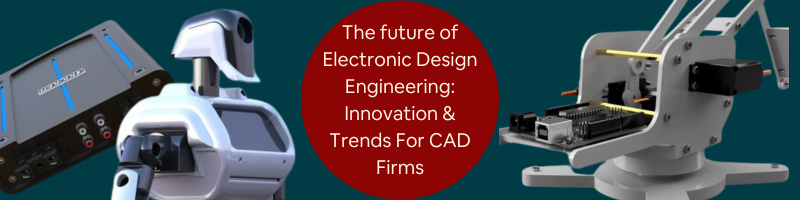
The Future of Electronic Design Engineering: Innovations and Trends for CAD Services Companies


As the consumers’ appetite for efficient electronics continues to grow, manufacturers are only pleased to adapt to the evolving interest and be inventive in their design and engineering methods to fulfill the growing demand. One of the most notable improvements in electronic design engineering services is the shift from a generic CAD approach, like technical drawing and 3D modeling, to specialized software tailored for specific applications, including but not limited to PCB design and 3D printing for electronic enclosures.

As the industry grows, such specialized software programs are used not only in industrial settings but also in consumer electronics. Over the years, electronic design engineering has maintained a trajectory for development and innovation to enhance product functionality, aesthetics, connectivity, and user experience. Some of the biggest innovations and trends revolve around AI integration, IoT, and autonomous vehicles. But of course, all those developments cannot possibly happen unless the PCB design and manufacturing are also improved in the first place.


:rocket: Table of contents


PCB engineering software

At the heart of every electronic device is a PCB, where the firmware communicates with hardware to dictate all functions and features. It takes a careful arrangement of small and big components, how they’re connected to each other, and the configuration of physical and electrical requirements that define the device’s capabilities.

RELATED: Top 100 Electronics Design Companies to Create Prototypes for Hardware Startups

Engineers are now spoiled with plenty of digital PCB design tools thanks to the ever-evolving software programs that offer easy integration with mechanical CAD software like Autodesk and SolidWorks. But computer-based PCB design wasn’t really a big thing until the 1980s, spearheaded by two big names: Autotrax and OrCAD, both were released in 1985.

  • Autotrax: developed by Protel System (now Altium), Autotrax was among the first to revolutionize PCB engineering by providing a digital platform to integrate multiple design disciplines. Apart from the advanced routing capability, the software also came with a real-time collaboration feature that helped set a new standard for innovation.
  • OrCAD: even by today’s standards, you can say that OrCAD has a user-friendly interface and a comprehensive set of features to create detailed schematics. And like many modern software today, it has simulation features.

There were indeed some alternatives back then, but the two software enjoyed true widespread adoption and were the most pivotal in setting a new trend for computerized PCB design. The overwhelmingly positive reception carved the pathway for other companies to follow suit and get competitive with their software, leading to decades of CAD proliferation in the electronic industry.

While the basics of digital designing and simulation remain pretty much the same several decades later, most modern programs have much more intuitive GUI and are indeed designed to comply with the current standards for safety and energy efficiency. Early CAD systems were largely text-based; they required quite an extensive command-line input, which limited their own accessibility. GUI proved to be a real game-changer for those tools, which broadened their adoption among manufacturers, designers, engineers, and CAD design services nationwide. They were groundbreaking back then and are still actively developed today.

RELATED: The Best PCB Design Software for Electrical Engineering Professionals in 2023

Design and layout

CAD has always been essential for designing and calibrating PCB layouts. Today, engineers have plenty of modern tools at their disposal, such as KiCad, Altium Designer, and Eagle, which provide all the means necessary to build even the most intricate PCB design with great accuracy. Most of the PCB-specific CAD software programs offer features like fully-automated or semi-automated routing and schematic capture to cut down the development time without sacrificing efficiency.

engineering design services

If schematic capture allows engineers to digitally create a circuit diagram (to be translated into the layout of a PCB), automatic routing helps determine the electrical connections (or paths) in the most optimized way possible with little to no manual input. CAD software also gives a manual edit interface where engineers can place components and draw their tracks to connect the pins accordingly. In general, the software opens the door to limitless experimentation with PCB designs in a virtual environment. Engineers don’t even need to touch the soldering iron each time they need to make a change.

Simulation

Design tools alone are not enough. While CAD software does improve the workflow a great deal with digital design and layout features, manufacturers need to see if the design actually works before they build any physical prototype. And this is where simulation tools kick in. Simulation software is the most practical, cost-efficient, risk-free fashion to test and analyze every PCB layout constructed on a computer.

RELATED: Consumer Electronics Show (CES) Recap 2024: Las Vegas Inventors and Design Firms Recap

Engineers are able to see the specific parts of the layout that work as intended, along with those that fail. Advanced software tools also generate data to be utilized as the basis for refinements almost immediately after each successive analysis. Among the most commonly used PCB simulation software include:

  • SPICE: a general-purpose and open-source electronic circuit simulator to predict circuit behavior and check the integrity of circuit designs.
  • Multisim: a combination of SPICE simulation and other advanced analyses to identify PCB design inefficiencies. It comes with a library of more than 50,000 manufacturer-verified components.
  • Proteus Design Suite: a real-time microcontroller simulation and electronic design automation software. Proteus even has a 3D Viewer module that can represent board enclosure.

‍CAD also plays a major role in setting up the trend for flexible electronics services, constructed from circuit boards and transistors that can bend and flex up to almost full rotation. Typical examples include bendable displays (LCD and OLED), flexible circuits on print heads, thin-film solar cells, and flexible batteries (zinc-carbon and lithium-ion). Some flexible electronics are already found in mainstream products, such as smartphones and computer monitors, while others are still in the early stage of commercialization.

The development of CAD software for PCB design services and simulation marked a big leap forward in electronic innovation, as it empowered engineers to build sophisticated, intricate, feature-rich circuit boards on modern devices. As far as the engineering work is concerned here, CAD software helps simplify sophistication in the sense that complex design doesn’t have to be complicated to create. CAD directly contributes to lower production costs as well, making it possible for general consumers to afford higher-quality products at affordable prices.

RELATED: How to Find an Electronic Design Company for Outsourcing New Product Engineering

At the moment, the market for CAD software for electronic design and engineering is dominated by Autodesk Eagle, Siemens NX, and Dassault Systèmes. The market in its entirety is projected to reach up to $16 billion by 2027, driven mainly by digital-twins functionality – basically virtual prototyping. At least until 2033, about 65% of the market will be controlled by those three companies.

Artificial intelligence

Conventional software, like a CAD program, is designed to perform a specific task. The primary artifact of conventional software is the programmer’s code. AI is also built with codes, but the software is designed to “learn” to do tasks based on data collection, pattern analyses, and algorithms. Unlike conventional software created using predefined instruction, artificial intelligence is expected to come up with ingenious solutions to complex problems. AI is on the verge of revolutionizing electronic design engineering by introducing a new range of automation previously thought to be impossible.

For example, an engineering design company can use some simple “prompts” or text-based commands to tell an AI software to build an entire PCB layout and perform the necessary simulations. All analytical tasks, including failure prediction and performance data generation, are done automatically. It’s also possible to ask the AI to suggest improvements to an existing PCB or electronic device design, significantly reducing the cost and time associated with the iterative engineering process.

Some of the more advanced AIs are better suited for custom electronics, such as creating tailored solutions to meet highly specific requirements for industrial applications and medical devices. Yes, we need to write codes to build AI and human input to set the task parameters, but it doesn’t change the fact that AI is a major leap from conventional software.

RELATED: What Certifications are Used for New Electronic Hardware Products & PCB Design Services?

Internet of things

It is old news that electronic devices can communicate with each other via sensors bridged by wireless networks. This is the “Internet of Things,” as observed in many smart home appliances. Automated sprinkler systems and robot vacuum cleaners might be the finest mainstream examples of such advancements. In an automated sprinkler, the built-in sensors and wireless Internet work together to gather weather information, monitor soil conditions, and read the temperature before it waters the plants.

The timing and volume of water are adjusted for optimum conditions throughout the year. A robot vacuum cleaner is, in many cases, simpler than a sprinkler system. The vacuum cleaner’s sensors detect the room size, layout, and stairs to determine the most efficient path to sweep the floor. When the battery is about to be depleted, it heads toward the docking station to recharge itself. The same technology makes its way to other applications as well.

We now have smart refrigerators, smart watches, smart light bulbs, smart locks, smart security systems, and an entire range of IoT home appliances you can control via smart speakers, which act like little command centers on your cupboard. According to Statista, there will be 400 million smart homes (basically buildings that use all those smart appliances) before the end of 2024 – an innovation and trend that CAD design services should observe closely to stay competitive.

Autonomous vehicles

Autonomous cars

Some say that autonomous and electric cars are nothing more than glorified torches and generators; they might be correct. Glorified rechargeable and self-driving cars are indeed the primary objective in the automotive industry, and they’re much more sophisticated than most people imagine. Think of the array of sensors to detect traffic data, identify pedestrians, recognize traffic signs, and find the right parking spot, to name a few.

RELATED: How Much Do Prototypes Cost to Make in 2025? Pricing Insights from Proven CAD Product Design Firms

They’re all electronics that work autonomously just as soon as the driver enters the vehicle. It’s expected that an expedited rollout of 5G technology – with hyper-speed connectivity and super-low latency to handle a massive number of connected electronics and data – will bring the automotive industry closer to self-driving cars.

Cad Crowd is here to propel your next innovation

Electrical CAD is not only a tool; it’s a transformative, groundbreaking force to help your company design the next generation of intricate electronic devices. Thanks to automated PCB schematics, simulations, and enclosure 3D modeling, CAD is leading the way in achieving higher efficiency and precision in the design and engineering process. Cad Crowd connects you with experienced CAD professionals to lend a hand in your electronic product development and deliver real competitive advantage in the increasingly hungry market. Feel free to contact Cad Crowd for your free quote today.

author avatar

MacKenzie Brown is the founder and CEO of Cad Crowd. With over 18 years of experience in launching and scaling platforms specializing in CAD services, product design, manufacturing, hardware, and software development, MacKenzie is a recognized authority in the engineering industry. Under his leadership, Cad Crowd serves esteemed clients like NASA, JPL, the U.S. Navy, and Fortune 500 companies, empowering innovators with access to high-quality design and engineering talent.

Connect with me: LinkedInXCad Crowd

High Quality CAD Lighting Fixture Design for Architectural Firms


No matter how sunny a house or building is, there will always be some dark spots here and there. Unfortunately, it is often challenging for architectural and interior design firms to design lighting in these areas. They need schemes that can provide adequate illumination and allow the lighting to match the intended emotions and tasks. Rooms and areas tend to be dark for many different reasons, including small windows or the lack of them in the first place.

There are also instances when the structure faces north, or certain external features form a shade throughout the day. No matter the cause, proper CAD lighting fixture design services can go a long way to ensure that no area becomes dull and dreary. Here are a few design tips that your architectural and interior design firm can use on your next projects. 


:rocket: Table of contents


RELATED: Architectural lighting plan budgets & tips to reduce CAD drawing service costs

CAD lighting fixture design for architectural firms and interior design detail

Observe color consistency 

When adding lighting fixtures in any room, not just in darker areas, it’s essential that their color temperature is the same. Color temperature is indicated in Kelvin. Installing a mix of warm and cold lights in one area is not just unpleasant to the eyes and can also cause debilitating headaches. The ideal solution here is to opt for dimmable lights. If you need brighter and colder light during the daytime, you don’t have to give up on the relaxing warm glow at night. Dimmers will let you have it all. Having options is also always better in this case.

Illuminate low ceilings properly 

Rooms often seem dark due to low ceilings, as in the case for basements. Installing pendant lights will only make the ceiling seem lower. The best solution for the 3D lighting fixture design professional is to install recessed lights into the ceiling’s void. The right lighting fixtures can produce ambient light while making the room look and feel bright. These types of lighting fixtures are perfect for winding down and relaxing at night. 

Add the right lampshades 

Dark lampshades are a no-no if you want your CAD design to exude the feeling of a well-lit space. Metallic lampshades, such as gold, are often a better choice as they produce a warmer tone of light.

RELATED: Lighting adjustments in 3D renders: essential tips for companies and services 

Harness the magic of mirrors 

While lighting fixtures can produce light, you can use certain tricks in your design to help distribute light further. This is where mirrors come in handy. Mirrors further enhance the daylight in a dark room to make it look and feel brighter. They can also make the space brighter, bigger, and more dramatic. If possible, feature large fixed mirrors on long walls.

The 3D product design expert can also move floor-standing mirrors around the space to produce a different feeling. Mirrors can help boost both artificial and natural lighting. These can be positioned at the back of table lamps or installed on the wall right in line with the pendant lighting fixtures. 

interior design company

Use the power of downlights

Downlights are common solutions for both commercial and residential applications. You can choose the correct color of the trim and depth of the fixture so the lighting blends seamlessly with the rest of the design. You can choose from different beam options for downlights that you can distribute all over the space to provide the light required in specific parts of the room. The 3D interior rendering designer can install smaller downlights, for example in the corner of a room to achieve the illusion of daylight. 

RELATED: 5 Tips for achieving photorealism with 3D rendering and 3D visualization for home design companies

To achieve a better effect, dimmers can also be used in place of switches to help control the light intensity during daytime. If the client prefers lights on a dimmer, see to it that the lights used are dimmable in the first place. This detail is often indicated in the specifications of every lighting fixture.

Think verticals and horizontals 

Consider illumination three-dimensionally. Creating several sources of warm light is the secret to achieving excellent lighting in dark areas. Several lighting fixtures can be installed at different levels. Floor or table lamps are ideal for shady corners. For rooms with higher ceilings, it’s best if the 3D architectural visualization services adds a chandelier with glass elements right in the center. The glass material will allow the light to bounce across the room. 

RELATED: Virtual room design services and 3D room design tips for companies and firms

Consider bright wall colors and wall washers

Lighting fixtures toward a bright wall can add luminance to the room. Bright-colored walls are the key here, and physics can do the job. This will give the space a more sophisticated feel and create a cozy ambiance at night.

Determine the purpose of the space 

While general rules apply to different spaces of a residential or commercial building, it’s imperative to know the specific role and purpose of the room to achieve the best CAD lighting fixture design. Envision yourself using the space:

Will it be your client’s entertainment room?

Will it be a private space where they will wind down to spend some time alone to play the piano or read a book?

No matter what it is, it’s important to know the purpose of the space or area in the first place. Once you’ve determined the function of the room, that’s the best time to plan the layout of the lighting fixtures in your CAD design.

Tips to create more effective CAD lighting fixture designs

Here are some helpful tips for creating more effective CAD lighting fixture designs:

1. Use the best CAD software 

CAD software programs are not made equal as far as lighting design is concerned. Choose one that has functions and features that meet your specific preferences and needs. Other factors to keep in mind are compatibility with the existing hardware and software you’re using, ease of customization and usage, availability of training and support, licensing options, and cost.

RELATED: How to render architecture: tips from an architectural rendering company, Los Angeles

2. Define lighting goals and requirements 
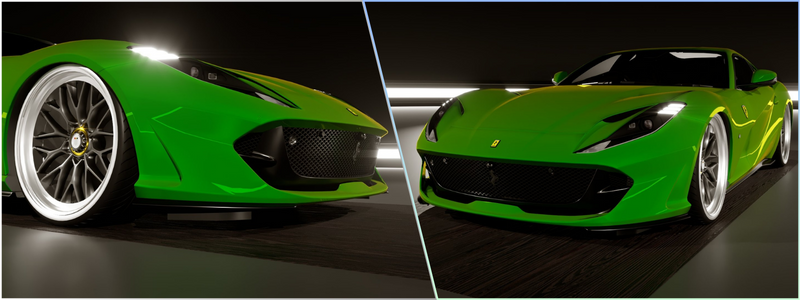
Before you draw and model your lighting fixture design, you must have a clear idea of what your client wants to achieve and the challenges and constraints you might face. Consider the function and purpose of the space, the desired atmosphere and mood, the sources of artificial and natural light, the budget and energy consumption, and the standards and codes applicable to the project.
interior rendering services

CAD software can create lighting plans that outline the quantity, type, and location of light fixtures along with the control and wiring systems. Identifying lighting goals and requirements is critical to creating effective CAD lighting fixture designs. Clear specifications on lighting uniformity, color temperatures, and illumination levels can serve as a guide for the process of CAD design. 

You can use CAD tools to simulate and model various lighting scenarios to allow adjustment and precise placement of lighting fixtures. You can integrate these requirements in your CAD design to analyze and envision the lighting design before implementation to ensure desired goals are met. This approach can reduce costs, optimize energy efficiency, and produce an aesthetically pleasing and well-lit space.

RELATED: Differences between interior design and interior architecture companies

3. Use 3D rendering and modeling tools 

One of the benefits for lighting fixture designers using CAD software is that it lets them come up with lifelike realistic 3D renderings and models of the space and its lighting solutions. It lets you envision how the lighting fixture design will perform and look in different conditions and scenarios, including night and day, cloudy and sunny, bright and dim, and others. CAD software can also be used for testing and comparing various lighting conditions like distribution, direction, luminosity, and color temperature.

4. Perform lighting simulations and calculations 

The use of CAD software for lighting fixture design can help you perform reliable and accurate lighting simulations and calculations that can help optimize lighting design for quality and efficiency. CAD software can be used to analyze and measure different lighting parameters like color rendering, uniformity, contrast, glare, and luminance. The program can also be used to simulate the lighting design’s effects on the environment, like energy savings, carbon emissions, and heat generation.

Several lighting parameters should be considered as these may have a significant effect on your lighting design. The use of software tools can give you insight into the efficiency of the design as it will give you the analysis that shows your lighting design’s level of effectiveness, quality, and accuracy.

RELATED: 5 Benefits of using 3D rendering and 3D visualization services for interior design

5. Incorporate revisions and feedback

Getting the perfect lighting design right on the first try doesn’t exist. You need to incorporate revisions and feedback from your clients, stakeholders, and colleagues to ensure that the design will meet their requirements and expectations. CAD software can easily update and adjust the lighting design according to the suggestions and comments you receive. You can also use the program to produce and share various alternatives and versions of the lighting design for assessment and approval.

6. Document and present the lighting design

Document the lighting design and present it convincingly and professionally. Use the right CAD software to produce and export high-quality reports, renderings, models, and drawings that showcase the design’s benefits and features. 

How Cad Crowd can help 

Contact Cad Crowd today and find the best professionals for your CAD lighting fixture design needs!

author avatar

MacKenzie Brown is the founder and CEO of Cad Crowd. With over 18 years of experience in launching and scaling platforms specializing in CAD services, product design, manufacturing, hardware, and software development, MacKenzie is a recognized authority in the engineering industry. Under his leadership, Cad Crowd serves esteemed clients like NASA, JPL, the U.S. Navy, and Fortune 500 companies, empowering innovators with access to high-quality design and engineering talent.

Connect with me: LinkedInXCad Crowd

Top 30 Mechanical Engineering Expert Recruiters And Staffing Agencies


Competent mechanical engineering experts who find comfort in a competitive industry landscape and work to their full potential regardless of the challenges are not easy to find. Almost every organization, whether in manufacturing, architecture, design, or any related industry, is likely willing to retain an experienced mechanical engineer, for alternative candidates are hard to come by. Even when a position becomes available in your company, there is no guarantee you can find a suitable professional in most typical job boards.

Working with a seasoned staffing agency improves the chances of securing the best possible mechanical engineering talents to fill vacant positions or bolster your company’s overall qualification level. Most of the top staffing firms below, like CAD Crowd, are based in major cities all across the United States, including Los Angeles, California, and serve metro areas such as Lone Beach, San Fransisco Bay, Irvine, and Sacramento, among others. 

RELATED: 20+ Free 3D models and downloadable CAD files of mechanical and engineering designs

Top 30 recruiters for mechanical engineering, staffing agencies, and recruiting companies for US engineers

Cadcrowd-logo

CAD Crowd

Years of experience collaborating with mechanical engineers in all industries have brought CAD Crowd to a level of staffing expertise where it is able to utilize a massive database of more than 100,000 candidates, including experienced professionals and untapped talents, all across the United States. The agency makes it a basic requirement to listen to your needs, understand your viewpoints, and clearly define the recruitment parameters during the initial step of the staffing process.

Recruiters from CAD Crowd will not waste your time presenting any talent who will not likely be an ideal candidate for the available position. They have the resources to accumulate a massive database of candidates, the expertise to connect you to bright professionals, and the technology to expedite the screening procedures without sacrificing the quality of talents to be presented.

CAD Crowd has no preconceived notions about clients’ talent requirements and will provide personalized staffing services in accordance with your specific objectives. Every solution is crafted to meet your demands, giving you a competitive advantage in the currently challenging workforce market.

cadcrowd.com

Corporate-job-bank-logo

Corporate Job Bank

It is Arizona’s biggest locally-owned staffing organization with over 30 years of experience in the business. The recruitment agency boasts an excellent track record of more than 50,000 job placements over the decades. Its portfolio of talents is filled with an extensive network of STEM graduates and experienced engineers from various educational backgrounds and specializations. Corporate Job Bank claims to have always responded to client’s requests within, at most, 30 minutes. 

corporatejobbank.com

RELATED: How to become a freelance mechanical engineer & find remote work for design jobs

Search-solution-group-logo

Search Solution Group

It is always a good idea to partner with a staffing agency that understands the industry you are in. Search Solution Group’s executive recruiters boast a commendable collective experience in various subsets of the engineering field, and the group believes that proper collaboration with clients should begin with developing a sense of teamwork and a shared goal in mind. 

searchsolutiongroup.com

Insight-global-logo

Insight Global

Educational backgrounds are important in the same way that creative thinking and willingness to follow professional guidelines are crucial to ensure success. Insight Global makes technical proficiency the bare minimum requirement to pass an early assessment and looks beyond candidates’ credentials to make sure they are culturally fit to your company’s visions for the future. Recruiters from Insight Global say with confidence that they will find your next mechanical engineer, from entry-level to C-suite executive, in just two weeks or less. 

insightglobal.com

Trupath-logo

TruPath

Using the same approach to attract all candidates for every position is not advisable. For example, the types of compensation and packages for mid-to senior-level mechanical engineers should be different from those offered to fresh talents. TruPath is an Arizona-based staffing agency that specializes in headhunting services to discover and obtain top-tier professionals for clients in need. More than just sending resumes and work experiences, TruPath also compiles an extensive note based on every candidate’s screening result. The note may include interaction highlights, praiseworthy traits, and additional areas for the employers to explore during the internal interview sessions.

trupathsearch.com

Aerotek-logo

Aerotek

North America is home to more than 250 offices under the umbrella of Aerotek, the region’s largest staffing agency powered by 1,500 niche recruiters. It has strategic recruiting centers all across the United States to pinpoint any number of candidates with specific skill sets that exactly match clients’ orders. Aerotek can also facilitate remote recruitment solutions and onboarding processes. 

aerotek.com

Entegee

Entegee

There will be cases where a staffing agency cannot find the right candidate to fulfill the client’s request only from an internal database of talents. If the desired candidates are not on the list already, Entegee takes full advantage of social outreach channels like LinkedIn and mass marketing to hunt for the right talent suitable for the open position. Entegee also has a “New Hire Orientation” program designed to help new hires prepare for their roles and shorten their adjustment period so they are ready to work and make positive impacts starting from the very first day. 

entegee.com

RELATED: Mechanical engineering jokes

180-Engineering

180 Engineering

Forbes has mentioned “180 Engineering” as one of America’s Best Professional Recruiting Firms five times over the years. ClearlyRated has also honored the agency with the “Best of Staffing” award six times in a row from 2017 to 2022. According to Inc. 5000, the firm is known to exclusively focus on finding and placing top engineering talents and IT professionals across various industries.

180engineering.com

4-Corner-Resources

4 Corner Resources

More than 11,500 candidates presented by 4 Corner Resources (4CR) have been placed in new positions over the course of nearly 20 years, with an impressive record of a 93% client retention rate. The agency started as a small technical staffing company in 2005, operating from a humble home office before moving to new headquarters in Orlando, FL, a year later. 

4cornerresources.com

Triad-Engineering

TRIAD Engineering

Staffing services from TRAID Engineering cover direct placement, contract, and contract-to-hire solutions. It has been in the business since 1969 and working with small companies and large corporations across a variety of engineering disciplines. The family-owned recruiting firm is also a member the American Staffing Association. 

triad-eng.com

Davron

Davron

Some staffing agencies hunt for talents on behalf of clients, while others find comfort in providing placement services for job seekers. Davron is present on both fronts by offering talent management solutions for companies in the Architecture, Engineering, and Construction (AEC) sector and facilitating employment search for professionals in need of better opportunities. 

davron.net

Enser-Engineering

ENSER

At 77 years old, ENSER is one of America’s oldest staffing firms in operation today. ENSER is owned and run by engineers, providing staffing services for companies and candidates who also come from engineering backgrounds. All services, whether for employers or talents, are personalized for each individual client. It also remains an active independent company that specializes in custom engineering design, fabrication, and manufacturing services, which gives the agency a unique advantage as it understands the technicality of the industry first-hand. 

enser.com

RELATED: How freelance mechanical engineers use 3D modeling for design

Peak-Technical-Staffing

PEAK

A commitment to engage in ongoing open communication with clients is PEAK’s strongest selling point. The staffing agency offers direct-hire and contract-to-hire recruitment management and specializes in the engineering and technical sectors. PEAK works closely with employers from the first step of the headhunting process until after the desired candidates are placed in new positions. The recruiters will maintain active communication with you to make sure the introduced talents can truly understand the roles and adapt to the company’s culture. 

peaktechnical.com

NES-Fircroft

NES Fircroft

One thing you need when working with staffing agency is peace of mind from knowing that the recruitment process is handled by an experienced name. NES Fircroft has a combined track record that spans 90 years and is a well-known firm not only in North America but also Europe, Asia, Africa, Middle East, and Australia. It earned the distinction as being on the list of Top Staffing Companies to Work for in 2022 by World Staffing Award.

nesfircroft.com

Espo-Engineering

ESPO

A humble start in 1965 with consistent growth throughout the decades has brought ESPO to a leading spot in the US-based recruitment services industry, especially in the engineering sector. Its long 50-year history has been sprinkled with a track record of placing qualified candidates in some of the country’s largest companies. ESPO also offers in-house Recruitment Process Outsourcing.

espocorp.com

Kelly-Services

Kelly Engineering

Recruitment processes handled by Kelly Engineering are all parts of Kelly Services’ business operations. The specialized division exists to cater to clients’ engineering staffing needs and is run only by recruiters experienced in the sector. It is not an entirely separate entity and is still backed by Kelly’s global network of staffing experts. The division made the 2021 list of “Largest Engineering Staffing Firms in the US,” compiled by Staffing Industry Analysts.

set.kellyservices.us

Goodwin-Recruiting

Goodwin Recruiting

Engineering discipline encompasses a large scope of technical fields and most staffing agencies avoid having a strictly narrow specialization to ensure business flexibility. Goodwin Recruiting does things different as it focuses solely on mechanical engineers headhunting services, aimed toward aiding manufacturing companies in discovering the right talents for the design and construction of complex mechanical systems. Candidates can only pass the screening test if they have the exact matching skills required for the roles.

goodwinrecruiting.com

RELATED: How much do mechanical engineer services typically charge for rates & firms?

Mac-Executive-Recruiters

MAC Executive Recruiters

Frisco, TX, is home to MAC Executive Recruiters’ headquarters, supported by branch offices in a dozen other cities across the United States. MAC empowers a network of experienced recruiters comprised of search consultants, senior partners, and project professionals to deliver at least three qualified candidates to the clients within 30 days or less. Recruitment services include temporary contract and temp-to-hire models. 

macrecruiters.com

JRG-Partners

JRG Partners

Putting emphasis on inclusions and diversity has become both mandatory and necessity. JRG Partners staffing agency promises to conduct a 100% bias-free headhunting and recruitment services to comply with the current industry standard. The services include a full-range recruitment process, from screening and placement, provided from every major region throughout the United States and Canada. 

jrgpartners.com

Apollo-Technical

Apollo Technical

A combined resource of an internal database and a network of field recruiters increases the likelihood of obtaining the best possible talent to fill an empty position in your company. Apollo Technical is known for its detailed analysis of the client’s preferences for talents and ability to define the required (as opposed to the desired) qualifications. For candidates with past employment history, the agency goes the extra mile by checking work references with their direct supervisors/managers and compiles comprehensive feedback for clients based on the interactions.

apollotechnical.com

Connected-System-Partners

Connected System Partners

A good staffing agency should not operate as a separate team of recruiters to handle your headhunting work. There needs to be a baseline of knowledge shared by your own hiring divisions and the recruiters, based on which you may define a clear objective of the collaboration. Connected System Partners staffing firm practically acts as a temporary internal recruitment unit to discover and nurture shortlisted talents in a joint effort to introduce the perfect candidate for every open position.

connectedsp.com

Ranstad

Randstad

Staffing solutions from Randstad cover full-service capabilities, including direct hire, contract placement, talent development, and project-based contracts. A large portion of the engineering talents in the agency’s database is comprised of senior mechanical engineers, electrical engineers, AutoCAD professionals, and designers. Randstad itself employs more than 5,700 in-house staff across the country and caters to clients’ specific recruitment parameters, whether staffing for individual open positions or large-volume hiring.

ranstadusa.com

Murray-Resources

Murray Resources

Every recruiter from Murray Resources has earned a Certified Temporary Staffing Specialist or Certified Personnel Consultant accreditation issued by the National Association of Personnel Services. The agency has scored an impressive client satisfaction rate of 95% (satisfaction to expectation) over the course of 30 years in the business. 

murrayresources.com

Trillium-Staffing

Trillium

More than 22,000 companies and 2 million job applicants have worked with Trillium thus far, facilitated by a gigantic network of over 90 branch offices across the US. It has been named the nation’s 26th-largest industrial staffing firm and the 60th-largest staffing firm. In addition to providing headhunting services for temporary and permanent assignment purposes, Trillium is also willing to work with contractors in search of a seasonal workforce.

trilliumstaffing.com

RELATED: Learn about machine design costs, engineering services rates & pricing for companies

Alltek-Staffing

AllTek

Every award AllTek has accumulated over the years is a testimony to the agency’s quality of services and general expertise in the staffing industry. It was named the Pittsburg’s fastest-growing Contract Technical Placement for three consecutive years (2004, 2005, and 2006) by the Pittsburg Technology Council and the 9th fastest-growing privately held recruitment firm in the United States (2008) by Staffing Industry Report.

 bestinrecruiting.com

BNA-Staffing

Bernard Nickels & Associates

All engineering talents presented by Bernard Nickels & Associates have passed custom assessments based on their qualification and clients’ requirements with a heavy emphasis on character, interpersonal skills, personality, and educational achievements. BNA can produce various sets of evaluation models designed to conform with employers’ specific recruitment parameters. In other words, the assessment process to evaluate candidates applying for one particular position can be different from those prepared for any other role.

bnastaffing.com

Burnett-Specialists

Burnett Specialists

What was once a small employee-owned staffing company in Houston has now become Texas’ second largest recruitment agency, with 9 branch offices in 6 major cities in the state. Burnett Specialists staffing firm offers its headhunting services on a contingency basis, so you are not required to cover any expense until the recruiters finish all the procedures and settle the candidate placement process.

burnettspecialists.com

Michael-Page-Staffing

Michael Page

Michael Page can cater to your mechanical engineering staffing needs regardless of your company’s specialization. The staffing agency covers a broad spectrum within the engineering fields, from aerospace and biotechnology to consumer goods and chemical manufacturing sectors. One thing that differentiates Michael Page from competitors is how it compiles and delivers an early detailed appraisal of your recruitment parameters, including an analysis of whether or not the targeted candidates would find your compensation package acceptable. 

michaelpage.com

The-Adkins-Group

The Adkins Group

It is not uncommon that a company or an organization is going through difficult times filling a vacant role due to the demanding nature of the job and the high expectations (along with the turnover rate) surrounding the position. The Adkins Group can deploy its “Targeted Sourcing Project,” which involves seeking, targeting, identifying, and establishing communication with talents in an active, if not aggressive, fashion. It is a talent-hunting in the truest sense of the word.

theadkinsgroup.com

Emissary-Recruitment

Emissary Recruiting Solutions

Gone are the days when a staffing agency did its job simply by presenting a list of pre-vetted candidates to clients. Emissary Recruiting Solutions will help you define the specific objective of the recruitment, compile a detailed analysis of talent requirements, and set KPIs to be met by the expected candidate before the actual headhunting process begins.

emissarysearch.com

Final Thoughts

The increased demands for mechanical engineers across all industries are rooted not only in the desire to utilize their expertise in an effort to increase tangible outputs and intensify optimization but also in companies’ hunger for new perspectives and fresh ideas to prevent (or even break down) a state of stagnancy in the creative process.

A reputable staffing agency helps you save resources and precious time without losing access to a large pool of qualified and culturally fit candidates. CAD Crowd implements a unique, efficient, tailored approach to recruitment crafted specifically to meet your specific requirements. With a team of recruiters experienced in working alongside both untapped and well-known talents in the mechanical engineering sector, CAD Crowd delivers comprehensive support to target and acquire the next key players for your company.

DFM For New Product Design Excellence: A Guide for Company Success


Any product designer with a great and new idea wants to realize it as soon as possible in any way. Unfortunately, an idea will only be great if a manufacturer can use materials and machines to turn it into reality. This is where DFM companies or Design for Manufacturing enters the picture. For some designers, the manufacturing stage is only a speck in the entire process. It’s often one of their most minor concerns. However, this kind of approach can be hazardous regarding product design.

Manufacturing and design will always be together, whatever happens. This is why this neglectful approach will eventually result in an inferior end and low-quality product. This article guides the company’s success in designing new products for manufacturing excellence. 

RELATED: 5 Reasons to hire a CAD design specialist to bring your company’s concept to market

What is DFM?

DFM, or design for manufacturing, refers to designing products, components, or parts for easy manufacturing to produce a better product at a reduced cost. The product’s design is simplified, optimized, and refined to do this. DFMA (design for manufacturing and assembly services), is often interchangeably used with DFM. 

There are five principles assessed during a DFM. These include:

  1. Compliance/Testing
  2. Design
  3. Environment
  4. Material
  5. Process

DFM design services for your company should ideally take place early on during the design process, way before the start of tooling. Aside from this, properly executed DFM must involve all stakeholders, from engineers to designers, material suppliers, mold builders, and contract manufacturers. The purpose of cross-functional DFM is to challenge the product design. The new product design is scrutinized at every level, including holistic, component, system, and sub-system levels, to ensure the optimization of the design without unnecessary cost. 

RELATED: Why prototype DFM services are useful for product design at companies and firms

Changes will get more expensive and tricky as the product design moves through the product’s lifecycle. With early DFM, you can execute changes in design faster at the most affordable location. Pulling stakeholders together early on during the new product development design process is easier. However, even when you already have an established product design, one necessary element of a systematic DFM is challenging the original product design. 

Product design errors are often repeated by copying an earlier design. Make sure you question every aspect and element of your new product design. 

  1. Check the original drawings. 
  2. Disassemble the product. 
  3. Study the near-neighbor and competitive products together with the lead users. 
  4. Sit down with the contract manufacturer, who might have already solved the issue with another client. 
  5. Is there someone else who solved the issue in another way?
  6. Can you make it better in any way?

RELATED: 8 Tips companies use to simplify design manufacturing or design for manufacturing

There is a lot of effort, time, and thought to go into prototype DFM services, making it a meticulous process you can’t take for granted. That’s why you need the help of experienced design for manufacturability experts.

design-for-manufacturing-company

Five key principles of DFM

Testing or compliance

Every product should adhere to quality and safety standards. These are sometimes industry standards; some are third-party standards, and the rest are internal standards specific to a company. The manufacturer you choose must have testing facilities certified by the ISO. This is also when you should learn who will perform the ETL, UL, and other similar third-party testing and where the testing will take place. 

Design for manufacturing

Product design companies play a critical part in DFM. The actual drawing of a product design or part must conform to sound principles for manufacturing for your chosen manufacturing process. Ensure that you discuss the product design with the product development expert, who will confirm that your product design will adhere to the excellent manufacturing principles for the chosen process. 

RELATED: How to save money on injection molding: 10 tips from an engineering design firm

Environment 

Your product or component should be engineered to withstand the specific environmental conditions and challenges it will encounter. Even the best forms worldwide will only be helpful if the part can function correctly under normal operating conditions. A design engineering professional can help your company develop a product for the environment in which it will be used. 

Material

You must also choose the suitable material for your new product or part. Several criteria should go into this decision. The following are some of the material properties you should consider throughout the DFM or DFMA process:

  • Color – What is the specific color of the part?
  • Electrical properties – Should the material be a dielectric or insulator instead of a conductor?
  • Flammability – How burn or flame-resistant should the material be?
  • Mechanical properties – What is the preferred strength level of the material?
  • Optical properties – Should the material be transparent or reflective?
  • Thermal properties – How heat resistant should the material be?

Consider talking about the material with the contract manufacturer because they might have access to the existing materials in their portfolio, which will let you score a lower price. 

RELATED: 10 Key factors for managing manufacturing costs for your company’s new products

Process 

You should choose the appropriate manufacturing process for the product or part. The last thing you want is to use a highly-capitalized process, for instance, mold and die design services involving the development of dies and tools to produce a low-volume part that could have been otherwise made using a method with a lower capital, such as thermoforming. 

To determine the suitable manufacturing process for you, the DFM should consider how many parts will be made, the specific material that will be used, the required tolerances, the intricacy of the surfaces, and whether there is a need for secondary processes. 

What factors affect DFM?

DFM’s ultimate goal is to lower manufacturing costs without making any compromises in terms of performance. Aside from the main DFM principles stated above, the following are equally important factors that may significantly impact the design and manufacturing of assembly. 

RELATED: New product development and design: should your company work with a product design team?

Come up with modular assemblies

Using modular assemblies or non-customized modules in your product design will allow you to tweak the product without the risk of losing its functionality in general. An excellent example of this is automotive design firms creating a primary automobile that will let you integrate extras by including a modular upgrade. 

Identify surface finishes that are considered acceptable 

Try to strive for function instead of flashy for the surface finish, except if it is intended for a trade show grade. 

RELATED: New concept design costs, engineering prices & product development services rates

Design for an efficient joining 

Is it possible to clip or interlock the parts together? Discover different ways to join the parts without using adhesives, fasteners, or screws. Below are a few helpful tips if you need to use fasteners:

  • Try to minimize the variation, size, and number of fasteners.
  • Avoid screws that are too short or too long, flatheads, round heads, tapped holes, and separate washers. 
  • Use chamfered and self-tapping screws to ensure better placement. 
  • Stick with standard fasters as much as possible. 
new-product-design-and-development-professionals

Minimize the number of parts

Lowering the part count in a new product design is the fastest and easiest way to lower the cost since you are also reducing the quantity of the required material, the labor involved, production, the amount of engineering, and the shipping costs.

RELATED: Tips for engineering your company’s new product concept to be manufacturer friendly

Reduce reorientation of parts during machining and assembly

Designing the components to minimize the need for manual intervention during assembly and production is crucial. In this regard, leveraging DFMA (design for manufacturability and assembly) designers can prove highly beneficial.

Standardise materials and parts 

Customization and personalization are time-consuming and expensive. Quality standardized parts can reduce production time because these parts are often available. It also gives you more assurance of their consistency. The material should be based on the new product’s intended use and planned function. You have to consider how it should feel, whether soft or hard. It’s also important to check if it needs to endure pressure. Finally, you must also determine if your product or part needs to conduct electricity or heat. 

Streamline the number of manufacturing processes or operations 

When making your product involves a more complex process, it will also introduce more variables for errors. Always remember that every process will always have its own set of capabilities and limitations. Only include operations critical to the new product’s design and its function. 

RELATED: A product designer’s guide to design for manufacturability

How Cad Crowd can help 

DFM can work wonders to guarantee operational efficiency and inspire collaboration among international suppliers across vendors and departments. With industries across different sectors expanding and creating more intricate product designs, companies can use DFM services or DFMA services to achieve their goals for launching. Companies require effective methods to lower costs, eliminate delays, increase quality, and simplify processes. 

DFM can expedite product development timelines by identifying and rectifying design flaws, thereby preempting costly design revisions and issues. Cad Crowd can help you find product design experts who assist with the DFM process. As a trusted platform for professionals, you will never have to look hard to meet the perfect partner for your product manufacturing and ensure your company’s success! Contact us for a free quote.

How is Finite Element Analysis (FEA) Used for Company Projects in Industry?


Finite Element Analysis (FEA) services offer a platform of virtual simulations used for analyzing the effects of predictable forces on a design. The mathematical-based analysis visualizes when or how a design can fail, materials will deform, assemblies might disintegrate, and a structure can collapse. FEA is ideally implemented during the design phase of a fabricated product to discover rooms for improvement and modify it as necessary. While different industries resort to FEA for various specific purposes, they share the same goals of finding the perfect combination of performance, build quality, and cost.

Consumer goods

Product design companies and engineers in the consumer goods industry utilize FEA to predict components’ future performance and structural behavior before developing physical prototypes. Consumer goods might be built from various materials, such as aluminum, cast iron, steel, metal alloy, thermoplastics, fabrics, and leather, to name a few. FEA works for all materials as long as the user understands their physical properties and characteristics.

RELATED: Sustainable product design and product development principles for firms to consider

Many consumer products can be subjected to FEA simulation. For example, electronics need thorough analysis to determine waterproofing and thermal qualities; furniture pieces require repeated tests to see the load-bearing capacity; shoes and wearable items must meet ergonomic requirements; and children’s toys must be checked for durability and shock-resistance properties. Regardless of the products, FEA can determine whether their designs can withstand physical damage under regular use.

The design for additive manufacturing firms can make well-informed changes if the analysis demonstrates product failures under non-extraordinary loads. Virtual modeling and analysis processes help companies reduce production costs, shorten design cycles, and boost productivity while improving ROI. An FEA simulation of consumer goods is often inseparable from life sciences, especially if the products involve direct human engagement during usage. The simulation might include comfort, stress distribution, support, and fatigue models.

electronic-device-design-company

Example case: Foam Bed Optimization

A simulation of a foam bed in an FEA interface helps visualize how the product affects sleep quality. There are at least three variables to consider, including the user’s body measurement, foam material, and foam density. Detailed structural analysis is required to define the ideal thickness and firmness without diminishing comfort. The foam must support the body well enough but remain reasonably soft for a restful sleep. Because the body exerts pressure on the foam, the material must return to its original shape. Based on the design requirements, the manufacturer makes the necessary adjustments per FEA results.

RELATED: Product design guide for freelancers developing an invention

Athletic training

Based on the same user-product interaction principle, design engineering services use advanced FEA software can also simulate the human body to see the effects of specific training programs on muscles and bones. The analysis might also include simulations to measure the effects of repetitive movements—under certain conditions—on soft tissues and joints.

Example case: Elliptical Trainer Linkages Design 

One of the main points of an elliptical trainer is to provide the same exercise routines as walking, running, and stair-climbing without the typical excessive pressure on the joints. That said, not every cross-trainer is created equal. Optimization in machine exercise should be based on how it impacts the human body during usage. Suppose a cross trainer is designed for people with knee injuries to stay fit. Unlike most machine exercises, the purpose-built training equipment must accommodate users’ disadvantages.

For instance, the engineering design services company may design better fluidity and lightweight rotational movement on the machine’s linkage. FEA helps determine the exact extent of pressure and force required to utilize the equipment properly without causing further harm to users.A similar method is possibly applied to applications like physiotherapy. FEA-based human body simulations might greatly assist doctors and physical trainers in planning an effective exercise routine to treat patients still recovering from injuries.

RELATED: How to hire a product design engineer: top 3 considerations for your business

new-concept-design-product-development-services

Medical research

Although the design process of training equipment might be listed under the medical research category, they are intended for devices or products outside the human body. On the other hand, the following applications highlight the practicality and usefulness of FEA for designing models meant to replicate actual organs.

Example case: Knee Biomechanics

Direct interoperability with CAD software used by medical device design & development services allows FEA tools to analyze objects of any source, including models generated from a CT scanning process. A three-dimensional reconstruction of a CT-scanned image makes for a comprehensive reference to study the prosthesis design. For example, a reconstructed scanned model of an injured knee clearly visualizes the organ’s musculoskeletal biomechanics.

Surgeons can use FEA simulation to determine the correct motion range of the femoral component. If TKA (Total Knee Arthroplasty) surgery is deemed necessary following the simulation, the prosthesis can be designed for individual patients based on their activity level, weight, age, and general health.

RELATED: Medical device design: a guide to service pricing, costs, and rates for companies 

medical-device-designers

Example case: Dental Implants

In dentistry applications, FEA provides an in-depth look into dental implants’ surface structure and geometry. The simulation helps companies understand the material properties of an implant and how living bone tissues will respond to the applied mechanical force. Detailed geometrical analysis can predict adhesive strength and determine the optimum tightening torque to improve the success rate.

Example case: The Living Heart Project

In collaboration with the FDA, Dassault Systèmes and a massive group of leading cardiovascular researchers are on a shared mission to develop a simulated 3D heart model. The project is at the cutting edge of medical research, with a massive potential to deliver a groundbreaking study in developing new cardiovascular treatments and devices. A highly accurate simulation of a living heart aims to reduce the number of risky real-world clinical trials when designing a cardiovascular device while still ensuring efficacy and safety. 

RELATED: Product simulation and analysis: why it’s worthwhile

External medical devices

External medical devices’ design and manufacturing processes also benefit significantly from FEA. Such devices are much less sophisticated than implants or pacemakers but equally applicable to improve patients’ comfort during treatments and recoveries. Among the common examples include:

Wheelchairs

As simple as a wheelchair may seem, the equipment should be an over engineered design piece. The engineering design expert must keep in mind that it needs to be durable and comfortable, but also practical and easily maneuverable. Throughout its helpful lifetime, a hospital wheelchair is quite possibly used by hundreds of people with varying weights, heights, and health conditions. An FEA analysis of the material and mechanism will lead to a versatile and heavy-duty design.

RELATED: Exploring medical prototype design factors for companies: costs, rates, and pricing

medical-device-design-engineering-firm

Transfusion machines

FEA simulation of blood flow through a pipe assembly is used as the basis for the design of platelet separators or transfusion machines of all sorts. In a typical simulated analysis, engineers perform an A/B study to examine the mechanism of two pipe assemblies and determine the most effective configurations to prevent blood clots, undesired flow rates, and turbulence. In addition to structural analysis, the simulation involves the computation of fluid dynamics.

EMS cots

The primary design considerations for an emergency service cot are load-carrying capability and lightweight components. While materials like carbon fiber and titanium are known to have the two characteristics, they are still too expensive for most emergency services. A cot is not designed by finite element analysis experts to be carried or lifted but is intended to help transport patients from one point to another; apart from material considerations, the locking mechanism should also be easily deployed and released. FEA simulation is expected to lead to the development of a reliable, affordable solution.

RELATED: Product testing and validation: the role of CAD simulation services for companies

In each case, virtual prototyping and simulated performance/usability tests open the doors for medical device manufacturers to design products that improve patients’ comfort and health. Thanks to CAD and FEA, minimum development costs may translate to affordable yet quality devices in the future.

Automotive industry

Automotive design & engineering services design a modern car to be equipped with numerous advanced electronics and moving components. It is also made of many materials constantly exerting forces on each other. Since every assembly requires a thorough assessment for reliability, performance, and quality in a cost-efficient fashion, FEA finds it one of the most significant applications in the automotive industry.

Solid and rigid materials deliver a durable design, whereas lightweight assembly can improve speed and performance. At the same time, the higher-performance engine often generates noise and vibration that might compromise comfort. Modern combustion engines rely heavily on liquid coolant and air to keep the temperatures within a safe range and maintain ideal working conditions. Nearly everything about FEA, from structural and thermal analysis to buckling and computational fluid dynamics, is fundamental in the development of a car design.

automotive-design-engineering-services

RELATED: Automotive design & engineering services, costs, rates pricing for companies

FEA also plays a vital role in determining a vehicle’s crashworthiness. A simulation of a crash—or impacts from multiple directions—can help engineers build a dependable safety system, including harnesses and airbags, to minimize the risk of injuries to occupants in the event of accidents. 

Civil and architectural industries

Commercial & residential architects and engineers utilize 3D CAD modeling and FEA analysis to create building plans. In addition to ensuring a safe construction process, the simulation tells the architects and engineers whether the finished project can withstand various environmental conditions and topographical issues in the future. Detailed analysis can predict deterioration and the extent of damages to a building’s components under given conditions; based on the information, the building owner or management should be able to set a maintenance schedule to prevent expensive repairs.

RELATED: Civil engineering services rates, budget breakdown & costs for companies

How Cad Crowd can assist 

Discover the intricacies and potential of Finite Element Analysis (FEA) as it redefines project management and outcomes in the industry. Delve deep into the transformative capabilities of FEA, reshaping how companies tackle complex projects and ensuring optimal results. Equip yourself for the future now and gain an edge over your competitors. Contact us for a free quote, and let Cad Crowd assist you in mastering FEA for your industry ventures.