Media coalition asks the feds to investigate Google’s removal of California news links


The News/Media Alliance, formerly the Newspaper Association of America, asked US federal agencies to investigate Google’s removal of links to California news media outlets. Google’s tactic is in response to the proposed California Journalism Preservation Act (CJPA), which would require it and other tech companies to pay for links to California-based publishers’ news content.

The News/Media Alliance, which represents over 2,200 publishers, sent letters to the Department of Justice, Federal Trade Commission and California State Attorney General on Tuesday. It says the removal “appears to be either coercive or retaliatory, driven by Google’s opposition to a pending legislative measure in Sacramento.”

The CJPA would require Google and other tech platforms to pay California media outlets in exchange for links. The proposed bill passed the state Assembly last year.

In a blog post last week announcing the removal, Google VP of Global News Partnerships Jaffer Zaidi warned that the CJPA is “the wrong approach to supporting journalism” (because Google’s current approach totally hasn’t left the industry in smoldering ruins!). Zaidi said the CJPA “would also put small publishers at a disadvantage and limit consumers’ access to a diverse local media ecosystem.” Nothing to see here, folks: just your friendly neighborhood multi-trillion-dollar company looking out for the little guy!

Google described its link removal as a test to see how the bill would impact its platform:

“To prepare for possible CJPA implications, we are beginning a short-term test for a small percentage of California users,” Zaidi wrote. “The testing process involves removing links to California news websites, potentially covered by CJPA, to measure the impact of the legislation on our product experience. Until there’s clarity on California’s regulatory environment, we’re also pausing further investments in the California news ecosystem, including new partnerships through Google News Showcase, our product and licensing program for news organizations, and planned expansions of the Google News Initiative.”

In its letters, The News/Media Alliance lists several laws it believes Google may be breaking with the “short-term” removal. Potential federal violations include the Lanham Act, the Sherman Antitrust Act and the Federal Trade Commission Act. The letter to California’s AG cites the state’s Unruh Civil Rights Act, regulations against false advertising and misrepresentation, the California Consumer Privacy Act and California’s Unfair Competition Law (UCL).

“Importantly, Google released no further details on how many Californians will be affected, how the Californians who will be denied news access were chosen, what publications will be affected, how long the compelled news blackouts will persist, and whether access will be blocked entirely or just to content Google particularly disfavors,” News/Media Alliance President / CEO Danielle Coffey wrote in the letter to the DOJ and FTC. “Because of these unknowns, there are many ways Google’s unilateral decision to turn off access to news websites for Californians could violate laws.”

Google has a mixed track record in dealing with similar legislation. It pulled Google News from Spain for seven years in response to local copyright laws that would have required licensing fees to publishers. However, it signed deals worth around $150 million to pay Australian publishers and retreated from threats to pull news from search results in Canada, instead spending the $74 million required by the Online News Act.

Google made more than $73 billion in profits in 2023. The company currently has a $1.94 trillion market cap.
Apple claims Epic is trying to ‘micromanage’ its business operations in a new court filing


Last month, Epic Games filed a motion asking a California judge to hold Apple in contempt for what it claims are violations of a 2021 injunction relating to the company’s App Store practices. Now, Apple is asking the judge to reject Epic’s request, alleging in a new filing spotted by that the motion is an attempt to “micromanage Apple’s business operations in a way that would increase Epic’s profitability.”

The original injunction by US District Judge Yvonne Gonzalez Rogers required Apple to let developers provide an option for external payment methods, which would allow them to avoid fees of up to 30 percent on App Store and in-app purchases. Apple for developers in January that do allow linking to external websites for purchasing alternatives, but the new rules also require they get Apple’s approval to do so and impose a commission of 12-27 percent for these transactions. Per Reuters, Epic argued that this makes alternative payment options “commercially unusable.”

Epic also said at the time that Apple’s “so-called compliance is a sham,” and accused the company of violating the injunction with its recent moves. Apple maintains that it has acted in compliance with the injunction, stating in the new filing, “The purpose of the Injunction is to make information regarding alternative purchase options more readily available, not to dictate the commercial terms on which Apple provides access to its platform, tools and technologies, and userbase.”

Bluesky now allows heads of state to join the platform


Now that Bluesky has opened itself up to the public and , the team’s decided it’s finally time to allow world leaders on board, too. A post from the official account on Friday notified users, “By the way… we lifted our ‘no heads of state’ policy.” The policy has been in place for the last year as Bluesky worked through all the early growing pains of being a budding social network.

Bluesky remained an invite-only platform from its launch in February 2023 until February of this year, when it finally ditched the waitlist. had said last May that it wasn’t ready for heads of state to join, and even asked users to give its support team notice “before you invite prominent figures.” It’s since grown to more than 5 million users, alone in the day after it stopped requiring invite codes.

The owner of WordPress has bought Beeper, the app that flipped the bird to Apple’s iMessage supremacy


WordPress and Tumblr owner Automattic has bought Beeper, the maker of the Beeper Mini app that challenged Apple’s iMessage dominion late last year. Although it ultimately lost that battle (after, oh, about three days), the incident gave the DOJ more ammunition in its antitrust suit against the iPhone maker. Bloomberg reported on Tuesday that Automattic paid $125 million, a surprisingly hefty price for the startup.

Automattic already has an app called Texts that taps into the APIs of various chat services for a universal messaging experience. Beeper has essentially the same mission and branding, and the two competitors will now merge their teams under Beeper CEO Eric Migicovsky, who will join Automattic.

You may also remember Migicovsky as the creator of the Pebble smartwatch, the charmingly simple pre-Apple Watch device that helped kickstart mainstream interest in wearable tech in the early 2010s. On Tuesday, he told The New York Times that Beeper and Texts will launch a combined service later this year. The two teams will reportedly begin work in two weeks during a meeting in Portugal.

On Tuesday, Migicovsky wrote in a blog post that the two companies go way back. “Matt [Mullenweg], Automattic’s CEO, and I have known each other for years,” he wrote. “He was an early user, supporter and investor in Beeper. We’re very well aligned on our goal (build the best chat app on earth), approach (open source where possible), and independence (Beeper will operate independently as part of Automattic’s Other Bets division).”

Automattic’s buying price is a bit of a head-scratcher, considering Beeper Mini’s claim to fame — iMessage integration on Android — was squashed after only a few days in the spotlight. Beeper framed the brief showdown as a fight for open, secure messaging standards. (It also helped the startup make more of a name for itself.) Apple saw it as a threat to one of its walled garden’s main attractions: the iPhone-to-iPhone chats’ blue bubbles with features like reactions and higher-resolution image and video-sharing.

Another reason to question Automattic’s acquisition price is Apple’s plan to bring RCS (rich communication services) support to iPhones later this year. Although the bubbles will remain green between iPhone and Android users, RCS chats replicate much of the iMessage appeal with a similar feature set, including end-to-end encryption.

Automattic’s interim chief executive, Toni Schneider, told The NYT that he sees the regulatory tradewinds blowing in a more open direction that will favor cross-platform, universal messaging apps like Beeper. Still, from my understanding, tapping into other services’ APIs is something the right coders could easily duplicate (including the Texts team Automattic already owned). Perhaps the real main attraction was the brand Beeper built for itself in taking on Apple.

Nintendo’s online servers for Wii U and 3DS shut down today


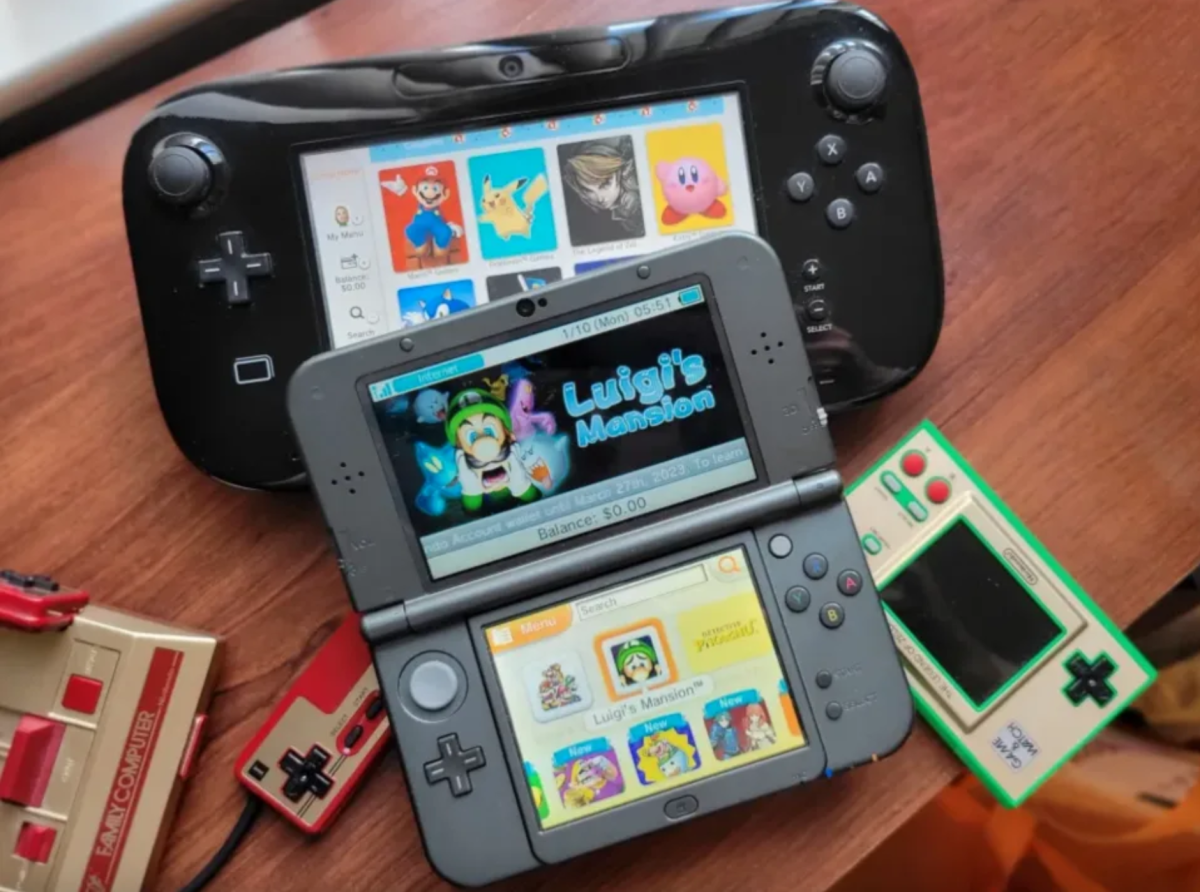
We knew it was coming, but that doesn’t . Nintendo shut down the online servers for both the Wii U and 3DS today. This means the end of online multiplayer gaming for both consoles, turning Mario Kart 7 for 3DS and the original Splatoon for the Wii U into single player or couch co-op experiences. The first Super Mario Maker is also effectively dead, as there’s no way to browse for and download player-created levels.

Both consoles are relatively controversial. The 3DS was originally considered a , though it eventually . This was thanks to a glut of incredible titles, from Super Mario 3D Land and The Legend of Zelda: A Link Between Worlds to more niche fare like Kid Icarus: Uprising and Fire Emblem Awakening. The portable console also had a robust lineup of online exclusive titles, like Pushmo and BoxBoy!.

The Wii U, on the other hand, never quite found a significant audience and is largely considered one of Nintendo’s biggest missteps. It was the next home console after the culture-defining Wii, so it had large shoes to fill. However, the company went with a name that was an absolute nightmare for the Wii’s core audience of casual gamers. Was it an accessory to the original Wii? A new console? A crappy iPad? Those of us glued to gaming media knew the answer, but the casuals never stood a chance.

There was also the console itself. The company never delivered a compelling use case for the “asymmetric gameplay” offered by the device. Simply put, the Wii U gave you two screens. There was the TV, of course, but also a touchscreen tablet. This was supposed to lead to unique gameplay mechanics that gave the person holding the tablet a different task than those holding traditional controllers, but only a few titles truly explored this concept.

Just like the 3DS, however, the Wii U was buoyed by a robust selection of first-party classics. I found the first-party offerings of the Wii era to be mostly underwhelming, with desperate attempts to shoehorn in finicky and gimmicky waggle. I still get panicked when remembering just how horrible it felt to fly Link around in The Legend of Zelda: Skyward Sword. The Wii U, on the other hand, brought Nintendo back to a novel concept called “just make good games.”

The console brought us Mario Kart 8, which is still the gold standard for digital kart racing, and the underrated Super Mario 3D World. There was also Super Mario Maker, a great Super Smash Bros. title, Donkey Kong Country: Tropical Freeze, Pikmin 3 and Captain Toad: Treasure Tracker, among many others.

Even if you never owned a Wii U, you’ve probably played some of these games. Nintendo knew the console itself was a flop, but the games were good. This led to numerous re-releases on the Switch. It’s worth noting that The Legend of Zelda: Breath of the Wild . Also, it had Miiverse! Nintendo, for the love of Bowser, . It was the only pure social network.

Of course, there’s a strong case to be made that both the design of the Wii U and its failure led to the Switch. Both devices allow for portable play, but the Wii U required people to be tethered to a bulky console. The Switch, on the other hand, is the (not bulky) console. Nintendo’s smash hybrid , as of December. The Wii U sold under 14 million devices throughout its lifespan.

Nintendo already for the 3DS and Wii U last year, so this is the final goodbye. Luckily, speedrunners a Super Mario Maker level that was long thought to be impossible just a few days ago. Life always finds a way. Sleep well, my two old friends.

Japanese police arrest suspect Nintendo threat-maker


Police in Japan arrested on April 3 a 27-year old man suspected of threatening Nintendo staff, events, and spectators. Due to these threats, Nintendo announced in December it was canceling several events, like Nintendo Live and the Splatoon Koshien 2023 finals, and postponing others. Japanese newspaper the Kyoto Shimbun first reported the arrest. According to the report, the man admitted to the threats.

Nintendo of America confirmed the arrest in a statement to Polygon, where a representative also said the Japanese headquarters “was receiving constant threats targeting its employees, and most recently, received threats targeting the spectators and staff of the Splatoon Koshien 2023 Grand Final.”

Here’s the full statement:

Nintendo’s Japanese headquarters was receiving constant threats targeting its employees, and most recently, received threats targeting the spectators and staff of the Splatoon Koshien 2023 Grand Final. Given the threats, Nintendo postponed and cancelled the series of events, and has been in contact with the police ever since. Nintendo is extremely thankful for the investigation and effort made by the police on arresting the suspect. Nintendo’s Japanese headquarters will continue to cooperate fully with the police’s investigation.

Nintendo Live, the event that was canceled in December, is a big, multi-day celebration of everything Nintendo. It was set to be held at the Tokyo Big Sight exhibition center in January. The Splatoon grand finals were slated for December at the Tokyo Ota Ward General Gymnasium.

News of Nintendo’s event cancelation came during the trial for the devastating 2019 Kyoto Animation arson attack that killed 36 people and injured many others. The attack was one of the deadliest in recent Japanese history. The suspect plead guilty and was sentenced to death in January. In the aftermath of the attack, Japanese police have treated threats with “heightened seriousness,” according to Japan Today. Police have also arrested several people who’ve made threats against both Sega and Square Enix.

X names its third head of safety in less than two years


X has named a new head of safety nearly a year after the last executive in the position resigned. The company said Tuesday that it had Kylie McRoberts to Head of Safety and hired Yale Cohen as Head of Brand Safety and Advertiser Solutions.

The two will have the unenviable task of leading X’s safety efforts, including its attempts to reassure advertisers that the platform doesn’t monetize or . The company said earlier this year it planned 100 new safety employees after much of its safety staff.

Head of safety has been a particularly fraught position since Elon Musk took over the company previously known as Twitter. Musk has previously clashed with his safety leads and McRoberts is the third person to hold the title in less than two years. Previously, Yoel Roth shortly after the disastrous rollout of Twitter Blue in 2022. Roth was replaced by Ella Irwin, who last year after Musk publicly criticized employees for enforcing policies around misgendering.

Not much is known about McRoberts, but she is apparently an existing member of X’s safety team (her X account is currently private and a appears to have been recently deleted). “During her time at X, she has led initiatives to increase transparency in our moderation practices through labels, improve security with passkeys, as well as building out our new Safety Center of Excellence in Austin,” X said in a statement.