Top 52 Platforms to Hire Injection Molding Engineers & DFM Designers for 3D Modeling Services


It is exceedingly simple enough to outsource moulding injection engineers and DFM designers, but sometimes it is not that easy to get access to the best skills. The silver lining: there are websites that have an enormous amount more top-skilled individuals who would do your 3D modelling correctly and in a rush. These professionals understand how to design and understand manufacturing processes, and they give you the solutions that are appropriate for your technical as well as your aesthetic needs. Cad Crowd is a great platform where you can outsource quality freelancers as well as good freelancers who are trustworthy, and you can complete your job satisfactorily.

Cadcrowd

Cad Crowd

Cad Crowd provides the opportunity to outsource injection molding engineers and DFM designers to design 3D. The platform provides access to customers in contact with pre-screened professionals well experienced in product development, fast prototype making, and producing CAD designs for manufacturing. Cad Crowd is quality- and reliability-driven, therefore best suited for firms requiring precision and expertise. Cad Crowd provides short- and long-term work done with superior communication and project management. Cad Crowd is in existence with a track record of quality handling of talent, open rate, and being compatible with any CAD software. Work is ordered and completed on time.

Website: CadCrowd.com

Westfall Technik logo

Westfall Technik

Westfall Technik is in existence to provide injection molding and design engineering for manufacturing efficiency and engineering-grade products. Its manufacturability design consulting is provided by its master engineers to the clients in order to enable parts to be designed economically for quality manufacturing and cost reduction. Its prototyping and tooling consulting is also provided through the site, thereby making it attractive to any shape and any size company. Westfall Technik’s corporate strategy is based on the capability of tailored customer care in a quest to offer level manufacturing. Even though it can respond to most industrial and commercial customers, it can also be a suitable replacement for contract engineers with manufacturing and design experience because it is very well aware of plastic processes and molding. 

Website: WestfallTechnik.com

Matrix Plastic Products logo

Matrix Plastic Products 

Matrix Plastic Products consists of product development and injection molding services. They provide cost savings, material suggestions, and manufacturability design suggestions from their engineers. There is company potential for in-plant manufacturing that develops tailor-made solutions for high-volume and low-volume production runs based on prototype capacity and all-capacity production. Quality and consistency are important to Matrix Plastic Products, and part performance takes precedence, along with mold design. Their personnel collaborate with customers to develop appearance and performance. Matrix Plastic Products, being industry experienced, can deal with challenging 3D models and produce production parts easily and efficiently. 

Website: MatrixPlastic.com
Boyan Manufacturing logo

Boyan

Boyan is a company offering injection moulding engineering and DFM design solutions to companies. Its specialists minimize part designs, select the ideal material, and optimize production streams. Boyan offers solutions in the production of actual-world solutions to customers seeking efficient and cost-saving solutions for 3D modelling. The company offers production planning and prototyping to customers to avoid errors and wastage of time in manufacturing. Boyan engineers have full exposure to injection moulding processes in the past as well as to the current situation, infusing projects with accuracy and gentleness. Design and production are made more precise by project management and communication tools. 

Website: BoyanMFG.com

DM plastics logo

D&M Plastics

D&M Plastics provides cost and manufacturability, and injection moulding turnkey product design. Their design engineers are customer-oriented, allowing customers to optimize material use, production time, and product performance. They also design proof-of-concept and execute pilot runs to ensure that certain products are in satisfactory specification before series production. D&M Plastics covers the industry comprehensively and possesses plastic material, mold tool design, and mold care expertise. They provide solutions involving direct customer contact in a manner that the development will be low-cost and simple. The combination of technical know-how with on-site in-field training brings the low-cost injection molding skill pool into companies. 

Website: DMplastics.com

grabcad

GrabCAD 

GrabCAD is an internet portal to engineering communities that provides access to injection molding masters and 3D models. It possesses a community of professionals where design solutions, CAD models, and experience are shared. The customers are able to outsource project support part-time or full-time, consulting for prototypes, and DFM consulting to experienced engineers. GrabCAD is flexible to the point where the customers are able to choose professionals to work part-time or full-time, depending on requirements. Its platform can not be anything but that it contains the ability to facilitate productive collaboration via model sharing, version control abilities, and design review. GrabCAD is suitable for businesses that require professional on-demand engineer access and a support community to provide production-grade, real-world solutions for 3D models. 

Website: GrabCAD.com

East West manufacturing logo

East West Manufacturing 

East West Manufacturing offers injection molding and engineering design services quickly and precisely with focus. They employ a pool of talents to assist customers in the field of process development, manufacturability design, and material selection to enable them to provide quality manufacturing output. East West Manufacturing has prototyping alongside full-capacity production, and they also offer other company services. The company specializes in collaborating with clients hand-in-hand in designing and repairing any manufacturing flaws that occur. With injection molding expertise at a high level, East West Manufacturing employs engineers who take intricate 3D models and produce functional parts. They are trustworthy in craftsmanship, on-time delivery, and to spec.

Website: EWMFG.com

Naukri logo

Naukri

Naukri itself is a job listing platform where corporations can hire engineering experts, such as injection molding engineers and DFM designers. Hiring managers can post project work or permanent jobs with job descriptions, picking the engineers with manufacturing and CAD expertise. Exposure of Naukri to engineers beyond limitations enables the recruitment of engineers with superior-level experience in 3D modeling and design optimization. While a job search website rather than a professional freelancer website, Naukri is the right website to hire skilled engineers for temporary employment. Its database and search feature make it suitable to hire staff for technical as well as professional requirements.

Website: Naukri.com
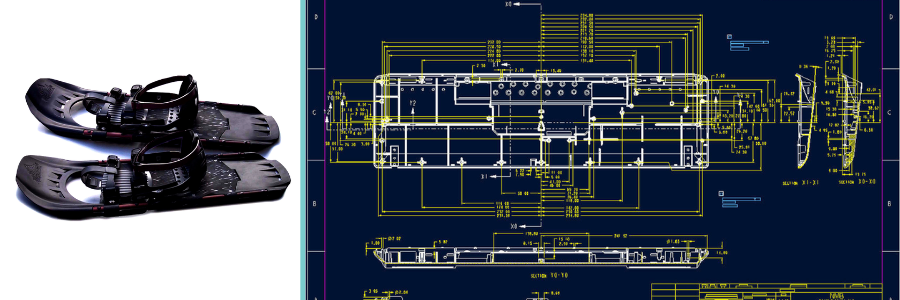
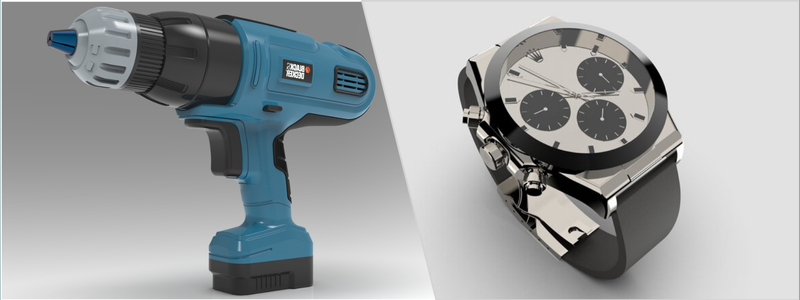
Injection molding design of a snowshoe and factory equipment by Cad Crowd design experts

RELATED: What are proven product design principles when working with companies & freelancers?
Upmold logo

Upmold

Upmold is an injection mold plant and DFM providing prototypes as well as a full manufacturing facility. They also provide design recommendations to be affordable, producible, and maintain product integrity. Upmold is a company that comes with efficiency and accuracy to allow customers to turn 3D models into producible, high-quality parts. Their platform is designed for small manufacturing companies and big manufacturers looking for professional guidance on tooling, material, and process optimization. Upmold group cycle of designing to client specs and then working their way back around the design and manufacturing loop is an excellent outsourced solution for experienced injection molding designers. 

Website: Upmold.com

BeraTek Industries logo

BeraTek Industries

BeraTek Industries provides injection mold design and engineering services that will meet any manufacturing requirement. Part design optimization for cost, efficiency, and manufacturability is their business. Pilot run support, model, and production are offered in-house for the customers in order to receive their design review before bulk manufacturing. BeraTek Industries is skilled at handling various materials and molding methods to enable products to operate and appear as desired. It is a technical expert and team player in assisting customers to steer clear of common errors in manufacturing design services. BeraTek Industries is best suited for businesses requiring experienced engineering services and real solutions for injection molding projects. 

Website: BeraTekIndustries.com

HLC logo

HLC 

HLC is a commercial firm involved in injection molding and DFM design solutions for enterprises. They have part geometry optimization, material selection, and manufacturability optimization capabilities that allow the production of the best designs. HLC provides prototyping, tooling, and production planning services to allow customers to avoid errors and delays. The company is actually very good at coordination to better understand the client’s requirements and respond accordingly in carrying out projects. HLC plastic capability and molding factory allows engineers to provide functional solutions for high-volume and low-volume manufacturing. With only the right degree of professionalism, technical expertise, and focus on quality, HLC is an organization businesses can rely on to obtain the best-ranked injection molding engineers. 

Website: HLC-Metalparts.com

Sussex Injection Molding logo

Sussex Injection Molding

Sussex Injection Molding offers design-to-manufacturing solutions in product design, prototype development, and manufacturing. It offers an engineer DFM consultation to the client to examine 3D models and re-design on the cost, performance, and weight-saving factors. Its platform is also worldwide and versatile, with enough diverse industries and production plants, and is accurate and efficient for all projects. Sussex Injection Molding excels in good-looking and functional teamwork and open communications to create good-looking and functional designs. Sussex Injection Molding’s input in the performance, mold maintenance, and tooling expertise assists clients in avoiding production problems. Sussex Injection Molding’s technical consulting focus and concern for quality are most ideally suited for businesses that need skilled engineers to manage injection-molded designs for best performance.

Website: SussexIM.com
MoldMaking Technology logo

MoldMaking Technology 

As an agency and source company to DFM designers and engineers, mold engineers, MoldMaking Technology provides product development services. They prefer to have product design, material recommendation, and process engineering left to their skilled technical experts. They provide shop and production prototyping to allow customers to be cost-conscious and maximize the efficiency of production. MoldMaking Technology excels at allowing customers to create better molds and is ready to prevent manufacturing problems. With over so many years of service in so many various industries, they provide valuable experience to engineers towards the purpose of molding complex 3D designs into shapes that can be manufactured as functional products. The firm is efficient, of good quality, and an average choice for businesses that need experienced injection molding engineering and design. 

Website: MoldMakingTechnology.com

Crescent Industries logo

Crescent Industries

Crescent Industries provides customized manufacturing projects with DFM solutions and injection molding engineering. Its manufacturing design experts help save the design in the manufacturing productivity sense, material, and cost-saving for the clients. The company is ideally suited for production, prototype, and tooling to ensure the design is in specification-quality before quantity manufacturing. Technical support as well as team guidance are of utmost importance in Crescent Industries to guide customers away from quality issues as well as usual manufacturing faults. Technical expertise in-house in plastics and molding ensures operational solutions to every project. Dependability and professional service being its utmost priority, Crescent Industries is ready to service firms that want professional injection molding engineers and design services. 

Website: CrescentInd.com

Altair logo

Altair 

Altair provides Computational Fluid Dynamics solutions. Altair provides material selection, manufacturability optimization, and part geometry optimization to customers. Altair’s software is automated to produce good-quality results in prototyping, production planning, and verification of design. Altair’s business model is co-working and technical assistance, whereby the customers search for potential solutions before production activities. Industry expertise is offered by Altair engineers for several years to apply real-world solutions for real 3D modeling as well as injection mold problems. Professional services-oriented business processes place Altair in a company-based solution for effective and precise designing. 

Website: Altair.com

Latium Logo

Latium

Latium is an independent network to link the clients and skilled injection molding engineers and DFM designers. The clients can post the jobs and outsource the engineers on either a short-term or permanent basis, choosing the engineers on the basis of experience and qualification. Latium uses convenience and flexibility to enable the clients to search for resources to achieve 3D modeling, prototyping, and production support. Latium provides collaboration capacity, project management capacity, and payment processing capacity to enable cooperation. Latium is appropriate for companies that require no-commitment engineering freelancing. Latium possesses a multi-disciplinary panel of engineers who help the client achieve effective injection molding and design solutions. 

Website: Latium.org

First Mold Manufacturing logo

First Mold Manufacturing Limited

First Mold Manufacturing Limited provides manufacturing effectiveness and precision engineering, as well as injection molding. They provide DFM consultancy, material guidance, and cost savings and manufacturability tooling assistance via their design engineers. They help with prototyping, pilot runs, and mass production to render the designs beneficial and durable. Customer coordination is one place where First Mold Manufacturing Limited succeeds in preventing production flaws and maximizing parts’ performance. They have skilled engineers in every plastic industry and provide solutions for real-world intricate 3D modeling and molding. Technical expertise and professional knowledge are the foundation of their business. 

Website: FirstMold.com

PTI engineered plastics logo

PTI Engineered Plastics 

PTI Engineered Plastics is an expert in injection molding and design support for low- and high-volume firms. Its engineers perform the DFM analysis, material suggestion, and manufacturing planning to ensure that the components are as cost-effective and manufacturable as possible. PTI Engineered Plastics integrates prototype engineering services and tooling suggestions to allow customers to pilot test designs before high-volume production. PTI Engineered Plastics places a high value on technical communication and honesty in an attempt to allow clients to achieve quality and performance specifications. Their engineers provide in-service solutions for transcribing 3D models into solid production parts due to their experience with a wide variety of plastics, as well as the molding processes. PTI Engineered Plastics is well-suited for businesses that require injection molding engineering services from time to time.

Website: TeamPTI.com 
Nicolet Plastics logo

Nicolet Plastics

Nicolet Plastics provides DFM engineering and injection molding services to several customers who are working in different industries. The designers at Nicolet Plastics possess skills in manufacturability design, cost reduction, and material removal. Nicolet Plastics does the production planning, tooling, and prototyping in succession in a manner so that the design gets finalized and functional. Nicolet Plastics offers the possibility of working together with the customer, offering the largest number of parts with fewer faults during manufacturing. Nicolet Plastics designers prototype plastic and design, and offer in-stock repair for straightforward and sophisticated work. Business sense and technical knowledge motivate Nicolet Plastics to be a successful business partner for businesses searching for experienced injection moulding and design engineers. 

Website: NicoletPlastics.com
Kemal Manufacturing logo

Kemal

Kemal offers injection moulding engineering and DFM and assists customers with optimized part designs, material utilization, and manufacturing productivity. Prototyping, tooling, and volume manufacturing, as well as consultancy for minimization of errors and manufacturing cost, are provided by the portal. Kemal engineers have the experience of converting 3D models into producible parts with guaranteed performance and quality specifications. Technical simplicity and collaboration are the pillars of their credo, such that the customers have the ability to fix the source of the issue before it is realized in costly form at downstream design levels. With expertise in a wide variety of plastics and mold processes, Kemal provides excellent and professional services to companies requiring fine engineering services for the injection mold process. 

Website: KemalMFG.com

Plyable logo

Plyable

Plyable is an independent online injection molding design expert and DFM designer service. They have experts with previous experience in 3D modeling, production design, and prototyping. Companies can contract the services of Plyable engineers by project size, project listing, experience, and compensation, and can easily repeat and apply them in business. The company provides communication, project management, and file sharing to enable working together. Plyable engineers will also be more cautious in manufacturability, keeping costs and materials to a minimum to prevent manufacturing faults from finding their way to the consumer. Plyable is most suitable for companies seeking expert freelance injection molding with hands-on, problem-solving abilities. 

Website: Plyable.com

Jiangzhi logo

Jiangzhi

Jiangzhi offers turnkey injection molding and DFM to a variety of industries. Jiangzhi engineers help clients from part design, material, and tooling all the way to cost-efficient, manufacturable part development. Jiangzhi also involves low-volume production and prototyping to enable customers to validate designs before committing to high-volume production. Jiangzhi offers technical support and co-working where customers can produce parts and avoid manufacturing flaws. Plastic and technical molding expertise provides accurate solutions for straightforward and intricate 3D model work. Jiangzhi suits businesses that require improved quality injection molding engineering solutions. 

Website: SWCPU.com

RELATED: Why design for manufacturability (DfM) is essential for product success when hiring a design firm
Natech plastics logo

Natech Plastics

Natech Plastics is another injection mold and DFM consulting company that deals with small as well as mass production orders. Their engineers design the part geometry to attain optimal design, select the best material, and reduce manufacturing inefficiency. Natech Plastics’ prototypes, tools, and manufactures finish, i.e., the designs are good right from the start, and quality specifications are retained. Technical assistance and cooperation are the very nature of what they do, and help customers steer away from prevalent manufacturing flaws. With experience across various markets and plastics, Natech Plastics provides solution-driven solutions for manufacturability conversion from 3D models. Their top-level professionalism and delicate work help them become the best company to hire for injection molding engineering services for businesses. 

Website: NatechPlastics.com
Accumold logo

Accumold

Accumold is a micro-molding and hard part-specialized DFM precision injection molding and engineering firm. Their engineers offer material suggestions, tooling assistance, and detailed component part design for optimization. Accumold offers manufacturability and quality, prototype design services, and manufacturing planning. Technical and coordination capabilities allow customers to design optimal debug production problems before transfer. They are internationally recognized as accuracy-based and reliability-based, and Accumold is a business partner of medical, electronic, and industrial clients. Its engineers provide manufacturing solutions in actual applications to transform 3D models into quality producible parts, and Accumold is a proven and reliable solution for high-end injection molding projects. 

Website: Accu-mold.com
protolabs-e

Protolabs

Protolabs provides instant injection molding and 3D model solutions for both speed and precision. Its engineers provide DFM consulting, material selection, and prototyping support to facilitate product development. The firm will be performing low- and high-volume shrink design for function and cost. Protolabs is built on teamwork and the utilization of technical sensitivity to enable customers to beat production schedules without altering the quality. With vast experience in working with plastics of various ranges and mold processes, their engineers provide hands-on solutions to create producible parts from 3D models. Protolabs provides a low-cost master injection molding library with rapid turnaround. 

Website: Protolabs.com

Slide products logo

Slide Products

Injection molding, DFM consulting, and cost- and manufacturability-driven engineering parts are offered by Slide Products. Their engineers assist in material, tooling, and manufacturing planning selection to offer manufacturability-based solutions. The business can prototype and manufacture to full-size to allow customers to examine designs before transitioning to high-volume manufacturing. Technical competence and collaboration allow Slide Products to be unique in that they allow customers to prevent production problems as well as achieve design potential. With experience in many types of plastics and mould processes, their engineers can help in developing proven steps for turning 3D models into production parts. Slide Products most fit companies that require quality engineering service. 

Website: SlideProducts.com

Longterm Mould logo

Longterm Mould

With precision injection moulding and DFM engineering services with a focus on quality, Longterm Mould helps. Longterm Mould designers offer partial design, material selection, manufacturability, and cost-effective tooling. Prototyping, pilot manufacturing, and large-scale manufacturing are provided by the factory so that designs perform and function in a way beyond expectations. Technical advice saves customers from making manufacturing errors and improves design before manufacture. Plastic and mould process knowledge and long-term expertise of Longterm Mould guarantee that their 3D model conversion to a producible, safe product is optimized to the maximum level. Their professional process is a boon to such organizations in need of professional injection moulding engineers. 

Website: LongtermMould.com
Cavity Mold logo

Cavity Mold

Cavity Mold provides injection moulding engineering, DFM design, and prototype tooling services. Its engineers specialize in geometry optimisation, material expertise, and manufacturing efficiency optimisation. The organization provides the quantity of production and prototypes to be within reach of quality and performance specifications. Technical support and collaboration are important at Cavity Mold, which saves clients from varied manufacturing. Experienced engineers with specialized knowledge of multiple plastics and molding processes provide effective solutions in the conversion of problematic 3D models to manufacturable products. Their competence, honesty, and patience create ACO Mold, the top-rated tool for firms looking to acquire top-notch injection mold making and designing. 

Website: CavityMold.com
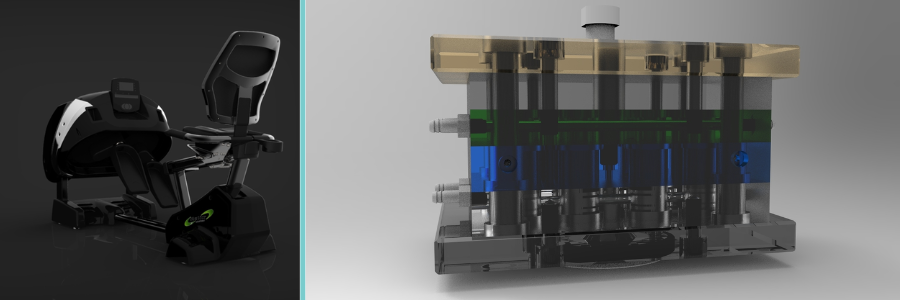
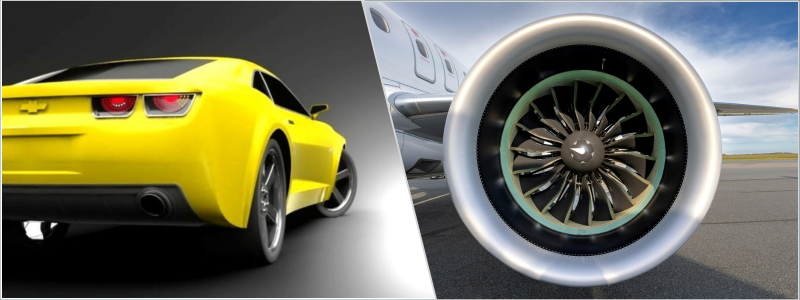
Injection molding design examples by Cad Crowd manufacturing design experts

RELATED: The importance of iteration in product development & working with product design companies
ACO Mold logo

ACO Mold

ACO Mold provides injection molding engineering, DFM consulting, and prototypes. They have experts who assist customers in part design optimization, material selection, and production planning. ACO Mold makes small- and bulk-size production cost-effective, quality, and functional. The firm provides advisory and cooperative technical services to assist the client in avoiding potential defects when producing and minimizing designs before mass production. ACO Mold experienced engineers with sufficient knowledge of various plastics and molding processes can offer effective solutions to render 3D models and produce parts. Their professional, quality-oriented, service-oriented approach makes them an effective cooperator for injection-molding projects. 

Website: ACOMold.com
Metro Custom plastics logo

Metro Custom Plastics

Metro Custom Plastics offers injection molding and prototype engineering production, and DFM assistance. The customers are assisted by Metro Custom Plastics designers to maximize the process, the material selection, and the part design to optimize. The plant is technology and human-friendly in a way that manufacturing does not need to wait for the customers, and the customers are able to indulge in designs. Metro Custom Plastics provides small-series and large-series manufacturing in the spirit of performance and quality requirements. Their familiarity with many plastics and injection molding enables engineers to work with hands-on methodologies to translate 3D models into production parts. Intentional experience and passion enable Metro Custom Plastics to be one of the customer-choice companies by clients searching for experienced injection molding engineers. 

Website: MetroCustomPlastics.com
HH molds logo

H&H Molds 

H&H Molds is an injection mold and DFM engineering consulting company that provides part design, material, and tooling consulting services. They reduce manufacturability, cost, and performance. Prototyping, pilot runs, and production runs are provided by H&H Molds so that designs exist and are of decent quality. Technical and communication support form the foundation of their process, so customers will not need to worry about creating beforehand and making parts to the best of their capabilities prior to production. With extensive experience working on a wide family of plastics and molding processes, H&H Molds provides plain-English solutions for the transformation of 3D models into production parts. Their professionalism and passion for quality make them a business organization decision for injection molding service for product design firms

Website: HHMoldsInc.com

Jigaio logo

Jiga

Jiga is an internet business company providing injection molding engineering and DFM service with emphasis on precision and efficiency. Their engineers assist customers with part design optimization, tool selection, and material selection to achieve maximum producible and economic products under the customer’s specification for performance, functionality, and appearance. Jiga streamlines the production planning and prototyping, but customers can test and inspect prototypes before installing them in mass production. Technological cooperation and know-how collaborations provide solutions to the majority of general manufacturing issues. Jiga engineers provide solutions based on experience in transforming 3D models into producible quality parts using experience with hundreds of plastics and moulding technologies. Satisfaction and professionalism form the pillars of Jiga’s occupational existence as a business role model for business partners in injection moulding engineering. 

Website: Jiga.io

Eternal Mould logo

Eternal Mould Technology

Eternal Mould Technology provides injection moulding engineering and DFM design for manufacturability and optimal production. Their technical professional staff assists the customers from part design, material selection, and tool optimization to cost reduction and improvement of quality. Eternal Mould Technology offers mass production and prototyping to allow customers to pilot-produce the design before mass production. Liaison and technical support are core aspects of Eternal Mould Technology to allow customers to prevent production issues and enhance designs. Knowledge of different plastics and moulding processes allows their engineers the best possible solutions to convert the 3D model into functional parts. They are a reliable partner with expertise and accuracy. 

Website: EternalMould.com
Sung Precision logo

Sung Precision Mould & Plastic Co., Ltd 

Sung Precision Mould & Plastic Co., Ltd offers injection moulding and DFM engineering. Optimisation of part design, cost reduction, material recommendation, and manufacturability enhancement are guaranteed by engineers for the tool. The business can offer clients prototyping, pilot run, and mass production so they can concentrate on product design optimisation before production. Technical skills and coordination provide assurance of the solution to the problem of the production of products and quality improvement. Through plastic variety and mould technology, Sung Precision engineers offer technological solutions to the 3D model production process for finished products. Their technical knowledge on matters of technology guarantees them a guarantee for injection moulding orders. 

Website: SungPlastic.com
Fow Mould logo

FOW Mould

FOW Mould provides full-cycle mould design and injection and DFM consultancy solutions, providing customers with advisory services from part design optimisation to material definition and manufacturing planning. Their professionals provide prototyping, tooling, and manufacturing advisory services in making the parts functional, manufacturable, and economical. FOW Mould encourages cooperation and specialist consultancy, warning customers against design for complexity and best design prior to manufacture. With experience in various plastics and moulding processes, its engineers offer improved solutions to 3D design conversion to quality components. Technical competence, professionalism, and quality dedication make FOW Mould a preferred business partner of choice to such companies that wish to collaborate with experienced injection moulding engineers. 

Website: FOWMould.com
Injection Molding Group logo

Injection Moulding Group of BHC Associates

Injection Moulding Group of BHC Associates does engineering and DFM design work effectively and economically at the highest urgency. Their skilled personnel assist customers in obtaining the best part design, material choice, and tooling recommendation with the aim of cost savings in manufacturability and dollar savings. They assist customers in prototyping, pilot runs, and production lots in fulfilling their functional and quality requirements. Technical readability and teamwork are pillars of their philosophy that render the customer capable of catching flaws in the moment of manufacture. Expert solutions extensively tested and proven by engineers fairly seasoned with various plastics and injection molding operations here provide rational solutions for translating 3D models into manufacturing parts. Well-tested solutions developed here professionally are an absolute priority for injection molding operations. 

Website: InjectionMoldingGroup.com

HLH Rapid logo

HLH Rapid

HLH Rapid is the firm that offers injection molding and DFM engineering, where speed is given emphasis. They offer assistance in part design, tooling, and cost and manufacturability optimization. They are process-efficient and best for prototyping, manufacturing planning, and mass production, which enables customers to prototype before final big productions. Technical expertise and communication prevent production flaws and deliver quality output. HLH Rapid’s capability to machine plastics and moulding operations enables the engineers to provide capable solutions to transform 3D designs into producible products. They are skilled and accurate, thereby HLH Rapid is the best value injection moulding service company. 

Website: HLHRapid.com

Micromolds logo

Micromolds℠

Micromolds℠ provides micro-injection moulding along with DFM engineering support in small, complex parts. Micromolds℠ engineers help customers with part design, material, and tooling for precision, productivity, and economy. The plant is also prototype-friendly, pilot-manufacturing-friendly, and high-volume production-capable, allowing the customer to pilot designs before high-volume production runs. Partnership and technical expertise are the cornerstones of Micromolds℠ business, allowing customers to reduce defects in manufacturing and produce the best parts. With plastic design experience with other plastics and techniques, their engineers perform initial work for the transformation of 3D models to production-ready, production-grade parts. Micromolds℠ are best suited for precision-injection molding applications. 

Website: Micromolds.eu

RELATED: Low-volume, cost-effective alternatives to injection molding with manufacturing firms & product designers

fictiv logo

Fictiv 

Fictiv offers injection molding and DFM services with emphasis placed on rapid prototyping as well as production optimization. They offer part design, material, manufacturability, and tool quality consulting by the design engineering experts. Low-volume and high-volume production are offered on the site with pilot testing capability for customers’ designs before full-scale manufacturing. Fictiv is a partnership and tech consulting firm that keeps customers out of production hell. Fictiv engineers provide hands-on support for the translation of 3D models into producible, manufacturable parts, delivering fast. Professional website, adaptability in providing variable services, and technical proficiency qualify it for utilization by enterprises that require injection molding engineering services. 

Website: Fictiv.com
Moldie logo

Moldie

Moldie provides injection molding engineering and DFM designing with manufacturability and quality as the main focus. The engineers guide the customers from part design optimisation, material selection, to tool suggestion in order to avoid manufacturing issues and reduce cost. Pilot production of the product, professional prototyping, and mass production are coordinated in a manner that the designs are piloted by the customers prior to mass manufacturing. Technical advisory and cooperation are initially done so that the customers will be able to maximize the designs and prevent manufacturing issues. With the capability to work on multiple plastics and multiple mold processes, Moldie engineers are responsible for in-house 3D model conversion to produce molds. Professionalism is assured by successful project completion.

Website: Moldie.net
Aprios logo

Aprios 

Aprios offers injection moulding engineering and DFM design service with production efficiency and manufacturability as its core strengths. Part design optimisation, material recommendation, and tool recommendation for customer service, it assures rugged and cost-effective outcomes. It is capable of prototyping, pilot-manufacturing, and completing manufacturing in a manner that allows customers to pre-produce test samples. Teamwork and technique are the major concerns so that there will never be any production bottleneck. With hands-on experience in plastics of all varieties and molding technology, Aprios engineers provide effective solutions in 3D model conversion to production parts. Accuracy and competence in the workplace are the skills that push Aprios to labor as a trustworthy injection molding services company. 

Website: Aprios.com

Trustbridge logo

Trustbridge

Trustbridge offers injection molding engineering and DFM consulting with a quality and attention to detail focus. Part and material design, and tooling recommendations, are achieved by Trustbridge’s engineers for improved manufacturability and cost. Factory pilot run, volume, and prototyping are conducted to enable customers to pilot designs prior to mass production in large quantities. Technologically able staff and planning constitute the core of Trustbridge’s strategy, and assist clients in evading production challenges. Plastic know-how and mold process enable engineers to provide realistic solutions for converting 3D models into producible, reliable parts. Trustbridge is more suitable for companies that need expert injection molding engineering.

Website: TrustBridge.pro
Danke Mold logo

Danke Mold

Danke Mold offers injection molding and DFM engineering services on the basis of manufacturability and manufacturing efficiency. It provides customers with part optimization design, tool consultancy, and material selection to reduce cost and defects in manufacturing. It provides rapid prototyping services, pilot manufacturing, and volume manufacturing to experience superior quality and designs to overcome. Technical expertise and coordination are provided to improve parts and avoid manufacturing flaws. Armed with molding process expertise and deep plastic knowledge, Danke Mold engineers design applicable solutions to transform 3D models into producible parts. Expert service is why they’re a great injection moulding service provider. 

Website: DankeMold.com

indeedcom logo

Indeed

Indeed is a generic jobs board where one may be able to search for injection moulding engineers as a resource, but it is not a specialist marketplace for project-based freelance design. There, the employer advertises jobs, and it passes on to applicants of different experience levels in terms of DFM and 3D modeling. Indeed has limited reach but isn’t so suited to advertise freelance work-related services like prototyping or design check. Recruitment from the platform may also involve additional screening and tracking. It is applied in full-time recruiting, but doesn’t work when buying expert freelance engineering services like DFM or injection molding, as they may not be available. 

Website: Indeed.com

kolabtree logo

Kolabtree

Kolabtree does have some experienced freelance engineers and scientists who could be added to the list to offer injection molding. Not CAD workshop or post-production, but maybe difficult to find direct DFM experience engineers. The platform is suitable for career posting and collaboration partnerships, but not an injection molding forum. The clients will need to invest additional time in credential verifications. Kolabtree can perform research- or consultancy-scale, but certainly not production- or prototype-scale 3D modeling. For injection molding business services, there are increasingly reliable specialty platforms.

Website: Kolabtree.com

Truelancer logo

Truelancer

Truelancer is an open freelance network with designers and engineers, but without injection molding or DFM work specialties. Customers can freelance CAD or outsource 3D modeling, but are not assured quality work since freelancers vary in experience. No facilities on-site for support manufacturing, design verification, or prototyping as key components of an injection molding project. Truelancer work can be subject to strict screening and supervision. It is possible to apply it on an ad hoc or small-scale basis, but for the purpose of providing quality and consistent work, other services with an engineering expert orientation must be outsourced. 

Website: Truelancer.com

ZipRecruiter Logo

ZipRecruiter

ZipRecruiter is a job board on which one can post vacancies and conduct interviews with prospects to be employees. It is possible to use it for hiring injection molding engineers, but not project-based engineering computer software or 3D modeling design services. Prototyping assistance, DFM recommendation, and manufacturing recommendation do not appear on the site and therefore are not ideal to utilize from a project. Competition would be of variable experience and quality and would need further winnowing. ZipRecruiter is best suited to full-time permanent rather than temporary freelance injection molding. Manufacturing and CAD are more suited to professional job boards for technology engineering careers.

Website: ZipRecruiter.com

freelancercom

Freelancer

Freelancer is an in-mass freelancing website on which the client can post work and employ engineers. The site will have some filtering for injection molding production experience and DFM designers, but it is not well-staffed with filtering for production experience. Professionalism cannot be assured, and the client will need to sift through portfolios and referrals aplenty. CAD co-working tool program software, prototyping software, and manufacturing support services are not provided. A freelancer is capable of undertaking limited 3D modeling but cannot undertake the level of professionalism and accuracy required to execute highly advanced injection molding services. Customers requiring professionally designed, high-quality, production-level products professionally manufactured have no alternative but to utilize other professional websites.

Website: Freelancer.com

LinkedIn logo

LinkedIn

LinkedIn gives customers access to engineering talent, including injection molding experts and DFM engineers. LinkedIn is a job board and a networking site, and not a product of items that are project-based. While a useful adjunct when it comes to hiring the right talent, LinkedIn does not give project management software, prototype concept ideas, or an experienced-level review of engineers. Freelance work is time-consuming and thus will not be effective when recruiting engineers to do 3D modeling or injection molding. LinkedIn is for professional expert networking or online professional work and cannot be used for project work. Professional injection molding platforms can be used for professional injection molding services. 

Website: LinkedIn.com

Guru logo

Guru

Guru is now an open website with designer and engineer access, but no longer a DFM or injection molding-enabled site. The customers will be seeking to outsource model work or CAD to the professionals, but will not get advanced screening or design review capability, production support, or web-based prototyping on the website. It is engineer-oriented, so aggressive candidate hunting must be done. Guru would be utilized for freelance repetitive work better than high-accuracy injection mold work. Clients who need engineers who will transform 3D models into producible parts every day need to access other sites with an unmistakable manufacturing and engineering focus. 

Website: Guru.com

fiverr logo

Fiverr

Fiverr offers a wide range of freelance services, including 3D modeling and design, but not injection molding or DFM consulting. Fewer than others provide the same service, but generally with a variation of experience and quality. It is inadequate for software development, project prototyping, and project management. Fiverr does not stand against certain low-grade work or idea concepts, but not of the kind of professional injection mold services needing precision, collaboration, and technical skill. People who require high-standard production-level output are best fit on sites with engineering, CAD design services, and injection mold tools. 

Website: Fiverr.com

Upwork-logo

Upwork

Upwork is a generic freelance site with a bit of engineering history, some of which also possess injection mold capability. Production or DFM capability isn’t present, however. Quality and experience variation will have to be carefully managed. No in-house manufacturing support, design verification, or prototyping capabilities are available on the platform. Upwork may be fine for small jobs, but as the companies grow, there are some websites that provide the opportunity to work with an experienced expert and have a more professionalized procedure established for the task. 

Website: Upwork.com
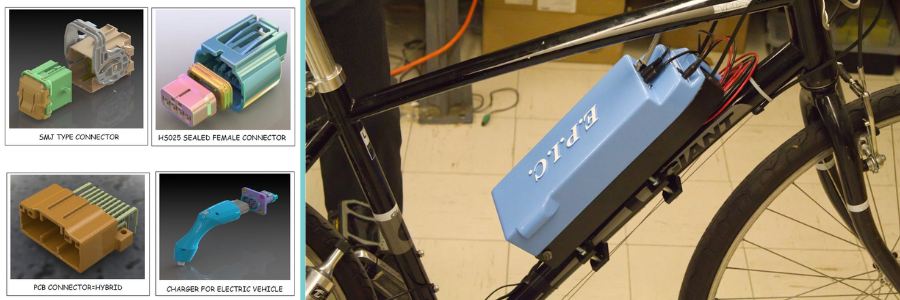
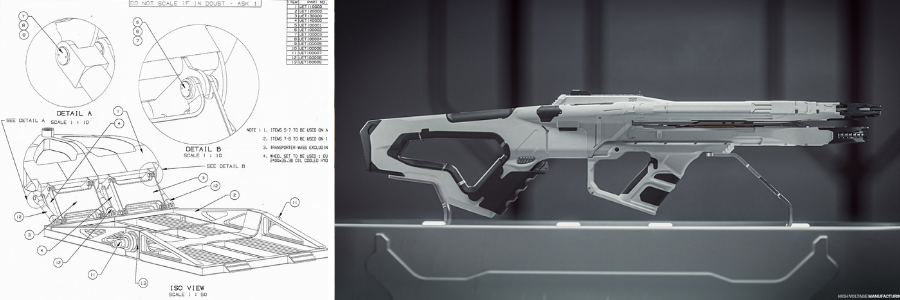
Injection molding parts and design examples by Cad Crowd manufacturing design freelancers

RELATED: How is product design different from industrial design services companies?

The bottom line 

With all those websites out there, it’s never easier to browse and employ that perfect injection mold making engineer or DFM designer. Cad Crowd makes browsing a top-notch list of freelancers, seeing their portfolios, and starting your next 3D modeling venture easy. Wet your feet, look around, and meet the wizard who will build your dream for you. Request a quote today.

author avatar

MacKenzie Brown is the founder and CEO of Cad Crowd. With over 18 years of experience in launching and scaling platforms specializing in CAD services, product design, manufacturing, hardware, and software development, MacKenzie is a recognized authority in the engineering industry. Under his leadership, Cad Crowd serves esteemed clients like NASA, JPL, the U.S. Navy, and Fortune 500 companies, empowering innovators with access to high-quality design and engineering talent.

Connect with me: LinkedInXCad Crowd

How to Choose Between Competing Concept Design Proposals with Product Design Firms


Every year, there are nearly 30,000 new products introduced to the market, with a staggering 95% rate of failure. A big portion of those products is made by startups and small product design companies, but even internationally recognized names aren’t always immune from NPD (New Product Development) fiasco. Remember the Google Glass project, which received millions of dollars in investment but quickly vanished from the conversation? Perhaps the uncomfortable backlash from the New Coke during the mid-1980s is still in memory, too. Even the multinational oral hygiene powerhouse, Colgate, had to taste the bitter experience of a bust with its Kitchen Entrees line.

Big companies could bounce back from an NPD debacle, but many of their less fortunate counterparts struggled to even afford the chance to try again. Failed products don’t just vanish; they leave behind companies whose brands and reputations are indefinitely tarnished. Not only does a product failure drag down the financial report, but it also costs the company momentum and likely the rare opportunity to establish a market position.

This is why concept testing is a crucial phase in an NPD process. At the end of the concept generation step, you probably end up with a dozen or more concept designs. Because it makes little financial sense to try to develop every single one of them all the way to the prototyping stage, you have to pick only one concept that actually warrants the resource allocations for further development. While choosing between competing concept designs isn’t always an exact science, there’s definitely something you can do to minimize your chances of becoming part of the harrowing statistics.

Concept testing consists of a series of purposeful steps to help you gather the product’s marketability data from end-users. In general, the data should tell what the target demographics like and dislike about the product, how it compares with competitors, why some consumers want the product while others avoid it, and whether the product presents an obvious room for improvement. As simple as it may sound, there’s no guarantee that the data you gather at the end of the testing will point to any particular concept. The data still has to be scrutinized and interpreted for it to be useful.

Given the complexities of formulating the test procedures, deciding which methodology to use, and determining which participants should take part in the testing, it’s advisable to have the process done or at least assisted by NPD professionals. Cad Crowd is among the few freelancing platforms that specialize in hardware product design and engineering design services, where you can connect and collaborate with strictly vetted, tried-and-true, seasoned industrial designers experienced in concept generation and testing. With client-friendly hiring options and robust IP protection services backed by more than 15 years of experience, Cad Crowd is a reliable one-stop shop used by companies big and small to outsource any and all stages of hardware product development. The platform itself can function as a project manager if you want, bridging communication and providing quality control to make sure that your concept testing process is handled only by the best-qualified talents to guarantee accurate results.


🚀 Table of contents


Concept testing vs. product testing

The primary purpose of concept testing is to evaluate the market viability of product designs while they are still in the conceptual stage. You don’t have a product yet at this point, as it has not been fully developed. The evaluation is meant to validate ideas early on in the NPD process when there’s still enough time to revise, improve, add, and discard most of the concepts being tested. As the evaluation concludes, you should end up with the most feasible concept, allowing you to allocate resources to further develop it. Concept testing must involve representatives of the target demographic (and in some cases, experts) giving their opinions on such subjects as potential for demand, perceived values, likely pain points, performance expectations, and so forth.

On the other hand, product testing implies that you already have an almost-finished product that has undergone some rounds of prototyping followed by small-volume manufacturing. The product is approaching its full market launch timeline, but you want to make sure that everything works as intended before it hits store shelves. Since the number of units is relatively small (from the pilot production), product testing is likely done by a small number of respondents, such as certification issuing organizations, a third-party panel of experts, focus groups, and beta testers.

It’s worth mentioning that concept testing isn’t a form of marketing campaign for your consumer product design firm, either. You’re not sending the concepts for people to invest money in the NPD project or persuade them to make a purchase once the product is ready.

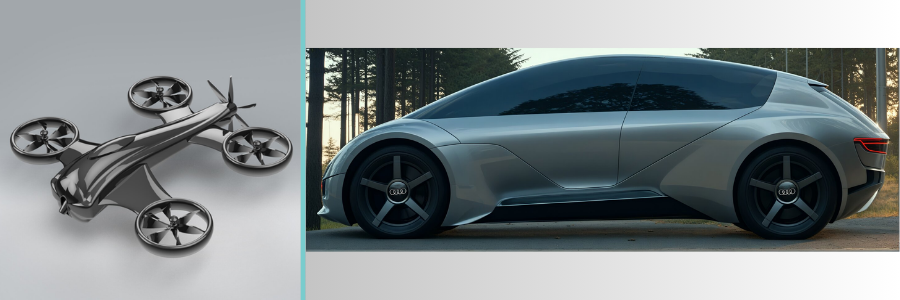
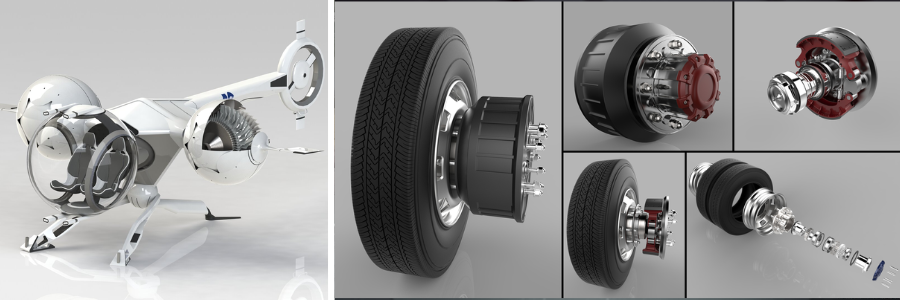
Concept designs of a drone and modern luxury vehicle by Cad Crowd design experts

RELATED: How CAD turns your idea into a prototype for CAD design companies & freelance services

Choosing the one right concept design

Say you’re developing a new hardware product. The concept generation phase gives you about a dozen or so potential designs, each with its own strengths and weaknesses. Based on technical feasibility, development cost, time-to-market schedule, and certification requirements, you narrow the selections down to half a dozen options. A possible issue with a patented design comes up, forcing you to remove another concept from the list. You have five remaining concepts available, and all of them seem to be promising enough. But you only have the resources to fully develop one product. So, how can you be sure that you’ll pick the right one? Concept testing by survey, and here’s how to do it properly.

Define clear objectives

Just like the beginning of market research, always start by defining exactly what you want to learn from the testing. Avoid vague objectives such as evaluating multiple concepts or gathering feedback from potential consumers, as they canlead to poorly executed research at best and inconclusive results at worst. You want the respondents to give specific answers about the concepts, so it’s only appropriate to throw around some specific questions as well. For example:

  • What do you think is good and bad about the concept?
  • How does the concept compare to other products you’ve already used before?
  • What features do you like the most?
  • Which design element is the worst in your opinion?
  • Is there any specific thing that makes you want this concept?
  • What are the main reasons that you wouldn’t use this concept?
  • On a scale of 1–10, how pleased are you with the concept?
  • What kind of improvements do you expect to see?
  • What features do you use the most?
  • Does the product feel ergonomic enough?

Let the things you want to know about the concepts (from the respondents) guide you through every decision, from formulating the questions to selecting the proper methodology. When you focus on specific questions, it increases your chances of acquiring coherent, decipherable answers rather than scattered pieces of responses to sort through. Narrow-focused answers make it easier for concept design experts to run the results analysis later, too.

Involve the right participants

If product testing is supposed to be a requirement for regulatory compliance and a real-world performance simulation as a form of final quality control, concept testing is all about asking the respondents for their opinions about a hypothetical new product. The keyword here is “hypothetical” because the product is yet to be materialized. All you have at this point are some concept designs, and you are in need of feedback from potential end-users.

In concept testing, respondents should primarily consist of consumers from the target market; you may also include expert users, even if they don’t belong to the same demographic. If you’ve launched a hardware product before and the new version is meant to expand your market, keep in mind that the current customers may react differently from the prospects when they’re exposed to the same concepts. Among the biggest causes of failure in concept testing are randomly chosen participants, for example, people who may never realistically buy or use the product. Their answers only dilute the insights gained from the real target market, further complicating an already complex process.

It’s advisable to recruit 150-200 respondents from each segment of the target demographic. You need to strike the right balance between speed and statistical strength, aiming to discover actionable insights and build decision-making confidence (concept selection) without dragging testing out longer than necessary.

RELATED: Top 10 benefits of reverse engineering services at product design & development companies

Testing methodology

There are four major methods commonly used for concept testing. It’s not uncommon to use a combination of two or more methods to gain as objective and reliable an insight as possible for product development experts.

Monadic: Each participant is presented with a single concept design to elicit an in-depth opinion, reducing the risk of comparison bias. Given the nature of the method, the data collected at the end of the process likely reflects respondents’ immediate reactions to a concept rather than their relative preferences. It won’t tell you why they chose any particular concept over another. That being said, my onadic survey is an excellent option for any of the following purposes:

  • Evaluation of an innovation with no direct comparison benchmark.
  • A review of a concept that requires a detailed demonstration.
  • Feedback generation on every aspect of a concept design.

In some cases, the monadic method is chosen for the simple fact that comparison bias is irrelevant to the survey result. For instance, the concept is to be developed as a direct competitor of an existing product (there will be comparison bias, but you don’t want it to affect your decision). You already know that the concept shares more than enough similarities with the alternatives, and the survey is solely intended to gauge whether the concept receives favorable feedback. Obviously, a monadic survey isn’t an ideal method to help you choose from multiple concepts, unless you have two or more concepts being tested by different groups of respondents separately.

Sequential monadic: The same group of respondents evaluates multiple concepts, one at a time. Sequential monadic gives you the benefits of an in-depth concept evaluation of its monadic counterpart, added with the ability to pit multiple concepts against each other. For order bias control, you should divide the respondents into several subgroups; a different subgroup evaluates the concepts in a different sequence, too. Among the best use cases of the method:

  • Evaluation of 2 to 4 concepts, and you need an in-depth report of each.
  • The feedback must include preference ranking.
  • Statistical comparison among the concepts is required.
  • The order of sequence in which you present the concepts may affect the objectivity or validity of the feedback.

Sequential monadic gives you a reasonable balance between detailed feedback and comparative preference in one go, making it an ideal method for budget-conscious concept design service and testing. While comparison bias is almost a given, the fact that a respondent can observe only one concept at a time can keep it to a reasonable minimum.

Comparative: Unlike with monadic and sequential monadic, where comparison bias might skew the results, you actually count on comparison bias when using the aptly called “comparative” testing method. If the goal is to put multiple concepts to the test and choose the most favorable one, this is probably the most straightforward way to do it. By allowing the respondents to do a direct comparison between competing concept designs, the data should be as unambiguous as they come. Best use cases of the comparative method:

  • A survey to figure out the key differentiators between multiple concept designs (from customers’ viewpoints).
  • Selecting the most customer-preferred design.
  • Research into whether end-users pay attention to subtle differences in multiple concepts.

The comparative method makes sense because this is what customers typically do before making a purchase. They put competing products side-by-side to understand the similarities and differences in the hope of making a well-informed buying decision. Comparative testing is how you gather preference-ranking data and identify which specific design elements most influence buyers’ choices.

Of course, the survey should ask for more than a simple ranking system. Respondents should be given the option to explain why they favor one concept over the others, providing insights to inform refinements.

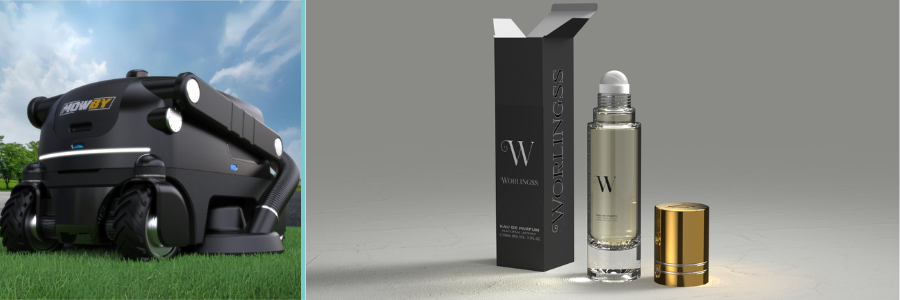
Concept design examples by Cad Crowd freelance experts

RELATED: How to improve product development for your company with engineering firms & design consultants

Protomonadic: A combination of monadic and comparative methods, protomonadic requires the respondents to evaluate the concepts in two phases. First, they evaluate the concepts individually and offer a detailed observation for each. In the second phase, they put the concepts side by side for direct comparison. Protomonadic is best used by design engineering experts for:

  • Concept testing involves complex designs, where thorough observation is required before comparison.
  • New product development research (to support investment decision).
  • An in-depth look into how certain design elements affect relative preference.

Among the aforementioned methods, protomonadic is expected to provide the most comprehensive overview of a concept’s potential marketability. The test data should indicate whether respondents’ evaluations of individual concepts align with their comparative preferences. For example, “Concept A” receives high praise for its assortment of features, but the majority of respondents say that they’re more likely to purchase “Concept B” because it’s more user-friendly. This might signal that you need to make some design compromises for the final product.

Note: there’s no single best method for every concept design testing. If you have to choose between multiple concepts quickly, the sequential monadic can be the ideal option. To gain a better understanding of how buyers respond to innovation, the monadic method promises a detailed evaluation. When in-depth comparison data is necessary, protomonadic is a wise choice. Choose the testing methodology according to the objectives, and always consider such factors as the complexity of concept design and budget.

Result analysis

Now that the testing concludes, analyze the data and look for such findings as:

  • Trends and patterns in concept selection among respondents
  • How the demographic variations (age range, occupation, ethnicity, cultural backgrounds, etc.) affect relative preference
  • Design elements with positive and negative feedback
  • Surprises, or any unexpected responses

Based on the analysis, it should become more apparent how potential buyers perceive the value proposition of each concept, what features generate the highest purchase intent, and the biggest causes of concern that might hinder adoption. Everything comes down to the simple purpose of enabling data-driven concept selection by product engineering services. The testing helps you take out all the guesswork as you choose the most promising concept design for a product.

Why concept testing matters

The idea behind concept testing is to better understand how your target market responds to a new design that could address a long-standing unmet need or offer a better alternative to existing products. You need validation (from potential buyers) that one of the proposed concept designs will perform well in the market when it’s finally launched. This validation plays no small part in your attempt to:

  • Save time and resources: when a concept gains positive feedback from the target market, you have the much-needed confirmation that further development is indeed worth pursuing. It’s best to validate the marketability of a concept as early as possible in an NPD project, so that you can focus on refining ideas that will actually work instead of churning out more design sketches with little feasibility, if any.
  • Minimize risk of failure: no one wants to develop a product that hardly sells. Respondents’ answers and observations are highly valuable for determining the next step in the development process. Whether you decide to add more features or abandon any particular design element, you should be able to trace it to the concept testing result analysis. You might not be able to provide everything that the customers want, but you can certainly avoid giving them the features they dislike.
  • Secure stakeholders’ investments: when presenting a new product concept to stakeholders (including investors), you need to back your claims of profitability with verifiable data. Concept design testing in which the respondents are representatives of the target market can make a strong case to encourage buy-in.

Furthermore, concept testing is a good measure to ensure product-market fit. While the main purpose of concept testing is indeed to select the most marketable design among many, the respondents’ answers also may reveal their preferences, needs, and pain points. Bear in mind that if the testing involves only your own concepts (without competitors’ products), the design that receives the strongest positive feedback isn’t necessarily a guarantee of market fit. It only means that the design is the best-reviewed of the bunch. But an insight into customers’ expectations helps you form the basis of a broader new product design service, which might include product positioning, marketing campaign, prioritization of affordability over versatility or portability, etc.

RELATED: From sketch to prototype with product design services for companies at Cad Crowd

The optimal and the adequate

It’s only natural that you want a clear-cut answer to everything, including matters of product design. In an ideal, simple world, selecting a concept is just a case of either/or; a concept is either good or bad, right or wrong, high-end or low-end, advanced or basic, and so forth. Everybody yearns for such simple, contrasting explanations because there’s a definitive line to separate one category from the other, leaving no room for confusion. Your target buyers also want the same thing, and so do your product designers. But the reality is that choosing among competing concept designs can be much more complex than that.

Not only do you evaluate every concept design against the problems it’s supposed to solve, but you also figure out how to deliver those solutions within the context of design constraints. Apart from the usual budget constraints, there may be challenges with fabrication methods, sourcing the right materials, securing reliable hardware component suppliers, or managing manufacturing costs.

And this brings us back to the concept testing data analysis mentioned above. You’ll find that certain design elements receive positive feedback, while others get nothing but crushing criticisms. There’s nothing wrong with that; in fact, the presence of both positive and negative reviews is an indication of concept design testing done right. In many cases, you see both high praise and harsh criticism directed toward the same concept. If you outright reject any concept that doesn’t receive complete and utter approval from the respondents, well then, you’re aiming for perfection, which unfortunately isn’t always a feasible objective to begin with. A perfect product doesn’t and can’t exist, at least not when you have to build it with all the various constraints that inevitably affect the development process and manufacturing design service effectiveness.

Choosing a concept isn’t a decision that revolves around the ideas of perfection and imperfection, but selecting one that you can develop into an optimal solution. Everybody has personal preferences, and there might be two or more solutions to the same problem. The keyword here is “optimal,” not “merely adequate,” because developing a concept into a product means optimizing the design to deliver practical solutions while maintaining strong market fit.

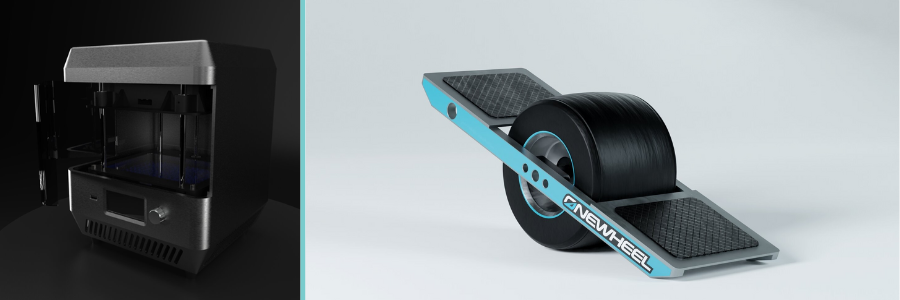
Concept design of a PCB ether and single-wheeled skateboard by Cad Crowd product concept designers

RELATED: What are proven product design principles when working with companies & freelancers?

Takeaway

Concept design testing within the context of a new product development is a lot more than just selecting between the right and the wrong or separating the good from the bad. It’s a process of discovery, where you’ll learn about customers’ preferences and what you can or should do to transform a mere concept into a design optimized for them in every use case scenario.

The notion of exposing potential buyers to multiple concepts early on in the development process in an attempt to gauge or rank design marketability sounds pretty straightforward indeed, but the reality is often the exact opposite. It takes some real planning and management to recruit the right respondents who represent every group in the target demographics and make sure that every question is framed in such a way to solicit useful answers and insightful feedback. Concept testing isn’t something you can do on a whim, and that’s where Cad Crowd comes in. Specializing in product design and development, the freelancing platform is populated with thousands of experienced project managers, industrial designers, engineers, prototype fabricators, and digital artists to handle even the most complex concept testing for hardware products.

Cad Crowd helps you streamline the whole process, from concept design presentation and respondent recruitment to method selection and data analysis. It doesn’t matter if you need a detailed evaluation of a single concept or comparative studies to choose between competing concepts; the professionals at Cad Crowd strive to provide accurate, unbiased, and valuable insights for your NPD project. Request a quote today.

author avatar

MacKenzie Brown is the founder and CEO of Cad Crowd. With over 18 years of experience in launching and scaling platforms specializing in CAD services, product design, manufacturing, hardware, and software development, MacKenzie is a recognized authority in the engineering industry. Under his leadership, Cad Crowd serves esteemed clients like NASA, JPL, the U.S. Navy, and Fortune 500 companies, empowering innovators with access to high-quality design and engineering talent.

Connect with me: LinkedInXCad Crowd

The 5 Stages of Prototyping for Any New Product Idea for Product Design Service Companies


Today’s article covers the five stages of prototyping for new product ideas. Every successful product development needs a strong foundation with an organized process and flow. To visualize this, imagine the bottom of the pyramid, which symbolizes the foundation, and the concept of the product. The top of the pyramid symbolizes the result of the refinement in the entire project, which also includes the final product. Just like any foundation and goal, there are other layers that need to be taken into account to achieve success, and sometimes these layers or processes can make or break the product development.

Essential phases of prototyping

Ideation might not be an integral part of a prototyping process, largely because the ideation has been validated by the time you arrive at the first prototyping phase. Be that as it may, this is the point where everything begins. Some people say ideation must be treated as a separate stage in product development services, but others generally agree that, at the end of the day, a prototype is essentially a materialized idea. Key activities at this very first phase are as follows.

RELATED: Designing Prototypes: 3D Design Services for Inventors and Companies

  • Problem identification: all products (or the vast majority of them) are intended to be the solutions to specific problems. For example, a nail exists so you can join pieces of wood together for construction purposes, while a hammer helps you drive the nail easily into the material. For a product to have a chance of commercial success, it has to address an unmet need or at least provide a unique alternative to an existing solution. Identifying a problem may involve extensive research.
  • Market analysis: Your 3D design team must be able to conduct an analysis of the existing products and see whether they address any of the problems you’ve identified earlier. If such products don’t exist (yet), well then, you’re off to a great start. But if they do, it’s time to figure out how your idea can deliver a better solution and gain a competitive advantage.
  • Idea generation: In any project, you should include various experts, such as designers and engineers, in any product category to achieve an effective brainstorming session as the foundation. If you want to focus on consumer electronics, your team should be composed of industrial designers, mechanical engineers, and electrical engineers.
  • Feasibility assessment: The more product concepts your team can generate, the better your chances of conceptualizing a better product. Don’t forget that every approved concept must be assessed to analyze its manufacturing viability, estimated development timeline, resource requirements, cost calculation, etc. At the end of the feasibility assessment, you should be able to pick no more than two possible concepts if you have lots to choose from. This can help you minimize the development process and costs.
  • Brand identity: This is the part where your prototype design team already reached the feasibility study phase. This is also the part where you want to involve the product branding. The product’s design and functions must be reflected in the name or brand. The logo used for the brand may affect some of the design decisions, too.

RELATED: What Are The Main Prototypes Used By Companies in Industrial Design Prototyping?

The main point of an ideation process is to determine “why a product should exist in the market” and “what values it can offer” to potential buyers. It’s your design team’s responsibility to make sure that the entire development process is actually based on a real market opportunity.

Digital models

You’ll be hard-pressed to find any modern product design firms that build the first prototypes without any kind of CAD tools. Gone are the days when designers and engineers solely depended on hand-drawn diagrams and physical mockups to validate ideas. Design software has reached a point of photorealism where any design team can put the entire technical foundation of a product on a screen for advanced analysis and simulation. Don’t get this the wrong way. CAD modeling services exist not to make physical prototyping obsolete; it exists to make the process much more time-efficient. Think of virtual prototyping as a preview of how the product will look and function, and what materials to use. Major areas to explore with digital models are listed below.

RELATED: Complete Guide to Prototyping Methods Used in Product Development Services for Companies and Firms

  • 3D models: If you know that you hired good designers and engineers, you can be assured that they will have advanced CAD software to build 3D models of your product with great accuracy. A virtual prototype can be very precise, even when the proposed product design contains complex geometries, intricate mechanical parts, and a fancy finish with a textured surface. Depending on the product type and design, the virtual prototype is possibly done with solid modeling, wireframe modeling, polygonal modeling, digital sculpting, or any combination of those.
  • Technical specifications: You should keep in mind that 3D models are not just visual representations. They are used to create a simulation of your product without producing a real product, to avoid waste materials and costly tests. What you can do is create a 3D model of a hammer made of a fiberglass handle, steel claw, and head. If you try to run this through a simulation (such as a stress test), both parts can mirror the behaviors of their real-world counterparts. Fiberglass can break under excessive stress, and steel can scratch.
  • Aesthetic options: The obvious advantage of 3D modelers using CAD software to build a virtual prototype is the freedom in visual design. The team can experiment with any imaginable shape, color, and form factor without even leaving the desk. However, it’s important not to get easily carried away. The purpose of virtual prototyping is to translate the product concept into a feasible design. Although you have the freedom to try countless visuals, not every design is technically viable. Aesthetic design experiments should be intended as a way to make sure that the product can be manufactured in the most efficient way possible.
  • Simulation: running a design analysis by simulation means you don’t have to build a physical model to test how the product works under many different scenarios. It allows engineering designers and designers to gauge product performance and recognize issues early on. For example, a 3D model of a hammer is put through a virtual analysis to understand how the materials distribute shock and vibration from the point of impact to the handle and eventually the user’s hand. Running multiple sessions of simulation can help engineers discover problems and make design adjustments before moving to the physical prototyping phase.

RELATED: 10 Tips on How To Find the Best Prototype Engineering Firm Services

A lot of the digital modeling phase is about experimenting with various design iterations. Everything is done in a virtual environment to save cost and time. Only when the 3D models and analysis results are found to meet the design requirements, the design engineering team proceeds to build physical prototypes.

Proof of concept (PoC)

It’s an early form of a physical prototype whose sole purpose is to demonstrate nothing but the fundamental feasibility of a product. PoC is never meant to be functional, let alone resemble a finished product. At this phase, your team’s goal is to validate whether your product concept and their process are feasible and manufacturable. Sometimes, a PoC prototype often involves creating a low-fidelity physical model to prove the feasibility of your idea. That’s why it’s important for you to get the best team that you can get. You can follow this workflow.

  • Defining the objectives: first things first, the team has to specify what technology and mechanical concepts require validation. The PoC prototype has to be able to validate those concepts, albeit in a crude fashion.
  • Minimalist model: You might be making a bad choice if you decided to allot a big budget to a prototype just to prove that your product idea is technically feasible. That’s why it’s important to hire prototype designers and engineers, so they can advise you not to invest in an unproven and untested product. Your team starts with a minimalist model, which means they are using affordable and readily available materials, such as styrofoam and wood. If the design is complex enough that it requires assembly of multiple parts, a consumer-grade 3D printer should do the job just fine.
  • Small-scale test: Proof of concept (PoC) is implemented to mimic the final product used by designers, engineers, or other consultants for initial testing and assessment in terms of technical feasibility, electronics, and functionality.

RELATED: How to Make a Prototype for Your New Product Design

product design services

During this stage, public tests that will involve other random participants are prohibited to avoid launching it in public and IP concerns. The feedback from all the involved persons in the team is used to benchmark revisions and design refinement.

  • Evaluation and final PoC: following the small-scale test, the product design team goes back to the drawing board and makes the necessary adjustments based on the feedback. There can be a final PoC prototype for further analysis, but this is not mandatory.

A PoC prototype is best described as a process to minimize development risk. All the initial concept validations, the scrapping of unnecessary features, and perhaps the additions of must-have functionality happen here at this phase. It’s an important step to answer all the fundamental questions about the product concept and remove all the doubts about its viability. At the end of this phase, the team should be able to come up with definitive design requirements, core product functionalities, an estimated development timeline, a projected development cost, and success criteria.

Mock (3D printed) prototype

All the refinements from the previous phases are mostly applied to the digital model, so that the next prototype (usually a 3D printed one) already shows some improvements over the original PoC. This is why a final PoC prototype is optional; instead of wasting resources on another PoC, the team can go directly for a mock model. Rapid prototyping services using a 3D printer is pretty affordable these days, allowing the team to evaluate the dimensions, ergonomics, and general form factor without having to invest in injection molding or any other expensive fabrication method. For electronic products, a mock prototype serves as an early sample of the enclosure size and shape. This phase mainly concerns the following points.

RELATED: Key Differences between Prototyping and Prototype Engineering for Companies & Firms

  • Non-functional model: A model that is usually used by designers to check the shape, volume, form, and dimensions of your product. This is like a mock prototype that is used to update you with the progress of the product and project. If the product design is simple, your 3D printing team can use readily available items such as styrofoam, but if the design is complex or your team is 3D experts, a 3D printed model made of plastic materials can be used. Non-functional models are usually created in the first phase of the project to reduce the costs of producing prototypes when the functions or features are not yet final.
  • Haptic exploration: although the team can’t accurately measure the weight and durability of the product due to the differences in materials, at least it’s possible to gauge the portability and usability. A mock model helps clarify how the object looks and how easy (or cumbersome) it is to use and store.
  • Branding integration: A 3D printed prototype offers a sneak peek into where to put a logo or other branding elements you might want to use. It might seem trivial at first, but proper placement can improve the product’s visual appeal.

Mock prototypes are simplistic, but much more refined than the utterly crude PoC. In most cases, the design team deliberately avoids giving the prototype a detailed treatment to allow for quick iterations. A mock prototype created by a professional prototype manufacturing designer is the first real gateway to an early discovery of mistakes, identifying potential issues, finding new opportunities for design improvements, and basically learning unexpected lessons. 

RELATED: Prototype Design Engineering: How Well Should Your Company’s Prototype Function?

There can be multiple rounds of mock prototyping. Each iteration is based on the feedback gathered from the previous model. The team goes back and forth between the CAD software and 3D printer to make big and small adjustments to the model until the iterative process delivers the desired result. Adjustments aren’t always about major design changes. They can be anything from a tiny reduction in material thickness for better ergonomics to cosmetic changes.

Additive manufacturing is the technology of choice, mostly thanks to its speed and affordability. If the additive manufacturing designer expects to make more than several iterations within a relatively short period of time, a 3D printer is the best tool for the job. CNC machining (which is a subtractive manufacturing technique) is the next best thing if you want to build a physical model using metal materials. But both are relatively low-cost fabrication methods, ideal for creating non-functional prototypes. At the end of the day, discovering design mistakes in this phase is certainly cheaper than fixing them later in the next stage of product development.

cnc machining design experts

Functional prototype

At this point, your team has already produced a prototype that can be tested in real-life conditions. This allows you to check for flaws, features to be improved, and additional features you might want to add. All of your chosen visual design and functionalities are presented here to mimic a real product. Also, your engineers use your real materials instead of the 3D printers, but depending on your decision, you can use other fabrication methods such as CNC programming services, laser cutting, and vacuum casting. These are the things you should check during this testing.

RELATED: Benefits of Outsourcing CNC Machining Services for Your Company’s Prototype Design

  • Performance metrics: The team had probably done performance metrics in the concept/ideation process, but it’s necessary to reiterate the objectives when starting the functional prototype phase. Over the course of the product development thus far, there might be some changes, big and small, that affect the design requirements. Ideally, the performance metrics at this phase encompass everything that the final product is trying to achieve, in terms of both visual appeal and functionality. Each metric represents a specific point of the design that requires examination.
  • Fabrication methods and material selection: as mentioned earlier, the design for additive manufacting team often uses several different fabrication methods depending on the required fidelity and complexity. A professional-grade 3D printer could be good enough to create small mechanical parts in acceptable quality, but vacuum casting can be an excellent alternative as well. In fact, vacuum casting is often more cost-effective than 3D printing for a small production run. Assuming you need to create anywhere between 50 and 100 prototypes for real-world user tests, vacuum casting is the recommended option. For metal parts, CNC machining or sheet metal fabrication are the obvious choices.
  • Real-world tests: One of the main points of a functional prototype is to observe how the product performs in various real-world usage scenarios by potential buyers. The DFM design team will send the prototypes to multiple users, let them use the prototypes according to their intended usage, and gather feedback from those users.

RELATED: DFM For New Product Design Excellence: Complete Guide for Company Success 

A functional prototype should be built to the same quality standard as the desired final product’s specifications in every single aspect. That said, the team cannot just assume that the prototype at this point is perfect in every way. No product development process is completed without user testing, which almost definitely leads to the discovery of shortcomings. This is only the nature of users’ feedback; a perfect product doesn’t exist. Some of that feedback, whether constructive criticisms or otherwise, is valuable insight into the market. It tells the 3D CAD drafting designers what features most buyers like and dislike.

Bear in mind that not every feedback can be implemented in a practical fashion without a major design overhaul. For example, some buyers might find the carbon fiber handle to be an unnecessary feature of a claw hammer. It adds too much of a premium when the more affordable materials like wood or fiberglass will do. At the same time, the material of choice is important because you want to differentiate the product from an ocean of alternatives in the market. It is the design team’s responsibility to respond to (or act on) the feedback. If the overwhelming majority of the feedback expresses the same concern, a design modification can be necessary. But because this can also lead to a major overhaul, which increases the development cost even more, there should be a middle-ground solution as the team sees fit. 

Final prototype

Based on the results of real-world user testing and adjustments made according to the feedback, the product development team once again refines the functional prototype into an almost production-ready model. Most companies will not make a final prototype until they make sure that there will be no more major changes to the design. They’ve invested so much time and money into the development effort that another modification can cause months, if not years, of setback. Also, a lot of hardware startups use final prototypes for pre-sales, attracting interest from distributors and retailers, or pitching investors. They just can’t afford to make another revision, not without risking a blowback. You can say that the final prototype is the culmination of iterative refinements throughout the previous phases. A final prototype focuses on the following points.

RELATED: Why Prototype DFM Services Are Useful for Product Design at Companies and Firms

  • Production-grade materials: Your team uses the same materials they proposed to create your product. This is not a replica, this is the first tangible product, and you should identify if the product is already good enough for it to proceed to manufacturing. At this point, you should check for features to be improved, and at the same time you should also check that the quality, aesthetics and performance are the same as proposed.
  • Manufacturing validation: the final prototype is the model used as a production sample. This is the prototype that the design for manufacturing and assembly team sends to the manufacturing partner. A production sample is then analyzed (or perhaps digitally deconstructed) for custom tooling preparation if needs be. In an ideal product development world, the final design shouldn’t need any custom tooling at all to save manufacturing costs. But then again, custom tooling is inevitable when the product in question requires the fabrication of unique parts and components.

The idea behind a final prototype is to prepare for the transition from development environment to mass production. Creating a final prototype isn’t just about fabricating a physical model, as it also involves proper documentation and quality control, allowing for a smooth handover to the production team.

RELATED: 8 Tips Companies Use to Simplify Design Manufacturing or Design for Manufacturing

Note for electronic products: all the prototyping phases mentioned above apply to just about any physical product development, except for electronic design services. If the product requires PCB and embedded firmware of any kind, the prototyping phase focuses first on the circuit design, along with the features and user interface (especially if the product comes with a screen/display), before it moves forward to the physical enclosure design. That being said, the general principle remains the same that prototyping is an iterative process from ideation all the way to a production sample. 

How Cad Crowd can help

In every product development, planning and implementation are the crucial steps that can affect the very outcome of your product. From choosing your team, to rough sketches, iteration, creating functional prototypes, until the final production, is beneficial to the success of the product. This is the cycle of any project, and each cycle allows any team to learn from the previous mistake and improve the model, leading to a successful project and product. If you want a team to turn your imaginative concept into a tangible one, don’t hesitate to contact Cad Crowd for a free quote!

author avatar

MacKenzie Brown is the founder and CEO of Cad Crowd. With over 18 years of experience in launching and scaling platforms specializing in CAD services, product design, manufacturing, hardware, and software development, MacKenzie is a recognized authority in the engineering industry. Under his leadership, Cad Crowd serves esteemed clients like NASA, JPL, the U.S. Navy, and Fortune 500 companies, empowering innovators with access to high-quality design and engineering talent.

Connect with me: LinkedInXCad Crowd

Prototyping Techniques Utilized for Complex Products at New Product Design Companies


Prototyping is a crucial step in fast-changing product designs, especially in industries using advanced engineering and innovation. Prototypes are the conceptual and digital realization of new products that designers, engineers, and manufacturers use in exploring, testing, and adjusting ideas before high-volume production takes place. 

Indeed, prototyping is even more important to complex products because they may employ intricate components and multi-disciplinary collaboration or rely on leading-edge technology. New product design companies, especially in the high-tech, consumer electronics, medical devices, automotive, or industrial products categories, use several prototyping techniques. These often go hand-in-hand with product design services to ensure that each stage of development is optimized for functionality, feasibility, and manufacturability.

Prototyping is applied to help in streamlining development, reducing costs, enhancing product performance, and getting to market sooner. At Cad Crowd, many of our freelance designers and engineers rely on prototyping to quickly iterate and refine concepts. The following article will outline the most common and effective prototyping techniques applied by new product design companies in bringing complex products from concept to reality.


🚀 Table of contents


1. Rapid prototyping

Prototype design of a 110 ton transport and high-voltage rifle by Cad Crowd product engineering professionals

RELATED: Designing prototypes: 3D design services for inventors and companies

Rapid prototyping defines a range of techniques that enable designers to generate models of physical parts directly from digital data. Designers can then make rapid iterations in real time, especially in a complex product requiring components, test functionality, and make several refinements through automated processes such as additive manufacturing, otherwise known as 3D printing, or subtractive methods such as CNC machining. These techniques are frequently integrated with CNC machining services to achieve high precision and repeatability in prototype production.

Key techniques in rapid prototyping:

Additive manufacturing is also popular under a variety of technical names and terminologies, including SLA and Stereolithography, FDM (Fused Deposition Modeling), and others. Through the use of all mentioned above, it accelerates and permits rapid production of more complex shapes/ geometries on demand quickly, while it facilitates much easier replication into models carrying such complex designs, whose creation may be pricey from traditional conventional making.

Parts made of durable material with precise dimensions. CNC (computer-aided machining) is widely used since it carves or mills in a solid mass with high structural strength. If you want to test the fitting, form, and functionality in prototyping, this is the best approach for you. It is often complemented by mechanical engineering services to ensure the prototype aligns with performance and tolerance requirements.

  • Laser cutting and engraving

This is used to cut very thin sheets of material, such as metals, acrylics, and wood. Because of the laser’s precision, it is the best choice for flat and thin component prototypes and designs. 

RELATED: Complete guide to prototyping methods used in product development services for companies and firms

2. Functional prototypes

Functional Prototypes identify the underlying issue related to user interface design (UI) and system integration. For the products whose testing and validation of functionality will require to be conducted, a functional prototype is designed and built. Such a prototype emulates the true performance and utilization of the final product, and its components are close approximations to the desired end product. The built systems include such components as working electronics, hydraulics, and embedded software. These types of builds are often supported by electrical engineering services to ensure accurate integration of circuits and embedded systems.

 Applications

Functional prototypes are used to validate products like implants, diagnostic rules, and surgical instruments, which are usually safety and regulatory-compliant. 

Prototyping allows designers an opportunity to try out user interfaces, electronics integration, and building. For example, when it comes to a smartphone or a wearable, the functional prototype would have screens, cameras, buttons, etc., all functional. These projects often rely on product development services to ensure all components work seamlessly together in the final design.

Automotive product design provides functional prototypes as opportunities to test the novel feature of new parts of an engine, suspension system, or any mechanism for safety under real-life conditions. Functional prototypes are usually tested in controlled environments, simulating real conditions, so the designer can judge user feedback and performance before producing the final product.

RELATED: The product invention process: 6 types of new product prototyping used by businesses

3. Visual prototypes

Sometimes, it is necessary to prototype complex products mainly for the look and feel, whether to present to a client, as marketing material, or to evaluate their aesthetic. These prototypes may not function the same way that the final product will, but they do well in gaining early-stage feedback, making design decisions, and verifying design intent without the cost and time associated with full functional prototypes. This approach is commonly supported by industrial design services to refine the visual and ergonomic aspects of the product.

Visual prototyping techniques

one of the most commonly applied techniques, specifically in the fields of automotive and consumer goods. The designer can model physical products of detailed complexity by applying sculpting clay. The shape and the surface finish change within a few minutes using this technique. For the general form and flow of the outer shell of the vehicle, automotive companies use this technique.

This method is used to check the ergonomics of complex products such as furniture, appliances, and industrial equipment. The foam prototype is lightweight and easy to modify; thus, it is helpful for testing physical interaction or scale. This technique is frequently utilized in conjunction with furniture design services to visualize form and structure before committing to final materials.

  • 3D renderings and visual mockups

This refers to digital renderings or mockups done through software such as Autodesk Maya or Blender. This is not a prototype in the sense that it’s not a physical representation, but very realistic and thus can give the designer and the stakeholders a proper view of proportions, materials, textures, and finishes before producing the actual physical product. Visual prototypes are essential in understanding the aesthetic appeal of complex products, especially where the final product’s look is a critical factor for consumer acceptance.

4.  Iterative prototyping

Iterative prototyping is a process of making a prototype and testing it several times, hence the term cyclic repetition. During the process, it can prove very useful with complex products, since designers go through the phase of building to the incorporation of user or stakeholder feedback in the final product. The closer the product is to being complete, the more every cycle is spent filling in design flaws, and any errors in functionality occur. This approach is often enhanced through design for manufacturing services to ensure that each iteration moves closer to a version optimized for production.

Prototype of a bubble drone and wheel system by Cad Crowd product engineers

RELATED: Top tips to create impactful prototype designs for company products

Advantages of iterative prototyping:

Designers can improve and adapt according to user feedback and functional testing. It helps in detecting potential problems early on, hence reducing the chance of major failure later on.

In the iterative prototyping process, consumers can participate during the design stage so that the final product will be intuitive, user-friendly, and in line with the market needs. This is most applicable to consumer-facing products, such as electronics, automotive, or medical devices, as it boosts customer satisfaction. This approach is often integrated with consumer product design services to ensure the final product meets both user expectations and market demands. Iterative prototyping may significantly reduce the time cycle during development for complicated products, leading to the delivery of better quality and more functional products to the market.

5. UX prototyping

Prototyping is the integration of a stage in the creation of products with interactivity and digitization attached to it. Prototyping for UX basically works toward ensuring usability, thereby dealing with things like navigation, ease of use, responsiveness, as well as satisfactory levels. In this regard, complex products must have specific methods of prototyping when they involve inbuilt software products, mobiles, or other such digital interfaces. This process is often supported by CAD design services to bring digital interfaces and physical components together in a cohesive prototype.

Techniques on UX prototyping:

Designers usually create wireframes, which are basic, skeletal layouts of a product’s interface, before they start to go into the full visual design. These wireframes focus on the overall structure and function, ensuring a smooth flow before adding complex features.

  • High-fidelity interactive prototypes

This is more complex and has an interaction of a user and the behaviors they would make in the real version. Using tools like Sketch, Figma, or Adobe XD, designers can create interactive clickable prototypes that reflect the real version of the final product. They help in determining pain points during navigation or usability before creating the full software. This stage is often developed with the support of web design professionals to ensure a seamless transition from prototype to a fully functional digital product.

  • Heuristic evaluation and A/B Testing

For UX-intensive products, designers might carry out heuristic evaluations or A/B tests on prototypes to compare various design options or find usability issues based on expert suggestions and user feedback. This ensures that the final product is not only functional but also user-friendly, which is important in complex products such as mobile apps, smart devices, and automotive control systems.

RELATED: How cutting-edge medical prototyping design services help your firm design new products 

6. Environmental and functional testing prototypes

In some industries, especially for high-performance products, such as military, aerospace, or industrial equipment, prototypes may need to pass environmental testing to simulate realistic conditions. In this regard, the prototypes are designed not only to test the functionality but also to check on the performance of the product under different environmental scenarios, such as extreme temperatures, humidity, vibrations, or dust and water exposure. These types of prototypes are often developed with the assistance of aerospace engineering services to ensure they meet stringent industry and environmental standards.

Key Testing Scenarios

Prototypes are tested for very high or low temperatures that do not cause products like electronics, medical devices, or automotive parts to fail.

Especially for those automotive or aerospace products where a product has to perform under continuous vibrations. This kind of testing is frequently supported by automotive design services to ensure components are optimized for durability and performance in high-vibration environments.

To test prototypes under extreme weather conditions, such that weaknesses can be identified beforehand in the product’s durability and material integrity when mass production comes. These prototypes provide essential information about the product’s life and reliability, which will ensure that the final product is of high standards of performance and safety.

How Cad Crowd can help

Prototyping is the most critical part of the process of new product development, especially if the product has a multi-disciplinary expertise with advanced materials and intricate designs. New product design companies rely on a very wide variety of prototyping techniques: from rapid prototyping and functional prototyping, to visual and iterative models of user experience to validate ideas and test functionality or refine designs. These are often developed in tandem with invention design services to help bring innovative product concepts from idea to a fully realized prototype.

Cad Crowd will connect you with the experts who can work on advanced prototyping techniques in the design of complex products. Whatever your requirement of rapid prototyping, 3D printing, or CNC machining, Cad Crowd will ensure the task is done precisely, innovatively, and efficiently. Ease the process of developing a new product by having freelance designers at Cad Crowd offer solutions according to your requirements. Get a free quote today.
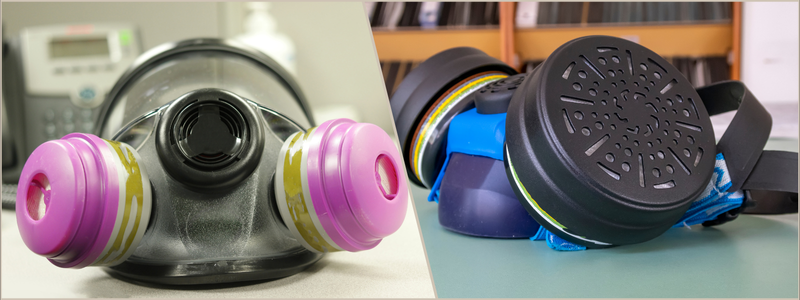
author avatar

MacKenzie Brown is the founder and CEO of Cad Crowd. With over 18 years of experience in launching and scaling platforms specializing in CAD services, product design, manufacturing, hardware, and software development, MacKenzie is a recognized authority in the engineering industry. Under his leadership, Cad Crowd serves esteemed clients like NASA, JPL, the U.S. Navy, and Fortune 500 companies, empowering innovators with access to high-quality design and engineering talent.

Connect with me: LinkedInXCad Crowd

Prototype Design Engineering: How Well Should Your Company’s Prototype Function?


Due to the fast-paced progress in the world of product development, creating a prototype is one of the most crucial steps in turning an idea into a product. Understanding the purpose and function of your prototype is vital, as it not only impacts the development process but also determines the success of the final product. For today’s blog post, you will learn about prototype design engineering and how well your company’s prototype should function.

Cad Crowd is a leading agency that can help you connect with experts in prototype design engineering with a reputation for delivering exceptional results. Consisting of over 94,000 experts, we pride ourselves on our ability to meet and exceed your highest standards. Whether you’re looking for innovative solutions, strategic insights, or top-tier execution, Cad Crowd has the expertise and the talent to bring your vision to life. Together with our unmatched experience and commitment to excellence, we are the trusted partner you can rely on for success.


🚀 Table of contents


Why prototyping matters?

Prototyping allows you to visualize your concept, test its capabilities, and identify potential issues before full-scale production. The level of functionality required from a prototype depends on its purpose. Understanding the purpose of your prototype will guide you in determining how well it should function at each stage of development.

Conceptualizing the prototype or the early-stage prototypes helps you visualize the design as it provides a clear representation of the product’s basic features and form. As the project progresses, the design also progresses as it is functional enough to test core functions of the design in terms of mechanical and electrical systems. It can also be used to validate specific features or components.

For prototypes that are intended for user testing, the test product should accurately resemble the final product in any form, as these models are used to gather feedback from customers, allowing designers to make iterations in the design. Lastly, before mass production, prototypes are tested to function as close to the final product as possible. They are used to test manufacturing processes, quality control, and regulatory compliance.

RELATED: Master product design costing: Top strategies for CAD services companies & freelance designers

prototype of an advanced cooling device and compact EV steering

Balancing cost and functionality

One of the biggest challenges in prototype design services is balancing cost with functionality. Prototypes can be expensive, especially when advanced features or materials are required. Companies must decide how much they are willing to invest in a prototype based on its intended purpose.

Low-fidelity prototypes – For early-stage conceptualization, low-fidelity prototypes can be cost-effective. These may include simple 3D prints, cardboard models, or digital renderings. While they may not be functional, they provide a visual representation of the product at a lower cost.

High-fidelity prototypes – When testing functionality or preparing for user testing, high-fidelity prototypes are necessary. These prototypes are often more expensive, as they require more advanced materials and manufacturing techniques. However, the investment can be justified by the valuable insights gained during testing.

Iterative prototyping – An iterative approach, where prototypes are developed in stages, can help manage costs. Start with a low-fidelity prototype to test the concept, and gradually increase functionality in subsequent iterations. This allows for early detection of issues and reduces the need for costly redesigns later in the process.

You may also consider using rapid prototyping services to ensure speed in iterations while retaining quality.

Key considerations for prototype functionality

When determining how well your prototype should function, consider the following key factors:

End-user experience – The prototype should mimic the final product’s user experience as closely as possible, especially during user testing. This includes the look, feel, and usability of the product. A well-functioning prototype can provide valuable feedback on how users interact with the product, leading to improvements in the final design.

Material selection The materials used in your prototype should reflect those intended for the final product, especially if the prototype is being used for testing durability or performance. However, in early stages, it may be more cost-effective to use alternative materials that still provide an accurate representation.

Manufacturing feasibility A prototype should demonstrate the feasibility of manufacturing the final product. This includes testing assembly processes, tolerances, and production techniques. A prototype that closely matches the final product can help identify potential manufacturing issues early on, saving time and money in the long run for manufacturing design firms.

Regulatory compliance Depending on the industry, your prototype may need to meet specific regulatory standards. Ensure that your prototype is functional enough to undergo necessary testing for safety, performance, and compliance with industry regulations.

Scalability – Consider how easily the prototype can be scaled up to full production. A prototype that functions well on a small scale may reveal challenges when mass-produced. Testing scalability during the prototyping phase can prevent costly delays during production.

Real-world examples of prototyping success

To illustrate the importance of prototype functionality, let’s examine a few real-world examples where prototyping played a critical role in the success of a product.

Dyson Vacuum Cleaners – Dyson is renowned for its innovative vacuum cleaners, and prototyping is at the heart of its development process. The company is known to create thousands of prototypes before finalizing a design. Each prototype is tested for functionality, user experience, and durability, ensuring that the final product meets the highest standards.

Apple iPhone Apple’s iPhone is another example of the importance of prototyping. Before the first iPhone was launched, Apple created numerous prototypes to test various features, including the touchscreen interface and the overall user experience. The functionality of these prototypes was critical in identifying and resolving potential issues, leading to the creation of a revolutionary product for one of the most recognizable product design companies.

Tesla Electric Vehicles Tesla’s electric vehicles undergo extensive prototyping to ensure functionality, safety, and performance. From battery technology to autonomous driving features, each aspect of the vehicle is prototyped and tested to the highest standards. This rigorous prototyping process has enabled Tesla to produce some of the most advanced electric vehicles on the market.

RELATED: How to umprove product development for your company with engineering firms & design consultants

wave range cooler and electrical grill

How to ensure your prototype functions well

Ensuring your prototype functions well involves a combination of planning, testing, and iteration.

Here are some steps to help you achieve the desired level of functionality in your prototype:

  • Define clear objectives Before starting the prototyping process, define clear objectives for what you want to achieve with your prototype. Understanding the purpose of the prototype will guide decisions about its functionality.
  • Collaborate with experts Working with experienced engineering services, designers, and prototype manufacturers can help ensure your prototype meets its functional requirements. Collaborating with experts can also provide insights into potential challenges and solutions.
  • Test and iterate Testing is a critical part of the prototyping process. Conduct thorough testing to evaluate the prototype’s functionality and identify any issues. Use feedback from testing to make necessary improvements and iterate on the design until the desired functionality is achieved.
  • Consider end-user feedback Involving end-users in the testing process can provide valuable insights into how the product will perform in the real world. Gather feedback from users and incorporate it into the prototype design to enhance functionality.
  • Plan for scale Consider how the prototype will scale to full production. Ensure that the materials, processes, and design elements used in the prototype can be easily replicated in mass production. Testing for scalability during the prototyping phase can help prevent issues later in the process.

Technology’s role in prototype design engineering

Advancements in technology have significantly impacted prototype design engineering, making it easier and more cost-effective to create functional prototypes. Some of the key technologies driving innovation in prototyping include:

  • 3D printing design services: This has revolutionized prototyping by allowing designers to quickly and affordably create physical models of their designs. This technology enables rapid iteration and testing, making it easier to achieve the desired level of functionality in a prototype.
  • CAD: This software allows engineers and designers to create detailed digital models of their prototypes. These models can be used to simulate functionality, test different design options, and identify potential issues before creating a physical prototype.
  • Virtual reality (VR) and augmented reality (AR): VR and AR technologies are increasingly being used in prototyping to create immersive simulations of products. These technologies allow designers to test functionality in a virtual environment, reducing the need for physical prototypes and speeding up the development process.
  • Advanced materials: The development of new materials has expanded the possibilities for prototyping. From lightweight composites to flexible electronics, advanced materials enable the creation of prototypes that closely mimic the final product’s functionality.

Conclusion

The level of functionality required for your prototype depends on its purpose within the product development cycle. While early-stage prototypes may not need to function fully, later-stage prototypes should closely resemble the final product in terms of form and function. Balancing cost with functionality, considering end-user experience, and planning for scalability are all critical factors in ensuring your prototype meets its objectives.

As you embark on the prototyping process, remember that each prototype is a stepping stone towards the final product. By investing in well-functioning prototypes, you can identify and resolve issues early, gather valuable user feedback, and ensure that your product is ready for successful market entry.

How Cad Crowd can help

Ready to take the next step in your product development journey? At Cad Crowd, we specialize in helping companies bring their ideas to life through expert prototype design engineering.

Whether you’re in the conceptualization phase or preparing for pre-production, we will assist you in finding a team of experienced engineers and designers who can come up with functional prototypes that meet your specific needs.

Contact us today to request a quote and learn more about how we can support your product development process. Let us help you turn your vision into reality!

author avatar

MacKenzie Brown is the founder and CEO of Cad Crowd. With over 18 years of experience in launching and scaling platforms specializing in CAD services, product design, manufacturing, hardware, and software development, MacKenzie is a recognized authority in the engineering industry. Under his leadership, Cad Crowd serves esteemed clients like NASA, JPL, the U.S. Navy, and Fortune 500 companies, empowering innovators with access to high-quality design and engineering talent.

Connect with me: LinkedInXCad Crowd

Tips for Pet Toy Design, New Product Development at Prototype Manufacturing Services at Companies


The Pet Industry has seen tremendous growth in recent times, and this is largely driven by the humanization of pets as well as the desire of people to provide their pets with the best. Given these factors, designs in pet toys are more than in demand. Prototype design services are handy for converting ideas into tangible products. This article outlines basic advice on designing pet toys, focusing on how prototype manufacturing services can ease the new product development process.


🚀 Table of contents


Understanding the pet toy market

The sudden increase in online shopping allows pet owners to easily get hold of unique, niche products. With the increase in pet ownership and spending on products for them, it is likely that the trend will rise further. Of course, innovative designs and sustainable material usage contribute to this growth, but interactive features provide the required physical exercise and mental stimulation in pets. Prototypes must encompass everything from non-toxic toys made from natural fibers to technically advanced gadgets that take part in the play with pets.

RELATED: Exciting pet product designs and innovations for your company’s next design project

In terms of health, safety, and sustainability, the market is continually taking great strides forward, always recognizing the requirements of the modern pet owner. Pet toys are not only playthings but also provide a variety of other purposes like entertainment, brain stimulation, exercise, and dental care. The diversity of toys is huge, ranging from plush companions to interactive gadgets and chew toys.

Here are helpful tips for designing and developing pet toys. 

1. Know your target market

The first thing product concept designers must consider when designing a successful pet toy is the target audience. Who are these owners? What are their needs and preferences? Collect information using surveys and focus groups. Some areas include:

  • Pet type: Different pets have unique play styles. For example, dogs like tugging and fetching, while cats like pouncing and chasing.
  • Age and size: An article of play for a small puppy will vary widely from one intended for a big breed dog. Similarly, toys for kittens have to be based on their playfulness and curiosity.
  • Owner preferences: More and more pet owners are becoming conscious of safety, durability, and environmental impact. Non-toxic materials or sustainability-oriented toys appeal more.

RELATED: Guide to prototyping methods used in product development services for companies and firms

2. Safety and Durability

Safety must be the number one issue when pet toys are concerned. Pets chew, bite, and even gobble down things. So, a product has to be safe for your pet. 

  • Material use: Non-toxic, pet-safe materials have to be selected that are of adequate strength to withstand furious play; no small parts that could pose choking hazards.
  • Testing for durability: One can test how well the toy resists stresses against various conditions. This is important especially if it’s designed to be made for aggressive chewers.

3. Innovation through Functionality

A good pet toy designed by a pet prototype design professional must not only be fun but also functional. Here are some ideas to do it.

  • Interactive toys: Those can involve pets in playing and psychologically stimulate them. Elements that can be included include treat dispensers, puzzles, or remote controls that the owner can remotely access to play with their pet.
  • Multipurpose: Develop toys that are used for two things simultaneously, such as the chewed toy, which is also being used as a dental cleaner, or a plush toy for playtime with fetch and cuddling.

RELATED: Product design guide for freelancers developing an invention

pet toy design experts

4. Capturing Seasonal Trends and Themes

Many owners want toys that tie into the time of season, holiday, or specific theme of toys on the market. Those products designed with one of these themes will find the most appeal. Here’s an example

  • Holiday-themed toys: Design limited edition toys for the holidays, say Christmas or Halloween. The product modeling designer can do this in terms of design, color, and even sound that is synonymous with the holiday period.
  • Current trends: Monitor pet trends like eco-products or wellness-related ones. Hot trends are sure to attract people to your design.

The pet toy industry is revolutionized through technology. It can make your product special and possibly intensify the play experience of pets. Ideas behind the driving technology are the following:

5. Use Technology

  • Smart toys: Design toys that integrate technology, such as app-controlled devices or those that respond to a pet’s actions. You can interact with them and make playtime more exciting.
  • GPS and monitoring features: In outdoor toys, GPS tracking or monitoring features should be included so that the owner can track their pet’s activities.

RELATED:  Accessible design: better products for everyone

6. Add Aesthetics

Functionality does not necessarily mean aesthetics should be put in the background. A great-looking toy can attract consumers and could improve the overall buying experience. You must consider the following design elements when discussing the concept with the 3D design firm:

  • Color psychology: Different colors evoke varied emotions. Vibrant colors may attract playful pets, and soft tones may be soothing, ideal for someone seeking soothing toys. Understand the emotion evoked in the pet with each color and choose your palette appropriately.
  • Design form and texture: The form and texture of a toy may have dramatic impacts on appeal. Play with possible forms, for example, ropes, balls, or plush animals, and incorporate varied textures that may contribute to interesting tactile experiences.

7. Sustainability Matters

As consumers have become environmentally conscious, sustainable design has gained a new standing in the pet toy industry. Consider these approaches:

RELATED: 24 of the best pet gadgets for your furry friend

  • Green materials: Identify degradable, reusable, or responsibly sourced materials. This not only attracts the attention of the ecologically aware consumer but also helps create a positive environmental impact.
  • Packaging sustainability: Consider what your packaging design says. Choose minimalist, recyclable solutions for packaging that help minimize waste and strengthen your sustainability message.
new concept design product development firms

Role of prototype manufacturing services 

Once you have a good design idea, it is the role of prototype manufacturing to take your ideas and bring them into reality. Here is where rapid prototyping companies can help in the product development process:

1. Rapid prototyping

These prototype manufacturing services can help you create rapid prototypes of your pet toy design. This will enable you to:

  • Test and iterate: Prototyping allows for rapid prototyping, thus speeding up the test phase. You can get opinions about the designs from potential consumers and adjust accordingly before shifting it to the series production level.
  • Prototype testing: With prototypes, you come to know the functionality and strength of the toy in real life. Design failure at this stage could be critical, thus allowing you to rectify mistakes before actual production.

RELATED: Choosing the right manufacturing materials

2. Exploration of material

Access to Different Types of Materials Prototype manufacturing services gives access to different types of materials. For the purpose of selecting the best option for the design of the toy, more than a few options should be tested:

  • Material compatibility testing: Trials on various materials will determine their performance in different conditions. This would ensure ultimate safety and durability along with attractiveness to pets and owners.
  • Innovation in materials: Prototype services will also shine a light on some new materials and manufacturing processes that you can use to advance over others.

RELATED: How to cut costs in 3D product rendering: tips for freelance designers & CAD firms

3. Cost-efficient production

It is expensive to create a new product, but rapid prototyping services for inventors can help control costs by:

  • Waste reduction: Rapid prototyping makes early errors in the design possible, which reduces waste during mass production.
  • Scaling production: Once you have finalized your design, prototype services can help you scale up your production effectively. They can aid you in the streamlining of the manufacturing process so that your product hits the market fast.

4. Market testing

Once you have developed your prototypes, you may consider carrying out market tests to gauge the interest and response of the consumer. Prototype manufacturing service can assist you in

  • Creating limited runs: Developing a small number of units to test the market is possible. This strategy enables you to learn without going large-scale into production.
  • Consumer feedback gathering: Handing over the prototypes to your target consumers helps perfect the product. Check if the toy meets the expectations of the customers by using either surveys or focus groups.

The bottom line 

Designing pet toys does require a dash of creativity mixed in with functionality and safety. It is, therefore, essential to know who is likely to use the products, durability asa priority, and technological innovation. Incorporation of environmentalism and aesthetics in the design can enormously improve the marketability of your products.

It is just that prototype manufacturing services are the most important way to give life to your ideas. Rapid prototyping, material exploration, and low-cost production really streamline the new product development process. By letting yourself pursue these tips with prototype manufacturing, it will be possible to make those toys that will surely captivate pets but also enable owners to satisfy their requirements for quality and innovation.

In an ever-changing pet industry, being ahead of trends and consumer preferences will be very important. An earnest focus on thoughtful design and collaboration with manufacturers for prototype supply can secure your pet toy in a pretty competitive marketplace with joy, entertainment, and play provided to pets and owners alike.

How Cad Crowd can help

Pets are no longer just pets as they have become furry members of the family. For this reason, creating prototypes for pet toy designs is a must to cater to the growing market of pet owners and fur parents. Here at Cad Crowd, we have years of experience as an industry leader that can connect you with experienced manufacturing services that can assist you in designing your new pet toys and pet products. Request a quote now

author avatar

MacKenzie Brown is the founder and CEO of Cad Crowd. With over 18 years of experience in launching and scaling platforms specializing in CAD services, product design, manufacturing, hardware, and software development, MacKenzie is a recognized authority in the engineering industry. Under his leadership, Cad Crowd serves esteemed clients like NASA, JPL, the U.S. Navy, and Fortune 500 companies, empowering innovators with access to high-quality design and engineering talent.

Connect with me: LinkedInXCad Crowd

Design Services Rates for Developing a Prototype of Your Firm’s Product New Concept Design


The post for today discusses design services rates for developing a prototype of your firm’s new product concept design. But why do you even need a prototype in the first place? Some need prototypes in the hopes of proving their product’s new technical features. Others may want to develop a prototype for their Kickstarter or GoFundMe campaign. And then, there are those who wish to make a prototype for testing the product and whether it has a spot in the market or not. Alas, there are many aspects to prototype design services.

However, the moment you get all the answers, you’ll notice that all of them share one thing in common. That’s none other than risk. The main purpose of a prototype is to evaluate, qualify, and reduce design risk as much as possible. This risk can take on many forms, which include manufacturing, technical, business, and user risk. As expected, a one-off prototype will cost more if the risk involved is also bigger.

Cad Crowd is the leading agency that can help you connect with experts providing prototypes for your firm. Consisting of over 94,000 freelancers, we pride ourselves on our ability to give reasonable service rates while still exceeding your highest standards. Whether you’re looking for innovative solutions, new concept design, strategic insights, or top-tier execution, Cad Crowd has the expertise and the talent to bring your vision to life.


🚀 Table of contents


Prototype development at a glance

The prototype development stage in the process of creating a product starts with a unique design idea. This idea is a representation of a descriptive state in a verbal or written form. The idea then undergoes polishing into a product concept that will include the benefits and features of the product.

The same concept then gets developed into a prototype to represent the working model, including its size. The prototype becomes the final product after a number of repetitions. Prototypes come in different types, and the initial stage is used for verifying the content’s form.

Following the validation stage, the next step is the pre-production before the development of the final version for new product concept design services. This one is almost the same as the completed product, which includes the appearance, packaging, and instructions. However, the final prototype can be quite costly, ranging between $3,000 and $10,000.

RELATED: 6 industries revolutionized by 3D rendering freelancers & design services companies

examples of prototypes of a high quality golf putter and small yacht propeller

How much should you expect to spend for your prototype, then?

To determine how much it would cost you to develop a prototype for the new product concept design of your firm, it’s imperative that you know exactly where you are already in your journey on product development. You can do this by following the product development process.

Below are the four stages involved in prototyping. Take a moment to review the different types of prototypes and the risk identification at every stage.

1st stage: concept design starts at $1,000

This particular stage in prototype development services focuses on user and chooser prototypes for product research. These prototypes simulate user experience with adequate fidelity to give third parties a chance to comment on the new product and its value.

Some of the risks identified in this stage include the following:

  • Determine the device’s constraints in terms of physical size.
  • Methods of interaction and the handiest solution.
  • Risk of device rejection or user confusion.

The most common types of prototypes used for this stage include:

  • Foam models
  • User interface mock-ups
  • Virtual 3D renderings and wireframes
  • Wizard of Oz functionality or beauty models

The cost and design time of prototypes may also vary. The overall design time may be a week or less, and the design costs for the preliminary mock-ups and sketching can start at $1,000. Materials are mainly off-the-shelf, including 3D custom prototype parts, tape, canned software, glue, module electronics, and cardboard paper.

RELATED: How cutting-edge medical prototyping design services help your firm design new products

2nd stage: design engineering starts at $5,000

Prototype design engineering services focus on the bench model engineering prototypes that quantify the choices for making important decisions regarding the design.

Some of the identified risks at this point include:

  • Functionality of the mechanism
  • Test specific parts of the design
  • Risks of structural, stress, fluid, and thermal engineering
  • Management of wires and sub-components
  • Limitations of wireless protocol

This stage uses two main types of prototypes:

  • Proof of concept or hand-built models
  • Product’s scale models

The costs involved are medium and depend on the validation metrics for user testing and the required customized sub-systems. The starting estimate for the bench model prototyping testing and the costs of materials is $5,000.

3rd stage: prototype and test costing $10,000 and higher

The third stage outputs a fully functional production alpha prototype. However, it also involves several identified risks, such as:

  • Risk for the business and the cost of the components and parts in volume
  • Risk for the business in terms of high volume and yield outputs
  • Wireless connectivity and custom electronics

As mentioned earlier, alpha prototypes that are fully functional are used at this point. In terms of costs, the stage has a medium price range, which depends on the output volume and product complexity. The average time for development is at least four to six weeks. The costs of the alpha prototype material range from several hundred to thousands. It depends on the required fidelity, electronics, and custom parts.

4th stage: manufacturing set-up and ready for production at $30,000

The last stage is the production of parts in a prototype that is ready for manufacturing design services. It is basically a fully manufactured early-stage unit. There are two identified risks involved here. First is the business risk related to the lead time of the parts, assembly, and components. Second is the risk in the manufacturing process, which includes wall thickness of the parts, color matching, and surface finish, just to name a few.

Early small runs of pilot pre-production units are used in this stage. The costs involved are medium, which depend on the volume of output and the complexity of the product. The development time can run for at least three months.

The costs often start at $30,000 for the basic products, and it can go higher depending on the development time, volume, and manufacturing process involved.

Challenges involved in estimating the costs of prototype development

The latest research has revealed three significant hindrances involved in estimating the costs of developing a prototype for a new product. These challenges include the following:

  • Fluctuations in the costs of raw materials

Even though it may have no effect on some products, you might want to be more strategic here during the conceptualization and design stage. The main idea here is to opt for materials whose market prices are less volatile and then invest in the said items.

  • Lack of complete perspective

The shortage of a complete perspective has something to do with taking a look at the bigger picture during the project’s early stage and then rolling out all the costs without even understanding the entire process, including the costs for prototyping designers. It results in the evaluation of the costs throughout every stage of the prototype development and placing in the data to affect the earlier estimations.

  • Spending time to understand the cost

Most of the time, decisions are just held up rather than being taken at the soonest time possible. A designer, for example, might be interested in knowing if you will be using aluminum or magnesium to finalize the model. However, having loads of calculations for doing that might result in the project being held up. But things will be so much faster if you plan and try to understand the entire variable cost as early as you can.

Being familiar with these challenges and taking advantage of them in determining the estimated costs of prototype development can serve as your guide in choosing the appropriate material you should use that best suits your project.

What about the fixed costs, though? For industrial design jobs, this will come with a few fixed costs as compared to someone willing enough to pin their idea. A fixed cost is literally a payment that you pay that won’t change at all, no matter the external factors involved. It doesn’t really matter at which stage you are in the production process because the cost will still remain the same.

RELATED: How much does NPD cost? Rates & pricing for services at top design companies

3D renderings of product prototypes for a drone and car carburetor

Factors that affect prototyping costs

Several factors affect the cost of prototyping. Each factor has a different effect on the total price and must be taken into consideration.

The chosen materials determine the cost of the prototype development. The cost of raw materials is not dependent on the specific tools used. If the material is of higher quality, it will also cost more, as expected.

The complexity of the design also has a direct impact on the costs of the prototype. If the prototype has a more straightforward design, for example, its cost will be lower than that of one that is more complicated. If you need rapid prototype services, it will add to the costs, especially for more complex designs. The idea here is that a simple geometry will be easier to produce than its complex counterpart.

The cost of labor may also differ depending on the workers’ geographical location. The labor rates also differ depending on the country. There might also be hidden charges that you’re unaware of during the prototyping.

When complex parts are being produced, it’s a must to hire professional and highly skilled technicians who can add more value to the prototype and the product afterward. The level of skill and experience has a significant influence on the cost of the prototype development.

The prototype’s level of tolerance is another important factor. What kind of accuracy do you like the product or prototype to have?

RELATED: Using 3D visualization services to communicate design intent to clients and firms

Conclusion

Turning your concept design into a prototype might surprise your fixed expenses, especially if you’re new to the industry. However, it can still be avoided by doing thorough research about it. A simple awareness regarding the prototype process and stages your design needs to undergo is important to carefully plan your budget. Also, knowing what your final product is like in terms of choice of material and detailed functionality and design will speed up the process of prototyping and, therefore, will lessen the cost.

How Cad Crowd can help

Cad Crowd will help ensure that the whole process of prototyping will be smooth and seamless. We will connect you with an experienced prototyping team that can bring your product to life. Schedule a consultation with us to talk about your project and embark on your journey to successfully developing your prototype and launching your new product. Get a quote today!

author avatar

MacKenzie Brown is the founder and CEO of Cad Crowd. With over 18 years of experience in launching and scaling platforms specializing in CAD services, product design, manufacturing, hardware, and software development, MacKenzie is a recognized authority in the engineering industry. Under his leadership, Cad Crowd serves esteemed clients like NASA, JPL, the U.S. Navy, and Fortune 500 companies, empowering innovators with access to high-quality design and engineering talent.

Connect with me: LinkedInXCad Crowd

Advancements in 3D Visualization Services for Medical Device Prototyping Companies


3D visualization has been a real game changer in the manufacturing industry since the 1970s. However, during the 1990s, the technology transformed into a mainstream application in hardware design, architectural planning, and animated videos. Over the years of development, technology has become so progressive that it leads to a point where it can recreate hyper-realistic visualization of the human body, providing an insight into our anatomy more accurately than the old-fashioned 2D imaging ever achieved.

Cad Crowd has seen the development of 3D visualization in the field of medicine as an industry leader in providing design and engineering services to engineering and product design companies. The combination of both 3D scanning services and 3D printing shows a factual and reliable foundation for building a precise medical device prototyping method to ensure compatibility with the patients and improve health benefits.


🚀 Table of contents


RELATED: Why companies need 3D visualization

What is 3D Medical Imaging?

While doctors, surgeons, and other medical specialists already have a working knowledge and understanding of the general principle of human anatomy, each patient is unique and may present a distinct set of challenges. 3D visualizations allow for a more personalized and holistic approach to treatment, which may significantly affect the outcome.

In contrast to traditional 2D imaging, 3D visualizations allow medical professionals to observe the anatomical structure of an organ from various angles, offering clear perspectives into the spatial relationship and how everything is connected together. Medical imaging has seen quite some transformative advancements since the early days of mammography devices and CT scanners in terms of resolution, detail, and information conveyed in the visualization.

Now, with the help of 3D modeling design experts and 3D technology, healthcare professionals are able to see the “scanned” organ almost in its entirety for an all-around observation of the body part in question while reducing the amount of radiation exposure for patients. 

RELATED: How to design medical products that people actually want

prosthetic design and development services

3D Imaging offers more Slice Counts

Over the last 20 years, procedures or treatments involving 3D medical imaging have increased from only about two cases per day to more than 130 cases daily on average in hospitals in the United States. Before 3D technology made its way into medical applications, conventional scanners were largely considered state-of-the-art devices simply because they allowed doctors to see through internal organs without cutting the skin open.

For instance, X-ray machines are great at what they do, but there have been very few advancements in their capabilities since the day they were invented, at least until 3D visualization software and 3D designers came onto the scene. Today, it’s possible to do an X-ray scanning with an array of emitters placed around the target object to create three-dimensional imaging assembled by software. In the old days, MRI and X-ray devices could only produce anywhere between 4 and 16 slices in a single sweep.

Low slice count generated images in low resolution that also included a lot of noise. With 3D visualization software, the scanner technology took a massive performance leap forward in terms of performance and capabilities to create larger data sets that allow for higher resolution and, therefore, details. In fact, one of the biggest improvements in 3D medical imaging is mostly about the increased slice count.

RELATED: New medical device development life cycle

The technology company NVIDIA has been working in collaboration with medical equipment manufacturers and radiologists for more than 10 years to improve the design of medical imaging computer infrastructure used today, such as X-rays and MRI devices. And they’ve come up with a promising result, too: radiologists can now take images with thousands of slices to produce much clearer 3D visualizations than ever before. With higher resolution, the imaging can more precisely represent the anatomy. 

3D Imaging in Medical Device Animation

Considering medical device design and manufacturing, 3D visualization technology also comes with animation capabilities, which allow manufacturers to generate realistic presentations that demonstrate the inner workings of the products in question and not only still/static images of medical devices. Animated visualization brings the imagery to life as it represents the devices’ functionality, as if the audience can see the underlying mechanism and technology.

The animation can simulate how the device works in hypothetical scenarios to illustrate ease of operation, maintenance, patient comfort, cleaning, and maintenance, to name a few. Due to the advancement of technology nowadays, It’s becoming true that you don’t need X-ray and MRI scanners to produce any medical device.

Still, the images generated from those scanners create the basis for device development in the first place. For example, when a manufacturer is designing a gas mask respirator, it might be helpful to use a 3D visualization of the typical users’ facial structures to help determine the best materials, shapes, and types of straps.

RELATED: How can excellent 3D product animation services help marketing & SEO for your company? 

medical device prototype designers

Since the device is meant to be mass-produced and the manufacturer cannot possibly scan every single person’s facial anatomy, the design team needs to make compromises for the sake of user-friendliness and flexibility. With the help of 3D visualization professionals, those compromises are based on well-informed decisions instead of mere guesswork. The same thing can be said for a myriad of other medical devices, including implants, prostheses, breast pumps, dentures, crutches, wheelchairs, stethoscopes, hospital beds, thermometers, oxygen canister masks, and so on. 

Why You Need 3D Visualization in Medical Device Prototyping

For patients and users, 3D visualization and animation help them understand complex medical concepts, intricate procedures, and basically what the device does within the context of treatments and recovery. Not only does the animated simulation enhance learning on the patients’ part, but it also aids healthcare professionals in deciding whether or not the treatment is well-optimized for the condition. From the perspective of medical device manufacturers, 3D visualization is all about virtual prototyping.

And like all virtual prototyping, the main purpose is to build a “complete” design of any product on a computer screen using specialized software, eliminating the need for repetitive trial-and-error processes during the early phase of development. In conjunction with animation and simulation, engineers have better chances of perfecting the design in a cost-efficient manner with a digital prototype.

RELATED: Designing prototypes: 3D design services for inventors and companies

The entire design is built from scratch as a digital file, and all changes can be quickly implemented without having to physically rebuild the prototype each time. More and more manufacturing firms (not just in the medical device industry) are moving away from the traditional method to 3D visualization implementation in their design approach, and for good reasons:

Detail and Precision of 3D Imaging Visualization

Medical device visualization requires a high level of accuracy and often demands a complex depiction of not only the device but also the part of the body that is fitted with the product. While traditional illustrations can be pretty elaborate, they cannot create a depiction of lifelike quality.

3D software renders the image with spatial relationships in mind to showcase fine details – previously challenging, if not impossible, to capture with conventional imaging techniques – even in complex devices. Due to the fact that the modeling is drawn in a digital format on a computer screen, the designers can manipulate the prototype with precision.

RELATED: Product rendering and 3D visualization – a full overview

Dynamic Presentations

Since Static 2D visualizations have limitations in their ability to illustrate the mechanical processes of a device, 3D prototyping software offers a far more advanced dynamic feature that allows the prototype design experts/illustrators to simulate how the device does what it’s supposed to do and the way it affects the users. This kind of illustration works best for mechanical devices, such as wheelchairs, knee braces, crotches, prostheses, etc.

If the device is electronics, the simulation tends to focus on its mechanical components. For example, a 3D visualization of a forehead thermometer will not likely illustrate how the sensors pick up the temperature and how the firmware transforms those signals into digital read-out. Instead, the visualization may showcase an exploded view of the entire device, the ergonomic handle and control, digital user interface, battery door, button placement, and probably a short guide on how to use it. 

Biochemical Analysis

For devices designed by prosthetic design experts that are meant to make continuous contact with the human body (such as prostheses and implants), it’s important to make sure that the overall geometry is specifically designed for the user. 3D visualization can generate simulations under various scenarios to observe how well the device improves the patient’s conditions and affects living tissues/organs in the long run.

prosthetic design professionals

RELATED: Freelance CAD prosthetic designer: complete list of cost, rates, and pricing for individuals and companies

Of course, the simulation requires a 3D model of the patient’s body part as well, which can be done with a 3D scanning method. Advanced visualization software offers a wide range of options to set the simulation parameters like bone density, joint rotation, typical physical activities, and patient’s weight, among others. The purpose is to make sure that the device is both functional and safe to use.

Choice of Materials

Ensuring the right choice of material is an important decision that affects performance prediction and ensures durability, for instance, in biochemical analysis. One example of a medical device is knee braces, which are prone to cause concerns such as allergic reactions, flexibility, and comfort. Using rapid prototyping services for this medical device with 3D visualization makes it easy to configure the types of materials and density to ensure maximum performance.

Designers are given plenty of simulation options to analyze material strength and properties under various real-life conditions. It’s all about iterative design through continuous tests to determine the best design for the purpose. Medical devices, in particular, present unique challenges because they’re required to deliver efficacy, meet strict regulatory standards, provide comfort, ensure safety, and sometimes look aesthetically pleasing, too. 

RELATED: Manufacturing materials for medical devices

Where Cad Crowd Comes In

Creating a medical device from scratch is a monumental undertaking, even for big companies. It’s inherently a collaborative effort between medical professionals, engineers, designers, and 3D artists to come up with a truly workable digital prototype.

Cad Crowd might not have healthcare experts to provide medical inputs, but we definitely can connect you with some of the most talented engineers, design professionals, and experienced 3D visualization artists to transform your design into a state-of-the-art virtual prototype as an industry leader in providing outsourced design services. Feel free to reach out to Cad Crowd for your free quote, and we’ll be glad to work with you right from the early concept stage all the way to the pre-production final prototype phase.

author avatar

MacKenzie Brown is the founder and CEO of Cad Crowd. With over 18 years of experience in launching and scaling platforms specializing in CAD services, product design, manufacturing, hardware, and software development, MacKenzie is a recognized authority in the engineering industry. Under his leadership, Cad Crowd serves esteemed clients like NASA, JPL, the U.S. Navy, and Fortune 500 companies, empowering innovators with access to high-quality design and engineering talent.

Connect with me: LinkedInXCad Crowd

Using 3D Printed Injection Molds and Prototyping for High Quality Company Product Design Ideas


Injection molds and prototypes, usually made using materials like steel and aluminum, can be outputted with the help of CNC programming services. It is highly recommended, and designers tend to lean towards using it when it comes to designing injection molds because of its precision, accuracy, and exceptional suitability for different mold designs. Sadly, this option is far from ideal if you want to launch your new products faster or if you have a limited budget.

It is good that 3D printing is now here to improve manufacturing injection molds and prototypes. 3D-printed injection molds are made using plastic polymers like polyethylene, and ABS using any of the various types of modern 3D printing technologies. The choice to use 3D printing technology mainly depends on the properties, intended mold sophistication, and material makeup of the mold. 

3D printing injection molds is an affordable process that suits different designs, not to mention that it is also faster to manufacture the mold. The overall process that prototype design professionals use for part and prototype production that involves injection molding is also quicker. 


:rocket: Table of contents


RELATED: 10 Injection molding design mistakes to avoid while working with CAD design services & engineering firms

Benefits of using 3D printed injection molds and prototyping 

3D printed injection molds are critical in part manufacturing and prototyping thanks to their flexibility, low cost, and other benefits. Here are more reasons to convince you to use these technologies for your following projects:

A more straightforward and more flexible mold design process 

3D printing offers better skills when it comes to mold design. This helps mold manufacturers and designers to design and produce molds more easily. Aside from this, correcting mistakes after a mold has been 3D printed is so much easier and cheaper, thanks to the use of plastic. 

Lower cost

Injection molds are produced using plastics that are much more affordable compared to metals like steel and aluminum used in the traditional process of injection molding. 3D printers used by 3D printing experts are also cheaper than CNC machines. There is also the fact that the printing process consumes considerably less time. Thanks to this cheaper price, the 3D-printed injection molds can be considered the most cost-effective choice for production runs that only require low volumes. Enthusiasts even claim that the use of one can already save around 80% of the total costs of mold manufacturing.

RELATED: How to design products for injection molding & prototyping firms

As mentioned earlier, 3D-printed molds are better for low-volume production runs than CNC-machined molds. For starters, the initial investment required to make them is much lower than that required for CNC machining. In addition to this, the materials used for manufacturing, specifically plastics, are way more affordable. This means that mold designers no longer have to worry about augmenting the number of injection molded parts just to cover the production cost. 

prototype design services

Less industrial expertise is required

Anyone who has good knowledge and familiarity with 3D printing can easily print injection molds, This eliminates the need for specialized industrial design services, which will only increase the cost of labor of traditional processes of mold manufacturing such as CNC machining. 

Important considerations before using 3D printed injection molds

The process of injection molding will only be successful depending on the 3D-printed mold. Thus, it is essential to consider several critical factors, including the draft angle, number of prints, and others, as listed below:

RELATED: Understanding injection molding, insert molding, and overmolding for companies

Draft angle

The draft angle helps in the correct ejection of the part that has undergone injection molding after the process is completed. It means that you have to make sure that you properly integrate the correct draft angle while designing the mold. The suggested draft angle of 20 can make it easier to remove the molded part. 

Shape and size

It is essential to determine the size of the part that will undergo injection molding and select the corresponding shape and size for it. Among the key differences between a CNC-machined and a 3D-printed mold from injection molding and casting experts is none other than its size. In general, 3D-printed molds are smaller. The result is that it cuts down the size of the parts that have been injection molded that you can work with, unlike CNC-machined molds. 

Smooth finishing

The surface integrity of 3D-printed molds is often lesser than that of metallic injection molds because of the high temperature used in injection molding, which can cause degradation of the mold. This is why these molds might not be the best choice for projects that require smooth finishing. Instead, it makes more sense to opt for steel or aluminum injection molds. 

RELATED: Prototype injection molding: 7 materials commonly used by design firms

One more possible solution here is to take advantage of a protective coating crafted on the printed mold from materials like ceramic to cut down heat degradation and create a smooth finish. Take note that the cost of the 3D printing technology, material, and general service will have a direct effect on the kind of 3D-printed mold selected. 

Number of prints

A 3D-printed injection mold has weaker structural integrity compared to its counterparts made in metal. This is why they are more recommended for low-volume manufacturing. Many 3D-printed molds, in general, only apply to just 30 to 100 runs. This makes them the ideal choice for rapid prototyping services. On the other hand, opt for a traditional mold made from steel or aluminum if you need something higher. 

automotive design services

Design tips for 3D printed injection molds

It would be best if you considered essential factors like materials, injection molding defects, parts, and others when designing a mold with the help of 3D printing. Here are some helpful tips for cutting down the challenges and difficulties often associated with using 3D printing when using injection molds:

RELATED: An overview of injection mold materials and SPI standards for companies and firms

Materials

Most materials can be used to make 3D-printed injection molds, including acetal, PP, Nylon, ABS, and PETG. There are two primary things that you should consider before you choose a material to use to 3D print plastic molds: stiffness or strength and temperature resistance. The suitable plastic polymer for 3D-printed injection molds must be stiff and robust after printing. Stiffness and strength will help the mold endure the pressure produced during the process of injection. 

Injection molding takes place at a high temperature to make sure that the molten plastic will have maximum flow. Thus, the melting point of the plastic material that will be selected to make the mold must be higher compared to the injection molding material. 

Mold design

The mold design is the foundation of mold manufacturing design services. Inner face orientation, layer height, shallow air vent, and channel are some of the critical factors to consider when evaluating a 3D-printed mold’s mold design. The orientation of the inner face of the mold must not allow any contact with support. The surface quality of the printed parts will increase because of the total avoidance or reduction of support marks. It also cuts down the need for post-processing. 

RELATED: Overmolding design success: strategic considerations for company prototype designs

Printing at a lower layer height also improves the printed mold’s smoothness. It reduces the visibility of print lines. Meanwhile, adding an air vent to the mold design can help expel any air trapped during the process of injection molding. The recommended shallow air vent of around 0.5mm can help decrease the risk of defects like injection molding flash. 

Channels can also be incorporated into the design of those molds intended to be used for over 20 runs. It will let you embed metal tubes and rods and lessen defects in the injection molded parts like warping. The use of a channel also reduces cooling times. 

Part design

Just like the mold, you might also want to add some of the design tips stated below to the injection mold part you plan to make:

RELATED: Guide to surface finishing for 3D printed parts

Include a draft angle

The draft angle part design experts use will make it easier to remove the injection molded part from the mold used for the printed injection process. The suggested draft angle is 20, which depends on the specific part in question. Stay away from sharp corners. You can prevent sharp corners if you include radii on the corners and edges of the mold. Observe uniform thickness. A uniform wall thickness is expected across the entire injection mold part to reduce potential defects like warping after and during injection. However, in instances where the walls must be thin, gussets and thin ribs can be included to improve the wall strength. 

Get rid of flash 

Flashing is a widespread flaw in injection molding, where the molten plastic ends up spilling from the mold throughout the injection process and then solidifies afterward. This happens because of the high injection pressure, an overfilled mold, or an imperfect mating of mold halves.

Using runner systems in the mold design and guaranteeing tolerance in the part line can help get rid of flashing with 3D-printed injection molds. But if these fail to work, post-design tweaks can also be done, such as cutting down the injection pressure and enhancing the clamping force. 

RELATED: Injection molding tips for cost-effective prototypes and mass-manufacturing by a mold design firm

The bottom line

3D-printed injection molds are different from traditionally designed molds. These are applicable in various industries that need low-volume production for complex and simple product designs. Taking advantage of this modern technology can help bring your ideas to life. 

How Cad Crowd can help 

Contact Cad Crowd today and let us connect you with the best providers of 3D-printed injecting molding services that can turn your company’s product design ideas into reality. Get a free quote today.
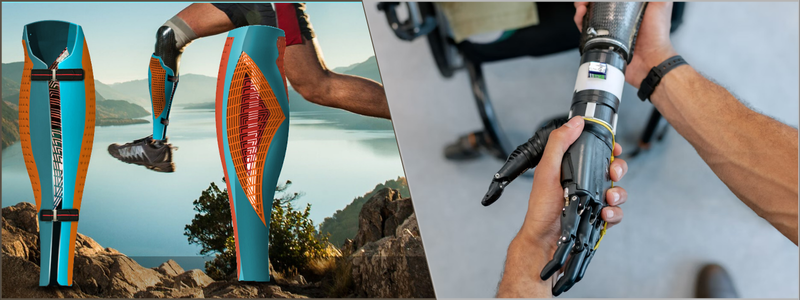
author avatar

MacKenzie Brown is the founder and CEO of Cad Crowd. With over 18 years of experience in launching and scaling platforms specializing in CAD services, product design, manufacturing, hardware, and software development, MacKenzie is a recognized authority in the engineering industry. Under his leadership, Cad Crowd serves esteemed clients like NASA, JPL, the U.S. Navy, and Fortune 500 companies, empowering innovators with access to high-quality design and engineering talent.

Connect with me: LinkedInXCad Crowd

Designing Prototypes: 3D Design Services for Inventors and Companies


Today’s post covers 3D design services and how to design prototypes for inventors and companies. It is important to evaluate whether there is enough demand and whether you’re reaching for the right customers when reassessing the potential of your products. Does your product resolve problems or at least provide answers to real questions? Are your products intentionally aligned with the audience that you have in mind? These are the questions you should first address in order to make sure that your design and products resonate with the market.

Understanding both demand and target audience helps increase your chances of success. But inventors who make it big take things a little bit further. They know and understand that actual feedback about the product is more essential than the insights you can get from simply researching about your market alone. They’ve realized that they need to do so much more and go above and beyond to get these questions answered correctly. 

This is where prototyping becomes your indispensable best friend. Prototype design experts design a shrunk, tangible version of your products that lets your customers hold in their hands. Prototypes give you the flexibility to add tweaks and updates and materialize them without the full cost breaking your bank.


:rocket: Table of contents


RELATED: What is industrial design prototyping, and what are the main prototypes used by companies?

More about prototypes 

Prototypes are your designs after drinking the shrinking potion from Alice in Wonderland. It can be shrunk version, but still incorporated with all the details and even the functionalities that the actual product is expected to embody. Prototypes can also be in the form of either low-quality or high-quality sketches. The “personalities” engraved in these prototypes help stakeholders get a better glimpse and understanding of your final products. 

Types of prototyping 

Prototyping has two major types: high-fidelity and low-fidelity prototyping. 

High-fidelity prototyping has the same exact external appearance and function as the actual product is intended to possess. This type of working model is worked on by product teams when the designers know what exactly they want to build. This prototype covers the user interface or UI of the product like the visuals, aesthetics, and UX or user experiences. It is also usually incorporated along with the user flow and behavior and caters to interactions between the products and your clients.

The primary purpose when it comes to low-fidelity prototyping is to check and test the functionality of a product rather than its visual appearance and aesthetic. It is a cost-saving, fast, and easy method of turning high-level design concepts into tangible items that serve as a representation of the future product. While the process allows a quick overview of the product, it doesn’t allow the user to perform any testing. 

RELATED: Different kinds of prototypes and how to use them for your design project

3d product rendering services

Examples of prototyping 

The following are some of the most widely used examples of prototyping in the market:

Rapid models and 3D printing 

Rapid models and 3D printing services allow designers to come up with a realistic and functional product model using advanced and high-tech computers and printing machines. It is a prototype that lets businesses switch from the design to the production stage faster because the 3D models can help them pinpoint specific areas that need adjustments and identify flaws. It also takes just a few minutes to adjust those little digital changes to a 3D-printed model.

Sketches and diagrams 

Sketches and diagrams are two of the most basic examples of prototyping because they require the least effort and don’t even need any artistic or drawing skills. It starts with the use of sketches to conceptualize and develop a new product. The interface of the product can be drawn on paper together with the front-end design of the product or application. This paper prototype is useful in the conceptualization and design of a new application or product. 

Feasibility prototypes 

3D designers or businesses may add and use feasibility working models to test specific features that they can add later on in the process of product development. After the initial prototype is developed, the designer can implement changes to the design. Feasibility prototypes can be used for digital and physical models alike. Designers can also use these prototypes for testing and adopting a new idea if they wish to add a critical website or product feature. 

RELATED: Freelance rapid prototyping costs, pricing, and rates for companies and inventors

Horizontal prototypes

Horizontal prototypes are used by companies to understand a project’s human interface. This prototype shows screens, windows, and menus on a computer to determine how users interact with a website or product. A horizontal prototype also shows the user interface of the product and offers a broader view of it as a whole. 

Role-playing prototypes

Experiential or role-playing prototypes are simulation techniques that help improve the user experience of a service or a product. Some designs can take advantage of visualization techniques such as augmented or virtual reality. For example, when testing the first design of a new theme park or circus, the users can walk through the area with the help of augmented and virtual reality. 

Storyboards

Storyboards are excellent ways to tell stories and guide customers through seamless user experiences. These are interactive and iterative design methods that use a series of pictures, sketches, and drawings to show the solution to a problem or concern of a user. Drawing the user’s experience helps them understand their issues better. Designers can also use storyboards during the initial stage of prototyping to gather feedback during the early steps in the design process. 

RELATED: 10 Tips on how to find the best prototype engineering firm services

Vertical prototypes

Vertical prototypes are technical prototypes designed by prototype design engineers that add details regarding the functions of a particular business process. A vertical prototype expands on some elements of the horizontal prototype and explains the inner functions of the sub-systems in the overall interface. Vertical prototypes are used by companies in the later stages of the design process to elaborate on specific functions or features of a website or product. Vertical prototypes also test essential tasks of an application or software before they proceed to the subsequent design process. 

prototype engineering design firm

Video prototypes

Businesses use video prototypes to present products in graphic simulations or animated videos that explain a project’s concept. Video prototyping shows speculative and new ideas, products, and designs to prospective customers. Presenting a view gives a good idea of how customers might perceive concepts that might have been otherwise challenging to prototype because of limited resources. 

Wireframes

Wireframes serve as the digital diagram or layout of a product. These can be used to produce prototypes of digital tools, software, and websites. A wireframe is a flowchart of a website or software that presents all website pages or software applications and their interconnection with each other. This gives designers and developers a general idea of the appearance of a website and helps them understand its core functionalities. Anyone can use wireframes, from developers to copywriters, to navigate the placement and structure of different content. 

RELATED: Key differences between prototyping and prototype engineering for companies & firms

Benefits of designing prototypes

Prototypes are now considered valuable tools in the manufacturing industry for many good reasons. The following are some of the critical benefits of designing prototypes:

Design validation

A prototype provides a tangible demonstration of the functionality and design of the final product. Rapid prototype services allow clients to assess the aesthetics, user experience, and ergonomics of the prototype. This will then help them reach better decisions when it comes to possible improvements or changes to the design. 

Feasibility testing 

Prototyping allows investors and businesses to test the feasibility of the product concepts and ideas they have in mind. They can determine potential issues in the design, feasibility concerns, and technical problems early on in the development phase. This results in lower costs and saves more time than is required for retooling and redesigning. 

Intellectual property protection

Designing a prototype offers a proof of concept or POC development. It can also prove ownership of an intellectual property. This can be very valuable when it comes to the protection of your innovations and ideas. 

RELATED: Understanding trademark law: intellectual property tips for inventors

Seamless communication between investors and stakeholders 

Prototypes are vital as they help communicate and demonstrate the concept of the product to potential stakeholders, clients, and investors. A functional prototype can increase interest, enhance credibility, and even help secure more partnerships or funding for the future production and development of the product. 

Iterative improvement 

Designing a prototype also makes way for fine-tuning and iterative enhancements of the product according to testing and user feedback. The iterative approach also guarantees the market suitability of the final product for its target audience.

Presales and marketing

A fully functional and visually appealing prototype can also be used for activities related to presales and marketing. The sales team and marketers can use and present something tangible that will help secure pre-orders, spike interest, and attract more prospective customers. 

RELATED: 6 Ways you can use 3D Printing services to create a new prototype design

Market testing 

Using prototype design experts allows businesses to perform market testing and acquire valuable feedback from future customers. The input can then be used to improve the product further and ensure that it aligns with the preferences and demands of the target market. 

prototype design professionals

Reduced risk 

The validation of the design and functionality of the product through prototyping can help businesses cut down the risks often linked with full-scale manufacturing. The identification of problems and addressing them accordingly in the prototype phase reduces the possibility of costly setbacks and errors in mass production. 

Streamlined collaboration 

Prototypes can make way for streamlined collaboration among the different teams with different functions, including the designers, manufacturers, and engineers. The product’s physical representation can lead to better alignment and communication during the development phase. 

Cost and time savings

Prototyping makes it easier for DFMA companies to carry out quick modifications and iterations, which can lower the costs and time involved in the development process. The ability to identify room for improvement or flaws in the existing design early on in the process can help prevent costly tooling changes or rework later on in the production. This optimizes the timelines and overall costs of the project. 

RELATED: How to design the best prototype for your new product

Tips for prototype creation and usage

Below are some helpful tips for developing and using prototypes:

  • Build the prototype with team members right from the start. Team members can pinpoint room for improvement and then work together to find a solution. 
  • During the development of a prototype, pay attention to solving flaws and move back to the earlier design if a design error is found. The existing one can either be changed, or a new prototype can be made without any problems. 
  • Prototypes can help ensure a design’s safety. For digital products, this means protecting the business and customers from cybercriminals and hackers.
  • It is critical to promote and endorse the usability of your product when developing a prototype and considering the product’s primary purpose. You should come up with a working model that presents the inspiration that sparked the design. 
  • Never build a flawless working model, as it might delay the actual product’s development. Focus instead of making a prototype of what you need and what is necessary. 

RELATED: Advantages of using rapid prototyping services for your business

How Cad Crowd can help 

Cad Crowd connects you with the best prototype design services that can help your company or firm design the best prototypes for your new concept.

author avatar

MacKenzie Brown is the founder and CEO of Cad Crowd. With over 18 years of experience in launching and scaling platforms specializing in CAD services, product design, manufacturing, hardware, and software development, MacKenzie is a recognized authority in the engineering industry. Under his leadership, Cad Crowd serves esteemed clients like NASA, JPL, the U.S. Navy, and Fortune 500 companies, empowering innovators with access to high-quality design and engineering talent.

Connect with me: LinkedInXCad Crowd