Best Mattress for Back Pain (2026): Saatva, Bear, Helix


Compare Our Top Six Favorite Mattresses for Back Pain

Honorable Mentions

Brooklyn Bedding Aurora Luxe Cooling Mattress for $1,699: If you’re looking for something akin to the Plank Natural that’s firm without being too firm, this is another good pick. It has cooling features, too, which is a nice bonus.

DreamCloud Premiere Hybrid for $1,099: This soft mattress was still supportive. I liked sleeping on it, but it didn’t erase my back pain as much as other mattresses we recommend. Still, it was a nice option if you want support without too much firmness as a side sleeper.

Essentia Tatami Organic Mattress for $3,435: This mattress is made of a really comfortable organic latex support core that has holes for breathability (and to help with cooling), and the active organic foam center helps spinal alignment and contouring support for pressure points. It doesn’t have coils or springs, but it’s still surprisingly supportive.

Leesa Sapira Chill for $1,969: If you’re grappling with whether you want a cooling mattress or a pain-relieving mattress, Leesa’s Sapira Chill is a well-priced option that can do it all. The Sapira Chill is our runner-up in the Best Mattresses guide, thanks to its problem-solving capabilities.

Saatva Memory Foam Hybrid for $1,699: The Saatva Memory Foam Hybrid is marketed as firm, and is designed to support your lower back with cushioning in the center. WIRED contributor Nicole Kinning was a little too short at 5’2″ for the lumbar support, but it could be a good fit for more average-sized folks. There are also cooling properties, but they didn’t stand out compared to other cooling mattresses.

Saatva Solaire for $4,199: If you and your partner want different firmness levels, the Saatva Solaire has a fascinating solution: letting you adjust the firmness with inflatable air chambers and a remote for either side of the bed. There are 50 firmness levels, and WIRED reviewer Divya Viswanathan says her husband prefers a lower setting, around 25, to help with his lower back pain and to relieve pressure, while she prefers a firmer feel, around 35 out of 50.

Nectar Premier for $949: WIRED reviewer Martin Cizmar is a side sleeper who suffers from sciatica back pain from time to time, and he says that this hybrid mattress is a great choice for anyone who wants a softer mattress to sink into while getting plenty of pressure relief and excellent contouring while you sleep.

Plank Firm for $999: WIRED reviewer Adrienne So says it takes a few days to reach its full firmness levels—she thought it was too soft after she initially unboxed it, but it became much firmer after a little more time. She describes the Plank Firm as sleeping on a clean wooden floor (which she loves). It’s entirely foam, and flippable with two different firmness levels on each side.

Plank Firm Luxe for $1,199: I really liked the firm support this mattress offered, and it has a better support system with a center layer of individually encased coils instead of just the firm foam the basic Plank has. It’s flippable, but the softer side is still very firm, and the firmest side is the hardest surface I’ve ever slept on. I did prefer the more nuanced support of the firm Bear Elite and a firmer Helix, and both of those models were more comfortable for both myself as a side sleeper and my back sleeper husband.

Purple Restore Cool Touch for $2,699: WIRED contributor Nicole Kinning says this is the absolute best cooling mattress by a long shot. It’s also got a gridlike gel layer, called GelFlex, that adds extra support and makes it easy to get out of bed in the morning.

WinkBeds The WinkBed for $1,799: WIRED reviewer Julian Chokkattu recommends this mattress for his fellow stomach and back sleepers. There are three levels of firmness. He tried the Luxury Firm and liked that the plush pillow-top also adds a luxe, hotel-like feel to a relatively firm bed.

Wolf 12-Inch Memory Foam Hybrid Medium Firm Mattress for $899: WIRED reviewer Molly Higgins found herself surprisingly impressed with this affordable mattress. She says the medium-firm memory foam hybrid mattress feels much more luxe than its price point suggests, and that individually wrapped coils give great support and help with overall structure, while the top gel foams conform to your body’s curves and aid in pressure relief.

Mattresses to Avoid

While the horrible futon mattress that started my hunt doesn’t exist anymore—hallelujah for that!—there are plenty of other mattresses that have flared up my or other WIRED reviewers’ back pain.

Tempur-Pedic Tempur-Adapt for $2,199: This mattress was super soft and conforming, but it wasn’t supportive whatsoever and had more of a sinking sensation when you laid on it. My right side’s muscle pain was worse after nights on this mattress, and my damaged spine felt distinctly unhappy. My sister also tried sleeping on it, and she described it as “sleeping on an air mattress that is losing air throughout the night.”

Magniflex Magnistretch 12 for $3,699: This Italian-made mattress advertises itself as stretching the spine. It’s endorsed by retired Italian soccer player Giorgio Chiellini and current pro basketballer Stefano Tonut, who plays for the Italian equivalent of the Boston Celtics. Well, the Magniflex definitely does something to the spine, though WIRED reviewer Martin Cizmar found it very unwelcome. He lasted only two nights on the Magnistretch before crying uncle and limping over to the next test mattress. He describes the morning-after sensation as similar to sleeping on a hammock made of chainlink fence.

FAQs

How Does a Mattress Help With Back Pain?

What makes a mattress ideal for solving back pain? A common rule of thumb is to aim for a medium-firm mattress. “A mattress that is medium-firm may be better for people with back pain instead of one that’s soft or firm,” but these are based on low-quality studies, says Sean Mackey. Harvard Health also recommends avoiding both very soft and very hard mattresses if you have back pain.

You’re looking for something that can provide spinal support if your pain originates in your spine, or pressure relief if your pain comes from pressure points you’re sleeping on. Mattress firmness plays a big role, but so does the overall design of the coils, foam layers, and any additional support measures added.

During my testing, I was impressed to find that a firmer mattress really did lead to big improvements in my back pain. I expected a harder surface to cause flare-ups of pain or to even throw my back out of place, which has happened on cheap, hard mattresses before. However, I slept well and woke up without any aches or soreness. While a softer sleep surface was my go-to since I’m a side sleeper, choosing a firmer style of mattress immediately supported my spine better and kept pain away, rather than flaring it up like I assumed.

Mackey also recommends checking in with your own doctor or an occupational therapist. “With chronic conditions, we don’t have a ‘This is the best thing for you,’” he says. He also recommends trialing out a few things while you sleep, whether that’s different pillows or mattresses of different firmnesses. You might also try physical therapy or stretching before bed: Mattress maker Charles P. Rogers has an entire area of its site dedicated to sleeping pain-free. It’s not just about what you’re sleeping on, but how well you’re taking care of yourself before you go to bed too.

I will probably always live with my spine conditions, and there are things that help, like stretching before bed and staying super active during the day. But sleeping on a better mattress is a good first step to staying active and pain-free—at least for the morning.

If you’re hesitant about investing in a new mattress, there’s an easy place to start: a knee pillow. It was one of the first recommendations that Sean Mackey, doctor of neurology, chief of the Division of Stanford Pain Medicine, and past president of the American Academy of Pain Medicine (AAPM), gave me when I asked him about how to reduce pain while you sleep. He explained that one of the sources of pain can be a lack of rachis alignment, or the alignment of your spine. “Generally, you should either be sleeping on your back or putting a pillow or support underneath your knees for spinal alignment,” says Mackey.

As a side sleeper, I went out and tried a few knee pillows designed for side sleepers with my original, crappy foam mattress I’ve been sleeping on for the past five years. Mackey wasn’t kidding—it did help. I was more comfortable and fell asleep faster. I liked both the Pillow Cube Knee Cube (which is discontinued) and the Everlasting Comfort Knee Pillow ($34) for different reasons. The Everlasting has a strap to keep it in place, but it’s nice and small if you don’t want something as bulky as the Pillow Cube in your bed. I did find that the smaller Everlasting was more likely to end up on the floor, though, versus the Pillow Cube’s being easier to relocate and tuck back into my knees in the middle of the night. Both helped with my spinal alignment and reduced my back pain a bit, but I still found switching to a more supportive mattress to be a bigger improvement.

How Does WIRED Test Mattresses for Back Pain?

For mattress testing in general, we sleep on all mattresses for at least a week, if not longer (many of my picks I slept on for closer to a month) depending on how they perform. I previously tested all of my mattresses on an old Article bed frame, and now am testing mattresses on an IKEA Tonstad bed frame. For back pain, I pay attention to my back pain spots the night before and see if they’re better or worse in the morning after a night on this mattress. I also look for pressure relief as a side sleeper (and another pain source) and I ask my back-sleeper husband about his experience and if it created any issues or pain for him that I wouldn’t discover as a side sleeper.

Power up with unlimited access to WIRED. Get best-in-class reporting and exclusive subscriber content that’s too important to ignore. Subscribe Today.

Ray Tracing in Architectural Visualization: Why It’s Essential for Design Firms and Freelance Services


From large-scale massive projects to services of freelance architects offering custom design, communication of designs in a manner that effectively transmits spatial relationships, lighting, materials, and overall ambiance becomes quite important. Ray tracing has totally revolutionized the presentation of architecture, improving the quality of the image and showcasing the capabilities of architectural design services. A result impossible to integrate into architectural visualization before.

As a leading agency connecting design firms with the best freelance 3D visualization, Cad Crowd has learned the ins and outs of 3D and architectural visualization. This article focuses on the significance of ray tracing for architectural visualization and its potential for future projects.


🚀 Table of contents


What is ray tracing?

It is a rendering technique used in architectural visualization to demonstrate the effect of light rays on a specific environment, whether it’s sunny or shady, among other things. From the word ray tracing, it traces paths for rays traveling through a 3D environment, reflecting off surfaces, and scattering in all directions. It is used to generate high-quality images based on very complex behaviors like reflection, refraction, and shadows—a method integral to architectural visualization services.

Unlike traditional rendering, where approximations are used to simulate the lighting behavior, ray tracing traces direct light rays passing through a scene, producing high accuracy results, and may be applied in architectural visualization and details such as natural light play and interplay of shadows or characteristics of materials.

Why is ray tracing needed in an architectural design firm?

Architectural design firms need clearly communicated design ideas, where usually architects illustrate their designs using 2D objects such as drawings or hand-drawn sketches. Designs like these are too simple to represent the design clearly. With ray tracing, architects’ work can now be more dynamically represented with architectural drafting services in 3D visualization and rendering because of its realistic outputs.

This is how ray tracing takes 3D visualization to the next level, with a realistic level that is appropriate for internal decision-making purposes as well as for client presentations. The following are some reasons why it is sure to be a game-changer for architectural design firms:

RELATED: What are architectural 3D visualization costs, service fees & rates for companies?

Ray Tracing in Architectural Visualization

1. Photorealistic visualization

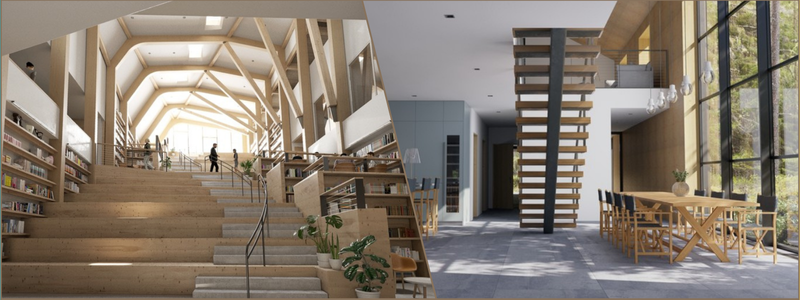
Ray tracing comes with an unmatched realistic rendering, which is used for presenting architectural designs and is a key part of CAD design services. It enables architects to show the geometrical interpretation of their designs and how they will look in real life. For instance, how much light will pass through the windows, what the reflection of the wood, glass, or stone might look like, and where the shadows will fall inside a room. This very important thing is to present designs before clients because that gives people an idea of how the final product looks.

2. Better representation of materials

Materials often play a crucial role in design and thus should be represented accurately. Ray tracing allows precise approximations of glossiness, transparency, roughness, and even reflection properties. For example, the behavior of light, when it bounces off a shiny marble floor vs a concrete matte floor, is different. These functions of ray tracing make the design more helpful in presenting the actual design, therefore affecting decision-making for architects and clients.

RELATED: All you need to know about 3D visualization for architectural design and CGI projects

3. Accurate lighting simulation 

The lighting factor of architectural design sets the mood and functionality of a place, with a strong association with energy efficiency. Ray tracing simulates real light, including direct, indirect, or reflected light, and simulates accurate lighting analysis needed in studying the effect of space from dawn till dusk, as well as how lighting in the space will be performed using 3D rendering services. Whether it is the display of how sunlight will illuminate a room in the morning or how artificial lights will brighten a corridor during nighttime.

4. Design iteration and decision-making

Trying different design options and customizing them in real-time allows the designer to receive instant feedback about material and lighting object placement, which can be used in optimizing the whole design process.

RELATED: Techniques for 3D architectural visualizations and tips for your services firm

Why freelance services should use ray tracing

Freelancers and Professional designers can handle everything from innovative design to technical work. Even if the firm is not large in size, freelancers also gain experience with the use of ray tracing because of its ability to render photorealistic visualizations without requiring large infrastructure.

1. Leveling the playing field

Freelancers, as independent designers, have the chance to be on equal footing with the use of ray tracing and CAD design services. However, freelancers need to invest in high-quality hardware and software to be able to compete with large firms that have the budget to generate realistic visualizations and advanced effects.

2. Broader impressive portfolio and marketing

Ray Tracing in Architectural Visualization

A freelancer’s portfolio is his most prized possession. With the aid of ray tracing-based high-quality renderings, there can be a big difference in making a portfolio that may impress the clients you are marketing to. Whether marketing or pitching to a future client, if you make your visualizations photo-realistic, this changes the game significantly in terms of attracting new business.

RELATED: 5 types of 3D visualization used by architectural design firms for CGI projects

3. Improved client communication

It enables freelancers to produce final product designs similar to those of established design firms, which can help enlighten clients on the intended result. Ray tracing also helps minimize misunderstandings about designs, leading to fewer design alterations before the end product. With this, a more satisfactory client response is achieved by leveraging architectural CAD services.

4. Improved cost estimate

Ray tracing allows freelancers to give more precise estimates of the costs involved in a certain project. This is because freelancers can simulate the interaction between the light and material with a space, therefore giving them an idea as to whether there are some materials or changes in design that may be required to be included in the budget. Such a head-of-time study may save them more hours and money, thus helping the freelancer provide cost estimations upfront with a higher degree of accuracy.

5. Diversity in services

Architectural visualization freelancers who would apply ray tracing technology can offer much more extensive services by integrating 3D animation services. Freelancers shall be able to offer further services like voluminous 3D renderings that create virtual tours or even interactive walkthroughs, which add value to their service. Thus, they increase and diversify their business prospects and can serve all kinds of clients, from real estate developers and architects to interior designers and the like.

Future of ray tracing in architectural visualization

The future of ray tracing in architectural visualization is endless. The ability to simulate real-world lighting and materials with increasingly high accuracy means rendering can achieve photorealism even better in the future.  Furthermore, ray tracing will still be used in the design process, using improved augmented (AR) and virtual reality (VR) to achieve immersive architectural experiences. Design firms, freelancing professionals, and even other professionals will continue with this technology to push the bounds of what can be accomplished in architectural visualization.

RELATED: What is architectural visualization and why architectural rendering services use it

How Cad Crowd Can Help

Architectural visualization, which was once a sketchy guess, is now revolutionized by ray tracing to become a very accurate, photorealistic, and worthwhile tool for every design firm and freelancer. The incredibly detailed mimicking of the way light behaves, interacts with materials, and computes space makes this tool indispensable in the design process.

Ray tracing in architectural visualization has now become an integral tool for design firms and freelance services. Here at Cad Crowd, we can help you find the best expert for you if you wish to set yourself apart from your competitors. Don’t hesitate to reach out to us, and we will be more than happy to help. Get a free quote today. 

author avatar

MacKenzie Brown is the founder and CEO of Cad Crowd. With over 18 years of experience in launching and scaling platforms specializing in CAD services, product design, manufacturing, hardware, and software development, MacKenzie is a recognized authority in the engineering industry. Under his leadership, Cad Crowd serves esteemed clients like NASA, JPL, the U.S. Navy, and Fortune 500 companies, empowering innovators with access to high-quality design and engineering talent.

Connect with me: LinkedInXCad Crowd

All Slay The Spire 2 Bosses


For those who loved the original, Slay The Spire 2 offers more of the same card-collecting, monster-slaying action. Some of the gameplay hits a similar note, but with a new tower to scale, which also means there are a whole host of new bosses to overcome on each floor, each with their own tactics that will stretch even the most robust builds.

During the first phase of early access, there are two first acts, one second act, and one third act available to play. This means that there are 12 bosses in total for you to fight, of which you’ll fight three at a time. However, given that this is a Roguelike game with random perks, classes, and cards in every run, you’ll probably want to know ahead of time what the best ways to deal with them are. A big part of this is the cards, classes, and perks you’ll earn by unlocking the Slay The Spire 2 Epochs, with some of the stuff hidden behind these goals being essential to making even the toughest boss battle far easier.

Vantom (Act 1 Overgrowth)

  • Found in: Act 1 Overgrowth
  • Enemies: Vantom (173 HP)

The Vantom has nine charges of Slippery at the start of the fight. For each hit, one charge is spent, but you only deal one point of damage. Its tail will also slowly rise up and over your character, doing one or two attacks each turn. When it dangles above you like the Sword of Damocles, it has a huge boost to the amount of damage it deals. It also adds three Wounded status cards to your deck, which are unplayable and only serve to clog up your hand. It then buffs its strength before starting the cycle again.

The Kin

  • Found in: Act 1 Overgrowth
  • Enemies: Kin Priest (190 HP), Kin Follower x2 (58/59 HP)

The Kin Followers will buff their strength and attack, while the Kin Priest simultaneously attacks and debuffs you with Frail or Weak, or buffs its own strength. It’s best to try to kill the followers first, as they have lower HP, but still deal a similar amount of damage with their melee attacks. That said, if you manage to kill the Kin Priest first, the Kin Followers will flee as they are minions, so it depends on whether you think you can withstand the Followers’ attacks.

Ceremonial Beast

  • Found in: Act 1 Overgrowth
  • Enemies: Ceremonial Beast (252 HP)

At the start of the fight, the Ceremonial Beast will use Plow. This increases its attack by two every turn, but will leave it vulnerable to being stunned when its health reaches 150 or below. Once it reaches this threshold, it also loses its health. After its turn being stunned, it will alternate between attacking and trying to debuff with the Ringing effect, which means you can only play one card per turn. Its attacks in this phase are weaker, but so is the potential for you to defend against them, so hit it as hard as you can while you’re able to.

Waterfall Giant

  • Found in: Act 1 Underdock
  • Enemies: Waterfall Giant (250 HP)

At the beginning of the fight, the Waterfall Giant will buff itself with Steam Eruption, which adds damage it will deal to you when you kill it. The next turn, it deals damage, casts a Weak debuff on you, and a strength buff on itself, increasing the Steam Eruption damage. It can also heal. When you reduce it to 0 HP, you have one turn to surpass the defensive requirements before it blows up.

Soul Fysh

  • Found in: Act 1 Underdock
  • Enemies: Soul Fysh (211 HP)

The Soul Fysh begins by adding a copy of Beckon to your deck and discard piles, respectively. If they are in your hand at the end of your turn, you lose six health. Thankfully, you can pay one of any resource to play it, but it stays in your deck until the end of the fight. As the fight progresses, it’ll buff itself with the Intangible stat buff, which reduces all damage taken and HP loss to one. It also attacks, casts the Vulnerable debuff, and adds more Beckons to the draw and discard piles.

Lagavulin Matriarch

  • Found in: Act 1 Underdock
  • Enemies: Lagavulin Matriarch (222 HP)

Lagavulin Matriarch starts the fight asleep with 12 armor. If you eliminate her armor while asleep, she will be stunned for the turn. After that, she will attack regularly. Occasionally, she’ll shore up her defences, then apply debuffs to decrease your strength and dexterity, while also buffing her own strength. If you know you’re up against this boss, your best bet is to focus on poison, doom, and other status ailments that aren’t affected by strength or dexterity.

The Insatiable

  • Found in: Act 2 Hive
  • Enemies: The Insatiable (321 HP)

During the first turn, it casts Sandpit. This will start a countdown, and in 4 turns, you die. That said, it will still attack you every turn, but you can extend this countdown timer with the Frantic Escape cards it adds to your deck. However, each copy of Frantic Escape increases the cost to play it by one whenever you use it. You’re essentially racing to dish out enough damage before it eats you, while also micromanaging remaining turns and so forth. Thankfully, The Insatiable doesn’t really do anything else in the fight, but its high health pool is problematic.

Knowledge Demon

  • Found in: Act 2 Hive
  • Enemies: Knowledge Demon (379 HP)

Whenever the Knowledge Demon casts a debuff on you during the fight, including the very first turn, it will give you a choice between two negative effects.

  • Disintegration: At the end of your turn, take damage (this is always an option and increases by 1 damage each time it appears)
  • Mind Rot: Draw 1 fewer card each turn.
  • Sloth: You cannot play more than 3 cards each turn.
  • Waste Away: Gain 1 less primary resource per turn.

In addition to this effect, the Knowledge Demon can buff its attacks, hit relatively hard, and even heal itself in a pinch. You want to have either a heavily defensive or a brutally offensive strategy with plenty of focus. Combos that do one thing incredibly well are the key to overcoming this fight, whether it’s the Sinner with poison strats or a Necrobinder Doom deck.

Kaiser Crab

  • Found in: Act 2 Hive
  • Enemies: Crusher (199 HP), Rocket (189 HP)

This hulking monstrosity has two pincers, with the Rocket (right) one being able to dish out major damage. Both claws can deal extra damage with back attacks, and they gain five additional strength and 99 block if the other claw dies. It sounds scary, but as it only lasts that turn, all it really means is that it’s unlikely you’ll kill both claws in the same turn.

When Rocket uses its launching attack, it will not attack the following turn, giving you time to breathe. The Crusher (left) is more tanky, as it’s able to buff its defense, so focus on Rocket first. Moves that target both claws are ideal as the fight will go quicker, but the Rocket has the more powerful attacks, so it should be dealt with first. Once both claws are dead, the Kaiser Crab in the background will flee, giving you the victory.

The Queen

  • Found in: Act 3 Glory
  • Enemies: Queen (400 HP), Torch Head Amalgam (199 HP)

The Queen can add Afflictions to your cards, which are debuffs in addition to your card’s standard effect. In this case, she inflicts Chains of Binding, which gives Bound to the first three cards you draw, which restricts you to only being able to use one of the three that turn. This is not permanent, as the effect disappears at the end of the turn. She also inflicts 99 Frail, 99 Vulnerable, and 99 Weak as a debuff, and bolsters her own strength and defense.

The Torch Head Amalgam is a minion and will flee once the Queen dies, but it’s the primary damage dealer, able to inflict up to three hits at a time. It’s not worth focusing on the Queen as the Amalgam is likely smacking you around, so try to mitigate its attack power where possible and take it down first, before focusing on the Queen.

Doormaker

  • Found in: Act 3 Glory
  • Enemies: Doormaker (489 HP), Door (155+ HP)

At the start, you’ll find only the Door enemy. It will hit hard and increase its strength on its turn. Upon dying, the Doormaker will appear stunned on the turn it arrives. It will then hit once with a powerful melee attack, before fleeing back inside the door after dishing out another heavy blow and buffing the door. Every time the Doormaker flees, the max HP of the Door it leaves behind increases by 20 points, so it’ll be tougher to break each time.

Test Subject #C8

  • Found in: Act 3 Glory
  • Enemies: Test Subject #C8 (100 HP, 200 HP, 300 HP)

The low HP you see at first is, rather predictably, deceptive. Test Subject #C8 has the Adaptable ability, an annoying perk that enables it to revive itself, coming back even stronger each time. In the first phase, it also has Enrage, which makes it gain two strength every time you play a Skill-type card, while also attacking and inflicting the Vulnerable debuff.

During the second phase, it replaces Enraged with the Painful Stabs ability, which adds Wound cards every time you get hit by unblocked damage. It will also hit harder, potentially multiple times in a turn, but aside from an increased health pool, the strategy is the same.

In the third phase, you see Adaptable and Painful Stabs phase out, but in its place, it gets Nemesis, a disgustingly powerful ability that grants it Intangible every other turn. This reduces all damage done to it by an attack to 1 HP while it’s active. This slows you down considerably and also hinders the potency of effects such as poison. In addition to the usual buffing strength and attacking, it also adds Burn cards to your discard pile, which are unplayable cards that each deal two damage if in your hand at the end of your turn.

Anduril snaps up space surveillance firm ExoAnalytic Solutions


The first step to fighting a war in space is knowing what’s happening tens of thousands of miles above the planet. Toward that end, defense tech darling Anduril is buying boutique data firm ExoAnalytic Solutions.

ExoAnalytic operates a network of 400 telescopes around the world, which it uses to track spacecraft in high orbits above the planet. The company’s engineers develop software that converts those observations into situational awareness tools for U.S. national security agencies watching adversary spacecraft and coordinating American assets on orbit.

“This is a company we’ve been working with closely for the last several years on a number of programs, and they are experts in space domain awareness and missile defense,” Anduril VP of engineering Gokul Subramanian told reporters. “We believe the [Department of Defense] deserves the best catalog of everything going on in space.”

The privately-held companies did not disclose the terms of the deal. Anduril is in the process of raising a $4 billion round from investors Thrive Capital and Andreessen Horowitz, Reuters reported last week.

ExoAnalytics will be directly integrated into Anduril, not run as a separate subsidiary, though Subramanian said it would continue to serve existing and future outside customers. Currently, Anduril has 120 employees focused on space defense, a number that will more than double with the addition of 130 ExoAnalytics employees.

The company’s technology could help Anduril win government contracts supporting Golden Dome, the missile defense system that the US Congress has appropriated billions of dollars to build. That system is expected to include thousands of satellites to track and target enemy missiles, and maintaining real-time awareness and coordination among them will be a heavy lift.

Anduril is planning to launch three spacecraft this year as internally-funded R&D projects that will draw on capabilities gained in the acquisition. Subramanian said ExoAnalytic’s experience processing space data would be used in an infrared tracking satellite it plans to launch this year in partnership with Apex Space. The space tracking data will be used to execute two missions in high orbit expected to launch this year in partnerships with Impulse Space and Argo Space, respectively.

Techcrunch event

San Francisco, CA
|
October 13-15, 2026

There’s another potential angle to the acquisition — the machine vision algorithms ExoAnalytic has developed to spot satellites in orbit are also useful for interceptors trying to track and engage with incoming threats. Anduril received a contract from the Pentagon in late 2025 to begin developing a space-based missile interceptor.

ExoAnalytic was founded in 2008 to adapt missile defense sensor technology to track spacecraft in orbit after U.S. military officials called for new and better ways to understand what was happening in space, CEO Doug Hendrix said in a 2024 interview. The company’s early growth was funded by grants and contracts from the federal government, including $26 million in SBIR grants since 2010.

U.S. Space Force officials have expressed deep concern about Chinese and Russian spacecraft that fly closely alongside American and European satellites, where they could potentially intercept communications or damage the satellite with electronic or other weapons.

“Two years ago, an [U.S. commander in the Pacific told] me that the fleet cannot leave the port without the space layer being secured,” Subramanian said. “We’ve been on a mission for the last several years to figure out how to be a part of that solution.”

How Tradelines and Credit Score Strategies Can Boost Credit Fast


Tradelines Can Boost Your Credit ScoreTradelines Can Boost Your Credit Score
Deposit Photos

If you’ve been working on improving your credit score, you’ve probably come across the term “tradelines” at some point. Maybe you brushed past it, thinking it was just another complicated financial term. But here’s the thing: understanding tradelines could actually be the key to giving your credit score the boost it desperately needs.

Let me break it down for you in plain English, because this topic doesn’t have to be as confusing as some people make it sound.

What Exactly Is a Tradeline?

First things first. A tradeline is simply any account that appears on your credit report. Yep, that’s it. Your credit card, car loan, mortgage, student loan, and even that store credit card you opened to get 15% off at checkout? Those are all tradelines.

Every time you open a line of credit, it becomes a tradeline on your credit report. The credit bureaus (Equifax, Experian, and TransUnion) collect information about each of these accounts and use that data to calculate your credit score.

Now, when people talk about using tradelines to boost credit scores quickly, they’re usually referring to something more specific: authorized user tradelines. This is where things get interesting.

The Authorized User Strategy

Here’s how it works. Someone with an established credit card account that has a solid payment history can add you as an authorized user. When they do this, that account’s history often gets reported on your credit report too. You get the benefit of their positive credit history without actually being responsible for the account.

Think of it like borrowing someone’s good reputation. If they’ve been making on-time payments for years and keeping their balance low, that positive behavior can reflect on your credit report once you’re added as an authorized user.

This isn’t some shady loophole, by the way. It’s a perfectly legal practice that’s been around for decades. Parents often add their kids as authorized users to help them build credit. Spouses do it for each other. The credit scoring models recognize authorized user accounts because they demonstrate that someone with good credit trusts you enough to add you to their account.

Why Tradelines Can Work So Fast

Unlike other credit-building strategies that take months or even years to show results, tradelines can impact your credit score relatively quickly. Sometimes within 30 to 45 days, you might see a noticeable change.

Why the speed? Because you’re essentially piggybacking on someone else’s credit history. Instead of waiting years to build up a perfect payment history yourself, you’re getting credit for an account that already has that history.

The impact can be especially dramatic if you have a thin credit file (meaning not many accounts) or if you’re recovering from past credit mistakes. Adding a tradeline with a long history of on-time payments and low utilization can shift the overall picture that your credit report paints.

What Makes a Good Tradeline?

Not all tradelines are created equal. If you’re considering this strategy, here’s what you want to look for:

Age matters. Older accounts are better. A credit card that’s been open for ten years carries more weight than one that’s only been around for six months. The age of your credit history makes up about 15% of your FICO score, so this isn’t a small detail.

Payment history is crucial. The whole point is to benefit from positive payment history, so you want an account with a spotless record of on-time payments. Even one late payment can drag down the value of that tradeline.

Low utilization is key. Utilization refers to how much of the available credit is being used. An account that has a $10,000 limit but only carries a $500 balance (5% utilization) looks much better than one that’s maxed out. Lower is always better here.

Higher credit limits help. Bigger credit limits can improve your overall credit utilization ratio, which is a major factor in your credit score. An account with a $20,000 limit is generally more valuable than one with a $2,000 limit.

Things to Keep in Mind

While tradelines can be powerful, they’re not magic. You can’t just add a tradeline and expect all your credit problems to disappear overnight.

If you have recent late payments, collections, or other negative marks on your report, a tradeline can help balance things out, but it won’t erase those issues. Think of it as one tool in your credit-building toolbox, not the only tool.

Also, the credit scoring models have gotten smarter over the years. They can sometimes distinguish between accounts where you’re genuinely responsible for payment versus ones where you’re just an authorized user. That said, authorized user accounts still carry weight, especially with FICO scoring models.

Is This Right for You?

Tradelines make the most sense for specific situations. Maybe you’re trying to qualify for a mortgage and you’re just a few points short of getting the best interest rate. Or perhaps you have a limited credit history and need to build it up faster than the traditional methods allow.

On the other hand, if you’re dealing with serious credit issues like bankruptcy or multiple charge-offs, you might need a more comprehensive credit repair strategy. Tradelines can help, but they’re not a substitute for addressing underlying financial problems.

The Bottom Line

Adding tradelines to your credit report can genuinely help boost your score faster than building credit from scratch on your own. It’s a legitimate strategy that takes advantage of how credit scoring works.

That said, approach it wisely. Make sure you understand what you’re getting, do your research, and remember that building good credit is ultimately about developing solid financial habits. Tradelines can give you a boost, but maintaining that improved score means managing your own accounts responsibly going forward.

Your credit score affects everything from the interest rates you pay to whether you get approved for that apartment you want. If tradelines can help you reach your goals faster, they’re definitely worth considering as part of your overall financial strategy.

Find a Home-Based Business to Start-Up >>> Hundreds of Business Listings.

Do You Have What It Takes to Be ‘Future Chief of Police’ of Starbase, Texas?


Does “protecting a commercial spaceport environment,” along with “critical infrastructure and high-value technology assets,” in a community “shaped by aerospace activity, coastal ecology, and a pioneering spirit of exploration” sound like your dream job? Well why not apply to be the “future chief of police” of Elon Musk’s company town in Texas?

As noted in a story last month on ValleyCentral.com, which is affiliated with Brownsville, Texas area TV news station KGBT, the city of Starbase (yes, it’s a real, incorporated city) approved an ordinance (yes, it has the authority to make laws) establishing a municipal police department. That will include a chief of police and eight officers, with that chief, according to ValleyCentral, elected by the city’s commission.

To that end, apparently, the city just published a job listing seeking applicants for a job titled “Public Safety Director / Future Chief of Police.” The rather puzzling hybrid title may stem from the sheer speed at which the institutional trappings of a city are being assembled in Starbase. The city was incorporated about ten months ago, has a mayor, and will be holding an election on May 2 of this year according to its website.

ValleyCentral makes it sound like policing is a somewhat urgent matter in Starbase because a $3.5 million contract with the Cameron County Sheriff fell through. What were meant to be five-year positions as Starbase-based deputies weren’t appealing to potential recruits. City Administrator Kent Myers told ValleyCentral “We didn’t have a lot of success in finding deputies through the county, so we decided to change direction.”

The job ad says this position will involve creating a “future-ready workforce” that will prioritize, “Integrating advanced technology and analytics into operations.” Starbase’s ideal applicant, the ad says, is a “visionary, ethical, and innovative leader with unquestioned integrity.”

But that ideal candidate will also “thrive in a startup-like environment.”

As for what the sociological picture looks like in the area for someone considering being top cop there, the first thing to keep in mind is that it’s a short drive from the Mexican border where, as of 2026, drug trafficking remains an issue of concern at the federal level. And according to a report from 2023, Cameron County was on the list of the 45 counties (out of 254 counties total) in Texas considered to be in poverty.

Closer to Starbase, there has been considerable agitation over SpaceX’s control of an ostensibly public beach, and a statue of Elon Musk in the area was vandalized last year. So social unrest due to dislike of SpaceX and Elon Musk seem like potential areas of concern.

But it’s presumptuous to try and paint a picture of the crime situation in Starbase because it’s in many ways still just a construction site. The population was about 500 as of last year, which is the approximate standing capacity of a Cheesecake Factory. And the infrastructure to support a police department isn’t even in place yet in Starbase. TechCrunch noticed some government filings last month showing that the city will likely soon have a courthouse. Common sense-wise, it stands to reason that a jail will soon follow.

What Is a VPN (and Why You Need One)


What Is a VPN (and Why You Need One)

If you regularly use a desktop or laptop for work, banking, shopping, or browsing, a Virtual Private Network (VPN) is one of the simplest ways to improve your online security and privacy. But what Is a VPN?

A VPN creates an encrypted tunnel between your computer and the internet. Instead of your device communicating directly with websites or online services, all of your traffic is first routed through a secure VPN server. This encryption prevents outsiders—such as hackers, internet service providers, or network administrators—from seeing what you’re doing online.

For desktop and laptop users in particular, this added protection can make a significant difference.

Protect Your Data on Public Wi-Fi

Public Wi-Fi networks in airports, hotels, coffee shops, and coworking spaces are convenient—but they’re also risky. These networks are often poorly secured, making it easier for attackers to intercept unencrypted data.

When you connect to a VPN, all traffic leaving your laptop or desktop is encrypted before it ever reaches the local network. Even if someone attempts to monitor traffic on the same Wi-Fi network, the data they capture will be unreadable.

If you travel with a laptop or work remotely, a VPN should be considered essential.

Prevent Tracking and Data Collection

Without a VPN, your internet service provider (ISP) can see the websites you visit and the services you use. Many ISPs collect browsing data that can be sold or used for targeted advertising.

A VPN masks your real IP address and replaces it with the IP address of the virtual server. This makes it much harder for websites, advertisers, and data brokers to track your activity or build a profile around your browsing habits.

For professionals who spend hours a day online, this privacy benefit alone can be valuable.

remote work programs

Secure Remote Work

Remote work has become standard across many industries. Employees frequently connect to company resources, cloud platforms, financial accounts, and communication tools from their personal computers.

Using a Virtual Private Network ensures that sensitive information—login credentials, documents, and internal communications—travels across the internet in encrypted form. Many companies require VPN usage for exactly this reason.

Even if your employer doesn’t mandate it, using a VPN adds an important extra layer of security.

Access the Internet Without Restrictions

Another benefit is the ability to connect through servers in different geographic locations. This can allow you to access websites or services that may be restricted or limited based on location.

For example, travelers may use a VPN to access services from their home country while abroad.

A Simple Upgrade to Your Online Security

Installing a Virtual Private Network on a desktop or laptop typically takes only a few minutes. Once connected, most VPN apps run quietly in the background, automatically encrypting your traffic and protecting your connection.

In a world where data breaches, tracking, and cyber threats are increasingly common, using a VPN is one of the easiest and most effective ways to take control of your online privacy.

For help choosing the best VPN, try this tool.

The following two tabs change content below.

This content was written by the expert Velocity Micro staff.


How to Run 2D CAD Smoothly on a Laptop


Can 2D CAD software run on a laptop computer? Yes, it’s definitely possible to use installed CAD software on a laptop, but there are some potential pitfalls to watch out for. This article will help you ensure that it’s a smooth, productive experience.

Flexible work styles have become common in recent years. CAD software, once typically run on desktop computers in on-premises environments, can now be used on a variety of devices in almost any location. However, if you’re planning to install CAD software on a laptop, it’s crucial to check the system specifications in advance.

In addition, new types of web-based 2D CAD software that don’t require installation on a computer have also become available to support diverse working styles.

This article will explain the necessary specifications for running 2D CAD software on a laptop, and introduce browser-based 2D CAD tools that can run smoothly even on modest laptops.

2D CAD software demands considerable resources when loading files and drawing, so high-end laptop specs are recommended.

Key Hardware Components for 2D CAD:

  • GPU (Graphics Processing Unit, or Graphics Card): NVIDIA or AMD
    • NVIDIA is preferred for line drawing performance and OpenGL support.
  • CPU: Intel Core i7 or i9
  • Memory: 16 GB or more

Additional Requirements:

  • Storage: At least 256 GB SSD
  • Display Size: 14 inches or larger

While larger monitors are better for CAD usability, they also add weight, which may have a negative impact on portability. If mobility is a priority, consider using a small-screen laptop and connecting it to a large monitor when needed.

To achieve smoother and faster performance when running 2D CAD software on a laptop, several optimization techniques can make a significant difference. These tips help reduce lag, improve responsiveness, and ensure more efficient day-to-day drafting:

  • Keep graphics drivers up to date
  • Simplify models by removing unnecessary elements
  • Optimize file size to improve loading and saving times
  • Use shortcut keys to boost drawing speed
  • Ensure proper cooling for stable performance under heavy loads
  • Back up data and use version control to prevent data loss.

The strategies above will help you get better performance from CAD software on laptops. However, powerful laptops capable of running CAD well are usually priced at the upper end of the market. If your budget is limited, consider browser-based 2D CAD software instead.

What is Browser-Based 2D CAD?

Thanks to modern tech advancements, 2D CAD tools are now available not only for laptops but also for tablets and smartphones. Some don’t require installation, and can run directly in web browsers, offering a flexible, hardware-independent CAD experience.

One standout example is Graebert’s ARES Kudo, a full-featured cloud-based 2D CAD solution that allows you to view, create, and edit DWG files directly in your browser — Edge, Chrome, Safari, Firefox, and more.

With ARES Kudo, users benefit because:

  • There is no need for high-end hardware
  • No software installation and no updates are required
  • OS compatibility issues are eliminated.

Advantages of Cloud-Based CAD for Modern Workflows

ARES Kudo integrates with multiple cloud storage services, including OneDrive, Google Drive, Box, and AWS. For users without an existing cloud storage account, ARES Kudo Drive (for free) is also available, enabling seamless cloud CAD collaboration and online file management.

ARES Kudo also includes powerful collaboration features such as:

  • Version history
  • Drawing comparison
  • Highlighting user-specific changes
  • Feedback through text comments, voice memos, photographs, and stamps.

ARES Kudo offers superior functionality at an affordable price point — starting from just $215 per year. There’s even a free version with limited functionality, ideal for occasional users who just need to open and view DWG files, and collaborate via comments and markups.

Graebert, the company behind ARES, reinvests profits into innovation rather than shareholders, enabling them to offer powerful tools at reasonable prices.

To fully experience the ARES ecosystem, you can try ARES Kudo as part of the 30-day free trial of the ARES Trinity of CAD. In addition to Kudo, the trial also includes access to:

  • ARES Commander — the full-featured desktop CAD application for Windows, macOS, and Linux
  • ARES Touch — the optimized mobile CAD app for tablets and smartphones

Together, these three solutions provide a complete cross-platform CAD workflow that lets you work seamlessly across desktop, browser, and mobile devices.

Expedition 33 devs resolve dispute with comic book author


Recently, French author Olivier Gay claimed the developer of Clair Obscur: Expedition 33, Sandfall Interactive, ordered him to stop selling his recently published and similarly named graphic novel, L’Académie Clair-Obscur. Sandfall publicly responded with a brief note on Monday, saying it was “in contact with the publisher and Olivier to find a fair solution for everyone.” Well, now it looks like all parties have landed on that fair solution.

In a message posted on X on Tuesday, Sandfall apologized for “dragging our feet” in speaking about the “complex” situation.

“Sandfall was working to withdraw the requests from our legal representative, which has now been done. Their role is to protect us in particular against counterfeit products, but the action initiated toward the comic book ‘L’Académie Clair-Obscur’ published in January 2026 does not align with us,” the developer said (via machine translation). It continued by saying Sandfall “always wanted to support artists and encourage creativity,” and wrapped by wishing Gay and the book’s artist Grelin success.

What specifically prompted Sandfall’s legal representatives to contact Gay has not been stated. While the plot of Gay’s comic doesn’t share any similarities with the Expedition 33 game (it’s about students at a magic school), obviously the book has the same phrase from art history, Clair Obscur, in its title. X users also pointed out the typography of L’Académie Clair-Obscur is similar to that used for the game.

Shortly after Sandfall posted to X, Gay also shared a message on the platform thanking Sandfall “for withdrawing their approach.” He noted the comic will “be able to continue its life,” presumably meaning he and publisher Drakoo will be able to continue selling it sans alterations or a new title.

“I won’t hide from you that this is a huge relief for me, and a super move on the studio’s part,” Gay continued. He capped off his message with a line that anyone who played the game will recognize: “For those who come after!”

5 reasons to buy a Galaxy S26 and 3 reasons not to buy one


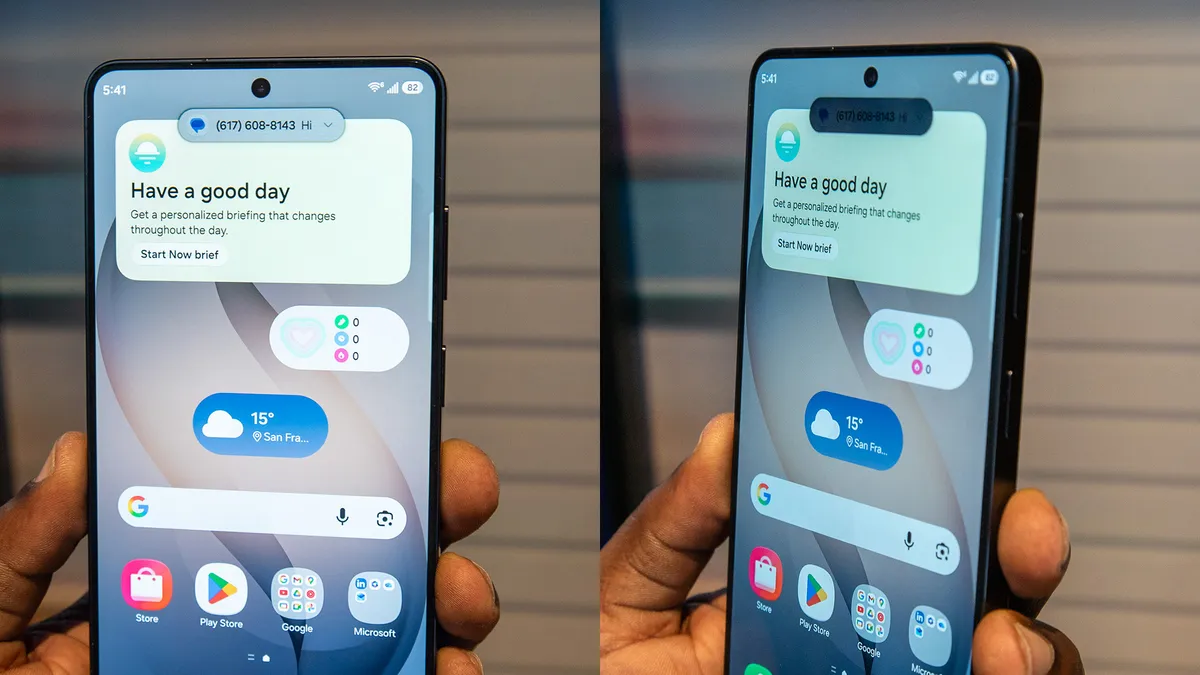
The Galaxy S26 series is official and currently up for preorder, but in the lead up to the official release, there’s one major question you have to ask yourself: should you buy a Galaxy S26? Well, the answer depends on what you’re looking for and the phone you’re upgrading from, so it’s not a simple “Yes” or “No.”

I’ve already had some hands-on time with each of the phones, this is my firsthand insight and thoughts on the S26 series and why you should or shouldn’t buy them.