New Xbox boss Asha Sharma had some good and bad news for Game Pass subscribers yesterday: the service is now cheaper, but new Call of Duty games will no longer be included with the service at release. They’ll now arrive a year later, around the time that they’re inevitably replaced by the next Call of Duty.
The change is one of the first major shakeups from Sharma, who takes up Phil Spencer’s mantle following a truly shameful year for Microsoft in which Xbox was the least of its fumbles.
Xbox’s two-year run of giving away its single biggest money-maker to subscribers is over, which Activision seems keen to move on from, as Call of Duty’s wider availability reportedly dealt a huge blow to the profitability of Black Ops 6 in 2024 and Black Ops 7 in 2025.
Article continues below
Reactions to the news among fans swung between disappointment and understanding, but among them was a specific request: “They should release all legacy Call of Duty games on game pass like today,” wrote Stallion83 on X.
Perhaps not every Call of Duty, but a source at Activision told PC Gamer it plans to add more of Call of Duty’s back catalog to Game Pass this year.
Currently, only the last handful of entries are available on the service’s Ultimate tier—the oldest being 2017’s Call of Duty: WW2. The availability of classics like Modern Warfare 2 and Black Ops would be a genuine draw, especially because as the console and PC versions of many older games still go for $30 to $60 (and a few never came to PC at all):
Call of Duty (2003)
Call of Duty 2 (2005)
Call of Duty 2: Big Red One (2005)
Call of Duty 3 (2006)
Call of Duty 4: Modern Warfare (2007)
Call of Duty: World at War (2008)
Call of Duty: Modern Warfare 2 (2009)
Call of Duty: Black Ops (2010)
Call of Duty: Modern Warfare 3 (2011)
Call of Duty: Black Ops 2 (2012)
Call of Duty: Ghosts (2013)
Call of Duty: Advanced Warfare (2014)
Call of Duty: Black Ops 3 (2015)
Call of Duty: Infinite Warfare (2016)
Call of Duty: Vanguard (2021)
I had to double check, but yes, 2021’s oft-forgotten Vanguard has also been forgotten by Game Pass. Maybe Treyarch’s Big Red One (the even more forgotten version of Call of Duty 2 for the original Xbox/PS2) will finally gets its day in the sun.
Keep up to date with the most important stories and the best deals, as picked by the PC Gamer team.
I recently spent time in a mountain youth hostel, which offered a choice of hikes up nearby peaks together with the regulation climber’s breakfast of imploded sausage plus violently oversugared orange juice. The worst thing that happened to me there was that I bunked next to an older German man who talked in his sleep. He sounded pretty distressed about something, possibly the sausages. I’ll be inflicting far worse on my guests in Above the Snow, a tycoon management game in which you build, decorate and populate an alpine resort.
When you shop for a robot vacuum, you wonder how it’ll truly perform in the real world. As a robot vacuum reviewer, I’ve closely watched multiple of these robots navigate my home, getting rid of pet hair, mopping my hard floors, and, on many occasions, getting stuck on the obstacles I set out for them.
ZDNET also has a lab where we test these robots. We then compare our test results with the robot’s in-home performance to narrow down the best picks for you. Essentially, we do the meticulous work so you don’t have to. This means you can trust when we share our top performers, as we don’t upsell specific brands or preferences — it’s all based on actual testing and performance.
Deals are selected by the CNET Group commerce team, and may be unrelated to this article.
What is the best robot vacuum right now?
The best robot vacuum right now is the Ecovacs Deebot X8 Pro Omni. This robot’s vacuuming feature outperformed all others in our lab tests, picking up as much as 60.3% of debris from both hard floors and carpet. Aside from an effective 18,000Pa vacuuming feature, the X8 Pro Omni features a self-cleaning roller mop for your hard floors and a hands-free docking station.
In our April update, we updated all of our top picks to our current recommendations based on hands-on and lab testing.
The best robot vacuums of 2026
Show less
Maria Diaz/ZDNET
Why we like it: Released in 2025, the Ecovacs Deebot X8 Pro Omni was the brand’s first to feature 18,000Pa of suction power and a roller mop. The robot also comes with an Omni station, which is where it empties its dustbin, washes its mop roller, refills its clean water tank, and drains the dirty water.
Who it’s for: Because this robot is our lab’s current top performer in suction power, I recommend it for anyone looking for strong suction on both hard and soft floors. The X8 Pro Omni picked up an average of 97.1% of sand on hardwood and 57% on low-pile carpet, making it a fantastic option for buyers prioritizing suction power.
Who should look elsewhere: The X8 Pro Omni is outstanding, but it’s not right for all buyers. Because of its features, I wouldn’t recommend this robot to someone looking for the best mopping performance on the market or the best obstacle avoidance.
Why we don’t like it: The biggest downside to the Deebot X8 Pro Omni is its obstacle avoidance, which unfortunately doesn’t always avoid small items on the floor, like tissues or rolled-up paper. This ends up getting the robot’s roller brush stuck, requiring user intervention.
Ecovacs Deebot X8 Pro Omni features: Price: $799 (limited-time deal) | Suction power: 18,000Pa | Mopping: Yes, extendable roller mop, 10mm auto-lift | Self-emptying: Yes, dustbag | Self-washing: Yes, 167℉ | Extra features: Yiko AI voice assistant
Read More
Show Expert TakeShow less
Show less
Maria Diaz/ZDNET
Why we like it: The 3i G10+ is one of the most underrated robot vacuums I’ve ever tested. It’s only $200, but it features a debris compression system that lets you go up to 60 days without emptying its dustbin, without a huge charging station. Its dock is under 5 inches tall, so you can hide the robot under furniture to keep it from being an eyesore.
Who it’s for: Since the robot has a manual mopping feature that requires washing before use, I’d recommend the 3i G10+ for homes with mostly carpet and hard floors that only need a little refreshing between deeper cleanings. This robot is also perfect for those on a budget, making it a great fit for those looking to get the most bang for their buck.
Who should look elsewhere: Because the 3i G10+ is rather tall at 4.3 inches, mine has gotten some scratches on its body when going under furniture. At this height, the robot can get stuck under furniture, so I’d recommend using virtual boundaries if that’s the case for you.
Why we don’t like it: The only thing I didn’t like about the 3i G10+ is the odd mechanical whirring sound it makes as it cleans. I originally thought it was an issue with my unit, but our lab techs used a different unit and had the same experience. The sound doesn’t affect the robot’s performance, but may be a problem for those sensitive to noise.
3i G10+ features: Price: $200 (limited-time deal) | Suction power: 18,000Pa | Mopping: Yes, mop pad, 10mm auto-lift | Battery life: 180 minutes | Self-emptying: No, debris compression | Self-washing: No | Extra features: Up to 60 days without emptying
Read More
Show Expert TakeShow less
Show less
Maria Diaz/ZDNET
Why we like it: The Matic is the biggest revolution we’ve seen in the robot vacuum market. From its shape to its navigation, this robot is redefining what a robot vacuum should look like. With a robotic shape, the Matic has a cleaning head with a roller brush, nozzle, and roller mop.
Who it’s for: Matic is perfect for most homes, but especially those with changing obstacles and a lot of hard floors. Unlike a robot vacuum that reacts to what is directly in front of it, Matic navigates like a self-driving car. It uses an NVIDIA chip to process its surroundings with artificial intelligence and react to any changes without bumping into things.
Who should look elsewhere: Matic is the most expensive robot vacuum on this list, because it’s an American company that assembles all the parts in the US. It also requires disposable dust bags every couple of weeks, which adds to maintenance costs. For these reasons, it may not be the best option for shoppers on a strict budget.
Why we don’t like it: The biggest thing I don’t like about the Matic Robot is the bag that replaces a dustbin. Instead of a dustbin, the Matic uses waterproof bags that hold both wet and dry debris. The bags have water beads inside to contain the wet mess, and last up to a week in my home. Each week, I have to replace the Matic’s bag, which is sold for $30 for each 12-pack.
Why we like it: The Roborock Qrevo Curv 2 Flow is one of the best mopping robots you’ll find on the market. Its roller mop uses only fresh water, keeping dirty water separate inside the robot’s body. The mop is also scrubbed clean as it spins, then sprayed with fresh water. This robot actually cleans your floors instead of dragging a wet pad on them.
Who it’s for: Because the new roller mop is one of Roborock’s best features, the Qrevo Curv 2 Flow is perfect for homes with mostly or all hard floors, whether it’s tile, hardwood, or vinyl planks.
Who should look elsewhere: The Qrevo Curv 2 Flow does well around furniture legs, but I wouldn’t recommend it for homes with a lot of cords on the floor or where kids may leave random small items.
Why we don’t like it: Both my home tests and our lab tests showed that obstacle avoidance is the biggest downside to the Qrevo Curv 2 Flow. I tested this robot vacuum while I was testing two others: the Mova Mobius 60 and the Shark PowerDetect UV Reveal, and the Roborock constantly got its roller brush stuck on items that the Mova and Shark avoided. This required me to rescue the Roborock often.
Roborock Qrevo Curv 2 Plus features: Price: $900 (limited-time deal) | Suction power: 20,000Pa | Mopping: Yes, roller mop, 10mm auto-lift | Battery life: 180 minutes | Self-emptying: Yes, dustbag | Self-washing: Yes, 167°F | Extra features: Hot air drying
Read More
Show Expert TakeShow less
Show less
Maria Diaz/ZDNET
Why we like it: In all my tests, the Mova P50 Pro Ultra is the best robot vacuum for pet hair ever. Sure, it has 19,000Pa of suction power, a reliable set of mop pads, and great obstacle avoidance for the price, but its roller brush puts it over the top. With blades built into the roller brush, the robot cuts hair as it rolls up, avoiding tangles and collecting all your pet’s shed fur.
Who it’s for: The P50 Pro Ultra is built for homes with pets or even those with long-haired residents. While pet hair is a common concern for robot vacuum owners, having all girls at home also means we see a lot of long hair, which this Mova robot effectively handles.
Who should look elsewhere: This Mova’s hands-free mopping feature is likely overkill for mostly carpeted homes. I recommend this robot for people with mostly hard floors, but also those who don’t have a lot of clutter on the floors, including charging cords, as this robot’s obstacle avoidance isn’t flagship-level.
Why we don’t like it: The P50 Pro Ultra’s obstacle avoidance was a bit confusing at times. While the robot avoided all dog toys, it didn’t always avoid cables. However, it often avoided dust bunnies and hairballs. I used this robot to keep my dog’s bedroom (AKA, my office) clean, and it was outstanding in handling hair, but it often avoided clumps.
I’ve spent years testing robot vacuums, and the most important feature will depend greatly on the user. Many carpeted homes don’t need an expensive robot vacuum with a self-washing mop and giant charging dock to match, for example.
Here’s how to determine which robot vacuum is right for you:
Choose this robot vacuum…
If you want…
Ecovacs Deebot X8 Pro Omni
Some of the best suction on the market for hard and soft floors.
3i G10+
An inexpensive solution that is reliably effective and doesn’t require emptying after each session.
Matic Robot
The best navigation and obstacle avoidance on the market, powered by NVIDIA tech.
Roborock Qrevo Curv 2 Flow
Top-of-the-line mopping feature with a self-washing roller mop that cleans with fresh water.
Mova P50 Pro Ultra
The best solution to pet hair, no matter how many furry friends you have at home.
While trying to determine the best robot vacuum, we kept several factors at the forefront of our testing and research, which can also aid your search.
Floor types: Some robot vacuums are equipped to work with certain floor types, like carpet or hardwood. Others may be able to accommodate other floor types, like stone or marble. Before you buy, consider the types of flooring in your home and which vacuum is most appropriate.
Mapping: For full automation, your robot vacuum must have a mapping feature to navigate each room. You also want to consider an obstacle avoidance feature that can avoid things like furniture, wires, and even pet waste. This feature is a must-have in my home with strewn about.
Battery: A robot vacuum is hardly worth it if it doesn’t have the battery to keep it going. Consider the battery time before choosing the best robot vacuum to ensure it has enough power to clean your home. If you select a robot vacuum with the technical capability to pause its job, return to the charging base to refill its battery, and then resume the job where it left off, this may not be as big of a factor as others on this list.
Connectivity: Many of the best robot vacuums offer voice control, some even with Alexa. Others may feature an app that allows you to control your robot from afar, set schedules, track progress, and control the machine’s efforts. If you’re hoping for voice activation rather than using an app, check and see if the machine is compatible with the home assistant of your choice.
Here’s what we consider when testing robot vacuums at ZDNET:
Determine evaluation criteria: For our key evaluation criteria, we consider how robots perform by assessing their suction power, navigation, mapping, and battery life. We also assess the user experience, the robot’s versatility, longevity, and whether it delivers on its specifications.
Unboxing: During this process, we assess the packaging and setup experience and note any accessories and unique features.
Testing environments: We test the robot vacuums on different floor types and see how they navigate various obstacles to test performance.
Performance metrics: We test suction power with various debris types and assess obstacle navigation and mapping accuracy.
Extra features: When testing robot vacuum and mop combinations, we evaluate their effectiveness at removing stains and overall cleaning quality. We also check how unique features work, like obstacle avoidance and recognition, extendable mop pads, etc.
To top it all off, we gauge the device’s longevity and long-term performance by using it over the course of a few months. Our review timelines vary, but we typically test robot vacuums for about a month before reviewing and keep our reviews updated while the device is available.
The #1 robot vacuum right now is the Ecovacs Deebot X8 Omni, according to both our in-home and laboratory testing. This robot proved to offer the most effective suction performance during our rigorous tests, and offers many other benefits, like a self-washing roller mop and hands-free dock.
Whether Shark is better than Roomba is a matter of preference and requires considering context. Generally speaking, I’ve had better experiences with Shark robot vacuums over Roombas.
Shark has recently released some groundbreaking robot vacuums, including one with a UV system that detects stains to better remove them. There’s also the fact that all self-emptying Shark robot vacuums feature a bagless system: much like a traditional upright vacuum, the Shark robot empties its dustbin into a larger bin that you empty into a trash can. This means you never have to buy dust bags for your Shark.
The Shark robots I’ve seen also offer some of the best obstacle avoidance on the market, capable of avoiding small toys and wadded-up tissues that other robots get stuck on.
iRobot Roombas have a strong history as trailblazers in the robot vacuum market. However, the company has since declared bankruptcy and been acquired by 3i, leaving users and potential buyers with a big question mark over iRobot’s future.
Historically, Roombas have offered unique features, like a mechanical mop that lifts above the robot’s body, and its P.O.O.P. marketing angle, which emphasizes that robots avoid pet waste. Yet Roombas have unfortunately fallen far behind competitors in innovaion of what really matters to consumers: suction performance and navigation.
The technology has come a long way since auto-emptying bases were first introduced. That being said, they all have seemingly worked out the kinks and work well. In our testing experience, we haven’t had auto-empty base issues. The only thing we would keep in mind is to make sure your self-emptying base is equipped with disposable bags to capture and hold all of the dirt and debris. It makes cleaning up that much easier and ensures that once the dirt is vacuumed up, it isn’t being let back out into your home. Once the bag is full, you’ll simply pull it away, throw it in the trash, and put in a brand new bag.
In our testing experience, you get what you pay for with two-in-one machines. We don’t like robot mops that don’t use a cleaning solution. Our floors are dirty enough that simply pushing around water doesn’t get anything cleaned. When looking at purchasing a two-in-one machine, be sure to see what the recommended cleaning solution is. If the manufacturer only wants you to use water, we personally would steer clear.
You also want to make sure the robot comes with the AI technology that can differentiate carpet from hardwood flooring. It is not worth guarding your favorite rugs every time you use the machine to keep the robot from ruining them. Both Roomba and Roborock do an excellent job of this.
If you have a lot of carpets and rugs in your home, you will want to look for a robot vacuum with a higher suction power or Pa (Pascal Pressure Unit). The higher the Pa, the better the suction power is.
With a powerful 16,200Pa of suction power, an extendable side brush, a roller brush with blades to cut hair, a self-emptying dustbin, and self-washing mop pads, this robot seems to have it all. The tangle-free brush stays mostly free of pet hair, and in our lab testing, it averaged 40.96% on pickup performance.
As regards product prototyping, the selection of manufacturing processes lies at the center of the time-quality-cost tradeoff. Two of the most widely used processes with different advantages are injection molding and 3D printing. Injection molding produces a mold where molten material is poured in, and therefore, it is ideally suited for large-scale production as it can be replicated and is affordable.
Whereas front-end tooling is expensive to buy, it is expensive. But 3D printing or additive manufacturing services print objects by object off computer blueprints, and that is more generic and lower initial upfront cost to begin with, and that is more appropriate for small volume manufacturing or complex design. It is useful to have the approximate actual cost of each process to companies so that they can maximize prototyping.
🚀 Table of contents
Injection molding versus 3D printing of product prototypes: What’s most effective?
Product prototyping is a highly important phase of new product development, whereby designers and engineers have an opportunity to prototype, test, and refine their ideas prior to production being in mass quantities. Injection molding and 3D printing are among the most used manufacturing methods applied in prototyping. Both processes have pros and cons, and the right one to be used depends on the complexity of the design, cost, time, and production volume. In this article, we’ll compare injection molding and 3D printing for product prototyping, exploring their key advantages and limitations.
Injection molding is a manufacturing process whereby hot material – plastic in the majority of instances – is inserted into a mold. The mold is of the same shape as the model, and when the material has hardened and set, the part is pushed out. Injection molding services are a widespread practice in the automotive, consumer goods, and medical devices sectors to produce high-quality, long-lasting parts.
Advantages of using injection molding for prototyping:
1. Accuracy and smooth finish parts: Injection molding is also used to create parts with accuracy and a smooth finish. Injection molding is easy to handle without compromising fit and performance.
2. Material versatility: Materials used in injection molding can be anything from plastic, elastomers, or thermosets, with freedom of product forms.
3. Scalability: Once the first prototype has been produced, mass production can be done with injection molding and thus is best adapted for production on a large scale.
4. Strength and durability: The products produced with injection molding are stronger and more durable compared to those produced by 3D printing and thus best adapted for use in actual conditions.
Disadvantages of using injection molding for a prototype
1. Extremely high initial capital: Injection molds are expensive and require a massive initial investment. Injection molding becomes uneconomical to produce prototypes in phase one or to make low runs.
2. Longer lead time: Taking weeks to create an injection mold may not be suitable for the need for immediate prototyping.
3. Limitations of design complexity: Injection molding is suitable for simple flat designs, but it is not easy to design products with internal complexity or complicated details.
3D printing: Overview
Additive printing or three-dimensional printing is the layer-by-layer building of parts directly from a computer-aided design model of 3D through CAD design services. The technology is known to be highly flexible, such that designers can model prototypes of complex geometry at an extremely fast speed that would be impossible or would take an unrealistic amount of time using conventional production techniques.
1. Big turnaround time: 3D printing enables prototypes to be printed in days or hours, and hence is apt for rapid iteration and rapid prototyping.
2. Less expensive for low-volume: There are no expensive molds and tooling involved when employing 3D printing, and hence, a cheaper process for low-volume or one-off prototyping.
3.Design flexibility: 3D printing designs are precise and possess much detail, such as inner detail and contours, which are possibly hard to achieve using injection molding.
4. No tooling charge: Since in 3D printing there is no special mould or tooling needed, there is no extra charge involved in manufacturing such a part, thus making it less expensive for a one-off model or small numbers.
Disadvantages of 3D printing as a prototyping technique
1. Weaker strength and wear resistance: Parts produced via 3D printing services will either be weaker, more prone to wear, or have a compromised surface finish in comparison to the injection-molded parts, particularly when produced with certain materials. This is a disadvantage for functional part tests in harsh environments.
2. Material limitations: While 3D printing can handle a ginormous list of materials, this is not always true. The material that has been used may not be as mechanically stable as its utilization via some plastic injection, and may only be applied on a limited basis in specific industries.
3. Surface quality: Prototype parts printed using 3D printing show visible lines of layers that need to be removed using post-processing, such that a level surface is exposed. That is a plus point when producing prototype parts with quality finishes.
What is the best prototyping option?
The choice between injection molding and 3D printing is mostly a function of the specific needs of the project.
For rapid prototyping: If time and cost are concerns, especially with low-volume or complex designs, the initial best choice is 3D printing. There can be quick iteration, and designers can update their prototypes without sacrificing costly molds or huge lead times.
High volume production: When functional prototypes close to the final product’s strength, durability, and material properties are to be made, then injection molding would be best for product engineering services. Though it might be costly to start with, it is more cost-effective in the long term for high-volume production.
For detailed designs: 3D printing is best utilized when geometries in question are complicated, which would be extremely difficult or even not possible to possess in the case of injection molding. It is thus ideal for subtle details or inner geometries.
In prototyping a product, the process that is being used can truly break or make a project’s timeline and budget. Among the most common kinds of prototyping processes that are being used are injection molding and 3D printing, and both are good at and bad at something. Knowing how much each of these processes costs is incredibly crucial in knowing which is best to use that is most suited for your individual requirements.
Second, let’s consider cost differences between injection molding and 3D printing when considering material prototyping service expenses, including material expenses, tooling expenses, labor, rate of production, and other basic factors.
At the core of each item of work of prototyping design services are materials, and they constitute a considerable cost. Injection molding is based on the raw material treatment process, where raw material in plastic pellet form is melted and compressed under pressure into the mold in an attempt to produce a part. Material used for molding can be blended, but typical molding materials are thermoplastics such as ABS, polycarbonate, and polypropylene. All these are normally purchased in bulk and therefore become easy to determine prices and reduce the cost of material per unit while producing en masse.
3D printing uses filaments or resins, which are available in all the material combinations, such as PLA, PETG, nylon, or special resins such as carbon-fiber-reinforced resins. They are usually purchased on spools or vats and, though sometimes cheaper than injection-molded bulk plastics, are not. A range of advanced 3D printing resins, such as those with extremely high heat stability or which deliver specific mechanical properties, enables a cost per unit at times. Besides, material supply to 3D printing increases but remains a monstrous deficit behind capability relative to applications using injection molding, especially industrial-grade polymers relevant in specific environments.
Tooling and setup costs
The second critical region where injection molding and 3D printing differ is tooling. Injection molding requires the building of a mold for each part to be manufactured. The mold is aluminum or steel and varies based on the design complexity. The true cost of the mold itself will be thousands to tens of thousands of dollars, especially if there are a multitude of parts or intricate designs to make.
The cost of the tool in injection molding is front-end-biased to a tremendous extent for product design companies – tremendous upfront capital expenditure, but unit cost drops like a stone as the volume of units produced increases. Basically, the bigger the units you produce, the more you can spread your initial tool investment over the units, and therefore it becomes economically feasible for bulk quantities.
3D printing is a “tool-less” process, though. There’s no need to have a mold setup, and setting it up online is just a matter of accessing the 3D design files and configuring the printer. That’s a heck of a lot less startup expense. There is some cost of capital involved in 3D printing; however, in terms of an industrial-grade or high-end printer, that may be several hundred thousand to a few thousand dollars, depending on what the printer will be doing.
Labor costs
3D printing and injection molding are going to bear differing labor costs considerably, though in the overall sense, 3D printing will incur less human labor in the procedure. Injection molding requires people who have been instructed to operate the equipment, maintain the process, check for quality, and, if possible, strip and coat parts upon completion of molding. Labor cost on such injection molding, then, may be higher, especially for high precision or produced in a nation where manpower is costly.
Conversely, 3D printing, while still controlled, is arguably less labor-intensive and more machine-intensive in printing. Most of the coming generation of 3D printers will have the capability of printing with minimal direct supervision. This reduces the cost of labor in printing, although design intricacy and post-processing may be more time-consuming and involve experienced personnel. Also, the price of labor on printing 3D models, debugging, and post-processing, like sanding, washing, or curing, will add some extra cost to the end-product.
Production time and speed-to-market
Speed will be one of the biggest drivers for deciding between using injection mold tooling and 3D printing for prototyping, or even rapid prototyping services. Injection mold tooling is faster to produce in volume once mold development is set in motion. The actual molding cycle is minutes or seconds per part based on part size and complexity. But initially, the use of the original previously used to take until one can experiment, draw, and build the mold can take weeks from the project. And with any design change, the mold has to be rebuilt, thus it is more costly and time-consuming.
On the other hand, 3D printing is faster to print prototypes, especially one-off or low-series parts. The printer will begin to print out the part once the design file has been readied, and the part is available within hours to days, depending on the material and complexity. It is significantly an attractive solution if iteration needs to be fast and product development is emergent.
But keep in mind that 3D printing will not be so fast for very big and complicated parts, or where huge amounts of prints need to be produced. Large batches take away the speed advantage that injection molding has. Costs decrease.
Post-processing and finishing costs
Post-processing is also the kind where 3D printing and injection molding both have costs. Post-processing in injection molding generally consists of performing any other process, excess removal, and part ejection from molds. These are processes that may incur labor cost and project time but are largely routine and well-documented.
Post-processing in 3D printing may be more time-consuming, especially for parts that are printed using SLA (stereolithography) or other resin-based technologies. It could be part cleaning, support removal, curing the resin, and polishing and sanding of the surface to provide a finished look for consumer product companies. All these consume efforts and time, and post-processing expense will be largely dependent on the finish and part complexity. Post-processing may be extremely time-consuming and a function of total cost in case of high-definition 3D printing, but nothing in case of low-key prints.
Design flexibility and complexity
Design flexibility is an area where 3D printing is head and shoulders above the rest. Since 3D printing builds parts in layers, it will not mind high-complexity geometries, internal geometry, and custom geometries without paying the costs of expensive molds or tool overhauls. One can reverse-engineer and iterate as fast as if one were sketching out parts impossible or downright too expensive to manufacture with injection molding. The price of adding fine detail or re-designing is free in 3D printing, and it is more design-experimentation-culture-friendly.
In contrast, injection molding is not as forgiving of design change or complexity. Design change will typically involve changing the molds, and this costs money and takes time. Small changes in the design can even require new molds or new molds to be made, and injection molding is less amenable to quick iteration or highly complex designs.
Economies of scale
Most importantly, injection molding can be volume-multiplied. After the master mold is created, it is much cheaper to produce each subsequent unit as volume grows. It is costly initially, but for volume production, the unit cost is very low, especially with the help of injection molding services. This is why injection molding is particularly well-suited to massive runs of production where thousands and even millions of units must be produced.
3D printing lacks these economies of scale, however. It costs roughly as much to make additional units as it does to make the first unit, and so unit prices never fall with higher unit quantities. Thus, 3D printing is most suitable for low-run production, rapid prototyping, and where having the ability to customize and be flexible is valued more than cost-per-unit.
While both injection molding and 3D printing do have some environmental impact, the character of their impact is different. Injection molding generates an enormous amount of scrap in the production of the mold, as the excess material not absorbed by the part generally must be discarded. It is a plastic material and energy-based, and very non-biodegradable.
3D printing would be more environmentally friendly in the sense that it generates less scrap. Since 3D printing is an additive, layer-by-layer technology, it uses as much material as the part and therefore does not waste. In addition, with increasingly advanced 3D printing technology, more eco-friendly materials such as biodegradable filaments and recyclable resins are now available in the market. But like in injection molding, 3D printing too consumes energy and burns it, and some of the 3D printers (especially the industrial ones) consume massive amounts of energy.
Maintenance
Maintenance of an injection molding system is an example of keeping up with a whole bunch of small things. The mold wear-and-tear will need to be monitored regularly, and how much fixin’ or mold finaglin’ will be done will be questionable. The injection molding machines themselves will need servicing and eventual replacement or rebuilding from time to time, at least in applications where they’re being worked hard by tool design services.
3D printer maintenance is predominantly model-dependent. Low-end machines are low-maintenance with a higher rate of generic type breakdowns, primarily in manufacturing applications. High-end machines, particularly those utilizing resin processes, involve a high level of labor and effort to clean and service in order to produce high-level prints.
Lastly, injection or 3D printing in product design is an option that relies on a series of variables: volume, design complexity, time to make, and material requirements. Injection molding provides a lower cost per unit at high volume, but 3D printing provides unparalleled flexibility and rapid iteration at low volume or complex designs.
For companies trying to determine how best to handle prototyping services, it will depend on the volume of production, design sophistication, and expense. All have pros and cons, and expenses per stage, from material and tooling to man-hours and post-processing, can make the decision an informed one.
The choice between injection molding and 3D printing largely depends on your project requirements, including production volume, design complexity, and cost. Injection molding is cheaper for high production, while 3D printing is cheaper at low production with little initial investment. Expert advice will allow for a seamless transition through alternatives.
Companies like Cad Crowd are acting as bridges to a global pool of freelance CAD designers and engineers who are waiting to provide specialist services and consultancy to fulfill your prototyping requirements. For more information on how Cad Crowd can help your project and receive a price quote within your budget, call Cad Crowd and talk to experts who are ready to turn your idea into reality. Your price quote is free, so call us today. Request a quote today.
MacKenzie Brown is the founder and CEO of Cad Crowd. With over 18 years of experience in launching and scaling platforms specializing in CAD services, product design, manufacturing, hardware, and software development, MacKenzie is a recognized authority in the engineering industry. Under his leadership, Cad Crowd serves esteemed clients like NASA, JPL, the U.S. Navy, and Fortune 500 companies, empowering innovators with access to high-quality design and engineering talent.
Palia is rarin’ to release its biggest Expansion ever on May 12, and with it, players will be able to explore a brand new Adventure Zone called the Royal Highlands – featuring horseback riding, a new Home Line, and more.
Get a sneak peek with the “Palia Path” video, giving players a deep-dive look at the content coming to the Expansion.
The fantasy life sim adventure game, Palia, has achieved a major milestone: a growing community of more than 10 million players worldwide. To celebrate, Singularity 6 is throwing an in-game event where players can earn free premium rewards for the first time.
Howdy, Xbox Palians! A new chapter is about to begin.
On May 12, Palia’s biggest expansion yet – the Royal Highlands – launches on Xbox, inviting you to explore a massive new Adventure Zone alongside a brand-new story, more ways to customize and express yourself, and the introduction of a new traversal option: horses!
Let’s saddle up and take a look at what awaits in the Royal Highlands.
The Royal Highlands is our largest and most ambitious Adventure Zone to date – even larger than Bahari Bay. You’ll journey across sprawling sun-kissed rolling hills and windswept cliffs. We designed the map to feel expansive in a way that fundamentally changes how you move through the world.
For the first time, mounts arrive in Palia – and with them, a new rhythm to exploration. It’s traversal that feels faster, yes – but also more personal. Riding your horse isn’t just a matter of getting from point A to point B. We want you and your equine partner to feel calm and carefree while taking in all the sights and sounds the Highlands has to offer. And you’ll raise and breed your own horse through the Ranching skill on your barn, shaping their trait appearance and performance over time.
Wherever you travel with your trusty steed, there’s always more to discover. The Royal Highlands rewards curiosity with new fish to reel in, creatures to hunt, minerals to mine, and materials to gather.
You will likely stumble across some mysterious Amber Echo, a strange substance spreading across the Highlands that traps anything caught within it – freezing it in time for years, or even longer. As you explore, you’ll meet Eshelon, heir to the Bahari Dukedom, who’s been sent to investigate these unusual occurrences. Together, you’ll begin to uncover what’s really happening beneath the surface.
Back on your Home Plot, the expansion brings a fresh layer of expression. The Ancient Human Home Line introduces a more refined architectural style inspired by the Royal Highlands itself, alongside a third-story upgrade that quite literally raises the ceiling on what’s possible creatively. Add in expanded storage, new Decor sets (including the elegant Aristocrat Set and the playful Teapot Set!), and your home will feel more opulent, regal, and unapologetically luxurious.
Also, upgraded Clothing Dyes gives you more control over how you present yourself to the game world. From subtle changes to enthusiastic overhauls, applying colors you’ve unlocked to select outfits help you to make a statement for your in-game identity.
Before we open the gates to the Royal Highlands, we’re taking a moment to celebrate. Palia has surpassed 10 million players worldwide – a milestone shaped by millions of stories, homes, and shared moments across the community.
To mark the occasion, the 10 Million Player Celebration Event is live now through May 11. During the event, simply log in and complete daily quests to earn rewards, including event-exclusive Decor, Plushes, a commemorative Nameplate, and – for the first time – up to two completely free premium Mystery Outfits.
This is our way of saying ‘thank you,’ whether you’ve been with us since day-one, or if you’re just joining us today.
We’re also offering a limited-time 25% discount on the Starter Pack and Founder’s Pack, for anyone looking to jump in (or back in!) before we kick off the next chapter.
Your next Palian adventure is just over the hill and through the golden meadow, and you’ll be hoofin’ it (literally) with a community of more than 10 million players.
We’ll see you in-game today for the 10 million player celebration, and when the Royal Highlands expansion launches on Xbox on May 12.
Palia
Singularity 6
☆☆☆☆☆ 713
★★★★★
Discover a welcoming world in Palia, a free-to-play fantasy life sim adventure where you can craft, explore, and create the life and home of your dreams. With nearly endless ways to make Palia your home, you’ll find relaxation and joy in every corner of this vibrant, heartwarming world.
Live Your Fantasy Dream Life
Dive into a world rich with adventure and lore. Complete quests that reveal the secrets of Ancient Humans, deepen your connections with Palia’s Villagers, and help shape the story around you.
Craft, Build, and Make Memories Together
Design your ideal space with near limitless possibilities! Craft items, place Building Blocks, and landscape with Yardwork Decor to create a home that’s uniquely yours, both inside and out. Display your creativity and join Home Tours to get inspired by the community’s incredible designs.
Discover the Secrets of Elderwood, an Ancient Magical Forest
Explore a dense, magical forest filled with surprises around every corner. Discover new artifacts, creatures, insects, and more when you unveil Elderwood’s mysteries with friends.
Celebrate with Events and Minigames
Join in on exciting in-game events and activities, such as the bustling Maji Market, or get cozy in the Underground Black Market playing the Hot Pot card game with friends. With events, minigames, and seasonal content year-round, there’s always something fresh to enjoy that will keep you coming back.
Build Lasting Relationships
Grow meaningful relationships with lovable Villagers or team up with fellow adventurers for unforgettable journeys. Chill out by collecting and trading irresistibly adorable Plushies, Potato Pods, and Stickers, fostering friendships one collectible at a time.
Explore, Gather, and Thrive
Wander through Kilima Valley, Bahari Bay, and the Elderwood to gather rare insects, forage for ingredients, and enjoy the scenic beauty of Palia. Tend to your home plot, nurture your garden, and live your dream life.
Your Adventure, Your Way
Whether solo or with friends, Palia is a place where you’re always welcome. Discover a cozy community filled with new friends, enchanting magic, shared adventures, and endless charm.
Redwood Materials has laid off around 135 employees, or roughly 10% of its workforce, as it restructures to better accommodate its growing energy storage business, TechCrunch has learned.
The cuts come just five months after Redwood cut 5% of its workforce, and three months after it closed a $425 million funding round that boosted the battery recycling company’s valuation to north of $6 billion, as TechCrunch previously reported.
It’s been a difficult time in the battery industry lately. Earlier this month, battery recycler Ascend Elements filed for Chapter 11 bankruptcy protection, citing “insurmountable” financial challenges. Some battery-makers have also restructured or gone out of business as the automotive industry in the U.S. has backed away from its most optimistic and ambitious plans to transition to electric vehicles.
But Redwood Materials founder and CEO JB Straubel told employees that this new round of cuts is not a sign that the company is heading down the same path.
“Redwood today is the strongest it’s ever been,” Straubel wrote in an email to the workers who weren’t laid off, according to a copy viewed by TechCrunch. “The materials business is well on its way to profitability and has an exciting roadmap ahead.”
Straubel noted that Redwood “continue[s] to dominate the US battery recycling market” but also touted the company’s “great momentum” in its new energy storage business. Redwood has recently announced deals with Crusoe AI and, most recently, electric automaker Rivian to provide recycled batteries that can be used to power those companies’ facilities. The company declined to comment beyond the contents of Straubel’s email.
In his message, Straubel wrote that “parts of the company have expanded faster than needed to support the direction” of Redwood. As a result, he said Redwood is making cuts across multiple divisions, including the engineering and operations organizations, according to an employee who was granted anonymity to discuss the layoffs.
Techcrunch event
San Francisco, CA | October 13-15, 2026
“We are confident that we can deliver on our critical projects with a smaller team that is more focused,” he wrote. “We have successfully adapted to changes in the market that have bankrupted many of our competitors.”
Straubel went on to write that he is “more excited than ever with our path ahead as we build the most integrated and cost-effective critical materials and energy storage business in the world.”
“This is a self-sustaining business and will continue to make this company more valuable over time. We have the team and the technology to do what no other company can,” he wrote.
Workers who were laid off were told by Redwood’s chief HR officer that the layoffs were made “to sharpen our focus, our work and the size of our teams to support the direction Redwood is going in the future,” according to a copy of her email, which was viewed by TechCrunch.
Employees who were laid off are receiving severance and paid health benefits, according to Straubel’s email, as well as “career transition assistance.”
“I am grateful to the approximately 135 employees who we say goodbye to today — they’ve all contributed to building Redwood,” he wrote.
When you purchase through links in our articles, we may earn a small commission. This doesn’t affect our editorial independence.
If there’s one thing the gaming industry loves more than hype cycles, it’s a good ol’ value shake-up. And right now, Xbox Game Pass is right in the middle of one. Microsoft has officially cut prices across Game Pass tiers, making the service easier on the wallet at a time when subscription fatigue is very, very real. But, as always, there’s a twist. And it’s a big one.
The price drop that comes with a twist
Let’s get the numbers out of the way first, because they’re genuinely compelling. Xbox Game Pass Ultimate has dropped from $29.99 to $22.99 per month, while PC Game Pass now costs $13.99 instead of $16.49. That’s not pocket change. Over a year, that’s a noticeable saving, especially for players juggling multiple subscriptions.
Game Pass Ultimate has become too expensive for too many players. Starting today, we’re dropping the price from $29.99 to $22.99/month. Future Call of Duty titles will no longer join Game Pass Ultimate on day one. They will join this tier the following holiday after launch (about…
But here’s the catch. New entries from Call of Duty are no longer launching day one on the service. Instead, they’ll arrive much later, roughly a year after release. Just to be clear, older Call of Duty titles aren’t going anywhere, so the back catalog remains intact. What’s gone is the instant access to one of gaming’s biggest annual releases, which, let’s be honest, was a huge part of Game Pass’s flex.
The community is… conflicted
The reaction? Exactly as chaotic as expected. There’s a sizable chunk of genuinely relieved players. You see, not everyone subscribes to Game Pass for Call of Duty, and for those users, this feels like getting a discount without losing anything meaningful. If COD wasn’t part of the weekly rotation anyway, the lower price is a straight-up win.
Then there’s the other side. For a lot of players, Game Pass built its reputation on the idea of “pay once, play everything day one.” Losing a flagship franchise from that promise feels like a crack in the foundation. It’s not just about Call of Duty; it’s about what this could mean going forward.
Microsoft just lowered Game Pass prices while quietly removing Call of Duty Day One launches.
They’re charging you less for a worse product and calling it ‘a response to feedback’.
And then comes the third wave of takes, arguably the most interesting. Some fans are now asking if Microsoft should go even further and start trimming other bundled perks like EA Play or Fortnite Crew to reduce prices even more.
The thinking is simple. If removing one expensive piece lowers the cost, why not customize the whole thing?
Why Microsoft drew the line here
Here’s where the conversation shifts from emotional to practical. Call of Duty isn’t just another title in a catalog. It’s a yearly blockbuster with a massive, loyal player base that often buys the game regardless of subscriptions. That creates a strange value mismatch. Either players were going to pay for it anyway, or they didn’t care about it much in the first place.
Xbox gave up more than $300 million in sales of Call of Duty on consoles and PCs last year – Bloomberg
From Microsoft’s perspective, that makes it an incredibly expensive inclusion with limited upside. Worse, it likely eats into direct sales, turning what should be a revenue driver into a cost center. And while some fans are calling for more cuts, like removing EA Play, it’s not so simple. Game Pass thrives on being an all-in-one ecosystem. Start unbundling too much, and it risks turning into a fragmented, pick-and-pay service that loses its identity.
With Microsoft even exploring bundling services like Netflix into Game Pass, stripping away more perks would start to chip away at its whole “all-in-one” appeal. At that point, it’s not a powerhouse bundle anymore; it’s just a menu with items missing.
The End of “Too Good to Be True”?
For years, Xbox Game Pass felt like a cheat code. Day-one AAA games, a massive library, and a price that almost didn’t make sense. But eventually, reality caught up. Keeping a giant like Call of Duty in that mix from day one was always going to be expensive, and more importantly, unsustainable.
Microsoft
And honestly, this change feels like Microsoft finally admitting that. Instead of hiking prices even further, they’ve trimmed one of the costliest perks and made the service more accessible again. It’s not perfect, and sure, some fans will miss the old days, but this feels less like a downgrade and more like a smart reset. Not as flashy, but a lot more built to last.
Looking for Ansys System Requirements? Check out our latest post!
In the world of Finite Element Analysis (FEA) and Computational Fluid Dynamics (CFD), the efficiency of the simulation is directly proportional to the architecture of the hardware it runs on. Ansys solvers—ranging from Mechanical and Fluent to HFSS—utilize high-performance computing (HPC) principles that demand a strategic balance between raw clock speed, core density, and memory bandwidth.
This guide provides an empirical look at Ansys System Requirements in 2026, targeting professionals who need to minimize “time to solution.”
CPU: Frequency vs. Core Count
The CPU is the primary engine for Ansys solvers. However, more cores do not always mean better performance due to two factors: Memory Bandwidth Bottlenecks and Ansys HPC Licensing.
Frequency (Clock Speed)
For solvers that are less parallelizable, or for smaller models, higher clock speeds (5.0GHz+) are preferable. This is often the case in the initial setup and “pre-processing” stages.
Core Count and Scaling
Ansys Mechanical (FEA) typically scales well up to 16–32 cores. Beyond this, the performance gains often diminish unless the model is exceptionally large. Ansys Fluent (CFD), however, scales nearly linearly with core counts, provided the memory bandwidth can feed them.
Professional Recommendations:
Tier 1 (Ultimate Performance):AMD Ryzen Threadripper PRO 9995WX (96 Cores) or Intel Xeon w9-3595X. These platforms offer the PCIe lanes and memory channels necessary for massive simulations.
In Ansys, memory bandwidth is often more important than CPU speed. If the CPU cannot get data fast enough, it sits idle (I/O Wait).
Capacity
Minimum: 64GB (for basic structural analysis).
Recommended: 128GB – 256GB.
High-End: 512GB+ (necessary for complex CFD or large transient electromagnetic simulations).
Bandwidth (Channels)
Consumer platforms (Z890/X870E) only offer 2 memory channels. Professional platforms (WRX90/W890) offer 8 to 12 memory channels. For Ansys, the jump from 2 channels to 8 channels can result in a 2x to 3x increase in solver speed, even with the same core count.
GPU: Acceleration and Visualization
While the CPU does the heavy lifting for most FEA, Ansys has made significant strides in GPU acceleration via the Ansys Discovery and Fluent solvers.
Professional vs. Consumer
For professional stability and ECC (Error Correction Code) memory, the NVIDIA RTX Pro 6000 Blackwell or the RTX Pro 5000 Blackwell series are preferred. However, for users on a budget, the RTX 5090 offers immense raw CUDA core counts that can significantly accelerate Fluent simulations.
Requirements:
VRAM: Minimum 16GB. For complex Discovery Live simulations, 32GB+ is recommended.
Architecture: NVIDIA is the standard here due to CUDA optimization within Ansys.
Ansys System Requirements – Estimated Benchmarks
The following data represents estimated performance scaling across modern architectures using a standard Ansys Mechanical Benchmark (Standard R24-2).
Solver Speed Comparison (Lower is Better)
CPU Model
Core Count
Memory Config
Solve Time (Seconds)
Intel Core Ultra 9 285k
24C / 32T
2-Channel DDR5
412s
AMD Ryzen 9 9950X
16C / 32T
2-Channel DDR5
395s
Intel Xeon w7-2500
28C / 56T
8-Channel DDR5
245s
Threadripper PRO 9975WX
32C / 64T
8-Channel DDR5
185s
Threadripper PRO 9995WX
96C / 192T
8-Channel DDR5
142s
Scaling Efficiency: Mechanical vs. Fluent
Core Count
Mechanical Scaling
Fluent (CFD) Scaling
4 Cores
100% (Baseline)
100% (Baseline)
8 Cores
185%
195%
16 Cores
310%
380%
32 Cores
420%
720%
64 Cores
480%
1350%
Storage: The Data Throughput
Ansys generates massive amounts of temporary files during the solve process (the .scratch files). If your storage is slow, the CPU will throttle.
Primary Drive (OS/Apps): 1TB NVMe Gen4 or Gen5 SSD.
Working Drive (Active Simulations): 2TB+ NVMe Gen5 SSD (e.g., Crucial T705 or similar). This drive should have high sustained write speeds.
Archive: 4TB+ SATA SSD or Enterprise HDD for long-term project storage.
Storage: Dual 2TB Gen5 NVMe in RAID 0 (For maximum scratch space speed)
Technical Note on Licensing
Always align your hardware purchase with your Ansys HPC licenses. If you only have a license for 16 cores, purchasing a 96-core CPU will provide no benefit for the solver stage. Focus instead on maximizing memory bandwidth and per-core frequency for those 16 cores.
The 5 Things It Does That Your Team Doesn’t Have Time For
The question we get most often in the first conversation with a supply chainleader is not ‘can AI do this?’ It is ‘what exactly does it do, and what does it replace?’
That is the right question. And the answer is specific.
A supply chain analyst agent does not replace supply chain judgment. It replaces the manual work that happens before the judgment. The reconciling, the assembling, the waiting-for-the-report work that consumes hours every week and still produces outputs that are already stale by the time anyone reads them.
USM Business Systems builds supply chain analyst agents for mid-market manufacturing, distribution, and logistics companies. Here is what those agents actually do.
1. Continuous Data Reconciliation
Most supply chain teams reconcile data manually. Lead times from supplier confirmations. Inventory positions from the WMS. Demand signals from the order management system. Purchase order status from the ERP. All of it coming in at different cadences, in different formats, from different systems.
The agent handles all of that continuously. Lead times update when supplier confirmations come in. Inventory positions update as transactions process. Demand signals update as orders come through. The team opens the dashboard and the picture is current.
Time recovered: 4-10 hours per analyst per week
Decision quality improvement: leadership briefs off data that is hours old, not days old
2. Automated Exception Surfacing
The most expensive supply chain problems are the ones nobody noticed until they became commitments. A supplier whose lead times have been drifting for three weeks. Inventory coverage that is thinning on a high-velocity SKU. A demand pattern that has shifted since the last forecast cycle.
The agent monitors the operation continuously and surfaces exceptions automatically. It does not wait for the weekly review. It flags the situation when the threshold is crossed.
Near-miss visibility window extends from hours before a problem to days before
The team shifts from reactive response to proactive resolution
3. Root Cause Analysis on Demand
When a supply chain problem does occur, the investigation typically takes longer than the resolution. Where did the breakdown start? Which supplier? Which lane? Which upstream signal was the leading indicator?
The agent traces disruptions backward through the data and presents the cause with supporting evidence. The supply chain leader does not spend Monday morning running the investigation. They receive the analysis and move to the response.
Mean time to root cause: reduced from days to hours
For manufacturers where downtime runs $10K-$50K per hour, this is direct margin protection
4. Plain-Language Scenario Modeling
Supply chain decisions under uncertainty require modeling. What happens to coverage if Supplier A delays by three weeks? What does re-sourcing to Supplier B do to landed cost and lead time? What is the inventory exposure if demand holds at the current pace through Q3?
Historically, running those scenarios required an analyst, a spreadsheet, and time that is usually not available before the decision needs to be made.
The agent accepts plain-language questions and returns modeled answers. The procurement leader or ops director asks the question and gets the output in minutes. The decision is made with the modeling, not in spite of the absence of it.
5. Automated Reporting and Narrative Generation
Weekly ops reviews, supplier scorecards, and executive summaries do not disappear when a supply chain agent is deployed. What changes is who builds them.
The agent generates those reports automatically, from the live data it is already reconciling. The narrative is written. The tables are populated. The anomalies are flagged.
The supply chain team does not spend Thursday building Friday’s report. Reporting becomes a byproduct of operations, not a project with a deadline.
4-8 senior team hours recovered per week on report assembly
Version control and manual error risk eliminated
The teams that get the most out of supply chain AI are not the ones with the biggest budgets. They are the ones who identified one specific problem and ran a contained build on it first.
What the First Deployment Looks Like?
USM scopes every supply chain agent engagement in two weeks. We identify the one or two problems with the clearest ROI and the fastest measurement cycle. We build to that scope. We measure from week one.
Most first deployments are live within 8-12 weeks. The team starts using the output before the quarter is out.
Request a 30-minute Supply Chain Agent walkthrough at usmsystems.com. See the live system, not the slide deck.
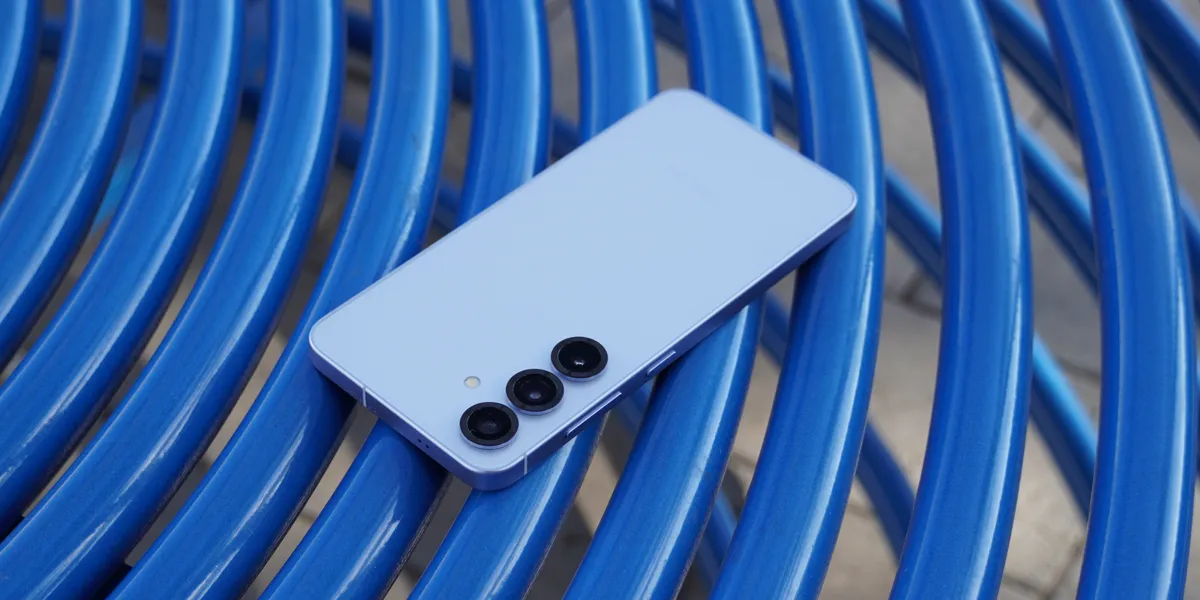
Samsung was reportedly spotted rolling out One UI 8.5 Beta 10 to enrolled Galaxy S25 devices.
The patch, nearly 1GB in size, brings in Call Screening, Creative Studio, and several fixes.
An earlier rumor in April said Samsung might rollout two betas in April, and it seems that we might actually see the light (a stable launch) soon.
It might be unbelievable for enrolled testers, as the tenth One UI 8.5 beta for Galaxy users.
It’s been a long road, as SamMobile reports that Samsung is rolling out One UI 8.5 Beta 10 to all enrolled Galaxy S25 devices in South Korea. This is pretty usual, as Samsung typically launches a new beta on homesoil before it spreads out to other regions. While we wait, the publication states the build is arriving with a 900MB download size. The new software rolls out a few new additions this week, such as “AI features.”
The report states these features, while seemingly not explicitly mentioned in the changelog, include Samsung’s AI Call Screening and Creative Studio. Devices are receiving a fix for “multi-touch issues after using accessibility magnification” and “a proximity sensor issue during calls.”
Article continues below
Android Central’s Take
There were reports about these AI features headed to the Galaxy S25 series earlier this month. It’s also worth saying that reports conflicted, too. So far, it looks like they’re coming over to the S25 series, and I don’t see why they wouldn’t. I doubt there’s a heavy toll being taken by Call Screening that only the S26 could handle.
Samsung is also fixing problems with the call screen appearing late (or not at all), anomalies appearing during 4K recording, and improving Bluetooth. One UI 8.5 Beta 10 has been spotted rocking firmware vS93xNKSU9ZZDD. Users should keep an eye on this as the week progresses.
Perfect
(Image credit: Brady Snyder / Android Central)
We’ve been thinking about Samsung’s latest AI features on the Galaxy S26 for the S25 series since a rumor suggested as much. The overseas report about this potential also listed Audio Eraser, Now Brief, and Photo Assist updates, Agentic AI, and “Notification Highlights” as features to join Call Screening. Now that we’ve received our tenth One UI 8.5 Beta, we’re hoping a stable launch is right around the corner. Call Screening works a lot like Google’s version for Pixels.
Android Central’s Take
I’m sure there are quite a few people surprised at how long we’ve gone without One UI 8.5 on slightly older devices. Samsung has been testing this since late last year, and while we didn’t expect a simultaneous arrival, three, maybe four months later, is crazy. But a lot is going on with One UI 8.5, so this long wait might be worth it (I hope).
You could have your phone’s AI answer a call for you, and it could transcribe what’s being said. Moreover, it can help filter spam, so you’re not bothered by something meaningless.
Rumors earlier in April might’ve read the stars. It was suggested that Samsung was preparing “two more” One UI 8.5 betas in April: one earlier in the month and another later, around April 20 (today). That’s pretty much panned out, but we’re still curious about a stable rollout. Supposedly, that could happen either late in April (think next week) or in May.
Get the latest news from Android Central, your trusted companion in the world of Android