NASA targets a September launch for its next big space telescope


NASA’s next eye into the cosmos is due to leave our planet later this year. The agency says it’s targeting an early September launch for the Nancy Grace Roman Space Telescope. Roman (for short) has a field of view 100 times larger than Hubble’s.

The September date is the earliest possible launch for Roman. NASA says it will go up (aboard a SpaceX Falcon Heavy rocket) no later than May 2027.

The Nancy Grace Roman Space Telescope, named after NASA’s first chief astronomer and “mother” of Hubble, was introduced in 2016. (Back then, it was known as the Wide Field Infrared Survey Telescope, or WFIRST.) The telescope’s mirror is roughly the same size as Hubble’s, but it can capture sections of the sky at least 100 times larger than its predecessor.

The Roman telescope, sitting inside a white NASA hangar

NASA

“Roman will work in tandem with NASA observatories such as the James Webb Space Telescope and Chandra X-ray Observatory, which are designed to zoom in on rare transient objects once they’ve been identified, but seldom if ever discover them,” Julie McEnery, Roman’s senior project scientist, said in 2023. “Roman’s much larger field of view will reveal many such objects that were previously unknown. And since we’ve never had an observatory like this scanning the cosmos before, we could even find entirely new classes of objects and events.”

After leaving our atmosphere, Roman will set course for a vantage point nearly 1 million miles from Earth. There, it will rely on a pair of instruments to study space. The first is a 300.8-megapixel camera that captures light from visible to near-infrared. There’s also a high-contrast coronagraph that will allow it to capture exoplanets that would otherwise be blocked by starlight.

Roman’s mission: “to settle essential questions in the areas of dark energy, exoplanets and astrophysics.” Despite decades of study, astronomers know surprisingly little about dark energy, which makes up about 68 percent of the universe’s contents. And while scientific discoveries are cool and all, you’ll be pleased to know that Roman is also sure to beam back more dazzling pictures of our cosmos.

The best robot vacuums for 2026: Expert and lab tested


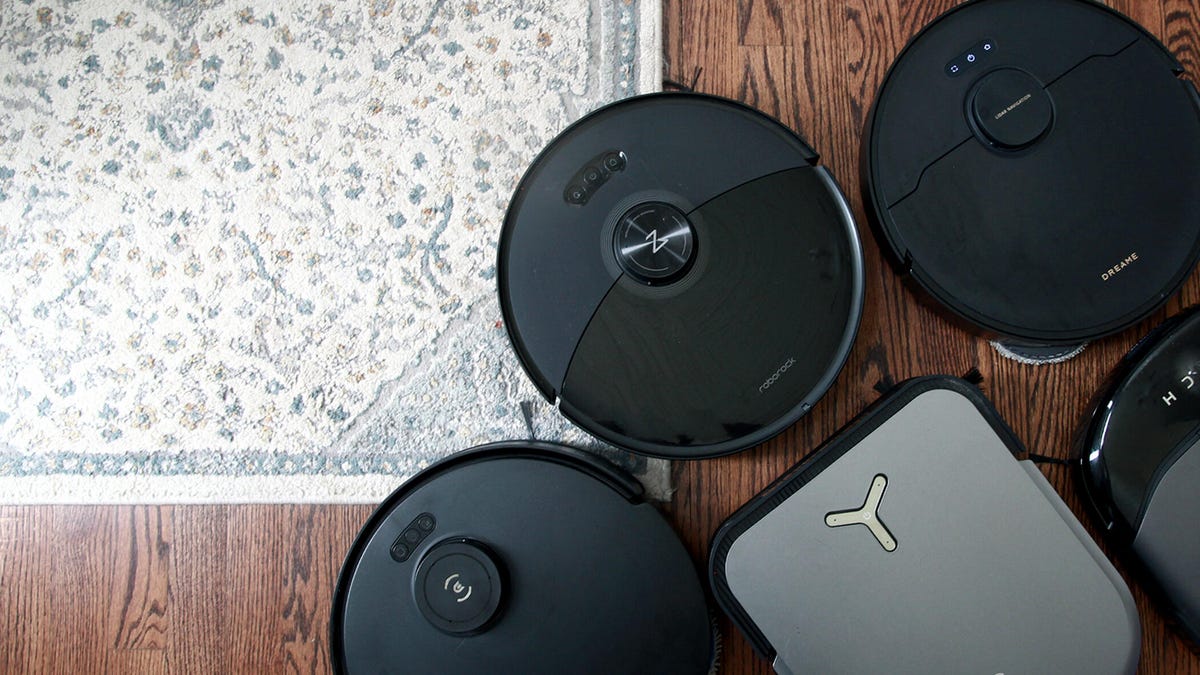
When you shop for a robot vacuum, you wonder how it’ll truly perform in the real world. As a robot vacuum reviewer, I’ve closely watched multiple of these robots navigate my home, getting rid of pet hairmopping my hard floors, and, on many occasions, getting stuck on the obstacles I set out for them. 

ZDNET also has a lab where we test these robots. We then compare our test results with the robot’s in-home performance to narrow down the best picks for you. Essentially, we do the meticulous work so you don’t have to. This means you can trust when we share our top performers, as we don’t upsell specific brands or preferences — it’s all based on actual testing and performance.

Get more in-depth ZDNET tech coverage: Add us as a preferred Google source on Chrome and Chromium browsers.

Best robot vacuum deals of the week

Deals are selected by the CNET Group commerce team, and may be unrelated to this article.

What is the best robot vacuum right now?

The best robot vacuum right now is the Ecovacs Deebot X8 Pro Omni. This robot’s vacuuming feature outperformed all others in our lab tests, picking up as much as 60.3% of debris from both hard floors and carpet. Aside from an effective 18,000Pa vacuuming feature, the X8 Pro Omni features a self-cleaning roller mop for your hard floors and a hands-free docking station.

Also: We tested our favorite robot vacuums, and this model had the best pickup performance

In our April update, we updated all of our top picks to our current recommendations based on hands-on and lab testing. 

The best robot vacuums of 2026

Show less

Ecovacs Deebot X8 Pro Omni robot vacuum and mop

Maria Diaz/ZDNET

Why we like it: Released in 2025, the Ecovacs Deebot X8 Pro Omni was the brand’s first to feature 18,000Pa of suction power and a roller mop. The robot also comes with an Omni station, which is where it empties its dustbin, washes its mop roller, refills its clean water tank, and drains the dirty water.

Who it’s for: Because this robot is our lab’s current top performer in suction power, I recommend it for anyone looking for strong suction on both hard and soft floors. The X8 Pro Omni picked up an average of 97.1% of sand on hardwood and 57% on low-pile carpet, making it a fantastic option for buyers prioritizing suction power.

Review: Ecovacs Deebot X8 Pro Omni

Who should look elsewhere: The X8 Pro Omni is outstanding, but it’s not right for all buyers. Because of its features, I wouldn’t recommend this robot to someone looking for the best mopping performance on the market or the best obstacle avoidance. 

Why we don’t like it: The biggest downside to the Deebot X8 Pro Omni is its obstacle avoidance, which unfortunately doesn’t always avoid small items on the floor, like tissues or rolled-up paper. This ends up getting the robot’s roller brush stuck, requiring user intervention.

Ecovacs Deebot X8 Pro Omni features: Price: $799 (limited-time deal)Suction power: 18,000Pa | Mopping: Yes, extendable roller mop, 10mm auto-lift | Self-emptying: Yes, dustbag | Self-washing: Yes, 167℉ | Extra features: Yiko AI voice assistant 


Read More

Show Expert Take Show less

Show less

3i G10+

Maria Diaz/ZDNET

Why we like it: The 3i G10+ is one of the most underrated robot vacuums I’ve ever tested. It’s only $200, but it features a debris compression system that lets you go up to 60 days without emptying its dustbin, without a huge charging station. Its dock is under 5 inches tall, so you can hide the robot under furniture to keep it from being an eyesore.

Who it’s for: Since the robot has a manual mopping feature that requires washing before use, I’d recommend the 3i G10+ for homes with mostly carpet and hard floors that only need a little refreshing between deeper cleanings. This robot is also perfect for those on a budget, making it a great fit for those looking to get the most bang for their buck.

Review: 3i G10+

Who should look elsewhere: Because the 3i G10+ is rather tall at 4.3 inches, mine has gotten some scratches on its body when going under furniture. At this height, the robot can get stuck under furniture, so I’d recommend using virtual boundaries if that’s the case for you.

Why we don’t like it: The only thing I didn’t like about the 3i G10+ is the odd mechanical whirring sound it makes as it cleans. I originally thought it was an issue with my unit, but our lab techs used a different unit and had the same experience. The sound doesn’t affect the robot’s performance, but may be a problem for those sensitive to noise.

3i G10+ features: Price: $200 (limited-time deal) | Suction power: 18,000Pa | Mopping: Yes, mop pad, 10mm auto-lift | Battery life: 180 minutes | Self-emptying: No, debris compression | Self-washing: No | Extra features: Up to 60 days without emptying


Read More

Show Expert Take Show less

Show less

Matic Robot vacuum and mop

Maria Diaz/ZDNET

Why we like it: The Matic is the biggest revolution we’ve seen in the robot vacuum market. From its shape to its navigation, this robot is redefining what a robot vacuum should look like. With a robotic shape, the Matic has a cleaning head with a roller brush, nozzle, and roller mop. 

Who it’s for: Matic is perfect for most homes, but especially those with changing obstacles and a lot of hard floors. Unlike a robot vacuum that reacts to what is directly in front of it, Matic navigates like a self-driving car. It uses an NVIDIA chip to process its surroundings with artificial intelligence and react to any changes without bumping into things.

Review: Matic Robot

Who should look elsewhere: Matic is the most expensive robot vacuum on this list, because it’s an American company that assembles all the parts in the US. It also requires disposable dust bags every couple of weeks, which adds to maintenance costs. For these reasons, it may not be the best option for shoppers on a strict budget. 

Why we don’t like it: The biggest thing I don’t like about the Matic Robot is the bag that replaces a dustbin. Instead of a dustbin, the Matic uses waterproof bags that hold both wet and dry debris. The bags have water beads inside to contain the wet mess, and last up to a week in my home. Each week, I have to replace the Matic’s bag, which is sold for $30 for each 12-pack.

Matic Robot features: Price: $1,245 | Suction power: N/A | Mopping: Yes, roller mop, auto-lift | Battery life: 180 minutes | Self-emptying: No | Self-washing: Yes | Extra features: Real-time 3D mapping


Read More

Show Expert Take Show less

Show less

Roborock Qrevo Curv 2 Flow

Maria Diaz/ZDNET

Why we like it: The Roborock Qrevo Curv 2 Flow is one of the best mopping robots you’ll find on the market. Its roller mop uses only fresh water, keeping dirty water separate inside the robot’s body. The mop is also scrubbed clean as it spins, then sprayed with fresh water. This robot actually cleans your floors instead of dragging a wet pad on them.

Who it’s for: Because the new roller mop is one of Roborock’s best features, the Qrevo Curv 2 Flow is perfect for homes with mostly or all hard floors, whether it’s tile, hardwood, or vinyl planks.

Review: Roborock Qrevo Curv 2 Flow

Who should look elsewhere: The Qrevo Curv 2 Flow does well around furniture legs, but I wouldn’t recommend it for homes with a lot of cords on the floor or where kids may leave random small items.

Why we don’t like it: Both my home tests and our lab tests showed that obstacle avoidance is the biggest downside to the Qrevo Curv 2 Flow. I tested this robot vacuum while I was testing two others: the Mova Mobius 60 and the Shark PowerDetect UV Reveal, and the Roborock constantly got its roller brush stuck on items that the Mova and Shark avoided. This required me to rescue the Roborock often.

Roborock Qrevo Curv 2 Plus features: Price: $900 (limited-time deal) | Suction power: 20,000Pa | Mopping: Yes, roller mop, 10mm auto-lift | Battery life: 180 minutes | Self-emptying: Yes, dustbag | Self-washing: Yes, 167°F | Extra features: Hot air drying


Read More

Show Expert Take Show less

Show less

Mova P50 Pro Ultra robot vacuum and mop

Maria Diaz/ZDNET

Why we like it: In all my tests, the Mova P50 Pro Ultra is the best robot vacuum for pet hair ever. Sure, it has 19,000Pa of suction power, a reliable set of mop pads, and great obstacle avoidance for the price, but its roller brush puts it over the top. With blades built into the roller brush, the robot cuts hair as it rolls up, avoiding tangles and collecting all your pet’s shed fur. 

Who it’s for: The P50 Pro Ultra is built for homes with pets or even those with long-haired residents. While pet hair is a common concern for robot vacuum owners, having all girls at home also means we see a lot of long hair, which this Mova robot effectively handles. 

Review: Mova P50 Pro Ultra

Who should look elsewhere: This Mova’s hands-free mopping feature is likely overkill for mostly carpeted homes. I recommend this robot for people with mostly hard floors, but also those who don’t have a lot of clutter on the floors, including charging cords, as this robot’s obstacle avoidance isn’t flagship-level.

Why we don’t like it: The P50 Pro Ultra’s obstacle avoidance was a bit confusing at times. While the robot avoided all dog toys, it didn’t always avoid cables. However, it often avoided dust bunnies and hairballs. I used this robot to keep my dog’s bedroom (AKA, my office) clean, and it was outstanding in handling hair, but it often avoided clumps.

Mova P50 Pro Ultra features: Price: $798 Suction power: 19,000Pa | Mopping: Yes, dual rotating mop pads, 10mm auto-lift | Battery life: 210 minutes | Self-emptying: Yes, dustbag | Self-washing: Yes, 167°F | Extra features: Hair-cutting roller brush


Read More

Show Expert Take Show less

I’ve spent years testing robot vacuums, and the most important feature will depend greatly on the user. Many carpeted homes don’t need an expensive robot vacuum with a self-washing mop and giant charging dock to match, for example. 

Here’s how to determine which robot vacuum is right for you:

Choose this robot vacuum… If you want…
Ecovacs Deebot X8 Pro Omni Some of the best suction on the market for hard and soft floors.
3i G10+ An inexpensive solution that is reliably effective and doesn’t require emptying after each session.
Matic Robot The best navigation and obstacle avoidance on the market, powered by NVIDIA tech.
Roborock Qrevo Curv 2 Flow Top-of-the-line mopping feature with a self-washing roller mop that cleans with fresh water.
Mova P50 Pro Ultra The best solution to pet hair, no matter how many furry friends you have at home.


Show more

While trying to determine the best robot vacuum, we kept several factors at the forefront of our testing and research, which can also aid your search.

  • Floor types: Some robot vacuums are equipped to work with certain floor types, like carpet or hardwood. Others may be able to accommodate other floor types, like stone or marble. Before you buy, consider the types of flooring in your home and which vacuum is most appropriate.
  • Mapping: For full automation, your robot vacuum must have a mapping feature to navigate each room. You also want to consider an obstacle avoidance feature that can avoid things like furniture, wires, and even pet waste. This feature is a must-have in my home with strewn about.
  • Battery: A robot vacuum is hardly worth it if it doesn’t have the battery to keep it going. Consider the battery time before choosing the best robot vacuum to ensure it has enough power to clean your home. If you select a robot vacuum with the technical capability to pause its job, return to the charging base to refill its battery, and then resume the job where it left off, this may not be as big of a factor as others on this list. 
  • Connectivity: Many of the best robot vacuums offer voice control, some even with Alexa. Others may feature an app that allows you to control your robot from afar, set schedules, track progress, and control the machine’s efforts. If you’re hoping for voice activation rather than using an app, check and see if the machine is compatible with the home assistant of your choice. 


Show more

ZDNET has several robot vacuum reviewers that have tested over 50 units thus far. We conduct tests in real homes with real challenges and in a controlled lab environment for comparison.

Here’s what we consider when testing robot vacuums at ZDNET:

  • Determine evaluation criteria: For our key evaluation criteria, we consider how robots perform by assessing their suction power, navigation, mapping, and battery life. We also assess the user experience, the robot’s versatility, longevity, and whether it delivers on its specifications.
  • Unboxing: During this process, we assess the packaging and setup experience and note any accessories and unique features.
  • Testing environments: We test the robot vacuums on different floor types and see how they navigate various obstacles to test performance.
  • Performance metrics: We test suction power with various debris types and assess obstacle navigation and mapping accuracy.
  • Extra features: When testing robot vacuum and mop combinations, we evaluate their effectiveness at removing stains and overall cleaning quality. We also check how unique features work, like obstacle avoidance and recognition, extendable mop pads, etc.

To top it all off, we gauge the device’s longevity and long-term performance by using it over the course of a few months. Our review timelines vary, but we typically test robot vacuums for about a month before reviewing and keep our reviews updated while the device is available.

For a more detailed look at our testing process, check out our robot vacuum testing methodology page.


Show more

The #1 robot vacuum right now is the Ecovacs Deebot X8 Omni, according to both our in-home and laboratory testing. This robot proved to offer the most effective suction performance during our rigorous tests, and offers many other benefits, like a self-washing roller mop and hands-free dock.


Show more

Whether Shark is better than Roomba is a matter of preference and requires considering context. Generally speaking, I’ve had better experiences with Shark robot vacuums over Roombas.

Shark has recently released some groundbreaking robot vacuums, including one with a UV system that detects stains to better remove them. There’s also the fact that all self-emptying Shark robot vacuums feature a bagless system: much like a traditional upright vacuum, the Shark robot empties its dustbin into a larger bin that you empty into a trash can. This means you never have to buy dust bags for your Shark.

The Shark robots I’ve seen also offer some of the best obstacle avoidance on the market, capable of avoiding small toys and wadded-up tissues that other robots get stuck on.

iRobot Roombas have a strong history as trailblazers in the robot vacuum market. However, the company has since declared bankruptcy and been acquired by 3i, leaving users and potential buyers with a big question mark over iRobot’s future.

Historically, Roombas have offered unique features, like a mechanical mop that lifts above the robot’s body, and its P.O.O.P. marketing angle, which emphasizes that robots avoid pet waste. Yet Roombas have unfortunately fallen far behind competitors in innovaion of what really matters to consumers: suction performance and navigation. 


Show more

The technology has come a long way since auto-emptying bases were first introduced. That being said, they all have seemingly worked out the kinks and work well. In our testing experience, we haven’t had auto-empty base issues. The only thing we would keep in mind is to make sure your self-emptying base is equipped with disposable bags to capture and hold all of the dirt and debris. It makes cleaning up that much easier and ensures that once the dirt is vacuumed up, it isn’t being let back out into your home. Once the bag is full, you’ll simply pull it away, throw it in the trash, and put in a brand new bag.


Show more

In our testing experience, you get what you pay for with two-in-one machines. We don’t like robot mops that don’t use a cleaning solution. Our floors are dirty enough that simply pushing around water doesn’t get anything cleaned. When looking at purchasing a two-in-one machine, be sure to see what the recommended cleaning solution is. If the manufacturer only wants you to use water, we personally would steer clear.

You also want to make sure the robot comes with the AI technology that can differentiate carpet from hardwood flooring. It is not worth guarding your favorite rugs every time you use the machine to keep the robot from ruining them. Both Roomba and Roborock do an excellent job of this. 

Also: The best robot vacuum mops you can buy


Show more

If you have a lot of carpets and rugs in your home, you will want to look for a robot vacuum with a higher suction power or Pa (Pascal Pressure Unit). The higher the Pa, the better the suction power is. 


Show more

Other robot vacuums we’ve tested

Show less

Eureka J15 Pro Ultra robot vacuum and mop

Maria Diaz/ZDNET

With a powerful 16,200Pa of suction power, an extendable side brush, a roller brush with blades to cut hair, a self-emptying dustbin, and self-washing mop pads, this robot seems to have it all. The tangle-free brush stays mostly free of pet hair, and in our lab testing, it averaged 40.96% on pickup performance. 


Read More

Show Expert Take Show less


Robot Vacuums Reviewed & Compared


Xbox Game Pass gets a price cut, but loses its biggest flex


If there’s one thing the gaming industry loves more than hype cycles, it’s a good ol’ value shake-up. And right now, Xbox Game Pass is right in the middle of one. Microsoft has officially cut prices across Game Pass tiers, making the service easier on the wallet at a time when subscription fatigue is very, very real. But, as always, there’s a twist. And it’s a big one.

The price drop that comes with a twist

Let’s get the numbers out of the way first, because they’re genuinely compelling. Xbox Game Pass Ultimate has dropped from $29.99 to $22.99 per month, while PC Game Pass now costs $13.99 instead of $16.49. That’s not pocket change. Over a year, that’s a noticeable saving, especially for players juggling multiple subscriptions.

Game Pass Ultimate has become too expensive for too many players. Starting today, we’re dropping the price from $29.99 to $22.99/month.
Future Call of Duty titles will no longer join Game Pass Ultimate on day one. They will join this tier the following holiday after launch (about…

— Asha (@asha_shar) April 21, 2026

But here’s the catch. New entries from Call of Duty are no longer launching day one on the service. Instead, they’ll arrive much later, roughly a year after release. Just to be clear, older Call of Duty titles aren’t going anywhere, so the back catalog remains intact. What’s gone is the instant access to one of gaming’s biggest annual releases, which, let’s be honest, was a huge part of Game Pass’s flex.

The community is… conflicted

The reaction? Exactly as chaotic as expected. There’s a sizable chunk of genuinely relieved players. You see, not everyone subscribes to Game Pass for Call of Duty, and for those users, this feels like getting a discount without losing anything meaningful. If COD wasn’t part of the weekly rotation anyway, the lower price is a straight-up win.

Then there’s the other side. For a lot of players, Game Pass built its reputation on the idea of “pay once, play everything day one.” Losing a flagship franchise from that promise feels like a crack in the foundation. It’s not just about Call of Duty; it’s about what this could mean going forward.

Microsoft just lowered Game Pass prices while quietly removing Call of Duty Day One launches.

They’re charging you less for a worse product and calling it ‘a response to feedback’.

Don’t fall for the trap.

It’s a downgrade disguised as marketing. pic.twitter.com/xn7dFQmcvw

— Yorch Torch Games (@YorchTorchGames) April 21, 2026

And then comes the third wave of takes, arguably the most interesting. Some fans are now asking if Microsoft should go even further and start trimming other bundled perks like EA Play or Fortnite Crew to reduce prices even more.

The thinking is simple. If removing one expensive piece lowers the cost, why not customize the whole thing?

Why Microsoft drew the line here

Here’s where the conversation shifts from emotional to practical. Call of Duty isn’t just another title in a catalog. It’s a yearly blockbuster with a massive, loyal player base that often buys the game regardless of subscriptions. That creates a strange value mismatch. Either players were going to pay for it anyway, or they didn’t care about it much in the first place.

Xbox gave up more than $300 million in sales of Call of Duty on consoles and PCs last year – Bloomberg

From Microsoft’s perspective, that makes it an incredibly expensive inclusion with limited upside. Worse, it likely eats into direct sales, turning what should be a revenue driver into a cost center. And while some fans are calling for more cuts, like removing EA Play, it’s not so simple. Game Pass thrives on being an all-in-one ecosystem. Start unbundling too much, and it risks turning into a fragmented, pick-and-pay service that loses its identity.

With Microsoft even exploring bundling services like Netflix into Game Pass, stripping away more perks would start to chip away at its whole “all-in-one” appeal. At that point, it’s not a powerhouse bundle anymore; it’s just a menu with items missing.

The End of “Too Good to Be True”?

For years, Xbox Game Pass felt like a cheat code. Day-one AAA games, a massive library, and a price that almost didn’t make sense. But eventually, reality caught up. Keeping a giant like Call of Duty in that mix from day one was always going to be expensive, and more importantly, unsustainable.

And honestly, this change feels like Microsoft finally admitting that. Instead of hiking prices even further, they’ve trimmed one of the costliest perks and made the service more accessible again. It’s not perfect, and sure, some fans will miss the old days, but this feels less like a downgrade and more like a smart reset. Not as flashy, but a lot more built to last.

Yelp’s AI Assistant Can Now Book Restaurants, Doctors, and More


Yelp is introducing an expanded version of its Yelp Assistant, an agentic chatbot that is able to answer questions, suggest places to visit, and complete tasks like booking a restaurant reservation.

yelp ai assistant
Answers rely on hundreds of millions of Yelp reviews sourced from real people, which Yelp says allows the assistant to address “complex and highly specific requests.” Yelp Assistant was previously available for hiring service professionals and getting answers to questions about businesses, but now it is available across all Yelp categories.

Users are able to ask specific questions when looking for a location, such as “birthday dinner spots with vegan options and heated outdoor seating,” or “top-rated gyms with group classes and childcare.”

With the AI Assistant, users can start out by asking questions to find a suitable location, and then make reservations, book appointments, place delivery orders, or get quotes in the same conversation. Yelp is adding new integrated services including Vagaro, Zocdoc, and Calendly.

There is a new AI-powered personalization model for the Yelp home feed on the iPhone and iPad, and it is able to surface more relevant content and improved recommendations.

Yelp is also updating its AI Menu Vision feature with support for photo overlays so users can see what popular dishes, drinks, and desserts look like.

The Yelp Assistant is rolling out today and it is accessible through a new Assistant tab in the Yelp app.

US-sanctioned currency exchange says $15 million heist done by “unfriendly states”


Grinex, a US-sanctioned cryptocurrency exchange registered in Kyrgyzstan, said it’s halting operations after experiencing a $13 million heist carried out by “western special services” hackers.

Researchers from TRM, which has confirmed the theft, put the value of stolen assets at $15 million after discovering roughly 70 drained addresses, about 16 more than Grinex reported. Neither TRM nor fellow blockchain research firm Elliptic has said how the attackers slipped past Grinex’s defenses. Grinex said it has been under almost constant attack attempts since incorporating 16 months ago. The latest attacks, it said, targeted Russian users of the exchange.

Damaging “Russia’s financial sovereignty”

“The digital footprints and nature of the attack indicate an unprecedented level of resources and technology available exclusively to the structures of unfriendly states,” Grinex said. “According to preliminary data, the attack was coordinated with the aim of causing direct damage to Russia’s financial sovereignty.”

“Due to the attack, the Grinex exchange is forced to suspend operations,” Grinex continued. “All available information has been transferred to law enforcement agencies. An application has been submitted to the location of the infrastructure to initiate a criminal case.”

TRM said that TokenSpot, a second Kyrgyzstan-based exchange, was also breached. Two of the exchange’s addresses sent funds to the same consolidation address used by the affected Grinex-linked wallets. What’s more, both exchanges became inoperable on Wednesday, suggesting they were hit by the same attacker.

TRM said TokenSpot was a front for Grinex, which the US Treasury Department sanctioned last year. The department’s Office of Foreign Assets Control said that Grinex, in turn, was a rebrand of Garantex, an exchange it had sanctioned in 2022. The department said then that Garantex had “directly facilitated notorious ransomware actors and other cybercriminals by processing over $100 million in transactions linked to illicit activities since 2019.” Last year’s sanctions against Grinex came a few months after TRM said that the exchange was likely a front for Garantex.

Zoom Partners With Sam Altman’s Iris-Scanning Company To Offer Callers Verifications of Humanness


Zoom “has partnered with World, Sam Altman’s iris-scanning identity company (previously known as Worldcoin), ” reports Digital Trends, “to add real-time human verification inside meetings.”

Zoom is now inviting organizations to join the beta version of the rollout, which Digital Trends says “lets hosts confirm that every face on the call belongs to a real person, not an AI-generated imposter. ”

For those wondering how World’s Deep Face technology works, it includes a three-step process. It cross-references a signed image from a user’s original Orb registration, a live face scan from the device, and the frame of the video that’s visible to the other participants in the meeting. Only when the three samples match does a “Verified Human” badge appear next to the user’s name…

Hosts can also make Deep Face verification mandatory for joining meetings, preventing unverified participants from joining entirely. Mid-call, on-the-spot checks are also possible…

Samsung Galaxy S23 Ultra versus vivo X300 Ultra


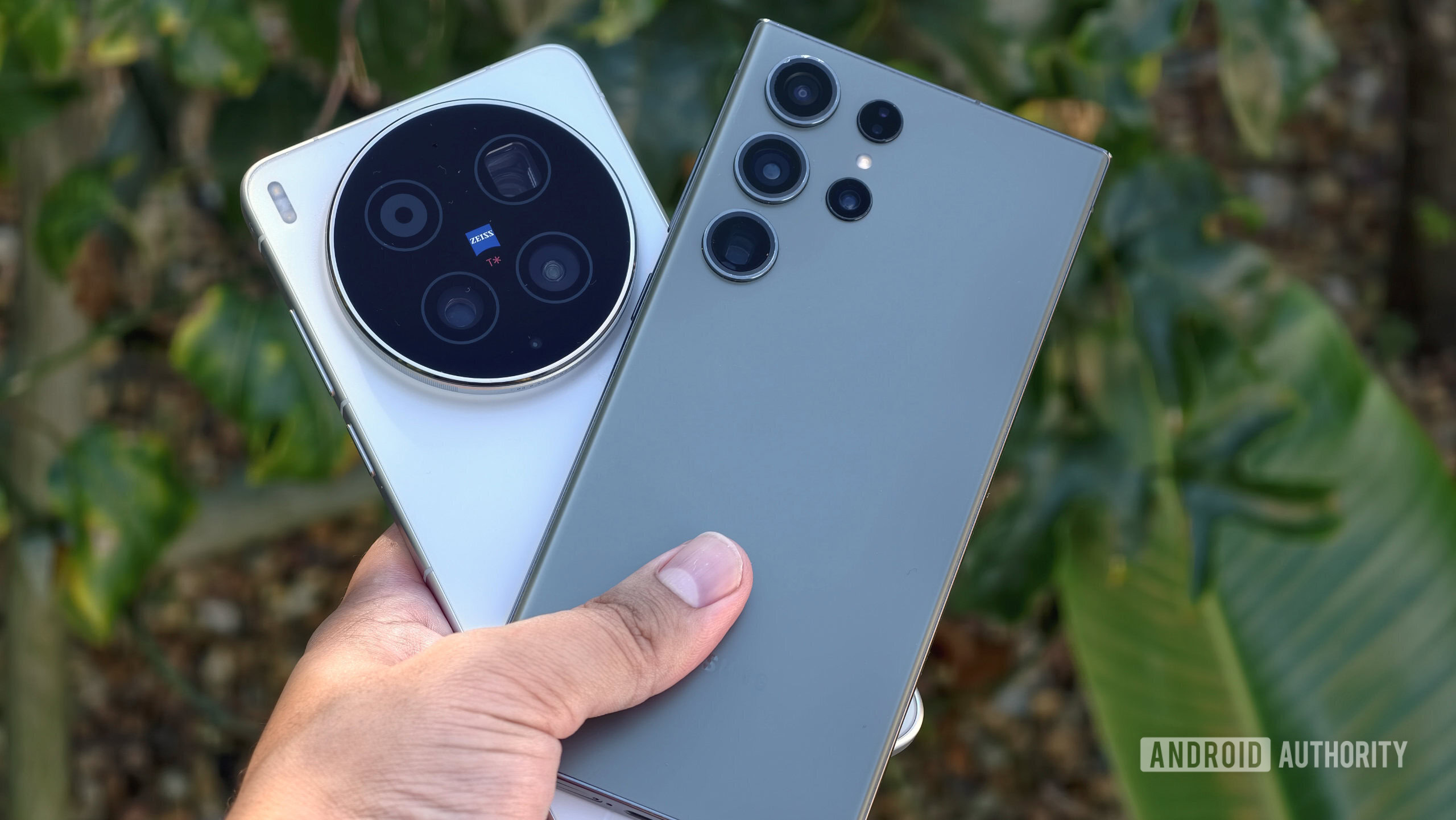
vivo X300 Ultra and Samsung Galaxy S23 Ultra

Hadlee Simons / Android Authority

Samsung was one of the first manufacturers to offer a 200MP camera when it launched the Galaxy S23 Ultra back in 2023. We’ve since seen many other brands adopt this tech for use on both primary and telephoto cameras.

We haven’t seen a major change in the sensor size of 200MP cameras, though. Until now, that is. The vivo X300 Ultra has just been released, and it offers a significantly larger 200MP main camera. But how does this fare in practice compared to the first-generation 200MP main camera on the Galaxy S23 Ultra? I put these two phones to the test in a 200MP camera shootout.

Have 200MP main cameras lived up to the hype?

102 votes

What to know about Samsung and vivo’s 200MP main cameras

Vivo X300 Ultra 200MP camera app

Hadlee Simons / Android Authority

The Galaxy S23 Ultra’s main camera features a 200MP Samsung ISOCELL HP2 sensor, which was cutting-edge at the time. This is a large, 1/1.3-inch sensor with tiny 0.6-micron pixels. But it also featured tricks like 16-in-one pixel binning (equivalent to a 12.5MP, 2.4-micron pixel camera) or conventional four-in-one binning (equivalent to a 50MP, 1.2-micron pixel camera). Other notable tricks include Super Quad Phase Detection autofocus, as well as dual-slope gain and Smart ISO Pro for improved dynamic range.

Don’t want to miss the best from Android Authority?

google preferred source badge light@2xgoogle preferred source badge dark@2x

Meanwhile, the vivo X300 Ultra’s main camera uses the Sony LYT-901 camera sensor. This is Sony’s first 200MP camera sensor, and the 1/1.12-inch sensor size makes it notably larger than Samsung’s 200MP cameras. The Sony sensor also offers 0.7-micron pixels, which are still small by the standards of other camera sensors, but larger than those in previous 200MP sensors. Bigger pixels mean greater light capture, which should lead to brighter, cleaner photos with less blur. Sony adds that the sensor offers all-pixel autofocus, DCG-HDR tech for improved single-frame HDR, and Hybrid-Frame HDR.

I approached this shootout by sticking with the Galaxy S23 Ultra’s regular camera settings, save for enabling the Quick Tap Shutter option. I also mostly used the X300 Ultra’s default settings, though I switched from the default Vivid color profile to the Authentic option for more realistic colors.

Galaxy S23 Ultra vs vivo X300 Ultra: Pixel-binned shots

Early 200MP cameras often took full-resolution photos with minimal processing compared to the pixel-binned snap. This meant that there was often a stark difference between the 200MP and 12.5MP photos. Nevertheless, the latest sensors offer more advanced HDR tricks, while today’s flagship processors offer multi-frame processing at 200MP. So how do the two phones and their camera sensors fare in a demanding, backlit scenario?

The difference between full-resolution and pixel-binned shots seems to be narrowing in 2026. vivo’s 200MP and 12.5MP images look very similar, featuring a washed-out appearance that’s ostensibly due to the more realistic color profile. However, the lower-resolution shot offers slightly lifted shadows and a brighter face, likely due to better HDR capabilities at 12.5MP.

There’s a massive difference between Samsung’s 12.5MP and 200MP photos, though. The pixel-binned snap offers an aggressive HDR treatment with very saturated colors, while the full-resolution shot features plenty of blown-out highlights (particularly in the background and around the subject’s head). What’s more concerning is that the Samsung phone’s 200MP photo has grid artifacts when zooming in. Take a closer look at the image below.

Samsung Galaxy S23 Ultra backlit photo 200MP grid crop

Hadlee Simons / Android Authority

It’s clear that vivo’s 200MP shot is the better full-resolution snap, owing to tamed highlights and a lack of grid artifacts. Neither 12.5MP shot was perfect, though, as I felt the ideal picture was somewhere in the middle. Nevertheless, both phones did a solid job of exposing the subject’s face.

I then switched to the standard 12.5MP mode and a more conventional scenario to see how the phone’s pixel-binning capabilities compare. It’s worth noting that the X300 Ultra’s main camera has a 35mm focal length, which is effectively equivalent to 1.5x of the Galaxy S23 Ultra’s 24mm focal length, as seen on the vast majority of smartphone cameras. Colleague Rob Triggs previously noted that he preferred a 35mm camera as he felt the 24mm perspective was too wide, especially when he already has an ultrawide camera on tap for wide shots. So this perspective comes down to your own preference. Check out the gallery below.

The Samsung phone opts for a more saturated shot, while vivo’s authentic color profile understandably delivers a colder, more washed-out look. However, a closer peek also reveals that the vivo handset offers far more detail and less smearing than the S23 Ultra. The 35mm focal length ostensibly works to vivo’s advantage here, but that doesn’t fully explain the gulf in detail.

What about low-light photography, though? Shooting a moving subject after dark is a tough challenge, so how did the two phones handle my cat in the dimly lit backyard? Check out the pixel-binned samples below.

I kept automatic night mode processing enabled on both phones. Needless to say, this scene required a few snaps on both devices, as my cat kept moving her head. Nevertheless, the Samsung phone clearly struggled compared to the vivo handset. Note how the fur in the Samsung photo is basically a noisy smear. The X300 Ultra’s main camera also delivered good subject separation, presumably due to the focal length and larger sensor.

I disabled the automatic low-light processing on both phones for this early morning scene of some flowers. This should give us a rough idea of how well each phone’s camera performs in terms of autofocus, light capture, and more. Unfortunately, neither phone captured truly sharp flowers. However, the Samsung photo has significant splotchiness upon closer inspection compared to the vivo’s cleaner, slightly brighter presentation. The X300 Ultra also delivers a shallower depth of field, helping the flowers stand out from the background.

What about 200MP photos?

I also took plenty of full-resolution 200MP photos during the shootout. The gallery above shows the Camps Bay beachfront in Cape Town, and both phones understandably offer plenty of detail at this resolution. There’s enough headroom here to crop in on either snap. But look closer, and you’ll see that the vivo handset does a much better job of capturing fine detail, which is especially important when it comes to people. By contrast, the people in Samsung’s shot look splotchy and feature color banding.

The vivo device also offers greater definition and detail for the scenery and buildings. Go back to the full scene and take a look at the white houses at the foot of the mountain, as well as the small building on the beach. There’s still some minor fringing in this scene, such as white buildings, as you might expect in the late afternoon. I’m also not a fan of the excess sharpening in some parts of the scene, such as the roofs of some buildings.

Moving on to the next comparison, conventional wisdom says you should stick with the pixel-binned 12.5MP mode when shooting in low-light scenarios. But I decided to shoot a few full-resolution photos at night to see how the first-generation and new-generation sensors perform. Check out the gallery below, showing my gaming shelf in a dimly lit room.

A close look at these 200MP crops reveals that the vivo handset delivers a cleaner, less washed-out rendition of the scene. The X300 Ultra image also offers sharper text, although I think the AI-assisted processing makes some characters look overly sharp and janky.

A trip to the local indoor market after dark also gives us a good full-resolution workout. The Samsung phone’s wider perspective and vivo’s more realistic color profile presumably account for the differences in exposure and white balance. More specifically, the Galaxy S23 Ultra lifted the shadows compared to the vivo shot while offering a warmer scene. Neither phone accurately captures the “Mojo Bar” lighting, though. The vivo rendition is just too dull while the Samsung snap has notable fringing.

Take a closer look at this scene, and it’s clear that the X300 Ultra delivers more resolvable detail. Text is significantly more legible on the bottles and beer taps compared to the Galaxy S23 Ultra shot. The light sources are also kept in check by the vivo handset’s ZEISS lens coatings. You can view the image comparison below for a closer look.

Want to pixel-peep our full-resolution photos? You can view and download all these snaps via our Google Drive folder.

How far have 200MP cameras progressed?

Samsung Galaxy Z Fold 7 camera app open showing new 200MP option

C. Scott Brown / Android Authority

I’m a big proponent of 200MP cameras for zoom, but I’ve otherwise been a 200MP skeptic for a few years now. The first 200MP cameras were capable of capturing decent detail at full resolution, but this was often undone by slow processing times, tiny pixels, and rudimentary processing. While these sensors could capture great pixel-binned snaps in most conditions, so could lower-resolution 50MP cameras with large sensors.

However, our comparison between the first 200MP cameras and the latest hardware suggests that these sensors are finally living up to the hype. Detail is far better, as is HDR and low-light performance, which really make high-resolution photography much more viable. I’m keen to see more phones with cutting-edge 200MP sensors like the Sony LYT-901. In fact, I’d love to see Samsung adopt a similarly large 200MP camera next year.

200MP photography is much more versatile on recent phones.

It’s also worth noting that other factors, such as chipsets and brand-specific camera tuning, can make a big difference. In fact, phones like the vivo X300 series and OPPO Find X9 series support multi-frame image processing at 200MP. This allows for full-resolution photos with improved noise and blur reduction, as well as 200MP portraits and night mode snaps. This was unthinkable just a couple of years ago. I’m therefore interested to see what else phone makers can do with these cameras in the future, thanks to these newfound processing capabilities.

Thank you for being part of our community. Read our Comment Policy before posting.

Cracks are starting to form on fusion energy’s funding boom


It happens in every emerging industry: founders and investors push toward a common goal, until the money starts to roll in and that shared vision begins to diverge.

Cracks are emerging in the fusion power world, which I saw firsthand at The Economist’s Fusion Fest in London last week. It didn’t dampen the overall buoyant mood, lifted by fusion startups’ fundraising haul of $1.6 billion in the last 12 months. But people had differing opinions on two key questions: When should fusion startups go public? And are side businesses a distraction?

Going public was at the top of everyone’s minds. In the last four months, TAE Technologies and General Fusion have announced plans to merge with publicly traded companies. Both stand to receive hundreds of millions of dollars to keep their R&D efforts alive, and investors, some of whom have kept the faith for 20 years, finally see an opportunity to cash out.

Not everyone is in agreement. Most of those who I spoke to were worried these companies were going public far too early and that they hadn’t achieved key milestones that many view as vital in judging the progress of a fusion company.

First, a recap: TAE announced its merger with Trump Media & Technology Group in December. Though the deal isn’t yet completed, the fusion side of the business has already received $200 million of a potential $300 million in cash from the deal, giving it some runway to continue planning its power plant. (The remainder will reportedly land in its bank account once it files the S-4 form with the U.S. Securities and Exchange Commission.)

General Fusion said in January that it would go public via a reverse merger with a special purpose acquisition company. The deal could net the company $335 million and value the combined entity at $1 billion. 

Both companies could use the cash.

Techcrunch event

San Francisco, CA
|
October 13-15, 2026

Before the merger announcement, General Fusion was struggling to raise funds, and around this time last year it laid off 25% of its staff as CEO Greg Twinney posted a public letter pleading for investment. It received a brief reprieve in August when investors threw it a $22 million lifeline, but that sort of money doesn’t last long in the fusion world, where equipment, experiments, and employees don’t come cheap.

TAE’s position wasn’t quite as dire, but it still required some funds. Pre-merger, the company raised nearly $2 billion, which sounds like a lot, but keep in mind the company is nearly 30 years old. What’s more, its valuation pre-merger was $2 billion, according to PitchBook. Investors were breaking even at best.

Neither company has hit scientific breakeven, a key milestone that shows a reactor design has power plant potential. Many observers doubt they’ll hit that mark before other privately held startups do. One executive told me, if they were in those shoes, they’re not sure how they would fill time on quarterly earnings calls if the companies didn’t hit scientific breakeven soon.

If TAE or General Fusion doesn’t deliver results, several people feared the public markets would sour on the entire fusion industry.

Now, not all may be lost. TAE has already started marketing other products, including power electronics and radiation therapy for cancer. That could give the company some near-term revenue to placate shareholders. General Fusion, though, hasn’t revealed any such plans.

And therein lies another divide: fusion companies remain split on whether they should pursue revenue now or wait until they have a working power plant.

Some companies are embracing the opportunity to make money along the way. Not a bad strategy! Fusion is a long game, so why not improve your odds? Both Commonwealth Fusion Systems and Tokamak Energy have said they’ll be selling magnets. TAE and Shine Technologies are both in nuclear medicine.

Other startups are worried that side hustles could become a distraction. Inertia Enterprises, for example, told me that they’re laser-focused on their power plant. That jibes with what another investor told me months ago: — they were worried that fusion startups could get distracted by profitable, but tangential businesses and fall off the lead. 

There wasn’t consensus on the right time to go public either. I heard a few proposed milestones. Some believe startups should first reach that scientific breakeven milestone, in which a fusion reaction generates more energy than it needs to ignite. No startup has achieved that yet. The other possibilities are facility breakeven — when the reactor makes more energy than the entire site needs to operate — and commercial viability — when a reactor makes enough electrons to sell a meaningful amount to the grid.

We may have an answer to that question sooner than later. Commonwealth Fusion Systems expects it will hit scientific breakeven sometime next year, and some think the company might use that as an opportunity to go public.

Wordle today: The answer and hints for April 19, 2026


Today’s Wordle answer should be easy to solve if you can never sit down.

If you just want to be told today’s word, you can jump to the bottom of this article for today’s Wordle solution revealed. But if you’d rather solve it yourself, keep reading for some clues, tips, and strategies to assist you.

Where did Wordle come from?

Originally created by engineer Josh Wardle as a gift for his partner, Wordle rapidly spread to become an international phenomenon, with thousands of people around the globe playing every day. Alternate Wordle versions created by fans also sprang up, including battle royale Squabble, music identification game Heardle, and variations like Dordle and Quordle that make you guess multiple words at once

Wordle eventually became so popular that it was purchased by the New York Times, and TikTok creators even livestream themselves playing.

What’s the best Wordle starting word?

The best Wordle starting word is the one that speaks to you. But if you prefer to be strategic in your approach, we have a few ideas to help you pick a word that might help you find the solution faster. One tip is to select a word that includes at least two different vowels, plus some common consonants like S, T, R, or N.

What happened to the Wordle archive?

The entire archive of past Wordle puzzles was originally available for anyone to enjoy whenever they felt like it, but it was later taken down, with the website’s creator stating it was done at the request of the New York Times. However, the New York Times then rolled out its own Wordle Archive, available only to NYT Games subscribers.

Is Wordle getting harder?

It might feel like Wordle is getting harder, but it actually isn’t any more difficult than when it first began. You can turn on Wordle‘s Hard Mode if you’re after more of a challenge, though.

Here’s a subtle hint for today’s Wordle answer:

To rise.

Does today’s Wordle answer have a double letter?

There are no recurring letters.

Mashable 101 Fan Fave: Nominate your favorite creators today

Today’s Wordle is a 5-letter word that starts with…

Today’s Wordle starts with the letter T.

The Wordle answer today is…

Get your last guesses in now, because it’s your final chance to solve today’s Wordle before we reveal the solution.

Drumroll please!

The solution to today’s Wordle is…

STAND

Don’t feel down if you didn’t manage to guess it this time. There will be a new Wordle for you to stretch your brain with tomorrow, and we’ll be back again to guide you with more helpful hints. Are you also playing NYT Strands? See hints and answers for today’s Strands.

Reporting by Chance Townsend, Caitlin Welsh, Sam Haysom, Amanda Yeo, Shannon Connellan, Cecily Mauran, Mike Pearl, and Adam Rosenberg contributed to this article.

If you’re looking for more puzzles, Mashable’s got games now! Check out our games hub for Mahjong, Sudoku, free crossword, and more.

Not the day you’re after? Here’s the solution to yesterday’s Wordle.

The Best Smart Home Accessories to Boost Your Curb Appeal (2026)


I tried the battery version, which does require you recharge it every couple of weeks, but the wired-in version is the top recommendation on our guide to the Best Video Doorbells.

A Better Birdhouse

I had a new-to-me problem this spring: bird invasion. A little bird made a nest in my front-door wreath without us noticing. One evening, my sister opened the door, and the bird flew out of the nest and straight into our house. After a 30-minute battle to get it outside again (and keep my cat from eating it), it wasn’t until we saw the bird fly off the door again the next day that we realized it was calling our home its home, too.

If this is a common problem at your house, our resident bird-gear tester Kat Merck has a solution: a smart nesting box. Birdfy makes a few different smart bird feeders we like for bird-watching, and the Nest Duo is a birdhouse that lets you watch the birds while they nest inside of it. It’s a slim, attractive box that will add to your front yard’s style while also packing two solar-powered cameras (one facing the entrance, one focused inside) so you can bird-watch from multiple angles. It comes with different hole sizes to appeal to different species, metal predator guards to prevent chewing around the hole, and a remote control to reset or recharge the camera without disturbing your feathered neighbors.

Stylish Smart Lights

Image may contain: Electronics, Mobile Phone, Phone, Light, Computer Hardware, Hardware, Mouse, Appliance, and Blow Dryer

Govee

Outdoor Clear Bulb String Lights

I’ve liked Govee’s smart outdoor string lights before, usually for my holiday decor, and have previously recommended something similar with a bistro-light-like look that happened to be smart. These clear bulb string lights are part of Govee’s current lineup and have a contemporary twist with a triangle in the center instead of the wire filament. These are a fun option for outdoor lights you can enjoy on warm nights, and they can do every color and shade of white without looking as bulky as permanent outdoor lights. (Added bonus, these lights are also Matter compatible!)

Fresh Bulbs

Image may contain: Lighting, Electronics, LED, Light, Appliance, Blow Dryer, Device, and Electrical Device

Cync

Smart LED Light Bulb, PAR38

If you have light fixtures you want to remote-control, add an outdoor smart bulb. There are tons to choose from, and you can usually find one from any brand you already have at home. The only downside is that outdoor-rated smart bulbs are usually 4.75-inch-diameter PAR38-style bulbs, so they’re best for downward-facing floodlights on your porch or balcony. They’ll likely be too big to fit in a wall fixture as a replacement for a normal-sized bulb. Don’t just grab any smart bulb—not all are outdoor-rated. Check for mentions of outdoor use and waterproof ratings to make sure they’re safe to use. I’m a big fan of Cync bulbs, and the brand has an outdoor version of the Cync Full Color bulbs I like to use indoors. You’ll be able to add fun colors as well as shades of white, so you can turn the porch a spooky orange or red for Halloween, pink for Valentine’s Day, or the colors of your favorite sports team on game day.

Remote-Controlled Garage

Chamberlain

MyQ Smart Garage Controller

Chamberlain

MyQ Smart Garage Door Opener with Integrated Camera

If your garage is the centerpiece of your home’s curb appeal, you can control it as easily as a smart door by adding a smart controller. You can do two different styles: I have the Chamberlain MyQ professionally installed smart garage opener, which means the device that controls my garage has these smarts built into it (plus a camera, but I find it doesn’t work great with how far the device is from my Wi-Fi router), or you can get a smart garage controller that can add smart features onto an existing garage door. Both let you check whether the garage is open or closed and operate it remotely, and you can add a video keypad that doubles as a video doorbell and can let you open or close the garage without your phone.

Smart Shades

SmartWings

Motorized Roller Shades

Lutron

Caseta Smart Shades

The front of my home faces west, so it’s absolutely baking at the end of the day. What I need to add are some of our favorite smart shades to automate closing the shades on that side of the house at the right time of day. These also give your home a nice, cohesive look and immediate, controllable privacy from the outside world. WIRED reviewer Simon Hill recommends the SmartWings shades as his top picks, and Lutron’s Caseta shades if you’re looking for a more upgraded look.

Invisible Swaps

Looking to add some smarts without touching your existing setup? These switch-ups can make your front door and yard smart without being visible.

Yale

Approach Lock

This smart lock just swaps out the inner half of your front-door lock to make it smart without requiring a new key or changing your exterior hardware. You can also add on a keypad—or not, if you’d rather keep the smarts a complete secret.

Cync

Outdoor Smart Plug

This outdoor plug is visible at the outlet itself, but if the outlet is covered by something or is around the corner from your front door, no one will know that your lights or other electrical devices are connected to this smart plug.


Power up with unlimited access to WIRED. Get best-in-class reporting and exclusive subscriber content that’s too important to ignore. Subscribe Today.