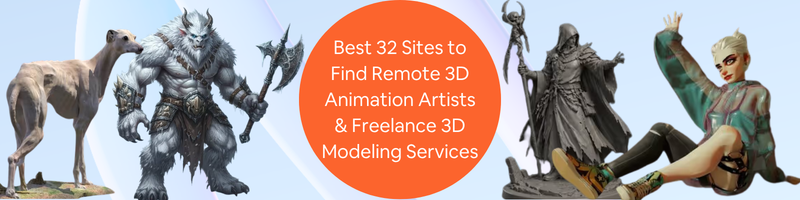
If you ever went searching online for 3D modeling design services or animation help, you understand; roulette: every now and then, you get the jackpot, and sometimes, well, let’s just say your “dream” candidate isn’t quite so dreamy. Don’t panic, though: rather than leave it to chance, we’ve applied our experience to compile the 32 best places to find 3D model and animation experts.
Whatever you require, it can be precise product mockup, photorealistic building rendering, or whimsical game animation character; we have something in here for you. Of course, we begin at the top, Cad Crowd, where engineering accuracy meets design accuracy, and then take you through a diverse set of marketplaces, single-studio studios, portfolio displays, and crowdsourcing websites.
Use this treasure map to the web’s finest 3D skill. Ready to begin your quest? Let us begin.

1. Cad Crowd
Cad Crowd is the place when you require a site where engineering skill is complemented by creativity and enthusiasm. Cad Crowd only trades pure engineering-level design, CAD modeling, and manufacturing-level 3D design services. Yes, be it designing proof-of-concept electronics enclosures, contracted-out product animation, or purchasing repeat CAD work, you’re paying individuals who comprehend tolerances, assembly mates, and the small detail-oriented pieces of things that kill or save a design. Cad Crowd selects its talent pool with care and pairs you with 3D animation freelancers based on project requirement and experience level. What’s the result? Less miscommunications, quicker turnaround, and results that hit just the sweet spot where artistic vision and technical precision cross.
Website: Cadcrowd.com

2. Domestika.org
Domestika.org is more like stepping into a celebration of creativity where creativity seeps from every nook and corner, and 3D designers occupy the center of it all. From being a platform for digital creatives and designers, Domestika has turned into the world’s leading platform to outsource freelance 3D animation designers and modeling specialists. What makes it stand out is that it feels like a community, artists don’t just show work, they also share ideas, concepts, and advice on side projects. That way, when you outsource here, you’re not just hiring designers, you’re getting designers who breathe design. It feels personal, it’s inspiring, and it’s a breath of fresh air from run-of-the-mill websites.
Website: Domestika.org
RELATED: FAQs to Ask a 3D Animation Studio Before Hiring 3D Animation Services for Better Projects

3. MovingStoneDigital.com
MovingStoneDigital. com is exactly such a hidden little secret coffeehouse where all the 3D artists gather, but in cyberspace, and there are no lattes, but amazing renders. You’re looking for freelance 3D animation prodigies; this site is finding a treasure trove of talent. Rather than struggling through dull directories, you’re matched with artists who can actually make your most unbelievable visions a reality; literally. A high-end product visualization? A moonwalking avatar? A building flythrough as silky as your last vacation photo presentation? Some pizzazz, personality, and just a dash of artistic oomph to start the magic in motion, MovingStoneDigital. com delivers.
Website: Movingstonedigital.com

4. VideoPixie
VideoPixie is the secret marketplace where fantasies of 3D animation and an announcement of a Netflix casting call collide. Rather than searching endlessly for someone, you get to view showreels that are effectively binge-watchable advertisements – but this time, you get to be the director. Whatever you require, a belly-laughing character animation, or a gasp-causing 3D model, VideoPixie allows you to choose between artists who’ve honed their skills on actual projects, not test renders. It’s fun, easy to work with, and elegantly un-stuffy. It’s matchmaking, but instead of cringe-worthy coffee dates, you receive back a beautiful animation that pays dividends.
Website: Videopixie.com

5. IllustrationX
IllustrationX can have you thinking of a location where you’d be looking for doodles of cats in colors, but it’s actually a desire to set you face-to-face with freelance 3D computer animators and independent 3D modelers who will turn your most fantastical notions into reality. With a reputation for providing the world’s best creative ability, the website is like a dating agency, but instead of disastrous dates, you receive beautiful renders, silky smooth animations, and artwork that can be the headline feature in the next big-name game or product launch. If you need characters, settings, or sci-fi gear, IllustrationX offers you time and hassle savings and allows you to contract artists who really “get it.”
Website: Illustrationx.com
RELATED: A Guide to 3D Virtual Reality Animation Rendering Services for Companies and Firms

6. Behance
Behance is essentially a stroll through a gigantic web art museum where each corner is teeming with pleasant imagination, and you can actually contact the artists rather than just ogling. From revolutionary 3D visualizations that look like they’re directly out of Pixar to breathtakingly hyper-realistic 3D models that make you think if your screen just materialized, Behance is where imagination pushes its way out. Unlike the “everybody’s-here” freelance platforms, on Behance you get to see a painter’s entire portfolio in color before you even get to meet them. It’s Tinder for 3D talent without cringe-worthy small talk and lovelier graphics.
Website: Behance.net

7. Anideos
Anideos is not about rearranging pixels, it’s where animation comes alive. If you’re tired of stiff 3D models and your project must be alive, you’ve arrived at the right site. The site enlists 3D animation rigging creatives who are used to bringing stories to character shorts, explainer videos, or an entire animated campaign. There is a warm, out-of-this-world feel to how they accomplish this, and this is also brought to bear on making collaboration as a nicer and less corporate experience. For starved agencies and brands looking for brand-new, story-rich 3D content that pops off the screen, Anideos is like finding the holy grail recipe for animated alchemy.
Website: Anideos.com

8. Toptal
Toptal was not a standard freelance website; it’s more akin to an upscale club where only the crème de la crème of talent manages to get beyond the velvet rope. That’s intimidating if you’re a freelancer, but for clients, it’s pure gold. Instead of scrolling through endless portfolios and questionable resumes, you’re paired with pros who know their craft inside and out. Need smooth 3D renders, refined animations, or production-quality assets? This is where companies that demand world-class results (and are willing to pay for it) come to browse. In addition to technical competence, Toptal freelancers also have excellent communication and project management capabilities to guarantee efficient delivery of projects.
Website: Toptal.com
9. 3D-Ace.com
3D-Ace. com is not your run-of-the-mill click-and-bid freelance shop; it’s more like getting a hidden ace up the sleeve to boost the brawn of your creative juices. This talented 3D rigging design studio will merge art and technical wizardry to produce assets so refined that even your horrid prototype can be transformed to appear and feel like a blockbuster trailer. Need cinematic animation on par with the great Pixar, or snarky game models like your morning latte, or beautiful product images that sell themselves pretty much? 3D-Ace does. And the cherry on top? It doesn’t even register that you’re outsourcing, it’s more of a collaboration with a creative colleague who is as staked in your project’s success as you are.
Website: 3d-ace-com
RELATED: Applications of 3D Rigging Services within the Animation, Film, and Gaming Industries

10. CarbonMade.com
CarbonMade.com is the trendy web coffee house of the creative crowd, where every portfolio has character. While stodgy, cookie-cutter websites, CarbonMade is for creatives who will not hide their oddities, but just their technical wizardry. And that makes it a pleasantly unexpected site to search for remote 3D animation artists and freelance 3D model masters who obviously love what they do. You’ll find portfolios that are mini-worlds in and of themselves, and you can assure you’ll find craftsmanship you won’t find on the typical marketplaces. It’s like window-shopping the galleries without the expensive lattes.
Website: Carbonmade.com

11. 300Mind.studio
300Mind.studio isn’t just another design studio; it’s the buddy who always has the coolest ideas, all honed and ready to blow your mind (pun intended). A 3D modeling design and animation professional, this artistic force multiplier doubles businesses with artists who can turn “meh” concepts into jaw-dropping visuals. Need a product design that looks like it was hastily drawn on the back of a napkin during an uninspiring meeting? Or animated movie that will leave your audience glued to their seats? 300Mind’s your guy. They marry art and strategy, so your project isn’t just lovely – but useful as well. In short, if fantasy had a playground, it would be here.
Website: 300Mind.com

12. Twine.net
Twine.net feels a bit like a creative dating app; but instead of awkward coffee dates, you’re matching with skilled 3D animation artists and freelance 3D modelers who actually know how to make your project look like a Pixar short instead of a PowerPoint clipart disaster. The site is brimming with A-list talent, ranging from designers with the ability to create knock-your-socks-off characters to artists with the skill to detail product animations like a latte art design. Mega marketplaces are rummaging through an online garage sale, but Twine keeps them in order and at hand. If Oscar-quality sparkle or hip 3D cool is what your business demands, Twine’s your backstage pass.
Website: Twine.net

13. ArtStation
ArtStation is where the best of the best video game, movie, and concept artists publish their portfolios for everyone to access. Imagine browsing through cool 3D turntables, high-resolution stills, or even texture overviews in your hand. For anyone who has to find character artists, environment modelers, or animators, ArtStation is sponsoring an online parade of talent. The beauty of this site is that it’s so open: you get to view a whole range of an artist’s work before you contact them. ArtStation also has a job board and messaging system, so you can click from viewing a breathtaking render to hiring its creator in just a few clicks.
Website: Artstation.com
RELATED: What is the Important Difference Between Motion Graphics Design and 3D Animation Services Design?

14. TurboSquid
In a bind and need a pre-fabbed 3D asset? TurboSquid’s where you’ll find rigged characters, hi-poly scenes, and pre-animated models for direct download. Shutterstock’s subsidiary, TurboSquid is great if you’re short on time and money and want to purchase pre-made models. The catch is: many artists selling on TurboSquid also do custom commissions. So if you see a style that you enjoy but want it to be customized, you can usually one-on-one with the artist. For companies struggling in the middle of timelines, TurboSquid is a simple package of speed, value, and access to good 3D professionals.
Website: Turbosquid.com
15. Sketchfab
Sketchfab changed this by enabling you to view 3D models interactively in your browser. No downloading, no desktop application – just spin, zoom, and examine the geometry right there on the page. That in itself makes it a good spot to engage in 3D design talent spotting, since you can actually measure how good they actually are. The majority of artists on Sketchfab will do custom work, so you can go from looking at their portfolio and being like, “Yes, I like what I see,” to paying them for new assets. If you’re building AR/VR or real-time worlds, Sketchfab is a treasure trove, as more of the assets are already pre-optimized for interactivity.
Website: Sketchfab.com
16. Renderosity
Renderosity is rather a community than a marketplace, more akin to entering a lively virtual coffee shop where each table has someone sitting at it who is a 3D artist with personality, many of whom are experts in Daz or Poser. The asset library is huge, sure, but the magic happens on the forums. That is where artists exchange tips, critique and compliment one another’s work, and even accept custom orders with a grin. If your project is more stylized characters, morphs, or duds, this is the sandbox that you should be playing in. It’s not merely buy-and-sell, it’s co-operative, creative dynamo funneled into a community that truly wishes to make 3D magic happen.
Website: Renderosity.com

17. DeviantArt
DeviantArt is among the earliest art communities on the internet, and it still remains a place to locate alternative 3D artists. Most of the artists began there and still upload new content with devoted fan bases. The variety is amazing – some artists integrate 2D concept art with 3D models, but others do stylized or experimental pieces. DeviantArt hiring will give you very unique assets that aren’t generic art. For single-independent projects, game prototypes, or ground-breaking branding campaigns, DeviantArt gives crazy creativity not found anywhere else.
Website: Devianart.com
RELATED: The 8 Reasons Why 3D Interior Animation is Better than Renderings with Design Firms

18. Coroflot
Coroflot shines when you require industrial designers and product-focused 3D modelers. Rather than the generic portfolios one normally sees, the majority of people here exhibit showcases with proof of their thinking process, manufacturing background, and pipeline experience. That makes Coroflot a great choice if you’re transitioning from concept art into production or prototyping. Portfolios usually come with close-up sketches, CAD screen shots, and even material choice comments. For businesses that want to close the gap between design and producibility, Coroflot has an inventory of hands-on, grassroots creative talent.
Website: Coroflot.com

19. The Rookies
The Rookies is where you upload your portfolio to find new talent straight from the junior schools and studios. It’s where animation legends in the making start. The website is filled with raw-around-the-edges portfolios, bite-sized shorts, and quirky indie game assets.
Yes, the work will be raw, but it’s often bursting with energy, new ideas, and novel strategies. If you’re on a budget or want to collaborate with hungry young 3D rendering artists, The Rookies is a goldmine. You’ll find people eager to grow their reels while injecting creative energy into your project.
Website: Therookies.co

20. Gig4U.co
Gig4U.co isn’t public knowledge yet, but it’s fast becoming a best-kept secret for 3D outsourcing. The platform pairs clients with freelancers worldwide, depending on whether you need an ad hoc one-off character or longer-term commission for animations. The website is easy to use, and the freelancers are accommodating and tend to offer short-term jobs and long-term commissions. The site is enhanced in the variety of the talent pool – artists can work on various sizes of projects, budget, and timeline. For hassle-free quality organizations, Gig4U.co is worth a try.
Website: Gig4u.co

21. RocketReach.co
RocketReach isn’t a typical freelance website – it’s more of a search engine for talent. If you’re tired of sifting through dozens of portfolios, RocketReach lets you purchase the contact information of the professionals you’d like to hire on the fly. In 3D modeling and animation, that’s revolutionary. Instead of posting an ad and waiting around for no one, you can get out there and pursue the artists you’re interested in – veterans at studios or beginners. It’s steroids for networking, allowing you to track down precisely the creative mind you’re looking for.
Website: Rocketreach.co
RELATED: Architectural 3D Animation Guide for Companies and Firms Creating High Quality Drone Videos

22. FreelanceHunt.com
FreelanceHunt is a little, more personal community-type site where clients and freelancers work together in a snug setting. While the big sites are intimidating, FreelanceHunt’s setting is comfortable and welcoming to help better foster real relationships with 3D artists. From character animation services and product models to architectural visualization, the skill base is varied. There are open feedbacks, decent prices, and a general work-friendly atmosphere. In case you want a personalized, hassle-free experience, FreelanceHunt.com is a site that you may prefer to discover.
Website: Freelancehunt.com

23. Kwork.com
Kwork provides pre-designed packages known as “kworks.” Need a character created, a product animated, or an architectural walk-through? Just browse packages for sale, view prices immediately, and click to book. It takes the back-and-forth drudgery out of freelancing. For business-to-business firms on a tight deadline, Kwork is an online retailing of 3D design services – quick, transparent, and easy.
Website: Kwork.com

24. YunoJuno.com
YunoJuno is a high-end, human-gumshoe freelance marketplace. Instead of being overwhelmed by options, you’re presented with a smaller, rigidly screened collection of concept 3D modelers and animators. The platform also handles paperwork, payments, and compliance, allowing you to get more out of doing less admin and worry more about coming up with new ideas. For companies that want quality, best-of-breed freelancers but are wary of big sites’ herd mentality, YunoJuno is a success. Its business-grade management features and simplicity make it an ideal choice for long-term collaborations.
Website: Yunojuno.com

25. WeAreDistributed.org
WeAreDistributed.org is a community rather than a marketplace. It brings clients together with 3D artists worldwide who prefer to work within virtual, collaborative worlds. The power of the site lies in the personalized tone – rather than clicking through a couple of hundred boilerplate profiles, you’re working with freelancers who are enthusiastic about what they do. Whether you need character animation, product visualizations, or architectural materials, WeAreDistributed provides a priceless blend of professionalism and creativity.
Website: Wearedistributed.org
RELATED: Latest 3D Logo Animation Services Cost and Rates
26. Game-Ace
Game-Ace is not just another studio churning out 3D products; it’s as if you have a complete creative team in the palm of your hand. Whether you’re producing a brain-bending video game, brain-bending VR experience, or a photo-realistic simulation, this website gets you connected with 2D & 3D modelers and animators who don’t merely “take orders.” Instead, they dive in with both feet on your concepts, stoking conversation, developing concepts, and adding some magic until what you saw in your head comes to life. Not outsourcing but co-steering your own blockbuster with people as passionate as you are. If collaboration is your thing, Game-Ace might just be your favorite creative dynamite.
Website: Game-ace.com

27. Contra
Contra flips the freelancing job on its side by never dipping into commissions in the beginning – freelancers get to take home 100% of their hard-earned money. That leaves room for additional late-night lattes, smiley creatives, and clients who don’t feel like they’ve sold the house just to pay for logo design services or a 3D model. Profiles are portfolio-driven and seriously eye-grabbing, so you can spot genuine talent faster than it takes to scroll through the likes of cat meme pages. For businesses, Contra is an affordable recruitment heaven with no hidden costs and outrageous markups. It’s basically a win-win playground where creatives thrive, clients get their money’s worth, and everyone goes home with a smile on their face.
Website: Contra.com

28. PeoplePerHour
PeoplePerHour is the drive-thru equivalent of freelance platforms, but rather than fries, you’re placing an order for a 3D render. It does have its tidier “hourlies” feature where pre-priced bundles of service can be bought at a negotiated fee without all the to-ing and fro-ing emailing. If you require a pristine product model, Instagram-grade animation, or fast renders that won’t keep you waiting, the cost and turnaround time are clearly laid out upfront, no surprises. It’s perfect for enterprises that are starved for speed and assurance without the hassle of negotiating. Yes, sure, the site does also do large projects, but it’s its sleeper killer to make small jobs easy deals – quick, open-and-shut, and incredibly satisfying.
Website: Peopleperhour.com

29. Guru
Guru doesn’t scream “flashy,” but geez does know how to handle a lean machine. The site is for professionals who like having their projects safe, neat and tidy compartmentalized, and humming along like a finely tuned engine. With milestone tracking, versioning, and NDAs as simple as it’s amazing more of the world doesn’t do them that tough, Guru is the behind-the-scenes hero behind high-end 3D production. Want to be routine, like regular exports of models or sanity-saving feedback loops? Guru keeps things all together. Picture the never-fazed project manager who never ever misses a deadline. Professionalism and openness here aren’t advantages – they’re the norm, and they’re priceless.
Website: Guru.com
RELATED: A Complete Guide to the 3D Animation Pipeline for Your Business or Firm

30. Freelancer.com
Freelancer attempts to offer all forms of freelance 2D & 3D design projects, but when it comes to 3D animation, it’s lacking in that area. The site is so immense that legitimate animation experts are overwhelmed by thousands of providers who have nothing to do with the task. Clients complain about bid wars that keep the price down at the expense of quality. Even if you managed to recruit a 3D animator somehow, the scale is too extensive to incorporate normal consistency or skilled skill sets. If you require top-shelf, professional-grade animation services, Freelancer is not where you should look for your best assets. It’s too vast to excel in upper-end creative industries.
Website: Freelancer.com

31. Fiverr
Fiverr is always mentioned when freelancing is the subject matter, but in 3D animation, it is not an option. The site is extremely wide open, from logos to voiceover, so the technical quality of animation can be a hit or a miss. Most of the “gigs” are done in terms of speed and price, not profound creative work. Even when you do get a couple of good animators, much trial and error can go down before you’re able to locate a person with some serious 3D skills. Seriously, Fiverr is only good for one-off, fast jobs – not high-quality, specialized 3D animation.
Website: Fiverr.com

32. Upwork
Upwork is an enormous freelance market in nearly every possible category. That same mass is also its detriment to 3D animation. Because it’s so generalized, you’ll find a flood of profiles, but only a small portion are truly skilled in animation or modeling. Sifting through seemingly infinite proposals and resumes can be a job in itself. And even though the site gives some quality vetting options, clients have been known to complain about inconsistency. If your work needs specialty 3D CAD skills, Upwork is not the place. It’s actually more of a catch-all website than one that specifically deals with professional animation professionals.
Website: Upwork.com
Bottom Line
Finding the right 3D animation artist or model expert doesn’t need to be as difficult as trying to locate a needle in a haystack – you simply need to know where to start. Design skill websites such as Cad Crowd and niche creative communities will always win out over wide, general freelance sites that attempt to cover too much ground. The secret is to find the level of complexity in your project that is matched to a group that can create it. Avoid the free marketplaces where quality is not typically found, and go directly to the areas where 3D lives and breathes. That is where your project gets realized. Contact us now for a free quote!