CAD Outsourcing: Architecture & BIM Drafting Strategies for Architectural Design Firms


The AEC industry is no stranger to outsourcing. Back in the day, architectural design firms probably saw outsourcing as a quick alternative to full-time hiring in times when the workload was too much to handle by the in-house team. They may hire smaller firms or freelancers to do the drafting or basic quantity takeoffs on smaller projects, just to keep the workflow running while the internal team is preoccupied with higher-stakes tasks. Things have changed quite a bit since then, most likely as soon as 3D modeling turned mainstream and BIM entered the scene afterward.

With the possible exception of real-time rendering in architectural visualization, BIM is arguably the biggest thing to have ever happened to the industry in a long time. It has introduced a new paradigm in design workflow by putting everything into a data-rich digital simulation where structural designs, materials, scheduling, cost estimation, clash detection, and energy performance are laid bare. The interactive nature of the BIM file makes the architectural design process an immersive experience and is loaded with all the data you need to formulate an informed design decision each time. The problem is that BIM professionals are few and far between, at least for now.

Outsourcing, which started as an “option” in the old days, has now become a necessity if an architectural firm wishes to take full advantage of everything BIM has to offer. And as an AEC-focused freelancing platform, Cad Crowd has the resources and the network to connect you with some of the most talented BIM specialists from all over the world.


🚀 Table of contents


BIM outsourcing strategies

With the lack of BIM experts in the industry, outsourcing is no longer a simple cost-saving measure for architectural firms, but a strategic move to gain a true competitive advantage. There are more than a few ways to make sure you get the best out of your money by hiring external BIM experts; some are listed below.

Pilot project

As a general rule, it’s a bad idea to fall into the trap of hiring a BIM partner solely based on what you see on their portfolio and other clients’ reviews. While both are pretty good indicators of quality of services, you can certainly use a little bit more concrete evidence of their capabilities. BIM is as sophisticated as architectural drafting services get at this point, and most likely used for a reasonably large project that involves complex technical calculations of geometry, bill of materials, prefabricated components, etc. And just because a potential partner, whether a firm or an individual freelancer, says they can do the job well, you are under no obligation to take them at their word. Instead, use the “pilot project” strategy.

The idea behind a pilot project is to gauge the partner’s technical proficiency and see if they have the expertise to handle a small-scale BIM task. In addition, you also get the chance to establish an efficient communication protocol without any big investment. Since the primary objective is to make sure that the partner can work at the pace you desire, hire them to do a BIM project that’s somehow representative of your typical workflow. The project must be small enough that you don’t have to spend too much money on it, yet sufficiently challenging because it needs to be a test at the same time.

Another benefit is that you have the chance to establish a BIM Execution Plan (BEP) early on, in case you actually end up collaborating with the partner for future and larger projects. BEP may contain guides to procedures like file naming conventions, software to use, file formats, data sharing, and so forth (you know a project is complex enough if you have to use an elaborate execution plan). Assuming the pilot project is successful with the partner delivering exactly what’s promised, you gain the confidence to bring the collaboration further. If not, move on to the next candidate. Either way, the time and effort you spend running the pilot project are resources well spent.

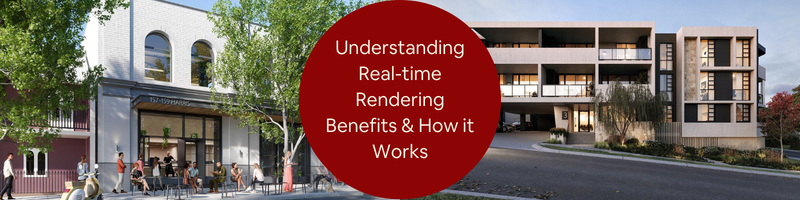
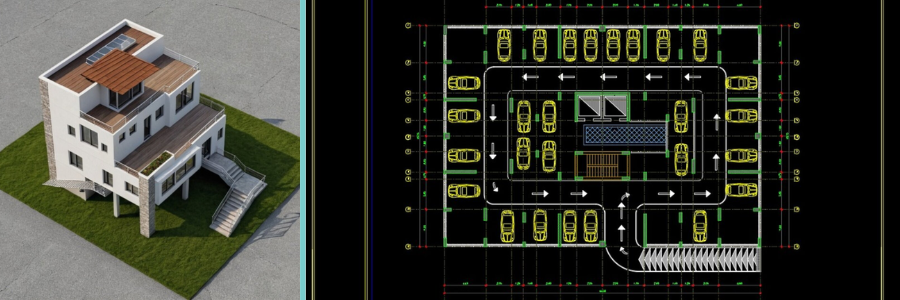
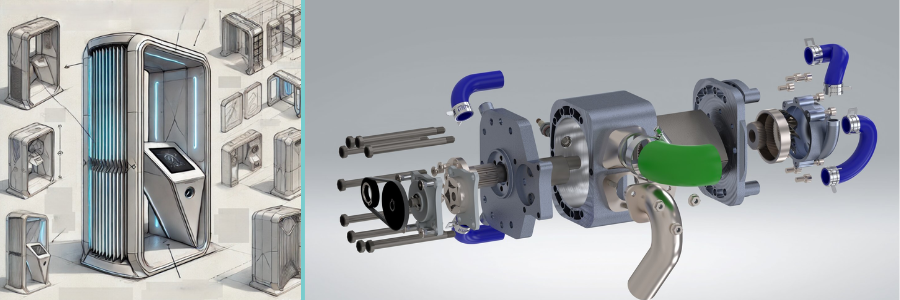
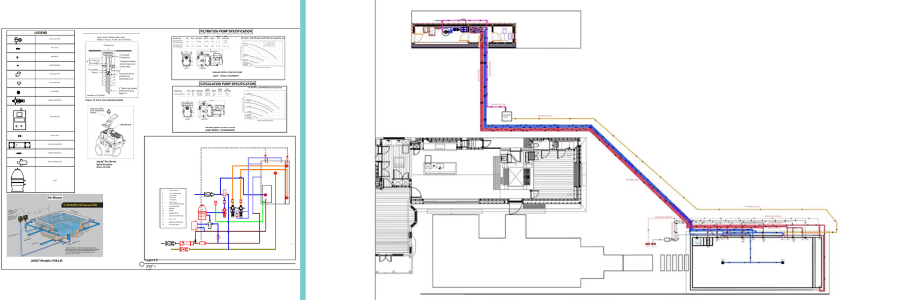
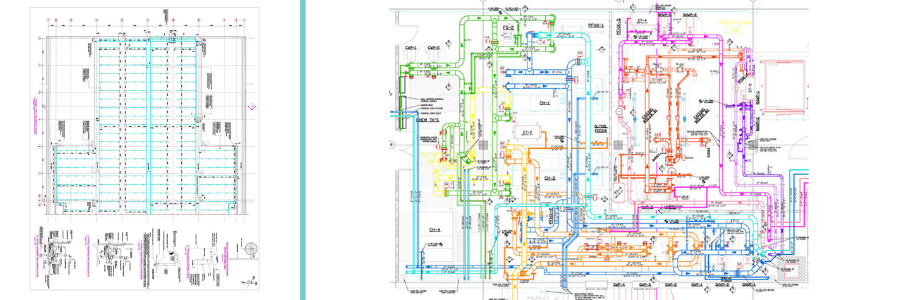
BIM rendering and design examples by Cad Crowd architectural experts

RELATED: 5 ways 3D architectural visualization can revolutionize your design process

Layered review

Outsourcing makes little sense if the deliverables fail to meet your expectations. In an ideal world, you should only outsource a BIM project to a partner proficient enough to create models that exceed (or at least match) the in-house quality standards. Otherwise, you might as well just rely on the team you already have.

It’s only natural that most freelancers and BIM service providers claim to have their own internal quality assurance professionals whose primary role is to ensure that all files are checked for errors and analyzed for inconsistencies before delivery to clients. All this sounds very reassuring, up until the point you remember that true professionals run their work through a third-party evaluation service. There’s no need to hire any independent analyst here; if the partner does use such a service, it’s a big plus all to your advantage, but you still need to practice due diligence anyway. An effective analysis happens in a layered review process to make sure that the audit is dependably objective:

  • 1st Layer: an automated review process in the form of clash detection by software. Solibri, Navisworks Manage, Revizto, ClashMEP, Autodesk Construction Cloud, BIM Track, and Bentley Navigator are among the most widely used options.
  • 2nd Layer: Make it clear in the project brief that the deliverable must be reviewed by at least one senior member of the outsourced team. Provide a list of the quality standards used by your firm and have the partner compare it against the deliverables.
  • 3rd Layer: your in-house team reviews the work, both automatically and manually, to ensure everything is in order. This means the outsourced team has to send a copy of the file ahead of schedule to compensate for the audit process and the possibility of a revision or two.

Please note that revisions are nothing but normal in any kind of outsourced task. The lack of direct supervision and management means you can’t control everything that happens during the workflow. Just because the deliverable isn’t 100% correct doesn’t mean the outsourced team is doing a bad job. In some cases, multiple rounds of revisions are still acceptable so long as the mistakes are within the margin of error. 

BIM component outsourcing

Considering how popular BIM is in today’s architectural landscape, there’s a good chance that your architectural planning and design firm will gradually (if not already) implement the technology in current and future projects. In the grand scheme of things, however, adoption is slow. Even for firms that have used BIM for a little while at this point, they still occasionally suffer from what’s typically referred to as BIM Bloat.

One thing that separates BIM files from other architectural visualizations is the amount of information contained directly in the models. BIM is supposed to be data-rich, filled with just about every single detail you can muster about structural elements, materials, plumbing configuration, HVAC installations, construction schedules, cost estimation, timeline projections, and more. With that in mind, there’s actually such a thing as too much data. Information overload happens when a BIM file is embedded with an excessive amount of non-critical data, leading to performance issues and unreliable error identification.

In a specialized component outsourcing scenario, you’re not hiring a partner to build an entire 3D building model from scratch. The main focus of the collaboration is to create efficient content libraries (such as Revit Families) to ensure standardized high-performance BIM components. For example, you can ask the partner to parametric components like cabinetry, doors, appliances, roofing, flooring, piping, or basically any architectural element with only the necessary metadata, such as manufacturer links, fire ratings, U-Values, etc. This project serves two major purposes: achieving a leaner component library and preparing an in-house team to create better BIM files.

Specialized BIM partner

It’s not uncommon for an architect or a small architectural firm to outsource or subcontract a certain portion of a project. A licensed architect is a qualified expert in building design, code compliance, project management, and cost estimation, but they might not be as adept at trade-specific tasks like HVAC duct routing, electrical wiring, or plumbing pipe installation. A typical strategy to solve the problem is to outsource the jobs to a BIM partner that specializes in MEP (mechanical, electrical, plumbing) and MEP drafting services.

This allows the architect to maintain control over design intent while ensuring that the actual construction/fabrication of MEP components has no negative impact on the building’s aesthetic and structural integrity. Because the MEP services will be integral parts of the building, the outsourced partner will need access to the architectural draft so they can configure a proper integration between the services and the structure itself. An MEP specialist often works directly with fabricators to locate the clearance zones (based on the provided draft) for installation and determine the right tolerances for maintenance. Once the plan is ready, the partner integrates the diagram with the architect’s BIM file for clash detection.

A big architectural firm probably employs an MEP professional to handle the task, but an architect running a small firm or a one-person business probably cannot justify hiring a full-time salaried expert for the job. Outsourcing to a specialized BIM partner enables the architect to focus on the design and management side of the project rather than getting bogged down with the particulars of non-structural building components.

RELATED: Why is 2D drafting still relevant for different types of architectural drawings?

Building energy modeling

Not every architectural project needs a Building Energy Modeling (or BEM), which is a subset of BIM that specifically concerns indoor air quality, energy consumption, and acoustics. But thanks to growing awareness of the importance of eco-friendly architecture and sustainability, every architectural firm must take these issues more seriously. 

In short, BEM uses a digital model of a structure to evaluate energy performance under various conditions. Take, for example, an architectural model to simulate and analyze the energy-saving potential of different HVAC configurations; even seemingly simple things like insulation materials can affect the overall effectiveness of the entire service installation over a long period of use. Hiring a BEM freelancer should count as specialized CAD outsourcing, too.

Instead of hiring a sustainability consultant full-time or purchasing an expensive simulation tool that you use probably no more than half a dozen times a year, outsourcing the task to a specialized professional is the more sensible choice. Because you have to send the BIM file of the structural design to ensure accurate evaluation, such a project may involve an NDA, so make sure to prepare the form and that the outsourced partner is willing to agree to your IP protection term.

BEM should provide not just a report of the energy performance, but also simulation-based suggestions on various elements like the size of the HVAC system, ventilation, window-to-wall ratio, design of shading device, roof insulation, and more. BEM outsourcing is a popular strategy often used by small to mid-sized architectural firms to compete with their bigger counterparts. In the event a client asks about why a certain design approach is taken while the alternative is discarded, the firm can easily explain that everything is based on a valid simulation technology by a professional partner. This is how the small firms increase their credibility without allocating big financial resources – resources they can otherwise spend on the core design and construction services.

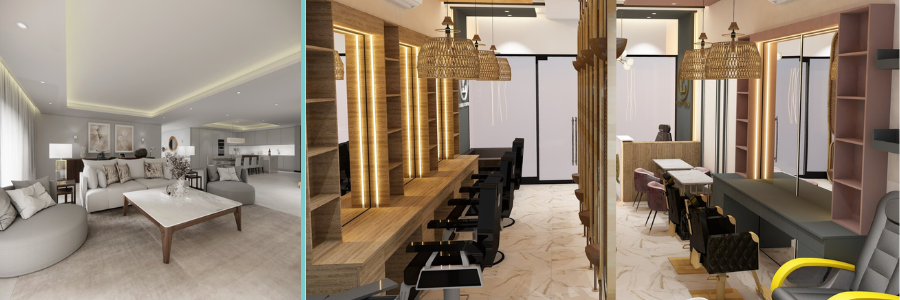
3D BIM designs by Cad Crowd architectural design freelancers

RELATED: Top 31 3D architectural rendering platforms for freelance Maya 3D modelers & artists

Augmentation model

Hiring freelancers as external non-payrolled professionals makes things practical and straightforward. You pay someone from outside the company to handle tasks that would be too time-consuming or resource-demanding for the in-house team to do. Think of it as bringing in a reinforcement without all the overheads typically associated with full-time salaried employees, like benefits and insurance. In many freelance engagements, the work is performed off-site, and this is especially true for architectural drafting projects. The freelancer does much of the drafting work without direct contact/supervision from the employer. For example, a freelancer based in Canada might be hired by an architectural firm located in the United States. Sometimes, the employer and the employee are on different continents entirely. 

But CAD outsourcing is also possibly done in a “staff augmentation model” method, where the employers bring in additional workforce to reinforce the in-house team. The external employees are hired on either a contractual or per-project basis, but they may work alongside the internal ones under the same roof, at least temporarily. These CAD design services serve as an extension of your firm for the duration of the contract.

A staff augmentation model makes good financial sense if the external team only consists of a small group of people, or perhaps an expert BIM consultant, and they’re locally-based. Otherwise, you may have to compensate for the travel and accommodation expenses, which can pile up to a huge bill very quickly. This is not to say that overseas staff augmentation always amounts to an expensive venture, because it all depends on how the reinforcement can improve your team and project.

Knowledge transfer

Considering how the AEC industry is in a transitory period from 2D drafting to BIM implementation, chances are you’ll see a lot of staff augmentation in the coming years in an attempt to expedite adoption. Many firms will hire BIM experts and consultants to help prepare their internal teams for the changes and to ensure a smooth transition.

One of the primary objectives of staff augmentation is to facilitate knowledge transfer. At this point, the AEC industry has to admit that trained BIM professionals are still relatively scarce. For some reason, the industry appears to be hesitant to make the move toward full adoption, despite the perceived maturity of the BIM technology itself. Many new architects on their way to licensure aren’t necessarily adept at BIM, either. In fact, many architectural schools and instructors don’t require the students to use it in the first place.

Hiring BIM experts, especially with the staff augmentation model, opens the doors to an effective hands-on knowledge transfer. BIM remains a highly specialized field in the architectural discipline. While the benefits are enormous, jumping into BIM all at once can be pretty intimidating to seasoned architects, let alone the junior ones. By including “knowledge transfer” as a job specification in staff augmentation, the freelancer understands that part of the role is to provide guidance on BIM implementation, rather than taking over the task. Guidance can be as simple as a walkthrough of a model, an hour of presentation into the BIM software at the beginning of a shift, a crash course, or anything else your firm may see fit.

The FTS workflow method

Say the in-house team is already familiar with using BIM for architectural drafting, but a project has a tight deadline that makes everyone feel rushed. A reinforcement may help reduce the workload for the team, but on the other hand, it just isn’t the right time to hire new employees. Let’s not forget that the project must be completed as quickly as possible, that even with the addition of new employees, everyone still has to work overtime almost every day just to meet the deadline.

What you need in this situation is an FTS-based outsourcing. FTS, short for “Follow-the-Sun” model, is a strategic outsourcing method that leverages the global time zones to increase productivity. The idea is to keep the project running even when the traditional work hours are already over in your local time. 

Let’s say your firm is located in New York, USA, where the typical work hours last between 9 AM and 5 PM local time. Because the construction is already scheduled to begin within the next few weeks, you need to get the BIM file done in record time, as it needs to be reviewed and evaluated by the architectural design expert first. And it’s always important to take into account the likelihood of having to revise the file, too.

Outsourcing with an FTS model means hiring freelancers located in different time zones, so that the work on the BIM file is running around the clock. In this case, you need someone to pick up exactly where you left off at 5 PM. A freelancer located in Australia or Japan would make for a good candidate, because it’s still morning in those two countries while your in-house employees have already signed off. To keep the project running 24/7, you may want to consider bringing in another freelance drafter (from yet another timezone, preferably in the UK or Europe) to fill in the void between the end of the second shift and the start of the first one. The cycle continues until the BIM file is ready just in time.

Cloud-based collaboration

A prerequisite for BIM outsourcing is a cloud-based collaboration tool, and even more so if you’re using the “follow-the-sun” model. Some portions of an architectural project workflow might still rely on the tried-and-true FTP or email, but it won’t be sufficient for BIM, as it takes real-time collaboration. Among the most popular of such platforms are Autodesk BIM Collaborate Pro, Trimble Connect, BIMcollab, Graphisoft BIMcloud, Newforma Konekt, and Bentley ProjectWise.

The idea behind cloud collaboration is to allow everyone (architects, engineering design experts, designers, clients, or any authorized stakeholder) to access the BIM file simultaneously. It enables co-authoring and instant feedback because everyone is viewing, editing, and working on a single centralized dataset. Most, if not all, cloud-based platforms automatically record version history, making it easier to revert to the previous configuration in case one of the outsourced partners makes a mistake or some disproved modifications. Because changes happen in real-time, there’s minimal coordination gap. 

Cloud collaboration also opens the door to effective issue tracking. Multiple teams located in different time zones might be assigned to handle specific tasks to avoid overlapping designs. If the team in the US takes care of the structural design, the freelancer in Japan can do the HVAC and MEP layout, whereas the European partner handles the issue tracking. The final design decision is ultimately at your firm’s (or the client’s) discretion, but cloud collaboration is always helpful to improve transparency. Even if you can’t provide direct supervision to overseas outsourced partners at all times, the real-time coordination keeps the workflow in control with clear deliverables, as observed in the centralized BIM file. 

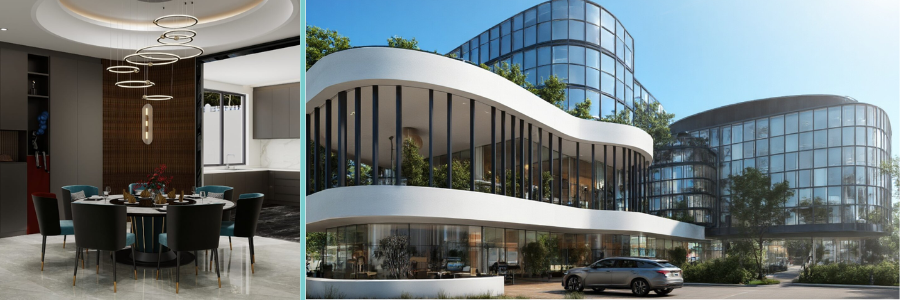
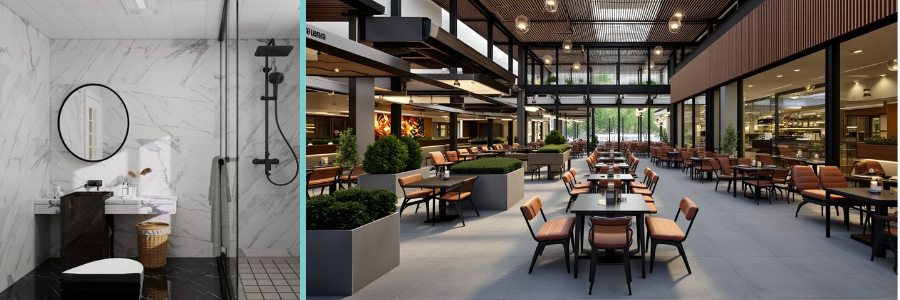
architectural BIM examples by Cad Crowd professional freelancers

RELATED: Transforming institutional spaces: The power of interior design and 3D rendering services

About risk management

Every task outsourced to an external partner comes with a risk of issues concerning intellectual property and data security. And when it comes to CAD outsourcing, especially for any project that has anything to do with a BIM file, you just can’t be too careful about confidentiality. To minimize the risk, the collaboration needs to be carried out under the umbrella of compliance with ISO 19650 (the international standard for BIM information management) and Common Data Environment or CDE, to restrict file access (in practice, the outsourced partners need only to have access to the data relevant to specific tasks assigned to them).

At the very least, enforce an NDA (Non-Disclosure Agreement) as the legal framework to protect your firm against unauthorized data access/sharing of any sort.

Takeaway

There’s no denying that BIM has introduced some major improvements to the AEC industry almost in its entirety, from design and sustainability planning to construction management and cost estimation. Despite its proven usefulness, maintaining an in-house team of BIM professionals remains quite a challenge for small to mid-sized architectural firms. While software and hardware are getting more affordable every year, the relative scarcity of trained BIM specialists is a challenge too difficult to overcome at this point. It does seem that the vast majority of the available BIM workforce choose to offer their services as independent contractors instead of full-time salaried employees. And it’s no coincidence that most of those independent talents find home in Cad Crowd, a freelancing platform specializing in the Architectural, Engineering, and Construction industry. Request a quote today.

author avatar

MacKenzie Brown is the founder and CEO of Cad Crowd. With over 18 years of experience in launching and scaling platforms specializing in CAD services, product design, manufacturing, hardware, and software development, MacKenzie is a recognized authority in the engineering industry. Under his leadership, Cad Crowd serves esteemed clients like NASA, JPL, the U.S. Navy, and Fortune 500 companies, empowering innovators with access to high-quality design and engineering talent.

Connect with me: LinkedInXCad Crowd

Architectural Visualizations vs. Architectural Renderings: A Comparative Guide for Services


Visualization and rendering are the most commonly used words in architecture, and also the most confusing. Are they the same animal, just differently dressed, or do they serve entirely different purposes? If you’ve ever found yourself scratching your head as you flick through a design portfolio, then this guide is for you. You’ll learn not just what each service entails but how to find the right talent for your next architectural project, and why Cad Crowd is a great place to come looking for seriously skilled freelance professionals in this area.

Setting the scene: You are an architectural design expert, a designer, or even a client with this really ambitious dream of turning a plot of land into the next iconic skyscraper or chic residential complex. Your mind is filled with ideas, like confetti being thrown in a parade. However, unless you are able to show someone else that idea stays in your brain, like some rare Pokémon that nobody knows about. That’s where architectural visualizations and renderings come into play. They translate imagination, bridge concept and reality, and sometimes even rescue client presentations that would be adrift in some muggy waters of misunderstandings.


🚀 Table of contents


Understanding architectural visualizations

Architectural visualization is a medium that expresses highly detailed, often three-dimensional depictions of designs. Consider this as a kind of crystal ball through which the architect, client, and stakeholders are granted permission to look into the future. This can range from the simplest 3D model showing space and scale to complex photorealistic scenes that make one question whether the building already exists.

Indeed, it is in the beauty of architectural visualization that it can be so versatile: from interior layouts to exterior facades, from lighting effects to landscaping details-everything could be shown within one single visualization. If ever you experienced admiration for some sort of computer-generated image, which felt so real you could almost feel the sunlight beating on your face, chances are high you were looking at an architectural visualization.

Well, here is where things get very interesting: now, architectural visualization services have not only become technical but have also become a storytelling device, enabling architects to actually talk about the space experience. With the ability to virtually walk through a hotel lobby in the future and notice how the sun filters through skylights or how shadows dance on textured walls, it shows you what it looks like in reality and goes beyond being more than a drawing to an experience that can delight, persuade, and inspire.

It’s not about slapping shapes and textures together to make a visualization. It requires knowledge of software, lighting, materials, and spatial perception. Among professionals, 3ds Max, SketchUp, Blender, and Revit are common; additional rendering engines like V-Ray or Corona bring the finished image to life. A good visualization artist takes that blueprint and develops an exciting digital model that is often colored enough to sometimes be mistaken for a photograph when it crops up.

But probably the most important, and least talked about, aspects of visualization come in problem-solving for designs well before a single brick has been laid. Such is the case, for example, when an office building visualized in 3D shows that certain windows are oriented to the street at an awkward angle, with considerable glare inside offices. Being able to catch this in a visualization allows architects to make adjustments in the design much earlier in the process, and saves a great deal of time and money, and quite a fair share of frustration at the construction phase.

These visualizations are priceless in the case of complex structures, too. Think about a modern museum where swooping curves cross planes; any flat blueprint can only begin to give a sense of what it’s like to walk through such a space. A good visualization captures human movement through galleries, light and material interactions, and a realistic sense of scale that drawings alone can’t provide.

The other interesting application involves virtual walkthroughs whereby an architect can afford a client an opportunity to see deeply into his or her potential building and get a feel of the inside as if it were currently standing. It would prove more useful in residential work, such as for 3D residential rendering services, when clients want to feel the flow of rooms, or in commercial developments, when the impact of such areas as a lobby, an atrium, or a public area needs to be fully grasped.

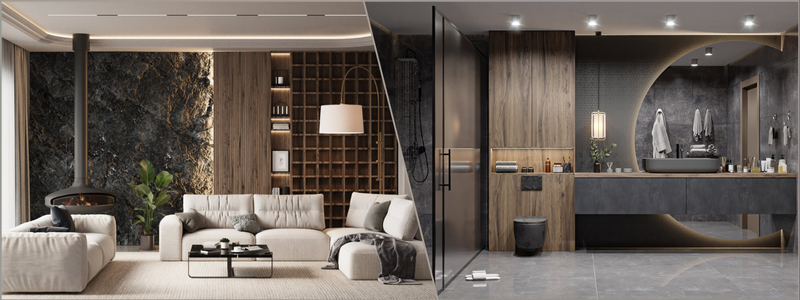
3D rendering and visualization of an A frame home and sleek bathroom design by Cad Crowd freelance visualization services

RELATED: Top 31 3D architectural rendering platforms for freelance Maya 3D modelers & artists

Getting into architectural renderings

By contrast, architectural renderings are the final presentation in relation to a particular building or structure. Though renderings could use 3D models, they can also be made as 2D illustrations or digital paintings. Briefly put, a rendering is just the finished and presentable version of any design showing style, materiality, and atmosphere.

You can sort of think about renderings as the Instagramworthy architecture; it’s done with considerations of composition and lighting, even sometimes an artistic flourish. Other than flat visualizations that may have their focal point on technical accuracy and spatial understanding, renderings are to amaze, absolute emotional drums beating. Renderings can be realistic, semi-realistic, or even stylized, depending on the formality you wish to portray.

Renderings are crucial during the pitching for a client or stakeholder who is not used to reading architectural drawings. One well-rendered image can tell them about the scale, function, and aesthetic appeal in one glance, perhaps difficult with a floor plan or wireframe model. In other words, renderings are a kind of secret weapon when you want someone to fall in love with a project they have never seen physically.

Renderings also provide artistic license that the visualizations sometimes cannot. Emphasis can be given to certain elements of the design, colors can be changed based on mood, or the light effects can be exaggerated to help show architectural features. This is particularly useful within marketing materials where the purpose is to grab attention and communicate a sense of quality and desirability that is especially relevant for photorealistic rendering services.

While creation often goes along with the process of visualization, the mindset differs. Where it is to understand and explore a design through the process of visualization, rendering revolves around presentation and persuasion. It’s the difference between walking through rehearsal and performing the final show. Both have their place, but knowing when to use each service is key to communicating your vision effectively.

There are key differences between renderings and visualizations.

By now, you might say to yourself, aren’t these two terms twins separated at birth? The best answer would go both ways: yes and no. Though alike in some ways, visualizations and renderings are used for different purposes in the architecture workflow.

By nature, visualizations are exploratory. It’s one way the architect can test an idea, play with spatiality, lighting, and material to anticipate certain problems in design. They are sort of the blueprint of imagination-a sandbox where creativity and practicality meet.

Renderings, however, are persuaders. They take the output of visualizations and make from it clear, evocative images that speak effectively to clients or investors. Rendering concerns mood, color, material, or flavor, and where the design affects an emotional sense. They are made to artfully sell a vision and not just to illustrate.

Another point of differentiation would be the degree of polish. Visuals can range from raw models and technical viewpoints to even schematic visuals. The most refined ones are usually renderings, with advanced lighting, real textures, and surroundings such as landscaping, sky, and people through HDR rendering services.

Also, timing and purpose essentially distinguish the two. Visualizations are commonly done at the design stage of a project when architects do quick iterations to explore options, while renderings are used either at the culmination of a project or at presentations, whereby the intent may be to impress, communicate, and get approvals or investments.

Analogically, that would be: Visualization would be the bridge tested by an engineer under virtual loads, just to make sure everything stands strong and sturdy, whereas the rendering would be a photo of that bridge at sunset, with light displaying it softly and with pedestrians walking down and birds flying over. Both are important, but they serve entirely different functions.

Why both services are valuable

It may be that one of the services is enough or that one overcomes another. But in fact, both architectural visualization and rendering make their contribution to the process in their own way. That is where visualizations help architects and designers to make decisions sooner in the design process. This reduces the risks associated with expensive mistakes, improves the understanding of clients, and drives innovation. The renderings communicate a final vision that is engaging, in which the clients, investors, and other stakeholders are on track with the direction of the design.

Combined, they are the architectural dynamic duo of sorts. While the ability to visualize takes one on a tour around the city before it is built, a rendering allows them to show it at its best. In that respect, both help each other in the design process to make it easier, better performed, and much more engaging.

By applying views and renderings, architectural design firms can establish that the project is structurally sound while at the same time visually and emotionally stimulating. The renderings act as a bridge between technical precision and aesthetic values, allowing appreciation of function and beauty alike in design.

The role of freelance talent

And therein lies the interesting plot. With the recent mushrooming of freelance marketplaces, like Cad Crowd, how architects and developers gain access to such skill sets has been redefined. Instead of being at the mercy of in-house talent tied down by geographical location or availability, firms today can connect with skilled freelance artists around the world. Visualization and rendering can be outsourced to freelancers, and more often than not, they bring fresh insights and creative solutions that your in-house team might have missed.

Cad Crowd lets you easily access portfolios, read reviews, or hire experts in just the kind of architectural service you need. Be it an ultra-detailed work by interior visualization services, exterior renderings, or full 3D walkthroughs, this platform connects you with a deep pool of experienced talent that will make your vision come alive in the best possible way.

Freelancers are more productive and budget-friendly than employees. You will have to pay only for the required expertise that may fall within a certain period of time and without additional costs for maintaining permanent staff. What’s more, a lot of freelance artists have broad experience in new software, trends, and techniques that will keep your visualizations and renderings qualitative, competitive, and up-to-date.

RELATED: Transforming institutional spaces: The power of interior design and 3D rendering services

Understanding software & techniques

Both visualizations and renderings require advanced software; however, the approach can be different. In architectural visualization, programs such as SketchUp, Rhino, and Revit enable the creation of detailed models, while tools like Lumion and Twinmotion allow architects to create realistic walkthroughs. In cases involving renderings, 3ds Max, Blender, V-Ray, or Corona are common for making something quite polished. Other professionals even use Adobe Photoshop to refine the textures, lighting, and details in a presentation.

Of course, mastering these tools is a matter of time, experience, and artistic feeling. A skilled visualization or rendering artist would know not just the software but also composition, lighting, color theory, and perspective. They can take that abstract and turn it into compelling, immersive experiences.

More so, such skills can be outsourced to freelancers who let architectural design and drafting firms focus on the core aspect of design and have the technical and artistic heavy lifting done by professionals. This can help speed up project execution, raise the quality of the output, and please clients who can quite literally see and understand the designs being proposed.

Congratulations if you have made it this far! By now, you understand the basics of both architectural visualizations and renderings, understand the differences between them, know their roles within the design process, and why both are indispensable tools for modern architects and clients alike. But here is the thing: knowing the theory is one thing; understanding how to put it into practice is where the real magic happens. Let’s proceed further with practical applications, benefits of hiring freelancers, common pitfalls, and tips that can make your next architectural project amaze everybody who is involved.

When to use visualisations

Think of architectural visualization as a creative laboratory where one can conduct as many experiments as one wants, keep checking on ideas, and test any concept without real-world consequences. If you have done a visualization, you have designed a residential complex, experimenting with layouts and natural light at different times of day, and observing how furniture is placed to maintain continuity across the flow of space. You can instantly tweak a wall here or move a window there and see its impact-all this without a single swinging hammer.

These are particularly helpful for complex or unconventional projects. Think of a museum with undulating walls, asymmetrical staircases, and huge open spaces. The classic blueprint will only get you so far. A 3D visualization lets architects, clients, and contractors understand the spatial relationships and foresee and plan for any challenges before ground is even broken. You are giving your team X-ray vision, allowing them to see not just the structure but how people will move through it, how light will interact with the surfaces, and how materials will interact in a three-dimensional context, which may be exemplified even further through 3D animation services.

Other major benefits of visualizations are versatility: It is not just a question of what a building will look like, but how it will feel. It can be a walkthrough, panoramic views, or even an interactive model that the client themselves can walk around. Participation of this kind turns observers from passive to active participants in the design process, and that, simply stated, makes decisions easier and faster.

When to use renderings

Renderings are about persuasion and presentation. Where the visualizations help you experiment, renderings will help you sell the idea. Think of them as the red-carpet version of your architectural project: polished, detailed, and designed to impress. Rendering tends towards mood, style, and aesthetic qualities in a design. These images show investors, clients, or the public how to fall in love with a building they’ve not yet stepped inside of.

With this, the difference in marketing material for a luxury apartment complex comes in with raw visualization and fine rendering. The rendering may then be able to show how sunlight actually flows in through the glass from floor to ceiling, how shiny floors are polished, and greenery surrounds this place, for example, by utilizing HDR rendering design services. Even with people enjoying space, one could create an impression of life and action inside. Such a level of detail creates excitement while emotionally engaging potential buyers or investors closer with the project.

This will be especially helpful for regulatory approvals and public presentations. Indeed, one well-composed image often conveys your design intent much more effectively than any technical drawing. It helps the nonspecialist understand the vision in an instant when they are baffled by plans and elevations. A rendering is far more than a picture; it’s a story, a narrative that summons people to imagine the space, feel the ambiance, and picture themselves therein.

Combining visualizations and renderings

Now, this is where all the real fun begins. Visualizations and renderings are not mutually exclusive; using them in concert could be a game-changer. Take advantage of the visualizations in order to explore ideas, test configurations, and refine designs. Once an idea is finalized, render the visualizations to present the final vision to clients and stakeholders in a compelling way.

Think of it as cooking: visualization is your rehearsal, tasting, adjusting the seasoning, and perfecting the recipe. Rendering is an art to plate up nicely, garnish, and make it ‘Instagram-ready’. Without one or another, your project will just never bloom into success and impress or satisfy everyone involved.

Taken all together, all these services ensure efficiency. You will not have to make guesses at what might work and just hope your final images turn out right; you do your iterations in the visualizations. By the time you actually get to rendering, you know your design is solid, and your polished images reflect the final structure accurately.

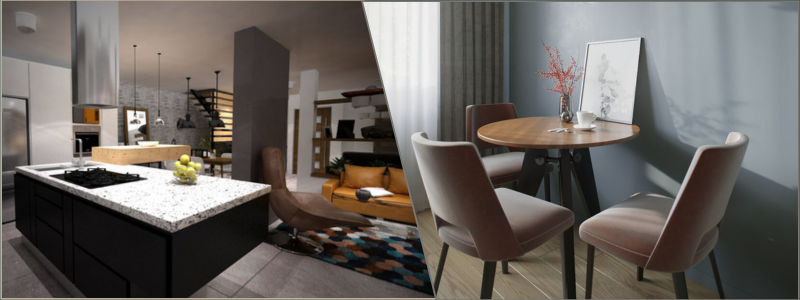
3D visualization and rendering examples by Cad Crowd architectural designers

RELATED: Pricing factors for architectural visualization and hourly 3D renderings rates for your firm’s projects

Common pitfalls and how to avoid them

Several traps related to visualizations and renderings that even the most seasoned architects and interior design experts fall into include general reliance on renderings too early in the process. Sure, an elaborate rendering looks great, but if problems are in the underlying design, issues will only reveal themselves later in the process, which can lead to costly revisions. The answer is relatively simple: use visualizations first for exploration and save renderings for final presentations.

Another trap is avoidance of context. Buildings aren’t space ships; they relate to the environment. A rendering of a cool skyscraper might look great on a blank void, but when it faces the cityscape with surrounding buildings, roads, and natural elements, it just doesn’t blend in as well. It is context-things like surrounding structures, landscaping, and lighting-that make visualizations and renderings believable-think about the ground below.

On the other side, there is another trap in over-complicating the models. Indeed, it is almost very tempting to include in a model every imaginable detail, from intricate furniture to several dozen decorative elements. While that may sound impressive, doing so can most definitely make render times longer, iterations cumbersome, and sometimes distract from the core design. It is all about that one thing: getting a balance where enough detail is included to get the point across, not so much to lose the message.

Finally, the power of collaboration is underestimated, hindering results. Architects, designers, and visualization artists should collaborate early in a project; this also includes rendering specialists. The rendering artist brought in late to the project might not grasp exactly that mood or context intended by the design. This will make sure the visualizations and renderings early support the design intent and technical constraints to meet client expectations.

It pays to hire freelancers

That is where Cad Crowd really comes out on top, because not every firm is in a position to invest in an in-house visualization and rendering team. CAD design freelancers offer a flexible, cost-effective means: you get access to specialized talent, pay for what you need, and benefit from fresh ideas from professionals who are often working on a wide range of projects.

Freelancers bring years of experience, too. Some of them could have taken years to amass experience on a host of software platforms, styles, and types of projects. They know how to use light, perspective, and composition in such a way that it transforms this complex architectural concept into a visually brilliant image.

It is not going to be hard to hire through Cad Crowd, as you can see their portfolio of work, verify previous work, and find those artists whose style best fits your idea. Cad Crowd does make it really easy for you to connect with freelancers who are professionals in architectural visualizations and renderings, it an interior perspective, exterior shot, or immersive 3D walkthroughs.

Besides, if you work with freelancers, then it goes much faster. You scale up or down depending on your needs to avoid bottlenecks. This way, you focus on the core of your design and pass on the heavy technical and artistic lifting to experts.

Working with freelancers tips

Communication really is the key to getting the most from freelancers. Give clear, concise briefs, reference images, and any technical specifications. Be transparent with deadlines and expectations, and keep up a routine check-in to review progress. The more information provided, the more a freelancer can take a vision and create compelling visualizations and renderings.

The other tip is to let some creativity in. You might have a clear vision, but 3D rendering freelancers always offer insight into ideas and suggestions that add to the finished product. Their collaboration will yield higher returns; it brings into play your excellence in design and their mastery of visualization and rendering techniques.

Of course, it always makes a lot of sense to start off with a small project or test job if this is the first time you work with a particular freelancer. At least that way, you can get a sense of his style, his responsiveness, and his ability to meet your expectations before you commit him to a larger assignment. If you find a freelancer whose work meets your standards, you have the potential for a long-term, fruitful partnership.

Practical applications

It has also been established that visualizations and renderings are not confined to high-budget projects alone. They have something to say in residential development, areas of commercial importance, public infrastructures, and even in the planning aspect of the city. Through visualization, architects can test zoning regulations, sunlight studies, and traffic flow while communicating the proposal to the public through renderings.

This could also mean visualization of a city planning project by simulating how a new park or building is going to interact with the current cityscape, including shadows, pedestrian traffic, and spatial relationships. These renderings take those concepts and develop them into visually appealing renderings that stakeholders, residents, and officials can understand and rally behind.

Even small projects benefit from the visualization: renovation for a single-family house can be visualized to test furniture layout, lighting, and materials by interior design firms. Then, a final design rendering is communicated to the homeowners so they can confidently make decisions without costly changes during construction.

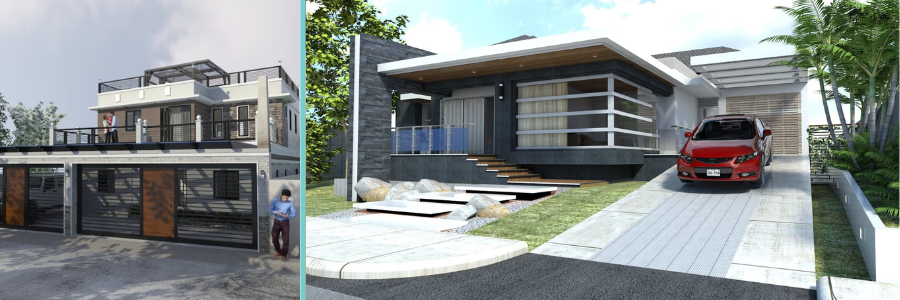
3D rendering examples of a modern building and apartment by Cad Crowd freelance architectural design experts

RELATED: Why 3D modeling is used in building architectural projects with freelance designers and firms?

The future of architectural visualization and rendering

Indeed, the future is bright. Advances in software, VR, AR, and AI-powered tools are wholly reinventing the game in developing visualizations and renderings. Today, and increasingly so, architects and designers do have the ability to offer real-time walkthroughs, full immersion into virtual experiences, and even interactive presentations that allow clients to see every aspect of the project well before laying the first brick.

Freelancers within Cad Crowd networks have so far been the early adopters wanting to push state-of-the-art techniques on projects, so design work is not only visually stunning but also technologically forward-thinking.

Conclusion

Architectural visualization and rendering go way beyond images; they are enabling instruments between imagination and reality. It helps in the exploration, experimentation, and refinement of the design, while rendering communicates, persuades, and inspires. Blended, they ensure projects are technically sound and visually stimulating.

Thanks to freelance marketplaces like Cad Crowd, access has never been easier to a pool of expert talent. Detailed interior visualizations, exterior renderings, or immersive 3D walkthroughs- whatever your client needs, rest assured that there are skilled pros prepared to bring ideas into action. Freelancers enable architects and developers to free up precious time and limit costs, while improving the quality of the project.

Look through Cad Crowd and hire some of the most exceptional freelancers of 3D architectural visualization and rendering artists who help bring your ideas alive in stunning, compelling, highly professional presentations. The right mix of visualizations and renderings done by expert freelancers can actually take architectural projects from concept to reality with clarity, impact, and style. Request a quote today.

author avatar

MacKenzie Brown is the founder and CEO of Cad Crowd. With over 18 years of experience in launching and scaling platforms specializing in CAD services, product design, manufacturing, hardware, and software development, MacKenzie is a recognized authority in the engineering industry. Under his leadership, Cad Crowd serves esteemed clients like NASA, JPL, the U.S. Navy, and Fortune 500 companies, empowering innovators with access to high-quality design and engineering talent.

Connect with me: LinkedInXCad Crowd

How Innovative Product Design Simplicity and Honesty Help Your Brand Grow


Every new product in the market appears to be an update or upgrade over the old one. All the improvements are said to deliver better performance, features, and overall user experience. But just because a product is new, it doesn’t mean everything is better than the previous model. An upgrade isn’t always what it’s meant to be because it often comes at a cost of added complexity. At the same time, many brands like to throw around the term “update” at will these days just to trick customers into spending money without getting additional value for the product.

Contrary to popular belief, customers very rarely want complex products. Instead, they yearn for honest and straightforward product design companies. Many brands have now realized that buyers want products that are easy to understand and without unnecessary frills to make things more difficult. And when it comes to product simplicity and honesty, brands should look no further than Cad Crowd, where they can discover experienced professionals to implement the design principles and create products that win customers.


🚀 Table of contents


Why simplicity matters

Brands like to talk about how their products can do more things than any competitor in the market. They say the products are the most “sophisticated” and “feature-rich” to the point where you might not need to buy anything else. But being loaded with numerous features and functionality often makes the product more complex than it needs to be. It either has too many buttons to clutter the aesthetic, or too few of them that you need to refer to the manual time and again. You want the product to make your life simpler, but complexity turns it into an inconvenience instead.

Simplicity has always been a valuable commodity, and even more so in an increasingly sophisticated everyday life flooded with technology. It’s part of what makes a product an appealing proposition to customers. This applies not only to digital products like software or apps, but also to physical goods.

Take, for example, the original Apple iPhone released in 2007; it was a groundbreaking device that practically redefined what a smartphone could be, but with one glaring feature omission. The original iPhone didn’t have a copy-paste function, when just about every other phone in the market back then, including BlackBerry, offered it.

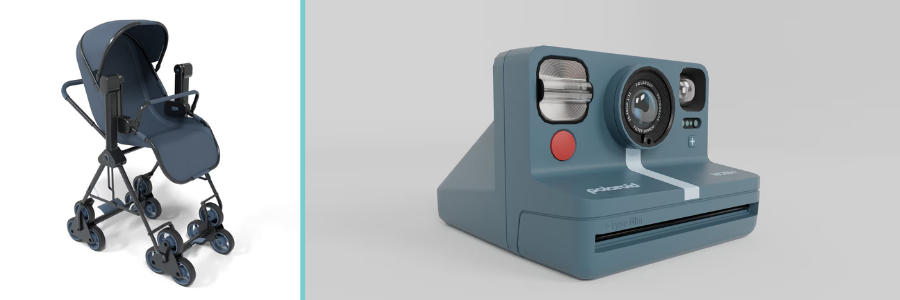
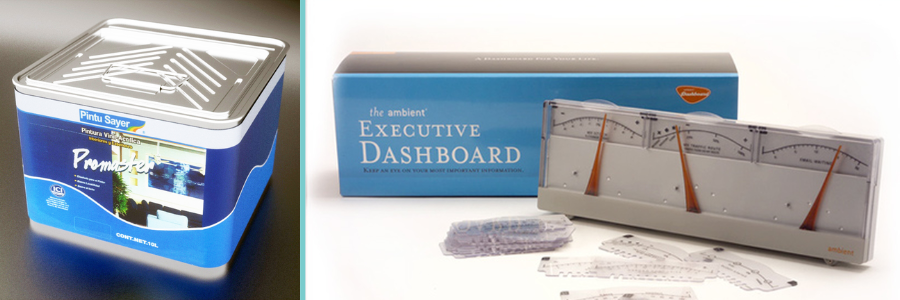
3D rendering of a specialized camera and custom workout bench by Cad Crowd product designers

RELATED: Designing for visual impact with your product design services company

Long story short, the missing functionality wasn’t at all a mistake or an oversight, but a deliberate omission to let the engineers focus on the core features. Apple didn’t see “copy-paste” as a priority, so the touchscreen interface was mainly geared toward seamless web browsing, email access, music playback, and navigation. Did users at large see the missing functionality as a drawback? Some users might scratch their heads, but Apple’s decision to focus on creating an intuitive and simple user interface rather than delivering non-critical features proved to be a brilliant idea. It sold millions of devices and set the path for taking a significant market share. Moreover, the deliberate omission still today holds a valuable lesson to product managers, engineering design experts, and designers that simplicity wins customers.

Users want a product that’s easy to use. Even when the product is highly sophisticated from a technical standpoint, users can appreciate how simple it is to use all its features and functionality. It makes the product more accessible, and people actually enjoy using it. And at the end of the day, simplicity increases adoption, sales, and brand recognition. Simplicity matters even more in a tech product, where sophistication can make a device difficult to operate and understand. If a product is frustrating to use, people might avoid buying it altogether.

Within the context of product development, design simplicity primarily concerns the user interface. For instance, a car is a highly complex piece of engineering with an internal combustion engine connected to a series of computers to control power delivery, fuel efficiency, infotainment, air conditioning, climate control, and a vast array of safety sensors. But a good road car still maintains a user-friendly interface design with a convenient button layout in the interior, enough storage space for practicality, and well-organized instruments for convenient driving.

Sometimes, less is more. It’s easy to fall into the temptation of packing as many features as possible into a product in the hope of gaining a competitive advantage. But just because your competitors offer a new function, it doesn’t always mean you need to follow suit at once.

One of the best examples of the matter is a coffee machine. There are probably dozens of popular brands and models out there. Some of them are all-in-one models (often referred to as bean-to-cup), while others are of a single-purpose type. In simple words, bean-to-cup is a combination of a coffee machine and a coffee grinder. It also often has multiple features, settings, and certainly a lot more components inside. On the other hand, a single-purpose type doesn’t do as many things; you even have to purchase the grinder separately. That said, a single-purpose machine tends to make better cups of coffee consistently than its jack-of-all-trades counterparts that may be done by other consumer product companies.

The most likely reason for the case is that a single-purpose machine focuses primarily on the core feature: brewing coffee. It has a simple user interface, thanks to the lack of numerous buttons and switches, making it easier to use. And because the designers aren’t busy adding non-critical features, they can focus on the reliability, serviceability, aesthetics, materials, and cost-efficiency.

As a design principle, simplicity is applicable to just about every product in the market. A simple interface makes the product easier to understand and more enjoyable to use. If you have to introduce an upgrade by adding new features, keep in mind that an upgrade may come at a cost of making the product unnecessarily more complex than it needs to be. You may need to go back to the drawing board, perhaps to plan for a redesign that can minimize the negative impact.

RELATED: How CAD turns your idea into a prototype for CAD design companies & freelance services

Honesty is still a good policy

According to Dieter Rams, a German industrial design expert whose most notable works include the Braun SK4 Radiogram and the Vitsœ 606 Shelving System, good design is honest. Rams further explains that an honest design doesn’t make the product more powerful, valuable, or innovative than it really is. And it doesn’t try to manipulate consumers with unrealistic promises.

With so many options available in the market, customers have become more resourceful and selective when purchasing a product. Armed with a better insight into product specifications, manufacturers, and price comparisons, people are actively searching for products they can trust; they look for brands that can offer real value, display a penchant for empathy, and place emphasis on honesty.

Designing a product with little care for honesty and empathy is a risky path to brand growth. Say the product makes it to market launch, surrounded by a marketing campaign to tell people how great it is. Soon enough, buyers will figure out the product doesn’t do what it promises to do or that it is overpriced considering the false promises.

Just like simplicity, trust is a commodity. When a product fails to instill trust in the customers’ minds, it’s difficult for the brand to recover from the bad reputation without extra effort.

Brands need to be conscious about their own products. Avoid designing a product to make it appear as if it’s “more” than it actually is. For example, Sony makes a lot of audio equipment, but it doesn’t say that every single one of them is the best in the market. Casio makes many different calculators, but the company never claims that any of them has all the functions everybody needs. Each model serves a specific purpose, designed with a specific category of users in mind.

You can see the same practice implemented by many other product development experts like cars, shoes, kitchen equipment, watches, computers, home appliances, and more.

Even if a product is excellent in and of itself, the lack of an “honesty” factor may end up hurting sales and brand reputation. A fine example of the case is the Adobe Ink and Slide, which basically is a bundle of a stylus and a ruler that works with Apple’s iPad, in addition to a pair of apps that let you take advantage of all their features. While the stylus is an overall fantastic device, bear in mind that you have to subscribe to the Creative Cloud platform to be able to use the stylus and ruler to their full potential. Adobe doesn’t just sell you the devices; the company sells subscriptions.

Compare that with the “Pencil” stylus from FiftyThree, designed to work with the Paper app on iPad. In terms of physical design, both the Ink and the Pencil are as sophisticated, sleek, and modern as each other. When it comes to ease-of-use, however, the latter feels more honest as it doesn’t require you to log into any subscription-based cloud service.

Honest design isn’t an easy feat to achieve, but it’s not impossible either. It requires you to empathize with the users, take the experience of a product as a whole into consideration, and carry out the design process almost entirely based on those insights. An honest product design expert is a testament to your intention to show respect for the users. Whether or not the product turns out to be perfect in every way isn’t the main issue here; the most important thing is to plant the seed of trust, which perhaps is the most valuable intangible anybody can discover in a product.

product design of WiFi enabled water container and RC helicopter by Cad Crowd product engineering experts

RELATED: Product development firms: 4 key factors to consider before hiring services companies

Takeaway

In the age of technology, the Internet, robots, and an app-connected world, many products that we use on a daily basis are getting more complex and sophisticated. Wristwatches can now tell you how many steps you take, a phone also functions as a navigation system, a sprinkler system can check the weather, and even a lightbulb is now remote-controlled via Wi-Fi. With all the additional features and functionality, an otherwise familiar and user-friendly product may become more difficult to understand.

But it turns out that sophistication doesn’t have to be synonymous with complexity. Designers can emphasize the value of understatement and prudence rather than embellishment, so they can focus on perfecting the core features of a product and avoiding unnecessary frills. In other words, they should design any product with simplicity in mind, making it easier to understand and use for customers. The principle of simplicity is strongly linked to design honesty in product development. A product with a simple design doesn’t mislead customers about what it can do. Simple design is neither pretentious nor sprinkled with unjustified and excessive claims about itself.

A simple and honest product may seem straightforward, but it takes real design experience and expertise to create one. Whether you’re making a new product or in the process of redesigning an existing one, Cad Crowd is pleased to connect you with the right professionals to get the job done. Request a quote today.
author avatar

MacKenzie Brown is the founder and CEO of Cad Crowd. With over 18 years of experience in launching and scaling platforms specializing in CAD services, product design, manufacturing, hardware, and software development, MacKenzie is a recognized authority in the engineering industry. Under his leadership, Cad Crowd serves esteemed clients like NASA, JPL, the U.S. Navy, and Fortune 500 companies, empowering innovators with access to high-quality design and engineering talent.

Connect with me: LinkedInXCad Crowd

Strategic Benefits of Outsourcing Architectural 3D Rendering & Critical Scenarios for Firms


Architecture, as a practice in itself, has always been a tightrope walk in that it is always balancing art and commerce. On one hand, they are so visionary because what they do is take a white empty canvas, which is a space, and make it what makes your eyes pop. 

On the other side, of course, the clock is ticking, reminding these visionaries that clients don’t await excellence but a deadline. This, in itself, has always been an age-old struggle, per se. Lately, however, because of the need for high-quality architectural 3D imaging, a different situation has been brought into this tightrope walk, where clients want to see the result even before the construction of the first brick.

Companies are spending a pretty penny on learning internal staff, on the best software that dates faster than bread, or on a strategy that is slowly becoming a rule rather than an exception, outsourcing architectural 3D rendering services to competent freelancers. Once, it used to be a competitive advantage. It is just a strategic advantage that distinguishes adapting businesses from non-adapting ones, which are bound by outdated strategies.


🚀 Table of contents


The permanence of outsourcing & its future

Others might go further with the idea that outsourcing, in a way, is no more than ‘skimping on labor’ with fancy semantics. This, of course, is simply not true. In outsourcing, when it is properly performed, it is a thoroughly thought-out plan that is chock-full of freedom, efficiency, and the brightest and best personnel with no correlation with headcount, rather than people in a permanent employment capacity. The level of skill one employs in regard to architectural 3D rendering is, quite literally, staggeringly specific: from textures, lighting, to a subtle degree concerning the physics of textures.

For such an occasional need to provide a service, in what way would a full complement of personnel be retained when it would really be the same as having a sports car to drive to the grocery store every week, because, yes, it is possible, but is it really a sound solution?

Such freelancer resources, such as Cad Crowd, are basically a network forum that helps pre-approved, highly competent 3D artists in the realm of architectural visualization. The companies will therefore be at an advantage in terms of people who are experts in the realm of space, lighting, and textures, and hence all the work is going to be performed with the utmost possibility of highest speed and accuracy, given the fact that they would not be concerned with recruitment, training, and benefits-all this literally turns into a superpower to unleash when needed.

3D architectural rendering examples by Cad Crowd design experts and freelancers

RELATED: Full guide: Commercial architectural 3D rendering services for companies & firms

Competitive advantages

Now, here are a number of obvious benefits that come with outsourcing architectural design services. The first advantage that this service provides is scalability. Not all businesses require a similar amount of 3D rendering hours. Mostly, when a small house is undergoing renovation, the 3D rendering hours are not similar to the number of offices and shops that are accumulated in a single giant structure. It therefore means that with outsourcing, businesses are capable of scaling with minimal effects on the cost of human resources.

The second reason is innovation advantage. The freelance 3D artist is generally faced with a situation where they are forced to work with different clients from different parts of the globe, hence giving them a chance to be introduced to different designs, software, and even different creative thoughts from other freelance 3D artists. The innovation advantage that the freelance 3D artist brings to your design is that when they are working on your project, they tend to bring a fresh perspective, which has the potential to refresh your projects that might not be fresh anymore in your design office. This is practically the same thing as looking out of the window to see what the best the entire world has to offer.

Thirdly, cost efficiency is an issue that should never be overlooked. This is because of the consideration that a full-time rendering professional would have factors such as cost of labor, employee benefits, equipment, as well as training that need to be considered, but with outsourcing, now such costs are variable, which is always cost-effective, especially taking into consideration the fluctuating workflow that is within the business. In most cases, most freelancers come along with state-of-the-art computers, rendering software, as well as rendering pipes, which means that the business would not have to spend a lot on infrastructure.

Timing is everything

Time is the most non-forgetting part, even when things are going in a positive manner. The clients always ask for wow presentations, sometimes to be produced in a record-breaking short span of time. There might be a team that has a couple of projects, other than some meetings, other than some other boring tasks, which are part of the admin work, that keeps putting things on the back burner. A freelancer can only work on a single project, hence the tight deadlines and faster speeds.

Consider the following example: a presentation to a high-value client with an attractive design but a flat, lifeless rendering. This presentation can be upgraded to a work of art presentation through photorealistic rendering services, a presentation that shifts from good to unforgettable, a presentation that strategic outsourcing is far more concerned with, convenience, and the competitive advantage.

Quality without compromise

This list of outsourcing-related fallacies may also include a concession regarding the quality of service to be delivered. Nothing is less true, especially when the best freelancer is involved. This is what is known by the top 3D artists. It’s not a matter of pretty pictures; it’s a matter of storytelling. The messages that are being told are the following: scale, light, material, function, sense of space, journey from the lobby, and effect of sunlight on a façade during golden hour.

Cad Crowd is where the businesses are linked with the artists who have such skills to a professional level. The freelancers are restricted to either residential design, commercial design, or urban design. The subtlety, whether it is in one space or the other, is known at a profound level. It is, therefore, implied that when a professional is hired, it is because the aim is to improve such subtlety as opposed to sustaining it.

Skill-based risk reduction

All construction projects have inherent risks. The lack of communication, design problems, and cost overruns that come with such a state are still bound to affect the concerned construction project. The outsourcing of 3D rendering tasks to professional freelancers is associated with the reduction of risks that might affect a construction project, to a certain extent. Even before the construction process starts, a professional graphic artist is able to identify design discrepancies, a reasonable interpretation, and design errors.

For instance, if the case is critical, say, in a process that needs acceptance from the regulatory bodies, there are cases in which visualizations are needed even when pitching proposals to potential investors. The process of architectural visualization services is supposed to identify problems in design, ensure design solutions are creatively reached, and also ensure that the entire team is on the same page. The activity can be subcontracted to detail-oriented individuals with the aim that potential problems are not experienced when the process is smoother than expected.

RELATED: 5 ADU design tips to make spaces feel larger with architectural services & design firms

The cultural factor

The outsourcing organizations are also capable of enjoying such benefits from the diversity of cultures. Freelance 3-D artists may come from different parts of the globe. This is because they thus make contributions that are regarded as being linked with different models of architecture, which might exist far away from the outsourcing firms. Such synergies are required for a particular firm that might wish to research models that might never have been considered by the outsourcing firms.

Global talent adds a belief component, a futurism component, to the theme. Manpower on a global scale essentially increases the belief component, the futurism, and the scope of the talks. The client is seeking law firms that possess the talent to speak to a certain amount of innovation, a certain amount of familiarity with what is going on on a global scale, and a certain amount of gesturing with the limits of conventional design.

Banning software because of a learning curve

The software used in architectural rendering is all about being complicated. Even the friendliest of software platforms takes several years to master, with some updates taking place more frequently than a coffee break that a human is given in a day. Freelance renderers are most probably very experienced people who know a number of platforms. The learning curve is never a problem with outsourcing. They learn extensively about the most complicated software, such as ray tracing, real-time rendering, photorealistic textures, etc.

Freelancers have been known to make use of creative software/plugins that may not have been used in the said company, thus giving the architectural design freelancers a sense of experimentation that easily gives them a chance to produce a technically correct graphical presentation that is aesthetic, thus ensuring excellence in presentations and winning in customer competitions.

Global collaboration

It is somewhat intimidating even to think about working with people who are literally thousands of miles away, but with collaboration software, it is now second nature. The outsourcing strategy is used as a collaboration tool since cloud project management software, instant messages, and video conferencing are available. Freelancers now work entirely with office personnel.

This portability further extends into the labor pools. The skills that a company possesses are no longer constrained to the skills available in the locality. If the best 3D graphic artist in the world is somewhere, this is no longer a problem. This outsourcing gives a firm the best talent, irrespective of its source.

Competitive advantage in bidding

It is known that the visual attributes of the presentation have the potential to make or break a tender, especially when it is a competitive market. The application of 3D visualizer services in tendering appears to have an edge, especially when it is a competitive market, as it gives a competitive advantage to the concerned firms. The fact that outsourcing is capable makes small businesses competitive against other big businesses, which have a team of experts working for them. In this way, the small business is actually capable of providing similar photorealistic visualizations that are offered by the giant, but at a cost that is considered exorbitant to maintain a team of experts.

It is literally the difference between winning a position that has been forfeited. It’s not merely a cosmetic issue, a matter of a pretty face; it’s a matter of life and death, a matter of success in a particular industry.

Critical situations where outsourcing pays off

A number of architecture projects are confronting high cost, tight schedules, and zero tolerance. The identified imperative environment has made it very clear that the outsourcing of 3D rendering design services is a need rather than a luxury. The following are the points to be noted:

There is pre-approval that may be necessary in major construction projects, which are basically linked to trade, as well as urban development. Most states, especially different regulatory systems, may require visual aids that are highly detailed in order to evaluate the possible impact that the said development may have on the environment, with consideration of factors relating to light, shade, and aesthetics. The application of poorly prepared visual aids might, in most cases, result in difficulties in interpretation, delays, and failure. Freelancers are able to produce visual aids that are easy to interpret in relation to the purpose of the structure, hence easy to approve.

Dealing with presentations when it comes to potential financiers is also an environment full of pressure. Potential financiers would hardly be in a position to interpret the technological diagrams and the floor plans, but a photorealistic 3D image somehow provides them with a kind of “test drive” within the development. It is this that gives them a feeling that they have experienced it before, actually investing money in the development, which, again, may be all that there is to make a difference in securing a tender against competition. An overlook on precision is a possibility when set against highly competitive financial conditions.

The changes that might come from the poor clients might literally mean complete chaos. For instance, they might need different changes concerning lighting, matter, finish, or even changes concerning landscaping. The in-house team might not be grounded enough to tackle changes that have to be submitted within a short while, but the freelancer, who might work best in such a project environment, can easily tackle the changes.

3D rendering and visualization by Cad Crowd architectural design experts

RELATED: Pricing factors for architectural visualization and hourly 3D renderings rates for your firm’s projects

Cases on effective outsourcing operations

For instance, when a mid-size architectural design firm handling the task of designing a high-rise residential skyscraper in an urban area lacked the skills for rendering, the architecture firm thought of outsourcing the skills for the necessary 3D rendering from freelancers on the website of Cad Crowd. The particular architecture firm had the potential to finish a project with photo-realistic images of the whole construction project, with incredible lighting effects, on time, with clients going wild with joy.

The other design project that the designer might have worked on is a design boutique shop for a resort hotel. The client made several passes before they came up with a conclusion on how the villas that would be on either side of the pool, as well as the spa, would look in the design. The freelancers were sought to carry out a high volume of requests for rendering. The job entailed a number of passes on the images, experiments on lighting effects at different times of the day, as well as the use of materials that played a huge part in ensuring the success of the rendering.

This situation is being utilized even by giant firms. Giant architecture firms are literally dealing with a dozen projects, with some of which they might need to visualize simultaneously. This outsourcing of such a job has a positive consequence on giant firms, which now invest more in the design and planning development, and outsource the minute details of the job to freelancers.

Risk management & outsourcing

The architecture design projects are vulnerable to high amounts of risk. This is because of the cost escalation, lack of understanding of design plans, and lag in the completion of a particular project. Outsourcing services for 3D rendering is devoid of risks. This is because one gets highly experienced people who are very much aware of design difficulties.

This 3D rendering freelancer would be in a position to indicate the flaws that are in the design, look for areas that require improvement, and check whether the design meets the technological specification, thereby ensuring there are fewer faults that affect the construction industry, thereby conserving resources. Freelancers, in most cases, have a whole list of clients, thus are subjected to standards and best practices, with a huge amount of irreplaceable information that is pricelessly invaluable in order to avoid costly mistakes.

Outsourcing is a mechanism that ensures potential risks, which are involved when one is in business, are minimized. Full-time employment means a business commits obligations entailing the spending of capital on labor, equipment, and similar costs. Freelancers carry out business on a project-by-project basis; hence, a business spends capital on what it wants when it wants, irrespective of the cost of financial risks.

Strategies for outsourcing for efficiency

Efficiency is the level of speed, but it is also concerned with the use of resources, for which optimum results are obtained with minimum wastage. Outsourcing the service of architectural 3D rendering is going to make it easy for the company to apply the plan of efficiency on different dimensions.

It helps the teams inside concentrate on the core competencies. This is because it states that the architects, designers, etc., are going to concentrate on designs, discussions with clients, and plans because they are not going to be involved in rendering. This is known as the division of labour, which results in increased productivity because, in this way, every part of the project is treated with importance.

Outsourcing has another advantage, involving parallel workflows. The development of workflow within the structure of the business can be carried out simultaneously with freelancing CAD outsourcing, which involves working on rendering processes with the aim of ensuring that the workflow pipeline will remain full at all times, especially in large projects that have different stages that always need visualization.

Thirdly, outsourcing enhances the availability of specialty equipment and software with no capital investment whatsoever. This is because the freelancers are basically equipped with high-performance workstations, rendering software, and plugins. In this regard, the business is capable of accessing modern equipment with no capital investment in high-performance software, as well as the cost of keeping such software.

Finally, scalability, which is scalable upwards or downwards, happens to be one of the sectors that largely helps in making sure that efficiencies are offered. This is mainly because most of the projects are known to have variability in the requirements of rendering. This is because, when outsourcing is considered, businesses are known to have the potential to scale services upwards when the demand is high, but when the amount of work is reduced, they are known to have the potential to scale services downward.

RELATED: Why is 2D drafting still relevant for different types of architectural drawings?

Creative collaboration beyond the constraints of geography

Where the whole idea of this outsourcing era is now past, and the trend would be to make an outsourcing process some sort of a separated, fragmented process when it comes to accomplishing tasks. This is because, with modern means of communications, the outsourcing process is now seamless, really collaborative. The outsourcing process isn’t a sort of separated, fragmented process when it comes to accomplishing tasks.

Talent searching is not location-specific anymore. That would mean when a business entity is set up in New York, it can acquire a rendering expert from London, Mumbai, or even from São Paolo, which gives them a list of potential talent that might or might not be available to them even in their own locality. The best part is that it brings different perspectives to the table. It results in innovation, even more so in the case of HDR rendering design services.

Another issue is that the problem with the time zone will contribute to increasing the rate of progress of the project. This is because even during a break of the locals, freelancers from different time zones are going to continue with the rendering.

Supply management

Apart from this, outsourcing may also imply that there would be no loss of control. This is why, assuming there is proper communication, other than regular reviews, outsourcing has the potential to ensure that high standards are met. Freelancers are charged with tasks such as preparing drafts, editing, and making changes in renderings within the client and/or firm guidelines specified.

There are websites such as Cad Crowd that make it easy with the portfolios, reviews, and ratings that the freelancers have. The company can see the freelancers who have work that meets the standards of quality that are demanded, and also that which is required for the project. It is easy to warrant that outsourcing is a quality improvement.

Ambiguity in contracts, as well as project briefs, is a highly needed component when considered from the point of view of the management of the project expectations, the definition of a project deliverable, and miscommunication. It is pretty easy for a business to assimilate a freelancer into the organizational process.

Cost-benefit analysis

It is worth noting that outsourcing 3D architectural visualizer services is a highly cost-effective proposal. This is because, in a way, when a business decides on whether it is going to have a whole department dedicated to the service, it has to consider spending on salaries, benefits, equipment, software, as well as training, which is clearly not worth spending, especially when such businesses are regularly confronted with fluctuating demands. On the aspect of freelancers, they charge on a project, an hourly rate; this means fixed costs are now variable costs. 

Outsourcing is saving money in the business, but over and above that, it helps eradicate all the other hidden costs that are being generated due to overtime, project procrastination, as well as inefficient designs that need to be rebuilt. The best freelancers are used to get the best results on a timely basis. Resource scalability here would mean that the scaling of resources within projects would be easy for businesses, as per the projects undertaken according to need. This, in a way, would imply that this helps businesses to undertake more projects, thereby increasing profitability. 

Innovation through outsourcing

Despite that, with 3D architectural visualization freelancers, apart from the challenges, there are risks that come with exposure to worldwide trends, best practices, and innovations. Most of the experiences that are acquired from different projects, as well as different markets, tend to result in solutions that would most probably have been overlooked. 

For instance, a freelancer with design skills that are environmentally sustainable would bring value in terms of how to highlight environmentally sustainable design aspects, which may include lighting, within a design rendition that would make such a development attractive to potential clients who are concerned with environmentally sustainable practices. 

On the other hand, artists who have been involved in urban development designs would indicate how a design rendition of a complex urban environment is supposed to be highlighted. It is this use of the external source for knowledge, innovation, and creativity that leads to the optimization of businesses, making them the best in a competitive marketplace. 

3D architectural design and rendering by Cad Crowd freelancers

RELATED: Key tips about CGI in corporate office interior design and 3D rendering services

Long-term strategic gains 

Despite this, the outsourcing of 3D rendering is even more valuable to a business when taking a long-term perspective, as opposed to the short-term return on investment. This is because outsourcing is valuable to a business. After all, it helps a business to come up with a list of freelancers who are reliable, making it easy for a business to call such freelancers when the business is involved in other tasks. 

This helps in ensuring that it is easy for the companies to respond to the changes that are taking place within the marketplace. In this regard, it is easy for the companies to grow because of the increased demand for high-quality rendering, without necessarily needing to increase the permanent employee members. This helps in ensuring that the business is more sustainable. 

The human factor 

Of course, it is the effect of technological advancements on 3D rendering for architectural planning and design firms, but there is no way that it can surpass the power of human creativity. It is the whole team of artists who know how to use the software but also know the psychology of art, storytelling, and space psychology that are included in the entire outsourcing process. The dynamic effect derived from the enthusiasm that freelancers bring to the business, with a fresh perspective that they bring to their work, gives design an enhancement. It is the human element in rendering that gives such tasks a certain allure that is emotionally compelling and touching and convincing that the vision and not the sight is assuring to the client. 

Cad Crowd and talent unleashed 

It is not a luxury anymore to consider outsourcing the 3D rendering of architectural designs; rather, it is now a plan that will make it possible for them to come up with stellar work within a tight deadline, with a close eye on cost, and with the requisite aptitude to be adaptable. Indeed, from the stages of approval to the stages of presentation before the investors, the massive importance considered is about high-level visual presentation, and it is experienced freelancers who can show ways to make a hundred experiences out of a project. 

Cad Crowd is another platform that aids in connecting the company with professional freelancers who are 3D rendering artists. For this company, the freelancers are imperative as they bring professionalism, art, and diverse viewpoints from different quarters of the globe, which would be extremely hard to find in common employees. Outsourcing has been pretty helpful to businesses in making them realize how they can develop, progress, and maintain standards high, thus making them go beyond the standards set by the clients.

To those businesses that wish to develop the design of architecture, it is a wonderful approach to take into consideration of the potential help that can be derived from consulting with Cad Crowd. It is high time you explore the website, contact the best freelancers, and your design should be photorealistic, making it 3D. Request a quote today.

author avatar

MacKenzie Brown is the founder and CEO of Cad Crowd. With over 18 years of experience in launching and scaling platforms specializing in CAD services, product design, manufacturing, hardware, and software development, MacKenzie is a recognized authority in the engineering industry. Under his leadership, Cad Crowd serves esteemed clients like NASA, JPL, the U.S. Navy, and Fortune 500 companies, empowering innovators with access to high-quality design and engineering talent.

Connect with me: LinkedInXCad Crowd

8 Stages of the 3D Furniture Visualization Process when Hiring Rendering Services Firms


Today’s post covers the 8 stages of 3D furniture visualization. If you ever wondered how your favorite furniture brands magically display perfectly staged chairs, tables, or cabinets looking cleaner than your living room on its best day, let me assure you, it is not sorcery. It’s a 3D furniture visualization. The whole process may look smooth and effortless from the outside, but once you peek behind the curtain, you notice there is an entire world of technical artistry, digital carpentry, infinite adjustments, and more coffee than anyone should consume in a lifetime.

When one commissions 3D rendering services from a firm, one is not just paying for pretty pictures. You’re paying for a multistage production pipeline teeming with creativity, fastidiousness, and patience that will rival anyone who’s ever taken on the adventures of assembling flat-pack furniture when the screws are missing. It is a fun ride at times, very dramatic and often hilarious, if you can appreciate chaos backstage to fuel pristine visual output.

Cad Crowd happens to be one of the best places to find those talented freelancers who live and breathe this workflow. If you need skilled 3D furniture visualization experts, that community is full of artists who understand the artistic and technical sides of their craft. Let’s, in this case, go down to the brass tacks with the eight stages of the 3D furniture visualization process when one outsources rendering services to companies. By the time you make it to the bottom, you will have a pretty good idea why that nice sofa rendering looks so faultless and why those 3D artists, too, deserve applause, and maybe a bowl of warm soup for surviving the journey.

RELATED: Key Tips About CGI in Corporate Office Interior Design and 3D Rendering Services

8 Stages of the 3D Furniture Visualization Process when Hiring Rendering Services Firms

Stage 1: The great briefing session

Each project of 3D furniture visualization starts with a briefing-that’s just a fancy word for a structured info dump. That’s the place where the client brings his ideas, goals, and references to the table while turning on the gear for the visualization team to transform them all into a digital masterpiece. They’ll want it all-sketches, measurements, samples of fabric, guidelines concerning the brand, color palettes, even those vague inspirations you once caught on social media, and maybe even the emotional backstory behind a furniture piece.

They want a full picture because just one missing detail often means the difference in how a coffee table ends up looking shorter or taller, more round or square, shinier or duller than you had expected. In this session of briefing, the 3D rendering artists are merely gathering references. They are decoding your creative language. When a client says, “I want a more premium feel,” the artist starts to think of exactly what he or she feels is meant by that. Is it more gloss? Is it a darker wood? Is it brushed metal? Is it the type of texture that makes people whisper so they do not disturb the furniture’s elegance?

A briefing session gets everyone on the same page. It is now at this stage that the true value of hiring a professional becomes clear. The good visualization artist instinctively knows how to take concepts and turn them into true-to-form visual structures. They will be able to anticipate what could go wrong, advise on a better way of doing it, or even suggest refining ideas before modeling ever gets underway. This process will often go far more smoothly if you hire through Cad Crowd, as the veteran freelancers in that community know exactly what clarifying questions to ask. They no longer beat around the bush but want accuracy and clarity-they know how to get those from you, even when you come in with the vaguest instructions possible.

RELATED: Best 36 Platforms to Hire Freelance 3D Furniture Designers, 3D Modelers & CAD Experts

Stage 2: Reference gathering and digital sherlocking

Artists become detectives the moment the briefing session is over. References are collected with the same enthusiasm as a mystery investigator’s dramatic climax. The team dives deep into exploration: the brand’s archives, the manufacturer’s drawings, fabric catalogs, photos of the products, and inspiration boards within the industry. Now, the fun part-oftentimes, the client feels that he has given enough references, and yet there’s this gap that gets found by the 3D visualization designer. For example, you probably provided a front view of the cabinet and forgot its side and top views, which would leave the poor artist staring at that one view and scratching his head as to whether the cabinet has curved legs, straight legs, or no legs at all, where digital Sherlocking begins.

They go online to research similar models. They zoom into product videos for corner joints. If it is a custom design, they try to dig out the specifications from the manufacturer or resort to standard furniture proportions. Part engineer, part investigator, and part fortune teller. The reference collection is not a formality but an acting guide that governs the precision of the 3D model. Otherwise, the results may just drift into the land of approximations, something no client wants their premium furniture design to go to. The good rendering services maintain the reference collection as some sort of ritual. They know this will form a basis for everything that will finally be seen.

The more precise the references, the more convincing and photorealistic the final visualization will look. That means if you hire photorealistic rendering freelancers through Cad Crowd, you’re working with a good number of pros who already maintain a personal library of textures, wood grains, fabrics, and hardware references. These people have built up visual data over many years; this becomes priceless in the effort to re-create real-world furniture. Their detective work can be faster and more accurate, since they already have experience in solving visual mysteries.

RELATED: Top 31 3D Architectural Rendering Platforms for Freelance Maya 3D Modelers & Artists

3D furniture design services

Stage 3: 3D modeling, popularly known as digital woodworking

And now to the most talked-about stage of any discussion on 3D furniture visualization: the actual modeling. This is where digital woodworking begins. The artist sets himself up in front of his computer and begins carving out polygons with a master carpenter’s precision and with the patience of an individual assembling a thousand-piece puzzle without taking breaks. He is modeling the skeleton of your furniture piece inside the 3D software. Every surface, every curve, joint, bevel, groove, and stitch line he shapes, measuring virtual components down to millimeters to make sure everything looks accurate when rendered.

Furniture modeling can be surprisingly dramatic. A simple chair can require dozens of micro-adjustments. The sofa is totally another beast: cushion physics, fabric folds, seams, creases, and subtle sagging that needs to look believable. Wooden wardrobes need grain direction, panel separations, and correct proportions, while tables need the exact angle of leg joints and surface rounding so that they don’t look sharp enough to cause emotional wounding. With this, the artist will continuously be making decisions: Is this edge sharp enough, or too soft? Should this handle come out more? Should the cushion be firmer or more relaxed? Not only should your model match your references, but it also needs to feel physically believable.

This is usually outsourced by high-end 3D furniture rendering studios, which hire specialized modelers to do nothing but build accurate geometry all day. They develop that keen-eyed sense that could tell if a rounded corner is two millimeters too wide. With Cad Crowd, you get pros who may have modeled hundreds of furniture pieces for clients all over the world. They would know the main proportions of how the different materials will behave, and they’ve already made those mistakes that freshmen still fumble through. Which is to say, they get much cleaner, much more efficient models way faster.

RELATED: How 3D Artists Elicit Emotions with Stunning Architectural Rendering & Visualization Services

Stage 4: Texturing and material creation: the beauty transformation phase

When the modeling was finally completed, the furniture would appear as some sort of gray sculpture floating in a void. Everything would be perfectly correct and detailed, but lifeless, creepily similar to a digital ghost representation of a furniture piece. It is the texturing that gives soul to the structure. Ah, now we get to the fun stage-when all gets messy, experimental, and sometimes dramatic. He creates materials and assigns textures associated with real-life surfaces: Wood needs grain, fabric needs a weave pattern, leather needs pores, imperfections, and very subtle reflectivity; metal needs highlights and microscratches; marble needs veining and natural irregularities.

Texturing isn’t just slapping on a coat of paint. It’s a sensitive balancing act between realism and what actually is the intent of the 3D furniture rendering artist. Too shiny, it screams plastic; too matte, it loses that character of being premium; too smooth, it’s surreal-looking; too grainy, and it appears to be sandpaper. Artists often spend hours polishing roughness maps, normal maps, bump maps, reflection curves, and displacement values. They will tile together a lot of different textures side-by-side, zoomed in tight enough that the weave of the fabric fills their whole screen. They’ll examine said texture under a myriad of different lighting conditions – tweaking till all is real.

Good rendering firms have libraries of high-resolution materials. Sometimes they scan real fabrics or woods to capture actual patterns and imperfections. Of course, the goal is to recreate the tactile quality of real furniture in a digital environment. Freelancers on Cad Crowd are particularly strong in this stage, as many have built up their personal texture libraries from years of client work. They know how light interacts with materials-how to make velvet feel soft, how to make oak look rich, and how to make stainless steel appear polished, not phony.

RELATED: How Freelance CAD Designers Create Custom Smart Furniture for Modern Living Spaces

Stage 5: Setup of lighting, the digital sun, and studio moment

Once your furniture piece is modeled and fully textured, it still needs one ingredient that will provide everything: lighting. Without proper lighting, the most beautiful model will appear flat, dull, or suspiciously like it belongs in an empty basement. It is a means to bring mood, shape, contrast, and atmosphere to the visualization. It’s also that part of the process where artists test your furniture piece under different visual conditions, almost like a photoshoot, but without the risk of anyone dropping a studio lamp.

Lighting in 3D visualization services is similar to real-world photography, but much more flexible and with less concern about temperature from large bulbs. It’s where the artists position virtual light sources, adjust brightness levels, and experiment with warm, cool, and neutral lights-or sometimes even extreme curve and texture-emphasizing lighting styles. Furniture visuals often have to be made in two prevailing kinds of lighting scenarios: the traditional studio lighting setup. This is used whenever the goal is to present furniture cleanly, evenly, and professionally, much like product catalog images.

Studio lighting is intended to highlight every detail, material, and feature without distracting shadows or mood effects. The second is environmental lighting. It involves work with HDRI maps or custom scene lighting in order to achieve a look from the furniture as it would be in a realistic interior setting. Anything from a living room with soft, modern natural light to a showroom bright with huge windows, to a cozy evening apartment with diffused warm light. It helps the client better imagine how the furniture would look in real life with environmental lighting.

RELATED: Custom Furniture Design – How Firms Use 3D Models and 3D Rendering Services

3D furniture rendering company

It is a question of the degree of technical capability and artistic sensitivity that will get the lighting right. If there is too much light, then textures tend to wash out, while if there is too little light, the model disappears into murky darkness. The direction of light, the strength of light, the softness of shadow, and reflection control-all these go into the sensitive balancing act when it comes to 3d interior rendering services. Indeed, it is also an emotional roller coaster at this stage for the artist. An hour’s work on the lights, and then later, he decides that the scene still looks wrong. He readjusts again and fiddles with reflections, going ahead to change the light color.

And then he circles around, wondering why the texture now looks different-even when nothing has been touched. The dramaticity of the lighting is huge. More accomplished artists know how to build up lighting setups since they may have done it a million times before. They know how light will interact with many different materials, how other settings will affect those reflections and shadows, and can predict that from experience. This aids them in the creation of lighting that presents furniture in an exceptional light without overwhelming it.

Stage 6: Rendering, or where computers sweat

Rendering is that part of the 3D furniture visualization process when everything becomes real. It’s kind of that magic step when software computes lighting, textures, reflections, shadows, subsurface scattering, global illumination, and dozens of other complex calculations. It is at this stage that your furniture will turn from a working file into a polished image. While this process is deceptively straightforward from the outside, it’s a marathon on the inside, with both the artist and computer at their utter limits. That is where processors work the hardest, where the fans spin, and machines hum along, just like dedicated digital athletes.

RELATED: How to Select a 3D Furniture Rendering Services Company for Photorealistic Results

When the render begins, interior rendering artists often step back and just pray everything behaves properly. There are, however, two big kinds of rendering: real-time and photorealistic. Real-time rendering is fast and useful for previews; the photorealistic rendering, though, is slower but gives those high-quality, polished images that furniture brands like. Most of the rendering services firms tend to be specialized in photorealistic renderings because this captures the fine detail that sells the visual. That depends on so many factors: image resolution, complexity of the lighting, material properties, and scene composition. Meaning, the higher the settings, the longer the render will take.

A high-resolution image with complicated textures, glossy materials, and soft shadows may take a couple of hours, depending on the machine. Rendering teaches an artist a peculiar sort of patience. Artists will wait; they will watch and check for noise artifacts, incorrect reflections, weird shadow patterns, or other unexpected lighting issues. When that mistake finally does appear, then they have to cancel the render, fix the scene, and try again. Sometimes, one single misplaced reflective object manages to bounce light in some odd way, ruining what was otherwise a perfect shot.

Good artists will always find out how to optimize render settings for that sweet spot between speed and quality-that is, how to minimize noise without giving up realism. They also know when to turn some of the render engine features on and off, and how to make furniture look fabulous without forcing the computer into meltdown mode. Furniture design freelancers at Cad Crowd are actually equipped with pretty high-powered personal workstations for rendering tasks. They invest in top-of-the-line GPUs and CPUs, knowing full well how the speed of their renders impacts client turnarounds directly. With their professional equipment and experiences, they can make a polished render impressively efficient.

RELATED: How 3D Rendering Enhances Virtual Furniture Showrooms & Shopping with Company Services

Stage 7: Post-Production – a stage of visual polishing

You would think that, finally, when rendering is complete, everything is done. Not quite yet, there is still more to be done: post-production is where the artists refine the final images in image editing software. Subtle enhancements make all the difference in making excellent visuals spectacular. This involves post-production adjustment in contrast, brightness, shadows, and highlights, including color balance. Further, the artists would fine-tune the saturation to bring out the material richness without making the image look exaggerated. They remove the noise or any other imperfection that slipped through while rendering.

Slight sharpening of edges to improve clarity is done. Excessively hard reflections are softened. They will adjust the exposure to what fits the mood of the design. More realism could be added through post-processing, but perhaps merely subtle bloom effects, microshadow tweaks, and slight depth of field to give a sense of furniture anchored into space. Usually, very, very subtle: it’s not about styling an image, it’s just polishing. Also, post-processing cleans up the remaining inconsistencies by hand. Sometimes, the wood tone is too warm, the metal is too reflective, or that fabric texture just needs that little bit of tonal adjustment; the refinements these can make to the final result are amazing.

Good interior visualization firms know the key is in strong post-production. Even an image that renders perfectly will fall flat if it’s not taken through to final adjustments. Strong post-production by the artists brings out the best qualities of the furniture and makes the final visuals cohesive and professional. This is where freelancers at Cad Crowd normally shine, most of them coming from 3D rendering, though some do come from photography, digital art, and graphic design. They understand color theory and visual presentation; they know how to enhance images without overdoing it. The point here is to show the artistic understanding they have in creating a polished finish.

RELATED: Top Photorealistic Furniture Rendering Techniques for Interior Design Companies

3D interior rendering firm

Stage 8: Final delivery and client review – the grand reveal

Lastly, we show you the final stage of rendering services, when all the files are prepared for delivery before your very eyes. Now it is the time to pull back the velvet curtains, and the finished masterpiece appears. Such images are modeled, textured, lit, and rendered, then polished-and they are ready for presentation. It shall deliver the visuals in high-resolution formats such as PNG, TIFF, or JPEG, whichever applies, per your request. In case there were some animations on the project, then video formats would also be added. Some customers prefer layered files or raw renders for further editing on their end, while others prefer nicely packaged final images ready for marketing.

Now that you have final renders, the scrutiny of every little detail is checked. You’d zoom in on the weave of the fabric, wood texture, or stitch of upholstery, and the reflection of those on the metal hardware. Realistic shadowing, natural-looking lighting, and accurate materials would make for an impression of furniture being photographed in a natural setting. Client feedback often requires several revisions: perhaps you want the color changed, the lighting slightly warmer, or an alternative angle or backdrop. Architectural rendering firms count on this, and professional artists don’t bat an eye over it.

Revision usually proceeds more quickly than creation because most of the heavy lifting has already been done. The artists just have to update materials, change lighting, or re-render the scenes with new settings. Its foundation is still the same. Freelancers on Cad Crowd tend to be bang at the very least, highly communicative at this stage of the project: accustomed as they are to collaborative workflows, they listen carefully to feedback, do prompt revisions, and many of them repeat business elements owing to professionalism in the final delivery and post-delivery support.

RELATED: How to Get the Best 3D Rendering Services for Furniture Design

In that way, by the end of the project, you will be setting and tuning pictures to showcase proudly on websites, in catalogs, advertisements, portfolios, or investor presentations. Now you have a complete visualization package that takes this furniture design from concept into reality.

Conclusion

Well, 3D furniture visualization is way more than a series of steps involved in operating computers. It is actually a multistage journey of creativity, replete with digital craftsmanship, artistic decision-making, keen attention to detail, and even quite a lot of emotional investment by the 3D furniture modeling artists bringing your designs into life. From the briefing session right to the detective-like gathering of references, from the painful process of modeling through to the beauty of texturing, from decisions on lighting right to the problems of rendering, and from post-production polish to the final delivery stage, it brings something vital to the result.

Indeed, every image you get is the result of countless choices, adjustments, refinements, and hours of focused work. That is where hiring the right experts in the industry comes in. The seasoned teams can face any of those hurdles with poise. They know exactly how to work on visuals that are artistic and yet as realistic as well. They know how to convert your vision into images that could impress buyers, investors, or collaborators.

How Cad Crowd can help

If you’re looking to work with skilled freelancers who excel in every stage of the 3D furniture visualization pipeline, then Cad Crowd is the place to start your search. The platform is full of talented furniture 3D modeling artists who excel in furniture modeling, rendering, and visualization. Equipped with experience, tools, and creative passion, they manage to materialize your ideas into a tangible reality in great detail.

Take a moment to browse through Cad Crowd and see for yourself how many talented freelance 3D furniture visualization artists are available. You just may find that perfect professional who can take your ideas and then transform them into the type of images that make people stop and stare, saying, “I want that in my living room.” Get a free quote today.

author avatar

MacKenzie Brown is the founder and CEO of Cad Crowd. With over 18 years of experience in launching and scaling platforms specializing in CAD services, product design, manufacturing, hardware, and software development, MacKenzie is a recognized authority in the engineering industry. Under his leadership, Cad Crowd serves esteemed clients like NASA, JPL, the U.S. Navy, and Fortune 500 companies, empowering innovators with access to high-quality design and engineering talent.

Connect with me: LinkedInXCad Crowd

How Your Firm Can Use 3D Animation to Present Architectural Designs & Services


The ever-changing world of architecture makes firms look for innovative ways to stand out in the crowded marketplace. One of the best ways of achieving this is by including 3D animation in your design presentations.

With these times behind us, where clients could only rely on static images or very complex blueprints to make them understand a project, technological advancements have made it possible for architectural firms to use 3D animation, leveraging 3D architectural animation services, where designs come to life, providing an immersive, dynamic experience that enhances communication and decision‑making.

Cad Crowd is the industry’s top agency for 3D animation, with over 94,000 experts you can choose from to help you turn your idea into a tangible one. Whether you’re looking for innovative solutions, strategic insights, or top-tier execution, CAD Crowd has the expertise and the talent to bring your vision to life.

This blog post discusses how your firm can utilize 3D animation to present architectural designs and services, leveraging 3D AR/VR architectural services, improve client engagement, streamline project approvals, and ultimately deliver better results. 3D animation creates moving images that simulate an environment with three dimensions. In architecture, that means taking a three‑dimensional model of a building or a structure and then animating it to simulate how the whole thing would appear from all sides, or with lighting, and how a person would actually interact in it. They can make everything from how the outer walls of the building appear to the small details within the interior.

In a very broad sense, what one intends to present or materialize can also mean a kind of design process, different stages of construction, and what is supposed to be built. Materials, functions, and all these together, then the overall functionality. As 3D animation is used in exhibiting a project, even more, the thought of this decision in mind with clients before taking, could be compiled together now with firms through presentations.


🚀 Table of contents


Communication with the client and stakeholders

Blog post images Elize 2 39

RELATED: How a 3D architectural design service can make your real estate marketing a breeze

Communication is the key to any architectural project, and the clearer you can express your design idea, the better your chances of a project’s approval and successful completion. The traditional architectural presentation, often relying on drawings and blueprints with static images, might confuse clients in some way or leave the vision untold, which is why many firms now leverage architectural presentation services to bring clarity and engagement to their proposals.

You can create detailed, dynamic visualizations that will make it easier for clients and stakeholders to understand complex designs with 3D animation. Animations can display the flow of spaces, the relationship between different areas, and even how the building interacts with its environment over time. This is really useful when dealing with large-scale projects, such as urban developments or mixed-use buildings, where understanding the overall context is essential.

For instance, provide an animation of a proposed building and how to walk clients through the design. It can start with an aerial view of the project site and then zoom in on the exterior of the building. Then it can transition to reveal the interior, perhaps focusing on key areas such as the lobby, offices, or residential units. Animation of how the building will interact and have natural light at different points in the day, combined with energy-efficient design components. An immersive experience lets a client conceptualize what it will really feel like there, which becomes easier for the client to make decisions and adjustments before construction.

Expedite the approval of the design

Among the major challenges in architecture is getting a consensus on the designs from the client and other stakeholders, like government authorities. Most of the time, approval can be held up since stakeholders are not able to interpret static images or technical drawings. When there are different changes or revisions that require a visual representation, the process gets complicated, which is why many firms now rely on BIM modeling services to provide interactive, data‑rich models that streamline revisions and ensure everyone stays aligned.

The process of approval becomes smoother if the design is presented clearly and in a more interesting manner in 3D animation. When all parties concerned get to see the project come alive with animation, it tends to be faster all the way. This is especially so when working with governmental bodies or other regulatory agencies, where animated presentations help in demonstrating compliance with zoning regulations, environmental impact assessments, and other criteria.

In addition, 3D animations make it easier to correct mistakes. In case one wants to alter the design, modifying the animation to express the changes is much faster and more efficient compared to redoing static images or blueprints. This flexibility saves time, but most importantly, prevents the possible occurrence of any misunderstanding among all parties concerned, especially when leveraging 3D architectural rendering services to rapidly iterate and update visuals as the design evolves.

RELATED: Why hire an architectural design service? The unmistakable benefits

Enhancing marketing and client acquisition

With the competitive market today, architectural firms have to be unique and come up with ways to capture new clients. Perhaps one of the most effective ways of doing so is by using different marketing materials. With 3D animation as part of your firm’s marketing strategy, you will create interactive, high-quality presentations that will awe your potential clients and enable them to imagine your designs. For instance, you can send an animated video of how you design to the potential client instead of just a simple brochure or a few still images. This will provide a much more memorable and impactful experience, giving your firm an edge over competitors who are still using the traditional approach.

The third advantage of 3D animation is that it can be very suitable for online marketing campaigns, including social media marketing, website presentations, and digital advertisements. The videos can go viral or catch people’s attention on YouTube, Instagram, or LinkedIn, hence reaching more people. You can tell clients with the marketing material that you created with the help of 3D virtual reality rendering. You are even saying that you’re one of those who will be at the helm of modern design, close to the world being innovative with technology.

RELATED: How architectural design services are creating sustainable architecture

Disclosure of design considerations and materials

Blog post images Elize 2 40

Another significant advantage of using 3D animation in architectural presentations is that it brings out the finer details of your design. Clients normally face problems with visualizing how materials, finishes, and textures are going to be combined in the final product. Using animation, you can model how different materials will appear under different lighting conditions and thus enlighten the client on how his or her choices will be represented in the final product.

For instance, you can have a commercial building with glass, steel, and wood elements, which you would like to show different parts of the structure by an animation of how these materials will look when put together, leveraging 3D flythrough design services. Animation can be used to show how light plays with glass facades during the day, shadows play on the steel framework, and what the texture of wooden surfaces will be; this may help clients better visualize the tactility of materials.

For better exposure of details, such depth may have to be shown for a rich selection of materials, perhaps mainly on high-end residential or even commercial projects that would require a lot of the design process. The 3D animations of such details might provide better decision-making information to clients, so maybe fewer requests for revisions and more satisfaction with their final result.

RELATED: How CAD technology is transforming the future of architectural design services companies

Virtual reality integration for immersive experiences

Over the last few years, virtual reality and 3D animation for architectural presentations have really taken the latter to new heights, especially when combined with architectural 3D modeling services. It totally immerses clients and other stakeholders in a virtual building before it is actually built. You can mix 3D animation with virtual reality to offer your clients an interesting presentation. From every side, clients are allowed to walk around and discover different layouts, designs, and environments. The immersive ability makes them relate to the design on a more concrete level, which they have always wanted.

Virtual reality integration can also be done in collaboration with others, such as contractors or even interior designers. They can walk through their design virtually and give input to be made in real-time. This kind of engagement may lead to a much more cohesive design process within which all parties actively come together to form the end product.

Cost and time efficiency

Although 3D animation would appear to add an extra cost, it can save your firm time and money in the long run when you integrate 3D construction rendering into your workflow. Providing the client with a more accurate, detailed visualization of the project reduces the likelihood of misunderstandings and costly design revisions on‑site. The clarity animations provide can also prevent miscommunication with contractors, and everyone will be on the same page from the very start.

Furthermore, the procedure that includes 3D animation also eliminates the requirement for consecutive build cycles of a model or radical changes in current sketches. A 3D model created once can therefore easily be amended to change circumstances or revised according to modifications as the work continues from its production point.

RELATED: The power of architectural CAD services

How Cad Crowd can help

In an architectural design presentation, 3D animation is a powerful means to elevate the services offered by your firm and to communicate better with clients and stakeholders. The ability to present the design dynamically, showcase materials and details, and engage clients through immersive experiences can be a competitive edge in speeding up approvals, streamlining decision-making, and raising client satisfaction.

This will enable your company to present the final product and, at the same time, display more transparent, interactive, and efficient design processes using 3D animation. Thus, such an innovative approach toward architectural presentations positions your firm as a forward-thinking industry leader, attracting more clients with success in your projects, especially when supported by design for manufacturing and assembly services that ensure the feasibility of your concepts from the earliest stages.

The future of architecture is a visual one, and through 3D animation, your firm can lead the way in making designs that will inspire, engage, and excite. At Cad Crowd, we have over 125,000 members waiting for you to choose from to help you present the most engaging and enticing architectural designs and services. Get a free quote today.

author avatar

MacKenzie Brown is the founder and CEO of Cad Crowd. With over 18 years of experience in launching and scaling platforms specializing in CAD services, product design, manufacturing, hardware, and software development, MacKenzie is a recognized authority in the engineering industry. Under his leadership, Cad Crowd serves esteemed clients like NASA, JPL, the U.S. Navy, and Fortune 500 companies, empowering innovators with access to high-quality design and engineering talent.

Connect with me: LinkedInXCad Crowd

Scaling Up in Style: 7 Innovative Ways 3D Visualization Grows Businesses with Design Services Companies


In today’s digital age, where time runs faster than ever, businesses are always thinking of innovative ways to get noticed by their clients. From all the different tools and techniques available today, 3D visualization has proven to be a game-changer, transforming the way design service companies operate with immersive and engaging experiences, powered by 3D modeling services, aiding in greater communication and business development.

Cad Crowd is the industry’s top agency for 3D visualization, with over 94,000 experts you can choose from to help you turn your idea into a tangible one. Whether you’re looking for innovative solutions, strategic insights, or top-tier execution, CAD Crowd has the expertise and the talent to bring your vision to life.


🚀 Table of contents


Understanding 3D visualization and the role it plays in design

3D visualization is among the most powerful technologies ever devised for designers and architects to accurately formulate three-dimensional views of their ideas. This technique uses advanced software to transform ideas into real-life-like pictures or animations, thereby making it easier for people to envision complex structures, products, or environments before they are actually built, powered by product design services.

There are various important roles that 3D visualization encompasses in the field of design. First, it enhances communication among the stakeholders. Such communication effectively helps clients and engineers comprehend the scope of the project, as well as the details involved. It minimizes misunderstandings and streamlines the decision-making process with a clear visual representation.

Third, 3D visualization facilitates the research and investigation of design alternatives. This can be done in terms of virtual space exploration of diverse materials, colors, and layouts, so that design decisions are based on proper choices against aesthetic and functional requirements. This flexibility not only accelerates the pace of designing but also stimulates creativity, enhanced by CAD drafting services.

Lastly, it is for marketing and presentations. Premium visualizations easily capture the attention of potential clients and investors on visible projects. In this respect, 3D visualization in design becomes an extremely important tool in filling this imaginary gap, making it look like a reality. Here are the seven new ways in which 3D visualization adds to the expansion of design services companies.

7 Innovative Ways 3D Visualization Grows Businesses with Design Services Companies

RELATED: Using 3D visualization to increase your real estate company’s vacant lands and property sales

1. Increasing client involvement

Undoubtedly, 3D visualization possesses a higher engagement factor for clients. Design presentations based on 2D plans confuse the clients because they don’t have any depth, so it’s hard to understand them at all. On the other hand, 3D models give a much better understanding of the work. They can examine designs from different perspectives, which helps them visualize their final result accurately, enhanced by 3D visualization services.

For instance, for architecture firms that use 3D visualization, the buildings can be viewed initially before construction. The experience for the clients would enable them to ‘see’ and ‘feel’ the space, hence presenting them with a reason to be more interested in the project. The higher the engagement level of the client, the higher his chance of taking an interest and investing in the project as well. In this way, the sales of the design services increase. 

2. Streamlining design iteration

Another important advantage is the capability to streamline the design iteration process. It is frequently the case in traditional design processes that alterations to a project are only possible by creating new 2D drawings or models, which can sometimes be very slow and expensive. With 3D visualization software, though, designers can instantly modify their models, further accelerated by rapid prototyping services.

This rapid iteration process makes room for an agile design environment, allowing companies to easily respond to client feedback. A prime example would be that of a design company that could present several designs to the client using 3D models. Should a client want another color scheme or layout, a designer can alter the model in real time, which greatly minimizes the revisions that take up most of the time. This efficiency will not only mean the sale of more client satisfaction but will also push more projects for design services companies and thus encourage growth.

3. Better marketing practice

Good marketing contributes to any business’s growth, and 3D visualization can help with that. High-quality 3D rendering gives marketing materials the type of look and feel that is needed for a product to capture either the imagination of a potential client or even get the attention of one for its visual appeal. This includes the website, social media, or print advertising.

Such companies can utilize 3D visualization to create a masterpiece in marketing, which will represent the skills and expertise of the design service company. Instead of delivering simple, normal photographs taken after completing projects, a firm may create the most beautiful 3D rendering that represents the design and creativity phase. Such graphics will make their way through various sources, which enhance brand visibility and capture the attention of new customers, supported by BIM services experts.

Lastly, the 3D visualization can produce virtual tours and interactive presentations, which can be emailed to potential clients of your services. It makes the experience real for the client since they are free to explore concepts, hence making them very invested in your company’s services.

4. Enable collaboration

Good design projects are actually fostered by teamwork, and the utility of 3D visualization tools provides such support. In most design services companies, members of the team and clients come from different walks of life and geographies, so there is a greater need for proper communication. A common venue for viewing and discussing designs in real-time can be afforded by 3D visualization, further empowered by 3D walkthrough services.

With the cloud-based 3D visualization tools, members of a team are able to access and contribute to remote projects, which fosters collaboration and idea sharing. Clients can also become part of the design process by giving direct comments on the 3D models. This helps further relationship ties but instills ownership in customers, who would be more likely to buy the final design.

7 Innovative Ways 3D Visualization Grows Businesses with Design Services Companies

RELATED: 7 useful innovations in 3D visualization that your company can take advantage of

5. User experience enhancement

In this user experience context, 3D visualization enables design services companies to take the above-mentioned aspect to new heights significantly. With the help of 3D models on their websites or applications, companies can provide an interactive and engaging experience to the end users. For instance, a furniture design company can help customers visualize how a piece of furniture would look in their home with the help of features such as augmented reality, powered by 3D rendering services.

In such a setting, the ability of the user to visualize a product in their own personal space will make them much more likely to make a purchase, increasing the sales of design services companies. Again, good user experience leads to good word-of-mouth marketing since satisfied customers will definitely make other people share their experiences with them, hence improving business expansion.

6. Support sustainable initiatives

Sustainability has taken center stage in the minds of many companies today. Above all, design services companies are no exception. 3D visualization mainly comes into play to support sustainability initiatives since the designers can come up with different scenarios, assess the environmental consequences of their work, and respond accordingly.

For example, architects can apply 3D visualization in an effort to evaluate sunlight penetration, energy consumption, and material usage in their design. Improving these aspects will enable companies to generate greener products that attract environmentally conscious clients. Moreover, sustainable 3D visualization in design practice can improve the corporate image of a company and expand client accessibility, enhanced by architectural visualization services. Also, clients are now considering sustainability along with other factors before making any final decision. Sustainability-driven design practices, in return, make a business service company that determines growth and brings more business.

7. Competitive advantage

It is extremely important to be different as an enterprise to expand in a highly competitive marketplace. In this regard, 3D visualization helps give a design services company a competitive advantage because of its value in helping to display creativity and innovation in the work being done. Companies using new visualization techniques are also considered more up-to-date and high-tech, hence attracting clients who place a premium on such qualities.

Furthermore, 3D visualization enhances the project proposal creatively. Companies are no longer required to submit a normal portfolio of past assignments, but rather use 3D models to explain their approach to the design of the project and what kind of vision they have in mind for the project. As such, a view is prospective; it is likely to influence potential customers positively. For that reason, subsequent project acquisition, along with business expansion, tends to go up.

Scaling up with style is an opportunity where 3D visualization really shines as companies in the design services industry push through the constantly changing landscape. Whether it’s to enhance client engagement, improve design iteration, strengthen marketing efforts, or facilitate collaboration, the benefits are versatile, powered by product design services.

By adopting 3D visualization technologies, service-rendering companies in design would be better positioned to develop their own processes and, simultaneously, provide great experiences to the clients in ensuring high business growth. At a time when innovation is everything, the acceptance of 3D visualization makes all the difference and secures the future of a company for a longer time, with long-term durability in maintaining a competitive edge in the market. In a rapidly changing future, the people who exploit the power of 3D visualization will definitely be able to stay at the forefront of design, creativity, and client satisfaction; the shapers of future design services.

RELATED: 3D rendering costs & 3D visualization prices for firms: How to save money in the long run

How Cad Crowd Can Help 

Design services companies need to embrace the ever-evolving market trends to stay ahead, and 3D visualization stands out as a powerful asset to do just that. By harnessing this technology, firms can transform the way they communicate ideas, streamline design iterations, and capture the imagination of their audiences—all while elevating their market presence.

At Cad Crowd, we understand the importance of innovation and collaboration. Our platform connects you with top-tier experts in 3D visualization who are ready to partner with you on your growth journey, ensuring that every design speaks volumes about your creative and technical prowess. Take the next step in scaling up your business with style. Get your free quote from Cad Crowd today, and discover how a dedicated team of professionals can empower your design services to meet modern challenges head-on.

author avatar

MacKenzie Brown is the founder and CEO of Cad Crowd. With over 18 years of experience in launching and scaling platforms specializing in CAD services, product design, manufacturing, hardware, and software development, MacKenzie is a recognized authority in the engineering industry. Under his leadership, Cad Crowd serves esteemed clients like NASA, JPL, the U.S. Navy, and Fortune 500 companies, empowering innovators with access to high-quality design and engineering talent.

Connect with me: LinkedInXCad Crowd

Design Intent in CAD: Communication Guidelines for CAD Services Firms & Freelance Professionals


It is said that office legends spring from either great triumph or massive failure. There were once some rumors among CAD groups that there was a floating bracket legend. According to this, there once existed a napkin sketch client, a CAD sage nodded in blind belief, and the project manager assured everyone that it was all done. Two weeks passed, and the team opened up the file to be greeted with beautifully modelled bracket swimming unrestrained without any need to keep it back to something. It was exact, elegant, but totally useless.

It was not the client, not the software, nor the designer’s skill. The issue was that there was no clear sense of the design’s purpose.

CAD intent is the recipe family secret ingredient. It’s that which can’t be visually detected in the final product, but omit it, and it won’t be the same. It’s the “why” for each of the decisions: why the hole is there instead of somewhere else, why the part must bend and not stay straight, why this edge must have a chamfer and not that edge.

To freelance engineers and CAD design service companies, design intent capability is between exhilarating and infuriating work. Cad Crowd, a venture-capital-backed website that businesses turn to in order to get visibility in front of CAD professionals, has seen projects swell when there was clear communication and burst when there was poor communication. Design intent is not high-brow art. It is the cornerstone of professional-quality CAD work.


🚀 Table of contents


Why design intent matters more than you think

Design intent matters because every CAD design is more than a string of lines on the screen. It’s a story. A bicycle frame is more than tubes; it needs to be strong enough to ride down mountain roads but not so heavy. A coffee maker housing is more than a shape; it needs to be something the human hand can wrap around and hold up to the occasional kitchen disaster.

Small errors get magnified when design intention is lost. Do you recall the “Door Handle Debacle of 2021”? The design team that redid the office created a chic, modern handle. It was pretty on the designs. No one drew, however, that the handle needed to withstand the occasional harsh pull of a courier who had many packages. On the first day, the first handle snapped like a twig. Redesigning took nearly three times the original budget for the engineering design firm.

Not to take intent in business is to be reminded of billable hours, unhappy clients, and potential reputation loss. To freelance writers, it can make what was otherwise a sure thing into a free revision marathon.

Design intent is all the priorities. What can’t possibly be changed? Where’s the stretchy material if it has to be changed? In what circumstances will it be placed? Figuring these out upfront saves time, money, and misery.

3D rendering and CAD drawing of engineering and floor plans by Cad Crowd design experts

RELATED: The impact of 3D architectural renderings on custom home design with 3D design services firms

Anatomy of clear communication in CAD projects

Transparency communication is not just the sending of sketches. It’s comprehension. The following are the bare minimums:

  • Dimensions: The lifeblood of the model

Dimensions are not numbers. They’re your design’s genetic code. A single misapplied diameter or missed tolerance will destroy a whole project. A freelancer shared a cautionary story about a wonderfully machined piece that could not be assembled together because gap tolerance was called out but not specified. The prototype produced was flawless, but would not fit together. The fix cost dollars and pride.

  • Constraints: The invisible guardrails

Constraints govern your parts. Disregard them, and your assembly is totally at large. There existed a legendary demonstration of a part pirating similar to a pirate mill in an unconstrained motion test simulation. Engineers merely laughed afterwards when they were serene.

  • Assembly behavior: Show, don’t guess

Never assume how it all fits together. Show it. Reproduce or animate an exploded view. The misplaced pivot label or reverse face reference can be the source of failures for product design companies.

  • Document every assumption

If you chose stainless steel to give corrosion resistance, note it. If you allowed tolerance drift in trying to save production expense, note it. Written assumptions avoid “I assumed you meant this” misadventures.

  • Visuals over verbal instructions

Pictures are not sufficient if words fail. Therefore, an annotated screenshot can put a stop to hundreds of emails. Cad Crowd experts often remark that annotated screenshots save time, build trust, and earn a perceived level of professionalism.

  • Timeless design intent, communication tools, and techniques

Computer-aided design in these times is made possible through advanced tools, but tools are useless if there is miscommunication.

Parametric modeling is domino magic. Alter one parameter, and the rest take care of themselves. But that magic’s only going to occur if your initial parameters are a true representation of the intent of the design. A single bad reference can wreak havoc down the road.

Piles of “final_final_REAL_final.stp” files in directories are a cry for help. Proper versioning software does not do this. Use naming conventions or versioning capabilities inherent in the software. Cloud environments facilitate sharing and tracking so easily.

Annotations are kludgy, but they’re a lifesaver. Use arrows, labels, and comments on your CAD model itself. A two-minute screen capture may be worth more than ten paragraphs of explanation by your 3D modeling expert.

Cloud software enables worldwide teams to collaborate in real time. A freelancer joked it was like going from yelling down a canyon to having a clear phone line.

Checklists are dull but save lives. An unremarkable list, check tolerances, check materials, test assemblies, is what can detect errors before they kill you.

These abilities are utilized daily by Cad Crowd specialists. Site clients observe that things go more smoothly merely because they can have these specialists break down.

Connecting the gap between clients and CAD specialists

The gap between what a client is envisioning and what the designer is translating can be enormous. The bridging requires humor, patience, and visionary thinking.

A good kick-off meeting gets everyone singing from the same songbook. Don’t talk about deadlines. Priorities? What are the absolute necessities? What can be relaxed if there are limitations? What is “better” to the customer?

  • The power of probing questions

Freelancers have a secret too: questions. A friendly but direct question can elicit helpful information. For example, “How should this hinge move when loaded?” will reveal an assumption that will save days of redo time for your manufacturing design expert.

  • Feedback loops are your friend

Don’t send one done file and hope for luck. Send draft versions. Ask for feedback. Small tweaks early are cheaper and easier to do than huge fixes late.

  • Honest timeline conversations

If your client is changing direction mid-project, just describe to them what this does to deadlines and budget. This way, you can both agree on moving deadlines.

Cad Crowd makes it possible. Customers can choose among experts by price portfolios and profiles. They can be matched with the customer communication style.

Freelancers vs. companies: Communication styles

Freelancers and CAD firms do have their reasons, but communications differ.

  • Freelancers: The improvising agressives

Freelancers improvise. CAD design freelancers move quickly and are able to turn on a dime and react to the off-the-cuff offer. Freelancers deliver first-hand, personal one-to-one communication that creates the feeling of working as if it were personal and off the cuff. Freelancers are like jazz musicians who can turn tempo on a dime.

  • CAD companies: The orchestras in structure

CAD businesses provide formality. They’ve formalized project management processes, multiple levels of quality checks, and point-to-point communication protocols. They’re the symphony orchestra: they practice, they sync, and they deliver with consistency.

A small model will appreciate a freelancer’s flexibility. A big, high-profile meeting with many stakeholders will require a business’s formalism. Cad Crowd has both, and it’s easy to pair up right.

Avoid these common pitfalls

  1. The mystery dimension: Never let a critical measurement happen by accident. Missing data can hijack production and cost you thousands.
  2. File naming horror: Avoid giving files such names as “final_FINAL_useTHIS.stp.” Systematic naming spares everyone headaches.
  3. Bad feedback: To ask a designer, “make it pop” without definition irks. Define precisely what you want done.
  4. Material assumptions: If your material is aluminum, but your steel master drafter will make the weight and cost, this can lead to problems. Clarify with your steel detailing engineering expert always.
  5. Cutting motion tests: A floating bracket or binding hinge is only funny when performing a repair. Test assemblies in their entirety.
3d rendering and schematic drawing of scuba equipment by Cad Crowd design experts

RELATED: Key factors to consider when vetting engineering firms for design & consulting services

Advanced means of design intent communication

Effective communication is sufficient, but advanced methods place collaboration on another plane. Advanced methods go beyond the minimum and even avoid slight miscommunications.

  • Make a design intent document

A design intent document is your reference for your CAD model. It specifies the most important characteristics, constraints, and priorities that will dictate all decisions. Include diagrams, references, and even comments to modify in the future. It’s a source of truth for everyone.

  • Use storyboards or scenarios

Customers may struggle to explain how they’re really going to be using your product. Try storyboards or use cases. If you’re designing a folding chair, draw out an obvious sequence of photos: someone unfolding it, sitting down, and folding it up to take off. Those little details inform you of what sizes and tolerances matter for customers and consumer product design firms.

  • Hold regular review meetings

Review meetings are not milestones, but are used in order to validate questions of understanding and confirmation. Keep such meetings as light and happy as possible. Jokes can ease the tension and make work fun.

  • Offer such simulation aids early to such individuals

Simulation software need not be reserved for the very last step. Stress, motion, and heat transfer can be simulated ahead of time to verify if the design intent is being met or not. Show these simulations to customers. An animation of a part deforming under load will be more persuasive than a list of numbers in a block of text.

  • Utilize collaborative annotation platforms

Shared marking is made possible by today’s CAD software. Have your clients mark up on the model. Request them to mark up what concerns them. This keeps send-and-return via email out of the picture and places feedback ina more workable form. Cad Crowd experts would always recommend such creative approaches because they keep surprises later on at bay. Investing time up front, you save hundreds of hours in the future.

Using humor as a tool in CAD projects

CAD projects are today painfully technical. Tolerances, assemblies, and files can drain the humor out of a room faster than a terrible software patch. Humor is the cure.

A carefully made joke at review time can convert potentially confrontational talk into constructive talk. During the time when the team discovered a malfunctioning label in the duck prototype, the team named the work “Duck_v1” as a stopgap. Tension was alleviated by laughter, and the team promptly corrected the error.

Humor also builds rapport. A freelance product designer who adds a bit of an ironic remark to a work-in-progress window will find that he or she gets more positive feedback from clients. CAD services companies that set a friendly tone for meetings have higher employee and customer morale.

You will even come across freelancers in Cad Crowd with CAD bloopers or humorous analogies in their portfolios. These extra flourishes are personality-catching and bring collaboration to the human touch.

Good and bad communication: Real-life case studies

The bracket redemption

A small company hired a freelancer in Cad Crowd to build an element of a prototype. The freelancer was initially provided with half of the instructions and worked out the first draft of the portion that could not be accommodated within the assembly. Instead of panicking, the freelancer booked a video conference, asked to read questions, and asked to see pictures of the assembled product. Within a week, the revised design was installed perfectly and improved the overall strength of the prototype done by prototype design services. The freelancer’s communication with the client was so excellent that they employed the freelancer on five more projects.

The ghost of unnamed files

A small firm did not version. Six copies of the same document titled “FINAL_use_this” existed in different directories. When they unknowingly printed the incorrect one and shipped it off to production, the mistake cost them tens of thousands of dollars. They then hired Cad Crowd to get them a more communicative company. The new customer had a proper naming convention for files and versioning, so the client avoided going any further insane.

The miracle coffee maker

One of our entrepreneur business owners ordered CAD services from Cad Crowd to create a new coffee maker. The crew spent a design intent document that nailed down all the things that mattered: the handle had to be cool to the touch, the reservoir had to be a clean-out to be easy to clean, and the base had to be substantial enough to double as a support for the occasional kitchen disaster. They storyboarded out an epic morning coffee ritual disaster as a product, even. The product was a first-work prototype by product engineering services.

Building lasting relationships through communication

Cad’s top performers aren’t just accomplishing things. They build relationships. A freelancer who remembers a client’s tolerance range or checks in with a client to ask how a prototype was performing in the field is remembered.

The clients also know it. With feedback that is informative, timely payment, and acknowledging good work, loyalty is shown. If a client acknowledges clear communication by a designer, then the designer will be eager to give priority to his or her next project.

In Cad Crowd, repeat business has been attained through good communication by numerous freelancers and businesses. They know that more long-term relationships are less stressful and more lucrative than continually seeking new clients.

PCB and sheet metal designs by Cad Crowd freelance experts

RELATED: A guide to electronic product design for manufacturing with PCB design firms & engineers

Cad Crowd’s contribution to better communication

Cad Crowd is not only a place where one would be in a position to locate CAD talent. It is an open platform where communication skills are accorded the same respect as technical skills. Here at Cad Crowd, we can give you a chance as customers to browse through our professionals’ portfolios, read reviews, and even connect with them. The open platform allows the customers to choose the professionals who best fit their communication style.

Cad Crowd also supports milestone projects. Phasing a project provides clients and specialists with a feeling of conformity. It reduces misunderstanding and gives room for adjustment before a fantastic issue turns into a problem, especially for prototype engineering firms.

The presence of many different kinds of specialists in Cad Crowd is another advantage. You can demand a person who gets back to you in the moment and will perform their best work if talked to personally, or an entire CAD firm that has set communication standards; you will find a good one.

Familiar communication challenges and the way forward to overcome them

  • Language differences: With a worldwide market, language confusion may cause confusion. Always try to converse in English, as this is the universal lingua franca, the same with simple-to-interpret images, and concise e-mails documenting key decisions.
  • Assumed knowledge: Most of the time, designers assume that customers have at least a little knowledge of CAD. But this is risky, not all customers have technical knowledge. Make sure you don’t use technical jargon if you don’t know that they do. If a customer is unsure, clarify.
  • Scope creep: Client-added functionality on a project without the client’s awareness of influence. Address such changes early. Describe how they impact cost and schedule before continuing.
  • Time zone differences: Time zone differences are normal in global collaborations. Set proper expectations about response time. Use shared documents so work can be started asynchronously.

Cad Crowd website makes the challenges accessible through messaging windows and open profiles. Clients can select experts with experience in time zones and working cultures.

The human side of CAD communication

There is a person behind every CAD model. There is perhaps a designer working late into the night fixing an eleventh-hour revision. A customer might be putting life savings into a new concept. To hear the human hand brings compassion and patience.

Building rapport with each other, even if it’s a small talk about a dog or a favorite video game, makes work fun. Work is enjoyable if people are interacting beyond employment.

Cad Crowd makes these encounters possible by enabling product development freelancers and businesses to meet and introduce themselves and their abilities. Clients scanning through profiles are more apt to attribute a pleasant personality or an amusing anecdote to help them select a designer.

Design intent as a unique selling point

Clarity of intent is not. screwing up. It’s being frugal. Companies that consistently bring good design to the table build reputations as good collaborators. Freelancers who raise good questions and don’t get into trouble are remembered and talked about positively.

A client who has two equally competent CAD experts to choose between will most probably choose the one capable of communicating. Cad Crowd is the best platform where experts have the opportunity to exhibit those abilities. Portfolios that demonstrate communication ability in addition to technical expertise secure more projects.

RELATED: 7 tips for naming new invention designs when you hire a product design company

Final checklist for communicating design intent

Finally, here’s a checklist that you can apply immediately:

  • Maintain a design intent document for each project.
  • Maintain unambiguously defined critical dimensions and tolerances.
  • Parametric modeling on a need-to basis only.
  • Strict version control is enforced.
  • Provide labeled graphics or screen dumps.
  • Ask tough questions during kickoff meetings.
  • Project stages broken up with feedback.
  • Human communication by way of humor.
  • Scope change and timeline impact were made transparent.
  • Long-term relationships with respect and follow-up established.

Your ideas deserve clarity

Design intention is the rhythm of CAD projects. It takes a napkin doodle and turns it into a product that can be made accurately. It prevents floating brackets, offset holes, and last-minute redesigns in terror. Above all, it builds trust and competence between customers and CAD specialists.

No matter if you’re a freelancer, CAD services company, or idea owner client, communication is your biggest asset. Cad Crowd enables you to speak with individuals in no time at all who not only know the software but also the art of collaboration, questioning, and listening.

If you’re prepared to get your idea to product without all the drama or broken pieces, think Cad Crowd today. Think CAD services companies and freelance experts who will bring your ideas to the top designs. Your next blockbuster project is worth partners who know that design intent isn’t so much a process step but the road to success. Get a free quote here.

author avatar

MacKenzie Brown is the founder and CEO of Cad Crowd. With over 18 years of experience in launching and scaling platforms specializing in CAD services, product design, manufacturing, hardware, and software development, MacKenzie is a recognized authority in the engineering industry. Under his leadership, Cad Crowd serves esteemed clients like NASA, JPL, the U.S. Navy, and Fortune 500 companies, empowering innovators with access to high-quality design and engineering talent.

Connect with me: LinkedInXCad Crowd

5 Reasons to Get As-Built Drawings for Architectural Design and Engineering Firms


There are those times in the life of an architecture or engineering design firm when the universe throws up a challenge that feels curiously uncomplicated on the surface. You enter a building thinking that everything inside will be as the drawings that someone approved many years prior showed. You assume the walls will be exactly where the plans say they should be. You expect the plumbing and wiring to be exactly where they are shown on the blueprint, as if whoever built the place followed a recipe. It feels like a basic expectation. It feels like something that should never surprise anyone. But then reality reveals itself, and you realize that the structure is different from your expectations in those early documents.

The painful epiphany often comes when you realize that as-built drawings exist for a reason: they were constructed to clarify the real story. They tell the truth about where the walls really went, where utilities really ran, and how the final project really took shape. They give you a version of the building you can rely on, not an assumed one where everything still might be the way someone once imagined it to be.

That’s where architectural design teams and engineering firms shake their heads in frustration and fascination, because buildings evolve, plans change, and construction teams make adjustments on site for a whole gamut of reasons that range from very practical to just plain mysterious. The result is physically real but seldom identical to the pages that first defined it.

As-built drawing services avoid such shock. These provide the firm with a real-life reference that will support planning, renovation, and maintenance, apart from future upgrading. They help reduce project confusion, get rid of unnecessary delays, and support clear communications across all project stakeholders.

Cad Crowd is a great avenue to look for freelance professionals to deliver high-quality ‘as-built’ drawings. The wide range of experts has experience in architecture and engineering, right down to the accurate site measurement. This is one of the good places where you will be connected with professionals who take messy or outdated documentation and turn it into something that finally reflects reality.

Having that in mind, let me outline the reasons why as-built drawing is a must for architectural and engineering firms: You would be surprised to know that investments in their creation are not just one of the options of being helpful, but indeed are one of those strategies that avoid headaches, surprises, and unnecessary reworks in future projects.


🚀 Table of contents


Reason 1: They give the real story behind a building.

Somewhere, there is something peculiarly comical in the contrast between the ideal world of architectural plans and real-world conditions on the job site. In plans, you see walls of perfectly straight geometry, duct runs angling neatly into neat corners, and utility lines presented as if they politely agreed to align themselves in predictable routes. Then, construction starts, and in comes the reality that guests who didn’t read the dress code.

Interference requires changes to structural framing on a whim. Electric lines get rerouted because their original path ran into some obstacle along the way that no one foresaw. Plumbing lines move because the on-site measurements conflict with theoretical dimensions. Each trade makes the change. Time passes, and little changes add up to a layout that does not look exactly like the original documents.

This planned-versus-built disconnect is one that quickly becomes very real to architectural design firms when renovation, addition, or maintenance projects have to be done. Without ‘as-built’ drawings, assumptions are usually made from old documents by the teams involved. That is the kind of decision leading to surprise demolition, unexpected delays, and those odd moments of disbelief.

That uncertainty is nullified because it is correct on the as-built drawing. These  are the drawings of structures that outline what the building really looks like today, not what it looked like at times when the paper design was done. They enable the engineer to understand, with a lot of clarity indeed, the structure. They let architects confidently plan renovations instead of making plans based on outdated assumptions.

Knowledge of the right things right from the start of the project makes everything else easier. No more wasted time in guessing where your missing utilities. Unknown conditions behind walls wouldn’t cause unnecessary confusion. Instead, teams just have a sound foundation on which to start planning.

That is one of the many reasons companies want professional as-built drawing specialists. You want those people who go out in the field, take down all the measurements, document every system that’s on site, and give you a drawing with accuracy. Cad Crowd prides itself on CAD design freelancers with domain expertise. They are well-qualified to support architectural and engineering teams in the documentation of existing structures-accurate to realistic drawings, not theoretically exact drawings.

As-built drawing example of a site plan by Cad Crowd architectural site planners

RELATED: Common structural design mistakes to avoid when hiring engineering design firms

Reason 2: They prevent costly surprises in future projects.

Now, imagine you are walking onto a renovation job site with complete confidence, knowing the existing drawings are going to drive your decisions. You break out the old documents and start planning. Absolutely everyone thinks the information is correct. Then comes demolition: a wall comes down, and utilities appear that aren’t supposed to be there. A conduit emerges from someplace where nothing was supposed to exist. The ceiling opens up, and ductwork nobody expected to find stares at you. That is when you can tell that someone back in history changed things and never fixed the drawings.

These discoveries cause delays and force crews to stop work. Meanwhile, architectural design experts are forced to revise their specifications, engineers to redesign components, and the whole team is compelled to readjust its thinking in conformance with the realities of the newly encountered site conditions. Time is wasted, costs increase, and frustration mounts.

It’s the as-built drawings that reduce these headaches, documenting what’s really there. With accurate documentation, renovation planning can be a whole lot easier and predictable. The team knows the layout before a single hammer swings. There is real awareness of what systems are in place. Architects can make informed decisions. Engineers can calculate loads and connections with confidence. Contractors can develop more accurate estimates and schedules.

Just one surprise behind the wall can send half a project phase off the rails. That is where accurate as-built drawings help you avoid the surprises. In avoiding these surprises, firms save money from costly redesigns, unexpected demolition adjustments, and emergency solutions.

It is far easier to correct things at the planning stage, rather than trying to fix problems once construction has started. The planning stage, therefore, with accurate as-built drawings, becomes far more reliable. This is one of the reasons why so many firms find themselves reaching out for skilled professionals who have experience in these types of projects. Cad Crowd connects you with architectural planning and design services that understand these challenges and know exactly how to properly document a building, knowledge that will prevent architectural and engineering teams from costly catastrophes because of poor documentation.

Reason 3: They widen and normalize the communication between participants.

Perhaps one of the most undervalued aspects of as-built drawings has to do with communication. Most projects in architecture and engineering involve a huge number of stakeholders, whether it be the clients, contractors, consultants, or facility managers, each with different needs, perspectives, and priorities. Clear documentation aligns everybody with the same information on the same page.

These drawings become obsolete as they get passed around the group and lead to misunderstandings. One vague detail is interpreted one way by the contractor and another way by the structural engineering experts. An architect assumes certain dimensions that no longer apply. Facility managers make decisions based on documents that no longer depict the configuration of a building. Inaccurate information becomes a silent source of misunderstandings.

That, however, takes a complete turn for the better with as-built drawings. They unify the understanding wherein, at the same time, with accurate data, while working on it, it gets a lot easier, and the conversations get more productive. The team reduces confusion, cuts back-and-forth clarifications, and collaborates confidently while looking at a reliable representation of the structure.

The customers are equally pleased when they see the drawings clearly, especially when they have a mental picture in mind, like setting up a document for future improvements. Such documents give them an overview of their building. They thereby benefit, in the process, from a much better understanding of their place and its deficiencies. They can be involved as well with the design team once they grasp the information being presented

As-built drawings are the universal language among project teams. Translating the physical building into a reference that everyone can follow is important. Generally speaking, where the documentation is correct, the general workflow improves, and what might seem complex proves manageable.

Cad Crowd freelancers would also tell you that clarity is everything in terms of documentation. Most professionals understand well that a good drawing is not only a technical document but also one more way of communication, which develops teamwork and collaboration.

Reason 4: They help in smoother renovation planning and facility management.

There’s a certain kind of headache that appears only when a person tries to plan a renovation without proper documentation. It starts with mild confusion, grows into concern, and finally matures into full-blown unbelievability. You know the feeling: You walk through a building holding a set of drawings that someone insisted were reliable. You confidently examine the pages, glance at the space around you, and think everything is straightforward. Then you begin measuring. Suddenly, nothing lines up. The walls that appear perfectly aligned on paper show strange angles in real life. A room that is supposed to be rectangular has a tiny slant that no one ever mentioned. A column appears where the drawings insist there is open floor space. It’s a situation that turns an otherwise ordinary project into a puzzle that feels almost taunting.

That is where the value of the as-built drawing experts comes in: they eliminate guesswork from future planning. When architects begin redesigning a space, they have to have accurate reference material. They must know where the existing walls are. They need to know how the mechanical and electrical systems are laid out, and they have to see how the building has changed over time. Renovations cannot function based on speculation; they need certainty.

As-built drawings provide that certainty. They represent today’s reality, not some idealized drawing from yesteryear. That allows architects to design renovations that truly respect the structure, while engineers can adapt mechanical and structural systems without surprises. The contractor has confidence that the plans he receives for construction align with real conditions. In fact, the whole renovation process could be that much more efficient if preparation is based on accurate information.

It is equally high on the facility managers’ side because they operate the building, troubleshoot the systems, replace equipment, and adjust layouts. All these jobs become exploratory missions if the changes or updates are not properly documented. Many times, they have to open the walls, ceilings, or even the floor, just to find systems set up differently than what older drawings might say they should be – costly, time-consuming, and entirely avoidable.

Suppose the facility manager is to replace a mechanical unit. The old drawings depict that the route of the duct is perfectly accessible, while actually, this ductwork splits into two different directions because a contractor working in the past had changed things during installation. Consequently, there is no as-built drawing to be had; confusion and delay are felt by the facility manager, while it would have been predictable if the documentation had been there.

Correct ‘as-built’ drawings assist the facility manager and engineering design experts in planning preventive maintenance; this is because when the mechanical systems are correctly documented, teams can find the intervals when replacements are to be made with great ease. They can monitor ageing components and understand the actual conditions of the building they maintain. Surprises are fewer that way, and with better performance, the equipment will last longer.

All these benefits amount to smoother operations and fewer budget complications. From architectural firms to engineering teams, from contractors to facility managers, clarity is provided by accurate drawings. This is where it matters that professionals who can specialize in ‘as-built’ documentation are hired. The freelancers at Cad Crowd pretty well understand the technical challenges that come with field measurement and the analysis of buildings. They will be able to assist in the development of drawings to serve as reliable references for a number of years.

As-built drawing service examples by Cad Crowd architectural design freelancers

RELATED: Pros and cons of outsourcing 3D rendering services and visualization for your company

Reason 5: They reduce liability and improve compliance.

Liability is one thing any architectural and engineering firm has to face. There are just so many technical decisions about construction projects, structural integrity, code requirements, and safety standards. If that documentation becomes outdated or wrong in some respect, that risk goes through the roof. A small mistake in a drawing can leave room for a bad assumption, which may lead to a design decision creating an unsafe or non-compliant feature, and no firm wants that.

Accurate as-built drawings support the documentation of compliance with a building’s final configuration. Architects and engineers will refer to what actually exists on a site when investigating code requirements relative to future renovations. Systems-fire protection, electrical distribution, and ventilation systems-will more easily be checked against regulations, especially for MEP drafting services.

Consider the architect who redesigns an exit route. If, in fact, the original drawings show an existing hallway to be wider than it actually is, the new design may not meet egress requirements. In that case, of course, the possible problem is unidentified now, and risk arises. With accurate as-built drawings, dimensions can be verified, and the design team has the capability to know at the outset whether something will comply.

The latter relies on the calculations to check for load paths, structural connections, and mechanical routing. Where the drawings show a displaced beam or a duct that no longer has any part of the original path, the calculations shift accordingly. This is one fear: just one wrong reference point might turn upside down all the structural assumptions, which is not something any professional wants to find out after construction has already started.

As-built drawings also facilitate the process of permitting: renovation plans filed with local authorities can require showing specific documentation with regard to existing conditions. The accuracy of as-built drawings makes the whole approval process much easier and faster because it shows the regulators that the company is working with reliable information. This greatly limits the need for supplementary explanations or resubmissions.

Liability further extends to client expectations. Each time firms go on-site, with renovation plans based on obsolete drawings, surprises are bound to happen. Those surprises are the changed orders for cost and timeline extension, and moments when clients rightfully question the process. The more accurate the as-built drawings are, the fewer disruptions will occur; it thus helps in sustaining trust between the firm and its clients through transparency by the architectural design and drafting company.

Another big factor is that so many owners now expect proper documentation at the conclusion of a job. In truth, through experience, owners have caught on to just how important precise drawings are to use in planning the future. They also realize that these protect their investment when architectural and engineering firms do not provide this value. This then represents a lost opportunity to deliver comprehensive service.

Accurate as-built drawings require skilled professionals, and a great deal of attention to detail, technical knowledge, and site measurement experience are needed for such work. Cad Crowd can provide this level of professionalism; it’s where firms can locate those specialists who take the time to document structures correctly. It reduces liability in return, while code compliance is maintained along with professional integrity.

How as-built drawings improve workflow efficiency

The five reasons outlined above depict most of the major benefits, but a more general theme can be elaborated from them, too; namely, as-built drawings smooth out the workflow of each phase of the project. In other words, when true information is at hand, each team member is able to work better: planning gets more organized, communication gets clearer, construction goes smoothly, and maintenance gets predictable.

Think of how project delays normally start: a team hits an unexpected condition, the condition requires a redesign through architectural remodeling design services, the redesign requires new approvals, the approvals require clarifications, and the next thing you know, what should have been a two-month project stretches out to four. More accurate as-built drawings can prevent many of these delays by at least reducing the variables unknown to them.

They also support digital workflows. Many firms today work with advanced modelling tools, including BIM platforms. These systems are very dependent upon accurate base drawings. If the starting model is wrong, then all of the workflows built upon it will carry those same inaccuracies. As-built drawings enable the creation of digital models that actually represent existing conditions for better, more reliable simulations and analyses.

This will also enable better coordination among the trades. The mechanical, electrical, plumbing, and structural teams all need good background information upon which to base their work plans. When they start with correct drawings, then more effective conflict detection means there are fewer clashes during construction. That saves time for everybody.

Scheduling even improves: with few unexpected discoveries, the contractor can plan the activities more precisely; equipment can be ordered on time, labor can be assigned with efficiency, and workflows will continue to get more predictable and cost-effective.

All these enhancements culminate in better relations amongst project partners. Greater trust develops when the documentation is reliable. The teams also start working much more smoothly with one another, and the clients stay assured about the process of all those involved. Accurate ‘as-built’ drawings bring stability, and everybody profits from that.

The human side of as-built drawings

Notwithstanding all the technical aspects involved in the as-built drawing, there is a quite amusingly human side to this too. Since people make decisions out in the field, not many buildings have been built just exactly according to plan. Construction workers adapt to real-world challenges, structural engineering experts quickly adjust in order to resolve conflicts, and contractors work around space limitations not anticipated by drawings. Each decision was made because of practical realities entailing working with actual material and existing structures.

These human decisions are documented in the as-built drawings. They show where the contractor made that smart adjustment to avoid an obstruction, and how the plumber moved a line to allow space for a support member. They capture the unscripted nature of construction.

There is something peculiarly attractive about that. The important message is that buildings are never some abstract theoretical construct but a result of people solving real-time problems. As-built drawings contain this history. They give that direct link between the idealized vision of design and physical manifestation in completed form.

Firms in architecture and engineering that invest in proper documentation pay homage to this very human side of building: real conditions, real challenges, real decisions molding the building. These are things they acknowledge.

As-built drawing of components by Cad Crowd engineering design experts

RELATED: The benefits of outsourcing custom CAD drafting services for manufacturing firms

Why Cad Crowd is a great resource for as-built specialists

By now, it should be a foregone conclusion that as-built drawings support long-term planning in terms of accuracy, efficiency, communication, and even safety, but Cad Crowd will be where the firm has to have experts who know how to produce them.

Cad Crowd is the community marketplace of specialist freelancers with knowledge in architecture, engineering, CAD drafting services, site measurement, and building documentation. In such a way, firms can reach professionals in field verification, measurement capture, and production of accurate drawings. Such freelancers understand how critical precision is-they understand how to capture that information that truly matters. Their drawings are those assisting confident decision-making throughout future projects.

It helps firms to find specialists within their budget, timeline, and project needs. Whether it’s firm needs for drawings of a small renovation, a large commercial upgrade, or a full building survey, Cad Crowd has experts for it. The whole process is flexible, efficient, and relatively simple.

Such documentation is outsourced, especially useful in firms that may not want to keep in-house staff for work that is not that frequent. Cad Crowd helps the firms by highly qualified and experienced freelance professionals hired on demand without long-term commitments.

Conclusion

The as-built drawing is so much more than a technical document; it serves as the foundation for informed planning, correct renovation, and effective facility management. It engenders better communication and lessens liability. As-built drawings bring clarity to architectural and engineering firms, leading to confidence in taking on work. It documents the real story of a building and supports every future decision it makes.

These benefits are realized, however, only when highly qualified as-built documentation experts can be found. Cad Crowd is an excellent place to peruse portfolios and compare skills with the intention of finding that perfect freelance as-built drawing artist. Scroll through and find those professionals who can deliver to your firm the dependable documentation it deserves for smoother, smarter projects with more efficiency.

Take a look around Cad Crowd today, and find an ideal professional to suit your needs for your next project. Request a quote today.
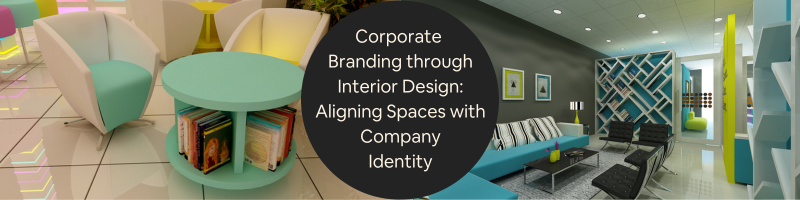
author avatar

MacKenzie Brown is the founder and CEO of Cad Crowd. With over 18 years of experience in launching and scaling platforms specializing in CAD services, product design, manufacturing, hardware, and software development, MacKenzie is a recognized authority in the engineering industry. Under his leadership, Cad Crowd serves esteemed clients like NASA, JPL, the U.S. Navy, and Fortune 500 companies, empowering innovators with access to high-quality design and engineering talent.

Connect with me: LinkedInXCad Crowd

Best 36 Platforms to Hire Freelance 3D Furniture Designers, 3D Modelers & CAD Experts


Ever stared at a chair and considered, “This could use a glow-up to not be so uncomfortable and bad-looking?” Or envisioned a couch so comfy it’d be your very own heaven-sent cloud? Magic happens in 3D furniture design, and just happens to be great. Here is the list of sites where you can outsource independent freelance 3D furniture designers, 3D modelers, and CAD specialists work on bringing your most fantastic ideas to life.

Cadcrowd logo

1. Cad Crowd

If you require the crème de la crème talent pool of 3D furniture CAD designers and CAD experts, Cad Crowd is your go-to organization. The company offers you a professionally vetted talent pool of 3D design experts with the capability to design some of the world-class furniture, be it chairs, tables, office furniture, kitchen furniture, or sofas.  Although all the free general freelance platforms offer numerous skills, Cad Crowd is especially interested in design and engineering skills to help you get the skills you need to handle high-tech work. Intellectual property right protection and project management are also offered, and therefore, it is an adequate business partner to get along with if you require quality, accuracy, and secure 3D design work.

Website: Cadcrowd.com

kwork logo

2. Kwork Professional Services

Kwork Professional Services provides you with a pool of freelancers with a customer base that offers you an alternative to buy services in bulk at a fixed cost, so it becomes convenient and cheaper. You can acquire 3D furniture modeling designers, CAD modelers, and many more professionals whose services they provide, so there is no extra charge. The platform is ideal for small and medium-sized projects where one wants to conduct work under pressure without prolonged negotiation. Despite not achieving mass-market brand popularity like heavy brands, simplicity makes it ideal for humble 3D furniture design work.

Website: Kwork.com

RELATED: Revit Modeling Benefits for Furniture Manufacturers When Hiring CAD Design Firms

Creativepoolcom logo

3. Creativepool

Creativepool is somewhere one would be pleased to be, amidst the world of creativity in general, and it has an energetic way of seeking 3D furniture designers and CAD experts. Creativepool is unlike most generic freelance websites, though, since it is more of an expert network with designers having portfolios presented and clients being able to find talent through browsing excellent profiles. It is best for clients seeking technical know-how and innovation. If you want to find wild furniture design ideas, design solutions, or a creative solution for 3D modeling, then Creativepool is your website. It is not as tech-biased a website as some websites are, but it is alright if you are okay with having to come up with over-the-top and out-of-the-box concepts.

Website: Creativepool.com

X Pro Cad

4. X-Pro CAD Consulting

X-Pro CAD Consulting is a business platform that offers clients CAD experts and 3D modelers. If your organization has such technical precision or so much trading expertise, the website indeed has consultants who will visit with perfection. Organizations that need precise modeling of furniture, technical design, or kitchen and office design at a mass scale will find it of special importance. It is not boilerplate overhiring too many freelancers but consulting, so don’t hunt for cheap or quick ones, but specialists who can do what they do. It won’t be cheap, but it is for the individual who needs expertise and precision rather than cheaper or quicker ones. It is its best virtue: reliability.

RELATED: X-procad.com

contracom logo

5. Contra

Contra is a new platform for freelancers that is meant to leave independent experts naked without adding an additional layer of middlemen. It is a design- and creative-oriented business, so is best to hire 3D furniture designers and CAD experts. Freelancers build excellent portfolios showing their range of ability, and the platform prefers long projects from customers. Contra also prefers commission-free payment, which delights freelancers and businesses. If simplicity, ease, and direct communication with freelance designers is your desire, then Contra is the path to follow. It has not yet grown to the size of its older siblings, but it is expanding very rapidly.

Website. Contra.com

kolabtree logo

6. Kolabtree

Kolabtree is a niche platform that should be mentioned for pairing customers directly with individual scientists, researchers, and technical specialists. Even though not on the freelancing side of innovation, it does have some CAD professionals and 3D design professionals among its ranks. It is ideal for technical accuracy with engineering or science requirements. If you are in need of furniture design with sensitive analysis, i.e., material analysis or ergonomics, Kolabtree would be the best to outsource. It is not best suited for creative furniture designing alone. It is best suited for research-aware, tech-aware design teams.

Website: Kolabtree.com

RELATED: How Freelance CAD Designers Create Custom Smart Furniture for Modern Living Spaces

Unicorn Factory

7. UnicornFactory

UnicornFactory is a site where you can find APIs for freelancers from your local marketplace region. If you need to find local flavor or the industry’s best 3D furniture renderers to work with, this site is one option. It is community-based, and that is what allows you to work together more closely. Freelancers create their high-quality profiles from expertise, and the buyers can window shop without any conflicting filters in between. UnicornFactory is more than being the most un-broadest in the world, but by all means, yes, it actually does have a human, community voice. For the individuals who do care about locality and would love having fabulous designers around, the site provides assurances. 

Website: Unicornfactory.nz

dezeen jobs logo

8. Dezeen Jobs

Dezeen Jobs is operated by Dezeen, which is a highly read architecture and design magazine, so it should be safe enough to use for designers. Thus, the website is being utilized by architects, product concept designers, and CAD technicians, thus here you can see where to hire best professional 3D furniture designers. If you are looking for the latest, futuristic furniture design to match the new fashion, then Dezee Jobs is the place to be. On this website, you will get most of the professionals who have the possibility of working on upscale projects and design studios, and hence, you will have the opportunity to see the best portfolios. It is preferable if you need style and imagination along with CAD technical ability. Best here find. 

Website: Dezeenjobs.com

CADhero

9. CADHero 

CADHero is meant for individuals who need CAD drafting professionals, and so, it is best for furniture model projects. The platform provides engineers, product designers, and 3D modelers. It prefers you to have your tables, chairs, or workspaces cut the way you want them. CADHero gets you people who can do technical drawing and complex geometry. It is technology-shaped in the form that it is best suited to carry out that sort of work where shape and precision are nothing but a requirement. It is not particularly portfolio-hipster skewed but is heavily fueled in CAD-based solution design. CADHero does have the special benefit of being repetitive. 

Website: Cadhero.com

yunojuno logo

10. YunoJuno 

YunoJuno is a free website that merely gathers the crème de la crème of the order of any other area of creativity. It is quality and ability differentiated, and thus it is extremely sought after in case you need experienced 3D furniture designers. Official recruiting processes are on the site, and therefore it is fairly simple for the businesses to organize payment, communication, and contracts. The designers usually understand the proper agencies or institutions, and therefore you are getting quality work. It might not be cheap but it is committed to delivering the provided expertise. For businesses needing reliable freelancers and skilled project management, YunoJuno offers a professional and secure platform. 

Website: Yunojuno.com

RELATED: How to Avoid 3D Furniture Modeling Blunders with 3D Furniture Modeling Services

FreeUp logo

11. FreeUp 

FreeUp is an agency that uses an active approach by pre-screening employees before hiring. This is to guarantee that whenever you need 3D furniture designers or CAD modelers, you are working with candidates whose skills have already been proven. The solution works because it saves time going through profiles in the form of profiles. It is for businesses that need efficiency and reliability. FreeUp will be most appropriate for small and medium-sized projects when you need talent in a few seconds, with no sacrifice in quality. Although short in size compared to titan sites, quality control is an option where one can opt to find quality design personnel to hire. 

Website: Freeup.net

Vollna

12. Vollna 

Vollna is a car website for web-based freelancing search aggregation of listings from many sources. It is a one-stop shop for clients to find freelancers and designers of any type, such as CAD and 3D modeling. Though it is seen as a forum for opportunities for freelancers, companies can also take advantage of it to find people to employ to work on their behalf. With the emergence of other big sites that are new but increasing in power through visibility, if one has to cast his net far and wide and make himself visible to freelancers in several markets, Vollna is an easily accessible source.

Website: Vollna.com

jooble logo

13. Jooble

Jooble is a job engine search that spiders websites with hundreds of thousands on the web. It is not a stationary freelance site, but it could help locate furniture modeling designers and CAD employees. Businesses post the job openings and Jooble indexes and displays them for a lot of individuals. If you need designers for long-term projects or serious freelancing work, the website will expose you to global or local talent pools. Visibility over curation is the website’s greatest strength. It is not professional-grade like Cad Crowd but should suffice if you only need exposure and visibility in general.

Website: Jooble.org

ZipRecruiter Logo

14. ZipRecruiter 

ZipRecruiter is well worth the price as a reputable job site employing smart matching technology to connect employers with quality job seekers. While mainly employed in the search for full-time work, it can also be employed in the search for freelance 3D furniture rendering designers. Its database posts jobs to a huge number of sites and puts you in front of the best prospects for publicity and to bring on your ideal designer. If you need quickness and quantity of applicants, ZipRecruiter is your solution. It is not so much for CAD or design position, though, so fortune will be at its whim. It is appropriate for businesses that need to consider an initial glance of a good number of candidates.

Website: Ziprecruiter.ie

RELATED: Custom Furniture Design – How Firms Use 3D Models and 3D Rendering Services

3Dcompare

15. 3DCompare.com

3DCompare.com is a niche job board for 3D design and 3D printing services, and hence appropriately situated for furniture design assignments. The clients may go to 3D modelers who offer print-ready prototypes and models. For testing design in case of new furniture, i.e., new chair or table models, this website provides space for testing as printable models. Its professional nature makes it suitable for appealing organizations that focus on real production instead of visualization. It will never possess the largest talent pool, but as a test or product solution, 3DCompare.com is an immediate lead solution to prototyping. 

Website: 3Dcompare.com

perfectlancer logo

16. Perfectlancer

Perfectlancer is a cheap and simple freelance site. Companies upload their projects and receive quotes immediately from freelancers who have experience in fields like 3D modeling and CAD drafting. It is of greatest benefit to users who would rather see small to medium-sized projects completed without being subjected to lengthy processes. Perfectlancer interior designers will generally walk you through their portfolio projects, so you have an idea of what to expect before paying them. Even though it has a smaller portfolio than Freelancer or LinkedIn’s, the site offers good returns for companies looking for low costs and simple project management. Cheap is what it is based upon. 

Website: Perfectlancer.com

RemoteOK logo

17. RemoteOK 

RemoteOK is a remote work platform all over the world and has freelancers and professionals all around. It is not a CAD- or design-site, though they do offer gigs you can do with 3D product designers remotely as freelancer. The enormous pool of global talent on the site is what is drawing you to it. Not if you must interview the candidates yourself and must reach out to numerous individuals who fit your specifications, but RemoteOK is among them. It isn’t professionally-moderated, so you’ll need to sort through candidates on your own. It does a fantastic job reaching each other all around the globe with no hassle, though. 

Website: Remoteok.com

Coroflot

18. Coroflot 

Coroflot is a high-design job site that relies on design skills and portfolios. Over a hundred years have gone by since it was a means of linking designers with projects, and yet in one way or another, it continues to acquire talent for furniture design, CAD modeling, and 3D visualization services. If you would like to view complete portfolios first before you decide, Coroflot is your best bet. The platform offers corporations not only exposure to freelancers but also to in-house designers, so additional work on their end is facilitated. It is consciously intended to operate where appearance equals technical sharpness. While not specialty-focused like Cad Crowd, Coroflot also divides the middle area between professional talent and creative skill. 

Website: Coroflot.com

RELATED: How to Select a 3D Furniture Rendering Services Company for Photorealistic Results

Ifyoucouldjobs

19. If You Could Jobs 

If You Could Jobs is a professional/site for art/design people, design, art, etc., with backgrounds. Heaven for any professional/freelancer who shall use their talent in visually oriented careers. As a resource for design furniture jobs, it is where to look for 3D CAD professionals who are technically good at modeling and creative. Agency design studio and platform-based, and therefore an agency of pro portfolios and lead designers, instead of the cut-to-the-hire, as postings appear as usual job postings. But if you require experienced 3D furniture designers with a proven track record, this website will deliver. 

Website: Ifyoucouldjobs.com

Google design jobs

20. Google Design Jobs 

Google Design Jobs is an aggregation job search of Google network job postings and Google-related sites. An open market in itself, but one where it would be exploited for the visionary design leaders who would take up freelance or contractual work as well. Since the Google brand is the crème de la crème of business with the crème de la crème quality experts, the adverts have to ride the crème de la crème in the instance of 3D modeling designers, CAD, and designing. 

The only negative is that it isn’t purely freelancing furniture design and so there will be time taken up to have the best professionals. To clients who are willing to look beyond other sources of talent, Google Design Jobs would be an excellent source in terms of the potential to find quality designers.

Website: Google.com/about/careers

authentic jobs logo

21. Authentic Jobs 

Authentic Jobs is a careers board for careers which fall under the technology and creative category. It has been a popular choice among designers, programmers, and artists who are ready to find freelance or contract work. Employers looking for new product design services can post and find quality individuals with CAD training. 

The site has an awesome reputation for being able to provide to high-quality professionals the high-quality that is expected, so your chance of acquiring experienced designers rather than greenies is great. Authentic Jobs is not CAD or furniture industry-related but may be utilized in creative-design work. Its professionalism and integrity on par with serious job consideration. 

Website: Authenticjobs.com

Krop

22. Krop

Krop is a job site and portfolio site as well, so it is easy to locate a designer’s work before reaching him or her. It is utilized by designers, furniture designers, and CAD modelers as a vehicle of showcasing how great they are. If you wish to view wonderful graphic portfolios that guarantee good design sense, Krop is yours to order. Its job posting feature enables you to post your jobs and negotiate your freelancers independently. Photo-based platform non-CAD- or 3D-based enables you to be able to hire product design and development designers who are furniture designing experts. Angel.co is most suitable to hire-on basis portfolio. 

Website: Krop.com

RELATED: 3D Furniture Modeling Services, Costs, Rates, and Pricing for Companies

AngelList logo

23. Angel.co

Angel.co, formerly known as Wellfound, reportedly caters to startups and entrepreneurial companies. Although most of the postings are full-time, there is also room for freelancers and contractors who are willing to engage on new projects. Whether your furniture design company requires new ideas, pilot projects, or startup-friendly spaces, Angel.co offers exposure to new CAD professionals. 

The site is best at attracting open-minded innovators who are ready to think outside the box and get them on board from the ground up, and hence it is perfect for single-piece furniture model projects. It is not the best site to be directly employed as a freelancer. Companies looking to hire off-the-wall creative solutions and fresh design expertise can quite likely find Angel.co extremely useful. 

Website: Angellist.com

Design Jobs Board

24. Design Jobs Board 

Design Jobs Board is a relatively specialized board for designers, and therefore its application in the hiring of 3D furniture designers does not quite sound so unusual. It is minimalist and sleek in design with clients listing jobs and freelancers showcasing their abilities. It is progressing towards product designers, CAD modelers, and graphic designers, thereby expanding the design world. If you want to onboard the creatives who have design as a vocation and not something that they can do whenever they are free, then this board does that. Not so much CAD-related but a sure place to recruit design-proficient employees with of a pro’s passion.

Website: Designjobsboard.com

Weworkremotely

 25. We Work Remotely 

A friendly remote job board website visited every day by thousands of remote professionals. Not particularly 3D model or CAD design focused, but useful nonetheless for companies who would rather employ furniture designers to undertake freelance work from the comfort of their own home. Strength in sweep and reputation for being able to attract serious applicants who will accept compromise on flexibility. If you have a job that is location-independent and you need a pool of talent of vast size, We Work Remotely is the one. You will need to screen the job applicants carefully to make sure they possess CAD skills. It is sweep capable but not specialty. 

Website: Weworkremotely.com

houzz-logo

26. Houzz Pro 

Houzz Pro is a web discussion forum specific to home remodeling and architecture experts and thus a proper tool for furniture design activity. They apply it in CAD model development and 3D architectural visualization of residences and workplaces. If sofas, dining tables, or custom-made tables are what you need, Houzz Pro brings to your notice people who will hear you as much about how things function as they will speak about how things appear. Customer messaging and project management are built into the system on the website so that it is easy to work together. It would be fitting for clients who need to search for complete design solutions in which functionality and beauty come together, as implemented in actual scenarios.

Website: Houzz.com

RELATED: Top 25 Best 3D Furniture Design, Rendering & CAD Modeling Services Companies in the US

toptal

27. Toptal 

Toptal is an elite community of 2D & 3D design freelancers with a highly selective mechanism in which only the crème de la crème applicants succeed. Therefore, it would be your first choice whenever you need the crème de la crème of CAD specialists or 3D furniture designers. Though Toptal is costly relative to the rest of the sites, you can be certain you are getting quality. Toptal designers are usually masters of the type of work and have quality portfolios with industry giants. Perfection is what you need for your project and you are okay with not having to think about it, then Toptal does. For cheap projects, but perfect for quality projects.

Website: Toptal.com

Behance.net-logo

28. Behance 

Behance is a website where designers display their portfolios, thus it is a good website to find creative personnel. In case you need 3D furniture designers at some point, you can look through the portfolios and view the projects prior to contacting them. All the users of Behance have 3D modeling and CAD in their portfolios, therefore it is an easy way of viewing past furniture design work, i.e., sofas, chairs, and tables. Behance isn’t so much a work platform as a discovery platform, therefore you might need to haggle on your behalf. When it comes to inspirational and referential use by creative product designers, Behance has no issues with exposure. 

Website: Behance.net

Freelancer

29. Freelancer 

Freelancer is the international freelance community providing a vast pool of talented professionals possessing specialist knowledge in hundreds of areas. Browse around among 3D furniture manufacturing services, and a thousand freelance experts, from novice to top CAD masterminds, are at your disposal. 

The site welcomes clients to post their projects and receive competitive quotes, which are then simply ranked by cost. But the talent pool itself must be widely vetted so that quality is delivered on a plate. Freelancer would be your best bet when you are well able to work through portfolios and proposals at leisure. Freelancer is a cost and size advantage, and thus would be a great choice for a small business or a low budget with inadequate funds for low-cost furniture design solutions. 

Website: Freelancer.com

indeedcom logo

30. Indeed 

Indeed is a global top career employment board with millions of industry jobs. Employed by full-time employees, freelancers, and contractors, such as CAD technicians and 3D furniture designers, are also included. Huge amount of talent will be available and posted to a huge talent pool of job seekers exposed to many talents. Global presence and site size are strengths, but not design-heavy or CAD-heavy. That is the opposite, since you would need to sift through applicants. Indeed does have arrangements for potential recruitment by such companies that would want their recruitment to be available to all and will weed out applicants themselves. 

Website: Indeed.com

RELATED: How 3D Rendering Helps the Marketing of Furniture Companies

LinkedIn logo

31. LinkedIn 

LinkedIn is still among the world’s leading professional networks and, therefore, one of the leading recruitment sites for 3D furniture designers and CAD professionals. You browse through listings, filter by skill, and receive referrals from past customers or businesses. Freelance or contract work is typically offered by some designers on what is not even so much a freelancer site but more of an expert and professional collaboration with less level of engagement than employing someone as an employee. There is also space on LinkedIn where you can post a job and network with you, with options for other connections. Just what you need if you require professionals with experience. 

Website: Linkedin.com

Guru logo

32. Guru 

Guru is a site where companies can advertise so that they can access international talent in the role of CAD modelers and 3D furniture designers. Clients can post jobs and view complete bids from freelancers so that they can shop and negotiate talent. Guru also has a workroom feature with messaging and milestones. Guru is big and not flashy like Freelancer or Upwork but cheap and dependable. If you need experienced design professionals at lower rates on the platform, Guru is a suitable provider of furniture design services. 

Website: Guru.com

peopleperhour logo

33. PeoplePerHour 

PeoplePerHour is a web-based freelance platform where professionals are allocated to clients, but it is not the kind of fitting work environment to utilize as a 3D furniture designer. While it is usually the case that the website is populated with CAD professionals and 3D product modeling designers, the website is often faulted for offering inconsistent quality and expensive services. Bidding also tends to take longer, with numerous rounds of competing priorities asked by the client. There are more professional and efficient furniture modeling websites. PeoplePerHour is capable of handling small tasks, but not big and crucial 3D furniture modeling.

Website: Peopleperhour.com

Truelancer logo

34. Truelancer 

Truelancer is cheap but ineffective in engaging professional CAD freelancers or professional furniture designers on a regular basis. Most of the freelancers on the website provide lower prices and are adaptable to the extent of the quality of technical engineering services. It is fine for extremely small projects or outcast projects, but not for those businesses that need complex furniture models like office chairs with ergonomic layouts, office layouts, or kitchen cabinets. Clients got outcomes from good to bad and are not ideal for design purposes. Budge work can be posted on Truelancer, but premium work cannot. 

Website: Truelancer.com

RELATED: Top Photorealistic Furniture Rendering Techniques for Interior Design Companies

Upwork

35. Upwork 

Upwork is one of the world’s freelance colossus marketplaces, but for the clients who don’t need super high-end 3D furniture designers. Although the platform has thousands of freelancers available, there are simply too many to sift through in the hope of finding the best of the best. Price bidding causes price wars at the expense of quality. Although there are enough talented CAD professionals on Upwork, they can be found with lots of trouble, and a lot of effort and time needs to be spent. For technical accuracy and creativity-driven design for furniture, specialized websites like Cad Crowd would be much better. Upwork gives quantity, never quality design. 

Website: Upwork.com

Fiverr

36. Fiverr 

Fiverr is famous for fast, affordable freelancer jobs, but never tech precision-based furniture design. Fiverr is willing to slack on quality for speed and price on CAD modeling and 3D visualization designers. Though if it is, Fiverr’s gimmick makes money by sacrificing good, serious work for one-price work. Delving design is not a sketch; it is all about precision, prethinking, and perhaps consultancy. If sofas, tables, chairs, or kitchen designs are the project of the day, Fiverr is a risk too big. Firms requiring professional outputs are forced to seek elsewhere to more specialized and higher-reputation platforms. 

Website: Fiverr.com

How Cad Crowd can help

Your talented 3D furniture designer or CAD expert translates your ideas from the drawing board and into stunning 3D renderings. Why good enough when best is yours for the taking? Step on over to Cad Crowd today and connect with independent 3D furniture designers, 3D modelers, and CAD specialists who can help turn your furniture fantasies into reality in designs you can literally sit in. Contact us for a free quote.

author avatar

MacKenzie Brown is the founder and CEO of Cad Crowd. With over 18 years of experience in launching and scaling platforms specializing in CAD services, product design, manufacturing, hardware, and software development, MacKenzie is a recognized authority in the engineering industry. Under his leadership, Cad Crowd serves esteemed clients like NASA, JPL, the U.S. Navy, and Fortune 500 companies, empowering innovators with access to high-quality design and engineering talent.

Connect with me: LinkedInXCad Crowd