3D Rendering for Product Packaging Design: The Full Guide for Consumer Product Companies


Packaging is the first and easiest way to differentiate your product from all others displayed on store shelves. Want an easy example? Bottled water. There’s no way you can tell if the water contained in any particular bottle is any different from the next, unless you read the labels and do a taste comparison. Even by then, you probably won’t notice if one is just tap water put into a clear bottle or vapor distilled and kept in a slightly fancier container. Some people swear they can tell which is which without looking at the brands, but we’re never sure who these people are. Worse still is the pH level. It turns out that pH (apparently is short for Potential Hydrogen, who knew?) indicates the acidity. The lower the number, the higher the acidity. But have you seriously given it a thought before picking up a bottle from a convenience store? Unlikely. Chances are, you choose one with a greater number and feel proud of yourself as you walk to the cashier.

That, in a nutshell, is how important packaging design services are. The same thing applies to shampoo, soap, liquid detergent, foods and beverages, cosmetics, wristwatches, smartphones, pencils, and just about every other consumer product in the market. People choose a product because the packaging makes them feel confident about their purchase. Although other considerations, such as cost, brand loyalty, and whether their favorite movie star endorses it, also influence the buying decision, packaging plays a significant role. Some products sell better just because companies slap a photo of a K-pop idol on the box.

On a more serious note, packaging is almost just as important as the product it contains. Businesses have recognized this importance for a long time and invest substantial resources in the design and development of packaging as part of their marketing strategy. Along the way, 3D CAD modeling and photorealistic rendering software were introduced to streamline the design process. As technologies advance and the market becomes more competitive, it turns out that effective packaging visualization is a complex undertaking.

As more people shop online, companies are in a race to develop the most impressive, convincing, and persuasive product packaging renderings to attract these customers. Which makes perfect sense, because when people see products on a smartphone or laptop screen, a photorealistic visualization becomes a powerful tool for turning lookers into actual buyers.

But creating an accurate, high-fidelity CGI for product packaging isn’t a skill anybody can learn and master overnight. It takes an experienced CAD professional or perhaps a team of digital artists to develop the design, transform it into a 3D model, and render it into photorealistic visuals. Cad Crowd, a freelancing platform specializing in product development, helps you connect with thousands of design professionals and render artists who offer a broad range of CGI services at affordable rates. All the talents on the platform have been pre-vetted to ensure you’ll only collaborate with the most talented and qualified freelancers from around the world.

What to know about packaging rendering

First things first, rendering is different from designing, but the two can be parts of the same process. Let’s put it this way: not every design process ends up with a rendering, but every rendering workflow definitely involves design and 3D modeling services. Perhaps an example can clear things up a bit better:

  • Say you plan to sell a homemade car air freshener product in a blister card packaging during the upcoming county fair. You ask a graphic designer friend to create an illustration for the otherwise blank card. Because, for some reason, you give this friend complete freedom of approach, you end up with a bold image of some sort of Batmobile on the card. The designer sends you the printable file, and the job is done. No rendering required.
  • Your next-door neighbor has the same idea, only better. Instead of limiting sales to fairgoers, the plan involves listing the product on an online marketplace. To make the product look better on screen, this neighbor of yours has the packaging rendered and optimized for digital screens by the same graphic designer. The project is covered by an NDA, so even if the designer is your friend, you know nothing about it. The workflow involves not only designing the blister pack but also converting the design into a 3D model and rendering it. In this case, the final deliverables include a fully rendered image file and the 3D model for future use.

To compete in the online marketplace, you decide to use photographs (instead of rendering) to display the air freshener product. It’s from this instance that you realize that a rendering can look so much better and more creative than photos when used for a product display on the web. Oh, and the Batmobile appears a lot more realistic than yours.

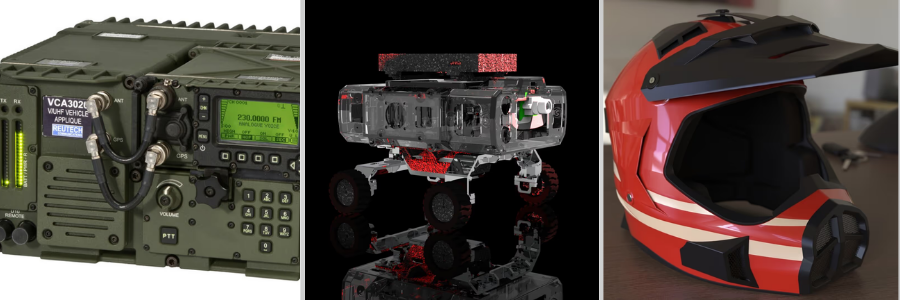
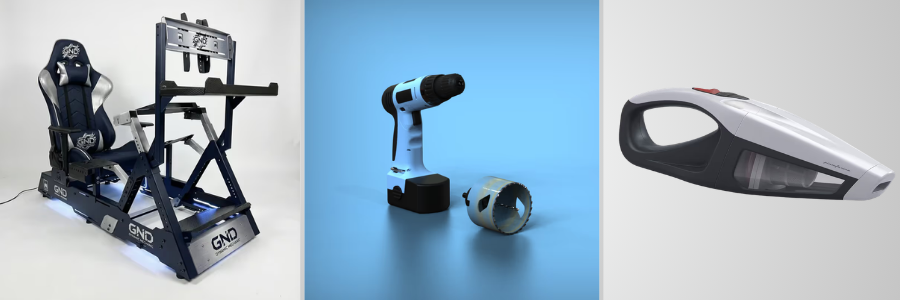
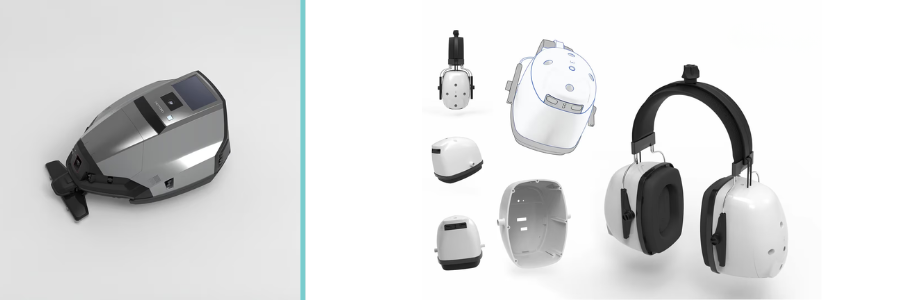
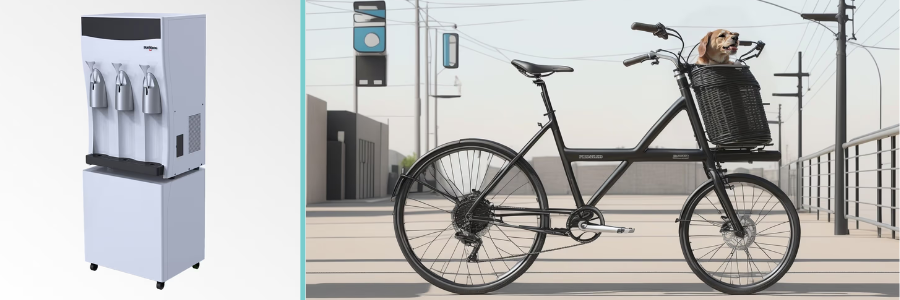
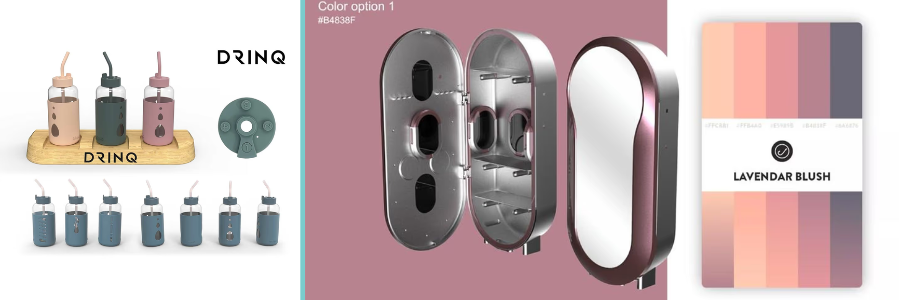
Packaging design of a donut box and aratisinal coffee box by Cad Crowd freelance Cad Designers

RELATED: Top 101 sites for freelance engineering jobs, mechanical design projects, & remote work

How a rendering happens

The design part always comes first. It may involve brainstorming or ideation, drawing sketches, or consulting references from existing product packaging. What comes next is the real deal: powering up the computer and tinkering with the design in a 3D CAD software. Modeling accounts for the bulk of the task, as the result can determine whether you end up with a poorly executed rendering or a high-quality one. The more detailed and accurate the models are, the better the rendering will be for the product design firm.

Unprocessed 3D models are plain, sometimes colorless, and have less obvious boundaries between one another. Every object needs textures, material properties, color, and surface patterns to define its characteristics. The models must also be positioned in specific arrangements in the scene, just as a professional photographer determines the right composition. When the grayscale scene is ready, the lighting setup and shadows are configured in a rendering software to give the scene a photorealistic look.

At this point, the 3D models (and, by extension, the entire scene) are converted into an image file. Some post-processing, such as color adjustment or other final touch-ups, might be necessary to improve the realism. If the resulting image needs corrections, the render artist must return to the 3D models to make the changes and repeat the process. Everything about it sounds very complicated indeed, but the rendering process gives you an advantage that no photograph can: the 3D models can be reused as many times as you need and redone with different visual properties. You can give them different colors and labels, place them in a new scene, apply animations, etc. All can be done on a computer screen; no photographs or props are needed, so it saves time and money.

So many rendering types to choose from

Well, there are only a few types mentioned here, which should be more than enough to offer the variety you need for every product packaging.

At the same time, the most useful and useless packaging rendering of all. Also, its usefulness comes only from the fact that it’s likely low-fidelity and therefore quick to generate. Packaging concept design services cannot care less about high resolution, texture detail, lighting accuracy, and everything else that makes a packaging visualization good. The most important thing is that you can produce many of them in a time-efficient manner, so you can check if any particular design works well to your liking. Low-fidelity rendering lets you experiment with shapes, colors, composition, typography, artwork placement, and other elements without spending too much time processing the work. It’s also useless, since you should never put conceptual renderings on the product page. Think of it as glorified rough sketches. It looks good as a concept, but terrible for actual use.

Packaging concept designs by Cad Crowd product design experts

RELATED: What are proven product design principles when working with companies & freelancers?

If a conceptual rendering is merely experimental and meant to test ideas, a photorealistic rendering is where things get serious. It’s the continuation of a concept, or a refined version of the best concept you chose earlier. But just because the concept is good and you have an image rendered, it doesn’t always mean the result will be photorealistic. Product packaging rendering, or any kind of photorealistic visualization, is a job best left to a professional. For a rendering to achieve photorealism, almost every visual aspect has to be correct. Visual aspects aren’t limited to geometry, dimension, and color, but also include material textures and lighting. The CGI is so precise that it does represent what the human eye can see. Everything has to be as realistic as a photograph, just like what the term says. Photorealistic rendering can be static or animated, with animated rendering among the most complex to generate.

Although not to the point where you can interact with the rendering like in a video game, an interactive visualization lets you explore the packaging design a bit more closely. Take, for example, the rendering of the car air freshener. When presented in an interactive format, there is usually a slider to zoom in, rotate, flip, or move the image around on the screen. A static rendering might show the Batmobile on the card, with a small label in Comic Sans that reads “It Smells Good” underneath. By the way, it remains unclear if the label refers to the Batmobile or the air freshener itself. But when presented in an interactive format, you can flip the whole image and find another label on the back that admits the product is not made in Gotham. You can, of course, make two static renderings to showcase both the front and back sides of the packaging, but the interactive type is just a lot more fun and satisfying.

Also known as white background rendering, the packaging in a silo visualization is presented as a stand-alone object. There’s nothing else to distract your attention from it, allowing you to see every detail in all its glory. At the same time, this prevents the CGI render expert from making any excuses for putting out poorly made CGI. This is not to say that mistakes are tolerable when the scene has multiple objects; it’s just that you may have a harder time noticing that some portions of the shadows are either too bright or overly dark, unless, of course, you’re an eagle-eyed observer yourself.

The vast majority of lifestyle rendering is meant for product visualization, not the packaging. That said, lifestyle rendering makes sense if you want to display the product still inside the container, like most things are. Which brings us back to the previously used example of bottled water. There’s just no workaround. You’re selling water, and the only way to showcase everything that’s good about the product is when it’s still in the bottle. And believe it or not, bottled water isn’t the only product that fits this category. A lot of collectible toys and action figures are sold on online marketplaces with the box still unsealed, and so are perfumes, liquid supplements, etc. In lifestyle rendering, the product is displayed with complementary objects in the scene. For example, bottled water might be displayed alongside a lunchbox, fruits, and in some cases, a mountain in the background, although everyone knows the water is processed in a factory. 

Every type of rendering can be formatted as static or animated. As the name suggests, static rendering is still imagery, like a photograph. You can’t interact with the image either, except for probably zooming in and out. An animated rendering, on the other hand, is formatted like a video and can use every visual effect imaginable, from a plain and simple rotation played in a loop to an outrageous Michael Bay-style. Advanced 3D modeling and rendering software enables companies to present their products and packaging in the most creative and imaginative ways while maintaining good accuracy. They can simulate physical details, add movements, create unique characters, and be playful with packaging design. The only limit is the imagination. Maybe the bottled water can burst out of the cap all of a sudden, or the Batmobile produces the rumbling sound of a muscle car in an animated rendering. 

RELATED: The importance of iteration in product development & working with product design companies

A prototype in the virtual world

With so many people purchasing products online, rendering has become an increasingly popular alternative to product photography. Rendering doesn’t need physical objects, and is much more flexible in case you want to use animation or some level of interactivity.

But the biggest advantage of 3D rendering isn’t actually about the finished visualization itself, but the design process as a digital prototype. Back in the old days, the term “prototype” was almost exclusively used to describe a physical product yet to be manufactured by a manufacturing design firm, let alone launched. Now, thanks to 3D CAD technology, a prototype can be entirely virtual with no physical form.

Everybody and everything has a digital twin these days. In fact, some people seem to enjoy their lives in the virtual world more than in the real one. It turns out people and their avatars aren’t the only fans of the Matrix. Product packaging designs, too, are very pleased with the Tron environment, for good reasons.

Conventional prototyping is time-consuming because it requires physical samples for each design iteration. While samples for product packaging aren’t probably the most expensive things in the world, the time spent on creating each and every version can still overwhelm the design process. A packaging sample can be made from readily available materials, such as cardboard or plywood. A handy person might be able to fashion the shape of a bottle from those materials, too. It’s not going to look pretty, but then again, it doesn’t have to be. A physical prototype is meant to facilitate design reviews through an iterative process. But as you improve the design with each revision, you’ll need to make a production-ready prototype, and this is where things can get expensive.

Say you’re making decorative tin packaging for tea or tobacco products. Instead of the usual printed graphics, you choose laser-etched textures to give it a premium look and feel. It’s not likely that you’re going to produce an accurate sample using papers or bamboo. A production-ready prototype should be nearly identical to the final version (in terms of materials, dimensions, textures, features, and functionality). You need to review and test the packaging design before consumers even get to see it on store shelves. Only when you’re sure the packaging looks and functions exactly as intended can you afford to send it to the manufacturing line. 

With 3D modeling and rendering, it’s possible to design and build virtual prototypes without spending a dime on purchasing materials and hiring a CNC machinist for consumer product companies. All prototype versions, including the production-ready one, may exist as digital files on your laptop. Making design changes is no longer time-intensive, and the results are visible in an instant. You get to try countless graphic options for the tin, animate the model to see how the hinges work, fill it with water to test for leaks in simulation, and so forth. You can do all this on a screen to keep things efficient.

As a friendly reminder, only use high-quality 3D models. Nothing makes a packaging visualization look gloomier than low-poly models suffering from a terrible lack of detail. These low-poly models are cheap, sometimes even free, but certainly not cheerful. They should be reserved solely for conceptual rendering. On the other end of the spectrum, high-quality 3D models can be costly, should you decide to purchase them. However, there might be limitations on the models you can buy, especially if you’re making completely custom packaging. The only practical solution here is to create the models from scratch. It’s not the most time-efficient, but in most cases, building from scratch is the only way to get the job done. 

3D rendering provides a realistic and, more importantly, view of the packaging design long before production begins. The accuracy isn’t limited to geometry and dimensions, but also to textures and material finishes. If there are illustrations, brandings, logos, instructions, or labels of any kind, the render engine can process those as well. You can scrutinize the design as far as you want, down to the tiniest detail, at zero cost, except for the render artist’s hourly rate, for sure. Each time you discover room for improvement, making revisions is far quicker and cheaper than doing so on a physical prototype.

If you have to work with stakeholders who are as invested in the project, you can store virtual prototypes (including all their versions and modifications) in a centralized database for easy, simultaneous access. Everybody can see the latest prototype and its revision history for more streamlined, informed design decision-making.

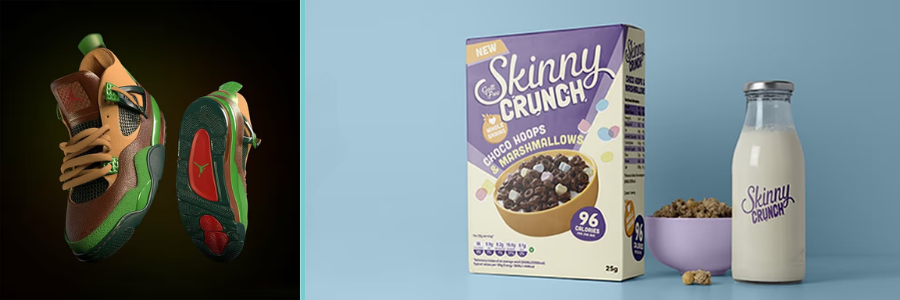
Packaging design examples by Cad Crowd design freelance experts

RELATED: How innovative design techniques can supercharge your new product concept

Layers of packaging

Selling one unit of bottled water to a cyclist certainly needs a different approach than supplying dozens of boxes of the product for a cycling race. A cyclist probably notices that your bottled water has the exact pH level recommended by a random person on the Internet, and boys, it, but the logistics manager of a cycling race takes a deeper look and wonders if you have a nice, colorful, thick packaging box to ensure safety during transportation. Depending on the product and your buyers, you may need to provide multiple layers of packaging, especially for product engineering services.

Primary: the first layer of packaging of a product. For bottled water, the primary packaging is the bottle itself. Therefore, your primary concern is every individual buyer in every convenience store. Just a suggestion, perhaps it’s best not to include the blue color as it seems to have been overused to exhaustion by other companies. People want a refreshing design as much as they crave hydration. The use of recyclable material is always optional.

Secondary: This is the box we discussed earlier. It’s supposed to provide an extra layer of protection on top of the primary layer. Sometimes you can use the extra space on the box to display additional product information. The design of a secondary layer should primarily target bulk buyers. Secondary packaging often needs to be stackable and keep the individual products organized.

Tertiary: specifically designed for manufacturers (when the products are still fresh out of the production line) and warehouses. The main function is to protect the product during shipping and ensure easy handling. Appearance isn’t that important for this layer. So long as it’s rigid enough to withstand bumps and impacts, it’s good to go.

When you do need multiple layers of packaging for a product, it goes without saying that you must design them well (and preferably with a 3D modeling design expert), not only to impress passersby who glance at your billboard ad, but also to enhance the product’s safety and shelf life.

Takeaway

Packaging is, first and foremost, a container to protect the product inside. Now that we’ve discovered easy, affordable, and industrial ways to make protective packaging from a broad range of materials, the focus has expanded into the aesthetic territory as well. Thanks to modern manufacturing technology, companies can maintain and enhance the functionality of product packaging while deepening its visual appeal. For quite a while now, 3D rendering has been at the forefront of the new movement. Specialized visualization software enables companies to design effective product packaging almost entirely on a computer screen through virtual prototyping. They get to simulate physical details, experiment with materials, try an unlimited variety of designs, and analyze everything without the need for physical samples. Request a quote today.
author avatar

MacKenzie Brown is the founder and CEO of Cad Crowd. With over 18 years of experience in launching and scaling platforms specializing in CAD services, product design, manufacturing, hardware, and software development, MacKenzie is a recognized authority in the engineering industry. Under his leadership, Cad Crowd serves esteemed clients like NASA, JPL, the U.S. Navy, and Fortune 500 companies, empowering innovators with access to high-quality design and engineering talent.

Connect with me: LinkedInXCad Crowd

Corporate Branding & Interior Design: Aligning Spaces with Company Identity for Firms


Go inside the headquarters of a Silicon Valley tech startup, and you may find yourself greeted with bean bags, writable walls, sparse decor, and splashes of color. Go inside a high-end New York City law firm, and you’ll probably encounter leather couches, polished marble countertops, and glass offices hidden behind closed doors.

These environments aren’t merely a matter of style – they’re conscious expressions of personality. For contemporary companies, interior design services from premier firms at Cad Crowd have become an effective corporate branding language, communicating discrete yet powerful messages to customers, staff, and stakeholders alike.

Shaping perception is the essence of branding. Branding, however, is not just limited to sites, logos, and business cards. It extends to the tangible space in which a company operates. Whether your business is design-driven, bank-driven, or healthcare-driven, your office is a narrative that speaks volumes about you. And how that story is told – and how well that story aligns with your purpose, values, and culture – is either going to make your brand stronger or sicker.

Why interior design matters for branding

Here’s a truth bomb: people make judgments within seconds of entering a space. From the waiting area to the break room, each square foot says something about your company. Interior design gets to shape that message. It’s not aesthetic – it’s about identity.

Visual signals such as colors, textures, and composition can also serve to reinforce brand values. A firm with a sustainability bent may choose reclaimed wood, lush greenery, and natural light to convey an eco-friendly attitude. A cybersecurity company may turn to darker colors and tech-heavy finishes to imply control, security, and innovation.

And it’s not merely about how customers perceive you. Employees are internal stakeholders who come into contact with your brand every day. A well-thought-out office can create loyalty, increase morale, and enhance a sense of belonging. When individuals feel that their work environment resonates with the company’s mission, they will become more involved. 3D interior rendering services and other similar tasks are becoming paramount.

RELATED: CAD services: Transforming hotel furniture designs for hospitality companies

3D interior rendering for company store brandings

Key elements that reflect corporate identity

So, what can you adjust, create, or redo in your interior design to represent your brand? Let’s break it down:

Color palette and materials

Colors are not random – they trigger feelings and associations. Blue, for instance, is best for trust, serenity, and professionalism, which explains why it is the go-to color for finance and tech businesses. Red conveys energy and exigency, and it is best suited for creative agencies and startups. Earth tones enhance wellness and stability and are best suited for sustainability or lifestyle-oriented companies.

Materials have a story to tell as well, and glass conveys transparency. Steel and metal accents emit a sleek, no-frills feel. Wood can represent warmth, genuineness, or tradition. The key is to make decisions in harmony with your brand values, which architectural design firms can help you establish.

Layout and flow

A collaboration-focused company will have an entirely different design than one that is privacy- and concentration-focused. Open office spaces with shared tables, comfortable lounge spaces, and flexible workstations shout “agile and innovative.” Firms focused on confidentiality – like law firms or accounting firms – may use single offices, soundproof rooms, and controlled access zones.

How people flow through a space should reflect how your company operates.

Branding integration

From logo installations to wall murals, the possibilities for quietly or dramatically integrating your branding are endless. A reception area with good design could include a sculptural representation of your logo, your brand colors reflected in the furniture, or a digital display of your portfolio.

Branding isn’t about covering everything in your name – it’s about carefully designing touchpoints that support your story without overloading the space.

Furniture and fixtures

What type of chairs do your customers sit on? Are your conference tables industrial steel or solid walnut? Are your lighting fixtures sculptural or concealed? Each piece of furniture is a chance to reinforce the tone of your brand. You can rely on furniture design services to create bespoke pieces for your space.

Sleek, Scandinavian-style furniture could proclaim, “We’re efficient and design-savvy.” Bold, retro furniture could express creativity and willingness to take risks. Ergonomic arrangements convey to employees that you are invested in their health. These decisions are more than comfort – they’re communication tools.

Environmental graphics and art

Artwork, quotes, and custom murals can share your company’s story, values, and vision. Perhaps you wish to include images that tell your journey, highlight client success stories, or emphasize community impact.

Environmental graphics – such as directionals, typography, and info walls – can transform drab corridors into immersive brand experiences.

RELATED: Signs you need to outsource 3D rendering services to companies & 3D modeling experts

Collaborating with architects and designers: the strategic alliance

When branding in interior design, the alliance that you build with architects and designers becomes key. You’re not merely employing somebody to get an area to be aesthetically pleasing; you’re engaging an army to picture your company’s purpose.

And so, how do you bring on the appropriate partner?

Step 1: Know your why

Before you contact an architectural design expert or design firm, make it clear what your business is all about. What are your core values? What type of experience do you want to deliver to clients and employees? How are you unique compared to others?

Having a clear identity assists designers in moving from intangible concepts into tangible environments. It also conserves time and avoids expensive misalignments later.

Step 2: Look beyond portfolios

An elegant portfolio is fine – but don’t prioritize looks over substance. Question companies about their experience with integrating branding into previous projects. Do they have any idea how the physical space shapes culture? Are they able to articulate their design rationale?

Top firms ask smart questions and look at your brand as a whole. Find out who can close the gap between creative vision and business objectives.

Step 3: Ask about collaboration

Interior design is an iterative process. You need an expert interior designer who listens, iterates, and evolves. Seek out firms that keep you informed about the most critical decisions, ask for feedback, and offer visualization tools (such as 3D models or mood boards) to give you a sneak peek at how your brand will breathe life into the space.

A solid firm won’t only share beautiful pictures – they’ll tell you how the design enhances productivity, mood, and brand fit.

RELATED: Architectural detailing services: Top 31 sites to hire freelance architects & drafters

Branding pitfalls to avoid

As strong as interior design can be, it’s simple to get it wrong. Here are some of the most common mistakes to avoid:

Designing for trends, not identity

Trends have a shelf life. What’s trendy today may look dated in three years. Focus on elements that are timeless and speak to who you are, not what’s trendy.

For example, biophilic design (taking nature inside) is popular, but it only works if your brand emphasizes wellness, sustainability, or being outdoors. If not for you, forcing it on your office may come across as insincere.

Overbranding the space

Too many firms overdo logos, slogans, and color explosions of all things branded. It’s more like a theme park than an office. Subtlety is the name of the game – your brand is experienced, not yelled.

Plan to create “branded moments” in high-impact zones – such as the reception area, meeting rooms, or common spaces – while still leaving breathing space elsewhere. You can do this through lighting design services and other similar design options.

Forgetting employee experience

A gorgeously branded office that’s painful to work in is missing the point. The well-being of employees needs to be at the forefront of any design plan. Good lighting, acoustic balance, ergonomic furniture, and spatial diversity (for concentration and collaboration) are all important.

An office might be Instagram-pretty but hell to live in. Function must be balanced with form.

3D interior design with storefronts for company branding

RELATED: How to hire the best freelance CAD designers: a services guide for companies

Changing spaces: branding in a hybrid work age

As hybrid and remote work arrangements take hold, the office’s role is changing. Rather than being the go-to workspace, offices are becoming brand destinations – where culture is amplified, collaboration occurs, and identity is lived in the real world.

Each trip to the office now becomes a brand experience. That requires design to be more deliberate than ever. Consider lounge-like collaboration areas, branded event areas, and interactive media walls that embody your brand narrative in motion.

Some companies are even designing to be “Instagrammable” – spaces people and customers wish to photograph and share, broadening brand visibility naturally through social media. You can use 3D architectural visualization services to help you visualize and plan around the space without having to break the bank trying to remodel an actual physical space.

RELATED: Using 3D visualization services to communicate design intent to clients and firms

The ROI of branded interior design

Branding in interior design is not merely about looks – its impact is quantifiable.

  • Better client impression: An office that conveys your values instills confidence and credibility.
  • Improved employee motivation: Individuals feel proud to come to work in an area that reflects their purpose.
  • Attracting talent: Prospective employees tend to assess your office space during the decision-making process.
  • Increased efficiency: Efficiently designed spaces minimize friction, facilitate collaboration, and aid in productivity.

In response, branded interiors aren’t merely for aesthetics. They’re a strategic asset.

Wrapping up

Interior design isn’t an afterthought anymore – it’s a branding tool, a culture-shaper, and a business strategy. When companies design on purpose, they don’t merely make. They make spaces that inspire, connect, and reflect who they are.

Whether you’re redesigning your headquarters, moving into a new space, or giving your office a refresh, remember this: every chair, color, light fixture, and corridor is an opportunity to reinforce your story. Don’t let it go to waste.

And when unsure, collaborate with the appropriate experts whom you can look up on the Cad Crowd platform – those who get it not just for what appears nice, but for what feels right for your brand. Because when identity and space get along, magic occurs. Get a quote today!

author avatar

MacKenzie Brown is the founder and CEO of Cad Crowd. With over 18 years of experience in launching and scaling platforms specializing in CAD services, product design, manufacturing, hardware, and software development, MacKenzie is a recognized authority in the engineering industry. Under his leadership, Cad Crowd serves esteemed clients like NASA, JPL, the U.S. Navy, and Fortune 500 companies, empowering innovators with access to high-quality design and engineering talent.

Connect with me: LinkedInXCad Crowd

Understanding Real-time Rendering, How it Works, and Benefits for Architectural Companies


Architectural design experts are often big on show. In fact, there is no better way to impress a client with a fluid walk-through animation of what a future lobby might look like, a rendering of what a pool deck might look like with sparkling lights, and a penthouse that might not even exist at least two years from now, from a physical standpoint. 

Real-time rendering has now become the party trick that the architecture industry wants, which is poised to spark a full-blown revolution within the entire design process that is now poised to become faster, smarter, and a whole lot of fun. The best part is that architecture practices do not necessarily need a Hollywood-style staff to make this party trick a success. This can be easily accomplished with a whole lot of pizzazz with a freelancing rendering artist who is most aptly procured from the best freelance platform, Cad Crowd.

Real-time rendering is a phrase that means infinitely more than a marketing phrase for a solution—it means a real paradigm shift, full-blown, when it comes to the use and creation of the visualizations themselves. If people know people who know people with known clients who have fallen in love with a design solution because finally they were able to figure out what blueprints were trying to say, then they’ll know exactly what I am talking about. 

Designers speak a language that is composed of drawings and computer graphics, which can be translated back to clients, but the client’s language is based on their feelings. And that is the best way to describe what that language is: “feel,” because when that client can walk around in a space as if he already was inside, design is a whole lot clearer, easier, and a heck of a lot more fun.

The best is yet to come, but it is high time that we spoke of what real-time rendering is, has been doing, and has been receiving so readily in architecture practices and 3D rendering services, because it is a renewed friend who went to design school, with skill sets that are mind-boggling, to say the least.


🚀 Table of contents


What real-time rendering truly means

Real-time rendering, of course, is a short way of saying ‘making an image, a misguided expert might continue, because from a purely technical standpoint, that is exactly what it is; but what is not supposed to come before one’s mind, however, is “the magic” that occurs behind the scenes, which is that traditionally, rendering has taken a long time, bogged-down computers, and design teams anxiously pacing around the office like actors waiting for their reviews,”

That is, one can walk around a virtual space, orbit a model, switch textures and lighting, with what is inside the borders of the picture changing in real-time. This is what one is doing, no different than when playing a high-tech video game, when buying a luxury condo unit or a richly landscaped public space, but not when buying a dragon or a starship.

High responsiveness is achieved with the help of intelligent algorithms as well as highly optimized graphics. It is unlike most common solutions, which are used in rendering, that most effects are calculated on almost every single detail with a high degree of cinematic detail, but aim to be faster with the use of solutions that are capable of rendering a picture realistically without consuming the entire eight hours of power. But with the shortcut of going faster, most solutions are highly capable of providing a look that is real.

3D rendering through real time technology by Cad Crowd freelance design experts

RELATED: How 3D artists elicit emotions with stunning architectural rendering & visualization services

The real reason real-time rendering runs so smoothly

Real-time rendering is very much linked with the power that has been built with the development of modern graphics processors. This is highly prized. After all, it is the highest form of innovation in silicon because it is linked with power in the sense that it has to do with a lot of detail work at the same time, from a graphic point of view, for HDR rendering design firms. The elements of lights, shadows, reflections, and textures that are moving inside the scene are efficiently handled by the computer so that the user is not distracted during their journey.

Despite all the factors that have been cited earlier, on this particular topic, it is not only a matter of power when it comes to hardware systems. Real-time rendering also uses tricks that make the process less intensive, taking into consideration factors such as fewer computations when it comes to light, pre-calculated shadows, and textures that are perfectly manipulated. This is considered a seamless process where the final environment that is used in rendering blends with a real environment.

Which is to say, from the perspective of the architect, what you’re left with is this incredible computer graphic that is “listening” to your commands the whole time. You’re not sitting there blowing steam for three hours while, for example, the computer is “sweating” the problem when, say, the client wants to see what it might look like with a different treatment of the ceiling, perhaps a different floor finish.

Real-time techniques vs. conventional techniques of visualization

Next came a point when architecture groups would spend nights rendering. The computers ran a hundred miles an hour, bees-at-work style, to crunch the numbers. Then came the morning, and with it two different feelings came into play: the feeling of relief that the rendering is exactly as it should be, but the despair that emerges when, within that rendering, a problem is identified, which indicates that another night with the computer is required.

Real-time rendering: In short, real-time rendering turns all of that on its head. The architectural design companies are not sitting around with bated breath, waiting for that great moment when things are revealed to them. This is a never-ending stream of views. No matter what happens, real-time rendering reflects the aftermath. Blunders are corrected before they become a matter of life and death.

The traditional process still has an existing need for rendering. In fact, it is considered the most demanded process when a photorealistic rendering is required from a cinematic point of view, such as when participating in the end marketing prints. Real-time rendering is considered the most innovative technique that has been introduced in terms of concept development, image rendering for clients, and reviews. The ideal application of real-time rendering is when speed is considered as a fundamental component, but a photorealistic detail is considered as a secondary component. This is because several practices are considered to have been applying real-time rendering efficiently in design development with the detail obtained from the still rendering process.

Real-time rendering is one of the most desired technologies used by architecture firms

The corporations that fall under the architecture practice use real-time rendering because it is a current trend. It is, therefore, a fact that real-time rendering is used by these corporations because it is a solution to a myriad of age-old problems. For instance, it provides clarity on the issue of communication. Every architecture student, as well as a professional, has been on the receiving end of a client who has responded with a statement that he or she has perfectly understood the design, only to be shocked when the structure is erected. Whether this is to be used for real-time rendering within architecture corporations in the future is yet to be seen.

It also aids in faster decision-making. The longer the design, the costlier it is. Real-time software has thus served as a massive support system for the team as well as clients concerning even a micro-level change that includes layouts, color, furniture, and lighting conditions, which are completed in a matter of a couple of minutes, not weeks. This has been a very critical part as far as massive commercial designs are concerned, as waiting even for a short while has been as expensive as a small fortune.

The freedom that is acquired from real-time systems is what meets the satisfaction of the architects. The architects find themselves in a situation where they are able to come up with alternative means of developing variations. This is because, with real-time systems, they are always thinking creatively; hence, making creative alternatives. This is because they are even capable of developing presentations through 3D architectural rendering services that are exciting to clients, as opposed to confusing them.

The second significant advantage is that real-time rendering has brought together a collaborative setting when working from a distance. This is because of the interactive models that are shared with the clients as well as the teams that work from distant locations, which is really useful sometimes. This is because it ensures that the presentations are made attractive enough, thus ensuring that everything is in line.

RELATED: Pricing factors for architectural visualization and hourly 3D renderings rates for your firm’s projects

Customer feedback on real-time rendering performance

What clients want is clarity, simplicity, and anything that is going to make the process of making a decision easier. Real-time rendering certainly fills all of these needs. “The client is going to feel more at ease with his design when he can turn it, take a look at it in a room, see how things are all put together,” says John.

In fact, they find themselves actively involved from the onset once design commences, even though the customers may come later to say they don’t have the skills in that area of imagination. Secondly, they are capable of giving feedback on what is happening in relation to changes, capable of responding to graphic changes that are taking place within a real-time environment, and feel part of what is going to be produced in the end; therefore, they are satisfied with the project.

The cycles that are needed for approval are also reduced. This is because clients are now in a position to know what is going on, hence miscommunication doesn’t occur. This means that fewer emails between 3D visualization services and clients are received with the sentence “After reconsidering, I realized that.”

Real-time rendering: This has proven to be extremely useful for the clients because it gives them the chance to see how they might be able to come together in order to make a decision based on what is being rendered for them within that instance, rather than a full presentation.

Even more interactive presentation-less guesswork

This would mean a huge amount of freedom for the architects if real-time rendering is used for the purposes of rendering when presenting. It is not compulsory that the architects are limited to giving a slide show presentation of pictures; they take the client on a journey. The full setting can be altered by the lights/materials with only a click of a button. It takes a couple of minutes to change the furniture setting when the colors on the facade are changing.

Therefore, within such a process, some uncertainties are cleared. The clients who are watching the entire process taking place before their very eyes are learning what exactly they are setting themselves up for. The openness that has been brought within a process such as this is, in most cases, enough for the clients. The need is what decides whether people need to come up with what it is going to look like.

The presentation is no longer a lecture, but now an experiment that we are all embarked on together. The client wants to learn more, wants to be a part of it. The client begins asking the right questions, making decisions with a whole lot more certainty. This is what keeps a project from going around in circles on a single detail after another.

Free experimentation by architects

The creativity is with the architects, but that is reduced significantly because of reasons such as cost, rendering time, and because they are forced to do things within a certain amount of time. Real-time rendering design experts remove these factors. Experimenting is going to be a lot easier because of that; a rendering update is not going to result in a loss of a whole day.

Where architects might agree on a click of the mouse, with hopes that maybe a wood tone might go with a minimal theme, maybe because it’s a nice contrast, but maybe a graphic marble wall might be a little too bold with a certain theme, that theme is now only a click away, to add another element in seconds, this is design in the modern age that brings boldness, bold design detail, and challenges every single element of design to come up with what might never be thought of within a certain set of guidelines.

The development of creativity in the designers suddenly takes flight because of the availability of instant visual effects. This is because the designers are now capable of judging the effect of lighting, alternative design, and shapes & textures together in a relatively more creative manner. The most amazing part is that now the clients are capable of watching all these things. This is because now the clients are capable of judging the work that is being put in when designing, whereas in the previous situation, the client judged the design when it was displayed, thus giving a chance of acceptance/rejection.

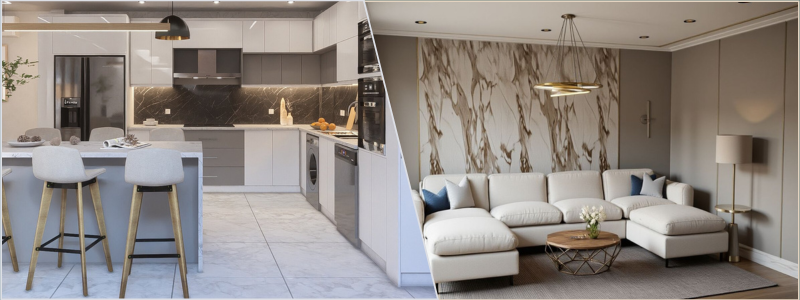
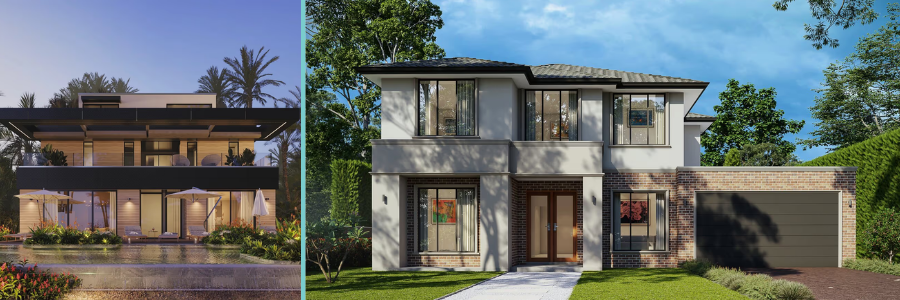
Real-time rendering of a modern home and shopping mall complex by Cad Crowd architectural design experts

RELATED: How architectural CAD drawings help modern design and construction companies

The necessity of real-time technology within architecture

Real-time rendering has also improved due to advances in game engines, rendering software, and graphics card development. The two entirely unrelated fields to each other, within the initial point of consideration, are the gaming industry and the architecture industry. In the high-performance graphics side, these two are interrelated. The architecture industry has been made to realize that the power that is available within the development of the virtual world, which is offered by the gaming industry, can be harnessed.

In the end, cross-pollination brought the most significant improvements to the field of architectural visualization. The growth that game engine development had to make, mostly, even more real, more efficient, and more capable, brought architects on board to use game engines so architectural visualization services can add life to the render. The walkthrough is not complete with a gamelike setting, lighting, detail, and a seamless transition from one point to another.

It is a totally different setting in the sector! The young architects are not finding it a challenge because they have been playing with such equipment since childhood. The seniors are also satisfied with the equipment because it is much better than what is offered by the normal setting, which makes it easy to communicate intentions. The client is also satisfied with such advancements because the matter of visual ambiguity has been solved. It is a win-win situation because it meets a need that really exists.

Speed, efficiency, and fewer costly surprises

Perhaps one of the most underappreciated positive impacts that real-time rendering has on design is that, from a design perspective, architectural design has been made more efficient. The presence of time is essentially the most evident element. It takes what would take hours, even days, to complete, but now it takes only a couple of minutes. This is from a design perspective with a design team that is basically taking a couple of cycles of changes through email in order to accomplish what is now being accomplished in a real-time environment.

This efficiency has been proven to a great extent, especially with regard to the cost of a project. A few changes are experienced toward the end of projects, which bring decisions, thus resulting in fewer surprises that might affect the construction cost. Changes toward the end of projects are, as most people who have managed projects are aware, the sneakiest thieves of project budgets. Real-time rendering eliminates all surprises because problems are thus revealed with respect to spatial conflicts, design, and development, which might be introduced concerning changes in construction.

It also provides a better collaboration process between the architects, designers, engineering design experts, and clients. This is because, when they are all visualizing the models together, there is no way that miscommunication can occur. This is because the whole group is looking at the same thing, interpreting the same things, and in the same way, they refer to the same thing.

Competitive advantage of a modern architecture company

Technology is one of the subtle but very potent differentiators in a competitive environment where clients are weighing the alternatives of a practice. Moving ahead with that, real-time rendering has been one of the most appealing technologies that can be used within an architecture practice. Real-time rendering has an edge when it comes to upgraded thinking, or rather a familiarity with the technology, and most essentially a sense of transparency. 

This is also true when the client has never gotten a real-time walkthrough before. They are going to learn that this is one office that provides them with what they never would have gotten from the drawings. The client has the opportunity to see the space that he or she is going to occupy in the future. 

This competitive advantage is even more common than the presentations themselves. This increases the efficiency of the business, helps in the completion of projects quickly, and even helps in attaining a high level of overall client satisfaction. Overall client satisfaction is most probable to generate repeat business, referrals, and tell all the people that they know. 

In most cases, the software is of less importance owing to overall client satisfaction with the entire process. Architectural planning and design companies with real-time rendering capabilities are setting a high standard by positioning themselves at the forefront of client interactions, rather than merely keeping pace.

The rising need to hire freelance artists

The sophistication that has been entailed in real-time rendering software has brought the situation to a crossroads where there is a need for people who are experts with that software. Architecture firms use rendering artists, freelancers, experts who are highly knowledgeable with the details, and experts who are known in a way that is necessary in creative real-time rendering software. Such people are not only designing a colorful scene. 

This may perhaps be attributed to the flexibility that is entailed with freelancers, where organizations resort to freelancers for the visualization process. This is cheaper because, rather than setting up a whole department, the architectural firms are accessing expert skills when the need arises. The freelance artist brings a lot to the table in terms of skills. 

For instance, there may be a CAD freelancer who is an expert in photo-realistic exterior, another who is very capable in taking atmospheric interior pictures, while another might still be learning how to develop an interactive environment. The firms would employ several experts, who would charge a pretty penny to the organizations. 

This is exactly where a service such as Cad Crowd is necessary. The service, such as a Cad Crowd, connects architecture firms to freelancers who are experts in real-time rendering software, thus providing architecture firms instant access to a freelancer who would develop what is essentially a 3D walkthrough, an interactive marketing tool, as well as a full-blown real-time rendering visualization system.

RELATED: Overcoming errors in outsourcing with architectural drafting services firms

The part played by Cad Crowd in the architecture visualization job

The service, Cad Crowd, is a tool that is more than just a freelancer directory; it is a tool that has been specifically set up to ensure that businesses are put in a position to find pre-selected freelancers with the capacity to be dependable, with the competence that is adequate to address certain requirements that might arise for a particular job. The tool provides cost transparency to architecture firms, which is directly linked with employment flexibility, along with ensuring that a freelancer can provide architectural consulting services. 

The freelancer can be identified for a small assignment, a full-fledged project, or a long-term association partner. All are made extremely easy by the tool. The design teams are therefore capable of sharing, communicating, and tracking developments in all sectors without confusion. The efficiency introduced within the organizational structure, therefore, ensures that there are no hindrances within the development of all projects from the commencement stage itself until completion.

The freelancing community under the realm of the Cad Crowd has experts in real-time rendering, gaming engine visualization, photorealistic rendering services, and even more complicated 3D models. The freelancers are capable of taking care of the entire process, starting from the asset optimization, lighting simulation, and even the interactive presentations, to name a few. Hence, this is highly useful for design communities, who are thereby looking to harness the potential of existing technologies. The designers are now capable of designing, while the technical part of the visualization process is now taken care of by freelance artists. This is one highly profitable association, churning out highly superb production. 

Real time 3D rendering by Cad Crowd design freelancers

Conclusion

All of these, in turn, are resulting in a revolutionary shift within the architecture sector. This is because real-time rendering is highly capable of providing a clearer design, highly convincing, and highly efficient workflow. Real-time rendering, therefore, helps eliminate surprises, besides highly minimizing wastage of precious time, thereby encouraging architects to make uninhibited statements on the design aspect. 

The clients are therefore actively taking part in the design process with a high degree of precision, besides an increased level of confidence, thereby enhancing the competitive edge within architectural practices. The highly capable freelance rendering artists are playing a highly significant role here. These are highly talented skills that are thereby used in the creation of interactive spaces, besides highly quality visualizations that are highly amazing to clients. 

The most exciting part is that the most opportune location to look for a chance to win is at Cad Crowd. In short, this is a service that brings together architecture firms with highly adept 3D rendering artists who are highly adept with real-time visualizations, apart from how they might be used to realize designs. In this regard, therefore, if you are highly interested in taking your skills in the presentation of architecture designs to the next level, now is the most exciting part of your life to see what is offered by Cad Crowd to your advantage, which is a highly effective way of engaging professional freelance artists who might assist your design in 3D rendering. Request a quote today.
author avatar

MacKenzie Brown is the founder and CEO of Cad Crowd. With over 18 years of experience in launching and scaling platforms specializing in CAD services, product design, manufacturing, hardware, and software development, MacKenzie is a recognized authority in the engineering industry. Under his leadership, Cad Crowd serves esteemed clients like NASA, JPL, the U.S. Navy, and Fortune 500 companies, empowering innovators with access to high-quality design and engineering talent.

Connect with me: LinkedInXCad Crowd

Advice for CAD Translation and Drawing Services for Your Company’s CAD Files


Sharing digital documents is now an easy process thanks to the likes of cloud storage and fast large-data transfers, but things are quite different with CAD files, mainly because of the different formatting standards. In fact, there’s no single industry standard in file format for CAD design services; the closest you can get to a “standard” comes in the forms of neutral formats, such as IGES (Initial Graphics Exchange Specification), Parasolid, STL (StereoLithography), DXF (Drawing Exchange Format), STEP (Standard for the Exchange of Product Data), and ACIS.

The problem is that some CAD software cannot save files in a neutral format. Instead, they use proprietary (or native) formats to be able to store metadata in the files they create. To transform a native file into a neutral format, a conversion or translation is necessary. But conversion isn’t always a straightforward process. Details can get lost, annotations may disappear, geometric data may be broken, parametric design history is nowhere to be found, and so forth, because a single mistranslation can lead to costly issues like project delay, development setbacks, and even poor quality. CAD file translation must be handled with uncompromised precision and great attention to detail. Cad Crowd is the go-to platform where companies, big and small, connect with professionals for accurate CAD file translation.


🚀 Table of contents


File conversion best practices

Obviously, the biggest advantage of using a neutral CAD file format is compatibility. Although errors in converting a native file to a neutral format aren’t always error-free, there are ways to mitigate the risks.

Built-in conversion tools come first

A lot of popular CAD software applications actually allow you to export their native files and save them as one of the neutral formats. The applications facilitate the export and import (basically conversion and/or translation process) using the built-in tools that encode the files accordingly. As with applications of all sorts, it’s advisable to use the latest stable versions or releases to ensure compatibility. The table below lists some of the most widely used CAD applications that offer support for neutral formats that are also utilized by architectural design services and product design firms.

Software Supported Neutral CAD File Formats(Export) Supported Neutral CAD File Formats(Import)
SolidWorks DXF, IGES, Parasolid, STEP, ACIS, STL DXF, IGES, Parasolid, STEP, ACIS
Autodesk Fusion DXF, IGES, STEP, STL DXF, IGES, STEP, STL, Parasolid, ACIS
AutoCAD IGES, ACIS, STL, DXF IGES, ACIS, Parasolid, STEP
Creo ACIS, IGES, STEP, Parasolid, DXF, STL ACIS, IGES, STEP, Parasolid
CATIA IGES, STEP, STL IGES, STEP, STL
Siemens NX STL, IGES, STEP, Parasolid, DXF, ACIS STL, IGES, STEP, Parasolid, DXF, ACIS
FreeCAD IGES, DXF, STEP, STL IGES, DXF, STEP, STL
Autodesk Inventor IGES, STEP, Parasolid, STL, DXF IGES, STEP, Parasolid, STL, ACIS
Solid Edge IGES, Parasolid, DXF, STL, ACIS IGES, Parasolid, DXF, STL, ACIS
BricsCAD DXF, STL DXF
Alibre Design STEP, ACIS (.sat), DXF, IGES, Parasolid, STL STEP, ACIS, DXF, IGES

No tool is perfect for every purpose. While the built-in tools almost always work with certain formats, there may be times when you have to work with some other proprietary native files that are unsupported by any of the applications listed in the table. It’s also possible that you just don’t have access to those applications because you use an entirely different software package. For example, a project requires you to convert a DWG file (the native format for AutoCAD) to DXF, so you can work with it on Blender. Unfortunately, there’s not yet a functionality in Blender with which you can directly import DWG. This means you need a separate third-party tool (either software or an online app) to handle the conversion beforehand. 

RELATED: Generative AI design technology for 3D CAD: A comprehensive guide for companies

Clean up and optimize

As part of the preparation for 3D CAD translation services before the conversion process, clean up the original drawing by removing unnecessary elements. Make sure the file has no unused blocks, layers, or any objects that aren’t supposed to exist in the final image. There is plenty you can do to clean up and optimize the source file, for example, using the “save as a new image” option. Quite possibly the easiest first step of optimization, saving as a new image will automatically get rid of redundant settings and data. You may want to save with a different name each time to keep track of the file history.

The built-in optimization tools can be useful as well. For example, software like Rhino, Fusion, and SolidWorks offer practical commands to cut down the number of polygons from drawings. Such an option can keep the file size low, but at the expense of image quality. BricsCAD comes loaded with the BLOCKIFY command to search for similar objects or repeated geometries and replace them with block references instead. AutoCAD is equipped with a few optimization commands, such as Audit, Recover, and Purge. In essence, the commands check if there are elements you can remove safely without affecting file integrity. Another example is the Shrinkwrap tool in Autodesk Inventor, which simplifies an assembly or complex part into a more compact element. 

Detaching Xref might be helpful to reduce the file size. In AutoCAD, you may use image attachments and Xref when creating a custom hatch pattern. They’re indeed helpful, but only if you can’t achieve the same result with the already available ones. Therefore, detaching any custom Xref (when possible) helps optimize the file.

Software updates

One of the most common issues with CAD conversion services is file incompatibility, even when the software actually supports both the source and targeted formats. Bear in mind that file formats also have their own versions or releases. For instance, SolidWorks 2024 works just fine with exporting or importing neutral formats, including all versions of DXF, Parasolid files version 9.0 – 35.0.x, STL version 1, and IGES version 5.3. It also supports STEP files as long as they’re created using the AP242, AP214, and AP203 Application Protocols. All other versions of the same neutral formats are unsupported; they’re incompatible.

This issue isn’t exclusive to SolidWorks. Many software packages only support specific versions of neutral file formats, most likely the latest ones. Incompatibility isn’t always an impossible challenge; you need to open it using the version of the original application used to create the file in the first place, and then re-export it to a compatible format before running the file through a further conversion process. 

3D CAD translation and conversion examples by Cad Crowd architectural design CAD experts

RELATED: Best 51 sites to hire freelance CAD design experts and remote designers for your company

The right method for the right result

Manual conversion is probably the most reliable, but it’s a time-consuming and labor-intensive effort. Automated conversion software offers an easy, practical, and almost instant way to get the job done, at least when the process runs without a single hiccup, so you never have to manually recheck everything. Outsourcing the task to a professional CAD conversion freelancer probably makes more sense, as it pretty much relieves you from all the hassles while still getting great results at an affordable rate. Evaluate your options and methods by considering such factors as accuracy, complexity, and (conversion) volume.

There’s no right or wrong method here, but you may find that a particular option is more efficient than the others based on constraints, including budget and time.

Documentation

Always save at least two copies of the source CAD file before starting the conversion process. In the event the conversion fails to produce the expected result due to glitches, errors, corrupted data, or any kind of issues, a backup gives you an immediate fallback action. Redundancy is, in general, a good practice when dealing with file conversion.

Maintain an organized documentation of the conversion process, including the software/tools used (don’t forget the version number), date/time of conversion, unexpected errors in the converted format, and any relevant notes. If you’re working as part of a team, the documentation should serve as a valuable reference when communicating with everybody else. 

Validate and test

This goes without saying: nothing is more important than maintaining file integrity when converting a CAD drawing. Essential properties (of the source file) like dimension, geometry, layers, scaling, and lines must be preserved and remain intact in the converted format. Make sure to note the units of measurement used in the source file and check if they’re correctly translated in the converted format. After the conversion process, immediately validate the new format by comparing it to the original file. A side-to-side comparison makes it easier to identify errors and discrepancies.

Data loss recovery

Automated conversion from native to neutral file formats is prone to data loss. This should come as no surprise because the conversion process itself often removes or modifies information in the file; conversion modifies the data created by the original software to make the file readable in other applications. For instance, neutral file formats like STL, STEP, and IGES contain no information about parametric design history. Even when the source file is created using software that typically stores such information, the conversion process may remove it entirely. Apart from design history, some geometric data may get lost during conversion as well, leaving you with a degraded CAD file that lacks crucial bits of information that may be crucial for CAD drawing services.

Some applications provide tools to recover missing information after conversion. Autodesk Inventor has the Quality Check and Refit Face commands, which allow you to perform an analysis of specific data sets and repair them. Fusion includes the “Find Features” tool to discover parametric design features, but it is available only in direct modeling mode. SolidWorks also has an auto repair function, which attempts to solve issues with corrupted files.

CAD translation and conversion by Cad Crowd engineering design freelancers

RELATED: All things to consider when hiring a design-build firm & services company

Takeaway

CAD files are the backbone of architectural projects, product development, and technical design of all sorts. As companies grow and businesses expand, these files serve as crucial points of reference in a project that requires collaboration between multiple design teams and stakeholders. Ideally, everyone involved in the project should access the file using the same software for efficiency, but sometimes this is neither the most efficient nor the most budget-friendly option for everyone. When two or more stakeholders use different software packages, CAD file translation/conversion is an excellent method to foster effective communication across the teams.

Professionals at Cad Crowd understand that file conversion isn’t as simple as translating one format to another. CAD files are often packed with loads of technical data that must remain intact, even when the format itself has transformed from native to neutral. It takes an in-depth understanding of how these files were created and what information they contain to ensure that the translated/converted drawings aren’t just correctly formatted, but also technically accurate. Request a quote today.

author avatar

MacKenzie Brown is the founder and CEO of Cad Crowd. With over 18 years of experience in launching and scaling platforms specializing in CAD services, product design, manufacturing, hardware, and software development, MacKenzie is a recognized authority in the engineering industry. Under his leadership, Cad Crowd serves esteemed clients like NASA, JPL, the U.S. Navy, and Fortune 500 companies, empowering innovators with access to high-quality design and engineering talent.

Connect with me: LinkedInXCad Crowd

How Plumbing Engineers Benefit from CAD Drafting and Design Services


It’s hard to believe that a plumbing project isn’t always about someone installing, repairing, or replacing broken pipes and leaky faucets. Much of it is indeed all of those, but it also involves a slightly more complicated design phase, best left to an engineering design expert rather than an actual plumber. For the uninitiated, a plumbing engineer designs the entire system and prepares the plan, whereas a plumber executes it. Because most engineers like to think their work is so difficult, they often tap a professional drafting service to draw the plan for them.


🚀 Table of contents


They get back more than they give

In a good way, of course. In an ideal world, an engineer designs the system and translates it into a technical drawing for a construction permit and approval. But sometimes the world isn’t as ideal as what everybody has in mind, and an engineer doesn’t have the luxury of time to produce a detailed draft. Perhaps there is just so much engineering work to do that outsourcing the drafting makes a lot more sense and is more time-efficient. The engineer makes sketches or low-detail presentations that are not to scale, with notes and scribbles all over them. And then the engineer gives the sketches to a drafter to convert into a technical drawing for construction. To put it simply, the engineer decides what to draw, and the drafter makes the drawing.

Because professional drafters specialize in the trade, they can do it quickly and at a lower hourly rate than an engineer. Take, for example, the drafters at Cad Crowd. Thousands upon thousands of CAD experts at Cad Crowd offer a broad range of drafting services at affordable rates, backed by the platform’s accuracy guarantee. Cad Crowd is one of the few freelancing sites on the web to place heavy emphasis on the AEC industry, including the MEP (Mechanical, Electrical, and Plumbing) sector, with more than 15 years of experience in outsourcing. Apart from this cost-saving advantage, engineers can reap a lot more benefits from collaborating with CAD drafting and design services.

Plumbing engineering and CAD Drafting examples by Cad Crowd design experts

RELATED: CAD outsourcing: Architecture & BIM drafting strategies for architectural design firms

Let’s not eyeball it, shall we?

Eyeballing is probably just fine when you’re repairing a P-trap or tinkering with a water pressure valve, but not for an engineer designing an entire plumbing system.

Back in the old days, when CAD design services weren’t yet mainstream, or affordable for that matter, manual drafting on paper and boards reigned supreme. What is now a rather tidy task of technical drawing on a computer used to be a bungled, cluttered affair full of sweaty-hand smudges. And if an engineer was working overtime past midnight, coffee spills and dull pencils could make an otherwise sharp mind into, well, a dull one. In cases where the plumbing design was extensive enough, it might take an additional two or three drafters with varying degrees of skills and experience to work on a single plan. On one of those days, somebody was bound to not care enough about accuracy and just wanted to go home early and watch TV in black and white.

As a result, the term “precision” came only second after “completion” on many projects. When a line was off by even a fraction of a millimeter on a 1:200-scale draft, construction headaches ensued. You’re talking about misaligned pipe connections, incorrectly sized fittings, inaccessible valves, and a whole bunch of on-site adjustments by a plumber who then eyeballed things.

CAD drafting for a plumbing system means creating the plumbing plan on a computer, with a lot of help from the automation the machine offers. Think of it as a visual calculator that lets you specify the dimensions and tolerances of every component, down to the hundredth of a millimeter. Such accuracy ensures you’ll always generate the correct plan, no matter how complex the project is. The BOM (Bill of Materials) is always spot-on. And when the parts arrive at the jobsite, they actually play nice with each other. For plumbers, the CAD drawing also serves as an instruction manual, so no eyeballing is required.

Just maybe, time is indeed money

Drawing on a computer might seem daunting. You don’t have to sharpen a pencil in the process now and then. Still, it’s hard to imagine making precise movements while holding that mouse button to draw a perfect representation of a curvy water closet, sink, or bathtub. You don’t have to imagine that at all, really. It is, in fact, very hard. That’s why just about every architectural CAD software offers a broad range of templates ready to click and place on the screen. 

These ready-made templates may include a wide variety of fixtures and fittings, including end-of-the-line cleanouts, routing options for elevation mismatches, pipe specifications, automatic annotation for multiple pipe runs, and more, done by engineering design services. Almost all of them are delivered via a simple drag-and-drop interface in the software. This makes the drawing of every plumbing part and component quick and practical, with very little chance of mistakes, unless a careless drafter is involved. 

If a project involves drawing plumbing plans for dozens of individual bathrooms, such as in a residential building with pretty much identical units, a drafter can create “modules” or “blocks” on the CAD software. A block is essentially a group of plumbing parts, including fixtures and piping configurations, treated as a single assembly. It doesn’t matter if the building has 50 or 500 units; copy-and-paste does all the heavy lifting. Furthermore, an update or modification on the master block is reflected on every other drawing in an instant.

Drafting a plumbing system often involves quite a lot of repetition, and that’s to be expected because much of the drawing includes the same pipes connected with the same fittings over and over again until it gets to the very end of the line. When a repetitive task is simplified or outsourced to a professional drafting service, a plumbing engineer can focus on more pressing matters, such as maintaining consistent water pressure, sustainability, and the ergonomics of the water closet. Because the drawing happens in the background with CAD, the design phase runs quicker than ever before, and the payday comes sooner, too.

RELATED: Relevance of MEP drafting services for architectural design firms & construction companies

Gone is the eraser dust

Some clients are difficult to work with. They demand changes after changes to an already-approved plan, prompting the engineer to make revisions that never seem to please them. Sometimes the kitchen layout isn’t sophisticated enough, the bathroom design is too mainstream, or there aren’t enough sinks in the house. Clients are the project owners after all, so no engineer can blame them as long as they have the money to pay for the services. A plumbing engineer can only comply and produce a new plan for every change in design.

The good thing is that a CAD drafting expert makes revisions simple. Since the original plumbing plan was created in CAD, making changes to the image is simply a matter of moving things around on a screen. A drafter can move, stretch, and replace fixtures, or perhaps reroute the entire pipeline without even touching an eraser. Everything is done on screen in a virtual environment. Apart from that, the real benefit here is version control, or a file history if you like. If a client asks why there are now four sinks in the house rather than five, the plumbing engineer can refer back to the previous draft to see how forgetful the client is.

Quick math and no headache

We’re not saying that an engineer or a drafting service can’t do math without a headache. It’s just that there will be much less headache in case it does happen while calculating flow demand, pipe sizing, slope, and pressure drop. Modern CAD software does all the calculations automatically. For example, it can determine the pressure drop along a 50-foot stretch of copper pipe with many fixture branches attached. If you aim for a specific flow rate measured in GPM (gallons per minute), CAD tools can give you the right pipe sizes based on the number of fixtures to be installed.

Some automation features require specialized toolsets, for example, AutoCAD MEP, AutoCAD Plant 3D, or Revit. But don’t worry, all professional drafters know that plumbing engineers have a tender spot in their hearts for software with long names, so they will happily purchase and use the tools to indulge the clients. CAD tools are very good at math, even better than Sheldon Cooper, allowing the engineers to have their brainpower occupied by other important issues, presumably.

Piping and plumbing design engineering by Cad Crowd design engineers

RELATED: A comprehensive overview of steel detailing services and its importance for construction companies

We haven’t even talked about 3D CAD.

No one says CAD drafting and design have to be in the conventional 2D format. The aforementioned software, such as Autodesk Revit and AutoCAD MEP, generates 3D drafts. Other options include PractiPIPE, Bentley AutoPLANT, PlumbingCAD, etc. While the 3D image might not be photorealistic, it’s good enough to provide spatial awareness as if you’re looking at the pipeline through the floor, ceiling, and walls.

Engineers don’t need 3D plumbing drafts to understand the design. They’re trained to develop a cognitive ability to translate flat lines, shapes, and symbols into a clear vision of an architectural design. But the average clients, on the other hand? Not so much. Most clients find 2D drafts confusing, like reading a text from a language they don’t understand. They may nod many times as they stare at the image, but only to look smart in front of everyone. Thanks to 3D CAD, plumbing engineering experts can more easily explain how things work, even to the most uninformed clients. 

And let’s not forget BIM (Building Information Modeling), currently touted as the biggest thing to ever happen to the architectural industry. Some would go so far as to describe it as the be-all and end-all drafting software tool, flooded with features such as automatic clash detection, cost estimation, Bill of Materials generation, cloud-based collaboration, and, essentially, data-rich visualization.

Takeaway

The bottom line is that plumbing engineers can always work smarter, not harder. One of the smartest things a plumbing engineer can do is to work with or hire a CAD drafting service to translate the design intent into a technical drawing. Just “knowing” that a professional is taking care of the task can give the much-needed peace of mind to focus on the actual engineering parts of the job, be it cost efficiency, construction methods, rainwater harvesting, or code compliance.

Whether you need the plumbing plan in the conventional 2D format or the more advanced 3D visualization, there is always the right professional at Cad Crowd to get the work done. All drafters at Cad Crowd have been vetted and screened for their CAD proficiency and experience in architectural projects to ensure that every client works with the most qualified talent. Request a quote today.
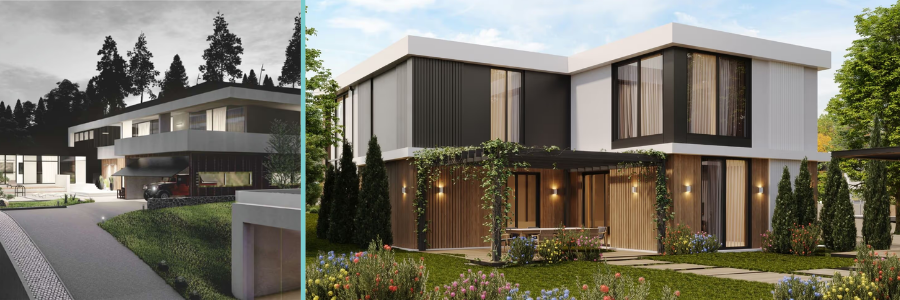
author avatar

MacKenzie Brown is the founder and CEO of Cad Crowd. With over 18 years of experience in launching and scaling platforms specializing in CAD services, product design, manufacturing, hardware, and software development, MacKenzie is a recognized authority in the engineering industry. Under his leadership, Cad Crowd serves esteemed clients like NASA, JPL, the U.S. Navy, and Fortune 500 companies, empowering innovators with access to high-quality design and engineering talent.

Connect with me: LinkedInXCad Crowd

Elevating Your Company’s Product Designs Through User-Centered Design Principles


Success in today’s highly competitive marketplace very directly depends on how well a product meets the needs and expectations of its users. Companies are pinning more hopes on producing products that would give the best experiences to the users, and this is why user-centered design, or UCD, principles have become important components in the development process of business products for product design companies.

Cad Crowd is an industry leader in providing vetted outsourced product design services for businesses around the world.

Integrating UCD principles into the business process can quite significantly contribute to improvements in usability, accessibility, and overall user satisfaction, which translates into higher customer retention and revenue streams. This article analyzes how the use of user-centered design principles can improve your company’s designs for products, with insights from various industry leaders.


🚀 Table of contents


User-centered design definition

User-centered design (UCD) is a philosophy of design that is concerned with putting users at the center of product development services. The idea behind UCD is that design must be based upon a deep and profound understanding of what users are, what users need, how users think, and their goals. UCD is not just about functionality, but also with much emphasis on the emotional connection to the product, ensuring products are intuitive, easy to use, and engaging.

Unlike the traditional design approach, in which the product or technology is at the center of focus, UCD places the user at the center of the design process. This requires research, collection of feedback, and iteration throughout the design process to ensure that the final product satisfies the needs of the intended users.

According to experts, user-centered design is a design process in which the needs, wants, and limitations of the end-user are given extensive attention at every stage of the design process. This can be used even for physical products or digital products like applications and websites.

cad design example of a mag-wheel and meat grinder

RELATED: Designing for visual impact with your product design services company

Key principles of user-centered design

In order to maximize the potential of user-centered design, consumer product companies need to include guiding principles while they are in the process of creating their products. These will ensure that the users know every step they take in the design phase is based on their liking. Which always results in a more effective product.

Below are the principles that will elevate your product design.

Focus on the user’s needs and goals

The first and most crucial principle of user-centered design is understanding your users’ needs, goals, and pain points. Without this understanding, it is impossible to create a product that will resonate with users.

A user-centric approach would begin by doing extensive research, including some level of interview with the users, a survey, and sometimes usability testing, to understand their behavior, preferences, and problems. This consequently guides the real design considerations so that the final product meets the users’ real-world needs.

For instance, in the case of a fitness tracking mobile app, having an understanding of your target audience’s fitness goals, how they track their progress, and what motivates them will inform features and functionality design aimed directly at addressing these needs. You may also want to consider wearable design services in the case of smart workout apparel. If a product addresses a user’s needs, it will more probably find favor and gain success.

Include users in the design process

One of the most compelling features of user-centered design is the active involvement of users throughout the design process. This involves involving the users at every step of product development, from its earliest idea to initial testing and launch.

Involving users at each stage can deliver feedback so that your product is always going in a direction that would generally meet the expectations of the user. Through usability testing, focus groups, or beta testing, ongoing user input allows you to iterate on your design and make informed adjustments.

One good example is Apple, in which the iterative approach of its design always involved rigorous testing with feedback loops from users. Through an iterative approach, Apple can refine its products to result in a seamless and user-friendly experience for its customers.

Iterative design and testing

Design, therefore, is not one-time; rather, it is iterative, meaning it always requires constant refinement and assessment. Improving designs for products is done most effectively through continuous testing and refinement. An iterative process of design means a cycle in which your product moves through cycles of design, testing, gathering feedback, product engineering services, and subsequent improvement. Through this, a problem with the design is identified as early as possible while allowing designers to experiment with different features and functionalities to see what resonates more with users.

Companies can test these variations with customers using tools like A/B testing, usability testing, or prototypes, and determine which way would best be taken based on the results. This cycle allows repetition to continue, fine-tuning the company’s designs until they reach the most effective version of the product.

RELATED: How innovative design techniques can supercharge your new product concept

Emphasis on usability

Usability is one of the cornerstones of user-centered design. A product will only be as good as its ease of use. If the users can’t navigate it or can’t understand how to use it, frustration and abandonment will be the result. Usability, therefore, refers to making products simple, intuitive, and accessible.

The overall goal is to make it painlessly simple for a user to do anything they want to do within the application with minimal effort and frustration. This would involve such aspects as clear navigation, readable typography, responsive design, and an overall easy-to-use interface. Usability testing involves identifying weaknesses and fixing them to ensure that the design meets users’ needs.

For instance, some product development experts elaborate on how user-centered design impacts the usability of websites and digital products. A clear call-to-action button, a simple layout, and easy navigation-all these factors make your design user-friendly. All these factors will help users interact with the product easily, which increases user satisfaction and retention.

Design for accessibility

Accessibility is yet another critical principle of user-centered design. A usable design should make it possible for people with all abilities and disabilities to use the product. This involves making sure that any product is usable for people with visual, auditory, motor, or cognitive impairments.

Accessibility built into your product design means thinking of how users interact with technology. For example, providing text alternatives for the images (alt text), designing with color contrast in mind, and ensuring your website or app is accessible by a keyboard or screen reader, to name a few, are ways of creating an inclusive product.

Experts emphasize the point that accessibility and inclusive design are not actually about checking compliance, but all about product design experts building a product that everybody can use as much as possible, and gives a meaningful experience to everyone. In essence, your focus on accessibility demonstrates to your users that you really care for them and ensure that everyone has an equal, fair chance.

Consistency across the product

Consistency is a must for managing to make the user experience both harmonious and intuitive. When users are dealing with a product, they must feel that they know how it works from one screen or feature to the next. Consistent design fosters trust and comfort in the system, therefore allowing users to navigate the product without confusion.

Consistency encompasses both visual-design-level elements (color, fonts, and layout) as well as functional elements (button placement, icons, and actions). Maintaining a consistent design language across your product will make it so much easier for users to understand how to interact with your product and predict what will happen when taking particular actions.

Contextual understanding

Contextual design is basically a cornerstone of user-centered design. Context refers to the entire circumstances of a user interacting with any product, which would include their environment, goals, and mindset. By understanding the context, new concept design experts can come up with products that could more relevantly and usefully suit the specific contexts of users.

For instance, an app for drivers would require designing with high-speed, easy-to-read interfaces that do not distract their attention from the activity of driving. A fitness app may be imperative to be very simple and user-friendly when users are working out or in motion. The context in which your product is used means that users can use it with ease in their daily lives.

product design of a convertible bed and couch

RELATED: Why design for manufacturability (DfM) is essential for product success when hiring a design firm

Benefits of using the user-centered design approach

The use of user-centered design principles in your products and business will highly impact your product and industrial design firm; hence, the following represent some of the key benefits.

Enhanced user satisfaction

When designing products with users in mind, it would most probably meet user expectations and needs for the first time. Such a product would mean that there is very high satisfaction, and users would be more likely to continue using it or recommend it to friends.

Higher conversion rates

A good user experience will have an immediate effect on conversion rates. For digital products, this could mean more people signing up for your service, purchasing a product, or taking the desired action. By reducing user journey friction points and streamlining it, companies see measurable increases in conversions.

Lower support costs

The more intuitive the product is, the less likely users are to experience confusion or frustration. This limits the calls to technical support and complaints and reduces customer support costs; therefore, it enhances customer satisfaction.

Higher customer retention

The loyalty of customers is rooted in their good user experience. Thus, by applying the principles of user-centered design, you as a company are actually ensuring that your products hold the user’s attention for a long period of time, long enough to keep them satisfied. This results in an increased number of customer loyalty.

Conclusion

Applying the principles of user-centered design to your product design and throughout the development cycle, including the use of prototype design services to hone in on user needs, is a type of strategic play to produce products that promote the user’s needs in a saturated market of advertising. Put the need to understand the users’ demands as a priority and let them interact at every point of the design process. Their feedback is an important voice that will give you the basis for reiteration.

Product design continues to evolve every year, and adapting to these changes and embracing user-centered design will definitely help you and your company stay ahead of the competition while still delivering products that delight users.

RELATED: The importance of iteration in product development & working with product design companies

How Cad Crowd can help

Whether it is an app, website, or actual product, long-term growth and customer satisfaction can be achieved by considering the user experience in every product design. Here at Cad Crowd, we will make it easier for you through the entire process. Contact us today and request a free quote.

author avatar

MacKenzie Brown is the founder and CEO of Cad Crowd. With over 18 years of experience in launching and scaling platforms specializing in CAD services, product design, manufacturing, hardware, and software development, MacKenzie is a recognized authority in the engineering industry. Under his leadership, Cad Crowd serves esteemed clients like NASA, JPL, the U.S. Navy, and Fortune 500 companies, empowering innovators with access to high-quality design and engineering talent.

Connect with me: LinkedInXCad Crowd

Ray Tracing in Architectural Visualization: Why It’s Essential for Design Firms and Freelance Services


From large-scale massive projects to services of freelance architects offering custom design, communication of designs in a manner that effectively transmits spatial relationships, lighting, materials, and overall ambiance becomes quite important. Ray tracing has totally revolutionized the presentation of architecture, improving the quality of the image and showcasing the capabilities of architectural design services. A result impossible to integrate into architectural visualization before.

As a leading agency connecting design firms with the best freelance 3D visualization, Cad Crowd has learned the ins and outs of 3D and architectural visualization. This article focuses on the significance of ray tracing for architectural visualization and its potential for future projects.


🚀 Table of contents


What is ray tracing?

It is a rendering technique used in architectural visualization to demonstrate the effect of light rays on a specific environment, whether it’s sunny or shady, among other things. From the word ray tracing, it traces paths for rays traveling through a 3D environment, reflecting off surfaces, and scattering in all directions. It is used to generate high-quality images based on very complex behaviors like reflection, refraction, and shadows—a method integral to architectural visualization services.

Unlike traditional rendering, where approximations are used to simulate the lighting behavior, ray tracing traces direct light rays passing through a scene, producing high accuracy results, and may be applied in architectural visualization and details such as natural light play and interplay of shadows or characteristics of materials.

Why is ray tracing needed in an architectural design firm?

Architectural design firms need clearly communicated design ideas, where usually architects illustrate their designs using 2D objects such as drawings or hand-drawn sketches. Designs like these are too simple to represent the design clearly. With ray tracing, architects’ work can now be more dynamically represented with architectural drafting services in 3D visualization and rendering because of its realistic outputs.

This is how ray tracing takes 3D visualization to the next level, with a realistic level that is appropriate for internal decision-making purposes as well as for client presentations. The following are some reasons why it is sure to be a game-changer for architectural design firms:

RELATED: What are architectural 3D visualization costs, service fees & rates for companies?

Ray Tracing in Architectural Visualization

1. Photorealistic visualization

Ray tracing comes with an unmatched realistic rendering, which is used for presenting architectural designs and is a key part of CAD design services. It enables architects to show the geometrical interpretation of their designs and how they will look in real life. For instance, how much light will pass through the windows, what the reflection of the wood, glass, or stone might look like, and where the shadows will fall inside a room. This very important thing is to present designs before clients because that gives people an idea of how the final product looks.

2. Better representation of materials

Materials often play a crucial role in design and thus should be represented accurately. Ray tracing allows precise approximations of glossiness, transparency, roughness, and even reflection properties. For example, the behavior of light, when it bounces off a shiny marble floor vs a concrete matte floor, is different. These functions of ray tracing make the design more helpful in presenting the actual design, therefore affecting decision-making for architects and clients.

RELATED: All you need to know about 3D visualization for architectural design and CGI projects

3. Accurate lighting simulation 

The lighting factor of architectural design sets the mood and functionality of a place, with a strong association with energy efficiency. Ray tracing simulates real light, including direct, indirect, or reflected light, and simulates accurate lighting analysis needed in studying the effect of space from dawn till dusk, as well as how lighting in the space will be performed using 3D rendering services. Whether it is the display of how sunlight will illuminate a room in the morning or how artificial lights will brighten a corridor during nighttime.

4. Design iteration and decision-making

Trying different design options and customizing them in real-time allows the designer to receive instant feedback about material and lighting object placement, which can be used in optimizing the whole design process.

RELATED: Techniques for 3D architectural visualizations and tips for your services firm

Why freelance services should use ray tracing

Freelancers and Professional designers can handle everything from innovative design to technical work. Even if the firm is not large in size, freelancers also gain experience with the use of ray tracing because of its ability to render photorealistic visualizations without requiring large infrastructure.

1. Leveling the playing field

Freelancers, as independent designers, have the chance to be on equal footing with the use of ray tracing and CAD design services. However, freelancers need to invest in high-quality hardware and software to be able to compete with large firms that have the budget to generate realistic visualizations and advanced effects.

2. Broader impressive portfolio and marketing

Ray Tracing in Architectural Visualization

A freelancer’s portfolio is his most prized possession. With the aid of ray tracing-based high-quality renderings, there can be a big difference in making a portfolio that may impress the clients you are marketing to. Whether marketing or pitching to a future client, if you make your visualizations photo-realistic, this changes the game significantly in terms of attracting new business.

RELATED: 5 types of 3D visualization used by architectural design firms for CGI projects

3. Improved client communication

It enables freelancers to produce final product designs similar to those of established design firms, which can help enlighten clients on the intended result. Ray tracing also helps minimize misunderstandings about designs, leading to fewer design alterations before the end product. With this, a more satisfactory client response is achieved by leveraging architectural CAD services.

4. Improved cost estimate

Ray tracing allows freelancers to give more precise estimates of the costs involved in a certain project. This is because freelancers can simulate the interaction between the light and material with a space, therefore giving them an idea as to whether there are some materials or changes in design that may be required to be included in the budget. Such a head-of-time study may save them more hours and money, thus helping the freelancer provide cost estimations upfront with a higher degree of accuracy.

5. Diversity in services

Architectural visualization freelancers who would apply ray tracing technology can offer much more extensive services by integrating 3D animation services. Freelancers shall be able to offer further services like voluminous 3D renderings that create virtual tours or even interactive walkthroughs, which add value to their service. Thus, they increase and diversify their business prospects and can serve all kinds of clients, from real estate developers and architects to interior designers and the like.

Future of ray tracing in architectural visualization

The future of ray tracing in architectural visualization is endless. The ability to simulate real-world lighting and materials with increasingly high accuracy means rendering can achieve photorealism even better in the future.  Furthermore, ray tracing will still be used in the design process, using improved augmented (AR) and virtual reality (VR) to achieve immersive architectural experiences. Design firms, freelancing professionals, and even other professionals will continue with this technology to push the bounds of what can be accomplished in architectural visualization.

RELATED: What is architectural visualization and why architectural rendering services use it

How Cad Crowd Can Help

Architectural visualization, which was once a sketchy guess, is now revolutionized by ray tracing to become a very accurate, photorealistic, and worthwhile tool for every design firm and freelancer. The incredibly detailed mimicking of the way light behaves, interacts with materials, and computes space makes this tool indispensable in the design process.

Ray tracing in architectural visualization has now become an integral tool for design firms and freelance services. Here at Cad Crowd, we can help you find the best expert for you if you wish to set yourself apart from your competitors. Don’t hesitate to reach out to us, and we will be more than happy to help. Get a free quote today. 

author avatar

MacKenzie Brown is the founder and CEO of Cad Crowd. With over 18 years of experience in launching and scaling platforms specializing in CAD services, product design, manufacturing, hardware, and software development, MacKenzie is a recognized authority in the engineering industry. Under his leadership, Cad Crowd serves esteemed clients like NASA, JPL, the U.S. Navy, and Fortune 500 companies, empowering innovators with access to high-quality design and engineering talent.

Connect with me: LinkedInXCad Crowd

Top 8 Benefits of 3D Golf Course Modeling and Rendering with Freelance Services & Design Companies


Golf course design has traditionally been a highly calculated process involving a lot of planning, aesthetic vision, and a deep understanding of the game itself, but innovation in technology has started using 3D modeling and rendering into the fray as a revolutionary tool to produce detailed, high-fidelity visualizations of golf courses before a single blade of grass is ever planted. 

Freelancers and design service companies are now using advanced tools to develop golf course models. Among the advantages of these models is the ability to bring ideas to life for designers, developers, and investors, offering quite a wide range of benefits.

Cad Crowd is the leading agency that can help you connect with 3D modeling and 3D rendering experts, providing services to your firm. Consisting of over 94,000 freelancers, we pride ourselves on our ability to give reasonable service rates while still exceeding your highest standards. Whether you’re looking for innovative solutions, new concept design, strategic insights, or top-tier execution, CAD Crowd has the expertise and the talent to bring your vision to life.

In today’s article, we will discuss the top eight benefits of 3D golf course modeling and rendering, and how freelance 3D rendering services and specialized design companies are revolutionizing the view on the visualization, design, and construction of golf courses.


🚀 Table of contents


RELATED: 10 awesome vehicle designs from the Cad Crowd gallery

Understanding 3D golf course modeling and rendering

3D golf course modeling and rendering is a particular type of computer-aided design process that can be achieved through 3D landscape rendering services, which produce ultra-high resolution, photorealistic images of golf courses. It allows designers, developers, and facility managers to visualize the details of the layout, terrain, and environmental features of the golf course during pre-planning or before any renovation work.

From 3D modeling, every part of the course is well thought out by the designers, including the fairways, bunkers, water hazards, and surrounding landscapes. Then, the rendering process incorporates realistic textures, lighting, and perspectives to mimic how the course would appear and represent the actual environment. This allows stakeholders to make rational decisions regarding design changes, landscaping, and even marketing presentations.

The union of 3D modeling and rendering boosts the mutual understanding of architects with clients on possible views concerning the course of action and elevates the process in planning and development to ensure that all the minutest details coalesce into the overall vision. Take a look at the benefits that 3D golf course modeling and rendering have to offer:

3D Golf Course Modeling and Rendering

RELATED: How engineering & 3D design contests give companies a competitive edge

Enhanced visualization and design accuracy

Probably the most significant advantage of 3D golf course modeling is its ability to deliver precise, realistic visuals through detailed renderings from 3D architectural visualization services. Two-dimensional blueprints cannot communicate depth, slope, and scale as effectively as 3D renderings. A freelance designer with expertise in CAD modeling and architectural visualization can produce photorealistic representations of how the course will appear, accurately showcasing every contour, hazard, and green.

Once accurate topographic information is in place, 3D models look just like the real terrain in every detail. As such, designers and clients should be able to walk through the virtual course and feel the elevation changes in their design. This will enable them to determine the flow of holes into one another. It is that level of immersion that results in a visual look that is absolutely stunning and will play as they want.

The challenge of redesigning a golf course arises simply because one has to iterate on the basis of architects’, developers’, or even prospective investors’ feedback. It can be pretty long and costly to correct the physical model or 2D drawings. 

3D modeling is more flexible

Particular components of the course may be easily altered by freelance CAD designers and companies specializing in 3D CAD design services. Changes in the fairway layout or adjustments to bunker depth can be quickly tweaked without an overhaul. With 3D CAD models, revisions are efficient and cost-effective, enabling several design iterations before finalizing the ideal version.

Natural integration

A golf course is not a set of holes but rather an experience in nature. The 3D modeling and rendering can be applied to integrate the course into the environment, thus ensuring it blends with nature. This integration will ensure sustainability while making the course visually more appealing to the people.

Using very high-resolution environmental data, land survey drawing experts can simulate how a golf course will interface seamlessly with natural elements, such as forests, rivers, or hills. Leveraging these specialized services allows for detailed environmental analysis, predicting how design choices affect ecosystems and surroundings. This culminates in an effortless merging of the artificial with the natural—each hole is not merely a design feature but an integrated part of the broader environment. In this sense, 3D modeling and environmental engineering help designers create sustainable golf courses that minimize ecological disruption while enhancing the golfer’s experience.

Improved stakeholder communication

In the process of developing golf courses, most of the time, several investors, architects, developers, and the local government are involved. In this case, communicating sophisticated design ideas using traditional media forms such as 2D plans or technical documents often risks that the concept will not be achieved or will fail to communicate adequately. 3D modeling and rendering offer a much clearer and more compelling means of communicating design intent.

A 3D model gives freelance designers the opportunity to share a real-to-life and immersive representation of the course with the stakeholders. This will make it easier to conceptualize the design and even give feedback. It will certainly ensure everyone is on the same page, thereby making delays minimal and timelines toward project approvals lighter. Be it pitching to investors or having your permits from your local authorities, it may be that only a well-crafted 3D render utilizing 3D rendering services will seal the deal.

Pre-construction marketing and investor confidence

3D Golf Course Modeling and Rendering

RELATED: Featured freelance CAD designer portfolio on Cad Crowd

Often, developers will seek to secure investors, or simply future members of the golf course, to fund the project before it is even commenced. A 3D rendering could be very valuable in marketing efforts for building such a project. Detailed 3D models will let potential investors see accurately what the finished course will look like, including realistic textures, lighting, and environmental features. This will help build confidence in the project by giving a very tangible vision of the end product.

Freelance design companies develop high-quality visualizations and virtual tours that developers can present to potential investors or to promote their golf course projects. The ability to show a course before setting foot will attract investors and excite prospective members, hence increasing the chances of raising funds for the venture.

Customization and personalization of golf course

Each golf course is unique, and 3D modeling will allow for a great deal of personalization. Whether the developer desires to incorporate specific natural features or emphasizes a certain architectural style, 3D modeling will allow for detailing all aspects of the course design to fit the client’s vision. Lastly, freelance CAD designers are also adept at designing some weird custom elements within a 3D environment. A signature hole with a panoramic water hazard or a dramatic elevation shift can also be done quickly. This level of personalization helps developers in designing unique courses in a very competitive golf course design market. This level of detailing is often provided by CAD design experts.

Proper planning and construction feasibility

Golf course design requires one crucial factor, which is that the course must be aesthetic yet feasible to construct. 3D modeling can pick up some of the issues that may come up with the actual design process, such as problems with drainage, grading complexities, or infringement of existing land features.

Using 3D models, freelance designers and special design companies study the topography and design the course in minute detail. For example, 3D models can model water flow across the course during the rainy season; thus, the designers have proper designs for rainfall drainage systems. Thus, by being proactive about such issues, developers can avoid expensive delays during the construction period. This proactive approach often involves hiring freelance design services.

RELATED: 3D modeling software or CAD programs: What should my designer use?

Virtual reality andinteractive experiences

One of the most exciting advancements in 3D golf course modeling is incorporating it into virtual reality (VR) technology. Freelance designers are becoming more and more leery of putting such VR experiences in design presentations to allow clients and other stakeholders to walk “the course” before it actually exists. Using a headset, users can actually walk through or even “golf” the course in real time, feeling every detail of the design from a player’s perspective.

With this interactive experience, stakeholders can move beyond the static 3D model of the course. Not only will they have an immersive first-person view of the course under development but also see at a level of interactivity that supports the overall presentation and, in some way, offers some critical insights into the details of how the course will be played, giving them scope to adjust as players, developers, and course architects respond. This level of interactive presentation is often a service offered by freelance 3D modeling.

With golf courses, freelance services illustrate this to a great extent, comprising enhanced visualization and integration with the environment while offering cheap design revisions as well as interactive VR scenarios. Freelance designers and specialized design firms offer exactly the necessary experience in producing individual designs with beautiful layouts that can meet the highest standards in the appearance and functionality of each golf course.

RELATED: How does product prototyping with 3D modeling help grow sales and save R&D money?

How Cad Crowd can help

Whether it’s a wannabe developer looking to pitch to interested investors or a golf course architect working hard to be perfect in his design, just like Tiger Woods is in his game, 3D modeling is starting to revolutionize the face of golf course design once and for all. Combine it with talented freelancers or specialized firms to bring your vision to life, creating courses that are as gorgeous to behold as they are beautiful in play.

3D golf course modeling and rendering offer numerous benefits, especially when entrusted to and carried out by reliable freelance services and design companies. Here at Cad Crowd, we will make sure that you get in touch with top talents who can come up with mind-blowing golf course designs. Get a free quote today. 

author avatar

MacKenzie Brown is the founder and CEO of Cad Crowd. With over 18 years of experience in launching and scaling platforms specializing in CAD services, product design, manufacturing, hardware, and software development, MacKenzie is a recognized authority in the engineering industry. Under his leadership, Cad Crowd serves esteemed clients like NASA, JPL, the U.S. Navy, and Fortune 500 companies, empowering innovators with access to high-quality design and engineering talent.

Connect with me: LinkedInXCad Crowd

Production Facility Rendering: 10 Advantages of Visualization Services for Factory Design


An architectural visualization, more specifically, a rendering based on a BIM file, isn’t just a pretty picture to please the eyes. In the context of a large-scale industrial project, such as the construction of a brand-new production facility or a major renovation of an old factory, a visualization is supposed to be an accurate depiction of the structure and a precise representation of all the manufacturing and utility systems in the building. The visualization also serves as the foundation for crucial decisions, such as stakeholder approvals and budget allocations.

3D rendering services and data-rich BIM files walk hand-in-hand to give a better understanding of the factory layout along with all its equipment and machinery, offering a level of insight that no conventional 2D blueprint can deliver. The ability to get a clear grasp of the spatial relationship of the entire building and an automated clash detection prior to construction improves the chances of efficient design, including for future-proofing purposes.


🚀 Table of contents


Why production facility visualization matters

High-fidelity visualization requires familiarity with the works of architectural design and a strong knack for artistic touches. Similarly, a comprehensive BIM file needs 3D modeling proficiency and industry knowledge. All those might seem hard to come by in this day and age, but not in Cad Crowd. As a freelancing platform specializing in the AEC industry, Cad Crowd acts like a massive hub that connects clients of all backgrounds with the most capable industrial project visualization services. And when the rendering and BIM file are left in the hands of the platform’s best-qualified professionals, expect nothing less than the following 10 advantages.

Early detection of errors

Let’s start with the most obvious, an advantage that photorealistic rendering services can give to architectural projects of any kind: pre-construction error detection. Construction work, whether a brand-new building or a renovation, is often an expensive undertaking, and even more so if you’re talking about such a complex structure as a factory. A manufacturing facility isn’t supposed to be luxurious or fancy, but designed to be as efficient as possible and conducive to productivity. And the truth of the matter is that ensuring efficiency often requires a pretty substantial upfront investment. Every mistake, no matter how small it may seem, can swell the budget to an unfriendly extent.

Factories are most likely dense environments. In addition to all the structural support steel, chances are you’ll also find heavy machinery, complex utility grids, overhead cranes, various office spaces, and sometimes a massive warehouse under the same roof. Everything has to coexist and fit in a relatively limited space. A traditional 2D blueprint can probably represent the entire factory, along with all the equipment and structural elements, on one big page. It’s practical, but the visualization format makes it easy to overlook a “clash,” for example, a load-bearing beam that obstructs a stretch of fire sprinkler pipe. Because you can’t clearly see the mistake on a two-dimensional blueprint, the error is only discovered during the construction phase. The next thing you know, the project is put on hold until you find a workable solution.

An architectural rendering, especially when integrated with BIM (Building Information Modeling), allows you to run an automated clash detection before construction begins. A clash can be many things, from a simple mismatch between logistics and construction schedules to poor clearances and object interference.

In a complete render, all the components of the factory are properly visualized as interconnected 3D objects to give a clear view of how they interact with each other. The result is little to no risk of a stop-work order. Any spatial conflict in the construction plan is identifiable in the BIM file when the project is still in the digital phase, and corrections are nowhere as resource-demanding as onsite modifications. Since most construction projects suffer from budget overrun due to change orders, architectural visualization services make things cost-efficient. Also, it’s possible to “virtually” install any equipment on the factory floor in the rendering, allowing you to verify that everything has enough clearance for operation and maintenance.

Production facility rendering and design by Cad Crowd freelance experts

RELATED: 12 important hiring tips for 3D rendering freelancers & 3D modeling service companies

MEP integration

Still on the subject of clash detection, a high-quality factory rendering allows for a comprehensive planning of the facility as a whole rather than as separate systems combined into one. Other than that, you’ll see not only a flat image as if you’re looking at a floor plan, but the spatial relationships among all the objects. And this is particularly important in the case of MEP (Mechanical, Electrical, and Plumbing) systems.

A manufacturing facility is, in essence, one big machine housed in an extensive structure. And like every machine, they need a proper electrical system, water inlets and outlets configuration, chemical piping, specialized HVAC components installation, and compressed air circulation, among other things. Just about everything is substantially more complex than what you typically find in residential buildings. Designing all these systems in isolation increases the likelihood of clashes. You don’t want to find that the ventilation duct is planned to be installed exactly at the same coordinate as a crane rail or structural steel support, leading to an untimely delay that costs thousands of dollars. The problem is that you can’t just move the parts to another spot because it may cause another series of clashes. Chances are, you have to dismantle a lot of interconnected parts and redo the process.

One of the best ways to ensure construction efficiency is zero conflict. Once again, architectural BIM services emerge as a reliable savior, providing a sort of “X-ray” view of the factory plan. BIM may not produce a photography-like visualization, but it can give you a clear outline of the building’s internal systems, which in turn allows for an overview of how the ducts, wiring, and piping integrate with the facility itself.

Stakeholders’ investment approval

Constructing a factory is an industrial project, and that’s capital-intensive. It may take tens, if not hundreds of millions of dollars, to build a new manufacturing facility capable of high-volume mass production. Like the vast majority of big industrial projects, it takes funding and approval by multiple stakeholders, which may include individual venture capitalists, the company’s boards of directors, or perhaps government agencies. 

One of the biggest challenges in securing the approvals of investors isn’t the technicalities of the construction itself, but the presentation. Not every stakeholder is trained to read a blueprint in the same way that an architect or engineer is. As a matter of fact, most people struggle to visualize a fairly simple 2D floor plan, let alone the construction plan of a gargantuan factory from a flat drawing.

You probably won’t need a sophisticated BIM file for this, as a photorealistic rendering would suffice to communicate a design for the less-technical audience. Throw in an animated walkthrough for the immersion effect, and you have a complete package of high-quality visualization to transform an otherwise complex architectural plan into an easily understandable view of a design. Add complex details when necessary, such as a showcase of the warehouse workflow or production line, for an extra touch of realism.

Investors are more likely to approve a big project when they’re confident in the design. Photorealistic rendering affords them the opportunity to take a glance at the foreseeable future when the construction reaches its final stage, and the factory building finally stands with all its industrial prowess. Visual clarity reduces the sense of risk and, therefore, speeds up the approval cycle for manufacturing design companies.

Safety compliance simulation

A factory is designed for productivity and efficiency, without sacrificing the health and safety of all the people populating the facility. Health and safety aren’t just moral obligations, but mandatory (as in, they’re required by law) and often have everything to do with financial concerns because non-compliance is a big liability. The problem is that most safety-related equipment and designs are built based on various “what if” scenarios, such as in the cases of fire, potential workplace injuries, occupational burnout, machinery-induced noise pollution, and more. 

Static two-dimensional images cannot reliably visualize the hypothetical scenarios in which accidents happen. Photorealistic rendering, on the other hand, can make use of animation to showcase “imagined” incidents where individuals’ health and safety are at risk in work environments. A 3D rendering expert may frame the animation in such a way that the audience can see from the perspective of an employee or a worker on the factory floor to understand the situation better. The simulation should be helpful for sightline analysis, emergency response training, and ergonomic optimization.

Efficient logistics

Forming the foundation of productivity in a manufacturing facility is a well-planned workflow, which can only happen when backed by efficient logistics. Think of it this way: if a forklift has to travel just one meter longer than necessary for every journey back and forth, the factory loses money in fuel, tires, maintenance, and time. A crane that takes a few seconds longer to carry raw material from the warehouse to the production line may cause a chain reaction of delay across the factory floor, leading to poor productivity and a loss of potential profit.

There’s no easy way to perceive the idea of congestion with static two-dimensional blueprints, such as when movements (whether of humans or machines) are hindered by some obstacles. Blueprints can’t visualize the possibility of crowding in heavy-traffic lanes during busy hours on the factory floor.

Animated rendering removes all the guesswork. By formatting the visualization as a spaghetti model (often used to explain the flow path of storms during hurricane season), you should be able to see with clarity how all the forklifts, cranes, trucks, materials, finished products, and people move about inside the facility. This is how you identify potential “traffic jams” or bottlenecks on the factory floor and plan for buffer spaces wherever necessary.

RELATED: Freelancing vs. in-house 3D visualization services: The best choice for companies

Accelerate construction

Just about every construction project appears to always happen in a rush. Heavy construction vehicles carry raw materials to the next processing station, while workers stay busy installing all the parts and assemblies in a seemingly random fashion. They’re all over the site, working on rebars with the help of rebar design services, steel structural supports, concrete, wooden beams, nuts and bolts, roofing components, and utility systems. But what looks like chaos really is a managed project, where everyone has a well-defined job description and carries out their duties as expected.

Another thing to mention is that long before the construction happens, there is usually a long process for design proposals, reviews, verifications, bidding, and approvals. The old way of doing architectural projects is linear and often slow. In the event of misunderstanding between the architect, engineer, or contractor, the construction schedule gets pushed back, and this adds to the project completion timeline. There’s also the problem with creating pages of 2D drafts just to plan for one specific location on the site. Each draft must be properly evaluated and approved by the stakeholders before the project can move forward. So if they have to do the same process dozens of times throughout the entire project, it can take months, if not years, to get the job done.

This is not to suggest that the old way is bad in any way. After all, people have been building production facilities for centuries before the proliferation of CAD or 3D rendering. That said, modern technologies, including photorealistic visualization and BIM, can improve efficiency a great deal. In the case of BIM, for example, the entire project plan is contained within a single file stored in a centralized database accessible by all stakeholders. Architects, engineers, and designers can update the plan simultaneously, and every modification is visible to everyone who has access to the file. Design reviews and approvals have become streamlined processes that happen in real-time. 

A BIM file contains not only an imagery of a structure, but detailed specifications of the materials, dimensions, geometries, tolerances, installation instructions, and manufacturer information of every component. The contractors understand the assignments well, component fabricators know exactly what to build, and the investors enjoy the comfort of knowing where the money goes. It even has scheduling information with automated clash detection to avoid conflicts with the construction timeline. Thanks to BIM, the entire project becomes predictable, more manageable, and highly efficient to expedite construction. And the sooner you get the facility up and running, the quicker you get to kick off production.

Thermal and lighting analysis

Every manufacturing facility should be well-lit in all areas. Great visibility is even more important in the actual production line. But it shouldn’t be all about installing the brightest lamps every few meters throughout the factory because they also generate heat. LEDs produce much less heat than the conventional incandescent type, so they’re a preferable choice for manufacturing design experts. If you have to use hundreds of LEDs, however, the increase in temperature would still be pretty noticeable. Let’s not forget that machinery, whether internal combustion or electric, also generates heat.

A lot of manufacturing facilities suffer from either hot zones or dark spots (sometimes both) due to poor air circulation, inefficient positioning of skylights, or improper placement of heat-generating equipment. This might not have been an issue in the old days when no better option existed, but now that architects and engineers are armed with modern rendering engines, an uncomfortable work environment and poor machine longevity because of excessive heat should be problems of the past. Advanced rendering engines offer many useful features for this purpose, such as Radiosity (which is an application of Finite Element Analysis) and Ray Tracing, to predict with great accuracy how light behaves in an environment to minimize dark spots. ThermoAnalytics can also visualize thermal data in high-fidelity graphics to help you get rid of hot zones. l

It’s worth mentioning that both Ray Tracing and Radiosity are capable of simulating natural lights as well. The visualization showcases the areas inside the facility that might be penetrated by natural light during daytime, so the engineers can then use the data to reduce/optimize the use of LEDs for energy efficiency. At the same time, the data gathered from thermal analysis reveals a clear view of how heat rises and accumulates in different spots, which offers an insight into how the HVAC system may mitigate the issue.

Environmental impact study

Anybody who’s been in the construction business, especially on industrial projects, is perhaps perfectly aware of the whole “NIMBYism” movement. It’s actually a pretty common phenomenon where residents oppose a new development in their local area, mostly out of fear that the new industrial infrastructure and industrial design services will negatively affect the surrounding environment. Sometimes, they also express concern for the possibility of noise pollution, an increase in traffic jams, or a decrease in their property value.

It can be difficult to dismiss the opposition unless you can provide an easy-to-understand visualization to inform the protesters that none of those concerns are actually true. Photorealistic renderings, both static and animated, give a clear explanation about how the factory handles its byproduct (if any), treats wastewater, implements a government-approved energy efficiency system, and manages noise. An aerial rendering of the facility should showcase the presence of green buffer zones, too. An accurate depiction of the facility and how it affects the environment fosters trust from the nearby community and helps de-escalate tensions in times of protest.

People might not be entirely interested in the actual environmental study conducted on the facility and what the data can tell them. However, you can produce some renderings based on that data to try to convince the community that everything is safe and runs in accordance with the regulations.

RELATED: 5 reasons freelancing studios are the future of 3D visualization services

Brownfield project management

A good number of industrial constructions aren’t actually greenfield projects (facilities built from scratch), but brownfield (renovations, retrofitting, or expansions). When old buildings are supposed to integrate with modern equipment and utilities, many things can go wrong, from incompatibility issues that lead to performance inefficiency or even weakened structural strength. The existing pillars, low ceilings, waste treatment systems, old electrical wiring, and even the roof structure can be engineering nightmares. 

Photorealistic 3D visualization services can help, for example, by converting the old blueprint into a 3D model or BIM file. However, an old building might have undergone multiple changes over the years, so the original construction documents are no longer accurate. Let’s not forget that many of the structural components suffer from degradation as well. Another option is LiDAR, which basically scans the old facility as it stands today and transforms the data into a 3D model. All of these require manual inspection, but modern visualizations are still better than relying on outdated blueprints.

Once you have the 3D models ready, planning for a brownfield project is no longer as complex as it used to be. Don’t get this wrong: Brownfield is almost always more difficult than greenfield, but at least the visualization helps you draft the project in a virtual environment, allowing for greater efficiency and accuracy. At the very least, the digital models afford the architects an opportunity to experiment with different factory floor layouts that facilitate efficient placements and installations of new production tools, heavy machinery, electrical wiring, lighting, HVAC components, and even routing for AGVs. The idea is to create a perfect fit, with zero interference, no compatibility issues, and enough spatial tolerances.

Scalable factory

Perhaps the greatest advantage of all is that photorealistic rendering opens the door to value engineering in preparation for growth. Manufacturing facilities may start with a single production line or hands-on assembly process, but they’re constantly looking to welcome emerging technologies, such as full automation and robotics. And with the current pace of development and competition, companies have no choice but to consider such growth an impending necessity, perhaps in the next 5 or 10 years.

From the perspective of infrastructure, it only makes sense to pour some additional resources upfront to make the building more scalable, or futureproof, if you please. In other words, a manufacturing facility built today must be able to adapt to the forthcoming industrial landscapes of the foreseeable future. If you build the factory by emphasizing only its usability for the current manufacturing systems and technologies, every major upgrade to the equipment and utility systems is likely cost-prohibitive.

Accurate visualization of the current structure enables the architectural design experts and engineers to plan for a flexible infrastructure designed to undergo changes and improvements without sacrificing the present-day functionality. For instance, the visualization may show a time-lapse animation that showcases how a new production line is added while keeping the current systems intact; the installation of solar panels on top of the roof structure without disrupting workflow; the integration of automated driverless robots with the crane equipment in the warehouse to achieve lean logistics, and so forth. 

production equipment and facility floor plan by Cad Crowd design experts

RELATED: How to hire freelance CAD design talent for your project: Tips for design companies and firms

Takeaway

The advantages of visualization services for manufacturing facilities go beyond pre-construction planning and budgeting, but reach far into scalability and futureproofing the infrastructure itself. You can even say that photorealistic rendering pushes the boundary of what’s possible with architectural drafting to allow stakeholders to have a sneak peek at the future. This will then enable them to develop a comprehensive measure and devise strategies to be prepared for every new technological development in the manufacturing sector. Although it’s actually impossible to make a perfectly accurate prediction of what the future may hold, visualization services can at least give you educated assumptions and informed estimates so that what you build today helps you gain competitive advantages in the future.

Not every factory rendering is created equal, however. As much as advanced software plays a factor in determining accuracy and overall quality, the professionals tinkering with object geometry, composition, lighting, shadows, textures, patterns, and post-processing details are the real defining factors. It takes skills, experience, and artistic touches to produce a high-quality rendering of a small-scale building, let alone a gigantic production facility.

That being said, BIM professionals and render artists capable of translating the file into photorealistic imagery remain scarce at this point. Cad Crowd is your best bet to find and connect with the right talent to get the job done. The platform places heavy emphasis on the AEC industry and is largely populated by experienced professionals of related trades, including BIM and architectural visualizations. Request a quote today.

author avatar

MacKenzie Brown is the founder and CEO of Cad Crowd. With over 18 years of experience in launching and scaling platforms specializing in CAD services, product design, manufacturing, hardware, and software development, MacKenzie is a recognized authority in the engineering industry. Under his leadership, Cad Crowd serves esteemed clients like NASA, JPL, the U.S. Navy, and Fortune 500 companies, empowering innovators with access to high-quality design and engineering talent.

Connect with me: LinkedInXCad Crowd

Top 51 Platforms for Engineering Design Contests, Challenges & Competitions


Engineers aren’t merely architects. They’re fighters.

Some fight in silence. Others enter a challenge, throw down a CAD file, and make the competition work up a sweat.

Whether you’re a mechanical wizard, a product design expert, or someone who lives and breathes SolidWorks and stress analysis charts, this list is your golden gateway. These aren’t boring class projects or university-limited “think pieces.” These are paid competitions, real-world briefs, and innovations that hit the manufacturing line – or even the moon.

You’ll find international calls for next-gen mobility, jaw-dropping cash prizes for renewable energy breakthroughs, and concept-to-prototype showdowns that test every bolt, bevel, and brainstorm you’ve got.

So grab your mouse, your mesh model, and your engineering swagger. Here are the 51 platforms where design meets competition – and the best minds get paid to solve what others can’t.


Xprize

XPRIZE

XPRIZE is the engineering world’s Super Bowl – where innovation meets world-changing ambition. It’s not merely about genius designs; it’s about cracking humanity’s most significant challenges. With awards regularly over $10 million, challenges include moon landers, carbon capture systems, and even speedy COVID diagnostics. These competitions are marathons in length, taking years and engaging cross-disciplinary teams of engineers, scientists, and entrepreneurs. Competitors go through intense prototyping, public demonstrations, and technical critiques. Success brings fame, investment, and real worldwide influence. If you’re looking to make a dent in the universe and have the stamina to go the distance, XPRIZE is the ultimate proving ground.

Website: XPRIZE.org

Cadcrowd-logo

Cad Crowd Contests

Cad Crowd Contests turn freelance design into high-stakes engineering games. Clients launch real-world challenges – from innovative medical devices to rugged industrial tools – and engineers worldwide race to submit the best CAD solutions. Entries often require full 3D assemblies, realistic renderings, and deep insight into manufacturability. Winners don’t merely grab money – they regularly win long-term client projects and serious resume clout. With varied project briefs and a talent pool utilizing SolidWorks, Fusion 360, and Inventor, this is not your typical crowdsourced project. It’s a proving ground for mechanical design professionals who want their work noticed, constructed, and realized by serious industry players.

Website: CadCrowd.com/contest/lanch

grabcad

GrabCAD Challenges

GrabCAD Challenges are a goldmine for mechanical engineers with a technical flair. The 10-million+ community on the platform competes in contests funded by industry giants such as NASA, GE, and Stratasys. Challenges tend to revolve around optimizing components for additive manufacturing, designing consumer electronics, or enhancing industrial parts. Contests usually reward from hundreds to a few thousand dollars, but the actual prize is exposure and technical development. Engineers post comprehensive CAD models, occasionally with performance simulations or FEA, based on the brief. If you like tackling technical issues with creative geometry and careful constraints, GrabCAD is where design meets innovation with recognition from the community.

Website: GrabCAD.com

HeroX

HeroX

HeroX makes engineering challenges more accessible without diluting the ambition. Designed by XPRIZE co-founder Peter Diamandis, the site encourages clever minds to tackle real-world challenges with real-world applications – disaster relief shelters, low-cost energy solutions, or long-endurance drones, for example. Nonprofits, government, and tech-savvy corporations submit challenges. Prizes range from small to huge, and most competitions offer exposure, licensing, or development assistance in addition to cash. HeroX is perfect for engineers who desire meaningful work that doesn’t sacrifice the paycheck. With briefs that pay dividends in creativity, feasibility, and marketability, this is where your practical solutions can make a tangible, visible difference.

Website: HeroX.com

innocentive logo

InnoCentive

InnoCentive approaches engineering seriously – no filler, no fluff. Here, Fortune 500s, NGOs, and government organizations list tough technical challenges requiring real-world answers. Engineering design experts compete by offering proposals often supported by data, feasibility assessments, and sometimes even prototypes. Projects range from acoustic attenuation in plants to redesigning thermal systems and structural form. Awards range from $5,000 to $100,000 or more. This is not a popularity contest – it’s who can best fix the problem. Best for experienced professionals or research-focused designers, InnoCentive is ideal if you want to see your solution used in real products or industrial processes.

Website: Innocentive.com

Engineering design by Cad Crowd freelance professionals

RELATED: What are proven product design principles when working with companies & freelancers?

Jovoto (for Hardware Projects)

Jovoto

Jovoto is typically a branding and visual thinker’s creative sanctuary, but when hardware problems fall, engineers had best take notice. These are infrequent but thrilling competitions when function is getting into bed with form. Imagine clever furniture, avant-garde mobility devices, and technology-enhanced home goods. The contests reward integrative thinking – what things look like, feel like, and work like in the actual world. Engineers who are industrial design dabblers or have some visual sense thrive in these arenas. Awards usually come between $5,000 and $25,000. In addition to money, your work may be highlighted in top media or generate product development interest. Jovoto’s hardware sprints are play areas for exquisitely engineered ingenuity.

Website: Jovoto Facebook

Freelancer Contests (Engineering Category)

Freelancer

Freelancer.com may be famous for logos and app development, but its engineering contest section is surprisingly lively. Startups and SMEs post design briefs for casing ideas, proof-of-concept models, or rapid-turn CAD projects routinely. The twist? These are speed contests – usually only days long and fiercely competitive. If you’re a SolidWorks whiz or a Fusion 360 speed demon, you can make quick money while building your portfolio. Follow-up freelance work is often offered to winners, particularly when they produce clean, manufacturable designs. Although pay is variable, the rapid pace of action keeps things lively. It’s an excellent sandbox for nimble engineers who enjoy rapid creative challenges.

Ennomotive

Ennomotive

Ennomotive is where serious engineers resolve serious industrial issues. Companies list very specific technical issues, like how to optimize a packaging line, design a new gearbox, or minimize wear in a conveyor belt system. The emphasis is on feasibility and quantifiable outcomes – submissions commonly come in the form of prototypes, cost studies, or simulations. Prizes typically range from $2,000 to $15,000, with some including additional contracts. If you’re experienced in mechanical, electrical, or manufacturing engineering, Ennomotive is a fantastic way to tackle real-world projects and gain client trust. Many contests are Europe-based, but open globally. This isn’t speculative design – it’s practical innovation that gets noticed.

Website: Ennomotive.com

reddot award design concept logo

Red Dot Concept Award

The Red Dot Design Concept Award celebrates the kind of design that wows both engineers and artists. It’s an international competition for prototype engineering services and product concepts in their infancy – ones that merge form, function, and practicability. Imagine medical equipment, household gizmos, mobility aids, and sci-fi wearables. Unlike most competitions, Red Dot winners receive museum-quality bragging rights: worldwide fame, a feature in Red Dot’s annual yearbook, and a coveted trophy envied by design experts. Engineers with an eye for beautiful solutions will love this. The focus is usability, innovation, and sustainability – ideal for those who both engineer by heart and hands.

Website: Red-Dot.org

MindSumo logo

MindSumo (Engineering Challenges)

MindSumo is designed for large corporations seeking innovative insights into design and technical issues. Their engineering challenges demand quick thinking – e.g., how to make a car’s HVAC system more efficient or how to make fan systems quieter – and not mere CAD models. Most submissions are short write-ups accompanied by diagrams or simple schematics. Awards are between $500 and $2,000, and it’s possible for there to be multiple winners who share rewards. It’s perfect for engineers who like to write clearly about technical solutions, particularly students or early-career professionals establishing exposure. Even when you don’t win, excellent ideas can get picked up by hiring managers. For low-risk, high-exposure problem-solving, MindSumo is the sweet spot.

Website: MindSumo.com

local motors logo

Local Motors Challenges

Local Motors revolutionized things by crowdsourcing the globe’s first 3D-printed automobile – and their struggles provided mechanical designers with a genuine chance at car stardom. The site welcomed engineers to share and co-work on everything from off-road trucks to space-age transportation pods. Entries weren’t abstract; winning projects regularly received prototyping and were road-tested. Although the company exists in a state of transition now, its history of hardware-first contests set a precedent for how engineering-driven communities can function. If you enjoyed designing for harsh applications, electric vehicles, or massive prototyping, Local Motors was a fairy tale. And if it comes back, it’s worth keeping an eye on.

Website: Local Motors LinkedIn

engineeringcom logo

Engineering.com competitions

Engineering.com is not all about news and CAD how-tos – it occasionally initiates design competitions that bring in the best and brightest engineering brains. Previous contests have centered on maximizing product performance, enhancing design for manufacturability services, and addressing sustainability issues. The engineering community here is serious business, so your designs will be critiqued by peers who share your technical tongue. Prizes include cash, visibility through high-traffic articles, and even video feature interviews. It’s a good way to have your work viewed by industry professionals, educators, and potential collaborators. Though less frequent than other competitions, they’re professional and solid – ideal for engineers seeking to build a profile in a respected field.

Website: Engineering.com

YouFab Global Creative Awards

YouFab logo

YouFab Global Creative Awards occupy the cross-section of engineering, digital fabrication, and art. From a kinetic sculpture crafted from 3D-printed gears to a smart lamp sculpted by CNC, this competition celebrates the strange, the bizarre, and the wonderfully useful. Mechanical engineers with a design edge shine here, especially if they can prototype and push the boundaries of materials, sustainability, and interaction. The judging panel looks for originality, concept strength, and execution. Awards come with international media exposure, exhibit opportunities, and sometimes funding. If you’ve ever dreamed of turning your garage-built prototype into an art installation, YouFab is your vibe.

Website: Youfab.info

Autodesk University Logo

Autodesk Design for Industry Competitions

Autodesk’s Design for Industry contests are catnip for mechanical engineering experts who breathe and sleep Fusion 360. These challenges tend to collaborate with startups or incubators in search of genuine product innovation – be it a new bike part, a cooling fan, or a collapsible device holder. Engineers must design components that can be manufactured at a reasonable cost and are mechanically feasible. Judging panels typically consist of industry specialists and Autodesk representatives. In addition to cash, winners receive access to accelerator programs, internships, or even licensing agreements. It’s a great match for students, recent graduates, and CAD professionals looking for feedback and validation from serious industry players.

Website: Autodesk.com

hackaday logo

Hackaday Prize

The Hackaday Prize isn’t your typical maker challenge – it’s an innovation competition for hardcore hardware engineers. Previous winners have constructed robotic arms, ventilators open-sourced, prosthetics that are intelligent, and automated agricultural systems. The money pool has reached up to $250,000, and submissions usually receive funding, media coverage, or mentorship. Submissions must be properly documented with schematics, source code, and, in many cases, working models. It’s a playground for people who enjoy electrical and mechanical engineering equally, combining soldering with stress testing. Whether you’re a solo indie inventor or a group of PhDs, Hackaday challenges you to build your most brilliant idea – and possibly transform lives in the process.

Website: Hackaday.com

DesignCrowd logo

DesignCrowd (Engineering Category)

DesignCrowd might be famous for its graphic and web design offerings, but its “Product Design” and “Industrial Design” categories sometimes feature reputable mechanical design contests. These are usually startup or inventor-created briefs seeking ergonomic handles, consumer product enclosures, or CAD-ready components. Engineers who have an appreciation for form and function can excel, particularly if they have the ability to marry mechanical feasibility with good looks. While competitions don’t occur often, those that do come around are well-funded and expertly scrutinized. Successful entries can result in prototyping contracts or complete product development orders. It’s an excellent vehicle for engineers who do design work as a side hustle and need to exercise their creative muscles.

Website: DesignCrowd.com

RELATED: Why design for manufacturability (DfM) is essential for product success when hiring a design firm

ninesigma logo

NineSigma Open Innovation Challenges

NineSigma is not a popularity contest or a cut of pretty face models – it’s high-stakes, technically challenging problem-solving for multinational corporations. Challenges are frequently under NDA and center on bleeding-edge subject matter such as next-generation polymers, advanced filtration systems, or microgrid components. Prizes can be anything from $25,000 up to $100,000+, and the majority of solvers are professional scientists, engineers, or university groups. Proposals must be substantial: experimental results, mathematical proof, or even working prototypes. If you’re a mechanical, chemical, or materials engineer with serious R&D credentials, NineSigma is where you’ll find challenges worthy of immersing your brain in – and clients who actually need and utilize what you create.

Website: NineSigma.com

Innovation World Cup logo

Innovation World Cup Series

The Innovation World Cup Series is an international competition designed for the future of technology – IoT design services, wearables, smart cities, and energy systems. But beneath all the software stand strong mechanical designs and integration issues that engineers are ready to solve. Participants deliver functional prototypes or design concepts that meet the requirements of innovation, manufacturability, and practical use. Winners receive more than cash – they’re introduced to industry accelerators, manufacturers, and international investors. With a robust hardware element in so many tracks, this series is perfect for engineers who realize that a good idea is only good if it can be constructed, scaled, and actually hold up to the actual world.

Website: InnovationWorldCup.com

Cradle to cradle logo

Cradle to Cradle Product Design Challenge

The Cradle to Cradle (C2C) Product Design Challenge is all about sustainable engineering. It focuses on green, circular economy solutions – products that are disassembled, reused, and are comprised of safe materials. Module designers, energy efficiency experts, and green manufacturers will particularly find this challenge highly rewarding. Awards are usually in the range of $2,000 to $10,000, and winners are featured in the sustainability world and occasionally asked to collaborate with similarly minded manufacturers. This is a competition where lifecycle thinking, environmentally responsible materials sourcing, and functional innovation without damaging the earth are greatly encouraged. Purposeful building will make C2C resonate.

Website: C2Ccertified.org

Thomas Edison Innovation Challenge logo

Thomas Edison Innovation Challenge

Tap into your inner inventor with the Thomas Edison Innovation Challenge – a celebration of practical ingenuity and everyday problem-solving. Available to makers, designers, and engineers, the challenge asks for product concepts that meet an actual human need, at home, in the field, or on the construction site. Manufacturability, safety, and marketability are given priority. Mechanical engineers tend to take the lead, particularly in the realm of tools, mechanical devices, or ingenious home systems. Awards run from $5,000 to $25,000, and winners receive licensing or startup interest. If you think like Edison – frugal, do-it-yourself, and indefatigably inquisitive – this competition was designed for you.

Website: ThomasEdisonPitch.org

The James Dyson Award logo

The James Dyson Award

The James Dyson Award is the benchmark for refined, functional engineering design, particularly for those solving actual-world issues. Open to students and young alumni, it honors projects that are functional, producible, and influential. Contestants usually submit working prototypes, CAD files, test data, and user testimonials. The grand prize? Up to $40,000 and immediate industry validation. While geared toward students, professionals can enter through the international category. Previous winners have started companies, secured licensing agreements, and attracted big manufacturers’ attention. If your idea bridges user needs and sharp engineering, this competition doesn’t just reward your talent – it elevates your whole career.

Website: JamesDysonAward.org

Make48

Make48 Engineering Sprint

Make48 isn’t your typical engineering contest – it’s a high-octane invention sprint where teams brainstorm, prototype, and pitch a new product in just 48 hours. You’ll have access to machining experts, 3D printing pros, and CAD design services, all under a ticking clock. Quick-handed mechanical engineers and ideation wizards do well here. Products are reviewed by licensors and retail professionals, so real-world viability counts. It’s a TV-show experience, but with actual stakes: winners can take home licensing agreements, royalties, and national attention. It’s a crazy mix of engineering toughness and entrepreneurial gunpowder – ideal for builders who crave the thrill.

Website: Make48.com

Launch Forth challenges logo

Launch Forth Challenges

Launch Forth once featured some of the most vibrant engineering competitions out there, particularly in mobility, aerospace engineering services, and urban technology. Their back issues reveal challenges that required actual problem-solving: rethinking car suspension systems, developing modular housing, and building low-cost transit innovations. The prize money was usually $5,000 to $10,000, but some of the winners took away partnerships and product launches with companies like HP or Polaris. Although the platform has been dormant in recent years, its potential and format were a highlight of the engineering world. In the unlikely event that Launch Forth comes back to life, anticipate top-notch briefs with commercial potential and true build specifications – well worth monitoring.

Website: LaunchForth.io Instagram

Fuseproject logo

Fuseproject Design Challenges (by Yves Béhar)

Fuseproject, founded by design legend Yves Béhar, periodically hosts design challenges that require both engineering delicacy and visual distinction. These aren’t just pretty ideas on paper – they demand functional ideas with mechanical design: structural integrity, part interfacing, integrated tech, and longevity. Projects vary from disaster relief kits to ergonomic furniture and intelligent health products. Mechanical engineers familiar with user-centered design will love these briefs. Prize value fluctuates, but the prize is prestige – Fuseproject is globally recognized, and being associated with its contests can launch a career. If you love the intersection of technology and design, this is your playground.

Website: Fuseproject.com

Cad Crowd freelance experts design examples of a racing drone and smoke aspirator

RELATED: The 5 stages of prototyping for any new product idea for product design service companies

hacksterio logo

Hackster.io Design Contests (Hardware Edition)

Hackster.io is a hardware engineer’s playground with regular contests in IoT, robotics, health tech, and environmental sensing. While software may get a turn in the spotlight, most challenges require actual mechanical engineering – thermal design, enclosures, stress-tested components, and motion systems. Mechanical engineers play a key role in teams creating real-world prototypes, and sponsors such as Bosch, Arm, and Intel support the prize amounts ($5,000–$25,000). Entries should include documentation, CAD files, photos or videos, and typically open-source licensing. It’s best suited for tinkerers who create finished projects. If you’re half hacker, half design engineer, and all about getting your hands dirty with hardware, Hackster’s competitions provide you with the spotlight and an international audience.

Website: Hackster.io

openideo logo

OpenIDEO Circular Design Challenges

OpenIDEO’s Circular Design Challenges bring international engineers, designers, and innovators together with big-picture sustainability challenges, such as lowering plastic waste, thinking differently about packaging, or enhancing health delivery in remote communities. These are not idea boards; several of the briefs demand real-world solutions with prototyping, material availability, and scalability included. Eco-oriented mechanical engineers who value systems thinking flourish here. Challenges typically last multiple weeks and involve mentorship, collaboration tools, and exposure to industry experts. Prize-winning teams can get funding, pilot development, and meetings with NGOs or social impact investors. If your engineering brain inclines towards ethical impact and sustainable longevity, this is your platform.

Website: OpenIDEO.com

Thingiverse

Thingiverse Design Contests

Thingiverse is more than a file-sharing site for 3D printing design services – it’s a community, and its sponsored competitions frequently crank up the pressure on engineers who adore digital fabrication. Competitions require submissions of designable products that can be printed, mechanical toys, modular tools, and functional gadgets. The atmosphere is maker-centric and open-source in nature, but the winning entries demonstrate considerable CAD skill and insightful mechanical systems. Though prizes are not always huge, winners receive exposure, product publicity, and a devoted following. For engineers who enjoy prototyping in their own homes, testing FDM or resin printers, and posting designs to an enthusiastic crowd, Thingiverse contests provide excitement, fame, and filament-worthy accolades.

Website: Thingiverse.com

instructables logo

Instructables Engineering Challenges

Instructables contests not only pay for what you make, but also for how well you instruct others to make it too. Their engineering-focused challenges invite documentation-heavy submissions: be prepared to hand over step-by-step tutorials, diagrams, source files, and photographs. Challenges range from automation systems and mechanical inventions to home hacks and kinetic sculptures. Awards tend to be cash, toolkits, or hardware donated by sponsors such as Dremel or Arduino. But beyond the booty, the real prize is exposure – winners are often showcased on the front page, in newsletters, and even in sponsored campaigns. For tinkerer engineers who enjoy storytelling and open sharing, this site is a great outlet for creativity.

Website: Instructables.com

core77 logo

Core77 Design Awards

Core77 Design Awards are an old favorite in product design services – but they also celebrate outstanding mechanical engineering in beautifully constructed consumer products, medical devices, wearables, and more. Awards like “Design for Sustainability” or “Tools & Equipment” tend to showcase mechanical products that strike a balance between usability, aesthetics, and precision manufacture. Judges are seasoned pros – from IDEO veterans to MIT professors, so your work gets seen by some of the best in the field. Winning means global recognition, press exposure, and a feature in Core77’s annual showcase. For engineers who obsess over tolerances and touchpoints, this competition validates your ability to make innovation look effortless.

Website: Core77.com

Autodesk University Logo

Autodesk Sustainability Workshop Challenges

Autodesk’s Sustainability Workshop periodically releases special-interest but relevant design challenges targeting green engineers. These competitions focus on saving energy, improving thermal performance, or designing for circularity – all through intelligent mechanical systems. With software such as Fusion 360 or Inventor, users are challenged to illustrate lifecycle thinking, model performance, and establish feasibility through detailed CAD. Submissions could include passive cooling systems, recyclable assemblies, or systems minimizing material loss. While the competitions are rare, they’re deeply rewarding and often backed by environmental partners or green manufacturers. If you’re an engineer who sees sustainability as an engineering challenge – not just a buzzword – this one’s for you.

Website: Autodesk.com

Tikkun Olam Makers logo

Tikkun Olam Makers (TOM) Challenges

TOM design marathons are about more than invention – they’re about impact. These community-led challenges pair engineers with people living with disabilities (“Need-Knowers”) to co-create assistive technologies. Mechanical engineers are essential in prototyping adaptive tools like ergonomic grips, mobility aids, and custom devices. You’ll work fast: modeling, stress testing, and iterating in real-time with direct feedback from end users. The goal isn’t prize money (though funding and scaling support are offered) – it’s usability and transformation. If you’re a problem-solver with a passion for purpose-built design, TOM provides unparalleled reward: the knowledge that your engineering made someone live better, move more easily, and become independent.

Website: TomGlobal.org

HackHome logo

Hack Club Hardware Engineering Challenges

Hack Club’s engineering challenges tend to reach out to young inventors – but don’t be mistaken: the hardware requirements are real. Whether creating wind turbines, water harvesting, or tactile feedback sensors, these competitions encourage hands-on prototyping and critical thinking. Engineers – particularly mentors or collaborators – can assist in bringing student visions to reality, facilitating fabrication, CAD modeling, and outdoor testing. The crowd is highly energetic, and prototypes often go on to participate in more advanced incubator programs. The awards might be small, but the exposure, reach, and mentorship opportunities are enormous. It’s a grass-roots innovation workshop where the future generation of engineers learns through construction, along with those already within the profession.

Website: HackClub.com

REbuild manufacturing logo

Re:Build Design Challenges

Re:Build Manufacturing periodically issues high-stakes engineering contests designed to revitalize American manufacturing. The contests address machine parts, modular infrastructure, or tooling upgrades. Mechanical engineers are asked to submit complete design documentation: CAD files, fabrication drawing services, material specifications, and cost models. Challenges prioritize manufacturability, scalability, and domestic sourcing – a win-win for engineers who work in automotive, aerospace, or heavy industry. Cash awards or fabrication orders are typical rewards, and exceptional submissions usually result in further collaborations. It’s not a competition – it’s an opportunity to help revitalize brilliant, home-grown manufacturing. Be thinking big solutions, designed smart, and produced at home.

Website: Rebuildmanufacturing.com

ADM logo

Advanced Design & Manufacturing Expo Contests (ADM)

ADM shows are engineering playhalls masquerading as trade exhibitions – and they sometimes feature on-site competitions aimed at medtech, robotics, and package technology. Picture this: you’re pitching your mechanical solution to real manufacturers, with cash and contracts on the line. Even when there’s no formal contest, you’ll find rapid-fire booth challenges, prototyping events, and judging panels from OEMs and suppliers. Engineers showcasing ergonomic surgical tools, precision actuators, or next-gen packaging machinery fit right in. These expos are high-stakes networking events with serious competitive angles. Arrive with refined CADs, sanitized prototypes, and a concise pitch – you could be walking out the door with a partner or an order.

Website: ADMtoronto.com

RELATED: Trends shaping the future of product design for industrial design services

ASME logo

ASME Innovation Showcase (ISHOW)

ASME’s ISHOW is where hardware innovation converges with global good. Engineers enter socially responsible physical products – consider medical technology, agricultural systems, or water filtration devices. It’s not an invention; it’s engineering for the underserved masses. Entrants are required to demonstrate full documentation: CADs, bills of materials, market studies, testing procedures, and so on. Finalists pitch before a group of industry experts and social entrepreneurs. Up to $50,000 and hands-on technical support are awarded to winners to implement their designs. This is where engineering intersects with ethics, and large ideas converge with the individuals who need them most. For mission-driven innovators, ISHOW is the ultimate test ground.

Website: ASME.org

ASME logo

Call for Makers: Maker Faire Contests

Maker Faire can sometimes seem like a fun festival, but local Maker Faire chapters frequently have surprisingly competitive engineering competitions. The challenges are ideal for mechanical inventors creating kinetic sculptures, green devices, or interactive hardware projects. Usually, entries need a working prototype, build log, and, occasionally, open-source documentation. The atmosphere is cooperative, but the builds tend to be challenging – wind-powered cars, robot art, or mechanical brain teasers are all games. Prizes will be small or symbolic, if anything, but the true worth is exposure, feedback from the community, and possible partnerships. If you’re an enthusiast of the happy, messy world of engineering, Maker Faire is your playground.

Website: Makerfairerome.eu

formlabs logo

Formlabs Design Awards

Formlabs, a heavyweight precision 3D printer, initiates high-quality design contests every so often with a focus on practical applications of additive manufacturing design services. Challenges range from tooling systems to one-off jigs, prosthetic parts, and functional mechanical assemblies. Printability, functionality, material performance, and aesthetic integration are judged. Engineers aware of tolerance stacking, post-processing, and design-for-print concepts will excel. Rewards are in the form of cash, prizes, and exposure through industry blogs and partner networks. These are not art exhibitions – they’re engineering exhibitions that require precision and purpose. Whether you’re designing snap-fit enclosures or surgical-grade instrumentation, if your design is pushing the boundaries of what’s printable, Formlabs puts you in the spotlight.

Website: Formlabs.com

Wevolver

Wevolver Engineering Challenges

Wevolver engineering challenges are as inspiring as they are serious. In collaboration with sponsors like NVIDIA, Mouser, and ARM, Wevolver hosts contests that dig deep into modern hardware problems – robotic actuation, thermal regulation, wearable integration, and more. You’ll be asked to provide not just CADs, but detailed documentation, simulations, and feasibility studies. The judging panel often includes practicing engineers and product developers. Prizes range from high-end hardware and development tools to publication and job offers. For anyone who views engineering as a creative and technical field, Wevolver stands out. It’s where next-gen designs receive serious validation – and real-world traction.

Website: Wevolver.com

Sculpteo

Sculpteo Agile Design Contests

Sculpteo’s design competitions are laser-tuned to functional 3D printing. Engineers are tasked with remaking mechanical components utilizing additive manufacturing – lightweight brackets, snap-fit joints, integrated hinges, or intelligent use of smart materials. Judges seek creativity with technical substance: submissions need to be printable, trustworthy, and optimized for strength, cost, and efficiency. Submissions typically comprise STL files, simulations, and performance comments. Cash awards, Sculpteo printing credits, and global visibility are the rewards. If you enjoy modeling according to DfAM principles and desire to witness your model transition from screen to high-performance print, this is your platform. It’s engineering vs. agility – and every micron matters.

Website: Sculpteo.com

Autodesk University Logo

Open Design+Make Competitions by Autodesk

Autodesk’s “Design+Make” competitions are more than just nice renders – they’re all about real-world solutions to world problems. Frequently co-hosted with sponsors such as TechShop or makerspaces, these challenges require end-to-end design thinking: complete CAD models, fabrication plan, and a video demonstrating the prototype in action. Projects could address access to clean water, disaster relief shelters, or intelligent infrastructure for cities. Engineers able to ideate quickly, prototype well, and explain well will succeed. Awards are from cash to Autodesk licenses, but the real victory is impact and visibility. If you’re committed to applying engineering to creating a better world, this is where mission meets design.

Website: Autodesk Design & Make

Autodesk University Logo

MassChallenge Hardware Track

MassChallenge is a startup accelerator – but it’s a launchpad for serious hardware innovation. In its Hardware Track, engineers have to provide fully developed physical products, frequently in medtech, clean energy, or automation. Robotic farm equipment, surgical equipment, or industrial IoT products are examples. The judging emphasizes engineering resilience, market viability, and impact on the user. Not only do winners receive money, but they also receive mentoring, access to investors, and international exposure. Engineers are required to bring CADs, prototypes, feasibility information, and business plans. It’s a competition and a startup-building bootcamp all in one. For mechanical engineers who aspire to go from builder to founder, this path might be your business boom.

Website: Masschallenge.org

EarthTech logo

EarthTech Challenge (Hardware Category)

EarthTech’s hardware category is a call to arms for engineers and engineering design firms who aspire to save the world – literally. Challenges address climate change, clean water, energy access, and the circular economy. Submissions must be more than idealistic – they require strong CAD, prototypes, feasibility analysis, and scalability plans. Judges assess manufacturability, sustainability, and impact. Prize pools often exceed $50,000, and winners receive support from social venture firms and sustainability incubators. Whether you’re designing water purification units, solar-powered machines, or bio-based consumer products, this challenge rewards heart and hardware. For engineers who view sustainability as a cause, not a buzzword, EarthTech is your proving ground.

Website: EarthTech.io

indiegogo logo

IndieGoGo Hardware Sprint Competitions

IndieGoGo’s Hardware Sprints are a series of brief, intense contests for product-ready concepts. Unlike conventional crowdfunding, these are judged contests intended to identify launch-ready inventions. Mechanical engineers must present CAD models, cost analyses, sourcing plans, and a minimum of one functional prototype. Judges typically consist of product managers, VCs, and hardware mentors. Winners receive cash, campaign boosts, and sometimes access to startup accelerators. It’s less of a build-it-later approach and more of a “show us now” pitch. If you’re already in the prototyping phase and need momentum to get your product to market, these sprints offer legit exposure – and maybe your first round of backers.

Website: IndieGoGo.com

Next Engine logo

NextEngine 3D Scan-to-Design Contests

NextEngine’s Scan-to-Design contests are a niche delight for reverse engineering pros. Contestants are given challenging scan datasets and have to convert them to usable, improved CAD models. It’s not merely a copy job – it’s about enhancing: improved fit, improved geometry, or improved usability. Seasoned mechanical engineers with expertise in dimensional analysis, tolerance stack-ups, and digital cleanup flourish here. Accuracy, usability, and engineering savvy determine entries for judging. Awards are generally modest – cash, software licenses, or 3D equipment – but winners can usually obtain consulting projects or software collaborations. If tolerances in particular make you geek out, don’t just suffice and rebuild; participate in this competition, which is customized for your precision-loving brain.

Website: NextEngine.com

Robohub logo

RoboHub Global Robotics Competitions

RoboHub hosts global robotics competitions that combine full-stack complexity with real-world applicability. Look forward to autonomous vehicles, grippers on robots, arms with sensors, and chassis on mobile platforms. Mechanical engineers are required for structural design, motion control hardware, joint optimization, and chassis dynamics. These contests test not only design integrity but also field adaptability – meaning your system has to work under pressure. Prizes often include funding, lab access, and support from robotic research institutions. Whether you’re working solo or teaming with coders and AI experts, your mechanical designs will literally move the project forward. For robotics engineers who build hardware with brains, this is the arena.

Website: RoboHub.org

WAZP logo

WAZP Design for Additive Manufacturing Contests

WAZP emphasizes scalable, supply-chain-efficient additive manufacturing. Design challenges here require consumer-grade products printable with low post-processing and superb structural integrity.

Engineers and manufacturing design services who have become proficient at DfAM principles – such as orientation for strength, print support minimization, and part consolidation – will adore the rigor here. More than imagination will be required; simulation-driven outcomes will be necessary.

Website: WAZP.io

stratasys logo

Extreme Redesign Challenge (by Stratasys)

One of the old standbys in 3D engineering contests, this contest requires students and professionals to create a new product or redesign an existing one in 3D printing. Imagine redesigning a bicycle hub for maximum lightweight efficiency, reengineering brackets for optimum load-carrying capability, or reimagining cooling fins as compact versions. Solid modeling ability is essential, and awards range from printers to scholarships and equipment.

Website: Stratasys.com

formnext logo

Formnext Start-up Challenge

Formnext is the largest trade show for additive manufacturing and features a competition for startups with solid engineering behind them. You require a product – typically hardware-based – and a supporting dataset to demonstrate its viability.

This is like Shark Tank for engineered products. You’ve got your models, your cost profiles, and your production streams attacked. The payoff? Investment, media buzz, and B2B deals with manufacturing giants.

Website: Formnext.mesago.com

Helicopter drone and transmitter PCB design by Cad Crowd freelance experts

RELATED: Industrial design vs. product design: What sets these services apart for companies?

Solar Decathlon logo

Solar Decathlon (Engineering Track)

While historically academic, Solar Decathlon’s engineering competition is available to professionals and has already seen real-world product submissions, such as solar HVAC equipment, modular building insulation systems, and deployable power plants.

The competitions involve CAD, overall system design, energy modeling, and real-time testing. It’s one of the strongest challenges for energy engineers with a mechanical flair.

Website: SolarDecathlon.gov

NASA TechLeap logo

NASA TechLeap Prize

NASA’s TechLeap challenges are hardware and applied innovation all the way. They’ve issued design competitions for landers, payload deployment mechanisms, and self-sustaining data-collection units.

Don’t expect simple entry requirements, scrutiny-free feasibility review, and flight tests in a few instances. Mechanical, aerospace, and electrical engineering services are all invited to the table, but only the cream rises above the evaluation level.

Website: NASATechLeap.org\

Product Hunt Makers Festival logo

Product Hunt Makers Festival (Hardware Edition)

This isn’t a software phenomenon. Periodically, Product Hunt hosts Makers Festivals with physical product categories. Engineers have submitted kinetic desk toys, folding electric bicycles, IoT wearables, and portable tools.

These are “hackathons” in name but anticipate actual deliverables: CAD, renderings, MVPs, and demos. Rewards? Sometimes money. Always visible.

Website: ProductHunt.com

Final thoughts: Where engineering becomes a battleground

It’s not just a list. It’s a catalog for the bravest minds in mechanical design, industrial problem-solving, and CAD-spurred creation. Chasing $100,000 contracts or forging grassroots prototypes for humanitarian assistance doesn’t matter. Both reward one thing above all else: actionable innovation.

Cad Crowd is one of the best freelance platforms for AEC companies in the US and worldwide. With a network of over 119,500 experts, we’re sure to match you with the best talent for your most unique and challenging projects. Request a quote today.
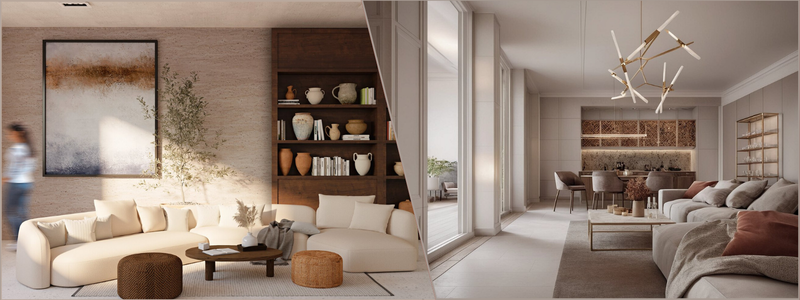
author avatar

MacKenzie Brown is the founder and CEO of Cad Crowd. With over 18 years of experience in launching and scaling platforms specializing in CAD services, product design, manufacturing, hardware, and software development, MacKenzie is a recognized authority in the engineering industry. Under his leadership, Cad Crowd serves esteemed clients like NASA, JPL, the U.S. Navy, and Fortune 500 companies, empowering innovators with access to high-quality design and engineering talent.

Connect with me: LinkedInXCad Crowd