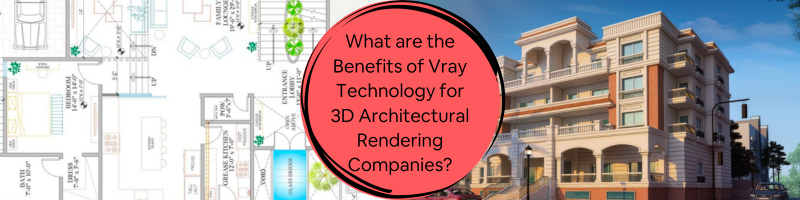
What are the Benefits of Vray Technology for 3D Architectural Rendering Companies?


3D architectural rendering companies that hope to succeed and grow should note that clients think differently than they do. Instead, you need to amaze and blow them away right from the get-go. Architects should combine various tools to showcase their skills to ensure clients are blown away by their work. Architects, artists, and designers can effectively communicate and express their ideas if they work collaboratively.

The universal plugin Vray allows different types of 3D modeling software to produce excellent results from designs. Your 3D architectural rendering company will have a fun time working with Vray technology thanks to its wide range of benefits, which include the following:

Vray enables access to extensive resources and libraries

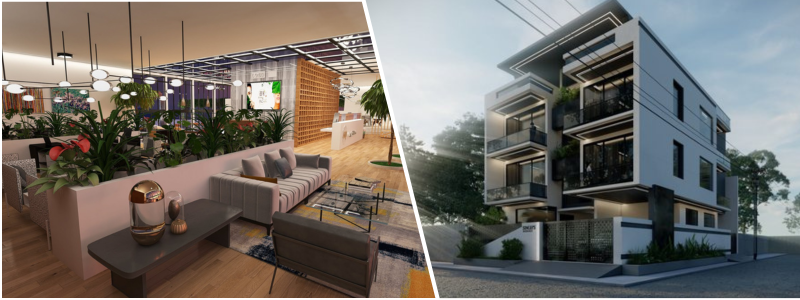
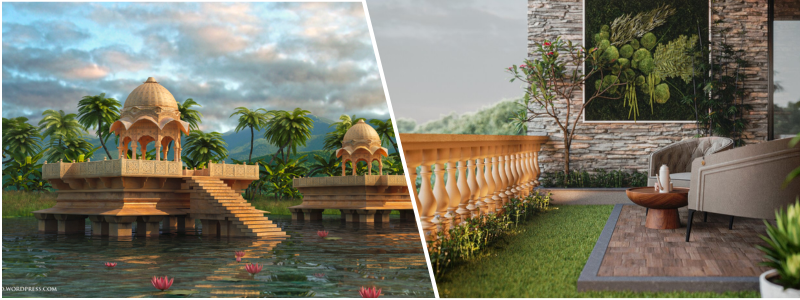
Vray’s vast material library makes it stand out from its competition. You should never consider a material that doesn’t render flawlessly with life-like precision and add it to your design. The Vray plugin revolutionizes interior design and 3D architectural rendering by taking them to a new level. With Vray, you can effortlessly manipulate finish combinations in real time, eliminating the need to spend endless hours explaining the look and feel of every finish on every surface. Instead, you can simply showcase your design vision through stunning 3D renderings, making it a game-changer for both 3D interior design services and 3D architectural rendering services.

Visually presenting information allows you to make faster decision-making, depart sooner, and let you do all the things you love and appreciate about architecture. Only a few 3D rendering products can keep up with the popularity of Vray. It’s packed with tons of courses, lessons, and tutorials to help you make the most out of its potential. Practice is required to make the most of a product, especially with steep learning. But you will become better at it faster if you practice under focus and guidance with the help of the available resources at your disposal.

RELATED: 3D Interior Design Costs, Modeling Pricing, and Rendering Rates for Buildings

Be a part of a vast user community
vray1

The community of Vray 3D rendering software users is massive, with instructors, content creators, social media, forums, and more. You can ask for expert technical opinions on your newest renders and receive friendly feedback. There are also learning resources available for free that help beginners find their footing and guide well-versed artists who plan to implement new features. Designers and architects can search for 3D assets, tutorials, and docs to improve their 3D architectural rendering workflows.

Boundless options in Vray

Vray also has limitless options to adjust camera settings, depth of field, light source, material textures, bump maps, and more. It ultimately all boils down to flexibility if numerous options are available. It’s easy to get tempted to control all aspects of a design drawing, and Vray lets you do just that. All plugin products are also tailored to specifications to assure you that it’s yours and yours alone.

Material rendering

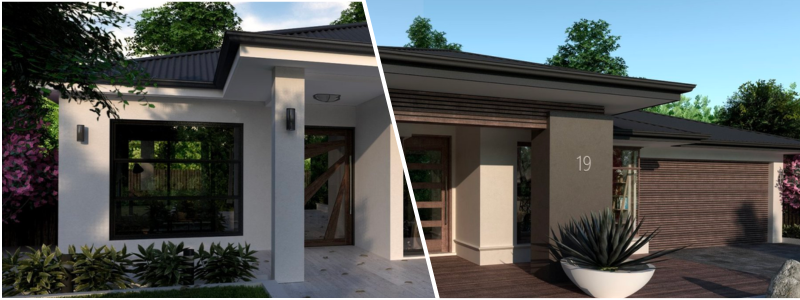
You last want your realistic 3D architectural visualization to look unrealistic. It will make your project look amateurish if your company is caught between finished and conceptual work. Ensure you nail realism if you want your work to be genuine, and this is where Vray comes in handy. Vray’s consistency and precision play a pivotal role in achieving the highest level of realism in your 3D architectural visualization services.

RELATED: What are Architectural 3D Visualization Costs, Service Fees & Rates for Companies?

No limits

Big projects always entail large overheads. Even the most straightforward scenes involving international airports, towering hotels, and smart cities can already contain thousands of lights and objects. It’s easy to feel nervous with the mere thought of all the data involved in such projects.

The good news is that Chaos, the company behind Vray, has developed a rendering engine that can handle these massive scenes quickly and smoothly. Tools like Proxy Objects can also handle the most exhaustive models without any issues with memory consumption. Meanwhile, the VR scene format lets you share scenes, 3D architectural models, or entire 3D architectural rendering projects across various host platforms without conversion troubles.
vray2

Exceptional photorealistic quality

Vray has already bagged Emy and Academy Awards, and many animations and sequences in TV shows and movies have been crafted using the physically accurate materials and lighting of this proven and tested render engine for production. 92 out of the top 100 architectural companies in the world use Vray daily to visualize their most significant and essential designs. Of course, you can also tap into its unique power and develop stunning visuals.

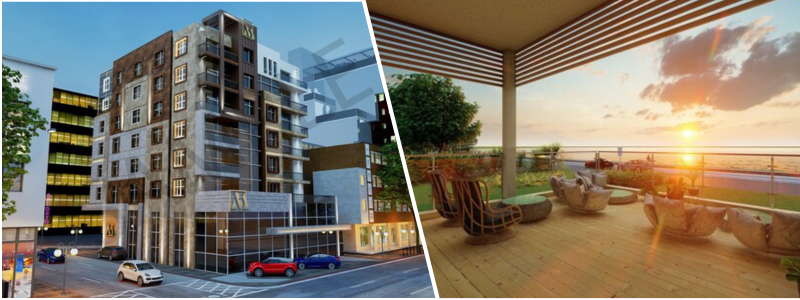
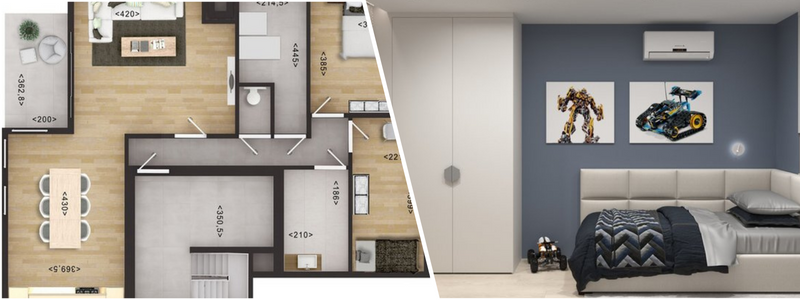
Vray has you covered if your company wants to create a more hyper-realistic 3D architectural rendering. It allows you to build fly-throughs and stills that resemble natural photography. Vray also offers VR camera support. By exporting 6×1 Cube or 360 spherical images, Vray empowers you to deliver an immersive and intuitive experience of your designs to clients, making it ideal for both traditional and cutting-edge AR/VR architectural services.

RELATED: Architectural VR/AR 3D Rendering Costs, Rates & 3D Modeling Pricing for Design Firms

More realistic visualization

The cleanest textures, the whitest whites, and the darkest blacks accurately represent real-life situations. You can use Vray to create spaces that will make your clients feel they live in them. Every design you make should be of top quality, whether presenting it to potential clients or submitting it to stakeholders.

Despite its subjective nature, quality is an easy-to-quantify and recognize measure.

You can catch the eye of more people and establish your reputation if your work stands out from the crowd. This is what 3D architectural rendering companies are all about.

Seamless integration with SketchUp, 3DS Max, and Rhino
vray3

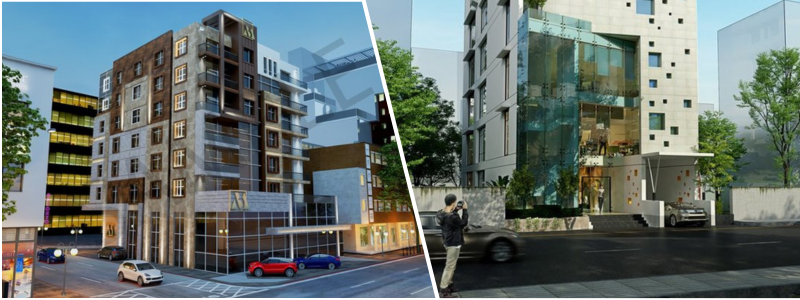
Integrating with Google SketchUp is an indispensable feature for any 3D architectural rendering company. Sketchup can present ideas right away with the help of a simple set of tools. However, this modeling tool is technically not the most sophisticated.

But by using Vray, you can breathe life into your sketchy ideas at the fastest time possible. Client meetings that used to be held to address issues with conceptual programs can now be improved with real-life visualization, thanks to Vray.

Light and shadow

Shadow and light, and the way they are rendered in architectural visualizations, are just two of the most essential tools available at your disposal to understand realism unconsciously. Lighting that isn’t convincing can be off or distracting on a drawing. Vray is known to handle realistic shadow and light more realistically and accurately than other comparable renders.

Real-time validation of ideas

Vray provides two real-time solutions. First is Vray Vision, which is available in Rhino, Revit, and SketchUp. This raster engine lets you improve your design’s view in another window. Vray Vision allows you to export scenes to enable your clients to navigate them and evaluate and review design proposals.
Another real-time ray-traced solution is Chaos Vintage with Live Link, which lets you navigate the scene and check your design with Vray’s realistic quality. You can also work interactively with IPR or Interactive Production Rendering to check the result while you design and speed up the lookdev process of lighting and materials. It allows you to reach decisions faster, thus enhancing your productivity significantly.

RELATED: Top 20 3D Design Software Programs Used by 3D Services Firms & Freelance 3D Modelers

Easy learning and usage

The past several years have witnessed the redesigning of Vray to start easily and quickly. It only takes several steps to create gorgeous 3D architectural rendering imagery, which is undoubtedly every Vray designer’s dream. Creativity is the most critical aspect of any design. You can enjoy more opportunities and options if you can use friendly tools that you can seamlessly incorporate into your creative exploration.
vray4

Thanks to the scene intelligence technology and default settings of Vray that work with different scenes, you can spend more time on creative solutions and less on technical aspects. Vray can also seamlessly work with top 3D platforms like SketchUp, Rhino, Cinema 4D, Revit, 3DS Max, and more. However, even though it’s easy to learn, you can expect that there is still a learning curve due to the extensive material library and more settings and options as you find your way through the entire process. The real value of Vray lies in its work. The good news is that architects need to learn the system, change it based on their preferences, and make the most out of its efficiency.

Fast 3D rendering made possible

Fast is often associated with machines, settings, and 3D rendering model size. However, Vray consistently outperforms its competitors. Vray offers architects a range of benefits, including faster 3D rendering services, architectural drafting services, and 3D architectural animation services. Using a 3D visualization tool that lets you quickly determine if something will work before you fully engage in longer, higher-quality rendering presentations works to your advantage.

This will allow you to see the lighting, materials, and colors to decide the frame and composition much faster. Vray also offers a faster rendering engine that no other rendering software can provide. Consider using Vray if you’re looking for something quick that will maintain quality, even on a tight schedule.

RELATED: 3D flythrough & 3D Architectural Animations, Costs, Rates, and Pricing for Companies

How Cad Crowd can help

Cad Crowd is a platform where your 3D architectural rendering company can search for professionals who are well-versed in using Vray for architectural design services.


Revolutionizing BIM Processes with AI and Machine Learning


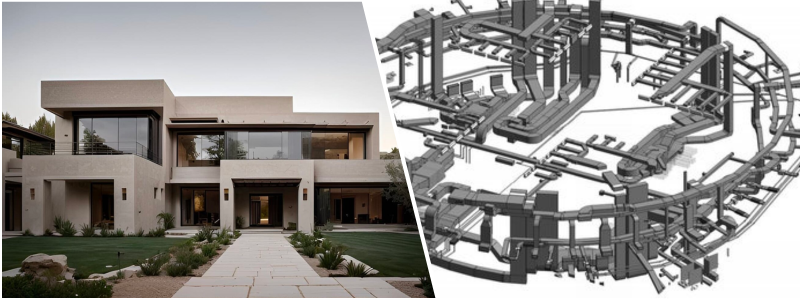
Building Information Modeling (BIM) is a digital representation of the physical and functional characteristics of a building. It has become an essential tool in the architectural design and construction industries as a catalyst. The constant evolution of technology has prompted the BIM processes to create 3D models, simulations, and analyses to improve the accuracy and efficiency of building design and construction.

It is also necessary to adapt and innovate, ensuring they remain at the forefront of the latest advancements. However, the traditional BIM processes have limitations, which can be overcome by integrating Artificial Intelligence (AI) and Machine Learning (ML). 

This blog discusses how AI and ML are changing the landscape of Revit/BIM processes in the architectural design and construction industries.

The Concept: What are BIM Processes?

Before we delve into the influence of AI and Machine Learning, it’s essential to understand the role and importance of BIM processes fully. These processes are the backbone of the architectural design and construction industries. They involve generating and managing digital representations of the physical and functional characteristics of places. It means creating detailed and accurate models of buildings or infrastructures that serve as a shared knowledge resource for information about a facility, forming a reliable basis for decisions throughout its life cycle.

These processes have been revolutionary in their own right, offering innumerable benefits such as improved visualizations, increased productivity due to easy retrieval of information, increased coordination of construction documents, embedded and linked attribute information, and increased speed of delivery. But as with all things technology, there’s always room for improvement and innovation.

Limitations of Traditional BIM Processes

Traditional BIM processes have limitations that the integration of AI and ML can overcome. Some of these limitations include:

Manual Data Entry

The process requires manual data entry, which can be time-consuming and error-prone. This involves entering data into the model manually, such as dimensions, materials, and other building components. It can result in errors that can lead to delays in the construction process.

Limited Analysis

They need more analysis capabilities; while they allow for simulations and analysis of certain aspects of a building, such as energy consumption and structural integrity, they need to be improved in their ability to analyze more complex aspects.

Lack of Automation

They allow for some automation, such as the generation of schedules and quantities, but they need to be improved in their ability to automate more complex tasks.

The Advent of AI and Machine Learning in BIM Processes

In recent years, we’ve seen a surge in integrating AI and Machine Learning technologies in BIM processes. These are subsets of technology that focus on developing machines that can learn from and respond to different scenarios, much like humans. These technologies can analyze vast sets, predict outcomes, and even learn from their mistakes. Applying these technologies in these processes spells a significant shift in how we design, build, and maintain our built environments.

Enhancement in the Design Phase

One of the most significant changes that AI and Machine Learning bring to BIM processes is in the design phase. These processes have always played a crucial role in creating detailed and accurate models of buildings, but with these technologies, these models can now be more precise and efficient.

The technologies can analyze data from past projects, including successes and failures, to predict outcomes. This predictive analysis can help architects and engineers make informed design decisions. It can also help avoid potential issues in the design phase, saving time, effort, and resources.

Efficiency in Construction Phase

Efficiency in the construction phase has always been one of the primary goals of BIM processes. With the integration of AI and Machine Learning, this efficiency can be taken to new heights.

By analyzing data from past construction projects, these technologies can predict potential issues, such as clashes in the design or problems in resource allocation. These predictions can be addressed before they become a problem in the construction phase, ensuring a smoother, more efficient construction process.

Proactive Maintenance Phase

AI and Machine Learning also have significant implications for the maintenance phase of BIM processes. Traditionally, maintenance has been a reactive process – we wait for something to break before we fix it. But with these technologies, maintenance can now be a proactive process.

By analyzing data from the building’s lifecycle, these technologies can predict when a part of the building will need repairs or replacement. This predictive maintenance can save significant time and resources, as well as prevent potential disruptions.

Future of BIM Processes

Integrating AI and Machine Learning is not just an improvement of the existing BIM processes; it’s setting the stage for the future of architectural design and construction. These technologies bring intelligence and adaptability to These processes, making them more innovative and efficient. As AI algorithms learn from past mistakes and successes, These processes will continue to evolve, offering even more benefits in the future.

Conclusion: Embracing the Change

The impact of AI and Machine Learning on BIM processes is far-reaching and transformative. While it may seem like a daunting task to embrace these new technologies, the benefits they bring to the architectural design and construction industries are well worth the investment. These technologies are not just the future of these processes; they are the present. The sooner we embrace these technologies, the sooner we can reap their benefits.

Catalyze the transformation of your BIM processes with these advanced technologies. Our team of experts at IndiaCADworks is here to facilitate the integration and elevate your architectural design and construction projects. Take advantage of this opportunity; reach out to us today!

Tags: , ,


How Parametric Design in CAD is Transforming Architectural Modeling Design Practices


In case you haven’t noticed, more and more architectural designers use parametric design in CAD to transform their architectural projects. Parametric design has become more important and prevalent in building design and construction. It’s even considered one of the most significant advancements the architectural industry has seen that can change how architecture works.

Read on to learn how parametric design in CAD is transforming architectural modeling design practices:

What is parametric design?

Parametric design refers to the design process that uses geometric and programming operations and data inputs to establish design outputs. To better understand parametric design, there are a few things you need to know. These include parameters and data, programming concepts and syntax such as functions, loops, conditionals, and data structures, as well as the tools and software you can use to get started.

The best and easiest way to understand the parametric design programming concept is to envision what you will do when baking a cake. You have the inputs, which are the ingredients you must process every step of the way. Once you’ve met certain conditions, whether you’ve reached a particular temperature or a certain amount of time has passed, you will get a cake, your output.

How parametric design transforms practices of 3D architectural modeling design

Here are some of the top reasons why parametric design is seeing increased relevance in the field of 3D architectural modeling design services:

Keep up with the data-centric world

The modern world has become more data-centric, giving architectural designers access to different types of data available. The latest systems and technologies allow measuring everything quantifiable, such as 3D web maps or photogrammetry, sensors, big data, passenger ridership data, and climatic datasets.

With the sheer scale of data sets popping up together with new technology enablers like computing, generative design, and machine learning, it’s safe to anticipate making better design designs derived from relatable data. The data will become new constraints, allowing the setting of specific parameters and criteria to govern the designs.

With more parameters to issues with the design, it becomes possible to set more practical constraints to output different surprising solutions. These constraints include plot ratio, site plan setbacks, building layout, height constraints, computational fluid dynamics, daylighting, and façade design.

parametric1

Various solutions for more informed design decisions

With the help of the parametric design process, architects can make more informed design decisions using a series of defined conditions, lowering the cost and time required to analyze or ideate ideas for the design.

The solution can be ranked and analyzed with the help of parametric design. It also allows easy tweaking of every solution for further analysis. This forms a convergence to a better solution down the line and exposure to massive precedent datasets. It creates a transparent methodology of design toward an agreed selection of solutions.

Enhanced functionality and aesthetics

The parametric design provides robust tools that can help solve and address structural, material, wise, and visual architectural concerns. This also instills an entirely functional process with the architectural designer’s aesthetic vision.

Architects often have distinct aesthetic aims, with their designs solving contextual and functional problems. Parametric design blends function and aesthetics so the two can’t be separated during the design process. With technological advancements, you can see and feel their impact in almost all aspects of the building and construction industry. The design process largely depends on digital methods, and changes in project management also evolve. This kind of revolution affects the aesthetics of buildings, giving more freedom of form from the automated manufacturing methods.

Also equally significant is how it enhances the overall functionality and quality of the design. With the different solutions for managing and optimizing complex concerns, it’s easy to assume that there will also be improvements in building contextualization and use.

RELATED: Learn About Architectural Design Fee Schedules, Rates, and Pricing for Architect Firms’ Costs

The third industrial revolution is brought to architecture

As parametric design enters the world of architecture, practice, and theory, start to change. The third industrial revolution is an era of mass customization, computation, and robotics. Architects must learn to adapt to existing changes, digital processes, new programming languages, and more in a profession that involves developing physical end products. Parametric design is the direct result of the field of architecture going through the changes that the third industrial revolution brought about.

Computation as the critical design tool

Architectural designs are prone to changes as they keep up with trends. Parametric design, however, can be regarded as a set of methods and tools that can help develop high-quality buildings suitable for modern society. When discussing these tools, you must be familiar with the differences in what makes these possible.

Two terms, in particular, require distinction: computation and computerization. Computerization is about turning designs into digital formats, such as drawing a building’s 3D model. Meanwhile, computation is a mathematical and algorithmic process that a computer uses. This is precisely what parametric design is all about.

Adaptation of architecture to build smart cities

With the help of parametric and computation, architectural design teams can shift their attention from specific neighborhoods or structures to entire cities. As parametric design technology improves, building cities as individual systems is possible.

parametric2

More straightforward data management

Parametric architecture has virtually no limits regarding what it can do. Traditional tasks that used to be completed in months can be finished in a snap of a finger these days. An excellent example of parametric design is used for designing an office building. The first step is typically identifying client requests. Designers will then have to ensure that the requests will fit natural laws or laws affecting the durability of a building.

But with the help of the AI or artificial intelligence system, designers only need to inset initial parameters, with the computer doing the rest of the work. Parametrics acts as the programming language for architects. As they add data and input specific parameters, a set of unseen new forms pop up. Developing various outputs with new and old data will only take seconds.

The same rule applies to developing enhanced new tools based on the designer’s needs. For instance, it now just takes a few minutes to test how many daylight hours there are at any given time when designing a building for a city that often gets cloudy weather.

Accommodating complexity management

Parametrics and computation work hand in hand to help architectural designers better handle complex problems. These processes are all integrated into the work of the architect. Parametric architects deal with parameters from the user interface, site context, programs, material technologies, manufacturing, and environmental factors. They continue to push the boundaries of how modern technology can help them, and as a result, architecture also improves.

RELATED: Architectural VR/AR 3D Rendering Costs, Rates & 3D Modeling Pricing for Design Firms

Replace classical modernism

Modernism represents an ideology that depends on homogeneity, standardization, mass production, and universalism. Parametric design, on the other hand, is heterogeneous, mass-customized, highly adaptive, and contextual. These theories have a fundamental difference between them, and the main goal for architecture students is to alter how they think about and look at designs.

Professors often introduce their students to parametric design using simple parameters within their projects. Designs emerge from significant variables, materials, and methods. However, a designer with a background in modernism will have a more challenging time replicating this way of work.

Thankfully, with the help of more enhanced tools for visual coding, designers can now deal with more adaptive and complex experiences. The main shift for the parametric design expert is between new and old ways of thinking.

parametric3

Types of parametric design

Building layout

The planned space layout within a building is based on program or circulation proximity according to the user’s preferences in a survey. It can be used as input into the generative design system to develop different options for implementation and evaluation.

Façade design

The Siemens Middle East Headquarters in Abu Dhabi, UA, is an excellent example of parametric design in façade design. The façade perforation design was according to the building’s orientation and daylighting requirements of the spaces.

Site plan scale

Site plan scale uses generative design to develop 3D site layout design or massing iterations, incorporating 3D architectural site plan rendering services based on plot ratio, setbacks, and site boundary.

How Cad Crowd can help

With modern technologies finding their way into various industries, architecture is expected to follow suit soon. Cad Crowd can help you find parametric design experts who can help transform your next 3D architectural modeling design project. These parametric modeling experts will simplify the CAD process so you can quickly get the desired results.

Real Estate Marketing: Advantages of 3D Architectural Rendering Services & Animation


Imagine yourself shopping around for a new real estate property. Do you want to see the same old top-down blueprints, or would you rather watch 3D presentations? 3D architectural rendering or 3D architectural visualization is one of the hottest game-changers in real estate marketing. Who can resist more visually stimulating and enticing architectural presentations?

Initially, animation was only used for the primary purpose of fun and entertainment and nothing else. However, 3D architectural animation services are now available and used for architectural projects related to almost everything. But if there’s one area where 3D architectural animation is starting to establish a stronghold, it is none other than real estate marketing. With the help of 3D architectural animation services, real estate marketers can now effectively advertise their home designs and properties to potential clients.

Read on to learn how you can benefit from architectural animation services:

Spot issues early on

3D architectural rendering services allow more precise visualization of drawings from an architectural standpoint. It gives architects a clearer view of the architectural dimensions and the project as a whole. It will enable them to pinpoint any problem they might encounter early during the design stage. This will save you money and time and prevent additional damages that might be incurred if the issues are fixed later on.

Attract more potential clients

Many studies have revealed that soft curve forms are more attractive to the human brain, which prefers visuals over static data dumps. This explains why more than 2D images might be needed to present the dimensions of the projects being designed.

3D architectural visualization services address this problem by presenting images that resemble their exact appearance in real life. It allows clients to observe and scrutinize the entire project from different angles to eliminate any room for doubt before the actual purchase. 3D architectural animation services and architectural walkthroughs help prospective clients experience how the project feels before the development starts.

real-estate1

Craft precise presentations

While 2D images are helpful in architecture, you’re essentially reviewing measurements and theoretical designs. You need to find out if these measurements will work out or even be possible in the real world. These designs can only be tested once you’re in the field. It can become an issue if you present your design to clients because they need help seeing the bigger picture or understanding the intricacies of complex 2D blueprints. 3D architectural rendering services & animation help bypass these issues.

RELATED: Virtual Staging Costs, Service Fees & Architectural Pricing for Real Estate Companies

Perform edits in a hurry

It’s a long and arduous process to create precise real estate presentations. Sometimes, the client may request a few tweaks even after you present the design. The main concern about editing 2D blueprints is that it could be more challenging and quick. If you’ve noticed an issue with the design, you’ll spend most of your resources re-sketching these concepts to implement new ideas.

Once again, 3D architectural visualization services and architectural presentation services can help you solve this issue. Architectural CAD design services can make the necessary changes right away with the help of tools such as AutoCAD. All of these changes can also take place in real time. You can immediately update the client and show them how the finished project will look. If the client is unsatisfied with the new design, the architectural designer can return to the original vision with just a few clicks.

Improved marketing experience

People are now content with dull and lifeless 2D blueprints. That’s why only some people are willing to engage with them. However, something more appealing, like 3D architectural animation, is guaranteed to attract more attention without trying too hard. 3D architectural renders are visually enticing because they are downright beautiful. Many people don’t even realize they’re looking at a 3D architectural rendering, not the real thing.

You can easily fit these rendered presentations into slideshows and short video commercials. This means that 3D architectural rendering and architectural presentation services are now the perfect tools to develop better presentations for marketing purposes. Since consumers are also most likely to buy something after seeing a video of it, you can use 3D architectural animation services for this purpose.

Guarantee a better understanding of the project

real-estate2

You can help your potential clients better understand how the finished project will look if you present a replica before its construction. This will help them decide accordingly. If there are changes or tweaks along the way, you can also quickly implement them before the plan for construction turns into a brick-and-mortar entity.

Seamless project execution

3D architectural rendering technology also helps architects achieve better accuracy throughout the project’s development. Since the risk of errors is reduced, it also eliminates the need to rework to a certain extent, reducing the number of interferences in the field. This will help your company boost its overall productivity.

Create more opportunities for virtual reality with 3D AR/VR Architectural Services

Virtual reality, or VR, is expected to continue growing and improving shortly, seizing the attention of consumers and companies alike. 3D AR/VR architectural services in real estate open the door to new opportunities and potential. 3D architectural rendering combined with AR/VR can develop virtual tours of real estate properties.

Buyers can also view entire properties through the website without the comforts of their homes. This fantastic level of immersion and convenience for clients is one of the best ways to stay ahead of your competition.

RELATED: Architectural VR/AR 3D Rendering Costs, Rates & 3D Modeling Pricing for Design Firms

Quick acquisition of government approvals

Neighborhood governments often dismiss many improvements and structures due to the vulnerability factor in appearance. But with precise 3D perception and animation and full confirmation, you can attain certainty and eliminate the vulnerability of the task for the convenient acquisition of government approvals.

Manage client expectations

Client dissatisfaction is often the result of mismanaged expectations. Designers usually make the grave mistake of assuming they are always on the same page with their clients throughout the process. They need to realize that, more often than not, clients need help understanding still images and blueprint designs.

3D architectural animation services can change these and more. Animation can serve as a walkthrough for clients, allowing them to experience it instead of merely looking at the design. Well-made architectural animations can enhance their understanding and give them a better idea of what to expect from the finished project.

real-estate3

Get more precise renderings

3D architectural rendering allows a higher level of precision for real estate listings. It makes animation different from 2D blueprints, static floor plans, and other basic diagrams that are known to leave some room for error. Aside from that, 2D drawings and floor plans don’t usually present a relative scale. However, 3D rendering services eliminate the risk of error by using minute details and measurements with almost zero tolerance. Instead of merely checking the 2D plan without any solid idea of dimensions or scale, you can present precise and accurate 3D architectural renders showing angles, depth, and scale to your clients.

Cost-effective

Contrary to popular belief, 3D rendering software can make the entire process cheaper than 2D blueprints. Designers enjoy the freedom of making changes and tweaks in just a few clicks, reducing the monetary investment for modifications. In addition, 3D 360-degree panorama rendering services can use the same file used for traditional marketing and static posts and convert them into virtual room tours, making them cost-effective and marketable in 3D architectural rendering.

RELATED: What Are Architectural Animation Costs, Rates, & 3D Design Pricing for Companies?

Eliminate communication gaps

Interior designers and architects involved in real estate businesses can better explain the details of their projects to the project stakeholders and the construction team with better clarity and precision with the help of 3D architectural visualization. It ensures that everyone is always on the same page to ensure flawless project execution without confusion and misunderstandings.

Waste reduction

Time is money in the real estate industry. The ability to detect errors proactively can go a long way to ensure you meet your deadlines and avoid unwanted delays. Since 3D architectural animation is not your ordinary still images, those who are part of the design process can check the 3D architectural animation and pinpoint any issues early. Lighting and spacing issues can also be addressed with the help of 3D architectural animation services.

How Cad Crowd can help

If you’re not ahead in real estate, you’re lagging many steps behind. Cad Crowd can help you find the best 3D architectural rendering and 3D architectural animation services to help you take your real estate marketing efforts to the next level. They also offer architectural presentation services that can provide an elevated understanding to clients when presenting your architectural project.

Structural Steel Detailing Services for Companies: Steel Detailer Costs and Rates


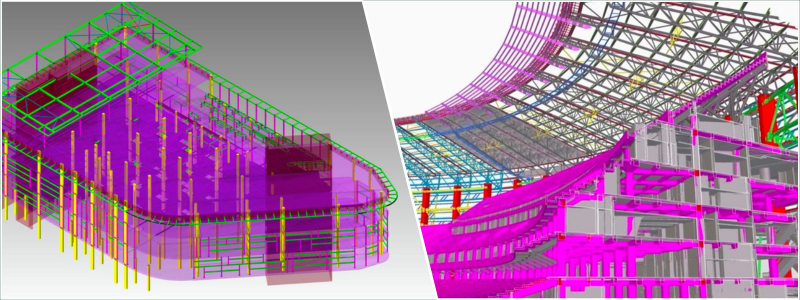
The professional who provides and installs the steel framework for a construction project is known as a steel fabricator. Everything a fabricator does on the job, including cutting and welding the frames, is based on a set of technical drawings produced by a steel detailer.

A highly specialized area within the architectural drafting profession, structural steel detailers read architectural and engineering drawings to gain practical knowledge about the overall design intent of the construction process. Based on the information, the steel detailing designer creates another set of technical drawings for steel fabrication. The outcome is a comprehensive, accurate, illustrated instruction on the installation and erection methods of steel framework.

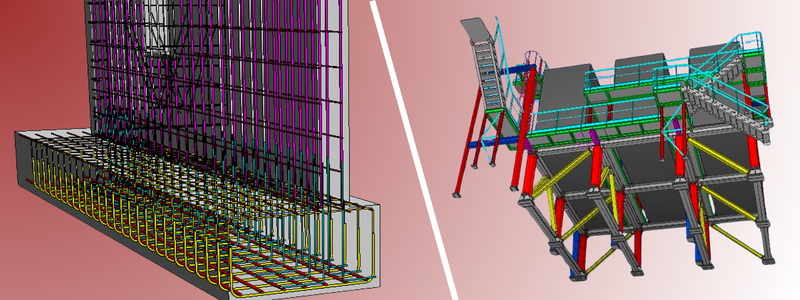
An architectural drawing offers a detailed view of a project design, whereas an engineering draft provides a complete and annotated construction layout. On the other hand, the documents produced by a structural steel detailer clearly define every individual part required to build the framework, along with its precise dimension and length. Fabricators—welders and installers—use the diagrams from a steel detailer as the operational guidelines to do their jobs.

CAD drafting for structural steel detailing

Structural steel detailing used to be traditionally drawn by hand using such drafting equipment as a parallel bar, scales, T-squares, and various templates of shapes, among other tools and calculating aids. Manual drafting has been almost wholly replaced by CAD drafting software. It is not entirely automatic, but the CAD drafting software features a wide range of built-in drafting functions to generate accurate steel detailing digitally. Before printing, crucial data like quantities and numbering must still be manually inserted into the drawing.

Modern steel detailing services will likely use 3D modeling applications to build realistic visualization. As expected, a three-dimensional view delivers a better (more perceptible) notion of thickness, depth, and volume, improving the chances of accurate construction. Steel detailers build the framework on screen in 3D before construction begins. In case of mistakes, every bit of the model can be modified without restarting from scratch.

Steel detailing documents

No matter the project, structural steel detailing services only have to produce two types of technical documents:

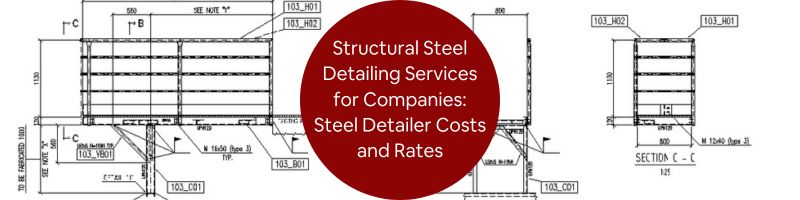
Information about the fabrication requirements for the assembly of a structure is written in a shop drawing and provided by shop drawing services. A complete shop drawing contains detailed specifications of each part, including but not limited to materials, sizes, dimensions, paints or colors, bolting, welding, and surface preparation. There needs to be more information about the installation process because the drawing is only intended for use by a steel fabrication shop. The main point is that the document describes each part of the framework.

The description must be comprehensive, too. A shop drawing should include all diagrams, schedules, illustrations, material certifications, catalog data, design calculations, storage requirements, and transportation procedures of the framework components. Structural steel detailing services generally produce all data types according to the job description in Contract Plans (submitted by contractors to engineers) or a separate project brief.

Shop drawings are only necessary for parts or components that require off-site fabrication. The information must be detailed enough to complete the fabrication processes without referencing additional documents. Contractors can propose changes to some aspects of the constructions—such as fabrication methods, materials, or steel products—through shop drawings. However, any modification should not affect the framework’s already-specified requirements for load-carrying capacity, maintainability, and structural integrity. Architects or engineers of record must review all changes indicated in the drawings before approval.

RELATED: Structural Engineering Rates & Costs for Architectural Design Firms

The steel framework installation methods are described in the erection drawings. One thing to remember is that such drawings are sometimes treated as recommendations only. In reality, contractors are in charge of the on-site installation; they have the freedom, to a certain degree, to determine the construction techniques, methods, procedures, and installation sequences. The architects and engineers may allow such latitude as long as the built framework conforms with project requirements and is done on schedule.

steel-2

Additional views

Some frameworks require pre-cast or prestressed beams, gliders, or non-standard and miscellaneous steel products. In such a situation, steel shop drawing services may include additional plan views to denote the correct placement of the components. There might also be other documents to complement the erection drawings, for example, when significant structures must be constructed using specialized pre-casting or equipment. The project brief has to define all the requirements for the submittal of erection drawings to avoid repeated RFIs (requests for information) that will inevitably delay project completion.

Minimum information requirement

When details are scarce in the brief, and an RFI is not immediately answered until the “Issue for Approval” day, shop drawing and erection drawing are required to provide at least the following information:

  • drawing number
  • drawing title and project name with a location description
  • the initials of the individuals (detailers, checkers, contractors) responsible for the drawing
  • The Contractor commissioning the detailing project
  • the fabricators’ names (in title blocks)
  • the Engineer of Record

Additional information includes a description of the project site, where an item is located, and the position in which an item is installed (such as handrails or sign structures). Complementary documents like catalog data, trade literature, and calculation sheets are bound with the drawings and submitted together.

Before any shop drawing and erection drawing is ready for submission, the Contractor is responsible for the review process to check if the specified details are correct following project requirements. Verifying that a newly created document is consistent with the existing (approved) drawings is also necessary. In the United States, all structural steel detailing services must conform to the standard of practice established by either NISD (National Institute of Steel Detailing) or AISC (American Institute of Steel Construction).

RELATED: Learn About Architectural Design Fee Schedules, Rates, and Pricing for Architect Firms’ Costs

Steel detailers’ qualifications

Although steel detailer designers will not be directly involved in the on-site construction, the drawings provided play crucial roles in ensuring project progress. They are the foremost (and perhaps the only) practical steel procurement, fabrication, and design guidelines. The steel detailing drawings must be created and treated as detailed manuals to organize the structural steel components used for any project. More than just construction diagrams, both shop drawings and erection drawings are intended as instructions to help engineers or architects minimize the waste of resources while improving productivity.

When hiring structural steel detailing services for companies based in the United States, you can hardly judge their capabilities and qualifications by academic credentials. There are plenty of certification programs in the country, including structural design, steel design, engineering design services, and architectural drafting services. However, specific degrees for steel detailing still need to be determined. A college degree is optional to be a professional steel detailer in the United States. Furthermore, most of the experienced steel detailers are trained on the job. NISD also provides Individual Detailer Certification Programs eligible for professionals with at least five years of experience. That said, enrollment is voluntary. Many practicing steel detailers in the US have yet to receive formal academic training in the occupation.

steel-1

Cost of structural steel detailing services

In the US, steel detailers are formally recognized as architectural drafters specializing in steel material. According to the Bureau of Labor Statistics, the full-time annual pay rate averages $60,340 or $29.01 per hour. Freelancers’ average hourly rate is in the same range, between $27 and $32, depending on years of experience, certifications, and design-related qualifications. For example, a steel detailer with an associate degree in civil engineering or architectural drafting will likely charge more than a self-trained freelancer.

Some structural steel detailing services offer a per-tonne basis pricing schedule. Small detailing firms or freelance structural steel detailing experts typically charge between $85 to $100 per tonne of steelwork described. Many services have a lower rate but implement a minimum fee from $10,000 to $15,000 per project.

Steel Detailing Services in the US Average Annual Pay (Full-time) Average Hourly Rate (Full-time) Per-Tonne Pricing Minimum Project Fee
Steel Detailers (BLS Data) $60,340 $29.01
Freelance Steel Detailers $27 – $32
Structural Steel Detailing Services $85-100/tonne $10,000-15,000

Before hiring, ensure the quoted fee covers the cost of the checking process, which has to be done by another steel detailer. Skipping the crucial step may lead to costly inaccuracies, such as missed welds and incorrect cuts. It is a good idea to cut costs wherever possible, but straining the budget of a steel detailer can only add unnecessary risks to the project. While the steel construction framework might not be visible when the project is complete, the backbone holds everything in place. It must be done right by qualified professionals to prevent potentially expensive mistakes.

RELATED: Architectural Plans, CAD Drawing Costs & Architect Service Pricing

How Cad Crowd can help

Navigate the intricacies of structural steel detailing with confidence alongside Cad Crowd. Our structural steel detailing services offer tailored approaches for businesses hiring top-tier steel detailers. Delve into our comprehensive guide to empower your projects with precision and cost-efficiency. Need specialized assistance? Contact Cad Crowd and get a free structural steel detailing quote today.