Top 30 Aerospace Engineering Recruiters & Aviation Agencies Recruiting at US Companies


For most aerospace companies in the United States, recruiting is not part of their core competency. It does not change the fact that they are running a business in which bringing in fresh talents and experienced professionals is key to growth and steady improvement. According to the BLS, the demand for aerospace engineers is expected to see a sizable increase thanks to rapid development in space technologies and the manufacturing of drones for special purposes such as disaster detection and prevention.

Despite the positive outlook, the aerospace industry in certain states like California, Florida, and Texas remain unable to meet the demand in recent years, with an average of only 0.5 employment per thousand jobs available. There are several possible reasons: companies have problems with direct hire, face difficulties finding the right workforce for job openings, or shortage of workforce in the area.

The great news is that the United States has plenty of recruiters specializing in aerospace engineering services. Many of them are located in California, in places like Los Angeles, the San Francisco Bay Area, Long Beach, Sacramento, San Jose, Irvine, and other major cities.

Top 30 aerospace engineering recruiters & aviation agencies recruiting at US companies

Cadcrowd logo

CAD Crowd

Based in Glendale, California, CAD Crowd is a hybrid recruiting agency that offers efficient solutions for businesses’ temporary and permanent staffing requirements. They also provide flexible project-based staffing services and executive search to fill leadership roles in companies. Backed by a pool of more than 100,000 professionals in the aerospace engineering sector, CAD Crowd implements both manual review and a proprietary AI shortlisting system based on talents’ educations, skill sets, past work experiences, certifications, and employment histories, to name a few.

CAD Crowd takes pride in delivering personalized services through an in-depth analysis of the client’s staffing necessities, company culture, job qualifications, and contract-related requirements. Thanks to a broad range of customized solutions, a massive database of potential candidates, and specialized team of headhunters in aerospace engineering sector, CAD Crowd is the outright best recruiter in California, if not the entire United States.

Cadcrowd.com

Alpha Apex Group

Alpha Apex Group

Compared to most recruiters in the aerospace sector, Alpha Apex is a much more specialized option as it places heavy emphasis on finding talents for only a handful of positions, including aircraft design experts, propulsion system specialists, safety engineers, and quality assurance professionals. The recruiting process involves not only initial technical evaluations and competency analysis but also thorough reference checks and long-term support to ensure seamless integration and that the selected talents make positive impacts on the new organizations.

Alphaapexgroup.com

Bobsearch

BOB Search

When looking for talents to fill engineering roles and executive positions, most aerospace companies are more likely to feel comfortable working with a recruiter agency that has extensive experience in the same industry sector. BOB Search has been in the business for more than 40 years and has so far compiled an impressive recruitment portfolio filled with big names like Senior Aerospace, SunSource, Hart & Cooley, and Equipois. It is said that BOB’s proprietary Performance-Based Search System can pinpoint candidates’ specific capabilities and professional backgrounds that precisely conform with clients’ orders.
Bobsearch.com

Davron

DAVRON

A versatile hiring plan and no-cost guarantee before recruitment are only a mere fraction of DAVRON’s capabilities. Based in Tampa, Florida, the recruiter has been delivering ideal candidates for various aerospace companies nationwide since 1998. Many of the companies in its portfolio are government agencies and clients who work with the United States Department of Defense. It specializes in aerospace, mechanical engineering, and manufacturing employment necessities. 

Davron.net

Integress Inc

Integress Inc

Educational background and experiences matter a great deal, but Integress takes special interest in ensuring that the candidates are culturally fit to work in clients’ companies. Integress is an expert in finding candidates to fill various positions, from C-suite leaders to technical specialists in the aerospace engineering field. Its recruiting process is consultative in nature, where clients can freely communicate their staffing specifications and job parameters. Permanent and temporary staffing services are available.

Integressinc.com

CSIcompanies

CSI Executive Search

There is no fit-for-all headhunting method with CSI Executive Search because everything can be tailored in accordance with every client’s requirements. The screening procedures and evaluation techniques are all proprietary, but everything is geared toward providing customized staffing services. CSI only prefers candidates who meet, not only the qualification requirements, but also empirically suitable for retention. Notable clients include Reagan Equipment, Linde Engineering North America, VACCO Industries, and Canal Barge. 
Csicompanies.com

Aviation Recruiting

Aviation Recruiting

Headhunter services from Aviation Recruiting cover many different staffing necessities, whether high-volume recruitment or individual talent acquisition. However, the agency focuses on just a few positions in the aerospace sector, including C-level executives, flight crew, pilots, and aircraft engineers. All services are customizable to cater to clients’ needs for long-term collaboration and immediate hiring priority. Aviation Recruiting is known for its candidate quality guarantee. 
Launchtws.com

180 E ngineering

180 Engineering

Among the most notable clients who worked with 180 Engineering for their staffing needs are Caterpillar, Global Eagle, Rexnord, and Penumbra. The recruiter takes the extra mile with every recruitment process, which may include in-depth consultation with clients’ hiring managers, stringent technical screening, and a thorough review of every candidate’s engineering experience. 
180engineering.com

Keller Executive Search

Keller

An extensive look at a candidate’s personality has become one of Keller’s highlight points. In addition to a complete review of talents’ engineering skills and track record, each must pass a detailed assessment on motivational drivers, work ethics, and preferences for career development paths. Keller also makes sure that every candidate who passes all the initial screening processes has a professional culture that aligns with the new company/position. Another potential advantage of Keller is how it aggressively hunts for industry talents, even those who are not actively seeking new opportunities. 

Kellerexecutivesearch.com

Sigma Aerospace

Sigma Recruitment

While it is true that Sigma Recruitment is based in the United Kingdom, the recruiter runs its operation on an international scale and is experienced in headhunting services all across the United States, Canada, European Union, South Korea, South Africa, Australia, and China. Pre-screening assessments on hard skills and experience are standard practice, but the recruitment process also involves deep analysis to see whether the candidates would feel comfortable with the prepared package and role requirements.

Sigmaaerospace.com

Korn Ferry

Korn Ferry

The basic operational principle of Korn Ferry’s staffing processes is to bridge the gap between talent management and talent recruitment. In addition to finding and selecting candidates to fill specific roles, the recruiter also helps clients nurture young potential clients (who are not yet ideal for the available vacancies at the moment) into capable professionals to fulfill the same or alternative positions in the future. Korn Ferry thrives in an industry landscape that emphasizes DE&I in talent acquisitions. 

Kornferry.com

Stanton Chase

Stanton Chase

Engineer recruitment services from Stanton Chase cover a broad range of sectors in the aerospace industries, including drone manufacturers, navigation system providers, OEMs, and radar parts suppliers. Since the search focuses on finding experienced engineers to fill executive positions, Staton Chase mostly looks for top-tier referrals, who possesses both technical expertise and deep understanding of market demands. Multicultural sensitivity and solid relationships with commercial, as well as government agencies are the basic requirements to pass the evaluation assessment. 

Stantonchase.com

Frank Jay and associates

Frank Jay & Associates

Few recruiters come close to Frank Jay & Associates when it comes to experience, network, and expertise. An impressive track record follows their trail over the course of 30 years in the recruitment business. They are probably not the biggest recruitment agency in the country, but the narrow specialization in the Aerospace, Aviation, and Airline industries allows them to boast a remarkable and consistent 95% success ratio (candidates retained to talents hired) throughout the decades.

As a comparison, the national industry average is only 65%. Furthermore, around 90% of searches were completed within 100 days. The best thing is that nearly all candidates (more than 95%) from the agency stay in their new positions on a long-term basis. In the event the hired candidates move to new opportunities, Frank Jay & Associates are willing to replace them with equally competent alternatives at no additional charge.
Frankjayassoc.net

Zimco expert staffing

Zimco Expert Staffing

The recruitment process by Zimco Expert Staffing is as straightforward as it can possibly get. It starts with an evaluation of the client’s requirements through an initial interview, followed by a screening procedure that involves an assessment of candidates’ qualifications. There will be a pre-employment interview before the clients make the decision to hire selected talents. Zimco Expert Staffing also offers long-term analysis to further discover employees’ interest, references, and competence improvement. 
Zimcousa.com

Avjobs Recruiting

Avjobs Recruiting

Unlike most staffing agencies on the list, Avjobs Recruiting is not necessarily an agency in the traditional sense. Instead, it works by providing a web interface with which employers are presented with a large pool of talents of different qualifications to fill specific job roles. It is, in essence, an aviation recruiting SaaS (software as a service).

Every talent in search of a new job opportunity is required to submit a detailed resume, which may include basic information like skill set, education, location, and experience, as well as specific data such as employment history, past supervisors’ names, award, honors, achievements, certifications, license, specialized training, and verification contacts.

Avjobs.com

Marymont Group

Marymont Group

More than 1,760 job positions in the aerospace and defense sectors have been filled by candidates from Marymont Group. About 94% of the placements remain in the same organizations that hired them. The recruiter focuses mainly on headhunting experienced or senior engineers to fill leadership positions. To pass the selections, candidates must at least possess remarkable technical expertise and a deep understanding of the financial market in related sectors. 
Marymont.com

Precision Personnel Recruitment

Precision Personnel Recruiting

Many staffing agencies are usually filled with HRD professionals. Precision Personnel Recruiting makes the distinction as its team of headhunters includes former aerospace engineers who have first-hand experience and expertise in the industry. The biggest advantage is that the team can rely on a collective understanding of aerospace engineering positions’ requirements, ensuring that every candidate makes for a perfect fit each time. Precision Personnel Recruiting also offers services to employees in need of a guidance to better navigate their careers.

Precisionpersonnel.com

Aviation Recruiting

Aviation Recruiting

A direct-hire staffing firm, Aviation Recruiting promises a candidate-quality guarantee. It boasts a specialized team of headhunters comprised of professionals with extensive aviation-related experience. Similar to many other agencies, it uses a proprietary database of candidates with varied specializations including commercial, defense, and aerospace industries at large. Aviation Recruiting makes sure that every candidate has the chance to review the compensation package before signing the employment agreement.

Launchtws.com

Johnson Service Group

Johnson Service Group

There are 33 offices all across the United States and Canada from which Johnson Service Group runs its recruiting operations. Established in 1984, it now hires around 200 internal staff and works with at least 3,000 contractors across its territories. The recruiter specializes in the aerospace and defense sectors, working with both commercial businesses and the military. JSG is known to provide only quality talents to fill job positions in aircraft engineering design, development, maintenance/repair, and project management. 

Jsginc.com

Murray Resources

Murray Resources

A typical staffing agency’s business operations revolve around transactional services, such as screening and placements, but Murray Resources might be more accurately regarded as workforce consultants rather than recruiters. The focus is not solely on filling job positions with the right candidates because the process is also aimed at decreasing the employment turnover rate in the aerospace sector. The proprietary assessment procedure helps clients reduce labor costs without sacrificing their chances of securing quality candidates.
Murrayresources.com

Aerotek

Aerotek

Many things can be said about how good Aerotek is at what it does. Aerotek is an industrial recruiter and a consistent Best of Staffing Award winner, an honor shared only by a mere 1% of all firms everywhere. The award simply means that the recruiting services from Aerotek receive high praise from both the clients and the candidates involved in the process. A big portion of its business targets in-demand workers such as electricians and plumbers, but it also takes pride in providing recruitment services for FAA-regulated companies, including government contractors. 

Aerotek.com

Aquent

Aquent

Among the few recruiting agencies that have tapped into the power of AI technology, Aquent stands out from the crowd with its extensive line of services for a broad range of industries. When most staffing agencies choose to specialize in specific sectors, Aquent opts to improve their core competency in the actual recruiting business – regardless of the industries – while expanding the coverage/marketplace. In the event clients are not satisfied with the talents delivered to their doorsteps, Aquent promises to refund all the cost plus an additional 10%.

Aquent.com

Aviation Personnel International

Aviation Personnel International

Not only does Aviation Personnel International claim to be the longest-running aviation recruiting firm, but it also has the broadest database of vetted candidates, both active and passive job seekers. Most of the candidates are suitable to fill such roles as leaders, pilots, schedulers, dispatchers, and maintenance professionals. Services are available for the Part 91 flight department, too.

Apiaviation.com

Reaction Search International

RSI

Reaction Search International staffing agency has worked with major names in the aviation industry such as Boeing, Airbus, United Technologies, Rolls Royce, Bombardier, and ATR. However, it offers staffing services for individual clients as well. RSI is known for its extensive portfolio of talents for various positions, from C-suite roles and vice presidents to non-executive staff and field leaders. 

Reactionsearch.com

US Tech Solutions

USTECH Solutions

The staffing services from USTECH Solutions focus on several sectors, including Aerospace, IT, Pharmaceuticals, Retail, and Financial. Each sector has its own separate/specialized team that works solely within the relevant industries. The delivery model is somewhat unique as it promises to reduce the recruiting cost by 15% to 60% on the client’s side, compared to the traditional hiring method. Staffing services are available for both permanent and contractual-based recruitments. 

Ustechsolutions.com

Peak Performance Recruitment

PEAK

The agency handles end-to-end recruitment processes in the highly specialized fields of aerospace engineering and defense systems for clients nationwide while navigating all the necessary security clearances. All candidates from PEAK intended for placements are security-cleared in compliance with the Department of Defense requirements. PEAK also employs security clearance verification in accordance with the Department of Homeland Security regulations. 

Peakperformancerecruitment.com
Butler

Butler

Recruitment process is addressed from two different fronts simultaneously. On the one hand, Butler implements the standard practice of utilizing an extensive database of candidates to meet the current demand for talents. On the other hand, it works by leveraging a proprietary resource development geared toward multi-skill training program for future allocations.

Butler.com

Sterling Engineering

Sterling Engineering

Staffing services from Sterling are employee-owned in its entirety. Sterling also claims to have one of the nation’s largest proprietary databases of engineers and manufacturing companies, compiled since 1969. In the aerospace sector, it offers services mainly for international companies to cover their staffing necessities whether on contract, direct hire, or contract-to-hire basis. Sterling is a Managed Service Provider, which means the agency handles recruitment management and oversees staffing processes on behalf of clients.
Sterling-engineering.com

Gables Search Group

Gables Search Group

Personalized recruitment programs from Gables Search Group are available for both large corporations and small businesses in the aerospace sector. Staffing processes are simplified thanks to the group’s dedicated point of contact, who is tasked with communicating (to the clients) every step of the recruitment program, from the initial screening phase to candidates’ orientation. It does not really specialize in the aerospace sector but claims to have extensive services for every discipline in all industries.
Gablessearch.com

Belcan

Belcan

The staffing services from Belcan are done through a Resource & Workforce delivery model, in which the agency provides customer-specific workforce programs for every client. Belcan focuses on candidates to fill positions in the design, engineering, supply chain, quality control, and manufacturing sectors of the aerospace and defense industries. All solutions and procedures are in compliance with the Department of Defense, NASA, and FAA standards.

Belcan.com

How Cad Crowd can help

While there is no one solution fits all in fulfilling recruitment and staffing necessities for every company, CAD Crowd implements all the standard practices that any aerospace and aviation client may expect from a professional staffing agency and then some. By combining meticulous manual reviews with an advanced AI-powered shortlisting system, we make sure that every candidate is carefully selected from a database of pre-vetted talent. This approach guarantees that each candidate meets even the most demanding client requirements. Contact us today for a free quote.

author avatar

MacKenzie Brown is the founder and CEO of Cad Crowd. With over 18 years of experience in launching and scaling platforms specializing in CAD services, product design, manufacturing, hardware, and software development, MacKenzie is a recognized authority in the engineering industry. Under his leadership, Cad Crowd serves esteemed clients like NASA, JPL, the U.S. Navy, and Fortune 500 companies, empowering innovators with access to high-quality design and engineering talent.

Connect with me: LinkedIn ✦ X ✦ Cad Crowd

How Much Do Aerospace Engineering Recruiters Cost Staffing Agencies: Service Fees for Companies


How much do aerospace engineering recruiters cost staffing agencies? The employment market has never been an uneventful place. There are always the transactions of job seekers wanting to get employed and employers needing workers to keep their respective businesses up and running. Even when one party needs the other, they might not have the chance to sit together and properly discuss potential employment opportunities that mutually benefit them. This is where professional recruiters truly shine as they come in to help bridge the communication and fill in the little gaps missing from both sides.

Some recruiters function as vocational and career counselors who provide job-related advice or guidance for workers. In contrast, others are headhunters who help employers find the right talents for open positions in companies or organizations. There isn’t a clear distinction between the two types, as many recruiters offer services to both groups. Large companies are leaning more towards hiring headhunters specializing in talent and job matchmaking practices.

Cad Crowd’s work with veritable aerospace companies such as NASA and Jet Propulsion Laboratories has given us great insight into the inner workings of finding the best talent for aerospace. This article dives into those insights and strategies your company can use.


🚀 Table of contents


RELATED: How 3D modeling technology enhances aviation design services for aerospace companies

Since an established organization usually has its human resource division to handle hiring processes for entry-level positions, recruiters are often assigned the task of finding qualified candidates for mid-to-high-level managerial or executive positions. On the other hand, smaller companies frequently partner with the more generalized staffing agencies that cover a wider range of talent acquisition matters to help discover fresh job seekers or moderately experienced aerospace engineering professionals looking for new opportunities.

Recruiters can work with companies of any size, from startups to international corporations. Most employers find them especially helpful when the open position requires a highly specialized talent with a specific skill set. For example, an aviation company or aircraft manufacturer may have difficulties finding an experienced aerospace engineer to replace a retired one or to join an already established rotorcraft design team. It might take months until the company can produce a small list of potential candidates, but recruiters will be able to present at least several qualified talents within a week or two.

Aerospace engineering recruiters’ rates

While some recruiters charge a flat fee for their services, most are paid a commission from a percentage of the candidate’s first-year salary, assuming the candidate is placed as a permanent staff member. The typical rate for recruiters in the United States is 15% to 35%, but the industry average is closer to 23% of the annual pay.

Permanent hire

According to the BLS’ latest data (May 2022), the median wage for aerospace engineers is $126,880 annually or $61.00 per hour. Therefore, the average commission for every placement is: 

Annual Salary x Commission Percentage
$126,880 23%
Total commission: $29,182.4 per permanent post

Bear in mind that the employee still receives the full salary, as the payment is not deducted from the amount. All charges for the services recruiters provide are billed only to the clients (employers), not the employees. 

design engineering experts

Contract/temporary hire

Things are different for contract/temporary workers. A contracted employee is kept on the recruiters’ internal payroll; in other words, the recruiters hire the employee to work for the client’s company. While the recruiters pay the employee, the wage and service fee are billed to the client. The commission, sometimes called markup, ranges from 25% to 100% of the employee’s hourly wage. If the recruiters and client agree on a 50% markup, the overall rate is: 

Hourly rate + Markup of hourly rate
$61.00 $61.00 x 50%
$30.5
Commission: $91.50 per hour

The client pays the recruiters $91.50 per hour for the contract duration, $61.00 of which goes to the contracted aerospace engineer. Another thing to remember is that the median wage is the salary that splits the workforce right in the middle. Half of the workforce earn more, and the other half earn less. Median wage is merely a practical measure to see the typical (instead of the average) salary for a design engineering professional in general. If you partner with recruiters to find a candidate for a senior position, such as a C-suite executive or key professional, you may end up paying more money to them.

Alternative payment structures

Not every recruiter charges a commission based on a percentage of a candidate’s salary. Some agencies are known to use simpler payment structures such as:

  • Flat fee rates: a one-time payment that covers all services. The rates vary from $15,000 to $50,000 per candidate hired.
  • Retained search fee: The client pays a percentage of the flat fee upfront to secure recruiters’ services. The remainder must be paid when a candidate is hired.
  • Hourly rate fee: This is typically used when the candidate is meant to fill a highly specialized role or executive position. The hourly rate offers more control over the cost regardless of the candidate’s salary. It is different from the commission-based payment structure for contract/temporary candidates.
  • Subscription-based fee: some recruiters also offer a Pay-as-You-Go payment structure in which you pay a certain amount of monthly or annual subscription for staffing services. Rates vary from $150 monthly to $1,700 for the yearly plan. The payment structure may be a good choice if you are hiring for multiple positions quickly.

Although the hourly rate remains the standard payment structure in most professions, it is gradually disappearing from recruiters’ line of work. Scouring the workforce market for an elusive talent does not guarantee a positive result, so many clients avoid hourly rates. There is also a possible conflict of interest if the recruiters are incentivized to prolong the process unnecessarily.

Work environment

Much of recruiters’ work involves discovering and locating qualified engineering design candidates for clients. Recruiters must be able to keep up with the trends in the labor market and understand what types of skills are required for various occupations to improve their chances of finding the right talent each time. Recruiters also most likely maintain a database of active job-seekers nationwide.

The database may even include passive talents; they are probably already employed but might want to consider a better offer, given the opportunity. When a client comes to recruiters’ assistance to fill a job opening, they must be aware of every important detail about the available position. In addition to basic information like qualifications and roles, the employer often has specific requirements such as educational backgrounds, special training, professional certifications, experiences in related fields, and maximum salary expectations.

aerospace engineering design experts

Recruiters usually need help to operate independently and must collaborate with the client’s internal hiring manager to determine every parameter and requirement a candidate should meet. Such planning ideally takes place in advance before there is even any job opening, but that is not always the case. Frequently, headhunting must be completed within a strictly limited period, further complicating an already challenging task of finding a good match. The part of the job that involves the hunt for talent is primarily about establishing communication with the candidates.

Before communication, recruiters must identify which candidates to call because not all can be the ideal match for employment. One of the first things recruiters do is filter through their resume database. For example, a particular project may need an electrical engineering professional with extensive experience in aerospace. They might turn to online job boards or attend job fairs if no potential talent is found. After finding several possible candidates, the recruiters must make plenty of cold calls and discuss the new employment opportunity. The discussion usually requires the recruiters to promote the client’s company and convince the candidates to apply for the job.

Just because recruiters ask those candidates to submit their resumes, it doesn’t mean everyone will be hired. The next step in the process is screening the applicants. Depending on the client’s orders, the screening may involve more than standard reviews and preliminary interviews; it may also involve complete reference and background checks. Candidates who pass the initial screening are presented to the client for another series of reviews by the internal hiring division. However, recruiters remain involved throughout the entire procedure until a candidate is selected. 

Why partner with recruiters?

Good recruiters are not cheap, but their services will pay for themselves when the best possible candidate fills the job opening. While it is true that the main point is to find an ideal match between the talent and the position, third-party recruitment professionals also bring other advantages.

Time-efficient hiring

Over the past several years, great talents have become more challenging to find, especially for a highly specialized profession like aerospace engineering. Also, hiring is not always a quick process. A typical recruitment by an internal human resource division requires a manager to review résumés, make follow-up calls, and conduct interviews, all while keeping up with the day-to-day operations. Partnering with specialized staffing and recruiters like Cad Crowd can help ease the challenge because they handle the preliminary screening part of the job, which may include background checks and cross-references.

Thanks to recruiters, the manager can still focus on role-specific duties and will interview only the candidates considered fit for the role. If the position is meant only for someone with a particular skill set and unique qualifications, recruiters help the client discover the hard-to-find candidate. This means that a large chunk of the headhunting process, at least the early difficult portion, can happen without disrupting the workflow of the company or organization. The hiring process can be more time-efficient because recruiters specialize in finding ideal job candidates.

Solving the “skill gap” problem

One of the main reasons behind organizations’ struggles to fill an open position is the skill gap problem. An open position in a company may attract dozens of candidates, but there is no guarantee that they have the qualifications required for the role. Since you cannot afford a trial-and-error experiment, you may have to wait until the right person comes up, which can take months, if not longer. Recruiters are active talent seekers. Instead of waiting for an ideal candidate to apply for the job, they search for a niche worker.

For example, let’s assume you are looking for an experienced aerospace engineer specializing in parts design of drones. Of all the applicants sending their résumés, only a handful can demonstrate an in-depth understanding of the field, but none have the work history you need. Working with recruiters helps avoid this exact problem. Their search includes active job-seekers and passive candidates likely to welcome better employment benefits. More importantly, the candidates they bring have already passed the preliminary screening procedure, so every single one of them will likely meet the requirements.

End notes

Hiring for a highly specialized position can be time-consuming and costly, considering all the steps you must take to find potential talents and screen through a pile of applicants’ résumés. Professional recruiters can ease the burden so you can focus on your core operational duties within the organization. Their services cost money, but the fee is worth every penny if you partner with reputable recruiters capable of handling the talent acquisition process within a relatively short period and end up getting an ideal match for the position.

Whether or not you decide to work with recruiters should depend on business needs, recruitment objectives, budget, and urgency to fill an open role. If you choose to partner with recruiters, you still have the authority to determine the extent of their involvement. Good recruiters should function as an extension of your hiring division rather than an entirely separate team without input.

They do maintain a degree of independence in doing their tasks, but you always have the oversight to make sure that the collaborative effort is run in accordance with your demands and in a proper professional fashion to optimize efficiency and maximize the outcome.

How Cad Crowd can help

Cad Crowd has a broad network of aerospace and related engineering talent that can set your project apart from the competition. Our extensive work with NASA, JPL, and other aerospace companies has enabled us to curate and vet skilled professionals that can be part of your team today. Contact us for a free quote.

author avatar

MacKenzie Brown is the founder and CEO of Cad Crowd. With over 18 years of experience in launching and scaling platforms specializing in CAD services, product design, manufacturing, hardware, and software development, MacKenzie is a recognized authority in the engineering industry. Under his leadership, Cad Crowd serves esteemed clients like NASA, JPL, the U.S. Navy, and Fortune 500 companies, empowering innovators with access to high-quality design and engineering talent.

Connect with me: LinkedIn ✦ X ✦ Cad Crowd

Exploring How 3D Printing Services Have Impacted Aerospace Supply Chain


Like other fields, the aerospace industry needs a competitive edge to overcome challenges. 3D printing is helping aerospace find an advantage and overcome obstacles. 3D printing is now being adopted to develop higher-risk parts. Key industry players feel more confident moving past aerospace components parts into critical systems and secondary structures applications. But how does 3D printing services impact the aerospace supply chain in the first place? The benefits of using 3D printing components for the aerospace industry are plentiful, and some of these are the following:

How 3D printing services have impacted aerospace supply chain

1. 3D printing enables timely manufacturing, production & distribution of parts

One of the critical drivers of faster time to market in the aerospace field is innovations in the supply chain that facilitate quicker production of parts. Time-to-market is crucial for success regardless of the industry in question. On-demand manufacturing is the best way to expedite your production cycles. Whatever qualifications or certifications are required, the manufacturing process can use standard equipment with no need for part-specific tooling just to come up with specialized components no matter where you are. 

3D printing can help accelerate production timelines. With all design files in digital form, aerospace engineering firms can easily customize them according to specific use cases. Since 3D printing doesn’t need mold or tool changes, the process is focused exclusively on updating designs. However, mass customization doesn’t necessarily mean a single size. It allows for reducing production quantity from 10,000 using traditional manufacturing techniques to as low as 100 with 3D printing.  

RELATED: How 3D modeling technology enhances aviation design services for aerospace companies

2. Cut back on supply chain costs

Shrinking a component from 80 individual parts to just one part, for example, has a significant trickle-down effect on the entire supply chain. This reduction of parts will result in a leaner supply chain. Imagine a tighter and more improved supply chain with a more consistent and reliable production level. The aerospace industry, for example, no longer requires a front-end factor to produce metal parts that still need to be sent to the machine shop, where they will be finished before shipping to the destination.

Vertical integration is now possible with self-sustaining machine shops using ordinary and certified powder to deliver components and parts. Vertical integration opens the door to localized production and can help reduce the lead times and shipping costs that traditional manufacturing techniques often require. 

3. Simplify parts through BOM consolidation 

Many design engineering companies have enjoyed more freedom in design with the help of 3D printing. 3D printing can bring so much to the table from a design perspective. However, the secret here is to think beyond the individual parts. For instance, a fan in a cooling system comprises several time-consuming and labor-intensive parts. With the help of 3D printing, you can consolidate the fan down to just one part. However, the benefits can go beyond the design itself. The use of 3D-printed parts can reduce potential failure points and assembly time.

RELATED: Freelance aerospace engineering services, cost, rates, and pricing for companies

Through this, 3D printing technologies simplify the parts and reduce the waste produced by traditional subtractive manufacturing techniques. Even though simplification is the main advantage of 3D printing in the aerospace industry, it also gives the chance to manufacture complicated designs that are impossible to make with traditional methods such as injection molding. It gives engineers the design freedom to develop parts that can render maximum performance. It means you can use more brilliant design geometries from a manufacturing perspective. It can also eliminate fixture and tooling costs and improve the lifecycle and durability of parts. 

aerospace-engineering-services

Certification and qualification for 3D printing in the aerospace supply chain

Industries with the most significant and complex compliance and qualification requirements, such as aerospace, can enjoy the most important benefits of 3D printing design services. For technology to shift from niche to broader industrial use, it must undergo several essential maturity stages. The first stage is the necessary engineering rigor to guarantee repeatability and stability for volume or large-scale manufacturing. The next stage is the characterization and documentation required for qualification efforts; this is where 3D printing is.

RELATED: How the aerospace industry is using CAD design services: drafting, modeling, and prototyping

Generally, 3D printing can provide high-quality production worldwide with the help of distributed manufacturing. However, a few best practices should be in place to cater to the stringent demands of aerospace manufacturing before turning this capability into a reality. Standard processes should also be across several locations to allow true build portability. These include consistent input materials, proper equipment calibration, a secure digital file transfer mechanism, standard equipment, and proper quality certifications.  

3D printing applications in the aerospace industry

The first-ever 3D-printed aircraft parts used worldwide were in an Airbus test aircraft that sped down the airstrip in 2014. It was a tiny titanium bracket part of the tower to secure the engine. Since then, 3D printing has enjoyed a rapid escalation, although new concept design & product development firms continue to learn and master how to adapt to the different 3D printing solutions to gain and leverage its many benefits. These include lowering costs, shortening time to market, and maximizing production output. 

RELATED: What is 3D printing? A beginner’s guide

Commercial airplanes

There is also a skyrocketing demand for new commercial airplanes. The global fleet doubles every 15 years. 3D printing can assist companies with the intimidating mountain of orders to reduce their production time. For instance, in November 2018, Airbus reported a backlog of over 7,000 aircrafts. Considering the existing process, this figure is equivalent to a production time of nine years. Similarly, Boeing’s commercial aircraft backlog was almost 6,000 at the end of September 2018. 

Several internal features in aircraft design often don’t lend themselves by complexity or volume to injection composites and other molding processes. While traditional metalworking can make creating these parts more time-consuming and expensive, 3D printing can simplify the process. This capability can be beneficial in the aerospace industry for producing turbine and engine parts, cabin interior components, and parts with more defined aerodynamic properties. The entire process can also be done at a lower cost within a shorter timeframe. 

Since 3D printing enables easy customization, part consolidation, and on-demand manufacturing, design for manufacturing (DFMA) companies in the aerospace industry can substantially cut down their time to market. 3D printing is at least 2x faster than traditional methods of manufacturing. It can even reduce time to market by more than half in aerospace manufacturing. However, the aviation influx always comes with a price. Twice the number of aircrafts that circle the world means more excellent noise roaring from overboard, heavier carbon emissions, and higher fuel consumption. 

RELATED: 7 Benefits of additive manufacturing for product design & development

Environmental-friendly design

The good news is that 3D printing can also help mitigate the environmental impact of aircrafts. 3D printing can help make an aircraft lighter by up to 55%. For instance, the Boeing 737-800, the average-sized plane that most popular commercial airlines fly, has an average weight of 90,000 pounds, excluding the passengers and fuel. However, a 55% reduction can lower it to just over 40,000 pounds. 

Since an aircraft’s weight directly correlates with the airframe’s helpful life and fuel consumption, it will also reduce its fuel consumption. Simply put, design for additive manufacturing services can help increase the overall sustainability of the present and future aerospace industry. 

design-engineering-services-1

Global possibilities await the aerospace industry with 3D printing 

On-site production is ultimately the most significant benefit of 3D printing in the aerospace industry. Transporting materials and parts can incur costs in terms of money and time. But 3D printing makes it possible to print customized components on location. The potential for an internationally distributed manufacturing network can improve overall efficiency and provide substantial savings.

RELATED: Unlocking the advantages of 3D printing spare parts for your company’s success 

This will product design companies to keep ideal inventory levels to boost productivity and make way for new value chains in the aerospace industry verticals. This capability can enable future companies to do more than act and think globally. It can give them the chance to operate beyond the planet’s boundaries. 3D printing might be the key to exploring space and embarking on planetary and lunar colonization. 

The bottom line 

Whether it is used to print a wrench made from lunar dust for the very first settlers on Mars or help an airline finish its backlog of orders, 3D printing and its many possibilities in the aerospace industry go beyond Earth’s atmosphere. It will be exciting to see and look forward to the new applications that will come to fruition as 3D printing establishes itself as a critical tool in aerospace. But one thing is for sure: the aircraft of the future and beyond will only be able to get off the ground and soar to great heights with the help of 3D printing. 

How Cad Crowd can assist

Cad Crowd offers aerospace engineering and 3D printing services to companies such as NASA. Contact us for a free quote if your organization needs help with aerospace and CAD designs.

How Are Companies Utilizing CAD Technology to Drive Innovation in Automotive Design?


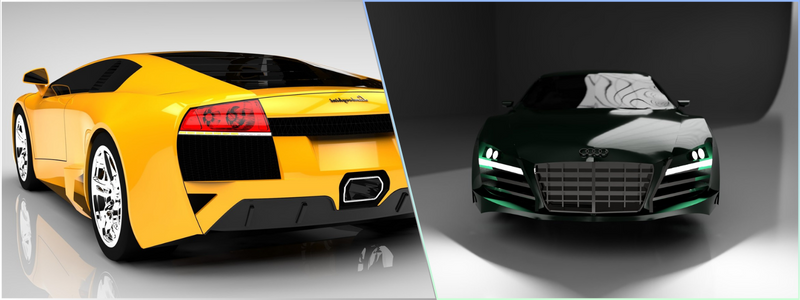
Computer-aided design, or CAD, plays a significant role in automotive design and development. A professional automotive designer doesn’t only use CAD-based models to design a vehicle’s aesthetics. CAD automotive design also serves as the basis for module and configuration systems. Automotive design professionals also use automobile design for verification and simulation purposes. 

Most of you probably don’t know it, but CAD systems aren’t newcomers to the automobile industry. Originally used during the 1980s, CAD design software has existed for three decades. It evolved to become more advanced CAD programs that open exciting doors of possibilities for automobile development. This post will delve into how companies use CAD technology to drive innovation in automotive design. 

RELATED: CAD automotive design – when driving becomes personal

A quick history of CAD technology in the automobile industry

Hardware characterized vehicles back in the mid-80s. The development processes used then were focused on optimization cycles based on prototypes. The development of a single car during that time required around 40 labor hours, notably longer than the current duration of just 17 to 18 hours. Revisions were then made on the implementation of CAD methods. 3D CAD design and 2D drafting services officially replaced hardware-based engineering tasks in the 80s.

When the late 90s came, network-based development became the trend. Physical prototypes were also finally replaced with virtual ones for good. These virtual prototypes allowed the collaboration of partners from around the world. It helped cut down the duration of full-vehicle development projects to three years. It’s safe to say that automotive design experts have always been on top of the game regarding technology and innovation. More notably, using CAE or computer-aided engineering and CAD software has seen substantial developments in the past few years. 

RELATED: The evolution of 3D CAD design and drafting

CAD technology simplifies the design process 

It’s common for an automobile designer to use CAD technology to streamline the design process. Automotive designers often use CAD software to speed up the creation and modification of their designs without the need to start from scratch. It allows them to test various design concepts and make changes more quickly. This helps improve the efficiency of the design process. CAD software also allows automobile designers to generate precise and accurate 3D and 2D models of their designs that can be refined and modified easily.

This ensures a more accurate representation of the final product. This helps save resources and time and reduces the need to develop physical prototypes. CAD technology also allows automotive design professionals to conduct virtual testing and simulate different design settings, eliminating the need for physical prototypes. Again, it helps save resources and time and makes it easier for designers to pinpoint potential flaws in automobile design earlier in the process. 

RELATED: Automotive design & engineering services, costs, rates pricing for companies

CAD technology enables new concept design & product design professionals to work together on their design projects anywhere in the world. It improves communication and allows designers to share feedback and ideas to ensure a more cohesive automotive design process. Since it’s possible to integrate CAD software with manufacturing systems, designers can also develop easy-to-manufacture designs. It improves the efficiency of the manufacturing process while cutting down on the resources and time required to launch the product in the market. 

CAD technology speeds up the prototyping process

CAD technology allows automobile design experts to speed up the prototyping process. With the help of this technology, automotive designers can conduct virtual simulations of the behavior of different design scenarios. Simulations allow automotive design experts to spot potential flaws in the design and address them right away before the start of the actual production. It eliminates the need to use physical properties and, at the same time, accelerates the process of prototyping. 

RELATED: 10 Tips on how to find the best prototype engineering firm services

engineering-design-services

CAD design software also allows automotive design & engineering design services to work together and enjoy the real-time sharing of models and designs. This enhances communication and ensures that automotive engineers and automotive designers are aligned. CAD technology also enables faster iteration of different design concepts, allowing designs to promptly test and assess numerous design processes to shorten design cycles. 3D prototypes can also be developed using additive manufacturing methods, including 3D printing with the help of CAD software.

This paves the way for rapid prototyping that involves the quick and easy creation of physical prototypes. It allows designers to evaluate and test various design iterations faster. Automobile designers can also use CAD technology to create precise and accurate 3D and 2D models of their designs that they can modify and refine quickly. It makes virtual prototyping possible, where the designers can quickly create and test several design iterations, which speeds up the entire design process. 

RELATED: What are CAM engineering costs, company fees, & consulting service rates?

CAD technology improves product quality 

The automobile industry has been reaping the benefits of CAD software in terms of improved product quality. Thanks to CAD software, design engineering firms can conduct virtual simulations and testing of different design scenarios, letting them spot and solve potential design errors before the start of the actual production process. This cuts down the number of product recalls and improves the quality of automobile products significantly. 

Automobile designers can also use CAD software to produce precise and accurate 3D and 2D models of their designs that are easier to modify and improve. As a result, designers can optimize their designs for performance, functionality, and safety, which results in products that boast higher quality. Thanks to CAD software, designers can also simulate different materials and their respective behaviors, allowing them to choose the most suitable one for their product. This guarantees that the product will be made using the best materials, thus enhancing its durability and performance. 

Since it’s also possible to integrate CAD software with manufacturing systems, DFM services can develop designs that can be manufactured easily. It improves the efficiency of the manufacturing process, eliminating the risks of errors and improving the overall quality of the product. Automotive design professionals can also use CAD technology to create standardized designs to ensure that every product meets the same quality standards. 

RELATED: Why prototype DFM services are useful for product design at companies and firms

CAD technology guarantees safety and fuel efficiency 

One of the most significant roles of CAD technology in automotive design is that it contributes to safety and fuel efficiency. Designers can use CAD software to develop 3D models that are useful for optimizing the aerodynamics of a vehicle. Improving the airflow around an automobile allows carmakers to enhance fuel efficiency and reduce drag. CAD software also helps aerospace engineering designers create accurate 3D models for optimizing the routing and placement of electrical parts and components.

Automobile designers can enhance fuel efficiency by lowering the amount of power needed to run the electrical systems of the vehicle through optimization. CAD technology makes it possible for engineers to simulate the behavior of a vehicle in different crash scenarios. It allows them to pinpoint potential safety concerns and make changes to the design before physical testing. It guarantees substantial advancements in the overall safety of the vehicle. Automotive designers can also use the technology for simulation of the behavior of different materials so they can optimize their designs for reduced weight without compromising on safety.

RELATED: How the aerospace industry is using CAD design services: drafting, modeling, and prototyping

Automobile designers can advance fuel efficiency by lowering vehicle weight while keeping everything safe and secure. 3D product modeling companies can also use CAD software to produce precise 3D models that are handy for sensor integration into automobile designs. Safety features, including backup cameras, lane departure warning, and collision avoidance systems, are significantly improved. 

automotive-designers

CAD technology lowers production cost 

CAD software has always been known to help cut costs in most design processes. The technology allows engineers and designers to share and collaborate on their models and designs in real time. This improves communication and reduces the need for expensive physical testing and prototypes. Engineers and designers can also use CAD technology to develop exact and accurate designs, which lowers the risks of design flaws and errors that would have been otherwise costly to fix much later on. 

RELATED: 5 Tips for successful product design

Automobile design professionals also use CAD software to simulate the behavior of different materials and upgrade the design for weight reduction. This lowers material costs and reduces material waste. Physical prototyping is also reduced since CAD technology allows 3D product design experts to develop precise and accurate 3D and 2D design models to enable virtual simulation and prototyping. As a result, physical prototypes that can be very expensive to create and test are no longer required. 

Lastly, the time to market with CAD software is also reduced because designs can be made more efficiently and quickly than before. It reduces development costs, allowing automobile design experts to keep up with the erratic market conditions faster than ever. 

How Cad Crowd can help 

Increasingly, automotive companies use CAD technology to drive innovation in automotive designs. Cad Crowd is a reliable platform where you can search for the best and most reliable automobile design experts who can transform your visions to life so you can have your new car models racing down the road in no time!

FEA (Finite Element Analysis) Mistakes to Avoid When Hiring FEA Engineering Services


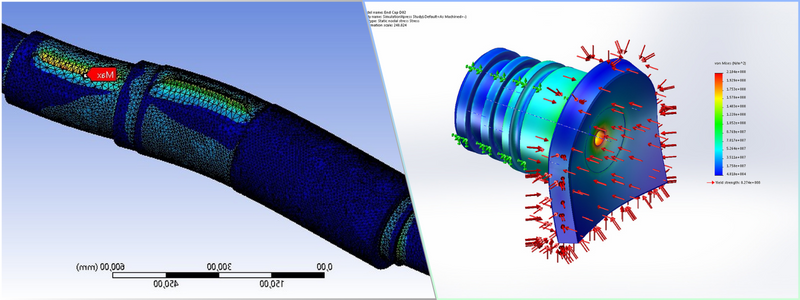
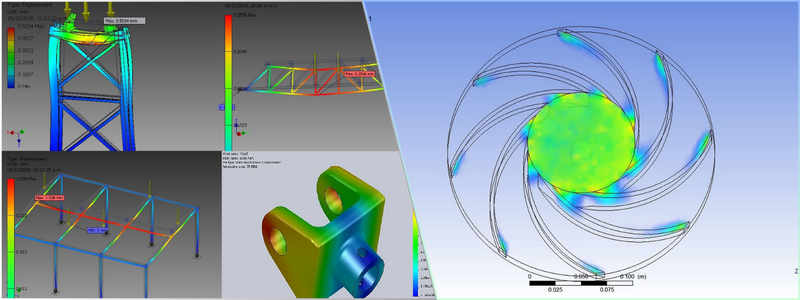
The idea behind FEA (finite element analysis) is to predict how a design or structure responds to various types of physical forces and study the possibility of failure without using a physical prototype. Everything is done on a computer screen by combining 3D CAD technology and mathematical-based geometry analysis. It is a virtual simulation to visualize the effects of the usage environment on design parts, components, and assemblies made of any known material. Physical forces may include air pressures, water pressures, weights, vibrations, repeated impacts, dynamic loads, static loads, and temperature changes, to name a few.

The purpose of FEA (finite element analysis)

FEA services are meant to replicate both common/likely and worst-case real-life scenarios in the simulation. Under each scenario, the simulation offers comprehensive imagery depicting how a design responds and withstands physical forces until it deforms and breaks. The data is the foundation for discovering the solution that meets pre-defined design requirements like safety, durability, performance, and repairability.

RELATED: Product simulation and analysis: why it’s worthwhile

Since all physical products of any industry are affected by the conditions in which they are stored and used, they can be subjected to FEA tests. From the simplest small wooden carvings and complex crude oil pipelines to intricate blood transfusion devices and sophisticated microchips, FEA simulation engineering designers can determine the amount of stress loading under which their building blocks will fail. Manufacturers then use analysis results to improve their products.

Push-button solution

Several popular 3D CAD software packages come equipped with powerful FEA features. Many vendors still offer stand-alone software tools for each functionality, but integrating both technologies simplifies the analysis procedures. FEA simulation can only happen when the engineering design experts subdivide the CAD model into more minor elements in the form of a geometric mesh that represents the building blocks of the design. The “meshing” procedure is an automated process requiring manual inputs for refinements in specific design areas such as joints, connections, and edges.

RELATED: Finite element analysis costs, consulting company rates & engineering services pricing

The simulation also implements a semi-automation principle where users determine design characteristics, including material properties and assembly features, before running the analysis. The mostly automated computational procedure should allow users to perform an FEA simulation. Users can create (or have access to) the CAD model and the appropriate software to activate the simulation program. Thoughtful analysts argue that the idea of a push-button solution can be dangerous, and they almost certainly have a point. Every design is unique.

Two comparably shaped products of different materials should display dissimilar behaviors even when exposed to the same physical force; two distinctive products built from identical materials will also exhibit unalike responses to matching environmental factors. The inclination to run an FEA simulation is irresistible, especially in a hi-tech world where the solution to the problem is just one click away. Any suggestion to imply that automation makes every analyst equal is nonsensical. There will always be design issues to discover and, thereby, engineering problems.

Considering the level of complexity in design intent, materials science, and the physics of structural deformation, FEA is by no means a trivial matter. Just because users can run the analysis does not necessarily mean they should. No degree of automation can make FEA analysis easy, let alone accurate. More importantly, the results of the FEA simulation are approximate at best. They are only as accurate as the engineers determining the design constraints, materials’ parameters, and load thresholds. Take a stress analysis as an example.

RELATED: Product testing and validation: the role of CAD simulation services for companies

fea-services

Among the first things to define are the types, strength, and direction of strains exerted on the entire model during a typical usage scenario; specific criteria, such as the forces acted upon welded or glued connection as well as the cumulative effect of dynamic and constant loads, are determined next. To come up with realistic approximations, users must input multiple assumptions into the software:

  • Specific loads are considered likely usage conditions, while others are worst-case scenarios. All have varying degrees of intensity. Some loads only occur during the product assembly process.
  • Every material acts differently when exposed to external forces. Part properties, including thickness and length, will affect the material’s tensile strength.
  • Points of connection in the assembly, such as glued edges or welded parts, have different boundary conditions from solid blocks.

RELATED: What are CAE engineering costs, company consulting rates & services pricing?

Users must have access to an accurate database defining materials’ known characteristics and behaviors under stress, loads, heat, and pressure. In any case, a successful FEA simulation relies on at least the following complex steps:

  • Assessment: make the correct assumptions and ask the right questions to the software
  • Validation: ensure the software is mathematically precise enough to generate a workable solution
  • Interpretation: understand the results and translate the information into product performance data

Software developers and vendors keep on improving accuracy and interface to make the tools more reliable and easier to use. Users still need professional credentials to effectively and accurately utilize the analysis. 

Common mistakes when hiring FEA engineering services

FEA is a powerful computational tool to simulate the almost limitless possible deformations in structures as it is exposed to physical forces. It was once considered a domain exclusive to expert engineers and supercomputers. Still, thanks to technological advances and market competition that drive computer prices down, FEA is easily accessible by 3D artists and CAD users anywhere. 

RELATED: What are CFD engineering rates, consulting services costs & company pricing?

In any case, freelance finite element analysis & FEA engineering services exist mainly because only some people are qualified to run the analysis and interpret the results. The much-debated concerns over the democratization of FEA are not entirely baseless. Companies currently looking to outsource product analysis to external FEA consultant services should not fall into the trap of such democratization, leading to the following mistakes:

Incorrect Credentials

For most people, FEA and all its capabilities to predict the structural behaviors of products or materials are almost magic. It was once a black art practiced only by the most educated engineers. Since the rapid development and adoption of CAD technology, FEA has gradually made its way into the computers of typical 3D artists and casual users. Both the pre-processing and post-processing steps are mostly automated within the CAD interface. Familiar menus make operation as easy as it can be.

One of the most significant issues with democratization is that entry-level engineers and 3D product modeling services feel qualified to offer FEA services. Widespread adoption might be a good thing in other technologies, but there is a real danger in hiring a person with incorrect credentials to perform FEA. While most modelers and junior engineers probably have access to the FEA simulation program from their CAD software, they are not supposed to practice the analysis at a professional level.

RELATED: CAD vs. CAE: what stage of product development is your business in

product-design-and-development-company

They can run the simulation and come up with approximations. Still, at the moment, CAD software vendors need to offer a reliable mechanism to warn users that the generated results might be wrong. Even if some software packages do provide warnings, there are no easy-to-follow procedures to discover the underlying issues and fix the problems. The most effective workaround is to consult time-tested engineering experience and knowledge.

Wrong tools for the job

Nearly all major CAD software packages come with structural analysis features ready to deploy. 3D Modeling design firms specializing in 3D design and modeling may think that expanding the business into FEA territory is a good idea because the software has built-in features. The specializations do not fall under the FEA category. Companies or individuals looking to hire FEA services must avoid the firms at all costs.

RELATED: How computer-aided design (CAD) services are used by engineering firms

Integration between modeling and analysis is good, but only when the users are qualified to operate both. Many of the built-in features are stripped-down capabilities of the full-fledged FEA software. The features are not necessarily destructive but tend to omit many customization options in favor of automation. In other words, the analysis generates results by removing actual engineering inputs from the equation.

No modeling option

Firms or freelancers may rely entirely on the included features (in the CAD software) and automated functions. They have a model from the client, run the FEA simulation, and deliver analysis results within an hour. Every client needs to understand that a slight deviation in dimensions, load points, and angles can change the results to a great extent. Depending on how they were built in the first place, some models might be sensitive to minor variable alterations.

A typical stress analysis on a model may take 10 minutes or so using powerful computers. However, a true FEA professional will build dozens (if not more) of model variations to determine the proper constraints and structural behaviors based on in-depth engineering knowledge of material properties. Until the model is rebuilt multiple times with perturbations, it isn’t easy to accurately predict its structural behaviors. Repeated simulations with varying engineering parameters and boundary levels are indispensable for accuracy.

RELATED: Freelance aerospace engineering services, cost, rates, and pricing for companies

Lack of documentation

FEA documentation must provide enough details to allow clients to reproduce the results. Every project has documentation requirements but should contain at least model identification, source geometry, model assumptions, simulation parameters, and validation. Although the focus is on the results, proper documentation ensures the model and design remain traceable from the client’s standpoint. FEA aims to visualize the structural behavior of a model, and the client must be able to gain clear insights from the analysis at the end of the process. 

Assigning the task of FEA simulation to an unqualified person (whether as a cost-saving measure or due to an uninformed hiring decision) can be hazardous instead of advantageous. A qualified consultant has real-world engineering experience, specifically in the field related to your models or products. FEA enables companies to solve complex structural design problems, but only if the consultant performing the analysis has a working knowledge of engineering practices.

RELATED: Top 101 engineering and mechanical design firms in the United States

Discover FEA with Cad Crowd

Avoid common mistakes and achieve optimal results for your projects. Equip yourself with knowledge, sidestep potential missteps, and contact us for guidance. Contact us today to hire the best FEA expert for your company.

Structural Steel Detailing Services for Companies: Steel Detailer Costs and Rates


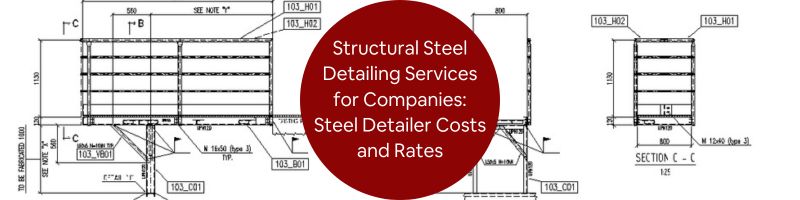
The professional who provides and installs the steel framework for a construction project is known as a steel fabricator. Everything a fabricator does on the job, including cutting and welding the frames, is based on a set of technical drawings produced by a steel detailer.

A highly specialized area within the architectural drafting profession, structural steel detailers read architectural and engineering drawings to gain practical knowledge about the overall design intent of the construction process. Based on the information, the steel detailing designer creates another set of technical drawings for steel fabrication. The outcome is a comprehensive, accurate, illustrated instruction on the installation and erection methods of steel framework.

An architectural drawing offers a detailed view of a project design, whereas an engineering draft provides a complete and annotated construction layout. On the other hand, the documents produced by a structural steel detailer clearly define every individual part required to build the framework, along with its precise dimension and length. Fabricators—welders and installers—use the diagrams from a steel detailer as the operational guidelines to do their jobs.

CAD drafting for structural steel detailing

Structural steel detailing used to be traditionally drawn by hand using such drafting equipment as a parallel bar, scales, T-squares, and various templates of shapes, among other tools and calculating aids. Manual drafting has been almost wholly replaced by CAD drafting software. It is not entirely automatic, but the CAD drafting software features a wide range of built-in drafting functions to generate accurate steel detailing digitally. Before printing, crucial data like quantities and numbering must still be manually inserted into the drawing.

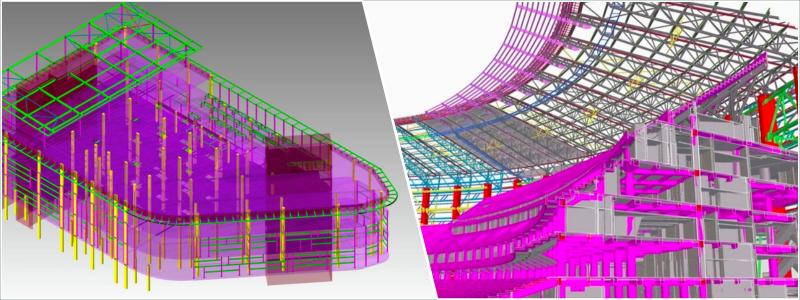
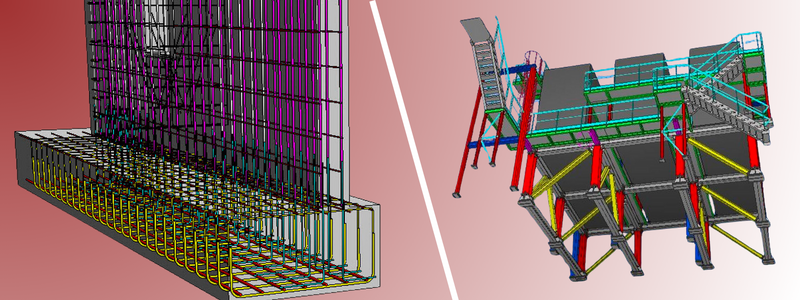
Modern steel detailing services will likely use 3D modeling applications to build realistic visualization. As expected, a three-dimensional view delivers a better (more perceptible) notion of thickness, depth, and volume, improving the chances of accurate construction. Steel detailers build the framework on screen in 3D before construction begins. In case of mistakes, every bit of the model can be modified without restarting from scratch.

Steel detailing documents

No matter the project, structural steel detailing services only have to produce two types of technical documents:

Information about the fabrication requirements for the assembly of a structure is written in a shop drawing and provided by shop drawing services. A complete shop drawing contains detailed specifications of each part, including but not limited to materials, sizes, dimensions, paints or colors, bolting, welding, and surface preparation. There needs to be more information about the installation process because the drawing is only intended for use by a steel fabrication shop. The main point is that the document describes each part of the framework.

The description must be comprehensive, too. A shop drawing should include all diagrams, schedules, illustrations, material certifications, catalog data, design calculations, storage requirements, and transportation procedures of the framework components. Structural steel detailing services generally produce all data types according to the job description in Contract Plans (submitted by contractors to engineers) or a separate project brief.

Shop drawings are only necessary for parts or components that require off-site fabrication. The information must be detailed enough to complete the fabrication processes without referencing additional documents. Contractors can propose changes to some aspects of the constructions—such as fabrication methods, materials, or steel products—through shop drawings. However, any modification should not affect the framework’s already-specified requirements for load-carrying capacity, maintainability, and structural integrity. Architects or engineers of record must review all changes indicated in the drawings before approval.

RELATED: Structural Engineering Rates & Costs for Architectural Design Firms

The steel framework installation methods are described in the erection drawings. One thing to remember is that such drawings are sometimes treated as recommendations only. In reality, contractors are in charge of the on-site installation; they have the freedom, to a certain degree, to determine the construction techniques, methods, procedures, and installation sequences. The architects and engineers may allow such latitude as long as the built framework conforms with project requirements and is done on schedule.

steel-2

Additional views

Some frameworks require pre-cast or prestressed beams, gliders, or non-standard and miscellaneous steel products. In such a situation, steel shop drawing services may include additional plan views to denote the correct placement of the components. There might also be other documents to complement the erection drawings, for example, when significant structures must be constructed using specialized pre-casting or equipment. The project brief has to define all the requirements for the submittal of erection drawings to avoid repeated RFIs (requests for information) that will inevitably delay project completion.

Minimum information requirement

When details are scarce in the brief, and an RFI is not immediately answered until the “Issue for Approval” day, shop drawing and erection drawing are required to provide at least the following information:

  • drawing number
  • drawing title and project name with a location description
  • the initials of the individuals (detailers, checkers, contractors) responsible for the drawing
  • The Contractor commissioning the detailing project
  • the fabricators’ names (in title blocks)
  • the Engineer of Record

Additional information includes a description of the project site, where an item is located, and the position in which an item is installed (such as handrails or sign structures). Complementary documents like catalog data, trade literature, and calculation sheets are bound with the drawings and submitted together.

Before any shop drawing and erection drawing is ready for submission, the Contractor is responsible for the review process to check if the specified details are correct following project requirements. Verifying that a newly created document is consistent with the existing (approved) drawings is also necessary. In the United States, all structural steel detailing services must conform to the standard of practice established by either NISD (National Institute of Steel Detailing) or AISC (American Institute of Steel Construction).

RELATED: Learn About Architectural Design Fee Schedules, Rates, and Pricing for Architect Firms’ Costs

Steel detailers’ qualifications

Although steel detailer designers will not be directly involved in the on-site construction, the drawings provided play crucial roles in ensuring project progress. They are the foremost (and perhaps the only) practical steel procurement, fabrication, and design guidelines. The steel detailing drawings must be created and treated as detailed manuals to organize the structural steel components used for any project. More than just construction diagrams, both shop drawings and erection drawings are intended as instructions to help engineers or architects minimize the waste of resources while improving productivity.

When hiring structural steel detailing services for companies based in the United States, you can hardly judge their capabilities and qualifications by academic credentials. There are plenty of certification programs in the country, including structural design, steel design, engineering design services, and architectural drafting services. However, specific degrees for steel detailing still need to be determined. A college degree is optional to be a professional steel detailer in the United States. Furthermore, most of the experienced steel detailers are trained on the job. NISD also provides Individual Detailer Certification Programs eligible for professionals with at least five years of experience. That said, enrollment is voluntary. Many practicing steel detailers in the US have yet to receive formal academic training in the occupation.

steel-1

Cost of structural steel detailing services

In the US, steel detailers are formally recognized as architectural drafters specializing in steel material. According to the Bureau of Labor Statistics, the full-time annual pay rate averages $60,340 or $29.01 per hour. Freelancers’ average hourly rate is in the same range, between $27 and $32, depending on years of experience, certifications, and design-related qualifications. For example, a steel detailer with an associate degree in civil engineering or architectural drafting will likely charge more than a self-trained freelancer.

Some structural steel detailing services offer a per-tonne basis pricing schedule. Small detailing firms or freelance structural steel detailing experts typically charge between $85 to $100 per tonne of steelwork described. Many services have a lower rate but implement a minimum fee from $10,000 to $15,000 per project.

Steel Detailing Services in the US Average Annual Pay (Full-time) Average Hourly Rate (Full-time) Per-Tonne Pricing Minimum Project Fee
Steel Detailers (BLS Data) $60,340 $29.01 – –
Freelance Steel Detailers – $27 – $32 – –
Structural Steel Detailing Services – – $85-100/tonne $10,000-15,000

Before hiring, ensure the quoted fee covers the cost of the checking process, which has to be done by another steel detailer. Skipping the crucial step may lead to costly inaccuracies, such as missed welds and incorrect cuts. It is a good idea to cut costs wherever possible, but straining the budget of a steel detailer can only add unnecessary risks to the project. While the steel construction framework might not be visible when the project is complete, the backbone holds everything in place. It must be done right by qualified professionals to prevent potentially expensive mistakes.

RELATED: Architectural Plans, CAD Drawing Costs & Architect Service Pricing

How Cad Crowd can help

Navigate the intricacies of structural steel detailing with confidence alongside Cad Crowd. Our structural steel detailing services offer tailored approaches for businesses hiring top-tier steel detailers. Delve into our comprehensive guide to empower your projects with precision and cost-efficiency. Need specialized assistance? Contact Cad Crowd and get a free structural steel detailing quote today.