Donald Duck, arguably tied with Goofy as the second most recognizable Disney character after Mickey Mouse, starred in over 150 short films throughout the 1930, ’40s, ’50s, and ’60s. 2024 marks the 90th anniversary of the pantsless Pekin, who persisted through the second half of the 20th century thanks to Disney Channel replays of his shorts, appearances in DuckTales, and the Kingdom Hearts games.
Disney is celebrating the duck’s birthday with the usual merch drops and theme park shenanigans, but its best gift to fans is a brand-new short: DIY Duck, Donald’s first solo short outing since 1961’s The Litterbug. Directed by veteran Mark Henn, who has remained on Disney’s hand-drawn animation team throughout the quarter-century pivot to 3D CG, DIY Duck checks all the boxes of a classic Donald short, starting with a mundane day-in-the-life problem that puts the character through the cartoon wringer.
Donald was always my favorite cartoon character: Landing between the more wholesome Disney gang and Tex Avery and Chuck Jones’ elastic, ecstatic WB cast, Donald was just… some dude… trying to learn how the world works and get by. His temper could run hot, but he was solutions-oriented. He wanted to make a buck, but wasn’t anything like Scrooge McDuck. His curiosity and zest for life meant Disney could drop him into a PSA every now and then — Donald wanted to learn, and we wanted to learn with him. I will dig up what might be his greatest adventure, Donald in Mathmagic Land, once a year just to remind myself that, yeah, math rules.
These days, Donald’s mostly a relic, playing second fiddle to Mickey in the rare instances when Disney approves its mascot character for media use. That’s a bummer, and DIY Duck is a great reminder. Today’s more sophisticated toons are often fantastical and larger than life even when speaking to nuanced human experiences. So it’s kinda nice to have a modern short, simple yet stylish in its cartooning, that is about fixing a crack in a wall — something that I, like Donald, would be absolutely terrible at. In a neat throwback, DIY Duck also pays tribute to Donald’s classic rage voice by using archive clips of Clarence “Ducky” Nash, who voiced the character for 50 years.
While Disney maintains a hand-drawn department, the company mostly deploys it for stunts (like DIY Disney and last year’s Once Upon a Studio short) and skeletal work on 3D CG features. During a visit to Walt Disney Animation for 2014’s Big Hero 6, I was fortunate to watch Henn in action, cartooning by hand for a scene that would later be painted over and rendered with the finished CG art. Whether Disney will ever make a new hand-drawn feature — or, heck, a steady stream of Donald shorts! — is unclear, but by keeping Henn and the team on board, the studio implicitly understands the soul of the medium, whether it’s breathing life into 3D characters or reviving a legacy for an act of tribute. I’m just hoping this isn’t the last time we see Donald in this form over the next 60 years.
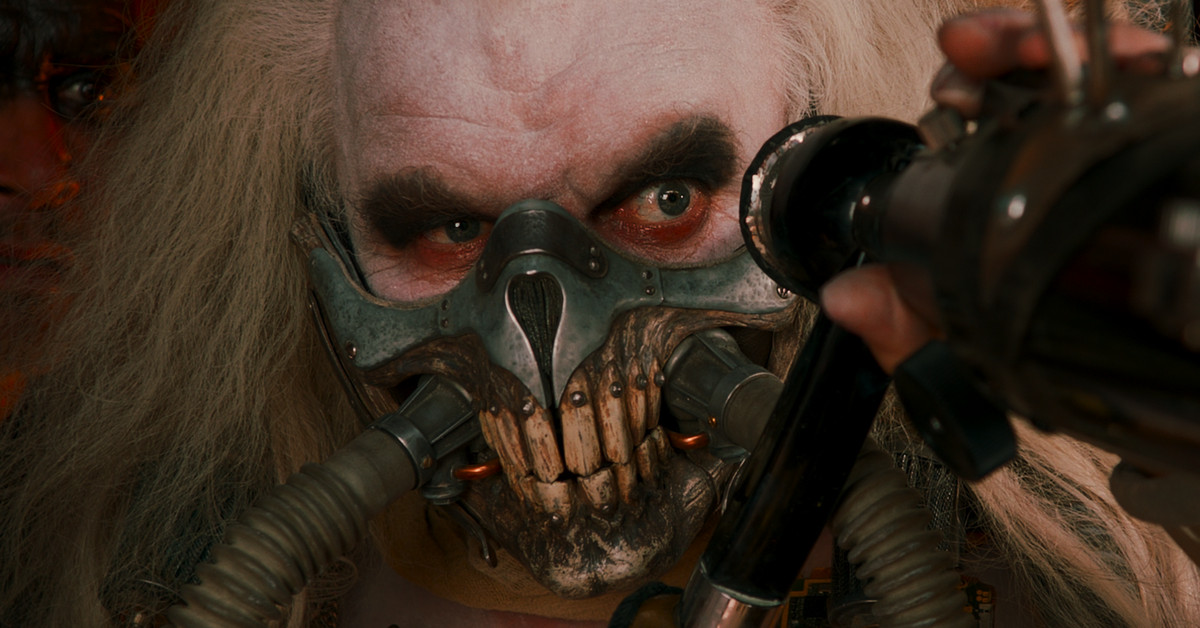
George Miller’s Furiosa: A Mad Max Sagacomplements and enhances the impact of his 2015 blockbuster Mad Max: Fury Roadin a lot of ways, but there’s only one I can’t stop thinking about: How little the new movie has to say about Immortan Joe, the original movie’s iconic arch-villain.
Sure, Joe’s lack of interaction with Anya Taylor-Joy’s Furiosa could be simply because Hugh Keays-Byrne, the actor who first put Immortan Joe on the screen, died in 2020. Lachy Hulme assumes the role for Furiosa, but perhaps George Miller reduced it out of respect for Keays-Byrne, who he worked with for many years.
But I’m skeptical. Joe’s consistent secondary status in Furiosa’s origin story fits the overall themes of Furiosa too well to be a coincidence: Immortan Joe, the demon of Imperator Furiosa’s last stand, wasn’t her nemesis at all. In fact, he wasn’t her anything.
Image: Warner Bros. Entertainment/YouTube
This is in great contrast to Fury Road, where their beef seems deeply personal. Max Rockatansky wanders into somebody else’s narrative in Fury Road, as his stories usually go. This time, those somebodies are Furiosa (Charlize Theron) and Immortan Joe.
While Fury Road only subtly hints that Furiosa was once one of Joe’s captive harem of wives and incubators — the white wrappings of Furiosa’s top evoke the Wives’ impractical shifts — Theron confirmed that piece of her backstory in interviews. So Furiosa seems to have really personal reasons to hate Joe. And his response to her betrayal is presented as a towering rage, cresting mushroom cloud-like out of all proportion to her ability to withstand him.
Not to diminish the agency of the Five Wives in their own escape, but Joe considers them property that’s been stolen from him, not allies who betrayed him. Furiosa, however, he considers a traitor, worthy of his personal anger. And in the end, she’s the one who gets the honor of finally taking him down, underscoring her place on the same narrative level he occupies as Fury Road’s primary villain.
Which is why it’s so wild that Furiosa says, quietly and implacably throughout its entire run time, that Joe actually isn’t even a main character in her story. Sure, he buys her, but then he forgets she even existed. He didn’t take anything from her that hadn’t already been taken, didn’t teach her anything she hadn’t already learned from someone else, didn’t give her anything she hadn’t already taken for herself. When they do share scenes, and even trade dialogue, there’s no interpersonal ire or affection in either direction. In spite of their characters’ intensity, Hulme and Taylor-Joy keep a neutral distance of emotion.
It turns out, in Furiosa, that Furiosa’s life was actually framed by the completely different, utterly pathetic figure of Dementus, the Wasteland warlord who tortured her mother to death, sold Furiosa into slavery, killed her closest friend, and cost her her right arm. And just as emphatically, Furiosa says, Furiosa moved beyond revenge years before she ever stood against Joe.
What you saw in Fury Road, Furiosa says, was the furthest thing from personal to Furiosa. Immortan Joe was never The Guy. He was just the guy in the way. And the “guy” part might be the most important one.
Photo: Jasin Boland/Warner Bros. Pictures via Everett Collection
The conversation that immediately surrounded Fury Road was about Immortan Joe as a Wasteland illustration of the death cult of capitalism and toxic masculinity. His very recognizable philosophy reduces all non-elites to things — women to Wives (sex slaves, forcibly impregnated) or Mothers (enslaved to produce breast milk for food), and men to War Boys (emphasis on boys), interchangeable cannon fodder addicted to the lie that they can only find purpose in violence for the True Leader.
This was all emphasized by the emasculating nature of Furiosa’s rebellion. After all, by the language of a country-and-Western song, she’s wounded him in the most devastating way a man can be wounded, by stealing his wife (Wives), his money (water), his car (the War Rig), and maybe even his dog (Nicholas Hoult’s hapless character Nux, if we want to stretch the metaphor a little bit).
Immortan Joe is an electrifying villain, and Furiosa doesn’t exactly skimp on him! A scene contrasting Dementus’ shaky appeal to the self-interest of the masses with the unshakable belief created by Joe’s death-cult propaganda is among the film’s most chilling. But there is an eternal risk in presenting such an operatic villain who also represents such a wide-ranging theme. If you’re not careful, making them powerful and capable enough to claim villain status also risks making them look aspirational. You can swing right around to making them seem cool.
Which is why it’s so damn smart of Furiosa to put this final nail in the coffin of Joe’s emasculation, by establishing that Fury Road’s sense of personal beef was all on Joe — on his fear, and his vulnerability, not on Furiosa’s. He isn’t even important to the woman who’s unmanning him.
In a cliche reversal for the cinematic ages, Immortan Joe was, for Furiosa, just Tuesday.
Not every filmmaker gets their debut feature enshrined in the Criterion Collection. But not every filmmaker’s debut feature packs the punch Girlfight does.
Decades after release, Karyn Kusama’s debut movie, Girlfight, still holds up — it’s no surprise that it launched her career as a director of subversive horror drama (Jennifer’s Body, The Invitation) and memorable television (Yellowjackets, Halt and Catch Fire, The Man in the High Castle), along with launching Michelle Rodriguez as a star. Girlfight is coming to the Criterion Collection on May 28, with a brand-new 4K digital restoration supervised by Kusama, new interviews and commentary from the director, and a slick new cover by Jillian Adel.
Girlfight, the story of a troubled high schooler who takes up boxing in secret as an outlet for her frustrations, aches with high school emotions in and out of the boxing ring. At the same time, it subverts boxing-movie tropes. Rodriguez plays Diana Guzman, a teenager who’s frequently in trouble for fighting at school and alienated from her father (Paul Calderón) at home. When she tries boxing in secret to get some of that tension off her chest, she shows a real talent for the sweet science. At the gym, she meets a boy (named Adrian, making Diana the Rocky in this equation) and a new father figure in her trainer (Jaime Tirelli).
Image: Screen Gems/Everett Collection
Making Girlfight was a long process for Kusama, who wrote the movie after taking up boxing herself in 1992. Production companies begged her to cast a white woman in the lead role, but she stood her ground, insisting on a Latina lead and finding Rodriguez in an extensive audition process focusing largely on non-professional actors. After financiers backed out two days before pre-production in 1999, legendary filmmaker (and Kusama’s former mentor) John Sayles and his creative partner and producer Maggie Renzi stepped in and helped fund the film.
Polygon spoke to Kusama on a video call ahead of the movie’s Criterion release. We spoke about revisiting her first movie for the restoration, when she knew she had a star in Rodriguez, and whether Girlfight could be made the same way now.
Polygon: Congratulations on Girlfight being added to the Criterion Collection. When did you find out, and what was your reaction?
Karyn Kusama: This must have been last year, Criterion reached out to me and said, “We’d really like to remaster Girlfight and release an edition of the film.” I was floored and so excited. I am such a Criterion nerd, as you might imagine, so it was literally a dream come true. For me, this just felt like the ultimate stamp of approval.
Does it mean more to you because it was this one?
I think what I appreciate is that it’s my first movie. And as someone now who’s got more than 20 years of time and experience to look back at the film, there’s so many things I might do differently — I might improve, I might cut, or change or refine. And so the idea that it can still work for anyone, despite the fact that I would love to get back in there and completely retool it, that’s gratifying.
Watching it now, I was struck by the balance between the boxing elements, the family drama, the character study, Michelle Rodriguez’s amazing performance, and the high school romance. How do you think back on the balance of all those elements?
I never felt like I would want to make a purely boxing-oriented movie. In some ways, the true story is about this character entering a new world, and finding a place for herself within it. And in doing so, opening herself up to a kind of vulnerability that she doesn’t feel capable of exposing at home. It is so much about this tension between the closed emotional world of her family life and the more expansive emotional world of, paradoxically, a boxing ring. So that was something I knew I wanted to do. But I don’t know at the time if I was really weighing the balance of it all.
In somewhat ham-fisted terms, I was trying to tell a story about a young woman for whom traditional expressions of femininity didn’t quite feel true to her. And so it was so much about trying to find a path toward self-acceptance, toward some kind of openness, to whatever kind of weirdo she ultimately was going to be.
When you look at the movie now, what would you want to tweak?
I think I would probably lift some scenes and tighten some scenes. I think I would know a little bit more how to evoke the same emotional impact with fewer cuts or fewer shots. I would just get to the heart of the matter faster. But that being said, I think some of what I wrestle with in the movie is also inherent to it, you know, which is a lot of non-actors, a lot of young, raw performances. And in some respects, that’s part of the charm, I hope, of the movie.
And it helps that the central three of her family are so strong.
Oh, good. Yeah, I think so. Obviously, Paul Calderón [who played Marie’s father] was a wonderful and well-known actor at the time, and still, and so he could kind of anchor the rest of the cast. But you know, it’s funny, I always find with movies, for me, it’s a process of making the thing, hoping that I made the truest thing I could make, and then moving on and not looking back. And so what’s really weird about doing the Criterion edition is — the process of looking back is both wonderful and painful. I was looking at the movie a lot. So it gave me a lot of time to think about, Oh, I could have done that. I should have done that. A lot of woulda, coulda, shoulda.
Image: Screen Gems/Everett Collection
Do you think things have changed in the industry over the past two decades? Would making Girlfight now be the same, easier, or more difficult?
That’s something I have to chew on. Because in some ways, obviously we all want the answer to be “Things are better now.” I think the hard reality is that we are still almost even more entrenched in a star-driven system. So it would be even harder now, I think, to make a movie with a completely fresh face as the center of the film.
And luckily for me, when I made Girlfight, Michelle ended up having a true electric, charismatic star power that allowed her to continue to make movies. But now I find it’s still really, really hard. In terms of the questions around representation? I think the conversations are more deliberately coded around what is permissible. But I think ultimately, there is still a lot of resistance to a complicated or complex depiction of the world as we actually live in it.
Working with Michelle Rodriguez on the movie, what did you learn about what makes a movie star and how to showcase that?
Oh, that’s such a good question. I mean, first of all, she has a funny un-self-consciousness as an actor. In the initial auditioning process, and initially working with her, I had to kind of remind her of staying in character and staying on book and all of the basics around being an actor. What she didn’t have was shame. There was a quality to her of just like, I’m here. The world can start now. And that quality of guileless confidence is really important. She demanded attention.
And that simple kind of intensity is something that I’ve really learned is actually not common across the board. It’s not like every actor I work with has that same intensity, though I’ve certainly worked with actors who had more training and more experience and more discipline. Michelle has a kind of ineffable charisma.
Was there a specific moment with her where you were like, Oh, she’s different, or is that just something that you learned over the course of filming?
It’s really funny, because I have such a vivid memory of doing all those initial auditions and having hundreds of people in front of us for interviews and short auditions. And we taped them all. And because I’m kind of obsessed with thoroughness, I decided to just go through the process of looking at all the tapes.
And it was in that moment of looking at her tape, even though she was untrained, completely inexperienced, completely unprepared, kind of every negative you could imagine, she held the screen with such totality that I felt like, Huh, that’s interesting. I have to keep looking at her, I have to keep engaging with this presence. And so it just meant we kept bringing her back. But that initial feeling about her was definitely something that now I look at and I realize, Oh, that was her. That was her star power.
Image: Screen Gems/Everett Collection
Would you have predicted her going on to star in major franchises like the Fast and the Furious?
At the time, I couldn’t, but she called it for herself way earlier than I could have. Because she always knew what she liked. Immediately when she read The Fast and the Furious, she was like, I know I have to do this, and I know it will be a global franchise. She understood that part of entertainment a lot better than I did.
Have there been opportunities for you to work with her on projects of that scale? Is that something you’re interested in?
You mean like the giant franchises?
Yeah. Doesn’t strike me as totally your vibe, but you never know.
No, it’s not really my vibe. And a lot of that just has to do with the idea that you need to be making something that is of a piece of a very large entity with a lot of history, and a lot of relationships that people are already bringing to the characters, into the worlds. For that reason, I’m not sure I’d be the best candidate for that kind of work, but never say never, I guess.
You’re in this really interesting space with both TV and movie opportunities. Where’s your focus next, and what do you see yourself moving toward?
I need to be making personal movies again. That’s where I really learn and flex and experiment and fail and try and all of it, you know. So that’s what’s next for me, is just figuring out what the next feature is going to be.
Iman Vellani is the kind of movie star whose enthusiasm, humor, and openness radiates off the screen and feels positively incandescent in person. The 21-year-old actress, best known for her role as Kamala Khan in 2022’s Ms. Marvel and 2023’s The Marvels,is unabashedly open in sharing her love of all things MCU-related, from playfully debating the finer points of canonical continuity with Marvel Studios head Kevin Feige to co-writing a Ms. Marvellimited series with Sabir Pirzada.
But Vellani has other passions beyond Marvel — her most recent being anime. Earlier this year at the Crunchyroll Anime Awards, Vellani shared with Polygon what convinced her to finally take the plunge into exploring Japanese animation.
“I was very intimidated by anime until very recently,” Vellani said. “I started watching anime about a year ago, so this is a new obsession for me, but I’m totally into it now. There’s just so much content, I didn’t know where to start. I mean, I can barely keep up with all the Marvel content that’s out there.”
Image: Wit Studio/Crunchyroll
Vellani attributes her nascent love of anime to Attack on Titan, which she was introduced to via family and friends and proudly names as her current favorite anime. “They just talk about it all the time,” Vellani said, “and Attack on Titan kept coming back up whenever they would talk about anime. I started watching it and was like, This is a story that seems like it’s about humanity. I think I can get into it.”
Of the entire ensemble of characters that appear in Attack on Titan, Vellani pointed out one in particular whose story resonated the most with her. “I love Mikasa Ackerman,” Vellani said. “The way that she kept Eren’s scarf at the end of the show, even though Eren told her to give it up and forget about him. Her being the only one who was able to kill Eren at the end to stop the Rumbling. That is a woman who — I don’t think I’ve seen many other female characters like her who have that authority, willpower, and determination to actually act on it. I recently cut my hair, and when I looked in the mirror, I was like, I know what my next cosplay is.”
Image: Wit Studio/Crunchyroll
Aside from Mikasa, Vellani also named one of the series’ other leading characters as one she especially enjoyed, going so far as to praise the voice actor responsible for their performance in Attack on Titan’s finale. “I like Armin because I always like to root for the nerdy characters,” Vellani said. “I watched the final half of the show with the English dub and, I don’t know who the actor who plays Armin is, but they deserve a raise because their performance in the final episode blew me away. He made me cry, his wailing and that flashback scene between him and Eren, it just hit me in all the right ways.”
After resisting anime for a while, Attack on Titan quickly became a show that stuck with her. “The ending was such a gut punch. It left me feeling so awful at the end, but it’s like one of those Succession-type endings where it’s not the ending you want, but it made sense. The ending made sense for the story, it made sense for the characters.
“I think they tied the knot so perfectly, and I can’t think of anything else I’ve watched recently that’s impacted me as much as that. I was crying in my bed watching it. My mom walked in on me and she was like, ‘It’s just an animation show!’ and I was like, ‘No, this is real!’”
Image: MAPPA/Crunchyroll
Shortly after finishing Attack on Titan, she dove into exploring other popular series suggested by her friends. “I finally started Jujutsu Kaisen and One Piece,” Vellani said. “One Piece was one that I did not want to get into initially because it’s like, what, a thousand episodes now, and that felt like too much. Grey’s Anatomy was more than enough for me, and I stopped at, like, season 10. But after the Netflix show came out I was so drawn to the characters, and after the heartbreak of Attack on Titan, I needed something lighter and funnier and that made me feel good. The characters are likable and I want to root for them all, so that’s a show I really like.”
And Vellani’s love for anime doesn’t stop at TV. “I watched Suzume just before coming to Japan and I loved it,” Vellani said. “That blew my mind. Truly a masterpiece. I also recently watched The Boy and the Heron and, as a 21-year-old, it really spoke to me and it reassured me that my inner child still exists.”
Image: Studio Ghibli via GKIDS/YouTube
When asked why she felt that her generation has embraced anime, and what it was about the medium that specifically spoke to her, Vellani cited the empowering roles and depictions of women and children, as well as the craftsmanship of studios like Studio Ghibli, as some of the reasons why anime is so popular among Gen Z audiences. “I just feel like anime feels so progressive with the way they depict women and children, especially in Studio Ghibli movies. All those movies are so good at showcasing youth and childhood and imagination in a way that’s encouraging children to keep that mindset.
“I feel like a lot of American cinema right now is just so depressing. It just wants to show the gritty real life of the world. I want to live in a world that makes me excited for the future, and I think anime does such a wonderful job in showcasing all the beauties of life. We went to the Ghibli Museum this morning and saw how they draw every single detail of the houses — the bricks, the walls, the windows — and you just realize how much people paid attention to these details when they drew it. Like, this is how they see the world, and that’s how I want to see the world, as something that’s full of life and joy.”
Jesse Plemons is a brilliant actor. He’s also one of our most memeable stars. It’s not that he’s super expressive — quite the opposite, in fact. He’s usually quite placid, and almost hesitant in his line deliveries. He takes his time. But, whether he’s playing a timid everyman in The Power of the Dog or season 2 of Fargo or a stout lawman in Judas and the Black Messiah or Game Night, there’s always something going on behind his narrowed, watchful eyes. His stillness, his pauses, and his plain, unvarnished way of speaking act as a gravitational force, drawing the camera and other actors into his orbit. He’s also, in a low-key way, extremely funny.
A still image of Plemons in his ten-gallon Stetson in Killers of the Flower Moon, standing immovably in the doorway of Leonardo DiCaprio’s character’s house, has become internet shorthand for calmly and righteously calling bullshit. “I’ve been sent down from Washington D.C. to see about these murders.” “See what about ’em?” (A tiny pause, just long enough to be noticeable.) “See who’s doing it.”
That scene was used in the movie’s trailer, and Plemons’ masterful deadpan jolted it to life. Less than a year later, he was at it again in the first trailer for Alex Garland’s Civil War, with another pause, and another matter-of-fact line delivery, that lingered in the mind even longer than Garland’s stark, button-pushing imagery of America torn apart by war. Wearing military fatigues and a pair of bright red sunglasses with red lenses, and holding a rifle, Plemons is shown interrogating the film’s journalist heroes. “There’s some kind of misunderstanding here,” says Wagner Moura’s character, Joel. “We’re American, OK?”
“OK,” says Plemons, taking a second to scratch his stubbly cheek. “What kind of American are you?”
The full scene has much the same impact on the final movie, and the question posed by Plemons’ nameless character looms large over the whole enterprise long after the credits have rolled. For me, this was the moment Garland’s expertly made, thrilling, but somewhat withholding movie finally bared its teeth.
Civil War has come in for some criticism for not clearly articulating the root causes of the conflict it portrays, or for having its cake and eating it by marrying a fence-sitting political stance with deliberately provocative imagery. I’m not going to litigate the case for or against it here — Garland has laid out his reasoning for approaching the story this way very clearly in interviews, and the polarized reactions to the movie tend to say more about the viewers than the film.
Civil War is essentially a road movie that follows a team of journalists on a dangerous odyssey to meet America’s fascist president before he’s overthrown by an alliance of independent-minded states. As the ravaged landscape scrolls by, Garland stages a series of Apocalypse Now-style vignettes that underline the surreal horrors of war, and provoke questions about the role reporting plays in society: torture at a gas station, summary executions after an intense gun battle, a weirdly peaceful town ruled by a watchful militia. At every stage, he’s careful to avoid naming sides, or bringing any kind of political ideas into the mix.
That’s true for the Plemons scene too — up to a point. The scene occurs a little past the halfway mark; cub photojournalist Jessie (Cailee Spaeny) and Bohai, another reporter, have been separated from their friends and get captured by Plemons’ small militia team. The soldiers — it’s not clear which faction they belong to, if any — are dumping a truckful of bodies into a mass grave. Joel, Lee (Kirsten Dunst), and Tony (Nelson Lee) approach to try to negotiate their friends’ release. As an opener, Plemons’ character shoots Bohai dead. Then he poses his question.
Image: A24
On a simple level, the scene works so well because it gives us a clear bad guy — perhaps the only one in the movie — played by a great, charismatic actor. That’s always been one of cinema’s purest pleasures. Plemons, who was cast only a week before filming after a different actor dropped out, is extremely menacing without breaking the movie’s muted, realist tone. His red sunglasses — a true stroke of genius from the costume department — give him an iconic pop on the screen. The scene is shocking and suspenseful, and it moves an already gripping film up a gear. It’s also a dramatic fulcrum for most of the film’s characters, none of whom is quite the same afterward.
But this is also the first and perhaps only moment in Civil War when its troubling subtext about our current time comes searingly to the surface. “What kind of American are you?” Is Plemons asking which side of the conflict the reporters belong to, or something else? Sensing the danger in the question, Joel replies that he’s from Florida. “Hmm, a central American,” Plemons replies, dubiously. Lee and Jessie are from Midwestern states, so they get a pass. Not coincidentally, they’re also white. “Now, that’s American.” Tony, crying with fear, admits he’s from Hong Kong, and is immediately shot in the head.
It’s racism; it always comes back to racism. With the truck and ditch full of noticeably nonwhite bodies in the background, Garland is pointing out that the evil of ethnic cleansing almost always follows on the heels of war. But the implications of Plemons’ interrogation are even broader and more frightening than that. While accepting Lee and Jessie’s heritage, he also mocks them for their rootless detachment from it. When a terrified Jessie admits she doesn’t know why they call her home state of Missouri the “Show-Me State,” Plemons responds with a chilling bark of derisive laughter. (The question was improvised; Spaeny really is from Missouri, and really doesn’t know why people call it that.)
When he asks “what kind of American,” Plemons’ character isn’t just insinuating about race. He’s posing a fundamental question of identity: How do you perceive your Americanness, and how deeply are you rooted in it? A reply that has any less than total conviction won’t pass muster. In this scene and this scene only, Garland gets to the heart of the matter — the scary, polarized essentialism that can push a country to tear itself apart, and that is all too easy to recognize in the current moment. All its threat and horror are contained in one of Jesse Plemons’ little pauses.
Greetings, Polygon readers! Each week, we round up the most notable new releases to streaming and VOD, highlighting the biggest and best new movies for you to watch at home.
This week, Kung Fu Panda 4, the new animated action comedy starring Jack Black, arrives on VOD following its theatrical run last month. There’s tons of other exciting releases this week, too, like the satirical spy thriller Argylle on Apple TV Plus, a new action thriller starring Aaron Eckhart as a former CIA agent landing on Netflix, the new romantic fantasy film The Greatest Hits on Hulu, and much more. And then there’s Mayhem!, one of the best action movies of the year so far, now streaming on AMC Plus.
Here’s everything new that’s available to watch this weekend!
New on Netflix
Strange Way of Life
Where to watch: Available to stream on Netflix
Image: El Deseo/Saint Laurent Productions
Genre: Western drama Run time: 31m Director: Pedro Almodóvar Cast: Ethan Hawke, Pedro Pascal
This Western short from legendary Spanish director Pedro Almodóvar (Volver, Pain and Glory) follows the story of two gunslingers (and former lovers) who reunite after 25 years apart.
The Bricklayer
Where to watch: Available to stream on Netflix
Image: Millennium Media/Vertical Entertainment
Genre: Action thriller Run time: 1h 50m Director: Renny Harlin Cast: Aaron Eckhart, Nina Dobrev, Tim Blake Nelson
The latest in a long tradition of “action movies with odd profession titles,” The Bricklayer follows a former CIA agent (Aaron Eckhart) needed by his former agency when journalists start dying. The movie has a bit of pedigree behind it, as Renny Harlin (Cliffhanger, Die Hard 2) directs.
Genre: Musical romance Run time: 1h 34m Director: Ned Benson Cast: Lucy Boynton, Justin H. Min, David Corenswet
After suffering the loss of her boyfriend in a car accident, a young woman named Harriet (Lucy Boynton) inadvertently discovers that she has the power to go back in time to various points in their relationship by listening to his old record collection. When Harriet meets a new love interest named David (Justin H. Min), she struggles between her desire to correct the past to resurrect her boyfriend or pursue the possibility of newfound love in the present.
New on Prime Video
The Exorcist: Believer
Where to watch: Available to stream on Prime Video
Image: Universal Studios
Genre: Horror Run time: 1h 51m Director: David Gordon Green Cast: Leslie Odom Jr., Ellen Burstyn, Ann Dowd
David Gordon Green’s new entry in the Exorcist franchise arrives this week on streaming. It’s a bizarre twist on the franchise, per our review:
Up until this most recent movie, the title The Exorcist carried some weight. While its role as a representation of quality was up for debate, its mark as a sign of ambition was not. Since the original Exorcist, the series has provided some of American cinema’s best and most interesting artists with space to ruminate on faith and evil. Believer lacks the ambition that’s meant to define an Exorcist movie. This is the most profound statement the movie has to offer, seemingly by accident: If the result of moving past God is that everything in the world will feel as empty and pointless as The Exorcist: Believer, we should cling to faith forever.
New on Apple TV Plus
Argylle
Where to watch: Available to stream on Apple TV Plus
Photo: Peter Mountain/Universal Pictures/Apple Original Films/Marv
Genre: Action comedy Run time: 2h 19m Director: Matthew Vaughn Cast: Henry Cavill, Bryce Dallas Howard, Sam Rockwell
What happens when you take the meta-fictional irreverence of Stranger than Fiction and smash it together with a premise similar to Matthew Vaughn’s 2014 movie Kingsman: The Secret Service?
You get Argylle, an action satire of spy novels à la 1984’s Romancing the Stone that follows Elly Conway (Bryce Dallas Howard), an introverted novelist who is dragged kicking and screaming into a world of international espionage when it turns out that her popular spy novels are predicting the future. Who is the real agent Argylle? You’ll have to watch in order to find out.
Argylle is too winking, too keen to show that it’s in on its own joke, to admit any real romantic feeling or any excitement that runs deeper than the surface level of its flashy choreography. Vaughn, the impish ringmaster, delights in challenging the audience to figure out what’s real and what’s fictional within his stylized, nested worlds. It’s just that he never really answers the question: Why should we care? With Argylle, he mounts a playful, rollicking thriller with an all-star cast and some dazzling action — but then holds the audience at arm’s length from it, just to show how clever he’s been in putting it together. The truly clever thing would have been to let the dumb film be joyously dumb, and invite the audience to lose themselves in it instead.
Genre: Road comedy Run time: 1h 24m Director: Ethan Coen Cast: Margaret Qualley, Geraldine Viswanathan, Beanie Feldstein
Ethan Coen’s first narrative feature without his brother Joel is an offbeat crime comedy about a pair of young women who embark on an impromptu road trip. Things get dicey after the two cross paths with a group of incompetent criminals sent to retrieve a mysterious briefcase on behalf of their shady employer.
Drive-Away Dolls’ well-worn beats are buttressed by tremendous style, a deep care taken with the film’s production and costume design. All that attention to the era that isn’t fully present in the script comes out in the visuals instead. There isn’t much narrative texture to Marian and Jamie’s various stopovers — in particular, there isn’t much for Jamie or Marian to connect with. While the pair have frequent and funny interactions on their trip, the people they meet are more or less cartoon characters setting up a gag.
New on Paramount Plus
Bob Marley: One Love
Where to watch: Available to stream on Paramount Plus, MGM Plus
Image: Paramount Pictures
Genre: Biographical musical Run time: 1h 47m Director: Reinaldo Marcus Green Cast: Kingsley Ben-Adir, Lashana Lynch, James Norton
This biopic follows the story of cultural icon Bob Marley, portrayed by Kingsley Ben-Adir (One Night in Miami…). The film follows Marley from his rise to fame in the ’70s up until his death in 1981.
An early contender for one of this year’s best action films, Mayhem follows Samir (Nassim Lyes), an ex-con and martial artist, who flees from France to Thailand to escape his former gang. Struggling to build a new life, Samir finds himself once again dragged into a world of deceit and violence when a powerful real estate tycoon kidnaps a member of his family.
Mayhem’s action is brutal and kinetic, with inventive kills, strong location work, and realistic choreography that makes the most of Lyes’ kickboxing pedigree. It’s a true star-making performance for him, as he juggles the role’s demanding physical requirements with a deep well of sorrow that permeates the entire affair, even as he dispatches foe after foe.
New to rent
Ennio
Where to watch: Available to rent on Amazon, Apple, and Vudu
Image: Music Box Films
Genre: Documentary Run time: 2h 36m Director: Giuseppe Tornatore
Cinema Paradiso director Giuseppe Tornatore made a documentary on renowned film composer Ennio Morricone, one of the most accomplished people in that stacked field. The documentary includes Quentin Tarantino, Clint Eastwood, Bruce Springsteen, and many more luminaries from the entertainment world.
Glitter & Doom
Where to watch: Available to rent on Amazon, Apple, and Vudu
Image: SPEAK Productions/Music Box Films
Genre: Musical romance Run time: 1h 55m Director: Tom Gustafson Cast: Alex Diaz, Alan Cammish, Ming-Na Wen
A musical set to the songs of the Indigo Girls, Glitter & Doom follows a summer romance between a musician committed to this craft (Alan Cammish) and a “free-spirited circus kid” (Alex Diaz).
Io Capitano
Where to watch: Available to rent on Apple and Vudu
Image: Archimede/Cohen Media Group
Genre: Fantasy Run time: 2h 1m Director: Matteo Garrone Cast: Seydou Sarr, Moustapha Fall, Issaka Sawadogo
Desperate for an escape out of poverty, two cousins leave their hometown of Dakar, Senegal, to journey to Italy in search of a better life. Trekking across the hazards of the Sahara Desert and Mediterranean Ocean, the pair are met with sights and wonders beyond their wildest imaginations.
Kung Fu Panda 4
Where to watch: Available to rent on Amazon, Apple, and Vudu
Image: DreamWorks Animation
Genre: Martial arts comedy Run time: 1h 34m Director: Mike Mitchell Cast: Jack Black, Awkwafina, Bryan Cranston
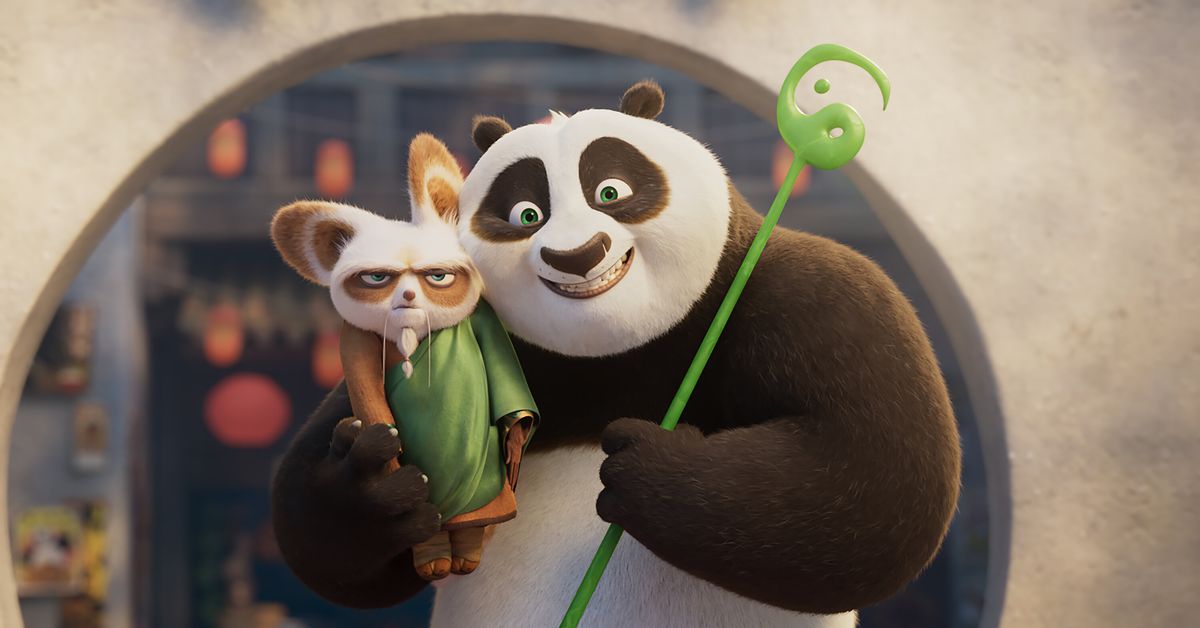
The fourth entry in the Kung Fu Panda saga sees Po taking on a new apprentice to succeed him as the Dragon Warrior. When a mysterious sorceress plots to resurrect Po’s past adversaries, he’ll need to call upon all his strength and allies to save the day.
While the individual scenes and moments in Kung Fu Panda 4 are entertaining (and sometimes even great), it never quite gels as an enjoyable movie on its own. The message of change tying it together is flimsy, and the plot feels strung along, trying to get the characters in the right place to launch a few seconds of cool action. After four movies, it isn’t really a surprise that the Kung Fu Panda machine is running out of steam — thankfully, though, it has just enough power left to churn out some genuine laughs at the end.
One Life
Where to watch: Available to rent on Amazon, Apple, and Vudu
Photo: Peter Mountain/Bleecker Street
Genre: Biographical drama Run time: 1h 50m Director: James Hawes Cast: Anthony Hopkins, Helena Bonham Carter, Johnny Flynn
Anthony Hopkins stars in a dramatization of the life of Sir Nicholas “Nicky” Winton, a London broker and humanitarian who rescued the lives of 669 Jewish children in the months leading up to World War II. Hopkins portrays Winton in his late ’70s, while actor-musician Johnny Flynn portrays him during his youth in the late 1930s.
Sleeping Dogs
Where to watch: Available to rent on Amazon, Apple, and Vudu
Image: Nickel City Productions/The Avenue
Genre: Crime thriller Run time: 1h 50m Director: Adam Cooper Cast: Russell Crowe, Karen Gillan, Marton Csokas
After being diagnosed with Alzheimer’s disease, retired homicide detective Roy Freeman (Russell Crowe) is motivated to reopen an investigation into the murder of a college professor when a mysterious new witness comes forward with a compelling piece of evidence. As he works to track down the true culprit, he’ll have to fight to convince those around him to trust his intuition and theories.