All Venom: The Last Dance’s confusing comic book references, explained


Venom: The Last Dance may be one of those “You just had to be there” experiences. It feels cluttered, confused, and yet remarkably inconsequential. We’re told that the entire universe is at stake in this story, and yet nothing in the movie feels particularly threatening or even meaningful. So many different threads, ideas, and characters are introduced and then dispensed with, ignored, or contradicted, to the point where nothing lands — not even the supposed ending of this movie series.

As Polygon’s entertainment editor, I’ve learned that when a comic book movie baffles me this much, I’m probably missing something that was mangled from the source material. It’s always possible the story made more sense in its original form. So I turn to our resident comics super-expert Susana to help me unpack what I just saw. I asked her my big questions from Venom: The Last Dance to see if there’s any way bringing in some extra background lore could help save this messy, overstuffed, suspiciously goofy movie.

[Ed. note: Widespread spoilers ahead for Venom: The Last Dance.]

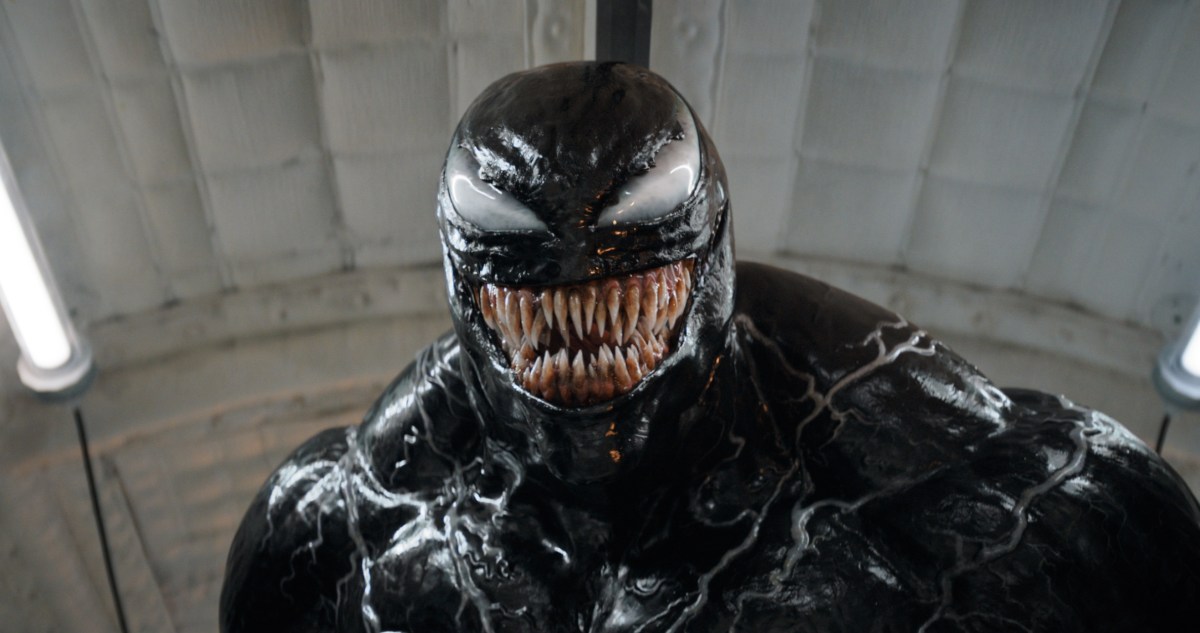
Venom in Columbia Pictures VENOM: THE LAST DANCE. Photo Courtesy: Sony Pictures

Venom in Columbia Pictures VENOM: THE LAST DANCE. Photo Courtesy: Sony Pictures
Image: Sony Pictures

Tasha: Susana, let’s start with the McGuffin at the center of this movie: The codex, a nigh-magical hoobajoo that only the Eddie Brock/Venom symbiote (both voiced by Tom Hardy) share, and that the movie’s villain, Knull (Andy Serkis) wants, for Reasons.

Did you follow any of that, Susana? We’re told Venom has a codex because Eddie died at some point in these movies, and the symbiote revived him. But the film pretty pointedly doesn’t explain what a codex is or why it would be so rare, much less why it would work as a key to break Knull out of cosmic prison.

Susana: That’s easy enough — the “codex” is an idea adapted from Donny Cates and Ryan Stegman’s 2018 run on Venom. In the comics, a “codex” is a little trace of symbiote stuff that symbiotes naturally leave behind in the bodies of their hosts, particularly the nervous system. In a pinch, it can be used to tap into the symbiote hivemind. (In the comics, all symbiotes are connected in a species-wide hivemind, natch.)

In comics, it isn’t one codex that’s the key to freeing Knull, but lots and lots of codexes. That’s the main difference here: In the comics, codexes are the furthest thing from rare. They literally happen any time a symbiote bonds with a host for more than a fleeting moment. And thanks to the Venomverse and Venomized events, which were based around symbiotes bonding with all your favorite characters so you can see how cool they look in a Venom-ized suit, basically everybody of note in the Marvel Comics universe has a codex.

Knull was freed in the Absolute Carnage event, in which a Knull-communing Carnage went on a spree of ripping out people’s spines and eating them, in order to connect their codexes up to Knull, which would allow the god to regain control of the symbiote hivemind.

Tasha: In a way! It at least tells me more than the movie does about what a codex is supposed to be or how one is formed. And I can see why people making a movie would want to switch the dynamic from “This thing is available all over the universe” to “Our protagonist is a unique and special snowflake, and his McGuffin means the action will follow him from scene to scene, wherever he goes.”

So why would a codex/a lot of codexes free Knull from alien space jail? And given that we get no information about him in this movie except “He’s the god of symbiotes, and also, they hate him,” is there a backstory to him that would make him make more sense? Like, why does he want to destroy the universe, and why would this rando death-metal-guitarist guy have the power to destroy the universe?

Susana: In Cates and Stegman’s comics, Knull is a primordial god of the void, who ruled over the formless black nothing that stretched between the destruction of the 6th Cosmos and the creation of the 7th (our current one). He sees anything that isn’t the darkness of empty space as an encroachment on his domain.

The Silver Surfer battles Knull at the dawn of time in Silver Surfer: Black (2019).

The Silver Surfer and Knull, wielding All-Black, the Necrosword, duke it out at the dawn of time in Silver Surfer: Black.
Image: Donny Cates, Tradd Moore/Marvel Comics

Tasha: That is the most metal thing you’ve ever said.

Susana: Oh, I’m just getting started. Being the Most Metal is what cosmic superhero comics are all about!

When the Celestials started making the 7th Cosmos, Knull took that as an insult. Bathed for the first time in the light of creation, the god of the void reached into his own shadow and created the first symbiote, in the form of the Celestial-killing blade All-Black, the Necrosword. (All-Black was invented by Jason Aaron and Esad Ribić for their series Thor: God of Thunder. Cates and Stegman retroactively gave it an origin with Knull.)

The Celestials cast Knull back into the void, but he spent his time manifesting symbiote life from pure darkness, creating a shape-shifting, parasitic horde species fully controlled by a hivemind linked with his own divine consciousness. Then he launched that horde into the universe to devour all that it found.

Eventually, Knull’s control momentarily lapsed after a big fight with a young Thor (immortalized by human storytellers as the epic of Beowulf), and his symbiote army bonded with mortal hosts, discovering the concepts of “honor” and “nobility,” as Knull put it. The freed symbiotes rose up and imprisoned Knull in a massive ball of their own bodies, which, until 2018’s Venom #4, had always been understood to simply be the symbiote home planet.

Knull stands against an army of freed symbiotes so large it reaches the horizon. Narration boxes say “Their horrid notions of honor… the lies of nobility and light and life, began seeping into the hive… their… infection… their poison… their venom…” in Venom #4 (2018).

Image: Donny Cates, Ryan Stegman/Marvel Comics

Tasha: OK, gross. And this is why the symbiotes in Venom: The Last Dance are willing to bond with any and every human, including the ones who imprisoned them in tubes in an underground bunker, if it helps them fight off his creatures?

Susana: By comics canon, yeah. The symbiotes hate him because he was a god-tyrant, and they don’t like being his slaves. He wants to kill the universe because it is anathema to him. And he can do it because he’s a primordial cosmic entity.

Tasha: And why does he have an army of unkillable CG mega-bugs?

Susana: Oh, those are from a completely unrelated Venom comic. I got nothin’.

Tasha: Speaking of unrelated Venom stuff, I assumed all those symbiotes who show up for the big battle at the end and have distinctive colors and powers are from the comics? That whole sequence smelled like fan-candy to me, apart from the fact that most of those characters immediately get mulched. Was there anyone in there that Venom fans would care about?

“No!” Spider-Man gulps in fear, “F-f-f-five Venoms!!!” as he beholds (LtR) the Riot, Scream, Phage, Agony, and Lasher symbiotes, in Venom: Lethal Protector #5 (1993).

Image: David Michelinie, Mark Bagley/Marvel Comics

Susana: It’s basically fan candy, but for just… an unspeakably small group of fans. The list of times Marvel Comics creators have tried to make a new symbiote/host hero or villain stick is longer than my arm, and most of them don’t rate more than a footnote. I’m checking wikis for all of these guys, but the ones on display seem to be based on Toxin (Officer Mulligan’s green form), and five more symbiotes roughly inspired by Venom: Lethal Protector. That 1993 miniseries, written by David Michelinie and drawn by several artists, introduced a litter of high-key toyetic offspring of the Venom symbiote.

Those five symbiotes were Riot (gray, turns his hands into hammers, etc.), Phage (brown, turns his limbs into spikes), Lasher (green, has extra back tentacles, attaches to the lady with a Christmas tree pin), Agony (purple, uses hair tentacles, attaches to Juno Temple’s Dr. Teddy Payne), and Scream (orange/yellow, also weaponized hair), and they seem to be the templates for Last Dance’s extra symbiotes. It’s complicated, though, because the movie doesn’t name any of them, and Riot was technically already used as the villain of 2018’s Venom (played by Riz Ahmed).

There’s also a two-headed symbiote at one point, but that one seems to be an original design, as best as I can research.

Tasha: How big a deal is Agony in the comics? Big enough to support her own movie? While The Last Dance’s post-credits scene leaves Sony a possible opening for a further Venom sequel, the film (title and all) seems to be aimed at shutting down the Tom Hardy Venom series, though Hardy has signaled he’d return if Venom got to fight Tom Holland’s Spider-Man in another Sony Spiderverse/MCU crossover.

So much of the way this movie treats Dr. Payne — as if her motivations and backstory are important, even though she doesn’t actually do much in the film, and as if her getting her own symbiote is a climactic, cathartic triumph for the story — only really makes sense if this movie is also being positioned as an Agony origin story that could be used to launch a new symbiote franchise. Which feels a lot like Sony trying to use Madame Web as a cinematic origin story for a bunch of new Spider-Women, but I digress. Clearly Agony doesn’t have Venom’s cultural cachet, but is there anything notable or interesting about her that could support a movie?

Susana: So, Teddy Payne appears to be a genderbent version of Dr. Thaddeus Paine, who featured as the villain of 1996’s Venom: The Hunger, by writer Len Kaminski and artist Ted Halsted. But his backstory has nothing in common with Dr. Payne’s other than a homophonic name and the fact that they’re both scientists, and he’s never merged with a symbiote in comics history. Payne is, in everything but name, an original character.

As for Agony, I’m going to be honest with you as a comics expert: If I’ve ever read a story with Agony in it, I don’t remember. Commenters are free to call that a gap in my knowledge, but I’m going to call it an indication of Agony’s lack of an established footprint in Marvel Comics canon.

Divers taze Venom in Venom: The Last Dance.

Venom in Columbia Pictures VENOM: THE LAST DANCE. Photo Courtesy: Sony Pictures
Image: Sony Pictures

Tasha: I mean, I’ve never read a Venom-centric comic, and I knew who Venom was well before the first movie, but I had to ask you who Agony was. I’m coming to all of this in ignorance, so I’m sure not going to claim you should know more about a character I’ve never heard of.

Speaking of characters I’ve never heard of, though, any idea who the mysterious guy in the control room is? The secretive silhouetted guy who’s so important that he can single-handedly shift control of the apparently massive government-run Imperium project from Dr. Payne to General Strickland on a moment’s notice? The guy who has somehow put up identical networked facial-recognition surveillance cameras all around the world, from downtown Vegas to random alleys in Mexico? Clearly this dude, whose presence and power and intentions and motives are never explained, is some really important and exciting comics reference, right?

Susana: I have no fucking idea who that man is. Maybe we’ll find out in Kraven the Hunter. Maybe it was just a dropped plotline.

Tasha: I admit that after seeing the first Kraven trailer in a theater last week, I have a really hard time believing the tone that movie seems to be going for could jibe at all with the hot-nonsense tone Venom: The Last Dance is keyed to. Speaking of which… A lot baffled me about this movie, including how the Venom symbiote is constantly abusing and overruling Eddie — literally ripping food out of his mouth or shoving food into it, grabbing and controlling his body, not to mention wrecking his career, his relationships, and his life. And yet Eddie calls the thing his best friend.

But the thing that alarmed me the most was when Eddie wants to leave Vegas ahead of the various threats coming after them, and the symbiote wants to hang out and dance with Mrs. Chen (Peggy Lu), who… really seems to have a thing for Venom. I mean, the whole “Dancing Queen” scene is clearly a goof, but it also involves kinda hentai levels of tentacle-caressing. (Completely apart from being a sequence that makes no sense, since the symbiote is clearly scared of the Xenophage coming after him and Eddie, and yet after an hour of avoiding merging into Venom because it’s dangerous, he drops that concern entirely in order to force Eddie into a dance sequence.) Is Venom… flirting? Do I have to consider Venom a sexual being now?

Eddie Brock (Tom Hardy) converses with the Venom symbiote’s gross goo head.

Image: Sony Pictures

Susana: Do you have to consider Venom a sexual being now? I don’t know if that’s my question to answer, Tasha. What a man and his goo-monster do in the privacy of their own home is none of my business.

I didn’t read that sequence as having a flirtatious vibe, but that might have been because I was furiously scribbling notes on how wild it was to cut to that scene from one of Dr. Payne sadly contemplating the childhood loss of her twin brother.

Tasha: I mean, what they do in the privacy of their own home is one thing, what they do in a Vegas penthouse is… well, even as I’m typing this, I’m realizing that what happens in Vegas stays in Vegas. I’m just saying, there are already so many consent problems around Eddie and his bestie and their merged Venom form, and this movie really seems like it’s aimed at feeding the fandom debates (and the fanfiction) about whether Eddie’s tolerance of the symbiote comes from some kind of submissive kink.

But the less said about that, the better. I have so many more questions for you here. Why does Area 51 demolish its buildings with vast tanks of acid? Why does acid that dissolves concrete and rebar into dust within seconds not have any effect on the ground or anything below it? Why is a giant never-ending dust waterfall considered a subtle cover-up for a secret base? Why do the acid-tank biometric controls apparently have settings for “some acid” and “more acid” which have to be activated separately?

And why does Eddie lie to that poor kid Leaf about aliens not being real? I get that he’s trying to be comforting in the moment, but this is a universe where not believing in aliens can get you killed extremely messily, and the lie doesn’t come across as helpful, just crass. And cowardly. And ironic. And obviously a setup for Eddie having to take it back 20 minutes later.

Susana: Some questions are beyond even the power of your friendly neighborhood comics expert.
Shadow Strays’ director: Graphic movie violence respects real violence


With his blood-soaked tales of violence and vengeance like The Night Comes for Us and Headshot, Timo Tjahjanto earned a reputation as one of the world’s goriest action directors. But he doesn’t see himself that way.

Tjahjanto began his filmmaking career making slasher movies as half of the Mo brothers, teaming up with his longtime friend Kimo Stamboel. Since the end of their formal partnership, the Mo brothers have largely worked on their own projects, with Stamboel working in the horror genre and Tjahjanto primarily (but not exclusively) making violent action movies.

Tjahjanto took the action world by storm with 2018’s The Night Comes for Us, a brutal thriller led by two of Indonesian cinema’s foremost martial arts stars, Iko Uwais and Joe Taslim. The movie occasionally gets labeled as “action horror,” in spite of its fairly conventional crime-thriller narrative, because of how unflinchingly Tjahjanto depicts extreme, bone-breaking, blood-soaked violence. The stylish, carnage-filled fight sequences left a mark on action cinema other directors are still scrambling to match.

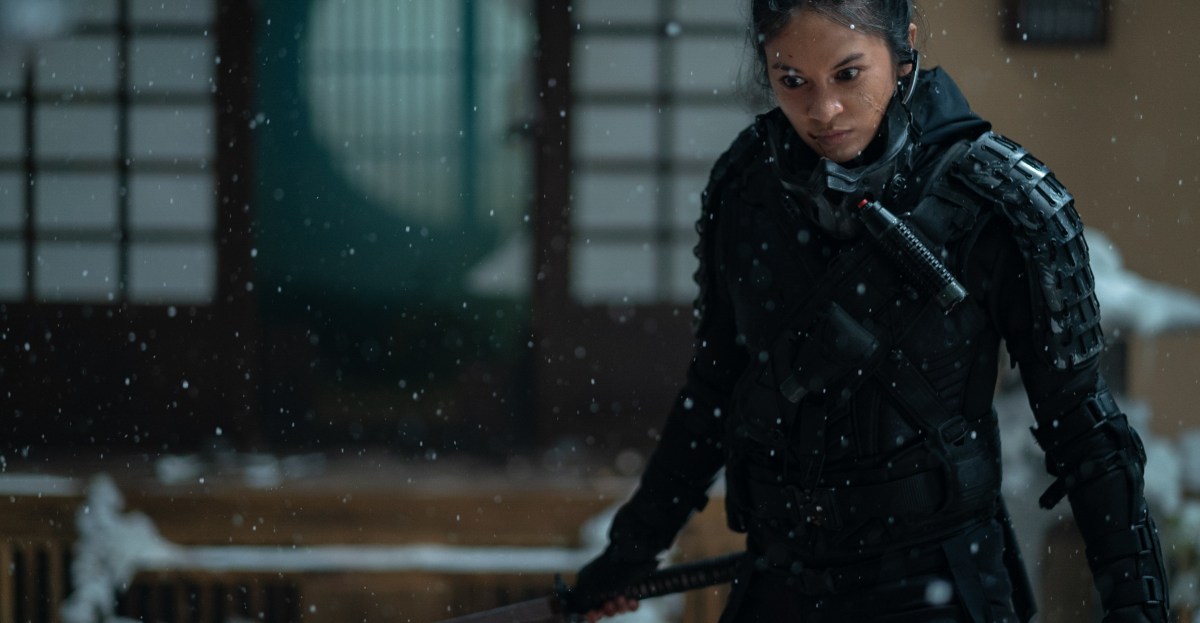
Aurora Ribero doing push-ups in The Shadow Strays

Star Aurora Ribero in The Shadow Strays
Image: Netflix

His new movie, The Shadow Strays, premiered at the Toronto International Film Festival in September, and finally dropped on Netflix on Oct. 17. It follows a teenage soldier who is being trained as a member of an elite group of top-secret assassins called the Shadows. When a mission goes wrong, she’s sidelined by the Shadows and gets entangled in a dispute between her young neighbor and local gangsters. Like most Tjahjanto projects, the film features several decapitations and “gallons” of blood. (The director estimated 85% of the blood was practical — like many splatter fans, the man loves squibs.) It’s also one of 2024’s best action movies.

But Tjahjanto doesn’t consider himself a particularly gory filmmaker — he sees his movies as a way to be honest about real-world consequences of violence. A self-described “indulgent” filmmaker, Tjahjanto — wearing a Nine Inch Nails shirt and feeling “exhausted and relieved” after recently wrapping filming on the upcoming Nobody 2 — spoke with Polygon about his approach to gore in action, his cinematic influences, and sticking with practical blood when the rest of the industry is moving to CG effects.

This interview has been edited for concision and clarity.

Polygon: I think of you as one of the gorier action directors working today. Do you see yourself that way?

Timo Tjahjanto: I don’t know. I don’t really think so. Granted, I haven’t seen them — not because I don’t want to see them, but just because of the timing of it all and the accessibility of it all — but I’ve heard there are films like Kill and Project Wolf Hunting that seem to be doing quite OK in that department. From what little clips I’ve seen, they seem to be way bloodier.

I think there was a phase in my life — when I just started as a filmmaker, I did this little film with Kimo [Stamboel], my friend. It’s called Macabre, one of the first Indonesian slasher films. And I think at the time, our goal was like, Let’s be the goriest Indonesian flick ever. But weirdly, after The Night Comes for Us and everything, I just don’t feel like I was necessarily aiming for gore. I think it’s just that there needs to be a certain, weirdly enough, respect to violence and what it can do to the human body. I feel like we have to, in some way, hold ourselves accountable as filmmakers to show just how traumatizing violence can be.

In The Night Comes For Us, three bloody men (and one small girl) hold bloody knives and look towards the camera

The Night Comes for Us
Image: Netflix

We live in a violent world. If you see what’s on the internet, what’s on formerly known as Twitter, X, just the accessibility of violent content — people from a lot of parts of America, for example, there’s a lot of people getting riled up and start beating each other up for nothing. Not that I’m saying America is the only violent place. I think the world generally has become a much more violent place, or much more exposed to the media. It’s weird when people see my films like, Holy shit, that’s so gory and violent! I’m like, Man, have you seen the real world? It’s so fucking crazy out there that I feel like sometimes my film is a PG version of it.

I’m glad you brought up the respect for violence, because one of the reasons I’m drawn to your approach to gore in action is because it feels more honest. If you’re not showing that level of destruction, you’re sanitizing the violence, and not being honest with the viewer about the actual effects of what’s happening.

That’s what I always try to do. I think the human body is weirdly fragile and resilient at the same time. If any of your bones have been broken, or if you’ve ever had a deep cut, it’s so weird how biology reacts to it all.

But beyond that, gore can also add stakes to a scene, it can add excitement, it can add humor. How do you balance those elements?

Well, that’s the thing. I think at a certain level, violence has to become funny. And I learned this from, or I copied this from, the great Takashi Miike. I think he’s always walking that line, realizing that the world is a crazy, fucked-up place, and one way you can deal with it is by using a lot of humor. If you watch something like Ichi the Killer, for example, that thing is dark, man. In Takashi Miike’s world, everything is fair and square. Women, men, we are both capable of violence, and we are both capable of being the victim. And I try to do that in my films.

A fight in The Shadow Strays — one man, wearing a suit, has a sword, while another person in all-black armor blocks the sword with their armored forearm

The Shadow Strays
Image: Netflix

One example I think is interesting is The Big 4, which has a tonal difference from your other movies.

Well, I think just because it’s gory doesn’t necessarily mean it has to be a feel-bad movie. I think that works quite well. Bad Boys can be a feel-good experience, and it has its moments of violence. And gore, especially if you’re talking about Bad Boys II — Michael Bay really pushes the limit to what kinetic violence can be. And I always feel like, you can make a less violent film and it becomes a much gloomier film, but you can also make a much more splattery and “head getting blown off by a shotgun” movie, and it still in the end has a heartwarming quality to it. Look at Shaun of the Dead, one of my favorites. And that thing is the ultimate feel-good film… depending on how you look at it.

You brought up Macabre earlier. Do you think your horror roots have an impact in terms of your perception of gore in action?

Kind of, yes. But having said that, I think it’s also childishness. Look, part of the beauty in horror is, you don’t necessarily need to be gory in terms of the approach to thrills. And as much as I would love to say, “Oh, I’m very well-versed in horror,” I think right now I’m only well-versed in a specific type of horror, which is one that is often violent. I think a lot of that comes from me growing up on Friday the 13th and Texas Chain Saw Massacre. Texas Chain Saw Massacre has such a huge impact on me in terms of how I look at violence, which is relentless.

I probably watch it maybe once or twice a year. It never ceases to amaze me. When you’re in your teens and you watch it, you think it’s the bloodiest film ever. And then when you watch it again after you’ve grown up, there’s hardly any blood in it. It is pure terror and it’s pure viscerality without actually showing you anything. And there lies the genius of Tobe Hooper making this film. So yeah, I’m just a little bit less disciplined than people like Tobe Hooper.

Timo Tjahjanto and Aurora Ribero smiling and laughing on set of the Shadow Strays

Tjahjanto and Ribero on the set of The Shadow Strays
Image: Netflix

I loved what you had to say to some critics of The Shadow Strays about how filmmaking is an indulgent act, and I really appreciate that you see it that way, that making art is something that you do for yourself, and the hope is that other people are on board with you.

I think that’s the thing. I don’t mean that to attack a critique: I think when I saw the critique, I was like, Oh, well, I agree with a lot of it. I think honestly, I’m the kind of filmmaker who always goes for character first and plotting later. So that’s why my plots tend to be simplistic. And I do admit that I feel, well, most stories have been told. For me, it’s better to rely on the humanity of the characters and hope that the audience can hold onto that.

But when people say, “Hey, too much self-indulgence can be too much of a good thing,” I feel like, Well, no. Because here I am given enough freedom, thankfully, by Netflix to do almost everything that I want to do, and I think I have to sort of indulge in it rather than restrain myself, even though I am still restraining myself. If I went full indulgence, I think you’d see a lot of kinkier shit in it, and all these sick sort of violent images that I have. I always feel like, a movie-watching experience, you have to be able to give everything you’ve got to the audience. It’s not like a series, it’s not like The Boys, where you might fail in the first episode or second episode, but you can make it up in the eighth episode.

I just feel like, Well, I have this many hours, and I just want to give my audience the shit that they want. Look at RRR — that film is self-indulgent as fuck, and it’s one of the best films ever made in the world. I just feel there’s a time for self-restraint, but action is one of those genres where you just need to keep on pulling the trigger. Someday I’ll be a better writer and I’ll probably do better plotting, but for now, I’m still learning.

A woman with a sword stands over a decapitated body which has leaked blood onto the snow in a cropped poster for The Shadow Strays

The Shadow Strays
Image: Netflix

The depiction of blood and gore has changed over time, with new technology leading a lot of productions to move away from practical blood and squibs and over to VFX blood. What’s your philosophy on that?

It’s weird. I saw that there was a critique [of The Shadow Strays] that says, Oh, the use of CGI blood. Weirdly, Shadow Strays is like 85% practical blood. I think that it’s just because of the technology that I use, which is a lot of blood tubing and all that stuff. It does look excessive to the point that you think it’s actually CGI. I pride myself in taking a lot of time for The Shadow Strays. Things can get long in the shooting process, just because placing all those squibs and blood tubes takes time.

That’s what I always hear, is how much it expands the budget and your time just from cleaning up between takes.

Exactly. And costumes, and all those little things. Fortunately, making films in Indonesia, I can sort of afford it. So I actually indulge the fuck out of making all those things. Watching The Shadow Strays so many times through editing, I had the suspicion people are going to think this is actually CGI blood, even though it’s actually meticulous condom use and timed blood tubes and all that stuff. I’m a proponent of using as many squibs as possible. I know that’s cumbersome. But actors react better to it. They react, they feel the pain. They feel like, Oh shit, blood’s really spurting out of me. And that always helps.

There are some enhancements, just because sometimes the blood doesn’t redirect the way it should. But man, we were having fun. There were always gallons of blood behind the camera where we pump it up there. Especially for the first sequence — that whole Japanese sequence is me being inspired by Takeshi Kitano’s Zatoichi, but he was using CGI blood. I was thinking, I want to be like Kitano, when he just completely goes batshit with blood, but I’m going to try to use practical blood tubes. So that’s what we did, man.

Aurora Ribero, wearing a purple hoodie, holds a bloody knife in what looks like a dance club in The Shadow Strays

The Shadow Strays
Image: Netflix

You’ve mentioned Kitano, you’ve mentioned Miike, you’ve mentioned Tobe Hooper. Are there any other big figures for you when it comes to depicting violence on screen and their use of gore?

Martin Scorsese. When he’s shooting violence, it’s almost like he sometimes reverts back to being a young filmmaker. And I think he always has that spirit of being a young filmmaker. That’s the beauty of him. He can be 89 and he still shoots like a 35-year-old Sam Peckinpah on coke and LSD. One of the best violent scenes that I think is often overlooked is actually in The Departed, when Jack Nicholson and Ray Winstone got ambushed. Just like this fucking crash zoom lands and [there’s] fucking blood and [mimics the blood spraying everywhere] and all that shit. And I was like, Man, that’s fucking beautiful! I want to steal that shit. But I still don’t have enough skill to do it. Someday!

Do you have a favorite spot of gore in The Shadow Strays?

Aurora [Ribero], who plays 13, I always said to her, “You are skilled, but you are also clumsy. That’s the whole point of your character. You have a lot of endurance because you are young,” as she is truly in real life, “but you are often clumsy in your fighting. But once we hand you a sharp-edge weapon, you go berserk.” Whenever she’s given any weapon of sharp edge, be it a kitchen knife, be it a fucking screwdriver, she just goes crazy. I always loved that.

By the end of shooting, she became so good at it. It’s so fucking cool. She never had any martial arts experience, and whenever she does the stabbing, it’s almost like somebody who’s been living in prison for 30 years and is a master shanker. She’s so good. And there’s a whole sequence later in the film, when she fights a certain somebody and she just uses a screwdriver to go crazy — I think that’s one of my favorites, just because of how ridiculous it looked with the blood and everything, and just how well it makes sense, because at this point she doesn’t have anything to lose. She’s just going crazy, and I love that.

The Shadow Strays is on Netflix now.

The Halloween Countdown: 31 days of horror to watch


Do you feel that? That chill in the air, that tingling sensation at the back of your neck? It can only mean one thing. That’s right: Halloween season is once again upon us!

Here at Polygon, we love horror. We cover it all year round, whether it’s ranking the scariest new releases of the year or curating lists of the spookiest horror movies to watch on Netflix.

We especially love Halloween, though, a holiday dedicated to all things scary and spooky. Which is why, every year for the past four years, Polygon has put together a Halloween countdown calendar, selecting 31 of our staff’s top horror-themed or Halloween-adjacent picks across movies, TV, and online videos throughout the month of October, all available to watch at home. It’s been so much fun, in fact, we’re doing it again — with an all new batch of films, shows, and videos to choose from.

Every day for the month of October, we’ll add a new recommendation to this countdown and tell you where you can watch it. So curl up on the couch, dim the lights, and grab some popcorn for a spine-tingling marathon of Halloween-adjacent delights.

Jennifer Connelly standing in front of a wall decorated with posters of insects in Phenomena.

Image: Anchor Bay Entertainment

Where to watch: Available to stream on Plex and Pluto TV with ads and to rent on Amazon

Kicking off the Halloween horror movie season is a delicate art. Just a few days into the official start of fall, it’s important to pick exactly the right movie to subtly shift that chill in the air from cozy to spooky as gently as you can. With that in mind, we’re easing into Halloween this year with Dario Argento’s Phenomena, a perfect blend of spooky, campy, and bleak that sets that stage just right for the frights to come.

Phenomena takes place in a remote town in Switzerland at a boarding school where Jennifer Corvino (Jennifer Connelly), the daughter of a famous American actor, is the newest student. The only problem is there’s also a serial killer rampaging through the town, and when Jennifer witnesses one of the murders, her life is suddenly in grave danger. The good news is she has an inexplicable telekinetic power over insects to help keep her alive.

And while the movie isn’t quite as silly as the premise would imply, it is among the most bizarre and fun of the many sleazy slashers of the 1980s. But what truly elevates it to a special place is that it’s one of the rare horror movies where the supernatural is seemingly wholly on the side of good. It’s rare that a movie lets us unambiguously root for the mystical power at its center, giving the whole thing the strange, otherworldly feeling of a particularly grotesque fairytale.

All of this makes for a tremendously entertaining and odd mystery movie, and a great way to begin a month full of horror movies. —Austen Goslin

A woman leaning around a corner with a man standing at the end of a long hallway in Mute Witness.

Image: Sony Pictures Home Entertainment

Where to watch: Shudder, AMC Plus

Anthony Waller’s 1995 horror thriller is a premise straight out of a waking nightmare. Billy Hughes (Marina Zudina), a mute special effects makeup artist, is in Moscow working out of a dilapidated movie studio on a low-budget slasher. After returning to the building after hours to pick up an important piece of equipment, Billy accidentally locks herself inside with no way of getting in touch with either her sister Karen or her sister’s boyfriend Andy. Things quickly go from bad to worse when she secretly stumbles upon the filming of a snuff film perpetrated by a pair of Russian gangsters. When the gangsters suspect that someone else is inside the studio, Billy must find a way to escape undetected before her own life is put into danger.

Mute Witness is a terrific cat-and-mouse murder thriller packed with teeth-clenchingly tense sequences and a compelling lead performance courtesy of Marina Zudina. The first hour of the film is expertly paced and edited, ingratiating the viewer within the layout of the studio before transitioning into a mad-dash climax that’s breathtaking and terrifying to behold. If that isn’t enough to pique your interest, the film touts a brief yet memorable cameo appearance by Sir Alec Guinness (Star Wars, Lawrence of Arabia) in one of his final on-screen performances. —Toussaint Egan

John Goodman and Denzel Washington in Fallen.

Image: Warner Home Video

Where to watch: Available to rent on Amazon and Apple

If you ever get bored with the same old restaurant cuisines, the answer is often to look for a fusion restaurant that mixes a couple of your favorites, taking spices and techniques from different cultures and mashing them up into something new. The same goes for horror movies: If you’re bored of the usual executions of all the familiar tropes, a genre mashup like 1998’s Fallen may be the best way to find some new flavor in familiar ideas.

In Fallen’s case, director Gregory Hoblit and screenwriter Nicholas Kazan put the serial-killer procedural thriller and the possession horror story in a blender and use ideas and techniques from both to spice up the drama. Hoblit is a police-show vet (Hill Street Blues, NYPD Blue, LA Law, um, Cop Rock) who keeps the action grounded and gritty, even as the supernatural edge pushes the story far from the genre’s normal beat.

Denzel Washington stars homicide detective John Hobbes, with John Goodman as his partner Jonesy. The two men (working under a sinister lieutenant played by Donald Sutherland) recently cracked a murder case that sent a serial killer (Elias Koteas) to the gas chamber. After his death, though, the killings start again, and Hobbes and Jonesy start working a new case that seems to be the old case. Horror vets will know where this is going long before they do, but Hoblit ramps up the eerie tension as Hobbes’ life starts to unravel.

A lot of horror involves people encountering the supernatural for the first time and fumbling for a response that will let them survive, but the stakes always seem higher when the protagonist is in law enforcement and in theory has to follow procedures, obey rules, and presume innocence. (See also: The Hidden, Angel Heart, Longlegs, etc.) Washington makes for a terrific rule-following cop who’s stuck in a terrifying situation where none of the rules he’s learned can possibly apply. The result is a solidly creepy movie with just the slightest tinge of knowing camp. —Tasha Robinson

An alligator bursting out of a sewer drain in Alligator (1980).

Image: Scream Factory

Where to watch: Prime Video, Peacock, Shudder

Creature feature directors often cite Jaws as inspiration for holding back on full monster carnage until the end — the less you show, the scarier it is. Screw off! If a movie promises a big mutant alligator terrorizing the city, then we best see a big mutant alligator terrorizing that city, and often!

Good news: Alligator is exactly that, with the added bonus of great performances, a wicked sense of humor, and a touch of social commentary.

Robert Forster (Jackie Brown, Breaking Bad) stars as detective David Madison, a cop with a reputation for doing good while losing his partners in the heat of action. When word of a killer alligator prowling the sewers reaches the surface, Det. Madison springs into action with a Dr. Marisa Kendall (Robin Riker), a herpetologist whose no-bullshit approach to amphibian research paves the way for a classic zinger-filled romance. Only the legendary John Sayles could squeeze a throwback screwball romance into a killer alligator movie and still find room to stick to the bumbling bureaucracy.

Much like Jaws, Sayles and director Lewis Teague interrogate the failed institutions that allow a 36-foot hyper-metabolic alligator to run rampant in Chicago — not only can the cops not get their shit together, but the alligator is only dino-like after consuming a biotech company’s discarded animal carcasses, all radiated with growth formula. Unlike Jaws, Teague puts his giant alligator puppet to good use, snapping its jaws on countless victims, from alleycats to random kids in a pool. Blood splatters, Chicagoans run for dear life, Det. Madison complains about his receding hairline, and by the end, things go boom. Alligator isn’t super scary, but it is a raucous good time, a cut above most monster B-movies of any era. —Matt Patches

A young woman (Mia Wasikowska) in a white dress resting on a bed surrounded by shoe boxes in Stoker (2013).

Image: Scream Factory

Where to watch: Available to rent on Amazon and Apple

Park Chan-wook is in the top tier of living filmmakers for me, so of course I’m fond of even the “minor” works in his catalog. Stoker, his only English-language movie to date (although he’s made two English-language miniseries, including the fantastic The Little Drummer Girl), is an eerie, atmospheric psychological thriller that’s a perfect fit for people who want to participate in spooky season without getting too scared.

It’s India Stoker’s (Mia Wasikowska) 18th birthday. Her father (Dermot Mulroney) has died, and her mother (Nicole Kidman) has welcomed his younger brother (Matthew Goode) into their home. What follows is a Hitchcockian gothic fairy tale filled with sensory delight. The score is pitch-perfect in the eerie atmosphere it provides, and Park never fails to deliver memorable images.

Oh, and fun fact: The movie was written by Wentworth Miller, of Prison Break/CW-verse fame, under a pseudonym. —Pete Volk

Oct. 6: Doctor Who, “The Empty Child” and “The Doctor Dances”

A boy wearing a gas mask pointing his finger at something off-screen in the Doctor Who episode, “The Empty Child.”

Image: BBC

Doctor Who has two tones: the triumph of intellect and romance over brute force and cynicism, and heebie-jeebie-inducing horror that keeps young viewers peeking through their hands, hiding behind the couch, or dreading the occasional nightmare about it for years.

This two-parter from the first season of the franchise’s 2005 reboot embodies the best of both. Sure, it’s the one that gave us the indelible Doctor line, “Just this once… everybody lives!” But it’s also an episode that made me, a grown-ass adult, terrified of my own ringing apartment intercom. Set in London during the Blitz, the Doctor and co. battle a strange plague that seems to be transmitted through phones.
The phone rings, you pick it up, a creepy little British child voice on the other end says, “Are you my mummy?” Five minutes later there’s a knock on your door, and the creepy little British child is there wearing a gas mask, saying “Are you my mummy?” and BAM, you’re a gas mask zombie now. Millions of Doctor Who fans have never recovered. —Susana Polo

The 32 Best Movies on Hulu This Week (September 2024)


In 2017, Hulu made television history by becoming the first streaming network to win the Emmy Award for Outstanding Drama Series, thanks to the phenomenon that was The Handmaid’s Tale.

While Netflix has largely cornered the streaming market on original movies—and even managed to persuade A-listers like Guillermo del Toro, Alfonso Cuarón, and Martin Scorsese to come aboard—Hulu is starting to find its footing in features too. Below are some of our top picks for the best movies (original and otherwise) streaming on Hulu right now.

Still looking for more great titles to add to your queue? Check out WIRED’s guides to the best TV shows on Hulu, best movies on Netflix, the best movies on Disney+, and the best movies on Amazon Prime. Don’t like our picks, or want to offer suggestions of your own? Head to the comments below.

If you buy something using links in our stories, we may earn a commission. This helps support our journalism. Learn more.

Kinds of Kindness

Just three months after Poor Things scored four Oscar wins, Yorgos Lanthimos got much of the gang back together—including Emma Stone, Willem Dafoe, and Margaret Qualley—for Kinds of Kindness, which debuted at Cannes. Unlike his previous works, this one is an anthology film, or what came to be marketed as a “triptych fable.” Just like the writer-director’s other movies, it is born from a place of absurdist comedy and over-the-top performances from its stars. Sex cults, reanimation, sandwiches, murder-happy bosses, and John McEnroe’s smashed tennis racket all play a part in the wildly fun festivities.

Little Women

Greta Gerwig is far (far) from the first writer-director to adapt Louisa May Alcott’s Little Women for the big screen. And she’s certainly not the first person to do an admirable job of it. (Gillian Armstrong’s 1994 version starring Winona Ryder and Christian Bale is still a much beloved interpretation.) Yet Gerwig made the 19th century tale seem practically modern-day, and different from all the rest, with seemingly small decisions like playing with the novel’s timelines. It also doesn’t hurt that it just happens to star some of the most impressive actors working today, including Saoirse Ronan, Timothée Chalamet, Emma Watson, Florence Pugh, Eliza Scanlen, James Norton, Laura Dern, Chris Cooper, Tracy Letts, Meryl Streep, and Bob Odenkirk.

Immaculate

Sydney Sweeney produced this religious horror flick and also stars as Cecilia, a young nun (yep, you read that right) whose traumatic brush with death has convinced her that God saved her for a higher purpose. When she is invited to join a convent in the remote Italian countryside that assists older nuns at the end of their life, she happily accepts—then quickly comes to realize that all may not be what it seems.

Casino

Casino isn’t one of Martin Scorsese’s most financially successful movies, nor is it one of his most critically acclaimed. But it’s the kind of movie that only gets better with time and increased viewings (yes, even with its 178-minute running time). Based on Nicholas Pileggi’s 1995 book Casino: Love and Honor in Las Vegas, the film is based on the Vegas exploits of real-life gangster Frank “Lefty” Rosenthal. Sam “Ace” Rothstein (Robert De Niro) is a low-level Chicago mobster who is asked to move to Las Vegas to run the Tangiers Casino. Once there, the one-time handicapper realizes that he’s pretty great at his job, which brings with it the respect of some of Las Vegas’ most powerful leaders. But when hot-headed enforcer Nicky Santoro (Joe Pesci) follows his friend to Las Vegas, the careful world that Ace has built around him and the casino business starts to crumble. As does Ace’s relationship with his con artist wife (Sharon Stone). While Casino struck some viewers as being too similar to Goodfellas and some of Scorsese’s other works to stand on its own, its impeccable performances—including a career-best from Stone—make it compulsively watchable.

Ferrari

Enzo Ferrari (Adam Driver) is a man who should have it all: the one-time race car driver and founder of the Ferrari car company oozes charm, wealth, and excitement. But behind the scenes, the walls are closing in on him. Set during the summer of 1957, Michael Mann’s biopic finds Ferrari (the man) on the verge of bankruptcy, mourning the death of his son, and desperately trying to hide his past indiscretions from his estranged wife—who helped build the car company and who holds the key to his financial future. Though the film earned mixed reviews, it does a solid job of telling the complex story of a complicated man. But it’s biggest selling point is Penélope Cruz’s bravura performance.

Perfect Days

Nearly 60 years into his career as a filmmaker, Wim Wenders managed to make one of his best films yet with Perfect Days—which is saying a lot when you consider that this is the same director who made Paris, Texas (1984) and Wings of Desire (1987). Hirayama (Kōji Yakusho) is a toilet cleaner in Tokyo who is blissfully content with the simplicity of his life, as it allows him the time to indulge his more personal passions: music (he’s an avid collector of cassette tapes and allows his favorite music to set the soundtrack to his life), books, and nature. The movie is not punctuated by any overly dramatic storylines; just the quiet interactions that Hirayama has with those around him—family, coworkers, total strangers—and the way those interludes impact him. It’s that poetic simplicity, and Yakusho’s wonderful performance, that gives the film its heart.

Get Out

In 2017, Jordan Peele went from one half of Key & Peele to an Oscar-winning screenwriter (not to mention the first Black writer to win the Academy Award for Best Original Screenplay and the first Black filmmaker to be nominated as a producer, writer, and director in one year). Seven years later, the impact of Peele’s Get Out is still just as impressive. Chris (Daniel Kaluuya) has been invited by his girlfriend, Rose (Allison Williams), to spend the weekend at her parents’ home in upstate New York. While Chris worries that her seemingly upper-class parents won’t be accepting of an interracial relationship, Rose assures him it won’t be a problem—and she’s right, but for all the wrong reasons. With Get Out, Peele cracked the code on making a film that was a horror movie, psychological drama, and telling commentary on race all at once.

Origin

Writer-director Ava DuVernay finds a way to yet again change the language of cinema with what is both a biopic and a historical document. The movie is based on the life of Isabel Wilkerson (Aunjanue Ellis-Taylor), the first Black woman to win the Pulitzer Prize in journalism for her work at The New York Times. It follows Wilkerson’s journey to write her 2020 book Caste: The Origins of Our Discontents—a project that took her from the US to Germany to India to research the troubling history of each country’s caste system and the parallels that exist between them.

Fight Club

An office drone (Edward Norton) with a love of catalog shopping and self-help groups meets a rebellious soap maker (Brad Pitt) on a flight. Then doesn’t seem able to shake him. But doesn’t really seem to want to, especially when they realize that beating the shit out of each other is a great way to relieve the stress of everyday life. Soon, they’ve assembled an army of Fight Club members who are ready to take on the world. It’s been 25 years since David Fincher’s adaptation of Chuck Palahniuk’s bestselling novel turned a generation of moviegoers on their head, and even though the film was a bit of a bomb when it was released in theaters, it has since gained a massive cult following—and even spawned some very real fight clubs.

The Contestant

On January 11, 1998, 22-year-old comedian Tomoaki Hamatsu entered an apartment in Japan where he lived, nude and with no human contact, for 15 months as part of an understandably controversial game show titled Susunu! Denpa Shōnen. Hamatsu had no idea his life was being broadcast. This riveting documentary delves into not just how anyone ever allowed this experiment to happen, but the real-world effects—cultural, psychological, and beyond—it had on both Hamatsu and the tens of millions of viewers who were somehow drawn into witnessing his on-camera abuse.

Anatomy of a Fall

Between her starring roles in The Zone of Interest and Anatomy of a Fall, German actress Sandra Hüller made it clear that when it comes to scripts, she knows how to pick ’em. In this compelling courtroom drama, Hüller plays a successful writer turned murder suspect when her husband (Samuel Theis) is found dead outside their home on a snowy day. Ultimately, it might be her son (Milo Machado-Graner) and/or his guide dog (Messi, the movie’s real star) who ultimately seal Sandra’s fate. It’s a smart, twisty, and well-acted mystery that will keep you guessing.

Poor Things

Whether or not you agree with her Best Actress Oscar win, there’s no denying that Emma Stone’s performance is one that won’t be soon forgotten and has likely changed the trajectory of her career. Bella Baxter (Stone) is a young woman with the brain of an infant who is brought back to life by the lovably mad scientist Dr. Godwin Baxter, aka God (Willem Dafoe). But Bella is a fast learner and is intrigued by the many adventures the world has to offer her—regardless of what polite society dictates. Mark Ruffalo, Ramy Youssef, and Christopher Abbott are among the men who are entranced by Bella’s frankness (“I must go punch that baby”) in what is undoubtedly the most over-the-top title in Yorgos Lanthimos’ filmography—which is saying a lot. One caveat: Those who are easily offended by nudity or graphic sex might want to give this a skip.

BlackBerry

It’s Always Sunny in Philadelphia’s Glenn Howerton is practically unrecognizable in this immensely entertaining recounting of the rise and fall of BlackBerry—the must-have cell phone that had the world entranced before the iPhone came along. Howerton costars as Jim Balsillie, the very real negotiator who, alongside Mike Lazaridis (Jay Baruchel), gave the world its first smartphone. Which is a lot more dramatic (and darkly humorous) than it sounds.

The Royal Hotel

Ozark star Julia Garner reunites with director Kitty Green (The Assistant) for this taut psychological thriller in which BFFs Hanna (Garner) and Liv (Jessica Henwick) decide to backpack their way through the Australian outback. When they’re offered the chance to live and work at a remote hotel in order to replenish their dwindling bank accounts, they jump at the chance—despite Hanna feeling that something isn’t quite right with their place of employment or its clientele. She’s on to something. Garner has played one badass character after the next, and The Royal Hotel is no exception.

All of Us Strangers

Adam (the always superb Andrew Scott) is a television writer who largely keeps to himself, until an awkward encounter with his tipsy neighbor Harry (Paul Mescal) kickstarts a passionate new relationship. But when he’s not in London with Harry, Adam is returning to the suburban home where he grew up—and where he encounters and is able to interact with his parents (Claire Foy and Jamie Bell), despite their having died 30 years ago. In the hands of a lesser director, the fantastical elements could seem forced. But with Andrew Haigh (Weekend, 45 Years) behind the camera, the surreal setup only augments the emotion.

The Creator

Director Gareth Edwards (Rogue One) imagines a not-too-distant future in which the human race is at war with AI—which feels all too relatable for some. John David Washington (Tenet star/son of Denzel) is the world’s best hope for putting an end to this battle once and for all when he’s tasked with tracking down the eponymous Creator, the architect behind the technology that has created this world upheaval. While there are some undeniable plot holes, the Oscar-nominated film’s stellar set pieces and first-class acting talent make this a must-see film for sci-fi fans.

Self Reliance

New Girl’s Jake Johnson makes his feature directorial debut with this wonderfully weird and occasionally dark meta comedy, which he also wrote and stars in. Tommy Walcott (Johnson) is living a pretty ordinary existence until he’s approached by Andy Samberg (as Andy Samberg), who offers him the chance of a lifetime: the opportunity to win $1 million as part of a massive reality competition. The only thing Tommy needs to do is not get murdered for 30 days, despite being hunted by dozens of contract killers whose job is to ensure that no contestant walks away with the big prize. The catch? Contestants can only be killed when they’re entirely alone. So Tommy takes it upon himself to partner up with another contestant, which is where Maddy (Anna Kendrick) comes in. Since they both have a cool mil to gain and a lot to lose (aka their lives) if they don’t triumph, they make a pact to spend every waking moment of the next 30 days together. Just when you think you know where Self Reliance is headed, it goes ahead and surprises—and in the best ways possible.

Nocebo

Christine (Eva Green) is a children’s fashion designer suffering from a debilitating, but undiagnosed, illness following a tick bite. She finds relief, in many forms, with the arrival of Diana (Chai Fonacier), a nanny and housekeeper who happens to possess healing gifts. Christine’s husband Felix (Mark Strong) is suspicious of Diana’s all-too-helpful demeanor, and it turns out he has every right to be. While this film operates as social commentary on the fashion industry, Nocebo is more effective as a creepy psychological thriller filled with the kind of uncomfortable close-ups that make the viewer feel the walls closing in.

No One Will Save You

Home invasion thrillers are never in short supply, but the really effective ones are hard to come by. Kaitlyn Dever shines—and proves yet again that she can shoulder the weight of an entire film—as Brynn Adams, a seamstress living a solitary existence in her childhood home and mourning the loss of her mother and closest friend. When she wakes up one night to discover that someone is in her house, that someone turns out to be something. A home invasion thriller with extraterrestrials might not have been on your must-watch Bingo card, but No One Will Save You is 93 minutes well spent.

Miguel Wants to Fight

Miguel (Tyler Dean Flores) is 17 years old and has never been in a fight. So when he learns that he’ll be moving away from the place and people he has known all his life, he enlists his pals to help him get into his first fistfight. It’s probably not the first coming-of-age ritual to spring to mind, but it’s certainly among them. A talented cast of young actors make this comedy—cowritten by Shea Serrano and Jason Concepcion—immensely watchable.

Bad Axe

David Siev paints a deeply personal portrait of the American Dream disrupted as he traces his family’s journey from the Killing Fields of Cambodia to the tiny—and overwhelmingly white—town of Bad Axe, Michigan. Shot in real time, this moving documentary shows the challenges facing Siev’s family, and the restaurant they own, amid political tension and anti-Asian sentiment during the Covid-19 pandemic.

Sanctuary

Hal Porterfield (Christopher Abbott) has just been handed the keys to the castle following the death of his hotel magnate father. Rebecca Marin (Margaret Qualley) is a dominatrix who believes she deserves some of the credit—and half the cash—that comes with Hal’s new CEO position. Sexual politics have rarely played out as twisted, or darkly funny, as they do in this mesmerizing, and often claustrophobic, thriller from Zachary Wigon.

Corsage

Vicky Krieps delivers yet another top-notch performance as Empress Elisabeth of Austria, who—following her 40th birthday—longs to recapture the freedom of her youth. Marie Kreutzer writes and directs this fictional biopic (Empress Elisabeth is real, though the story told within takes plenty of creative liberties), which sees the royal rebelling against her lack of power to affect any real change, despite her title. Even more so, it’s about a woman who is desperate to hold on to the power that youth and beauty entitle her to—regardless of the consequences.

How to Blow Up a Pipeline

Environmentalism meets heist movie in director Daniel Goldhaber’s thriller about a group of young people who try to—as the title implies—expose the fragility of the oil industry. It’s not often that a movie examining the fight against the climate crisis is also an edge-of-your-seat adventure, but here those elements come together beautifully. (You can give cinematographer Tehillah de Castro a bit of credit for that.) Smart, prescient, and nearly unprecedented, How to Blow Up a Pipeline is more than worth the stream.

Alien

Alien was originally released in 1979, but it has lost none of its potency in the intervening years—which isn’t something most fortysomethings could say. By now you probably know the story: The crew aboard the spacecraft Nostromo, including warrant officer Ellen Ripley (Sigourney Weaver), put a presumably slight pause on their trip back to Earth in order to respond to a distress call from a nearby planetoid. But what they discover is a bizarre alien life form that seems to delight in knocking off crew members in new—and frequently terrifying—ways. Can you say Facehugger? Or Chestburster? Alien is also noteworthy for being the film that kicked off a bona fide, and legendary, sci-fi/horror franchise—and introduced the world to Ridley Scott, who changed the genre game yet again with his next feature, Blade Runner.

Rye Lane

Raine Allen-Miller made a splash at Sundance in 2023 with her directorial debut, which offers a playful twist on the typical rom-com. Yas (Vivian Oparah) and Dom (David Jonsson) are both twentysomethings reeling from recent break-ups. After a chance—and rather awkward—first meeting, the pair spend a day wandering around South London, bonding over their shared experience, finding cheeky ways to get over the mourning of their previous relationships, and maybe discovering that romance is not dead after all.

Triangle of Sadness

Think of it like Gilligan’s Island, but with more class commentary and vomit. When a bunch of rich people head out to sea on a luxury yacht, their plans are thwarted when a terrible storm leaves many of them stranded on a beach where none of their money or power can help them survive. That already gives away too much, but suffice to say, if you like The Menu-esque critiques of the excesses of wealth with just as many dark-comedy twists, this Oscar-nominated film is right for you.

Portrait of a Lady on Fire

OK, so this might be the movie that turned the idea of “lesbian period drama” into a trope, but it’s also one of the best modern queer romance films around, alongside Moonlight and Carol. Set on an isolated French coast in the late-1700s, writer-director Céline Sciamma’s film centers on a young aristocrat woman, Héloïse (Adèle Haenel), who is betrothed to a wealthy Milanese man. When Héloïse’s mother hires Marianne (Noémie Merlant) to paint a portrait of her daughter, the two women fall in love and have the kind of heartbreaking affair that made lesbian period dramas so undeniable in the first place. You’ll be transfixed.

Spencer

Look, there are probably far too many Princess Diana movies and TV shows already. But this one, directed by Pablo Larraín and starring Kristen Stewart as the one-time Princess of Wales, focuses on one specific Christmas at Queen Elizabeth’s Sandringham Estate in a way that narrows down just how complex each day Diana’s life with the royal family must have been. Yes, the backdrop is the divorce rumors surrounding Diana and Prince Charles (Jack Farthing), but the story is about her relationships within the family and the life she left behind to join them.

Nomadland

This film from director Chloé Zhao, about one woman’s post–Great Recession quest through the American West, won a ton of Oscars, including Best Picture, Best Actress for lead Frances McDormand, and Best Director and Best Editing wins for Zhao. Zhao also won for Best Adapted Screenplay for her adaptation of WIRED contributor Jessica Bruder’s book, also called Nomadland. It’s a bracing look at the modern American dream.

Fresh

Noa (Daisy Edgar-Jones) is a single woman who is on the lookout for a partner but tired of the online dating scene. When she meets Steve (Sebastian Stan), a quirky, handsome stranger, she decides to give him her number. The two hit it off on the first date and eventually find themselves making plans to spend a weekend away—which is when Noa realizes that Steve has been hiding a few disturbing details about himself. Ultimately, Fresh stands as a lesson in the horrors of dating in the digital age (both real and imagined).

Palm Springs

Given the existence of Harold Ramis’ near-perfect Groundhog Day, it takes a whole lot of chutzpah for a filmmaker to add another picture to the infinite-time-loop rom-com canon. But writer-director Max Barbakow did it anyway with Palm Springs, and audiences are thankful he did. Building upon the rules originally established in Groundhog Day, Palm Springs offers its own unique twist on the story. Instead of showing one person (Billy Murray’s Phil Conners) slowly being pushed to the brink of insanity because he’s the only one who seems to be experiencing the phenomenon, Palm Springs has three wedding guests—Nyles (Andy Samberg), Sarah (Cristin Milioti), and Roy (J. K. Simmons)—living the same day again and again and working together to find a way out of it.

2024 movie sequels, ranked: Were any of them necessary?


In Hollywood, the question “Does this movie franchise need another chapter?” seems to have a pretty easy answer: “Sure, if we think it’ll still make money!”

For fans of a given franchise, though, the calculations are more complicated. Will that new installment in a movie series actually add anything worthwhile to the story, or just undermine the franchise’s original successes? Do we actually want to know more about our favorite characters, or ? Do we have any reason to believe the latest movie using a familiar IP has a reason to exist that isn’t entirely mercenary? Will it at least be some big dumb fun?

While plenty of 2024’s would-be IP blockbusters have shifted to 2025 dates, the year so far has still seen its share of sequels, prequels, and spinoffs. So we’re running the numbers, ranking the year’s latest-in-a-series movies by how well they justify their existence — both as movies, and as installments in ongoing stories.

16. The Strangers: Chapter 1

A man with his back to the camera holds a shotgun to the face of a person in a stylized female mask in the woods at night in The Strangers: Chapter 1

Image: Lionsgate Films/Everett Collection

A remake of 2008’s home-invasion horror movie The Strangers wasn’t necessary, but it could have been good: With a premise as solid gold as “masked strangers break into a remote home and kill the couple vacationing there,” there are a million different takes that could have been great horror fodder that doesn’t follow the original movie beat for beat. Unfortunately, that’s exactly the uninspired approach director Renny Harlin (Die Hard 2) takes with this movie, the first in a planned trilogy that was originally written as one massive four-hour-plus movie, until Legendary Entertainment broke it down into chunks.

This new batch of Strangers movies is meant to follow the characters in the aftermath of this initial home invasion. But it kicks off with Harlin essentially remaking the first Strangers with less style and dread. Gone is the slow creepiness of the original movie, replaced by rushed horror sequences and a few moments of lackluster action. While it’s possible that parts 2 and 3 somehow redeem the kickoff, Chapter 1 is nothing more than a significantly worse retread of an effective shocker. —Austen Goslin

A man in a black Spider-Man-esque costume stands atop a building looking down, noticeably not-quite-blocking a Calvin Klein billboard on the building behind him, in Madame Web

Image: Columbia Pictures/Everett Collection

Madame Web is only loosely connected to Sony’s already loosely connected universe of Marvel characters. Ironic, given that the tagline “Her web connects them all” was the central focus of . The one thing this offers to longtime fans of the current live-action Spider-Man narrative is a tease about Peter Parker’s existence — something that’s always been a big question mark in the Sony Marvel movies. Paramedic Cassie Webb (Dakota Johnson) is friends with Peter’s (hot, young, not yet dead in a morally instructive way) Uncle Ben, after all! Except the film never actually acknowledges that Ben’s newborn nephew is Peter Parker, to the point where holding back on that detail becomes something like a bit. It’s almost pandering, but not indulgent enough to feel fulfilling at all.

With its stilted dialogue and nonsensical plot, Madame Web is not a good movie at all. At least it’s the sort of terrible movie that’s fun to watch in a group setting, while making jokes and tuning out the slower bits? It’s more or less Cats for superhero fans. —Petrana Radulovic

Finn Wolfhard in a Ghostbusters uniform looking at slime coming from the ceiling while Kamail Nanjiani, Logan Kim, Paul Rudd, and Celeste O’Connor stand behind him in Ghostbusters: Frozen Empire

Photo: Sony Pictures

This sequel to a sequelish reboot brings the new generation of Ghostbusters (Paul Rudd, Carrie Coon, Finn Wolfhard, Mckenna Grace, etc.) back to New York, and brings back the original characters (Bill Murray, Dan Aykroyd, Ernie Hudson, Annie Potts, etc.) for more than a glorified cameo. That might be enough to make it essential for superfans, but for everyone else, it’s a nostalgic callback to the original movie with not much new or engaging to make it stand out, apart from Grace’s character’s maybe-queer storyline with a cute ghost girl. —PR

Bald, pointy-nosed former supervillain Gru (voiced by Steve Carell) stands at a crowded gathering wearing a “Hello, my name is” nametag and scowls at former classmate Maxime Le Mal (voiced by Will Ferrell), a skinny man with a gigantic poof of hair and a shiny gold-and-green puffy coat in Despicable Me 4

Image: Universal Pictures / Everett Collection

No one in the Despicable Me movies seems to age. Former supervillain Gru (Steve Carell) looks just like he did in the first movie, and so do his daughters, who have been children for 14 years now. And yet somehow, Gru and his wife Lucy (Kristen Wiig) pursued a relationship, got married, and had a baby. So at least there’s some sense of time passing, even if it seems like Gru Jr. might be an infant for the next decade of sequels.

Despicable Me 4 contributes a few fun new world-building elements to the franchise, though it unfortunately doesn’t explore them enough to make them significant. Still, some of them could set the stage for future adventures. (A whole school for villains?) This installment also adds a small but absolutely hilarious detail to Gru’s past, a backstory involving a high school talent show and the song “Karma Chameleon.” Nothing about Despicable Me 4 is essential, but it’s cool to see a few more funky details about this broadly defined world. —PR

Martin Lawrence makes a really weird “I gotta poop” face, lips pressed together, cheeks puffed out, sweat on his forehead, and one eye squinted as he looks over at Will Smith in Bad Boys: Ride or Die

Image: Columbia Pictures/Everett Collection

The fourth entry in the series Michael Bay inadvertently kicked off with his directorial debut Bad Boys back in 1995 brings back a lot of cast members — chiefly the Bad Boys themselves, Will Smith and Martin Lawrence. But the filmmakers clearly think Bad Boys fans want a lot more continuity than that. Screenwriters Chris Bremner and Will Beall do their best to build a Fast & Furious-style Bad Boys universe out of every bit of character work and villain lore they can scrap together from the previous three movies.

That isn’t a compliment. Where so many blockbuster movies suffer because the studio is trying to launch a profitable franchise instead of telling a decent story, Ride or Die assumes viewers are coming to the theater armed with nostalgia and a detail-oriented fascination with lore, rather than just wanting to see a couple of gifted comedic actors mouth off at each other between frenetic action sequences. Fans who care deeply about the posthumous legacy of Joe Pantoliano’s character, this is your movie. But mostly, the franchise-building gets in the way of the fun. —TR

A close-up shot of a man staring at an eyeless alien creature with bared teeth and a drool-covered chin in Alien: Romulus.

Image: 20th Century Studios

Fede Álvarez’s 2024 installment in the Alien franchise is almost perversely defined by how much it copies from past Alien movies, and how little it adds to the canon: Álvarez and co-writer Rodo Sayagues can’t even conjure up their own catchphrase, and fall back on having a new character echo the series’ most famous line.

The film is effectively creepy as a stand-alone, and for viewers who’ve never seen an Alien movie, this might all be new, exciting horror fare. But it’d still come across as a bit underexplained, since this film is aimed directly at people who know the franchise forward and backward. It’s a greatest-hits montage, more or less: Remember how creepy Xenomorphs are in water? Let’s do that again. Chestbursters, facehuggers, Giger-esque genital imagery, evil androids suborning ships for the company — that was cool! More of that! And so forth. It’s a good time at the movies, but it could hardly be less essential. —TR

Noa (a chimp) and Raka (an orangutan) from Kingdom of the Planet of the Apes look at each other while Noa holds a weapon

Image: 20th Century Studios

The fourth in the new-era Planet of the Apes movies (and the 10th Apes movie if you batch them all together) doesn’t add much to the franchise’s ongoing narrative — it jumps the story forward in time about 300 years for a story that’s frustratingly half-baked and surprisingly familiar from the previous entry, War for the Planet of the Apes, but with a gorilla dictator running a forced work camp instead of a human one. There are some powerful ideas at work — that history repeats itself, that communities are stronger than individuals, and that those communities need to band together to resist tyrants — but they aren’t communicated particularly clearly, especially since they’re mixed in with other threads, about a personal journey undercut by every Kingdom ad, and about the unreliability and unknowability of humanity.

Kingdom is enjoyable enough in the moment, an action blockbuster with impressive visual effects and some appealing characters. It isn’t a bad or boring entry in the series. It just never feels essential, or like it’s doing much besides echoing more propulsive, dynamic earlier entries in this run at the Apes story. —TR

Godzilla and King Kong roar at the sky together in Godzilla x Kong: The New Empire

Image: Warner Bros. Pictures

Godzilla x Kong: The New Empire feels like the movie where the new MonsterVerse franchise hit its stride. While 2014’s Godzilla lightly parodies disaster movies and 2017’s Kong: Skull Island does the same for dark war movies, Godzilla x Kong is a buddy movie about a giant ape and a nuclear lizard who don’t like each other much, but are often forced to team up to fight bigger monsters. It’s inescapably dumb and uncomplicatedly entertaining.

But what makes this franchise especially fun right now is that it has a secret weapon: television. While the big screen is reserved for silly monster brawls, the MonsterVerse’s TV show, Monarch: Legacy of Monsters, is a much more reserved, character-focused family drama that feels like an old-school adventure movie with giant monsters thrown in. It’s an excellent counterbalance to the silly fun of movies like A New Empire, with the added bonus that the movie’s story likely means Kong will be in the show’s next season. The MonsterVerse is a strange franchise, but as long as every entry keeps proving itself entertaining, it’s awfully hard to complain. —AG

Po the panda (Jack Black) and Zhen the gray fox (Awkwafina) stand on the deck of a ship, both open-mouthed-smiling, in Kung Fu Panda 4

Image: Universal Pictures/Everett Collection

The adventures of panda kung fu master Po (Jack Black) could’ve been wrapped up in the series’ third installment back in 2016, but Kung Fu Panda 4 adds a bit of a postscript. The door is now open for another unlikely hero to take over the franchise, should DreamWorks decide to go that route: Basically, Po will eventually retire from his title as the Dragon Warrior, and a protégé will take up the mantle. (That definitely isn’t how it worked in the first movie, but I digress.) His heir apparent, the sneaky, thieving fox Zhen (Awkwafina), is actually a pretty cool character. I wouldn’t be too mad seeing more of her!

For the fourth movie in an animated series, Kung Fu Panda 4 is decently enjoyable, mostly suffering from wasted potential. But the fight scenes are still cool, and the humor is funny enough, even if it never reaches the highs of the originals. —PR

A pale woman (Nell Tiger Free) with deeply shadowed eyes lies on her back on a bed amid crumpled sheets, long black hair fanning around her head in a dark sunburst in The First Omen

Image: 20th Century Studios/Everett Collection

The First Omen is a complicated addition to this list. On the one hand, it isn’t necessary, really. And its worst moments come at the close of the movie, when the implied connections to the original film series are made even more explicit than they already were. The First Omen does, however, earn its place on this list via an entirely different version of this metric: It might just be the best movie in the Omen series, which makes it a necessity by default.

Even better, by making a movie this scary, director and co-writer Arkasha Stevenson (Brand New Cherry Flavor) actually retroactively improves the rest of Damien’s story, just by making his origins this disturbing. The First Omen is simply an excellent horror movie, and that’s more than we can say for most franchise entries on this list, which is exactly why it clawed its way near the top. —AG

Ultraman, a robotic figure with huge, round, glowing blue eyes and a central head-fin, rears back to throw a spinning, circular, blue, glowing energy blade as he stands silhouetted against a fan of red and orange color in Ultraman: Rising

Image: Netflix

Netflix’s animated Ultraman movie isn’t following a strict franchise continuity like so many of the sequels, prequels, and spinoffs in this ranking. Instead, it’s part of a sprawling history of anime, manga, comics, books, live-action movies and shows, and much more, many of which reinvent the tokusatsu hero in radically different ways. This particular installment also focuses far more on repackaging Ultraman for a new generation than on tapping into or expanding his existing lore. In this case, its value to the franchise isn’t additive, it’s introductory: This is a fine, accessible place for new and younger viewers to step into the story, especially if they happen to be fans of creative, dynamic animation. Longtime Ultraman fans won’t learn anything radically new here, but they will get a perfect launch point for the next generation of fans. —TR

The legacy emotions from Pixar’s Inside Out all gather around a new arrival, the orange-skinned, Muppety-looking Anxiety

Image: Disney/Pixar

Pixar’s sequel to 2015’s Inside Out is the definition of a sequel expanding on a previous movie, sometimes to a fault. The first movie goes inside the head of 11-year-old Riley to explore how her personified emotions interact with each other; the sequel ages her up to 13, introduces new emotion characters, and shoves her into a series of new, anxiety-related decisions. In a lot of ways, this is a more-of-the-same sequel, leaning on a similar “important characters lost in the back of Riley’s brain, other characters taking over at center stage” plot, and plenty of the same corny-to-clever puns about how familiar thoughts, emotions, or related structures might manifest as landscape features.

But the way it recognizably tells a story about the same central characters, while focusing on how profoundly time and the events of the last movie changed them, is unusual for an animated sequel. (We’re side-eying you right now, eternally-suspended-in-time Despicable Me franchise.) Inside Out 2 forwards Riley’s evolution in meaningful ways, even if that does raise some bigger questions about the rules of this particular world. —TR

Sam (Lupita Nyong’o) sits fearfully in a dark space, covered with dust, her cat Frodo in her lap, in Michael Sarnoski’s A Quiet Place: Day One

Photo: Gareth Gatrell/Paramount Pictures via Everett Collection

You’d have to go back a few years to Dan Trachtenberg’s Predator franchise movie Prey to find a prequel that feels as vital, engaging, and meaningful to a film series as A Quiet Place: Day One — and it’s notable that both movies get to that point the same way. They both keep continuity with the stories they’re setting up, but neither one is trying to dole out unnecessary series lore, or explain things that never needed explaining: They’re both just telling riveting action stories in an established setting, and shifting focus to completely different characters with their own unique dynamics.

Most disaster movies in this vein (whether they’re alien-invasion-focused or not) center on survivors. Writer-director ​​Michael Sarnoski tunes in on someone who doesn’t have survival as an option: Sam (Lupita Nyong’o) is in the last weeks of a fatal illness, and when killer aliens start raining from the skies and chumming New York City and anyone in it who makes a noise, it’s barely moving up the time table on her mortality. Sarnoski gives her a perversely meaningless goal — to get across town to her favorite pizza place and enjoy a final slice before she dies — and then spends half the movie on taut, tense alien-stalking scenes, and the rest on exploring why she’s so doggedly determined to do this one last thing before she goes. The focus on her combination of fatalism and obsession makes Day One an indelible story that expands the Quiet Place franchise in the best way possible, without piling on a bunch of extra, unnecessary world-building. —TR

Ryan Reynolds as Deadpool/Wade Wilson and Hugh Jackman as Wolverine/Logan Deadpool and Wolverine. Deadpool has his hands pressed over his mouth humorously, while Wolverine looks tired.

Photo: Jay Maidment/20th Century Studios

Deadpool’s third live-action adventure, and his first under the Disney-Marvel Studios banner, certainly earns high rankings for popularity: It has broken records on its way to the top of the box office. But more significantly for the purposes of this particular ranking, it pushes Deadpool’s story forward, to the extent that anything really means anything in a Deadpool movie. Death certainly doesn’t. It’s possible that MCU canon does. Narrative rigor and character continuity don’t — but who goes to a Deadpool movie for those?

The snark is tamer and less transgressive this time out, but the Deadpool & Wolverine movie is still ambitious about expanding the character’s reach into new arenas, from bringing in the Loki series’ Time Variance Authority as villains to letting him beg for a shot at joining the Avengers. You can really feel producer-star Ryan Reynolds, his co-writers, and director Shawn Levy leveraging the Deadpool franchise’s popularity to get their hands on any property they want, from gleefully defiling the end of 2017’s Logan to lining up cameos designed expressly for in-the-know comics fans. They hop around Marvel movie continuity, grabbing and dropping whatever they want like nerdy magpies, and the movie is more fun for it. Most franchise filmmakers could only dream of this kind of freedom and access. Say what you want about the recent movie-multiverse boom — at least one franchise is just using it to create a bigger, more colorful sandbox. —TR

…Furiosa (Anya Taylor-Joy) in George Miller’s Furiosa

Image: Warner Bros. Entertainment/YouTube

Furiosa is the rare prequel that feels not just equal to the hit movie it’s setting up, but like it adds vital context rather than gilding the lily. Conceived and written at the same time as Max Max: Fury Road so it would be consistent with that film’s story and characterization, Furiosa doesn’t unnecessarily just fill in how-did-this-character-get-here blanks, it tells its own distinct story and answers questions about who Fury Road’s most compelling new character is, and why she’s Max’s equal. More importantly, though, it’s wildly entertaining in its own right. —TR

Lady Jessica (Rebecca Ferguson), cowled and with symbols written across her face in ink, stands in the desert, surrounded by similarly robed figures in Denis Villeneuve’s Dune: Part Two

Photo: Warner Bros. Pictures

The second half (or with luck, middle third) of Denis Villeneuve’s Dune adaptation has an advantage no other movie on this list has: It isn’t just an adjunct to other movies, it’s the vital continuation of an opening-act movie that was mostly setup, building to this payoff.

Even leaving aside the compelling performances and visuals, the epic warfare, and the fascinating shift in perspective — which is to say, leaving aside the fact that it’s one of 2024’s best movies so far — Dune: Part Two would top this list purely because it’s an essential part of its franchise’s story. It doesn’t just contribute new things to a franchise, it’s a cornerstone of the story Villeneuve is still hoping he’ll get to tell more of someday. —TR

Marvel shows footage from Thunderbolts*, the MCU Suicide Squad, at SDCC


When Marvel Studios first announced Thunderbolts* at 2022’s San Diego Comic-Con as part of its ambitious lineup for Phase 5 and 6 of the Marvel Cinematic Universe franchise, the movie didn’t yet have that odd asterisk in the title. It didn’t come with many details, either, apart from a July 26, 2024 release date that shifted along with many other MCU projects in the wake of the 2023 WGA strike.

In the wake of the Thunderbolts* segment of 2024’s San Diego Comic-Con, we don’t know much more! The asterisk is still a mystery: Marvel Studios President Kevin Feige said at a CinemaCon appearance, “we won’t talk more about that until after the movie comes out,” and confirmed it again at Comic-Con.

But as the core cast of Thunderbolts* took the stage, the Hall H audience was treated to a teaser in which all their characters came under fire from a mysterious foe who, according to Florence Pugh’s Yelena Belova, wants them all dead.

Traditionally in Marvel Comics, the Thunderbolts are a team-up of second-string villains or anti-heroes, though their membership and motives vary significantly depending which iteration you’re talking about. The MCU team is built of not-exactly-always-good characters introduced in previous films in the franchise: Ghost (Hannah John-Kamen, of Ant-Man and the Wasp), Red Guardian (David Harbour, Black Widow), the Winter Soldier (Sebastian Stan, the Captain America movies), U.S. Agent, aka John Walker (Wyatt Russell, Falcon and the Winter Soldier), and Taskmaster (Olga Kurylenko, Black Widow). Pugh’s Yelena, from Black Widow and Hawkeye, leads the team, with slimy mastermind Valentina Allegra de Fontaine (Julia Louis-Dreyfus, Falcon and the Winter Soldier) behind the scenes.

Who might want all those folks dead? What might those folks do to stay alive? And what the heck is that asterisk about after all? We’ll have to wait for the theatrical debut of Thunderbolts* on May 2, 2025, as the final movie in the MCU’s Phase 5.

You can find all Polygon’s coverage of SDCC 2024 news, trailers, and more here.

Deadpool & Wolverine review: This time, the MCU is the villain


Being a Deadpool defender can be difficult. In just about any media where he appears, the character is exactly what his strongest critics think he is: an anti-hero with a strong affinity for irreverent violence, and a juvenile, obnoxious vessel for meta asides and a bushel of dick jokes. (“A bushel of dicks” would be a pretty solid Deadpool-ism.) I wouldn’t begrudge anyone for finding all that off-putting, because it is. But there’s also more to the character. Deadpool comes with a deep pathos. When that’s used effectively, it’s resulted in endearingly odd stories about those who are deemed (or feel) unlovable. That’s a potent emotional space for a summer blockbuster to inhabit. Deadpool & Wolverine — the third movie in Ryan Reynolds’ Deadpool trilogy, and the first under the Disney banner — pays lots of lip service to that pathos. Then it punts it out of our multiverse, to Alioth-knows-where.

Look at that, I made a reference! Just like Deadpool! I can swear like him, too.

Deadpool & Wolverine has been billed as a Marvel Cinematic Universe story, but it isn’t, really. Apart from a brief gag scene early in the film, Deadpool never sets foot in the MCU’s Earth-616 for any Deadpool-y derring-do. Instead, the film is just MCU-aware — the mainline MCU is one more subject for Deadpool to joke about and pine for while he has a characteristically vulgar adventure somewhere else. In some ways, the MCU is more of a villain than the film’s actual villains.

But before all that, the story starts in Deadpool’s pre-existing corner of the multiverse, which is dying. Abducted by the Time Variance Authority from Loki, Wade Wilson/Deadpool (Reynolds) learns his universe is slowly fading away, due to Wolverine’s death at the end of 2017’s Logan. That’s because the former X-Man is an “anchor being” — someone so significant that their timeline falls apart without their presence. But TVA agent Mr. Paradox (Matthew Macfadyen) says his superiors have deemed Deadpool as special, and worth rescuing from his decaying timeline and bringing over to the MCU. Trouble is, the invite doesn’t extend to the found family Wade has built up (and time-traveled to resurrect) across his previous two films.

Wolverine pops his claws with his arms across his chest as Deadpool looks on sword in hand in a scene from Deadpool & Wolverine

Photo: Jay Maidment/20th Century Studios/Marvel Studios

This is Deadpool & Wolverine’s first problem: It arrives on screens already extremely pre-complicated and full of narrative baggage. This isn’t necessarily a problem if director/co-writer Shawn Levy and his script team just want to take the piss out of overly complex superhero films. But it is a problem when setting up that pathos that is also key to Deadpool as a character. It doesn’t particularly matter to me that I do not fully understand the mechanics of time and/or multiverse travel in this movie, or the chain of cause-and-effect that drives its plot. Frankly, I’m not sure the film’s five credited writers — Levy, Reynolds, returning Deadpool movie scribes Rhett Reese and Paul Wernick, and comics and TV writer Zeb Wells — care that much about those things either.

I do care, however, when that confusion extends to the film’s emotional stakes. Deadpool & Wolverine spends so little time establishing where Wade is in relation to his friends and relationships (for some barely explained reason, he’s on the outs with ex-girlfriend Vanessa, played by Morena Baccarin) that his driving need to do something that “matters” feels rootless. He’s static, not terribly different at the end of the film’s two hours and seven minutes than he was at the beginning.

Perhaps that’s because the film offloads much of its emotional weight to Wade’s co-star. Logan (Hugh Jackman) enters Deadpool & Wolverine as a part of Wade’s hairbrained scheme to save his universe. If Logan is his timeline’s anchor being, Wade’s logic goes, he’ll just scour other universes until he finds a new one. The Logan he winds up grabbing is even more damaged than the one we’ve seen in the X-movies, and a lot of the film’s non-joke runtime is devoted to unpacking that. This seems like a poor use of Wade’s time, and ours. Logan’s whole deal has gotten plenty of exposure in past X-movies, and while his presence here has lots of fun moments, his contribution to the film’s emotional arc feels a lot like stolen franchise valor à la Spider-Man: No Way Home.

Cassandra Nova lounges in a leather duster, khakis, and hunting boots in a scene from Deadpool & Wolverine.

Photo: Jay Maidment/20th Century Studios/Marvel Studios

It’s hard to take any of this seriously though, because Deadpool & Wolverine is much more interested in focusing on Deadpool’s relationship with the MCU. From the very first second of the film, Disney, Marvel, and Kevin Feige are established as the thematic butts of the film’s comedy. There is no need for character work to anchor any of the jokes here, because the MCU is that anchor. All that swearing and violence? It’s in a Disney movie, baby! Remember that time Wade got pegged in the first Deadpool movie? Mickey Mouse paid for a movie about a guy who gets pegged! Oh, and the film’s on-screen bad guys? All a result of Marvel’s corporate dominance.

This last bit is where Deadpool & Wolverine almost gets at something interesting. The bulk of the film takes place in The Void, a Mad-Max-style limbo where the TVA sends troublesome people they can’t really erase. Ruled by the powerful telepath (and evil twin sister of X-Men leader Charles Xavier) Cassandra Nova (Emma Corrin), The Void is an island of misfit toys full of heroes and villains from other movie studios, disposed of by the MCU powers-that-be after Disney bought up 20th Century Fox. If you’ve heard about Deadpool & Wolverine’s many cameos and guest appearances, this is where they come from: corporate consolidation spun as fodder for jokes.

In Logan and Wade’s struggle to defeat Cassandra and escape The Void, the pair are also trying to escape the ruins of, for example, the 20th Century Fox X-Men universe. Unfortunately, this plot, and the gags around it, only undercut Deadpool and the very narrow lane of pathos that makes him tick. Because as much as he constantly makes fun of the MCU, he can’t stop defining himself in relationship to it, calling himself “Marvel Jesus” throughout this movie. Regardless of the fate of his home universe, Wade wants to matter — which is a way of saying he wants to join the mainline MCU universe, and that it is the only thing in this continuum that does matter.

That’s more or less the ball game. It’s hard to buy this movie as a love letter to anything but Marvel Studios’ corporate conquests. That’s one of the fundamental miscalculations behind the film. Wade is worth getting behind because he’s an underdog. But in Deadpool & Wolverine, he isn’t representing the unloved or speaking truth to power: He’s sucking up to the undisputed champ of the box office, even though that champ has earned the potshots Deadpool throws its way. The Void is what Marvel has done to pop culture. It’s the call coming from in the house, the big fucking smoke dragon that assimilates everything into its morass of multiversal bullshit or relegates it to oblivion, stripped for parts. And in this movie, Deadpool doesn’t just love it, he wants with all of his being to be part of it.

Deadpool & Wolverine has made its hero the worst kind of comic-book character: one who doesn’t stand for anything. It’s a terrible irony. Fans worried that Disney’s corporate control and the MCU’s rigid narrative oversight would leech away Deadpool’s edge, the swearing, jocular violence. Turns out that part was fine. Instead, the MCU just took his fuckin’ heart.

I told you I could swear like that cheeky bastard.

Deadpool & Wolverine debuts in theaters July 25.

New Wicked, Gladiator 2 release dates set up this year’s Barbenheimer


Universal Pictures has moved the release date of its lavish musical Wicked forward by a few days, from Nov. 27 (the day before Thanksgiving) to the preceding Friday, Nov. 22.

The move is ostensibly, and sensibly, to avoid a clash with Disney’s animation sequel Moana 2, also set for Nov. 27. Universal may have been motivated (read: scared) by the astonishing box office performance of Disney and Pixar’s Inside Out 2, which has racked up over $1 billion globally in a little over two weeks, setting a new record for an animated film.

But the date change also sets up another, potentially more exciting clash: Wicked, which stars Ariana Grande and Cynthia Erivo, will now hit theaters on the same day as Ridley Scott’s historical action drama Gladiator II, starring Paul Mescal and Pedro Pascal. Wicked is the first part of a two-part adaptation of the hit stage musical, which prefigures the 1939 classic The Wizard of Oz, telling the witches’ backstory. Gladiator II is a generation-later sequel to Scott’s Oscar-winning 2000 epic. (Vanity Fair just published a surprisingly meaty preview of Gladiator II, which is stuffed with first-look images, plot details, and good quotes from Scott and the cast; it’s worth checking out.)

The contest between these two movies instantly recalls “Barbenheimer,” the 2023 box office phenomenon that pitted Greta Gerwig’s candy-colored comedy Barbie against Christopher Nolan’s somber nuclear bomb drama Oppenheimer. That date clash created a storm of publicity and a kind of unofficial festival of moviegoing that worked out to the benefit of both movies, which finished 2023 as the biggest and third-biggest films of the year worldwide.

Theater owners, if no one else, will be hoping for similar from Wicked and Gladiator II, but the juxtaposition isn’t quite so striking this time around. It’s true that one is a colorful, fantastical stage musical centering female characters and the other is a violent action movie front-loaded with manly actors.

But they’re both big, old-school spectacles with Old Hollywood feel, and they don’t make for as stark (or as funny) a contrast as between a toy-branded meta comedy and a three-hour biopic about physics and nuclear holocaust. Wicked and Gladiator II are also both franchise movies of a sort, relying on brand familiarity, whereas Barbie and Oppenheimer are both daring, original films from auteur directors.

Also, it’s hard to come up with a compound name for them that rolls off the tongue as smoothly “Barbenheimer” does. Gladicked? Surely not. The best I can do is “Wickiator.”

None of that matters quite as much as what Wicked and Gladiator II have in common with Barbie and Oppenheimer, though: They’re both exciting-looking movies that present very compelling reasons to see them on the big screen, that complement each other in fun ways, and that stand to do very well with audiences. It’s going to be a fun November.

Kalki 2898 AD blends Star Wars with Hindu myth, plus a dash of RRR


Actor Amitabh Bachchan is a metaphorical giant of Indian cinema, a superstar of proportions that dwarf even A-list American celebrities. In the Indian sci-fi epic Kalki 2898 AD, his stature becomes literal: In his role as the 7-foot-tall immortal warrior Ashwatthama, the 81-year-old towers over his younger co-stars, all of whom are draws in their own right. (A handy way for the uninitiated to measure the relative fame of an Indian actor is to note the length of their introduction in a movie — the bigger the name, the more elaborate the entrance.) The sheer amount of star power in this film is overwhelming, but that isn’t even the most ambitious thing about it.

Writer-director Nag Ashwin means for Kalki 2898 AD to be nothing less than the ultimate sci-fi epic. Its scope is huge, covering 6,000 years of mythological history. Its run time is long, telling the first part of a two-part story over three jam-packed hours. (To be fair, Denis Villeneuve’s Dune movies aren’t much shorter.) And its production was expensive — reportedly around $72 million, one of the biggest budgets ever for an Indian movie. The filmmakers hope it will be a crossover event akin to S.S. Rajamouli’s record-breaking hit RRR, not only within India’s disparate film industries (Bachchan is known as a Bollywood actor, while co-stars Prabhas and Kamal Haasan work in Telugu and Tamil films, respectively) but internationally as well.

The film’s look, rendered almost entirely through CGI, will certainly feel familiar to Western audiences, with elements that recall the beloved sci-fi franchises Blade Runner, Star Wars, The Matrix, Dune, and especially Mad Max: Fury Road. The story is more specifically Indian, taking the Hindu myth of Kalki — the 10th and final incarnation of the god Vishnu, who will come to lead humanity into a new era of peace and justice — and transporting it to a dystopian sci-fi setting. But while references to magical weapons and folkloric heroes may go over the heads of all but the best-informed foreign viewers, the story’s arc follows the familiar beats of a Chosen One narrative.

A promo image for the Indian sci-fi blockbuster Kalki 2989 AD composites a young man and woman facing away from each other, with an older, white-bearded man in robes and holding a staff superimposed over both of them. In the background behind the man is a desert wasteland full of shattered, rusty wreckage. In the background behind the woman is a verdant mountain and lake, dotted with buildings.

Image: Vyjayanthi Movies

This first chapter of the Kalki 2898 AD saga spends much of its run time setting up its characters and world, beginning with a caravan of refugees arriving in the futuristic city of Kasi, the last outpost of civilization after droughts and pollution have rendered most of the planet uninhabitable. Life is cheap in Kasi, where a single chicken egg fetches the same price as a human being on the black market. The one exception is fertile women, who have become extremely valuable in this dystopian future world: Whenever one is discovered, she’s sold and shipped off to the Complex, a floating pyramid above the city, where a wealthy minority hoard the few natural resources that are left.

SUM-80 (Deepika Padukone) is one of these women, and one of hundreds who live as lab rats at the pleasure of Supreme Yaskin (Haasan), a 200-year-old tyrant who extends his life by extracting a serum from the wombs of impregnated female captives. The women die in the process, but no matter; their corpses are thrown into an incinerator, and new girls take their place. SUM-80, understandably, wants to live, so she’s hiding her pregnancy from everyone around her. But it’s been five months, and the sadistic doctors who run this so-called Project K will notice soon.

Things are grim in a different way outside of the Complex, though affable bounty hunter Bhairava (Prabhas) does his best to keep the mood light. Indian films typically blend genres, and although Kalki 2898 AD is more serious-minded than most Bollywood fare — there are no true musical numbers, sadly, though characters do lip-sync to Santhosh Narayanan’s original songs — Bhairava and his wisecracking AI companion Bujji (Keerthy Suresh) bring much-needed, Star Wars-esque comedic banter to the film. Bhairava is a Han Solo type, motivated by self-interest and the pursuit of cash, or “units.” Like Han, he’s also a ladykiller, as we learn when the similarly roguish Roxie (Disha Patani) enters the narrative.

In a promo image for the Indian sci-fi blockbuster Kalki 2989 AD, a man in black clothing and a long black cape stands in a dark, V-shaped object that looks like a single-person spaceship with a crimson-lined interior and closing crimson highlights. Behind him in the darkness, a group of similar-looking ships glow against dark mountains.

Image: Saswata Chatterjee, Sri Venkateswara Creations/Everett Collection

At first, it isn’t clear how SUM-80, Bhairava, and 6,000-year-old badass Ashwatthama, who spends much of the movie hiding out in a cave, are connected. It’s never in doubt that they’ll meet up eventually, though, or that each of them will play their role in fulfilling the prophecy preached by a rebel group living in a hidden utopia known as Shambhala. Eventually, the action moves to the rebels’ sacred retreat. But first, SUM-80 must race across the wastelands, pursued by both Supreme Yaskin’s flunkies and Bhairava, who plans to exchange this precious hostage for admission to the Complex.

Some of the digital backgrounds VFX supervisor Praveen Kilaru and his team created for Kalki 2898 AD are absolutely stunning, and sci-fi fans who like nerding out on cool ships and badass vehicles will find a lot to get into here. (The design for Bujji, who can transform from a cool car to a cooler battle robot, is especially compelling.)

But the fact that this is just the first part of a two-part story creates some serious structural issues. The first two hours of the film pass at a lively but unhurried clip, but the final hour tries to cram too much into an already overstimulating epic battle scene. It feels panicky and confused as it rushes through crucial plot developments and exposition.

in a promo still for the Indian sci-fi blockbuster Kalki 2898 AD, a humanoid figure in metal armor and mask sits in a dark space, surrounded by metal spars

Image: Saswata Chatterjee, Sri Venkateswara Creations/Everett Collection

Comparisons between Kalki and RRR are inevitable, if only because the former is nakedly trying to replicate the success of the latter. But Nag Ashwin’s film is missing a few of the elements that made RRR so charming: There’s no central bromance, no exhilarating dance sequences, and no sense of surprise. There is comedy, but it’s isolated in certain sections of the film, and there’s much less romance and music than audiences might expect. It’s still an entertaining ride, with some cool imagery and exciting chase scenes. But by channeling the gravitas of Western sci-fi movies, Kalki 2898 AD loses some of the range that makes Indian movies special. Its ambition is to be applauded. Its self-seriousness, not so much.

Kalki 2898 AD is in theaters worldwide now.

Netflix’s Trigger Warning, The Beast, and every new movie this week


Greetings, Polygon readers! Each week, we round up the most notable new releases to streaming and VOD, highlighting the biggest and best new movies for you to watch at home.

This week, Trigger Warning, the new action thriller starring Jessica Alba as a hardened Special Forces commando, premieres on Netflix. That’s not all, as plenty of other exciting new releases make their streaming debuts this week, including a documentary on tennis legend Roger Federer on Prime Video, Kung Fu Panda 4 on Peacock, Sometimes I Think About Dying on MUBI, and more. There’s also several highly anticipated releases on VOD this week, including animated sci-fi noir mystery Mars Express and dystopian sci-fi romance The Beast starring Léa Seydoux.

Here’s everything new that’s available to watch this weekend!


New on Netflix

Trigger Warning

Where to watch: Available to stream on Netflix

A woman wielding a knife in Trigger Warning.

Image: Netflix

Genre: Action thriller
Run time: 1h 46m
Director: Mouly Surya
Cast: Jessica Alba, Anthony Michael Hall, Mark Webber

The Alba-naissance is here. Five years after her last film role (crime thriller Killers Anonymous), the onetime Sue Storm is teaming up with Indonesian director Mouly Surya in an action-packed movie inspired by the John Wick franchise (and produced by John Wick producer Basil Iwanyk). Trigger Warning is Surya’s English-language debut and was filmed three years ago, but is finally dropping on Netflix this week.

Black Barbie

Where to watch: Available to stream on Netflix

A woman holding a barbie in Black Barbie.

Image: Netflix

Genre: Documentary
Run time: 1h 40m
Director: Lagueria Davis

This doc from Shondaland digs into the first Black Barbie and three Black women at Mattel who made it happen: Beulah Mae Mitchell, Kitty Black Perkins, and Stacey McBride-Irby.

New on Prime Video

Federer: Twelve Final Days

Where to watch: Available to stream on Prime Video

Image: Prime

Genre: Documentary
Run time: 1h 40m
Directors: Asif Kapadia, Joe Sabia
Cast: Roger Federer, Rafael Nadal, Novak Djokovic

Arguably the greatest men’s tennis player to ever live, Roger Federer finally hung up his racket for good in 2022. This documentary, co-directed by Senna and Amy director Asif Kapadia, focuses on the final 12 days of the Swiss legend’s illustrious career.

New on Peacock

Kung Fu Panda 4

Where to watch: Available to stream on Peacock

An anthropomorphic panda holding a green scepter and a red panda in his arms while smiling.

Image: Universal Pictures

Genre: Martial arts comedy
Run time: 1h 34m
Director: Mike Mitchell
Cast: Jack Black, Awkwafina, Bryan Cranston

The fourth entry in the Kung Fu Panda saga sees Po taking on a new apprentice to succeed him as the Dragon Warrior. When a mysterious sorceress plots to resurrect Po’s past adversaries, he’ll need to call upon all his strength and allies to save the day.

From our review:

While the individual scenes and moments in Kung Fu Panda 4 are entertaining (and sometimes even great), it never quite gels as an enjoyable movie on its own. The message of change tying it together is flimsy, and the plot feels strung along, trying to get the characters in the right place to launch a few seconds of cool action. After four movies, it isn’t really a surprise that the Kung Fu Panda machine is running out of steam — thankfully, though, it has just enough power left to churn out some genuine laughs at the end.

New on MUBI

Sometimes I Think About Dying

Where to watch: Available to stream on MUBI

A close-up of Daisy Ridley as Fran, as she looks at the camera, her face serious

Image: Oscilloscope Laboratories

Genre: Romantic drama
Run time: 1h 34m
Director: Rachel Lambert
Cast: Daisy Ridley, Dave Merheje, Parvesh Cheena

Star Wars icon Daisy Ridley takes a dramatic turn in this new existential drama, playing the role of a socially awkward office worker who tentatively attempts to come out of her shell. It’s dark, funny, awkward, and achingly human.

From our review:

Not much happens in Sometimes I Think About Dying, but that’s the point of the movie. Even the smallest thing, like Fran mustering up the courage to say goodbye to someone after work, is given huge weight. The movie lingers on the mundane, using it to paint a thorough portrait of who she is, without having her say or act much. The steps she takes to help overcome her social anxiety might seem small, but they’re all hurdles to her. It’s a movie made up of quiet moments: pauses in conversation, lingering glances, and outstretched hands. Lambert emphasizes the importance of these small interactions, and the ways they build up to connections. It’s a quiet story that aches in the best sort of way.

New on Metrograph at Home

Last Night I Saw You Smiling

Where to watch: Available to stream on Metrograph at Home

A group of people gathered around a TV showing a kickboxing match in Last Night I Saw You Smiling

Image: Metrograph at Home

Genre: Documentary
Run time: 1h 18m
Director: Kavich Neang

In the final days of a condemned, iconic building, director Kavich Neang follows three families who live there (including his own). This is the streaming premiere of the movie, which first came out in 2019 and won awards on the international festival circuit, and is a part of Metrograph’s “Davy Chou Selects” series.

New to rent

Handling the Undead

Where to watch: Available to rent on Amazon, Apple, and Vudu

A woman holding the limp body of child in her arms beside a boat surrounded by marsh of reeds in Handling the Undead.

Image: Neon

Genre: Horror drama
Run time: 1h 37m
Director: Thea Hvistendahl
Cast: Renate Reinsve, Anders Danielsen Lie, Bahar Pars

There’s tons of horror movies about the dead coming back to life. None of them are quite like Handling the Undead, though. Based on John Ajvide Lindqvist’s 2005 novel, the film follows the story of three families living in Oslo whose loved ones all mysteriously rise from the dead as semi-sentient corpses. How will they handle this new phenomenon, and is it a second chance to say goodbye… or a curse?

I Used to Be Funny

Where to watch: Available to rent on Amazon, Apple, and Vudu

A young woman laying sideways on a bed, looking forlorn in I Used to Be Funny.

Image: Barn 12/Utopia

Genre: Comedy drama
Run time: 1h 45m
Director: Ally Pankiw
Cast: Rachel Sennott, Olga Petsa, Jason Jones

Rachel Sennott (Bodies Bodies Bodies) stars as Sam, a stand-up comedian living in Toronto who takes on a nannying job in order to earn some cash. After the young girl she was caring for goes missing, Sam is stricken with PTSD and no longer performs comedy, haunted by the loss of her charge and her own helplessness.

IF

Where to watch: Available to rent on Amazon, Apple, and Vudu

A bearded man seated at a desk with a small girl with her arms crossed with colorful CG-animated characters in the background in IF.

Image: Paramount Pictures

Genre: Fantasy comedy
Run time: 1h 44m
Director: John Krasinski
Cast: Cailey Fleming, Ryan Reynolds, John Krasinski

Remember Foster’s Home for Imaginary Friends? Well, imagine that, but set in New York and starring Ryan Reynolds and not so imaginative. IF follows Bea (Cailey Fleming), a young girl who works alongside her neighbor to help imaginary friends whose real-life friends have grown up. It’s ostensibly a kids’ movie, but with a message that’s slightly… off.

Mars Express

Where to watch: Available to rent on Amazon, Apple, and Vudu

A robot with a holographic head and a red arm points to a screen next to a blonde haired woman in a trenchcoat in a futuristic vehicle in Mars Express.

Image: Everybody on Deck/GKIDS

Genre: Sci-fi action
Run time: 1h 25m
Director: Jérémie Périn
Cast: Léa Drucker, Mathieu Amalric, Daniel Njo Lobé

This sci-fi noir thriller follows a private detective and her android partner who are hired by a wealthy businessman to track down an elusive hacker. Their investigation dovetails into a search for a missing woman before inadvertently spiralling into a vast conspiracy that threatens to unravel the fabric of human civilization.

From our review:

Mars Express is the rare example of an animated feature that warrants an almost immediate rewatch upon completion, if only to appreciate the craftsmanship of its presentation. It’s a densely layered sci-fi story that’s light on proper nouns, but heavy on subtext. It’s set in a world that doesn’t tell so much as it shows the depth of its narrative and worldbuilding, by trusting its audience to pay close attention and connect the dots alongside the film’s characters. In short, it’s a rare example of “adult” animation that treats its audience like adults, and its execution elevates its premise until it stands confidently as one of the year’s best animated features.

The Beast

Where to watch: Available to rent on Amazon, Apple, and Vudu

Gabrielle (Léa Seydoux), a pale young woman dressed in black vinyl, lies on her back staring upward with a tear rolling down her cheek in The Beast

Image: Janus Films

Genre: Sci-fi romance
Run time: 2h 26m
Director: Bertrand Bonello
Cast: Léa Seydoux, George MacKay, Guslagie Malanda

Imagine Cloud Atlas meets The Age of Innocence meets Mulholland Drive. That’s about the simplest way of describing The Beast, Bertrand Bonello’s sci-fi romance drama. Léa Seydoux (Spectre) stars as Gabrielle, a woman living in the near-future who undergoes a process to “purify” her DNA of strong emotions by reliving her past lives. Her procedure becomes more complicated after crossing paths with Louis (George MacKay), a man whom — in a past life — she may or may not have loved.

From our review:

The Beast’s three timelines play with seemingly unmixable genres: a classic period romance, a gripping horror-thriller, and dystopian sci-fi. That places them at a logistical disconnect, but Bonello binds them aesthetically and emotionally. Through his lengthy, thought-provoking close-ups of Gabrielle and Louis in each section, he creates a sense of longing and isolation across time, binding together human experiences of the past, present, and future, and putting them into sharp and chilling context.

We Grown Now

Where to watch: Available to rent on Amazon, Apple, and Vudu

A woman hugging a child in We Grown Now.

Image: Sony Pictures Classics

Genre: Drama
Run time: 1h 33m
Director: Minhal Baig
Cast: Blake Cameron James, Gian Knight Ramirez, S. Epatha Merkerson

Set in Chicago in the early ’90s, We Grown Now centers on the story of Malik and Eric, two young boys growing up in a housing complex who survive the mundanity of school life and the perils of their environment through the strength of their friendship. When a sudden tragedy threatens to strain their bond, Malik and Eric will have to grow up fast and make a choice between what to hold on to and what to let go of.