Consumer Electronics Show (CES) Recap 2024: Las Vegas Inventors and Design Firms Recap


The Consumer Electronics Show, popularly known as CES, is a much-anticipated yearly event that showcases the newest, hottest, and most exciting inventions and innovations in the world of technology. 2024 is no different, as the CES once again highlighted the zenith of technological innovation to give the public a glimpse of the future. This year, the event held in Las Vegas was a one-of-a-kind display of ingenious creativity where companies from various parts of the world came together to introduce their latest inventions and innovations. 

Here’s a quick recap of some of the most captivating and exciting CES exhibits this year for Las Vegas Inventors and Design Firms:

Consumer Electronics Show (CES) recap 2024: Las Vegas inventors and design firms recap

Innovative In-Car Eye-Tracking Technology by Bosch

bosch-in-car-eye-tracking-system

Bosch unveiled an innovative new and exciting use of eye-tracking technology in vehicles that goes beyond safety. Eye-tracking was originally a part of driver assistance systems, but this time, Bosch now sees it as a means to add enjoyment to the driving experience with two notable uses: 

Its first use is simple and has something to do with driver fatigue. Imagine yourself feeling sleepy and tired while driving on your way home, and your car’s eye-tracking notices it, so it offers to prepare an espresso for you once you arrive. This is possible because the vehicle is connected to your home’s automatic espresso machine to ensure that a freshly brewed cup of coffee will welcome you when you enter the door. 

Its second function is more state-of-the-art as it adds context to the drive. The eye-tracking system will notice what you’re looking at outside while driving and give you details about it. For example, the system might inform you of the opening hours of a coffee shop you passed by. It can also give you a quick recap of the history behind an interesting building that caught your eye. This feature transforms your usual drive into something more engaging, informative, and fun. 

Bosch.com

EcoFlow Delta Ultra Invention

Ecoflow-Delta-Ultra

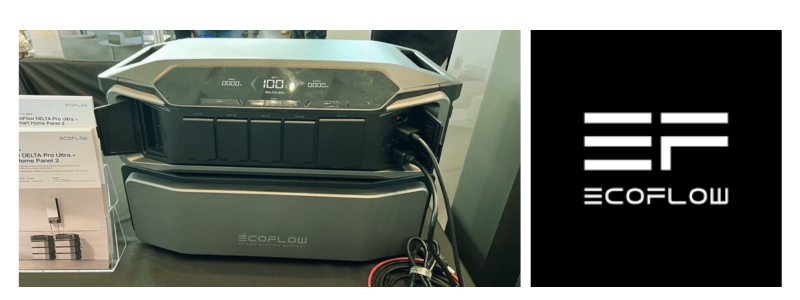
One standout during the CES 2024 is the EcoFlow Delta Ultra, which offers a giant leap forward in how modern homes are powered. It was showcased in a cozy setting that resembles a house to highlight its mix of cutting-edge technology and practicality. At its core, the Delta Ultra invention is an inverter and battery system for the entire house meant to take advantage of the energy of rooftop solar panels. It stores and keeps solar power so homeowners can use it to run their residences. One of its cool features is its ability to pull electricity from the grid when it is more affordable and send back power once prices soar. 

The invention can also work with your home’s existing switches, but it shines out the most if you pair it with Smart Home Panel 2. With more and more houses getting solar panels, EcoFlow Delta Ultra is an all-encompassing, powerful, and stylish way of handling energy use in homes. To make things even better, the product is not a mere concept because you can now buy it and start your way of managing your home’s energy. 

Ecoflow.com

Gyrogear GyroGlove Invention

Gyrogear-Gyroglove

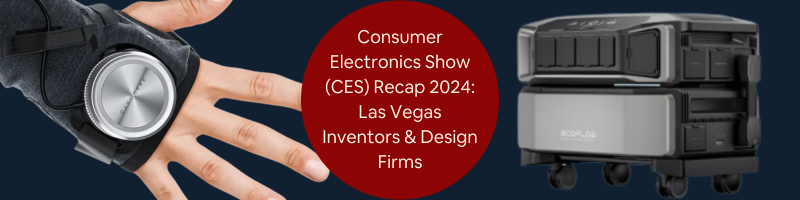
The Gyrogear GyroGlove is hailed as among the top product inventions during CES 2024 for a good reason: it is an innovative breakthrough meant to help people with disabilities. This invention is specifically made for people suffering from hand tremors, such as Parkinson’s patients. An advanced gyroscope is used to steady the hands. 

GyroGlove’s innovative product design makers, Gyrgear, are now in talks with top medical officers at different insurance companies in the US. The GyroGlove invention has also been approved by the US FDA and the Therapeutic Goods Administration of Australia as a medical device. Various global standards groups are certified to prove its effectiveness and safety. It’s a significant invention that will make daily life easier for people with motor challenges. 

Gyrogear.co

Hydrogen Initiative of Hyundai 

Hyundai-Hydrogen-initiative

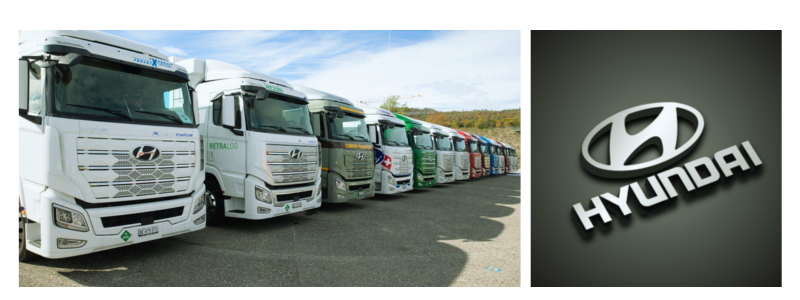
Hyundai shared its exciting plan during the CES 2024 to manufacture 3 million tons of hydrogen for the company’s steel mills by 2030. Becoming a leader in the ever-growing hydrogen economy is an ambitious move. It’s been a while since the company started to invest in hydrogen fuel cells and successfully introduced electric vehicles or EVs. However, with the tough competition and some challenges in the innovative market of battery EVs, the company decided to focus more on hydrogen to be on top of the game. 

This significant step towards hydrogen is not only about cars alone. It can also change industries, including maritime shipping and steelmaking. Hyundai placed big bets on hydrogen despite the infancy of the technology. It’s a shift in their technology and a strategic move for the future of green technology and the automotive sector. 

Hyundai.com

Gaming, Robotics, and AI Innovations by NVIDIA

Nvidia-AI-innovation

A gaming and AI tech leader, NVIDIA, revealed so many exciting new advancements at CES 2024 that will change the realm of gaming, generative AI, robotics, and content creation. It focused on generative AI’s power, proving NVIDIA’s significant role in this field. Several key things discussed include the launch of the TensorRT-LLM library for Windows. It allows large language models to function better on RTX PCs and the new Chat with the RTX playground. The innovation enables users to enhance the reality and accuracy of generative AI models by combining them with various data sources. 

NVIDIA also showcased its progress in digital avatar technology with the Avatar Cloud Engine or ACE. It uses generative AI to produce realistic digital avatars for PC and online use. The company also partnered up with Getty Images to introduce iStock’s generative AI service run by NVIDIA Picasso for producing 4K images from text. It uses an AI model trained on the massive library of Getty Images. They also introduced the GeForce RTX 40 SUPER Series GPUs aimed to improve generative AI and gaming.

These GPUs, such as the RTX 4070 Ti SUPER and RTX 4080 SUPER, offer faster memory, more [power, and more significant boosts in performance for high-end content creation and gaming. The collaboration of NVIDIA with OBS and Twitched for Enhanced Broadcasting and the RTX Remix’s open beta proves their focus on enhancing gaming. The company is also all in on AI with the RTX laptops and the extensive use of RTX tech in more than 500 apps and games, which include those from Blizzard and Activision. 

They also have a Day Pass membership and the Cloud G-SYNC technology for GeForce NOW. NVIDIA also launched the Isaac platform, which focuses on more innovative robotics and shows its dedication to breakthroughs in various areas. The announcements by NVIDIA at CES 2024 prove that the company leads the way in technology to offer distinct experiences for creators, tech enthusiasts, and gamers worldwide. 

Nvidia.com

GREEN IMPACT Initiative by Panasonic

Panasonic-green-impact-initiative

Panasonic made a ripple at CES 2024 with its focus on innovation and sustainability. They unveiled the Panasonic GREEN IMPACT initiative. It is a notable move towards carbon footprint reduction and support for a circular economy. The initiative covers an extensive array of solutions for a society with zero carbon dioxide, such as using renewable energy, the development of high-performance electrodes for hydrogen, intelligent systems for energy use management, and air-to-water heat pumps. Panasonic also announced its exciting partnerships with other companies, such as Infinity and Fisker, in the mobility and automotive industries.

They unveiled sustainable audio systems and the Neuron platform, a state-of-the-art solution that improves vehicle software and enhances the efficiency of electronic control units. Panasonic also introduced new sustainability technologies and partnerships, such as eco-friendly Kinari material and bio CO2 technology, which are meant to improve the growth of crops and fight climate change.

They also expressed their commitment to STEM education through programs such as the Innovators for Impact initiative. The presence of Panasonic at CES 2024 proved the company’s commitment to improving lifestyles while prioritizing technological advancement and sustainability. 

Panasonic.com

Visionary 0 Series EVS by Honda 

O-Series-EVS-from-Honda

Honda shared some exciting plans during CES 2024 for their electric vehicles, or EVs, with the introduction of its 0 series EVs. The move challenges the existing trend of heavy and bulky electric cars. The brand unveiled a couple of concept vehicles, the Space-Hub and Saloon, marking a significant shift from conventional EV designs. 

They are preparing for the 2026 launch of their first-ever North American commercial model with a focus on producing light and thin EVs, which is a fresh take in the field of EVs. The Saloon, which is meant to be the first model in the 0 series, is the perfect example of the new direction. This sporty, spacious, and sleek EV looks like it came directly from a sci-fi flick. 

Honda.com

How Cad Crowd can help

Cad Crowd offers new invention development, consumer product design, wearables design, engineering design, prototype design, and more that could help you and your design firm become part of the CES soon. 

How Digital Prototyping Influences Company Product Development and Design


If you’re a product developer, you might already know how challenging the new product development process can get, especially once you get to the point when you need to build a prototype.

Product prototypes are among the most time-consuming and expensive stages of the product development process. You need to develop a unique and new item, build it from scratch, and check to see if you missed anything so you can change it before it’s too late. However, most of these problems are now eradicated with the help of technology. This article discusses how digital prototyping influences company product development and design.

Digital prototyping defined

Digital prototyping refers to the concept of creating real-world product models. Product models allow product developers to acquire early feedback from potential product users without releasing the product to market. Here, the prototypes are produced digitally with all the necessary transitions and animations that resemble the actual product. This differs from a throwaway or paper prototype, as product details are the main focus of digital prototypes.

During digital prototyping, the product’s functioning model is made before its actual development. It is made possible with the help of different tools for digital prototyping available in the market. Being in a digital format, these digital prototypes allow developers to quickly iterate and make a few adjustments without too much hassle, according to the feedback from the users.

The following primary phases are part of the digital prototyping process:

  1. Analysis of the problem and exploration of the product and its core idea.
  2. Brainstorming on the prototype’s development in digital format.
  3. Development of a real-world model of the prototype that allows testing using a reliable tool.
  4. Presentation of the prototype model to potential users to obtain valuable insights.
  5. Adjust the prototype based on the acquired feedback and start the process again.

RELATED: How Much Does it Cost to Make A Prototype for My New Product Invention?

Principles of digital prototyping

product1

Aside from helping you create prototypes that are as realistic as possible, digital prototyping has the following broad principles:

Build enough to learn but nothing else beyond that

Digital prototypes are not fully functioning designs. Instead, these digital prototype designs function as a test to answer critical questions regarding your hypothesis. Will people buy your product online? You can’t wait to test and develop your products at this point. Digital product prototype images will help answer the question and show how to fill the orders to ensure that clients won’t be disappointed.

You can discard prototypes

The main point is that digital prototypes are meant to be produced only as part of the product to present the appearance and features of the product and not necessarily the product itself. This is when you will test the idea. It means you’ll be wasting time if you spend more extended hours than necessary on prototype development. Aside from that, working longer on something will only increase your attachment to it. Depending on customer feedback, it’s never recommended to be too attached to a prototype because of the possibility of pivoting 180 degrees.

Anything can be developed into a prototype

There’s often significant time pressure when making digital prototypes. However, you can prototype almost anything under the sun.

RELATED: Elevating Your Company Using CAD Product Design Services During Product Development

Why is digital prototyping important in product development and design?

product2-1

Digital prototyping services can help you save money and time and assist with complex conversions to create better products. Developing digital prototypes offers many benefits, and the following are the most important ones:

Accuracy

You can create modern digital prototypes with excellent tolerances that are much tighter than physical prototypes. It lets developers create an accurate model of how the product’s production version might function without the need to go through the trouble of building it.

Visual aid for meticulous feedback

If you’ve ever tried articulating a visual concept, you know how difficult it can be. Sometimes, you may use paper and pen to illustrate your product concept. Digital prototypes work to help create visual representations to allow feedback.

Attainable

There’s a reason why digital prototyping plays a critical role in companies’ product development and design processes. The expertise and software required to work it are tricky, if possible, to implement on a smaller scale. However, this is starting to change gradually with the improved accessibility of digital prototyping technology, even for more minor scales.

Validate business goals

It’s common for businesses not to understand their goals aside from lowering costs and making money. Digital prototyping will force a company to see solutions in full action and consider whether these will solve their concerns.

product3

Better collaboration

In today’s manufacturing industry, an entire product design team typically works together on just one prototype. This is why it’s invaluable to be able to work on similar data at the same time. This luxury is possible with the help of a good package for digital prototyping.

Collaboration is fundamental for the success of any project. When the product development team works with a client, they meet regularly to run through things they’re working on. Introducing digital prototyping at this stage allows clients to work with the team to troubleshoot issues that require their technical expertise and industry knowledge.

Compatibility

Pen and paper prototype designs still come in handy in various respects. However, there’s no way that you can manipulate them. Digital prototypes can be tweaked endlessly, and multiple versions can be kept in storage that can be worked on using different devices.

Efficiency

Since it’s possible to conduct digital prototyping faster, it ensures a more thorough prototyping stage as part of the production process. It results in products superior to those that undergo the creaking cumbersomeness of traditional projects.

Lower budget

The first and most important concern of most product developers and freelance product designers is the cost involved in prototyping. Digital prototyping minimizes the need to build something. As a result, it lowers the materials and labor necessary for the process.

RELATED: Guide to Prototyping Methods Used in Product Development Services for Companies and Firms

Testing

One of the most critical purposes of digital prototyping is to confirm that the product will work as it is meant to. It also ensures that any initial errors will be addressed before the actual production stage. Since creating digital prototypes is faster, more tests can be conducted before abandoning the production stage.

Large applications may also take several months to reach the point where users can offer feedback. Digital prototyping can cut down this process so that users are given the chance to test the product. Digital prototypes are also faster to build and change and come in handy for validating new ideas for the product developer.

Shared understanding

One of the almost unavoidable concerns during product development is assuming everyone is on the same page regarding the idea. While some may recognize the limitations of concepts and techniques, others may not. Some developers may also misinterpret certain features specific to the industry since they lack information regarding how things work. Digital prototyping allows all parties to reach a shared understanding since the details are fully visualized.

Singular point of reference for developers and designers

Information is acquired from various places, including project managers, client meetings, emails, use stories, and more when a project starts. Consolidating everything into a digital prototype allows developers and designers a source of truth that they can refer to so they can start with product development.

Speed up the development process

Regarding product development, building products will be faster if the details have been hashed out in full and the number of reworks is minimized. Spending time on digital prototyping can help catch some of the issues that may otherwise show up during the actual development, which may result in longer delays to the product’s release.

Time

Digital prototyping also helps shorten the production stage as much as possible. It shortens the product development cycle, allowing better agility for the manufacturer when launching the product in the market.

product4

Confirm user needs

The most severe concern about new products is when they don’t fully cater to the target users’ needs. It often happens when the product developer assumes they have a fantastic idea that people will buy without bothering to check if they will buy it. Digital prototyping offers a rudimentary means for product developers to match with users and confirm if the product will simplify their lives.

Explore challenging concepts

Several concepts are difficult to understand and may be more challenging to design. Since digital prototyping isn’t focused on the details alone, it allows for exploring concerns without being too focused on trivial details.

RELATED: 5 Ways How Rapid Product Development & Prototyping Benefits Your Company

How Cad Crowd can help

Cad Crowd will help you find skilled digital prototyping professionals for easier product development and design. Our product prototyping experts will provide top-notch services that will help you simplify and streamline your product design and development process. With Cad Crowd, you can bring your new products to life efficiently and effectively and take your product development to the next level. Get a free quote now!

FEA (Finite Element Analysis) Mistakes to Avoid When Hiring FEA Engineering Services


The idea behind FEA (finite element analysis) is to predict how a design or structure responds to various types of physical forces and study the possibility of failure without using a physical prototype. Everything is done on a computer screen by combining 3D CAD technology and mathematical-based geometry analysis. It is a virtual simulation to visualize the effects of the usage environment on design parts, components, and assemblies made of any known material. Physical forces may include air pressures, water pressures, weights, vibrations, repeated impacts, dynamic loads, static loads, and temperature changes, to name a few.

The purpose of FEA (finite element analysis)

FEA services are meant to replicate both common/likely and worst-case real-life scenarios in the simulation. Under each scenario, the simulation offers comprehensive imagery depicting how a design responds and withstands physical forces until it deforms and breaks. The data is the foundation for discovering the solution that meets pre-defined design requirements like safety, durability, performance, and repairability.

RELATED: Product simulation and analysis: why it’s worthwhile

Since all physical products of any industry are affected by the conditions in which they are stored and used, they can be subjected to FEA tests. From the simplest small wooden carvings and complex crude oil pipelines to intricate blood transfusion devices and sophisticated microchips, FEA simulation engineering designers can determine the amount of stress loading under which their building blocks will fail. Manufacturers then use analysis results to improve their products.

Push-button solution

Several popular 3D CAD software packages come equipped with powerful FEA features. Many vendors still offer stand-alone software tools for each functionality, but integrating both technologies simplifies the analysis procedures. FEA simulation can only happen when the engineering design experts subdivide the CAD model into more minor elements in the form of a geometric mesh that represents the building blocks of the design. The “meshing” procedure is an automated process requiring manual inputs for refinements in specific design areas such as joints, connections, and edges.

RELATED: Finite element analysis costs, consulting company rates & engineering services pricing

The simulation also implements a semi-automation principle where users determine design characteristics, including material properties and assembly features, before running the analysis. The mostly automated computational procedure should allow users to perform an FEA simulation. Users can create (or have access to) the CAD model and the appropriate software to activate the simulation program. Thoughtful analysts argue that the idea of a push-button solution can be dangerous, and they almost certainly have a point. Every design is unique.

Two comparably shaped products of different materials should display dissimilar behaviors even when exposed to the same physical force; two distinctive products built from identical materials will also exhibit unalike responses to matching environmental factors. The inclination to run an FEA simulation is irresistible, especially in a hi-tech world where the solution to the problem is just one click away. Any suggestion to imply that automation makes every analyst equal is nonsensical. There will always be design issues to discover and, thereby, engineering problems.

Considering the level of complexity in design intent, materials science, and the physics of structural deformation, FEA is by no means a trivial matter. Just because users can run the analysis does not necessarily mean they should. No degree of automation can make FEA analysis easy, let alone accurate. More importantly, the results of the FEA simulation are approximate at best. They are only as accurate as the engineers determining the design constraints, materials’ parameters, and load thresholds. Take a stress analysis as an example.

RELATED: Product testing and validation: the role of CAD simulation services for companies

fea-services

Among the first things to define are the types, strength, and direction of strains exerted on the entire model during a typical usage scenario; specific criteria, such as the forces acted upon welded or glued connection as well as the cumulative effect of dynamic and constant loads, are determined next. To come up with realistic approximations, users must input multiple assumptions into the software:

  • Specific loads are considered likely usage conditions, while others are worst-case scenarios. All have varying degrees of intensity. Some loads only occur during the product assembly process.
  • Every material acts differently when exposed to external forces. Part properties, including thickness and length, will affect the material’s tensile strength.
  • Points of connection in the assembly, such as glued edges or welded parts, have different boundary conditions from solid blocks.

RELATED: What are CAE engineering costs, company consulting rates & services pricing?

Users must have access to an accurate database defining materials’ known characteristics and behaviors under stress, loads, heat, and pressure. In any case, a successful FEA simulation relies on at least the following complex steps:

  • Assessment: make the correct assumptions and ask the right questions to the software
  • Validation: ensure the software is mathematically precise enough to generate a workable solution
  • Interpretation: understand the results and translate the information into product performance data

Software developers and vendors keep on improving accuracy and interface to make the tools more reliable and easier to use. Users still need professional credentials to effectively and accurately utilize the analysis. 

Common mistakes when hiring FEA engineering services

FEA is a powerful computational tool to simulate the almost limitless possible deformations in structures as it is exposed to physical forces. It was once considered a domain exclusive to expert engineers and supercomputers. Still, thanks to technological advances and market competition that drive computer prices down, FEA is easily accessible by 3D artists and CAD users anywhere. 

RELATED: What are CFD engineering rates, consulting services costs & company pricing?

In any case, freelance finite element analysis & FEA engineering services exist mainly because only some people are qualified to run the analysis and interpret the results. The much-debated concerns over the democratization of FEA are not entirely baseless. Companies currently looking to outsource product analysis to external FEA consultant services should not fall into the trap of such democratization, leading to the following mistakes:

Incorrect Credentials

For most people, FEA and all its capabilities to predict the structural behaviors of products or materials are almost magic. It was once a black art practiced only by the most educated engineers. Since the rapid development and adoption of CAD technology, FEA has gradually made its way into the computers of typical 3D artists and casual users. Both the pre-processing and post-processing steps are mostly automated within the CAD interface. Familiar menus make operation as easy as it can be.

One of the most significant issues with democratization is that entry-level engineers and 3D product modeling services feel qualified to offer FEA services. Widespread adoption might be a good thing in other technologies, but there is a real danger in hiring a person with incorrect credentials to perform FEA. While most modelers and junior engineers probably have access to the FEA simulation program from their CAD software, they are not supposed to practice the analysis at a professional level.

RELATED: CAD vs. CAE: what stage of product development is your business in

product-design-and-development-company

They can run the simulation and come up with approximations. Still, at the moment, CAD software vendors need to offer a reliable mechanism to warn users that the generated results might be wrong. Even if some software packages do provide warnings, there are no easy-to-follow procedures to discover the underlying issues and fix the problems. The most effective workaround is to consult time-tested engineering experience and knowledge.

Wrong tools for the job

Nearly all major CAD software packages come with structural analysis features ready to deploy. 3D Modeling design firms specializing in 3D design and modeling may think that expanding the business into FEA territory is a good idea because the software has built-in features. The specializations do not fall under the FEA category. Companies or individuals looking to hire FEA services must avoid the firms at all costs.

RELATED: How computer-aided design (CAD) services are used by engineering firms

Integration between modeling and analysis is good, but only when the users are qualified to operate both. Many of the built-in features are stripped-down capabilities of the full-fledged FEA software. The features are not necessarily destructive but tend to omit many customization options in favor of automation. In other words, the analysis generates results by removing actual engineering inputs from the equation.

No modeling option

Firms or freelancers may rely entirely on the included features (in the CAD software) and automated functions. They have a model from the client, run the FEA simulation, and deliver analysis results within an hour. Every client needs to understand that a slight deviation in dimensions, load points, and angles can change the results to a great extent. Depending on how they were built in the first place, some models might be sensitive to minor variable alterations.

A typical stress analysis on a model may take 10 minutes or so using powerful computers. However, a true FEA professional will build dozens (if not more) of model variations to determine the proper constraints and structural behaviors based on in-depth engineering knowledge of material properties. Until the model is rebuilt multiple times with perturbations, it isn’t easy to accurately predict its structural behaviors. Repeated simulations with varying engineering parameters and boundary levels are indispensable for accuracy.

RELATED: Freelance aerospace engineering services, cost, rates, and pricing for companies

Lack of documentation

FEA documentation must provide enough details to allow clients to reproduce the results. Every project has documentation requirements but should contain at least model identification, source geometry, model assumptions, simulation parameters, and validation. Although the focus is on the results, proper documentation ensures the model and design remain traceable from the client’s standpoint. FEA aims to visualize the structural behavior of a model, and the client must be able to gain clear insights from the analysis at the end of the process. 

Assigning the task of FEA simulation to an unqualified person (whether as a cost-saving measure or due to an uninformed hiring decision) can be hazardous instead of advantageous. A qualified consultant has real-world engineering experience, specifically in the field related to your models or products. FEA enables companies to solve complex structural design problems, but only if the consultant performing the analysis has a working knowledge of engineering practices.

RELATED: Top 101 engineering and mechanical design firms in the United States

Discover FEA with Cad Crowd

Avoid common mistakes and achieve optimal results for your projects. Equip yourself with knowledge, sidestep potential missteps, and contact us for guidance. Contact us today to hire the best FEA expert for your company.