Understanding the Cost of Prototyping for Product Design Services and Budgeting for Your Company


One of the most crucial stages while designing a new product is the prototyping stage. This is where the magic happens. Prototypes take an abstract idea to a reality stage, hence making it tangible and testable. 

They can be used for a great number of iterations, user-testing, and functionality testing before final decisions on large-scale production. However, such a critical stage can be costly; having an idea of some of the factors that add to prototyping expenses is very important in effective budgeting.

This blog discusses the cost of prototyping for product design services and some recommendations firms should make to budget for this process.


:rocket: Table of contents


What’s prototyping and why is it necessary?

Prototyping refers to an early version or model of a product developed in order to give an image and test the design, functionality, and usability of the product. It is thought to be a proof of concept to help point out flaws in the design, improve its features, and fine-tune the overall user experience any final products are put into the market. There are various types of prototypes, such as functional prototype, among others depending on purpose.

  • Near-production prototype: Almost fully developed prototype, which has been subjected to final testing and marketing.
  • Proof of Concept (PoC): To test a simple idea or concept
  • Visual prototype: Focuses on the looks, and the product’s functionality isn’t that crucial
    Prototyping is essential for several reasons:
  • It avoids expensive manufacturing mistakes
  • Quality of your product would improve as it can be iterated on multiple times
  • It will attract investors, and fund raising since it will give an actual version of your idea.
  • It enhances the speed of decision making as it gives insight in user experience and also market viability.
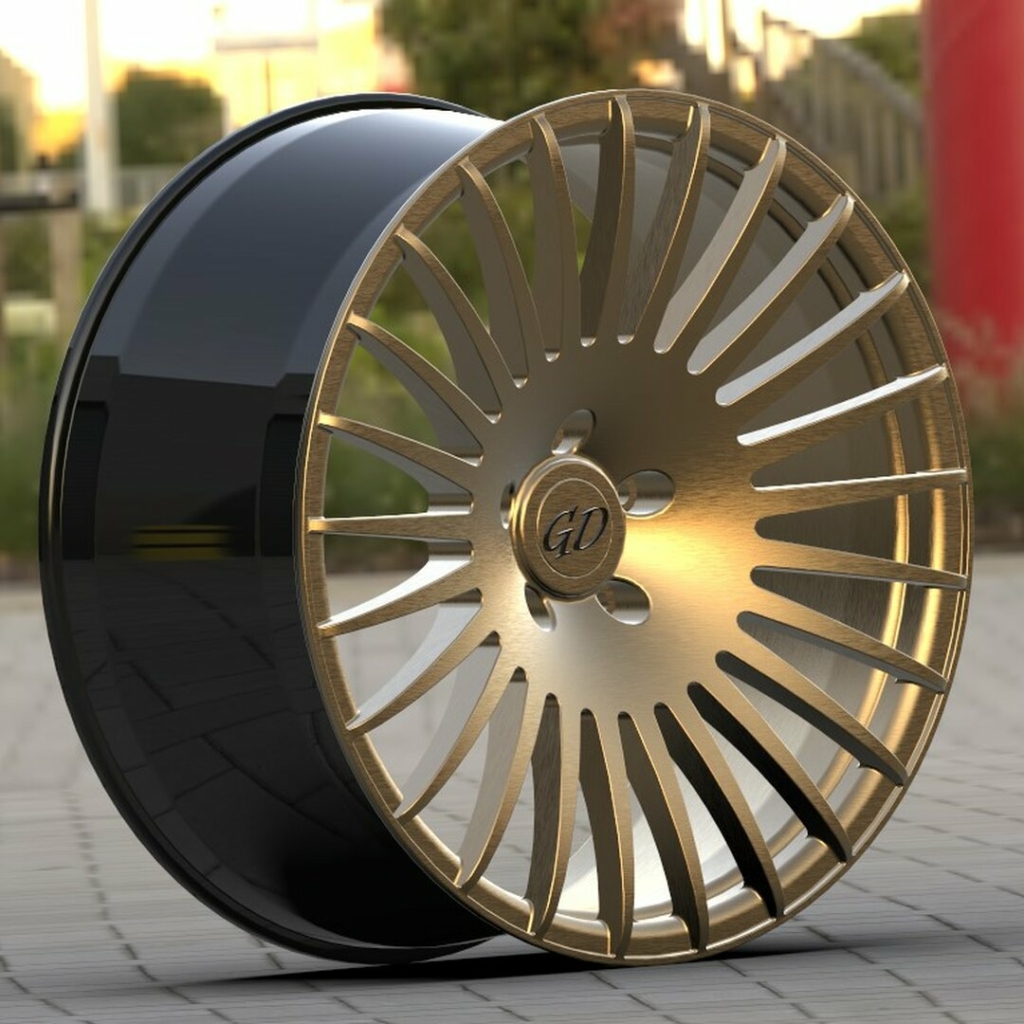
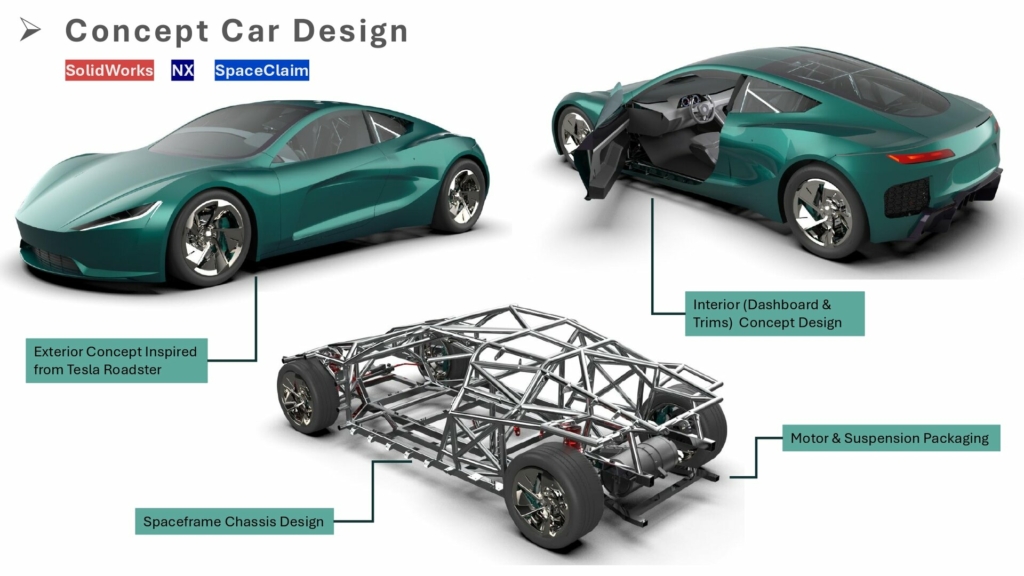
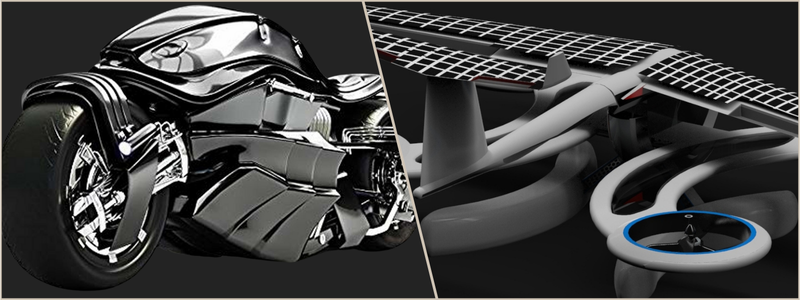
concept car design in teal

RELATED: What are the main prototypes used by companies in industrial design prototyping?

Cost of prototyping

The cost of prototyping ranges from a few hundred dollars to several thousands, and this depends on various factors, such as the level of complexity in design, the material used, the kind of prototype in question, and the method or manner of prototyping. Here is an outline of some of the main factors determining the cost of prototyping.

Design complexity

The complexity of your product design is one factor in costing your prototyping. A simple design with less part content, or whose shape can be easily replicated may be more readily prototyped and cheaper, but designs with a lot of mechanical or electrical complexity can run much more expensive. Again, the more detail in your design, the more time and work will go into creating a usable model, making cost go up.

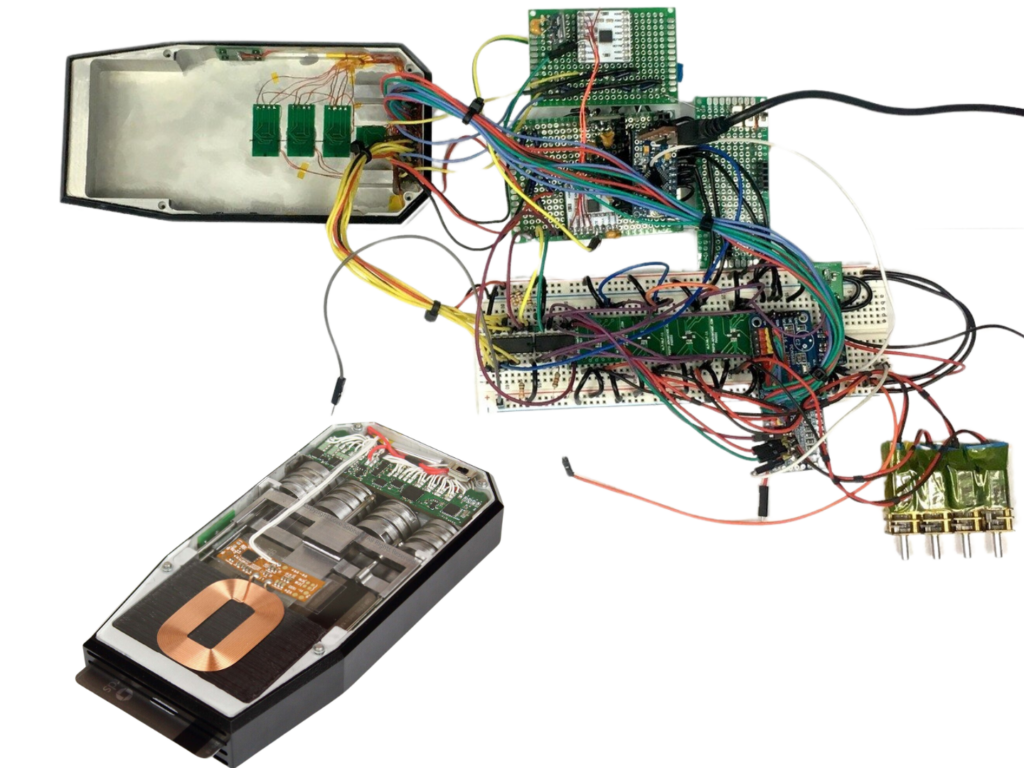
For instance, a simple consumer product, such as a plastic container, will most likely just require fundamental 3D printing, probably inexpensive. On the other hand, a high-tech consumer product with embedded electronics or sensors or special materials will probably use advanced prototyping techniques most likely to be costly.

Materials

The type of material being used in the prototyping greatly determines the final cost. Prototypes can be made from any type of material, including plastics, metals, and composites, and the pricing and processing are also different for various materials. Aerospace-grade alloys or specially constructed polymers really drive the cost up drastically from standard plastics or 3D printing material.

• CNC Machining: High in precision, very well suited to the metal prototypes, though equipment and material costs will be steep in this type of prototype.

• Handcrafting: Handcrafting with inexpensive material is used for simple models.

• Injection Moulding: It can be applied for rugged prototypes. But it is expensive due to the development of moulds.

Prototyping technique

There are several ways a prototype can be prepared, each with related costs. Among some common techniques used include:

3D Printing (Additive Manufacturing): 3D printing is the most widely used technology in rapid prototyping. The payoff in using 3D printing is that it rapidly converts digital models into physical products through a wide array of materials, sometimes very quickly with short production time and flexible design but soon becomes expensive in material and machine time.

• Casting: Casting is used for a wide range of products. It is much more manual intensive than injection molding. Cost in casting depends upon the material and the complexity of the material.

• CNC Machining: Cutting, drilling, or milling of plastic, metal, or composites into a desired shape. This is a precise process to detail and has a cost to it, meaning it’s rather pricey. Thus, it’s more applicable for functional prototypes.

•Injection Moulding: Injection moulding is a very fast and cost-effective method of producing significant quantities of proto-typed items, especially for articles that require strength. However, the cost incurred when making design and building tooling is very great at the very beginning.

RELATED: 10 tips on how to find the best prototype engineering firm services

Outsourcing vs. in-house prototyping services

Finally, the greatest decision concerning prototyping has to do with whether the task should be outsourced to a professional service or done in-house. Each has its pros and cons.

 In-house prototyping: Companies with appropriate and readily available equipment, such as 3D printers or CNC machines, etc. usually resort to in-house prototyping due to cost-cutting reasons. It is suitable for simpler prototypes or circumstances wherein the rate of iteration is high. It, however, requires significant investment in machinery, expertise, and maintenance, thus proved to be quite cost-effective for large companies or frequent prototyping requirements.

• Professional service contracting: Many product design houses are professional services firms specializing in prototyping. They can provide full service: from design consultancy, material selectivity, and production of the prototype. The tools, expertise, and resources it has are all among those that can lead to quality prototypes. It is very costly, around $1,000 to $20,000, depending on the level of complexity.

Prototype iteration and testing

Most products require many iterations to the final. Each iteration provides a chance to test the design, even up to the response from the users, as well as to make necessary adjustments or for some r`esults in the performance. This is costly because every version will be demanding new materials, labor, and other resources.

Testing is another prototyping activity. Testing may include performance in physical settings, usability by the users, or compatibility tests with other systems. The more intense testing will be the more expensive prototyping phase is going to be.

Timeline

The cost may also depend on how soon you need the prototype done. When there is a time constraint, sometimes it means hastening up the process, and this would cost more based on rushed shipping and more man-hours or faster production methods.

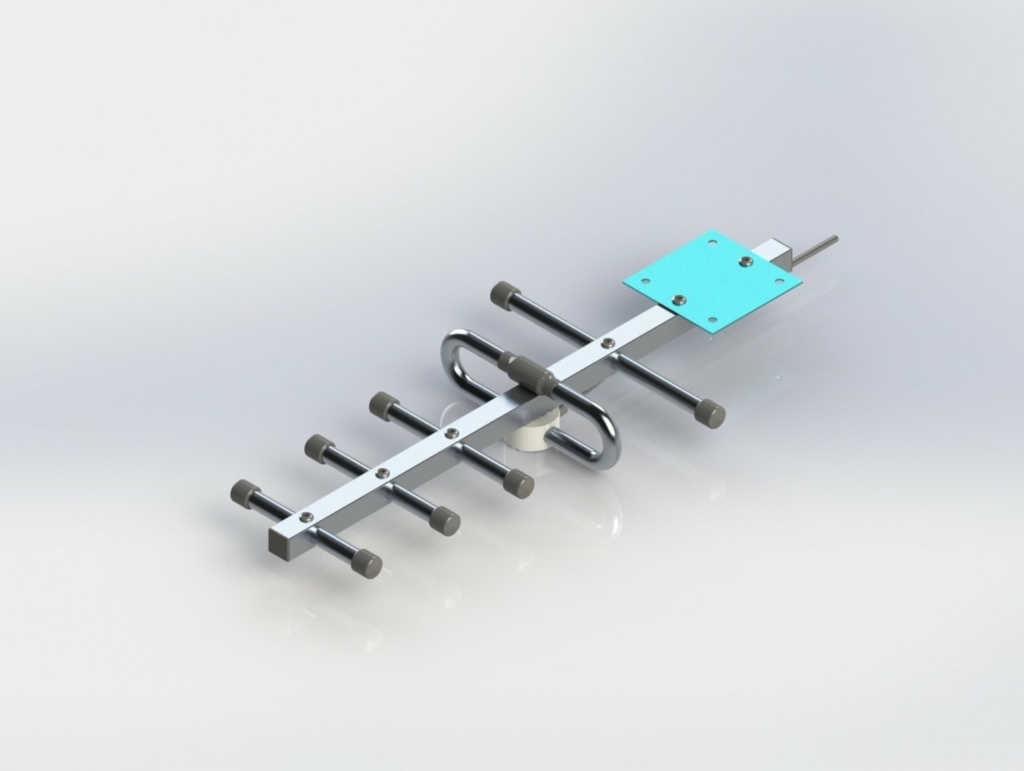
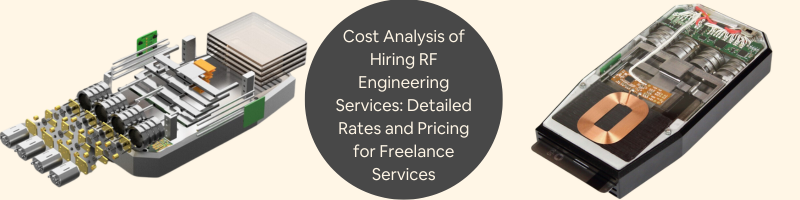
a radio frequency receiver

Estimating prototyping costs

It is great to estimate prototyping costs early in the development process so that budgets could align with needs. Normally, prototyping cost would be broken down as follows:

• Low-Cost Prototypes: The estimated range is from $100 up to $2,000, which depends on its simplicity, like 3D-printed prototypes or a basic functional model, depending on the materials and production method used.

• Mid-Level Prototypes: With CNC machining, in metal parts or with small runs of injection-molded products, the costs will run from $2,000 to $10,000.

• High-End Prototypes: More detailed or even complex prototypes with sophisticated materials or electronic components may reach between $10,000 and $50,000 or more for multiple iterations.

These costs differ based on the factors enumerated above, so it is essential to collaborate closely with your product development team to create a detailed budget.

RELATED: Freelance rapid prototyping costs, pricing, and rates for companies and inventors: all you need to know

Prototyping budgeting in your company

To budget effectively for prototyping, consider the following steps:

1. Define goals and requirements: State exactly which kind of prototype is needed (proof of concept, functional, visual, or near-preproduction). Determine the level of detail, materials, or functionality that needs to be tested.

2. Choose the Right Prototyping Method Depending on your goals, choose the right prototyping method. Quick iterations can be ideal with 3D printing, while CNC machining or injection molding can be good options for functional or production-ready prototypes.

3. Iteration: Several prototypes can be expected, especially in the refinement phase. Since iteration impacts time and resources, keep these costs in your mind while planning your budget.

4. Collaboration with a Design Consultant: If after reading you are still unsure how to factor in the cost breakdown into your budget, then collaboration with a design consultant can further help break it down and clarify the options. Many product design services can offer affordable prototyping solutions based on individual needs.

5. Contingency fund: Always put aside some amount of your budget for unintended costs. Prototyping can be unpredictable sometimes, and having a contingency fund will always get you through those unknown costs.

6. Set for Long-term savings: Though an initial investment, prototyping will save one money in the long run as it limits production mistakes and maximizes the final product’s market success.

Wrap up

Prototyping is another development stage where huge involvement with costs and resources is incurred. Knowing what affects prototyping costs as well as how to plan a budget can help businesses prepare for this very important phase of their product design process.

How Cad Crowd can help

Regardless of whether you are manufacturing something that falls in the category of simple or is more complex, an investment in a proper prototype will mean better outcomes in terms of quality, product, and standing in the market. Cad Crowd will ensure you are at the top of the game. Request a quote today.
author avatar

MacKenzie Brown is the founder and CEO of Cad Crowd. With over 18 years of experience in launching and scaling platforms specializing in CAD services, product design, manufacturing, hardware, and software development, MacKenzie is a recognized authority in the engineering industry. Under his leadership, Cad Crowd serves esteemed clients like NASA, JPL, the U.S. Navy, and Fortune 500 companies, empowering innovators with access to high-quality design and engineering talent.

Connect with me: LinkedInXCad Crowd

Create Better Packaging Designs For Cosmetic And Beauty Product Companies


The past few years have seen the beauty and cosmetic industries experiencing substantial growth because of the growing demand from consumers. As different beauty trends are introduced and become more popular, the market is expected to grow bigger soon. A big part of this success is due to the different beauty preferences of different countries that pave the way to the plethora of cosmetics and beauty products across the globe. Unfortunately, while this growth benefits the consumers, it also means tougher competition for companies and firms. 


:rocket: Table of contents  


As more brands are launched in the market, it makes it even harder to maintain your brand and set it apart from the rest. This is why it’s imperative to search for new and breakthrough ways that will make your beauty products appeal to your target audience and stand out from the large crowd. This is where packaging concept design firms come in handy. Developing an enticing packaging design for your cosmetics and beauty products is one of the best-kept marketing secrets that will highlight the uniqueness of your brand. 

RELATED: New product packaging design & why it’s important for product designers

With the right designs, you can also form a stronger relationship with your customers and at the same time, improve your brand’s reputation and market value. But the million-dollar question now is, what is the best packaging design for your cosmetic and beauty products? This article discusses the basics of cosmetic and beauty product design for companies and firms. 

Three layers of cosmetic and beauty product packaging 

Consumers today usually rely on an item’s product packaging to decide whether it’s a good buy or not. For this reason, cosmetic and beauty product companies from across the world take time to design their product line. The following are the three basic layers of beauty product and cosmetic packaging:

1. Outer packaging 

The outer packaging is often the container used for shipping orders to customers, which starts from the warehouse where products are manufactured to the shelves of local stores and retail locations. Aside from letting customers know what kind of product is inside, the primary purpose of the outer packaging is to safeguard the products during transit and prevent compromising their quality along the way. 

2. Inner packaging 

The inner packaging is the material housing the product to add an extra protective layer while serving as the display packaging on store shelves. The packaging designer can use different types of materials for this layer including corrugated or cardboard boxes, slip-lid boxes, sliding boxes, folding cartons, and sometimes, even pillow boxes. The inner packaging can also contain details regarding the product like usage directions, care instructions, and ingredients. 

3. Product packaging

The third layer is the packaging housing the product itself and retains its quality over time. Droppers, tubes, bottles, and jars are the most common examples of packaging for cosmetic and beauty products. These can be molded to custom shapes as well as to best suit other aspects of the design including product label fonts and packaging colors. 

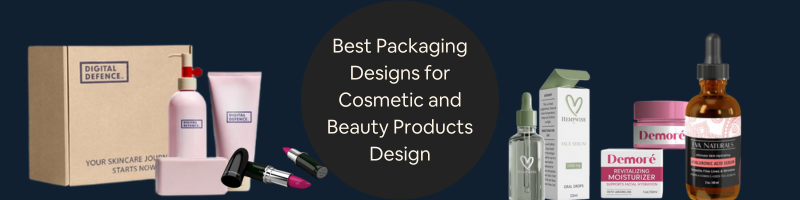
cosmetic-packaging-design-services-2

Best packaging designs for companies and firms: cosmetic and beauty product design

Modern-day consumers often switch to different shopping habits depending on what appeals to their current needs the most. It’s important to understand and be familiar with these trends as well as how your company or firm can best keep up with the new perspectives. Here are some of the best packaging designs from new concept design and product development companies that best appeal to today’s modern consumers:

RELATED: Benefits of product label and packaging designs for companies and Amazon sellers

1. Go bold with patterns

Your customers will be able to spot your products easily on the shelf and tell them apart from other similar products if you come up with a distinctive logo or pattern for your brand. This is a simple but often effective way to establish the reputation of your company with no need to use big statements just to capture the interest and attention of your target audience. 

2. Try connected packaging 

With connected packaging, you can give customers a whole new level of experience by giving them a way to interact with your product online. A special code like a QR code is printed within or on the packaging of the product in connected packaging applications. Consumers can then use their mobile devices to scan the code and activate it to receive exclusive content. It is a convenient way of getting your brand introduced to modern consumers where it has become a necessity to use smartphones, tablets, laptops, and the like. 

3. Keep it minimal 

Utilizing a product packaging design service for minimalistic designs can effortlessly make your cosmetic and beauty products look engaging and clean at first glance. This will also help you convey your message in a simple and easy-to-understand way. 

4. Switch to refillable products

There is a significant demand for refillable products now that more consumers are searching for eco-friendly options for their personal care regimen. Aside from having refill pouches for your product, you can also join this trend by setting up refill stations while cutting down the amount of waste your company produces. 

5. Stick with a structured layout

A structured product design that keeps function, coherence, and innovation in mind can create a pleasant and unforgettable user experience. Structural packaging, unlike commoditized design, tends to be more effective because its goal is to set your product apart from the rest on the store shelves. It also enhances your brand as well as its values while giving customers an unboxing experience they won’t forget. 

6. Use sustainable materials 

More and more consumers today have developed consciousness about the products they buy and use and the waste that comes with them. Using eco-friendly materials for your cosmetic and beauty product design is one of the best ways to appeal to such consumers.

7. Settle for travel-friendly sizes

Travel-friendly sizes are becoming more popular for cosmetic packaging design companies now that most beauty products have become indispensable. This is why it’s important to use packaging designs that will make your products easy to carry and light enough for people who are always on the go. 

8. Opt for a uniform color palette

Consumers will only feel overwhelmed if you use a lot of colors, urging them to buy something else from another brand. The best way to catch the attention of your customers is to use a color palette that is easy and attractive to the eyes at the same time. 

product-cosmetic-packaging-design-company

RELATED: Functional and creative packaging designs for new and existing products for companies 

9. Pick unique custom fonts 

Another effective way to grab your target market’s attention is to choose a visually intriguing packaging font. It is also a creative way of conveying the message of your brand to your consumers and helping them differentiate your products from the rest of its kind. 

Important considerations for cosmetic and beauty product packaging design

It’s no easy and simple process to create an effective packaging design for your cosmetic and beauty products. You have to consider several important factors when choosing a design that will best represent your brand and company in the market. Below are some of the things to take note of when hiring a product designer for the product design process:

Consistency

Your customers will find it easier to set your product apart from the rest if you stick with a consistent packaging design for your products. This can also strengthen the identity of your brand and recognition of your products in the market. 

State claims and guidelines

There may be different regulations for product packaging depending on your city, state, or country that you have to adhere to. Always do your research before you finalize your product design to prevent any legal issues.

Labeling and packaging options 

Be careful when considering the packaging materials that will work best for the different kinds of cosmetics and beauty products you make. Their respective labels should convey your products. 

Flexible packaging

Flexible packaging is the best way for cosmetic products that could be squeezed without causing any damage to the container. 

Shipping methods 

Although your product packaging must capture your target audience and stand out from your competition, you also need to design it with shipping in mind. Be careful when choosing packaging materials that can protect your product and its quality even during transit. 

Typeface

One of the best ways to capture the attention of prospective customers is to use unique and bold designs that will set you apart from your competitors. It’s important to use fonts readable enough for anyone to clearly understand the details presented to them. 

The personality of your brand 

Matching the packaging of your product with the distinct personality of your brand is among the best ways for your customers to distinguish your items from the rest and establish the market value of your brand. 

Your budget

Manufacturing your packaging isn’t cheap and this is why you should avoid rushing when finalizing the designs. Aside from searching for substitute materials, you can also manufacture your packaging in bulk. Doing so will help you save more money in the long run. 

Your target customers

Since the packaging of your product is intended to appeal to your target customers, make sure that you always keep them in mind in every decision you make. This way, you will be able to track trends that appeal to them the most as you convey the message of your brand. 

cosmetics-packaging-design-agency

RELATED: Actionable tips to successfully prepare your product packaging for the US market

How Cad Crowd can help

Your cosmetic and beauty product packaging is the first thing that your customers see. Make sure you contact Cad Crowd to find professionals who can help you create the best packaging designs that will grab people’s attention and resonate with their unique needs. Create a design your customers will adore with a free quote today!

Top 30 Mechanical Engineering Expert Recruiters And Staffing Agencies


Competent mechanical engineering experts who find comfort in a competitive industry landscape and work to their full potential regardless of the challenges are not easy to find. Almost every organization, whether in manufacturing, architecture, design, or any related industry, is likely willing to retain an experienced mechanical engineer, for alternative candidates are hard to come by. Even when a position becomes available in your company, there is no guarantee you can find a suitable professional in most typical job boards.

Working with a seasoned staffing agency improves the chances of securing the best possible mechanical engineering talents to fill vacant positions or bolster your company’s overall qualification level. Most of the top staffing firms below, like CAD Crowd, are based in major cities all across the United States, including Los Angeles, California, and serve metro areas such as Lone Beach, San Fransisco Bay, Irvine, and Sacramento, among others. 

RELATED: 20+ Free 3D models and downloadable CAD files of mechanical and engineering designs

Top 30 recruiters for mechanical engineering, staffing agencies, and recruiting companies for US engineers

Cadcrowd-logo

CAD Crowd

Years of experience collaborating with mechanical engineers in all industries have brought CAD Crowd to a level of staffing expertise where it is able to utilize a massive database of more than 100,000 candidates, including experienced professionals and untapped talents, all across the United States. The agency makes it a basic requirement to listen to your needs, understand your viewpoints, and clearly define the recruitment parameters during the initial step of the staffing process.

Recruiters from CAD Crowd will not waste your time presenting any talent who will not likely be an ideal candidate for the available position. They have the resources to accumulate a massive database of candidates, the expertise to connect you to bright professionals, and the technology to expedite the screening procedures without sacrificing the quality of talents to be presented.

CAD Crowd has no preconceived notions about clients’ talent requirements and will provide personalized staffing services in accordance with your specific objectives. Every solution is crafted to meet your demands, giving you a competitive advantage in the currently challenging workforce market.

cadcrowd.com

Corporate-job-bank-logo

Corporate Job Bank

It is Arizona’s biggest locally-owned staffing organization with over 30 years of experience in the business. The recruitment agency boasts an excellent track record of more than 50,000 job placements over the decades. Its portfolio of talents is filled with an extensive network of STEM graduates and experienced engineers from various educational backgrounds and specializations. Corporate Job Bank claims to have always responded to client’s requests within, at most, 30 minutes. 

corporatejobbank.com

RELATED: How to become a freelance mechanical engineer & find remote work for design jobs

Search-solution-group-logo

Search Solution Group

It is always a good idea to partner with a staffing agency that understands the industry you are in. Search Solution Group’s executive recruiters boast a commendable collective experience in various subsets of the engineering field, and the group believes that proper collaboration with clients should begin with developing a sense of teamwork and a shared goal in mind. 

searchsolutiongroup.com

Insight-global-logo

Insight Global

Educational backgrounds are important in the same way that creative thinking and willingness to follow professional guidelines are crucial to ensure success. Insight Global makes technical proficiency the bare minimum requirement to pass an early assessment and looks beyond candidates’ credentials to make sure they are culturally fit to your company’s visions for the future. Recruiters from Insight Global say with confidence that they will find your next mechanical engineer, from entry-level to C-suite executive, in just two weeks or less. 

insightglobal.com

Trupath-logo

TruPath

Using the same approach to attract all candidates for every position is not advisable. For example, the types of compensation and packages for mid-to senior-level mechanical engineers should be different from those offered to fresh talents. TruPath is an Arizona-based staffing agency that specializes in headhunting services to discover and obtain top-tier professionals for clients in need. More than just sending resumes and work experiences, TruPath also compiles an extensive note based on every candidate’s screening result. The note may include interaction highlights, praiseworthy traits, and additional areas for the employers to explore during the internal interview sessions.

trupathsearch.com

Aerotek-logo

Aerotek

North America is home to more than 250 offices under the umbrella of Aerotek, the region’s largest staffing agency powered by 1,500 niche recruiters. It has strategic recruiting centers all across the United States to pinpoint any number of candidates with specific skill sets that exactly match clients’ orders. Aerotek can also facilitate remote recruitment solutions and onboarding processes. 

aerotek.com

Entegee

Entegee

There will be cases where a staffing agency cannot find the right candidate to fulfill the client’s request only from an internal database of talents. If the desired candidates are not on the list already, Entegee takes full advantage of social outreach channels like LinkedIn and mass marketing to hunt for the right talent suitable for the open position. Entegee also has a “New Hire Orientation” program designed to help new hires prepare for their roles and shorten their adjustment period so they are ready to work and make positive impacts starting from the very first day. 

entegee.com

RELATED: Mechanical engineering jokes

180-Engineering

180 Engineering

Forbes has mentioned “180 Engineering” as one of America’s Best Professional Recruiting Firms five times over the years. ClearlyRated has also honored the agency with the “Best of Staffing” award six times in a row from 2017 to 2022. According to Inc. 5000, the firm is known to exclusively focus on finding and placing top engineering talents and IT professionals across various industries.

180engineering.com

4-Corner-Resources

4 Corner Resources

More than 11,500 candidates presented by 4 Corner Resources (4CR) have been placed in new positions over the course of nearly 20 years, with an impressive record of a 93% client retention rate. The agency started as a small technical staffing company in 2005, operating from a humble home office before moving to new headquarters in Orlando, FL, a year later. 

4cornerresources.com

Triad-Engineering

TRIAD Engineering

Staffing services from TRAID Engineering cover direct placement, contract, and contract-to-hire solutions. It has been in the business since 1969 and working with small companies and large corporations across a variety of engineering disciplines. The family-owned recruiting firm is also a member the American Staffing Association. 

triad-eng.com

Davron

Davron

Some staffing agencies hunt for talents on behalf of clients, while others find comfort in providing placement services for job seekers. Davron is present on both fronts by offering talent management solutions for companies in the Architecture, Engineering, and Construction (AEC) sector and facilitating employment search for professionals in need of better opportunities. 

davron.net

Enser-Engineering

ENSER

At 77 years old, ENSER is one of America’s oldest staffing firms in operation today. ENSER is owned and run by engineers, providing staffing services for companies and candidates who also come from engineering backgrounds. All services, whether for employers or talents, are personalized for each individual client. It also remains an active independent company that specializes in custom engineering design, fabrication, and manufacturing services, which gives the agency a unique advantage as it understands the technicality of the industry first-hand. 

enser.com

RELATED: How freelance mechanical engineers use 3D modeling for design

Peak-Technical-Staffing

PEAK

A commitment to engage in ongoing open communication with clients is PEAK’s strongest selling point. The staffing agency offers direct-hire and contract-to-hire recruitment management and specializes in the engineering and technical sectors. PEAK works closely with employers from the first step of the headhunting process until after the desired candidates are placed in new positions. The recruiters will maintain active communication with you to make sure the introduced talents can truly understand the roles and adapt to the company’s culture. 

peaktechnical.com

NES-Fircroft

NES Fircroft

One thing you need when working with staffing agency is peace of mind from knowing that the recruitment process is handled by an experienced name. NES Fircroft has a combined track record that spans 90 years and is a well-known firm not only in North America but also Europe, Asia, Africa, Middle East, and Australia. It earned the distinction as being on the list of Top Staffing Companies to Work for in 2022 by World Staffing Award.

nesfircroft.com

Espo-Engineering

ESPO

A humble start in 1965 with consistent growth throughout the decades has brought ESPO to a leading spot in the US-based recruitment services industry, especially in the engineering sector. Its long 50-year history has been sprinkled with a track record of placing qualified candidates in some of the country’s largest companies. ESPO also offers in-house Recruitment Process Outsourcing.

espocorp.com

Kelly-Services

Kelly Engineering

Recruitment processes handled by Kelly Engineering are all parts of Kelly Services’ business operations. The specialized division exists to cater to clients’ engineering staffing needs and is run only by recruiters experienced in the sector. It is not an entirely separate entity and is still backed by Kelly’s global network of staffing experts. The division made the 2021 list of “Largest Engineering Staffing Firms in the US,” compiled by Staffing Industry Analysts.

set.kellyservices.us

Goodwin-Recruiting

Goodwin Recruiting

Engineering discipline encompasses a large scope of technical fields and most staffing agencies avoid having a strictly narrow specialization to ensure business flexibility. Goodwin Recruiting does things different as it focuses solely on mechanical engineers headhunting services, aimed toward aiding manufacturing companies in discovering the right talents for the design and construction of complex mechanical systems. Candidates can only pass the screening test if they have the exact matching skills required for the roles.

goodwinrecruiting.com

RELATED: How much do mechanical engineer services typically charge for rates & firms?

Mac-Executive-Recruiters

MAC Executive Recruiters

Frisco, TX, is home to MAC Executive Recruiters’ headquarters, supported by branch offices in a dozen other cities across the United States. MAC empowers a network of experienced recruiters comprised of search consultants, senior partners, and project professionals to deliver at least three qualified candidates to the clients within 30 days or less. Recruitment services include temporary contract and temp-to-hire models. 

macrecruiters.com

JRG-Partners

JRG Partners

Putting emphasis on inclusions and diversity has become both mandatory and necessity. JRG Partners staffing agency promises to conduct a 100% bias-free headhunting and recruitment services to comply with the current industry standard. The services include a full-range recruitment process, from screening and placement, provided from every major region throughout the United States and Canada. 

jrgpartners.com

Apollo-Technical

Apollo Technical

A combined resource of an internal database and a network of field recruiters increases the likelihood of obtaining the best possible talent to fill an empty position in your company. Apollo Technical is known for its detailed analysis of the client’s preferences for talents and ability to define the required (as opposed to the desired) qualifications. For candidates with past employment history, the agency goes the extra mile by checking work references with their direct supervisors/managers and compiles comprehensive feedback for clients based on the interactions.

apollotechnical.com

Connected-System-Partners

Connected System Partners

A good staffing agency should not operate as a separate team of recruiters to handle your headhunting work. There needs to be a baseline of knowledge shared by your own hiring divisions and the recruiters, based on which you may define a clear objective of the collaboration. Connected System Partners staffing firm practically acts as a temporary internal recruitment unit to discover and nurture shortlisted talents in a joint effort to introduce the perfect candidate for every open position.

connectedsp.com

Ranstad

Randstad

Staffing solutions from Randstad cover full-service capabilities, including direct hire, contract placement, talent development, and project-based contracts. A large portion of the engineering talents in the agency’s database is comprised of senior mechanical engineers, electrical engineers, AutoCAD professionals, and designers. Randstad itself employs more than 5,700 in-house staff across the country and caters to clients’ specific recruitment parameters, whether staffing for individual open positions or large-volume hiring.

ranstadusa.com

Murray-Resources

Murray Resources

Every recruiter from Murray Resources has earned a Certified Temporary Staffing Specialist or Certified Personnel Consultant accreditation issued by the National Association of Personnel Services. The agency has scored an impressive client satisfaction rate of 95% (satisfaction to expectation) over the course of 30 years in the business. 

murrayresources.com

Trillium-Staffing

Trillium

More than 22,000 companies and 2 million job applicants have worked with Trillium thus far, facilitated by a gigantic network of over 90 branch offices across the US. It has been named the nation’s 26th-largest industrial staffing firm and the 60th-largest staffing firm. In addition to providing headhunting services for temporary and permanent assignment purposes, Trillium is also willing to work with contractors in search of a seasonal workforce.

trilliumstaffing.com

RELATED: Learn about machine design costs, engineering services rates & pricing for companies

Alltek-Staffing

AllTek

Every award AllTek has accumulated over the years is a testimony to the agency’s quality of services and general expertise in the staffing industry. It was named the Pittsburg’s fastest-growing Contract Technical Placement for three consecutive years (2004, 2005, and 2006) by the Pittsburg Technology Council and the 9th fastest-growing privately held recruitment firm in the United States (2008) by Staffing Industry Report.

 bestinrecruiting.com

BNA-Staffing

Bernard Nickels & Associates

All engineering talents presented by Bernard Nickels & Associates have passed custom assessments based on their qualification and clients’ requirements with a heavy emphasis on character, interpersonal skills, personality, and educational achievements. BNA can produce various sets of evaluation models designed to conform with employers’ specific recruitment parameters. In other words, the assessment process to evaluate candidates applying for one particular position can be different from those prepared for any other role.

bnastaffing.com

Burnett-Specialists

Burnett Specialists

What was once a small employee-owned staffing company in Houston has now become Texas’ second largest recruitment agency, with 9 branch offices in 6 major cities in the state. Burnett Specialists staffing firm offers its headhunting services on a contingency basis, so you are not required to cover any expense until the recruiters finish all the procedures and settle the candidate placement process.

burnettspecialists.com

Michael-Page-Staffing

Michael Page

Michael Page can cater to your mechanical engineering staffing needs regardless of your company’s specialization. The staffing agency covers a broad spectrum within the engineering fields, from aerospace and biotechnology to consumer goods and chemical manufacturing sectors. One thing that differentiates Michael Page from competitors is how it compiles and delivers an early detailed appraisal of your recruitment parameters, including an analysis of whether or not the targeted candidates would find your compensation package acceptable. 

michaelpage.com

The-Adkins-Group

The Adkins Group

It is not uncommon that a company or an organization is going through difficult times filling a vacant role due to the demanding nature of the job and the high expectations (along with the turnover rate) surrounding the position. The Adkins Group can deploy its “Targeted Sourcing Project,” which involves seeking, targeting, identifying, and establishing communication with talents in an active, if not aggressive, fashion. It is a talent-hunting in the truest sense of the word.

theadkinsgroup.com

Emissary-Recruitment

Emissary Recruiting Solutions

Gone are the days when a staffing agency did its job simply by presenting a list of pre-vetted candidates to clients. Emissary Recruiting Solutions will help you define the specific objective of the recruitment, compile a detailed analysis of talent requirements, and set KPIs to be met by the expected candidate before the actual headhunting process begins.

emissarysearch.com

Final Thoughts

The increased demands for mechanical engineers across all industries are rooted not only in the desire to utilize their expertise in an effort to increase tangible outputs and intensify optimization but also in companies’ hunger for new perspectives and fresh ideas to prevent (or even break down) a state of stagnancy in the creative process.

A reputable staffing agency helps you save resources and precious time without losing access to a large pool of qualified and culturally fit candidates. CAD Crowd implements a unique, efficient, tailored approach to recruitment crafted specifically to meet your specific requirements. With a team of recruiters experienced in working alongside both untapped and well-known talents in the mechanical engineering sector, CAD Crowd delivers comprehensive support to target and acquire the next key players for your company.

How AI Trends Influence New Product Design and Development Companies


Seeing that AI changed the name of the game is an understatement. This new technology has found its way into different fields, transforming them in more ways than one. Even fields such as UX and product design are feeling the AI difference, revolutionizing the process of manufacturing and delivery of products across the globe. From medical device design and development services to autonomous cars to eCommerce and home technology, AI brought about a significant shift in how products are made, developed, and distributed.

How AI trends are influencing new product design and development companies and firms

AI’s integration into design paved the way for the personalization of products, predictions based on user behavior, and automated tasks involving design. These lead to more user-centered, innovative, and efficient products. But of course, challenges and limitations including biases and data privacy must still be addressed if AI will be integrated into design processes. This article delves into how different AI trends are influencing new product design and development companies and firms.

RELATED: How the metaverse will redefine retail and shopping experiences for companies 

How is artificial intelligence used in new product design and development?

Numerous industries have been using AI to streamline processes and boost overall performance. But there is still one lingering question: Can AI be used for new product design and development? The simple and obvious answer is yes. AI in all its forms can assist design systems to learn from different variables. This ability makes it a critical tool for new product design and development firms.

Product designers and developers can use these AI systems to consider not just the product’s experiences in a particular environment but also the dynamic adjustments the product will undergo in response to varying user preferences or conditions throughout its development process.

The newest trends in product design and development highlight the combination of creative exploration and technological innovation. These trends are bound to reshape the way design is approached across numerous fields. Take a look at some of the emerging AI trends and their influence on designing and developing new products:

RELATED: Smart manufacturing using CAD design is the future for OEM’s

new-concept-design-and-product-development-services

AI’s influence on design collaboration 

AI is now causing ripples of change in design collaboration. Design tools powered by AI allow seamless and convenient collaboration among design professionals, no matter where they are in the world. These tools use the power of machine learning to understand the style of every product designer and recommend complementary ideas to foster a more creative and cohesive collaborative process. Most platforms also come with features like AI-driven design recommendations, automated management of various versions of design, and simultaneous design collaboration.

These capabilities help foster creative thinking, streamline project processes, and simplify teamwork. This is similar to having a portable virtual design studio that enables creativity and collaboration despite location. AI is also used to simplify project management during design collaborations, where it can offer solutions and anticipate potential problems. Ai’s integration as one of the tools for design collaboration can make teams more efficient, resulting in more innovative outcomes of designs. 

AI’s influence on design education platforms 

Teaching and learning design has also been transformed with the rise of AI. More and more design education platforms are now using AI to offer more personalized learning experiences. These platforms tailor the learning process to suit each individual’s learning style and speed. They also provide instant feedback, interactive lessons, and AI mentors available 24/7/365 to answer any design-related questions.

RELATED: 8 Product design trends to watch out for in the new year

Design education platforms also provide instantaneous feedback on design projects wherein they leverage AI to critique and analyze designs in the same way that human instructors would. You can think of it as something similar to having a round-the-clock personal design instructor that makes learning design more economical and accessible.

AI’s influence on UX/UI design

Solutions run by AI are also changing the approach to user experience (UX) design, with the technology becoming more ingrained in different aspects of UX design. AI solutions are transforming the design of products, app developers and programmers, and software programs, tailoring every experience to each user’s distinct preferences and needs. It’s expected that the future of UX design will be innovative, dynamic, and customized, thanks to the unique capabilities of AI. There is a growing clamor for experiences catering to individual needs and preferences. This is why interfaces, shopping experiences, and shopping are now tailored to every individual user.

RELATED: The future of wearable technology: trends impacting business & product development

AI technology also empowers designers to assess users’ inclinations and behaviors in a snap of a finger. This paves the way for more intuitive and personalized interfaces. It also improves user experience by streamlining mundane tasks and predicting user requirements to make it more enjoyable and seamless. This is as if the interface can understand your preferences and make the necessary adjustments, which only shows breakthrough changes in design methodology. Personalization is becoming increasingly critical for both brand effectiveness and customer retention. 

design-engineering-services

AI and automated web design

AI-powered automated web design is one of the emerging AI trends these days. AI algorithms have become more sophisticated to construct completely functional websites using nominal input. Users simply need to input some basic preferences. From there, AI can create a full website design, complete with user interface elements, color schemes, and layout. Tools for automated web design are also constantly gaining knowledge from user interactions, which leads to more user-friendly and intuitive website designs in the long run. It is a trend that democratizes web design to make it more efficient and accessible. 

RELATED: Generative design: what it is and why it’s cool

AI and ethical design

Ethical design is expected to become a vital consideration this year, and its implementation will most likely depend heavily on AI. The technology is currently used to ensure the accessibility and inclusivity of designs for all users, even people with disabilities. It encompasses AI’s use in testing designs for compatibility with color blindness, readability for dyslexic patients, and navigability for motor-impaired people.

AI also aids in analyzing the effects of AI on the mental health and well-being of users. This ensures aesthetically pleasing designs and even ethically responsible ones with positive contributions to user experience. The trend denotes a shift towards more human-centric and socially responsible design practices

AI and immersive 3D design

The 3D design field is expected to make some major strides this year. Software and technological advancements allow designers to create gorgeous 3D visuals that enhance their designs’ realism and depth. The shift not only improves but also changes the landscape of graphic design, with designers now able to create interactive and immersive experiences.

RELATED: 5 Tips for successful product design

Virtual reality (VR) and augmented reality (AR) design experts enrich these experiences to add a new dimension to graphic design and make it more memorable and engaging for audiences. The trend also influences graphic design, wherein immersive opportunities open new possibilities for developing visually impactful AR and VR environments. It transforms traditional 2D works into fully immersive 3D experiences, making designs more accessible and interactive. 

AI, simplicity, and minimalism

Simplicity and minimalism remain two of the most prominent design trends, and AI plays a major role in refining the aesthetic further. AI tools help designers create uncluttered and clean designs that focus on essential elements. The tools assist in optimizing layouts, selecting harmonious color palettes, and choosing typography that complements the ethos of minimalism. This trend is the reflection of a bigger cultural shift to clear communication and ease of use. AI helps achieve elegance and balance in design while keeping it user-friendly and functional. 

RELATED: Key benefits of industrial product design – using industrial product design services 

AI and motion design

Motion design by 3D animation & modeling firms, 3D architectural design, graphic design, and various other service companies. is expected to experience heavy AI influences that will lead to more interactive and dynamic visual experiences. The AI rules and algorithms can be used to develop complex and fluid animations that can offer real-time responses to user interactions. Machine learning and AI are at the forefront of the shift towards more lifelike motion designs. The two technologies not only create visually appealing designs but also embed them with intuitive responsiveness.

The trend proves how technology has become critical in the development of user-centric and sophisticated designs. The ability of AI to animate and process massive data sets also enables designers to develop more engaging and personalized motion graphics adaptable to various user behaviors. All of these help enhance users’ experiences on today’s digital platforms. 

Generative AI’s next generation 

AI’s potential in crafting intricate stories, composing sophisticated musical compositions, and aiding in crafting best-selling novels will also see a significant increase. Multimodal generative AI, with the ability to synchronize various inputs, including visual, text, and voice elements, can potentially alter design workflows. The technology holds the promise of providing multidimensional and inclusive creative solutions by effectively combining different types of input. With the continuous evolution of these tools, the ability to differentiate between AI-generated and authentic content will become a more valuable and in-demand skill. 

RELATED: 12 Unique product design ideas

How Cad Crowd can help 

Cad Crowd offers new product design and development services that harness the full power and potential of Ai and all its newest and hottest trends.

What Are New Product Development Costs, Design Services Rates, And Pricing for Your Company?


An idea only lives in your mind until it gets materialized. No matter how brilliant and groundbreaking the idea is, the path to transforming a concept into a tangible product can be tricky, except when you get help from a reputable design agency or an industrial designer. Sometimes, it is helpful to take a step back before getting carried away by excitement and figure out how much money could be involved in a product development.

It is difficult to say whether the cost will exceed any given amount. The problem is that even small changes in the product’s dimension, prototyping method, material, and appearance can trigger a series of significant expenses unless you have professionals to take things under control. Every product development process presents its challenges, and the exact cost depends on a collection of factors such as design complexity, selection of materials, prototyping technique, and timeline to completion. Hiring a design firm sounds like an additional expense, but it probably is the only thing to prevent you from overspending in the first place.

The Average Cost of Product Development

If you want a general estimate, the ballpark figure would be $30,000 for a modestly complex non-electronic product with a completely brand-new design rather than a copy of an existing one. For example, you are developing a unique round-shaped Rubik’s Cube (so it is not a cube at all) of which the individual pieces – when properly arranged – would resemble the look of Planet Earth seen from space or the new product in question a miniature V-block internal combustion engine with real moving parts like valves and pistons. Still, it has an unusual configuration of 13 cylinders.

The $30,000 mark is likely the minimum to develop a relatively simple product. The money should cover every process, including design, prototype, performance/usability test, and (very) low-volume production of the product’s final version. Mass manufacturing and launching a new product require much more money. Also, the more sophisticated the product is, the higher the investment. Developing a modern complex electronic product is notoriously expensive, reaching hundreds of thousands to millions of dollars; much goes to electrical engineering alone. One of the most notable examples is the iRobot Roomba Vacuum Cleaner, which cost a jaw-dropping $50 million to develop.

On the other hand, a non-electronic product development is typically more budget-friendly than an electric gadget or anything controllable via a smartphone app. For instance, designing a simple kitchen utensil might cost around $ 5,000 to $ 10,000, while a more complex consumer electronics product could range from $ 20,000 to $ 50,000. Hiring a firm to handle the development process might cost anywhere from $30,000 to $60,000 in the United States and Canada. For the money, the firm can help turn your idea into an attractive, functioning, “manufacturable” product design. The services generally include CAD modeling and visualization, prototyping, and manufacturing schematics. If you partner with a firm, the cost might even cover the expenses for market research.

RELATED: Prototyping for Product Development & Investor Presentations

Industrial Designer’s Rates

2-3

Designing and developing a product involves a series of tasks that fall within the expertise of an industrial designer. According to the BLS (Bureau of Labor Statistics), an industrial designer typically undertakes the following exercises:

  • Consult with clients about product design parameters
  • Sketch design ideas and produce 3D models or visualizations
  • Create physical prototypes
  • Conduct usability tests to identify issues and collect information on users’ satisfaction with the product.
  • Research materials and equipment to be used for manufacturing
  • Perform design analysis to evaluate functions, safety, appearance, and practicality
  • Present a finished design or final prototype

An industrial engineer may work with other professionals from related fields, such as mechanical engineers and prototype design engineers, to determine whether the design is manufacturable at an efficient cost. Some industrial designers are self-employed, so you can hire one without working with a design firm. The hourly rate of an industrial designer can vary depending on factors such as their experience, location, and the project’s complexity. Based on the latest available data (May 2020) from BLS, the median wage of industrial designers in the United States is $36.50 per hour.

Industrial Designers’ Pay (United States)

Percentile Annual Hourly Rate
Highest 10% $125,780 $60.47
Median $75,910 $36.50
Lowest 10% $43,680 $21.00

Note that the median wage only estimates the profession’s typical (rather than average) rate. Experienced industrial designers most likely occupy the highest 10% category.

The work of an industrial designer ends when the product design is certified for safety and ready for mass production. However, certification and manufacturing are beyond the scope of the hourly rate. An industrial designer can help you handle the certification process, establish a partnership with a manufacturer, and oversee the production run. Still, all those things require funds outside the industrial designer’s budget.

RELATED: What are Industrial Design Rates & Costs at Product Design Services Firms?

Certification

1-2

No matter how experienced and reputable, an industrial engineer cannot certify your product for safety or compliance with national and international standards. You will need third-party certification agencies to inspect the product and issue the relevant certifications. The cost of certifications can vary depending on the product specifications. For example, a basic safety certification for a non-electronic product might cost around $ 500, while a more comprehensive certification for an electronic product could exceed $ 10,000. The cost varies from less than $100 to more than $15,000, depending on the product specifications.

Suppose the plan is to sell the product in the United States, Canada, Europe, or any of those regions. In that case, certifications can improve the chances of making sales, given the market’s competitive nature. Certifications are only crucial for electronic products. However, this is only partially true because even simple things like mechanical toys and showerheads are subject to various standards relevant to the products’ intended usage. Some of the most common certifications that may apply for non-electronic products include:

  • UL (Underwriters Laboratories) badge indicates that a product meets the standards set by the organizations, including but not limited to the flammability of plastic materials and fire endurance.
  • CSA (Canadian Standards Association) mark signifies compliance with functional safety standards applicable in Canada and the United States. The association also certifies products made through environmentally friendly manufacturing processes and mechanical components equipped with reliable safety measures to prevent dangerous failures.
  • WaterSense logo proclaims the product’s conformity with EPA’s standards for efficiency and performance. The certification is issuable to non-electronic products such as showerheads or faucets.
  • Green Seal stamp declares the product’s low environmental impact as observed from its minimum toxicity and resource conservation.

Unless the safety, efficiency, and performance standards require compliance by law, product certifications for those aspects are voluntary. That said, your product could get certified by recognized organizations to gain a competitive advantage.

RELATED: What Certifications are Used for New Electronic Hardware Products & PCB Design Services?

Low Cost yet Efficient

Everyone, from the tiniest startups to the largest corporations, wants to keep development costs low and get optimized results. There is no need to waste money when you can save it. One of the primary keys to efficiency is lean product development practices. A lean process involves minimum waste and a short development cycle without sacrificing product quality.

While it is not impossible to keep it lean on your own, there is the likelihood of overlooking essential details that can make a design more efficient. Furthermore, you may need more tools to exercise the principle, such as CAD systems, CNC machines, a high-grade 3D printer, and general expertise in market research. Another thing to consider is how a tiny error in modeling or a seemingly minor compromise in the material can lead to costly design revisions.

Although an experienced industrial engineer might only personally own some possible tools for physical prototyping, he likely knows how to access all the required resources efficiently. The same applies to a design firm with a complete product development facility. Even if the firm doesn’t have an extensive facility, it has the experience of partnering with prototype makers, material suppliers, and custom manufacturing companies. More importantly, an individual industrial designer or a design firm understands how complex and intricate a product development process can be; they know how to minimize the cost by keeping the unnecessaries at bay and focusing on the essentials.

1-3

Collaborative Effort

Good product developers should keep you involved throughout the process, from the concept phase to certifications, until the design is ready for manufacturing. Based on your description of the product idea, they will be able to offer a comprehensive quote on the development cost. After the initial discussions, an experienced product engineer can define all the steps required to build the product and how much each step should cost. To avoid unpleasant surprises, you will get a full expense breakdown from the get-go.

End Note

Engineering designer services answer all the questions presented by the market research. There is some truth in how the market can dictate a new product, but engineering expertise opens the door to creativity. Following the concept creation and market research, it is the industrial engineer’s turn to take over the process and devise a solution to tackle every challenge the market may throw at your idea.

Turning Ideas into Reality: A Guide to Bring Your Invention to Life with Design Firms


How do you turn your bright ideas into tangible reality?

Compared to what most people think, products are developed over time. Before something comes to fruition, it goes through a long and arduous process to ensure it serves its purpose, performs its function, and exudes excellent aesthetics. Great ideas can change an entire industry when given the chance. As an inventor, you must take reasonable action to bring your product to market. This article is a step-by-step guide to bringing your invention to life.

1. Prepare yourself and conceptualize the invention

The number one step in turning your invention into reality is to have a concept of your invention in mind. During the earliest phases of invention, the key is to have a clear concept and idea of your invention. Investors should know where they expect their idea to go. They also need to see it clearly for accessible communication.

If you’re lingering on an invention idea, you have to be prepared from the get-go. Here are some critical questions you need to ask yourself:

  • Does the market have other similar products that fulfill the needs of customers?
  • Have I conducted sufficient research on my target customers?
  • Do I have a good enough idea to have a spot in the crowded marketplace?
  • Do I have a clear enough product idea, or do I need help clarifying my vision?

If you’re still having trouble, you can also get new invention design services, wherein you consult with freelancers to help you with your project on a personalized level. If you have clear answers to all these questions, you can proceed to the second step in making your invention.

2. Document the idea

At this point, you already have a clear image of your concept and have finished your research. This in-depth research helped you clarify the idea further and hone in on target customers. You’ve proven that you have a sound idea and that there is a potential market for it.

The next move for you to take is to document the idea to finally turn your invention into reality. Below are several steps you have to take as you document your idea:

  • Get an inventor’s journal where you can write down your invention idea. This journal is a bound notebook whose pages are consecutively numbered and cannot be reinserted or removed.
  • Add details about your invention’s concept, design, and potential marketability in the inventor’s journal.
  • Time and date everything in the journal and look for a witness to sign it.
  • Take photos of the invention with a watermark of the date you captured it.

Taking the crucial steps to document your idea can serve as your protection in the long run if an inevitable contestant for an idea shows up.

RELATED: Elevating Your Company Using CAD Product Design Services During Product Development

3. Conduct market and product research

invention1

After documenting your idea and being ready to proceed, your next step is conducting market and product research. Most inventors don’t make money from their ideas since they don’t conduct research.

This product research helps you understand if the idea already exists. The following are the critical steps involved in product research:

  • Browse art databases to verify that your ideas and drawings don’t exist in art form yet.
  • Check with the National Patent Office to see if your renderings and ideas don’t exist.
  • Research the marketplace for similar items and confirm if the market still has gaps that need to be filled.

Market research can help you check if the market already has a product to answer customers’ pain points. Here are the steps to take during market research:

  • Come up with online surveys to help discover customers’ pain points.
  • Consider hosting casual focus groups with potential customers.
  • Gather all feedback and use this to identify if you have a sound invention idea.

4. Design the product

After performing market and product research, you can now design your product. Below are the fundamental principles that investors should use during product design.

How would you like to communicate your product idea visually? Consider how the idea will look on a tablet or paper. Brainstorming in design is about defining the problem and developing many ideas. It’s critical to have answers to solve as many issues as possible. Critical eyes don’t have a place at this point.

This is the stage where it’s vital to have a good sense of direction. This might involve having loosely outlined tasks you will complete in the next few weeks. It can also include listing industrial design firms you can contact when you need assistance during prototyping. No matter what it is, you can stay on track if you have expectations.

Sketching is an ideal way to hone in on your design vision for your idea. These sketches don’t need to be perfect; rough ones are even better if they show how you envision the product after completion.

RELATED: Prototyping for Product Development & Investor Presentations

5. Manufacture your prototype

invention2

While creating your intended product’s design was a significant step, a prototype is just as crucial. Accordingly, freelance prototype design services help bring your invention to life. There are three steps typically involved in prototype manufacturing. These include the following:

  • Prepare a concept sketch of the appearance and function of your prototype.
  • Turn your idea into a 3D digital model
  • Develop a physical model of the invention
  • Look for a manufacturer that can help in large-scale building and testing of your prototype

6. Prepare an application for a provisional patent

Congratulations! Your idea has the potential to become a tangible product! This is when you must ensure it will stay yours and yours alone. A provisional patent is incredibly beneficial for an inventor. Inventors can apply for a provisional patent without a disclosure agreement, oath, declaration, or official patent claim.

Applications for provisional patents have a waiting period of 12 months before the patent becomes legally binding. This period begins right on the day the patent is filed. Inventors must also file for non-provisional patent applications to take advantage of early filing. This process can take up much of your energy and attention; hence, you may opt to get patent services to assist you throughout the application process.

RELATED: How to Calculate a Product Development Cost Estimate for New Products

7. Look for a reliable manufacturer (Not mandatory for licensing)

Finding a potential product manufacturer is the next step in making your invention a reality. Before doing so, however, you need to iron out a few details.

  • Decide on the type of manufacturer you plan to work with. There are three main types of manufacturers. The first are manufacturers that produce products according to your product ideas. The second type involves suppliers, distributors, or wholesalers who purchase existing products and brands. The third type comprises dropshipping companies that can supply products and fulfill the orders of existing products and brands.
  • Determine if you would like to opt for an international or domestic manufacturer. International manufacturers are your best option if you focus more on long-term global reach. Meanwhile, domestic manufacturers are ideal for inventors who are conscious of the environment and wish to prioritize quality control.
  • Identify what you plan to offer as an inventor. Do you welcome the idea of custom orders? If so, the manufacturer should offer this. What is your preferred lead time or the time between the order placement and shipping? How much do you plan to spend on shipping costs? How much is your target cost per unit? Do the manufacturers you’re considering have a defect policy in place? What kind of factory conditions do they have? Are these ethical or sustainable?
  • Choose payment and quantities for your orders. What target number of product units do you plan to produce at first? Suppliers have a minimum commitment, so agreeing with the number is important. Other manufacturers also require upfront payment to start production. Consider your preference and budget, check for possible negotiation, and decide.
invention3

8. License or sell the product

Licensing or selling the product is the best option for small manufacturers or investors. With product licensing, inventors can sell product ideas to manufacturing companies. You then earn a profit in exchange for selling your concept to them through a percentage of every sale made.

The following are the main benefits of licensing or selling your product:

  • It opens doors for additional income opportunities.
  • Prevent risks and challenges associated with product development, like lack of money or experience to produce the items.

However, you also need to consider a few drawbacks, such as the following:

  • There is a slight chance for the inventor to gain wealth if they sell their idea to a big company. To be rich, consider other options.
  • The company that you sold your idea to will be its new owner. Once they develop a new, improved version of the invention, you may not receive any royalties from this.

RELATED: The Advantages of Product Licensing: How to Get Your Invention Made Without Starting a Business

How Cad Crowd can help

If you need help turning your invention into a reality, Cad Crowd can connect you with the right professionals who can transform your ideas into tangible products.

Can 3D Modeling Services for Lifestyle Product Images Boost Company Marketing?


Lifestyle product images capture accurate representations of their actual use. Thanks to these images, customers can envision themselves using the product, making them more connected to it and to the brand that manufactured it. The key purpose of lifestyle product images is to evoke emotions among customers, convey the story of your brand, and establish a brand identity. Continue reading to learn how to utilize 3D modeling services for lifestyle product images to ultimately boost your company’s marketing efforts.

Why do you need lifestyle product images?

Your company’s advertising team has a long list of goals to achieve for your products and set them apart from the rest. Lifestyle product images give advertisers the ability to highlight the unique features of their products to make them more authentic and relatable for consumers. Here are the top reasons why your company needs lifestyle product images:

RELATED: How 3D product renderings help promote products on Amazon & Shopify

Position your brand better 

Your company can use lifestyle product images to allow customers to see your products more contextually. It comes in handy in positioning your brand and setting it apart from the rest.

Improve the recall value of your brand 

One of the most important goals of product advertising is brand awareness. Lifestyle product images designed by professional product concept designers serve as an effective tool to emphasize the distinct features of your product that make it more memorable. It then helps advertisers achieve three goals: introduce the brand to potential customers, convince them to buy from your brand, and remind them about your brand. 

Boost your sales 

Lifestyle product images can also increase your sales as they help you form an emotional connection and showcase the benefits of your products. In addition, you can also increase the perceived value of your product if you display how to use it in a real-life scenario. Lifestyle product images enhance the willingness of customers to pay because they now see your item as something they need to have. 

RELATED: How 3D product rendering and CGI help social media marketing for your company

Validate the cost of high-end items 

It’s only natural for high-end items to have premium price tags. After all, they are considered to have better features, higher quality, and more expert craftsmanship. Once executed correctly, lifestyle product images from 3D design services for high-end pieces can make it easier for you to convey the qualities and features of the product. It helps customers better understand your product, which justifies the price as a result. 

Top-of-the-line items appeal to people who want to project a particular lifestyle and immerse themselves in the sense of individuality. Lifestyle product images create this feeling of exclusivity that makes the product more enticing to the eyes of consumers who wish to lead a particular lifestyle. 

Promote loyalty among customers 

Emotions are the key driving factor in the purchasing behavior of today’s customers. Most purchasing decisions depend on emotional aspects. Your company can take advantage of lifestyle product images to form an emotional bond with your potential customers. With the help of these lifestyle product images, your product can look more authentic. It will help you generate leads and engage your target audience to gain their trust and turn them into loyal customers of your business. 

RELATED: Mastering 3D product modeling: company techniques and tips for stunning visuals 

3d-product-modeling-firm-2

Lower risk of returns 

Lifestyle product images and 3D product demo firms can offer a more complete view of your products and demonstrate their usage. It helps your customers to gain a better understanding of the functionality and features of your items. These lifestyle product images are pivotal for reaching a well-educated decision and lowering the risk of returns. 

How 3D modeling services change lifestyle product images

3D modeling is the three-dimensional representation of products made with the help of CGI or computer-generated imagery software. Since 3D technology was first used in lifestyle product images, it has successfully improved how the images are made and used across different industries. Lifestyle product images can showcase products in a more interactive, immersive, and realistic way. It allows your customers to gain a better understanding of your products and their features as they get to see and view them in detail from different angles. 

3D product rendering services for lifestyle product images allow efficient and quick production of more realistic images, as well as product animation that once required lots of money and time. These services changed how the products are made and showcased to customers, resulting in increased engagement and a boost to the company’s marketing.

RELATED: How Companies Utilize 3D Product Modeling Services for Compelling Product Imagery

Benefits of 3D modeling services for lifestyle product images

Here are some reasons why more and more companies are now using 3D modeling services for lifestyle product images for their firm’s marketing campaigns and efforts. 

Customize all you want

CGI allows 3D artists and designers to experiment with numerous variations and iterations of sizes and colors without spending a lot of time and money on several photoshoot sessions. Aside from this, the improved level of personalization and customization that lifestyle product images allow also helps form a more emotional connection with potential customers.

Ensuring consistency in all your product images, especially when several items are in question, can be a bit challenging. With 3D modeling, however, all images for your lifestyle products are made in digitally controlled settings that can help you achieve cohesiveness and a more consistent look across the entire product line. 

Improved cost-efficiency 

CGI also eliminates the money and time that would have been otherwise spent on physical prototypes. It’s because CGI technology allows you to produce 3D models that you can then use to create more images from various angles in different environments. 

RELATED: How to use 3D product modeling and 3D product photography for company advertising 

Speed up time to market 

With CGI technology allowing designers to quickly process and iterate product designs, it speeds up the time of bringing the product to the market. This is all thanks to the ability and flexibility to complete several revisions, resulting in quicker market time with the help of lifestyle product images. If revisions are necessary, for instance, it saves you from re-shooting everything from scratch because every modification is made with the help of 3D product modeling designers using 3D modeling software. So, once you’ve incorporated all the needed changes, you’re already good to go. 

3d design company

Better flexibility 

Depending on the needs of the customer, 3D modeling can give more freedom for iterations and rapid prototyping to allow retailers to improve and refine the design of their products. If you have always wanted to showcase your product in different settings but don’t want to bother with the hassle of preparing and shooting scenes or hiring models, you would be better off hiring 3D modeling services for your lifestyle product images. It’s the best means of showcasing your products for various uses and applications. 

Enhance efficiency and overall quality 

3D modeling gives businesses total control over texture, lighting, as well as other details that enhance the overall quality of the product. 3D models can also offer more valuable insight into the behavior of the product while it is in use. 3D modeling services such as lifestyle product images improve the efficiency of businesses because they can make more informed decisions regarding advertising, marketing, and other relevant strategies. 

RELATED: 3D CAD: 3D product modeling services cost, rates, and pricing for companies and firms

Allow interactive encounters

Like product configurators and virtual try-ons, CGI technology lets customers customize and visualize the products in real-time. It then enriches the overall experience for customers because they gain a better understanding of how the product looks in the existing environment, whether it is an office or home setting. 

Helpful marketing materials 

Your products convey the story of your brand, and marketing is the fastest way of communicating just that to your customers. There is no better way to present your abilities than by providing hyper-realistic lifestyle product images. With the help of trusted 3D modeling services, your company can expect to receive top-notch lifestyle product images for marketing purposes. 

It’s easy and quick 

Thanks to 3D modeling services, businesses can save themselves from the need to spend long hours in Photoshop. This modern technology speeds up the procedure of developing lifestyle product images. 

RELATED: How to design a 3D product visualization that converts company leads into clients 

Evoke realism

CGI also helps create premium quality and hyper-realistic lifestyle product images that you can use as long as you want for different purposes, whether for your online accounts or your physical catalogs. Using 3D modeling designers for lifestyle product images, you can create accurate product representations, especially those focusing on texture and minor details. These meticulously generated lifestyle product images help your customers gain more insights regarding your product as far as functionality and looks are concerned. 

More sustainable

With the help of 3D modeling services for lifestyle product images, your company also gets the chance to protect and preserve the planet. It’s all thanks to the elimination of the need for physical sets, props, and prototypes during the entire manufacturing process. 

RELATED: 5 Ways how rapid product development & prototyping benefits your company

How Cad Crowd can help

Your marketing efforts may simply go down the drain if you don’t use the right tools at your disposal. With the help of 3D modeling services for lifestyle product images, you can look forward to a more effective marketing campaign that you wouldn’t be able to achieve otherwise. Cad Crowd has an extensive database of top-notch 3D modeling services for your lifestyle product images that can ultimately help you reach your marketing goals in no time!

Freelance CAD Prosthetic Designer: Cost, Rates, and Pricing for Individuals and Companies


Today’s post covers CAD prosthetic designer cost, rates, and pricing for companies and individuals. Before the invention and rapid adoption of 3D printing, the only way to produce prostheses was by conventional casting, injection molding services, or combining those two. Either method requires a lengthy manufacturing process from the initial evaluation of a patient, measurement, cast production, socketing test, fitting, and cosmetic restoration. A prosthesis must undergo several iterations (prototypes) before the final product is ready.

Since each patient needs a custom model (or socket for a prosthetic limb), a new device must be made from a different mold. It was not until the late 1980s that the medical world began recognizing the huge potential advantages of CAD/CAM methods to produce prosthetic devices. When 3D printing came along, it became possible to reduce the total turnaround time and labor cost to a great degree.

RELATED: How 3D printed prosthetics are changing lives

One of the most time-consuming tasks in the conventional manufacturing process of prosthetic limbs is the socket design. Each socket is unique and made specifically for the individual wearing the device. It is through the socket that the wearer’s body weight is transferred or distributed as naturally as possible to the ground to reduce discomfort. For upper-limb prosthesis, there needs to be knee an artificial knee joint to improve mobility. Here, the expertise of a freelance CAD prosthetic designer comes into play, crafting personalized designs for prosthetic solutions.

3D Printed Prosthesis

World Health Organization estimates that only around 5-10% of people (approximately 1 out of 10) who need prostheses have access to those devices. Much of the problems are due to high cost and availability. A functional and customized prosthesis can cost $120,000 or more. Many amputees cannot even afford the $2,500 traditional barebone options manufactured with conventional molding without any additional functionality. Prosthesis manufacturing optimization by 3D printing design companies can cut the cost to a considerable extent.

RELATED: How the healthcare industry uses 3D printing and 3D bioprinting for treating patients

Financial constraints have always been the main problem that stands in the way of patients needing prostheses. In a world where only a tiny percentage of people who need prostheses have access to the devices, there needs to be a middle ground to ease accessibility without putting too much of a financial burden on the manufacturer or fabricator. And this is where 3D scanning services and printing come in. 

medical-device-design-development-services

The cost of material to produce a prosthetic socket for adults amounts to only around $100, and the 3D printing process itself is $20; the cost only covers the manufacturing of the socket. It is worth noting that a transfemoral (above-knee) prosthesis also requires a knee joint and a structure called a pylon composed of lightweight metals or carbon fiber. Be that as it may, the total cost should not be anywhere near the $2,500 mark.

Let us say a shock-absorbing pylon and adapters are priced collectively at $200, a rotating knee joint with 100kg weight capacity at a conservative $300, and a simple artificial foot at a generous $200; the final product costs $820. With shipping and taxes, the maker can sell a complete device with a profit margin of $1000. Nearly all the design works are for the socket, while all other parts are ready-made. Of course, the prosthesis will not be as aesthetically pleasing or technologically advanced as its branded alternatives, but the functionality is all there.

RELATED: 3D scanning services: how much will it cost my company?

A smaller prosthesis, such as an ear replacement, should be even more affordable. Several years ago, researchers at the Queensland University of Technology proved they could manufacture an affordable soft tissue prosthesis using a low-cost desktop 3D scanner and printer. Silicone was the material of choice. All the consumables that went into the production process were worth no more than $3, and they paid $116 for two hours of labor. The researchers also built another version of the same prosthesis with a casting method using a 3D-printed ABS mold, which cost $155 for labor and consumables.

Either option was still more affordable than the traditional hand-crafted prostheses, ranging from $2,000 to $7,000 and taking at least 14 hours of labor. Everything sounds great, but there are a few potential drawbacks. 3D printing is not an instant process. While the scanning and designing processes are possibly done in just several hours, the printing alone may take 24 hours to complete. The prostheses are also limited in terms of material options. Chances are they are printed from PLA or ABS instead of powder metal, but it is necessary to sacrifice structural rigidity to save costs. 

RELATED: How to design medical products that people actually want

Another downside is that not every 3D printing company might be technically qualified to build prostheses for medical purposes. Unless the prostheses are meant to replace soft tissues or for cosmetic purposes like ears and noses, the most qualified people to make the devices are licensed prosthetists and orthotists. Obtaining the license is not easy because they must complete a master’s degree in the field and obtain the certifications to practice. They are professionals trained to design and fabricate prescribed prosthetic devices. Adjusting, repairing, and replacing prosthetic devices are also parts of their duties.

Design Cost

The BLS says that the average median pay for prosthetists and orthotists (2022, latest data available) is $77,000 a year or around $37 per hour. Prosthetists specialize in artificial limbs and other body parts, whereas orthotists work on supportive devices such as knee braces. The good thing is that prosthetists and orthotists are utilizing 3D scanning and printing technologies to do their jobs.

RELATED: Medical device design: a guide to service pricing, costs, and rates for companies 

Although their clinics likely don’t have a complete 3D printing facility, they can collaborate with prosthetic design services and local manufacturers to simplify workflow and reduce turnaround time. For example, the production of an above-knee prosthesis typically goes through the following steps:

  1. A prosthetist scans the patient’s residual limb at the clinic. 3D scanning is the most reliable technology to produce a 3D model of the mold (for the prosthetic socket). It will create a digital, accurate copy of the residual limb surface geometry and dimension for proper fitting. 3D scanning only takes a few minutes.
  1. CAD software transforms the scanned image into a custom 3D model. It might involve cleaning up and post-processing before the file can be converted into printable format. The step takes about 2 hours.
  1. The finished ready-to-print prosthesis model is sent to a 3D printing shop for manufacturing. The model should be ready in 2 – 5 business days after post-processing and cleaning up. 
  1. The manufactured prosthesis is ready to use and sent back to the clinic. The overall turnaround time is between 1 – 2 weeks. 

The first and second steps make for the biggest design tasks, where a prosthetist or orthotist scans and creates the 3D model of the device to be manufactured. The hourly rate mentioned above only covers those services. If priced on a per-project basis and done by Autocad design professionals (instead of prosthetist/orthotist), the cost for 3D scanning and conversion into print-ready 3D images typically falls in the $120 – $150 range.

RELATED: Cad Crowd 3D Design – Stay Healthy with Medical Product Development Services

prosthetic-design-and-cad-services

High-end 3D printing

Just because 3D-printed prostheses are more affordable than traditional injection-molded variants does not necessarily mean everything is cheap for everyone. Product options and prices are parts of a spectrum, so it is not entirely unlike other businesses. While it is possible to manufacture a functional above-knee prosthesis for under $1,000, the final product is likely a basic variant made of easily sourced material. It has the functionality of a prosthesis, and in many cases, nothing else is more important.

The business side of 3D printed prostheses runs from individual freelancers producing artificial limbs out of hard plastic to state-of-the-art facilities creating ISO-certified prosthetic devices. At the higher end of the spectrum, it is not uncommon to see above-knee carbon fiber or aerospace-grade aluminum prostheses. Companies operating at this level are essentially doing the same thing as their peers in the automotive industry. Some prostheses come with sensors to collect muscle data and adjust shock absorption accordingly.

RELATED: How various companies and industries embrace 3D rendering services and applications

They are almost robotic, with independent control for movement and grip. Starting prices are closer to $10,000 than to $1,000. For instance, Unlimited Tomorrow (one of the most well-known prosthesis manufacturers based in the U.S.) sells its prosthetic arm for nearly $8,000. Like most technologies, worldwide adoption is expected to impact prices. Lower manufacturing costs and readily available materials may permit the use of advanced prostheses in developing economies, where the devices are currently cost-prohibitive. 

Development and Future

Manufacturing technologies for prosthetic devices have advanced significantly over the last 20 years. Much of the developments can be credited to CAD drafting services and 3D printing methods. It is not only about design visualization by a freelance CAD prosthetic designer on computers and additive manufacturing but also the engineering/invention of new materials to help with pressure dissipation and cushioning. Gel materials and carbon fiber composites, which have been used for decades in the automotive and shoe industries to produce parts, are also implemented into prosthetic manufacturing.

RELATED: How design firms use prototypes to develop critical new medical devices

In modern above-knee prosthetic limbs, the pylon also has a shock absorption mechanism to improve the patient’s biomechanical performance. Certain materials are water/moisture resistant, making the prosthetics suitable for beach or shower use.One of the most exciting studies in the field is the implementation of brain-controlled prostheses. The idea is to connect prosthetic devices with electrode arrays placed in the patient’s brain, muscles, or nerves to control limb movement. It is intended to allow the patients to control their prostheses in a much more naturally comfortable fashion.

Researchers at the University of Chicago are taking a step further by using touch sensors and brain-controlled mechanisms in prosthetic arms. With a combination of sensory feedback and natural movement, prosthetic devices – in the future – may function to enhance human physical abilities.

How Cad Crowd can help

Cad Crowd makes it easier than ever to connect with designers to help you develop your prosthetic arm, foot, leg, eye, or joint. We help clients with design for 3D printing, injection molding, or any other manufacturing technology. We also offer contract manufacturing services to help you get your product made. Contact us for a free quote.

Overmolding Design Success: Strategic Considerations for Company Prototype Designs


Today’s post covers overmolding design success tips for designing company prototypes. Can you quickly tell the quality of a pair of pliers by just looking at it? Will the battery pack of a drill drain fast after you pull the trigger? Can you determine a product’s overall integrity based on its appearance or how it feels in your hands? Believe it or not, you’re not the only one who doubts some products before you touch or use them. Even the most minor design details can provide insight into the material’s sturdiness and the quality of the engineering design services and applications used. 

Before a product comes to fruition, companies create several prototype designs, where overmolding enters the picture. Overmolding is a feature that can take the appearance and feel of a product to the next level. It enhances aesthetics, performance, and functionality, making it more popular and in demand among manufacturing prototype design firms for portable devices, medical devices, and consumer products. Continue reading to know more about the strategic considerations to ensure a successful overmolding design:

RELATED: Different kinds of prototypes and how to use them for your design project

What is overmolding?

Overmolding refers to the process of making one part using the combination of two or several different materials. The first material, the substrate, is often fully or partially covered by overmold or subsequent materials throughout the manufacturing process. The substrate can be anything, including a molded plastic part, a machined metal part, or even existing products such as electrical connectors, screws, or threaded inserts. This first piece will soon transform into one continuous part of often mechanically interlocked and chemically bonded materials of different types. 

Overmold materials, usually plastic, begin in pellet form. The design for additive manufacturing company combines the pellets with additives such as foaming agents, colorants, and other fillers. These are heated afterward to their melting point before they’re injected in liquid form into the mold tooling. There are several limitations on the types of materials suitable for use for overmolding. If you’re overmolding a metal part with plastic, any plastic can be used. There might be compatibility issues if you’re overmolding a plastic part with a different type of plastic, TPE, or rubber.

RELATED: 10 Injection molding design mistakes to avoid while working with CAD design services & engineering firms

The material manufacturer often releases compatibility charts for overmolding. As a unique process of custom injection molding and casting services, overmolding leads to the seamless mixture of several materials into one product or part. It often involves a plastic-base and rigid component overload with rubber-like, pliable, and thin TPE or thermoplastic elastomer exterior layer or other types of materials with the use of either two-shot or multiple-shot molding method or a single-shot or insert molding. After considering its benefits, plastic overmolding may be ideal for your company’s projects. 

Common uses and applications of overloading 

Overmolding is used for different reasons that may vary based on the specifics of a particular project. Some of the common materials where the process is used include personal care items and tool handgrips. Below are several typical applications of overmolding:

Plastic over plastic 

Molding a rigid plastic substrate is the first step. Another rigid plastic will be molded around or onto the substrate. These plastics may differ in resin or color. 

Rubber over plastic 

A rigid plastic substrate is molded first. TPE or soft rubber is molded around or onto the substrate. It typically creates a soft grip spot on a tricky area. 

RELATED: How to design products for injection molding & prototyping firms

Plastic over metal 

A metal substrate is formed, cast, or machined. The substrate will be inserted into the injection molding tool. The plastic is molded around or onto the metal. It is usually used for capturing metal components in the plastic part.

prototype-design-services

Rubber over metal

A metal substrate is cast, formed, or machined. The substrate will be inserted into the injection molding tool. The TPE or rubber will be molded around or onto the metal. It is usually used to create a soft grip surface. However, there are compatibility issues and limitations when using different materials. It also doesn’t mean that you can only use two materials. It’s common for 3D product modeling companies to design products where one part uses three materials to achieve grip surfaces and color breaks. 

The overmolding process 

The substrate part or material is typically placed into the injection molding tool. The overmold material is then shot around, onto, or into the substrate. Once the overmold material solidifies or cures, the two materials will be combined to form a single part. It is often a good idea for the mold material and substrate to interlock in a particular mechanical capacity. It will help ensure the two materials are physically held together and not just chemically bonded. 

RELATED: Which manufacturing technology is right for your new invention?

Strategic considerations before overmolding design 

Although the overmolding process is cost-effective and can offer outstanding adhesion between the materials, proper planning is required to ensure its success. The machinist, for example, should choose suitable materials to achieve optimum adhesion and carry out the function of the part. It is one of the main reasons why the machinist should have proper planning of the overmolding design guide. 

Since the design is often complex, you must be extra careful when developing the overmold design.
Consider the following elements that contribute to the success of the design, ensuring its effective realization.

The function of the part 

A complete understanding of the part’s intended function plays a significant role in successfully designing an overmolding part. For this to be possible, you must ask several questions about the part. 

RELATED: An overview of injection mold materials and SPI standards for companies and firms

1. What is the proposed objective or purpose of the part?

The design process must first understand the purpose of designing the part. Since overmolding has several uses and applications, knowing the goal of the product is essential to determine the suitable process to use. If you’re planning to have a seal molded on a water-resistant case, the goal of the product is a waterproof seal. 

2. What kind of exposure will the part endure and deal with? 

You also need to consider the kind and amount of exposure the product will be dealing with when it’s in the line of duty before you develop a design. If the part endures harsh radiation such as UV light, this type of product can use certain plastics. 

RELATED: Injection molding tips for cost-effective prototypes and mass-manufacturing by a mold design firm

3. Why do you want to mold the part over?

The main reason why you plan to use overmolding for the part can help you determine the complexity of the design. If you hire an injection mold designer to develop a TPE overmolding design guide for rubber-like or TPE to be cast on a product handle, the proposed gadget could be for grip, comfort, ergonomics, or vibration absorption. A satisfactory answer to this question will help you determine the most appropriate material and map out a correct overmolding design guide. 

4. Will the part receive a large-scale production?

If the part is planned for large-scale production, you must consider it when developing your overmolding design guide. For example, an overmolding part intended for vibration dampening will feature a thick wall that will require a longer cycle time and more materials to produce each part. Making this kind of product can get quite costly, although it might be worth the investment if you only need several pieces. 

RELATED: Prototype injection molding: 7 materials commonly used by design firms

product-modeling-company

Scenario 

Once you have confirmed that the function of the part will fit in with the design, your next step for the 3D design services is to evaluate the instances where it will be used and their effect on the physical features. The following are the four most common scenarios where overmolding products are used:

1. Grip addition to a substrate 

Different products, including kitchen utensils, garden hoses, and drills, require a certain amount and level of grip that allows users to control the product even under wet conditions. In cases like this, the most recommended way to add grip to such products is to cast rubber-like plastic over the handles. This process only needs a little material and may only need production in low quantities more often than not.  

2. Comfort 

When the grip is added to a substrate, this also acts as a source of comfort every time the product is used. The scenario is the same as the first point in most cases. The rubber grips used on bicycle handles are the perfect example of products that combine the two scenarios. 

RELATED: Mold design tips for manufacturing — mass-manufacture your company products at the lowest possible cost

3. Sealing

This scenario requires longer cycle times and more materials to make an overwhelming product. These seals often feature water-resistant properties and must achieve optimum substrate adhesion. Before you design this type of part, looking for the material that will create the maximum adhesion with the substrate and offer the highest form of waterproof abilities is essential. 

4. Vibration dampening

This specific type of usage not only has the longest cycle time but also needs the most amounts of materials. The TPE part that will be produced must have an adequate thickness for absorbing the vibrations of the substrate you plan to cast it on. This scenario is applied to most high-energy machines, such as drills and pumps. 

How Cad Crowd can help with overmolding design

Contact Cad Crowd to help you find the best overmolding experts to help you with the following prototype designs for your company. Get a free quote now.

Understanding Injection Molding, Insert Molding, and Overmolding for Companies


Have you ever wondered why most tools are easy to hold and grip? It’s all thanks to the introduction of processes, including injection molding and casting services, insert molding and overmolding. However, if you’re not part of the industry or haven’t heard of these terms, they can be confusing. It’s understandable because insert molding and overmolding are two types of injection molding. Continue reading below to learn more about injection molding, insert molding and overmolding processes.

What is injection molding?

Molten plastic is injected into a mold during injection molding. The mold will then cool down, and the plastic will become solid. Companies use injection molding to produce various products, such as consumer goods, automotive parts, and medical devices. 

RELATED: How to design products for injection molding & prototyping firms

How does injection molding work?

A popular technique used by manufacturing design firms, injection molding is used to create parts by injecting molten materials into molds. This is a relatively common process for plastics, although it applies to glass, ceramics, and metals.During this process, the mold of the product is made first. A mold is a hollowed-out block that will give shape to the liquid or molten material. The mold will then be placed on the injection molding machine. 

The plastic pellets will be heated until they melt. This molten plastic will go under high pressure into the mold. While the material hardens as it cools, it will take on the mold cavity’s shape. Once the plastic cools down and solidifies, the product or part will be ejected from the mold. Injection molding allows the creation of parts of all sizes and shapes. Molds can also be designed to produce more complex internal features. This ability to develop intricate designs is why injection molding is applicable in different industries. 

RELATED: 10 Injection molding design mistakes to avoid while working with CAD design services & engineering firms

What is insert molding?

The manufacturing process of insert molding involves adding parts, mainly metal, on top of the molded parts. Insert molding consists of the use of inserts in the injection molding process. This process is done before the product is cured and helps cut down the processes required during assembly following molding. After the parts that will be molded on top of the product are obtained, another layer will be accepted after the parts are inserted into the mold. 

Insert molding can be carried out in two ways: automated and manual. Manual insert molding is relatively cheaper than automatic insert molding. But as far as consistency is concerned, automated insert molding is the ideal choice. It reduces human errors and increases efficiency. Introducing inserts onto the mold cores cast using the automated or manual process will result in plasticizing the plastic pellets after the mold halves are closed.

The pieces will be ejected from the mold after the plastic hardens. The inserts will then be encapsulated in the parts. An excellent example of insert molding is the addition of a plastic layer over the screwdriver’s metal part for the plastic handle to be produced. 

RELATED: Which manufacturing technology is right for your new invention?

product-design-and-development-company

What is overmolding?

Overmolding is a manufacturing process involving a seamless combination of different materials into a single item or part. The overmolding process involves two essential steps. Molding and curing the substrate, typically plastic, is the first step. This is followed by direct molding the layer over the initial layer to produce a single product. Product design companies designing a toothbrush is a typical example of overmolding, where a basal layer is formed first, followed by a rubber layer. 

Overmolding can significantly reduce production costs. Some of the critical components of the process include the rigid plastic base covered by a flexible, thin, rubber-like material. This manufacturing process has astounding versatility as it is helpful for different home items, including toothbrushes, hand tools, and razors. 

Advantages of injection molding 

1. High and efficient production 

After the molds are developed, it speeds up the process, with cycle times only requiring 10 seconds. This ideal option for high- and medium-volume production runs from 10,000 parts to more than 100,000, depending on the molds used. 

RELATED: An overview of injection mold materials and SPI standards for companies and firms

2. Intricate detail

High-pressure injection forces molten plastic into the mold, enabling the creation of intricate and detailed shapes.

3. More choices of materials 

Choose from a diverse array of plastic materials tailored to meet the specific properties required for the final part.

4. Minimal to no post-production 

Little to no post-production is required since the parts often have pleasing aesthetics. 

5. Lower cost per part

The cost per part is meager for high-output production runs. 

6. Reduced waste 

Unlike most manufacturing methods, very little waste is produced during molding. 

RELATED: Injection molding tips for cost-effective prototypes and mass-manufacturing by a mold design firm

7. Repeatability

Identical products can be manufactured repeatedly. It’s a good choice for parts with high reliability and tolerances across high volumes. 

Disadvantages of injection molding 

1. Design limitations

There are several design elements a product designer need to consider during injection molding. These include controlling the thickness of the wall, preventing sharp edges and undercuts, and using radii and drafts to eject the parts. 

2. High initial cost 

A substantial capital cost might be required for higher volumes of production that require a great deal of machining and time to produce. 

3. Longer initial lead times

Some tools may take several weeks to be produced, so consider using other technologies like CNC machining services or 3D printing, especially for lower production runs. 

prototype-design-firm

4. Not cost-effective for small production runs

Injection molding might be unsuitable for smaller production runs when other manufacturing processes are more suitable. 

RELATED: How to save money on injection molding: 10 tips from an engineering design firm

Advantages of insert molding 

1. Lower cost 

Insert molding makes it possible to create thousands of parts of products in just one day. Its economic significance leads to reduced costs for the entire molding production process. 
2. Faster assembly time 

The assembly of products needed in CNC machining is often challenging. However, insert molding can do away with the need for assembly. The overall production cost is reduced because no assembly time is involved. 


3. Multipurpose parts

The parts produced by 3D modeling design services for machine parts using insert molding can serve various purposes depending on the specific function that the product is intended to serve. The combination of metal and plastic parts will benefit not only the end users of the product but even the manufacturers. The use of plastic parts can also improve the design’s flexibility and make it lighter than metal. 

RELATED: 3D printing technologies for modeling and prototyping

Disadvantages of insert molding

1. Multiple technologies for manufacturing 

Machining processes such as die casting are required for custom-designed inserts. This is made before the start of the actual process of insert molding. This results in a higher cost per part. 

2. The complexity of part design

The injection molding designers must be familiar with the design of the technology’s manufacturing principles for them to produce custom-made metal inserts in insert molding. This is the only time when it becomes practical to integrate the involved technologies. 

Advantages of overmolding 

1. Eliminate the need for adhesives 

Adhesives are no longer required in overmolding since the different parts get the chance to fuse during the process. This will increase the durability of the parts or products produced. It also results in an overall reduction in production costs. 

RELATED: A product designer’s guide to design for manufacturability

2. Better product performance

Adding other suitable quality materials to a product can significantly improve its performance. Those products that go through overmolding have two edges in terms of materials over the traditional products used in most industries. This will, therefore, enhance the performance of the products made using overmolding. 

3. Improved flexibility of materials 

Combining several parts is required in overmolding, increasing the part’s flexibility because it leverages each of the benefits of the involved materials. Design for manufacturing and assembly firms can also use an overmolding design guide to enhance flexibility further. 

RELATED: Design for manufacturing and assembly tips (DFMA) — cut your product design company’s production costs

Disadvantages of overmolding 

1. De-bonding

The risk of delamination may occur if two different parts are bonded together in an injection mold. Delamination may take place if there is a change in the range of optimal temperatures. Mechanical interlocks will be required when the available heat fails to bond the two materials successfully. 

2. Multiple processes of production 

Two steps are involved during manufacturing using overmolding, which can increase the cycle time of each part. The production cost may also be higher than just molding one part in one process. Overmolding also needs more tools compared to single molding because the process involves two steps. 

How Cad Crowd can help 

Injection molding and its two specific types, insert molding and overmolding, are efficient and helpful processes. These techniques help produce different parts with various uses and applications. Before embarking on your project, it’s vital to assess these methods to make a well-informed decision. Knowing what type of finished part you plan to make and its specific application will help you identify the proper process. Cad Crowd offers injection molding and casting services and can help you find specialists to guide you through every step to ensure successful production.  Contact us for a free quote.