At Cockroach Labs, we are redefining the future of data management with our innovative, cloud-native database solutions. Our flagship product, CockroachDB, is designed to help organizations scale with confidence, ensuring high availability, fault tolerance, and seamless performance across multi-region environments. Trusted by enterprises worldwide, we empower teams to build resilient applications while minimizing downtime and complexity. With a focus on reliability and scalability, Cockroach Labs is committed to helping businesses meet the demands of a rapidly evolving digital landscape
Cast departures are a constant in Saturday Night Live‘s life cycle.
Every year, during the lead-up to a new season, SNL gets a shake-up as current cast members and writers leave the show. The lead-up to Season 51, premiering Oct. 4, is no different. As of Aug. 30, four cast members are confirmed to be exiting the show.
Heidi Garnder on “SNL.” Credit: Will Heath/NBC via Getty Images
In her eight seasons on SNL, Heidi Gardner cemented herself as a key cast member. She could do it all, crafting memorable Weekend Update characters like teen film critic Bailey Gismert and “every boxer’s girlfriend” Angel and stealing the show in sketches and digital shorts. Her role as Michael Jordan’s bodyguard in a parody of The Last Dance documentary is one for the ages.
Throughout her time on the show, Gardner almost never broke character. However, in her penultimate season, she finally broke when greeted with Mikey Day and Ryan Gosling as Beavis and Butt-Head, a moment that soon became a Season 49 highlight.
While it’s tough to lose a cast member as reliable as Gardner, Gardner herself hinted at her exit when she guested on Craig Ferguson’s podcast Joy. “I will say the only thing that I’ve started to feel a little bit is just sketch fatigue, or idea fatigue,” she told Ferguson. “At this point, after doing Groundlings and SNL for so long, I’m like, ‘I’ve written a lot of sketches.'”
Mashable Top Stories
Michael Longfellow
Michael Longfellow and Colin Jost on “SNL.” Credit: Will Heath/NBC via Getty Images
Michael Longfellow joined SNL in Season 48, bringing his deadpan comedic stylings to a variety of sketches, but most notably to his Weekend Update segments. In his very first episode, he popped by the Weekend Update desk to crack jokes about conservative family members. Throughout his tenure, he’d return for memorable segments about everything from the TikTok ban to being a child of divorce.
In an Instagram post announcing his departure from SNL, Longfellow wrote, “Will not be returning for a 4th season at SNL. Wish I was, but so it goes. It was the best three years of my life so far. I feel nothing but gratitude for the experience and everyone there. Lorne, you gave me the greatest job in the world and changed my life. You even put my mom on TV. Thank you doesn’t begin to cover it, but thank you.”
Devon Walker
Michael Che and Devon Walker on “SNL.” Credit: Will Heath/NBC via Getty Images
Walker announced his exit on Instagram, writing, “me and the show did three years together, and sometimes it was really cool. Sometimes it was toxic as hell.”
In an interview with Rolling Stoneabout his departure, Walker added, “I think I felt ready to leave the show, and I think the show felt ready to leave me. I was just ready to do something else. We both felt like it was time.”
Emil Wakim
Emil Wakim and Colin Jost on “SNL.” Credit: Will Heath/NBC via Getty Images
Emil Wakim joined SNL as a featured cast member in Season 50, where he played figures like Julius Caesar, Mohammad bin Salman, and Luigi Mangione (as well as a Luigi Mangione look-alike getting “some of the horniest DMs of my life”). Wakim also made an impact on Weekend Update, where he appeared to discuss American patriotism and the 2024 election.
In an Instagram post about his exit from SNL, Wakim wrote, “I won’t be returning to SNL next year. It was a gut punch of a call to get, but I’m so grateful for my time there. I was at Six Flags celebrating my friend’s 36th birthday and went on a really emotional walk through Bugs Bunny Park. I stared out across Daffy Duck Lake, thinking about life.”
Sometimes you don’t want to go too hard, you just want a nice little game where you transform a million hexagons of barren oblate spheroid into a lush new home for humankind with an atmosphere, plants, and animals. Is that too much to ask? It’s not, it turns out, because after a couple years in early access Plan B: Terraform has hit 1.0.
In Plan B you build up automated infrastructure to support growing new cities on your far-off world before weaning yourself off the support of earth, pumping greenhouse gases into the atmosphere, partially melting some icecaps, and bathing in the sweet release of liquid water that eventually leads to lush, green life and animals. Unlike other games in the genre it’s a fairly chill one, with nice little production chains to put together but no desperate stress to solve the building puzzles at great speed or die.
The 1.0 release lets you explore your changed world as one of many different species of animals, including eagles, bears, boars, camels, elephants, and horses. It also includes new creative mode features that let you control minerals, water sources and drains, mountains, elevation, the size of cities, and more.
I’ve very much enjoyed Plan B the few times I’ve played over the early access period. It’s fun to plan your transit network around the growing seas, reroute highways around new rivers, and watch the weather patterns of your world grow based on how hot it’s getting. There’s also a huge, delightful moment when so much of the underground ice and gases have released that you can, finally, set up massive cargo shipping routes across the seas.
It sounds intimidating, and in other games it would be, but Plan B is calm and contemplative. You set up some pretty nice little logistics chains and learn about producing gases to increase both the atmospheric pressure and temperature, and then figure out which trees will be happiest where.
Oh, the excitement of innovation! The glint in a product designer expert‘s eye as a new concept comes to life. The thrill that percolates through you when you envision customers falling over their heads for your new invention. But life? Well, it tends to come crashing down like a ton of bricks. The rude reality is that the majority of new products fail to get beyond the launch phase. It’s a sobering fact: as many as 90% of new products don’t make it. So why do they fail? And more importantly, how can collaborating with capable new product design services companies from the industry-leader Cad Crowd turn the tables to put the odds on your side?
Let’s dive into why products fail and learn some tried-and-tested ways to help you create a successful product from conception through to delivery. Consider this a deep dive, with real-talk and practical guidance, aimed at anyone who’s got aspirations to bring the next big thing to market.
🚀 Table of contents
What’s behind the curtain? Why do most products fail?
First, it’s essential to understand that product failure is not a random catastrophe. It’s frequently the consequence of preventable mistakes and forgotten details. Often, it’s not about the product itself, but where it fits in the market and whether it addresses a real problem.
One traditional trap is misreading the market. Think about investing months (or years!) of work on a product based on guesswork about what people are looking for, and discovering they don’t really want or need it. This is all too easy to do. Entrepreneurs and businesses often bypass the hard work of learning true customer pain points and wind up introducing products that completely miss the point.
And then there’s the problem of inferior product design. Product design services are not merely about looks or a slick appearance. It’s about usability, functionality, and delivering an experience that customers are hungry for. If the product isn’t easy to use, dependable, or just a joy to use, word gets around quickly, and it’s not a positive kind.
Another offender is ignoring the competition. If you don’t know what else is available, how are you going to differentiate? Not placing your product uniquely or not providing something better or different tends to result in getting lost in the crowd.
Lastly, bad marketing and communication will kill a product quicker than a flawed prototype. The greatest product requires a simple message that will appeal to the people and a method to distribute it to them.
New product design services companies tend to be the behind-the-scenes heroes of successful new product launches. When you’re starting from scratch with a new idea, it may be tempting to roll up your sleeves and build it yourself. But the distinction between a do-it-yourself versus working with experts is night and day. These companies bring creativity, technical savvy, and extensive market insight together to turn raw ideas into refined, market-perfect products.
One of their biggest strengths is in imposing sense on the maelstrom of innovative ideas. Rather than charging headlong, they begin by excavating who the product is actually for. By doing research and testing, they find out things about customers’ wants and needs that save them from making expensive errors, such as introducing something no one wants. Through seeking out critical questions regarding the intended audience, the issue the product addresses, and its integration into everyday life, they develop a solid groundwork for development.
The core of the process is iterative design. Ideas become sketches, sketches become prototypes, and prototypes are tested and tweaked over and over. This feedback and tweaking loop smooths out usability problems and hones features so the end product isn’t merely functional but actually pleasant to use. In most cases, this isn’t a linear journey; the round-trip guarantee that nothing half-finished makes it to the store.
Aside from beauty and use, these companies are attuned to manufacturing realities. They think about cost, material, sustainability, and production viability—factors that can make or break a product’s success or failure in the marketplace. Last but not least, most consumer product design companies assist in building the brand narrative, spinning an emotional thread that converts casual consumers to devoted enthusiasts. This narrative often closes the sale and propels enduring success.
How to tilt the odds: Proven tips for product success
If you’re itching to dive in and bring your idea to life, here’s the good stuff, proven tips to boost your chances of success, with a particular focus on how collaborating with product design services firms can be a game changer.
Begin with actual customer insight
Let go of what you believe people want. Get out there and listen. Through interviews, surveys, or viewing actual user behavior, this unfiltered feedback will guide your design and development down the correct path. Product design companies are great at this stage, leveraging formal techniques to capture insights that eliminate speculation.
Validate early and often
Don’t wait to test your assumptions until the product is complete. Use rapid prototyping design services—think crude sketches, mockups, or even crude 3D-printed ones—and get them out in front of your audience. This will save money, time, and heartache. It’s like a dress rehearsal prior to the big premiere.
Design for the user experience
Usability is the monarch. A confusing or frustrating product won’t stick, regardless of its cool factor. Product design teams infuse user-centric design experience, crafting flows and interfaces that are natural and pleasant to use. Consider ergonomics, accessibility, and even emotional resonance—the pixel count.
Understand your competitors, their strengths, and weaknesses. This enables you to define your niche and your value proposition. Proficient design companies perform market research as part of their practice, so your product will stand out.
Plan manufacturing and cost from day one
A jaw-dropping design is useless if it breaks the bank to construct or can’t be produced at scale. Product designers apply an understanding of materials, manufacturing design services, and cost management to help strike a balance between innovation and reality.
Build a compelling brand and story
Humans purchase products they emotionally connect with. Writing a compelling story around your product makes it easier to build that connection. Design companies tend to partner with branding specialists or provide full-service offerings that incorporate your product’s story into each touchpoint.
Get ready to launch with a good go-to-market strategy
Timing, channels, and messaging are the factors that matter. Product design companies tend to work in tandem with marketing experts to synchronize the launch plan with the strengths of the product and the target audience.
Lessons from real life through failed products
Learning sometimes comes the hard way, through others’ failures. Take the case of Google Glass—a product that was full of innovative technology but ended up failing because it didn’t click with users’ needs or social culture. Privacy and clumsy usability murdered what potentially could have been a groundbreaking wearable or New Coke, when a timeless formula tweak alienated loyalists, proving that grasping emotional connections and customer loyalty are key.
These scenarios indicate that product success isn’t necessarily about innovation or wizardry with technology—it’s about empathy, market savvy, and prudent execution.
Working with the right product design firm
Working with the ideal product design firm (or industrial design service, for that matter) can literally determine the fate of your project. When looking for the ideal match, pay attention to those that can appreciate your unique product category. Experience counts—a firm that has successfully released similar products to yours will better see through anticipated challenges and opportunities. Aside from expertise, also see if a team feels like a true partner. They must be in sync with your vision and passion while providing honest recommendations and expert opinions that enhance your idea.
The key is to understand their design process. Do they conduct extensive user research in order to discover genuine needs? Is prototyping an essential part of the process, enabling ideas to mature through testing and feedback? Companies that practice iterative development tend to create more robust, more usable products. Additionally, early attention to manufacturing constraints can save time and money later by preventing designs that are difficult or costly to manufacture.
Another crucial consideration is the way in which the company incorporates branding and market strategy into the design process. A full-service product design firm that can handle these elements in addition to design and engineering can help your product go from concept to market with ease, minimizing expensive surprises and increasing the likelihood of success.
Final thoughts: Failure isn’t fatal, it’s feedback
Failure is also usually depicted as the enemy, but it’s actually just on the way. Each failed product is a lesson—somehow, a glimpse into what does and doesn’t work. When paired with professional direction from open innovation and product design services companies, the lessons become stepping stones to success.
Innovation requires courage, patience, and flexibility. It involves challenging assumptions, listening rigorously, iterating continuously, and combining creativity with pragmatism. The product design process is your guide through this intricate landscape.
Ready to beat the 90% failure rate?
Don’t let your product idea become another statistic. Partner with Cad Crowd’s expert product design services to transform your concept into a market-winning reality. Our proven process combines deep customer insight, iterative design, and manufacturing expertise to give your product the competitive edge it needs.
MacKenzie Brown is the founder and CEO of Cad Crowd. With over 18 years of experience in launching and scaling platforms specializing in CAD services, product design, manufacturing, hardware, and software development, MacKenzie is a recognized authority in the engineering industry. Under his leadership, Cad Crowd serves esteemed clients like NASA, JPL, the U.S. Navy, and Fortune 500 companies, empowering innovators with access to high-quality design and engineering talent.
Atomfall is getting a second helping of story DLC in September, following the release of its Wicker-Man themedWicked Isle. Titled The Red Strain, this time War of the Worlds seems to be the British cultural touchstone developer Rebellion is riffing off, as the expansion sees you investigating a “highly confidential new location” infested by strange crimson vegetation.
Beyond that, Rebellion hasn’t provided much information about The Red Strain so far. I can at least say it will feature a properly angry-looking robot, though. Rebellion released a thirty-second teaser trailer to accompany the announcement (viewable below), which mostly centres on this hulking automaton spooling up its weapons as it faces the camera.
Atomfall The Red Strain Teaser Trailer | Xbox Series X|S, Xbox One, PC, PS5 & PS4 – YouTube
The emphasis on this particular foe makes me wonder if The Red Strain will see you evading the robot in Mr X. fashion, though at a glance it seems a little ponderous to be a persistent threat. Oh, and before any pedants jump in, yes, I am aware that there’s a human brain visible inside the robot’s cranial dome, which would technically make it a cyborg.
Certainly, a persistent threat would lend Atomfall greater systemic spice. I was passably entertained by the base game, particularly when exploring the mazey subterranean research facility at the heart of its Lake District setting. But both thematically and mechanically I found it a hodgepodge of ideas, none of which were explored to any great depth.
Fraser Brown felt similarly in his Atomfall review. “With its ’50s-inspired retro-futuristic setting, Atomfall has needed to contend with the spectre of Fallout since it was first unveiled, but the similarities are only surface deep,” he wrote back in March. “That shallowness is probably Atomfall’s defining feature: it’s chock full of systems and obvious inspirations, but it rarely digs into them and struggles to find anything to set itself apart.”
This hasn’t stopped Atomfall from being a commercial success, however, which is likely why we’re continuing to see DLC for it. Rebellion’s survival shooter surpassed 1.5 million players on launch, making it the studio’s most successful game in 32 years. Indeed, it was a bigger success than Rebellion CEO Jason Kingsley expected, and as such we can expect to see even more Atomfall in the future.
The Red Strain will arrive on September 16. Rebellion says more details will be revealed “in the lead up to release”.
Keep up to date with the most important stories and the best deals, as picked by the PC Gamer team.
Both occurred during relatively anonymous launches of the company’s Starlink satellites but are nonetheless notable because they underscore the value of first-stage reuse, which SpaceX has pioneered over the past decade.
The first milestone occurred on Wednesday morning with the launch of the Starlink 10-56 mission from Cape Canaveral, Florida. The first stage that launched these satellites, Booster 1096, was making its second launch and successfully landed on the Just Read the Instructions drone ship. Strikingly, this was the 400th time SpaceX has executed a drone ship landing.
Then, less than 24 hours later, another Falcon 9 rocket launched the Starlink 10-11 mission from a nearby launch pad at Kennedy Space Center. This first stage, Booster 1067, subsequently returned and landed on another drone ship, A Shortfall of Gravitas.
This is a special booster, having made its debut in June 2021 and launching a wide variety of missions, including two Crew Dragon vehicles to the International Space Station and some Galileo satellites for the European Union. On Thursday, the rocket made its 30th flight, the first time a Falcon 9 booster has hit that level of experience.
A Decade in the Making
These milestones came about one decade after SpaceX began to have some success with first-stage reuse.
The company first made a controlled entry of the Falcon 9 rocket’s first stage in September 2013, during the first flight of version 1.1 of the vehicle. This proved the viability of the concept of supersonic retropropulsion, which was, until that time, just theoretical.
This involves igniting the rocket’s nine Merlin engines while the vehicle is traveling faster than the speed of sound through the upper atmosphere, with external temperatures exceeding 1,000 degrees Fahrenheit. Due to the blunt force of this reentry, the engines in the outer ring of the rocket wanted to get splayed out, the company’s chief of propulsion at the time, Tom Mueller, told me for the book Reentry. Success on the first try seemed improbable.
He recalled watching this launch from Vandenberg Space Force Base in California and observing reentry as a camera aboard SpaceX founder Elon Musk’s private jet tracked the rocket. The first stage made it all the way down, intact.
“I remember watching the live video and seeing the light of the engine on the ocean,” Mueller said. “And holy shit, it was there. The rocket came down, landed in the ocean, and blew up. That was unreal. It worked the first time. I was like, get the barge ready. Get the landing legs ready. This shit works.”
It would take a good deal more tinkering and experimentation, but by December 2015, SpaceX had landed its first rocket on a pad along the Florida coast. The first drone ship landing followed in April 2016. A little less than a year after this, SpaceX reflew a Falcon 9 stage for the first time.
Silencing the Doubters
Many people in the industry were skeptical about SpaceX’s approach to reuse. In the mid-2010s, both the European and Japanese space agencies were looking to develop their next generation of rockets. In both cases, Europe with the Ariane 6 and Japan with the H3, the space agencies opted for traditional, expendable rockets instead of pushing toward reuse.
As a result, both of these competitors for commercial satellite launches are now about a decade behind SpaceX in terms of launch technology. If the ambitious Starship rocket is successful, that gap could widen further.
The longer nights are absolutely creeping in, and while I love venturing outside with different gaming handhelds, I’ll soon be cozied up inside playing them instead. Yes, I am the sort of basic witch that likes to make a big coffee, grab a blanket, and sit rotting my eyes with games I’ve played a million times, and I’m already prepping for the reason ahead.
Many of you will already have handhelds by your side, and the Switch 2 and beefy mini PCs like the Steam Deck OLED can technically serve the same purpose this Autumn. However, I fully believe there’s an art to picking out the perfect portable for every occasion, and I’ve tested plenty of retro console stand-ins that are worth looking out for, especially since this year’s Labor Day sales are about to kick off.
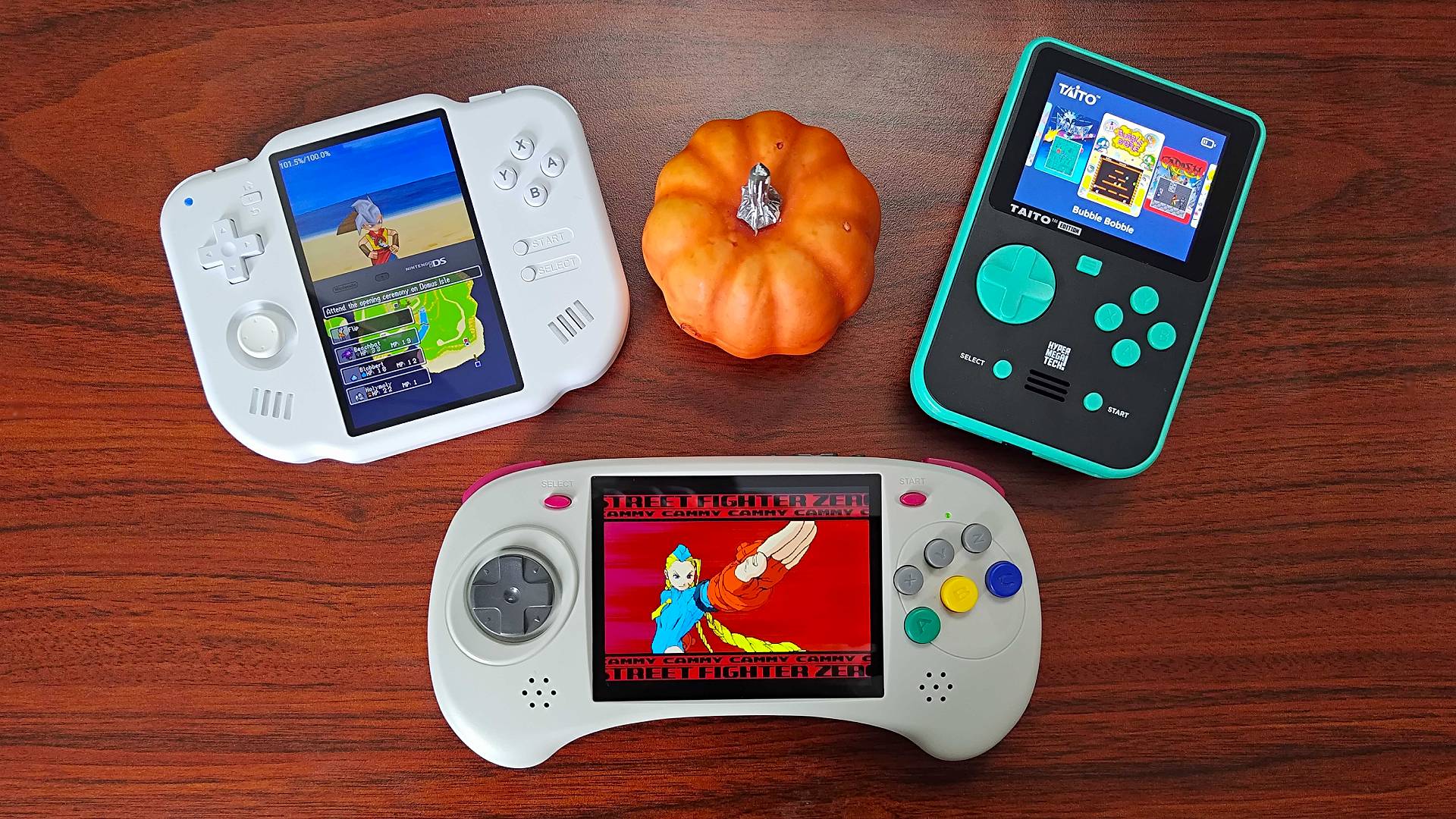
To give you a bit of a hand, I’ve got three retro handhelds that I’ll be using as Fall settles in. While I’ll be testing plenty more in the coming months, these portable pals ultimately boast a little something that makes them a great option for cozy setups and couch nests.
1. Magic Zero 40
Image 1 of 5
(Image credit: Phil Hayton)
(Image credit: Phil Hayton)
(Image credit: Phil Hayton)
(Image credit: Phil Hayton)
(Image credit: Phil Hayton)
I just wrapped up testing the MagicX Zero 40, and while I wouldn’t swap out my Nintendo DS Lite for one just yet, it’s still a solid alternative. Not only does it boast a slightly odd-looking vertical screen that provides all the space you’ll need for two screens, but its emulation perks do help enhance classic NDS outings visually.
That said, the reason I’m giving the MagicX Zero 40 a shout-out here is that it feels like a cosy console. It’s actually more comfortable to hold than the original DS over long periods, and being able to load your library onto the handheld means you won’t have to revisit your shelf every time you hop out of an adventure. I’d even go as far as to say that its hall-effect joystick feels nicer than a D-pad in games like Mario 64 DS.
Simply put, if you like the idea of sitting with a pumpkin-spiced latte, playing DS games you haven’t touched in nearly 20 years, keep an eye on the MagicX Zero 40.
2. Super Pocket
Image 1 of 5
(Image credit: Phil Hayton)
(Image credit: Future / Phil Hayton)
(Image credit: Future / Phil Hayton)
(Image credit: Future / Phil Hayton)
(Image credit: Future / Phil Hayton)
I talk about the Super Pocket a lot, but there’s absolutely a reason. You see, Blaze’s tiny console separates itself from the usual line-up of emulation devices by offering up cartridge support, something that helps keep the old-school cozy practice of physical gaming alive.
Weekly digests, tales from the communities you love, and more
Specifically, the Super Pocket can run Evercade cartridges, and there are now over 500 games out there for the platform across numerous collection carts. You can even get Tomb Raider for this tiny console, which absolutely blows my mind. The idea here is that if you want to avoid having to wrestle with emulators, ROMs, and settings, this compact console will provide portable classics on a plate, hot to go.
You’ll even be able to just stick with its built-in games if you can’t even be bothered buying additional carts. That said, to fully embody the Game Boy vibes this incredibly affordable handheld has to offer, I’d build up a small collection for your Super Pocket.
3. Anbernic RG ARC-D
Image 1 of 5
(Image credit: Phil Hayton)
(Image credit: Future / Phil Hayton)
(Image credit: Future / Phil Hayton)
(Image credit: Future / Phil Hayton)
(Image credit: Future / Phil Hayton)
I am a massive Sega nerd, and the Anbernic RG ARC-D is still my go-to handheld for playing Genesis and Saturn games on the go. I often find myself reaching for this portable while curled up on the couch with a book, as I like to take five-minute breaks when reading disturbing horror novels to blast my way through Sonic 2.
Yes, you can revisit Chemical Plant Zone on virtually any handheld and enjoy its sweet soundtrack, but the ARC-D feels tremendously authentic thanks to its buttons. The portable’s disc d-pad absolutely shines when playing old Sega outings, and the six-button layout makes this a mean fighting game machine.
It is worth noting that this handheld has more going for it than just Sega vibes. It also happens to feature dual Android and Linux booting capabilities, which helps it tap into a wider pool of emulators. It also benefits from a vibrant 4-inch IPS screen and a battery that’ll last for around 6 hours based on my testing. Overall, this is a solid handheld for 16-bit romps, and it’s a comfy option for ’90s cosy sessions.
More retro handhelds to look out for over Labor day
(Image credit: Future / Phil Hayton)
I always use the sales as an excuse to look for retro handhelds, and Labor day is no different. Ideally, I’m hoping the three portables I’ve picked out for my cozy Autumn plans will fall in price, but there are a few others I’d keep a close eye on too.
If you’re looking for a retro gaming workhorse, investing in something like the Anbernic RG Cube could pay off in the long term. It’ll set you back around $187 at Amazon, and while its square screen looks fairly odd, it’s one of the best compact time capsules for emulating most retro consoles. It can even pull off some of the same NDS tricks as the MagicX Zero 40, providing you’re cool with using tiny dual screens.
Those of you on a strict budget will also want to take a peek at the Anbernic RG28XX. I actually keep this tiny GBA Micro homage charged up at my desk for quick access to PS1 racers like Crash Team Racing, and it’s surprisingly punchy for something that’ll fit in your tiny jean pocket. Considering it’s usually available for $39.99, this is one of the most affordable retro gaming handhelds out there that actually features excellent emulation capabilities.
TechCrunch Disrupt isn’t just about showcasing the startups of tomorrow — it’s also about surfacing the boldest ideas shaping technology today. Thanks to the support of our partners JetBrains and Greenfield, the TechCrunch Disrupt 2025 program, happening October 27–29 at San Francisco’s Moscone West, brings two must-see sessions that put AI front and center.
Monday, October 27 — Builders Stage
1:40 p.m. – 2:10p.m. PT Who’s Defining AI’s Future in 2025? The AI Disruptors 60 Unveiled Presented by Greenfield Partners
We’ve seen it with the internet, and again with mobile: moments when technology reshapes everything. Now it’s AI’s turn — and it’s moving faster than ever. Greenfield Partners is unveiling the AI Disruptors 60 right here at Disrupt 2025: a list of early- and growth-stage startups leading the charge in AI infrastructure, applications, and go-to-market innovation.
This panel brings together top investors like Shay Grinfeld (Greenfield Partners) and founders, including Renen Hallak of VAST Data, for a candid discussion about how these companies are building the backbone of tomorrow’s AI economy. From scaling strategies to sector-defining breakthroughs, they’ll unpack what makes these startups stand out — and what’s coming next. Don’t miss the live reveal of the AI Disruptors 60 list, only at TC Disrupt.
Tuesday, October 28 — AI Stage
1:55 p.m. – 2:15 p.m. PT Vibe coding? Cute. Now let’s get real and talk about AI built for developers Presented by JetBrains
AI in software development often gets framed as a sprint — more speed, more output, more lines of code. But speed without quality doesn’t cut it in the real world. Join Kirill Skrygan, CEO of JetBrains, for an unfiltered look at how AI built for developers is changing the industry. This session explores why code quality — not just velocity — will define the next generation of intelligent software and how developers can harness AI to deliver at scale, with reliability and precision.
A thank-you to our partners
We’re grateful to JetBrains and Greenfield for supporting TechCrunch and making these conversations possible at Disrupt 2025. Their commitment to advancing the AI ecosystem helps us spotlight the people and companies rewriting what’s possible. Make sure these sessions are on your must-see list.
Learning technical skills is not only about reading textbooks or watching tutorials. When it comes to training for technology support, real practice plays a much bigger role. This is especially true for computer support specialist training, where the ability to apply knowledge in real-life situations can make the difference between success and struggle.
Hands-on learning brings that practical edge. It helps students gain skills they will use daily in their jobs while building the confidence to handle different challenges.
Building Real Skills with Practice
Computer support specialist training programs focus on preparing people for technical roles. In these roles, employees need to fix computer systems, troubleshoot networks, and guide users through technical issues. While theory explains the concepts, practice teaches the skills.
Setting up operating systems
Configuring hardware and software
Managing updates and security patches
Solving real troubleshooting tickets
This shows that learners are well aware of what to do and how to do it.
Developing Problem-Solving Confidence
Books often show one way to fix a problem. Real work is never that simple. Computers fail for many reasons, and each case may need a different fix. Hands-on sessions allow learners to try multiple solutions until the right one works.
Through this, learners develop:
The skill to troubleshoot under pressure
Fresh ideas for unique errors
Better judgment in tough cases
Employers value specialists who can think on their feet.
Learning Tools and Software Faster
Computer Support Specialists work with many tools daily. Some examples include:
Remote desktop software
Ticketing systems
Diagnostic programs
Security tools
Hands-on sessions make these tools easier to understand. Learners can try different functions and explore menus. It lets them understand how the tools actually behave.
Prepare for Actual Jobs
Companies want workers ready to handle issues right away. Computer support specialist training programs with labs and practice projects create job-like settings for learners. It includes some common areas like:
Configuring software applications
Setting up operating systems
Configuring software applications
Managing user accounts and permissions
Detecting and fixing network errors
Replacing or repairing hardware
By the time students complete their training, they already have experience that feels close to what they will face at work.
Keep Up with Technology
Computer support specialists must keep up with technology. Practical labs include the use of current tools and systems, which keeps training fresh and relevant. With direct exposure, learners:
Feel at ease with the latest software
Adjust to the latest tools without stress
Build a good habit of steady learning
Develop Team Skills
Computer support is not a job for one person alone. Most specialists work with groups or guide other staff who need help. Group labs give learners real practice in teamwork.
This may include:
Sharing solutions with classmates
Explaining hard problems in simple words
Joining with others on larger projects
Enter the Career with Confidence
Good training mixes ideas with practice. Real tasks prepare learners for exams and also for the first day on the job.
This approach helps because:
Skills match what happens in real work
Learners walk into interviews with confidence
Knowledge stays fresh through use
From Classroom to Career
The goal isn’t just to finish a course. It’s to get a job. That’s why the best programs help you prepare for both the work and the job hunt.
You’ll take classes that teach:
How to write a tech-friendly resume
How to answer common interview questions
How to use LinkedIn and job sites
How to follow up after applying
And yes, you’ll do a mock interview. One-on-one. Someone will ask you real questions and give you honest feedback. That kind of prep helps you walk into your first interview with confidence.
Short, Fast, and Focused
This isn’t a two-year degree. A good computer support specialist training program can be done in under four months. That’s less than 15 weeks of focused hands-on learning.
You start with the basics:
How computers work
How networks connect
How software runs
Then you move into real troubleshooting. No filler. No long lectures on topics you won’t use. Just the stuff that matters.
And you move at your own pace. If you need more time on a topic, you can take it. If you pick something up fast, you keep going.
Where Can You Work?
Once trained, you’ve got options. Computer support techs are needed everywhere.
You can work in roles like:
Help desk technician
Desktop support
IT support specialist
Remote tech support
Network assistant
On-site repair tech
And many of these jobs let you work from home. That’s a big plus if you want flexibility or live far from big cities.
Final Thoughts
Computer support specialist training isn’t about becoming a genius overnight. It’s about hands-on learning on real skills that let you start a new career fast.
And the best way to learn those skills? By doing them.
When your training feels like the job, the job feels easy. You walk in knowing how to fix things, help people, and stay calm under pressure.
That’s not luck. That’s hands-on learning. And it’s the reason so many people go from zero to hired in just a few months.