ServiceNow, the U.S. enterprise software company known for automating workflows like IT service management and HR operations, is betting on an Indian banking software specialist to deepen its push into global financial services.
The company has invested $40 million in BusinessNext, valuing the 24-year-old Indian firm at $700 million and taking a roughly 5% stake. The deal gives BusinessNext access to ServiceNow’s global sales network as the companies expand their partnership in AI for financial services.
ServiceNow’s investment reflects BusinessNext’s growing profile beyond India. The profitable, Noida-based company, which generated about $32 million in revenue in its latest financial year, serves more than 70 banks across India, Southeast Asia, the Middle East, and the U.S. Its customers include the Reserve Bank of India, the country’s central bank, and State Bank of India and HDFC Bank, which are India’s largest public- and private-sector lenders, respectively.
About half of BusinessNext’s revenue comes from outside India, with overseas markets expected to drive much of its future growth, founder and CEO Nishant Singh said in an interview.
The company chose ServiceNow over potential financial investors to accelerate its expansion by tapping the U.S. software group’s global reach. Singh told TechCrunch that the partnership would help BusinessNext “borrow” its go-to-marker “machinery” — referring to ServiceNow’s sales infrastructure — in markets where it has a limited presence.
“Think of it as a strategic partnership, which is cemented with funding,” he said.
BusinessNext’s software, Singh said, manages customer-facing banking workflows, while ServiceNow is stronger in workflow automation and back-office systems, a combination the two companies plan to sell jointly to financial institutions.
“India’s financial services sector is at an inflection point — institutions are moving from digital experimentation to full-scale AI-led operations,” Kulmeet Bawa, ServiceNow’s group vice president and managing director for India and SAARC, said. He added that the partnership combines ServiceNow’s enterprise workflow platform with BusinessNext’s banking expertise.
Founded in 2002, BusinessNext — known as CRMNext until 2022 — has spent several years building what Singh calls an “autonomous banking” platform, using AI agents to automate banking workflows while keeping sensitive customer data on private AI infrastructure to meet regulatory and privacy requirements.
Singh told TechCrunch that AI was built into the company’s platform from the outset rather than added later. “We actually renamed our company and we kind of rewrote our stack to put that fundamentally at the core,” he said.
BusinessNext employs more than 1,300 people across its operations and was last valued at $181 million in 2021, per private market intelligence platform Tracxn. It has raised more than $60 million in external funding and counts Avataar Ventures, Norwest Venture Partners, and Ascent Capital among its existing investors.
The deal comes as established enterprise software vendors face pressure from customers who are questioning whether traditional SaaS tools are worth paying for when AI-native alternatives are emerging. For ServiceNow, the deal builds out its position in banking by partnering with a company focused on AI-driven banking software, as it expands its enterprise software portfolio through acquisitions, investments, and partnerships.
When you purchase through links in our articles, we may earn a small commission. This doesn’t affect our editorial independence.
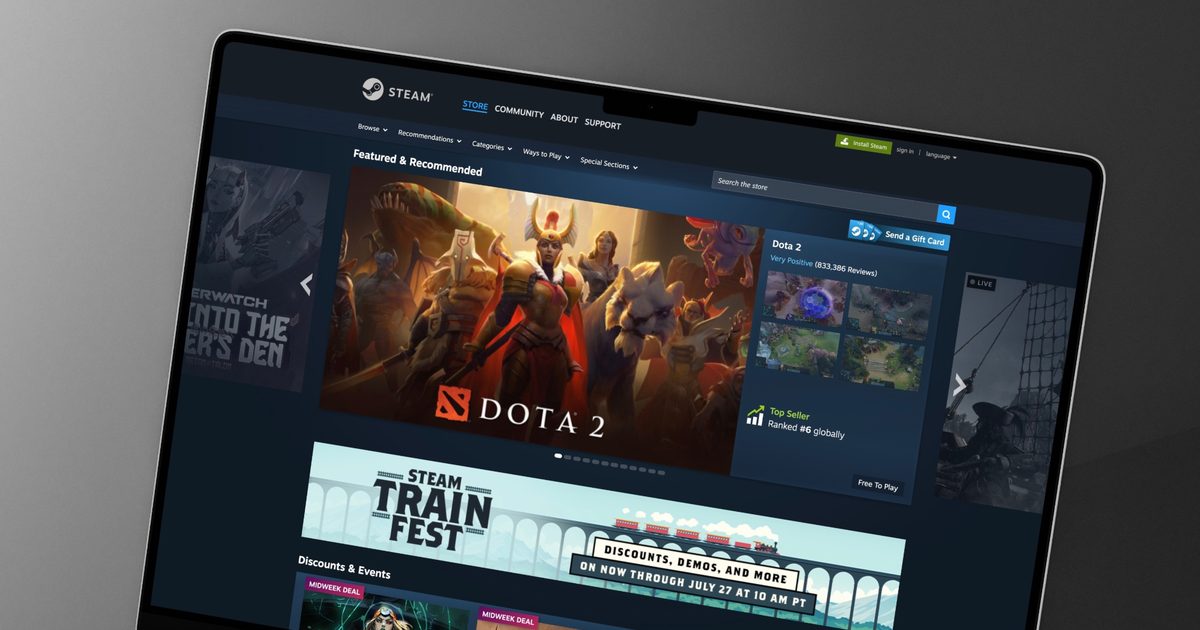
Right on the heels of launching its anticipated Steam Machine gaming system, Valve has rolled out a solid update for Steam that tackles two things players have wanted improved for a while: gifting and wishlists. Let’s break down what’s new.
How much easier is gifting now?
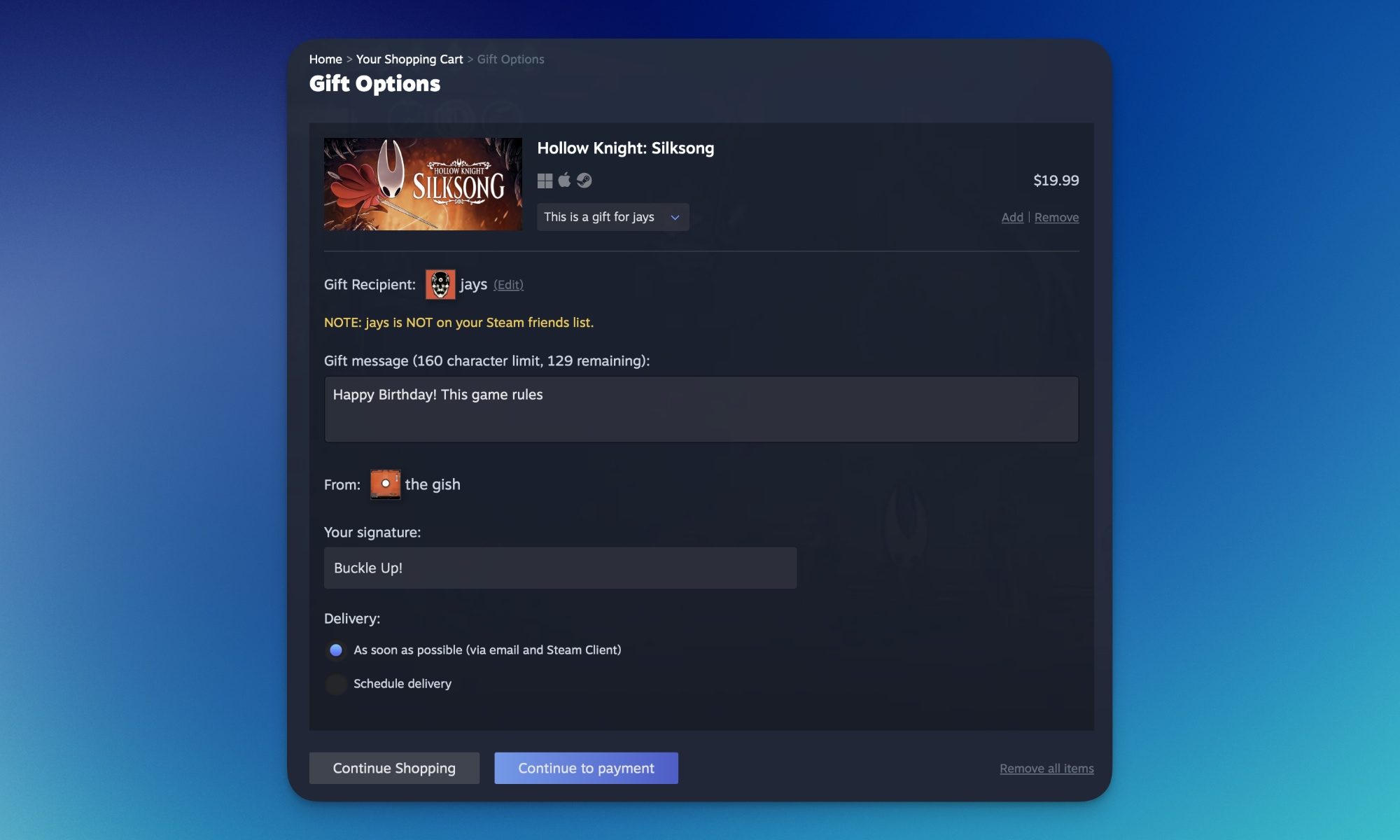
My favorite part of the update is that game gifting is getting a lot easier. Guest checkout used to only work for gift cards and hardware, but now it covers every game on Steam. If someone shares their wishlist with you, you can buy them a gift without ever creating an account.
Valve
Want to keep it a surprise instead? You can now send both games and gift cards straight to an email address, even if you don’t know the person’s Steam username. Just keep in mind that unclaimed gifts get refunded after 30 days, and the recipient needs to live in your country.
Valve
Cross-region gifting also got a much-needed fix. Buying for a friend in a pricier region used to mean manually figuring out local pricing for a gift card. Now Steam handles the conversion automatically at checkout, as long as your friend is already on your friends list.
What’s new for organizing your wishlist?
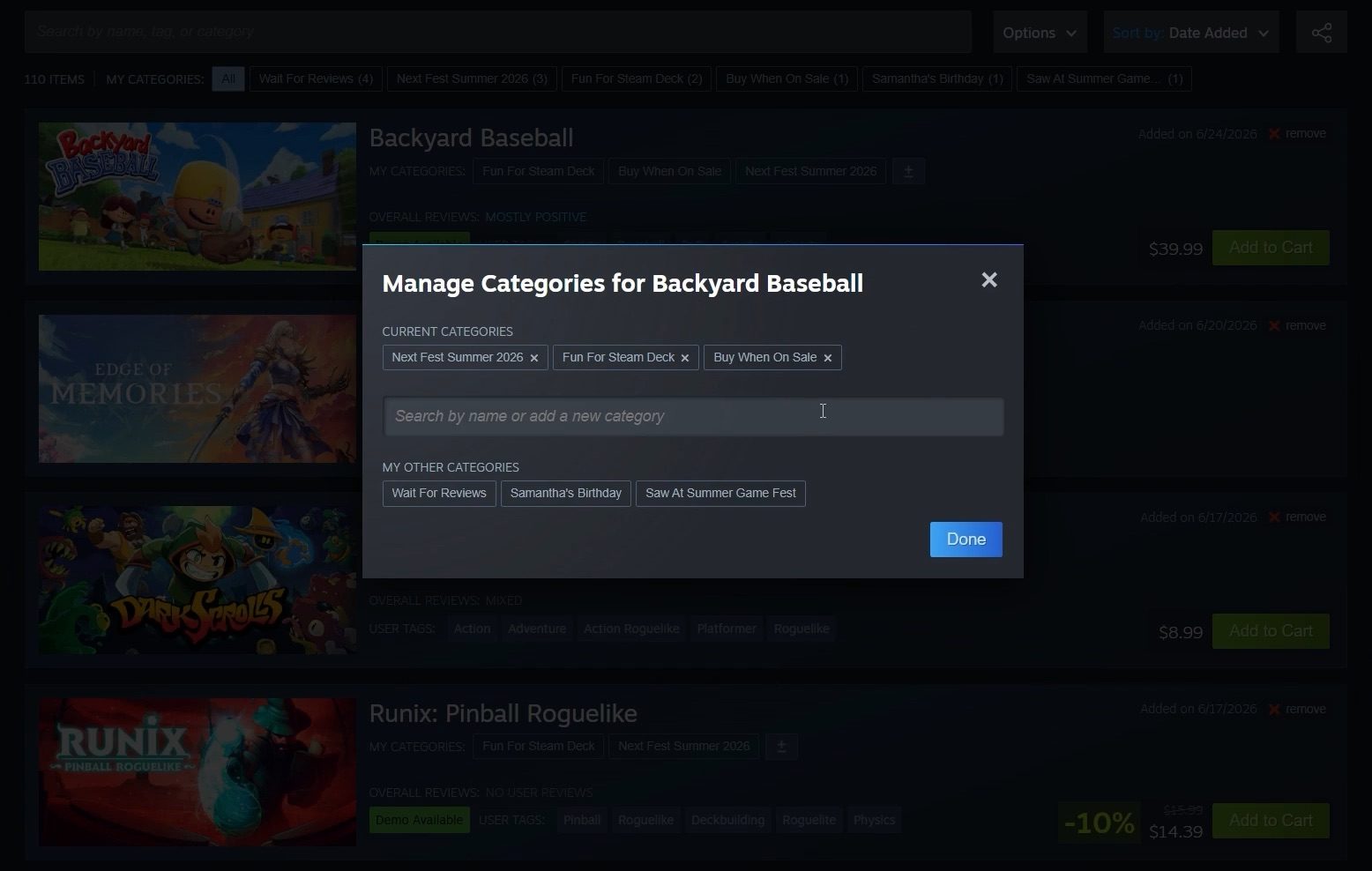
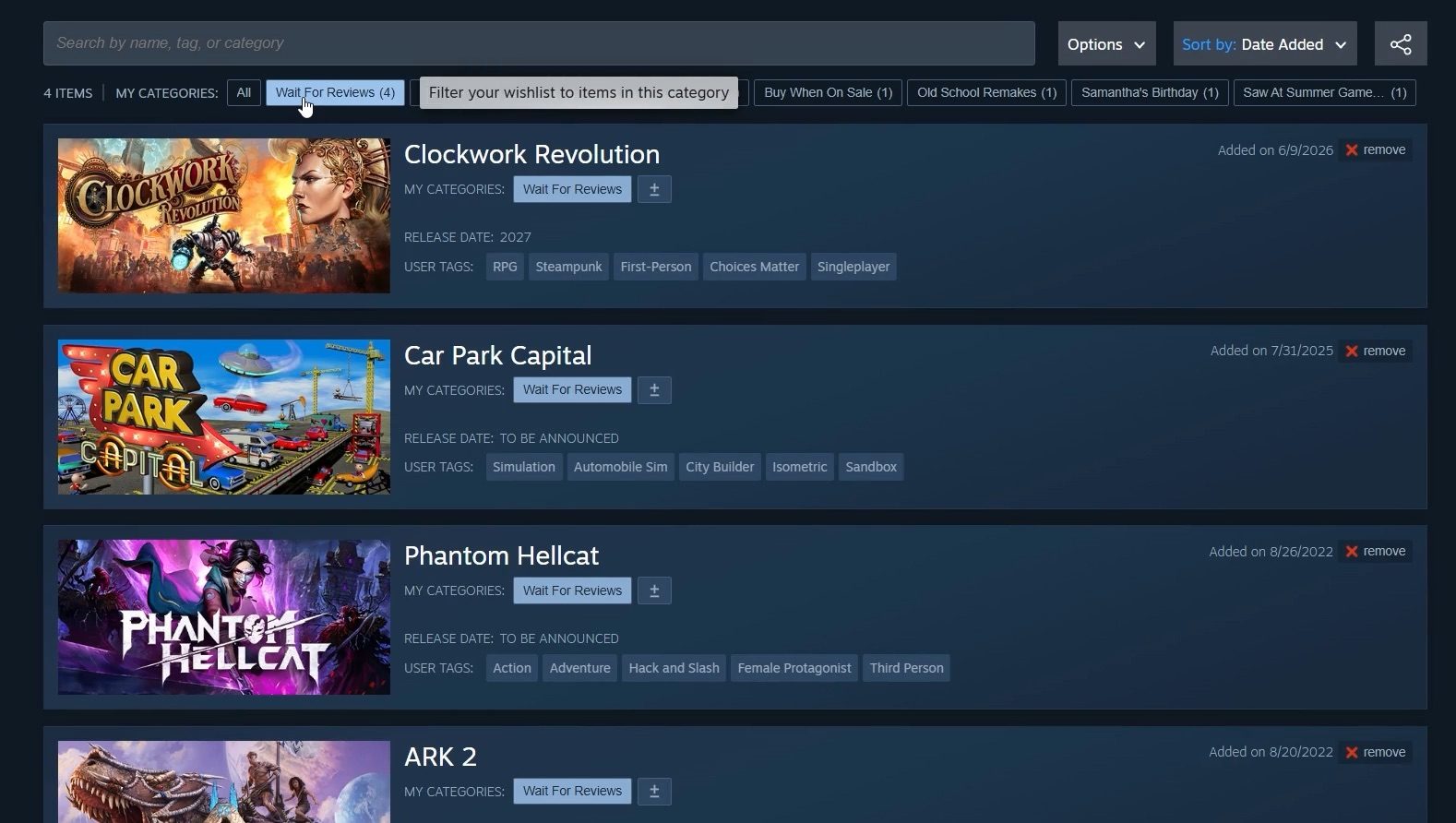
Steam has finally added custom categories, allowing you to sort and filter your wishlist items. You can filter by category with one click, add games to your favorite categories right from the store page, and even set notifications for specific categories only.
Valve
Valve says that search has become faster too, with autocomplete added for quicker results. Steam now flags when a wishlisted game has a demo available, and hovering over a game’s capsule shows a quick microtrailer.
Valve
Sharing is better as well. You can generate a link to your entire wishlist or just a filtered category, and friends can gift straight from that link without needing a Steam account themselves. Between the smarter wishlist tools and the simpler gifting options, buying and managing games just got a lot less complicated.
Before a healthcare robot can be useful in the real world, it has to learn how the physical world pushes back. Anatomy varies. Instruments bend, press, slip and interact with tissue. Imaging can be noisy or incomplete. And the rare, edge scenarios developers most need to understand don’t appear on schedule.
That creates one of the biggest bottlenecks in healthcare robotics: obtaining the enormous amount of varied data developers need to train, test and improve robot behavior.
NVIDIA Medical Physics Simulation framework — a new open source, GPU-accelerated capability within NVIDIA Isaac for Healthcare — announced today, helps medical robotics developers model anatomy-device interaction, generate hard-to-capture scenarios, test in silico, and train or evaluate robot policies before hardware-heavy testing.
The framework brings together anatomy and medical device behavior with sensor simulation and robot learning so teams can create reusable simulation environments instead of rebuilding custom scenes for every workflow, saving developers time and bringing innovations to market faster.
Because Medical Physics Simulation is open source, healthcare robotics developers can inspect the framework, adapt it to their own devices and workflows, and build on a GPU-accelerated foundation that works seamlessly with the broader NVIDIA stack.
Open source is especially important in healthcare because teams need transparency into the data, models and weights that shape system behavior. Access to open models and model weights can help developers reproduce results, evaluate performance across different anatomies and scenarios, identify limitations and build evidence for regulatory review.
A Virtual Training Ground for Medical Robots
For physical AI, experience is data in motion. Developers need to train robots to operate properly even when anatomy changes, devices behave differently, conditions shift or a policy fails unexpectedly.
Medical Physics Simulation helps developers simulate anatomy, device contact, friction and sensor inputs, then test in interactions and environments to evaluate how robots perform across those changes. Powered by NVIDIA CUDA and part of Isaac for Healthcare — built on the NVIDIA Warp, Newton and Cosmos simulation and generative AI technologies — the framework can run hundreds of parallel simulation environments, helping teams explore more scenarios and identify failure modes earlier in development.
For robot builders, this turns simulation from a bespoke engineering project into reusable infrastructure. The difference now is scale: benchmarks show 8,192 robot-training environments running in parallel with GPU-native simulation cut training from over five hours to under two minutes.
With this framework, developers can connect vascular anatomy, flexible instruments such as catheters and guidewires, simulated X-ray imaging and reinforcement learning. The framework is designed to extend beyond that example to additional devices, anatomies, sensors and healthcare robotics domains.
Medical Physics Simulation brings together classical physics simulation and generative AI physics simulation. Classical simulation helps model known physical rules, such as device contact, friction and motion. NVIDIA Cosmos-H Dreams, the real-time generative AI physics simulation capability within Medical Physics Simulation, helps model visual scene dynamics learned from procedural data.
Together, these approaches give developers a richer way to build and test healthcare robotics systems in virtual environments before moving to physical prototypes and lab testing.
An Ecosystem Building the Future of Medical Robotics
Medical robotics leaders are already applying simulation-driven development to solve specific surgical challenges.
CMR Surgical and Cambridge Consultants, part of Capgemini, are using Cosmos-H-Dreamsto implicitly learn interaction physics for soft-tissue surgical procedures and generate patient-specific simulations. CMR contributed nearly 500 hours of anonymized clinical data from its Versius Surgical Robotic System to the Open-H Embodiment open dataset, benefiting procedures including cholecystectomy, prostatectomy, hernia repair and hysterectomy.
“Open source models allow us to build on shared knowledge, accelerating responsible innovation and, ultimately, gives us the potential to deliver more consistent care and better outcomes for patients worldwide,” said Chris Fryer, chief technology officer at CMR Surgical.
Johnson & Johnson MedTech is using Isaac for Healthcare’s Medical Physics Simulation and a Cosmos-based foundation model to build digital twins of its endoluminal MONARCH platform for urology, modeling complex anatomy and kidney-stone scenarios. XCath is using the Medical Physics Simulation for endovascular autonomy policy training. Inner Logic is accelerating the evolution of medical technology with synthetic data, validating device mechanics and producing in silico evidence to support regulatory pathways with NVIDIA Medical Physical Simulation.
Medtronic Structural Heart is exploring applying Medical Physics Simulation with simulated X-ray sensing to generate data for catheter navigation research.
A New Layer in the Isaac for Healthcare Stack
As a modular capability within NVIDIA Isaac for Healthcare, Medical Physics Simulation can be used on its own or alongside digital twin pipelines, medical sensor simulation, the NVIDIA Isaac Lab open robot-learning framework and NVIDIA open models and policies.
Developers can explore the open source Medical Physics Simulation framework, review available reference workflows and start building simulation environments for their own devices, anatomies and healthcare robotics applications.
Samsung has opened its application period to consumers looking to grab its first credit card: the Galaxy Card.
Consumers can get this digitally or physically in a black metal design, thanks to a Barclays U.S. Consumer Bank partnership.
The Galaxy Card offers a series of cash rewards for consumers, such as 5% cash rewards on eligible purchases made directly with Samsung.
There have been plenty of reveals and announcements at Samsung’s Galaxy Unpacked today (July 22), but there’s a little more to discuss. The company is entering the credit card world, and you can apply now.
In a press release, Samsung announced the Galaxy Card: the brand’s first credit card in the U.S., which delivers “a new way for users to earn cash rewards across everyday purchases and the Galaxy ecosystem.” The Galaxy Card is available as a virtual and a premium black metal card. As one would expect, the card is designed to fully support Samsung Wallet. The Galaxy Card was made in partnership with Barclays U.S. Consumer Bank operating on the Visa network.
This partnership is said to help offer “innovative payment options” for Samsung’s consumer base.
Latest Videos From
The company states the Galaxy Card has a $0 annual fee. Rewards are a major aspect of Samsung’s first credit card. Consumers will receive 5% cash rewards on eligible purchases made directly with Samsung. What’s more, you could receive 20% off Samsung VIP Advantage, as well as 5% cash rewards “when purchasing or renewing a Samsung VIP Advantage membership.” The remaining cash rewards are as follows:
3% cash rewards on purchases made with Samsung Wallet
2% cash rewards on streaming services, like Netflix, Disney Plus, and Spotify
1% cash rewards on all other purchases
$200 cash reward after spending $2,000 in the first 90 days
Galaxy Card and new products
(Image credit: Samsung)
Android Central’s Take
I like the black metal for the Galaxy Card. It’s clean. That’s my vibe. For people who often shop Samsung products, I can see this card being particularly useful. The streaming services and Spotify are neat bonuses, probably to entice more people to think about signing up. I’m interested in what else Samsung could add, if it’s thinking about sweetening the pot even more.
Applications for the Samsung Galaxy Card have opened today (July 22). The company lined up this open period with Galaxy Unpacked, which showed off new smartwatches and foldables.
It’s been a while, but Samsung’s new credit card was talked about before. Originally, nothing was confirmed. There was a report late last year that said Samsung had approached Barclays to create a card of its own. The alleged name was similar to what was announced, rumored to be the “Samsung Card.” Early reports claimed Samsung would offer cashback on its devices and appliances, alongside “digital prepaid accounts.”
This had us thinking Samsung was looking to compete against Apple, which has a card it offers consumers. Samsung has continued to refine its payment experience, whether digital or a physical card that we’ve now received.
Get the latest news from Android Central, your trusted companion in the world of Android
Apple’s privacy policy for the Apple Store app suggests it will soon get a virtual shopping assistant to help users decide what to purchase.
The app will have a chat interface where users can ask questions about Apple products, with Apple using data like account information, device identifiers, chat information, carrier information, and location data to offer a personalized experience. Transcripts of chats are saved for later reference.
Apple says that information is sent to its “partners” to help Apple provide a conversational response, which suggests Apple might be using a third-party AI model for the virtual assistant.
Where the Apple Store app virtual shopping assistant is available, Apple collects and stores your account information, device identifiers, carrier information, chat information, and where enabled, location data to personalize the chat experience, provide relevant responses, and if you opt in, to improve the virtual shopping assistant. Before sharing the chat with our partners, Apple scrubs personal identifiers from it. These partners will use this information only to help Apple to provide a conversational response. Apple will save these transcripts to make them available when you return to the Apple Store app, for our business analytics, and if you opt in, to improve the virtual shopping assistant.
The virtual shopping assistant interface is not live in the Apple Store app yet, though it is possible Apple is testing the feature with some users. Apple also added a virtual assistant to its Apple Support app, but that feature still hasn’t rolled out to everyone.
Apple’s retail store at the Briarwood Mall in Ann Arbor, Michigan will be relocating to a larger space at the mall as early as the end of July, according to Bloomberg’s Mark Gurman.
Simon Property Group has been redeveloping a portion of the surface parking lot at the Briarwood Mall, and previous reports have indicated that Apple will be moving its store to this new mixed-use…
Apple’s online store has gone down with the message “We’ll be right back,” for reasons that are currently unclear.
The change could be due to the launch of Apple’s 2026 “Back to School” program, impending price increases, or the launch of new devices.
Apple’s annual Back to School promotion for the U.S. and Canada is widely expected to launch any day now, since it still hasn’t gone live…
Apple today dramatically increased device prices across multiple product lines.
Subscribe to the MacRumors YouTube channel for more videos.
After temporarily taking it down earlier today, Apple’s online store is back up with a series of product price increases. The changes are as follows:
HomePod mini: $129, up from $99 (+$30)
HomePod: $349, up from $299 (+$50)
Apple TV: $199, up from…
OEM vs Retail? When shopping for a desktop PC, most buyers compare processor models, graphics cards, memory capacity, and storage size. What often goes unnoticed is the quality of the components surrounding those headline specifications. Not all PCs are built with the same hardware, even when the spec sheet appears nearly identical.
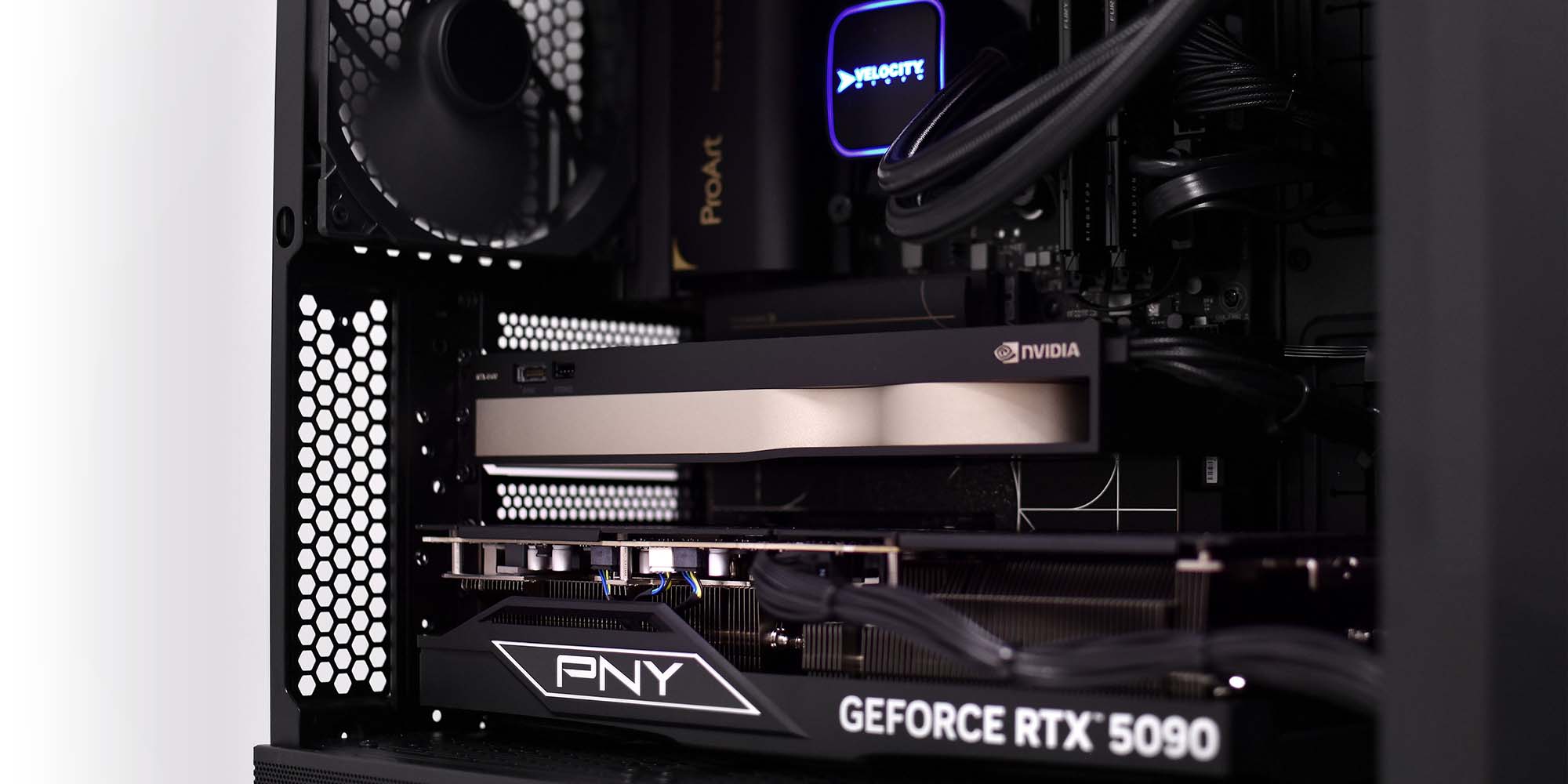
Many large OEM manufacturers use proprietary or cost-optimized components designed specifically for mass production. Velocity Micro, on the other hand, only builds systems using the same premium retail components enthusiasts and professionals would purchase individually. That difference has a significant impact on performance, reliability, serviceability, and long-term value. Let’s explore the difference of OEM vs retail components.
Understanding OEM Components
OEM (Original Equipment Manufacturer) parts are often designed to meet a specific price point rather than maximize performance or longevity. Power supplies may provide only enough capacity for the included hardware, motherboards frequently have simplified power delivery and fewer expansion options, and cooling solutions are engineered to satisfy minimum thermal requirements instead of providing additional headroom.
There’s nothing inherently wrong with OEM hardware—it allows manufacturers to produce millions of systems at the lowest possible prices. But those savings often come with tradeoffs. Thermal performance can suffer under sustained workloads, and component quality may not match what is available in the retail market. Also, upgrading may become more difficult because of proprietary connectors or custom chassis designs.
Why Retail Components Offer an Advantage
Retail motherboards, power supplies, coolers, and graphics cards are built to compete directly with one another. Manufacturers know enthusiasts and professionals scrutinize every specification, benchmark, and review.
Higher-efficiency power supplies with premium internal components
These improvements don’t just benefit gamers. Engineers, architects, software developers, content creators, and researchers all benefit from hardware designed to maintain consistent performance under heavy workloads.
OEM vs Retail: Reliability Begins with Better Components
Reliability isn’t determined by a single part—it’s the result of every component working together.
A premium power supply delivers cleaner, more stable power. A robust motherboard provides consistent voltage to the processor during demanding workloads. Better cooling allows CPUs and GPUs to maintain boost frequencies without excessive heat. High-quality fans operate more quietly while lasting longer.
When each component is selected for quality rather than minimum cost, the entire system becomes more dependable over years of continuous use.
That means the surrounding hardware directly affects performance. A workstation with superior cooling and stable power delivery can often sustain higher boost clocks for much longer than an otherwise similar system built with lower-cost components.
For professionals, those seemingly small differences accumulate over thousands of rendering jobs, simulations, software compilations, and engineering projects.
Rather than relying on proprietary OEM hardware, Velocity Micro systems are built around premium retail motherboards, graphics cards, cooling solutions, memory, storage, and power supplies from industry-leading manufacturers. These components are selected not only for their individual performance, but for how well they work together as a complete system.
The result is a desktop or mobile workstation capable of sustaining peak performance during demanding workloads without unnecessary thermal throttling or power limitations. That advantage becomes especially important for AI development, where faster GPUs, stable power delivery, and efficient cooling reduce model training times and accelerate local inference. The same engineering benefits professionals using CAD, 3D rendering, simulation, video production, and scientific computing, where sustained performance is often more valuable than short benchmark bursts.
Nearly three decades of experience building gaming PCs has also shaped Velocity Micro’s approach to workstation design. Gaming systems demand exceptional thermal management, clean power delivery, and rock-solid stability under continuous load, all the same qualities required by today’s AI developers, engineers, architects, and creative professionals.
By combining premium retail components with expert system integration, rigorous testing, and meticulous assembly, Velocity Micro delivers desktops and laptops that are engineered not just to perform on day one, but to remain fast, stable, and reliable throughout years of demanding professional use.
The following two tabs change content below.
Josh has been with Velocity Micro since 2007 in various Marketing, PR, and Sales related roles. As the Director of Sales & Marketing, he is responsible for all Direct and Retail sales as well as Marketing activities. He enjoys Seinfeld reruns, the Atlanta Braves, and Beatles songs written by John, Paul, or George. Sorry, Ringo.
In today’s fast-paced world, where business environments are highly competitive, companies are always finding ways to improve efficiency, manage costs, and maintain their strong market position. And one of the fast-growing approaches today is CAD outsourcing. Businesses are becoming more open to smarter approaches, and they do not just depend entirely on in-house teams right now, but are also turning to external specialists who can handle their design and drafting needs by using computer-aided design tools.
Through this smart approach, organizations can streamline their processes while still delivering top-notch results. By outsourcing CAD work, businesses are able to reduce their expenses associated with having to hire full-time staff, plus ongoing training, and not to mention expensive software. Aside from it, businesses are able to have access to a wider network of skilled professionals who have specialized expertise. This flexibility really allows a lot of businesses to broaden their operations, especially when they use platforms like CAD crowd. It helps the hiring process by simplifying every process, making everything smoother for anyone who is aiming to match with skilled business professionals who have real experience in CAD across the world.
CAD outsourcing means that you let someone outside the scope of your company handle a specific design work using CAD or computer-aided design. CAD is software used in creating detailed drawings or 3D models for machines, buildings, and other products.
This is a strategy that is being applied by most businesses nowadays, due to the amount of demand or higher costs of doing everything in-house, they opt to hire freelancers or design teams to create specific tasks for them.
Through this, they no longer need to spend much money on hiring full-time staff, buying expensive software, or even on training budget. What they do is they just provide them with ideas or details of the project, and the external designer handles everything and provides them with the design output. In short, CAD outsourcing offers businesses professional help in designing projects more easily, faster, and at a lower cost.
Businesses that do CAD outsourcing have their own steps and processes that they usually follow. First, they create a project brief wherein the explanation of what they specifically need is found, such as the design idea, budget, features, and timeline. This helps the designer to have a clear understanding of what the project is all about.
Next, they look and choose a CAD designer or team where they check their portfolios and past experiences in order to ensure that they hire someone who actually fits according to the project needs. It is to ensure skill alignment with the project that needs to be created. After they hire, they start working collaboratively, communicate regularly, exchange ideas and updates, and review for any potential changes needed. Through this, the design projects are being managed and tracked accordingly.
In the final step, the designer who is assigned to a specific task sends the completed files, like the 3D models and drawings. The client will review if the work is appropriate and properly executed, and if there are any changes needed, they can request a final adjustment before they call it done.
CAD outsourcing is very popular among most businesses since it really helps them in saving money by removing the need to hire full-time designers. Through this smart approach, there is no longer a need to spend high expenses for training, salaries, office space, or even on buying expensive software. With this kind of approach, businesses are only going to pay for the actual work they need for a specific project, which makes it more budget-friendly and beneficial for them.
Access to global talent
Outsourcing for a specific task allows businesses to work professionally with experts in specific fields, like CAD designers, from across the world. It means that they are not limited to local talents alone since the scope is being expanded, wherein they can choose experts who are really aligned with the exact skills that they are looking for and have high potential in meeting the needs of their project.
Faster turnaround time
Through outsourcing, businesses are able to complete their projects faster since they can just hire experienced professionals who don’t need to be trained, since they already have the knowledge of what they’re going to do. And in most cases, teams work in different time zones, so there really is a high chance for the project to speed up its progress and meet deadlines accordingly.
In CAD outsourcing, everything becomes more flexible. Businesses that deal with a lot of projects can also hire more designers. And if, in any case, the work slows down, then they can just immediately reduce the team. This really helps them to manage their resources without the need to commit long-term to workers. It really just allows them to focus on what needs to be done rather than putting so much money into unnecessary staff that isn’t always needed throughout the course of the project progression.
Focus on core business functions
By outsourcing design work, our internal team can be more focused on the important tasks like diving into business strategy, growth, and marketing. For this, the overall productivity of the company would keep improving and would be operating efficiently. It really is a great use and a very smart approach in setting things in their places since everyone will no longer deal with tasks that are beyond their scope.
Cost savings without compromising quality
Outsourcing has proven to be cost-effective, yet doesn’t result in lower quality. This is what’s best about it because, despite paying less, you still get to receive high-quality product designs because the ones you are hiring are skilled professionals. There are a lot of cases where outsourcing even improves the quality of every product design you are working on, since expert specialists are being assigned to specific tasks.
What’s amazing about outsourcing is that you can choose who to hire based on the specific project and the kind of expertise you want to work with. It is really one of the biggest advantages of sourcing, as companies can reduce costs without lowering the quality of their work.
It’s really a smart choice for businesses to be open with these modern approaches, since if they only rely on in-house teams, they really need to spend so much on people for their salaries, benefits, training, and even for office space and expensive software. It does help big time as well for businesses that are only starting and small businesses, since they only pay for the specific service that they actually need. So it totally eliminates unnecessary overhead costs.
Access to specialized skills and expertise
One of the major advantages of CAD outsourcing is that businesses are able to gain access to a wide pool of specialized experts and are very specific to the industry’s expertise. As we know, different industries really have their own types of design knowledge, and not all in-house teams have experience or are capable in all those areas.
Through outsourcing, businesses can choose a designer who aligns best with the project, ensuring that the designer understands the technical requirements, challenges, and standards needed. Just like, for example, Architectural CAD designers are really skilled in creating building layouts, construction drawings, and floor plans. And Product Design experts also focus more on creating not just visually appealing consumer products, but also functional and efficient ones.
Mechanical CAD professionals specialize in manufacturing systems, machine parts, and technical engineering drawings. And other designers are experts in areas like furniture design, medical devices, automotive design, or electronics. Having clear access to all these specialized professionals helps businesses to achieve their goals with more accurate and high-quality results. Since these experts have the right amount of experience with the same project type, they can deliver more efficient work, which leads to no errors and provides better solutions. That is why most businesses opt for outsourcing. Instead of spending so much time training the internal team, they can just hire professionals with the specific skills and knowledge needed for the project.
Improved productivity and faster project completion
CAD outsourcing has really proven to be helpful for businesses in becoming more productive, as it helps in making the design process faster and more manageable. Instead of the usual process of giving every responsibility to an in-house team, companies decided to just hire CAD teams externally who are dedicated to providing efficient projects. Through this, workload pressures are being reduced on internal staff, making every operation run smoothly and avoiding delays.
Outsourcing CAD experts really improves workflow since they are professionals and already have the necessary experience, such as technical and software skills. Since they are already equipped with knowledge in handling similar project types, they can deliver tasks faster and don’t need much supervision. With this kind of setup, businesses are able to manage urgent projects and meet strict deadlines more effectively.
Another major factor that really speeds up project completion is the collaboration with different regions and time zones. A lot of outsourced teams work across the world, meaning they have their own time zones, so it simply allows progress to continue even outside the regular scope of business hours. As a result, a more continuous workflow produces finished projects sooner, all while not compromising its quality output.
Industries that benefit most from CAD outsourcing
Architecture and construction
The architecture and construction industry really relies on CAD, especially in areas like building layouts, structural drawings, 3D visualizations, and creating floor plans. Outsourcing CAD tasks provides architects and construction companies with a more efficient way of ensuring that everything is accurately created, especially when it comes to detailed designs. It helps them in handling multiple projects at the same time without the need to overload those teams that are working internally.
Manufacturing companies use CAD in order to design machine parts, equipment, tools, and production systems. Through outsourcing CAD work, they could have access to experts who actually understand technical specifications and production requirements, which are very important in the process. It allows them to improve their product accuracy, reduce errors, and speed up the entire process while not compromising their desired outcome.
Product design
Product design also uses CAD in creating detailed 3D models and prototypes before they begin the production. Through outsourcing, businesses are able to have access to expert designers who specialize in creating not just visually appealing, but also functional products. This is very useful, especially for startups and businesses that are developing new products without the need to maintain a large in-house design team.
Engineering
In the engineering field, they have these more complex and complicated projects that really require technical drawings and detailed modeling. Electrical, mechanical, industrial, and civil engineering companies really benefit from CAD outsourcing in a way that they get to work with specialists who have proven to have strong experience in their specific field. In this way, they are getting confident that all the projects created are made with accuracy, efficiency, and totally meet every standard the project needs.
Real estate
Real estate companies also apply CAD in property layouts, realistic 3D renderings, and site plans, as it all helps them in presenting their projects to investors and clients. Outsourcing CAD services allows them to have professional visual presentations without hiring a large internal design team or going through additional screening or training. In this way, they could improve their marketing efforts and provide clients with better visualized property developments since they focused on finding experts that could totally do the work without the need to commit to a long-term design team.
Businesses should really open their doors to CAD outsourcing since it is a very effective approach in handling project demands efficiently, especially when their internal resources are unable to operate more effectively. One of the major signs a business should consider is when they already have an overloaded team. When a business has a lot of employees, and all those employees are already managing too many responsibilities at once, it is obvious that productivity would really slow down. And if it slows down, multiple mistakes can happen, and tight deadlines become harder to meet. In outsourcing, workloads are being reduced, and internal teams would become more focused on specific and certain important businesses that they need to do.
Another sign to consider is when your business lacks specialized expertise. Every project requires different skills and abilities to be successfully created. And there are some that require advanced CAD skills that may not be seen within your company. So, the smartest approach is to outsource the work and find experienced CAD professionals who already have the skills required to do the work, because instead of spending too much time and wasting money on training, which is not guaranteed to be successful in the end, it would be an unsatisfactory move.
One strong reason to consider when you outsource is when you have a very tight deadline. When projects need to be done quickly, external CAD experts can do the extra work and additional support, which would speed up the workflow process. Since these outsourced professionals are proven and guaranteed to have strong experience with specific tools, they can already provide and deliver efficient work, which would help your business to meet deadlines without compromising its quality.
CAD outsourcing is really beneficial, most especially to businesses that are currently experiencing changing workloads. You can outsource, especially when it is mostly needed, because instead of hiring full-time employees for a very short-term task, you would need to spend so much time and money on it. This approach really gives businesses more flexibility while keeping everything in proper places and handling its costs in a more controllable way.
CAD Outsourcing Cost Estimates
Service Type
Description
Cost Range
2D CAD drafting
Basic technical drawings and layouts for plans and sketches
$10 – $50/hr
3D CAD modeling
Creation of detailed 3D digital models for products or parts
$25 – $100/hr
Mechanical CAD design
Engineering designs for machines, parts, and assemblies
$40 – $120/hr
Architectural CAD design
Building plans, floor layouts, and structural drawings
$30 – $110/hr
BIM services
Advanced building information modeling for construction projects
$50 – $150/hr
Product design
Design of consumer or industrial products with prototyping
$35 – $130/hr
3D rendering
Realistic visualization and presentation images of designs
$20 – $90/image
Full project outsourcing
Complete CAD project handling from concept to final output
$500 – $5,000+
Common challenges in CAD outsourcing and how to prevent or overcome them
Communication issues
Miscommunication is one of the most common issues we all deal with in everyday life, and it’s no exception in business. In CAD outsourcing, it’s inevitable to have communication errors with both ends. And as outsourced professionals often work remotely, there would be unclear instructions or a lack of understanding between both ends that could lead to errors and challenges as the project progresses.
To avoid this, companies should really present detailed project briefs explaining their expectations clearly and maintain regular effective communication process. They must schedule meetings and use collaboration platforms to ensure both sides stay aligned with the project’s vision and goals.
There are businesses that worry that outsourced work would not meet the standards they set. And it usually happens when the expectations are not clear, or they hired a wrong designer. In order to prevent this kind of problem, businesses must really review portfolios carefully, check every piece of feedback, and review sample works if needed. They should conduct regular progress reviews and not just wait for the final delivery, since it would greatly help in maintaining the quality as every phase of the process happens.
Time zone differences
Outsourcing means you get to work with teams that come from different countries, and it’s already obvious that they would be working in different time zones. And there is a big possibility that delays would happen since both ends don’t have the same working time. However, this challenge is very manageable, and it is achieved by setting clear schedules for updates, deadlines, and especially meetings.
The success should really establish communication hours in order to make sure that the collaboration between both sides would be smoother along the way. Although time zones can really be a challenge, they can also be an advantage since work can still continue even if regular office hours are over.
Businesses that outsource teams for specific projects really need to share confidential files and design information in order for everyone involved to be clear and understand what they are going to do. However, in terms of sharing confidential files with external professionals, it can really sound concerning in terms of data security.
In order to reduce these potential risks, businesses should use secure file sharing platforms and make sure to set confidentiality agreements before signing the project and disclosing it to the hired professional. It is very important as well to make sure the ownership rights and all data protection policies are in place to ensure that all sensitive information remains protected.
Best practices for successful CAD outsourcing
Clear project briefs
In order to have a successful CAD outsourcing project, you really need to set a clear project brief. It mainly serves as the foundation, so you really need to provide a clear explanation of your product idea, timeline, budget management, design requirements, target users, and, of course, your expected outputs.
You should create a precise and detailed brief for it to be easier for the designer to understand what you try to envision, so they can deliver an accurate result. A project brief that is well-prepared and organized helps in reducing the chances of multiple revisions, delays, and miscommunication throughout the process.
Set expectations
When creating a project, you really need to set expectations early on since it greatly helps in staying aligned with the designer right from the very beginning. It also includes your revision limits, deadlines, deliverables, and communication methods. When this is set, clearly define their expectations, then it would be easier to manage, the project would run smoothly, and potential confusion would be avoided. It also creates a more professional approach and a healthy working relationship between both sides.
Use collaboration tools
When aiming to have an organized and manageable collaboration with your designer, you really need to use collaboration tools since they help in making communication and the project process clear. You can have platforms that are focused on sharing files, messaging, and tracking tasks, as it all keeps the connection between both parties in real time.
With the help of these tools, updates, revisions, and feedback are accordingly documented, creating a workflow that is more transparent and efficient.
How to choose the right CAD outsourcing partner
Check portfolio
One of the most important tools in the process of evaluating a successful CAD outsourcing partner is the portfolio. This simple tool directly shows you everything about the designer or the company that you are trying to hire. It consists of their design style, level of expertise, and all the previous work they have created.
By reviewing their portfolio, you can have actual help in deciding, as you can scan through their experiences in handling project types that are similar to what you are trying to create. It provides you with access to their outputs, wherein you can weigh things to see whether your expectations meet theirs in terms of creativity and functionality.
Evaluate experience
It is undeniably true that experience really plays a vital role in ensuring the success of a specific project. When hiring a CAD professional, you must look at their experience, how relevant it is to the industry, and understand their standards, requirements, and common challenges to determine if it matches what your project needs.
Regardless of what type of project you are creating, it really is important to look for someone who can successfully help you in transforming it to life and ensure that we work with no errors and can really improve the overall outcome.
Pricing transparency
In deciding who to hire or what company you should be partnered with, it really is important to be clear and have transparent pricing. Before you begin the project, you must ensure that you clear out everything to avoid unexpected costs later and understand what is included in the price, like additional services, revisions, and file formats.
A CAD partner can be proven trustworthy when they are upfront about specific costs and provide help in ensuring that you stay within your budget while not compromising the quality of work.
If you are a business that is trying to simplify your design workflow and work with CAD professionals who are proven to be experienced and skilled, platforms like Cad Crowd are the right deal for you. It is a platform that offers a dependable solution and has access to a wide pool of vetted designers, whom you can easily work with.
It makes the hiring process easier and smoother throughout your experience. It is proven to provide you with designers who support whatever project you have in mind, as they are guaranteed to help in driving your business forward and stand out in the competitive market.
How Cad Crowd can help
Whether launching a new business product or attempting to turn a dream into a reality for an inventor, the time invested in getting the right CAD partner is time spent toward making the difference: better designs, smooth workflow, and, ultimately, good results. Cad Crowd will see to it your journey of completing that project with the best of hands as an industry leader that you can rely on for reliable CAD design services. Request a quote today.
MacKenzie Brown is the founder and CEO of Cad Crowd. With over 18 years of experience in launching and scaling platforms specializing in CAD services, product design, manufacturing, hardware, and software development, MacKenzie is a recognized authority in the engineering industry. Under his leadership, Cad Crowd serves esteemed clients like NASA, JPL, the U.S. Navy, and Fortune 500 companies, empowering innovators with access to high-quality design and engineering talent.
The thing that stood out to me the most, as a fanatic for character customisation, is how Zero Company is handling its Clone Troopers. User ‘WhiteFeather87’ kicked things off by asking what we were all wondering: Can you have a full Clone team? The answer is yes, but for two reasons.
Firstly, all operators actually have access to Clone armour cosmetics from the start of the game. Secondly, you’ll unlock Clone Trooper operators “after a certain point in the story”, CEO and creative director Greg Foertsch explains, “allowing you to have a full team of Clone Troopers.”
Latest Videos From
(Image credit: Bit Reactor)
The coolest detail Bit Reactor confirmed is that Clone helmets will actually add voice modulation to characters.
Discord user ‘HaPeanut’ dug deeper, asking specifically what kind of Clone customisation options we can expect, like ARF, paratroopers, or commandoes. While not nailing any specifics, lead designer James Brawley responded, saying, “We think you’ll be very happy with the selection of paint jobs and patterns we have for helmets, armor, and more for Clone Trooper customization.”
(Image credit: Bit Reactor)
Brawley’s answer shows the team is clearly aware of the wide variety of Clone armour shown in movies and whatnot over the decades—they made for great action figures growing up, and hopefully now some top-tier fashion in Zero Company.
However, Caydence Funk, lead producer, has confirmed that the classic Phase 1 ARC Trooper armour is “only part of the ‘Grand Army of the Republic’ cosmetic pack for the Deluxe Edition.” No Captain Rex cosplay for you, unless you fork out for it.
Keep up to date with the most important stories and the best deals, as picked by the PC Gamer team.
Image 1 of 2
(Image credit: Bit Reactor)
(Image credit: Bit Reactor)
On the bright side, there aren’t “any plans for monetization or microtransactions,” the developer confirms. So any customisation options that are available (outside of the Deluxe Edition, at least) will be earnable in-game. Plus, Zero Company isn’t a full-priced game either.
Jede ungeplante Unterbrechung der Produktion verursacht Kosten – durch Stillstand, Personaleinsatz, Terminverzögerungen und entgangene Umsätze.
Viele Unternehmen wissen, dass Ausfallzeiten teuer sind. Nur wenige können die tatsächlichen Auswirkungen beziffern.
Mit dem Acronis OT Downtime Calculator erhalten Sie eine datenbasierte Schätzung der finanziellen Auswirkungen von Produktionsausfällen und erkennen das wirtschaftliche Potenzial einer schnelleren Wiederherstellung.
Mit diesem Rechner können Sie:
Vage Downtime-Risiken in konkrete monatliche und jährliche Kosten übersetzen
Genau nachvollziehen, wo die Kosten entstehen: Produktionsausfall, Personalaufwand und Gemeinkosten
Erkennen, wie viel eine schnellere Wiederherstellung einsparen könnte, gestützt durch eine Zahl, die auch in Budget- oder Vorstandsgesprächen Bestand hat
Building a successful startup takes years of persistence, but preparing it for an acquisition often receives far less attention.
While you’re focused on developing products, winning customers, and expanding into new markets, legal documentation, governance, and financial records can quietly fall behind.
Unfortunately, buyers often identify these gaps immediately during due diligence. Lost contracts, missing company records, or ambiguous ownership of intellectual property can not only slow down negotiations, but also lower your valuation, or even kill a deal.
Luckily, acquisition readiness can be developed well before an offer arrives way before an offer comes by.
By strengthening your company’s legal and operational foundation early, you’ll be better positioned to capitalize on opportunities in competitive markets.
This article explains how startups can transition from early-stage legal entities into acquisition-ready businesses, particularly in high-growth Southeast markets like metro Atlanta.
1. Start With A Legal Structure That Supports Growth
Any acquisition starts with a careful analysis of the legal organization of a business. Although many startups begin with simple legal structures to reduce costs and paperwork, the structures may require adjustment as the company expands.
This is particularly so in the fast-developing Southeast markets where metro Atlanta has emerged as a major hub of technology startups, corporate growth, and venture-funded enterprises. When your company grows within this vibrant ecosystem, Buyers expect a legal structure that supports long-term growth and investment as opposed to short-term expediency.
Hence, form a framework that explains ownership, rights of shareholders, the role of governance, and decision-making power. Likewise, maintain updated operating agreements, shareholder agreements, corporate resolutions, and equity records. These documents show your business is professionally run and can accommodate complicated transactions.
Once your legal structure is solid, you can focus on another area buyers scrutinize just as closely—corporate governance.
2. Separate Founder Decisions From Business Operations
Founder intuition is the cornerstone of many early-stage startups. Decisions are made swiftly, meetings are unstructured, and records are usually a secondary consideration. Though such flexibility enables businesses to move more quickly, it poses unnecessary risk when acquiring a business.
Rather, put in place governance processes that record key decisions as your company expands. Maintain up-to-date board resolutions, document shareholder approvals, and written policies regarding leadership roles as well as operational processes. Also, maintain personal finances and company finances separately and make sure that business assets belong to the company.
Buyers consider much more than revenue when they review your company. They also review cap tables, board minutes, equity ownership, executive decision-making processes, and corporate governance records. Formalized records assure them that the business is no longer in its startup stage.
3. Build Financial Records That Withstand Due Diligence
Good revenue attracts buyers, whereas good financial reporting facilitates transactions. At the stage of due diligence, buyers want assurance that the reported growth is a true reflection of the business performance.
As a result, ensure regular bookkeeping, prepare financial statements with accepted accounting principles, regularly reconcile accounts, and ensure that tax filing is up to date. Reporting errors should also be minimized by the internal financial controls before they become bigger issues.
In addition to the financial statements, the buyers often consider revenue recognition, cash flow trends, recurring revenues, customer concentration, latent liabilities, and past tax compliance. When such records are incomplete or incongruent, the process of negotiations can stall as further verification occurs.
Credible financial reporting also establishes a seamless passage into the other important field of due diligence, the ownership of intellectual property.
Professional supervision is more significant as the process of acquisition is taken more seriously. At this stage, expertise in financial audits, asset valuations, contract review, regulatory assessment, and transaction planning is greater than that of normal business management.
At this stage, experienced merger and acquisition lawyers can help founders in preparing due diligence documents, assessing legal risks, negotiating dealings, and resolving problems before they arise as a hindrance. Their advice can usually minimize the time they spend and assist founders in overcoming the legal maze associated with selling a business.
In the meantime, founders are free to attend to customers, employees, and business performance rather than be bogged down in the details of transactions.
Once there are professional advisors on board to facilitate the process, the next thing that becomes the focus of attention is the contracts and records of compliance that buyers explore.
5. Protect Intellectual Property Before Buyers Ask
In the case of most startups, intellectual property is the most important competitive advantage of the firm. Buyers, however, are unable to give full value to assets which they are unable to verify clearly.
Based on this, verify that the company owns legal trademarks, patents, copyrights, proprietary software, product design, and branding. Intellectual property assignment clauses should also be incorporated in employment contracts and independent contractor agreements, assigning ownership to the business.
Software ownership, licensing agreements, proprietary technology, trademarks, confidential information, and trade secrets are routinely reviewed by buyers prior to making a final decision in an acquisition-ready business. Clear documentation minimizes legal uncertainty while increasing confidence in your company’s long-term value.
6. Strengthen Contracts and Compliance Before Buyers Review Them
Every acquisition includes an extensive review of commercial agreements. Buyers examine customer contracts, supplier relationships, employment agreements, vendor partnerships, leases, licensing arrangements, and service contracts to identify potential liabilities.
Therefore, review these documents well before entering negotiations. Replace outdated agreements, resolve conflicting terms, document verbal arrangements, and confirm every contract has appropriate signatures and renewal provisions.
At the same time, evaluate regulatory compliance across your organization. Buyers commonly assess employment practices, tax obligations, cybersecurity policies, privacy standards, environmental regulations, and industry-specific licensing requirements.
For example, startups operating throughout metro Atlanta’s expanding technology and corporate sectors; strong compliance practices that demonstrate that the business can scale responsibly across the Southeast without creating unnecessary legal exposure.
7. Organize Operational Systems and Define Your Exit Strategy
Acquisition-ready business companies operate with consistency rather than relying on individual founders. Therefore, document operational workflows, customer onboarding processes, vendor management procedures, technology infrastructure, cybersecurity protocols, and leadership responsibilities. These systems reassure buyers that the company can continue performing effectively after ownership changes.
At the same time, develop your exit strategy before receiving acquisition offers. Consider your desired valuation, preferred transaction structure, employee retention plans, tax objectives, and long-term business goals.
Knowing these priorities early allows you to negotiate from a position of confidence instead of reacting under pressure.
Rather than scrambling to prepare once interest arises, you’ll already have the foundation buyers expect.
Conclusion
Preparing for an acquisition is not a project you complete a few weeks before negotiations begin.
Instead, it is the result of thoughtful planning that strengthens your legal structure, corporate governance, financial reporting, operational systems, and long-term strategy over time.
As metro Atlanta continues to attract investors, technology companies, and strategic buyers, startups across the Southeast have greater opportunities to achieve successful exits.
By building an acquisition-ready business from the beginning, you not only simplify due diligence but also increase buyer confidence, protect your company’s value, and position yourself to negotiate the strongest possible outcome when the right opportunity arrives.