Microsoft’s revised Recall AI feature will roll out to beta testers in October


Microsoft’s Windows Recall feature, which stores a timeline of activity snapshots on your PC, has a new release date for Windows Insiders. Microsoft unveiled the feature to much fanfare in May, only to delay it indefinitely (after blowback from security researchers) a few weeks later. After taking time to recalibrate, the company said on Wednesday it will roll out Recall to beta testers using Copilot+ PCs in October.

Windows Recall stores snapshots of everything you do on your PC. Designed as a “photographic memory” for your PC activity, it lets you revisit things like products, emails, documents or chats shown on your screen. The feature’s perks are easy to see, especially for those who spend long hours on their PC (or those with foggy memories).

But if that also sounds like a privacy nightmare, security researchers thought so, too. Despite safety assurances from Microsoft during its announcement at Build 2024, cybersecurity and privacy experts sounded the alarm. The fundamental problem was that intruders wouldn’t only get goodies from your traditional file system if they accessed your PC. In addition, they could see anything you’ve done on your computer from the moment you activated Recall to the present. That’s because Microsoft — for reasons we can’t quite comprehend (other than put AI in all the things as quickly as possible) — left Recall’s data unencrypted.

As security expert Kevin Beaumont detailed, Recall didn’t hide sensitive information like passwords or banking details. Sure, your timeline was theoretically safe as long as nobody could access your PC. But if you accidentally installed malware or let an intruder in through other means, they would find a motherlode of sensitive — unencrypted — data.

Screenshots of Windows Recall, showing a PowerPoint slide (Screenshots of Windows Recall, showing a PowerPoint slide (

Microsoft

In response to the blowback, Microsoft added some common-sense security features that left us wondering why they weren’t there in the first place. Again, it’s hard to decipher the company’s motives for that omission when the feature was announced — other than speculating that it wanted to prioritize a seamless user experience over tight security.

These security changes included making the feature opt-in instead of enabled by default when setting up a Copilot+ PC. In addition, Microsoft said the feature would require Windows Hello — a face or fingerprint scan — and deploy “just in time” decryption (only unlocked through Hello). That means if a hacker gains access to your computer, your screenshot timeline should remain encrypted unless you lend your face or finger to unlock it (or they somehow find a way around Hello’s encryption).

Microsoft says it will publish a new blog post when the feature is available in October through the Windows 11 Insider Program. The feature will require a CoPilot+ PC (the first of which launched in June) with a compatible chip. That chip list includes Qualcomm’s Snapdragon X Plus and Snapdragon X Elite, although Intel may have its first CoPilot+ chips out in the wild when the feature finally arrives in preview.

How to choose the best TV for gaming right now


The best gaming TVs aren’t much different from the best TVs you can buy in general. But if you’re looking to make your PlayStation 5 or Xbox Series X games look their best, there are a handful of key features to keep in mind. To help you get the most from your living room setup, we’ve broken down a few tips for buying a good gaming TV below. We’ve also scoured the current TV market and picked out a few well-reviewed options from across the price spectrum.

Whether you use it for gaming or not, all good TVs are built on the same foundations. You want a 4K resolution, high-enough brightness to overcome glare and make HDR content pop, a relatively high contrast ratio with deep and uniform black tones, colors that find the right balance between accuracy and saturation and wide viewing angles. For video games specifically, you want a TV with minimal input lag and fast motion response, with no blur or other unwanted artifacts behind quick-moving objects. Of course, finding a set that does all of this well and fits into your budget can be tricky.

For now, top OLED TVs generally offer the best picture quality for gaming or otherwise. But good OLED sets usually cost more than their LCD counterparts, and some models may not get bright enough for those who have their TV set in a particularly bright room.

More specifically, modern OLED TVs may utilize different types of OLED display tech: WOLED (i.e., “White OLED”) or the newer QD-OLED. We won’t dig too deep into how the two diverge in panel composition and subpixel structure, but the simplified version is that QD-OLED displays use a layer of quantum dots (hence the “QD”) to deliver a wider gamut of more vibrant colors and higher overall brightness than traditional WOLED sets.

This doesn’t mean all QD-OLED TVs are inherently better: How well an individual set performs is more important than the panel it uses, and some premium WOLED TVs like the LG G4 utilize a new form of display tech called Micro Lens Array (MLA) to greatly improve brightness themselves. Those can be better at keeping colors natural in the face of reflections as well. And virtually all OLED TVs share the same core strengths. But as good QD-OLED sets have come down in price, they’ve started to look like the standout for those looking to balance value and superior picture quality.

If you opt for an LCD TV— whether to save cash or stick in room with poor light control — an advanced backlight with smaller and more precise mini LEDs and effective full-array local dimming will usually improve contrast and lighting detail. Many of these TVs, including some budget-level models, also use quantum dots to enhance colors. They usually aren’t as vivid or fast in motion as the top OLED sets, but they’re often brighter and more affordable, and the best can still produce an excellent image in their own right.

To get the most out of a PlayStation 5 or Xbox Series X/S, your TV should have full HDMI 2.1 support. This is the latest major update to the HDMI spec, enabling a higher maximum bandwidth — 48 gigabits per second, up from HDMI 2.0’s 18 Gbps — and a handful of features that are beneficial for gaming performance specifically. These include variable refresh rate (VRR) and automatic low latency mode (ALLM), which we detail further below.

Beyond that, perhaps the chief perk of HDMI 2.1 is its ability to transmit sharp 4K video up to a 120Hz refresh rate with modern consoles like the PS5 and Xbox Series X, or up to 144Hz with a powerful gaming PC. Not every PS5 or Xbox Series X/S game supports frame rates that high — and some only do at lower resolutions — but those that do will look and feel especially fluid in motion. HDMI 2.1 also includes support for Enhanced Audio Return Channel (eARC), which allows you to pass higher-quality lossless audio from a source device connected to the TV to a compatible soundbar or receiver.

The more full HDMI 2.1 ports your TV has, the better. “Full” is the key word there. As reported by TFT Central, because HDMI 2.1 is backwards compatible with HDMI 2.0, TV and monitor manufacturers have been allowed to brand HDMI ports as “HDMI 2.1” even if they lack full (or any) support for the spec’s upgraded features. We recommend a few TVs below that have true HDMI 2.1 ports, but if you’re buying a new TV for gaming, make sure your chosen set isn’t trying to hide any capabilities you may consider essential.

HDR refers to a TV’s ability to display a wider range between the darkest and brightest parts of a picture. This broader range can bring out details that would otherwise be missing on a standard dynamic range (SDR) TV, in both the very dark and (especially) very bright areas of an image. HDR typically comes with an improvement to color reproduction as well, displaying a larger palette of more vibrant colors that brings content closer to its creator’s original vision.

To get an HDR picture, you need both content that is mastered to take advantage of the tech and a TV capable of displaying that content. HDR also comes in a variety of formats, which are generally split between those that utilize static metadata (e.g., HDR10) and those that utilize dynamic metadata (e.g., HDR10+, Dolby Vision). In short, the latter allows a TV to optimize its brightness and colors on a per-scene or even per-frame basis, while the former uses one set of optimized settings for the entirety of the given content. Support for these formats can differ depending on the TV, content and game console you use. The Xbox Series X and S, for example, support Dolby Vision for gaming, while the PS5 does not.

The good news is that most TVs you’d buy in 2023 are HDR-ready in some fashion, even on the budget end of the market. The catch is that some TVs are much better at getting the most out of HDR than others. The same goes for actual content mastered in HDR. With video games in particular, there aren’t quite as many titles designed to take advantage of HDR as there are movies (though the number is growing all the time), and the variance in HDR quality tends to be wider.

HGiG stands for the HDR Gaming Interest Group. Sony and Microsoft are both members, as are many TV makers and game developers. What this means is that, ideally, all the groups communicate information so that you can start up a new game on a console or PC and have it automatically recognize your display. Once that happens, the game can adjust the internal settings to adjust for that display’s capabilities and give you the best picture quality possible, without losing details in the brightest or darkest areas of the screen. For example, daylight at the end of a dark tunnel may portray a brightly lit environment instead of looking like an overexposed white blob.

This is a good thing, but the reality is a bit more complicated. Not all TVs highlight HGiG compatibility in their settings menu, while only some PlayStation and Xbox games recognize and follow the guidelines. If an HGiG option is listed in your TV’s tone mapping settings, you should turn it on prior to running the console’s HDR settings. Then, if you’re playing a game that supports HDR and HGiG, you should be in good shape without having to adjust the various luminance levels again. Still, how all of this looks to you might differ depending on your TV and the game you’re playing. Owners of certain LG OLED TVs, for instance, may prefer their TV’s Dynamic Tone Mapping setting. Use whatever settings you think look best.

ALLM allows a source (like your PS5 or Xbox) to tell the display to switch into a picture mode that reduces lag between receiving each frame of an image and displaying it on the TV. This cuts out additional processing that could be the milliseconds of difference between landing a precise input or not. A good modern TV can automatically switch to game mode, then back out when you’d rather watch a movie or TV show.

VRR will sound familiar if you’re a PC gamer. Most players have experienced slowdown, screen tearing or stuttering as a system struggles to render each frame at the target speed, which is most commonly 30 or 60 fps on a TV. With VRR, everything stays in sync: Your display won’t show the next frame until it’s ready, which can make things feel smoother and more responsive, even if the system fails to deliver on its target frame rate.

There are a few different implementations of VRR available, including Nvidia’s G-Sync, AMD’s FreeSync and the HDMI Forum’s VRR spec, which is part of the full HDMI 2.1 standard. Both a TV and an input device need to support the same VRR tech for it to work, and different devices may only support VRR within a specific refresh rate window. On a 120Hz display, for instance, the PS5’s VRR only works between 48Hz and 120Hz.

As a reminder, the PS5 supports HDMI Forum VRR, the Xbox Series X/S support HDMI Forum VRR and FreeSync, while gaming PCs may support G-Sync or FreeSync depending on whether they use a Nvidia or AMD graphics card. A great gaming TV supports all the big VRR formats, but missing, say, G-Sync, isn’t a killer if you only game on a PS5 or Xbox.

One thing you don’t need to worry about is 8K support. Although the PS5 and Xbox Series X are technically capable of outputting 8K video, very few games are made for that resolution, and 8K’s practical benefits are extremely minimal unless you plan on sitting unreasonably close to a massive TV. The few 8K TVs on the market are also very expensive.

There’s never a perfect time to buy a new TV. Prices on current models are always dropping, and next year’s upgrades are always just around the corner. But if we had to narrow it down, the best times to pounce would be right around Black Friday — when we usually see larger-than-usual discounts on the newest sets — and during the late spring to early summer period, when last year’s models steadily drop in price as manufacturers clear out inventory.

As of this writing, we’re still in the middle of the latter. The latest TVs from Samsung, LG, Sony, Hisense and the like are now readily available, so many of the better sets from 2023 are in the process of being phased out. If you can grab one of those older models while they’re still available and on sale, that should get you the most bang for the buck. Many of those older sets are now totally out of stock, though. While we at Engadget do not formally review TVs, we’ve researched the market and rounded up a few sets that have been widely well-reviewed by other professional review sites we trust, including Rtings, Wirecutter, Reviewed and PCMag, among others.

Samsung

Screen sizes: 55″, 65″, 77″, 83″ | Display type: QD-OLED (WOLED panel on 83″) | Resolution: 4K | Maximum refresh rate: 144Hz (120Hz on 83″) | HDR formats: HDR10, HDR10+, HLG | HDMI ports: 4x HDMI 2.1 | VRR: HDMI Forum VRR, FreeSync Premium, G-Sync compatible | Smart OS: Tizen | Screen form: Flat | ALLM: Yes | TV tuner: ATSC 3.0

The Samsung S90C has a QD-OLED display that combines an OLED panel with a layer of quantum dots. This allows it to display the high contrast and deep blacks of any good OLED TV without sacrificing as much in the way of peak brightness or color saturation. It should deliver consistently smooth motion, and it has four HDMI 2.1 ports that can play up to 4K 144Hz. It also supports HDR10 and HDR10+, ALLM and the major VRR formats. Sizes range from 55 to 83 inches, though the latter uses a more traditional WOLED panel. Like the rest of Samsung’s TV lineup, however, it doesn’t work with Dolby Vision HDR.

We’ll also note the Samsung S95C, a higher-end model. It, too, can play in 4K up to 144Hz, and some reviews say it can get a bit brighter than the S90C in HDR. Since it runs its ports through an external box, its actual hardware is thinner as well. But it costs a few hundred dollars more, so it’s harder to justify unless money is no object.

Samsung has released the 2024 version of the S90C, the S90D. However, the company is selling it with both QD-OLED and lesser WOLED panels depending on your country and chosen size. In North America, the 55-, 65- and 75-inch models still use the superior QD-OLED display, but the rest may lose some of the aspects that make the TV stand out in the first place. Given that the QD-OLED version doesn’t appear to be more than a minor upgrade over the S90C in the first place, it’s hard to fully recommend right now.

The new Samsung S95D, meanwhile, is notable for having a matte finish, which seems to help it reduce glare. It’s far more expensive than the S95C as of this writing, though.

Beyond Samsung, the Sony A95L is another QD-OLED TV that’s received practically universal praise, with many reviewers saying it tops any alternative from Samsung or LG. It’s technically a 2023 model, but Sony will continue to sell it through 2024. But it’s another super expensive one — a 55-inch model currently costs $2,800 — and it only has two HDMI 2.1 ports, one of which is the eARC port you might need for a soundbar or receiver. That makes it a bit less convenient if you want to keep multiple consoles hooked up at once.

Pros

  • High contrast with deep blacks
  • Good brightness for an OLED TV
  • Available in sizes up to 83 inches
Cons

  • Doesn’t support Dolby Vision HDR

$1,600 at Samsung Electronics

LG

Screen sizes: 42″, 48″, 55″, 65″, 77″, 83″ | Display type: WOLED | Resolution: 4K | Maximum refresh rate: 120Hz | HDR formats: Dolby Vision, HDR10, HLG | HDMI ports: 4x HDMI 2.1 | VRR: HDMI Forum VRR, FreeSync, G-Sync certified | Smart OS: webOS | Screen form: Flat | ALLM: Yes | TV tuner: ATSC 1.0 

The LG C3’s WOLED panel can’t get as bright as a QD-OLED TV like the Samsung S90C, but it still performs excellently in terms of contrast, input lag, motion response and viewing angles. It’s occasionally available for a little bit less than the S90C, too. It follows the HGiG’s HDR guidelines, supports ALLM, works with all the major VRR formats and has four full HDMI 2.1 ports capable of outputting 4K 120Hz with a PS5, Xbox or PC. It also supports all the major HDR standards, including Dolby Vision, and it’s available in a wide variety of sizes, from 42 to 83 inches. If the S90C runs out of stock, it’s a fine alternative. It’s just a bit less color-rich, and it doesn’t support a 144Hz refresh rate for those who may want to get the most out of a gaming PC.

The new adds 4K/144Hz support for PC players, and it should bring a slight upgrade in overall brightness and color performance. If the C3 goes out of stock for good, or if you see the C4 available for nearly the same price, just get the latest version instead.

Pros

  • High contrast with deep blacks
  • Dolby Vision HDR
  • Available in sizes up to 83 inches
Cons

  • Not as bright as top QD-OLED TVs
  • Doesn’t support 144Hz refresh rates for PCs

$1,397 at Amazon

Hisense

Screen sizes: 55″, 65″, 75″, 85″ | Display type: QLED with mini-LED backlight (ADS Pro panel on 75″, VA panel on others) | Resolution: 4K | Maximum refresh rate: 144Hz | HDR formats: Dolby Vision, HDR10, HDR10+, HLG | HDMI ports: 2x HDMI 2.1, 2x HDMI 2.0 | VRR: HDMI Forum VRR, FreeSync Premium Pro, G-Sync compatible | Smart OS: Google TV | Screen form: Flat | ALLM: Yes | TV tuner: ATSC 3.0

The TVs above are all pretty expensive. If you’re on more of a budget, the new Hisense U7N, another QLED TV with mini LEDs, should be a strong value. It’s not a better gaming TV than the QN90C in a vacuum, as it only has two full HDMI 2.1 ports, it can’t get as bright and its image will wash out more dramatically when viewed from an angle. You may need to tinker with the default picture to get the most out of it, too.

But reviewers suggest that, for hundreds less, it’ll still look good in any lighting condition, with impressive brightness levels for the money, 4K 144Hz support, all the main HDR formats, VRR, ALLM and low input lag in its game mode. You’ll still sacrifice contrast compared to a good OLED TV, however, and motion won’t look quite as fast or smooth. It’s also worth noting that the 75-inch model uses a different panel type than the others, one that should improve its viewing angles but lessen its contrast.

If you’re willing to pay more for a higher-end LED TV, the Hisense U8N is the company’s step-up model for 2024. It should deliver better brightness, colors and contrast, though some reviews say that it may have accuracy issues out of the box. And again, the OLED TVs above will generally look better so long as you don’t need something searingly bright. Other recent options in this range like the Samsung QN90D (which has two more HDMI 2.1 ports but no Dolby Vision) and Sony Bravia 7 look promising as well, though they’re much more expensive.

Pros

  • Strong value
  • Impressive brightness for the price
  • 4K 144Hz support
Cons

  • Contrast isn’t as good as that of an OLED TV
  • Mediocre viewing angles
  • Only two HDMI 2.1 ports

$648 at Amazon

Hisense

Screen sizes: 55″, 65″, 75″, 85″ | Display type: QLED with mini-LED backlight (ADS Pro panel on 75″, VA panel on others) | Resolution: 4K | Maximum refresh rate: 60Hz (120Hz at 1080p or 1440p) | HDR formats: Dolby Vision, HDR10, HDR10+, HLG | HDMI ports: 4x HDMI 2.0 | VRR: HDMI Forum VRR, FreeSync compatible, G-Sync compatible | Smart OS: Google TV | Screen form: Flat | ALLM: Yes | TV tuner: ATSC 1.0

On the lower end of the price spectrum, this year’s is one of the few budget-level TVs with quantum-dot color, a mini-LED backlight and full-array local dimming. this helps it deliver better contrast and color volume than most value-oriented models. ALLM and the major HDR standards are supported as well. Technically, it’s a VRR display as well— but, like many cheaper TVs, the U6NK is limited to a 60Hz refresh rate in 4K, so that support only goes so far. You can drop the resolution to 1080p or 1440p and play at 120Hz, which is nice, but VRR won’t work in that case so you might see more screen tearing. There are no HDMI 2.1 ports either, and the TV’s brightness levels and motion handling will still be a clear step down from more expensive options. But at $450 or so for a 55-inch model as of this writing, all of that should be easier to overlook.

Pros

  • Affordable
  • Mini-LED backlight
  • Quantum-dot color
Cons

  • Limited to 60Hz refresh rate
  • No HDMI 2.1 ports
  • Mediocre viewing angles

$498 at Walmart

Richard Lawler contributed to a previous version of this report.

Scientists find evidence of liquid water deep underneath the Martian surface


Water exists on Mars, according to a team of geophysicists, and not just as ice on its poles or as vapor in its atmosphere. The scientists have found evidence of liquid water deep in its outer crust, based on their analysis of data provided by NASA’s Mars Insight Lander. Specifically, they analyzed four years’ worth of ground motions recorded by the lander’s seismometer. By looking at seismic velocities, or how fast seismic waves travel on the planet, they were able to determine the materials that the waves moved through. What they found was that Mars’ mid-crust has fractured igneous rocks saturated with liquid water.

One of the scientists involved in the study, Prof Michael Manga from the University of California, Berkeley, told the BBC that they implemented the same techniques used “to prospect for water on Earth, or to look for oil and gas.” He said his group’s findings can answer the question of where all the water on Mars had gone, because features on the planet’s surface showed that it had lakes and rivers around three billion years ago. While there’s a theory that most of that water was lost to space, scientists have challenged that idea in recent years. One study by Caltech and NASA JPL published in 2021 found data that most of that water is still trapped in the planet’s crust.

The scientists involved in this newer study, published in PNAS, were only able to analyze seismic velocity data taken from underneath the lander. However, they believe that similar underground water reservoirs exist all over the planet, and they estimate that there’s enough liquid water under the surface to form a layer across Mars that’s half a mile deep. Manga told the the BBC that “much of our water is underground and there’s no reason for that not to be the case on Mars too.”

While the team’s findings could be taken as good news for space agencies and private companies looking to visit and even form human colonies on the planet, it won’t be easy reaching Mars’ water reservoirs. They’re located around 7 to 12.5 miles below the surface, which won’t be easy to reach even on our planet. “Drilling a hole 10km (6 miles) deep on Mars — even for [Elon] Musk — would be difficult,” Manga said, adding that “without liquid water, you don’t have life.”

X now lets you sort replies so blue checks don’t bury other users’ comments


X has introduced new options for sorting replies that should make it easier to see the comments you’re actually interested in. The social media platform announced that replies can now be sorted by most relevant, most recent and most liked. While the average X user may not be getting hundreds of replies to their posts, the reply section on posts from accounts with thousands or millions of followers can be chaotic. And since replies from , what shows up at the top may not be what’s newest or most pertinent.

Being able to sort replies by most recent or most liked could help to cut through some of the noise. X hasn’t said how it will determine which replies are most relevant, but it appears that option just shows replies ranked the way already used to seeing them. The change started rolling out this weekend.

Humane AI Pins are being returned faster than the company can sell them


Humane’s universally derided AI Pin (“”) is not exactly flying off store shelves, according to internal sales documents published by The Verge. Worse, returns are apparently outpacing purchases. The company had once hoped to sell 100,000 in the first year — but there are only around 7,000 units out in the wild. In our review, we had issues with reliability, how slow it was to process requests, its price and its poor battery life. Its shelf life may be even worse.

— Mat Smith

​​You can get these reports delivered daily direct to your inbox. Subscribe right here!

Fujifilm’s X-T50 is a big improvement on the X-T30 II, thanks to its higher resolution sensor, in-body stabilization and upgraded video capabilities. However, the high price — an extra half grand over the X-T30 — makes it harder to recommend. We’ll also likely see the X-T30 II heavily discounted in the near future. Read on for the full review.

Continue reading.

A few months back, Disney promised to further crack down on password sharing. It started targeting account sharing in Canada late last year and, in June, in select other countries. It’s about to expand those efforts in the coming weeks. In a fun bit of timing, this expanded password-sharing crackdown is scheduled just before Disney increases its streaming prices yet again.

The company will apparently also start rolling out what it’s calling “continuous playlists.” These are effectively cable-style channels that will stream around the clock, which will juice its viewing numbers and possibly keep you glued for longer to whatever reheated Star Wars / Marvel creation is currently doing the rounds.

Continue reading.

TMATMA

Balatro

Balatro, the surreal card game vaguely related to poker, will get its first major gameplay update in 2025. Developer LocalThunk promises it will bring “new ideas and strategies to the game.” What’s more, it will be a free update “as a token of huge appreciation to the game’s brilliant and passionate community.” This is the first of three Balatro announcements/surprises LocalThunk and publisher Playstack are revealing this summer. Hopefully, one of them will be the mobile version.

Continue reading.

Apple’s 9th-gen iPad is on sale for $229 right now


We don’t always need the latest and most powerful version of a device, especially when it’ll cost more money than an older one that does the trick. If you’ve been waiting for a good deal on an iPad that can handle the basics, it’s worth considering the 9th-generation iPad. A variant with 64GB of storage will , which is $100 off the regular price. The discount applies to both the silver and space gray colorways.

This model is from 2021 and actually discontinued it in May, so this is effectively a fire sale as the company looks to clear out stock — quite possibly ahead of a new base iPad. This isn’t quite the lowest price that this model has dropped to (it dipped to $209 at one point), but it’s a decent offer as long as you’re not planning on video editing or playing the latest games natively.

Apple

The 9th-gen iPad is getting a little long in the tooth, but it’s still a solid tablet that should handle basic needs. It’s currently on sale for $229.

$229 at Amazon

The 10.2-inch Retina display should be plenty capable of handling much of your streaming video, web browsing and productivity needs. The iPad should be reasonably zippy as well, thanks to the A13 Bionic chip. You can even use it for sketching if you have the first-gen Apple Pencil.

The front-facing ultra-wide camera supports Apple’s Center Stage feature. As such, you should stay in the middle of the frame while you’re on FaceTime or other video calls.

One factor worth considering is that this is the last mainline iPad with a Lightning port. So that’s worth keeping in mind if you have an iPhone 15 and have been getting rid of your old Lightning cables. And while Apple’s still allowing 9th-gen iPad owners to upgrade to iPadOS 18 when it becomes available, the OS updates won’t last forever. Still, if you’re looking for an iPad on which to catch up on reading, zip through your inbox or watch the latest season of a show you dig, .

Follow @EngadgetDeals on Twitter and subscribe to the Engadget Deals newsletter for the latest tech deals and buying advice.


Artisanal sex toy businesses might not survive Etsy’s new seller policies


Simply Elegant Glass has been selling hand-crafted sex toys on Etsy for nearly a decade. In that time, the shop has made over 7,000 sales and racked up more than 1,500 mostly five-star reviews. The Etsy shop — which offers glass dildos, anal plugs and other insertable items — drives the majority of the small business’ overall sales. But as of Monday July 29, the bulk of the shop’s catalog won’t be allowed on the marketplace anymore under Etsy’s new restrictions around sex toys.

The Adult Nudity and Sexual Content policy, which was quietly published at the end of June to the platform’s “House Rules,” states that “Etsy prohibits the sale of adult toys that are: inserted into the body; applied to the genitalia; designed for genitals to be inserted into them.” Among other things, it specifically forbids vendors from selling “dildos, vibrators, anal plugs, sex dolls and fleshlights.” The policy update, spotted first by Mashable, came in tandem with a community forum post by Etsy’s head of Trust & Safety, Alice Wu Paulus, who wrote that it was designed to reflect “evolving industry standards and best practices so that we can continue to keep our users safe.”

The note about the impending change said Etsy would, in the coming weeks, “communicate directly with sellers who may need to update their listing images to be compliant.” Enforcement would begin on July 29, it said, and non-compliant listings would be removed. But up to three weeks after the new policy was published online, sellers that spoke to Engadget said they were never contacted directly by Etsy. All of them found out about the ban through social media or other means.

Etsy did not answer specific questions about the reasons behind its decision when contacted by Engadget, but a spokesperson said the change will only affect a very small percentage of the platform’s overall seller community. The only explanation stated in the policy change itself notes that the site wants to ensure “content is appropriate for a wide audience.”

It’s been received as the final nail in the coffin for many adult-oriented businesses on Etsy. Multiple sellers described the preceding years to Engadget as a fight to exist and succeed on the platform. And with no alternative marketplace for handmade products currently operating at Etsy’s scale, it feels as though the only venue for finding such items has been “essentially deleted off the internet,” said Andy, a glassblower for Simply Elegant Glass who chose to share only their first name.

“If I want to find products that are handmade — unless I knew of their existence beforehand through Etsy — finding them is incredibly difficult,” Andy said. They said they found advertising on Google to be “prohibitively expensive,” and products from small businesses are often buried in search results. If a person were just searching by product type, “I don’t think you would be able to find [Simply Elegant Glass] on Google,” Andy said.

Simply Elegant Glass launched its own website a few years ago and recently migrated to Shopify in an effort to shift away from its reliance on Etsy, but said in a recent post on X that even still, “most of our traffic originates from Etsy searches.”

As they see it, Andy said the platform has trended toward “allowing more dubious sellers, people who do not actually make the toys, dropshippers” and shops that would otherwise seem to “fly in the face of [Etsy’s] policies.” Dropshipping is an increasingly common practice in which businesses sell products they don’t actually make or even keep in stock themselves — instead, they source these items from a third-party supplier once they’ve received the orders, and the suppliers will ship them to the customers. Etsy has said that dropshipping is not allowed on the platform under most circumstances, but dropshippers have still found a way.

In addition to sex toys, Etsy’s new policy prohibits the sale of all pornography, including vintage Playboy magazines and any photographs or photo-realistic depictions of sex acts and genitalia. Non-realistic artworks featuring sex acts or genitalia may be permitted, but only under certain conditions: if sex acts are shown, there can be no visible genitalia; if genitalia are shown, there can’t be any “sexual context.” Any materials that feature a combination of familial and sexual terms, e.g., “slogans such as ‘Daddy’s slut’ or ‘Choke me Mommy,’” are out, too. Etsy will, however, continue to allow certain sexual accessories, like some BDSM gear and sex furniture.

Sellers that spoke to Engadget questioned why Etsy couldn’t solve issues of safety with methods other than a ban, like creating a designated adult-only section to keep these materials from popping up in inappropriate places.

The marketplace is one that sellers and shoppers alike have come to rely on for bespoke sex products. Etsy “is really the only place you can go that I know of to support small business/makers in the alternative product world,” Alissa Milano, an Etsy patron who has purchased sex and kink products on the platform, told Engadget in a DM.

On top of discoverability, the intuitive user interface makes it easy for shops to create listings and offer customization options, and it gives potential buyers a way to get in touch with a seller if they have any questions before placing an order. “I talk to most of the customers,” said Daniel Tyler, who runs the UK-based adult site Secret Kink, and sells on Etsy under the name of SecretLatex. Often, he says, “they want little changes here and there. If you’re buying on Amazon, you won’t get that.” And because it costs so little to list products on Etsy — $.20 per listing — it’s “probably the most accessible place to sell something,” said Chelsea Downs, founder of New York Toy Collective. Emerging indie marketplaces like Spicerack that are trying to provide a better option for sellers in the adult space are a promising development, but they don’t yet have the reach or name recognition of Etsy.

Even before the ban, though, adult product sellers say they’ve grappled with account suspensions and seemingly arbitrary listings removals, despite their best efforts to comply with Etsy’s existing rules around mature items. Or, their shops would plummet in the search ranks and be unable to climb back up. “It just gets worse and worse and worse,” said Downs, who notes that her shop’s sales on the platform are not nearly what they once were.

Tyler says his Etsy shop was banned about six or seven years back for unknown reasons. “I couldn’t get the shop open, no one would respond,” he said. He rebranded and returned to the platform a few years later, and has so far been “safe,” but says, “I get various warnings about policy violations every other week.” The current Etsy shop sells latex and rubber kinkwear as well as dildos, silicone penis sleeves and gender expression products such as packers — prosthetics meant to mimic the bulge of a penis and testicles that can be worn under clothing. Some of his listings won’t be allowed under the new rules.

Etsy sales accounted for 50 percent of Secret Kink’s turnover last year, and 30 percent the year before that, Tyler said. “I always said to my partner that I’m worried that any day… they’re just going to close my store down,” he said. Amid the economic struggles small businesses are already dealing with, Tyler says the platform’s latest move is “just another kick in the teeth.”

Both Tyler and Downs also expressed concerns about how the changes could affect shoppers’ access to gender affirming products. Downs’ shop, which has made over 12,000 sales in its seven years on Etsy, also sells a mix of pleasure and gender expression products. According to an Etsy spokesperson, items like packers that would be classified as prosthetics and not toys (i.e. not intended for sexual acts) are still permitted, along with some sexual wellness products.

The overhaul at Etsy comes on the heels of age verification laws that have begun to gain traction in the US, with the stated intent of shielding minors from adult content on the internet. In recent weeks, Pornhub has pulled out of several states that have enacted or are trying to push forward with such legislation, rather than comply with verification methods that could pose a privacy risk to the site’s users. And sex was already a tough sell for online businesses prior to this movement. Payment processors, like PayPal and Stripe, have historically taken a harsh stance on the sale of sex-related products and sexual content (remember when OnlyFans tried to ban porn to appease the banks?).

Whatever Etsy’s reasoning, affected sellers say they’re bracing for industry-wide impacts. Matt Rowe, one of the owners of the fantasy sex toy shop Odyssey Toys said in an email that it’s going to be a “devastating blow for so many” artisan makers. “There’s some extremely talented people driving innovation and creating some incredible work through their designs, and for many of them their business may have the rug pulled out from underneath them almost overnight.”

Rowe said he considers Odyssey “one of the lucky ones” because Etsy currently accounts for only about 20-25 percent of the business’ sales — but the potential impact on the team of owners and workers, plus their families, is still “really worrying.” Odyssey moved into a bigger office earlier this year, and brought on new staff members, Rowe said.

With no word from Etsy in the aftermath of its decision, many sellers said their future right now feels uncertain. “We’re left wondering if our account will be deactivated? Restricted? Or will they just remove our products? Who knows!” Rowe said.

Selling sex toys may have put a target on their backs, but the affected sellers warned that there are broader issues plaguing Etsy that will continue to affect even the small businesses that don’t carry mature products. Their gripes include being “dinged” in search rankings for not offering free shipping, and having to navigate a playing field that’s changed immensely with an influx of dropshippers, mass-produced products and AI art. “This idea of a handmade marketplace no longer exists,” said Downs.

In July, Etsy updated its seller handbook with new categories to reflect what it says belongs on the platform, loosening its grip on the “handmade,” “vintage” or “craft supply” categories that listings were once required to fit into. Now, shops can choose to label their products as “made by a seller,” “designed by a seller,” “sourced by a seller” or “handpicked by a seller.”

Outage caused by CrowdStrike’s disastrous update affected 8.5 million devices


The global outage caused by a faulty update from cybersecurity provider CrowdStrike on Friday affected some 8.5 million Windows devices, Microsoft said in a blog post. The update triggered a blue screen of death, bringing systems used by hospitals, airlines, banks and other major services temporarily to a standstill. Only machines running Windows were affected.

While the issue was mostly resolved by Friday afternoon, Microsoft and CrowdStrike are still dealing with the fallout. In the blog post on Saturday, Microsoft’s VP of Enterprise and OS Security, David Weston, wrote that the company is working with CrowdStrike to “develop a scalable solution that will help Microsoft’s Azure infrastructure accelerate a fix for CrowdStrike’s faulty update.” Microsoft has also called in help from Amazon Web Services (AWS) and Google Cloud Platform (GCP).

CrowdStrike said in its own blog post on Saturday that the update — a sensor configuration update — “was designed to target newly observed, malicious named pipes being used by common C2 frameworks in cyberattacks.” Unfortunately, for devices running Windows 7.11 and above that use CrowdStrike’s Falcon sensor, it instead “triggered a logic error that resulted in an operating system crash.” The total number of devices affected worked out to be “less than one percent of all Windows machines,” according to Weston.

This Prime Day MacBook Air deal is already great, but spending more makes it an even better value


Next to Black Friday, Prime Day is a great time to buy hardware from Amazon and Apple. On the latter brand, we’re seeing some of the best prices to date for the latest models of iPads, AirPods and AirTags, to name a few. And if you’re in the market for a new laptop, it’s also a great time to buy a MacBook, with prices starting at a record low $849 for the latest MacBook Air. It’s currently Engadget’s top pick on our best laptop list.

But I’m here to argue that you should spend $1,249 for that MacBook Air instead.

Apple

Save on the latest MacBook Air (but double up on the RAM and storage). 

$1,249 at Amazon

Here’s why: They get you in the door for that sub-$1,000 price, which is an enticing $250 less than you’d spend at the Apple Store. But Apple is notoriously stingy on memory and storage for its devices: The baseline model only has 8GB of RAM and a 256GB drive. That’s fine if you’re only using your laptop for the basics – say, social media, streaming video and light document creation. But even with cloud storage, that SSD will fill up very quickly with photos, audio and video if you’re doing anything creative. (Yes, you can get external USB drives, but they’re slower and ruin the lines of Apple’s sleek laptop.) And while Apple does a great job of managing software resources on the Mac, that 8GB of memory feels like a low ceiling.

So here’s what I did when Amazon ran a version of this same deal a few months ago: I paid to double both specs. For $1,249 (after clipping that same $50 on-screen coupon), you get 16GB of RAM and 512GB of storage. Yes, a terabyte or more would be even better, but you pick your battles. And this configuration still saves you a cool $250 off the Apple Store price for the same configuration, while being a lot more future-proofed. For instance, if you’re laptop shopping for a high school or college student, this stepped-up model will survive a 4-year academic stint with more comfort than that $849 version.

If that’s still too steep, you can split the difference with the 512GB MacBook Air M2. It doesn’t have the extra RAM, but the otherwise identical slightly older model still gets you a very capable, modern Apple laptop with decent storage for just $999. But don’t wait: these laptop deals end today, and we don’t know if we’ll be seeing them again before Black Friday.

Your Prime Day Shopping Guide: See all of our Prime Day coverage. Shop the best Prime Day deals on Yahoo Life. Follow Engadget for Prime Day tech deals. Hear from Autoblog’s experts on the best Amazon Prime Day deals for your car, garage, and home, and find Prime Day sales to shop on AOL, handpicked just for you.

Early Prime Day deals discount the Echo Show 5 to $50


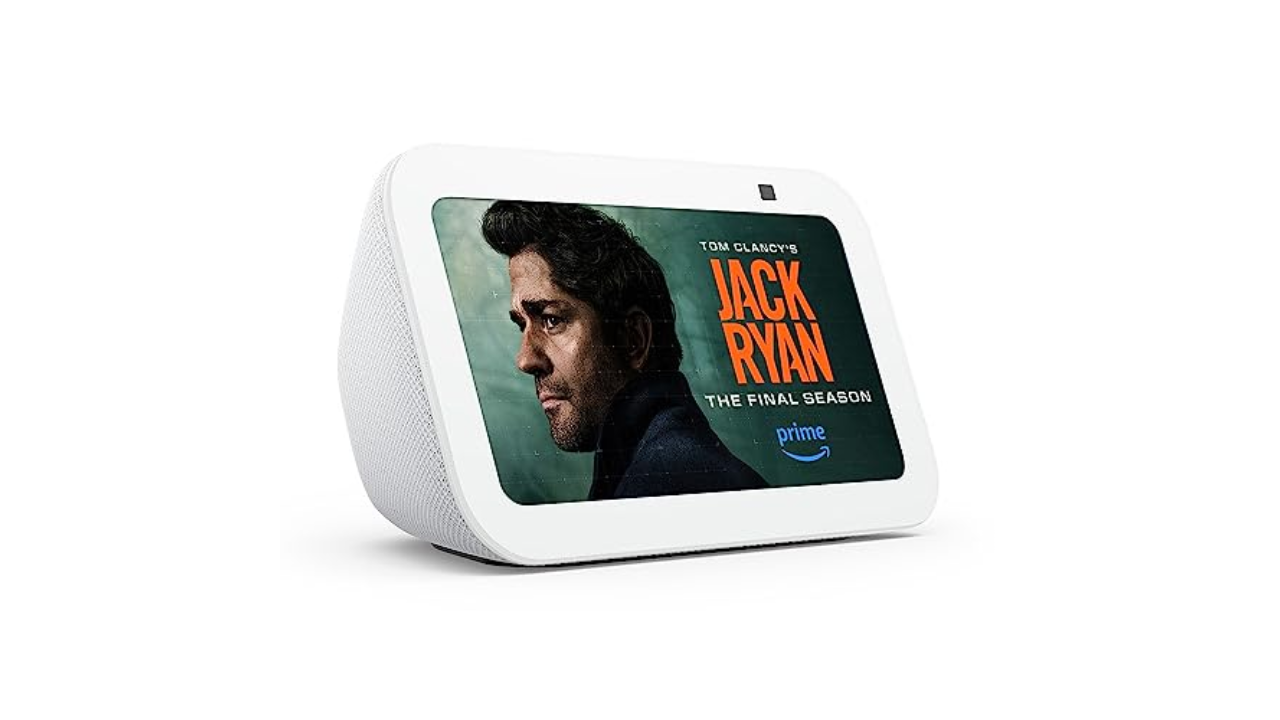
This year’s Amazon Prime Day is nearly upon us, as it officially begins on July 16. However, some of the best early Prime Day deals are already coming in hot, including a deep discount on the Echo Show 5. The Amazon smart display is on sale for $50, which is a discount of $40. That’s just a tiny bit more than the record-low price. The Echo Show 8 is also on sale for $85, which is a new record low.

The Echo Show 5 easily made our list of the best smart displays, for a great many reasons. The 5.5-inch screen is diminutive, especially when compared to the Echo Show 8, but that just makes it fit better on a desk or nightstand. To that end, it doubles as a fantastic alarm clock. The ambient alarm light sensor adjusts the screen’s brightness automatically, which is a nice way to wake up, and the tap-to-snooze function allows for a few more minutes (or hours) of precious sleep.

Amazon

There’s a camera, which is great for simple video calls but does bring some privacy concerns. Amazon ships this display with a physical camera cover to solve that issue. Just pop on the cover when you aren’t actually using the camera.

This isn’t a perfect smart display, though it’s a great one for the price. The main downside with the Echo Show 5 is that the speakers are not as powerful as those found with larger smart displays. This isn’t a dealbreaker. It’s still plenty loud, but you probably won’t use it to power a dance party.

Your Prime Day Shopping Guide: See all of our Prime Day coverage. Shop the best Prime Day deals on Yahoo Life. Follow Engadget for Prime Day tech deals. Hear from Autoblog’s experts on the best Amazon Prime Day deals for your car, garage, and home, and find Prime Day sales to shop on AOL, handpicked just for you.