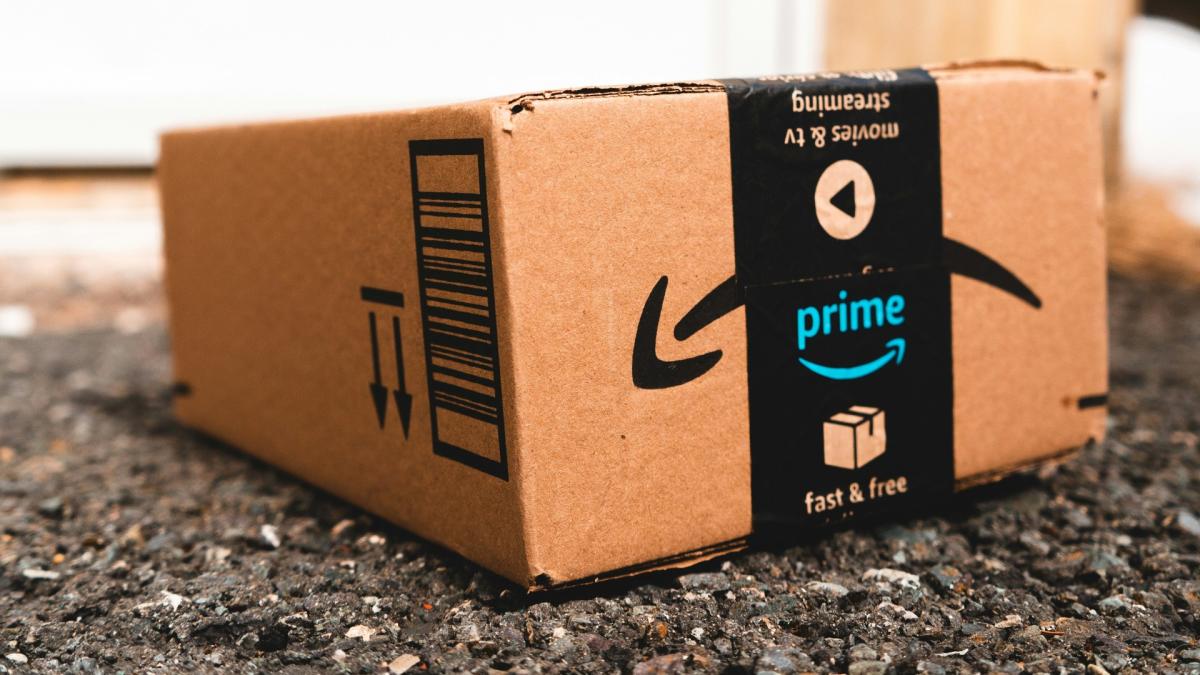
Amazon is shutting down its Try Before You Buy Prime program at the end of January. The move, first reported by The Information, was announced with a notice at the top of the Prime Try Before You Buy page, which puts its last day in effect as January 31. The service has been available to members since 2018, when it was first launched as Prime Wardrobe. With it, you could choose up to six items to try on, and send back whatever you didn’t want within a week for free. You’d only be charged for the items you decided to keep, and you could pick from select clothes, shoes, jewelry and accessories.
In a statement to CNBC, an Amazon spokesperson said, “Given the combination of Try Before You Buy only scaling to a limited number of items and customers increasingly using our new AI-powered features like virtual try-on, personalized size recommendations, review highlights, and improved size charts to make sure they find the right fit, we’re phasing out the Try Before You Buy option, effective January 31, 2025.” If you’re someone who still makes use of this service, you’d better get those last orders in quick.
If you buy something through a link in this article, we may earn commission.
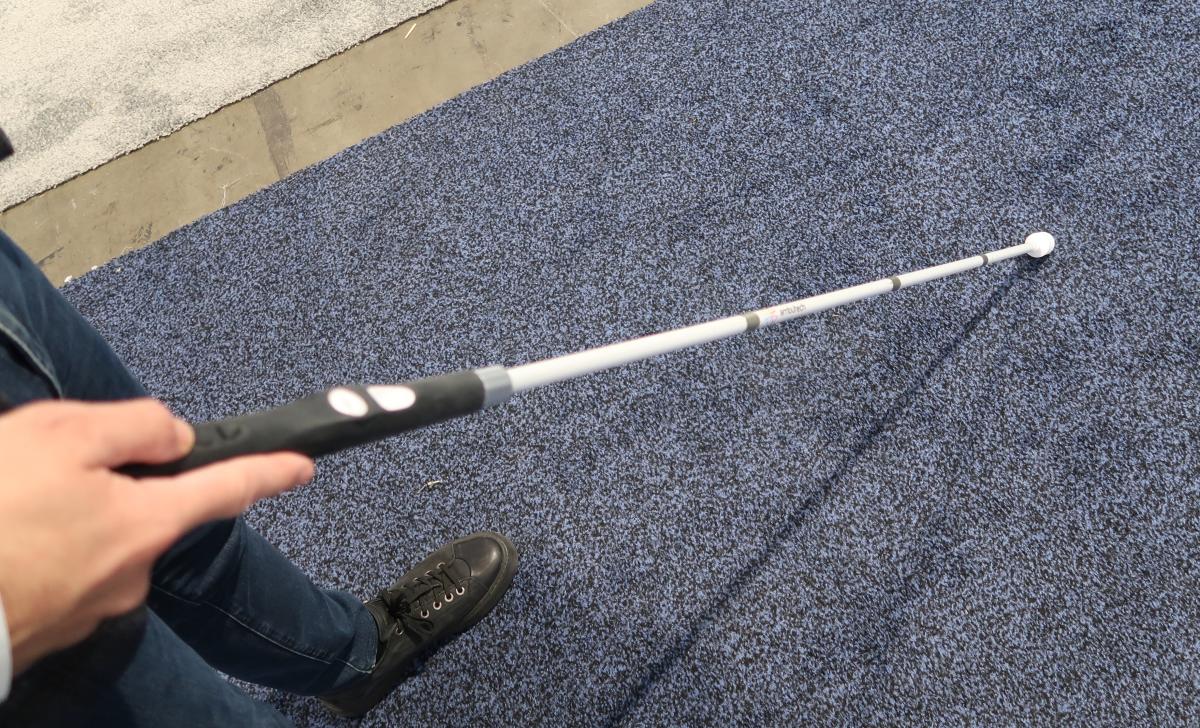
WeWalk introduced a new version of its smart cane for people with visual impairments at CES 2025, bringing a redesign that addresses many of the first model’s shortcomings and adds AI features and more advanced sensors from TDK. It’s positioned as an alternative to the traditional foldable white cane. Co-founder Kursat Ceylan, who has been blind since birth, says Smart Cane 2 can make mobility easier and safer, offering features like turn-by-turn navigation and obstacle detection, along with a ChatGPT-powered voice assistant that puts on-demand information in users’ hands without the need for them to also juggle a smartphone.
The WeWalk Smart Cane 2 has a slimmer handle than its predecessor, which should make for a more comfortable grip, and the company says it’s now about as lightweight as a standard white cane. It has tactile buttons to be more user-friendly, doing away with the touchpad of the previous model that some people found to be difficult to use. Ceylan says it can be used in different weather conditions, not just when it’s warm and dry (WeWalk describes the new cane as “rainwater-resistant”). The battery life is about 20 hours.
“You can fold and unfold it when you need it. There’s a speaker, a microphone, obstacle detection technology and a flashlight to make visually impaired people more visible at night. And also it has motion sensors in itself to provide a more accurate navigation experience,” Ceylan explained.
Under the hood, the WeWalk Smart Cane 2 has an ultrasonic time-of-flight sensor, an inertial measurement unit with six-axis motion tracking, a pulse density modulated microphone and a barometric pressure sensor from electronics company TDK. When it detects something ahead, it alerts the user with both haptic and audio feedback, according to Ceylan.
He demonstrated this in the very cramped, noisy environment of the Las Vegas Convention Center, and I was able to hear over the crowd when the cane told him he was approaching an obstacle — in this case, a carpeted step marked with yellow and black tape that I saw multiple CES attendees stumble over during our conversation. It also can connect to headphones via Bluetooth.
Cheyenne MacDonald for Engadget
Paired with your smartphone, it can give navigation instructions and information about your surroundings, as well as public transportation options. “You can hear the names of stores and restaurants you are passing by,” he says. In Starbucks, where he isn’t able to read the menu, he says he might ask the assistant if they sell chocolate croissants.
“You don’t need to hold your smartphone anymore while you are going somewhere,” Ceylan said. “You can put it into your pocket and then you can get all the information through your WeWalk smart cane.” There is a smartphone interface for those who want to use it, though, which he held up through the demo so I could see what was going on on the other end. Unlike the vast majority of products I’ve encountered at CES this year that seem to include AI or ChatGPT for no real reason other than the fact that they can, this actually felt like a situation where it makes sense and could even be pretty beneficial.
Since it’s brand new, we don’t yet know how all of this will translate to real-world use. Pre-orders are now open for the WeWalk Smart Cane 2, and the first wave is expected to start shipping before the end of this month. There are two price models: $850 for the smart cane plus a subscription for the voice assistant that costs $4.99 per month, or $1150 altogether with no additional subscription fee for full use of the AI. WeWalk Smart Cane 2 is available internationally.
The London-based startup also has a partnership with the Canadian National Institute for the Blind (CNIB) that kicks off in February, when the organization will start using the WeWalk Smart Cane 2 for its cane training program. The goal is to gather meaningful data for instructors so they can really understand how people are using mobility canes (AI-enabled or otherwise), and help them get the most out of the tools. That, Ceylan says, “is so important, because the better you get around, the better you engage in life.”
Update, January 9 2025, 11:55AM ET: This story has been updated to add details on the smart cane’s battery life.
At CES 2017, Faraday Future introduced its futuristic luxury EV, the FF 91. Seven years later, following repeated delays, bankruptcy, lawsuits and other controversies, the company has sold “15 or 16” FF 91s. Now the company is detailing its latest strategy shift, with a plan to sell cheap EVs under its new low-cost “FX” brand. FX CEO Max Ma came to CES, along with two prototype vehicles, to pitch the plan that he described as a “fresh start” for the embattled company.
As you might expect with Faraday, the exact details are somewhat hazy, but it involves sourcing parts from Chinese car-makers and bringing them to the US to produce “mass volume mainstream vehicles” with some of the premium touches Faraday is known for. “We want to take that $300,000-car expertise from a technology and features and performance [standpoint] into a $30,000, $40,000 car to try to upgrade the overall user experience,” Ma said during a briefing with Engadget. The first FX vehicle, the flagship product of the brand’s lineup, will be a minivan (or, as Ma referred to it, “an AI MPV”) called the “Super One.”
Faraday showed off two prototype minivans to demonstrate the concept. We were not permitted to take photos but the vehicles in the photo at the top of this post are the ones I saw.
One was meant to show the kind of premium in-cabin experience Faraday is envisioning for the low-cost car. It had two rows of white leather captain seats. The second-row seats had reclining footrests, heated seats and built-in massagers. There was also a small fridge underneath the center console for keeping drinks cold. The vehicle was missing its door handles and several other pieces. “Obviously, we’ll have door handles,” a Faraday rep assured us.
The second minivan was even less finished. The entire interior, including the dashboard and instrument cluster, was covered in black fabric held together with binder clips. But a Faraday rep took me and other reporters for a ride in it, driving in small, slow circles around a Las Vegas parking lot. Later, Faraday offered to let me take the minivan for a spin and I — apparently the “first lady” to pilot the vehicle — also drove it in slow circles around the parking lot. I’m not sure what I was supposed to get out of it, though, it felt like driving a minivan.
There are two other vehicles planned for the initial FX lineup, the FX 5 and FX 6, which were previously announced by the company. Faraday is aiming for a $20,000 – $30,000 price for the FX 5 and $30,000 – $50,000 for the FX 6. There aren’t many other details yet about either, though Faraday shared a teaser image of an FX 6 prototype, which it described as an “extra-large luxury AIEV.”
Faraday Future
Faraday claims it will start producing one of its planned vehicles later this year, with the first “pre-production” model rolling off the production line by the end of 2025, according to a timeline shared by Ma. That’s a lofty promise considering the company’s past history of mismanagement and delays. Faraday Future CEO Matthias Aydt also acknowledged that the company has yet to finalize its partnerships with the companies that will supply its parts. He also didn’t address how tariffs may affect those plans.
Ma said he understood the skepticism. “Basically, this is a kind of fresh start. We really want to demonstrate that through our dedication of hard work, we can achieve what we promised.”
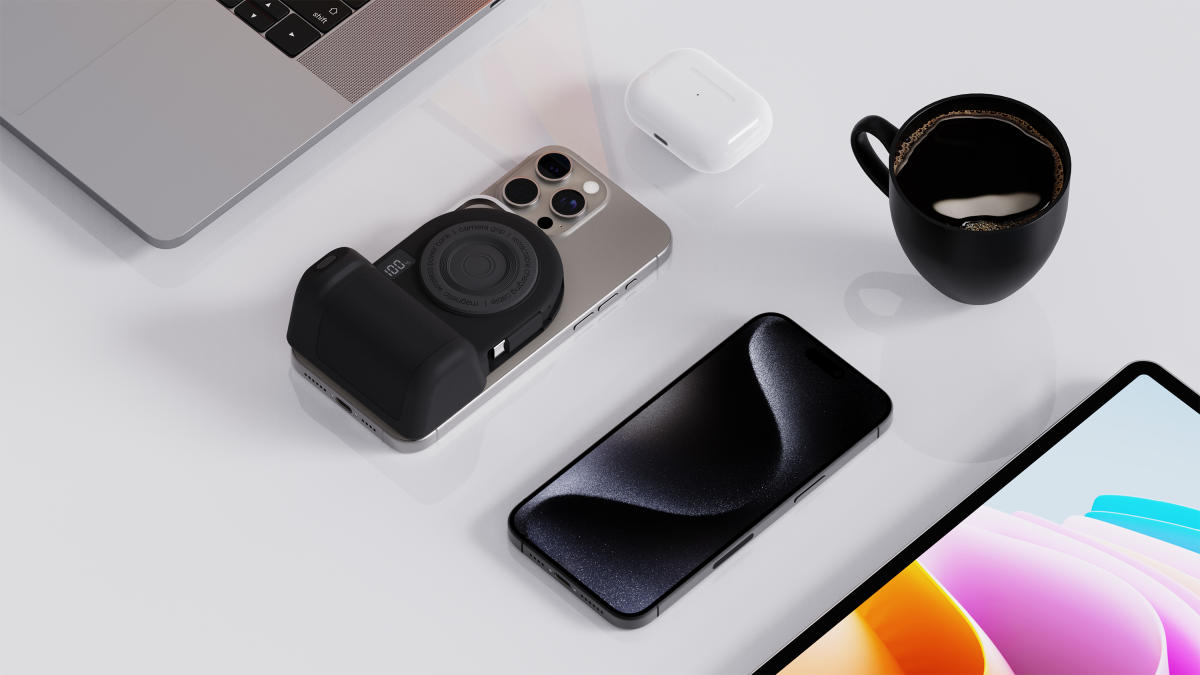
Belkin has a new phone accessory at CES 2025 that somehow brings something fresh to the crowded field of magnetic charging accessories (in other words, MagSafe and non-Apple-certified alternatives). The company’s Stage PowerGrip is a wireless power bank, camera-like grip and stand rolled into one. It even has a little screen and comes in several fun colors.
Belkin pitches the PowerGrip as an accessory for creators and travelers. While modern smartphones are all most people need for photography, holding a candy-bar-shaped handset in landscape mode for long periods doesn’t feel as comfortable or natural as the heartier grip of a dedicated camera. This accessory remedies that with a thick bulge similar to what you’d find on a DSLR or mirrorless camera.
Belkin
Inside that lump is its 10,000mAh battery, which offers 7.5W magnetic wireless charging. An LED on its backside gives you a quick way to check its battery level. And a retractable USB-C cable is tucked inside the accessory, so you don’t need to remember to throw a separate one in your bag.
Belkin says the PowerGrip will be available in powder blue, sandbox, fresh yellow, pepper and lavender (the company’s press images show a sixth black option, too). It’s scheduled to ship this May. Unfortunately, Belkin hasn’t yet announced pricing.
Be it for the Walkman portables and Trinitron TVs of old or the PlayStation consoles, Alpha cameras and superlative headphones of the twenty-first century, Sony has long been a mainstay at CES. But for the past couple of years at the world’s biggest electronics trade show, Sony has opted to focus on a different field: Automotive. The Afeela electric vehicle dominated Sony’s 2023 and 2024 CES press conferences, and we know that trend will continue for 2025, with an appearance at the Sony event (and a followup press conference) already confirmed.
What to expect at Sony’s CES 2025 press conference
The Afeela is the first product from Sony Honda Mobility, a joint venture between the Japanese electronics and transportation giants. After a surprise rollout at CES 2023, the Sony CES presser teed up additional details on the EV’s LiDAR-heavy sensor array and AI-enhanced cabin tech (the latter coming with an assist from Microsoft) at CES 2024. If the car’s previously announced scheduling waypoints — preorders in 2025 ahead of 2026 availability — remain intact, we’re hoping to hear which of the Afeela’s concept car niceties will actually make the cut once it enters the streets of the real world.
Of course, it won’t be all Afeela all the time in Vegas. Expect Sony to spend time talking up its imaging, gaming or maybe even its movie studio division. And with any luck, we’ll get more info on the company’s XR headset, which was shown off at the 2024 show, only to never be seen again. CES 2025 would be the perfect place to show off a meaty update of a possible competitor to the Apple Vision Pro.
Sony’s CES 2025 livestream
You can watch the Sony CES press conference as it happens below. The feed will start Monday, January 6 at 8:00PM ET.
To view this content, you’ll need to update your privacy settings. Please click here and view the “Content and social-media partners” setting to do so.
The separate Afeela press conference will take place on Tuesday, January 7 at 4:30PM PT, and will be streamed on YouTube as well.
When Sony first released the PlayStation 5, it wasn’t possible to expand the console’s storage. Thankfully, that changed with a software update that the company pushed out less than a year later. And with how big some game installs have become in recent years, it’s a good thing, too: the PS5’s built-in 667GB of space may have been good enough in the system’s first year, but now, the default drive is absolutely limiting.
The good news is a standard PCIe Gen4 x4 M.2 NVMe SSD can solve all of your PS5 storage woes. If that mess of acronyms has you recoiling, don’t worry: you’ll see that it’s not all that complicated. And if all you want to know is what the best PS5 SSDs are, we’ve got them right at the top.
Capacity: Up to 8TB | Sequential read performance: 7,100MB/s | Sequential write performance: 6,800MB/s | Connection: M.2
The Corsair MP600 Pro LPX makes it to the top of our list for the best PS5 SSD for being the complete package. It’s fast, offers excellent performance and read speeds of up to 7,100MB/s. It also comes with a pre-installed heatsink and a five-year warranty.
Best of all, the MP600 is affordable. After launching at $190, you can routinely find the 1TB variant on sale for as little as $80, while the 2TB model fluctuates in price between $110 and $150. The 4TB and 8TB models are less of a bargain. The MP600 is also not the fastest NVMe on this list. However, as far as no-fuss options go, it’s hard to beat.
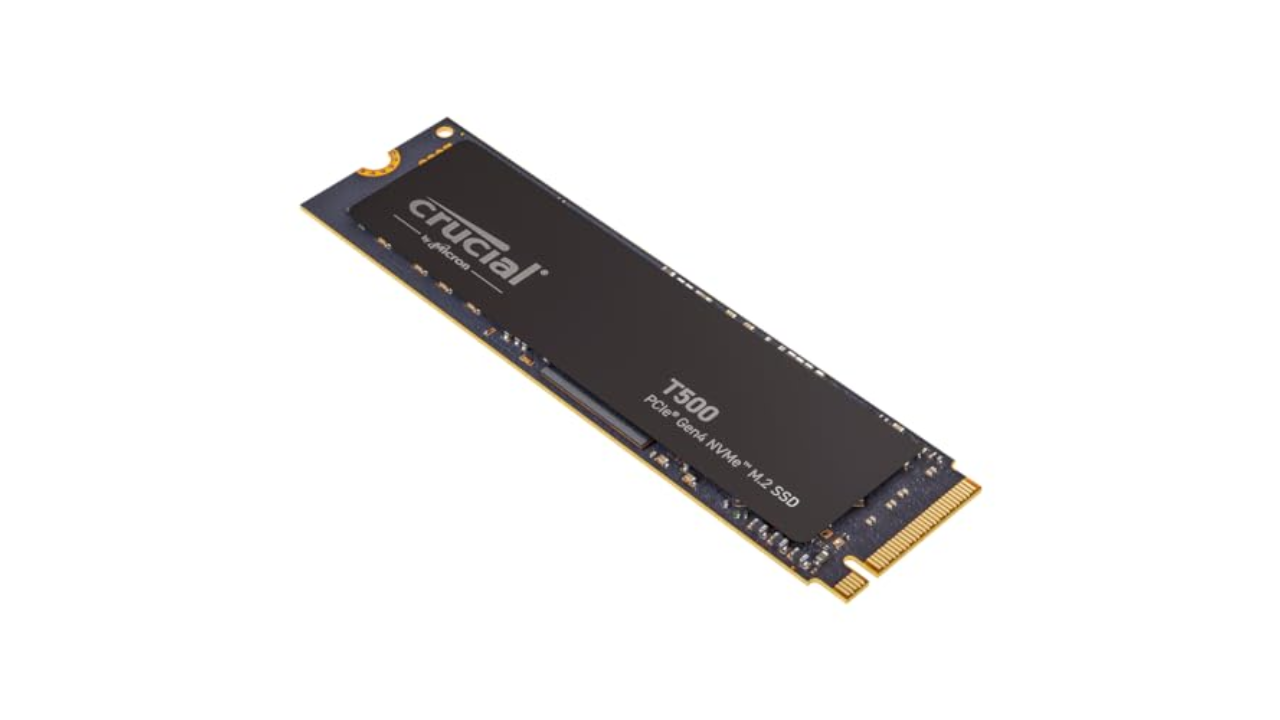
Capacity: Up to 4TB | Read performance: 7,300MB/s | Write performance: 6,800 MB/s | Connection: M.2
If you want to save a bit of money by installing your own heatsink, the Crucial T500 is a great option. With read speeds of up to 7,300MB/s, it surpasses Sony’s technical requirements, and you can frequently find the 1TB model on sale for as little as $60. Crucial also offers a version with a heatsink, so it’s worth adding both the Corsair MP600 and Crucial T500 to a price watch list and buying whichever model is cheaper when you’re ready to upgrade your PS5.
Capacity: Up to 8TB | Sequential read performance: 7,000MB/s | Sequential write performance: 6,600MB/s | Connection: M.2
Of all the SSDs on this list, the Sabrent Rocket 4 Plus is the most interesting. It comes with a unique heatsink that you install in place of the storage expansion slot’s metal cover. Sabrent claims this design improves cooling performance. As a result, expect to pay more than you would for a model with a generic heatsink, with the 1TB variant coming in at around $110 and the 2TB model costing between $220 and $280.
Capacity: Up to 4TB | Read performance: 1,050MB/s | Write performance: 1,000MB/s | Connection: USB 3.0
As I explain below, you can’t run PS5 games from an external drive — but you can use one to store any games you aren’t playing at the moment, including older PS4 games.
One of my favorite portable drives is the Samsung T7. It can write files at a speedy 1,000 MB/s. If you plan to use the drive exclusively for at-home use, you can save money by buying the regular model instead of the ruggedized Shield variant. I’ve been using T7 drives to store my photos, music and games for years, and they have yet to fail me. The latest model, the Samsung T9, boasts read/write speeds of up to 2,000MB/s.
I’ve tested most of the SSDs recommended on this list, either for PS5 or computer use. I also bought and used our top pick in my own PS5.
How much PS5 storage do I need?
The PlayStation 5 and PlayStation 5 Pro can accept internal drives with between 250GB and 8TB of storage capacity. If you already own a PS5, chances are you have a reasonable idea of how much storage you need for your game library. If you’re buying an SSD with a new PS5 or PS5 Pro, or buying for someone else, it’s more difficult to tell what you might need for a high-performance experience.
PS5 games are smaller on average than their PS4 equivalents, typically taking up between 30GB and 100GB, with some notable (and very popular) exceptions. If you’re a fan of the Call of Duty series, installing Black Ops 6and Warzone 2.0 can eat up to 240GB. In other words, a full Call of Duty install will take up more than one-third of the PS5’s internal storage. If you’re not a CoD fan, though, chances are you’ll be good to store between six to 10 games on a regular PS5 internally before running into problems.
You also need to consider your internet speed. If you live in an area with slow broadband, the “you can just download it again” rationale doesn’t really work. At my old home, a 100GB download took me around eight hours, during which time it was difficult to simultaneously watch Twitch or, say, publish articles about upgrading PS5 SSDs. Keeping games around on the off-chance you’ll want to play them at some point makes sense.
Aaron Souppouris / Engadget
Off the bat, there’s basically no point in going for a 250GB PS5 SSD. Economically, 250GB drives aren’t that much cheaper than 500GB ones — and practically, that really isn’t a lot of space for modern games to live on. 500GB drives can be a decent option, but after years of declining prices, I think the sweet spot for most people is to opt for a high-capacity 1TB or 2TB drive, which should run you at most $200. The latter will more than double the PS5 Pro’s storage without breaking the bank.
Unless you’re rolling in cash and want to flex, 4TB and 8TB models should mostly be avoided, as you’ll end up paying more per gigabyte than you would with a 1TB or 2TB drive.
While the 825GB PS5 only provides 667GB of storage, that’s largely due to storage being reserved for the operating system and caching. If you install a 1TB PS5 SSD, you’ll have, within a margin of error, 1TB of storage available for games. Out of the box, the PS5 Pro offers 1.86TB of storage for games, though you can eke out more if you delete the pre-installed Astro’s Playroom (gasp).
Since neither the PS5 Slim nor PS5 Pro feature updated CPU architecture, all of our recommendations will work with whatever PS5 model you own.
Can you play PS5 games on an external SSD?
External hard drives tend to cost less than internal SSD counterparts (and there’s a good chance you might own one already). Unfortunately, there are restrictions on what you can do with them. An external SSD connects to your PS5 via USB, and is only suitable for playing PlayStation 4 games, or storing PS5 titles. That’s useful if you have anything but the best high-speed internet — it’s faster to move a PS5 game out of “cold storage” on an external drive than it is to re-download it — or want to keep your PS4 library on hand.
Due to the limitations here, you don’t need the highest-performing model, although you should opt for SSDs over HDDs for improved transfer speeds and load times. Any basic portable drive from a reputable brand will do, with the Crucial X9 Pro and Samsung T7 being options we’ve tried and can recommend.
Which SSD cards are compatible with the PS5?
The official answer to this question is an “M.2 Socket 3 (Key M) Gen4 x4 NVME SSD.” But even within that seemingly specific description, there are additional factors to consider. The main requirements Sony has laid out for compatibility come down to speed, cooling and physical dimensions.
For speed, Sony says drives should be able to handle sequential reads at 5,500MB/s. Early testing showed that the PS5 would accept drives as slow as 4,800MB/s, and that games that tap into the SSD regularly — such as Ratchet & Clank: Rift Apart — would cause no issues. Pretty much the only thing the PS5 will outright reject is one that doesn’t match the Gen4 x4 spec.
In our opinion, though, using a drive slower than the specification is a risk that, if you don’t already have that drive lying around, is not worth taking. Just because we haven’t found issues yet doesn’t mean there won’t be games that could be problematic in the future. The price difference between these marginally slower Gen4 drives and the ones that meet Sony’s spec isn’t huge, and you might as well cover all your bases.
Slightly more complicated than speed is cooling and size. Most new SSDs are going to be just fine; the PS5 can fit 22mm-wide SSDs of virtually any length (30mm, 40mm, 60mm, 80mm or 110mm, to be precise). The vast majority of drives you find will be 22mm wide and 80mm long, so no problem there.
It should be noted that the system can fit a 25mm-wide drive, but that width must include the cooling solution. Speaking of, Sony says SSDs require “effective heat dissipation with a cooling structure, such as a heatsink.” The maximum height supported by Sony’s slot is 11.25mm, of which only 2.45mm can be “below” the drive.
This previously meant some of the most popular heatsinked Gen4 SSDs, including Corsair’s MP600 Pro LP, would not fit within the PS5’s storage expansion slot. Since Engadget first published this guide in 2021, most NVMe makers, including Samsung, have come out with PlayStation-specific models that meet those requirements. That said, if you want to save some money, bare drives are often cheaper and it’s trivial to find a cooling solution that will work for the PS5.
The only component in an NVMe SSD that really requires cooling is the controller, which without a heatsink will happily sear a (very small) steak. Most SSDs have chips on only one side, but even on double-sided SSDs, the controller is likely to be on top, as manufacturers know it needs to be positioned there to better dissipate heat.
So, head to your PC component seller of choice and pick up basically anything that meets the recommended dimensions. A good search term is “laptop NVME heatsink,” as these will be designed to fit in the confines of gaming laptops, which are even more restrictive than a PS5. They’re also typically cheaper than the ones labeled as “PS5 heatsinks.”
One recommendation is this $6 copper heatsink, which attaches to the PS5 SSD with sticky thermal interface material. It works just fine, and in performing stress tests on a PC, we couldn’t find anything metal that didn’t keep temperatures under control. When you’re searching, just make sure the solution you go for measures no more than 25mm wide or 8mm tall (including the thermal interface material) and has a simple method of installation that’s not going to cause any headaches.
One last thing: When shopping for a PS5 NVMe, there’s no reason to buy a Gen5 model over a more affordable Gen4 model. As things stand, Sony’s console can’t take advantage of the new standard, and though Gen5 drives are backward compatible, they’re more expensive than their Gen4 counterparts. Just buy the fastest and highest-capacity Gen4 model you can afford.
How to install an SSD into your PS5
If you need guidance on how to install your new NVMe into your PS5 or PS5 Pro, we have a separate guide detailing all the steps here. Installation is pretty straightforward, but our how-to can help you if you’re stuck. Just make note: Before attempting to add more storage via a PS5 SSD, ensure that you have Sony’s latest software installed.
Hackers were reportedly able to modify several Chrome extensions with malicious code this month after gaining access to admin accounts through a phishing campaign. The cybersecurity company Cyberhaven shared in a this weekend that its Chrome extension was compromised on December 24 in an attack that appeared to be “targeting logins to specific social media advertising and AI platforms.” A few other extensions were hit as well, going back to mid-December, reported. According to Nudge Security’s , that includes ParrotTalks, Uvoice and VPNCity.
Cyberhaven notified its customers on December 26 in an email seen by , which advised them to revoke and rotate their passwords and other credentials. The company’s initial investigation of the incident found that the malicious extension targeted Facebook Ads users, with a goal of stealing data such as access tokens, user IDs and other account information, along with cookies. The code also added a mouse click listener. “After successfully sending all the data to the [Command & Control] server, the Facebook user ID is saved to browser storage,” Cyberhaven said in its analysis. “That user ID is then used in mouse click events to help attackers with 2FA on their side if that was needed.”
Cyberhaven said it first detected the breach on December 25 and was able to remove the malicious version of the extension within an hour. It’s since pushed out a clean version.
A set of new requirements proposed by the US Department of Health and Human Services’ (HHS) Office for Civil Rights could bring healthcare organizations up to par with modern cybersecurity practices. The proposal, posted to the Federal Register on Friday, includes requirements for multifactor authentication, data encryption and routine scans for vulnerabilities and breaches. It would also make the use of anti-malware protection mandatory for systems handling sensitive information, along with network segmentation, the implementation of separate controls for data backup and recovery, and yearly audits to check for compliance.
HHS also shared a fact sheet outlining the proposal, which would update the Health Insurance Portability and Accountability Act of 1996 (HIPAA) Security Rule. A 60-day public comment period is expected to open soon. In a press briefing, US deputy national security advisor for cyber and emerging technology Anne Neuberger said the plan would cost $9 billion in the first year to execute, and $6 billion over the subsequent four years, Reuters reports. The proposal comes in light of a marked increase in large-scale breaches over the past few years. Just this year, the healthcare industry was hit by multiple major cyberattacks, including hacks into Ascension and UnitedHealth systems that caused disruptions at hospitals, doctors’ offices and pharmacies.
“From 2018-2023, reports of large breaches increased by 102 percent, and the number of individuals affected by such breaches increased by 1002 percent, primarily because of increases in hacking and ransomware attacks,” according to the Office for Civil Rights. “In 2023, over 167 million individuals were affected by large breaches — a new record.”
I’ll be the first to say the Pura scent diffuser surprised me. Before testing it out, I didn’t believe such a small device could really inject strong scent into my home. But it didn’t take long before I was proven wrong. The one I have stays plugged in, resolute, in the family room of my home close to the front door, and as soon as I walk in when the Pura is running, I’m met with the lovely smells of Amalfi lemon, lavender fields or whichever other scent I decided to go with.
The Pura can hold two different proprietary scent capsules at a time, so you can create very different vibes based on time of day, occasion or anything else you can think of. The Pura app makes it easy to set diffusion schedules per scent, too, and it can pause diffusion all together if you’re away from home. Are you going to get whole-home diffusion from this CD-sized gadget? No (maybe try the new Pura Plus for that), but it’ll make the part of your home that it lives in feel much more luxurious. — Valentina Palladino, Deputy Editor
The Occupational Safety and Health Administration has reached a settlement with Amazon about alleged hazardous workplace conditions at ten of the tech giant’s facilities. Under the terms of the settlement, Amazon will pay a penalty of $145,000 and must implement “corporate-wide ergonomic measures” to reduce the risk of worker injuries. OSHA will also continue inspecting the facilities for the next two years. On the government side of the agreement, OSHA is withdrawing nine of its ten ergonomic citations against the company.
Ergonomic injuries are also known as musculoskeletal disorders. These can include sprains and strains experienced on the job.
A rep from the Department of Labor told ABC News that this settlement is the “largest of its kind” and “will resolve all outstanding ergonomic litigation” against Amazon. However, it will not impact a separate investigation into Amazon allegedly concealing workplace injuries that is currently underway at the U.S. Attorney’s Office for the Southern District of New York. Amazon has denied those charges.
Amazon’s workforce also made news this week as strikes began at multiple facilities in California, Georgia, Illinois and New York. Members of the Teamsters union organized the effort, with several union chapters voting to take action against the company. The Teamsters had called on Amazon to negotiate around working conditions, wages and benefits, asking the company to agree to bargaining dates for a contract by December 15. Local journalists from Hell Gate captured footage of the first day of strikes in Queens, NY, showing a peaceful picket line being broken by local police, who reportedly erected barricades to allow contractors to enter and leave the Amazon distribution center.
“If your package is delayed during the holidays, you can blame Amazon’s insatiable greed,” Teamsters General President Sean M. O’Brien said in a from the organization. “We gave Amazon a clear deadline to come to the table and do right by our members. They ignored it.”