What will happen to TikTok? A look at the potential buyers.


TikTok may be back online, but the app’s future in the United States is still far from certain. President Donald Trump’s executive order of the ban was only a temporary reprieve for the company.

While ByteDance was once resistant to the idea of selling TikTok’s US business, that seems to have changed since Trump took office. A ByteDance investor that striking a deal to keep TikTok in the US is “in everybody’s interest.” Officials in China have also suggested they are “open” to a deal, The Wall Street Journal.

A number of people and companies have signaled some interest in TikTok. Trump himself he would like to see a “bidding war” for the app and that the US government should own in the company. What an eventual deal may look like, though, is unclear. These are the offers we currently know about. Trump’s executive order gave the company 75 days to come to an agreement.

NPR that Oracle was working with Trump Administration officials on “a plan to save TikTok that involves tapping software company Oracle and a group of outside investors to effectively take control of the app’s global operations.” Under this arrangement, ByteDance “would retain a minority stake in the company” but Oracle would oversee “the app’s algorithm, data collection and software updates.”

Headed up by Trump pal Larry Ellison, TikTok has an existing partnership with Oracle. The cloud company TikTok’s US user data and the company was of TikTok’s original negotiations to remain operational in the US under a plan called Project Texas. (Those negotiations abruptly in 2022.)

Trump also previously for Oracle and Walmart to acquire a 20 percent stake in TikTok in 2020, when the president tried to ban the app during his first term. That deal never materialized. Now, Trump’s position on Oracle is unclear. He that Oracle was not among the “many people” with whom he had discussed a deal for TikTok. (Ellison, notably, has been at the White House in recent days. He joined Trump and OpenAI CEO Sam Altman for the announcement of the .)

Microsoft is reportedly also interested in playing a role in TikTok’s future, according to the same NPR story, which said Microsoft was among the “other potential investors” involved in the talks with Oracle. Trump seemingly confirmed this. When asked directly if Microsoft was interested in buying TikTok this week, Trump “I would say yes.”

As with Oracle, this isn’t the first time Microsoft has attempted to acquire the social media company. Microsoft was in talks to buy TikTok and take over its US business, but the deal . Microsoft CEO Satya Nadella later it as “the strangest thing I’ve ever sort of worked on.”

Just before TikTok briefly went offline, Perplexity AI threw its hat into the ring, offering to ByteDance that “would “create a new entity combining Perplexity, TikTok US and New Capital Partners.”

Since then, Perplexity has reportedly tweaked its proposal. According to the , the AI company is now floating a plan that calls for the “U.S. government to own up to half of that new structure once it makes an initial public offering of at least $300 billion.” Under this plan, ByteDance would keep a minority stake in the company and “would contribute TikTok’s U.S. business without the proprietary algorithm that fuels what users see on the app.”

YouTuber MrBeast, also known as Jimmy Donaldson, joked about buying TikTok ahead of the initial ban. He later that “so many billionaires” had reached out to him about making an offer that he was going to try to actually pull it off.

To view this content, you’ll need to update your privacy settings. Please click here and view the “Content and social-media partners” setting to do so.

At least one group has already his involvement, along with other “high-net-worth individuals” looking to make an “all-cash offer.” That group, led by employer.com founder Jesse Tinsley also reportedly includes Roblox CEO David Baszucki. According to Bloomberg, together they have put together “significantly” more than for a bid, though it’s not clear how seriously their offer is being considered. Bloomberg notes that there’s also a possibility that MrBeast may attach himself to other bids.

Another set of investors that’s proposed a bid to buy TikTok is a group known as . Led by investor Frank McCourt, it includes of Shark Tank fame. The group initially came forward before the ban took effect. However, it’s not clear where they stand at the moment.

To view this content, you’ll need to update your privacy settings. Please click here and view the “Content and social-media partners” setting to do so.

O’Leary previously that deals involving a government stake may not comply with the law. “That 50/50 deal, I would love to work with Trump on, so would every other potential buyer … But the problem with some of these ideas is they are inconsistent with the ruling of the Supreme Court,” he said. “I would love to do a deal, if the law provided for it, but I don’t have the luxury of breaching the order of Congress.”

This week, he said that the deal “changes by the hour,” writing on X that iIt’s clear to me now that we’re going to have to do a dance between the original owners, the founders of ByteDance itself, and interpreting the law of what Congress and Supreme Court has upheld.”

So where does all this leave TikTok? For now, the company is in the same limbo it’s been in since it was briefly . The app is still not available in Apple or Google’s app stores and it could go down again if the company is unable to reach a deal.

For now, though, it seems both the government and ByteDance are much more willing to negotiate than they have been in the past. While these are all the semi-credible plans we know about now, the situation is likely to change over the next few weeks as the various sides attempt to hammer out a viable deal. We’ll keep this post updated as new details emerge.

If you buy something through a link in this article, we may earn commission.


Doom + Doom II now supports multiplayers mods


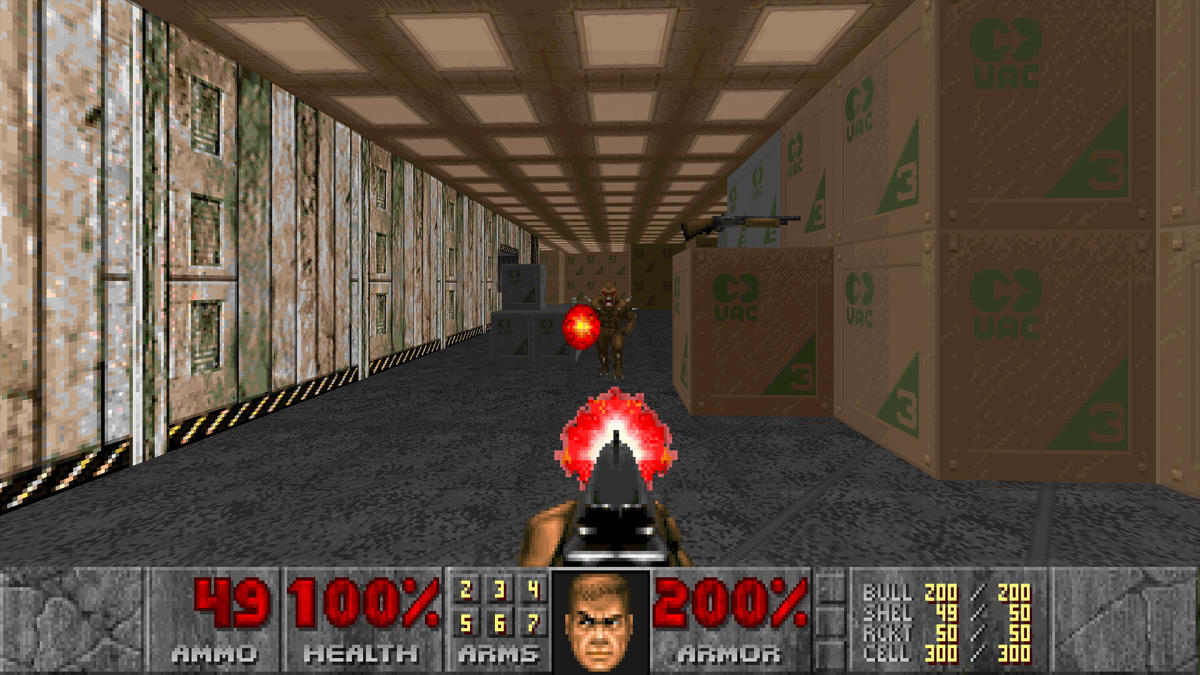
Old-school Doom fans have something new to chew on until The Dark Ages arrives. Doom + Doom II, the latest in a long line of rereleases of the two id Software classics, was updated on Tuesday with multiplayer mod support. And balance was restored in Hades.

At launch in August, the bundle — available for PC, PS5/PS4, Xbox Series X/S and Switch — supported mods and multiplayer, but not the two together. The game’s second update, which Bethesda pushed on Tuesday, only adds multiplayer mod support if everyone in your match does a little planning.

First, hosts need to activate each mod before entering the multiplayer menu. In addition, all players in the match have to subscribe to the same mod before joining. Only mods authored with Vanilla DOOM, DeHackEd, MBF21 or BOOM are compatible.

Doom: The Dark Ages is set to launch on May 15. It takes place in the medieval wastelands of Hell and adds new goodies like mech battles and a ridable cyber dragon. If that isn’t an elevator pitch for a Doom game, I don’t know what is.

NASA and ESA share a breathtaking Hubble image of the Tarantula Nebula’s outer edge


The Hubble Space Telescope is still trucking along more than 30 years after its launch, observing the universe and sending home images for us to marvel at. This week, NASA and ESA highlighted an image captured by Hubble of the highly productive Tarantula Nebula (officially named 30 Doradus) in the Large Magellanic Cloud, and it’s a sight to behold.

To view this content, you’ll need to update your privacy settings. Please click here and view the “Content and social-media partners” setting to do so.

The Tarantula Nebula is “the largest and most productive star-forming region in the local universe,” with stars roughly 200 times as massive as the sun at its center, according to NASA. This Hubble view gives us a look at the outskirts of the nebula, revealing layers of colorful gas and stars. The Tarantula Nebula sits within the Large Magellanic Cloud, a nearby dwarf galaxy.

While the final result we see is filled with brilliant colors, Hubble’s images initially come back in grayscale. As has explained, “scientists can create a composite color image by taking exposures using different color filters on the telescope, assigning a color to each filter that corresponds to the wavelength of that filter, and combining the images.” The new image of the Tarantula Nebula doesn’t just represent visible light, but ultraviolet and infrared too. In such a case, colors are assigned to those wavelengths we can’t normally see.


The filmmaker behind Barbarian is leading a new Resident Evil reboot


A new Resident Evil reboot from Barbarian writer and director Zach Cregger is in the works, according to The Hollywood Reporter. The publication reports that Cregger is on board to write and direct the movie, which will be produced by Constantin Film and PlayStation Productions, with Shay Hatten (John Wick: Chapter 4 ) as co-writer. I’m probably not the only one questioning whether we really need another Resident Evil movie after half a dozen titles in the Milla Jovovich-led series and 2021’s Welcome to Raccoon City, but as someone who loved Barbarian, I can’t say I’m not intrigued.

Per The Hollywood Reporter, “Cregger’s take is described by sources as a revamp that will take the title to its horror roots and be more faithful to the initial games.” There aren’t any details about the upcoming movie beyond that, but Warner Bros., Netflix and two other studios are reportedly in a bidding war for it.

President Trump withdraws the US from the Paris climate agreement (again)


When President Biden took office back in 2021, he issued several executive orders to address climate change. Now, the reverse is happening. President Trump is in charge now and he is signing EOs at a fevered pace. Many of these actions seek to limit or reverse any changes made by the Biden administration, taking the oft-used “head in the sand” approach to climate policy. Trump’s first step was to withdraw the US from the Paris climate agreement… again.

Trump began the executive order deluge by rescinding 78 of the Biden administration’s EOs, including one on AI guidelines, before implementing a federal hiring freeze and mandating no new regulations. Keep in mind that an EO cannot change a law or regulation, but that won’t stop Trump from trying. In other words, some of this stuff will end up mired in lengthy legal battles.

Trump withdrew the US from the Paris climate agreement during his first term and then Biden reinstated it. Now, history repeats itself. The president has once again taken the US off the agreement roster. This puts the US as one of the few nations that aren’t part of the 2015 accord, joining Iran, Libya, South Sudan, Eritrea and Yemen.

This also means that the US is likely dropping any pledges it made under the pact, including a promise of climate aid for developing nations and a commitment to cut emissions up to 66 percent by 2035. The Trump administration has to notify the United Nations in writing of its intention to withdraw from the accord, which will take a year to become official.

EV startup Canoo has filed for bankruptcy and stopped all operations


Canoo said on Friday night that it has and “will cease operations effective immediately,” after failing to secure enough funding to keep it going. The writing was on the wall for the EV startup leading up to the announcement; the company has lost multiple executives in recent months, and reported to the SEC in November that it had just $700,000 in the bank, per .

In a press release announcing the filing, Canoo said it was unable to get funding from the Department of Energy’s Loan Program Office or from “foreign sources of capital” that executives had been in talks with. “In light of the fact that these efforts were unsuccessful, the Board has made the difficult decision to file for insolvency,” it said. Canoo owes a total of over $164 million to hundreds creditors, and has about $126 million in assets, according to TechCrunch. Under the filing in Delaware, Canoo’s assets will be liquidated and the proceeds will be distributed to its creditors. In a statement, CEO Tony Aquila said, “We are truly disappointed that things turned out as they did.”

Canoo made a few electric vans for NASA and a prototype for the US Army, and had deals for larger fleets with the likes of USPS and Walmart, but only a small number of its vans appear to have ever materialized.

Microsoft and iFixit now sell official Xbox Series X/S replacement parts for DIY repairs


Xbox has announced a few more sustainability efforts, including an expansion of its repairability program. You’ll be able to buy official replacement parts for Xbox Series X/S systems from the and so you can repair your console yourself, even if it’s out of warranty. Until now, Microsoft had only through its own store, but now you can buy components for the Series S and both the and disc drive editions of the Series X. Along with various parts and step-by-step repair guides, iFixit also has an Xbox toolkit for sale.

Meanwhile, as of January 20, uBreakiFix by Asurion will be the first Xbox Authorized Service Provider. It will repair the consoles at nearly 700 participating locations in the US. Previously, authorized in-person Xbox repairs were only available at the Microsoft Store, so gamers will have many more places where they can go to get their console fixed without breaking the warranty.

These are positive steps forward for the right-to-repair movement. They should help reduce the number of games consoles that are consigned to the scrapheap.

“By expanding the number of ways players can get support and repair for their Xbox consoles, we also help extend the longevity of Xbox devices, reduce waste, promote re-use and ultimately reduce our environmental impact,” Trista Patterson, director of gaming sustainability at Xbox, wrote in an . In addition, there are no longer any single-use plastics in Xbox Series X/S packaging following a switch to fully paper- and fiber-based materials.

Elsewhere on the sustainability front, Microsoft says that, through recent efficiencies in how the Xbox Series S handles video content, there’s been an average power reduction of 10 percent while media apps are in use. As for the company’s game studios, they’ve been using the Xbox Sustainability Toolkit to make more energy-efficient games, Microsoft says.

If you buy something through a link in this article, we may earn commission.

SEC lawsuit claims Musk gained over $150 million by delaying Twitter stake disclosure


After a more than two-year investigation, the Securities and Exchange Commission has sued Elon Musk over his delayed disclosure of the Twitter stock he amassed before announcing his intention to acquire the company in 2022.

In a court filing, the SEC says that Musk filed paperwork with the SEC disclosing his purchase of Twitter shares 11 days after an SEC-mandated deadline to do so. (Federal law, as the SEC notes in its statement, requires investors to publicly report when they have acquired a more than 5 percent stake in a company.) This delay, according to the regulator, allowed Musk to buy up even more Twitter stock at a time when other investors were unaware of his involvement with the company.

From the lawsuit:

During the period that Musk was required to publicly disclose his beneficial ownership but had failed to do so, he spent more than $500 million purchasing additional shares of Twitter common stock. Because Musk failed to timely disclose his beneficial ownership, he was able to make these purchases from the unsuspecting public at artificially low prices, which did not yet reflect the undisclosed material information of Musk’s beneficial ownership of more than five percent of Twitter common stock and investment purpose. In total, Musk underpaid Twitter investors by more than $150 million for his purchases of Twitter common stock during this period. Investors who sold Twitter common stock during this period did so at artificially low prices and thus suffered substantial economic harm.

The regulator has been investigating Musk for years, and has long been at odds with the owner of X. At one point, the SEC accused Musk of attempting to stall and use “gamesmanship” to delay its investigation into his investment in Twitter. Last month, Musk shared a copy of a letter addressed to SEC Chair Gary Gensler in which Musk’s lawyer, Alex Spiro, accused the regulator of “six years of harassment” targeting Musk. The letter indicated that Musk refused a settlement offer from the SEC related to its Twitter investigation.

Musk also faced a from other Twitter investors and an related to the delayed disclosure. However, as The New York Times , it’s unclear if the SEC’s latest action will amount to much, as Gensler is expected to step down following the inauguration of President Donald Trump.

X didn’t immediately respond to a request for comment. In a statement to The Times, Spiro called the SEC’s action a “a single-count ticky-tack complaint,” calling it “an admission by the S.E.C. that they cannot bring an actual case.”

Amazon Prime will no longer let clothes shoppers ‘try before you buy’ after this month


Amazon is shutting down its Try Before You Buy Prime program at the end of January. The move, first reported by The Information, was announced with a notice at the top of the Prime Try Before You Buy page, which puts its last day in effect as January 31. The service has been available to members since 2018, when it was first launched as Prime Wardrobe. With it, you could choose up to six items to try on, and send back whatever you didn’t want within a week for free. You’d only be charged for the items you decided to keep, and you could pick from select clothes, shoes, jewelry and accessories.

In a statement to CNBC, an Amazon spokesperson said, “Given the combination of Try Before You Buy only scaling to a limited number of items and customers increasingly using our new AI-powered features like virtual try-on, personalized size recommendations, review highlights, and improved size charts to make sure they find the right fit, we’re phasing out the Try Before You Buy option, effective January 31, 2025.” If you’re someone who still makes use of this service, you’d better get those last orders in quick.

If you buy something through a link in this article, we may earn commission.

The WeWalk Smart Cane 2 could be one of AI’s few good use cases at CES 2025


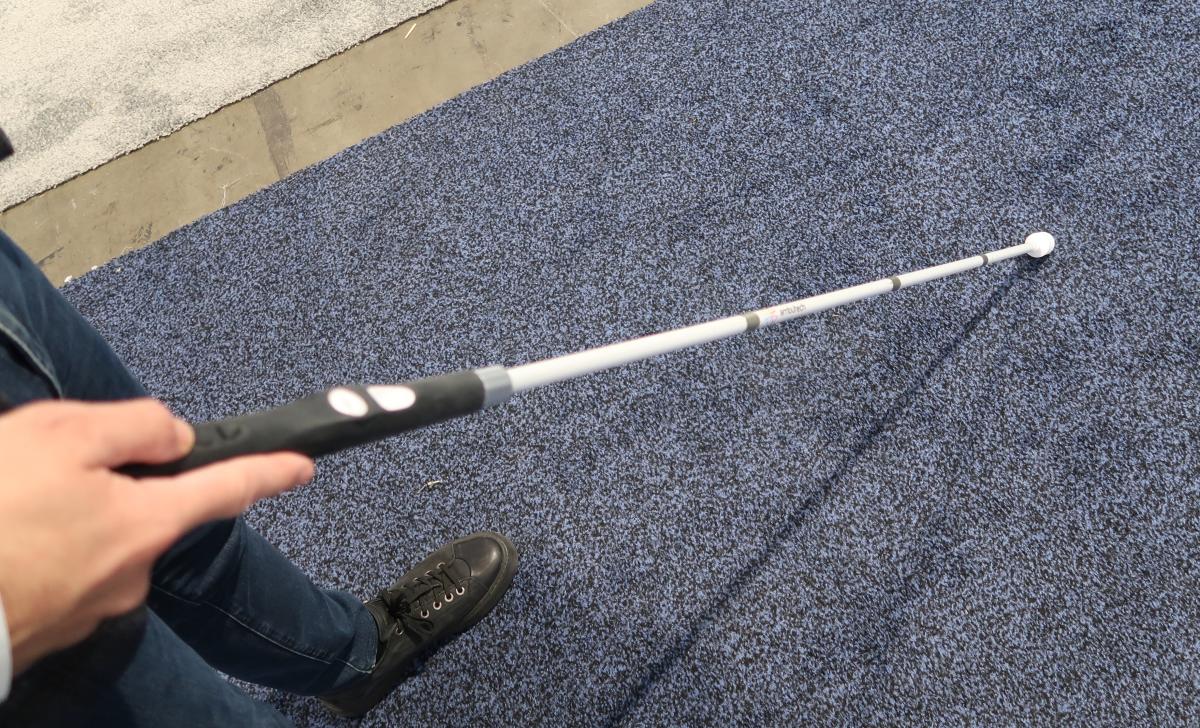
WeWalk introduced a new version of its smart cane for people with visual impairments at CES 2025, bringing a redesign that addresses many of the first model’s shortcomings and adds AI features and more advanced sensors from TDK. It’s positioned as an alternative to the traditional foldable white cane. Co-founder Kursat Ceylan, who has been blind since birth, says Smart Cane 2 can make mobility easier and safer, offering features like turn-by-turn navigation and obstacle detection, along with a ChatGPT-powered voice assistant that puts on-demand information in users’ hands without the need for them to also juggle a smartphone.

The WeWalk Smart Cane 2 has a slimmer handle than its predecessor, which should make for a more comfortable grip, and the company says it’s now about as lightweight as a standard white cane. It has tactile buttons to be more user-friendly, doing away with the touchpad of the previous model that some people found to be difficult to use. Ceylan says it can be used in different weather conditions, not just when it’s warm and dry (WeWalk describes the new cane as “rainwater-resistant”). The battery life is about 20 hours.

“You can fold and unfold it when you need it. There’s a speaker, a microphone, obstacle detection technology and a flashlight to make visually impaired people more visible at night. And also it has motion sensors in itself to provide a more accurate navigation experience,” Ceylan explained.

Under the hood, the WeWalk Smart Cane 2 has an ultrasonic time-of-flight sensor, an inertial measurement unit with six-axis motion tracking, a pulse density modulated microphone and a barometric pressure sensor from electronics company TDK. When it detects something ahead, it alerts the user with both haptic and audio feedback, according to Ceylan.

He demonstrated this in the very cramped, noisy environment of the Las Vegas Convention Center, and I was able to hear over the crowd when the cane told him he was approaching an obstacle — in this case, a carpeted step marked with yellow and black tape that I saw multiple CES attendees stumble over during our conversation. It also can connect to headphones via Bluetooth.

An tablet is positioned on a stand on a white table displaying detailed information about the sensors inside the smart cane. A monitor behind the tablet shows co-founder Kursat Ceylan walking on a path and gripping the handle of the cane. a caption at the bottom says An tablet is positioned on a stand on a white table displaying detailed information about the sensors inside the smart cane. A monitor behind the tablet shows co-founder Kursat Ceylan walking on a path and gripping the handle of the cane. a caption at the bottom says

Cheyenne MacDonald for Engadget

Paired with your smartphone, it can give navigation instructions and information about your surroundings, as well as public transportation options. “You can hear the names of stores and restaurants you are passing by,” he says. In Starbucks, where he isn’t able to read the menu, he says he might ask the assistant if they sell chocolate croissants.

“You don’t need to hold your smartphone anymore while you are going somewhere,” Ceylan said. “You can put it into your pocket and then you can get all the information through your WeWalk smart cane.” There is a smartphone interface for those who want to use it, though, which he held up through the demo so I could see what was going on on the other end. Unlike the vast majority of products I’ve encountered at CES this year that seem to include AI or ChatGPT for no real reason other than the fact that they can, this actually felt like a situation where it makes sense and could even be pretty beneficial.

Since it’s brand new, we don’t yet know how all of this will translate to real-world use. Pre-orders are now open for the WeWalk Smart Cane 2, and the first wave is expected to start shipping before the end of this month. There are two price models: $850 for the smart cane plus a subscription for the voice assistant that costs $4.99 per month, or $1150 altogether with no additional subscription fee for full use of the AI. WeWalk Smart Cane 2 is available internationally.

The London-based startup also has a partnership with the Canadian National Institute for the Blind (CNIB) that kicks off in February, when the organization will start using the WeWalk Smart Cane 2 for its cane training program. The goal is to gather meaningful data for instructors so they can really understand how people are using mobility canes (AI-enabled or otherwise), and help them get the most out of the tools. That, Ceylan says, “is so important, because the better you get around, the better you engage in life.”

Update, January 9 2025, 11:55AM ET: This story has been updated to add details on the smart cane’s battery life.