When Final Fantasy VII was released all the way back in 1997 on Sony’s beloved original PlayStation console, it didn’t just spark a conflagration of interest for the JRPG genre at large; it also somewhat unintentionally cannibalised a chunk of interest for another Final Fantasy game, which was released in the same year – Final Fantasy Tactics. Some twenty-eight years later, Final Fantasy Tactics is poised to return on contemporary gaming hardware as Final Fantasy Tactics: The Ivalice Chronicles. This release not only brings a godfather of the tactical RPG genre to modern audiences, but does so alongside a raft of deftly considered improvements and audio-visual overhauls too. Here is how Final Fantasy Tactics: The Ivalice Chronicles is set to elevate the 1997 original to a new level.
Overhauled Visuals Worthy Of This Genre-Defining Effort
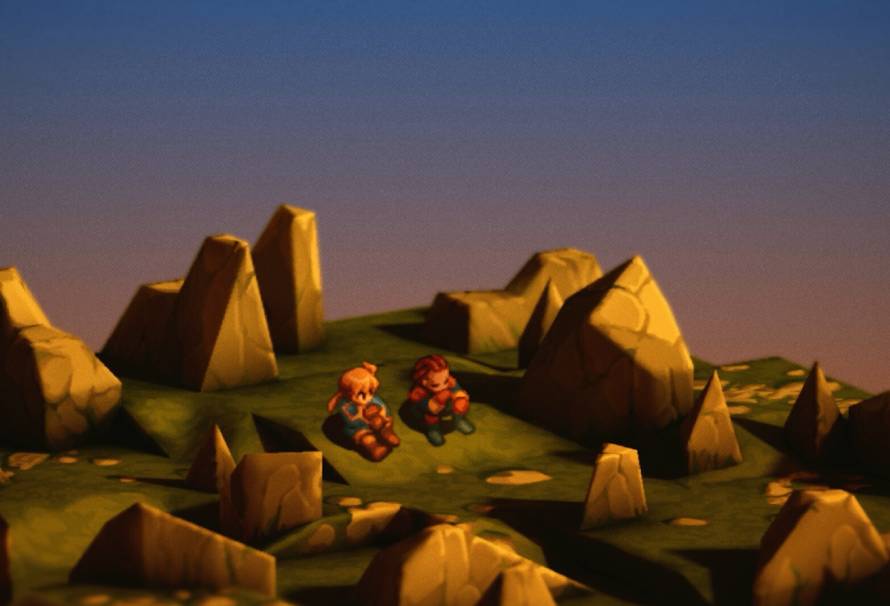
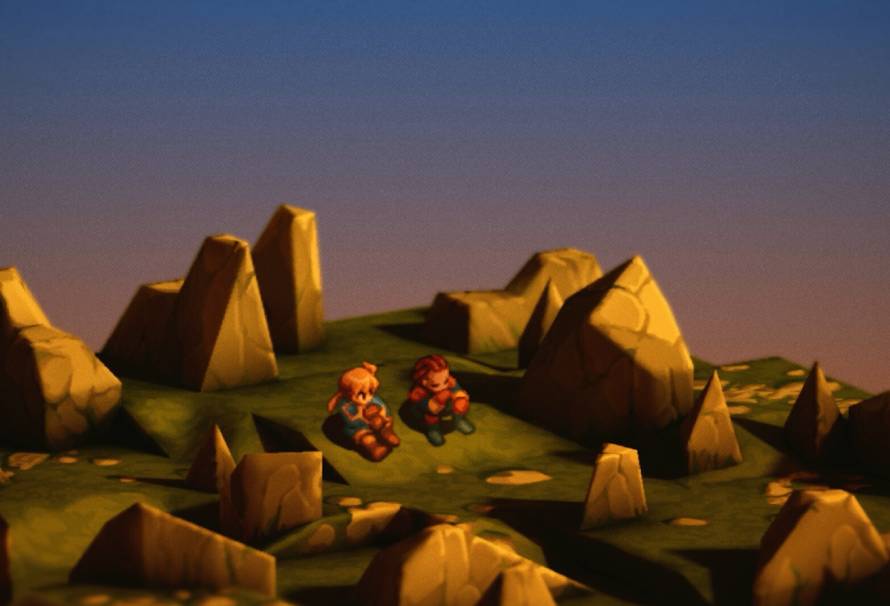
Final Fantasy Tactics: The Ivalice Chronicles delivers the best of both worlds, preserving the visual charm of the 1997 classic while infusing it with fresh detail. Central to this is its ‘enhanced’ mode, which strikes a balance between faithfulness and evolution. Characters retain their iconic sprite-based look, now rendered with sharper fidelity, while the isometric 3D environments receive a dramatic upgrade. The result is a striking blend where nostalgic and modern visual styles complement each other, creating an experience that feels both familiar and refreshingly new.
In addition to the improved character model and environment visuals, developer Square-Enix has also spent time updating the UI for the current generation of gamers. This means that the capabilities of modern platforms allow for improved readability in the myriad of menus that permeate The Ivalice Chronicles, while additional tooltips, a reworked tactical view and a new combat timeline all serve as meaningful presentation updates to this 1997 genre classic.
Speaking of the word ‘classic’, should none of these enhancements happen to align with your particular tastes, you can simply elect to use the original visual presentation instead, thanks to a handy in-game toggle which lets you do just that. Brilliantly, this toggle only affects the visuals, so retro gaming lovers can have their figurative cake and eat it as all of the new quality of life settings, translation and voice acting performances will be active regardless of the visual preset that is chosen.
An All-Star Cast And Language Translation Breathes Life Into This Seminal Tactical RPG
Though the soundtrack and sound effects remain largely unchanged from the 1997 game, both the translation and the new voice acting track serve as substantial improvements over the original. Starting with the voice acting side of things, this represents an entirely new – and arguably overdue – feature that The Ivalice Chronicles brings to the game.
Bringing together a notable voice acting cast of folks such as Joe Pitts, Gregg Lowe and Final Fantasy XVI standout Ben Starr, Final Fantasy Tactics: The Ivalice Chronicles finally brings a dramatic voice (pun intended) to its deep and sophisticated storylines. Better still, rather than just superimposing these performances on top of the existing script, The Ivalice Chronicles adds additional dialogue during battles and extra incidental conversations between characters. As a result, there is considerably more weight to the characters and their motivations.
Perhaps a more significant change for long-term fans of Final Fantasy Tactics is the newly reworked script and translation. Pointedly, the new translation that The Ivalice Chronicles uses is different from both the original 1997 release and the much more stylised script which accompanied the later ‘War of the Lions’ PSP remake. Aiming to be much clearer and easily understood than the script seen in either of those two prior entries, the translation script used in The Ivalice Chronicles instead favours a more natural and mature flow in line with the voice talent that has been recruited for this release, resulting in a much more serious and dramatic tone.
Much like the visual side of things, devoted fans can opt out of The Ivalice Chronicles ‘enhanced’ mode and instead use the ‘classic’ script translation should they so choose. However, somewhat oddly, rather than leveraging the original script seen in the 1997 PlayStation One release, the English version of The Ivalice Chronicles instead uses the translation script seen in 2007’s Final Fantasy Tactics: The War of the Lions, as this was deemed to be a much closer interpretation of the story than the original release.
A Raft Of Crucial Quality Of Life Improvements
Ensuring that The Ivalice Chronicles is nothing less than the definitive version of Final Fantasy Tactics means that developer Square-Enix also had to go deep under the hood and fashion a great number of quality-of-life improvements. Right off the bat, one of the most significant of these improvements is the ability to fast-forward battles. This means you no longer have to painfully wait for battles to lumber toward their conclusion, as now you can just fast forward your way through in a fraction of the time – huzzah!
Another significant feature of The Ivalice Chronicles is the idea of multiple difficulty settings. With easy, normal and hard difficulty levels now present, The Ivalice Chronicles is certainly no longer quite the off-putting prospect for genre newcomers that the original game was back in 1997, which, y’know, is a rather good thing indeed.
Though there are many more quality of life improvements present than I have room to necessarily scribble about here, one final key improvement that The Ivalice Chronicles implements is the new in-game encyclopaedia and compendium reference libraries. For a world as thoroughly steeped in politics, complex relationships and history as Final Fantasy Tactics, being able to have all of that material properly curated in one place where you can read through and digest it at your leisure is a godsend. Thankfully, that’s precisely what The Ivalice Chronicles has done. Elsewhere, a new story compendium feature does a grand job of keeping players oriented regarding the story at large, comprehensively filling you in on the various characters, their motivations and the events which surround them. Delightful.
In the end, Final Fantasy Tactics: The Ivalice Chronicles feels less like a simple remaster and more like a definitive reimagining of a genre-defining classic. By pairing visual and narrative authenticity with modern refinements, Square-Enix has managed to respect the legacy of the 1997 original while making it more accessible and engaging for today’s players. Whether you’re a veteran strategist eager to revisit Ivalice or a newcomer curious about one of the most influential tactical RPGs ever made, The Ivalice Chronicles ensures that Final Fantasy Tactics finally gets the recognition and audience it has always deserved.
John-Paul Jones
Scribbling about videogames since 2005, John-Paul Jones first stoked his love for the industry with the Atari 65XE at the age of four before proceeding onto the ZX Spectrum, Amiga and beyond. These days, he finds himself unreasonably excited about Sega’s Yakuza franchise, foreign cinema and generally trying to keep his trio of sausage dogs from burning his house down. Clearly, he is living his best life right now.
Long before Bungie’s Destiny suited up and took players on a looter shooter odyssey across the universe, there was Borderlands from Gearbox Software. A delirious exercise in abundance with more quips, comical eye-winks, enemies, missions and weapons than you could shake a hairy stick at, Gearbox Software’s raucous looter shooter set a new standard for the genre when it debuted all the way back in 2009, and it’s one that the series has been iterating on ever since. Now in the year of our lord 2025, Gearbox Software is back at it again with Borderlands 4, the latest entry in its looter shooter series that aims to level up the genre like never before. Here’s how Borderlands 4 does just that.
Gun And Loot Customisation, Which Reaches New Heights
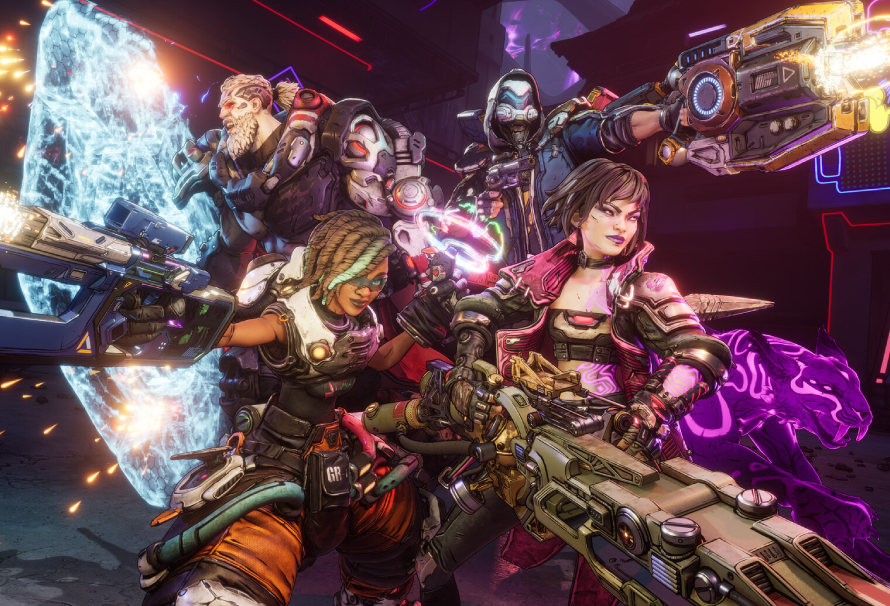
A point of pride for the Borderlands franchise has arguably been the sheer amount of loot, weapons and other gear it encourages players to scoop up. With more than a billion (that’s not a typo) weapons in Borderlands 4, it’s clear that developer Gearbox Software wanted to make its fourquel stand out even further in this regard. Longtime fans will no doubt be cheered to discover that many of the series’ usual weapons manufacturers make a return here. This means eager run-and-gunners will encounter gear from the familiar likes of Jakobs, Maliwan, Tediore and more as they blast and tear their way across Borderlands 4’s new planetary setting of Kairos. In addition to a trio of new weapons manufacturers (Daedalus, Ripper and Order) that have made their way onto the scene, Borderlands 4 also makes legendary guns feel more, well, legendary, by making them much more powerful but also far less common to find. Y’know, as it should be.
By far, though, the biggest departure that Borderlands 4 makes from previous entries in the series is the new ‘Licensed Parts’ system. Essentially enabling a modular level of customisation, the Licensed Parts system provides players with the ability to incorporate gun parts from different manufacturers to create all-new firearms in the process, which in turn carry a hybrid of the weapon traits unique to each of those manufacturers into the bargain. Put simply, you aren’t going to run out of guns in Borderlands 4, or indeed the parts to make them.
The Largest And Most Seamless Game World To Date
One of the unsung heroes of the Borderlands series has undoubtedly been the sprawling worlds of every stripe and hue that players were encouraged to blast their way across. In Borderlands 4, it’s certainly fair to say that the game world itself has seen quite the upgrade, because now not only have loading times been almost completely removed as you travel from one zone to another, but so too has the introduction of a new vehicle known as a ‘Digirunner’ made traversal that much more effortless.
A quick word about Kairos, which serves as the game world for Borderlands 4. A mysterious planet that has been hidden in secret for millennia by the Timekeeper, the big bad of Borderlands 4, Kairos is a vast interconnected hub of massively varied areas that dwarfs the maps seen in previous games. From snow-capped mountains to lava-scorched ruins, verdant forests, and all the usual frontier-style towns, shacks, labs, and buildings you’d expect from Borderlands, Kairos is packed with variety. The game encourages players to explore every nook and cranny just as much as it pushes them to mow down throngs of bad guys across its surface.
Of course, there isn’t much point in having such a tantalising expanse as Kairos if you aren’t also going to sufficiently empower the player to fully explore it, and wouldn’t you know that Borderlands 4 has ticked all the bingo boxes on the traversal front too. Not content to allow Borderlands 4 to just be another run and jump looter shooter, Gearbox Software’s latest offering allows players to double-jump, glide, dash, swim and use a grappling hook to reach places and various crevices which would normally be completely inaccessible. To say that Borderlands 4 leaves the series’ previous entries in the dust when it comes to traversal would be putting it mildly.
The Greatest Character Build Diversity Seen In The Series So Far
When it comes to build diversity improvements in Borderlands 4, let’s just acknowledge the excessively large elephant in the room first – Borderlands 4 has more skills for each of its Vault Hunters than those available in Borderlands 2 and Borderlands 3 combined. Woof. Beyond a veritable avalanche of new skills, which in turn greatly expands the possibilities for build customisation in the first instance, one of the key changes that Borderlands 4 brings to progression (and gunplay more broadly) is the implementation of the new Ordnance system.
You see, the new Ordnance system accommodates both grenades and weapons on a shared cooldown. This means that rather than having a finite supply of either grenades or heavy weapon ammo, you just wait for the cooldown to end before unleashing heck with either of the two – allowing you to stay in the fight for longer without having to sweep around the place looking for ammo for each. As you might well expect, some stackable bonuses and buffs can improve the use of Ordnance too, adding yet another layer of depth to Borderlands 4’s progression system in the process.
Finally, supplementing the Ordnance system is the new Enhancements mechanic, which replaces the Artifacts system seen in previous games. In the series’ latest entry, these Enhancements are realised as specific bonuses unique to each weapons manufacturer. This means that in addition to a deep tailoring of your skills and abilities, carefully mixing and matching the right weapons manufacturer is also now a key part of fashioning build synergies as well.
Reinvigorated And Refined Cooperative Play
Ask anybody who has ever played a Borderlands game, and they will quite rightly tell you that the whole experience, from top to toe, is best enjoyed with mates. With Borderlands 4, of course, cooperative play in both local and online modes features prominently, but it’s the changes that have been under the hood that Gearbox Software have made here that really raise eyebrows.
The first and arguably biggest change that has been made to cooperative play is the way that loot works. Now entirely instanced, this now means that each player in a coop scenario essentially gets their own loot, rather than having to share it with other players. Elsewhere, Borderlands 4 also introduces the idea of dynamic level scaling, which means that players of vastly different levels can still band together to take on missions and enemies appropriate to their average level, rather than being excluded from cooperative play because one or more players involved do not meet the level requirements to take part. More of this, please, looter shooter developers.
Borderlands 4 isn’t just another sequel; it’s a game that levels up the looter shooter like never before. With an unprecedented variety of weapons and modular gun customisation, the sprawling, fully traversable world of Kairos, and an avalanche of character builds and abilities, Gearbox has taken everything fans love about the series and pushed it to new heights. Cooperative play is smarter and more rewarding than ever, making it perfect for teaming up with friends of any skill level. Whether you’re exploring every nook of the planet, experimenting with over-the-top weapon combos, or tearing through hordes of enemies, Borderlands 4 delivers a chaotic, endlessly fun experience that proves the looter shooter genre still has room to grow – and Gearbox is leading the charge.
John-Paul Jones
Scribbling about videogames since 2005, John-Paul Jones first stoked his love for the industry with the Atari 65XE at the age of four before proceeding onto the ZX Spectrum, Amiga and beyond. These days, he finds himself unreasonably excited about Sega’s Yakuza franchise, foreign cinema and generally trying to keep his trio of sausage dogs from burning his house down. Clearly, he is living his best life right now.
When a seven-year-old me spent what seemed like countless hours sitting cross-legged in front of his trusty Sega Master System, the one title which reliably ensnared my attention was Sega’s Shinobi. A pitch-perfect blend of Japanese folklore sensibilities, compelling platforming and oddly cool side-scrolling shooting on account of the infinite shuriken projectiles it granted players, Shinobi just didn’t look or play like anything else, and was a key milestone in Sega’s storied history. In 2025, Sega brought back its infamous acrobatic assassin for another shot at glory with Shinobi: Art of Vengeance, and wouldn’t you know that not only does this latest instalment do justice to this often forgotten Sega franchise, but it also looks set to stand shoulder to shoulder with the industry’s best. Here’s how Sega and developer Lizardcube have pulled off a franchise revival for the ages.
Shinobi: Art Of Vengeance Is In Good Hands
Put simply, Shinobi: Art of Vengeance is in great hands, not least because developer Lizardcube has a long, varied and storied history with revitalising what were once thought to be dormant Sega franchises. From their underrated work on the excellent Wonder Boy: The Dragon’s Trap, through to the studio’s much more recent and seminal Streets of Rage 4 – which not only gave fans a proper full-blooded sequel to a beloved series, but improved upon it in many ways – it’s clear that Lizardcube is perfectly up to the task of bringing Sega’s Shinobi back from the dead with ample verve.
It Nails The Series Essence And So Much More
If you were to boil Shinobi down to its essence, you would have an offering that marries up side-scrolling platforming, run ‘n’ gun (well, shuriken) sensibilities and tight controls in a wholly compelling union. Shinobi: Art of Vengeance very much embraces those fundamentals first and foremost, offering players a genre effort that at once controls with a buttery smooth responsiveness and yet has an almost muscle-twitch style snappiness to the array of attacks it provides the player with. This is just the beginning of the magic that Parisian developer Lizardcube has woven here.
In the original and beloved classic, the main protagonist Joe Musashi was a shuriken dispensing machine first and a close-quarter martial artist second. In Shinobi: Art of Vengeance, though, the concept is essentially flipped with shiruken being in finite supply and the emphasis very much on dishing out devastating melee strikes, juggle combinations, timely evasions and even attack cancels. Beyond this, Shinobi: Art of Vengeance also empowers its primary protagonist to make the most of a broader set of Ninjitsu skills, including all manner of magical fire attacks, deadly chain assassinations, and so much more besides.
The platforming and traversal side of things has also seen a similar level of love lavished upon it, with our endlessly nimble hero able to leap, double jump, air-dash, roll, and wall jump his way through the various levels that feel absolutely on par with some of the best two-dimensional platformers around. With the newly refreshed combat and platforming mechanics taken in tandem, then, Shinobi: Art of Vengeance represents nothing less than a thorough evolution of everything that made the original Shinobi so essential all those years ago.
Progression Systems Which Make Sense And Encourage Replay
Another crucial element in how Shinobi: Art of Vengeance looks to drag Sega’s legendary series kicking and screaming into the present day is in its deft implementation of progression systems which complement its resoundingly solid gameplay fundamentals, rather than overshadowing them with banal busywork. As you carve a path through each of Art of Vengeance’s levels, Joe will accrue precious gold that can be used to purchase additional traversal abilities, new combat techniques, increased kunai storage and a range of other skills and buffs to boot. It’s also worth noting that some especially devastating Ninjitsu arts can only be unlocked by progressing further in the story.
Beyond this, players can also leverage special amulets that provide a veritable swathe of passive bonuses that can activate under specific circumstances, such as reaching a particular hit milestone in a combo, for example. This ties in with perhaps the most overlooked aspect of progression in Shinobi: Art of Vengeance – its clear nod to Metroidvania design. In practice, this design manifests itself during exploration, with levels having various areas, nooks and crannies that are inaccessible until you revisit them later on with the means to do so, discovering all manner of new secrets and loot as a reward for wandering off the beaten path, so to speak.
Further afield, special elite challenges which task players with taking down a range of extra-powerful enemies within a constrained environment also provide skilled players with yet another reason to replay and explore every area that Shinobi: Art of Vengeance has to offer. Make no mistake, this is no one-and-done sort of affair; Shinobi: Art of Vengeance has legs.
A Painterly Japanese Aesthetic to Die For
Easily one of the most striking things about Shinobi: Art of Vengeance is its visual aesthetic. The game draws heavily on the considerable talents of Lizardcube’s art team, who have once again crafted retina-stroking, hand-drawn visuals – something we last saw in Streets of Rage 4. At the same time, the style leans deeply into the expressive and vibrant traditions of classic Japanese manga. Taken together, it’s clear that Shinobi: Art of Vengeance stands as the studio’s most artistically ambitious title to date. Whether you’re gawking at the gorgeously realised comic book style characters that move with effortless grace, the painterly backgrounds, or staring wide-eyed at the deliciously over-the-top Ninjitsu attacks that look like they’ve leapt off the page of a Japanese comic, Shinobi: Art of Vengeance is easily one of the most visually arresting games of the year.
Shinobi: Art Of Vengeance Has A Proper Story
Though the story of previous Shinobi games has hardly been a point of emphasis, Shinobi: Art of Vengeance looks to change that particularly depressing state of affairs. Indeed, the 2025 entry in the Shinobi franchise unfurls a whole plot around Joe Musashi’s village and clan coming under attack by a nefarious paramilitary group called ENE Corp, which in turn is seemingly led by a mysterious individual known only as Lord Ruse. Though the setup might seem familiar to folks who have played earlier entries in the series, Shinobi: Art of Vengeance expands on the plot by not only stringing together a raft of in-game cutscenes and dialogue, but also by introducing players to a cast of both new and returning characters, too.
In the end, Shinobi: Art of Vengeance isn’t just another revival of a classic Sega property – it’s a statement. By blending razor-sharp combat, layered progression, fluid platforming, and a painterly aesthetic that feels as bold as it is reverent, Lizardcube has crafted something that both honours Shinobi’s legacy and propels it into a new era. For longtime fans, it’s the triumphant return of a childhood icon. For newcomers, it’s an introduction to one of Sega’s most enduring legends at its absolute best. Either way, it’s clear that Joe Musashi has never looked sharper, deadlier, or more essential than he does here.
John-Paul Jones
Scribbling about videogames since 2005, John-Paul Jones first stoked his love for the industry with the Atari 65XE at the age of four before proceeding onto the ZX Spectrum, Amiga and beyond. These days, he finds himself unreasonably excited about Sega’s Yakuza franchise, foreign cinema and generally trying to keep his trio of sausage dogs from burning his house down. Clearly, he is living his best life right now.
Every Wednesday, dive into the Indie Select Hub—your gateway to a fresh, curated indie collection plus four themed spotlights that rotate weekly! You can always find this collection hub in the Xbox Store and on Xbox.com/IndieSelects.
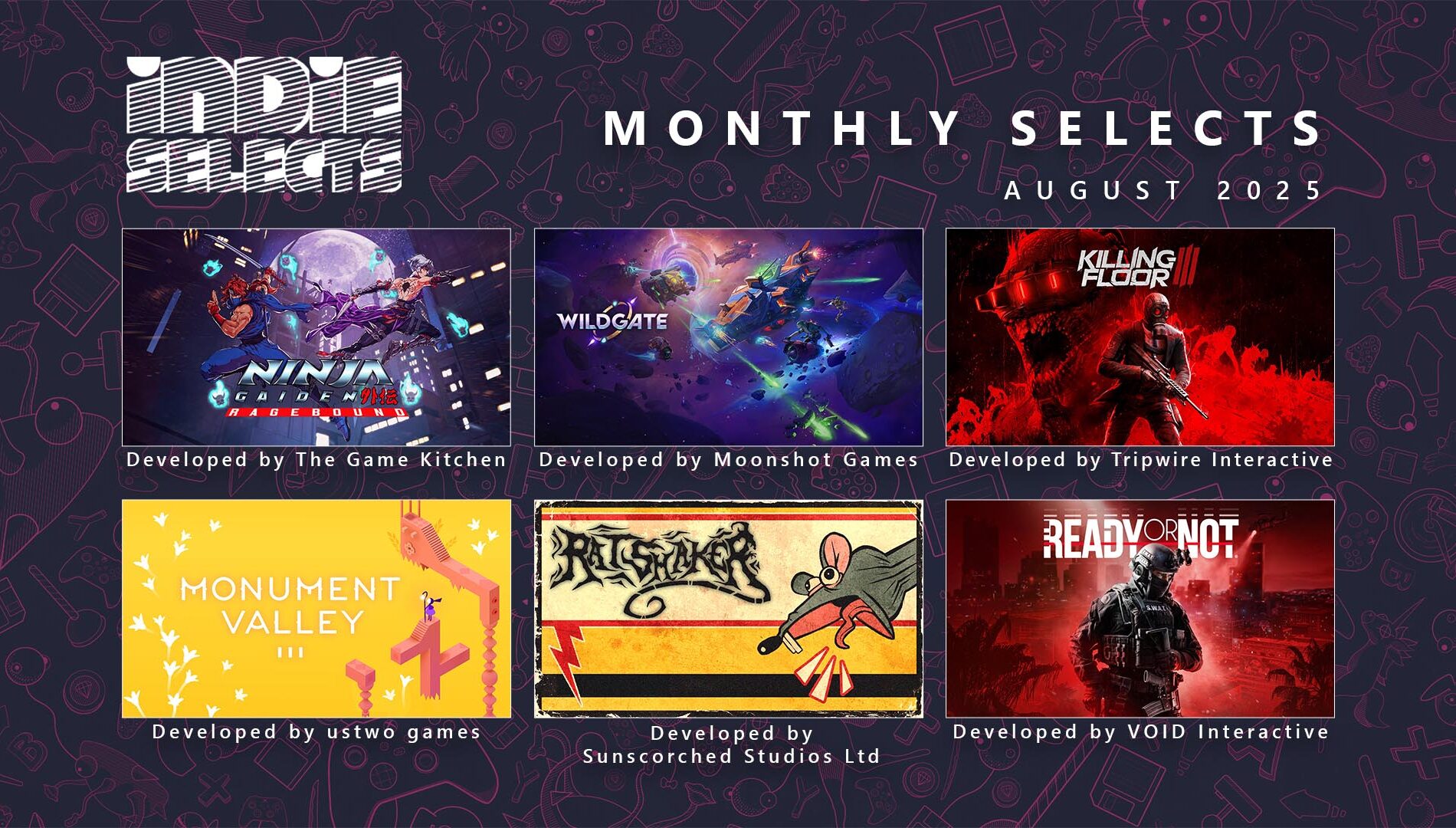
Indie Selects is back for another month and, in honor of the new school year, we are pleased to inform you that the (definitely, absolutely real) ID@Xbox School of Independent Gamers has put together a curriculum of indie games that will give you an education in new ideas, advanced mechanics, and “having a really good time”. Here are the courses we think you should attend this month:
Platforming, Ninjas, and You with Ninja Gaiden: Ragebound
Interpretive Loot-and-Shoot with Wildgate
The Politics of Ratshaking with, er, Ratshaker
Adrenaline 101 with Killing Floor 3
Illusionary Architecture Theory with Monument Valley 3
Advanced Communication and Coordination with Ready or Not
Here’s more on what we’ve got for you this month (in no particular order):
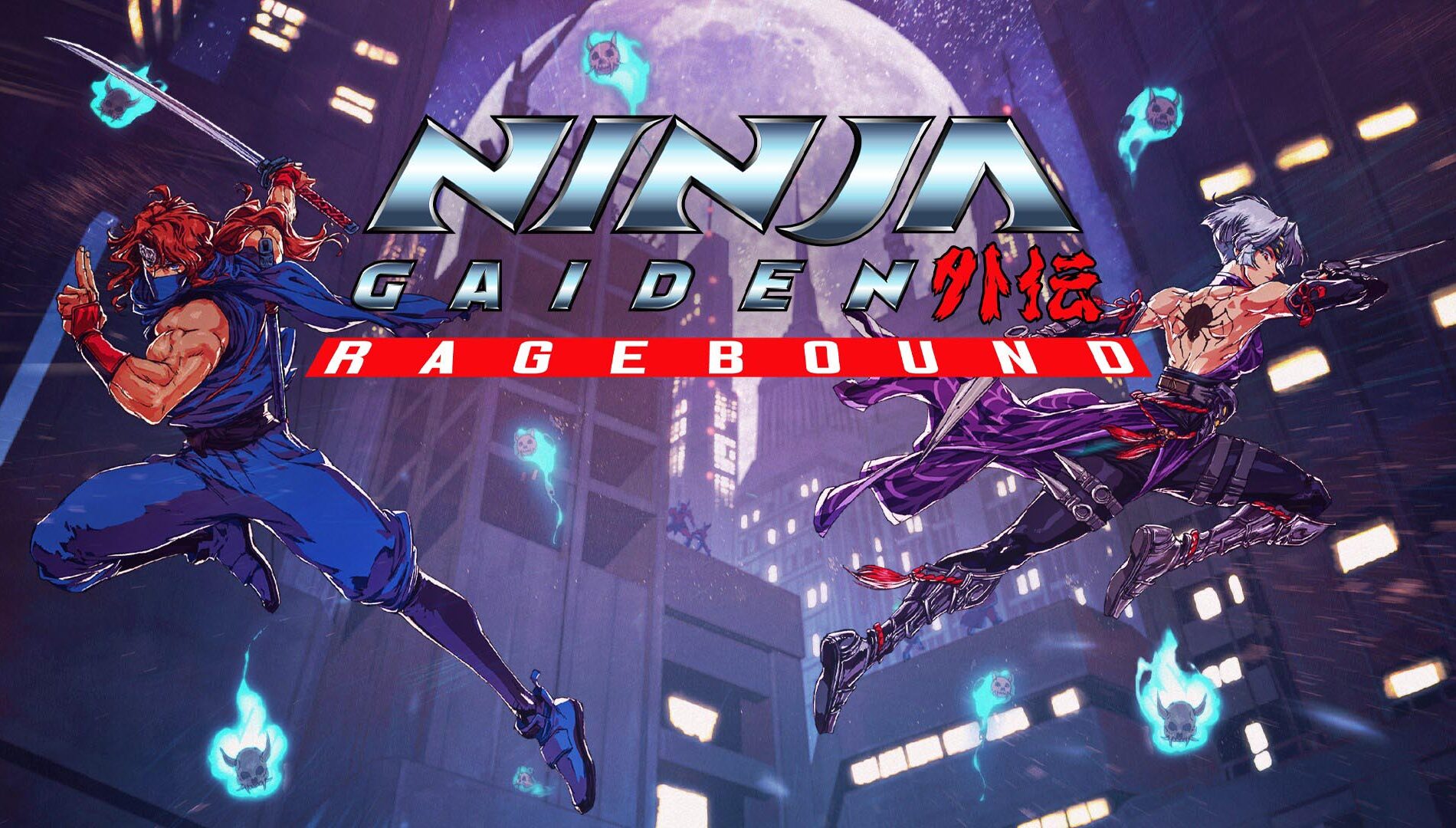
From the studio behind the Blasphemous series, Ninja Gaiden: Ragebound is a new 2D action platformer that serves as a side-quel to Ninja Gaiden (NES), with all the modern-retro polish that publisher Dotemu (Streets of Rage 4, Teenage Mutant Ninja Turtles: Shredder’s Revenge) has become known for. Players control Kenji, a student of Ryu Hayabusa (franchise main protag, former Halo 3 armor), who’s merged with a rival ninja, Kumori, to fight off a demon invasion… and maybe the CIA.
If you’re wondering whether this can capture the gratifying difficulty of classic Ninja Gaiden, well, I’d say the game is called “Ragebound” for a reason (please don’t roll your eyes). It’s hard but it feels rewarding.
A combination of compulsive storytelling and satisfying gameplay mechanics helped me overlook the hours I’ve accumulated fighting the same boss, or when navigating the unforgiving level design. The emphasis on combat mastery and skill has been a staple of the modern series, while the tight platforming, pattern recognition and frankly, punishing enemy placement has been around since its first title on the NES. Developer The Game Kitchen has done an excellent job of bridging the two eras of Ninja Gaiden – leveraging a refined, classic 2D formula as the base while interweaving the combat complexity of the later installments.
Don’t be discouraged by the promise of difficulty, though – Ragebound does a great job of onboarding new players, and the difficulty curve is pretty graceful between acts. It doesn’t feel sudden, rushed or unexpected and instead played well into the narrative. Things got harder as the situation for Kenji became worse, which made sense, so I couldn’t really be mad (even if I frequently was). Regardless of what this game put me through, I could not put it down – I recommend this to you if you’re into old-school action and gameplay, if you’re a fan of the franchise… or if you just like ninjas – Deron Mann
NINJA GAIDEN: Ragebound
Dotemu
☆☆☆☆☆ 110
★★★★★
$24.99
A NEW TWIST TO THE SIDE-SCROLLING NINJA GAIDEN SERIES EXPERIENCE
From the acclaimed team behind Blasphemous, NINJA GAIDEN: Ragebound successfully unites the classic lore and gameplay of the Tecmo-developed (now KOEI TECMO GAMES) NINJA GAIDEN series from the classic era with the depth and intensity of the modern 3D entries. The best of both eras come together to create an epic and thrilling adventure.
DIVE INTO AN UNTOLD CHAPTER OF THE NINJA GAIDEN SAGA
Our story begins when Ryu Hayabusa journeys to America to honor his father’s will. While he is away, the barrier between the human and the demon worlds suddenly shatters, unleashing a terrifying army upon the Hayabusa Village, which now faces an unprecedented threat in Ryu’s absence.
To stand against this new threat, Kenji Mozu, a young ninja from the Hayabusa Village, rises to the challenge! Trained by Ryu, he fights fiercely but soon finds himself in desperate straits. Forced to tap into forbidden power, Kenji sets aside centuries of animosity and forms an alliance with the sinister Black Spider Clan, convinced that combining their souls and skills is the only way to protect the world out of the Demon Lord’s grasp!
OLD SCHOOL GAMEPLAY WITH A BRAND-NEW POLISH
Combining old-school feeling with modern precision, NINJA GAIDEN: Ragebound retains the pick-up-and-play action of the classic titles, while introducing new layers of depth.
Alongside the new protagonist, Kenji Mozu, is the skilled assassin Kumori. Take control of these two powerful ninjas simultaneously and unravel their interconnected stories.
Use the Ninja Fusion to unleash devastating abilities and obliterate your enemies. NINJA GAIDEN: Ragebound features impeccable mechanics that are easy to learn but hard to truly master, challenging the skills of even the most seasoned fans of the NINJA GAIDEN series!
A SPECTACULAR PIXEL ART SHOWDOWN
Step into a reimagined version of the classic NINJA GAIDEN universe, brought to life through stunning, meticulously crafted visuals. Every enemy is recreated with a level of detail that was once impossible.
The brutal, nostalgia-filled aesthetic of NINJA GAIDEN: Ragebound pays homage to the past while pushing the boundaries of modern pixel art, making every battle a feast for the eyes.
Do you have what it takes to become a true ninja master?
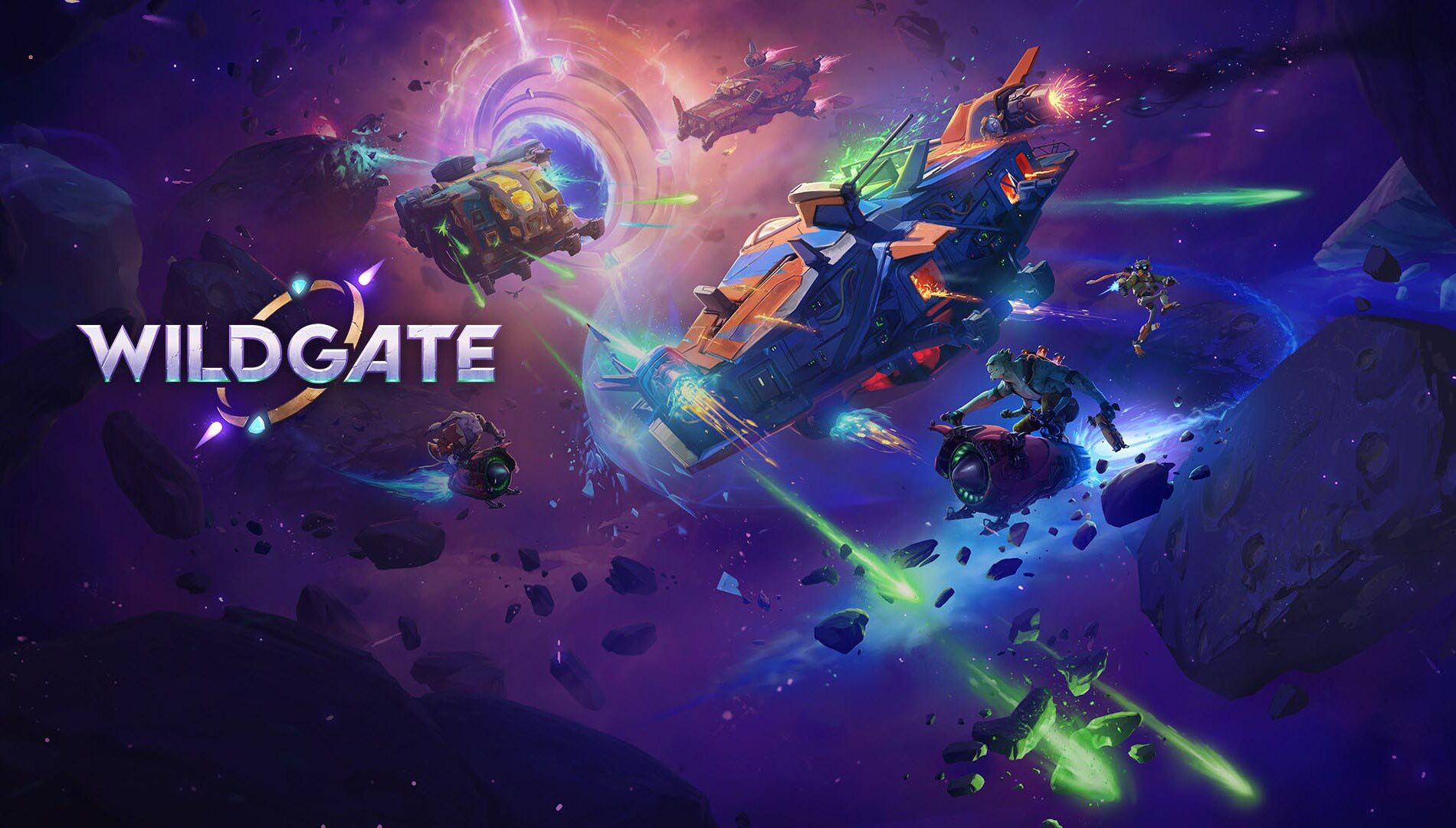
Wildgate is a team-based PvPvE extraction shooter that throws players into the chaos of deep space, blending high-stakes spaceship battles with close-quarters crew combat. Each match features 20 space pirates called Prospectors split into squads of four. The mission? Dive into space, raid PvE dungeons for loot, upgrade your ship, outgun rival crews, secure the mysterious artifact, and make your escape through the Wildgate. The game features a variety of weapons and abilities to contend with, deadly environmental hazards, and, of course, loot worth fighting for. If you’ve ever wondered what it would be like if Sea of Thieves and Overwatch had a baby—this is it.
From the very first match, it’s clear to me that Wildgate isn’t your typical multiplayer experience. Coordination over voice chat isn’t just helpful, but essential. You and your crew will be leaping from asteroid to asteroid, raiding different spots in pursuit of loot, upgrades, and the elusive artifact that everyone’s after. That means the faster you can be in and out, the less likely you are to run into an unexpected ambush.
But running and gunning is just half the battle, as your crew will have to coordinate piloting the ship, performing repairs, and boarding rival ships. With the right team, few things are more satisfying than hopping onto an enemy ship, picking it clean, and making a daring escape. But I’ve also been in squads that were either eerily silent or loud and chaotic – both of which can make the experience feel overwhelming or, worse, made us cannon fodder for more organized crews. You truly need to find a squad for this one.
Customization in Wildgate is impressively well-designed. Each of the characters you have to choose from, called Prospectors, have unique traits, loadouts, and a signature ability that can dramatically shift the tide of a match. Traits can include not needing to breathe, healing while aboard your ship, seeing through walls, or punching through enemy hulls, all of which can lead to some wild and memorable encounters with rival crews. The same goes for weapons, gear, and unlockable ships offering plenty of room for creative builds and min-maxing opportunities.
Wildgate’s design is layered and impressively polished, yet it still feels like it’s in its initial stages – there’s so much scope to grow from here. This could easily become a standout in the fiercely competitive extraction shooter genre as more content rolls out. If you’re a fan of the genre already, this needs to be in your queue – and if you’re a newcomer, get yourself a crew and come aboard – Raymond Estrada
Wildgate
Dreamhaven, Inc.
☆☆☆☆☆ 151
★★★★★
$29.99
Blast off into high-stakes spaceship battles and intense first-person shootouts, where no two matches are ever the same. If you want to claim the ultimate prize — the mysterious and priceless Artifact — you’ll need to improvise on the fly, whether it’s chasing down rival crews and stealing their gear, repairing your damaged ship, or scanning for precious resources.
Your ship is your home and lifeline — for you, and your prospector crew. Keep it topped up with ice, fuel and ammo so you’re ready for anyone or anything the Reach throws at you.
EPIC SPACESHIP BATTLES
Blast your enemies with hi-tech cannons and gadgets, lure them into deadly traps, or even mess with their ship… as long as they don’t sabotage yours first. When your perfect plan goes out the airlock, there’s only one option… wing it!
NEW ADVENTURES, EVERY MATCH
Stay one step ahead as you and your crew navigate the Reach — a vast, procedurally-generated map that changes with every game.
UNIQUE PROSPECTORS
Choose from a variety of daring prospectors, each with their own abilities and tools. Whether you’re a brave pilot or a clever trickster, there’s no wrong way to commit space crimes!
EXPLORE THE REACH
The Reach is a dangerous, unpredictable place, filled with deadly hazards and treasure beyond your wildest dreams. Navigate through cosmic storms, battle space vermin, and plunder alien ruins for lost caches of loot. Just make sure you beat the other prospectors to the punch, or you’ll fly away empty-handed!
OUTRUN OR OUTGUN
The Artifact is the most valuable object in the known universe. Be the first to find it, snatch it, and pass through the Wildgate, or destroy the ships of every other crew and be the last crew standing.
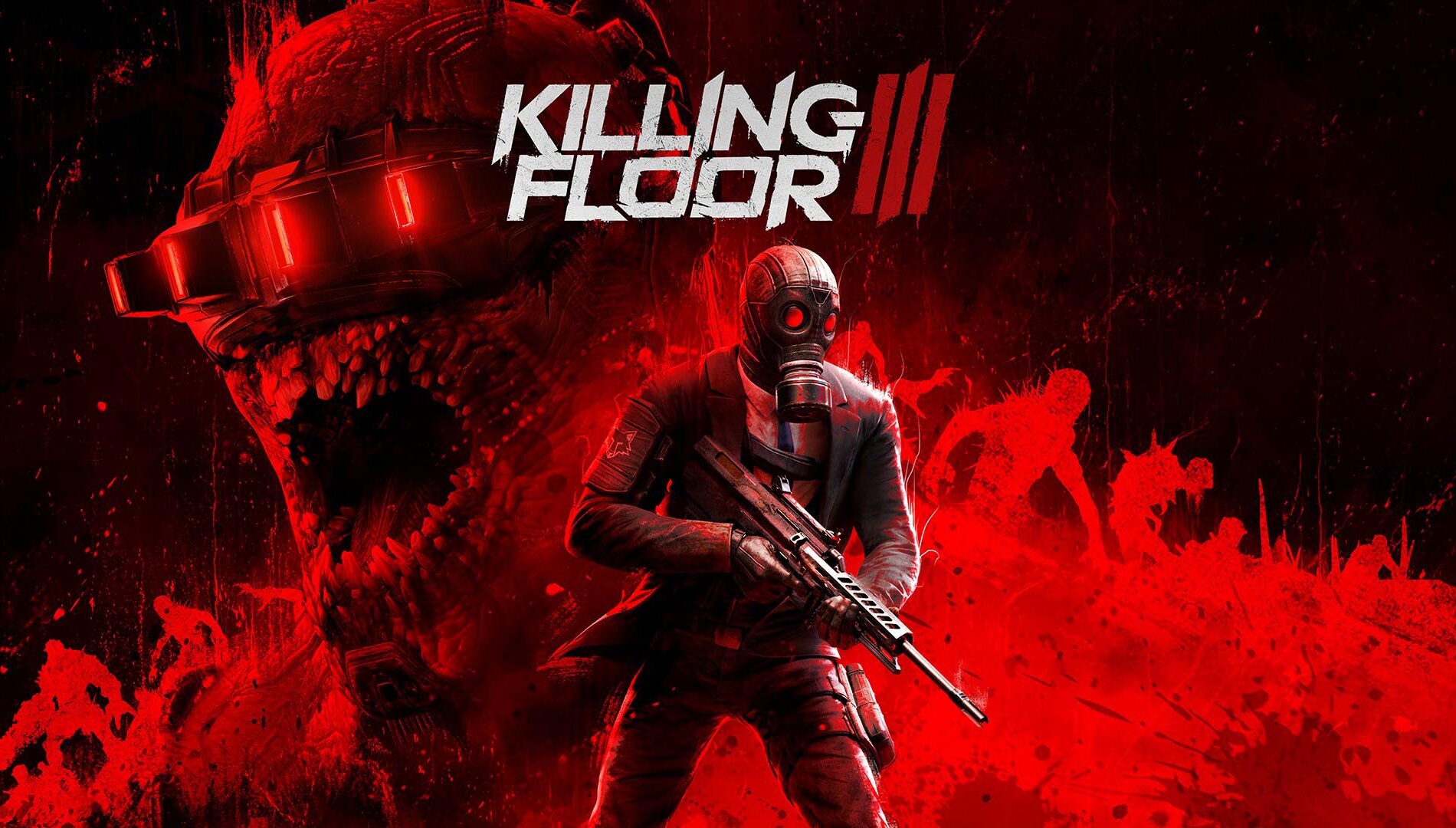
I still remember my first time booting up the original Killing Floor – the frantic reloads, the eerie silence before a wave, and the absolute panic when a Scrake rounded the corner. Killing Floor 2 dialed it all up: better weapons, bloodier battles, and a glorious soundtrack that made every fight feel like a metal concert in a warzone. So, when Killing Floor 3 dropped, I didn’t hesitate. I was already home.
Developed by Tripwire Interactive, Killing Floor 3 is a co-op FPS that throws you and your squad into the heart of a sci-fi nightmare. You’ll face relentless waves of Zeds – genetically engineered monstrosities that are faster, meaner, and somehow even uglier than before. The combat is crunchy and satisfying, the maps are drenched in neon and dread, and the pacing keeps you constantly on edge.
It’s everything longtime fans love, but sharper. The atmosphere feels like Doom and Aliens had a baby, raised in a bunker lit by strobe lights and soaked in adrenaline. I’ve spent hours perfecting my loadout, yelling “Cover me, I’m reloading!” with unnecessary action hero bravado , and laughing with friends as we barely survived wave ten.
Tripwire Interactive knows exactly what makes this franchise tick – and they’ve delivered a third chapter that’s as brutal and brilliant as ever. If you’ve been with the series since the beginning, Killing Floor 3 feels like a love letter to the chaos we grew up with – just louder, faster, and somehow even more fun. And if you’re new? Welcome to the party. Just don’t forget to heal your teammates. Or at least pretend you tried – Steven Allen
Killing Floor 3
Tripwire Interactive
☆☆☆☆☆ 229
★★★★★
$39.99
It’s 2091. Join up with Nightfall, the last line of defense against megacorp Horzine’s inhuman army of monstrous zeds. The future is in your hands… if you can survive long enough to reach it.
Killing Floor 3 is the next installment in the legendary action/horror series. This intense FPS puts you in the boots of a Nightfall specialist joining forces with up to five teammates to battle waves of Zeds, earn dosh, unlock skills, and build the ultimate arsenal.
KILLER CO-OP
Assemble the ultimate zed extermination squad for frenzied 6-player co-op. You can also brave the battlefield alone in tense single-player mode.
RELENTLESS ZEDS
Brace yourself for the most lethal zeds yet. Every enemy has been redesigned and retuned with smarter AI; making them faster, deadlier, and more strategic than ever.
SURVIVAL TECH
From flamethrowers to shotguns to katanas, you’ll have an expansive arsenal at your disposal. Customize your own unique brand of bloodletting with hundreds of mods, gadgets, and skills to choose from.
DANGEROUS LOCATIONS
Drop into a variety of treacherous hot zones where you’ll have to contain the further spread of the Outbreak. Thankfully, you can use the environment to your advantage by activating turrets, fans, and other devastating traps.
MORE GORE
Our MEAT System returns to deliver even more realistic carnage. Featuring additional points of dismemberment and persistent blood, the game responds to your attacks with gruesome authenticity.
Monument Valley 3, the newest installment in the acclaimed puzzle series, has arrived on Xbox. Renowned for its serene, visually captivating gameplay, this series challenges players with clever puzzles while immersing them in stunning, artful environments. With its fixed perspectives, Persian-inspired aesthetics, and mesmerizing Escher-like architecture, this latest chapter continues to offer a soothing yet stimulating experience that’s as beautiful as it is brain-bending.
New to the series? No worries! While Monument Valley 3 follows in the footsteps of its predecessors, it tells a completely standalone story. With minimal dialogue and text, the game relies on subtle visual storytelling through movement, animation, and atmosphere to convey its themes. The crux of the story is that the world is crumbling, the water is rising, and you must find a way to restore light back into the world by navigating architecture-based puzzles.
After the introduction, you’ll find yourself guiding the protagonist, Noor, to the exit of each area by moving parts of the environment around – the architecture bending reality through optical illusions. Structures that go across an axis can sometimes blend into one another, changing the structure of the environment just by altering its perspective. At times, it feels like solving a living Magic Eye puzzle – spotting the hidden path can make your eyes work overtime.
The puzzle difficulty in Monument Valley 3 ramps up nicely. Early levels gently ease you into the game’s signature perspective-shifting mechanics before gradually presenting more and more intricate challenges that will have you scanning every detail for clues. A standout new feature in this installment is the addition of a boat, which you can navigate across rising waters. This mechanic adds a new layer of complexity, especially in puzzles that require you to coordinate movement between multiple areas to progress.
Monument Valley 3 is a beautiful, bite-sized puzzler that is very enjoyable while it lasts. I would recommend it for anyone that enjoys a calm serene puzzle but won’t get frustrated when the answer is literally staring you in the face – Raymond Estrada
Monument Valley 3
ustwo games
☆☆☆☆☆ 7
★★★★★
$19.99
Set sail for adventure in MONUMENT VALLEY 3, a brand new story in the award-winning Monument Valley series.
Guide Noor, an apprentice lightkeeper, through impossible monuments, shifting landscapes, and tranquil seascapes to uncover the Sacred Light and save her home.
Monument Valley 3 takes you beyond the monuments and into the open sea. As Noor, you’ll navigate stunning, changing environments, solve mind-bending puzzles, and uncover the secrets of the Sacred Light. With her village threatened by rising tides, Noor must chart her own course—and discover her own strength—in this stunning, emotional adventure.
Sail between geometry, manipulate architecture to reveal hidden paths, and let the iconic soundtrack guide you forward. With new mechanics, breathtaking visuals, and the series’ signature charm, Monument Valley 3 is a voyage like no other.
Features:
– Defy Perspective: Rotate and manipulate the environment to reveal hidden paths, solve intricate puzzles
– Uncover The Mystery: Help Noor unlock the secrets of this ever-changing world.
– Beautiful Art: A stunning world inspired by modern design, global architecture and hand-crafted, personal stories.
– Every Update Included: Full Story is included, with brand new updates to come
Adventure awaits—will you uncover the light that guides the way?
ustwo games are proud independent developers, best known for the award-winning Monument Valley series, Land’s End, Assemble with Care and Alba: A Wildlife Adventure.
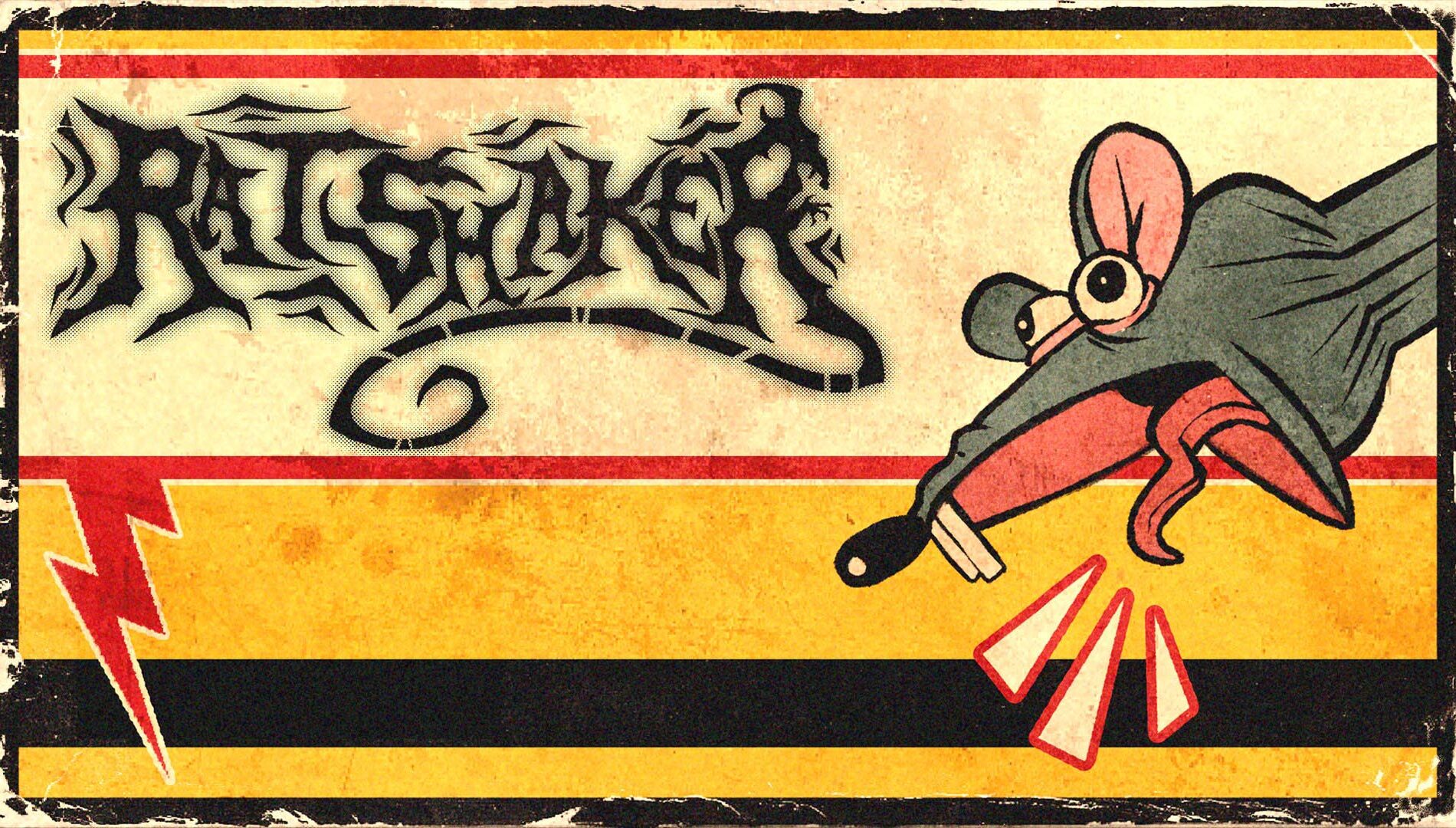
Every so often, a game comes along that defies neat descriptions. RatShaker is one of those. It’s short, strange, and unlike anything else I’ve played on Xbox and that’s exactly why it stuck with me. This isn’t the kind of game where you grind levels or chase loot. Instead, RatShaker asks you to slow down, lean into the absurd, and let yourself experience something that feels more like an experiment than a traditional adventure. The controls are simple, the pacing deliberate, and yet the effect is oddly captivating.
This is a game for players who appreciate the unconventional. If you enjoy titles like What Remains of Edith Finch, The Stanley Parable, or Don’t Touch Anything, you’ll likely find RatShaker intriguing. It’s perfect for those who value atmosphere, experimental design, and games that make you think (or squirm). If I had to pin it down, I’d call RatShaker a surreal narrative experience with elements of psychological comedy. It blends interactive storytelling with absurdist humor and a touch of eerie tension – think walking simulator meets performance art.
What impressed me most was how RatShaker balances its humor and its tension. It never feels like it’s trying to be a blockbuster or a polished crowd-pleaser – instead, it leans fully into its own identity. You’re invited to play along, to laugh, to feel uneasy, and, above all, to experience something you probably didn’t expect when you pressed start. It’s the kind of game I recommend not because it’s “fun” in the conventional sense, but because it’s memorable.
You’ll finish RatShaker in one sitting. It’s roughly 1 to 2 hours, depending on how much you explore or linger. It’s designed to be brief but impactful. You might finish RatShaker in an evening, but you’ll likely be thinking about it the next day, wondering how such a simple idea managed to get under your skin in such a playful way. If you’re looking for something different, something you can’t quite compare to anything else, RatShaker won’t be easily shaken after you finish – Steven Allen
Ratshaker
Dark Product
☆☆☆☆☆ 78
★★★★★
$3.49
RATSHAKER™ – The Ultimate Solution to All Your RAT Problems!
Tired of pests taking over your space? Say goodbye to them for good with RATSHAKER™, the revolutionary new way to deal with unwanted pests! Just take and shake, and RATSHAKER™ does the rest. No traps, no mess, no unmarked disposal barrels!
With RATSHAKER™, you take control! Feel the satisfaction of watching the meter rise as you shake that rat into submission. The more you shake, the closer you get to solving your problems for good. Fast-acting, easy to use, and highly effective, RATSHAKER™ ensures your space stays problem-free in no time.
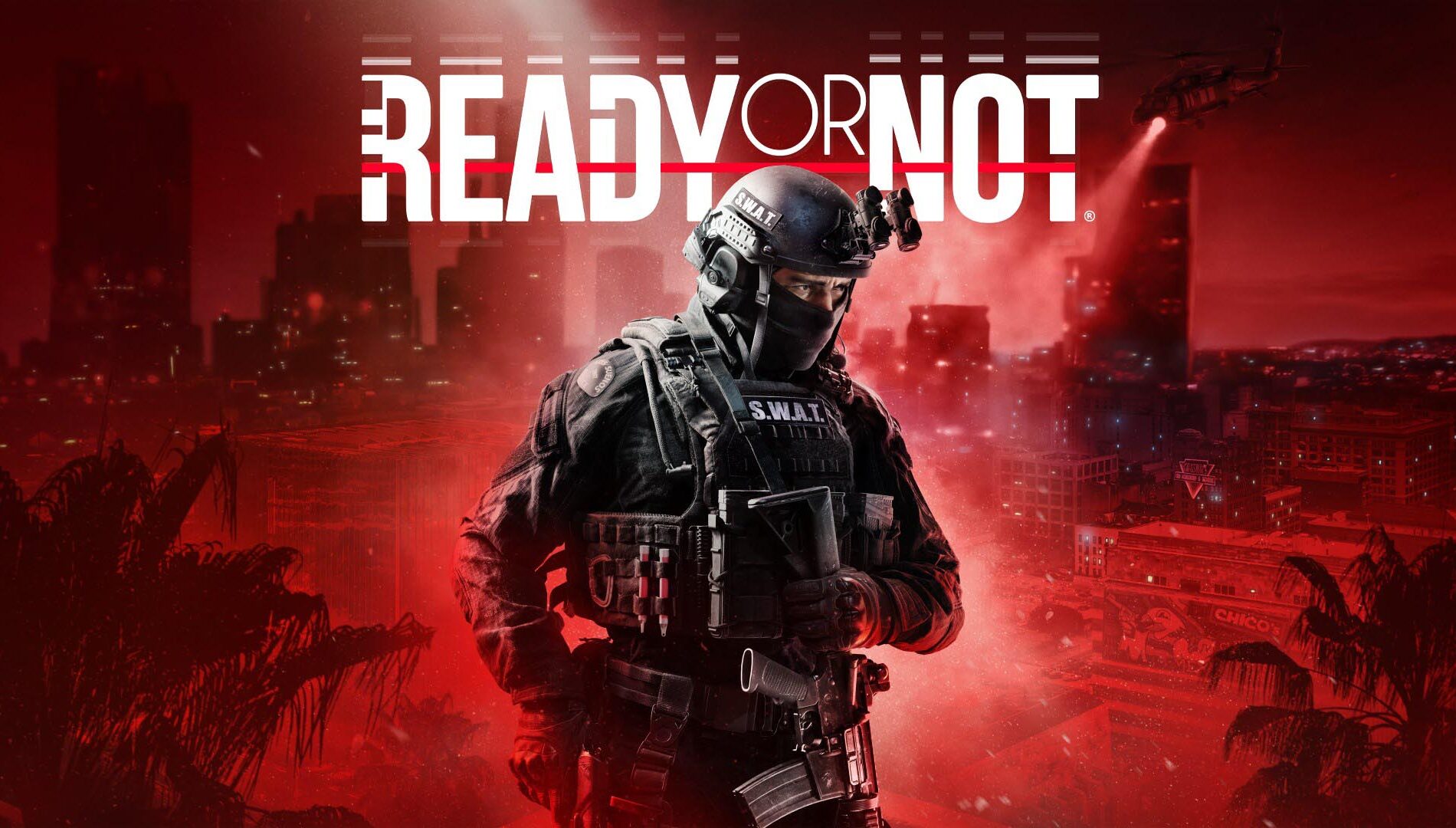
Developed by Void Interactive, Ready or Not is a co-op FPS that puts you in the boots of a SWAT officer called in when things go from bad to worse. Hostage rescues. Barricaded suspects. Active threats. The tension is relentless, but the game makes it thrilling, not overwhelming. You don’t need to memorize military jargon or master complex controls. Just grab your gear, trust your squad, and try not to flashbang yourself (again). So, it started with a simple plan: hop online, play a few rounds, and maybe not embarrass myself. I’d heard Ready or Not was intense, but I figured, how hard could it be? Then came the mission.
A quiet suburban house. The briefing said, “hostage situation.” My brain said, “don’t mess this up.” We stacked up at the door, flashbangs ready, hearts pounding. Two floors cleared. One room left. The hallway was silent, too silent. Lights flickered. A suspect shouted from behind the locked door. My team waited for my signal. I nodded. Breach. Flash. Chaos. Victory. Fist-bump.
Since then, I’ve spent countless evenings laughing, learning, and slowly mastering the art of clearing rooms without yelling “clear!” into empty hallways. It’s got the tension of Rainbow Six Siege, but with more breathing room and a slower, more deliberate pace. Ready or Not doesn’t ask if you’re prepared, it surrounds you with silence, pressure, and the kind of intensity that makes you lean in. And once you’re in, you won’t want to leave – Steven Allen
Ready or Not
VOID Interactive
☆☆☆☆☆ 526
★★★★★
$49.99
$39.99
Become an elite SWAT commander and bring order to a city overwhelmed by chaos and corruption.
Lead a team of highly-trained SWAT officers through harrowing, high-risk missions against violent, cruel and calculated criminals to stop the city from spiralling into disorder. Equip real-world weapons and gear to tackle missions inspired by current events against Los Sueňos’ ruthless criminal element.
Every decision, from squad selection to tactical breach and engagement is the difference between life and death.
Are you ready?
FEATURES
Take Command
Ready or Not delivers an immersive SWAT experience. Equip your team with authentic weapons and gear, deploy into high-stakes, real-world inspired missions to secure locations concealing unknown criminal threats and potential civilians. Every mission demands tactical precision and situational awareness. Bullets from known and concealed threats react realistically with the environment, passing through walls, furniture and bodies. Cover your six, clear your corners, apprehend the threats and rescue the innocent.
The Weight of the Badge
Shoulder the weight of being a SWAT commander entrusted with confronting Los Sueňos’ criminal corruption and stopping it from overwhelming the city’s citizens. Every tactical decision matters, every outcome is yours to bear. Your choices in the field dictate mission success, the survival of your squad and the safety of hostages. Squadmate and hostage deaths take a profound psychological toll on surviving team members, affecting their performance or ending their careers altogether.
True Tactical Gameplay
Ready or Not is a true tactical shooter. Every mission is a high-stakes, life-or-death operation. Strategically forge your squad of elite SWAT officers, equip them with the right weapons and gear for the mission, position your team to tactically breach criminal strongholds and quickly identify and neutralize threats in tense, life threatening scenarios. Follow the rules of engagement, communicate with your team, and execute flawlessly – failure is for the unprepared.
Your Mission is the Story
Ready or Not confronts you with a raw, unflinching mirror of real-world crime, exposing the horrors of human trafficking, drug running, illegal arms dealing, militant extremism and terrorism through interwoven storylines that span multiple missions. Grapple with moral dilemmas as you’re forced to balance your duty to exercise constraint in the face of Los Sueňos’ most vile criminals.
Cross-Comradery
Team up with friends to stem the tide of crime infesting the city. Enhanced with crossplay, Ready or Not supports up to five players in a co-operative tactical experience on all platforms. Communicate effectively to increase your tactical precision, watch your squad’s back and successfully complete your mission.
We’re most of the way through the Summer now, and yes, that is a good thing. If the UK has to endure a 17th heatwave this year, it’ll probably crumble to dust. Anyway, it’s been too hot to leave the house for a lot of us, which would be an issue if it wasn’t for the fact that we’re also getting full hordes of indie games to enjoy.
As we always do, we’re going to highlight some of the coolest-looking indie video games launching in August 2025. It’s filled with a really interesting array of different genres and vibes, so let’s go ahead and get into it.
The Royal Writ takes the classic deck‑builder formula and flips it into a lane‑based roguelike full of absurd medieval mayhem. You’ll command peculiar creatures – think wounded flamingos and crazed mantis dentists – while dealing with shifting battlefield hazards and the ever‑looming threat of permanent unit death. It’s quirky, strategic, and just the right amount of chaotic.
Tiny Bookshop puts you in charge of — wait for it — a tiny bookshop. This cozy narrative game is set in a charming little town where you’ll decide which books to stock, meet a variety of quirky locals, and become an integral part of the community. It’s absolutely gorgeous, and we can’t wait to dive in.
Ra Ra Boom sounds like a fever dream – but it’s real. You play as a ninja space cheerleader battling rogue AI that has taken over the planet. The characters are over-the-top in the best way possible, and the whole thing looks gloriously absurd. Plus, it features full co-op, making it perfect if you’re craving a chaotic beat ’em up to play with friends.
Sword of the Sea turns sand dunes into ocean waves, letting you ride a mystical Hoversword like a mix of snowboard and hoverboard. As the resurrected Wraith, you’ll carve across surreal landscapes, pull off gravity‑defying tricks, and restore life to a long‑lost ocean. As you would expect from the talented folks at Giant Squid, it’s stunning, serene, and built for pure flow.
VOID/BREAKER locks you in a high-speed roguelite FPS where you’re trapped in an endless loop enforced by a hostile AI. Expect fluid movement—dash, double-jump, glide—and relentless firefights across destructible environments. The real star: an infinite weapon mod system that lets you combine crazy mods to forge wild, synergistic loadouts. Every run offers new paths and strategies. It’s fast, destructive, and full of creative chaos.
Discounty puts you in charge of running a discount supermarket in a charming seaside town. You’ll stock shelves, negotiate with suppliers, and chat with quirky locals, all while uncovering small‑town secrets and helping grow your aunt’s mysterious retail empire. It’s cosy, funny, and has just the right amount of small‑town drama.
Pizza Bandit lets you blast through time as Malik, an ex‑merc turned pizza chef, taking on bounty hunts with guns blazing and dough flying. Cook power‑boosting pizzas mid‑fight, upgrade your pizzeria between missions, and team up in 4‑player co‑op for chaotic, saucy shootouts. It’s ridiculous in the best way.
Jason Coles
Jason likes to focus on roguelikes and co-op games; in a dream world he’d make a living writing about Dark Souls. As well as being a writer he also does personal training and accounting and can occasionally be seen on other people’s streams. Being a big fan of fluffy things means he has two cats, both of whom refuse to let him sleep, but at least they are cute.
As it is in many Soulslikes, Wuchang: Fallen Feathers expects you to die multiple times, but it brings the Madness system to make all the effort pay off in one way or another.
Madness can make you stronger, but at the expense of raising the difficulty bar of already hard encounters. That’s why learning how Madness affects the game and how to respond to it is fundamental to enjoying and progressing in Wuchang: Fallen Feathers. There might be moments where you want to take advantage of the power you gain, or situations you’d rather play safe.
In this Wuchang: Fallen Feathers guide, we explain how the Madness system works and how to reduce your Madness level so you can learn how to prepare and customize your character for each encounter in the game.
How the Madness system works in Wuchang: Fallen Feathers
Image: Leenzee/505 Games via Polygon
In Wuchang: Fallen Feathers, the main character has an inner demon that grows stronger depending on how much Madness you have. In practical terms, Madness is a gauge that fills in a bit when you die or kill non-Feathered humanoids, and it gives buffs and debuffs to your character.
After a couple of tests, we learned that, regardless of how you died — maybe you were fatally hit by an enemy’s powerful attack or you fell from a bridge into a creek — you gain 15 Madness points.
Image: Leenzee/505 Games via Polygon
Dying is not the only method to gain Madness and fill in the gauge. Some consumable items can increase your Madness level, like Maddening Incense which also prevents the loss of Madness temporarily. Your level of Madness may also increase if you use the Invoke menu when worshipping shrines to buy items.
Some effects activate depending on the percentage of the gauge you’ve currently filled in. Above 90%, you start dealing more damage and earning more red mercury when defeating enemies, but you take more damage as well.
At the same time, being between 50% and 90% makes you lose most of your red mercury when you die. As an example, we had 140 when testing this and were left with only 42 after dying. Although the game says that you lose all your red mercury when above 90% of the gauge is filled in, in our tests, we still had some after dying.
Image: Leenzee/505 Games via Polygon
You can keep track of your Madness level by using the small portrait on the bottom left side of the screen. By accessing the character menu, you can see the exact number of Madness points you already have alongside a visual representation of it. Wuchang’s appearance changes depending on the character’s Madness level, starting with red-glowing eyes and ending with demonic red marks appearing on her body in later stages.
How to reduce Madness in Wuchang: Fallen Feathers
Image: Leenzee/505 Games via Polygon
A high level of Madness might give your attacks in Wuchang: Fallen Feathers an extra kicker, but it also makes every enemy more difficult to face. If you don’t want to make this game harder to finish, don’t fret. There are some methods to reduce your Madness in Wuchang: Fallen Feathers.
The simplest method to get your Madness gauge back to zero is by killing or dying to your Inner Demon. When you reach max Madness level, your Inner Demon will materialize from the red mercury you dropped on the ground and attack you, if you go to the last place you died.
Image: Leenzee/505 Games via Polygon
You can either kill them or be killed. In both cases, your Madness gauge gets cleansed. While the former is better since you recover the red mercury you’ve lost, the latter also works if all you want is to remove the debuff you receive from Madness.
Image: Leenzee/505 Games via Polygon
If you haven’t reached max Madness level, there are other solutions. Killing Feathered enemies will reduce some Madness. For example, defeating a regular zombie-like enemy removes one Madness point. If you want to cleanse more Madness, you can also use a fragment of Divine Gift or Divine Gift by interacting with the statue you find in Shu Sanctum.
Following its surprise launch in June, Splitgate 2 is now “unlaunching.” The multiplayer first-person shooter will remain online in a beta state and continue to get support through a season 3 update and bug fixes, but developer 1047 Games is otherwise pausing its planned roadmap to overhaul the project ahead of a relaunch in early 2026. The studio is also cutting an unspecified number of staff members and shutting down servers next month for the original Splitgate as cost-cutting measures.
“Basically, I feel like we missed the mark, and I don’t think that’s a secret,” 1047 Games CEO Ian Proulx told Polygon in a video interview ahead of today’s announcement.
Splitgate 2 launched on June 6 following a controversial announcement at this year’s Summer Game Fest, in which Proulx took to the stage wearing a “Make FPS Great Again” hat. While that moment generated heat for the studio, the game itself was met with negative feedback of its own from its community who voiced criticism of its bugs, its lack of a ranked mode at launch, expensive cosmetics, and more. Today, 1047 Games released a statement addressing those concerns and detailing the future of Splitgate, its sequel, and the studio at large.
“We’ve heard your feedback, and we agree with you:we launched too early,” the note to the game’s community reads. “We had ambitious goals with Splitgate 2, and in our excitement to share it with you, we bit off more than we could chew … So, we’re going back to beta.”
Speaking with Polygon, Proulx pinned some of Splitgate 2’s problems on a lack of community involvement in areas. Despite holding extensive playtests before launch, modes like Battle Royale were kept close to the chest to surprise players. 1047 Games intends to work closer with players moving forward, returning to the original Splitgate’s more grassroots development cycle.
“There was a giant Reddit thread that we literally read every single post,” Proulx said. “I read everything on the Reddit, everything, any tweets, Discord, all that stuff. We have a good sense of what needs to get done, what are the problems. Still tons of details to figure out, but I think the big change we’re going to make this time around is we’re going to actually do it alongside the community, get their feedback, playtest, and then when we feel like, all right, the game, it’s in a great place, it’s what it needs to be, that’s when we’re going to relaunch as opposed to just doing things in secret and then surprising them.”
1047 Games has a list of feedback that it’s planning to add in the overhaul, including ranked leaderboards and more mode-specific playlists. It will add more portal walls to arenas, following criticisms that the sequel had deemphasized the series’ central mechanic. A game mode revamp is coming too, as 1047 will put less focus on round-based modes to recapture the original Splitgate’s flow.
“I think there’s a lot of things Splitgate 2 does extremely well,” Proulx said. “I think we have a very polished actual core experience in terms of gun gunplay movements, graphics, et cetera. But I do feel like we bit off more than we could chew, and we have three games in one between Arena and Battle Royale and our own Map Creator. And so we tried to do a lot with a little, and I think we ended up with a game that’s kind of like 80% of the way there times three instead of a 100% of the way there on fewer things.”
Proulx noted that monetization will be reworked as well. That comes after the game drew criticism for including an $80 skin bundle at launch, among other pricey cosmetics. (“Obviously that one bundle … I mean, I’m not here to make excuses … Yeah …” Proulx trailed off when I asked about the response to monetization.)
I’ve made many, many, many mistakes …
— Ian Proulx, CEO of 1047 Games
That controversy dovetailed with another surrounding the launch: Proulx’s now infamous Summer Game Fest stunt. The CEO came under scrutiny for sporting a hat that referenced U.S. President Donald Trump’s “Make America Great Again” slogan, a move that happened as the current administration ramped up its deportation efforts with a wave of ICE raids – some mere blocks away from the YouTube Theater, the venue that hosted Summer Game Fest.
After initially standing behind the stunt as a non-political statement in an interview with IGN, Proulx has since apologized for it. Despite the scrutiny the moment generated, he affirmed that it didn’t have anything to do with the decision to unlaunch, though he still believes that that first-person shooter genre is not “in a great place right now.”
“Obviously the vibes are worse because of the hat, but, I think that if it was a 10 out of 10, feature-complete game that delivered on everything the community wanted, they would be playing it right now,” Proulx said.
“I’ve made many, many, many mistakes since we started this in January of 2017, and that’s one of them. And I’ve made so many more that the world doesn’t know about,” he added. “So, to me, it’s really just about moving forward, and I believe in this game, I believe in this team, and there’s tons of things I would do differently, that being one of them. But I’m focused on the future.”
As for what the “unlaunch” means for the game as it stands now, Splitgate 2 isn’t going away. The studio will forge ahead with a planned third season and will still run a few special events. Bug fixes are in the works, as well as quality-of-life improvements, like adding a playlist featuring player-made maps. Still, Proulx said that “95%” of the studio’s efforts will be spent on the relaunch. The team is targeting a rerelease window “as early as possible” in 2026, but Proulx said that an earlier window could be possible if the team was ready.
The studio will see layoffs as part of the change, but 1047 Games would not confirm the number of roles being reduced or say what departments would be impacted when asked by Polygon. This is the second wave of layoffs for the studio in the past two months, as the studio parted with a “small group” of staff members in June that included members of its art team.
The original Splitgate is getting caught up in the studio’s cost-cutting efforts too. 1047 Games will take the shooter’s servers down next month, though in the statement sent to its community today, noted that the studio is “exploring the possibility of supporting offline or peer-to-peer matches.”
This isn’t the first setback in Splitgate’s history. The original game first launched to middling reviews in 2019. 1047 Games would retool it over the next two years and pull off a successful relaunch in 2021. After staffing up with the goal of reworking the game from the inside out, the studio would then abruptly halt its plans one year later and pivot to developing a full sequel instead. Proulx is hopeful that Splitgate 2 will be able to retain the trust of a community who has seen the series’ direction morph several times in the past six years.
“We’ve been here before and we are as determined as ever,” Proulx said. “We’ve had much darker days with Splitgate where we almost quit, and I’m really glad we didn’t because 99% of this has been living the dream. So, we’re not going to quit. We are going to just absolutely grind this out and keep doing it and keep listening and make this game as amazing as possible.”
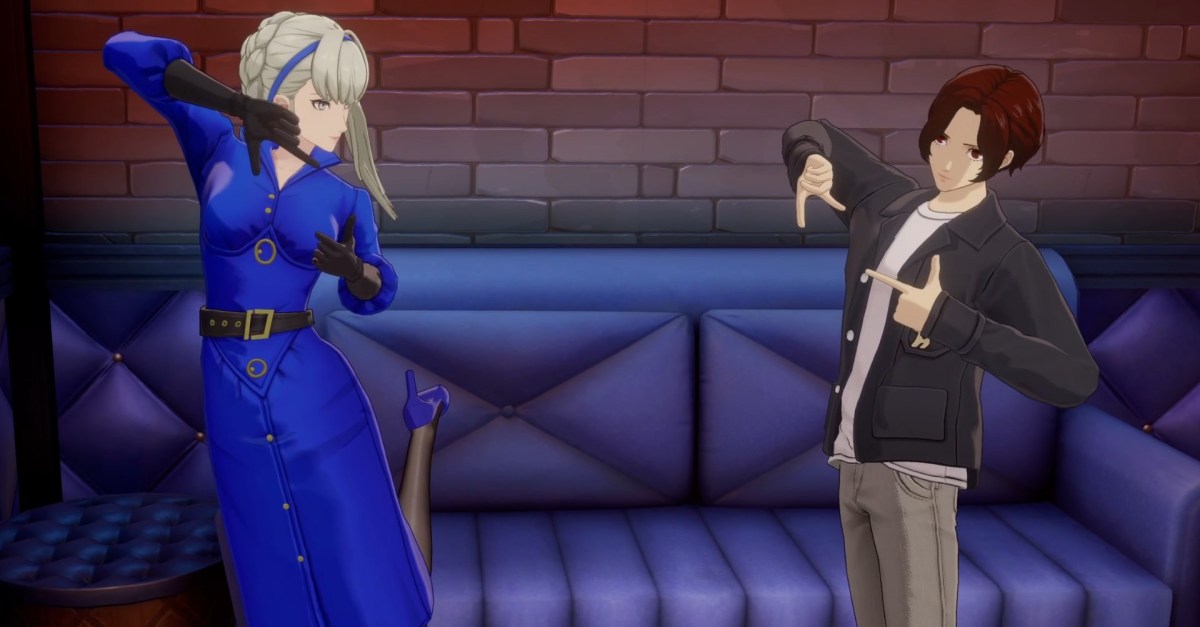
When you start Persona 5: The Phantom X, you’ll be tasked with naming the protagonist by writing down your name on a worksheet fairly early. If you’ve played Persona games before, you may be familiar with the protagonists’ “official” names from the series, and want to use the canon name for this game, too.
Lucky for you, the canon name should have been filled in already, but if you accidentally deleted it or you don’t know if this is the real deal, then we explain more about the P5X protagonist’s canon name below.
What’s the protagonist’s canon name in Persona 5: The Phantom X?
In Japanese, the canon name for the Persona 5: The Phantom X protagonist is Nagisa Kamishiro. However, this doesn’t fit in the name slot for the English version of the game — so the canon name for the global version is Nagisa Kamisiro.
Ultimately, you do not have to name your character Nagisa, of course. You can literally name him whatever you want. You can name him Zoo Smell, if you want. (Just make sure to change both his first name and last name, if you wanted to. We saw a lot of names in the beta where only the first name was changed, for some reason.)
It should be noted that since this is a game with online friend capability, the name you set is your account name. You may want to pick something unique or you’ll be one Nagisa Kamisiro in an ocean of them. If you plan on adding a bunch of friends in-game, you may want to set your name as something your buddies can identify.
That is all to say that “canon” has different definitions across the board. Persona protagonists have had varying names across media. For example, the Persona 4 protagonist is named Souji Seta in the manga, but Yu Narukami in Persona 4 Arena and the anime adaption. Similarly, the protagonist from Persona 5 was named Akira Kurusu in the manga adaption, but has canonically been referred to as Ren Amamiya, which was the default name in Persona 5 Royal. (Ren is fine, but to me he’ll always be Akira!)
It’s entirely possible that Nagisa will appear elsewhere in other media with a different name, but we’re basing this off of the default name available to us in the beta that we played.
Can you change the protagonist’s name in Persona 5: The Phantom X?
Yes! If you went with Nagisa (or Zoo Smell, by our recommendation) and you’re regretting it, you can change your name for free once. After the first name change, you’ll need to pay 200 Meta Jewels (the premium currency that you can earn by playing the game) for every subsequent change.
You can change your name by clicking your profile icon at the top of your phone screen menu, but only after you’ve progressed a bit in the story. From there, click the ellipses above your set icon to access the name change feature.
For video games, the summer season kicker off with a double-header: the release of the Nintendo Switch 2, smack amid the three-day slew of game reveals that comprise Summer Game Fest (and its surrounding press conferences). But the most exciting games of the summer aren’t all Switch 2 ports or massive studio tentpoles. In fact, it’s the smaller games — the indies and the AA gems — that have captured most of Polygon’s attention.
From a management sim about temperamental clones to an open-world adventure in which you bike your way to saving the world, here are 11 under-the-radar games to watch out for this summer.
Image: 11 Bit Studios
Release date: June 13 (out now!) Where to play: PlayStation 5, Windows PC, Xbox Series X
How well do you think you would enjoy working with a few radically different versions of yourself? That’s the question Jan Dolski is facing — that, and how he’s going to survive imminent death on a hostile world. In The Alters, Dolski is the sole survivor of a scientific expedition in search of a new element. Through survival and base-building gameplay, he, alongside the alternate versions of himself he brings to life, has to find a solution for survival while contending with how varied his life could have turned out if different choices were made.
Image: Nuntius Games
Release date: July 1 Where to play: Windows PC
BloodRush: Undying Wish is like if Bloodborne met Crank, that offbeat 2006 Jason Statham action flick (stay with me here). It’s a hack-‘n’-slash roguelike where your character is constantly bleeding out during combat. You can increase your blood by killing enemies, so the gameplay is fast and frenetic; you’re constantly dashing around the battlefield like you need adrenaline to survive. So, Crank. BloodRush is a fun time with gorgeous pixel art to boot. Check out a demo on Steam ahead of its early access launch.
Image: Messhof/Annapurna Interactive
Release date: July 23 Where to play: PlayStation 5, Windows PC, Xbox Series X
In Wheel World, you play as a cyclist with the simplest of simple tasks: save the world. (You’ve got this!) With a customizable bike, complete with a ghost head accessorizing it, you’ll pedal and race around an open world as you set out to save it. Originally unveiled as Ghost Bike in 2023 with a somber narrative, Wheel World was rejiggered in fall 2024 with a new title and a lighter tone focused on “the joy and freedom of living around bikes,” developer Messhof wrote in an update on Steam.
Image: The Game Kitchen/Dotemu, Koei Tecmo
Release date: July 31 Where to play: Nintendo Switch, PlayStation 4, PlayStation 5, Windows PC, Xbox One, Xbox Series X
It’s a big year for the Ninja Gaiden franchise. Ninja Gaiden 2 Black, a remaster of 2008’s Ninja Gaiden 2, was surprise dropped earlier this year alongside the reveal of Ninja Gaiden 4, the first new mainline entry in over a decade. Between those releases, fans will also have the chance to play Ninja Gaiden: Ragebound, a side-scrolling action-platformer. The Ninja Gaiden series started on NES, so Ragebound takes it back to its roots in a way with its pixel art aesthetic. You can play its Steam demo to get a feel for the challenge of Ninja Gaiden: Ragebound, which comes from the developers behind the Blasphemous games.
Image: Reignite Games
Release date: July 31 Where to play: Windows PC
Like in Prince of Persia: The Sands of Time, wielding time is a core tenet of Panta Rhei, a roguelike that casts you as Phi, who must protect the flow of time. Bend time to solve environmental puzzles as well as to save your skin in combat. Panta Rhei’s art style and orange and violet hues remind me of Annapurna’s excellent Cocoon, so it’s already starting off on the right foot. Get a taste of its roguelike combat via its demo on Steam.
Image: Mas
Release date: Aug. 7 Where to play: Windows PC
Artis Impact follows Arkane and her AI companion, Bot, as they venture through a futuristic world full of murderous AI — and tasty potato croquettes. Its pixel art is great, and the manga-inspired comic panels that function as cutscenes are truly killer. Gameplay will be a mix of turn-based combat and regular life activities, like cooking or earning passive income. It may be set in a post-apocalyptic world, but it’s a cozy post-apocalyptic world.
Image: neoludic games/Skystone Games
Release date: Aug. 7 Where to play: Windows PC
There are two things the world can never have enough of: books and bookshops. In Tiny Bookshop, head to a small coastal town to start your own bookstore. It’s a quiet and cozy game, one that’s divorced from the stress of working retail IRL. Tiny Bookshop instead lets you sit back and recommend great books to customers who’ll buy them up. Decorate your bookshop on wheels to your heart’s content and keep your shelves stocked by purchasing used books from classified ads like it’s 1998 all over again.
Image: Giant Squid
Release date: Aug. 19 Where to play: PlayStation 5, Windows PC
Developer Giant Squid is known for stylish games Abzû and The Pathless, and Sword of the Sea looks to carry that stylish torch forward. Your big, cool sword isn’t needed for combat, but for traversal. Sword of the Sea’s gnarly movement is based on skateboarding, snowboarding, and surfboarding, and you’ll use your Hoversword to ride waves of sand. Over the course of the game, you’ll work to restore an ocean, and then catch its waves. Surf’s up, dude.
Image: Saber Interactive
Release date: Aug. 28 Where to play: Nintendo Switch, PlayStation 5, Windows PC, Xbox Series X
The Knightling ditches swords and maces for a shield as its titular hero’s weapon of choice. It’ll be used in combat Captain America style, of course, but also for traversing the game’s open world via some very sick-looking shield surfing. The Knightling gives off the vibe of a PS2-era platformer with modern-day visuals, and I can’t wait to check it out this August — good thing it’s got a demo on Steam!
Image: Kakehashi Games
Release date: Sept. 3 Where to play: PlayStation 5, Windows PC
Set in an origami world, where seemingly everything has been created via the delicate Japanese craft, Hirogami is an action-platformer. Hiro can fold himself into different transformations, like an armadillo or a frog, to traverse the fragile world and battle digital creatures who are threatening it. Play the demo on Steam to get a feel for Hiro’s origami powers yourself.
Image: Rogue Factor/Nacon
Release date: Sept. 4 Where to play: PlayStation 5, Windows PC, Xbox Series X
Hell is Us wears the aesthetics of a Soulslike without some of the genre’s challenges; enemies stay dead, meaning your corpse runs won’t be as tenuous, and the game places a greater emphasis on exploration than combat. You’re cast as Remi as he enters and explores a war-torn country in search of his parents. Along the way, he encounters more than he bargained for in the way of some creepy enemies, and he’lll wield a big glowing sword to take them down.