Apple lists all apps it removed alongside TikTok in the U.S.


Amid the TikTok shutdown, in a rare move, Apple published a statement and a support document listing all affected apps that are inaccessible in the U.S. The iPhone maker typically doesn’t publish information for when it blocks apps.

Notably, other ByteDance apps, including CapCut, Lemon8 — which surged in the last few months — and Marvel Snap, are also part of the blocked apps. Here is the full list of apps that Apple has removed:

  • TikTok
  • TikTok Studio
  • TikTok Shop Seller Center
  • CapCut
  • Lemon8
  • Hypic
  • Lark – Team Collaboration
  • Lark – Rooms Display
  • Lark Rooms Controller
  • Gauth: AI Study Companion
  • MARVEL SNAP

In the support document, Apple noted that the company is following the law by blocking all these apps.

“Apple is obligated to follow the laws in the jurisdictions where it operates. Pursuant to the Protecting Americans from Foreign Adversary Controlled Applications Act, apps developed by ByteDance Ltd. and its subsidiaries — including TikTok, CapCut, Lemon8, and others — will no longer be available for download or updates on the App Store for users in the United States starting January 19, 2025,” the company said.

The document also highlights that people who are visiting the U.S. and have the App Store set to a non-U.S. region won’t be able to update the app or purchase in-app items for these apps.

TikTok and other ByteDace apps are banned as a result of a bill passed last year that would force the company to sell the short video app or face a ban. Last week, the Supreme Court upheld that law, resulting in Apple and Google blocking the app late on January 19.
Texas is suing TikTok for allegedly violating its new child privacy law


Texas Attorney General Ken Paxton has filed a lawsuit against TikTok claiming the company violated a new child privacy law in the state. It’s set to be the first test of Texas’ Securing Children Online Through Parental Empowerment (SCOPE) Act since it went into effect just over a month ago.

Under the law, parts of which were struck down by a federal judge, social media platforms are required to verify the ages of younger users and offer parental control features, including the ability for parents to opt their children out of data collection.

Paxton alleges that TikTok’s existing parental control features are insufficient. “However, Defendants do not provide the parents or guardians of users known to be 13 to 17 years old with parental tools that allow them to control or limit most of a known minor’s privacy and account settings,” the lawsuit states. “For example, parents or guardians do not have the ability to control Defendants’ sharing, disclosing, and selling of a known minor’s personal identifying information, nor control Defendants’ ability to display targeted advertising to a known minor.”

The lawsuit also argues that the app’s “Family Pairing” tool isn’t “commercially reasonable” because it requires parents to make their own TikTok account and because teens are free to deny their parents’ requests to set up the monitoring tool. TikTok didn’t immediately respond to a request for comment. The app already prohibits most targeted advertising to anyone younger than 18.

“We strongly disagree with these allegations and, in fact, we offer robust safeguards for teens and parents, including family pairing, all of which are publicly available,” the company said in a statement shared on X. “We stand by the protections we provide families.”

The lawsuit adds to TikTok’s growing legal challenges in the United States. The company is currently fighting a law that could result in a total ban of the app in the United States. It’s also facing a separate Justice Department lawsuit related to child privacy.

Update, October 3, 2024, 8:05 PM ET: This story has been updated to add a statement from TikTok.


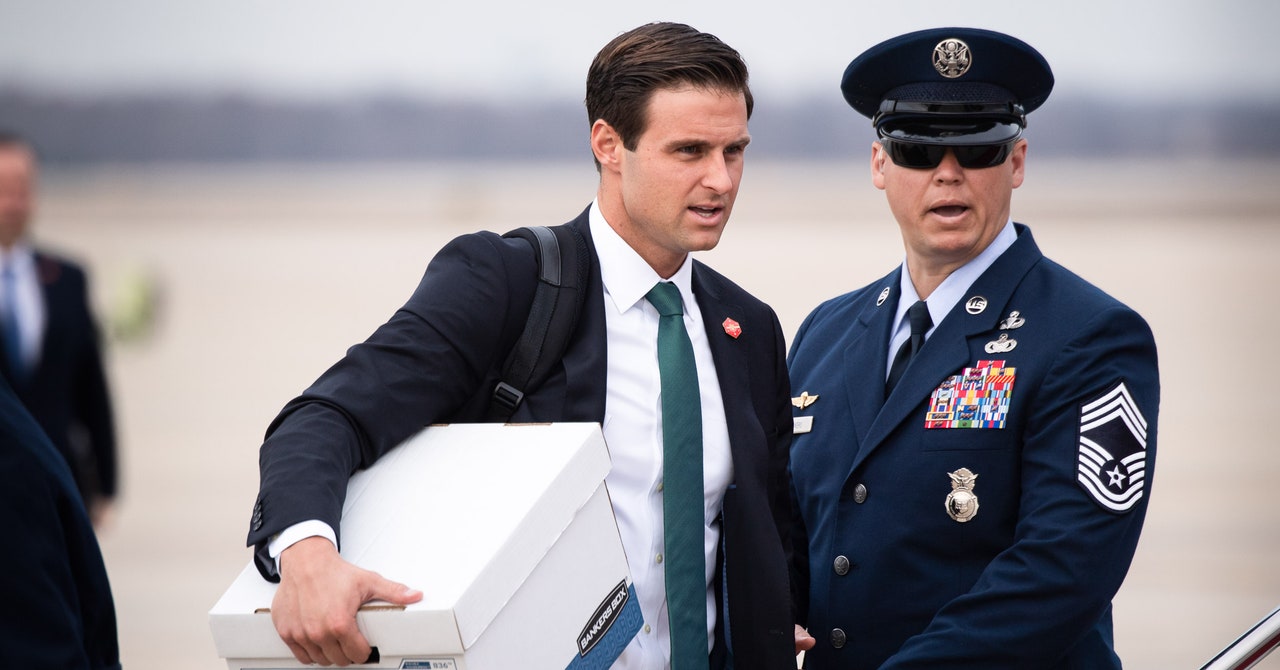
Teens Say John McEntee, Trump’s Former Personal Aide and Project 2025 Higher-Up Made Them Uncomfortable in Chats


When Grace Carter heard from the Right Stuff’s account on Instagram, the person controlling the account introduced himself as John. He also offered a phone number with a Southern California area code—one a WIRED reporter has used in the past to contact McEntee.

There was no obvious reason why he would have reached out to her in particular. At the time he contacted her, Carter had about 17,000 followers on TikTok, she says, and still has only a modest 1,500 on Instagram. “I actually have no idea how he found me,” she says. “Based on the other accounts I follow and things I post, it’s very leftist. So I was surprised when he found me.”

Carter says she never used McEntee’s phone number, though she did accept his offer of a free branded hoodie. While messages viewed by WIRED indicate that Carter sparsely responded to McEntee, he repeatedly offered to fly her and a girlfriend to Los Angeles. “My treat,” he wrote.

“I remember I told my boyfriend about it and I was joking that he was going to be the other girl,” says Carter, who says that she continued to talk to McEntee as a kind of “trolling.” “I was like, I could use a free trip, that’s initially why I kept the conversation going.”

In messages seen by WIRED, McEntee says to Carter, “I think you’re a liberal,” but tells her, “As long as you’ll be fun I don’t care.” The conversation, she says, died out after Carter declined to visit McEntee over her winter break.

“I would have been uncomfortable with him in person,” she says.

Following the presidential debate on September 10, McEntee posted a video saying, “Can someone track down the women Kamala Harris says are bleeding out in parking lots because Roe v. Wade was overturned? Don’t hold your breath.” The comments section of that video were soon flooded with women across the country sharing their experiences.

It was this post that Carter says made her feel like it was important to share her experience. “That video he made about abortions really upset me,” she says. “And I was just like, it needs to be called out.” Carter posted a video on TikTok sharing her messages with McEntee, and says that she has received messages from several other young women who allege similar experiences.

One of those women, who spoke to WIRED and asked to remain anonymous because she’s concerned about her security, says that she connected with McEntee on the Right Stuff dating app before moving to texting him. The number provided matched the one given to Carter and the one used previously by a WIRED reporter; messages reviewed by WIRED also included selfies that clearly appear to be of McEntee. Like Carter, she was 18 at the time.

“I would label myself as semi-conservative,” the young woman says. Unlike Carter, she knew who McEntee was, and at first thought his profile on the app was an example for users, as opposed to his actual account. (Last year, a series of TikTok videos showed McEntee going on first dates with women he matched with on the app in various cities.) “I had seen him on TikTok. I’d see him on the news. My family is quite conservative, so I had seen him before.”


Idiots Who Tried TikTok’s Viral ‘Free Money Glitch’ at ATMs Are Getting Reported for Fraud


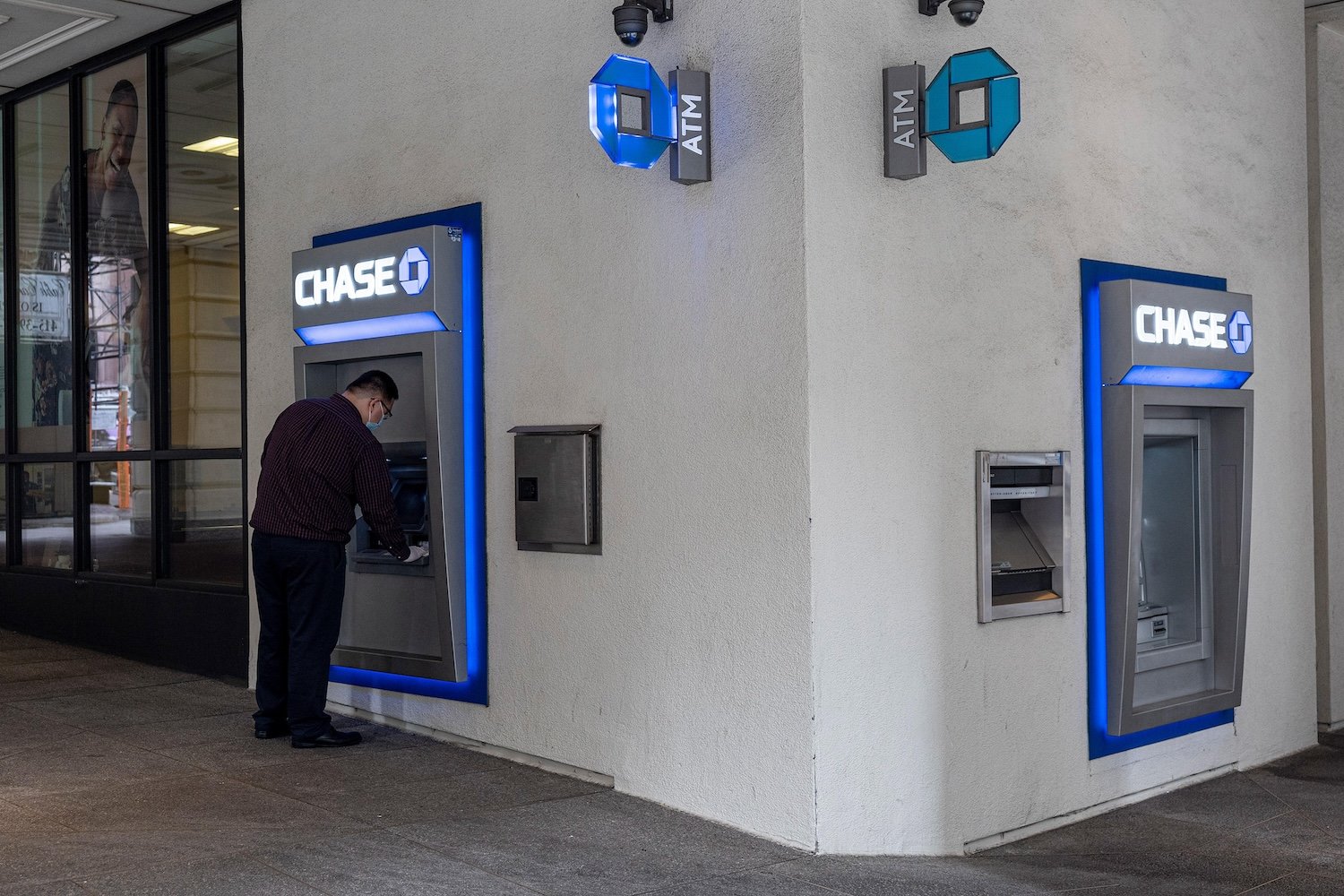
Last weekend, TikTok videos went viral that purported to show how to receive free money from Chase Bank ATMs across the country. The technique involved depositing a check for a large amount of money the user didn’t actually have and withdrawing a smaller but substantial amount before anything officially cleared. In reality, the “glitch” was better known as fraud. And now, JP Morgan Chase has confirmed the bank is reporting the people who committed the crimes to authorities.

“As with any fraud-related issue, we review internally and refer to law enforcement as appropriate,” a Chase spokesperson told the Wall Street Journal on Friday. “Regardless of what you see online, depositing a fraudulent check and withdrawing the funds from your account is fraud, plain and simple.”

It’s not entirely clear how many people may have tried this scheme, but the Journal describes it as “thousands.” The viral meme got so popular that tens of millions of people have watched TikTok videos about the “glitch” at this point, according to the Journal.

One popular video on TikTok features a woman on the phone trying to explain to her mother that they’re letting people get between $40,000 and $50,000 for nothing with this infinite money “glitch.” The mother is rightly skeptical and says she doesn’t want her bank account closed, while her daughter insists her account won’t be closed since it’s just a glitch.

Some videos on TikTok even showed people throwing money they’d ostensibly gotten through this method into the air in celebration. But Chase told the Journal they’ve frozen some accounts who tried it, though, again, the exact numbers haven’t been disclosed. And the bank is giving “surveillance footage and other information related to individuals” to police.

While there were far too many people who believed that this was a “glitch” that wouldn’t get them into any trouble, the tide has certainly turned at this point, with most new videos about the ATM scam ridiculing people who thought it was just a loophole rather than check fraud.

“Only TikTok would transform grand larceny into a ‘life hack’ and rename check fraud as ‘a glitch,’” one user on X wrote after the videos had started to go viral.

The U.S. Postal Inspection Service also tweeted “unlimited money glitch” with a monocle inspection emoji earlier this week, expressing skepticism.

“Don’t believe the TikTok trend, check fraud is a serious crime. You will be prosecuted. If it sounds too good to be true…” the account continued.


TikTok Is in Some Minority Report-Style Legal Trouble


Image for article titled TikTok Is in Some Minority Report-Style Legal Trouble

Image: QubixStudio (Shutterstock)

Just months away from being banned in the U.S., the Federal Trade Commission (FTC) appears to be putting some salt in TikTok’s wound. The agency has issued a bizarre message about referring a complaint about the social media app to the Department of Justice (DOJ).

The FTC issued a statement on Tuesday saying its investigations “uncovered reason to believe” that TikTok and its parent company ByteDance, are “violating or are about to violate the law.” The commission says the violations (or would-be violations) are of the Children’s Online Privacy Protection Act (“COPPA”) and the FTC Act but didn’t provide specifics. Also, the statement mentions how making this action public is something the FTC doesn’t normally do, but it determined that it was in the public’s interest to release the statement. So, we’re letting you know that they think you should know.

A DOJ spokesperson says they can’t comment on the substance of the referral, but the department did consult with the FTC in advance and is considering the claim.

In the statement, the FTC mentions how its investigation began in 2019 with Musical.ly, the predecessor of TikTok. Back then, the commission did find that the company was “aware that a significant percentage of users were younger than 13 and received thousands of complaints from parents” and issued a fine of $5.7 million. It’s unclear if this complaint against TikTok is related or if the investigation found other violations.

TikTok says it has been working with the FTC for more than a year to address concerns it may have.

“We’re disappointed the agency is pursuing litigation instead of continuing to work with us on a reasonable solution,” a TikTok spokesperson said in an emailed statement Tuesday. “We strongly disagree with the FTC’s allegations, many of which relate to past events and practices that are factually inaccurate or have been addressed. We’re proud of and remain deeply committed to the work we’ve done to protect children and we will continue to update and improve our product.”

TikTok is not in the best spot right now, although it’s still incredibly popular. In April, President Joe Biden signed a bill requiring the divestment of TikTok or else face a U.S. ban. The social app is on the 270-day clock to figure out something, or it could wait for the upcoming presidential election and hope Trump wins as he’s suddenly come around to support TikTok. Maybe he found a dance that he liked watching on the app.

TikTok says it fixed a vulnerability that enabled a cyberattack on high-profile accounts


TikTok says it has fixed a vulnerability that allowed for a cyberattack that targeted high-profile accounts, as reported by Axios. A TikTok spokesperson added that the company is currently working to restore access to impacted users.

The social media giant hasn’t announced how many accounts were hit by the attack, but we do know that CNN and Paris Hilton were targets. The hack involved sending messages to users that were filled with malicious code. When the user opened up the message, the code went to work and took over the entire account. Oddly, the impacted accounts didn’t post anything while they were compromised.

It remains unclear who was behind the attack and what their ultimate goal was, aside from taking over celebrity TikTok accounts. TikTok also remains mum as to the specifics regarding the vulnerability that allowed for the attack in the first place. This type of hack is extremely rare, however, so it shouldn’t be a big concern for average users.

The hack is known as a zero-click attack, meaning that you don’t have to click on anything to get infected. In this case, users just had to open up a direct message. The method used here is similar to zero-click spyware attacks, only those hackers target high-profile government officials and journalists for the purpose of secretly gathering information. This attack took over the whole account for unknown purposes.

This isn’t the first big TikTok hack. Last year, over 700,000 accounts in Turkey were compromised due to insecure SMS channels. Researchers at Microsoft discovered a flaw back in 2022 that let hackers overtake accounts with just a single click. Later that same year, an alleged security breach allegedly impacted more than a billion users. That’s a whole lot of people.

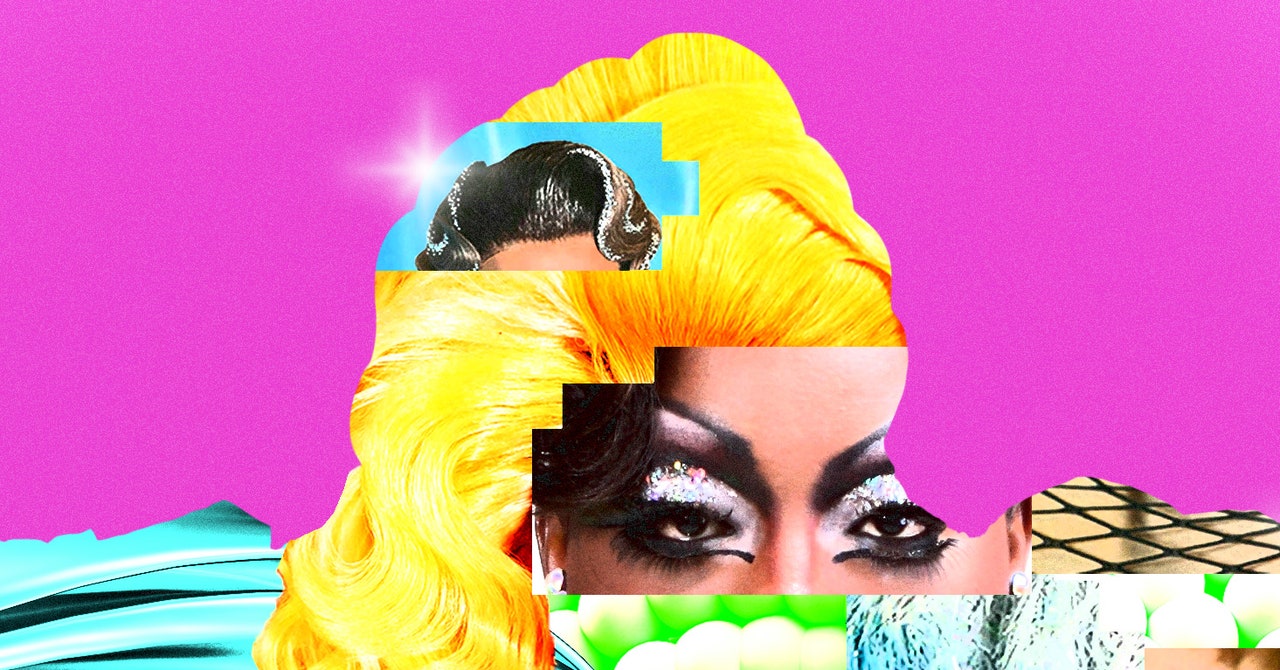
AI-Generated Spoofs of ‘RuPaul’s Drag Race’ Are Flooding Instagram and TikTok


The blending of the real and unreal could explain why some followers of faux Drag Race get so passionate about what they’re seeing on their feeds. Michael says he “lives for the overreactions of fans” who believe his creations are real people. He says people often ask him for a queen’s actual Instagram handle.

“I also get the occasional hate comment from someone saying I’m taking away jobs from real drag queens,” he says. As an illustrator himself, Michael says he’s aware “that AI is coming for my job,” but doesn’t believe his Instagram passion project is taking money away from humans. “If someone isn’t going to the club and tipping a real drag queen because they saw AI Drag Race, that’s a problem with the person and not my Drag Race,” he says.

Fantasy Drag Race’s Más says she has gotten into scrapes with other creators in group chats, too, after questioning how seriously they were taking the whole process. “I’m a queer, nonbinary Mexican in upstate New York,” she explains. “Someone saying that my drag competition isn’t their cup of tea or that some look I made is ugly isn’t going to affect me at all.” Still, she says, it’s understandable that people get emotionally attached to her work.

Unfortunately, that kind of attachment also comes with a sense of looming dread, since the whole idea of AI-generated Drag Race is a play on a big franchise. While some creators argue that what they’re doing is parody, posting what Grimmelmann says are “almost completely useless” (or perhaps pointless) copyright disclaimers absolving themselves on their main Instagram page, others acknowledge that they’re likely building their followings on shaky ground.

A number of accounts, including one that featured exclusively Disney characters, have already been pulled off Instagram, giving creators who use only animated or existing characters more than a bit of pause. “I’m very scared of getting taken down,” says Haus of Dreg’s Boopy. “But if I did, then so be it. I mean, what could I even do?”

“I make sure that I don’t do anything to sexualize the characters, and I don’t do anything to diminish their actual tone,” Horror Drag Race’s Shayne adds. “I’m just merging two mediums—horror and Drag Race—and blending it up into something that both groups of fans can enjoy.”

It’s not just Drag Race fans that are enjoying the AI experience, either. Mhi’ya Iman Le’Paige, a queen from season 16 of Drag Race, just wore a look down the runway that first originated in a run of AI-generated images. One of her season 16 sisters, Plane Jane, follows at least one of the AI creators.

The Official AI Drag Race’s Michael says he has had multiple queens reach out asking to use their fictional creations as inspiration, with an unnamed queen from an international franchise asking Michael to design their entire package of runway looks based just on his Carla Montecarlo images. “I feel like it’s only a matter of time,” Michael says, “before I’m watching TV and spot something that I rendered a year ago.”