Google parent company Alphabet said Monday that it plans to raise $80 billion to help pay for the massive AI infrastructure buildout it has planned. Alphabet will sell off that amount in stock, and will then use the funds to pay for “general corporate purposes, including capital expenditures to scale AI infrastructure and global compute,” the company said in a statement.
Part of the plan involves selling $10 billion in stock to Berkshire Hathaway, the massive global holding company formerly led by Warren Buffet.
“The company is experiencing strong demand for its AI solutions and services from enterprises and consumers, at levels that are exceeding the company’s available supply,” Alphabet said in its statement. “By scaling its investments, the company seeks to expand its foundational infrastructure to support the significant growth opportunity ahead.”
The company added that the stock plan represented a way to “fund its investments in a balanced way while retaining a healthy balance sheet.”
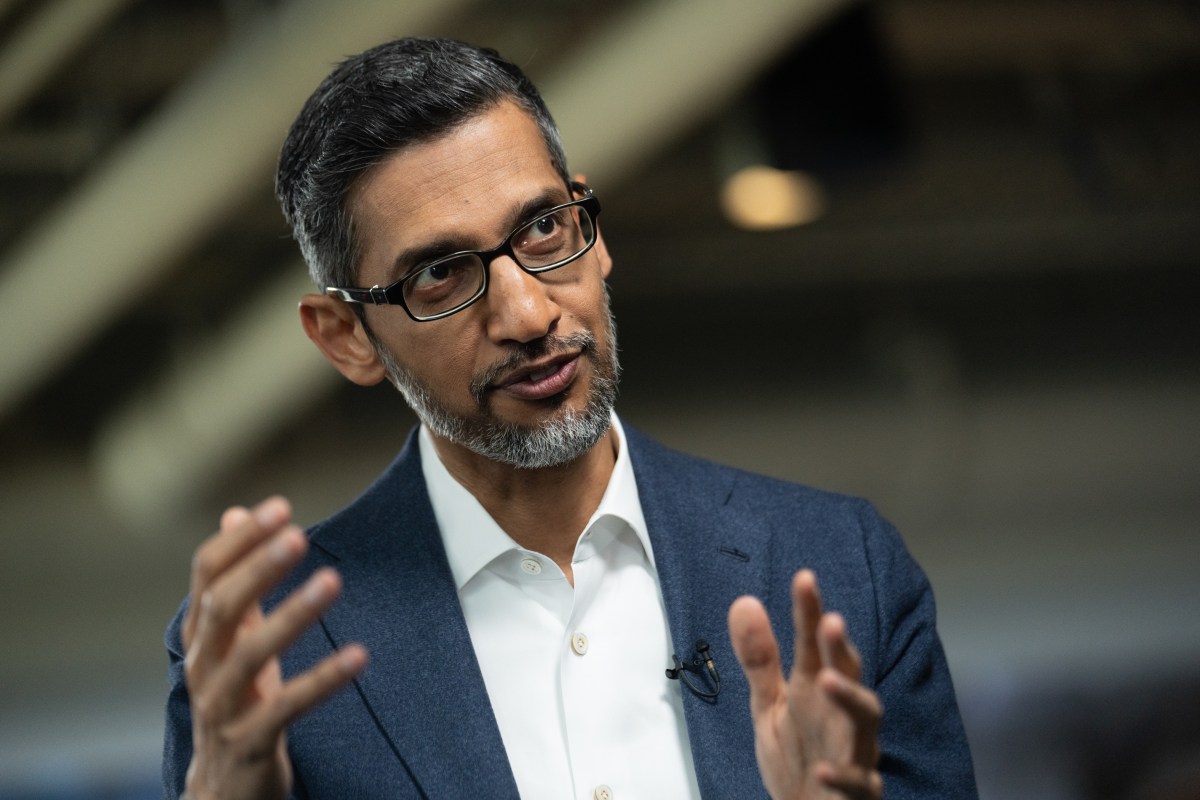
Like other tech giants, Google has announced plans for a massive investment in compute this year, the likes of which will be used to support a flurry of new AI services. At Google I/O last month, CEO Sundar Pichai said that the company expects to spend between $180 and $190 billion on capex before the year is out. Google and other tech giants are expected to spend as much as $700 billion this year on AI capex.
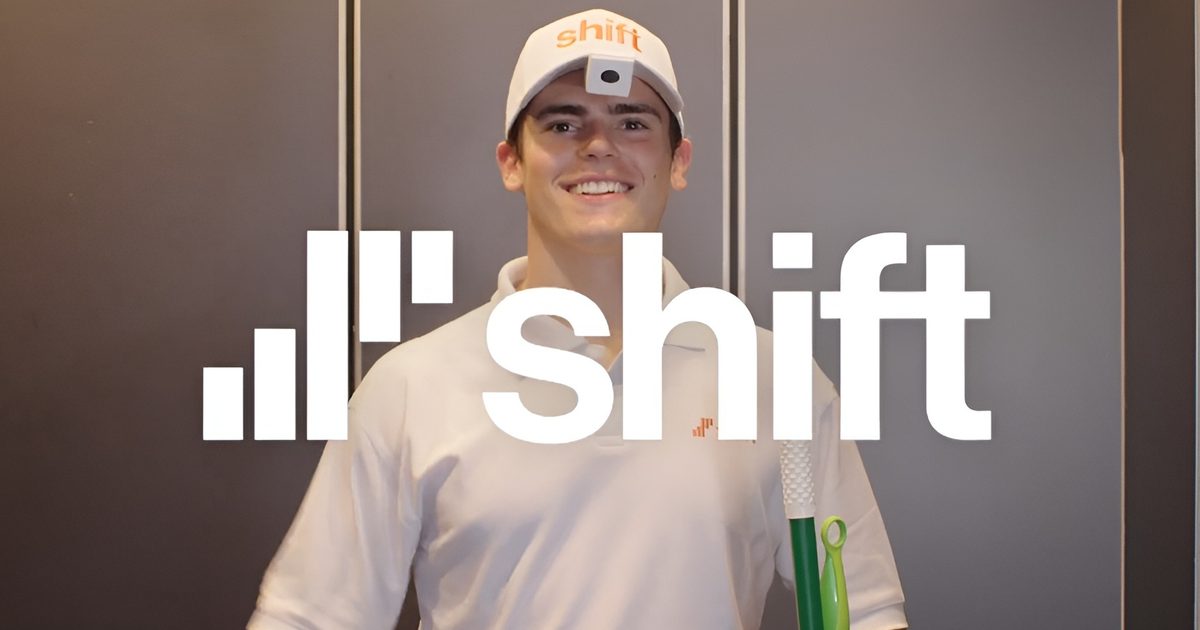
Shift is offering to clean homes for free, but there is one important condition. The company will record those chores to build training data for future home robots.
The New York-based startup is currently offering free cleaning services, in which a vetted operator visits a home and wears a camera-equipped device while performing routine household work. The footage can then help AI systems understand how people clean homes outside controlled lab settings.
A robot cannot learn home cleaning only from staged lab videos. Real homes have cluttered tables, dishes stacked in awkward ways, stains in corners, and objects placed where they should not be. That kind of chaos is what makes household footage useful.
Shift is not the only company chasing this kind of physical AI data. In India, startups and data vendors are already building businesses around this demand, paying workers to record first-person videos of everyday tasks and supplying that footage to AI companies. For robotics firms, ordinary human labour is becoming valuable training material.
This is where it starts to feel a bit dystopian
Cleaning may only be the start. In the announcement video, Shift says it eventually plans to move into other areas like plumbing, cooking, and building.
Today, we’re launching shift. We’re starting by cleaning your apartment in New York City, for free.
Here’s how it works. Book a shift cleaning. A vetted shift operator comes to your home wearing one of our devices. They clean. They leave. You pay nothing.
Trades have largely escaped that conversation because physical work is harder to automate. A chatbot can write an email, but it cannot fix a leaking pipe or clean a messy kitchen. Companies like Shift are trying to close that gap by collecting footage of people doing those exact tasks.
AI and robotics may still need time to match the efficiency and precision of a human worker. But watching companies collect this kind of data to train advanced robots feels like the opening scene of the kind of sci-fi movie that does not end well for humans.
Google is preparing to kick off its annual developer conference, Google I/O 2026, and this year’s event is shaping up to be heavily focused on artificial intelligence, Android 17, and the future of Google’s ecosystem. The conference begins on May 19 at the Shoreline Amphitheatre in Mountain View, California, with CEO Sundar Pichai expected to lead the keynote presentation. The event will be livestreamed globally through Google’s official I/O website and YouTube channels.
While Google I/O has traditionally focused on developers, this year’s announcements are expected to directly affect everyday users across Android phones, Search, Chrome, Workspace, and smart devices.
Google is turning AI into the center of everything
The biggest theme expected at Google I/O 2026 is Gemini AI. Google has already spent the last year integrating Gemini into products like Gmail, Search, Android, and Workspace, but this event may show how deeply the company plans to embed AI into its entire ecosystem.
One of the most anticipated announcements is the next phase of Gemini Intelligence inside Android 17. Reports suggest Android is evolving from a traditional operating system into a more context-aware AI platform capable of automating tasks, generating widgets, handling voice interactions, and proactively assisting users across apps.
DigitalTrends/Google
Google is also expected to reveal more about “Gemini Omni,” a rumored AI model focused on advanced video generation and editing. This could position Google more directly against OpenAI’s Sora and Adobe’s generative AI tools.
Beyond smartphones, AI may also reshape Google’s laptop ambitions. Multiple reports suggest Google could formally unveil “Googlebook,” a new AI-first laptop platform designed to eventually succeed Chromebooks. The devices are expected to combine Android and ChromeOS elements while deeply integrating Gemini AI features into the user experience.
Android 17 and XR could also take center stage
Android 17 is expected to receive several upgrades focused on personalization, multitasking, and AI-powered features. Leaks and previews have hinted at redesigned widgets, enhanced voice input, new digital wellbeing tools, and updates to Android Auto.
Google may also showcase progress on Android XR, its augmented and mixed reality platform. Smart glasses and wearable AI devices have become increasingly important across the tech industry following moves from Meta, Apple, and Samsung. Google previously teased Android XR hardware, and I/O 2026 could provide a clearer look at the company’s long-term strategy.
Why this event matters
Google I/O 2026 arrives at a critical moment for the company. The AI race has accelerated rapidly over the past two years, with OpenAI, Microsoft, Apple, and Meta all competing to define how consumers interact with AI systems.
For Google, this event is not just about announcing new software features. It is about showing that Gemini can become the foundation of Google’s future products rather than simply an optional assistant layered onto existing services.
At the same time, the company faces growing scrutiny over AI-generated search summaries, misinformation risks, and the broader impact AI may have on publishers and the web ecosystem.
What happens next
Google I/O 2026 begins on May 19, with announcements expected across Android, Gemini AI, XR devices, Search, Workspace, and possibly new hardware categories.
If the leaks and reports are accurate, this year’s conference could mark Google’s biggest shift yet toward an AI-first ecosystem – one where Android, laptops, search, and productivity tools all revolve around Gemini.
Productivity software maker Notion is stepping into the agentic era.
In a livestreamed product announcement on Wednesday, the company, known best for its collaborative note-taking app, introduced a new developer platform that extends the capabilities of its custom AI agents, connects with external agents, and allows teams to build automated multistep workflows that can pull in data from any database.
By building an orchestration layer — a system that coordinates AI work across multiple tools and data sources — Notion is positioning itself as more than a note-taker with AI features and instead as a hub where people and agents can collaborate across tools and databases.
In February, Notion first launched its Custom Agents — AI teammates that handle repetitive tasks like answering frequently asked questions, compiling status updates, and automating workflows. Since then, Notion customers have built over 1 million agents, the company says.
However, these agents had limitations. They couldn’t connect with external data or use custom logic. External agents that companies used also didn’t have a way to connect with the Notion workspace. Teams had to work around these problems by using third-party automation platforms or writing their own scripts that run on their own infrastructure.
“It’s true that, historically, Notion hasn’t been the most developer-focused platform,” said Ivan Zhao, Notion co-founder and CEO, during the livestream. “But things are changing.”
Image Credits:Notion
Now, Notion will allow teams to deploy their own custom code. With its new Workers, Notion’s cloud-based environment for running custom code, customers can write their logic and deploy it to a secure sandbox (an isolated environment that keeps the code from interfering with other systems). This allows teams to do things like sync their data into Notion, build custom tools, and trigger work with webhooks — which are automated signals that kick off actions when something happens in another app — without needing to rely on external infrastructure.
You don’t even have to write the code. The company points out that your preferred AI coding agent can do it for you.
The Workers will use the same credit system as Custom Agents, but Notion is making this free through August, so developers can experiment.
Syncing external data sources is also a part of the Notion Developer Platform. Powered by Workers, the database sync feature can pull in data from any database with an API. That means you could access data from places like Salesforce, Zendesk, Postgres, and others within your own Notion databases — and keep the data current.
Zhao noted that this means that Notion’s users can now “use your Notion database as a sheer canvas to power both your workflows and your agents.”
Image Credits:Notion
Workers can also build agent tools with custom logic, for those times when connecting with a third-party via MCP — short for Model Context Protocol, an emerging standard that lets AI tools connect to external data and services — isn’t enough.
Another addition allows Notion’s users to chat directly with external AI agents they use, assign them work, and track their progress, as if they were one of Notion’s own custom agents. At launch, Notion says that Claude Code, Cursor, Codex, and Decagon are supported partner agents, but it plans to add more.
There’s an External Agent API, too, if teams want to connect their own internal agents with Notion, like those they’ve built specifically for their company’s needs.
Image Credits:Notion
Developers and agents interact with Notion’s new Developer Platform via the Notion CLI, a command-line tool for developers, available on the company’s Business and Enterprise Plans.
The Developer Platform represents a shift in strategy for Notion as it becomes more of a programmable platform than just an application, setting it up to compete with other workflow automation platforms. As businesses increasingly look to automate knowledge work and build internal AI systems, a platform that ties together agents, custom code, and live data in one place starts to look less like a productivity app and more like core infrastructure.
It also follows the broader trend among AI companies, which have been moving beyond the AI chatbot to offer agentic tools that can take actions across different software platforms.
“Any data, any tool, any agent — that’s the big picture for the Notion Developer Platform,” Zhao said.
When you purchase through links in our articles, we may earn a small commission. This doesn’t affect our editorial independence.
Reddit is stepping up its fight against bots, and now your account could be asked to prove it is human if the platform detects fishy behaviour.
Reddit CEO Steve Huffman says these checks will be rare, but they are meant to protect what makes Reddit work in the first place – real people talking to real people.
As AI-generated content spreads, Reddit admits it is getting harder to tell who is behind a post. So instead of broad crackdowns, it is focusing on suspicious behavior and adding clearer signals across the platform.
How Reddit plans to separate humans from bots
Reddit
If Reddit detects signs of automation or unusual behavior, it may trigger a human verification check. This could involve simple actions like passkeys or FaceID that confirm a human is present.
In some cases, third-party biometric systems like Sam Altman’s World ID may be used. The platform may also use government-issued IDs in regions where laws require them. However, Reddit says that your identity will stay separate from your account.
The company is also standardizing labels for automated accounts. Approved bots will carry an [APP] tag, making it obvious you are interacting with software. Developers will need to register their tools to get this label, which adds a layer of transparency.
Since Reddit says this is not a sitewide verification system, most users might never be asked to prove anything. Even when such checks take place, the focus will be on confirming a human exists, not identifying who that person is.
At the same time, the platform will continue removing harmful bots at scale, already taking down around 100,000 accounts daily. It is also improving reporting tools so users can flag suspicious activity more easily.
Reddit is not banning AI-written posts outright, but it is drawing a firm line. For now, the platform cares less about how content is written and more about who is behind it.
Google is making it easier to switch from a competing chatbot to Gemini in two ways.
You’ll be able to transfer user information from the other chatbot to Gemini by using a prompt and following a few extra steps.
Chats can also be imported, but they’ll need to be saved in a zip file that’s no larger than 5GB.
The more a chatbot knows about you, the better it gets at offering relevant responses. However, the more you use one AI service, the less likely you are to try out the other options. Who wants to spend all of that time training multiple chatbots? We learned back in February that Google is working on a solution that should make switching to Gemini from a competing chatbot less of a headache. Now we have more information on how the solution will work.
Our investigation into the Google app (version 17.11.54.sa.arm64) has revealed that there are two parts to this solution: import memory and import chats. Starting with the import memory option, you’ll be able to transfer user information from other platforms to Gemini.
When selecting the “Import memory to Gemini” option, you’ll be asked to copy a prompt and paste it into the input box of the other provider. The other provider will then give you a response with whatever it knows about you. You can then copy that response and paste it in the “Paste the response here” box within the Import memory to Gemini page. Tapping the “Add memory” button will tell Gemini to remember the following about you.
In the screenshots above, you can see an example of this process. The prompt provided by Gemini is pasted into ChatGPT and the response from ChatGPT is copied and pasted into paste here box on the Import memory to Gemini page. After tapping on Add memory, you’ll see the following response confirming that Gemini has stored the information into its own memory.
Don’t want to miss the best from Android Authority?
As reported last month, Google is making it possible to import chats from other platforms to Gemini. This will require you to download your conversations from the other AI client and upload them to Google’s service.
Through our APK teardown, we’ve learned that you’ll need to store those chats in a zip file before uploading. You’ll also need to make sure the file isn’t too big, as there will be a 5GB limit.
⚠️ An APK teardown helps predict features that may arrive on a service in the future based on work-in-progress code. However, it is possible that such predicted features may not make it to a public release.
Thank you for being part of our community. Read our Comment Policy before posting.
Some subscribers to the Washington Post have been receiving emails that their subscription rates will be going up, according to the Washingtonian. That part isn’t surprising, given the fact that Post owner Jeff Bezos has reportedly been upset that the newspaper is losing money, especially since ditching about half of his workforce. But some folks who scrolled down to the bottom of the email were surprised when they read about how the new price was determined: “This price was set by an algorithm using your personal data.”
It’s a concept called surveillance pricing, and it’s not entirely new. People can often be charged different prices for the same product, depending on any number of factors. If your phone battery is low, rideshare companies like Uber or Lyft might charge more because they know you’re desperate. Instacart was recently caught charging up to 23% more to some shoppers based on unknown criteria.
Many Democrats aren’t happy about it, including Rep. Greg Casar of Texas. On Monday, Casar wrote on Bluesky that surveillance pricing “should be illegal,” adding, “I have a bill to ban it.”
Last year, Casar and Rashida Tlaib of Michigan introduced legislation called the Stop AI Price Gouging and Wage Fixing Act. And last month, two other Democrats in the Senate, Ben Ray Luján from New Mexico and Jeff Merkley from Oregon, introduced very similar legislation called the Stop Price Gouging in Grocery Stores Act of 2026.
The Washington Post hasn’t explained how it determines pricing by using personal data. But there could be a number of factors, including zip code, estimated income, and purchase history. Bezos, the founder of Amazon, presumably has more data on what people buy than just about anyone in the country. And he’s a big supporter of utilizing AI to maximize profits.
The problem is that AI can’t really make up for losses any business might incur by offering a bad product. The newspaper first hemorrhaged subscribers—250,000 in one week alone—after Bezos stopped the Washington Post editorial board from endorsing Kamala Harris in the 2024 presidential election against Donald Trump.
The Washington Post had no reporters at the Academy Awards on Sunday, according to the paper’s former culture writer. And it was the last of the major news outlets to report that the U.S. had started bombing Iran late last month. The paper has purged any writer on the opinion side deemed to be liberal and has instead become a mouthpiece for the Bezos worldview—a worldview that happens to align perfectly with that of the Trump regime.
Bezos has been criticized for buying the distribution rights to First Lady Melania Trump’s “documentary” Melania for a whopping $40 million, but the movie itself helps explain why he’d bother. There are several shots of the Trumps with Big Tech oligarchs like Elon Musk, Tim Cook, and Bezos himself. All of these guys need something from Trump, whether it’s space contracts or just tariff relief.
News of what Bezos has in store for the future of his newspaper doesn’t instill confidence that it can survive much longer as a respected institution. The Washington Post’s news side still breaks major stories, but the New York Times reports Bezos’s big idea was to chop the newsroom’s budget in half and demand twice the productivity through AI. Columnist Dana Milbank and economics correspondent Jeff Stein both announced they were leaving the Post on Monday.
Businesses are increasingly turning to algorithms to set their prices, and it doesn’t look like that’s going to change anytime soon unless legislators get involved. At least a dozen states are considering legislation about surveillance pricing, but so far, only New York has passed a law in this area. Unfortunately, it doesn’t have much teeth since it only requires companies to notify consumers when a price has been set with AI.
On the other hand, New York’s law may be the only reason we know that the Washington Post is using AI for subscription rates. The paper has little other incentive to include the disclaimer: “This price was set by an algorithm using your personal data.” Notifying consumers may not fix the problem of surveillance pricing, but at least people can take it into account when deciding where they want to spend their money.
Legendary filmmaker Steven Spielberg voiced concerns about the growing role of artificial intelligence in creative industries during an appearance at SXSW in Austin. Speaking during an interview session at the 2026 event, Spielberg made it clear that while he supports technology in many fields, he strongly opposes AI replacing human creativity in filmmaking.
Spielberg Draws A Line On AI In Creative Work
During the discussion, Spielberg revealed that he has never used AI in any of his films, a statement that drew enthusiastic applause from the audience. The director emphasized that although artificial intelligence can be useful in certain disciplines, it should not replace the people responsible for storytelling and artistic expression.
“I am not for AI if it replaces a creative individual,” Spielberg said during the conversation.
Michael Loccisano / Getty Images
The filmmaker explained that in his own creative process, including television writing rooms, he still relies entirely on human collaboration. According to Spielberg, there is no “empty chair with a laptop in front of it” representing an AI contributor. For him, the development of stories and characters remains a fundamentally human activity.
Spielberg’s stance reflects broader concerns across Hollywood, where writers, directors, and actors have increasingly debated how AI might affect jobs and creative control in the entertainment industry.
A Director Known For Exploring Technology
Despite his skepticism toward AI replacing creative professionals, Spielberg is not opposed to technology itself. Throughout his career, many of his films have explored futuristic technologies and their potential consequences.
His filmography includes classics such as Jaws, E.T. the Extra-Terrestrial, Close Encounters of the Third Kind, and Raiders of the Lost Ark. Spielberg has also examined the relationship between humans and advanced technology in projects like Minority Report, Ready Player One, and A.I. Artificial Intelligence.
These films often present technology as both a powerful tool and a potential threat, themes that echo Spielberg’s real-world perspective on artificial intelligence.
AI’s Growing Presence In The Entertainment Industry
Spielberg’s comments come at a time when AI tools are increasingly entering the filmmaking and television production landscape. Technology startups are developing AI-powered platforms designed to assist with script development, editing, and visual effects, often marketing them as tools that can reduce production costs.
Disney+
Major streaming platforms are also exploring how artificial intelligence might streamline content creation. Amazon has reportedly begun testing AI tools for film and television production. Meanwhile, Netflix recently acquired an AI-focused filmmaking company associated with Ben Affleck in a deal reportedly valued at around $600 million.
While these developments could reshape how films and shows are produced, they have also sparked ongoing debates about whether AI will assist creative professionals or eventually replace them.
The Future Of AI In Hollywood
Spielberg’s remarks highlight a central question facing the entertainment industry: how to integrate new technologies without undermining the human creativity that defines filmmaking.
For independent filmmakers working with limited resources, AI tools may offer opportunities to reduce production costs or speed up certain tasks. However, many established creators argue that storytelling should remain driven by human imagination rather than automated systems.
As AI continues to evolve and spread across the entertainment industry, discussions like the one at SXSW suggest that Hollywood’s biggest names are determined to ensure technology enhances creativity rather than replacing it.
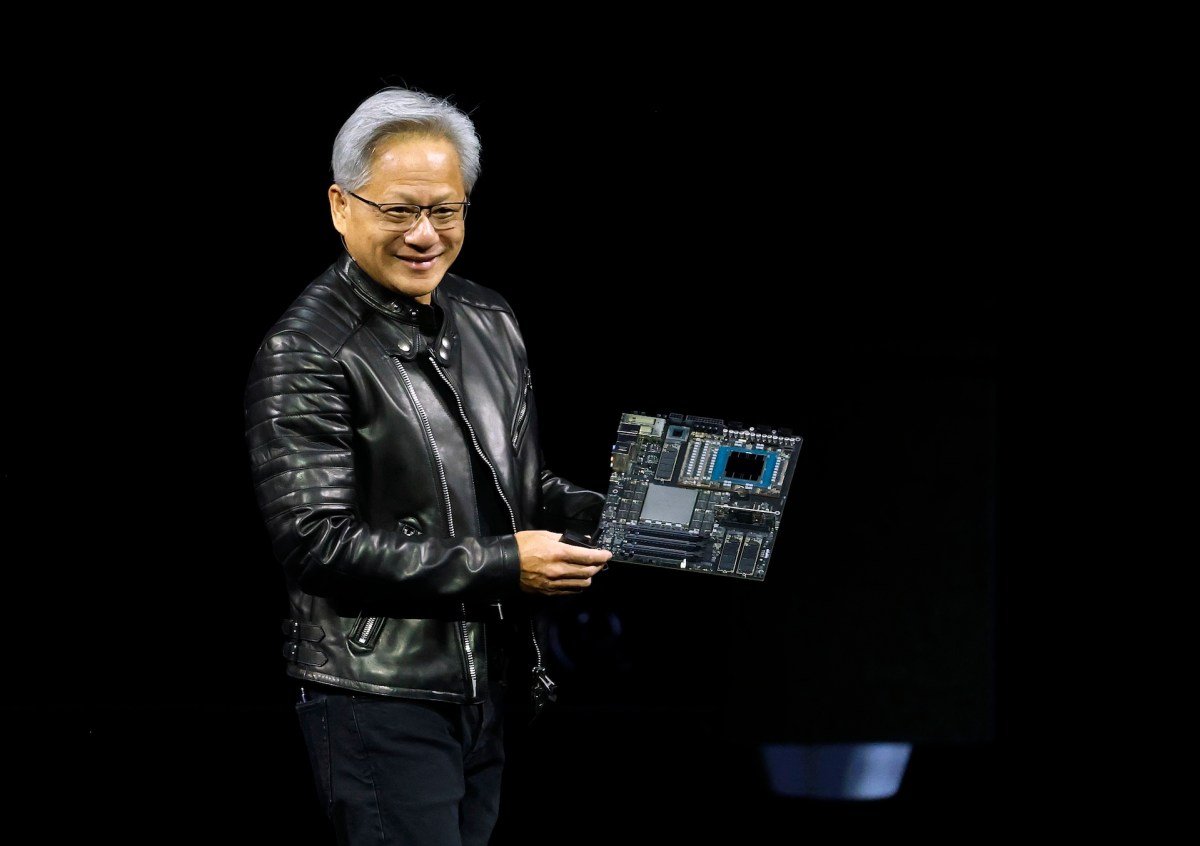
Nvidia kicks off its annual GTC developer conference in San Jose, California, next week with CEO Jensen Huang’s keynote scheduled for Monday at 11am PT / 2pm ET.
GTC — which stands for GPU Technology Conference — is Nvidia’s flagship annual event, where the chipmaker typically uses the spotlight to announce new products, champion partnerships, and lay out its vision for the future of computing. Huang’s keynote will focus on Nvidia’s role in the future of computing and AI. You can watch the two-hour address in person at the SAP Center or livestream the talk on the event’s website.
The broader three-day event is focused on what’s coming next for AI across industries including healthcare, robotics, and autonomous vehicles, among others.
On the software side, it’s rumored that Nvidia will release an open source platform for enterprise AI agents, dubbed NemoClaw, as originally reported by Wired. The platform would give businesses a structured way to build and deploy AI agents (software that can carry out multi-step tasks autonomously) and would position Nvidia to mirror similar offerings from companies like OpenAI.
On the hardware side, the company is also rumored to be releasing a new chip designed to accelerate the AI inference process — the process by which an AI model applies what it has learned to generate responses or make decisions, as distinct from the initial training process, which requires far more computing power. Faster, cheaper inference is widely seen as one of the last bottlenecks to scaling AI applications broadly. The chip, if confirmed, would represent Nvidia’s latest bid to dominate not just the training market, where it already commands an estimated 80% share, but the inference market as well, where competition from custom chips built by Google, Amazon and others is fast intensifying.
Kevin Cook, a senior equity strategist at Zacks Investment Research, told TechCrunch that attendees should also expect to learn what the company plans to do with its relationship with Groq, the inference company Nvidia reportedly paid $20 billion late last year to license its technology. There’s a lot of curiosity around this tie-up, given that Jonathan Ross, Groq’s founder, Sunny Madra, Groq’s President, and other members of the Groq team agreed to join Nvidia to help advance and scale that licensed tech.
There will, of course, also be a range of partnership announcements and demonstrations showcasing Nvidia’s AI capabilities across industries.
Netflix is teaming up with Ben Affleck and leveraging the goodwill he’s earned with his views on AI to bring even more AI tools into filmmaking.
The streaming giant announced today that it has acquired Affleck’s filmmaking tech company, InterPositive, which the actor quietly founded in 2022 to develop AI-powered tools for filmmakers.
Netflix did not disclose the terms of the acquisition. But Variety reported that InterPositive’s 16-person team will join Netflix, with Affleck serving as a senior adviser. The company reportedly plans to offer InterPositive’s tools to its creative partners rather than selling commercial access to them.
In a press release, Affleck explained his motivation for founding InterPositive. He wrote that after spending time observing the early rise of AI in film production, many of the models fell short. So, he decided to take matters into his own hands.
“Together with a small team of engineers, researchers and creatives, I began filming a proprietary dataset on a controlled soundstage with all the familiarities of a full production,” Affleck said. “I wanted to build a workflow that captures what happens on a set, with vocabulary that matched the language cinematographers and directors already spoke and included the kind of consistency and controls they would expect.”
Affleck said the model was specifically trained to understand “visual logic and editorial consistency.”
In a video accompanying the announcement, Affleck emphasized that the tool is “not about text prompting or generating something from nothing.”
Instead, filmmakers can build their own model using their movie’s footage and then use it in post-production to make changes like removing stunt wires, creating missing shots, or adjusting backdrops, colors, and lighting.
The news is somewhat surprising after Affleck’s past comments expressing a more skeptical view of AI have gon viral. In particular, he has questioned AI’s ability to write, saying that “by its nature it goes to the mean, the average.”
“I don’t think it’s very likely that it’s gonna be able to write anything meaningful, or in particular, that it’s going to be making movies from whole cloth, like Tilly Norwood. That’s bullshit,” Affleck said on The Joe Rogan Podcast in January about AI, referencing the AI-generated actor. “Really, what it is, it’s going to be a tool just like visual effects.”
So it’s no surprise Netflix is tapping Affleck to help get filmmakers on the AI bandwagon.
The company said last year that it plans to expand its use of AI. In a letter to shareholders in October, Netflix wrote that it aims to focus on “empowering creators with a broad set of GenAI tools to help them achieve their visions.”
The company also highlighted some early examples of the technology in action. Netflix touted its use of de-aging AI in Happy Gilmore 2, and said the producers of Billionaires’ Bunker used AI tools to create concept art.
Even before that, Netflix announced in July that the Argentinian sci-fi series El Eternauta featured what the company described as the “very first GenAI final footage to appear on screen” in a Netflix show or film
With this new partnership, it’s pretty safe to assume that we’ll be seeing more AI show up in Netflix productions. Hopefully, Affleck can help prevent it from being too cringe.