Donald Duck, arguably tied with Goofy as the second most recognizable Disney character after Mickey Mouse, starred in over 150 short films throughout the 1930, ’40s, ’50s, and ’60s. 2024 marks the 90th anniversary of the pantsless Pekin, who persisted through the second half of the 20th century thanks to Disney Channel replays of his shorts, appearances in DuckTales, and the Kingdom Hearts games.
Disney is celebrating the duck’s birthday with the usual merch drops and theme park shenanigans, but its best gift to fans is a brand-new short: DIY Duck, Donald’s first solo short outing since 1961’s The Litterbug. Directed by veteran Mark Henn, who has remained on Disney’s hand-drawn animation team throughout the quarter-century pivot to 3D CG, DIY Duck checks all the boxes of a classic Donald short, starting with a mundane day-in-the-life problem that puts the character through the cartoon wringer.
Donald was always my favorite cartoon character: Landing between the more wholesome Disney gang and Tex Avery and Chuck Jones’ elastic, ecstatic WB cast, Donald was just… some dude… trying to learn how the world works and get by. His temper could run hot, but he was solutions-oriented. He wanted to make a buck, but wasn’t anything like Scrooge McDuck. His curiosity and zest for life meant Disney could drop him into a PSA every now and then — Donald wanted to learn, and we wanted to learn with him. I will dig up what might be his greatest adventure, Donald in Mathmagic Land, once a year just to remind myself that, yeah, math rules.
These days, Donald’s mostly a relic, playing second fiddle to Mickey in the rare instances when Disney approves its mascot character for media use. That’s a bummer, and DIY Duck is a great reminder. Today’s more sophisticated toons are often fantastical and larger than life even when speaking to nuanced human experiences. So it’s kinda nice to have a modern short, simple yet stylish in its cartooning, that is about fixing a crack in a wall — something that I, like Donald, would be absolutely terrible at. In a neat throwback, DIY Duck also pays tribute to Donald’s classic rage voice by using archive clips of Clarence “Ducky” Nash, who voiced the character for 50 years.
While Disney maintains a hand-drawn department, the company mostly deploys it for stunts (like DIY Disney and last year’s Once Upon a Studio short) and skeletal work on 3D CG features. During a visit to Walt Disney Animation for 2014’s Big Hero 6, I was fortunate to watch Henn in action, cartooning by hand for a scene that would later be painted over and rendered with the finished CG art. Whether Disney will ever make a new hand-drawn feature — or, heck, a steady stream of Donald shorts! — is unclear, but by keeping Henn and the team on board, the studio implicitly understands the soul of the medium, whether it’s breathing life into 3D characters or reviving a legacy for an act of tribute. I’m just hoping this isn’t the last time we see Donald in this form over the next 60 years.
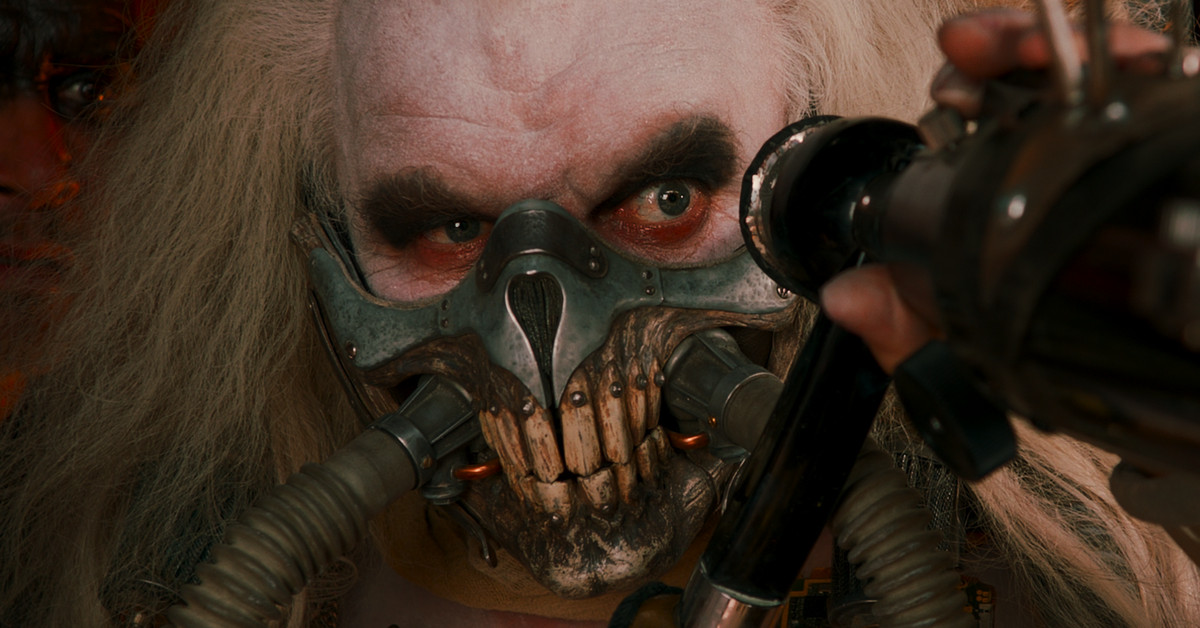
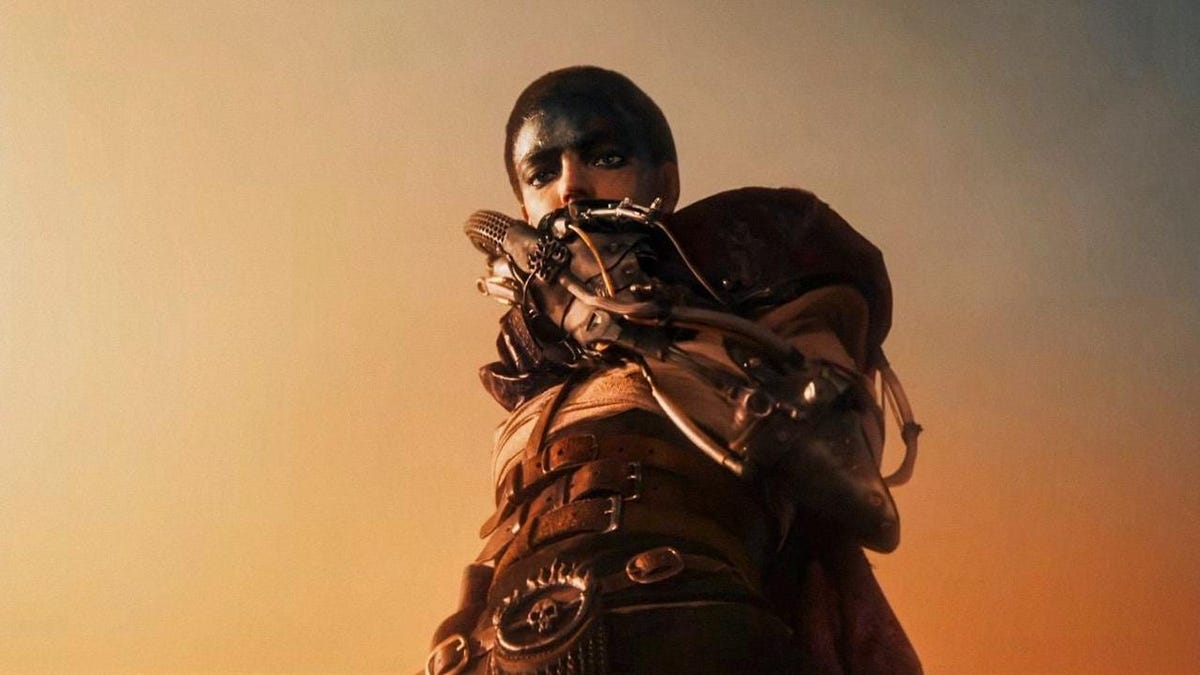
George Miller’s Furiosa: A Mad Max Sagacomplements and enhances the impact of his 2015 blockbuster Mad Max: Fury Roadin a lot of ways, but there’s only one I can’t stop thinking about: How little the new movie has to say about Immortan Joe, the original movie’s iconic arch-villain.
Sure, Joe’s lack of interaction with Anya Taylor-Joy’s Furiosa could be simply because Hugh Keays-Byrne, the actor who first put Immortan Joe on the screen, died in 2020. Lachy Hulme assumes the role for Furiosa, but perhaps George Miller reduced it out of respect for Keays-Byrne, who he worked with for many years.
But I’m skeptical. Joe’s consistent secondary status in Furiosa’s origin story fits the overall themes of Furiosa too well to be a coincidence: Immortan Joe, the demon of Imperator Furiosa’s last stand, wasn’t her nemesis at all. In fact, he wasn’t her anything.
Image: Warner Bros. Entertainment/YouTube
This is in great contrast to Fury Road, where their beef seems deeply personal. Max Rockatansky wanders into somebody else’s narrative in Fury Road, as his stories usually go. This time, those somebodies are Furiosa (Charlize Theron) and Immortan Joe.
While Fury Road only subtly hints that Furiosa was once one of Joe’s captive harem of wives and incubators — the white wrappings of Furiosa’s top evoke the Wives’ impractical shifts — Theron confirmed that piece of her backstory in interviews. So Furiosa seems to have really personal reasons to hate Joe. And his response to her betrayal is presented as a towering rage, cresting mushroom cloud-like out of all proportion to her ability to withstand him.
Not to diminish the agency of the Five Wives in their own escape, but Joe considers them property that’s been stolen from him, not allies who betrayed him. Furiosa, however, he considers a traitor, worthy of his personal anger. And in the end, she’s the one who gets the honor of finally taking him down, underscoring her place on the same narrative level he occupies as Fury Road’s primary villain.
Which is why it’s so wild that Furiosa says, quietly and implacably throughout its entire run time, that Joe actually isn’t even a main character in her story. Sure, he buys her, but then he forgets she even existed. He didn’t take anything from her that hadn’t already been taken, didn’t teach her anything she hadn’t already learned from someone else, didn’t give her anything she hadn’t already taken for herself. When they do share scenes, and even trade dialogue, there’s no interpersonal ire or affection in either direction. In spite of their characters’ intensity, Hulme and Taylor-Joy keep a neutral distance of emotion.
It turns out, in Furiosa, that Furiosa’s life was actually framed by the completely different, utterly pathetic figure of Dementus, the Wasteland warlord who tortured her mother to death, sold Furiosa into slavery, killed her closest friend, and cost her her right arm. And just as emphatically, Furiosa says, Furiosa moved beyond revenge years before she ever stood against Joe.
What you saw in Fury Road, Furiosa says, was the furthest thing from personal to Furiosa. Immortan Joe was never The Guy. He was just the guy in the way. And the “guy” part might be the most important one.
Photo: Jasin Boland/Warner Bros. Pictures via Everett Collection
The conversation that immediately surrounded Fury Road was about Immortan Joe as a Wasteland illustration of the death cult of capitalism and toxic masculinity. His very recognizable philosophy reduces all non-elites to things — women to Wives (sex slaves, forcibly impregnated) or Mothers (enslaved to produce breast milk for food), and men to War Boys (emphasis on boys), interchangeable cannon fodder addicted to the lie that they can only find purpose in violence for the True Leader.
This was all emphasized by the emasculating nature of Furiosa’s rebellion. After all, by the language of a country-and-Western song, she’s wounded him in the most devastating way a man can be wounded, by stealing his wife (Wives), his money (water), his car (the War Rig), and maybe even his dog (Nicholas Hoult’s hapless character Nux, if we want to stretch the metaphor a little bit).
Immortan Joe is an electrifying villain, and Furiosa doesn’t exactly skimp on him! A scene contrasting Dementus’ shaky appeal to the self-interest of the masses with the unshakable belief created by Joe’s death-cult propaganda is among the film’s most chilling. But there is an eternal risk in presenting such an operatic villain who also represents such a wide-ranging theme. If you’re not careful, making them powerful and capable enough to claim villain status also risks making them look aspirational. You can swing right around to making them seem cool.
Which is why it’s so damn smart of Furiosa to put this final nail in the coffin of Joe’s emasculation, by establishing that Fury Road’s sense of personal beef was all on Joe — on his fear, and his vulnerability, not on Furiosa’s. He isn’t even important to the woman who’s unmanning him.
In a cliche reversal for the cinematic ages, Immortan Joe was, for Furiosa, just Tuesday.
Nearly 10 years ago, George Miller brought the Mad Max franchise blasting back to relevance with Fury Road. The film wasn’t just well-liked, it was basically a game changer for plenty of moviegoers and delivered them something they’d never really seen at the time. And of the many things to love about Fury Road, people fell greatly in love with Charlize Theron’s Imperator Furiosa, who is more of the film’s true protagonist than Tom Hardy’s Max.
Spoilers of the Week: August 12th
When Miller revealed he was following up Fury Road with a prequel focused on Furiosa, eyebrows were definitely raised, particularly when Anya Taylor-Joy was cast as a young version of the character. Then we got to see Furiosa’s first trailer, and it instantly became clear Miller was about to cook yet again. Now that it’s out, people have gotten to experience what’s been said in the weeks since its premiere at Cannes: Furiosa: A Mad Max Sagais the real deal, and a more than welcome return to mad, mad car-heavy wasteland.
While not quite the revelation that Fury Road was, or at least not in the same way, critics and audiences have been fairly high on Furiosa. Amid criticisms of the pacing and visuals, those who like it really like it, particularly its cast and 15-year scope that makes it feel like the post-apocalyptic epic it’s been marketed as. With the summer movie season in full swing, this film will probably end up as the highlight for many once all is said and done.
If you saw Furiosa, let us know what you thought about it. Did it live up to whatever expectations you had, and wht do you want out of Miller and Mad Max next? Tell us in the comments below.
Not every filmmaker gets their debut feature enshrined in the Criterion Collection. But not every filmmaker’s debut feature packs the punch Girlfight does.
Decades after release, Karyn Kusama’s debut movie, Girlfight, still holds up — it’s no surprise that it launched her career as a director of subversive horror drama (Jennifer’s Body, The Invitation) and memorable television (Yellowjackets, Halt and Catch Fire, The Man in the High Castle), along with launching Michelle Rodriguez as a star. Girlfight is coming to the Criterion Collection on May 28, with a brand-new 4K digital restoration supervised by Kusama, new interviews and commentary from the director, and a slick new cover by Jillian Adel.
Girlfight, the story of a troubled high schooler who takes up boxing in secret as an outlet for her frustrations, aches with high school emotions in and out of the boxing ring. At the same time, it subverts boxing-movie tropes. Rodriguez plays Diana Guzman, a teenager who’s frequently in trouble for fighting at school and alienated from her father (Paul Calderón) at home. When she tries boxing in secret to get some of that tension off her chest, she shows a real talent for the sweet science. At the gym, she meets a boy (named Adrian, making Diana the Rocky in this equation) and a new father figure in her trainer (Jaime Tirelli).
Image: Screen Gems/Everett Collection
Making Girlfight was a long process for Kusama, who wrote the movie after taking up boxing herself in 1992. Production companies begged her to cast a white woman in the lead role, but she stood her ground, insisting on a Latina lead and finding Rodriguez in an extensive audition process focusing largely on non-professional actors. After financiers backed out two days before pre-production in 1999, legendary filmmaker (and Kusama’s former mentor) John Sayles and his creative partner and producer Maggie Renzi stepped in and helped fund the film.
Polygon spoke to Kusama on a video call ahead of the movie’s Criterion release. We spoke about revisiting her first movie for the restoration, when she knew she had a star in Rodriguez, and whether Girlfight could be made the same way now.
Polygon: Congratulations on Girlfight being added to the Criterion Collection. When did you find out, and what was your reaction?
Karyn Kusama: This must have been last year, Criterion reached out to me and said, “We’d really like to remaster Girlfight and release an edition of the film.” I was floored and so excited. I am such a Criterion nerd, as you might imagine, so it was literally a dream come true. For me, this just felt like the ultimate stamp of approval.
Does it mean more to you because it was this one?
I think what I appreciate is that it’s my first movie. And as someone now who’s got more than 20 years of time and experience to look back at the film, there’s so many things I might do differently — I might improve, I might cut, or change or refine. And so the idea that it can still work for anyone, despite the fact that I would love to get back in there and completely retool it, that’s gratifying.
Watching it now, I was struck by the balance between the boxing elements, the family drama, the character study, Michelle Rodriguez’s amazing performance, and the high school romance. How do you think back on the balance of all those elements?
I never felt like I would want to make a purely boxing-oriented movie. In some ways, the true story is about this character entering a new world, and finding a place for herself within it. And in doing so, opening herself up to a kind of vulnerability that she doesn’t feel capable of exposing at home. It is so much about this tension between the closed emotional world of her family life and the more expansive emotional world of, paradoxically, a boxing ring. So that was something I knew I wanted to do. But I don’t know at the time if I was really weighing the balance of it all.
In somewhat ham-fisted terms, I was trying to tell a story about a young woman for whom traditional expressions of femininity didn’t quite feel true to her. And so it was so much about trying to find a path toward self-acceptance, toward some kind of openness, to whatever kind of weirdo she ultimately was going to be.
When you look at the movie now, what would you want to tweak?
I think I would probably lift some scenes and tighten some scenes. I think I would know a little bit more how to evoke the same emotional impact with fewer cuts or fewer shots. I would just get to the heart of the matter faster. But that being said, I think some of what I wrestle with in the movie is also inherent to it, you know, which is a lot of non-actors, a lot of young, raw performances. And in some respects, that’s part of the charm, I hope, of the movie.
And it helps that the central three of her family are so strong.
Oh, good. Yeah, I think so. Obviously, Paul Calderón [who played Marie’s father] was a wonderful and well-known actor at the time, and still, and so he could kind of anchor the rest of the cast. But you know, it’s funny, I always find with movies, for me, it’s a process of making the thing, hoping that I made the truest thing I could make, and then moving on and not looking back. And so what’s really weird about doing the Criterion edition is — the process of looking back is both wonderful and painful. I was looking at the movie a lot. So it gave me a lot of time to think about, Oh, I could have done that. I should have done that. A lot of woulda, coulda, shoulda.
Image: Screen Gems/Everett Collection
Do you think things have changed in the industry over the past two decades? Would making Girlfight now be the same, easier, or more difficult?
That’s something I have to chew on. Because in some ways, obviously we all want the answer to be “Things are better now.” I think the hard reality is that we are still almost even more entrenched in a star-driven system. So it would be even harder now, I think, to make a movie with a completely fresh face as the center of the film.
And luckily for me, when I made Girlfight, Michelle ended up having a true electric, charismatic star power that allowed her to continue to make movies. But now I find it’s still really, really hard. In terms of the questions around representation? I think the conversations are more deliberately coded around what is permissible. But I think ultimately, there is still a lot of resistance to a complicated or complex depiction of the world as we actually live in it.
Working with Michelle Rodriguez on the movie, what did you learn about what makes a movie star and how to showcase that?
Oh, that’s such a good question. I mean, first of all, she has a funny un-self-consciousness as an actor. In the initial auditioning process, and initially working with her, I had to kind of remind her of staying in character and staying on book and all of the basics around being an actor. What she didn’t have was shame. There was a quality to her of just like, I’m here. The world can start now. And that quality of guileless confidence is really important. She demanded attention.
And that simple kind of intensity is something that I’ve really learned is actually not common across the board. It’s not like every actor I work with has that same intensity, though I’ve certainly worked with actors who had more training and more experience and more discipline. Michelle has a kind of ineffable charisma.
Was there a specific moment with her where you were like, Oh, she’s different, or is that just something that you learned over the course of filming?
It’s really funny, because I have such a vivid memory of doing all those initial auditions and having hundreds of people in front of us for interviews and short auditions. And we taped them all. And because I’m kind of obsessed with thoroughness, I decided to just go through the process of looking at all the tapes.
And it was in that moment of looking at her tape, even though she was untrained, completely inexperienced, completely unprepared, kind of every negative you could imagine, she held the screen with such totality that I felt like, Huh, that’s interesting. I have to keep looking at her, I have to keep engaging with this presence. And so it just meant we kept bringing her back. But that initial feeling about her was definitely something that now I look at and I realize, Oh, that was her. That was her star power.
Image: Screen Gems/Everett Collection
Would you have predicted her going on to star in major franchises like the Fast and the Furious?
At the time, I couldn’t, but she called it for herself way earlier than I could have. Because she always knew what she liked. Immediately when she read The Fast and the Furious, she was like, I know I have to do this, and I know it will be a global franchise. She understood that part of entertainment a lot better than I did.
Have there been opportunities for you to work with her on projects of that scale? Is that something you’re interested in?
You mean like the giant franchises?
Yeah. Doesn’t strike me as totally your vibe, but you never know.
No, it’s not really my vibe. And a lot of that just has to do with the idea that you need to be making something that is of a piece of a very large entity with a lot of history, and a lot of relationships that people are already bringing to the characters, into the worlds. For that reason, I’m not sure I’d be the best candidate for that kind of work, but never say never, I guess.
You’re in this really interesting space with both TV and movie opportunities. Where’s your focus next, and what do you see yourself moving toward?
I need to be making personal movies again. That’s where I really learn and flex and experiment and fail and try and all of it, you know. So that’s what’s next for me, is just figuring out what the next feature is going to be.
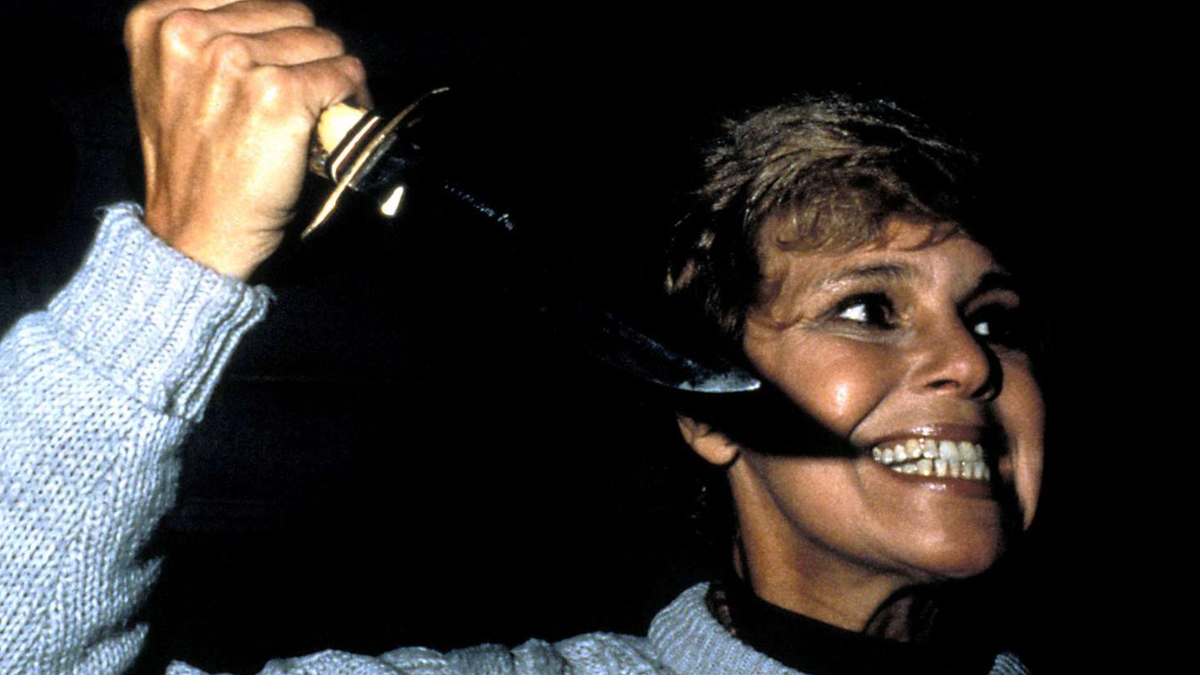
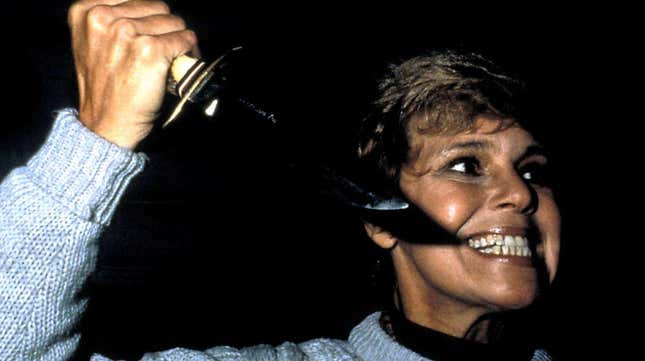
Friday the 13thprequel series Crystal Lake hasn’t aired a single episode and it already has a body count. The series, set for streaming on Peacock through A24, will no longer have Bryan Fuller—the Hannibalcreator who’s no stranger to leaving projects early, including American Gods and Star Trek: Discovery—guiding the summer-camp slaughter.
Strange New World’s Melissa Navia Talks Flying the Enterprise | io9 Interview
Fuller broke the news in a post shared to his Instagram and X accounts. “Adapting classic horror is something I have some experience with. These shows require a vision that elevates and transforms, as well as delivers what audiences have come to expect, which is an ambitious and risky endeavor. It requires people to take the leap with me,” he wrote. “When it works, as with Hannibal, the results can be powerful for the storytellers and the audience. I couldn’t be more proud of the work my co-showrunner Jim Danger Gray and I were able to accomplish with our brilliant writing staff despite the challenges we faced.”
Fuller continued, “For reasons beyond our control, A24 has elected to go a different way with the material. We hope the final product will be something Friday the 13th fans all over the world will enjoy.”
A report in Variety quotes Fuller’s social media post and characterizes the show’s writer, executive producer, and showrunner as having been “fired from the show due to creative differences.” However, the trade notes there’s still hope for the series itself, citing an unnamed source as confirming “the series order remains in place with hopes to line up a new showrunner as soon as possible.” Also, in contrast to a report last year that Fuller had cast original Friday the 13th star Adrienne King in the series, Variety writes that “production had not begun on the series, nor had any casting taken place.”
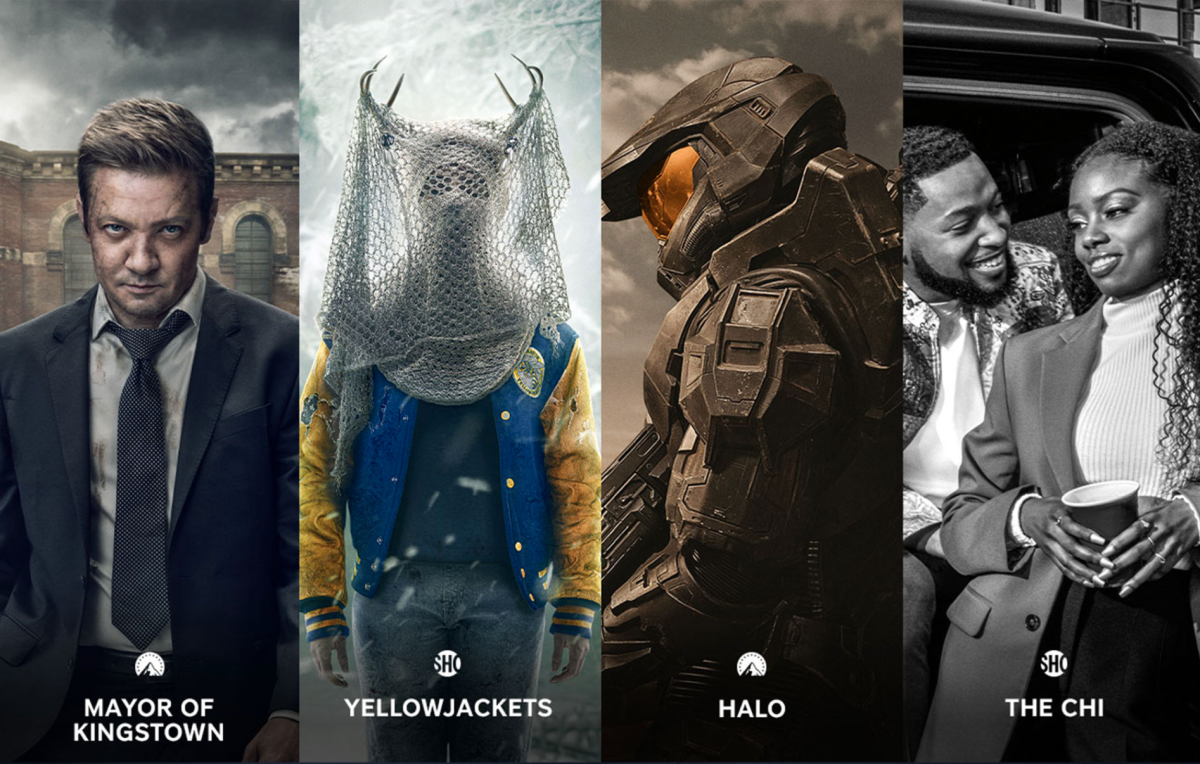
Paramount+ with Showtime annual subscriptions are half off right now, bringing the yearly cost down to $60 down from $120. You have to pay for the year up front, which is never fun, but the offer is available to both new and returning subscribers. That’s not a bad deal, considering you get content from two streaming services that have joined in a blessed union to become one.
Paramount+ with Showtime
Paramount+ is home to all things Star Trek, yet that particular bonusseems to be shrinkingall of the time. It’s also home to the surprisingly funny Sonic-adjacent Knuckles TV show, which has a crazy fight scene featuring the 80-year-old, yet still iconic, Stockard Channing. Other notable releases on the streamer include the dad-approved Tulsa King, Jeremy Renner’s Mayor of Kingstown and that Halo adaptation that people compare unfavorably to Fallout. It’s one of our favorite streaming services, even if Halo isn’t quite up to snuff.
Showtime has been around for decades and has a diverse lineup of shows, like Yellowjackets, Billions, Dexter, House of Lies and the list goes on and on. It’s also home to Twin Peaks: The Return, my favorite show of the 2010s. The Chi just returned, which is a big deal to fans, and Ewan McGregor’s A Gentleman in Moscow looks decent. It’s Showtime. You know the deal.
This offer ends on July 14, so you have plenty of time to think about if you want to revisit Shameless or check out that Frasier reboot. Just remember to cancel once the year is up, as the subscription will auto-renew at the full price of the plan.
My Hero Academia returns this Saturday with the highly anticipated premiere of its seventh season. The latest season of the mega-popular superhero action anime is set to adapt the “Star and Stripe” arc of Kōhei Horikoshi’s original manga. That means the arrival of America’s No. 1 Hero, Star and Stripe, in Japan to aid Izuku Midoriya and his classmates in their battle against Tomura Shigaraki and the Paranormal Liberation Front.
Since its debut in 2016, My Hero Academia has grown to become one of the most popular shōnen anime in the world, inspiring a fandom arguably magnified by the pop culture shift instigated by the phenomenon of the Marvel Cinematic Universe and the DCU. During this year’s Crunchyroll Anime Awards, Polygon had the opportunity to speak to multiple celebrity anime fans about their love of My Hero Academia, as well as ask what quirk they think they would have if they lived in the world of Horikoshi’s superhero epic.
Megan Thee Stallion
“If I could choose my own quirk, I would choose to be a part of the Todoroki family because I feel like those are already quirks that I would have. Because I’m Tina Snow; that’s my ice powers, and I’m the Hot Girl coach; that’s my fire power. I just feel like that’s where I would be.”
Iman Vellani
“Freezing time, but without me aging. I would like more sleep; I would like more time to watch TV and movies. Sometimes I feel like when I’m doing press and I get to travel, it’s just all press and I don’t have enough time to just go where I want. So freezing time, or teleportation, though I do like being on a plane.”
Yaeji
“I think [my quirk] would have to do something with time, which is a heavy burden to carry. But maybe there’s more specific rules to it, something that manipulates time that allows you to speed up or slow it down.”
Mercedes Varnado
Image: Bones/Crunchyroll
“Either flying or being invisible. Just because I love overseeing things, I love being part of the world, and I love traveling. So just to be able to travel faster would be awesome. I’d like to be invisible so I can escape from any situation; Like, if I don’t like something, I could just go.”
What quirk would you choose to have in the world of My Hero Academia?
My Hero Academia season 7 premieres Saturday, May 4 at 2:30 a.m PT on Crunchyroll.
A Blueyepisode originally released in 2020 everywhere except the United States finally gets the green light to be seen—with a catch: it’s only online (for now).
Don’t Mess With Luthen and His Fricking Lasership | Andor Review
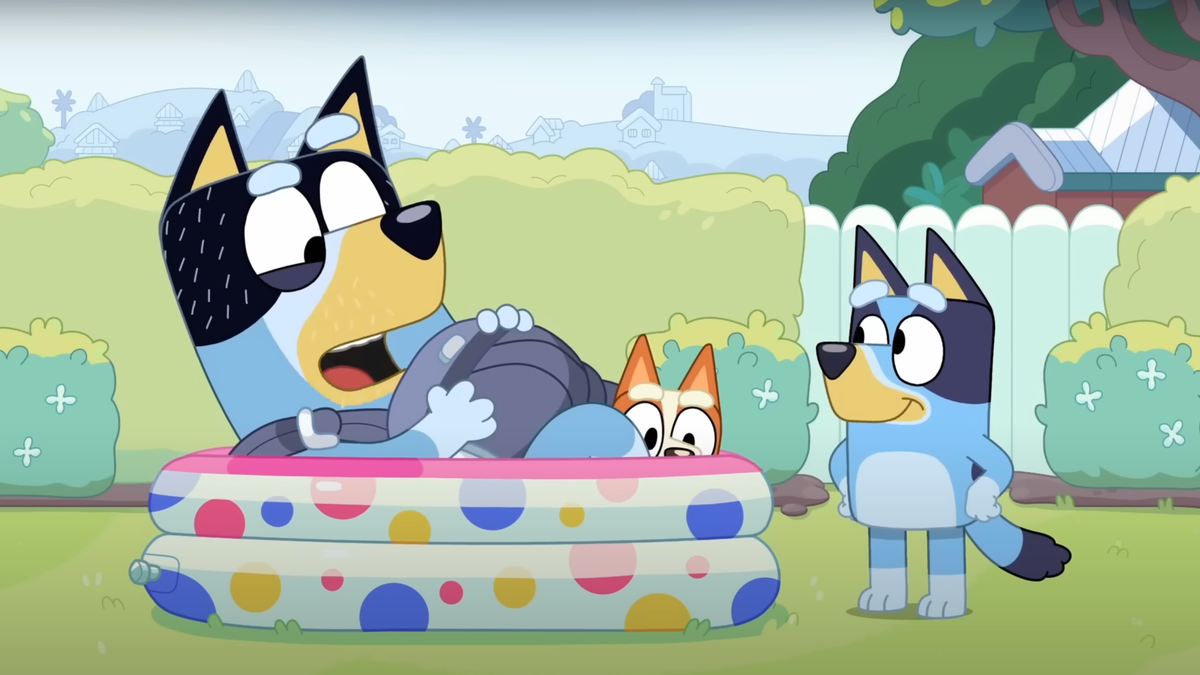
“Dad Baby” was among a number of banned or altered episodes of the hit Ludo Studio global phenomenon that never made it onto Disney+ or the Disney cable channels when it was acquired by the streamer. It’s curious as to why because the official description on Bluey’s official YouTube channel is pretty straightforward: “When Dad shows the kids how to use their old baby-harness, a new game is born: Dad Baby! But dad is unprepared for the harsh realities of giving birth to a baby Bingo.”
It can be suggested that perhaps Disney initially didn’t want to include a very lightly sex-ed centered episode on the show aimed at their kid demographic. io9 watched the now-available episode and it’s not as much of a big deal as the banning was made out to be. “Dad Baby” is a relatable, hilarious depiction of a pregnancy—particularly from the point of view of kids who remember their younger siblings being born. Even the comedic bits—like when Bluey’s dad Bandit carries her sister Bingo as a baby in the “womb” and recalls what he witnessed with his wife Chili—are silly and inoffensive. And yes, he does go through it all down to “pushing” Bingo out, which leans more into the kids’ playacting aspect of Bluey wanting to know how babies come into the world. It’s cute, endearing, and a good emotional episode from the show that’s proved that it knows what it’s doing. If you wanna see if for yourself watch it below!
Dad Baby | Full Episode | Bluey
Mostepisodes of Bluey are now streaming on Disney+.
Crunchyroll, like many other streaming services recently, is raising its subscription prices. The anime streaming service has announced its first price hike since it was acquired by Funimation in 2020. Subscribers in Argentina, Colombia, France, Portugal, the United States and select additional countries will now have to pay $12 for the Mega Fan tier, up $2 from $10. Meanwhile, the Ultimate Fan tier will now be $1 more expensive at $16 a month.
Both options give subscribers access to offline viewing and the Crunchyroll Game Vault, which contains a library of mobile games. The Mega Fan tier allows streaming on up to four devices at a time, while the Ultimate Fan tier allows streaming on up to six. People subscribed to the most expensive option also get a swag bag if they keep paying for the service for 12 consecutive months. The basic Fan Tier doesn’t come with the perks these two have, but its price remains unchanged at $8 a month. Unfortunately, those who haven’t decided whether to pay for a subscription yet can now only test the service out for seven days instead of 14 like before. But if they don’t mind watching their anime with ads, they can still view more than 1,000 hours of content for free.
Sony’s Funimation purchased Crunchyroll from WarnerMedia for $1.175 billion back in 2020, but it took a while before they were able to complete their transformation into a unified anime subscription service under the latter’s name. Funimation didn’t shut down its old app and website until April 2 this year after it moved its available titles to Crunchyroll’s service.
This article contains affiliate links; if you click such a link and make a purchase, we may earn a commission.
Iman Vellani is the kind of movie star whose enthusiasm, humor, and openness radiates off the screen and feels positively incandescent in person. The 21-year-old actress, best known for her role as Kamala Khan in 2022’s Ms. Marvel and 2023’s The Marvels,is unabashedly open in sharing her love of all things MCU-related, from playfully debating the finer points of canonical continuity with Marvel Studios head Kevin Feige to co-writing a Ms. Marvellimited series with Sabir Pirzada.
But Vellani has other passions beyond Marvel — her most recent being anime. Earlier this year at the Crunchyroll Anime Awards, Vellani shared with Polygon what convinced her to finally take the plunge into exploring Japanese animation.
“I was very intimidated by anime until very recently,” Vellani said. “I started watching anime about a year ago, so this is a new obsession for me, but I’m totally into it now. There’s just so much content, I didn’t know where to start. I mean, I can barely keep up with all the Marvel content that’s out there.”
Image: Wit Studio/Crunchyroll
Vellani attributes her nascent love of anime to Attack on Titan, which she was introduced to via family and friends and proudly names as her current favorite anime. “They just talk about it all the time,” Vellani said, “and Attack on Titan kept coming back up whenever they would talk about anime. I started watching it and was like, This is a story that seems like it’s about humanity. I think I can get into it.”
Of the entire ensemble of characters that appear in Attack on Titan, Vellani pointed out one in particular whose story resonated the most with her. “I love Mikasa Ackerman,” Vellani said. “The way that she kept Eren’s scarf at the end of the show, even though Eren told her to give it up and forget about him. Her being the only one who was able to kill Eren at the end to stop the Rumbling. That is a woman who — I don’t think I’ve seen many other female characters like her who have that authority, willpower, and determination to actually act on it. I recently cut my hair, and when I looked in the mirror, I was like, I know what my next cosplay is.”
Image: Wit Studio/Crunchyroll
Aside from Mikasa, Vellani also named one of the series’ other leading characters as one she especially enjoyed, going so far as to praise the voice actor responsible for their performance in Attack on Titan’s finale. “I like Armin because I always like to root for the nerdy characters,” Vellani said. “I watched the final half of the show with the English dub and, I don’t know who the actor who plays Armin is, but they deserve a raise because their performance in the final episode blew me away. He made me cry, his wailing and that flashback scene between him and Eren, it just hit me in all the right ways.”
After resisting anime for a while, Attack on Titan quickly became a show that stuck with her. “The ending was such a gut punch. It left me feeling so awful at the end, but it’s like one of those Succession-type endings where it’s not the ending you want, but it made sense. The ending made sense for the story, it made sense for the characters.
“I think they tied the knot so perfectly, and I can’t think of anything else I’ve watched recently that’s impacted me as much as that. I was crying in my bed watching it. My mom walked in on me and she was like, ‘It’s just an animation show!’ and I was like, ‘No, this is real!’”
Image: MAPPA/Crunchyroll
Shortly after finishing Attack on Titan, she dove into exploring other popular series suggested by her friends. “I finally started Jujutsu Kaisen and One Piece,” Vellani said. “One Piece was one that I did not want to get into initially because it’s like, what, a thousand episodes now, and that felt like too much. Grey’s Anatomy was more than enough for me, and I stopped at, like, season 10. But after the Netflix show came out I was so drawn to the characters, and after the heartbreak of Attack on Titan, I needed something lighter and funnier and that made me feel good. The characters are likable and I want to root for them all, so that’s a show I really like.”
And Vellani’s love for anime doesn’t stop at TV. “I watched Suzume just before coming to Japan and I loved it,” Vellani said. “That blew my mind. Truly a masterpiece. I also recently watched The Boy and the Heron and, as a 21-year-old, it really spoke to me and it reassured me that my inner child still exists.”
Image: Studio Ghibli via GKIDS/YouTube
When asked why she felt that her generation has embraced anime, and what it was about the medium that specifically spoke to her, Vellani cited the empowering roles and depictions of women and children, as well as the craftsmanship of studios like Studio Ghibli, as some of the reasons why anime is so popular among Gen Z audiences. “I just feel like anime feels so progressive with the way they depict women and children, especially in Studio Ghibli movies. All those movies are so good at showcasing youth and childhood and imagination in a way that’s encouraging children to keep that mindset.
“I feel like a lot of American cinema right now is just so depressing. It just wants to show the gritty real life of the world. I want to live in a world that makes me excited for the future, and I think anime does such a wonderful job in showcasing all the beauties of life. We went to the Ghibli Museum this morning and saw how they draw every single detail of the houses — the bricks, the walls, the windows — and you just realize how much people paid attention to these details when they drew it. Like, this is how they see the world, and that’s how I want to see the world, as something that’s full of life and joy.”