X today that it is rolling out support for passkeys on its Android app. The social media platform formerly known as Twitter introduced this security option for iOS users in January, then in April.
Passkeys started to take off as an option from tech companies and online services last year. We have a detailed , but in short, this approach to protecting an account creates a digital authentication credential. It’s a stronger alternative to passwords, which can be guessed or stolen. Even have been moving to offer a passkey option for customers.
For X users, you’ll still need a password in order to create an account. But once you’re in the app, you’ll need to click through some menu options to a passkey. It’s listed under “Additional password protection” in the Security tab.
ESPN, Fox and Warner Bros. Discovery in February that they would jointly launch a sports-focused streaming service, and today they’ve shared some pertinent details. Subscriptions to the Venu service will cost $43 a month. The platform will have three broad categories of content: live games and events, on-demand sports programming and talk content such as studio shows. Venu will launch at an unspecified time this fall.
The linear networks included in Venu are ESPN, ESPN2, ESPNU, SECN, ACCN, ESPNEWS, ABC, FOX, FS1, FS2, BTN, TNT, TBS, truTV and ESPN+. Viewers will have access to lots of major events across the world of athletics. The World Series of Major League Baseball, the four Grand Slams of tennis, the Stanley Cup finals for the National Hockey League, and a wide spread of college athletics will all be represented in Venu’s programming.
When people sign up at the launch price, that monthly cost will be locked in for twelve months. Considering how often we see prices going up in the streaming landscape, it’s safe to assume that $43 won’t be the fee indefinitely.
Watching sports is a fragmented and expensive activity today. Different leagues might have media rights deals with multiple different networks and streaming platforms, meaning fans have to check carefully where to find their favorite teams each night. Having so many providers together under one umbrella would streamline the experience, especially for people who like to follow multiple sports. But the joint effort has drawn criticism. after the initial announcement, claiming the new streaming package would violate antitrust practices.
When Marvel Studios first announced Thunderbolts* at 2022’s San Diego Comic-Con as part of its ambitious lineup for Phase 5 and 6 of the Marvel Cinematic Universe franchise, the movie didn’t yet have that odd asterisk in the title. It didn’t come with many details, either, apart from a July 26, 2024 release date that shifted along with many other MCU projects in the wake of the 2023 WGA strike.
In the wake of the Thunderbolts* segment of 2024’s San Diego Comic-Con, we don’t know much more! The asterisk is still a mystery: Marvel Studios President Kevin Feige said at a CinemaCon appearance, “we won’t talk more about that until after the movie comes out,” and confirmed it again at Comic-Con.
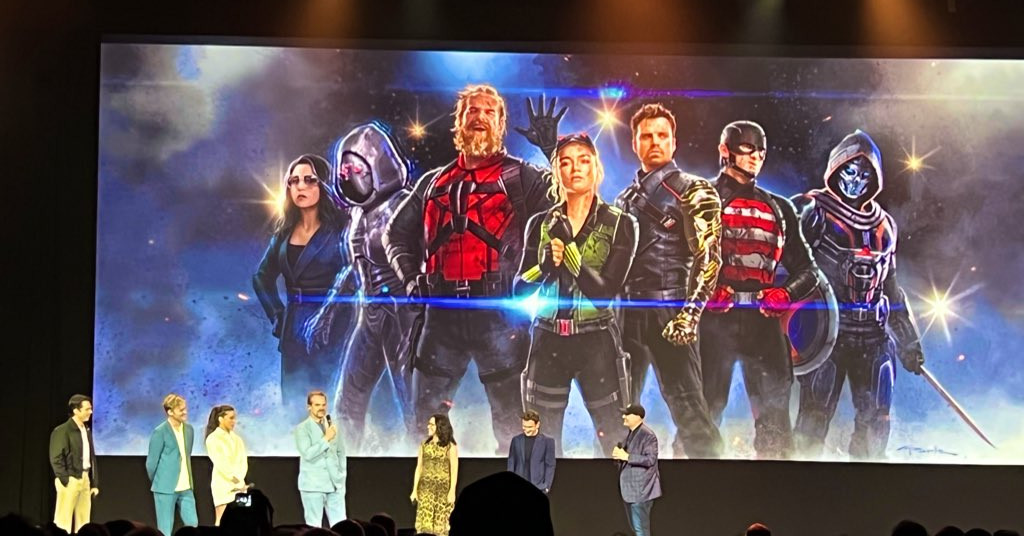
But as the core cast of Thunderbolts* took the stage, the Hall H audience was treated to a teaser in which all their characters came under fire from a mysterious foe who, according to Florence Pugh’s Yelena Belova, wants them all dead.
Traditionally in Marvel Comics, the Thunderbolts are a team-up of second-string villains or anti-heroes, though their membership and motives vary significantly depending which iteration you’re talking about. The MCU team is built of not-exactly-always-good characters introduced in previous films in the franchise: Ghost (Hannah John-Kamen, of Ant-Man and the Wasp), Red Guardian (David Harbour, Black Widow), the Winter Soldier (Sebastian Stan, the Captain America movies), U.S. Agent, aka John Walker (Wyatt Russell, Falcon and the Winter Soldier), and Taskmaster (Olga Kurylenko, Black Widow). Pugh’s Yelena, from Black Widowand Hawkeye, leads the team, with slimy mastermind Valentina Allegra de Fontaine (Julia Louis-Dreyfus, Falcon and the Winter Soldier) behind the scenes.
Who might want all those folks dead? What might those folks do to stay alive? And what the heck is that asterisk about after all? We’ll have to wait for the theatrical debut of Thunderbolts* on May 2, 2025, as the final movie in the MCU’s Phase 5.
Back when Max was still known as HBO Max, it released a redesigned app that added SharePlay for Apple devices, but only in the US. Now, the streaming service is rolling out the feature to all its users around the world. SharePlay is now available to all Max users paying for Ad-Free and Ultimate Ad-Free plans, allowing them to hold and join watch parties over FaceTime and iMessage, no matter where they are.
Users can start watching with friends by hitting the “share” button either on the details section of each title or within the FaceTime app. Each session can have as many as 32 participants, but they all have to be Max subscribers. That means people from regions where Max isn’t available, such as in Asian countries, won’t be able to hop on and watch with their pals in the US or Europe. Warner Bros. is planning to expand Max’s reach to South East Asia later this year, but it warns on its website that the timeline could still change.
SharePlay for Max works on iPhones, iPads, Apple TVs and Vision Pro headsets. To initiate a watch party on iPhones, iPads and Vision Pros, users have to find the Share icon on the details page of a show or a movie, enter the contacts they want to share with and initiate a FaceTime call. If they choose Messages on their mobile devices, their friends will get a message asking them to join SharePlay. On Apple TV, users will have to open FaceTime first before clicking the SharePlay button and choosing Max from the app list.
Being a Deadpool defender can be difficult. In just about any media where he appears, the character is exactly what his strongest critics think he is: an anti-hero with a strong affinity for irreverent violence, and a juvenile, obnoxious vessel for meta asides and a bushel of dick jokes. (“A bushel of dicks” would be a pretty solid Deadpool-ism.) I wouldn’t begrudge anyone for finding all that off-putting, because it is. But there’s also more to the character. Deadpool comes with a deep pathos. When that’s used effectively, it’s resulted in endearingly odd stories about those who are deemed (or feel) unlovable. That’s a potent emotional space for a summer blockbuster to inhabit. Deadpool & Wolverine — the third movie in Ryan Reynolds’ Deadpool trilogy, and the first under the Disney banner — pays lots of lip service to that pathos. Then it punts it out of our multiverse, to Alioth-knows-where.
Look at that, I made a reference! Just like Deadpool! I can swear like him, too.
Deadpool & Wolverinehas been billed as a Marvel Cinematic Universe story, but it isn’t, really. Apart from a brief gag scene early in the film, Deadpool never sets foot in the MCU’s Earth-616 for any Deadpool-y derring-do. Instead, the film is just MCU-aware — the mainline MCU is one more subject for Deadpool to joke about and pine for while he has a characteristically vulgar adventure somewhere else. In some ways, the MCU is more of a villain than the film’s actual villains.
But before all that, the story starts in Deadpool’s pre-existing corner of the multiverse, which is dying. Abducted by the Time Variance Authority from Loki, Wade Wilson/Deadpool (Reynolds) learns his universe is slowly fading away, due to Wolverine’s death at the end of 2017’s Logan. That’s because the former X-Man is an “anchor being” — someone so significant that their timeline falls apart without their presence. But TVA agent Mr. Paradox (Matthew Macfadyen) says his superiors have deemed Deadpool as special, and worth rescuing from his decaying timeline and bringing over to the MCU. Trouble is, the invite doesn’t extend to the found family Wade has built up (and time-traveled to resurrect) across his previous two films.
Photo: Jay Maidment/20th Century Studios/Marvel Studios
This is Deadpool & Wolverine’s first problem: It arrives on screens already extremely pre-complicated and full of narrative baggage. This isn’t necessarily a problem if director/co-writer Shawn Levy and his script team just want to take the piss out of overly complex superhero films. But it is a problem when setting up that pathos that is also key to Deadpool as a character. It doesn’t particularly matter to me that I do not fully understand the mechanics of time and/or multiverse travel in this movie, or the chain of cause-and-effect that drives its plot. Frankly, I’m not sure the film’s five credited writers — Levy, Reynolds, returning Deadpool movie scribes Rhett Reese and Paul Wernick, and comics and TV writer Zeb Wells — care that much about those things either.
I do care, however, when that confusion extends to the film’s emotional stakes. Deadpool & Wolverine spends so little time establishing where Wade is in relation to his friends and relationships (for some barely explained reason, he’s on the outs with ex-girlfriend Vanessa, played by Morena Baccarin) that his driving need to do something that “matters” feels rootless. He’s static, not terribly different at the end of the film’s two hours and seven minutes than he was at the beginning.
Perhaps that’s because the film offloads much of its emotional weight to Wade’s co-star. Logan (Hugh Jackman) enters Deadpool & Wolverine as a part of Wade’s hairbrained scheme to save his universe. If Logan is his timeline’s anchor being, Wade’s logic goes, he’ll just scour other universes until he finds a new one. The Logan he winds up grabbing is even more damaged than the one we’ve seen in the X-movies, and a lot of the film’s non-joke runtime is devoted to unpacking that. This seems like a poor use of Wade’s time, and ours. Logan’s whole deal has gotten plenty of exposure in past X-movies, and while his presence here has lots of fun moments, his contribution to the film’s emotional arc feels a lot like stolen franchise valor à la Spider-Man: No Way Home.
Photo: Jay Maidment/20th Century Studios/Marvel Studios
It’s hard to take any of this seriously though, because Deadpool & Wolverine is much more interested in focusing on Deadpool’s relationship with the MCU. From the very first second of the film, Disney, Marvel, and Kevin Feige are established as the thematic butts of the film’s comedy. There is no need for character work to anchor any of the jokes here, because the MCU is that anchor. All that swearing and violence? It’s in a Disney movie, baby! Remember that time Wade got pegged in the first Deadpool movie? Mickey Mouse paid for a movie about a guy who gets pegged! Oh, and the film’s on-screen bad guys? All a result of Marvel’s corporate dominance.
This last bit is where Deadpool & Wolverine almost gets at something interesting. The bulk of the film takes place in The Void, a Mad-Max-style limbo where the TVA sends troublesome people they can’t really erase. Ruled by the powerful telepath (and evil twin sister of X-Men leader Charles Xavier) Cassandra Nova (Emma Corrin), The Void is an island of misfit toys full of heroes and villains from other movie studios, disposed of by the MCU powers-that-be after Disney bought up 20th Century Fox. If you’ve heard about Deadpool & Wolverine’s many cameos and guest appearances, this is where they come from: corporate consolidation spun as fodder for jokes.
In Logan and Wade’s struggle to defeat Cassandra and escape The Void, the pair are also trying to escape the ruins of, for example, the 20th Century Fox X-Men universe. Unfortunately, this plot, and the gags around it, only undercut Deadpool and the very narrow lane of pathos that makes him tick. Because as much as he constantly makes fun of the MCU, he can’t stop defining himself in relationship to it, calling himself “Marvel Jesus” throughout this movie. Regardless of the fate of his home universe, Wade wants to matter — which is a way of saying he wants to join the mainline MCU universe, and that it is the only thing in this continuum that does matter.
That’s more or less the ball game. It’s hard to buy this movie as a love letter to anything but Marvel Studios’ corporate conquests. That’s one of the fundamental miscalculations behind the film. Wade is worth getting behind because he’s an underdog. But in Deadpool & Wolverine, he isn’t representing the unloved or speaking truth to power: He’s sucking up to the undisputed champ of the box office, even though that champ has earned the potshots Deadpool throws its way. The Void is what Marvel has done to pop culture. It’s the call coming from in the house, the big fucking smoke dragon that assimilates everything into its morass of multiversal bullshit or relegates it to oblivion, stripped for parts. And in this movie, Deadpool doesn’t just love it, he wants with all of his being to be part of it.
Deadpool & Wolverine has made its hero the worst kind of comic-book character: one who doesn’t stand for anything. It’s a terrible irony. Fans worried that Disney’s corporate control and the MCU’s rigid narrative oversight would leech away Deadpool’s edge, the swearing, jocular violence. Turns out that part was fine. Instead, the MCU just took his fuckin’ heart.
I told you I could swear like that cheeky bastard.
YouTube is trying to make it easy for its creators to remove songs from their videos and resolve copyright claims. In a new Creator Insider video, the website has announced that it has released an upgraded “erase song” tool that has the capability to remove music from video segments without deleting other audio, such as conversations, as well.
When creators get a copyright claim for music, YouTube gives them the option to trim out the affected segment or to replace the song with an approved one in its audio library. Creators can’t monetize that particular video until they resolve the claim. The website has been testing its “erase song” tool for a while, but in the video, the company says it hasn’t been as accurate as it would like. To solve that problem, it redesigned the tool so that it now uses an AI-powered algorithm to accurately detect and remove copyrighted music from videos.
Still, YouTube admits that the tool might not always work. If a song is particularly hard to remove, presumably due to audio quality or the presence of other sounds while it’s playing, creators may have to resort to other options. In addition to being able to trim out the offending segment or to replace its song, creators will also be able to mute that part of their video through the new erase tool.
The website’s upgraded erase song tool will be available in YouTube Studio in the coming weeks.
Universal Pictures has moved the release date of its lavish musical Wicked forward by a few days, from Nov. 27 (the day before Thanksgiving) to the preceding Friday, Nov. 22.
The move is ostensibly, and sensibly, to avoid a clash with Disney’s animation sequel Moana 2, also set for Nov. 27. Universal may have been motivated (read: scared) by the astonishing box office performance of Disney and Pixar’s Inside Out 2, which has racked up over $1 billion globally in a little over two weeks, setting a new record for an animated film.
But the date change also sets up another, potentially more exciting clash: Wicked, which stars Ariana Grande and Cynthia Erivo, will now hit theaters on the same day as Ridley Scott’s historical action drama Gladiator II, starring Paul Mescal and Pedro Pascal. Wicked is the first part of a two-part adaptation of the hit stage musical, which prefigures the 1939 classic The Wizard of Oz, telling the witches’ backstory. Gladiator II is a generation-later sequel to Scott’s Oscar-winning 2000 epic. (Vanity Fair just published a surprisingly meaty preview of Gladiator II, which is stuffed with first-look images, plot details, and good quotes from Scott and the cast; it’s worth checking out.)
The contest between these two movies instantly recalls “Barbenheimer,” the 2023 box office phenomenon that pitted Greta Gerwig’s candy-colored comedy Barbie against Christopher Nolan’s somber nuclear bomb drama Oppenheimer. That date clash created a storm of publicity and a kind of unofficial festival of moviegoing that worked out to the benefit of both movies, which finished 2023 as the biggest and third-biggest films of the year worldwide.
Theater owners, if no one else, will be hoping for similar from Wicked and Gladiator II, but the juxtaposition isn’t quite so striking this time around.It’s true that one is a colorful, fantastical stage musical centering female characters and the other is a violent action movie front-loaded with manly actors.
But they’re both big, old-school spectacles with Old Hollywood feel, and they don’t make for as stark (or as funny) a contrast as between a toy-branded meta comedy and a three-hour biopic about physics and nuclear holocaust. Wicked and Gladiator II are also both franchise movies of a sort, relying on brand familiarity, whereas Barbie and Oppenheimer are both daring, original films from auteur directors.
Also, it’s hard to come up with a compound name for them that rolls off the tongue as smoothly “Barbenheimer” does. Gladicked? Surely not. The best I can do is “Wickiator.”
None of that matters quite as much as what Wicked and Gladiator II have in common with Barbie and Oppenheimer, though: They’re both exciting-looking movies that present very compelling reasons to see them on the big screen, that complement each other in fun ways, and that stand to do very well with audiences. It’s going to be a fun November.
Actor Amitabh Bachchan is a metaphorical giant of Indian cinema, a superstar of proportions that dwarf even A-list American celebrities. In the Indian sci-fi epic Kalki 2898 AD, his stature becomes literal: In his role as the 7-foot-tall immortal warrior Ashwatthama, the 81-year-old towers over his younger co-stars, all of whom are draws in their own right. (A handy way for the uninitiated to measure the relative fame of an Indian actor is to note the length of their introduction in a movie — the bigger the name, the more elaborate the entrance.) The sheer amount of star power in this film is overwhelming, but that isn’t even the most ambitious thing about it.
Writer-director Nag Ashwin means for Kalki 2898 AD to be nothing less than the ultimate sci-fi epic. Its scope is huge, covering 6,000 years of mythological history. Its run time is long, telling the first part of a two-part story over three jam-packed hours. (To be fair, Denis Villeneuve’s Dune movies aren’t much shorter.) And its production was expensive — reportedly around $72 million, one of the biggest budgets ever for an Indian movie. The filmmakers hope it will be a crossover event akin to S.S. Rajamouli’s record-breaking hit RRR, not only within India’s disparate film industries (Bachchan is known as a Bollywood actor, while co-stars Prabhas and Kamal Haasan work in Telugu and Tamil films, respectively) but internationally as well.
The film’s look, rendered almost entirely through CGI, will certainly feel familiar to Western audiences, with elements that recall the beloved sci-fi franchises Blade Runner, Star Wars, The Matrix, Dune, and especially Mad Max: Fury Road. The story is more specifically Indian, taking the Hindu myth of Kalki — the 10th and final incarnation of the god Vishnu, who will come to lead humanity into a new era of peace and justice — and transporting it to a dystopian sci-fi setting. But while references to magical weapons and folkloric heroes may go over the heads of all but the best-informed foreign viewers, the story’s arc follows the familiar beats of a Chosen One narrative.
Image: Vyjayanthi Movies
This first chapter of the Kalki 2898 AD saga spends much of its run time setting up its characters and world, beginning with a caravan of refugees arriving in the futuristic city of Kasi, the last outpost of civilization after droughts and pollution have rendered most of the planet uninhabitable. Life is cheap in Kasi, where a single chicken egg fetches the same price as a human being on the black market. The one exception is fertile women, who have become extremely valuable in this dystopian future world: Whenever one is discovered, she’s sold and shipped off to the Complex, a floating pyramid above the city, where a wealthy minority hoard the few natural resources that are left.
SUM-80 (Deepika Padukone) is one of these women, and one of hundreds who live as lab rats at the pleasure of Supreme Yaskin (Haasan), a 200-year-old tyrant who extends his life by extracting a serum from the wombs of impregnated female captives. The women die in the process, but no matter; their corpses are thrown into an incinerator, and new girls take their place. SUM-80, understandably, wants to live, so she’s hiding her pregnancy from everyone around her. But it’s been five months, and the sadistic doctors who run this so-called Project K will notice soon.
Things are grim in a different way outside of the Complex, though affable bounty hunter Bhairava (Prabhas) does his best to keep the mood light. Indian films typically blend genres, and although Kalki 2898 AD is more serious-minded than most Bollywood fare — there are no true musical numbers, sadly, though characters do lip-sync to Santhosh Narayanan’s original songs — Bhairava and his wisecracking AI companion Bujji (Keerthy Suresh) bring much-needed, Star Wars-esque comedic banter to the film. Bhairava is a Han Solo type, motivated by self-interest and the pursuit of cash, or “units.” Like Han, he’s also a ladykiller, as we learn when the similarly roguish Roxie (Disha Patani) enters the narrative.
Image: Saswata Chatterjee, Sri Venkateswara Creations/Everett Collection
At first, it isn’t clear how SUM-80, Bhairava, and 6,000-year-old badass Ashwatthama, who spends much of the movie hiding out in a cave, are connected. It’s never in doubt that they’ll meet up eventually, though, or that each of them will play their role in fulfilling the prophecy preached by a rebel group living in a hidden utopia known as Shambhala. Eventually, the action moves to the rebels’ sacred retreat. But first, SUM-80 must race across the wastelands, pursued by both Supreme Yaskin’s flunkies and Bhairava, who plans to exchange this precious hostage for admission to the Complex.
Some of the digital backgrounds VFX supervisor Praveen Kilaru and his team created for Kalki 2898 AD are absolutely stunning, and sci-fi fans who like nerding out on cool ships and badass vehicles will find a lot to get into here. (The design for Bujji, who can transform from a cool car to a cooler battle robot, is especially compelling.)
But the fact that this is just the first part of a two-part story creates some serious structural issues. The first two hours of the film pass at a lively but unhurried clip, but the final hour tries to cram too much into an already overstimulating epic battle scene. It feels panicky and confused as it rushes through crucial plot developments and exposition.
Image: Saswata Chatterjee, Sri Venkateswara Creations/Everett Collection
Comparisons between Kalki and RRR are inevitable, if only because the former is nakedly trying to replicate the success of the latter. But Nag Ashwin’s film is missing a few of the elements that made RRR so charming: There’s no central bromance, no exhilarating dance sequences, and no sense of surprise. There is comedy, but it’s isolated in certain sections of the film, and there’s much less romance and music than audiences might expect. It’s still an entertaining ride, with some cool imagery and exciting chase scenes. But by channeling the gravitas of Western sci-fi movies, Kalki 2898 AD loses some of the range that makes Indian movies special. Its ambition is to be applauded. Its self-seriousness, not so much.
Greetings, Polygon readers! Each week, we round up the most notable new releases to streaming and VOD, highlighting the biggest and best new movies for you to watch at home.
This week, Trigger Warning, the new action thriller starring Jessica Alba as a hardened Special Forces commando, premieres on Netflix. That’s not all, as plenty of other exciting new releases make their streaming debuts this week, including a documentary on tennis legend Roger Federer on Prime Video, Kung Fu Panda 4 on Peacock, Sometimes I Think About Dying on MUBI, and more. There’s also several highly anticipated releases on VOD this week, including animated sci-fi noir mystery Mars Express and dystopian sci-fi romance The Beast starring Léa Seydoux.
Here’s everything new that’s available to watch this weekend!
New on Netflix
Trigger Warning
Where to watch: Available to stream on Netflix
Image: Netflix
Genre: Action thriller Run time: 1h 46m Director: Mouly Surya Cast: Jessica Alba, Anthony Michael Hall, Mark Webber
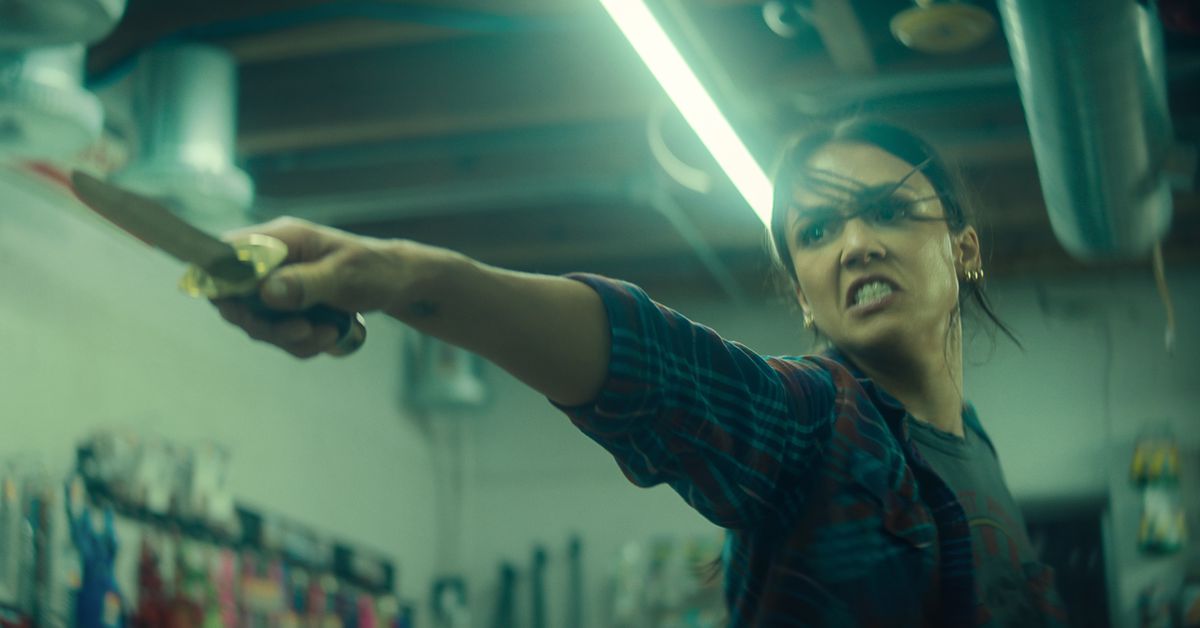
The Alba-naissance is here. Five years after her last film role (crime thriller Killers Anonymous), the onetime Sue Storm is teaming up with Indonesian director Mouly Surya in an action-packed movie inspired by the John Wick franchise (and produced by John Wick producer Basil Iwanyk). Trigger Warning is Surya’s English-language debut and was filmed three years ago, but is finally dropping on Netflix this week.
Black Barbie
Where to watch: Available to stream on Netflix
Image: Netflix
Genre: Documentary Run time: 1h 40m Director: Lagueria Davis
This doc from Shondaland digs into the first Black Barbie and three Black women at Mattel who made it happen: Beulah Mae Mitchell, Kitty Black Perkins, and Stacey McBride-Irby.
New on Prime Video
Federer: Twelve Final Days
Where to watch: Available to stream on Prime Video
Image: Prime
Genre: Documentary Run time: 1h 40m Directors: Asif Kapadia, Joe Sabia Cast: Roger Federer, Rafael Nadal, Novak Djokovic
Arguably the greatest men’s tennis player to ever live, Roger Federer finally hung up his racket for good in 2022. This documentary, co-directed by Senna and Amy director Asif Kapadia, focuses on the final 12 days of the Swiss legend’s illustrious career.
Genre: Martial arts comedy Run time: 1h 34m Director: Mike Mitchell Cast: Jack Black, Awkwafina, Bryan Cranston
The fourth entry in the Kung Fu Panda saga sees Po taking on a new apprentice to succeed him as the Dragon Warrior. When a mysterious sorceress plots to resurrect Po’s past adversaries, he’ll need to call upon all his strength and allies to save the day.
While the individual scenes and moments in Kung Fu Panda 4 are entertaining (and sometimes even great), it never quite gels as an enjoyable movie on its own. The message of change tying it together is flimsy, and the plot feels strung along, trying to get the characters in the right place to launch a few seconds of cool action. After four movies, it isn’t really a surprise that the Kung Fu Panda machine is running out of steam — thankfully, though, it has just enough power left to churn out some genuine laughs at the end.
New on MUBI
Sometimes I Think About Dying
Where to watch: Available to stream on MUBI
Image: Oscilloscope Laboratories
Genre: Romantic drama Run time: 1h 34m Director: Rachel Lambert Cast: Daisy Ridley, Dave Merheje, Parvesh Cheena
Star Wars icon Daisy Ridley takes a dramatic turn in this new existential drama, playing the role of a socially awkward office worker who tentatively attempts to come out of her shell. It’s dark, funny, awkward, and achingly human.
Not much happens in Sometimes I Think About Dying, but that’s the point of the movie. Even the smallest thing, like Fran mustering up the courage to say goodbye to someone after work, is given huge weight. The movie lingers on the mundane, using it to paint a thorough portrait of who she is, without having her say or act much. The steps she takes to help overcome her social anxiety might seem small, but they’re all hurdles to her. It’s a movie made up of quiet moments: pauses in conversation, lingering glances, and outstretched hands. Lambert emphasizes the importance of these small interactions, and the ways they build up to connections. It’s a quiet story that aches in the best sort of way.
New on Metrograph at Home
Last Night I Saw You Smiling
Where to watch: Available to stream on Metrograph at Home
Image: Metrograph at Home
Genre: Documentary Run time: 1h 18m Director: Kavich Neang
In the final days of a condemned, iconic building, director Kavich Neang follows three families who live there (including his own). This is the streaming premiere of the movie, which first came out in 2019 and won awards on the international festival circuit, and is a part of Metrograph’s “Davy Chou Selects” series.
New to rent
Handling the Undead
Where to watch: Available to rent on Amazon, Apple, and Vudu
Image: Neon
Genre: Horror drama Run time: 1h 37m Director: Thea Hvistendahl Cast: Renate Reinsve, Anders Danielsen Lie, Bahar Pars
There’s tons of horror movies about the dead coming back to life. None of them are quite like Handling the Undead, though. Based on John Ajvide Lindqvist’s 2005 novel, the film follows the story of three families living in Oslo whose loved ones all mysteriously rise from the dead as semi-sentient corpses. How will they handle this new phenomenon, and is it a second chance to say goodbye… or a curse?
I Used to Be Funny
Where to watch: Available to rent on Amazon, Apple, and Vudu
Image: Barn 12/Utopia
Genre: Comedy drama Run time: 1h 45m Director: Ally Pankiw Cast: Rachel Sennott, Olga Petsa, Jason Jones
Rachel Sennott (Bodies Bodies Bodies) stars as Sam, a stand-up comedian living in Toronto who takes on a nannying job in order to earn some cash. After the young girl she was caring for goes missing, Sam is stricken with PTSD and no longer performs comedy, haunted by the loss of her charge and her own helplessness.
IF
Where to watch: Available to rent on Amazon, Apple, and Vudu
Image: Paramount Pictures
Genre: Fantasy comedy Run time: 1h 44m Director: John Krasinski Cast: Cailey Fleming, Ryan Reynolds, John Krasinski
Remember Foster’s Home for Imaginary Friends? Well, imagine that, but set in New York and starring Ryan Reynolds and not so imaginative. IF follows Bea (Cailey Fleming), a young girl who works alongside her neighbor to help imaginary friends whose real-life friends have grown up. It’s ostensibly a kids’ movie, but with a message that’s slightly… off.
Mars Express
Where to watch: Available to rent on Amazon, Apple, and Vudu
Image: Everybody on Deck/GKIDS
Genre: Sci-fi action Run time: 1h 25m Director: Jérémie Périn Cast: Léa Drucker, Mathieu Amalric, Daniel Njo Lobé
This sci-fi noir thriller follows a private detective and her android partner who are hired by a wealthy businessman to track down an elusive hacker. Their investigation dovetails into a search for a missing woman before inadvertently spiralling into a vast conspiracy that threatens to unravel the fabric of human civilization.
Mars Express is the rare example of an animated feature that warrants an almost immediate rewatch upon completion, if only to appreciate the craftsmanship of its presentation. It’s a densely layered sci-fi story that’s light on proper nouns, but heavy on subtext. It’s set in a world that doesn’t tell so much as it shows the depth of its narrative and worldbuilding, by trusting its audience to pay close attention and connect the dots alongside the film’s characters. In short, it’s a rare example of “adult” animation that treats its audience like adults, and its execution elevates its premise until it stands confidently as one of the year’s best animated features.
The Beast
Where to watch: Available to rent on Amazon, Apple, and Vudu
Image: Janus Films
Genre: Sci-fi romance Run time: 2h 26m Director: Bertrand Bonello Cast: Léa Seydoux, George MacKay, Guslagie Malanda
Imagine Cloud Atlas meets The Age of Innocence meets Mulholland Drive. That’s about the simplest way of describing The Beast, Bertrand Bonello’s sci-fi romance drama. Léa Seydoux (Spectre) stars as Gabrielle, a woman living in the near-future who undergoes a process to “purify” her DNA of strong emotions by reliving her past lives. Her procedure becomes more complicated after crossing paths with Louis (George MacKay), a man whom — in a past life — she may or may not have loved.
The Beast’s three timelines play with seemingly unmixable genres: a classic period romance, a gripping horror-thriller, and dystopian sci-fi. That places them at a logistical disconnect, but Bonello binds them aesthetically and emotionally. Through his lengthy, thought-provoking close-ups of Gabrielle and Louis in each section, he creates a sense of longing and isolation across time, binding together human experiences of the past, present, and future, and putting them into sharp and chilling context.
We Grown Now
Where to watch: Available to rent on Amazon, Apple, and Vudu
Image: Sony Pictures Classics
Genre: Drama Run time: 1h 33m Director: Minhal Baig Cast: Blake Cameron James, Gian Knight Ramirez, S. Epatha Merkerson
Set in Chicago in the early ’90s, We Grown Now centerson the story of Malik and Eric, two young boys growing up in a housing complex who survive the mundanity of school life and the perils of their environment through the strength of their friendship. When a sudden tragedy threatens to strain their bond, Malik and Eric will have to grow up fast and make a choice between what to hold on to and what to let go of.
A crop of Barbara Baranowska’s iconic Possession (1981) poster art.Image: Gaumont
Yes, io9 used a very similar headline back in 2017 regarding a remake of The Crow—and Hollywood clearly did not listen; that long-in-the-works project is arriving in theaters this August. How The Crow do-over fares is yet to be seen (maybe Bill Skarsgård’s Joker look will work magic?), but we must insist, yet again, that another much-loved genre classic be left the hell alone, no matter how much we enjoy the involved talent.
Rob Savage on Collaborating with YellowJackets’ Sophie Thatcher
According to the Hollywood Reporter, Andrzej Zulawski’s singularly unsettling 1981 film Possession is chugging down the remake track with writer-director Parker Finn (Smile) and producer Robert Pattinson—an obvious choice to also star, though THR notes “his acting involvement will be clarified down the road as the script and schedules develop.” The original film stars Sam Neill and Isabelle Adjani as a couple living in West Berlin whose marriage fractures amid surreal, supernatural circumstances. It’s haunting, and has since become a cult classic.
The trade also reports that multiple studios are currently battling over who will, uh, get possession of Possession, including “A24, Netflix, Paramount, Sony and Warner Bros,” and that “other companies may enter the fray.” Also of note: “the reception to the pitches has been extremely positive, with execs talking about the ‘batshit’ and ‘out there’ story but also its strong commercial potential. How to market the eventual movie is also part of the conversations.”
What do you think about remaking Possession—and for that matter, are you counting down to The Crow?