Tomb Raider fans, bless them, spend a lot of time wondering how the series all syncs up. If the Lara Croft we saw in the original ’90s games is the same one as the rougher-around-the-edges Lara from the Survivor trilogy, then what happened in between to have it all make sense?
Luckily, answers appear on the horizon. Tomb Raider developer Crystal Dynamics has already paraded around a new design for Lara that incorporates her post-Survivor trilogy look with throwback costuming, a commitment to the “unified” timeline. But as far as the story goes, the new Tomb Raider: The Legend of Lara Croft is doing some major lift.
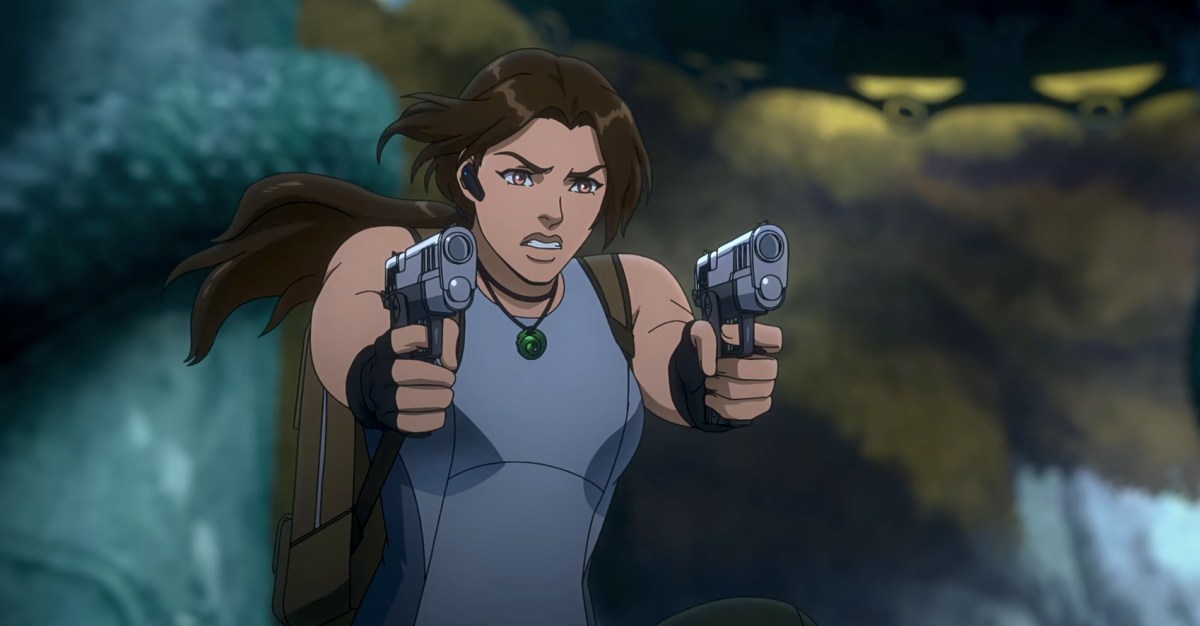
Earlier this month, showrunner Tasha Huo told Polygon that her goal for the Netflix animated series was to chart the gap between the Survivor trilogy and classic games. But Lara doesn’t get there by the end of season 1, even after defeating the Light, finding closure over the death of Conrad Roth, re-bonding with his daughter Camilla Roth, hugging it out with Jonah, and accepting her first pair of dual pistols. That’s because Huo knew that if the show was a hit there’d be more stories to tell, and she didn’t want OG Lara to suit up quite yet.
“I don’t want to just fast-track her to becoming classic Lara because it takes a lot to build that woman,” the showrunner says. “So season 2 will build upon what we’ve already seen and grow her even closer.”
Specifically, Lara will set off on a search for Sam, her filmmaker friend who first appeared in 2013’s Tomb Raider. Sam was working on a job “overseas,” last Jonah heard from her, but a dropped phone call from the old friend is enough to put Lara on high alert. The ending of season 1 only teases a few scant details of where the adventure may lead her: in Sam’s apartment, Lara finds signs of a struggle — a broken coffee mug, a tipped-over chair, a shattered picture frame — and a yarn board tying some stolen artifacts to a shady tracksuit-wearing dude with a scar and photos of cocaine.
Huo wasn’t ready to spoil any plot details, but says it’s carefully plotted so that Lara continues to grow and has room to venture on if Tomb Raider was to earn even more seasons. A top priority in season 2: Continue to draw out Lara’s sense of humor.
“Maybe she finds it in Sam,” Huo says. “Sam has a lighter personality. There’s also just a lot more for Lara to learn. So in success and in these infinite seasons, we get to explore all the lessons and how those adventures actually challenge her to take those increasing steps closer to being the woman we remember from the ’90s.”
For Huo, that classic version of Lara is also hyper-composed, in a way that she just isn’t at the stage of her life in which Tomb Raider: The Legend of Lara Croft is set. Yes, Lara Croft would rather raid a tomb than go to therapy — but Huo intends to help the character find her composure in the next archeology-fueled globetrotting mission. Just as the history-buff showrunner wants to inject Tomb Raider with tons of real history and culture specificity, she also wants to bang the drum for legit self-care.
“So much of that comes from meditation, balance, having all of these messy things inside you yet still somehow finding a way through calmness and self-composure,” Huo says. “I’m a big proponent of therapy and self-analysis as a way to just grow as a human being. It’s fantastic. And I’m glad Lara can do it. She hates therapy! So using adventure as therapy is a really great way for Lara to learn how to be better.”
Do you feel that? That chill in the air, that tingling sensation at the back of your neck? It can only mean one thing. That’s right: Halloween season is once again upon us!
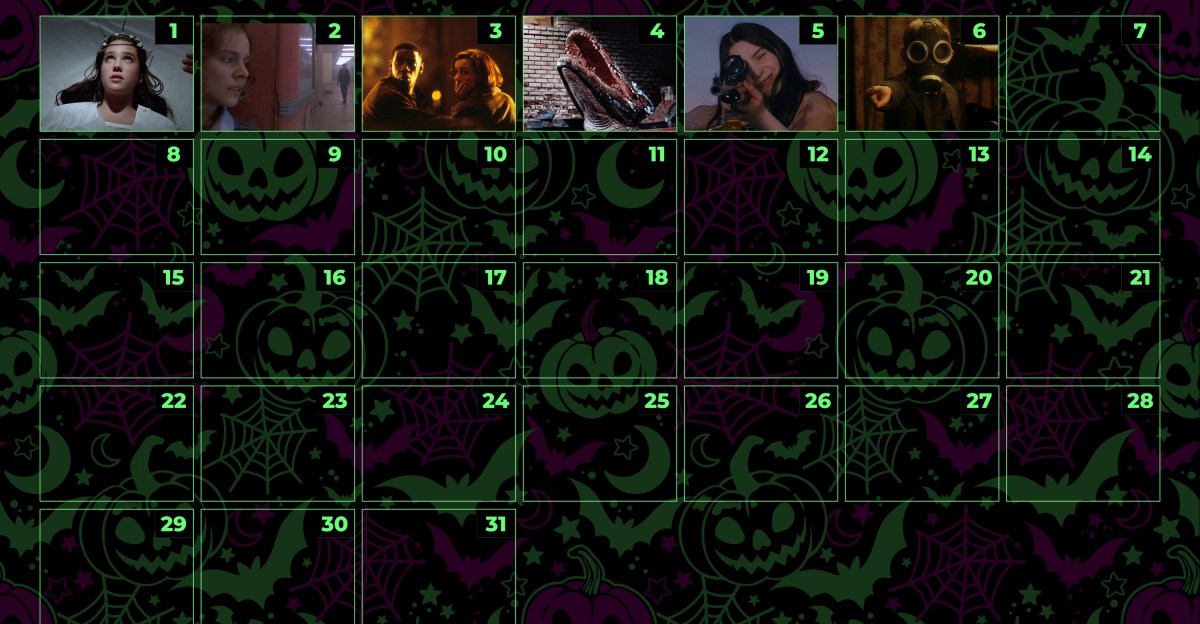
We especially love Halloween, though, a holiday dedicated to all things scary and spooky. Which is why, every year for thepastfouryears, Polygon has put together a Halloween countdown calendar, selecting 31 of our staff’s top horror-themed or Halloween-adjacent picks across movies, TV, and online videos throughout the month of October, all available to watch at home. It’s been so much fun, in fact, we’re doing it again — with an all new batch of films, shows, and videos to choose from.
Every day for the month of October, we’ll add a new recommendation to this countdown and tell you where you can watch it. So curl up on the couch, dim the lights, and grab some popcorn for a spine-tingling marathon of Halloween-adjacent delights.
Image: Anchor Bay Entertainment
Where to watch: Available to stream on Plex and Pluto TV with ads and to rent on Amazon
Kicking off the Halloween horror movie season is a delicate art. Just a few days into the official start of fall, it’s important to pick exactly the right movie to subtly shift that chill in the air from cozy to spooky as gently as you can. With that in mind, we’re easing into Halloween this year with Dario Argento’s Phenomena, a perfect blend of spooky, campy, and bleak that sets that stage just right for the frights to come.
Phenomena takes place in a remote town in Switzerland at a boarding school where Jennifer Corvino (Jennifer Connelly), the daughter of a famous American actor, is the newest student. The only problem is there’s also a serial killer rampaging through the town, and when Jennifer witnesses one of the murders, her life is suddenly in grave danger. The good news is she has an inexplicable telekinetic power over insects to help keep her alive.
And while the movie isn’t quite as silly as the premise would imply, it is among the most bizarre and fun of the many sleazy slashers of the 1980s. But what truly elevates it to a special place is that it’s one of the rare horror movies where the supernatural is seemingly wholly on the side of good. It’s rare that a movie lets us unambiguously root for the mystical power at its center, giving the whole thing the strange, otherworldly feeling of a particularly grotesque fairytale.
All of this makes for a tremendously entertaining and odd mystery movie, and a great way to begin a month full of horror movies. —Austen Goslin
Image: Sony Pictures Home Entertainment
Where to watch: Shudder, AMC Plus
Anthony Waller’s 1995 horror thriller is a premise straight out of a waking nightmare. Billy Hughes (Marina Zudina), a mute special effects makeup artist, is in Moscow working out of a dilapidated movie studio on a low-budget slasher. After returning to the building after hours to pick up an important piece of equipment, Billy accidentally locks herself inside with no way of getting in touch with either her sister Karen or her sister’s boyfriend Andy. Things quickly go from bad to worse when she secretly stumbles upon the filming of a snuff film perpetrated by a pair of Russian gangsters. When the gangsters suspect that someone else is inside the studio, Billy must find a way to escape undetected before her own life is put into danger.
Mute Witness is a terrific cat-and-mouse murder thriller packed with teeth-clenchingly tense sequences and a compelling lead performance courtesy of Marina Zudina. The first hour of the film is expertly paced and edited, ingratiating the viewer within the layout of the studio before transitioning into a mad-dash climax that’s breathtaking and terrifying to behold. If that isn’t enough to pique your interest, the film touts a brief yet memorable cameo appearance by Sir Alec Guinness (Star Wars, Lawrence of Arabia) in one of his final on-screen performances. —Toussaint Egan
Image: Warner Home Video
Where to watch: Available to rent on Amazon and Apple
If you ever get bored with the same old restaurant cuisines, the answer is often to look for a fusion restaurant that mixes a couple of your favorites, taking spices and techniques from different cultures and mashing them up into something new. The same goes for horror movies: If you’re bored of the usual executions of all the familiar tropes, a genre mashup like 1998’s Fallen may be the best way to find some new flavor in familiar ideas.
In Fallen’s case, director Gregory Hoblit and screenwriter Nicholas Kazan put the serial-killer procedural thriller and the possession horror story in a blender and use ideas and techniques from both to spice up the drama. Hoblit is a police-show vet (Hill Street Blues, NYPD Blue, LA Law, um, Cop Rock) who keeps the action grounded and gritty, even as the supernatural edge pushes the story far from the genre’s normal beat.
Denzel Washington stars homicide detective John Hobbes, with John Goodman as his partner Jonesy. The two men (working under a sinister lieutenant played by Donald Sutherland) recently cracked a murder case that sent a serial killer (Elias Koteas) to the gas chamber. After his death, though, the killings start again, and Hobbes and Jonesy start working a new case that seems to be the old case. Horror vets will know where this is going long before they do, but Hoblit ramps up the eerie tension as Hobbes’ life starts to unravel.
A lot of horror involves people encountering the supernatural for the first time and fumbling for a response that will let them survive, but the stakes always seem higher when the protagonist is in law enforcement and in theory has to follow procedures, obey rules, and presume innocence. (See also: The Hidden, Angel Heart, Longlegs, etc.) Washington makes for a terrific rule-following cop who’s stuck in a terrifying situation where none of the rules he’s learned can possibly apply. The result is a solidly creepy movie with just the slightest tinge of knowing camp. —Tasha Robinson
Image: Scream Factory
Where to watch: Prime Video, Peacock, Shudder
Creature feature directors often cite Jaws as inspiration for holding back on full monster carnage until the end — the less you show, the scarier it is. Screw off! If a movie promises a big mutant alligator terrorizing the city, then we best see a big mutant alligator terrorizing that city, and often!
Good news: Alligator is exactly that, with the added bonus of great performances, a wicked sense of humor, and a touch of social commentary.
Robert Forster (Jackie Brown, Breaking Bad) stars as detective David Madison, a cop with a reputation for doing good while losing his partners in the heat of action. When word of a killer alligator prowling the sewers reaches the surface, Det. Madison springs into action with a Dr. Marisa Kendall (Robin Riker), a herpetologist whose no-bullshit approach to amphibian research paves the way for a classic zinger-filled romance. Only the legendary John Sayles could squeeze a throwback screwball romance into a killer alligator movie and still find room to stick to the bumbling bureaucracy.
Much like Jaws, Sayles and director Lewis Teague interrogate the failed institutions that allow a 36-foot hyper-metabolic alligator to run rampant in Chicago — not only can the cops not get their shit together, but the alligator is only dino-like after consuming a biotech company’s discarded animal carcasses, all radiated with growth formula. Unlike Jaws, Teague puts his giant alligator puppet to good use, snapping its jaws on countless victims, from alleycats to random kids in a pool. Blood splatters, Chicagoans run for dear life, Det. Madison complains about his receding hairline, and by the end, things go boom. Alligator isn’t super scary, but it is a raucous good time, a cut above most monster B-movies of any era. —Matt Patches
Image: Scream Factory
Where to watch: Available to rent on Amazon and Apple
Park Chan-wook is in the top tier of living filmmakers for me, so of course I’m fond of even the “minor” works in his catalog. Stoker, his only English-language movie to date (although he’s made two English-language miniseries, including the fantastic TheLittle Drummer Girl), is an eerie, atmospheric psychological thriller that’s a perfect fit for people who want to participate in spooky season without getting too scared.
It’s India Stoker’s (Mia Wasikowska) 18th birthday. Her father (Dermot Mulroney) has died, and her mother (Nicole Kidman) has welcomed his younger brother (Matthew Goode) into their home. What follows is a Hitchcockian gothic fairy tale filled with sensory delight. The score is pitch-perfect in the eerie atmosphere it provides, and Park never fails to deliver memorable images.
Oh, and fun fact: The movie was written by Wentworth Miller, of Prison Break/CW-verse fame, under a pseudonym. —Pete Volk
Oct. 6: Doctor Who, “The Empty Child” and “The Doctor Dances”
Image: BBC
Doctor Who has two tones: the triumph of intellect and romance over brute force and cynicism, and heebie-jeebie-inducing horror that keeps young viewers peeking through their hands, hiding behind the couch, or dreading the occasional nightmare about it for years.
This two-parter from the first season of the franchise’s 2005 reboot embodies the best of both. Sure, it’s the one that gave us the indelible Doctor line, “Just this once… everybody lives!” But it’s also an episode that made me, a grown-ass adult, terrified of my own ringing apartment intercom. Set in London during the Blitz, the Doctor and co. battle a strange plague that seems to be transmitted through phones. The phone rings, you pick it up, a creepy little British child voice on the other end says, “Are you my mummy?” Five minutes later there’s a knock on your door, and the creepy little British child is there wearing a gas mask, saying “Are you my mummy?” and BAM, you’re a gas mask zombie now. Millions of Doctor Who fans have never recovered. —Susana Polo
On Tuesday, Chief US District Judge Robert Shelby granted a preliminary injunction to from limiting the social media usage of minors. Republican Governor Spencer Cox had signed the Utah Minor Protection in Social Media Act earlier in March. It was supposed to take effect on October 1, but the court’s decision to block the law is a victory for young social media users in Utah.
This isn’t the first time Utah’s governor has attempted to use among the youths in the state. Last year, he signed two bills that required parents to grant permission for teens to create social media accounts, and these accounts had limitations like curfews and age verification. He in March due to lawsuits challenging their legality.
Under the law, social media companies would have been forced to verify the age of all users. If a minor registers for an account, they are subject to various limitations. The content they share would be seen only by connected accounts. Additionally, minor accounts could not be searched for or messaged by non-followers or friends, effectively nonexistent to strangers.
The primary reason for the is due to NetChoice’s claim that the law constitutes a violation of the First Amendment. NetChoice is a trade association formed by tech giants such as X (formerly Twitter), Snap, Meta and Google. The association has managed to win in court battles and block similar laws entirely or in part in states like , and .
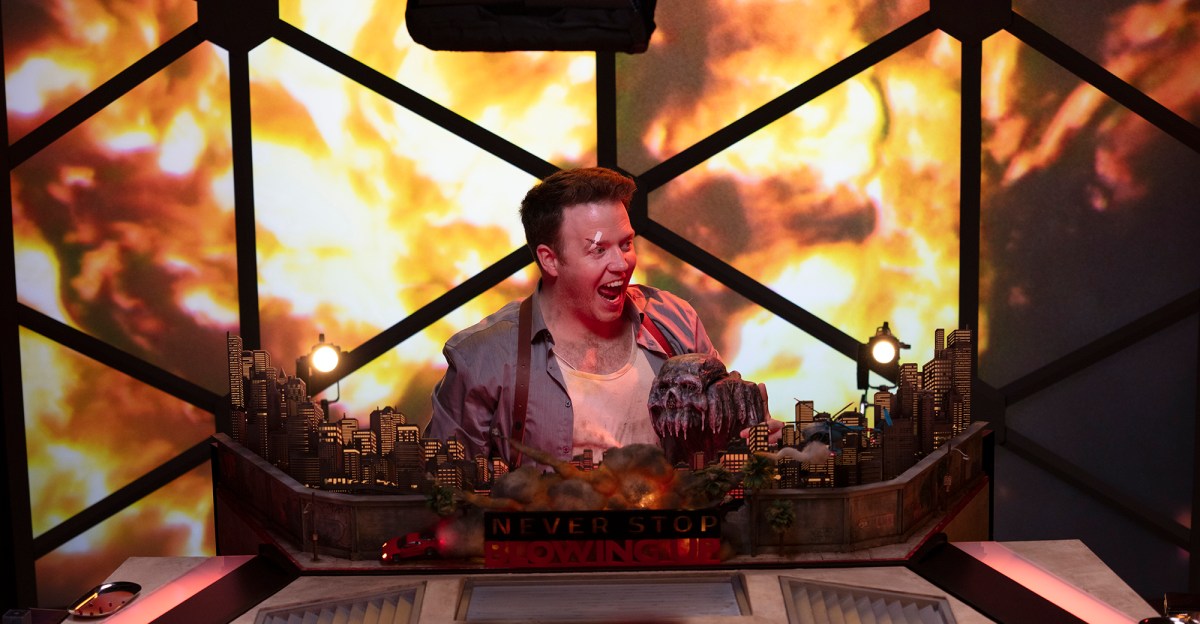
Never Stop Blowing Up was always going to be one of Dimension 20’s most outrageous series.
The homebrew game designed for the occasion combined Kids on Bikes with a simple yet compelling dice game. It was a starting place that guaranteed hijinks — the system encourages players to go for ridiculous checks, on the chance that they “blow up” their dice and instantly get stronger.
Then you have the over-the-top ’80s action movie setting, embracing the excesses of a genre where just about anything goes — cars that reach 5,000 miles per hour, gangs that travel via super fast backflipping, a White House that takes off like a jet plane, a talking jaguar named Tony.
Throw in six of Dropout’s funniest cast members, each of whom seems to be trying to top the rest in their efforts to do The Most Ridiculous Thing Possible? Pure gold.
The trials and tribulations of the employees of Dave’s Video Store who got pulled into the ridiculous, fast-paced world of the fictional movie Never Stop Blowing Up entertained Dropout fans for the past two months, with a 10-episode season that earned its place in the pantheon of Dimension 20’s greatest hits.
Polygon caught up with game master Brennan Lee Mulligan about the season. Mulligan went deep with us about the cast, the themes of the season, whether you can expect to play Never Stop Blowing Up at home anytime soon, and the chances of a second season. We also talked to the cast of the show — you can expect that chat later this week.
This interview has been lightly edited for length and clarity.
[Ed. note: We talk about major plot points from Never Stop Blowing Up, including the ending.]
Image: Dropout
Polygon: Well, Brennan, what a fun season of Dimension 20,and what an incredible cast. What was it about the makeup of the cast that you were most excited about?
Brennan Lee Mulligan: We wanted to find a group of people that had a love for this genre, had the ability as improvisers to take fearless, bold, enormous swings, and people who can fully jump the tracks in terms of tone and comedy and mood, and pirouette 20 times in midair, and then land on another set of tracks somewhere else. And so we just found these six improvisational all-stars who are just deeply beloved at Dropout, and it was a joy and a privilege to work with all of them.
Everyone in the cast had at least some experience with a Dimension 20 season besides Jacob Wysocki. What did Jacob bring to the dome in his first time?
It’s very fun to be blown away by somebody and then also be like, Of course, of course you’re this. You know, Jacob’s reputation precedes him. He is such a brilliant performer in a season that was all about big swings and goofiness. What really stuck out to me about Jacob was for someone whose training is very [much in] long-form improv comedy, he locked in to the heart of his character in so many ways. Dang stays as this emotional core of the season who is, in many ways, the most affected and grows as a character throughout the season. That scene with Wolfman Ann, which Jacob very much called for — Jacob was like, I am having an emotional low point now — I just thought was so special, and I was very grateful for his dedication to not only the big comedic swings, but having this point of view, an emotional North Star that kept his character’s journey grounded even while the most outrageous stuff was happening around him.
Image: Dropout
He’s obviously very funny, but Jacob’s also a very gifted physical actor as well. And I was struck by how much he was able to work that into the season, despite it being a setting where you’re all sitting around a table.
That monologue where he’s like, “My mind is not deep. Wide, not deep. There’s 15 governments, and they’re bad.” [Mulligan does Jacob’s hand motions while quoting this.] To see the joy of someone struggling with the convoluted action movie plot of, The people that hired us are betraying us. It was a double blind but they’ve been betrayed by the betrayers. And you’re like, What the hell?Like, it seems like you’re just trying to set up a car chase in Monte Carlo. That’s fine. He played that so well from that character point of view.
You brought it full circle there with the extra copy of the Never Stop Blowing Up VHS under his chair. How’d that come together, and was it always going to be Jacob’s chair?
It was always gonna be his chair. That was from [producers] Rick Perry, Carlos Luna, Michael Schaubach, and me talking. We’re an incredibly collaborative set. So at some point that VHS is floating in the ether. I think Schaubach had already maybe shot the mini or the insert of it. And then we went, “Rashab! Him! Under the chair.” And he pulled it out. It was just such a fun moment for Jacob, as a character who, in some ways, it was like his life had been so stalled out. And then to be like, “You were right!”
You talked about the big comedic presences this season. How would you describe trying to wrangle this group as a GM? Because there were a lot of situations where things went a little off the rails, and sometimes you leaned into it.
That’s a very funny thing. There’s different strategies, right? I enjoyed seeing the moments where I had to pull up and be like, We are moving on. What’s so funny is if I’m looking at my own boundaries, what I realized was I fully surrendered as GM Brennan, and then producer Brennan was the one who had to come in. GM Brennan was like, I’m in the craziness with you! We’re not going down the rabbit hole. We’re being fired from a cannon through the rabbit hole at top speed. I’ll be just as crazy as you! Backflipping Sidewinders, let’s go! I was so ready to meet them there. And then every once in a while, a version of Brennan would lock in and be like, We have to leave this scene, this scene we’ve been in for 40 minutes. It’s time to go. And that was the one who came in, and I can’t believe I’m saying this, and told my (at the time) pregnant wife to shut up, on camera. A real low point for me. Izzy was laughing through it, but I look back at myself and I’m like, Well, when I have my soul weighed against a feather at the end of my life, this is going to be one of the lowlight moments for sure. So that was a fun moment.
Image: Dropout
The point was not to wrangle anybody. I think that the fact that the cast is feeling limitless joy and is in that place of play is a success of the show. And if that means I need to be the one to load everyone back on the tour bus and go to the next place, so be it, right? Like, great. Everyone’s having such a ball that no one’s got an eye on the clock but me. Cool, that’s perfect. That’s exactly where we need to be. That is my job, right?
In terms of making the decisions about how far people can go, you had some tough choices in terms of DC checks for some of the more ridiculous things that happen. Thinking back on it, how do you weigh Usha’s attempt to throw G13’s oily shirt in front of the car to speed it up versus Kingskin’s manual brain surgery on G13? How do you make those decisions of what is possible if the dice roll the right way?
There’s a very funny ongoing game that me and Rekha Shankar have with each other. What’s funny is a lot of Rekha’s choices that I will set an impossibly high DC for, once you’re going 5,000 miles per hour in a car, what is logic or consistency? It’s more about a fun character game that I think me and Rekha have about tone and moments of Rekha having a gremlin energy, of wanting to introduce a component into the genre of the world that I have to balk at. So in other words, if Rekha had gone like, “I want to make the car faster, I’m going to find a hidden button that, like, splits an atom made out of other split atoms, and it creates a super atom,” I would probably set that DC at, like, a 20. But it’s the fact that Reika goes like, “Can I get my shirt off like a Donkey Kong banana?” …Pete, correct me if I’m wrong. Even in cartoon logic…
I don’t think Roadrunner would get away with that.
I don’t think Roadrunner would get away with that! What I’m saying is, in what cartoon does taking a slippy thing and throwing it in front of a car make it go uncomplicatedly faster? You know what I’m saying? That’s like, I hit you in the face with a banana cream pie, and you’re cleaner than you were a second ago. Let me just fully describe to your readers. I move away from the camera, shake my fists and go “Rekha!!!!” That’s the relationship that me and Rekha have. It’s the fun of Rekha doing things that feel like an active fun butting of heads in the genre about the choices that are being made.
Image: Dropout
What did you enjoy the most about the setting of the over-the-top ’80s action movie, as a GM?
I think that there is a freedom and a joy. The last episode of Never Stop Blowing Up is our 250th episode of Dimension 20. And I think you want to set new creative challenges for yourself all the time, just to keep things fresh. And looking at the programming slate, you know, we were coming off Fantasy High: Junior Year, which is our first threequel. It’s our first third installment in a core season. And you know that Junior Year, of course, has totally outlandish things. I mean, my god, Blimey, you know? But it also was dealing with these themes of stress and rage, and there’s a groundedness to Elmville and the Aguefort Adventuring Academy.
Especially shooting the season with Izzy being eight months pregnant, I was preparing. We shot 50 episodes of Dimension 20 in nine months because I was trying to shoot out before my paternity leave. So I think that from a programming level, it’s like a photographer being like, “All right, do a fun one, do a crazy one,” right? And for me as a GM, I was gearing up for this sprint before paternity leave. As a creative challenge, let’s set ourselves up for something that embraces chaos and fun and honoring as many huge swings as possible, for the timing, for the production team’s bandwidth. Let’s not do a tactical mini season. Let’s do a season where we’re doing hand props and makeup and these fun looks. And so there are the creative choices that go into selecting a concept for a season that are made holistically within the umbrella of the entire show, to present new things to our audience, to keep the anthology fresh, to give people a flavor they’ve never had before. That was really a lot of what went into Never Stop Blowing Up.
One of the season’s more surprising mechanics was the ability for players to jump in the GM chair. What sparked that idea, and how do you feel about the result?
I loved the result! The players were so generous and exciting, and I couldn’t ask for a better leader of that vanguard than Ify — his contributions were so fun, and he’s such an exciting storyteller. Also a dream to have Rekha and Izzy, and our unborn child, sit in the hot seat! What a dream!
Image: Dropout
The players made a lot of big choices throughout the season, but were there any that particularly surprised you?
Every player surprised me! From Ify’s establishing of Vic as a guardian spirit, to Rekha elaborating on that with the menace of G13 — Jacob’s emotional depth with Dang and Wolfman Ann, to Alex’s awesome turn with Liv wanting to do her own thing! Was such a joy to watch Ally take the lead as a plot hound, and Iz to run both the divorce storylines side by side!
What would you adjust with the Never Stop Blowing Up system for the 2.0 you talked about throughout filming, and will there be a release of the game itself?
We would love to. We’re exploring that right now. We would probably close the infinite token loophole that Ify found, tighten that up a little bit, clean up one or two other things, maybe clean up some of the group abilities a little bit. But probably we would want to release it to people. And then not do a full revamp until some playtesting. The funny thing about even running this stuff on camera is that actual plays are not a big enough sample size. Every game master, Dungeon Master, storyteller knows this, the balance required for your table actually does require way less scrutiny than the balance for published material.
As a case in point, you have two different character builds. One of them is more powerful than the other, but the more powerful one is being played by a newer player who has less ability to make optimal choices than a theoretically worse build being played by a veteran player. And so you don’t need to adjust that, you’re like, Actually, the balance of these encounters come out in the wash pretty even, people feel like they’re doing awesome stuff, people are really happy with their builds and their characters. So the standard for published material is just on a totally different level than the tomebrew that a GM or a DM is bringing to their table because of the sample size. How many encounters, even in a long home game, are you really going to play? We would probably want to do a full revamp, actually, after an alpha playtest where we released it to a lot of people and got feedback.
The ending leaves open the possibility of the characters returning to the world of Never Stop Blowing Up. Would you be interested in that for a future D20 season?
I love this world so much — would be delighted to play with everybody again as often as they’ll let me!
Never Stop Blowing Up is available to watch on Dropout.
In Hollywood, the question “Does this movie franchise need another chapter?” seems to have a pretty easy answer: “Sure, if we think it’ll still make money!”
For fans of a given franchise, though, the calculations are more complicated. Will that new installment in a movie series actually add anything worthwhile to the story, or just undermine the franchise’s original successes? Do we actually want to know more about our favorite characters, or ? Do we have any reason to believe the latest movie using a familiar IP has a reason to exist that isn’t entirely mercenary? Will it at least be some big dumb fun?
While plenty of 2024’s would-be IP blockbusters have shifted to 2025 dates, the year so far has still seen its share of sequels, prequels, and spinoffs. So we’re running the numbers, ranking the year’s latest-in-a-series movies by how well they justify their existence — both as movies, and as installments in ongoing stories.
16. The Strangers: Chapter 1
Image: Lionsgate Films/Everett Collection
A remake of 2008’s home-invasion horror movie The Strangers wasn’t necessary, but it could have been good: With a premise as solid gold as “masked strangers break into a remote home and kill the couple vacationing there,” there are a million different takes that could have been great horror fodder that doesn’t follow the original movie beat for beat. Unfortunately, that’s exactly the uninspired approach director Renny Harlin (Die Hard 2) takes with this movie, the first in a planned trilogy that was originally written as one massive four-hour-plus movie, until Legendary Entertainment broke it down into chunks.
This new batch of Strangers movies is meant to follow the characters in the aftermath of this initial home invasion. But it kicks off with Harlin essentially remaking the first Strangers with less style and dread. Gone is the slow creepiness of the original movie, replaced by rushed horror sequences and a few moments of lackluster action. While it’s possible that parts 2 and 3 somehow redeem the kickoff, Chapter 1 is nothing more than a significantly worse retread of an effective shocker. —Austen Goslin
Image: Columbia Pictures/Everett Collection
Madame Web is only loosely connected to Sony’s already loosely connected universe of Marvel characters. Ironic, given that the tagline “Her web connects them all” was the central focus of . The one thing this offers to longtime fans of the current live-action Spider-Man narrative is a tease about Peter Parker’s existence — something that’s always been a big question mark in the Sony Marvel movies. Paramedic Cassie Webb (Dakota Johnson) is friends with Peter’s (hot, young, not yet dead in a morally instructive way) Uncle Ben, after all! Except the film never actually acknowledges that Ben’s newborn nephew is Peter Parker, to the point where holding back on that detail becomes something like a bit. It’s almost pandering, but not indulgent enough to feel fulfilling at all.
With its stilted dialogue and nonsensical plot, Madame Web is not a good movie at all. At least it’s the sort of terrible movie that’s fun to watch in a group setting, while making jokes and tuning out the slower bits? It’s more or less Cats for superhero fans. —Petrana Radulovic
Photo: Sony Pictures
This sequel to a sequelish reboot brings the new generation of Ghostbusters (Paul Rudd, Carrie Coon, Finn Wolfhard, Mckenna Grace, etc.) back to New York, and brings back the original characters (Bill Murray, Dan Aykroyd, Ernie Hudson, Annie Potts, etc.) for more than a glorified cameo. That might be enough to make it essential for superfans, but for everyone else, it’s a nostalgic callback to the original movie with not much new or engaging to make it stand out, apart from Grace’s character’s maybe-queer storyline with a cute ghost girl. —PR
Image: Universal Pictures / Everett Collection
No one in the Despicable Me movies seems to age. Former supervillain Gru (Steve Carell) looks just like he did in the first movie, and so do his daughters, who have been children for 14 years now. And yet somehow, Gru and his wife Lucy (Kristen Wiig) pursued a relationship, got married, and had a baby. So at least there’s some sense of time passing, even if it seems like Gru Jr. might be an infant for the next decade of sequels.
Despicable Me 4 contributes a few fun new world-building elements to the franchise, though it unfortunately doesn’t explore them enough to make them significant. Still, some of them could set the stage for future adventures. (A whole school for villains?) This installment also adds a small but absolutely hilarious detail to Gru’s past, a backstory involving a high school talent show and the song “Karma Chameleon.” Nothing about Despicable Me 4 is essential, but it’s cool to see a few more funky details about this broadly defined world. —PR
Image: Columbia Pictures/Everett Collection
The fourth entry in the series Michael Bay inadvertently kicked off with his directorial debut Bad Boys back in 1995 brings back a lot of cast members — chiefly the Bad Boys themselves, Will Smith and Martin Lawrence. But the filmmakers clearly think Bad Boys fans want a lot more continuity than that. Screenwriters Chris Bremner and Will Beall do their best to build a Fast & Furious-style Bad Boys universe out of every bit of character work and villain lore they can scrap together from the previous three movies.
That isn’t a compliment. Where so many blockbuster movies suffer because the studio is trying to launch a profitable franchise instead of telling a decent story, Ride or Die assumes viewers are coming to the theater armed with nostalgia and a detail-oriented fascination with lore, rather than just wanting to see a couple of gifted comedic actors mouth off at each other between frenetic action sequences. Fans who care deeply about the posthumous legacy of Joe Pantoliano’s character, this is your movie. But mostly, the franchise-building gets in the way of the fun. —TR
Image: 20th Century Studios
Fede Álvarez’s 2024 installment in the Alien franchise is almost perversely defined by how much it copies from past Alien movies, and how little it adds to the canon: Álvarez and co-writer Rodo Sayagues can’t even conjure up their own catchphrase, and fall back on having a new character echo the series’ most famous line.
The film is effectively creepy as a stand-alone, and for viewers who’ve never seen an Alien movie, this might all be new, exciting horror fare. But it’d still come across as a bit underexplained, since this film is aimed directly at people who know the franchise forward and backward. It’s a greatest-hits montage, more or less: Remember how creepy Xenomorphs are in water? Let’s do that again. Chestbursters, facehuggers, Giger-esque genital imagery, evil androids suborning ships for the company — that was cool! More of that! And so forth. It’s a good time at the movies, but it could hardly be less essential. —TR
Image: 20th Century Studios
The fourth in the new-era Planet of the Apes movies (and the 10th Apes movie if you batch them all together) doesn’t add much to the franchise’s ongoing narrative — it jumps the story forward in time about 300 years for a story that’s frustratingly half-baked and surprisingly familiar from the previous entry, War for the Planet of the Apes, but with a gorilla dictator running a forced work camp instead of a human one. There are some powerful ideas at work — that history repeats itself, that communities are stronger than individuals, and that those communities need to band together to resist tyrants — but they aren’t communicated particularly clearly, especially since they’re mixed in with other threads, about a personal journey undercut by every Kingdom ad, and about the unreliability and unknowability of humanity.
Kingdom is enjoyable enough in the moment, an action blockbuster with impressive visual effects and some appealing characters. It isn’t a bad or boring entry in the series. It just never feels essential, or like it’s doing much besides echoing more propulsive, dynamic earlier entries in this run at the Apes story. —TR
Image: Warner Bros. Pictures
Godzilla x Kong: The New Empire feels like the movie where the new MonsterVerse franchise hit its stride. While 2014’s Godzilla lightly parodies disaster movies and 2017’s Kong: Skull Island does the same for dark war movies, Godzilla x Kong is a buddy movie about a giant ape and a nuclear lizard who don’t like each other much, but are often forced to team up to fight bigger monsters. It’s inescapably dumb and uncomplicatedly entertaining.
But what makes this franchise especially fun right now is that it has a secret weapon: television. While the big screen is reserved for silly monster brawls, the MonsterVerse’s TV show, Monarch: Legacy of Monsters, is a much more reserved, character-focused family drama that feels like an old-school adventure movie with giant monsters thrown in. It’s an excellent counterbalance to the silly fun of movies like A New Empire, with the added bonus that the movie’s story likely means Kong will be in the show’s next season. The MonsterVerse is a strange franchise, but as long as every entry keeps proving itself entertaining, it’s awfully hard to complain. —AG
Image: Universal Pictures/Everett Collection
The adventures of panda kung fu master Po (Jack Black) could’ve been wrapped up in the series’ third installment back in 2016, but Kung Fu Panda 4 adds a bit of a postscript. The door is now open for another unlikely hero to take over the franchise, should DreamWorks decide to go that route: Basically, Po will eventually retire from his title as the Dragon Warrior, and a protégé will take up the mantle. (That definitely isn’t how it worked in the first movie, but I digress.) His heir apparent, the sneaky, thieving fox Zhen (Awkwafina), is actually a pretty cool character. I wouldn’t be too mad seeing more of her!
For the fourth movie in an animated series, Kung Fu Panda 4 is decently enjoyable, mostly suffering from wasted potential. But the fight scenes are still cool, and the humor is funny enough, even if it never reaches the highs of the originals. —PR
Image: 20th Century Studios/Everett Collection
The First Omen is a complicated addition to this list. On the one hand, it isn’t necessary, really. And its worst moments come at the close of the movie, when the implied connections to the original film series are made even more explicit than they already were. The First Omen does, however, earn its place on this list via an entirely different version of this metric: It might just be the best movie in the Omen series, which makes it a necessity by default.
Even better, by making a movie this scary, director and co-writer Arkasha Stevenson (Brand New Cherry Flavor) actually retroactively improves the rest of Damien’s story, just by making his origins this disturbing. The First Omen is simply an excellent horror movie, and that’s more than we can say for most franchise entries on this list, which is exactly why it clawed its way near the top. —AG
Image: Netflix
Netflix’s animated Ultraman movie isn’t following a strict franchise continuity like so many of the sequels, prequels, and spinoffs in this ranking. Instead, it’s part of a sprawling history of anime, manga, comics, books, live-action movies and shows, and much more, many of which reinvent the tokusatsu hero in radically different ways. This particular installment also focuses far more on repackaging Ultraman for a new generation than on tapping into or expanding his existing lore. In this case, its value to the franchise isn’t additive, it’s introductory: This is a fine, accessible place for new and younger viewers to step into the story, especially if they happen to be fans of creative, dynamic animation. Longtime Ultraman fans won’t learn anything radically new here, but they will get a perfect launch point for the next generation of fans. —TR
Image: Disney/Pixar
Pixar’s sequel to 2015’s Inside Out is the definition of a sequel expanding on a previous movie, sometimes to a fault. The first movie goes inside the head of 11-year-old Riley to explore how her personified emotions interact with each other; the sequel ages her up to 13, introduces new emotion characters, and shoves her into a series of new, anxiety-related decisions. In a lot of ways, this is a more-of-the-same sequel, leaning on a similar “important characters lost in the back of Riley’s brain, other characters taking over at center stage” plot, and plenty of the same corny-to-clever puns about how familiar thoughts, emotions, or related structures might manifest as landscape features.
But the way it recognizably tells a story about the same central characters, while focusing on how profoundly time and the events of the last movie changed them, is unusual for an animated sequel. (We’re side-eying you right now, eternally-suspended-in-time Despicable Me franchise.) Inside Out 2 forwards Riley’s evolution in meaningful ways, even if that does raise some bigger questions about the rules of this particular world. —TR
Photo: Gareth Gatrell/Paramount Pictures via Everett Collection
You’d have to go back a few years to Dan Trachtenberg’s Predator franchise movie Prey to find a prequel that feels as vital, engaging, and meaningful to a film series as A Quiet Place: Day One — and it’s notable that both movies get to that point the same way. They both keep continuity with the stories they’re setting up, but neither one is trying to dole out unnecessary series lore, or explain things that never needed explaining: They’re both just telling riveting action stories in an established setting, and shifting focus to completely different characters with their own unique dynamics.
Most disaster movies in this vein (whether they’re alien-invasion-focused or not) center on survivors. Writer-director Michael Sarnoski tunes in on someone who doesn’t have survival as an option: Sam (Lupita Nyong’o) is in the last weeks of a fatal illness, and when killer aliens start raining from the skies and chumming New York City and anyone in it who makes a noise, it’s barely moving up the time table on her mortality. Sarnoski gives her a perversely meaningless goal — to get across town to her favorite pizza place and enjoy a final slice before she dies — and then spends half the movie on taut, tense alien-stalking scenes, and the rest on exploring why she’s so doggedly determined to do this one last thing before she goes. The focus on her combination of fatalism and obsession makes Day One an indelible story that expands the Quiet Place franchise in the best way possible, without piling on a bunch of extra, unnecessary world-building. —TR
Photo: Jay Maidment/20th Century Studios
Deadpool’s third live-action adventure, and his first under the Disney-Marvel Studios banner, certainly earns high rankings for popularity: It has broken records on its way to the top of the box office. But more significantly for the purposes of this particular ranking, it pushes Deadpool’s story forward, to the extent that anything really means anything in a Deadpool movie. Death certainly doesn’t. It’s possible that MCU canon does. Narrative rigor and character continuity don’t — but who goes to a Deadpool movie for those?
The snark is tamer and less transgressive this time out, but the Deadpool & Wolverine movie is still ambitious about expanding the character’s reach into new arenas, from bringing in the Loki series’ Time Variance Authority as villains to letting him beg for a shot at joining the Avengers. You can really feel producer-star Ryan Reynolds, his co-writers, and director Shawn Levy leveraging the Deadpool franchise’s popularity to get their hands on any property they want, from gleefully defiling the end of 2017’s Logan to lining up cameos designed expressly for in-the-know comics fans. They hop around Marvel movie continuity, grabbing and dropping whatever they want like nerdy magpies, and the movie is more fun for it. Most franchise filmmakers could only dream of this kind of freedom and access. Say what you want about the recent movie-multiverse boom — at least one franchise is just using it to create a bigger, more colorful sandbox. —TR
Image: Warner Bros. Entertainment/YouTube
Furiosa is the rare prequel that feels not just equal to the hit movie it’s setting up, but like it adds vital context rather than gilding the lily. Conceived and written at the same time as Max Max: Fury Road so it would be consistent with that film’s story and characterization, Furiosa doesn’t unnecessarily just fill in how-did-this-character-get-here blanks, it tells its own distinct story and answers questions about who Fury Road’s most compelling new character is, and why she’s Max’s equal. More importantly, though, it’s wildly entertaining in its own right. —TR
Even leaving aside the compelling performances and visuals, the epic warfare, and the fascinating shift in perspective — which is to say, leaving aside the fact that it’s one of 2024’s best movies so far — Dune: Part Two would top this list purely because it’s an essential part of its franchise’s story. It doesn’t just contribute new things to a franchise, it’s a cornerstone of the story Villeneuve is still hoping he’ll get to tell more of someday. —TR
The best gaming TVs aren’t much different from the best TVs you can buy in general. But if you’re looking to make your PlayStation 5 or Xbox Series X games look their best, there are a handful of key features to keep in mind. To help you get the most from your living room setup, we’ve broken down a few tips for buying a good gaming TV below. We’ve also scoured the current TV market and picked out a few well-reviewed options from across the price spectrum.
What to look for in a gaming TV
Whether you use it for gaming or not, all good TVs are built on the same foundations. You want a 4K resolution, high-enough brightness to overcome glare and make HDR content pop, a relatively high contrast ratio with deep and uniform black tones, colors that find the right balance between accuracy and saturation and wide viewing angles. For video games specifically, you want a TV with minimal input lag and fast motion response, with no blur or other unwanted artifacts behind quick-moving objects. Of course, finding a set that does all of this well and fits into your budget can be tricky.
OLED and LCD
For now, top OLED TVs generally offer the best picture quality for gaming or otherwise. But good OLED sets usually cost more than their LCD counterparts, and some models may not get bright enough for those who have their TV set in a particularly bright room.
More specifically, modern OLED TVs may utilize different types of OLED display tech: WOLED (i.e., “White OLED”) or the newer QD-OLED. We won’t dig too deep into how the two diverge in panel composition and subpixel structure, but the simplified version is that QD-OLED displays use a layer of quantum dots (hence the “QD”) to deliver a wider gamut of more vibrant colors and higher overall brightness than traditional WOLED sets.
This doesn’t mean all QD-OLED TVs are inherently better: How well an individual set performs is more important than the panel it uses, and some premium WOLED TVs like the LG G4 utilize a new form of display tech called Micro Lens Array (MLA) to greatly improve brightness themselves. Those can be better at keeping colors natural in the face of reflections as well. And virtually all OLED TVs share the same core strengths. But as good QD-OLED sets have come down in price, they’ve started to look like the standout for those looking to balance value and superior picture quality.
If you opt for an LCD TV— whether to save cash or stick in room with poor light control — an advanced backlight with smaller and more precise mini LEDs and effective full-array local dimming will usually improve contrast and lighting detail. Many of these TVs, including some budget-level models, also use quantum dots to enhance colors. They usually aren’t as vivid or fast in motion as the top OLED sets, but they’re often brighter and more affordable, and the best can still produce an excellent image in their own right.
HDMI 2.1
To get the most out of a PlayStation 5 or Xbox Series X/S, your TV should have full HDMI 2.1 support. This is the latest major update to the HDMI spec, enabling a higher maximum bandwidth — 48 gigabits per second, up from HDMI 2.0’s 18 Gbps — and a handful of features that are beneficial for gaming performance specifically. These include variable refresh rate (VRR) and automatic low latency mode (ALLM), which we detail further below.
Beyond that, perhaps the chief perk of HDMI 2.1 is its ability to transmit sharp 4K video up to a 120Hz refresh rate with modern consoles like the PS5 and Xbox Series X, or up to 144Hz with a powerful gaming PC. Not every PS5 or Xbox Series X/S game supports frame rates that high — and some only do at lower resolutions — but those that do will look and feel especially fluid in motion. HDMI 2.1 also includes support for Enhanced Audio Return Channel (eARC), which allows you to pass higher-quality lossless audio from a source device connected to the TV to a compatible soundbar or receiver.
The more full HDMI 2.1 ports your TV has, the better. “Full” is the key word there. As reported by TFT Central, because HDMI 2.1 is backwards compatible with HDMI 2.0, TV and monitor manufacturers have been allowed to brand HDMI ports as “HDMI 2.1” even if they lack full (or any) support for the spec’s upgraded features. We recommend a few TVs below that have true HDMI 2.1 ports, but if you’re buying a new TV for gaming, make sure your chosen set isn’t trying to hide any capabilities you may consider essential.
HDR — High Dynamic Range
HDR refers to a TV’s ability to display a wider range between the darkest and brightest parts of a picture. This broader range can bring out details that would otherwise be missing on a standard dynamic range (SDR) TV, in both the very dark and (especially) very bright areas of an image. HDR typically comes with an improvement to color reproduction as well, displaying a larger palette of more vibrant colors that brings content closer to its creator’s original vision.
To get an HDR picture, you need both content that is mastered to take advantage of the tech and a TV capable of displaying that content. HDR also comes in a variety of formats, which are generally split between those that utilize static metadata (e.g., HDR10) and those that utilize dynamic metadata (e.g., HDR10+, Dolby Vision). In short, the latter allows a TV to optimize its brightness and colors on a per-scene or even per-frame basis, while the former uses one set of optimized settings for the entirety of the given content. Support for these formats can differ depending on the TV, content and game console you use. The Xbox Series X and S, for example, support Dolby Vision for gaming, while the PS5 does not.
The good news is that most TVs you’d buy in 2023 are HDR-ready in some fashion, even on the budget end of the market. The catch is that some TVs are much better at getting the most out of HDR than others. The same goes for actual content mastered in HDR. With video games in particular, there aren’t quite as many titles designed to take advantage of HDR as there are movies (though the number is growing all the time), and the variance in HDR quality tends to be wider.
HGiG — HDR Gaming Interest Group
HGiG stands for the HDR Gaming Interest Group. Sony and Microsoft are both members, as are many TV makers and game developers. What this means is that, ideally, all the groups communicate information so that you can start up a new game on a console or PC and have it automatically recognize your display. Once that happens, the game can adjust the internal settings to adjust for that display’s capabilities and give you the best picture quality possible, without losing details in the brightest or darkest areas of the screen. For example, daylight at the end of a dark tunnel may portray a brightly lit environment instead of looking like an overexposed white blob.
This is a good thing, but the reality is a bit more complicated. Not all TVs highlight HGiG compatibility in their settings menu, while only some PlayStation and Xbox games recognize and follow the guidelines. If an HGiG option is listed in your TV’s tone mapping settings, you should turn it on prior to running the console’s HDR settings. Then, if you’re playing a game that supports HDR and HGiG, you should be in good shape without having to adjust the various luminance levels again. Still, how all of this looks to you might differ depending on your TV and the game you’re playing. Owners of certain LG OLED TVs, for instance, may prefer their TV’s Dynamic Tone Mapping setting. Use whatever settings you think look best.
ALLM — Auto Low Latency Mode
ALLM allows a source (like your PS5 or Xbox) to tell the display to switch into a picture mode that reduces lag between receiving each frame of an image and displaying it on the TV. This cuts out additional processing that could be the milliseconds of difference between landing a precise input or not. A good modern TV can automatically switch to game mode, then back out when you’d rather watch a movie or TV show.
VRR — Variable Refresh Rate
VRR will sound familiar if you’re a PC gamer. Most players have experienced slowdown, screen tearing or stuttering as a system struggles to render each frame at the target speed, which is most commonly 30 or 60 fps on a TV. With VRR, everything stays in sync: Your display won’t show the next frame until it’s ready, which can make things feel smoother and more responsive, even if the system fails to deliver on its target frame rate.
There are a few different implementations of VRR available, including Nvidia’s G-Sync, AMD’s FreeSync and the HDMI Forum’s VRR spec, which is part of the full HDMI 2.1 standard. Both a TV and an input device need to support the same VRR tech for it to work, and different devices may only support VRR within a specific refresh rate window. On a 120Hz display, for instance, the PS5’s VRR only works between 48Hz and 120Hz.
As a reminder, the PS5 supports HDMI Forum VRR, the Xbox Series X/S support HDMI Forum VRR and FreeSync, while gaming PCs may support G-Sync or FreeSync depending on whether they use a Nvidia or AMD graphics card. A great gaming TV supports all the big VRR formats, but missing, say, G-Sync, isn’t a killer if you only game on a PS5 or Xbox.
8K (You don’t need it)
One thing you don’t need to worry about is 8K support. Although the PS5 and Xbox Series X are technically capable of outputting 8K video, very few games are made for that resolution, and 8K’s practical benefits are extremely minimal unless you plan on sitting unreasonably close to a massive TV. The few 8K TVs on the market are also very expensive.
Good gaming TVs you can get right now
There’s never a perfect time to buy a new TV. Prices on current models are always dropping, and next year’s upgrades are always just around the corner. But if we had to narrow it down, the best times to pounce would be right around Black Friday — when we usually see larger-than-usual discounts on the newest sets — and during the late spring to early summer period, when last year’s models steadily drop in price as manufacturers clear out inventory.
As of this writing, we’re still in the middle of the latter. The latest TVs from Samsung, LG, Sony, Hisense and the like are now readily available, so many of the better sets from 2023 are in the process of being phased out. If you can grab one of those older models while they’re still available and on sale, that should get you the most bang for the buck. Many of those older sets are now totally out of stock, though. While we at Engadget do not formally review TVs, we’ve researched the market and rounded up a few sets that have been widely well-reviewed by other professional review sites we trust, including Rtings, Wirecutter, Reviewed and PCMag, among others.
The Samsung S90C has a QD-OLED display that combines an OLED panel with a layer of quantum dots. This allows it to display the high contrast and deep blacks of any good OLED TV without sacrificing as much in the way of peak brightness or color saturation. It should deliver consistently smooth motion, and it has four HDMI 2.1 ports that can play up to 4K 144Hz. It also supports HDR10 and HDR10+, ALLM and the major VRR formats. Sizes range from 55 to 83 inches, though the latter uses a more traditional WOLED panel. Like the rest of Samsung’s TV lineup, however, it doesn’t work with Dolby Vision HDR.
We’ll also note the Samsung S95C, a higher-end model. It, too, can play in 4K up to 144Hz, and some reviewssay it can get a bit brighter than the S90C in HDR. Since it runs its ports through an external box, its actual hardware is thinner as well. But it costs a few hundred dollars more, so it’s harder to justify unless money is no object.
Samsung has released the 2024 version of the S90C, the S90D. However, the company is selling it with both QD-OLED and lesser WOLED panels depending on your country and chosen size. In North America, the 55-, 65- and 75-inch models still use the superior QD-OLED display, but the rest may lose some of the aspects that make the TV stand out in the first place. Given that the QD-OLED version doesn’t appear to be more than a minor upgrade over the S90C in the first place, it’s hard to fully recommend right now.
The new Samsung S95D, meanwhile, is notable for having a matte finish, which seems to help it reduce glare. It’s far more expensive than the S95C as of this writing, though.
Beyond Samsung, the Sony A95L is another QD-OLED TV that’sreceivedpracticallyuniversalpraise, with many reviewers saying it tops any alternative from Samsung or LG. It’s technically a 2023 model, but Sony will continue to sell it through 2024. But it’s another super expensive one — a 55-inch model currently costs $2,800 — and it only has two HDMI 2.1 ports, one of which is the eARC port you might need for a soundbar or receiver. That makes it a bit less convenient if you want to keep multiple consoles hooked up at once.
The LG C3’sWOLED panel can’t get as bright as a QD-OLED TV like the Samsung S90C, but it still performs excellently in terms of contrast, input lag, motion response and viewing angles. It’s occasionally available for a little bit less than the S90C, too. It follows the HGiG’s HDR guidelines, supports ALLM, works with all the major VRR formats and has four full HDMI 2.1 ports capable of outputting 4K 120Hz with a PS5, Xbox or PC. It also supports all the major HDR standards, including Dolby Vision, and it’s available in a wide variety of sizes, from 42 to 83 inches. If the S90C runs out of stock, it’s a fine alternative. It’s just a bit less color-rich, and it doesn’t support a 144Hz refresh rate for those who may want to get the most out of a gaming PC.
The new adds 4K/144Hz support for PC players, and it should bring a slight upgrade in overall brightness and color performance. If the C3 goes out of stock for good, or if you see the C4 available for nearly the same price, just get the latest version instead.
Screen sizes: 55″, 65″, 75″, 85″ | Display type: QLED with mini-LED backlight (ADS Pro panel on 75″, VA panel on others) | Resolution: 4K | Maximum refresh rate: 144Hz | HDR formats: Dolby Vision, HDR10, HDR10+, HLG | HDMI ports: 2x HDMI 2.1, 2x HDMI 2.0 | VRR: HDMI Forum VRR, FreeSync Premium Pro, G-Sync compatible | Smart OS: Google TV | Screen form: Flat | ALLM: Yes | TV tuner: ATSC 3.0
The TVs above are all pretty expensive. If you’re on more of a budget, the new Hisense U7N, another QLED TV with mini LEDs, should be a strong value. It’s not a better gaming TV than the QN90C in a vacuum, as it only has two full HDMI 2.1 ports, it can’t get as bright and its image will wash out more dramatically when viewed from an angle. You may need to tinker with the default picture to get the most out of it, too.
But reviewerssuggestthat, for hundreds less, it’ll still look good in any lighting condition, with impressive brightness levels for the money, 4K 144Hz support, all the main HDR formats, VRR, ALLM and low input lag in its game mode. You’ll still sacrifice contrast compared to a good OLED TV, however, and motion won’t look quite as fast or smooth. It’s also worth noting that the 75-inch model uses a different panel type than the others, one that should improve its viewing angles but lessen its contrast.
If you’re willing to pay more for a higher-end LED TV, the Hisense U8N is the company’s step-up model for 2024. It should deliverbetterbrightness, colors and contrast, though somereviews say that it may have accuracy issues out of the box. And again, the OLED TVs above will generally look better so long as you don’t need something searingly bright. Other recent options in this range like the Samsung QN90D (which has two more HDMI 2.1 ports but no Dolby Vision) and Sony Bravia 7 look promising as well, though they’re much more expensive.
Screen sizes: 55″, 65″, 75″, 85″ | Display type: QLED with mini-LED backlight (ADS Pro panel on 75″, VA panel on others) | Resolution: 4K | Maximum refresh rate: 60Hz (120Hz at 1080p or 1440p) | HDR formats: Dolby Vision, HDR10, HDR10+, HLG | HDMI ports: 4x HDMI 2.0 | VRR: HDMI Forum VRR, FreeSync compatible, G-Sync compatible | Smart OS: Google TV | Screen form: Flat | ALLM: Yes | TV tuner: ATSC 1.0
On the lower end of the price spectrum, this year’s is one of the few budget-level TVs with quantum-dot color, a mini-LED backlight and full-array local dimming. this helps it deliver better contrast and color volume than most value-oriented models. ALLM and the major HDR standards are supported as well. Technically, it’s a VRR display as well— but, like many cheaper TVs, the U6NK is limited to a 60Hz refresh rate in 4K, so that support only goes so far. You can drop the resolution to 1080p or 1440p and play at 120Hz, which is nice, but VRR won’t work in that case so you might see more screen tearing. There are no HDMI 2.1 ports either, and the TV’s brightness levels and motion handling will still be a clear step down from more expensive options. But at $450 or so for a 55-inch model as of this writing, all of that should be easier to overlook.
There are so many great movies on Hulu, that it’s easy to overlook the TV selection as well. In the fall season, Hulu gets the all of the shows from Fox and ABC the day after their broadcast premiere. That let’s you sample as many of the new shows on your own time as you like. But in the summer, there just aren’t as many options to watch. So you’ll have to be more discerning about your choices.
That’s why we’ve put together this list of the three underrated shows on Hulu that you need to watch in August. Our first pick is a Hulu original that went largely under the radar last year. Next, we have a short-lived sitcom, followed by a documentary that first made its debut on History over a decade ago.
Black Cake (2023)
Hulu
Oprah Winfrey produced the adaptation of Charmaine Wilkerson’s novel Black Cake, but it was Marissa Jo Cerar who translated the book to television. The mystery here isn’t about how or why Eleanor Bennett (Chipo Chung) dies in the present, it’s about how she lived. Following Eleanor’s death, her children Byron (Ashley Thomas) and Benny (Adrienne Warren) are given recordings that she made before her passing.
Through these recordings, the narrative shifts to the ’60s as we learn that Eleanor was once known as Covey (Mia Isaac), a young woman from Jamaica whose life was upended by her father. Eleanor kept all of her secrets as Covey until she died, but the revelations of her past will still have an impact on her children in the present.
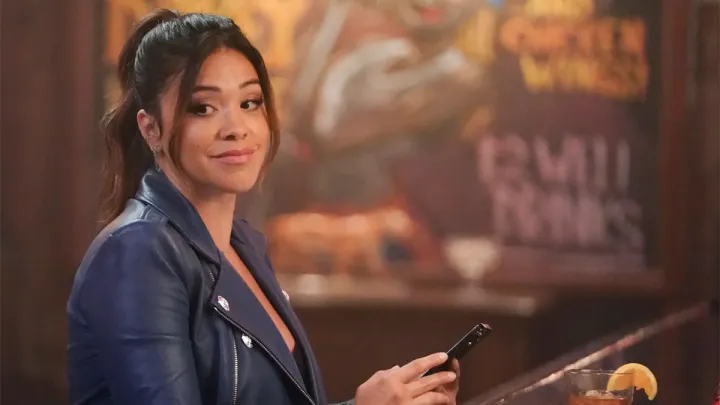
ABC may have canceled Not Dead Yet, but like the ghosts on the series itself, it can have a digital afterlife on Hulu despite its short two-season run. Nell Serrano (Gina Rodriguez) isn’t dead, but her journalism career might be after a lengthy hiatus while she was married and living in London. Now that she’s back at the SoCal Independent, Nell is relegated to writing obituaries. And that’s where the ghosts come in.
Either Nell is going crazy or she’s really seeing visions of dead people who have unfinished business on Earth. Sometimes, they help Nell write their obituaries. Other times, they give Nell a much-needed push to work on her own problems.
What images come to mind when you think of Playboy Magazine? The Playboy Bunnies? An elderly Hugh Hefner rocking a smoking jacket? Or all of the naked women who have appeared in centerfolds for decades? The print magazine may be gone, but the brand remains to this day.
History’s documentary How Playboy Changed the World makes the argument that the magazine challenged social norms and helped usher in a sexual revolution. And if you remember the old joke about reading Playboy for the articles, then you may be surprised to learn that the magazine actually ran fiction and nonfiction pieces from some of the most-prominent authors of the era. The magazine has an interesting story, which has been compressed to a feature length documentary for television.
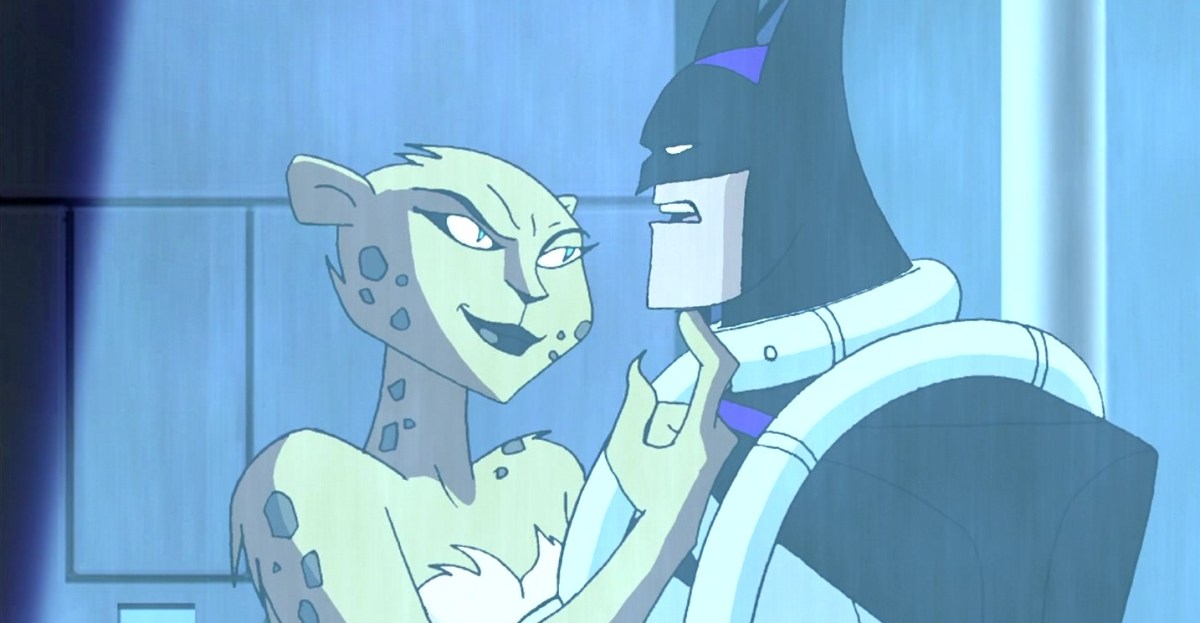
Nostalgia isn’t all it’s cracked up to be. This month’s Batman: The Caped Crusader was billed as the grownup version of beloved and groundbreaking ’90s show Batman: The Animated Series, made by B:TAS co-creator Bruce Timm, producers Matt Reeves and J.J. Abrams, liberated from Saturday morning cartoon censors, and backed by the talent of some all-time Batman comics writers.
And while the show certainly had the Animated Series look, it was neither a direct continuation nor a strong relaunch. Timm’s crew were free to say whatever they wanted, but didn’t have much to say in the end. Sometimes you just can’t go home again.
But what if I told you there’s already a more mature version of Batman: The Animated Series, with hour-long episodes like a live-action drama, multi-season plotting, and fresher animation than Caped Crusader. It’s episodic, but its characters keep a solid emotional continuity, and while its appropriate for kids, it’s got multiple layers and references for adult audiences to chew on.
If you’re looking for a better Batman: The Caped Crusader, you should watch Justice League and Justice League Unlimited, which are available right now on Netflix for your marathon pleasure.
Image: Warner Bros. Animation
Premiering in 2001, Justice League was a direct continuation of the DC Animated Universe setting, which began with 1992’s Batman: The Animated Series and continued in Superman: The Animated Series, The New Batman Adventures, and Batman Beyond — and in large part, it had all the same talent working behind the scenes. Artist Bruce Timm, writer Paul Dini, producers Rich Fogel and Glen Murakami, voice actors Kevin Conroy, Mark Hamill, Clancy Brown, Ron Perlman, Arleen Sorkin, Michael Ironside, and Michael Dorn, all returned to reprise their various roles and duties.
But Justice League wasn’t a half hour, one-and-done episodic series hitting the waves at 9am on Saturday mornings. Airing in prime-time slots on Cartoon Network, every episode of the series was part of a two-part story — hacking the half-hour animated standard into an hour-long adventure series. The core cast began with Batman, Superman, Wonder Woman, Hawkgirl, the Martian Manhunter, Wally West’s Flash, and John Stewart’s Green Lantern, but two seasons into the show, Cartoon Network asked for a rebrand and expanded the mandate.
In Justice League Unlimited, the full breadth of DC Comics’ superhero roster was welcome on the Justice League, not just the founding seven. Episodes were knocked down to half hour slots again, but the show’s crew found a new way to think big. For the first and only time in the setting’s history, a DC Animated Universe show started delivering season-long story arcs; placing dominoes, foreshadowing reveals, and paying off setups from weeks before.
And while each episode was still appropriate for kids, the show writers were not immune to the thrill of including references that only adults would really pick up on — like 1950s gender and racial prejudice, a time-lost Martian Manhunter being brought before Nazi physician Josef Mengele for experimentation, or canonically establishing that the Flash is a more attentive lover than Lex Luthor.
Image: Warner Bros. Animation
So if you want a Batman fix this weekend, queue up Justice League (2001) on Netflix. Now, you might have to give it a few episodes to get going, but if you can stick around through the early middle-weight stuff, the show will pay out dividends. Aquaman cutting his own hand off to save his infant son, an alt-timeline Superman who lobotomizes his opponents with laser vision, a collection of killer romantic subplots, the Batman of Justice League: Unlimited traveling through time and meeting the elderly Bruce Wayne and the future Batman of Batman Beyond, Lex Luthor’s season-long presidential campaign, and a direct adaptation of one of the greatest Superman stories ever told, “For the Man Who Has Everything.”
So maybe it’s not the spooky procedural that makes you feel just like you did when you watched Batman: The Animated Series for the first time. But, then again, neither is Batman: The Caped Crusader!
X today that it is rolling out support for passkeys on its Android app. The social media platform formerly known as Twitter introduced this security option for iOS users in January, then in April.
Passkeys started to take off as an option from tech companies and online services last year. We have a detailed , but in short, this approach to protecting an account creates a digital authentication credential. It’s a stronger alternative to passwords, which can be guessed or stolen. Even have been moving to offer a passkey option for customers.
For X users, you’ll still need a password in order to create an account. But once you’re in the app, you’ll need to click through some menu options to a passkey. It’s listed under “Additional password protection” in the Security tab.
ESPN, Fox and Warner Bros. Discovery in February that they would jointly launch a sports-focused streaming service, and today they’ve shared some pertinent details. Subscriptions to the Venu service will cost $43 a month. The platform will have three broad categories of content: live games and events, on-demand sports programming and talk content such as studio shows. Venu will launch at an unspecified time this fall.
The linear networks included in Venu are ESPN, ESPN2, ESPNU, SECN, ACCN, ESPNEWS, ABC, FOX, FS1, FS2, BTN, TNT, TBS, truTV and ESPN+. Viewers will have access to lots of major events across the world of athletics. The World Series of Major League Baseball, the four Grand Slams of tennis, the Stanley Cup finals for the National Hockey League, and a wide spread of college athletics will all be represented in Venu’s programming.
When people sign up at the launch price, that monthly cost will be locked in for twelve months. Considering how often we see prices going up in the streaming landscape, it’s safe to assume that $43 won’t be the fee indefinitely.
Watching sports is a fragmented and expensive activity today. Different leagues might have media rights deals with multiple different networks and streaming platforms, meaning fans have to check carefully where to find their favorite teams each night. Having so many providers together under one umbrella would streamline the experience, especially for people who like to follow multiple sports. But the joint effort has drawn criticism. after the initial announcement, claiming the new streaming package would violate antitrust practices.